精细化介入与历史肌理的尊重:该项目成功地以“微改造、精提升”策略,避免了粗暴的大拆大建,充分尊重了新河浦历史文化街区的原生肌理和城市记忆。其核心在于“一栋一策”的精准修缮,不仅对身份建筑进行“修旧如旧”的保护性修复,更对一般建筑实现了风貌协调的精细化介入。这种分级分类的更新体系,确保了历史风貌的延续性与居民生活品质的同步提升,体现了对遗产保护与现代生活需求的深刻理解。
系统性空间重构与场所精神营造:项目通过对街区动线和公共空间的系统优化,构建了一个连续、开放且富有层次的空间网络。通过整合广场、道路和关键节点,形成了沉浸式的行走体验和纺锤状的公共空间骨架。特别是在建东组团的更新中,通过灰空间廊道、保留遗迹的中庭设计,实现了新旧功能的有机共生,巧妙地利用材料和光影,成功地将历史记忆转化为可感知的场所精神,增强了街区的辨识度和活力。
技术创新与传统工艺的当代转译:在技术层面,项目展现了传统材料与当代技术的巧妙结合。通过聘请老工匠恢复传统工艺,同时应用碳纤维加固等现代技术,实现了建筑本体的永续维护。更具亮点的是,通过干挂镂空陶砖等技术创新,将传统材料进行了当代转译,提升了建筑的品质感和技术前瞻性。此外,基础设施的系统性整治(如三线下地、多杆合一),极大地提升了街区的视觉整洁度和运行效率,是城市更新中实现精细化管理的典范。
Overall Space Optimization: Constructing a Continuous and Open Street Block Spatial System
The project starts from the macroscopic spatial structure, systematically sorting out the walking routes along Dongshan Street, Xinhepu Road, and Xiguyuan Road to form a cultural tour line. The Memorial Hall of the CPC Third National Congress Site, the Jiandong Cluster, and the Northwest Corner Square of Xinhepu become major nodes, organically integrating with historical buildings like Xinyuan and Guangdong Qianjie No. 4 to create an immersive walking experience. Centered on "functional integration and spatial openness," it links the three major public squares to construct a spindle-shaped public space framework, connecting historical and contemporary functions, and transforming the block from fragmented to interconnected.
整体空间优化:构建连续、开放的街区空间体系
项目从宏观空间结构切入,通过系统梳理东山大街、新河浦路与恤孤院路的漫步动线,形成一条文化游线。中共三大会址纪念馆、建东组团与新河浦西北角广场成为主要节点,并与馨园、光东前街四号等历史建筑有机融合,打造具有沉浸感的行走体验。以“功能整合、空间开放”为核心,通过联动三大广场公共空间,构建纺锤状公共空间骨架,串联历史与当代功能,实现街区从零散到互联的转变。
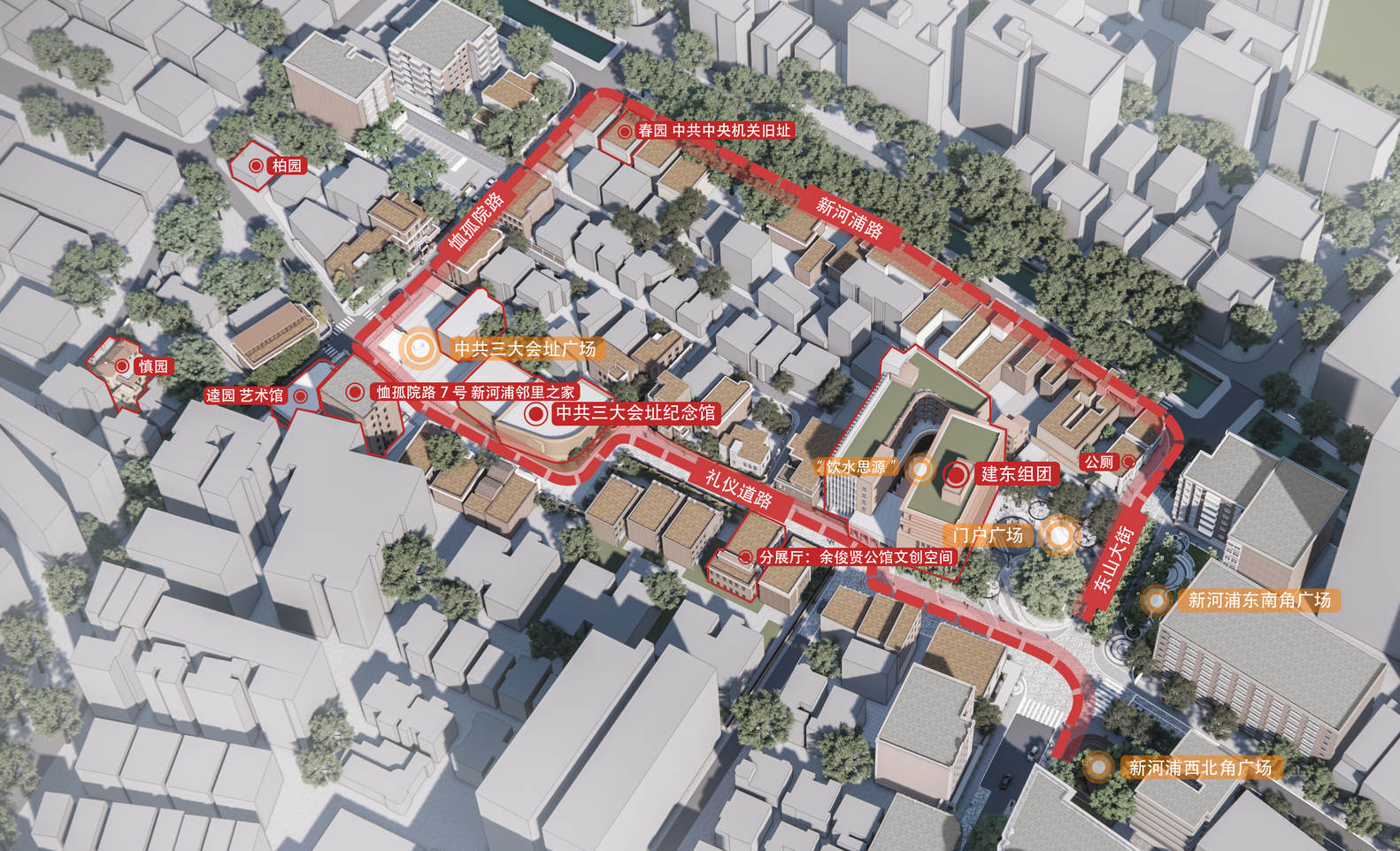
Bird's Eye Master Plan
鸟瞰总图
Guangdong Qianjie is shaped as the ceremonial road of the block. By strengthening the sequence and guidance, it integrates the spatial relationships of Xinyuan, Guangdong Qianjie No. 4, and the entrance plaza of Jiandong Building, forming a more cohesive and recognizable entrance interface. The overall road system constructs a slow-traffic system, enhancing the pedestrian environment quality by adding lighting, resting, and fitness points, and optimizing parking lot interfaces. Terrain treatment adopts a lightweight strategy, including micro-terrain, unified paving, and integrated design of stepped slopes, creating a smooth walking experience.
光东前街被塑造为街区的礼仪道路,通过强化序列与导向性,整合馨园、光东前街四号及建东大厦门户广场的空间关系,形成整体性更强、辨识度更高的入口界面。项目整体道路构建慢行系统 ,通过补充照明、休憩、健身点位,并优化停车场界面,提升步行环境品质。地形处理采用轻量化策略,包括微地形、统一铺装与阶梯坡道一体化设计,营造顺畅的步行体验。
© Wu Siming
© 吴嗣铭
© Wu Siming
© 吴嗣铭
Two, Architectural Renovation in the Historic and Cultural Block: "One Building, One Policy" Updating with Categorical Coordination
Facing diverse building types, the project established an updating system of "categorically coordinated, needs-based renovation."
二、历史文化街区建筑修缮:分类协调的“一栋一策”更新
面对多样的建筑类型,项目建立“分类协调、按需修缮”的更新体系。
1. Identity Buildings: Precise Restoration, Continuing Authenticity
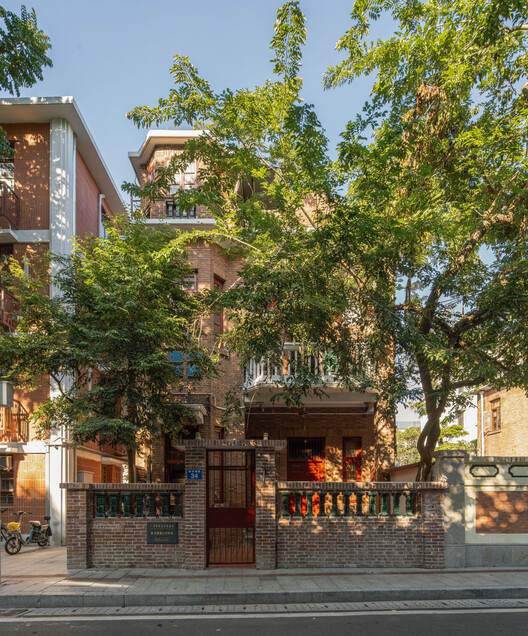
For buildings with historical value, the principle of "restoring the old as old" was followed, maximizing the preservation of original texture and traces of time through structural reinforcement, facade restoration, traditional craft revival, and detailed component repair.
1. 身份建筑:精准修复,延续原真性
对具有历史价值的建筑遵循“修旧如旧”,通过结构加固、立面修复、传统工艺还原和细部构件修补等方式,最大程度保留原始肌理与时间痕迹。
© Wu Siming
© 吴嗣铭
© Wu Siming
© 吴嗣铭
2. General Buildings: Style Coordination, Unified Language
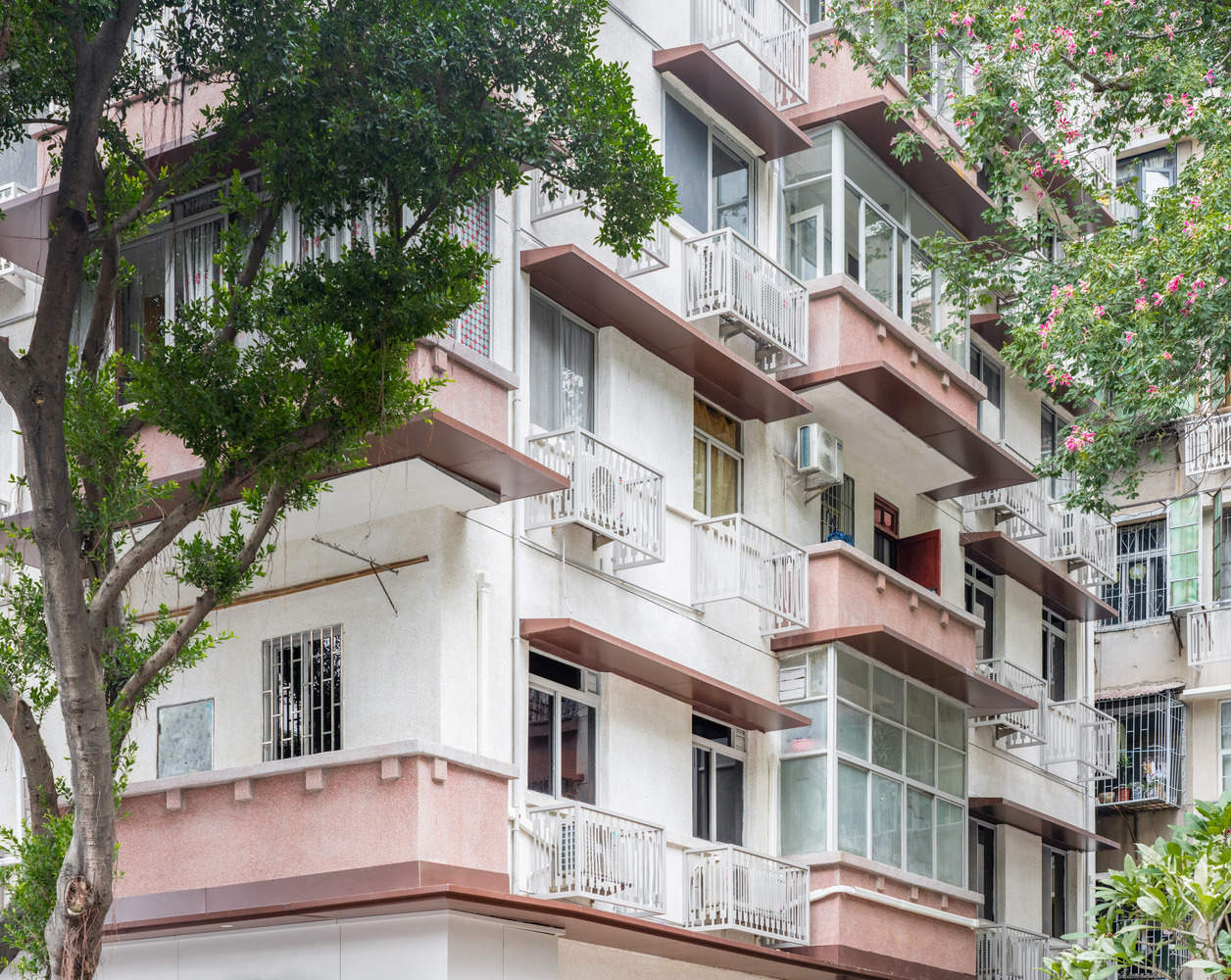
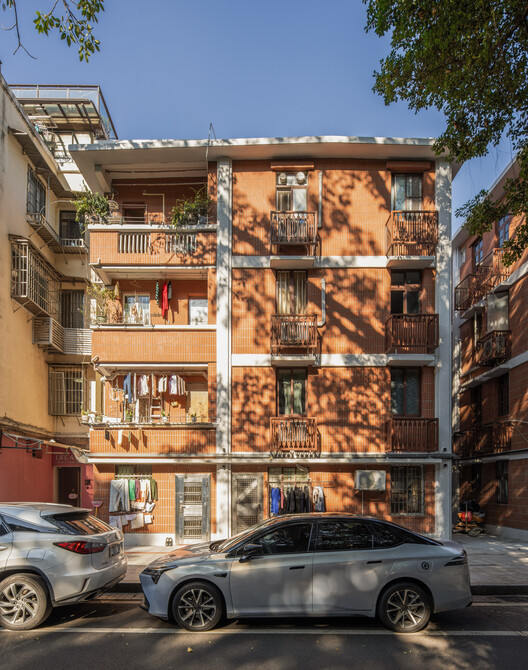
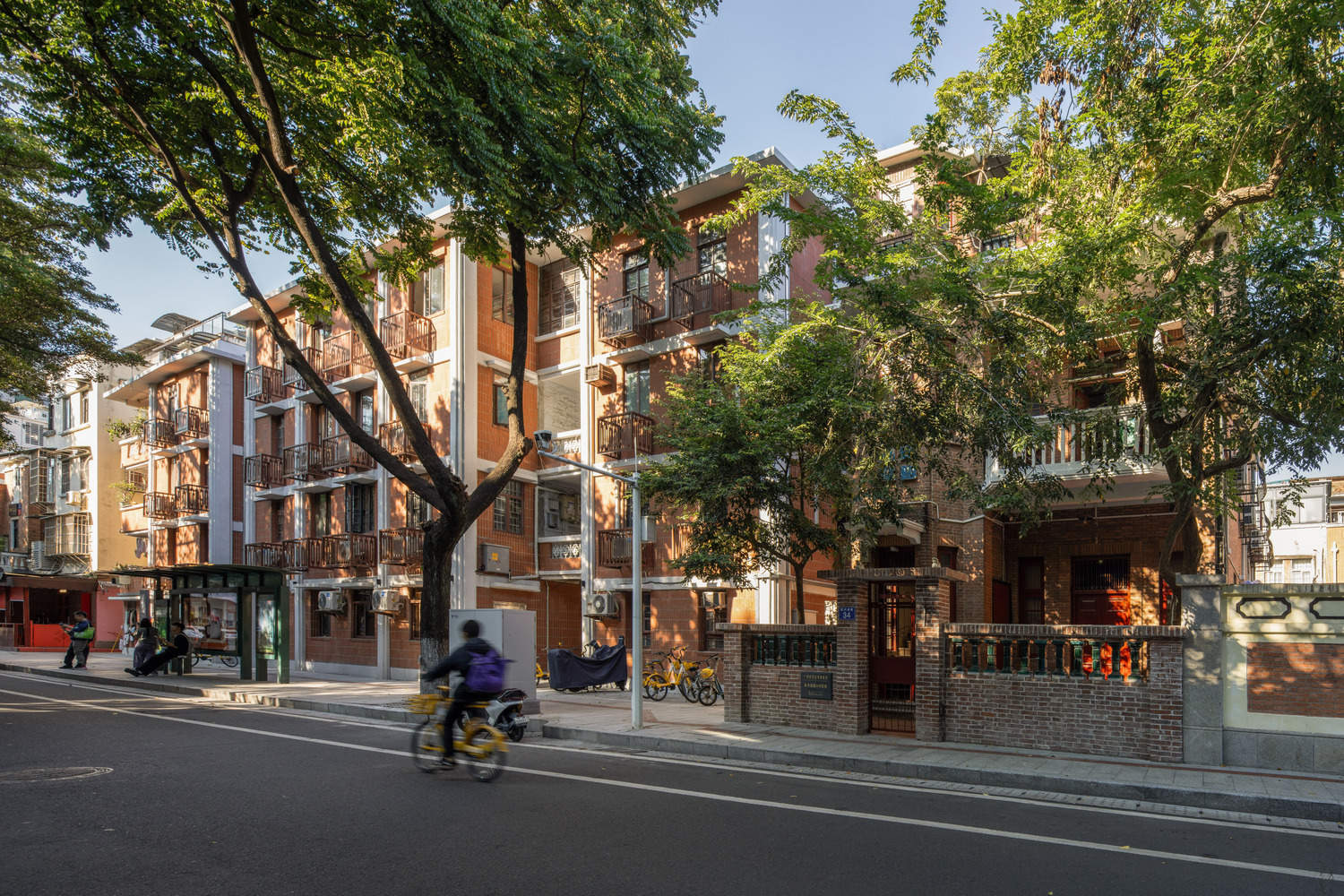
For general buildings, original volumetric proportions were maintained. Integration into the overall block style was achieved through unifying colors, cornices, materials, and window proportions, avoiding abrupt disturbances. The "one building, one policy" method was applied throughout the process; each building underwent independent assessment and strategy formulation to ensure repairs balanced safety and living quality with respect for original style and material texture. Issues common in old residential areas, such as roof leakage, exterior wall peeling, poor drainage, and insufficient drying space, were addressed through frugal, light-intervention methods, effectively improving residents' quality of life. The "fifth facade" roof system unified functions like drying, rain shelter, and greening through unified design, improving the visual interface and convenience. All designs were based on "one building, one policy" investigations, balancing usage needs with style control.
2. 一般建筑:风貌协调,统一语言
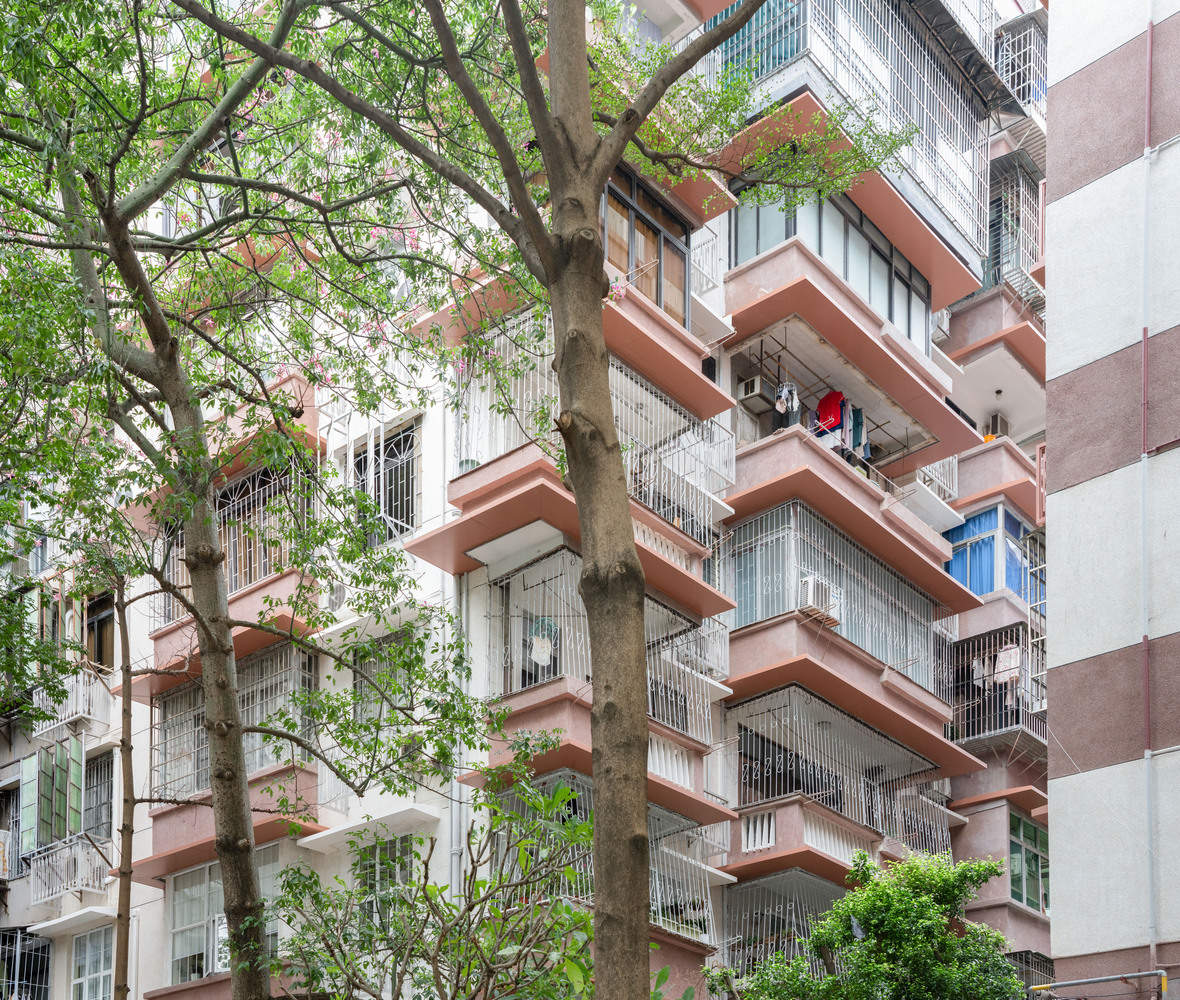
对一般建筑保持原有体量比例,通过色彩、线脚、材料与窗洞比例的统一,使其融入街区整体风貌,避免突兀干扰。“一栋一策”的方法贯穿全过程,每一栋都进行独立评估与策略制定,确保修缮既兼顾安全与生活质量,又尊重原有风貌与材料质感。以节俭、轻介入的方式解决老旧小区屋面渗漏、外墙剥落、排水不畅与晾晒不足等问题,有效改善居民生活品质。“第五立面”屋顶系统通过统一设计整合晾晒、遮雨与绿化功能,改善视觉界面及生活便利性。所有设计在“一栋一策”的调查基础上进行,兼顾使用需求与风貌管控。
© Wu Siming
© 吴嗣铭
© Wu Siming
© 吴嗣铭
3. Jiandong Cluster: The Coexistence Interface of New and Old
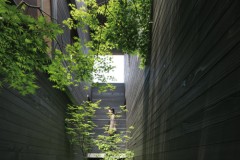
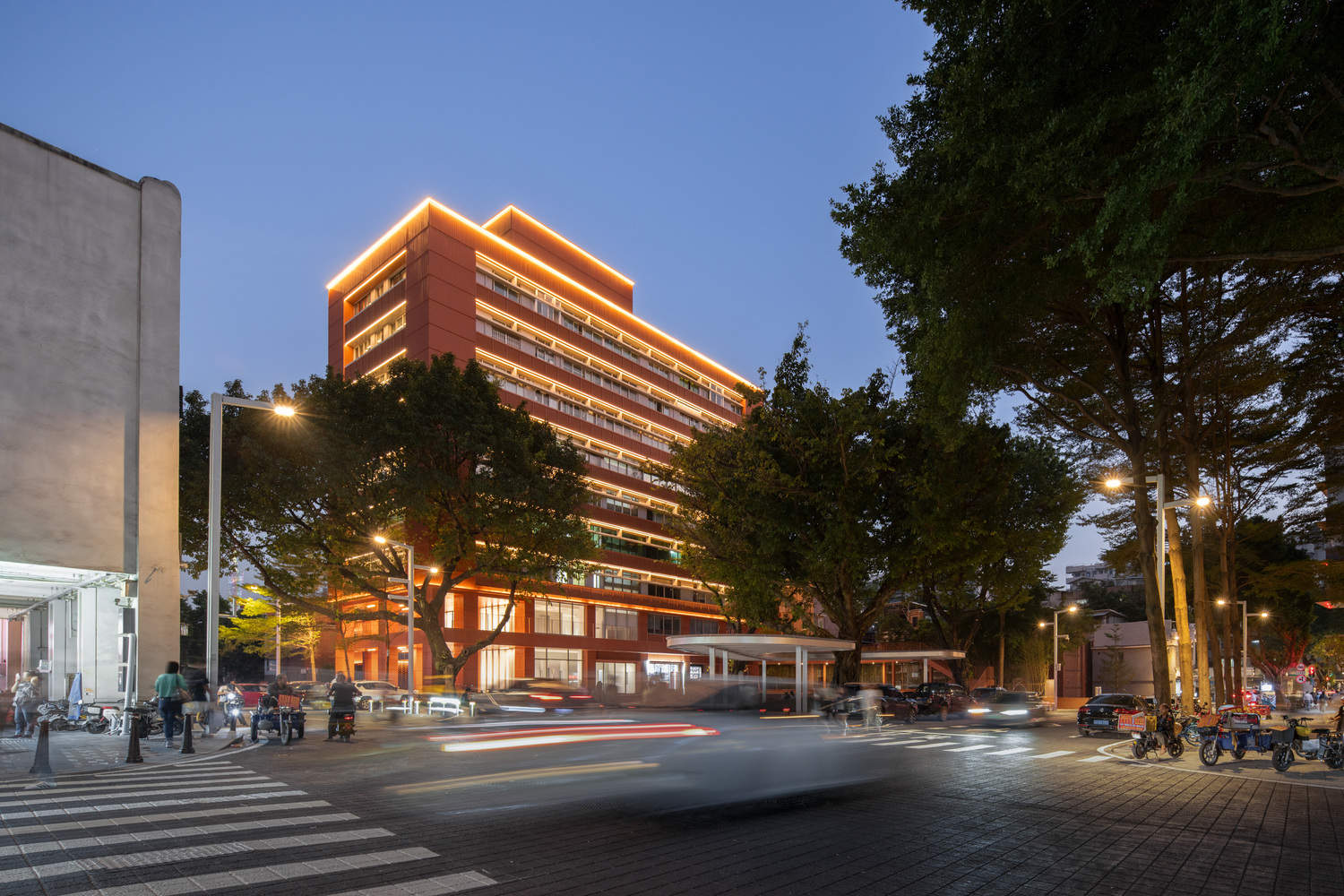
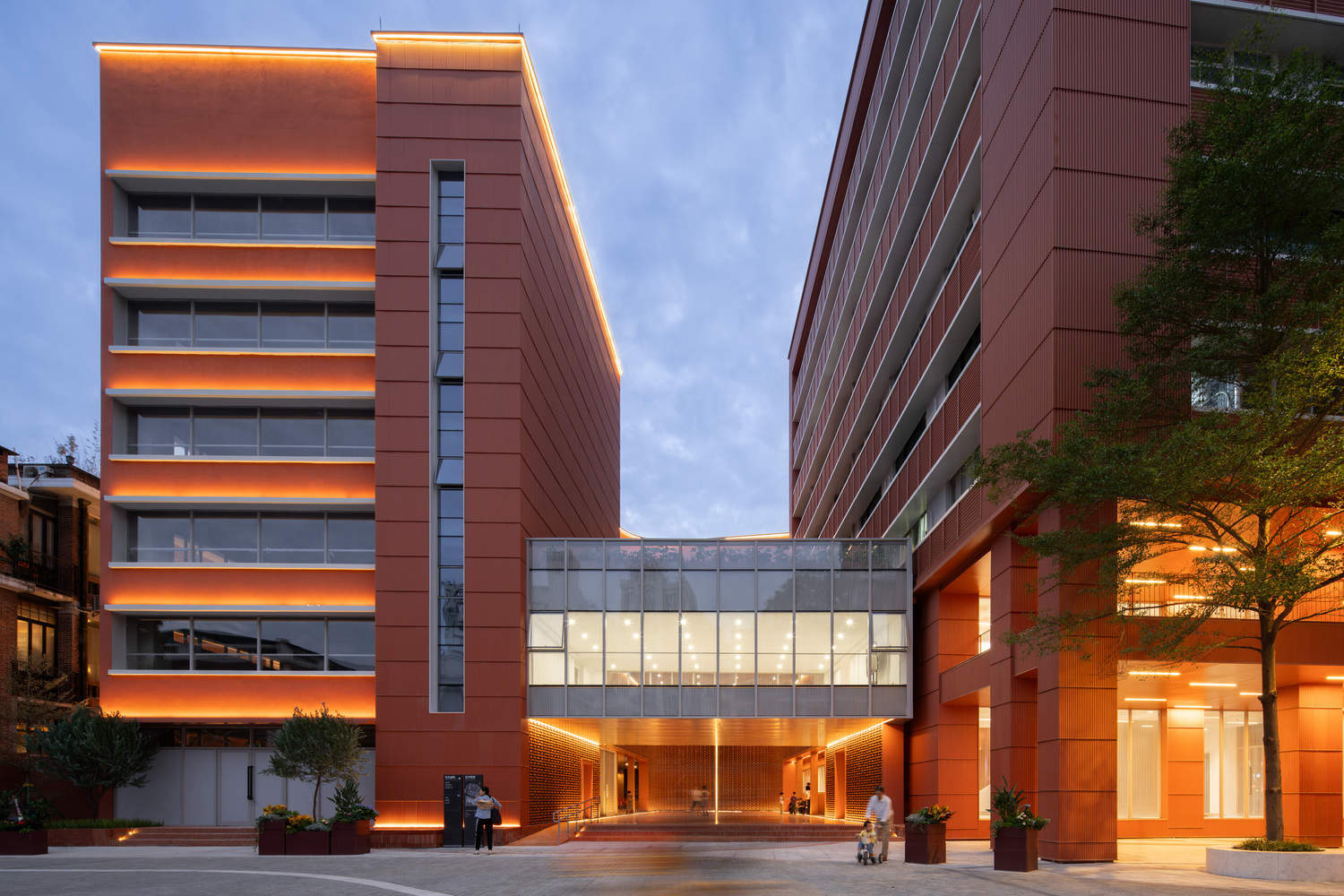
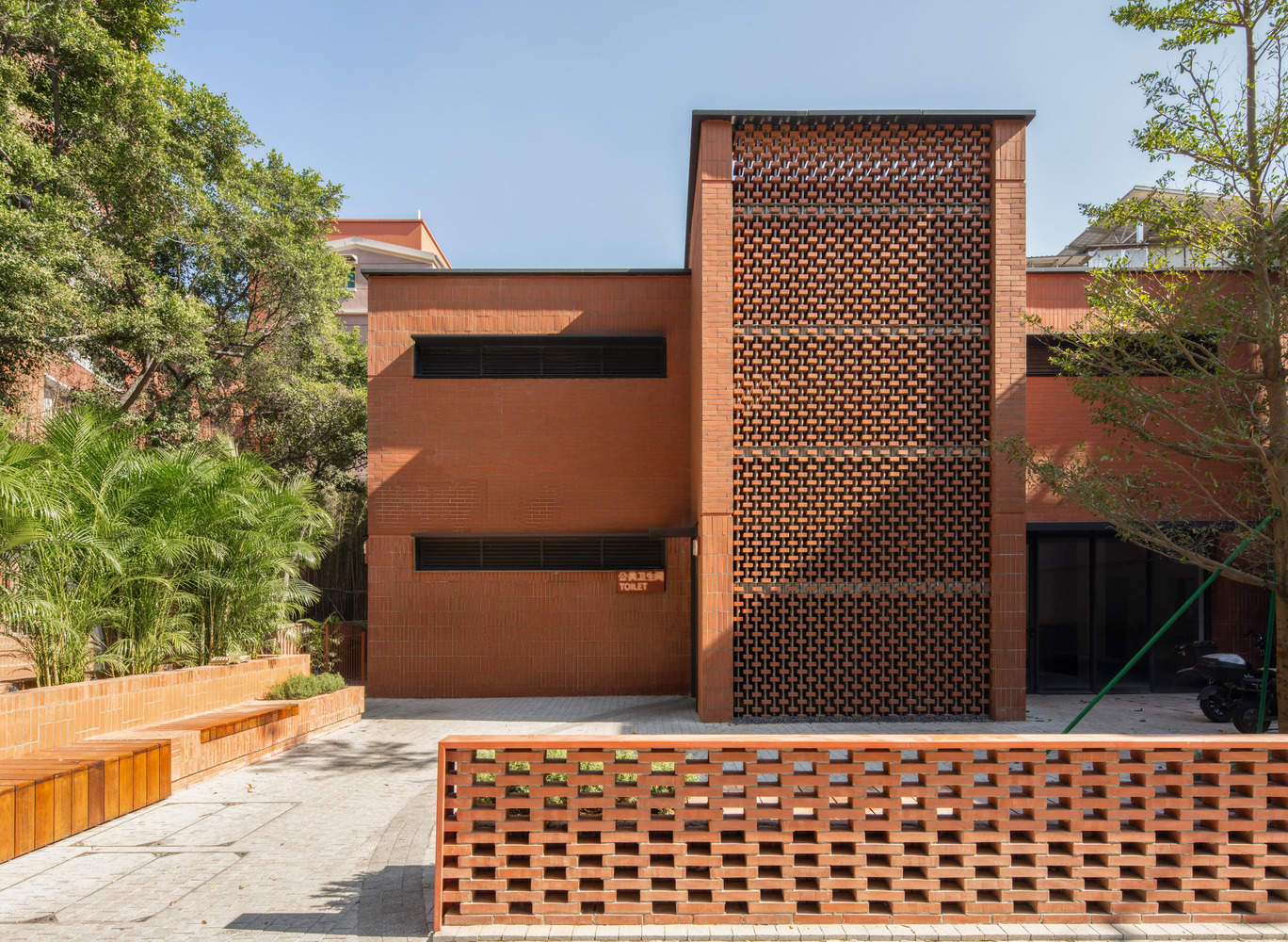
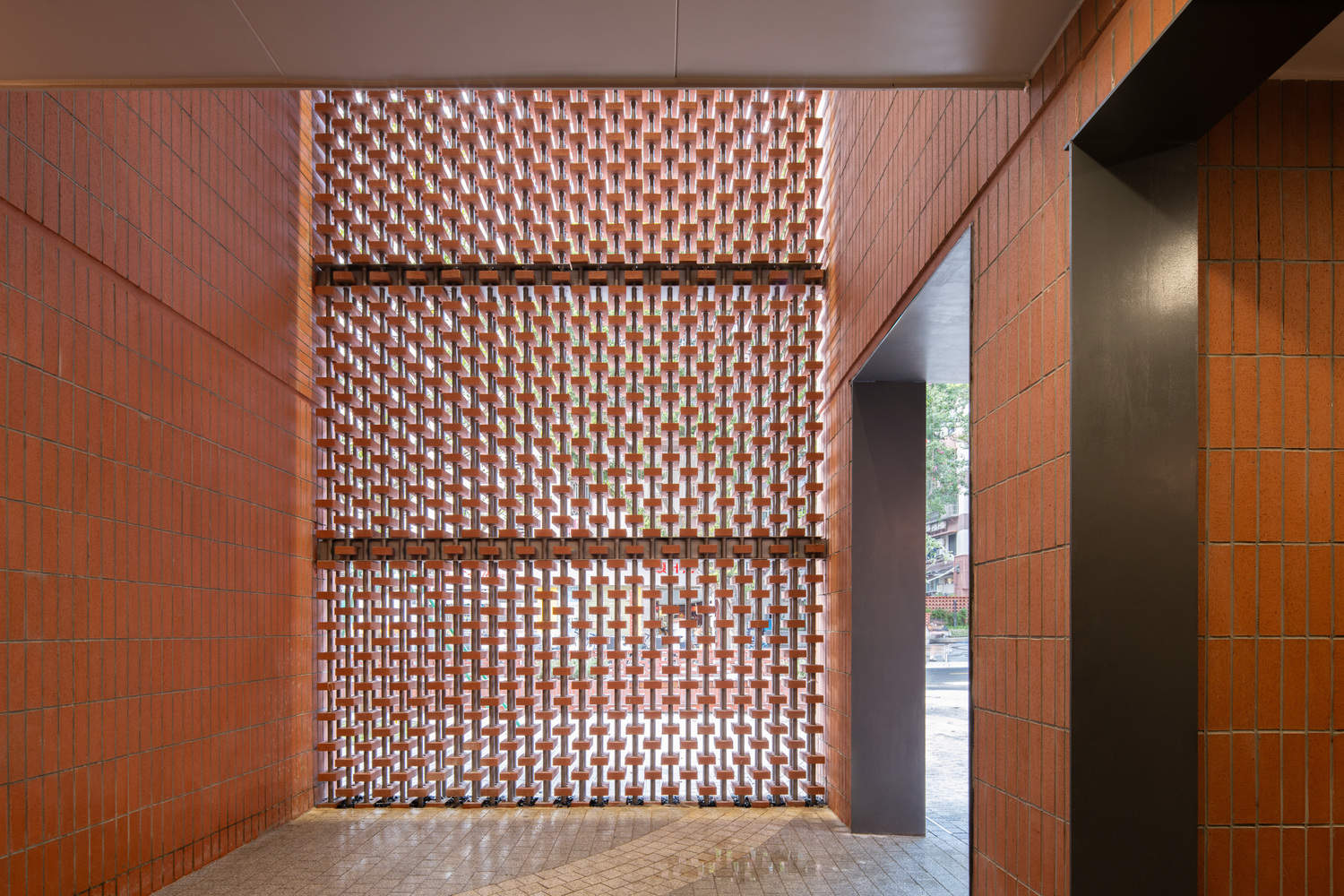
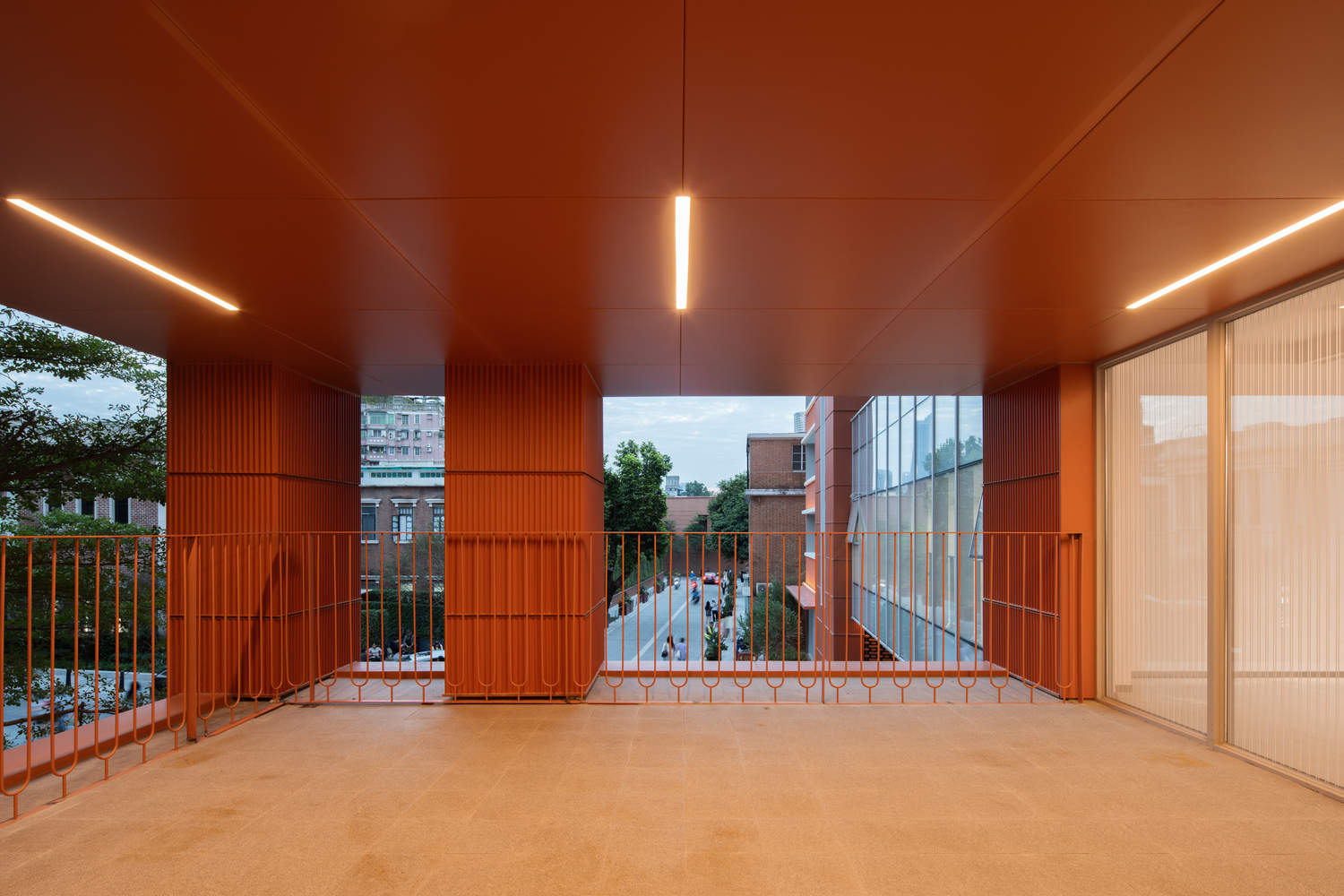
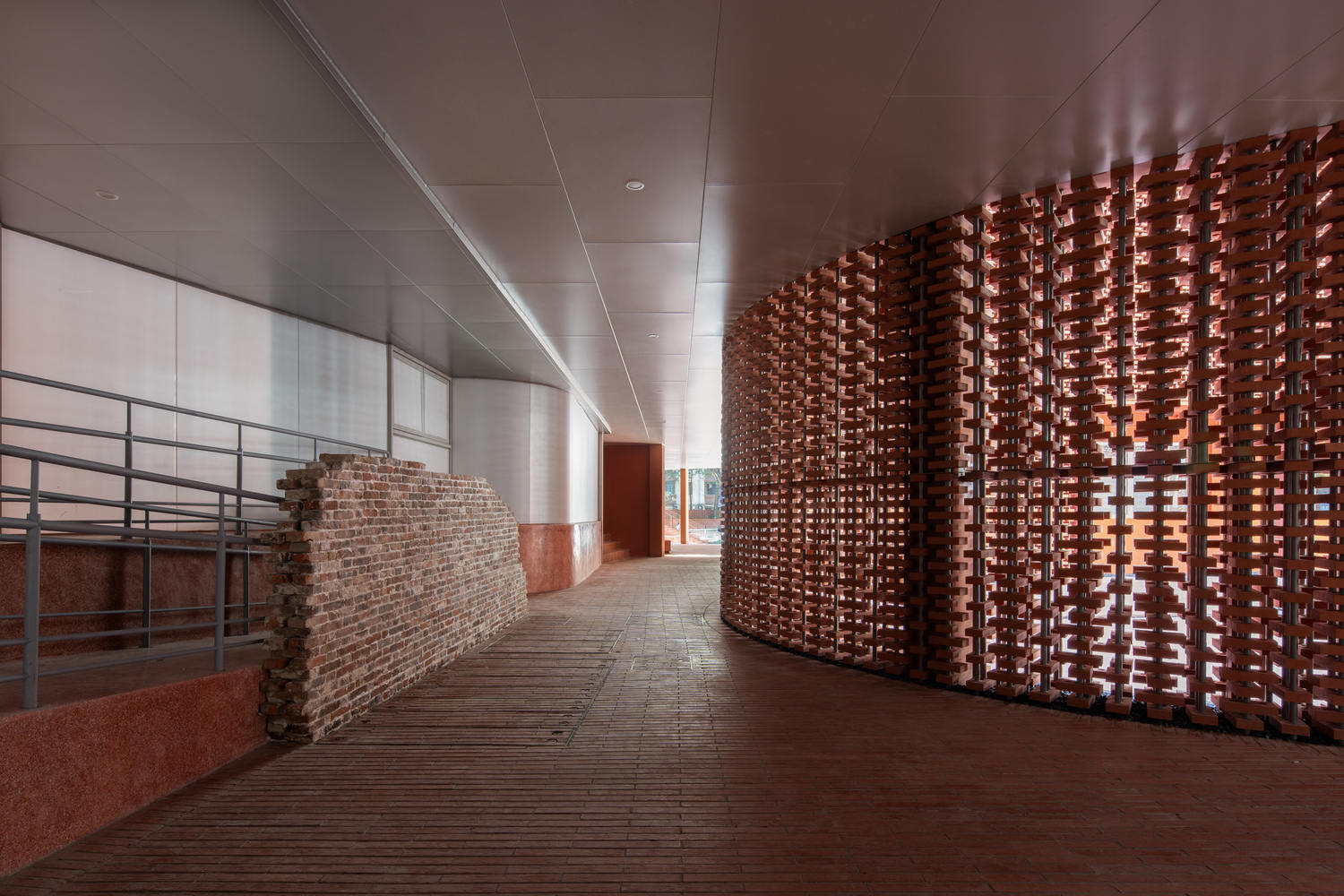
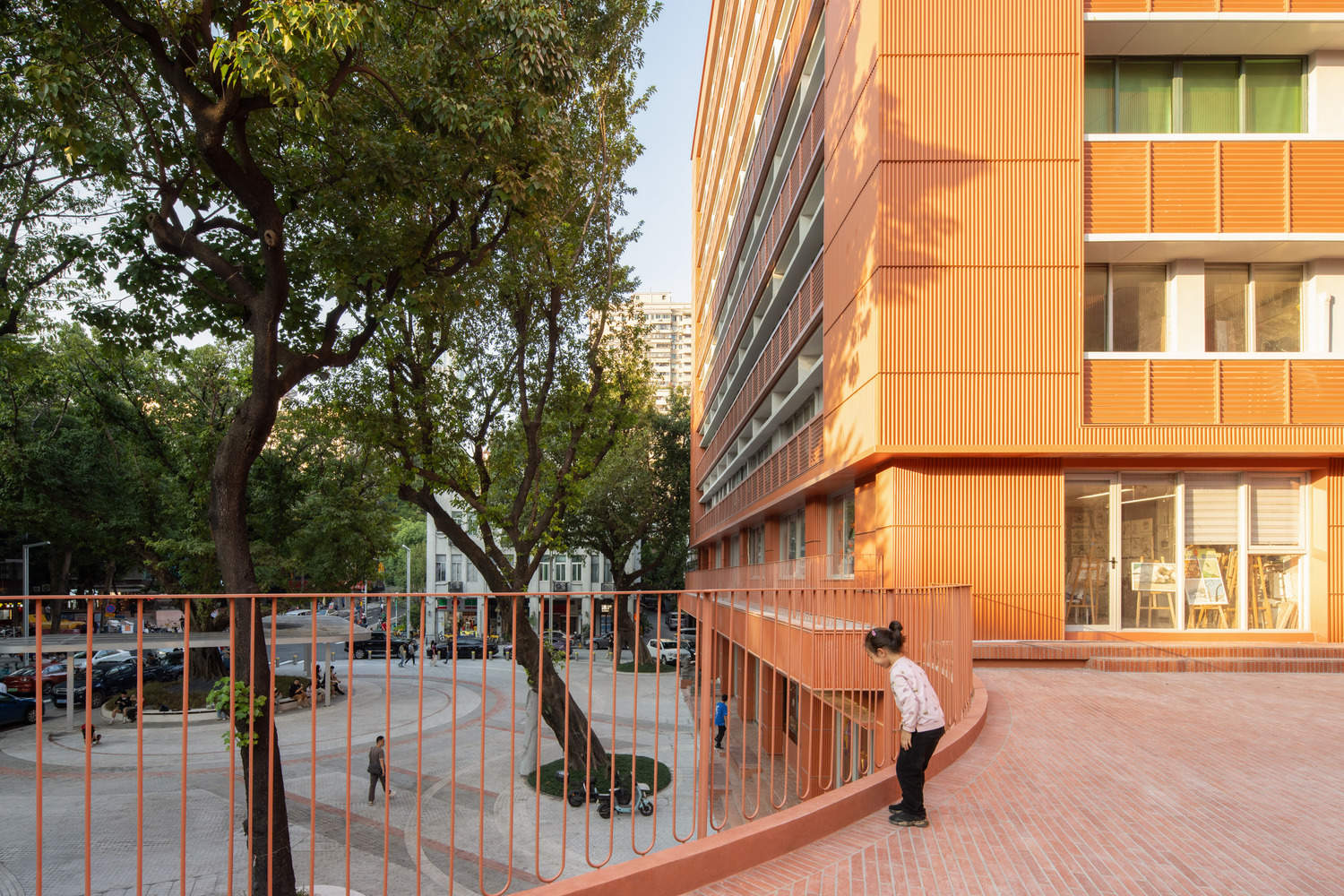
The buildings in the Jiandong Cluster are representative of the integration of new and old in this project. The exterior facade renovation of the Jiandong Building adopted a modern facade composed of terracotta panel-aluminum panel composite curtain walls and red interior wall paint, enriching the block's material layering. A gray space corridor extends from the southwest corner of the building, connecting the first and second floors, the bus stop, and the citizen activity area, providing composite functions such as shade, rest, and walking, allowing the building to connect naturally with the plaza and form a continuous urban interface. The "Remembering the Source" atrium on the first floor uses red terracotta paving and a water feature to form the central scene, creating a cross-temporal visual relationship with the preserved ruins of the original Guangdong Hall. The introduction of light from above and the sound of water, together with the ground ruins, creates a tranquil atmosphere, giving the space an immersive walking experience and perceptual depth. The second-floor exhibition hall forms a U-shaped circulation path around the atrium, naturally guiding sightlines and movement toward the terrace; the terrace, as an outdoor resting space, reinforces the contrast between solid and void on the exterior facade and complements the spatial functions. Ancillary facilities such as public restrooms were also considered for overall style coordination, harmonizing with the traditional block environment through brick construction techniques.
3. 建东组团:新与旧的共生界面
建东组团建筑是本次项目中新旧结合的代表。其中,建东大厦在外立面改造中采用了陶板—铝板复合幕墙系统与红色内墙涂料构成现代立面,丰富了街区的材质层次。建筑西南角延伸出灰空间廊道,串联建筑首二层、公交站与市民活动区,提供遮荫、休憩与步行的复合功能,使建筑与广场自然连接,形成连续的城市界面。位于大厦一楼的“饮水思源”中庭,以红陶砖铺装与水景共同构成中心场景,与原址保留的光东堂遗迹形成跨越时间的视觉关系。上部引光、水声与地面遗迹共同营造宁静的氛围,使空间具备了沉浸式的行走体验与感知深度。建筑二层展厅围绕中庭形成 U 形参观动线,引导视线与动线自然向露台延伸;露台作为室外休憩空间,强化了外立面虚实对比和空间功能的互补。公厕等配套设施同样被纳入整体风貌协调的考量,通过砖砌的设计手法与传统街区环境和谐共处。
© Wu Siming
© 吴嗣铭
© Wu Siming
© 吴嗣铭
4. Indoor Renovation: Xinhepu Neighborhood Home
No. 7 Xiguyuan Road was transformed into a multi-functional community center integrating reading, activities, services, and public display. The three-story continuous spatial structure creates an open neighborhood circulation, activating the potential of the old building with a modern design language.
4. 室内改造:新河浦邻里之家
将恤孤院路 7 号改造为多功能社区中心,集阅读、活动、服务与公示于一体。三层贯通的空间结构营造开放的邻里动线,以现代设计语言激活旧建筑的潜能。
© Wu Siming
© 吴嗣铭
Three, Public Space Creation: System Building from Spatial Integration to Quality Improvement
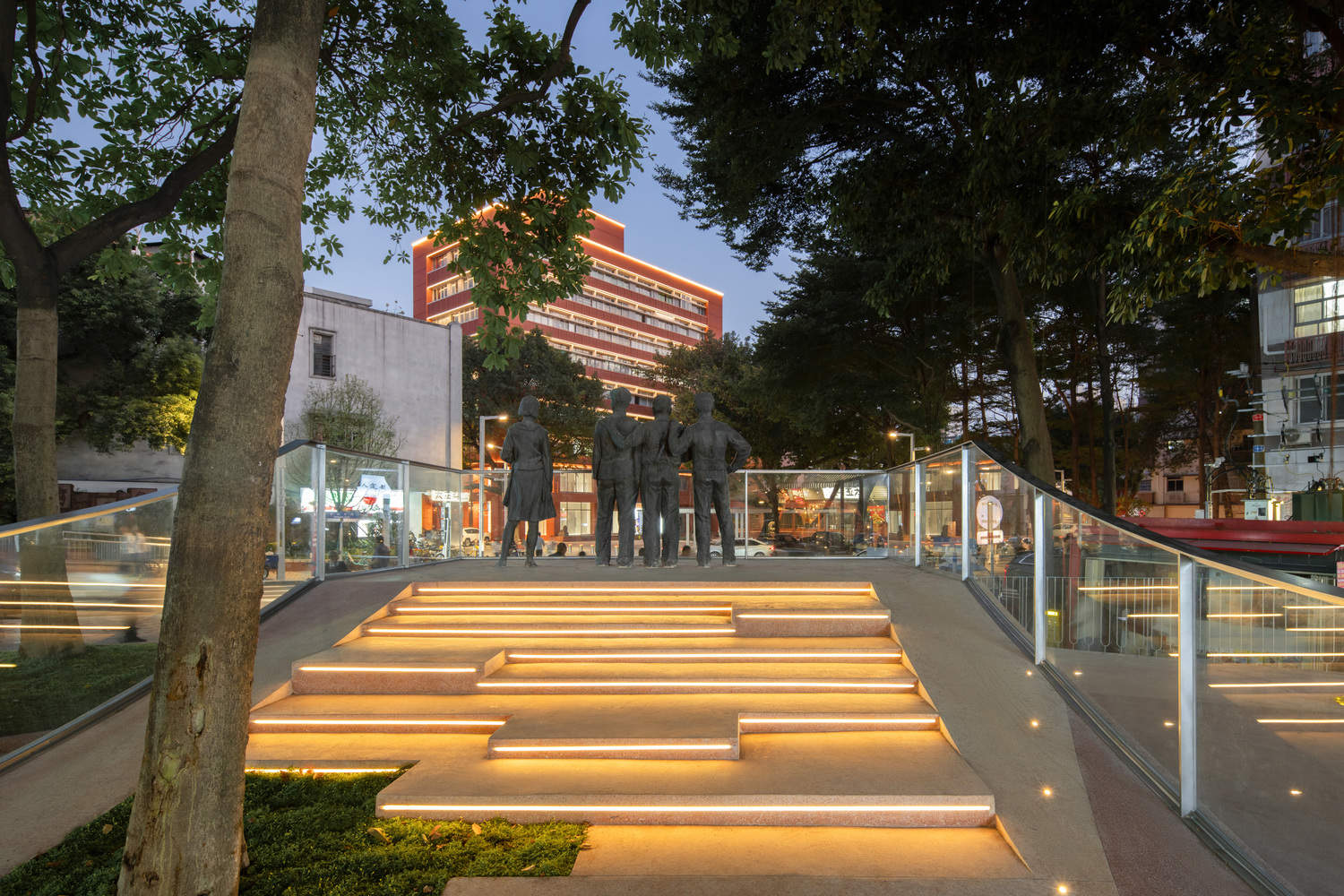
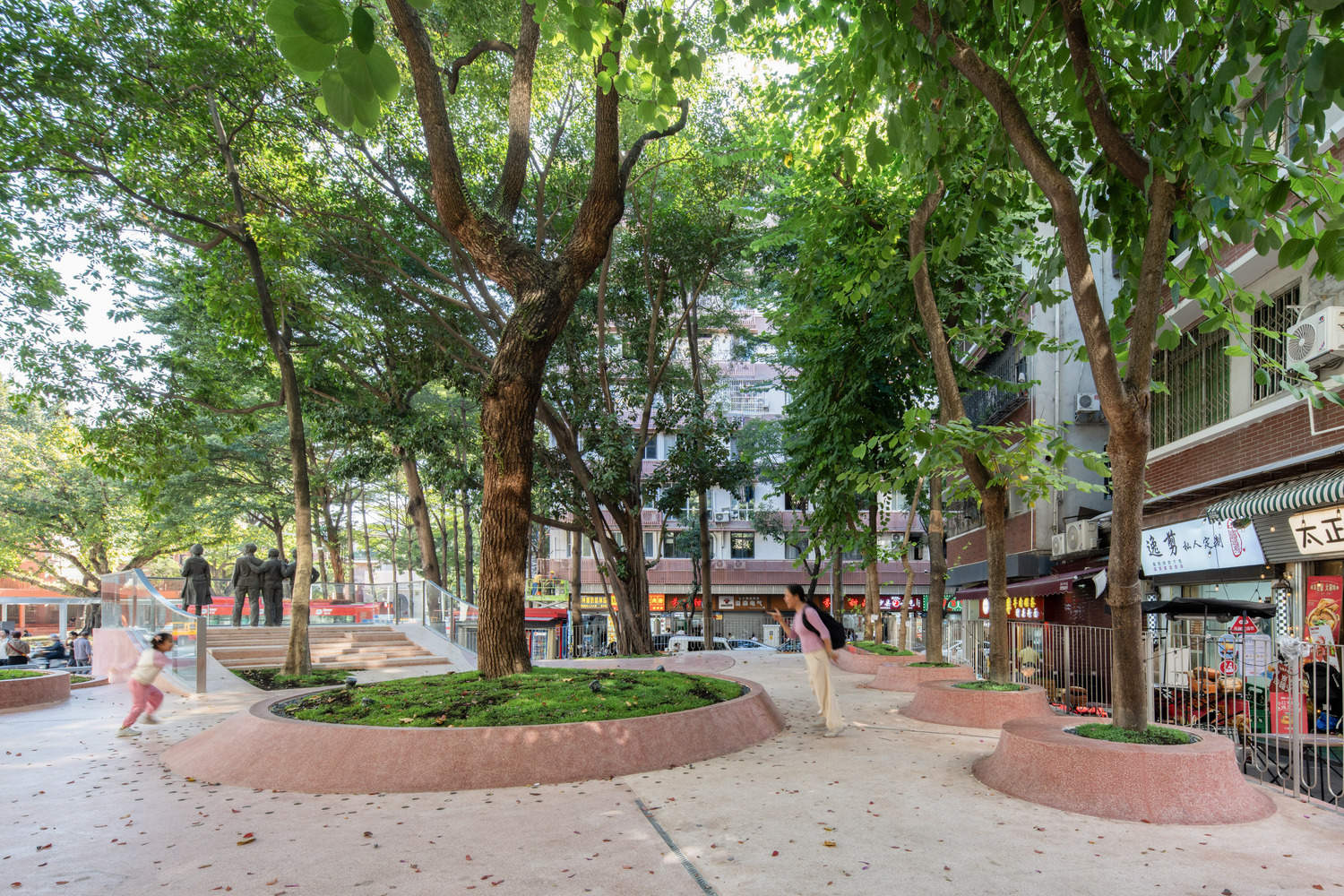
This project incorporated the Northwest Corner Square of Xinhepu, the Southwest Corner Square of Xinhepu, and the Entrance Plaza of the Jiandong Building into the landscape system, forming a linked and complementary public space network. The Northwest Corner Square of Xinhepu, serving as an open urban living room, retained the original sculpture while reshaping the spatial structure through micro-terrain treatment and unified paving. High-level differences were naturally resolved using steps, slopes, integrated seating, and greenery to enhance circulation coherence and visual expansiveness. Simultaneously, sponge facilities such as rain gardens and ecological paving were introduced to enhance the site's ecological regulation capacity.
三、公共空间营造:空间整合到品质提升的体系构建
本项目将新河浦西北角广场、新河浦西南角广场与建东大厦门户广场整体纳入景观系统,形成联动互补的公共空间网络。新河浦西北角广场作为开放的城市客厅,在保留原有雕塑的基础上,通过微地形处理与统一铺装重塑空间结构,结合阶梯、坡道、坐凳与绿化自然化解高差,提升动线的连贯性与视觉舒展度;同时引入雨水花园、生态铺装等海绵设施,增强场地的生态调节能力。
© Wu Siming
© 吴嗣铭
© Wu Siming
© 吴嗣铭
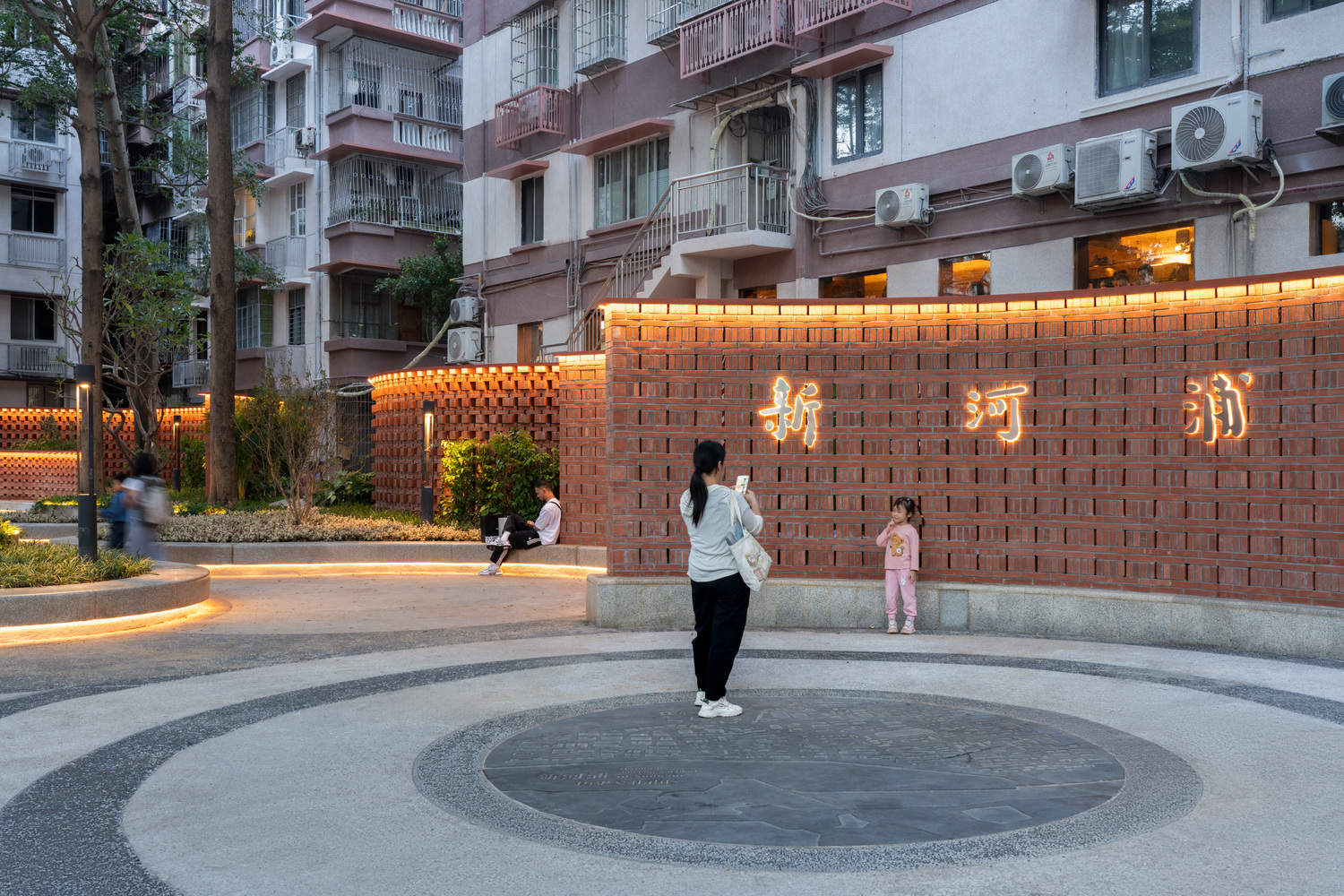
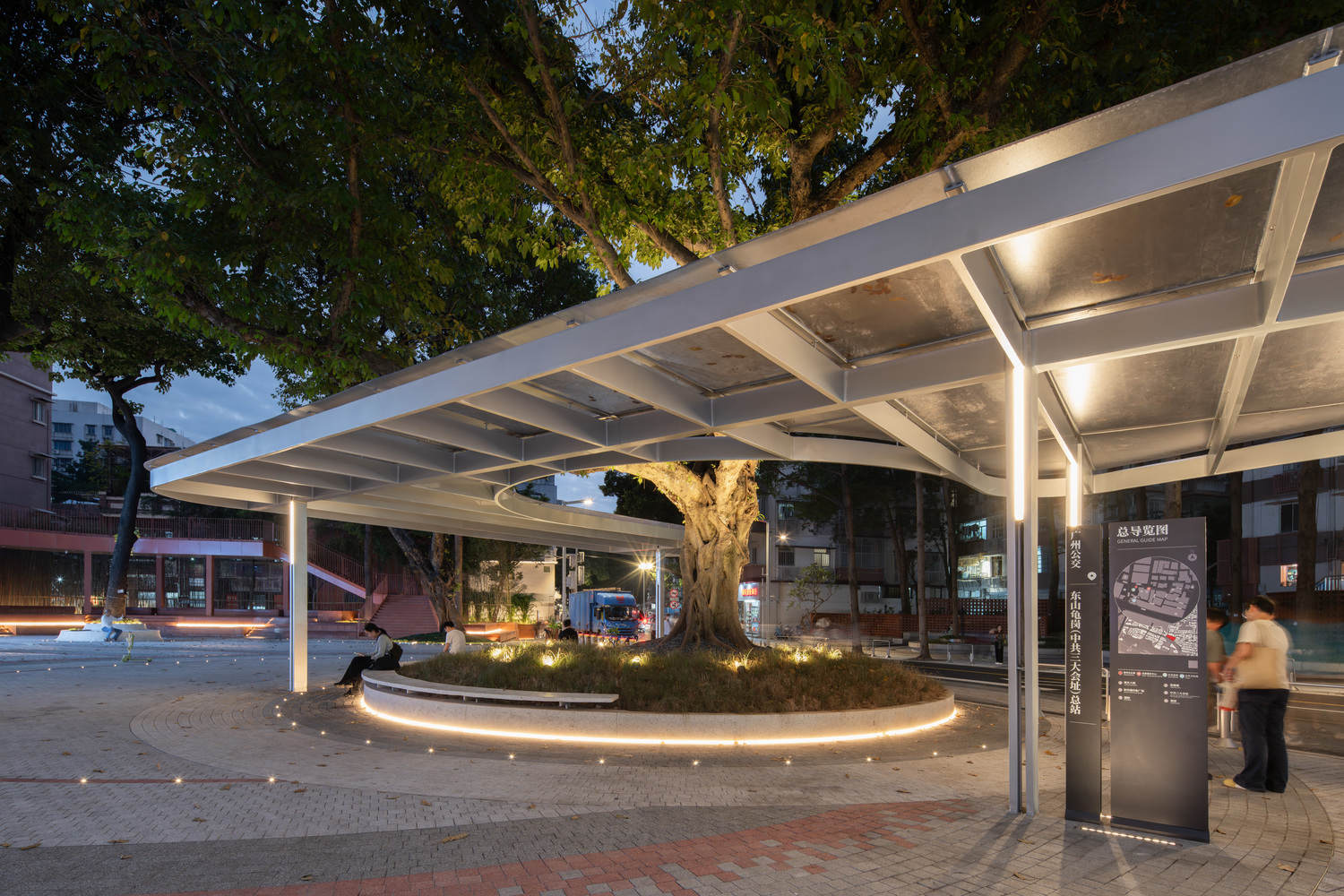
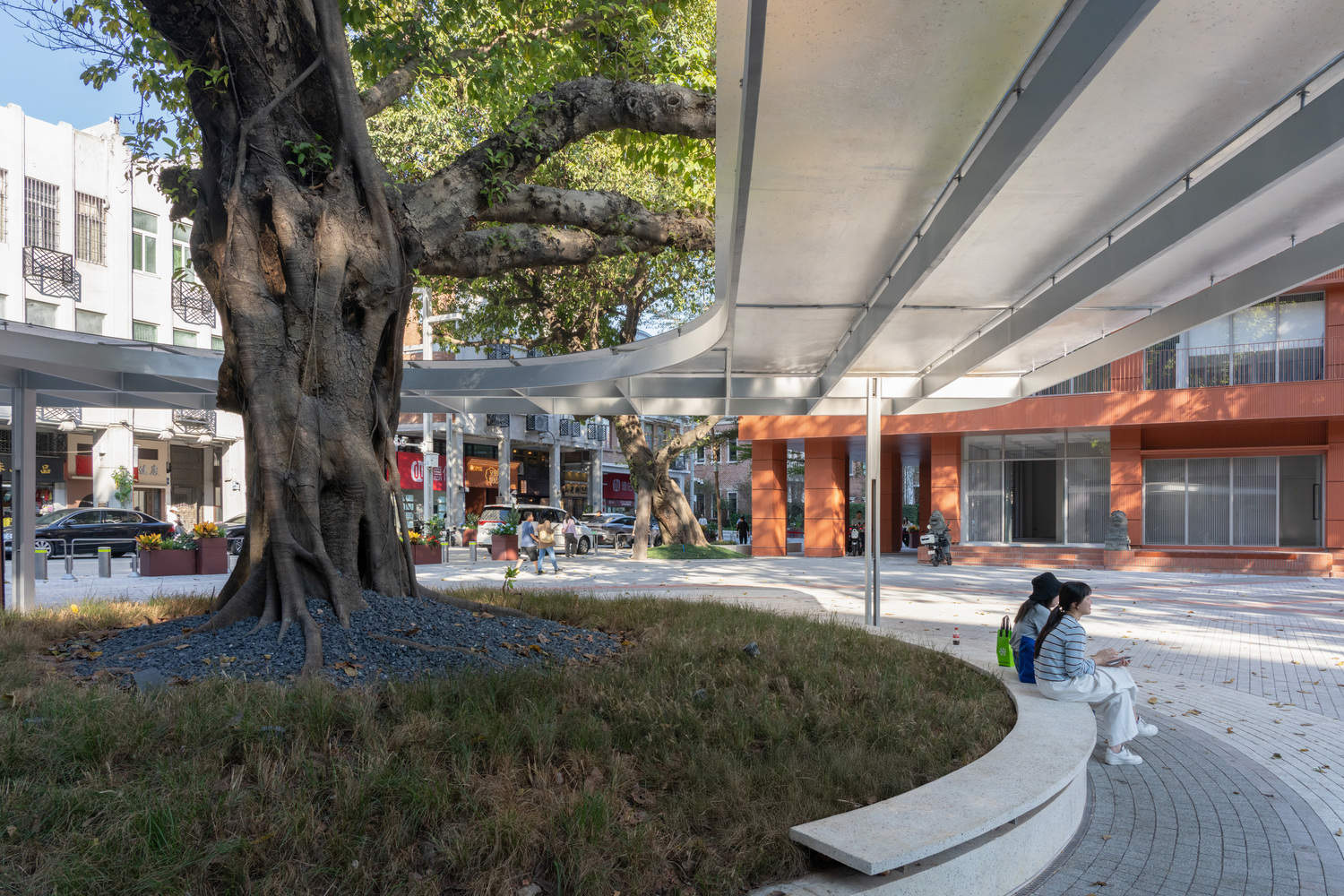
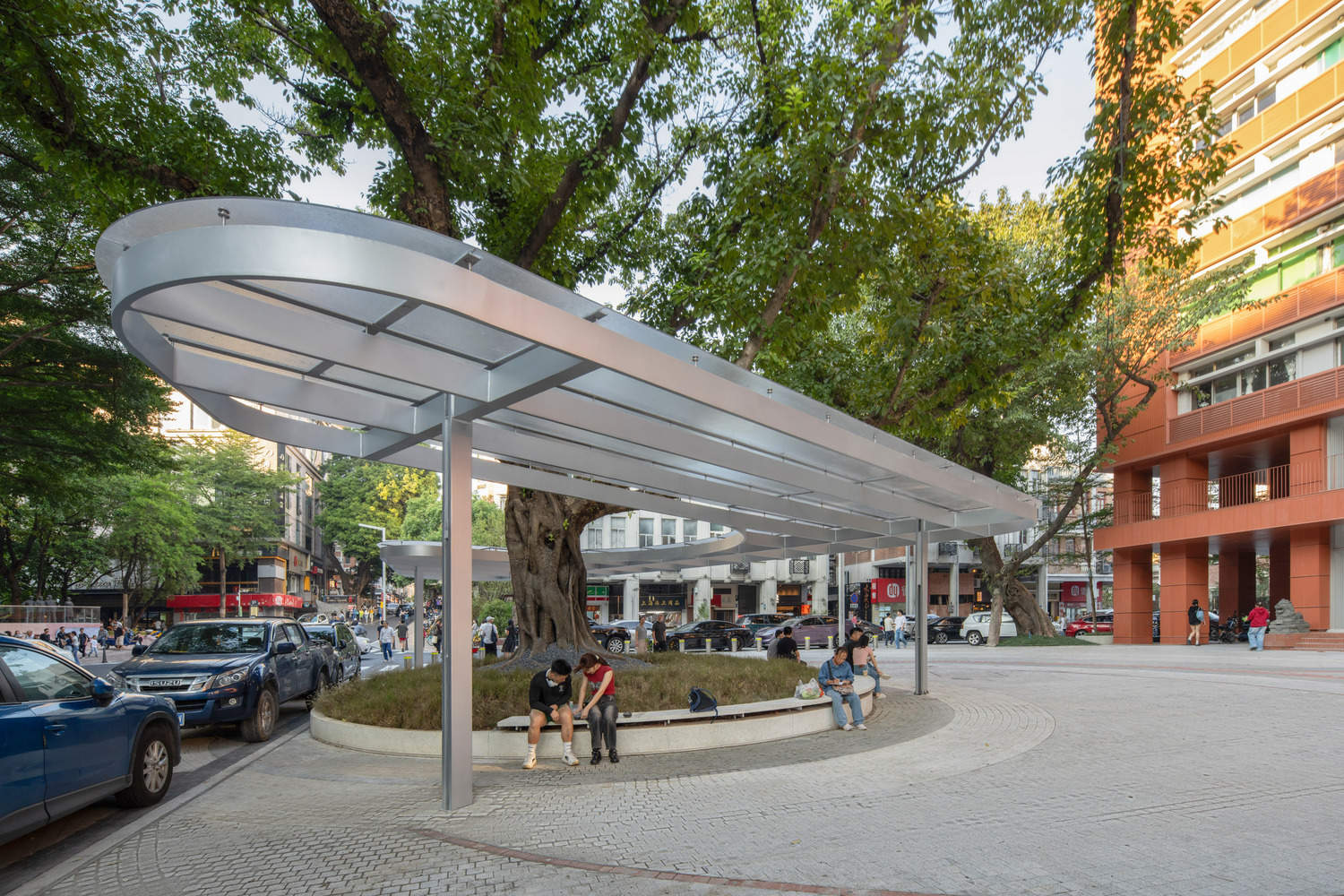
The Southwest Corner Square of Xinhepu utilized delicate designs such as curved tree pits, integrated seating, and permeable paving to enhance the sense of pause and interaction. By opening up the interface facing residents, permeability and openness were increased. The Entrance Plaza of the Jiandong Building focused on resolving the relationship between the bus stop and the ancient tree, integrating tree pits and seating to form a comfortable waiting area sheltered from sun and rain. The canopy used translucent polycarbonate panels, where the interplay of new materials and the light and shadow of the banyan tree reinforced the artistic conception of the ancient tree as a symbol of place memory and spirit. Building upon this, the project further improved the urban furniture system by coordinating the addition of facilities such as seats, signage, and lighting to enhance functionality and identifiability. Protection railings, partitions, corridors, and vehicle barriers were multi-functionally integrated to serve roles in resting, guidance, and spatial demarcation, ultimately forming a flexible and adaptable high-quality public space system.
新河浦西南角广场则通过弧形树池、一体化坐凳与透水铺装等细腻设计,提升空间的停留感与互动性,并通过打开面向居民的界面,增强场地渗透与开放度。建东大厦门户广场重点解决公交车站与古树的关系,将树池与座椅融合设计,形成遮阳避雨的舒适等候区;顶棚采用透亮耐力板,新材料与古榕树的光影交织,强化了古树作为场所记忆与精神象征的意境。在此基础上,项目进一步完善城市家具系统,统筹增设座椅、导视、灯具等设施,提升功能与识别性;并对防护栏、隔断、连廊与车挡等进行多功能整合,使其兼具休憩、引导与空间界定的复合作用,最终形成一套灵活、适应性强的高品质公共空间体系。
© Wu Siming
© 吴嗣铭
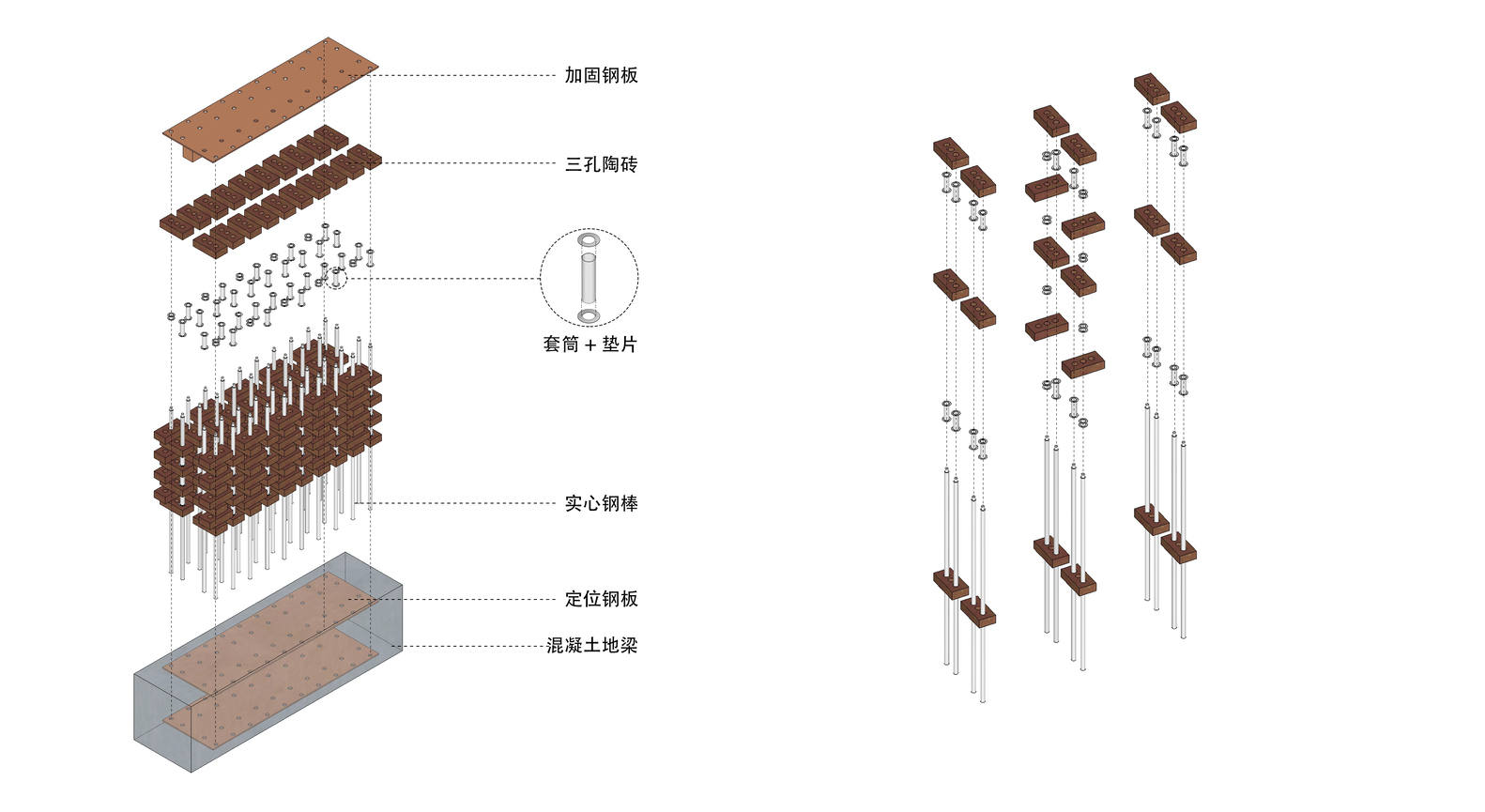
Dry-Hung Perforated Terracotta Detail (Jiandong Building Atrium "Remembering the Source")
干挂镂空陶砖做法(建东大厦中庭“饮水思源”)
© Wu Siming
© 吴嗣铭
Four, Systemic Technical Framework: Translation and Integration of Traditional Materials and Contemporary Technologies
During the implementation phase, emphasis was placed on combining traditional craft methods with modern material technology to achieve a harmonious balance between new and old.
四、系统性技术体系:传统材料与当代技术的转译整合
在落地施工阶段,注重传统工艺工法与现代材料技术的结合运用,取得新旧结合的平衡协调。
1. Refined Craft and Technology Research
For the renovation of traditional buildings, old craftsmen were hired to use traditional techniques (such as fair-faced red brick walls, wooden doors and windows, decorative lines, and stucco surfaces) for repair, while new environmentally friendly reinforcement materials (such as carbon fiber cloth) were used to reinforce wooden and brick structures. While continuing traditional skills, new techniques such as hollow brick masonry and terracotta tile facing were innovatively applied, developing dry-hung hollow terracotta tiles combined with terrazzo craftsmanship to form a contemporary translation of traditional materials, providing an operable technical path and theoretical reference for historical block renewal.
1. 精细化的工法技术研究
对于传统建筑的修缮,我们聘请老工匠运用传统工艺(如清水红砖墙、木门窗、装饰线条、水刷石面层)进行修复,同时使用新型环保加固材料(如碳纤维布)对木结构、砖结构进行加固。在延续传统技艺基础上,我们又创新运用镂空砖砌筑与陶砖贴面技术,并发展出干挂镂空陶砖,结合水磨石工艺,形成传统材料的当代转译,为历史街区更新提供可操作的技术路径与理论参照。
© Wu Siming
© 吴嗣铭
© Wu Siming
© 吴嗣铭
2. Integration and Improvement of Infrastructure
Underground Utility Lines: The exposed lines on the Jiandong Building were systematically organized and relocated into pre-set underground utility corridors on the side of the building, achieving the governance goal of concealing and organizing pipelines. Relocating External Racks: The external racks on the north facade of Nos. 702-680 Donghua East Road were moved and installed behind the landscape wall on the east plaza. This measure aimed to completely eliminate facade clutter, improve visual neatness, and fundamentally eliminate high-altitude safety hazards.
2. 基础设施的整合提升
三线下地:建东大厦原有外露线路已被系统性地整理并迁改至建筑侧边预设的地下管廊中,实现了管线隐蔽化、规整化的治理目标。台架下地:将东华东路 702-680 号北立面台架,移至东侧广场景墙后落地安装。此举旨在彻底消除立面的杂乱感,提升视觉整洁度,并从根本上消除高空安全隐患。
© Wu Siming
© 吴嗣铭
© Wu Siming
© 吴嗣铭
© Wu Siming
© 吴嗣铭
Line Organization: To address the issue of messy exterior facades, the renovation implemented a systematic engineering process for organizing lines and equipment—air conditioning outdoor units on the second and first floors were consolidated and housed, and existing protruding aluminum panels were removed. Exposed pipelines, cables, and stairs were uniformly concealed through wrapping. Pole Consolidation (Multiple poles into one): Various street poles such as streetlights, surveillance cameras, signage, and smart traffic signs, which were originally dispersed, were integrated into multi-functional smart poles, achieving simplification and stylistic unity of the block's public facilities.
线路规整:针对建筑外立面杂乱的问题,本次改造实施了系统的线路与设备规整工程——对二层与首层的空调外机进行整合归置,并拆除了原有外飘的铝板构;对裸露的管线、电缆及楼梯进行了统一的隐蔽包裹处理。多杆合一:将原本分散设置的路灯、监控摄像头、标识牌及交通智慧牌等多类街道杆件进行集约化整合,统一设计为一体化智慧杆,实现了街区公共设施的简约化与风格统一。
© Wu Siming
© 吴嗣铭