在地文脉的当代诠释:该项目位于双鱼岛这一人工岛屿的独特背景下,成功地将闽南地域文化传统融入到现代功能建筑设计中。设计巧妙地参照了“前埕后厝”的聚落格局,并从“燕尾脊”屋顶中汲取灵感,通过挑檐的微小上翘,创造出具有地域特征的灰空间。材料的选择上,素混凝土体现了对海岛原始地貌的尊重,而点缀其中的彩色釉面瓷砖,特别是楼梯间和角柱的精致花砖,则是在当代语境下对闽南传统装饰工艺的致敬,实现了地域文化与当代建筑语言的有机融合。
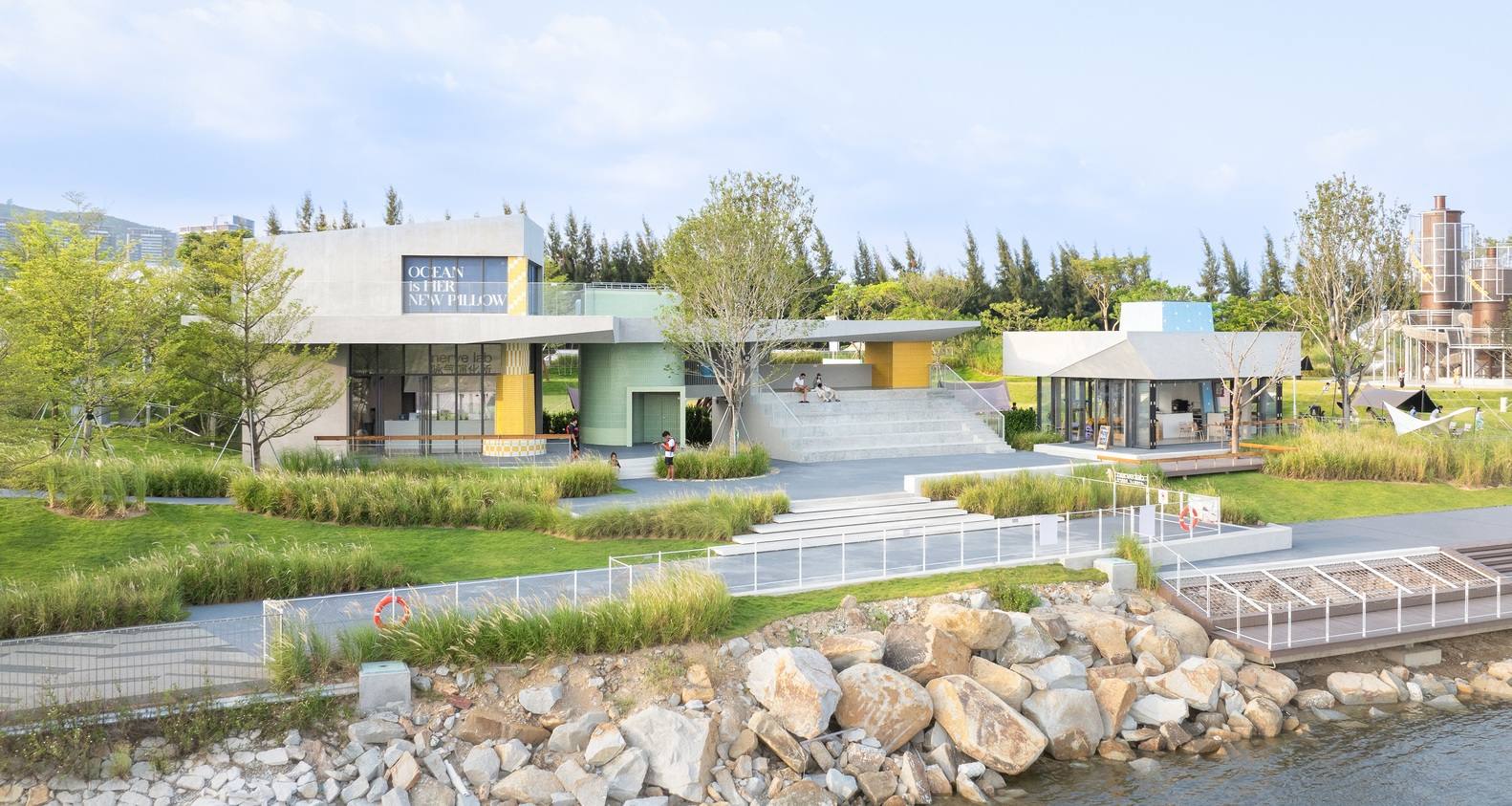
多功能复合空间的组织策略:建筑群围绕一个中央的“埕”——一个集入口广场和公共大台阶于一体的核心空间——进行布局。这一策略不仅高效组织了零售、餐饮、运动主力店和公共卫生间等多种功能流线,更创造了一个重要的公共交往场所。大台阶作为观赛、休憩和停留的平台,极大地增强了建筑的公共性和场所感,有效地连接了内湾水岸、码头和背后的乐园,使得建筑真正成为岛屿活动与社区生活的一个灵活的“容器”。
空间体验与材料的导向性:建筑在功能布局和材料运用上展现出清晰的导向策略。连续的大挑檐不仅提供了必要的遮蔽,其变化的几何形态也引导了自然光线。在材料层面,通过在关键结构和交通空间(如旋转楼梯间、核心筒)使用色彩和纹样各异的釉面花砖,设计在缺乏传统街道界面的海岛环境中,为使用者提供了明确的空间识别线索。这种材料的“着色”策略,既丰富了建筑的视觉层次,也巧妙地强化了空间的功能分区与导向逻辑。
From the architect. Studio 10 designed a series of experimental water sports ancillary buildings for the 'Yong Qi Evolution Institute' on the artificial island of Shuangyu Island in Zhangzhou Development Zone, Fujian.
来自建筑师。Studio 10 为位于福建漳州开发区双鱼岛的咏气演化所设计了一组实验性水上运动配套建筑。该项目是一处融合轻文旅、水上运动与社区服务功能的综合设施,旨在为运动爱好者、游客及周边居民提供零售、轻餐饮、小型展览、休憩阶梯与公共卫生间等服务。
© 张超
© 张超
© 张超
© 张超
Shuangyu Island was formed by earth and stone filling generated during the local development and construction process, located in the eastern sea area of the Zhangzhou Development Zone, looking north towards Zhangzhou Port, Xiamen urban area, and Gulangyu Island, and east towards Kinmen and vast open waters. The island is surrounded by the sea on all sides, connected to the mainland only by a highway bridge. The island's native environment is dominated by knee-high cogon grass, interspersed with exposed granite bedrock. Apart from scattered pastures and coastal campsites, most areas remain undeveloped, presenting an untamed, wild natural atmosphere.
双鱼岛由当地开发建设过程中产生的土方山石堆填而成,地处漳州开发区东端海域,北望漳州港、厦门市区与鼓浪屿,东眺大小金门及开阔水域。岛屿四面环海,仅通过一座公路桥与陆地相连。岛上原生环境以齐人高的芒草为主,间有裸露的花岗岩基底,除散落的牧场与滨海营地外,大部分区域尚未开发,呈现一种未经雕饰的自然荒野感。
© 张超
© 张超
This "historically blank slate" posed both a design challenge and an opportunity to intervene in regional tradition in a contemporary manner. In this experimental field of an artificial island, the design attempts to retain the island's characteristic relaxed, loose, and even slightly "desolate" atmosphere, while simultaneously establishing an implicit dialogue with the deep regional cultural traditions of Southern Fujian. Furthermore, it provides genuinely useful service spaces for sports enthusiasts, tourists, and the surrounding community, fostering a profound connection between people, the sea, and local heritage.
这片“无历史的空白之地”,既构成设计的挑战,也提供了以当代方式介入地域传统的可能。在一座人工岛屿的实验场中,设计尝试保留海岛特有的松弛、散漫甚至略带“荒凉”氛围,同时建立与闽南地区深厚地域文化传统的隐性对话,并为运动人群、游客及周边社区提供切实可用的服务空间,建立人、海与地方传统的深层连结。
© 张超
© 张超
© 张超
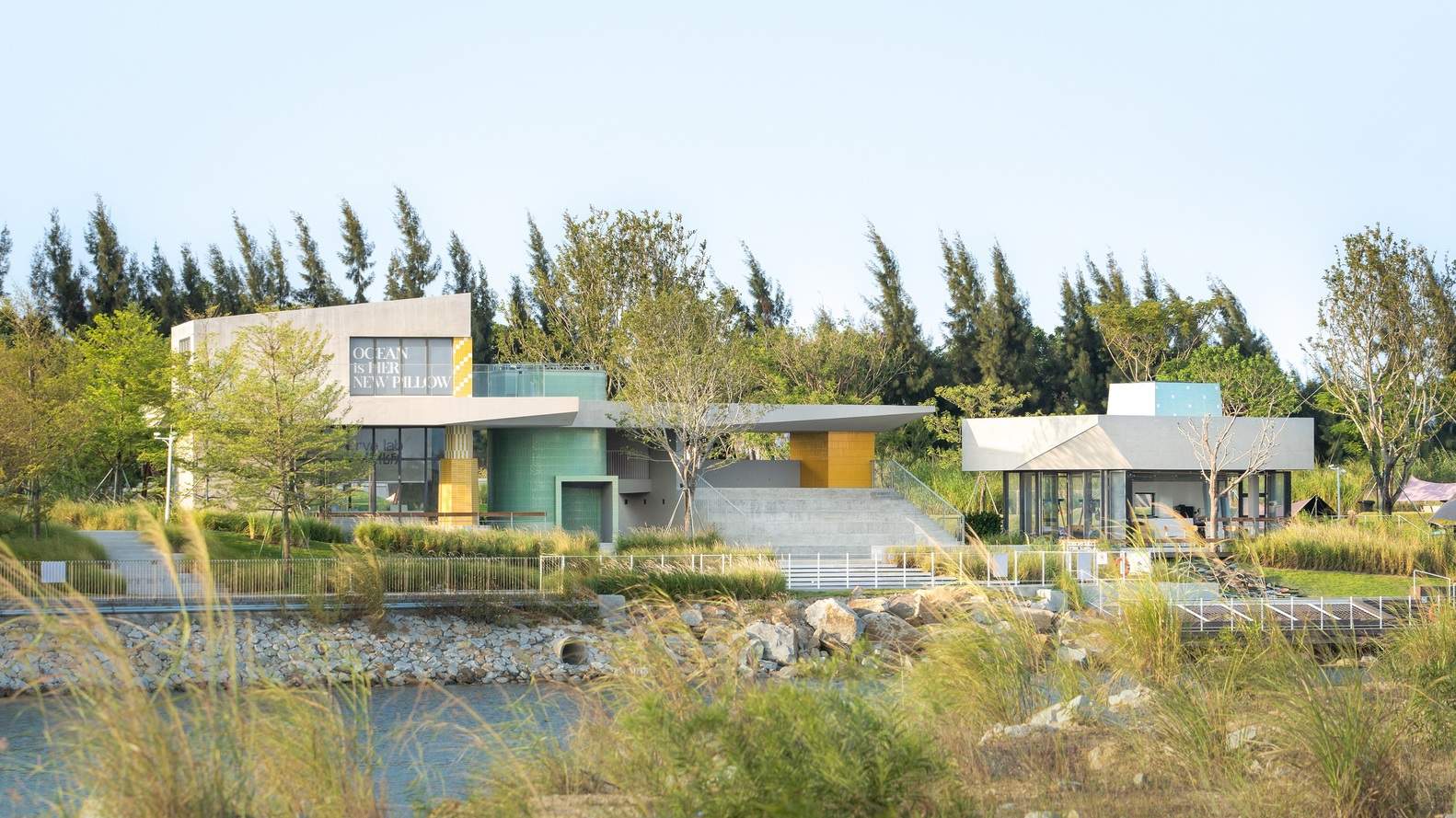
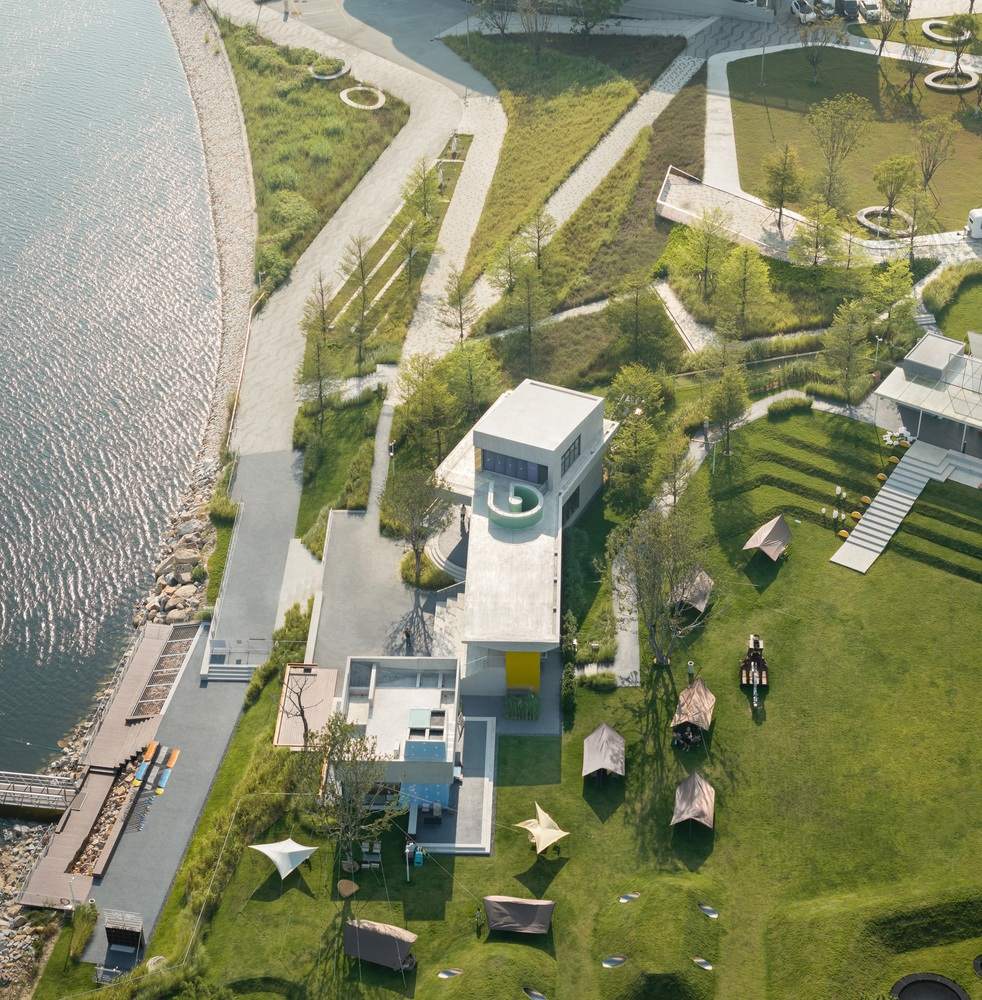
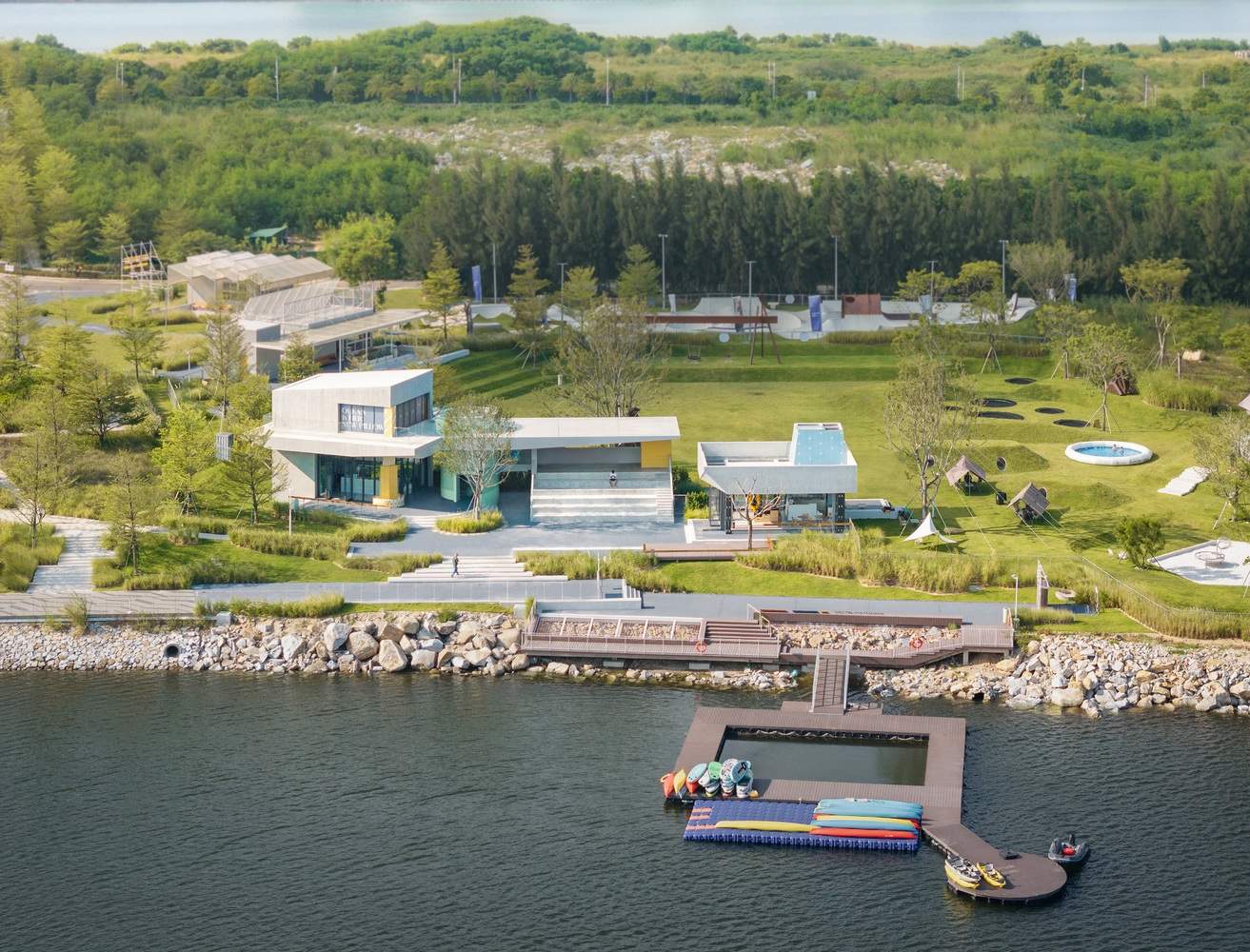
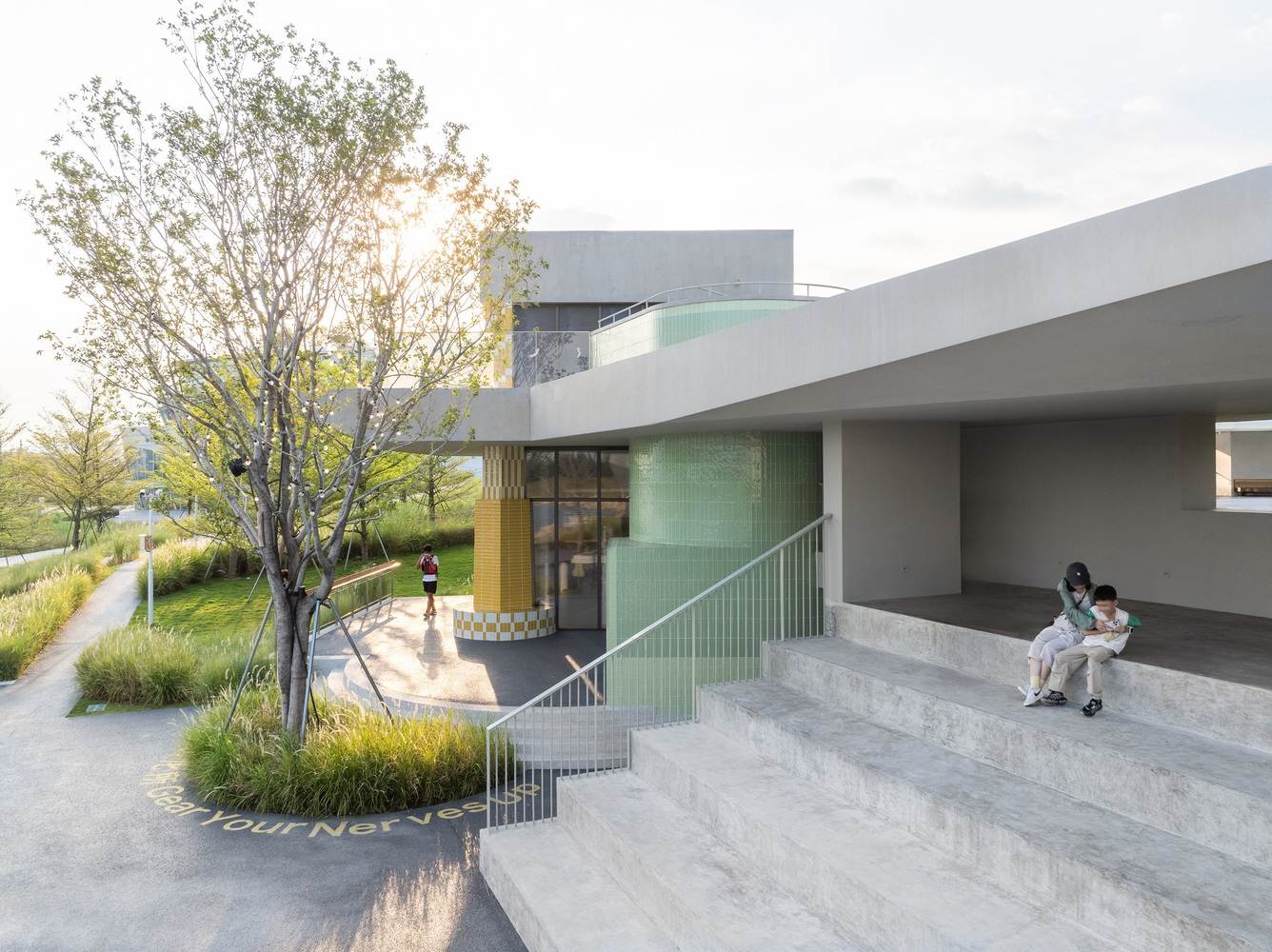
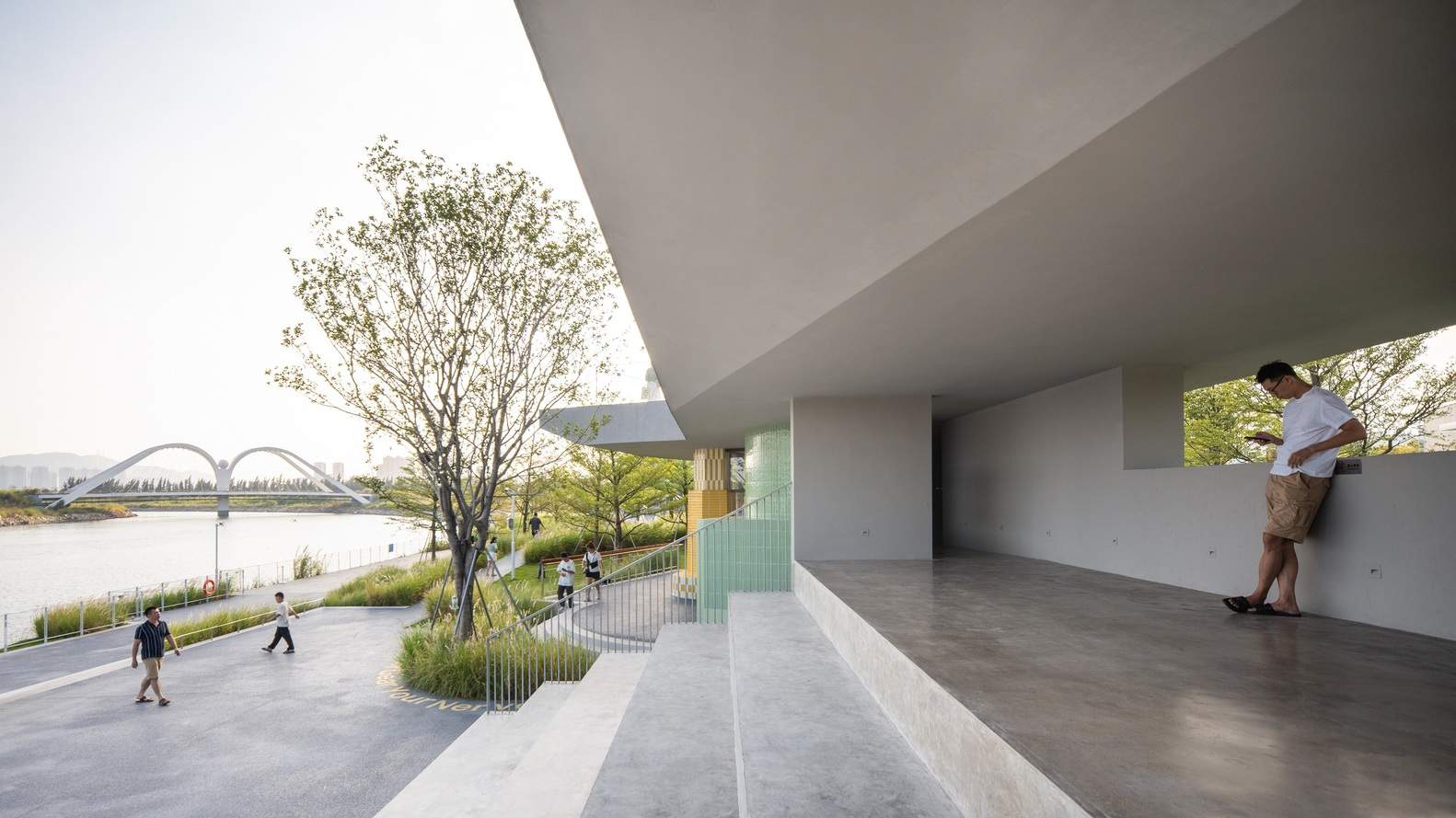
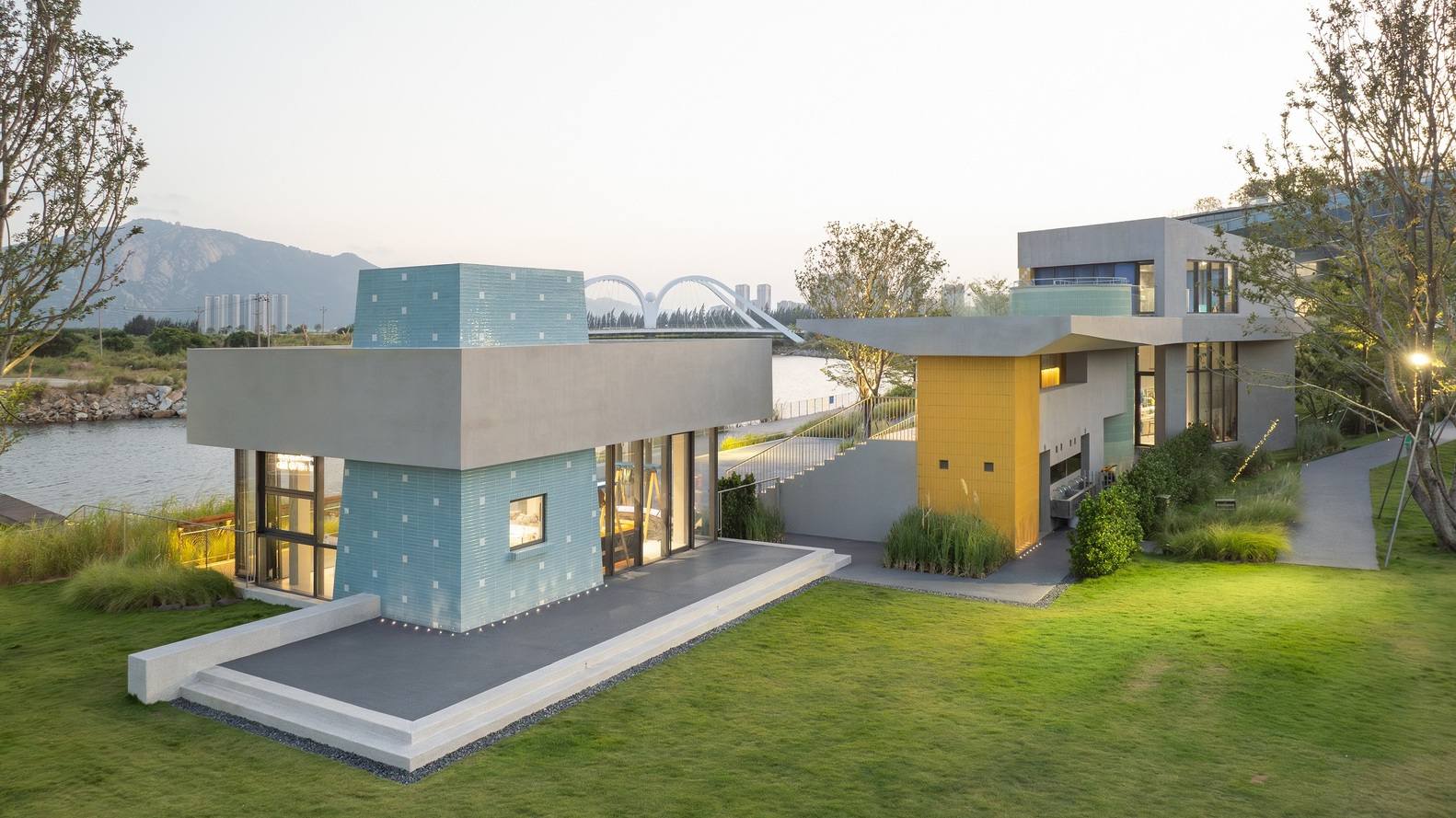
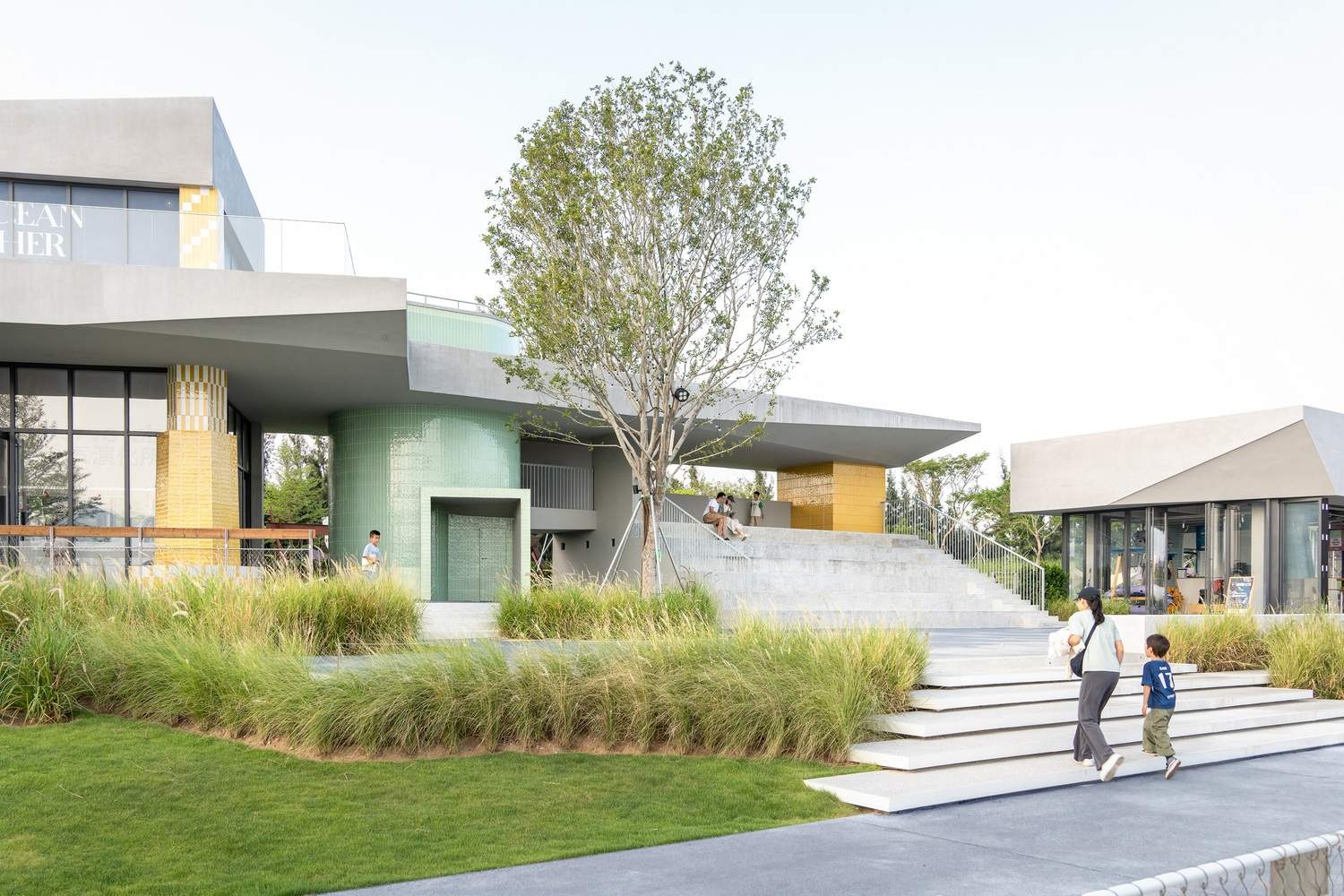
The cluster of buildings is arranged along the inner bay waterfront, adjacent to the paddleboard dock and backed by the non-powered children's playground. The overall layout references the enclosed structure of traditional Minnan settlements, following the pattern of "front courtyard, rear dwelling" (Qian Cheng Hou Cuo). The south side opens towards the water, organizing spaces around a central entrance plaza and public grand staircase resembling a "Cheng" (courtyard). The west side houses the two-story main sports store, the east side features single-story retail pavilions, and the north side backs onto the playground. The grand staircase serves as a place for watching events, waiting, and resting, offering the public a seaside platform for contemplation and lingering.
建筑群沿内湾水岸布局,紧邻桨板码头,背靠无动力儿童乐园,整体布局参照闽南传统聚落“前埕后厝”的围合式格局,南侧向水面打开,围绕类似“埕”的中央入口广场和公共大台阶组织空间,西侧为二层的运动主力店、东侧为单层零售单体、北侧背靠无动力乐园,南侧则为滨水码头。大台阶既是观赛、等候与休憩的场所,也为公众提供一处可放空、可停留的滨海平台。
© 张超
© 张超
© 张超
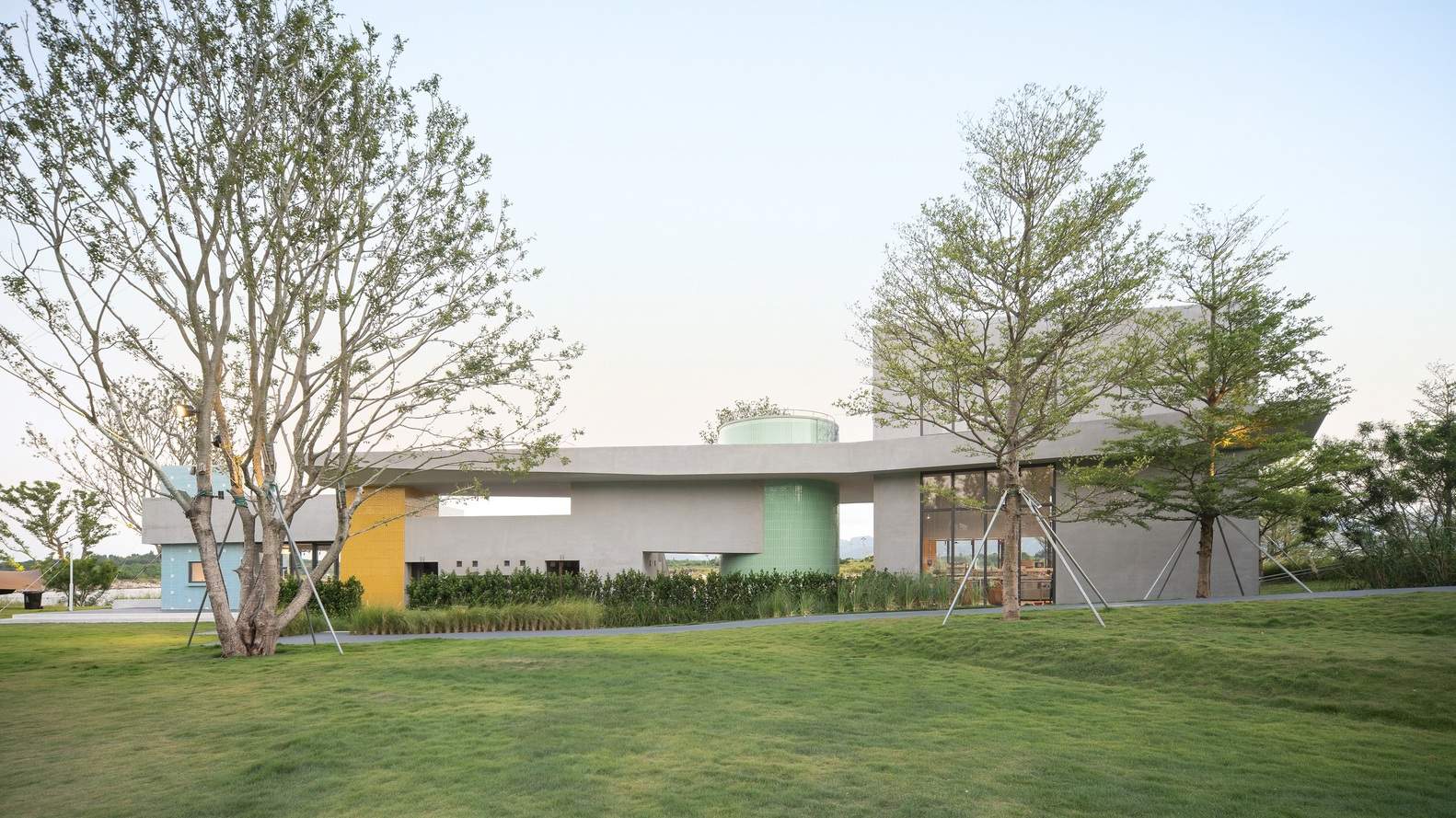
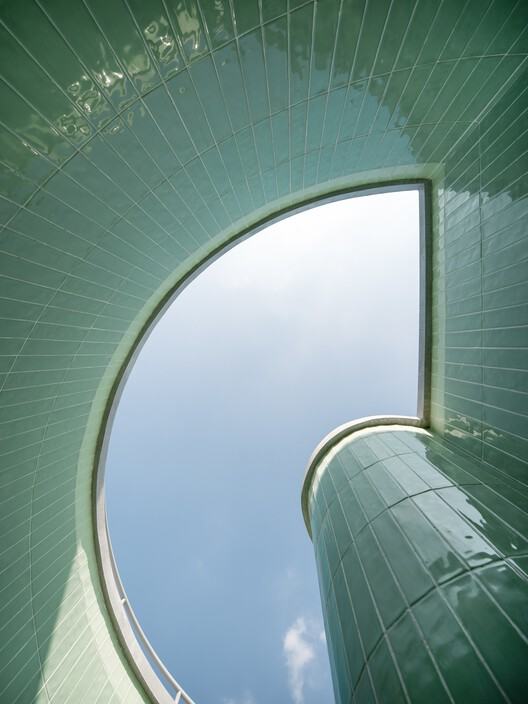
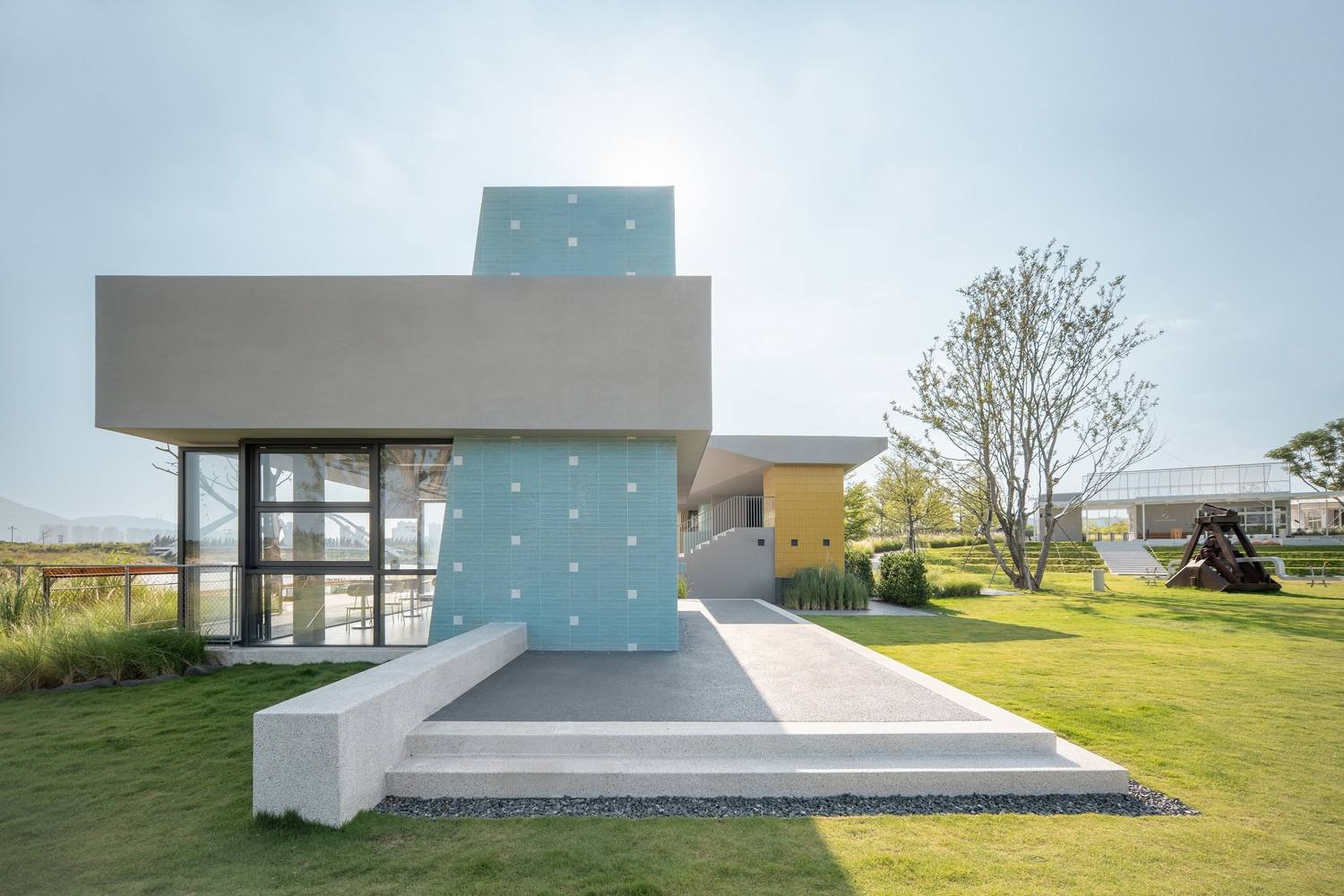
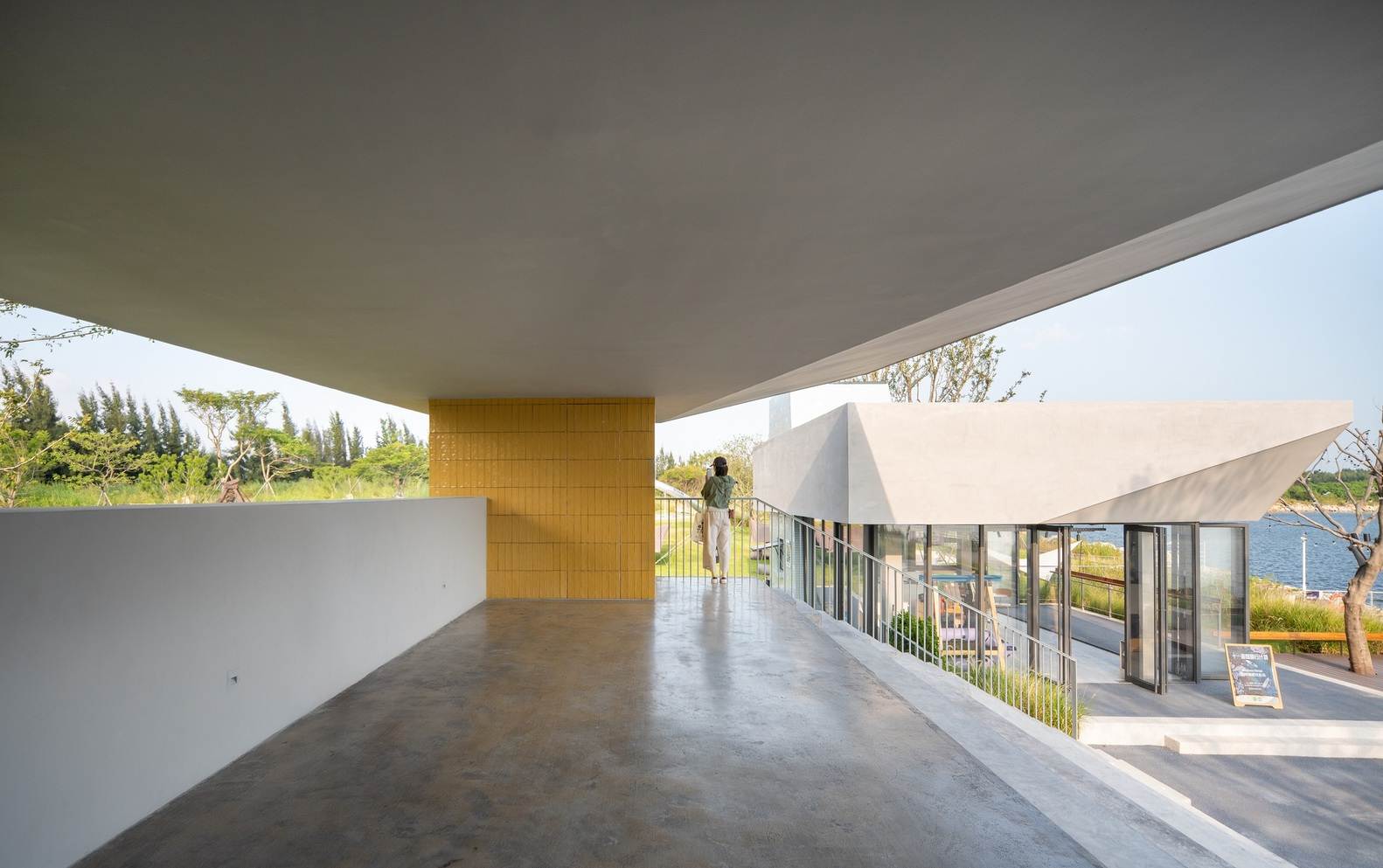
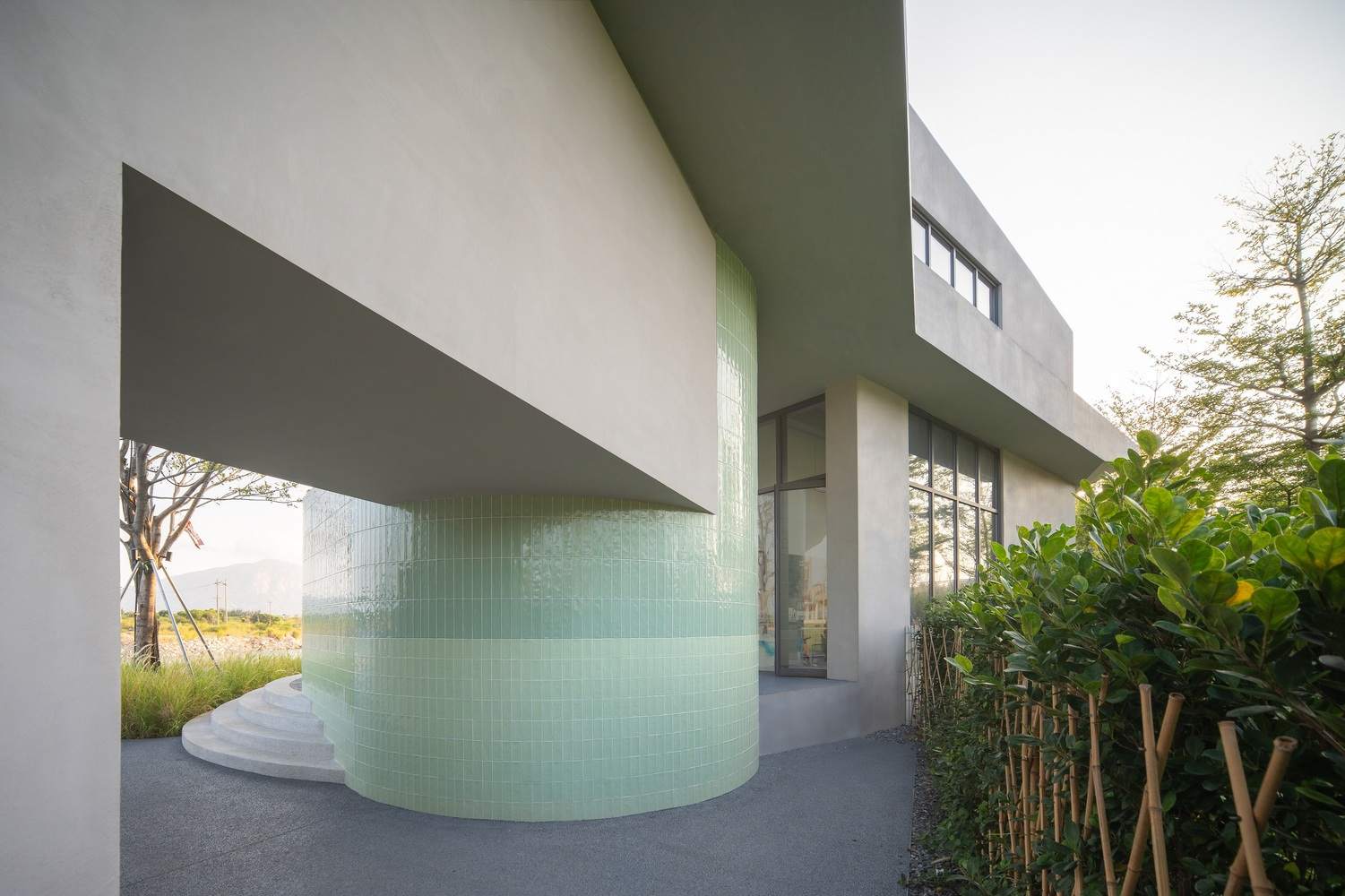
The two-story main sports store on the west side, the central grand staircase, and the cylindrical spiral stairwell embedded within them are covered by a continuous large eaves, unifying them. The single-story retail building on the east side also has an independent overhanging roof. Inspired by the unique "Swallowtail Ridge" (Yan Wei Ji) roofs of Minnan residences, and echoing the streamlined curves of paddleboards, the eaves slightly curve upwards at the corners, forming covered, sheltered transitional spaces (grey areas) that shield from sun and rain. Their variable cross-section geometry also facilitates structural cantilevering and guides soft natural light deep into the interior spaces.
西侧的双层运动主力店与中央大台阶以及嵌入其间的圆筒形旋转楼梯间由一片连续的大挑檐覆盖并连为一体;东侧的单层零售建筑也设有独立的挑檐屋面;受到闽南民居特有的“燕尾脊”屋顶启发,也与浆板流线形曲面呼应,挑檐在转角处微微上翘的,形成遮阳避雨的灰空间,其变截面几何形态也更利于结构悬挑,并引导柔和的自然光深入内部区域。
© 张超
© 张超
© 张超
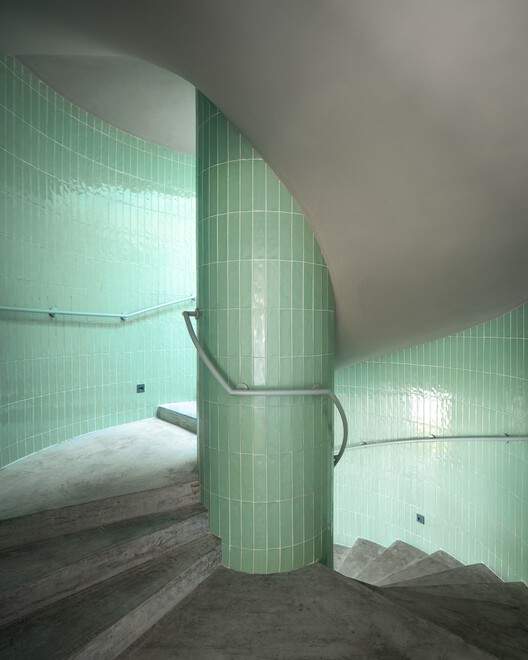
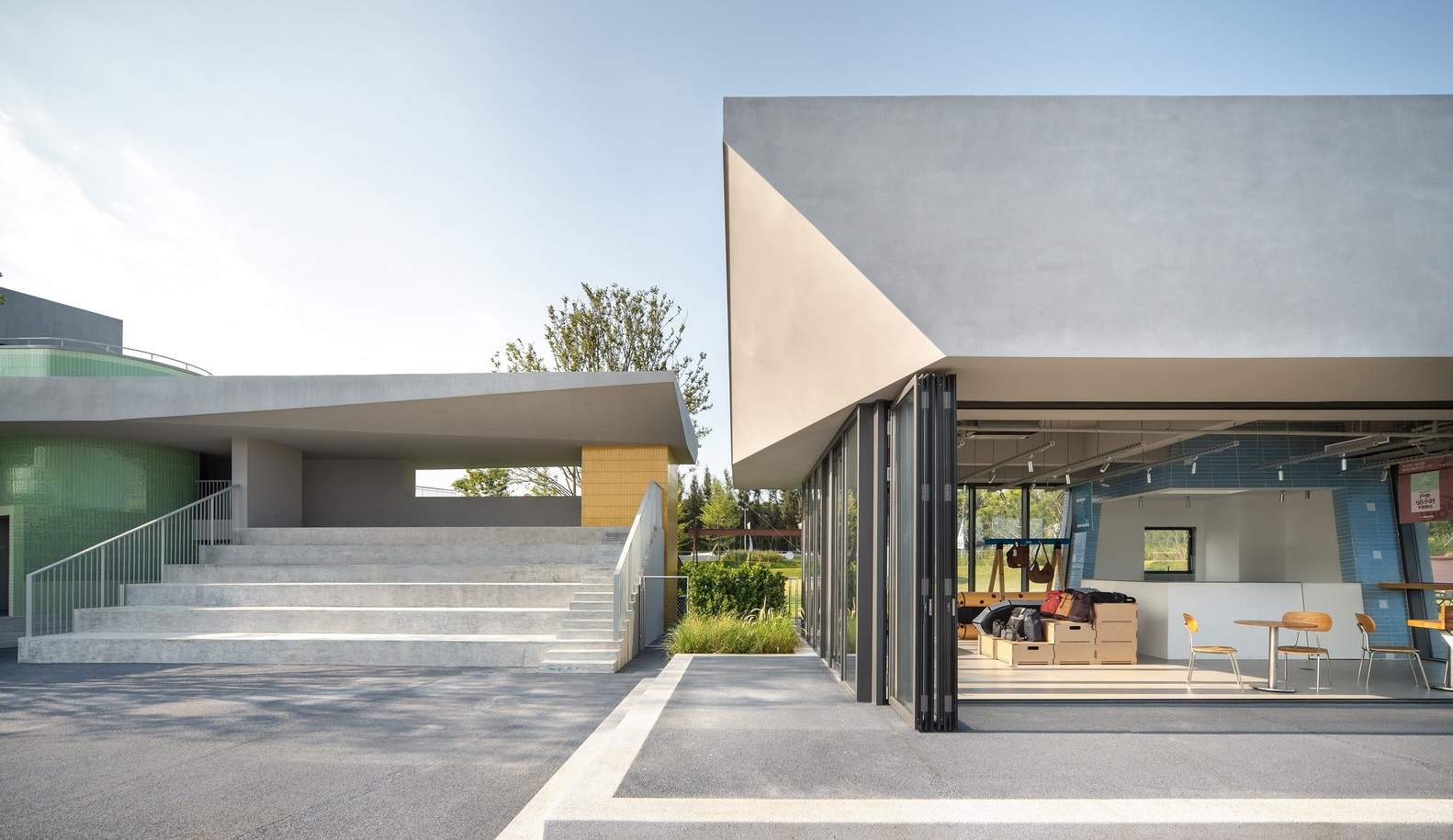
The eastern retail unit features floor-to-ceiling glass doors that can open completely, bringing the sea breeze indoors and blurring the boundary between inside and out. At the corner of the main store on the west side, there is a double-height paddleboard display area. The cylindrical spiral staircase, embedded between the grand staircase and the main store, leads up to the mezzanine level's top platform, the second-floor outdoor viewing platform, and the indoor gallery. Ancillary functions such as public restrooms, open sinks, and storage are integrated into the low-lying spaces beneath the grand staircase, which lack water views, providing convenient access from the public plaza and the non-powered playground.
东侧零售单元设有可整面完全开启的落地玻璃门,将海风引入室内,模糊内外边界;西侧主力店转角处设有二层通高的桨板展示区,由嵌入大楼梯与主力店间的圆筒形旋转楼梯可上至夹层的大台阶顶层平台、二层室外观景平台及室内展廊。公共卫生间、开放洗手池与仓库等辅助功能均整合于大台阶底部无水景视野的低矮空间,方便从公共广场及无动力乐园抵达。
© 张超
© 张超
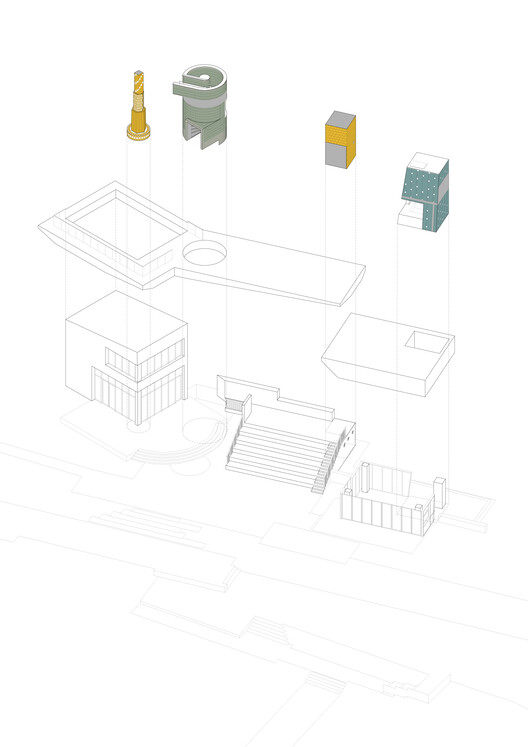
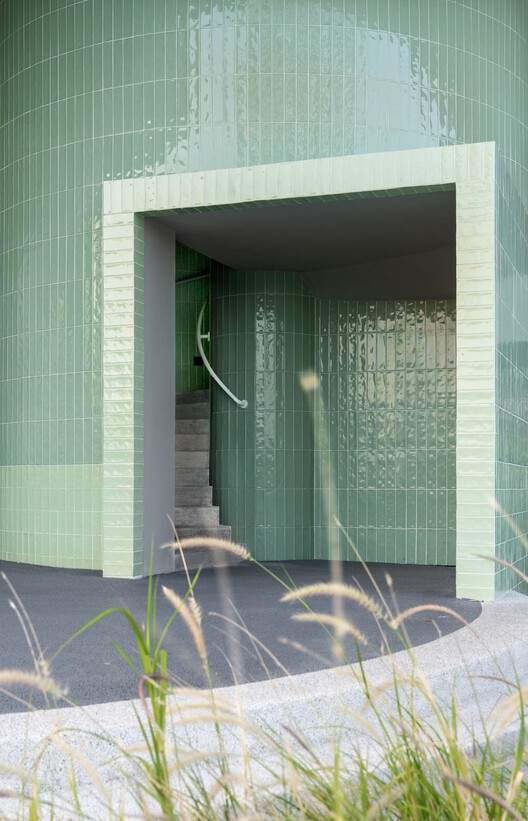
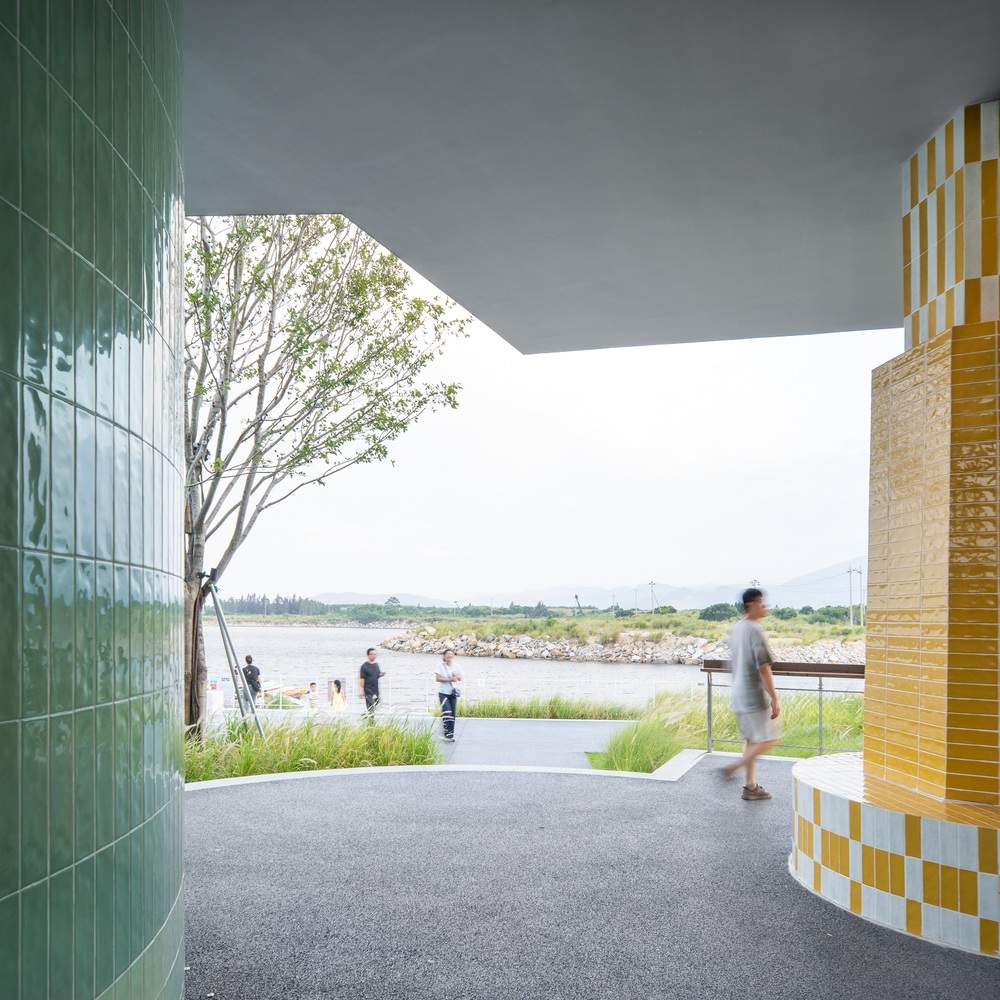
The main body of the building uses fair-faced concrete to emphasize a rugged, plain texture that echoes the island's original landforms. In contrast, colored glazed tiles are introduced for key structural components and circulation spaces. The choice of color and pattern for the decorative tiles is inspired by the traditional materials and crafts of local residences, serving as a response to the decorative tradition of glazed tiles in Minnan homes: the stairwell is covered in dark and light grayish-green glazed tiles; the stepped corner column of the main store, inspired by the brick tower forms of local ancestral halls, is built with yellow and white tiles, with different patterns on each setback level, the base of the ground floor column naturally forming a seating bench; the hollow giant column at the corner of the grand staircase supports the expansive overhanging roof and is clad in medium-yellow tiles; the core tube housing the kitchen and cashier area of the eastern retail unit is decorated with blue and white patterned tiles. Furthermore, the deliberate variation in tile color and pattern helps users establish a sense of orientation on the island where street interfaces are lacking, strengthening spatial recognition and guiding logic.
建筑主体采用素混凝土,强调粗犷、朴素的质感,呼应岛屿原始的地貌特征,而关键结构构件与交通空间则引入彩色釉面瓷砖材料。花砖的色彩、纹样选择受到当地民居传统材料和工艺启发,是对闽南民居釉面花砖这一装饰传统做出回应:楼梯间覆以深、浅灰绿色釉面瓷砖;主力店转角的退台式角柱受到当地宗祠建筑砖塔形制启发,采用黄白色瓷砖砌筑,每层退台采用不同的拼花纹样,底层柱础则自然形成座凳;大台阶角部的空心巨柱支撑起舒展的挑檐屋面,以中黄色瓷砖包裹;东侧零售单体厨房与收银区所处的核心筒则饰以蓝白拼花瓷砖。此外,花砖的色彩和拼花有意识变化区分,也有助于使用者在缺乏街道界面的海岛上建立方位感,强化空间识别性与导向逻辑。
© 张超
© 张超