根植本土的结构创新与可持续的实验精神:该项目最核心的亮点在于其对本土材料和传统工艺的深度挖掘与创新性应用。建筑师成功地将高抗震性要求与零影响建筑的理念相结合,通过在深层石基上采用双半圆形夯土墙结构,实现了对当地地理、气候及生物需求的精确响应。特别是对古老Khorasan技术的重塑,以及在不使用水泥的情况下,利用水力石灰和天然材料实现结构强度和耐久性,体现了极高的技术敏感性和对可持续解决方案的执着追求,是本土材料实践的典范。
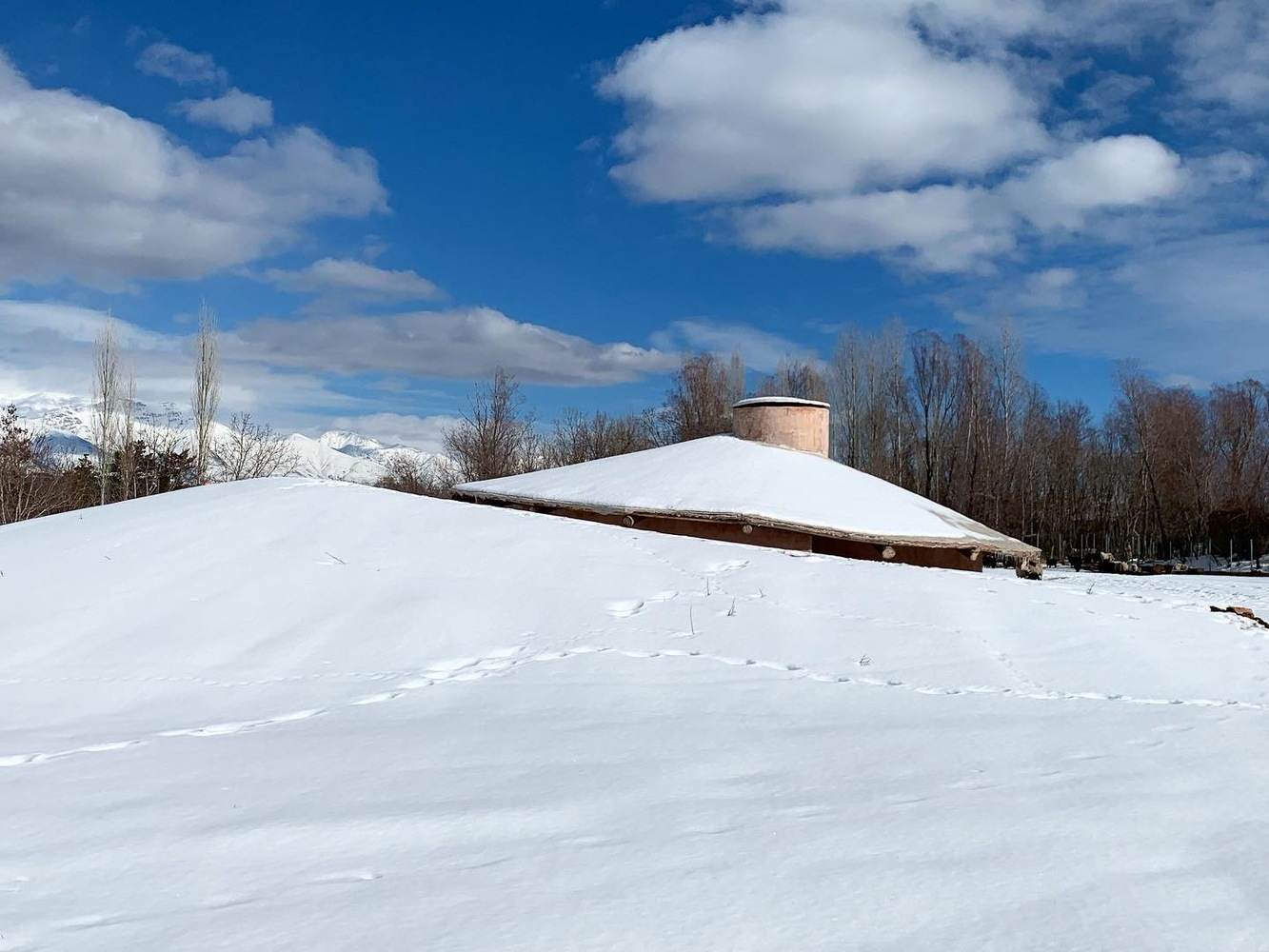
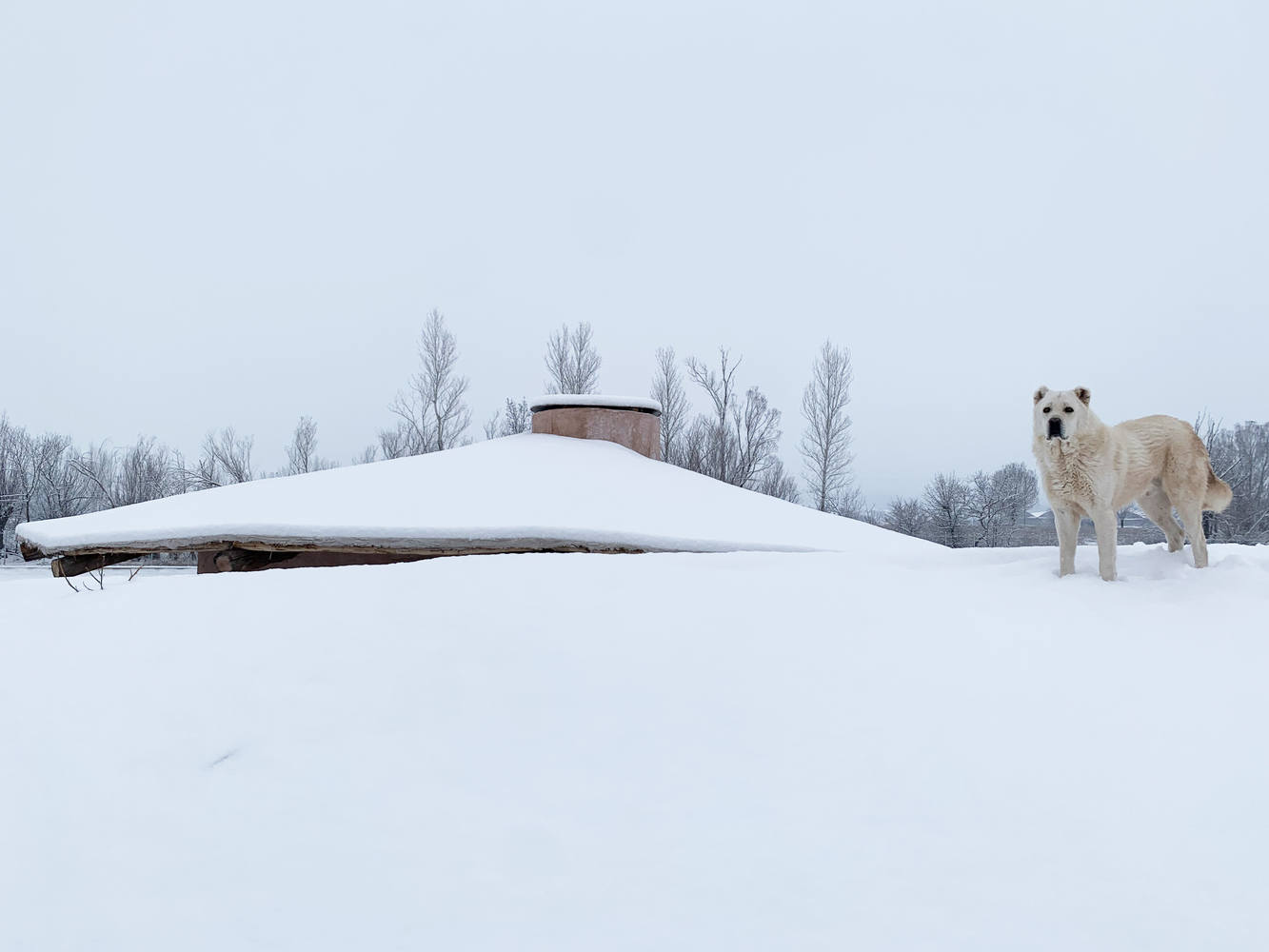
人居与自然的和谐共生形态塑造:项目在形态设计上达到了功能性与环境融合的精妙平衡。半圆形的几何形式不仅呼应了山羊的生理需求,更通过与曲线型人工地形的结合,形成了一个能够有效抵御西北强风的动态屏障。屋顶设计巧妙地利用了当地材料和考古修复技术,形成了高坡度以应对雪载,并使风力能够顺畅地拂过结构表面,体现了建筑如何通过形态学上的智慧,主动地与自然环境进行对话与协作,实现“完全回归自然,不留痕迹”的终极目标。
精细化的技术决策与系统性材料实验:本设计展示了从基础到表皮的系统性技术实验深度。从地基防潮处理,到夯土墙体中融入的烟囱结构以排放甲烷气体,再到使用经干燥处理的本地白杨木作为屋顶檩条,每一个构造节点都经过了细致的推敲和多方协作(工匠、学术界)。特别是屋顶防水层的配方(水力石灰、珍珠岩砂、瓦片灰等),显示出建筑师对材料性能的深入理解和对传统技术现代化转化的不懈努力,将一个简单的动物庇护所提升为一个可复制的、低影响建筑的实验案例。
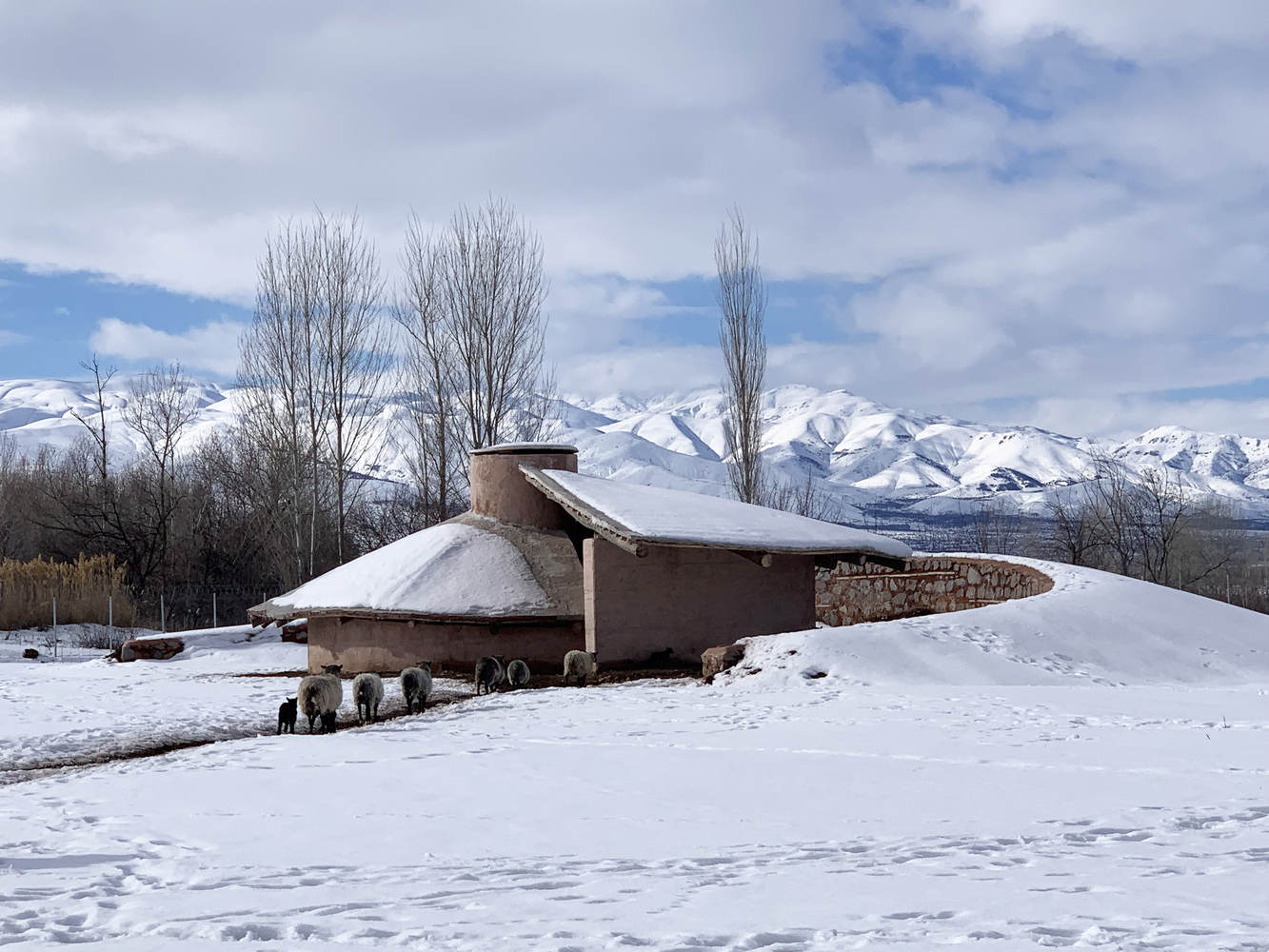
From the architect. Located in the northeast of Turkey, the Goat Shelter is part of the vast land of the Palanga Art and Architecture Farm (PAAF). Its design complies with the goats' physiology, geographical features, local climate, and the land's seismic requirements. The project required a structure with high seismic resistance, designed with two semi-circular rammed earth walls of different diameters on a deep stone base. The starting point for the project design was seeking sustainable solutions. To adapt to local conditions, natural materials and traditional stone-earth-wood craftsmanship were used as building techniques, consensus was reached through communication with local artisans, and materials were tested and technical decisions were questioned in coordination with academics. This structure is an experimental case of a successful zero-impact building, characterized by its complete return to nature without leaving any trace or impact.
来自建筑师。Palanga 艺术和建筑农场(PAAF)位于土耳其的东北部,山羊收容所是农场广阔土地的一部分。它的设计符合山羊的生理结构、地理特征、当地气候和土地的抗震要求。该项目需要一个具有高抗震性的结构,其设计在深层石基上使用两个不同直径的半圆形的夯土墙。该项目设计的出发点是寻求可持续的解决方案。为适应当地条件,使用天然材料和传统的石-土-木工艺作为建筑技术,与该地区的工匠沟通并达成共识,与学术界人士协调,对材料进行测试并对技术决策提出质疑。该结构是一个成功的零影响建筑的实验性案例,它的特点是可以完全回归自然,不留下任何痕迹或影响。
© Hasan Çalışlar, PAAF, Metin Çavuş, Dilara Demiralp, Aram Tufan
© Hasan Çalışlar, PAAF, Metin Çavuş, Dilara Demiralp, Aram Tufan
© Hasan Çalışlar, PAAF, Metin Çavuş, Dilara Demiralp, Aram Tufan
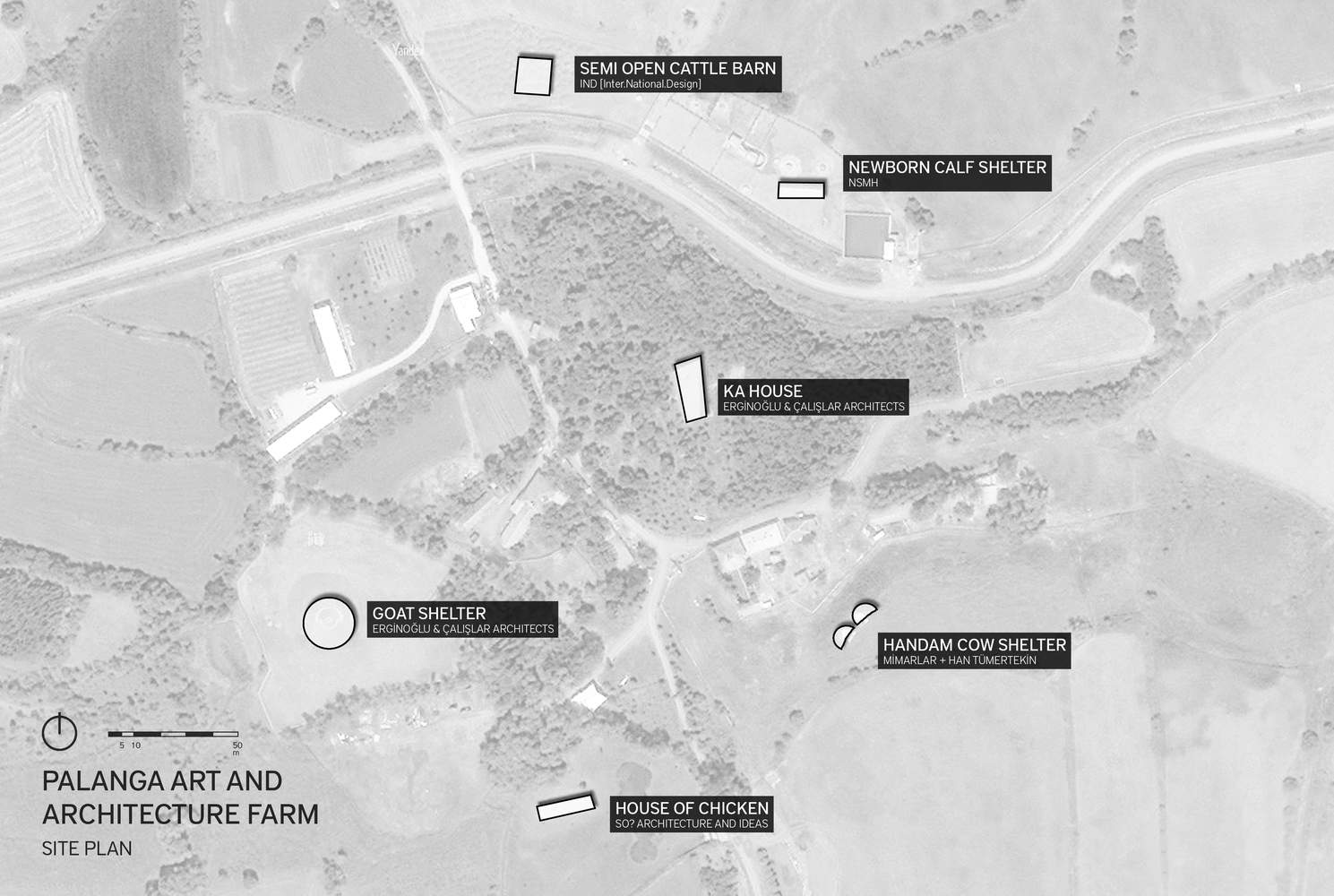
Site plan
总平面图
© Hasan Çalışlar, PAAF, Metin Çavuş, Dilara Demiralp, Aram Tufan
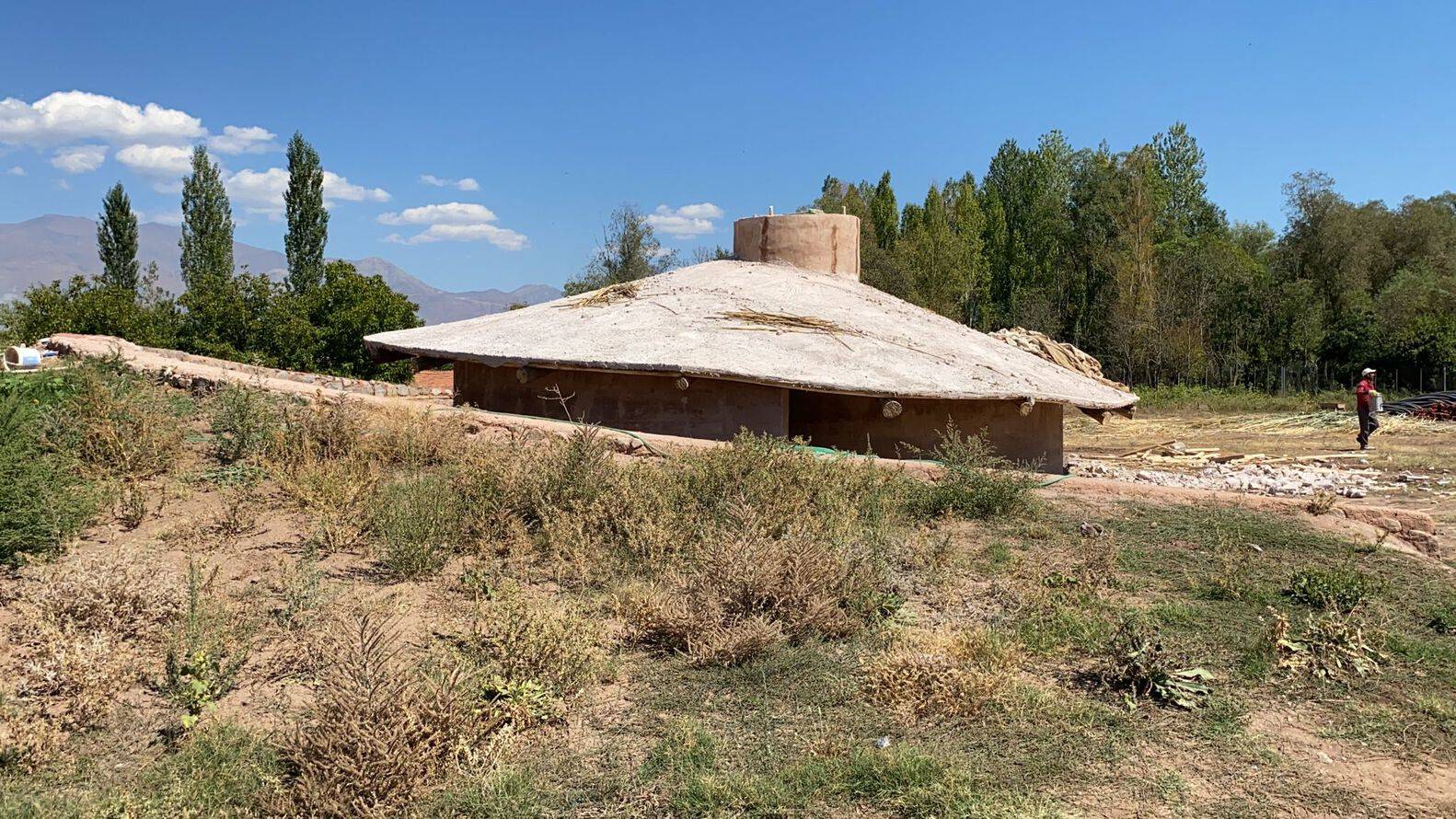
An ancient technique called Khorasan was reinvented for constructing the foundation and the surrounding walls. To achieve the required strength without using concrete, a mixture of hydraulic lime and Khorasan mortar was used as a binder on the stone foundation, eliminating cement. The foundation’s horizontal plane is raised 15 cm above the 0.00 level, and the wall’s horizontal plane rests on it to prevent water entry.
一种被称为 Khorasan 的古老技术被重新发明出来,用于建造地基和周围的墙壁。为了在不使用混凝土的情况下获得所需的强度,在石头地基上使用了不含水泥的水力石灰和 Khorasan 砂浆的混合物作为粘合剂。地基的水平面比 0.00 的水平面高出 15 厘米,墙的水平面保持在其上,以防止进水。
© Hasan Çalışlar, PAAF, Metin Çavuş, Dilara Demiralp, Aram Tufan
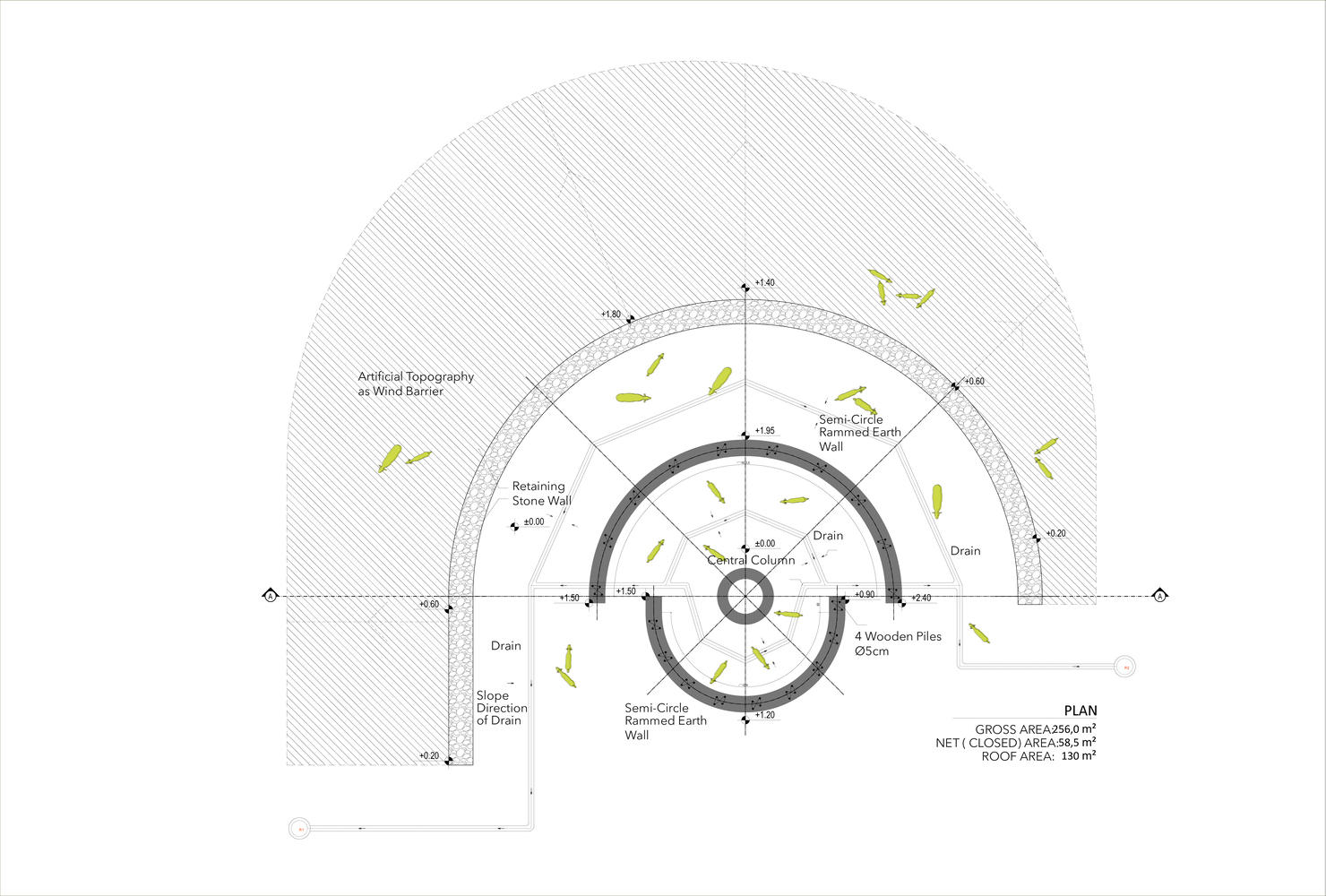
Plan view
平面图
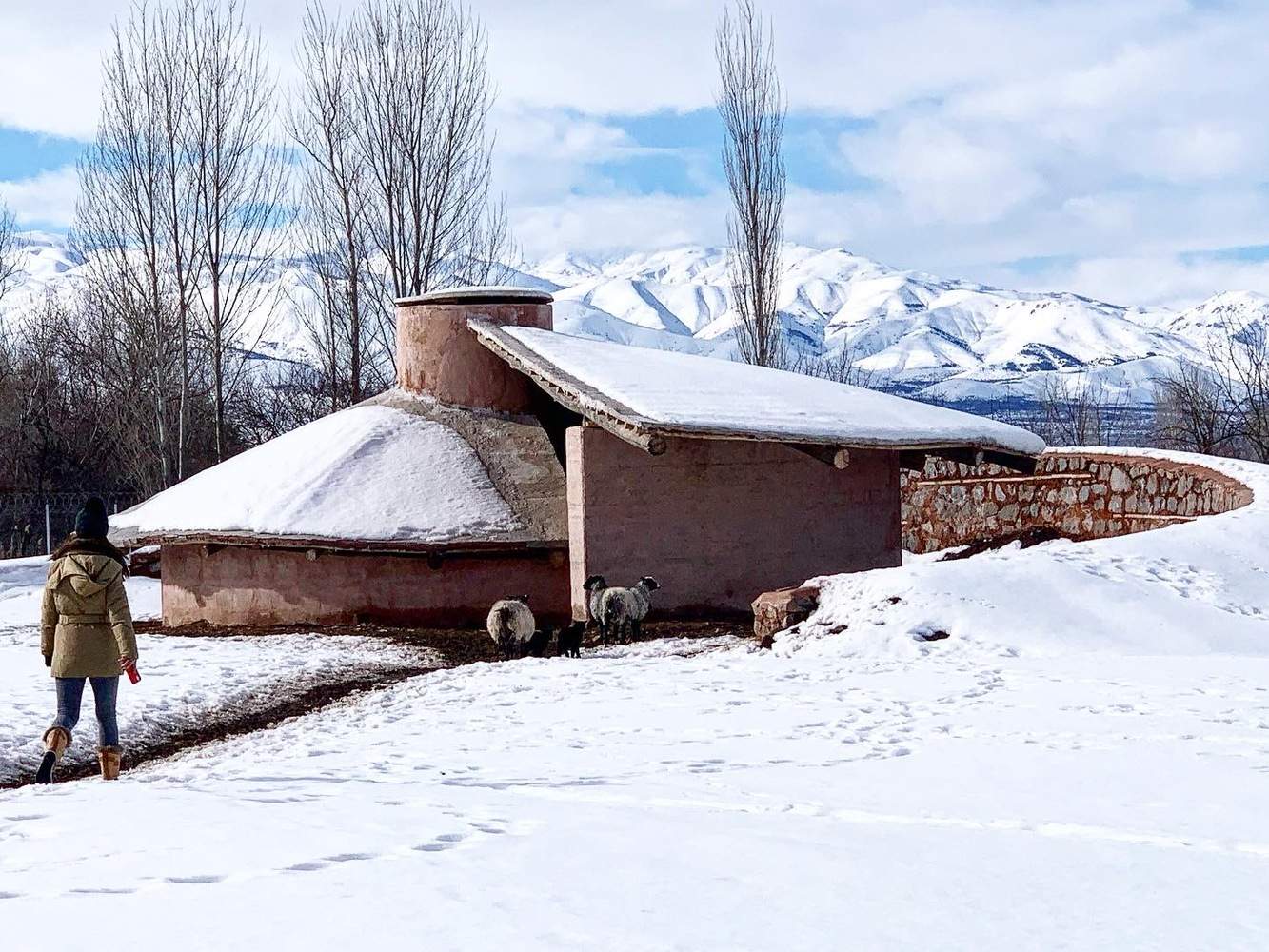
After the foundation was laid, a wind barrier was built around the shelter walls, filled with earth, rising and attenuating in a curved manner to slow down and control the strong winds coming from the northwest. The earth was piled up behind the stone retaining walls, and the accumulation was expected to settle and return to its natural state within a year.
地基铺设完毕后,在避难所墙体周围建立了一个防风屏障,用土填充,以曲线的方式上升和减弱,以减缓和控制来自西北的强风。泥土被堆积在石砌挡土墙后面,预计堆积物会沉降并在1年内回归自然状态。
© Hasan Çalışlar, PAAF, Metin Çavuş, Dilara Demiralp, Aram Tufan
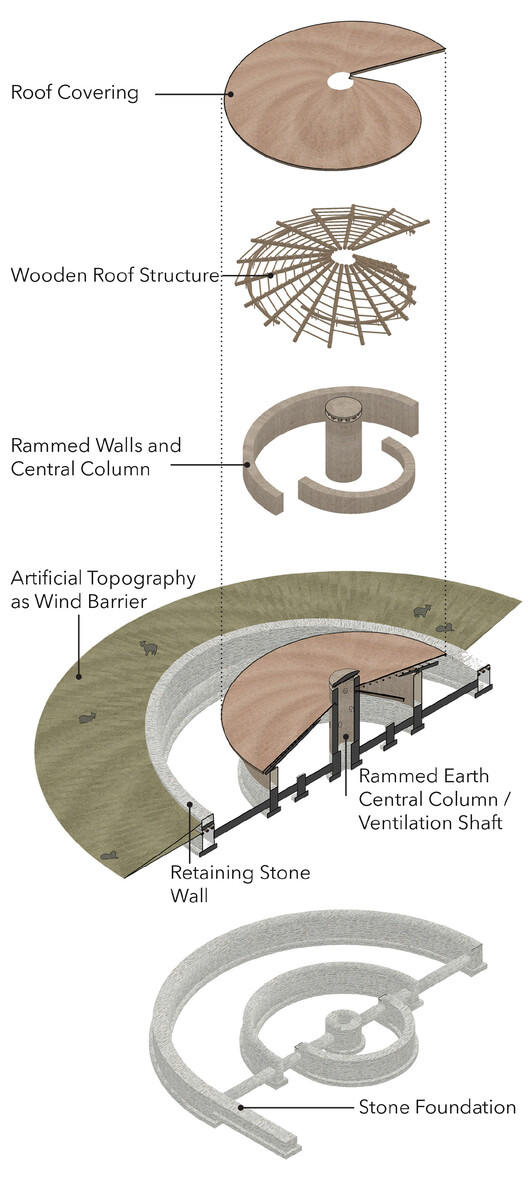
Exploded diagram
示意图
© Hasan Çalışlar, PAAF, Metin Çavuş, Dilara Demiralp, Aram Tufan
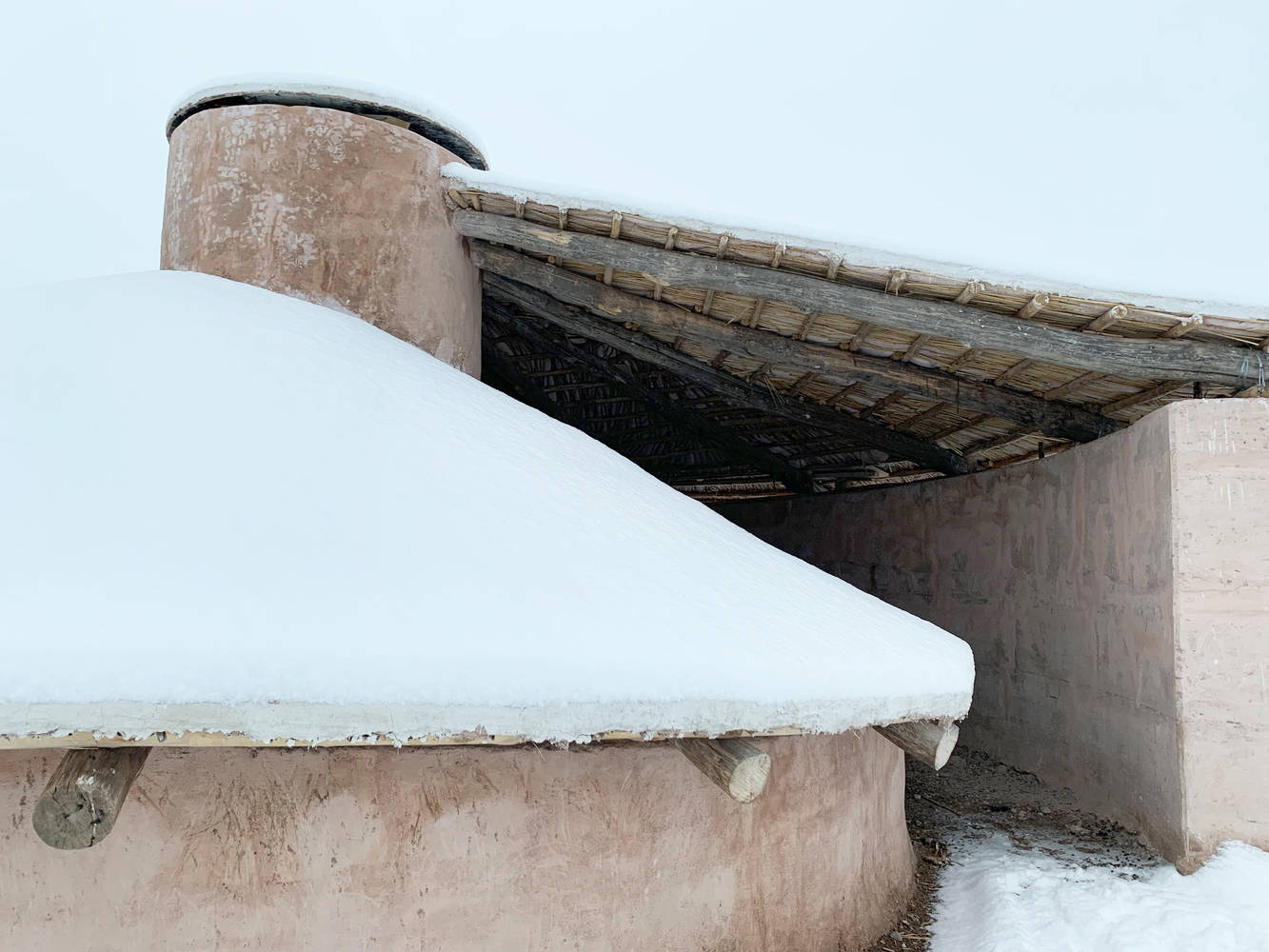
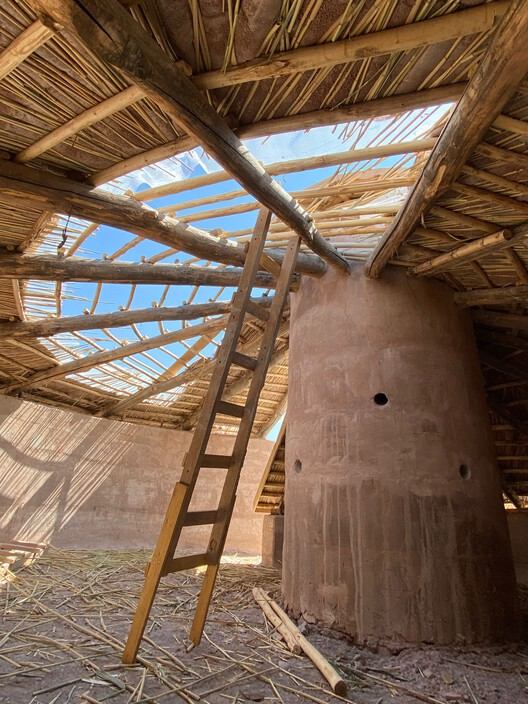
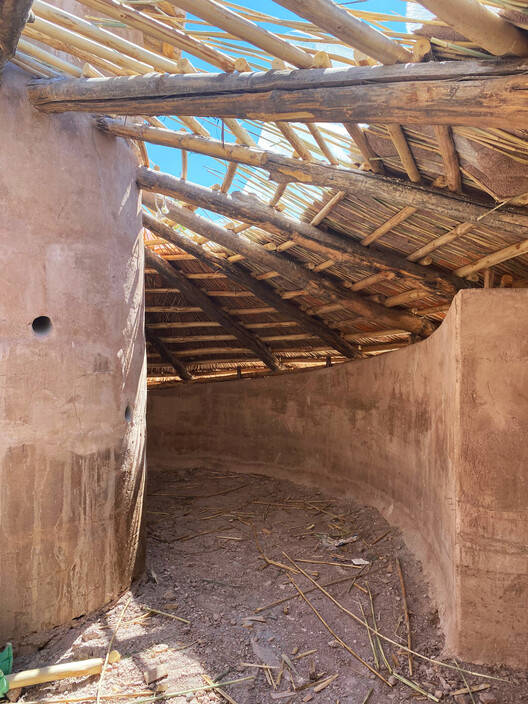
The main material of the walls is lime, gypsum, and rammed earth. During the pouring process, hydraulic lime, cream lime, and tile powder were added to extend the drying time and increase water resistance. The rammed earth columns, where purlins were set in the middle, were also designed as chimneys to facilitate the discharge of methane and gases accumulated in the space, with openings on the surface large enough not to compromise the static strength of the entire structure.
墙的主要材料是石灰、石膏和夯土。在浇筑过程中,加入了水力石灰、奶油石灰和瓦片粉,以延长干燥时间,增加防水性。中间设置檩条的夯土柱也被设计成烟囱,便于排放空间中积累的甲烷和气体,表面的开口足够大,不会降低整个结构的静态强度。
© Hasan Çalışlar, PAAF, Metin Çavuş, Dilara Demiralp, Aram Tufan
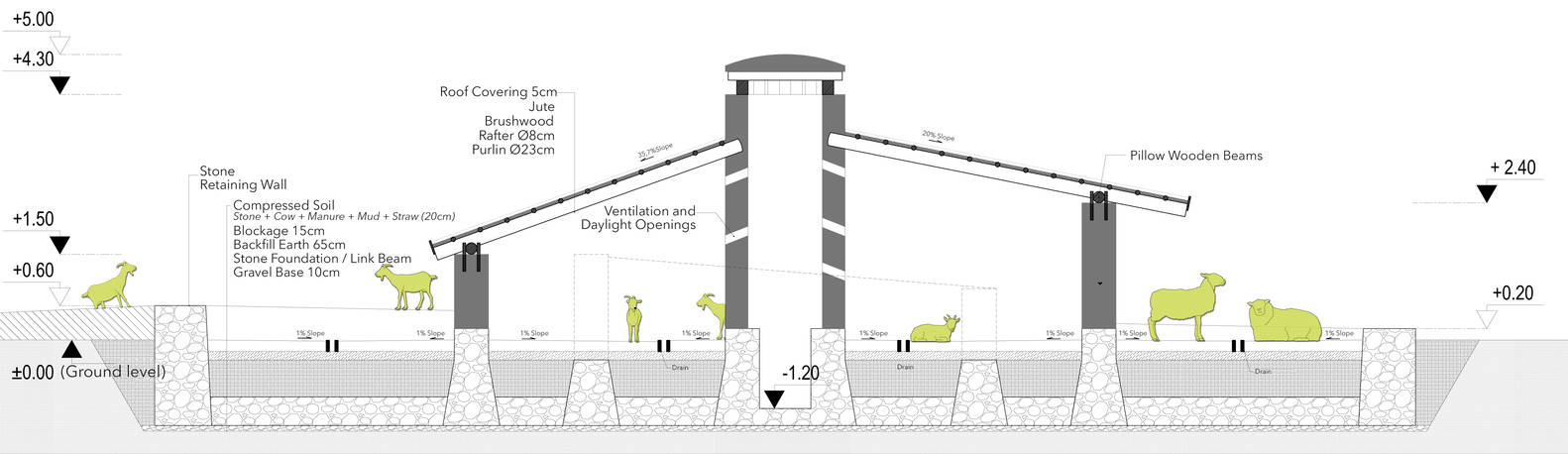
Section
剖面图
The purlins and rafters covering the shelter's roof originated from local poplar trees, which had their bark removed through wood drying method, were not chemically treated, and were prepared to be the purlins that form the structure. The purlins with an average diameter of 23 cm were covered by rafters with a diameter of 8 cm. Sleeper beams were used to connect the purlins and the walls, and they were interconnected with binding wire.
覆盖庇护所的屋顶的檩条和椽子来源于当地的白杨树,已经通过木材干燥法清除了树皮,没有经过化学处理,并已经准备好成为构成结构的檩条。平均直径为 23 厘米的檩条被直径为 8 厘米的椽子覆盖。枕木梁被用来连接檩条和墙壁,并且用制钉钢丝相互连接。
© Hasan Çalışlar, PAAF, Metin Çavuş, Dilara Demiralp, Aram Tufan
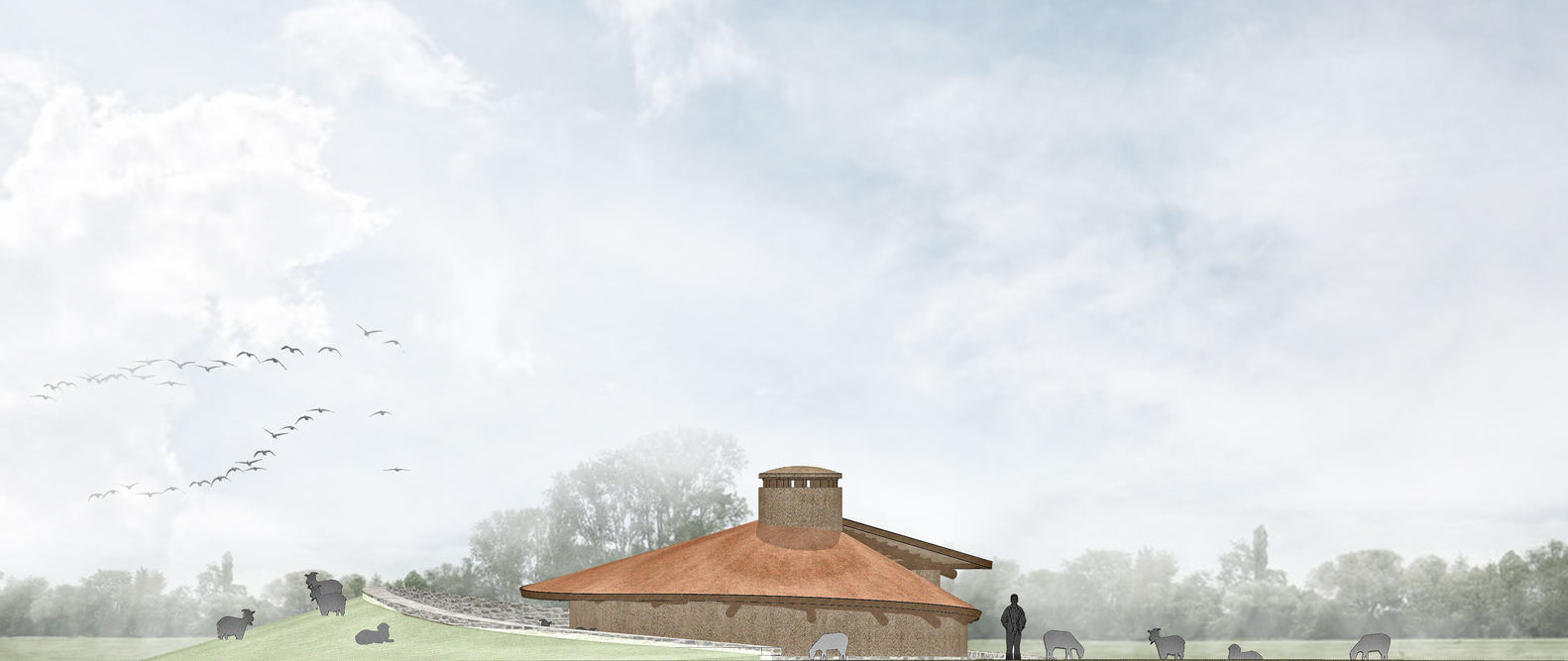
Elevation
立面图
© Hasan Çalışlar, PAAF, Metin Çavuş, Dilara Demiralp, Aram Tufan
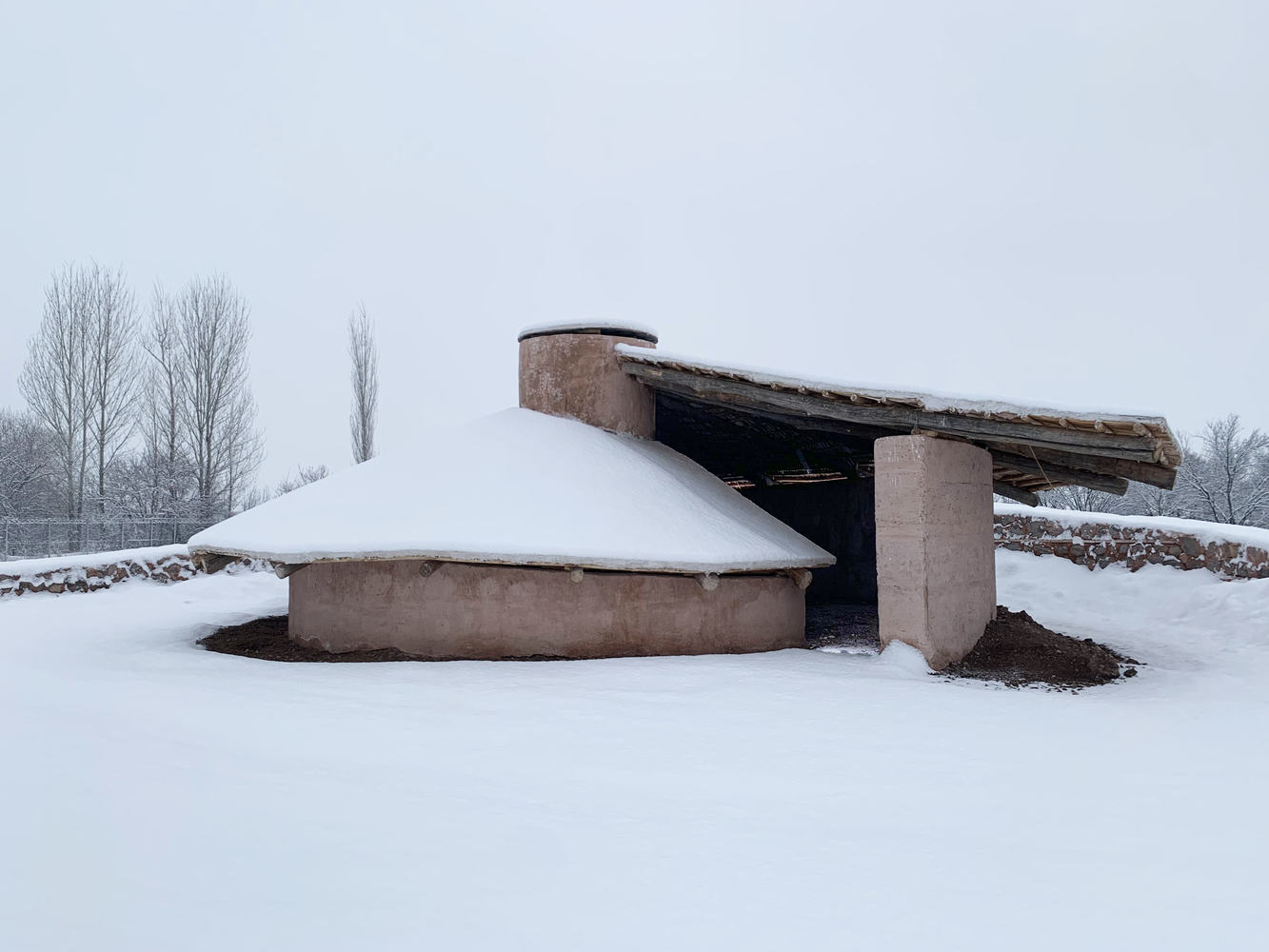
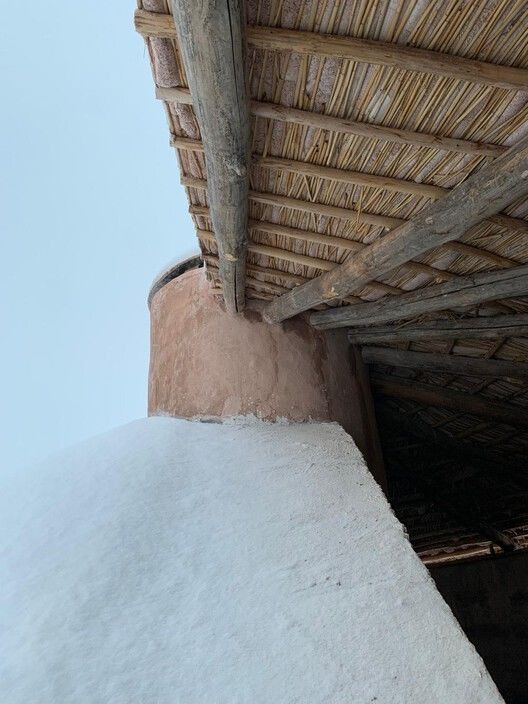
The roof covering consists of low shrubs, jute, and earthen materials, and creates a steep slope at the detail that is highly resistant to snow loads. An archaeological restoration technique created a waterproof and maintenance-free layer. The mixture includes hydraulic lime, cream lime, perlite sand, gypsum, and tile ash. The roof form, which covers the semi-circular walls with irregular slopes, also consists of variable slopes. Behind the shelter is a curved artificial topography that protects the goats, the roof, and the walls from the wind. The form of the building and the roof are required to be very harmonious. With the help of the roof form in the direction of the prevailing winds, the wind blows over the roof slopes.
屋顶覆盖层由矮灌木、黄麻和陶土土质材料制成,并在细节处创造了一个高度抗雪载的大坡度。考古学的修复技术创造了一个防水且免维护的层。混合物包括水力石灰、奶油石灰、珍珠岩砂、石膏和瓦片灰。覆盖斜度不定的半圆形墙壁的屋顶形式,也由可变的坡度组成。庇护所后面是曲线型的人工地形,以保护山羊、屋顶和墙壁不被风吹到。建筑和屋顶的形式应要求十分和谐。在盛行风向的屋顶形式的帮助下,风会吹过屋顶斜坡。
Text description provided by the architect.
文字描述由建筑师提供。
Translator: Xu Ruitong
译者:徐瑞彤
© Hasan Çalışlar, PAAF, Metin Çavuş, Dilara Demiralp, Aram Tufan