结构复兴与美学重塑:该项目成功地将20世纪七八十年代老旧的金属框架和格构梁结构,从不受欢迎的工业遗存,转变为具有现代美学和功能价值的建筑资源。设计通过保留原有结构骨架,并以统一的哑光摩卡色包覆层进行现代化处理,既尊重了历史肌理,又实现了风格的彻底革新。巧妙的体量控制,如利用抬高的护栏隐藏屋顶保温层,以及倾斜的屋顶界定入口,体现了对现有条件的深刻理解和高超的细部处理能力,使建筑焕发出可再投资利用的潜力。
功能整合与空间逻辑的优化:设计精髓在于通过彻底的布局优化,理清了原有功能分散、彼此阻隔的体育综合体的空间组织关系。通过低矮技术体量的对称布局,实现了南北向的可逆性和清晰的功能划分——北侧服务于学校和室外场地,南侧服务于赛事接待。这种对称性不仅增强了建筑的整体性,更通过贯穿南北的访客流线和一览无余的场馆视野,极大地提升了空间的可达性和共享体验,将原本割裂的设施融合成一个统一的整体。
立面透明化与色彩的叙事性:该改造项目在立面设计上实现了从封闭到开放的转变,引入了视觉通道,使内部活动得以向外部展示,增强了建筑与城市环境的互动性。同时,设计大胆采用了色彩的叙事手法:保留的红色框架体育馆象征历史的延续,而多功能馆则以绿色奠定其新的视觉基调。这种色彩的区分不仅丰富了建筑的视觉层次,更清晰地界定了不同功能体块的身份,将原本被忽视的工业元素转化为具有活力的建筑特色。
This sports complex, characterized by the metal frames and trusses dating back to the 1970s and 1980s, was once unwelcoming due to aging equipment, a cold industrial aesthetic, and a lack of openings.
这座体育综合体以 20 世纪七八十年代的金属框架和格构梁为标志,如今却因设备老化、冷峻的工业美学风格以及缺乏开口设计而显得不受欢迎,令人望而却步。
© Vladimir de Mollerat du Jeu
© Vladimir de Mollerat du Jeu
While preserving the original structure, the designers thoroughly renovated its exterior appearance and functionality, aiming to optimize the building layout and spatial volumes, clarify spatial organization, and highlight the building’s value as a resource for reinvestment.
在保留原有结构的同时,设计师对其外观与功能进行彻底革新,目标是通过优化建筑布局与空间体量,理清空间组织关系,凸显建筑作为可再投资利用的资源价值。
© Vladimir de Mollerat du Jeu
© Vladimir de Mollerat du Jeu
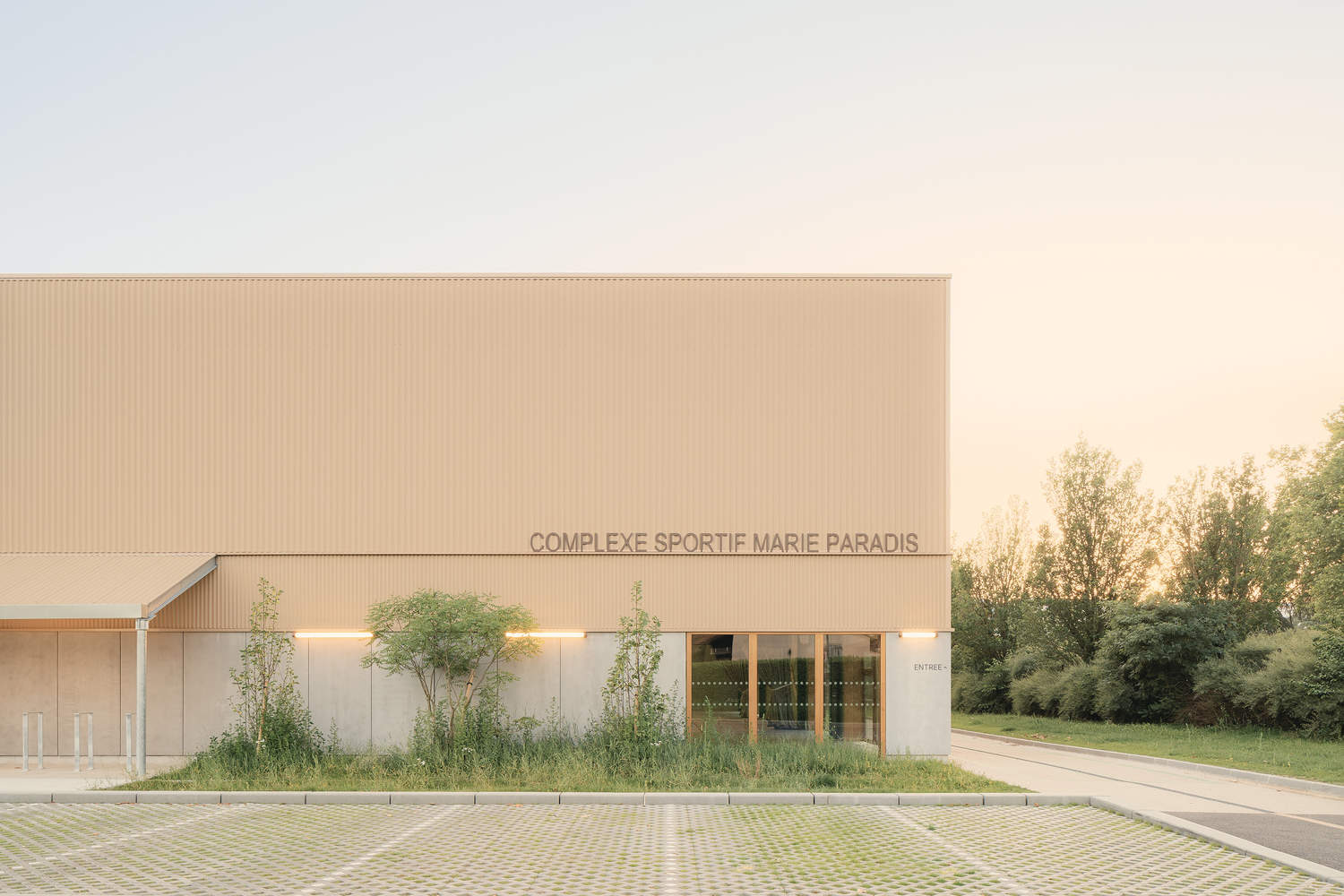
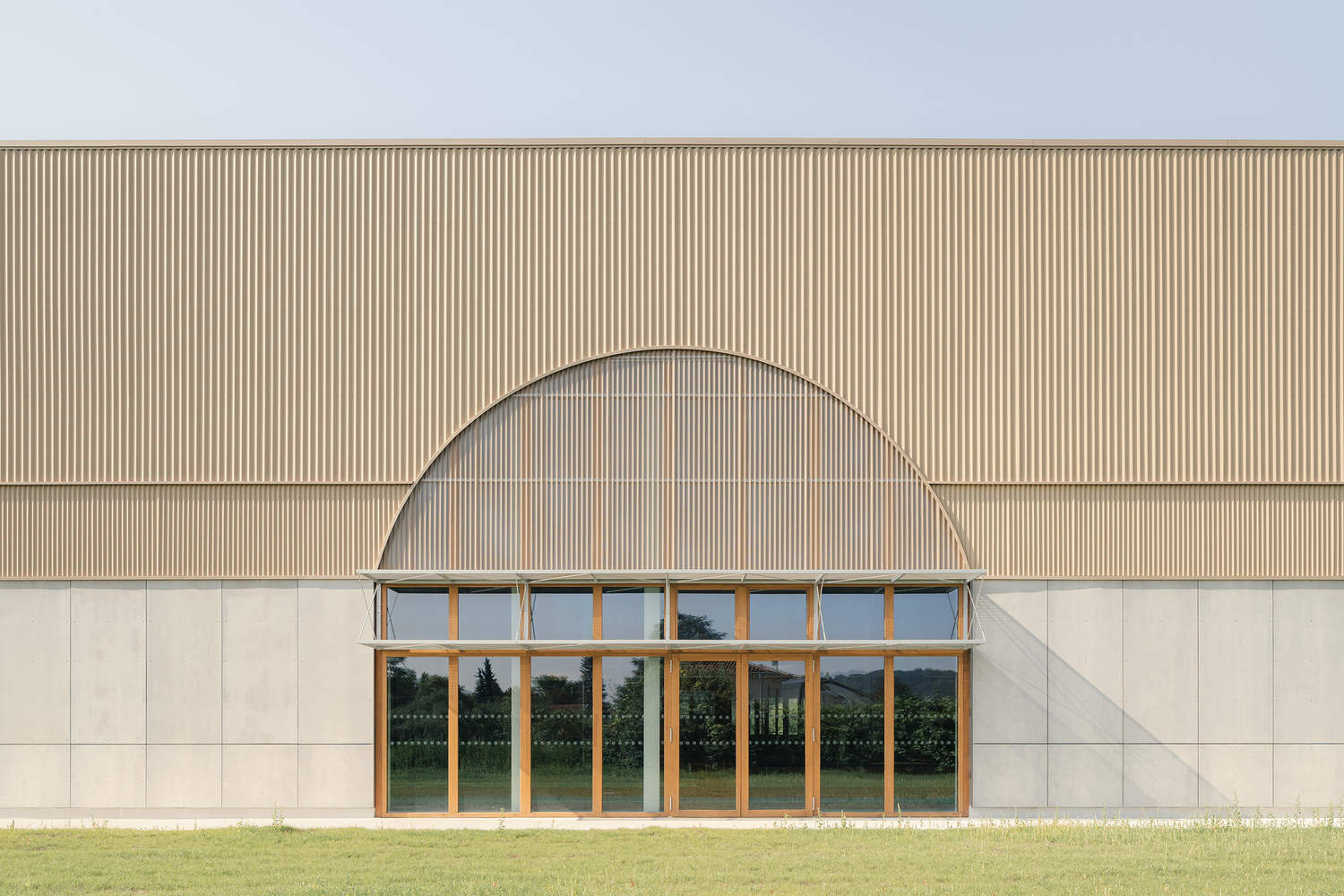
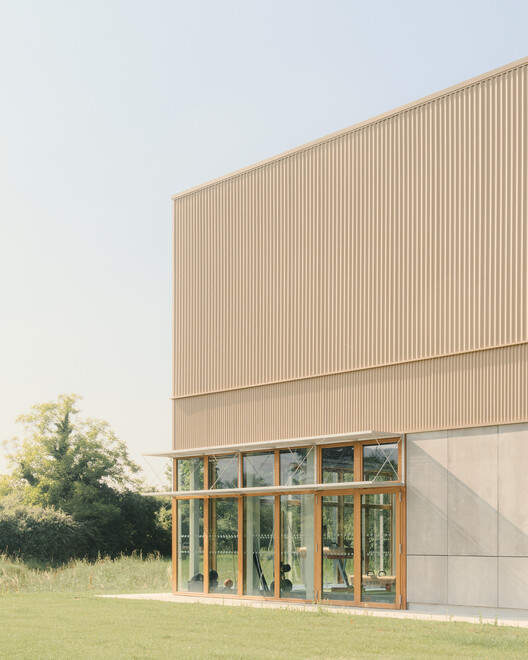
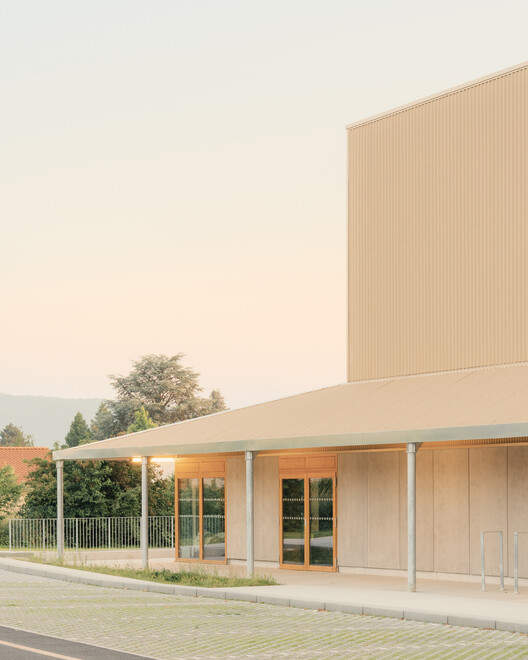
The original frame structure was retained and unified by a matte mocha-colored cladding, echoing the golden hue of the Mont-d'Or stone. The two gymnasiums feature streamlined designs: their raised parapets form straight edges, cleverly concealing the roof insulation. Two low volumes house technical and service rooms, complementing the taller volumes. Their slightly sloping roofs create a low pedestrian edge and delineate the entrance points.
原框架结构得以保留,并由哑光摩卡色包覆层统一,与蒙多尔(Mont-d'Or)的金黄色石材相呼应。两个体育馆经过精简设计:其抬高的护栏形成笔直的边缘,巧妙隐藏了屋顶保温层。两个低矮体量容纳了技术和服务用房,与高大体量相辅相成。其微微倾斜的屋顶形成了低矮的步行边缘,并标示出入口位置。
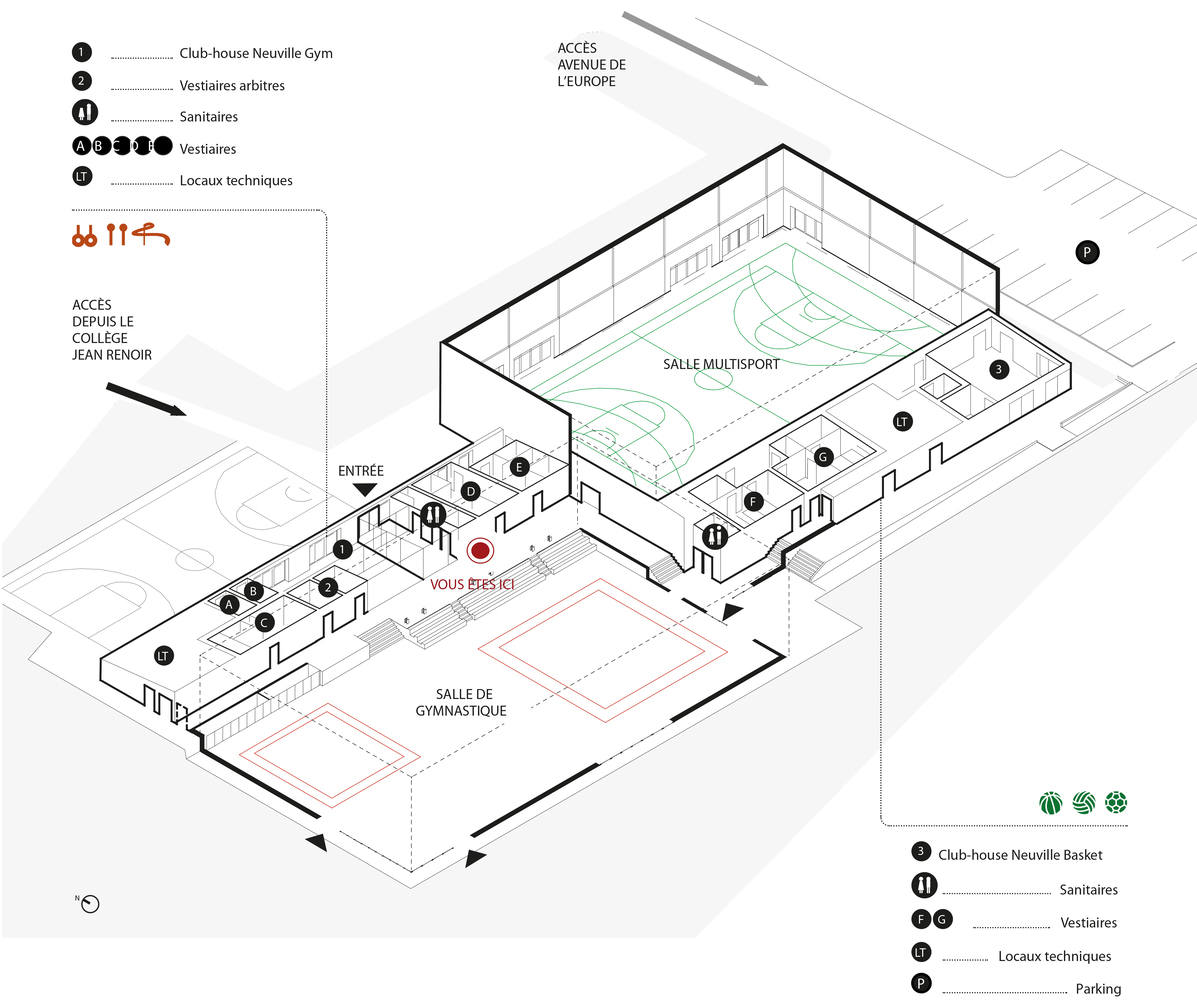
Functional Axonometric Diagram
功能轴测分析图
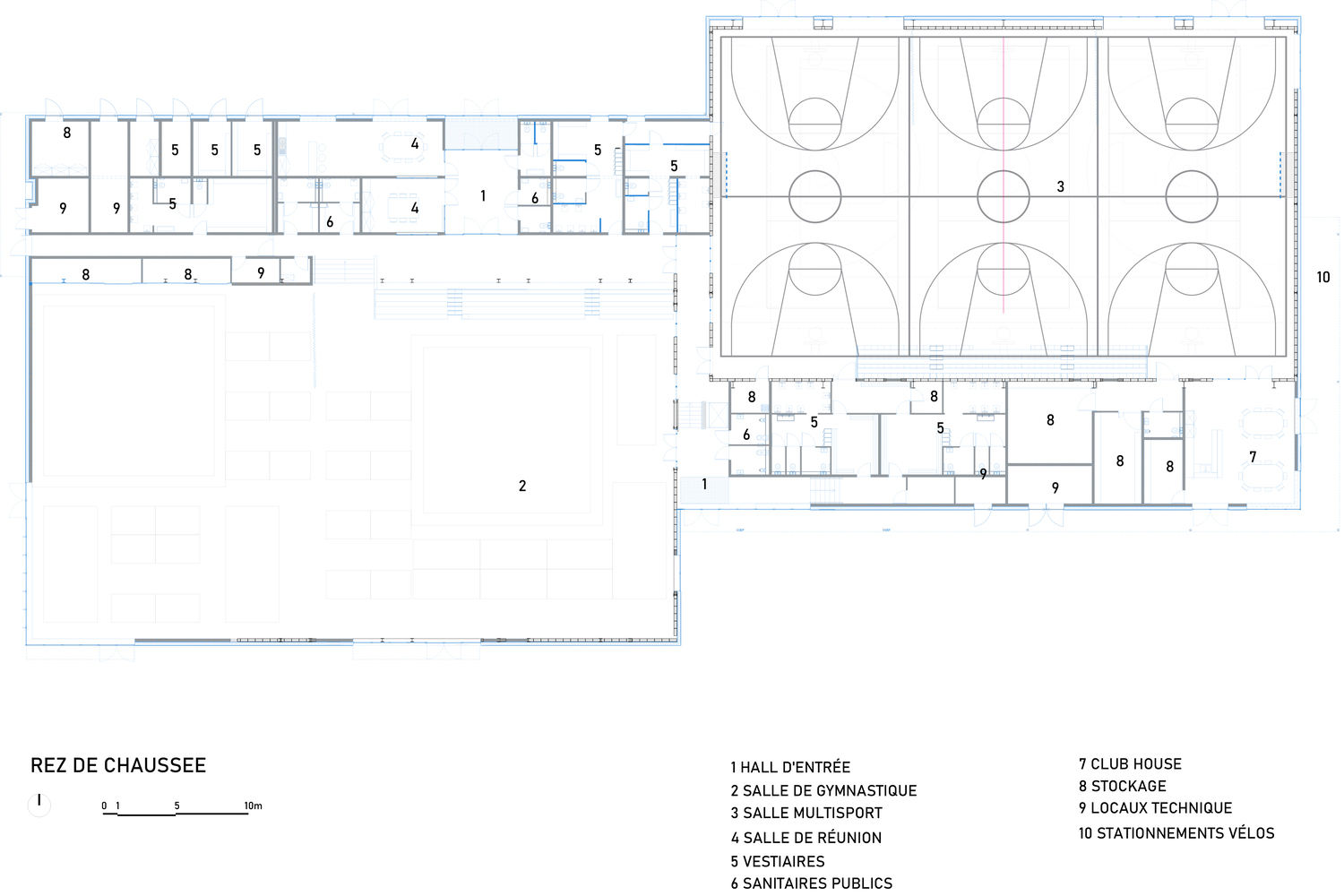
Floor Plan
平面图
The previously separate, invisible venues lacked coherence. Through the symmetrical design of the low volumes, the designers achieved north-south reversibility: the main gymnasium on the north connects to the school and outdoor fields; the secondary gymnasium on the south is for event reception and has direct access to the changing rooms.
原有彼此不可见的场馆缺乏统一性。设计师通过低矮体量的对称设计实现了南北向的可逆性:北侧是连接学校和室外场地的主场馆;南侧是用于赛事接待的副场馆,可直接通往更衣室。
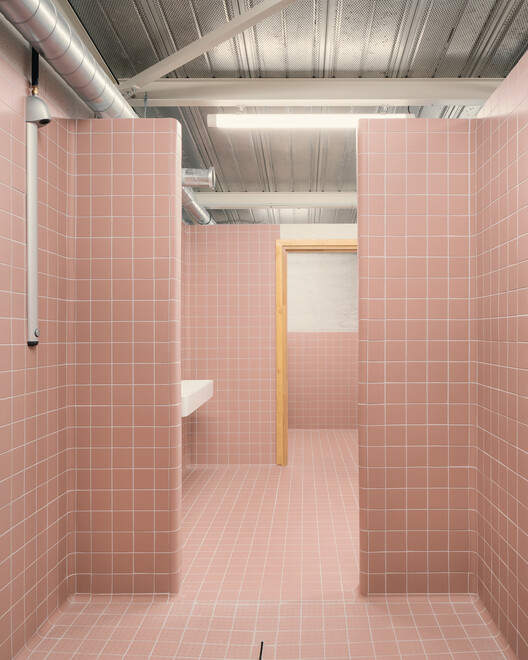
© Vladimir de Mollerat du Jeu
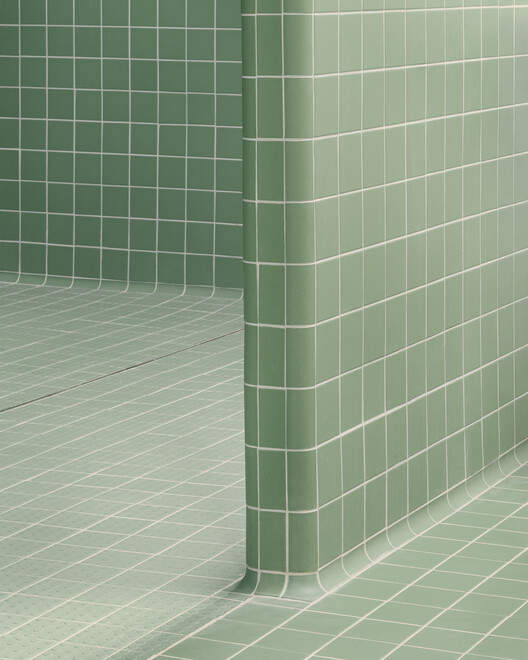
© Vladimir de Mollerat du Jeu
The project unifies the various facilities, offering a shared experience. Visitors can move through the complex from north to south and view the entire complex from east to west. Visual passages are incorporated into the building facade, opening outwards to showcase internal activities.
该项目统一了各项设施,提供共享体验。访客可自北向南穿行于综合体内,并从东向西一览场馆全貌。建筑立面融入了视觉通道,向外敞开并展现内部活动。
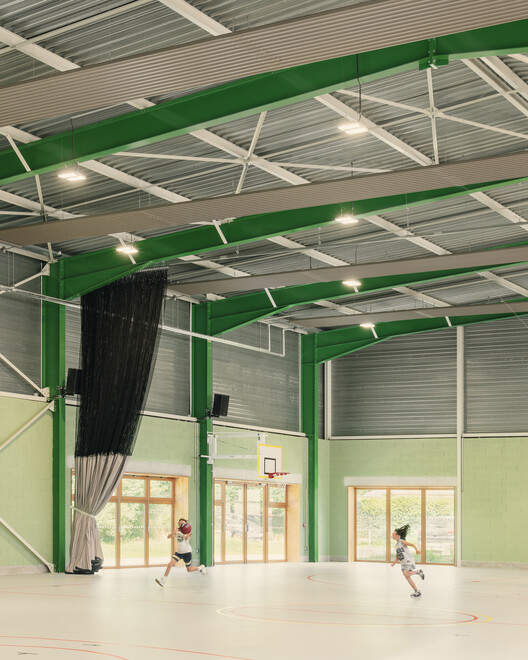
© Vladimir de Mollerat du Jeu
The original materials and galvanized steel give way to vividly colored structures. Exposed technical elements become architectural features. Each gymnasium is given a distinct color: the main gymnasium is red, highlighting the historical frame; the multipurpose hall is green, setting the visual tone for that space.
原始材料和镀锌钢材让位于色彩缤纷的结构。外露的技术元素成为建筑特色。每个体育馆都配以独特色彩:体育馆采用红色,凸显历史框架;多功能馆采用绿色,为该空间奠定视觉基调。
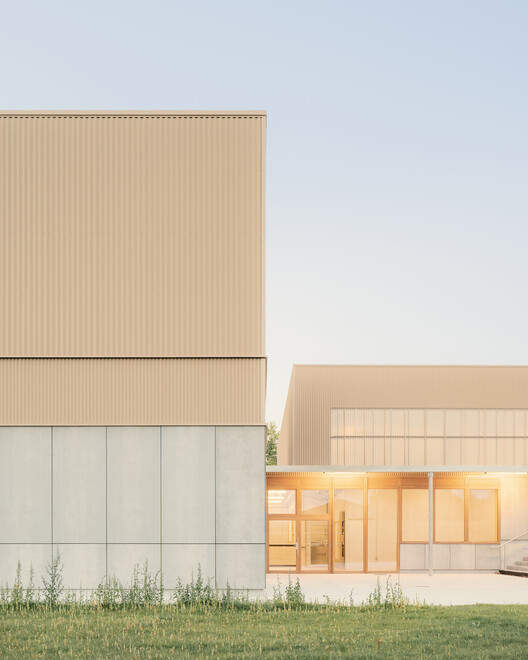
© Vladimir de Mollerat du Jeu