文化遗产的精神性空间转译:该项目成功地将佛山盐步村深厚的“盐步老龙”龙舟文化遗产及其“礼让结亲”的文化内核,抽象转化为一条清晰的“空间化廊道”。这种叙事轴线不仅是物理路径,更是精神纽带,实现了从历史传说到当代建筑语汇的精妙过渡。设计师并未拘泥于对龙舟形式的简单模仿,而是通过“新龙望老龙”的理念,构建了一个指向非遗栖息地的朝圣式体验,使建筑成为承载社区记忆和文化认同的激活载体。
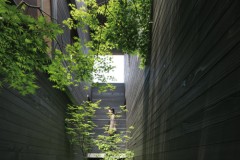
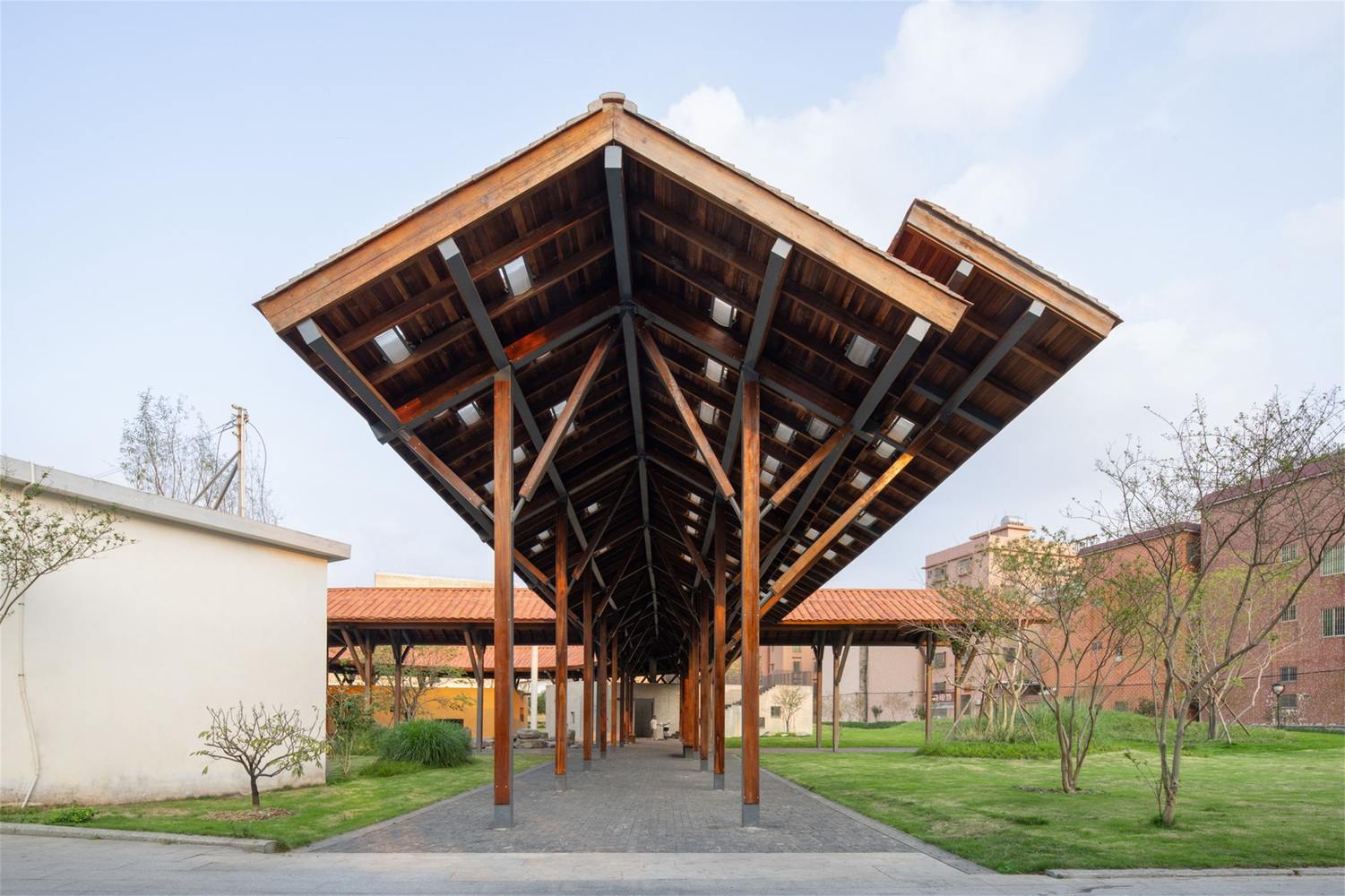
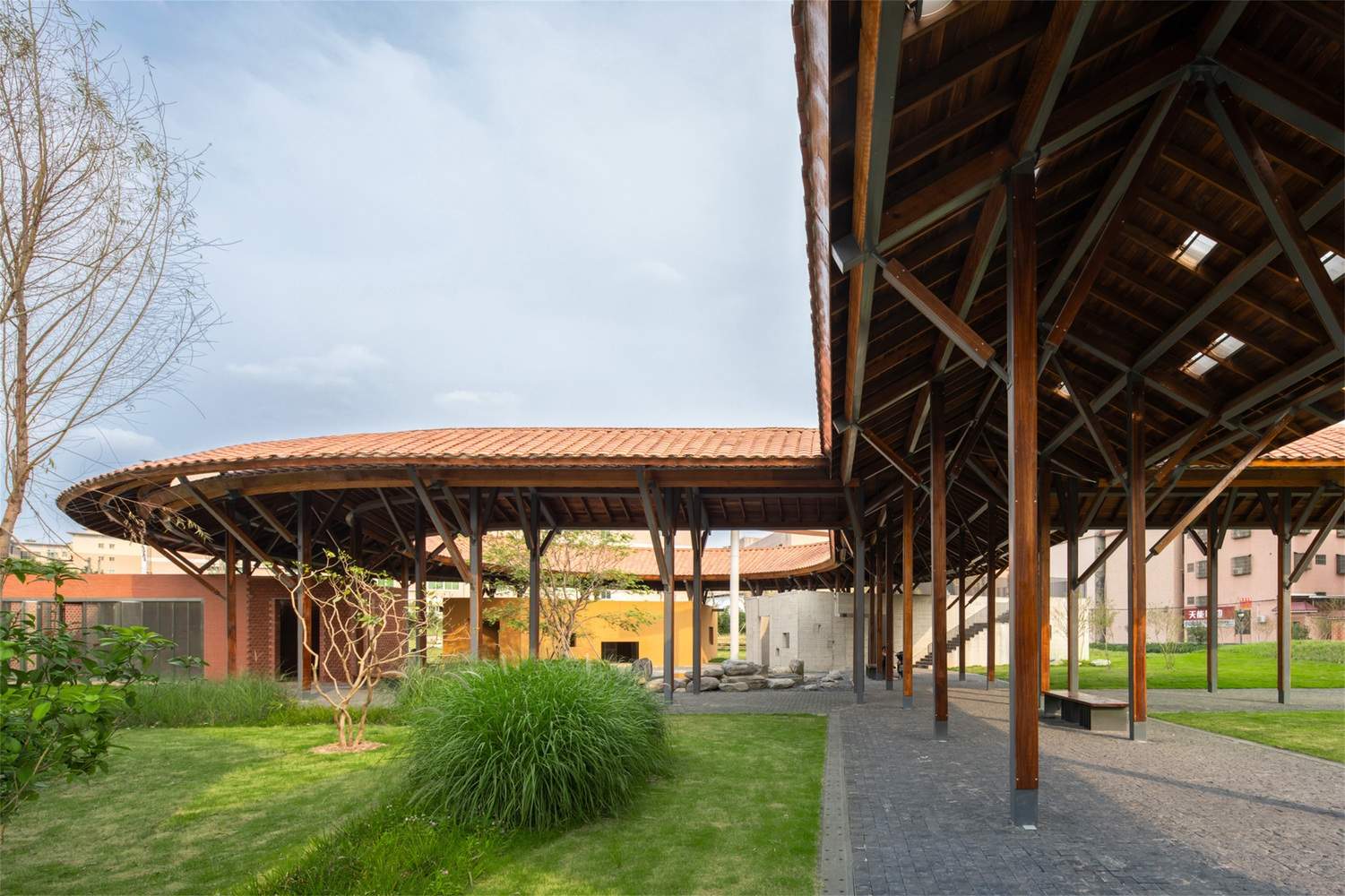
在地材料的当代语汇与气候适应性:设计的一大亮点在于对岭南在地材料和传统建造方式的当代性再创造。通过红砖的镂空砌法、夯土墙体的原始质感、木纹清水混凝土的几何切割,以及土陶瓦在廊道顶部的应用,项目实现了建筑与场地肌理的深度根植。更重要的是,连续的架空廊道系统巧妙地应对了岭南湿热气候,创造出序列化的“阴影灰空间”,鼓励自然通风,使建筑成为一个会“呼吸”的柔性界面,体现了对地域气候的深刻理解和人文关怀。
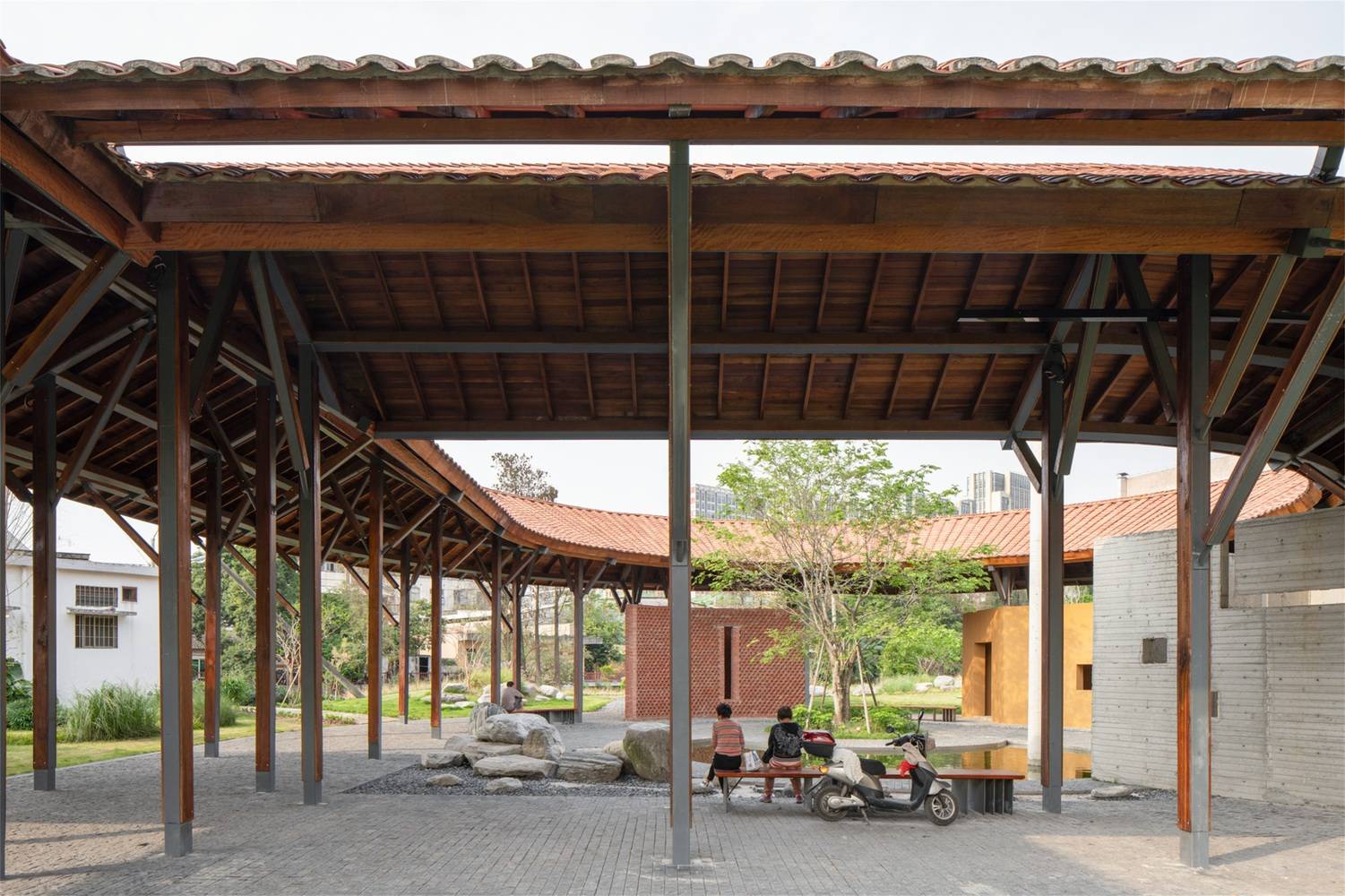
社区公共生活的“范式重塑”:本项目超越了单纯的纪念性场所设计,成功地将核心空间重塑为社区日常生活的“乡村客厅”。通过三个景观“盒子”和廊道围合形成的公共空间,围绕水景与树木自然地组织了居民的聚集、漫步与交流。这种设计策略强化了社区的凝聚力和日常的活力,使得历史文脉的延续不再是静态的展示,而是融入鲜活的、包容性的日常活动的动态过程,实现了从文化符号到社区激活的成功转型。
In Yanshu Village, Nanhai, Foshan, lies an ancient dragon boat—the "Yanshu Old Dragon"—resting beneath the river silt. Established in the seventh year of the Xuande reign of the Ming Dynasty (1432), it is 593 years old. The anecdote of "courtesy for marriage" behind it established the core of the local dragon boat culture, characterized by humility and respect, giving rise to a unique set of traditional etiquette and customs that have persisted for hundreds of years. This project combines profound intangible cultural heritage to create spatial carriers that activate contemporary community vitality.
在佛山南海的盐步村,河涌淤泥下静卧着一条全国现存的古老龙舟 —— “盐步老龙”。它始建于明宣德七年(1432 年)距今已 593 岁,其背后“礼让结亲”的典故,奠定了此地谦逊重礼的龙舟文化内核,并衍生出一套延续数百年的独特礼俗。通过结合厚重的非物质文化遗产,创造激活当代社区活力的空间载体。
© 吴嗣铭
© 吴嗣铭
The Modern Interpretation and Spatial Narrative of Lingnan Intangible Heritage
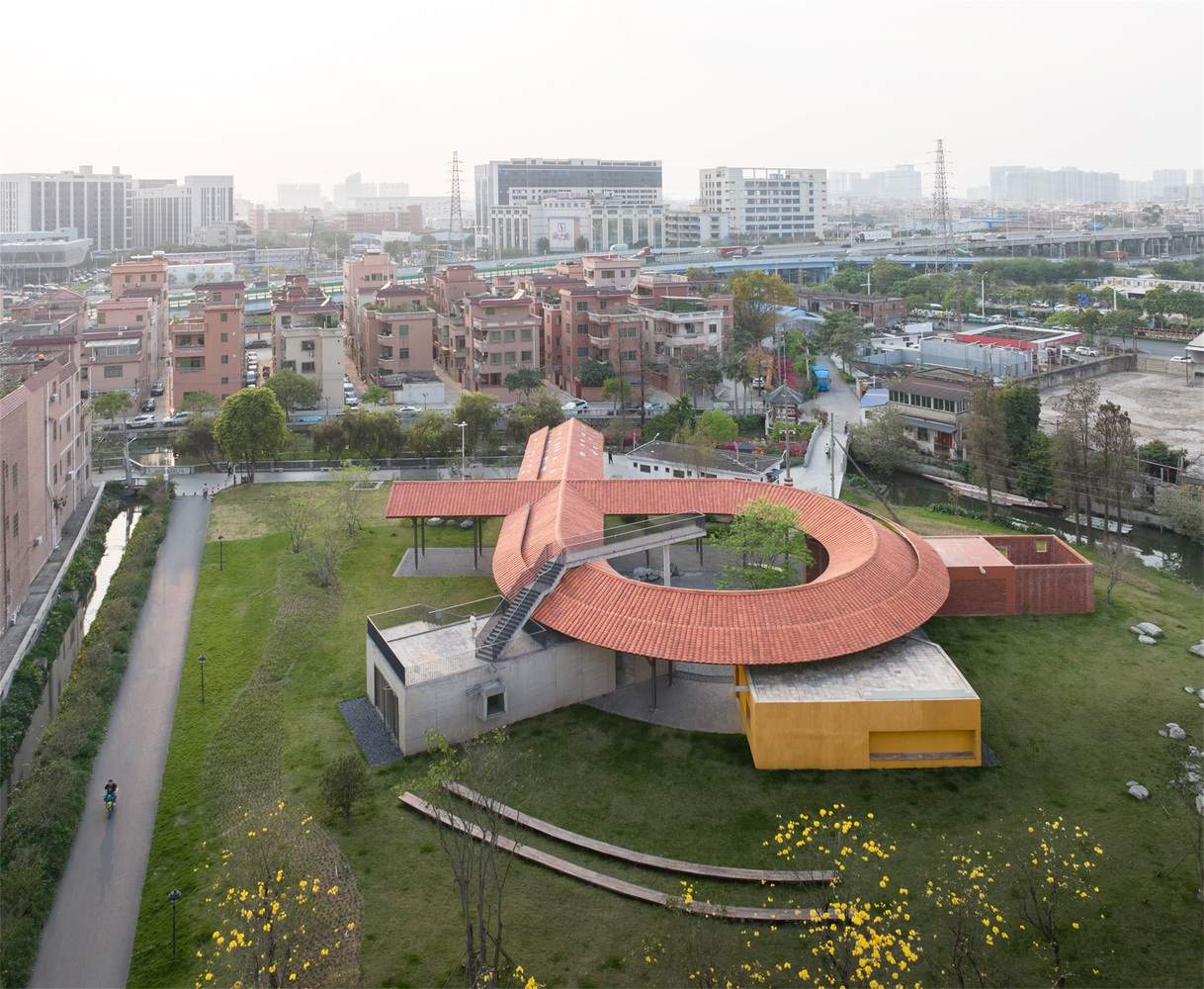
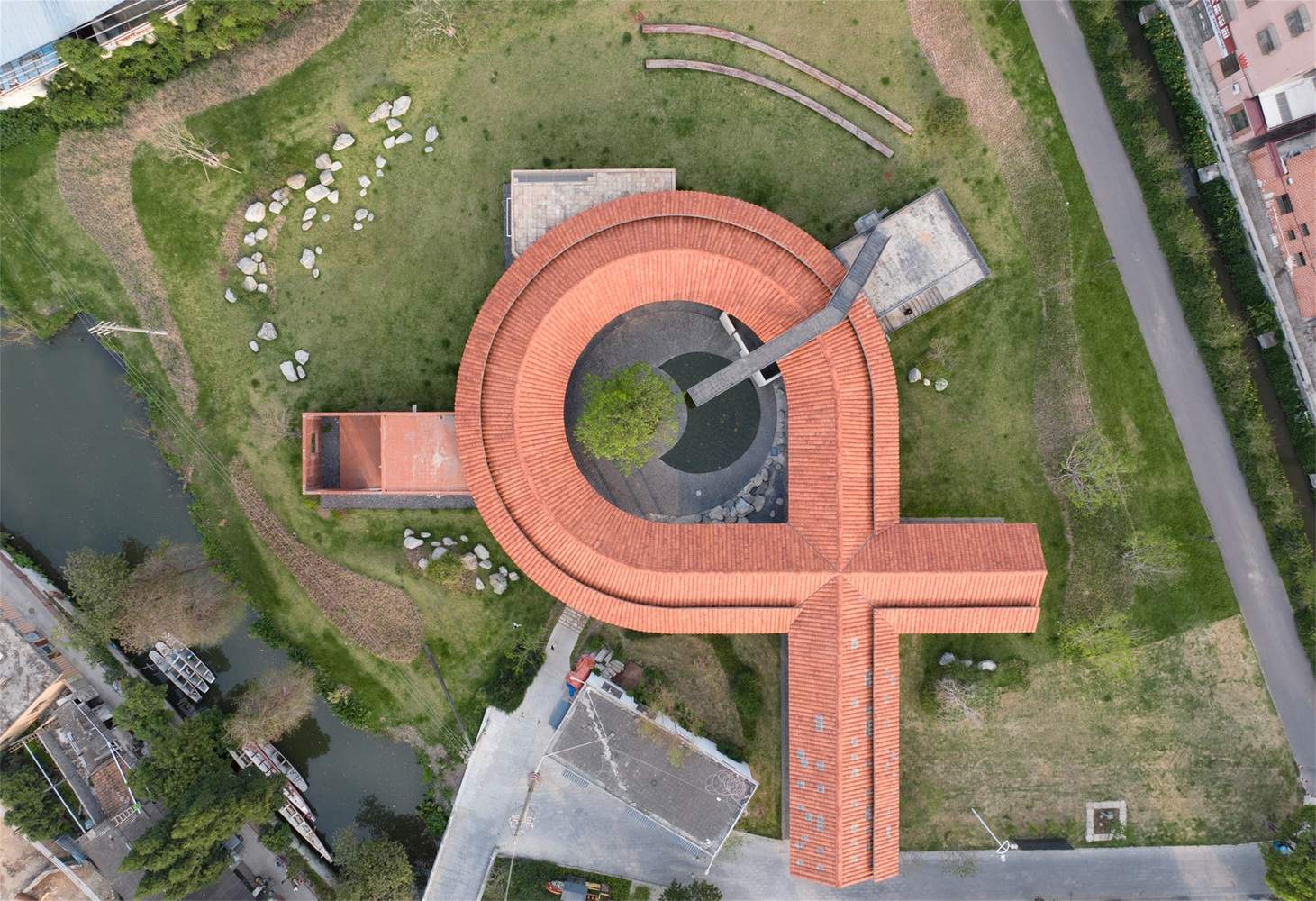
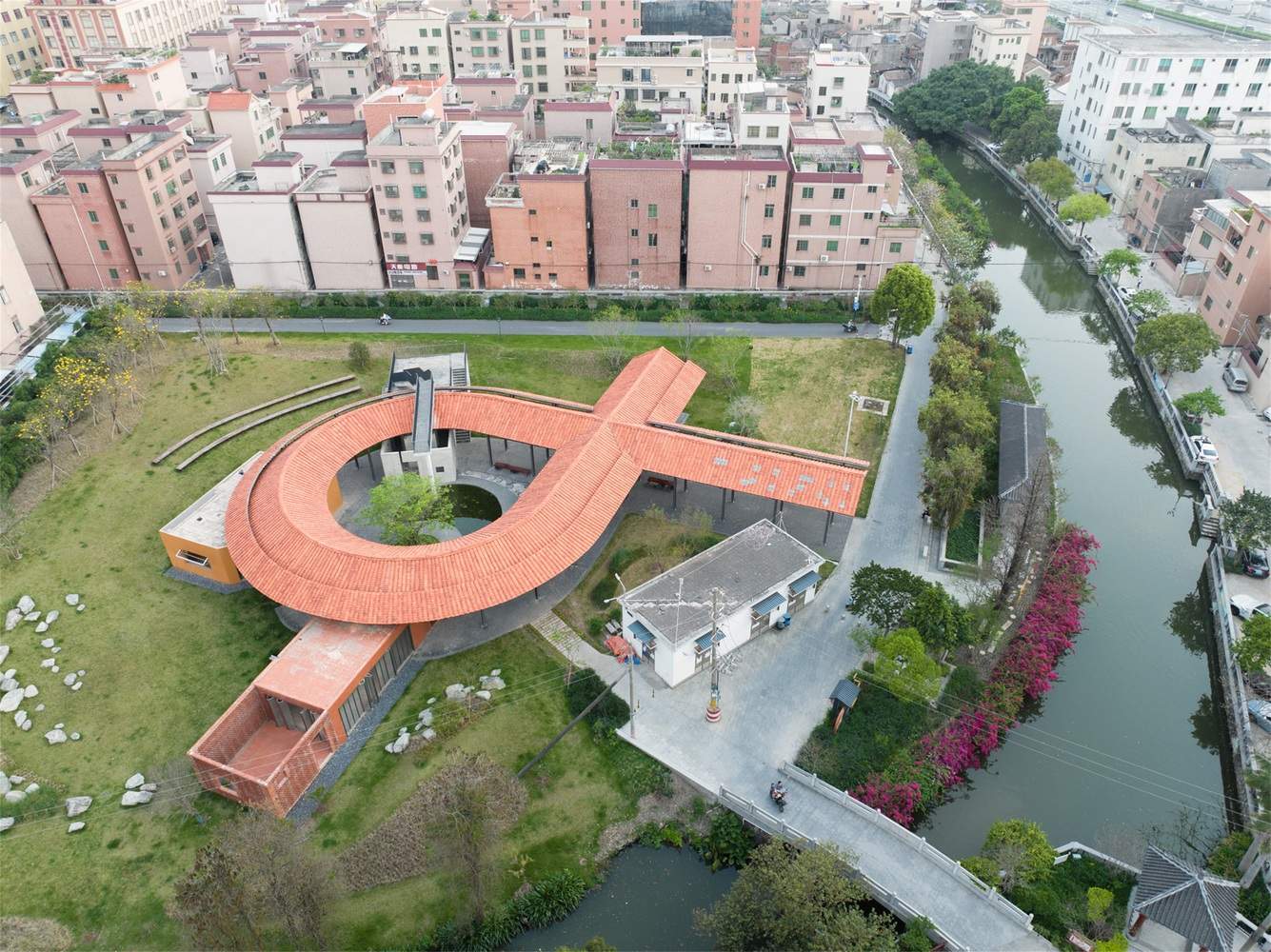
The core concept of the Old Dragon Park project is distilled as "The New Dragon Gazing Upon the Old Dragon"—not a formal imitation, but an abstract dialogue concerning spirit, memory, and materials. The 593 years of history and legend are translated into a "spatialized corridor," whose extended trajectory points towards the "Dragon Hiding Spot," the abode of the Old Dragon boat. The circulation path forms the narrative axis and spiritual link of the entire project.
岭南非遗的现代转译与空间叙事
老龙公园项目的核心理念凝练为 “新龙望老龙” —— 并非形式上的模仿,而是一场关于精神、记忆与材料的抽象对话。将 593 年的历史与传说,转译为一条 “空间化的廊道” ,其延伸的轨迹指向 “藏龙点” 老龙舟的栖身之所。动线构成了整个项目的叙事轴线与精神纽带。
© 吴嗣铭
© 吴嗣铭
© 吴嗣铭
I. From Historical Narrative to Spatial Translation
The core concept of the Old Dragon Park project is distilled as "The New Dragon Gazing Upon the Old Dragon"—not a formal imitation, but an abstract dialogue concerning spirit, memory, and materials. The 593 years of history and legend are translated into a "spatialized corridor," whose extended trajectory points towards the "Dragon Hiding Spot," the abode of the Old Dragon boat. The circulation path forms the narrative axis and spiritual link of the entire project.
一、从历史叙事到空间转译
老龙公园项目的核心理念凝练为 “新龙望老龙” —— 并非形式上的模仿,而是一场关于精神、记忆与材料的抽象对话。将 593 年的历史与传说,转译为一条 “空间化的廊道” ,其延伸的轨迹指向 “藏龙点” 老龙舟的栖身之所。动线构成了整个项目的叙事轴线与精神纽带。
© 吴嗣铭
© 吴嗣铭
II. "Locality" in Community Memory Regeneration and "Flexible" Climatic Adaptation Design
1. Deep Translation of "Locality"
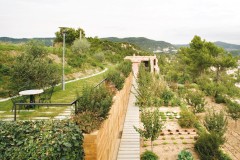
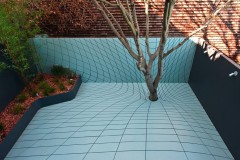
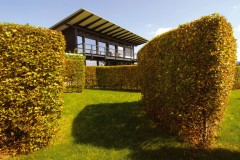
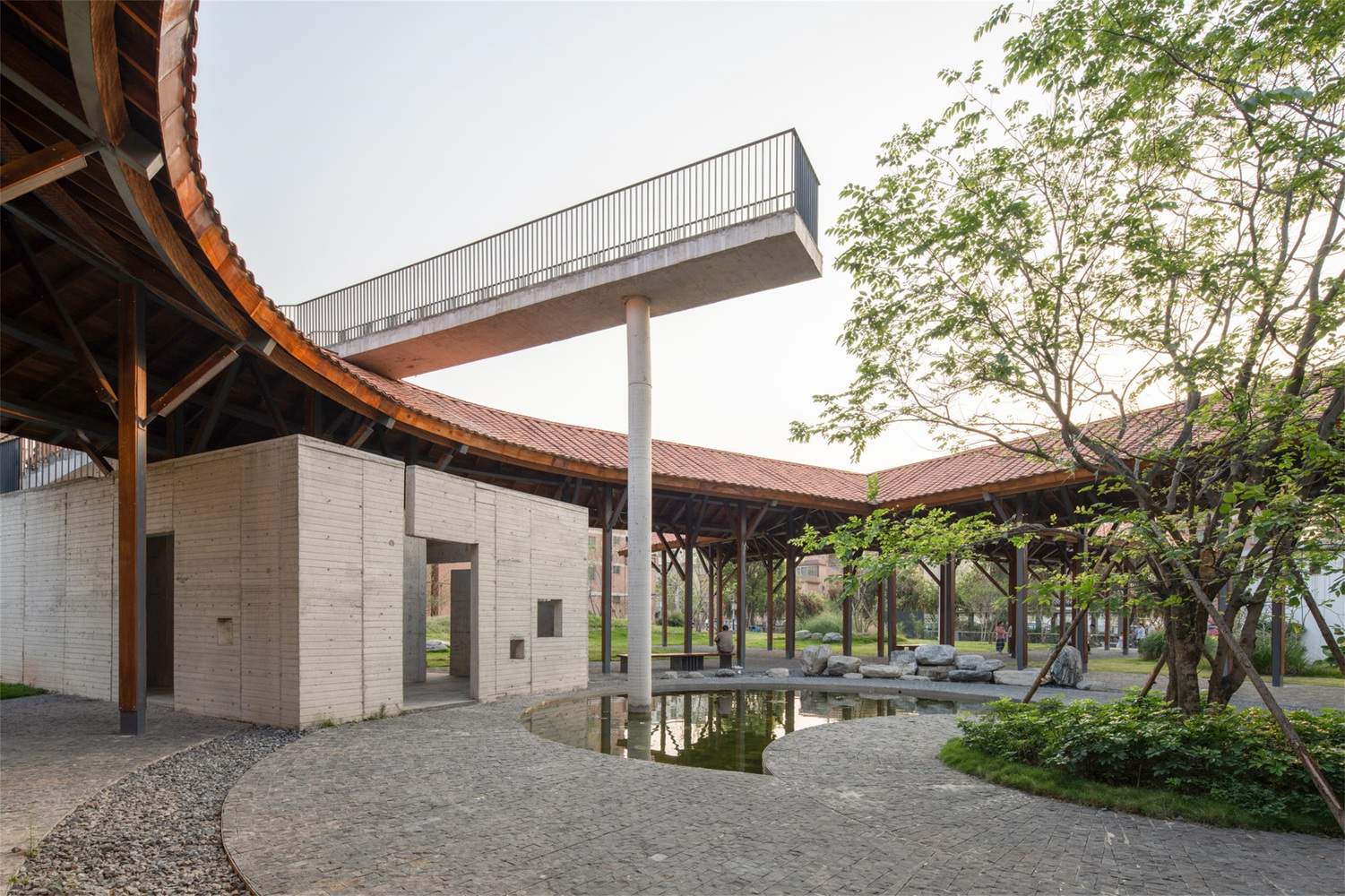
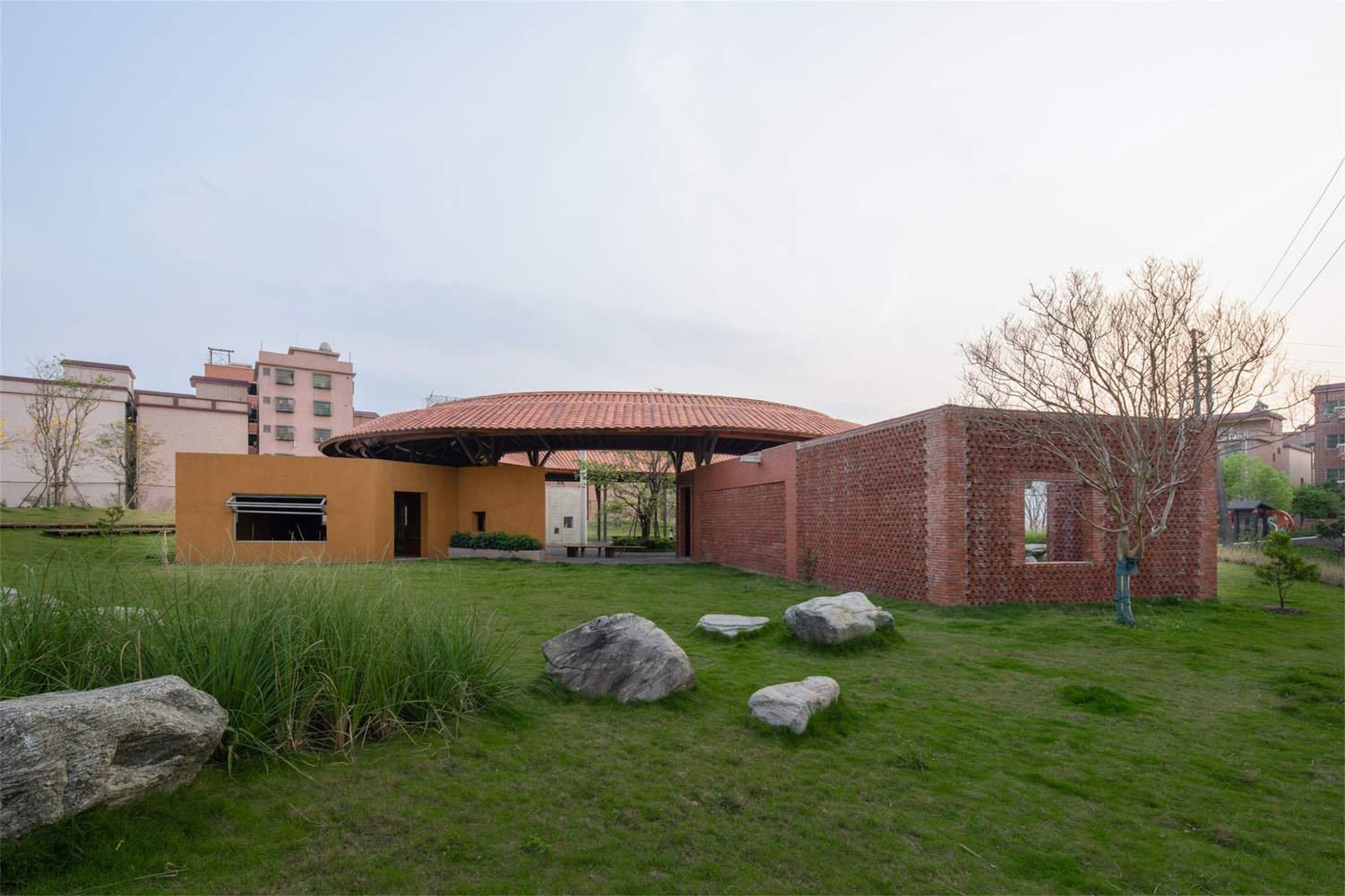
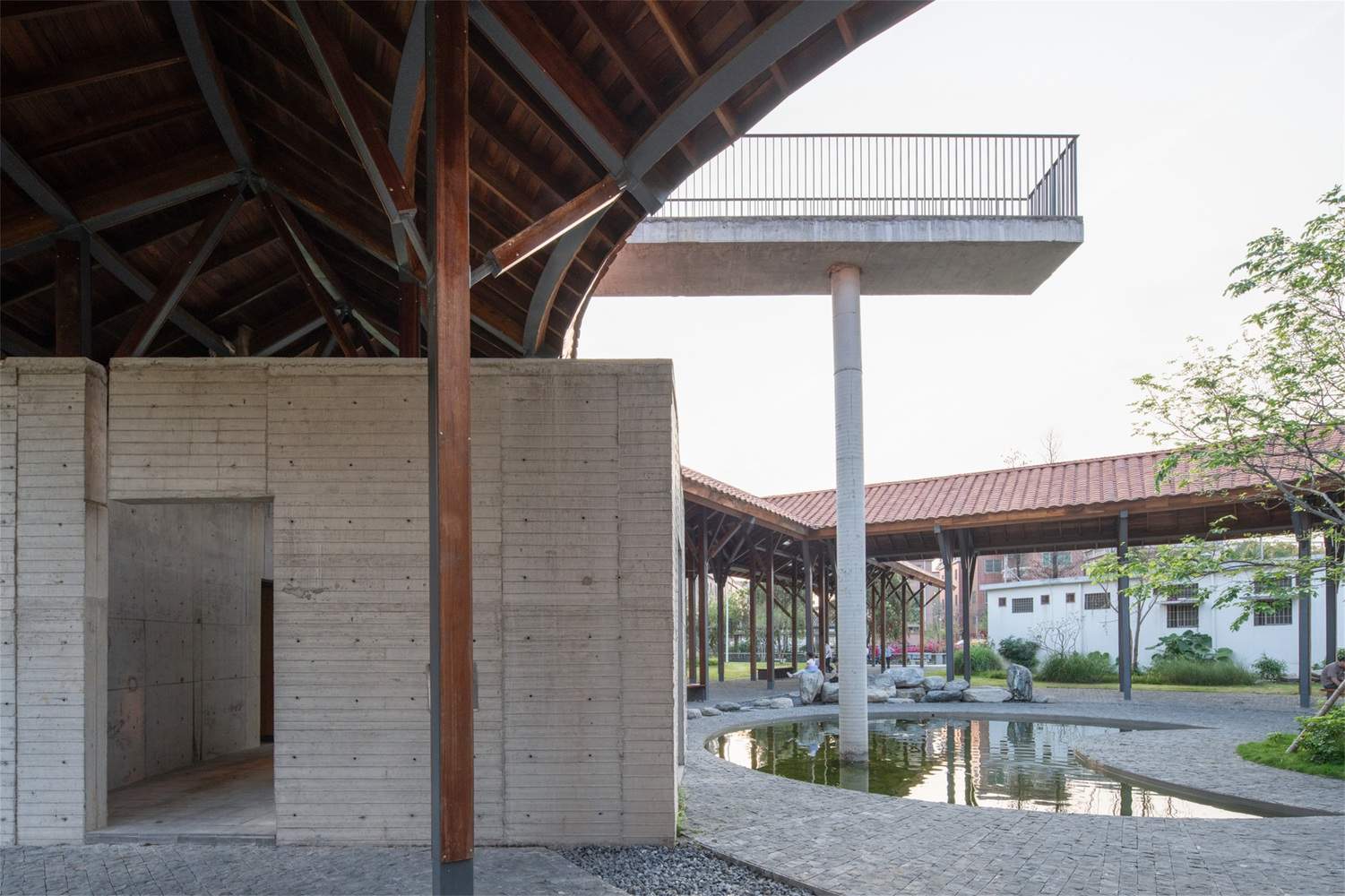
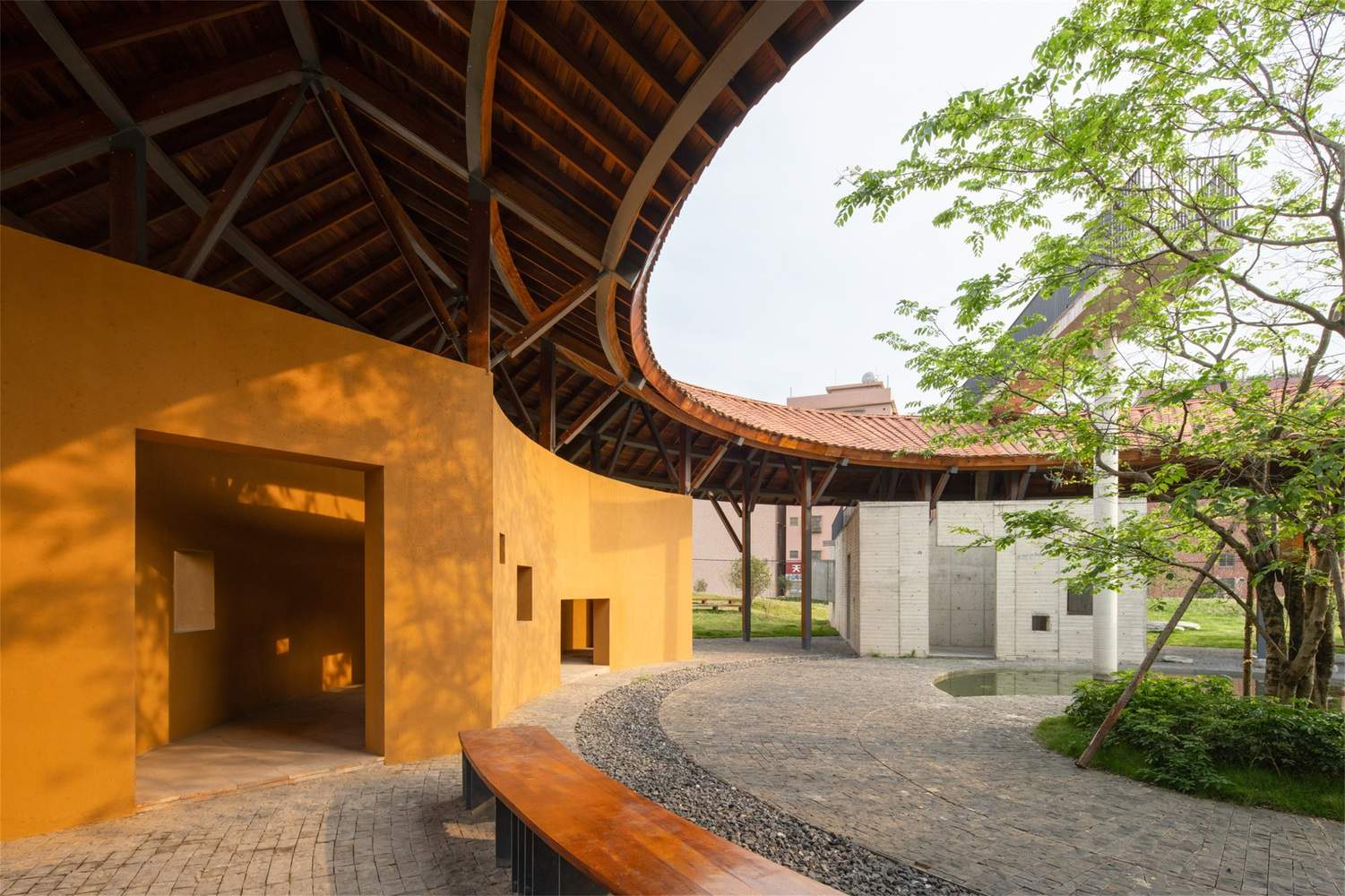
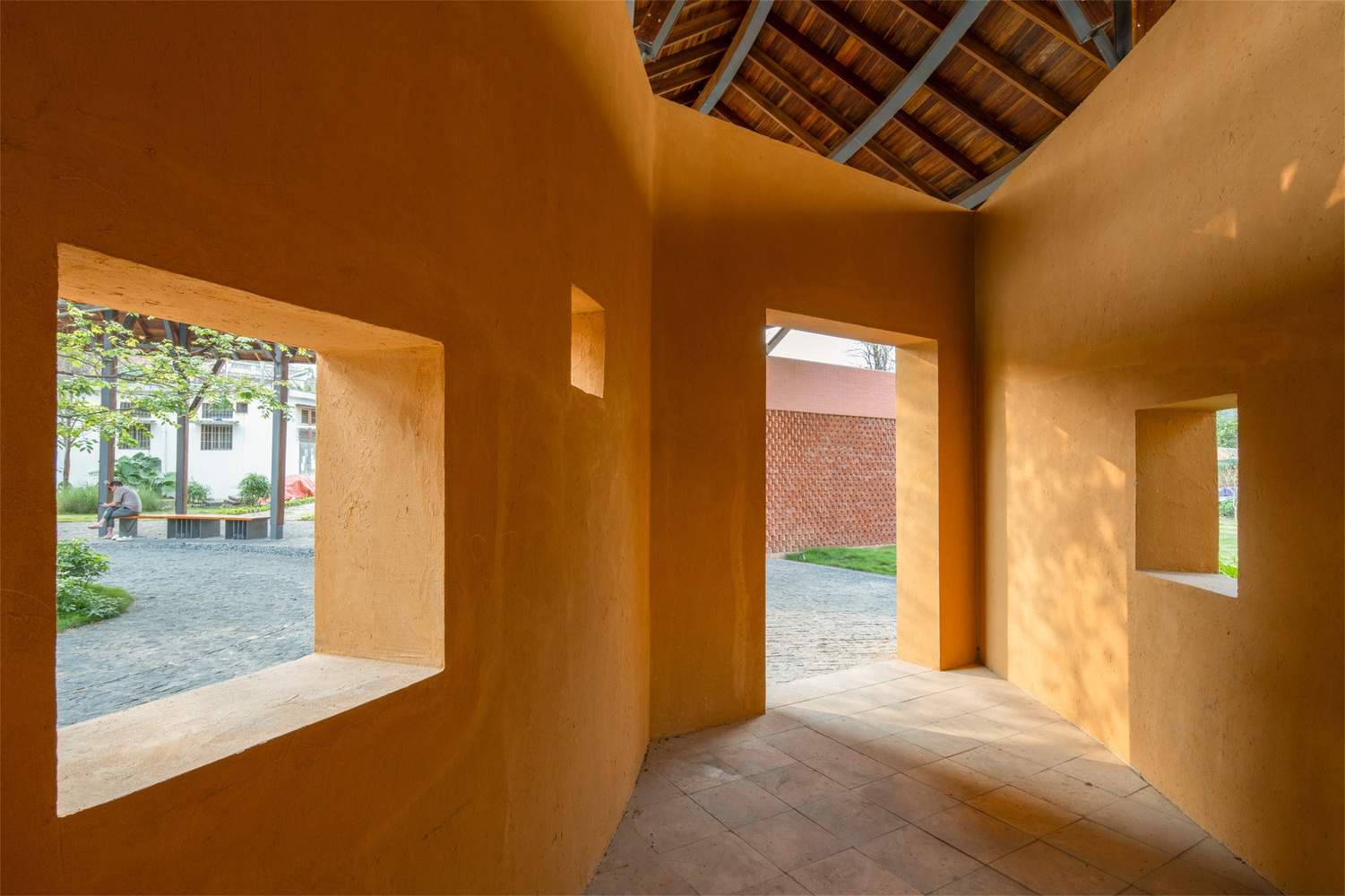
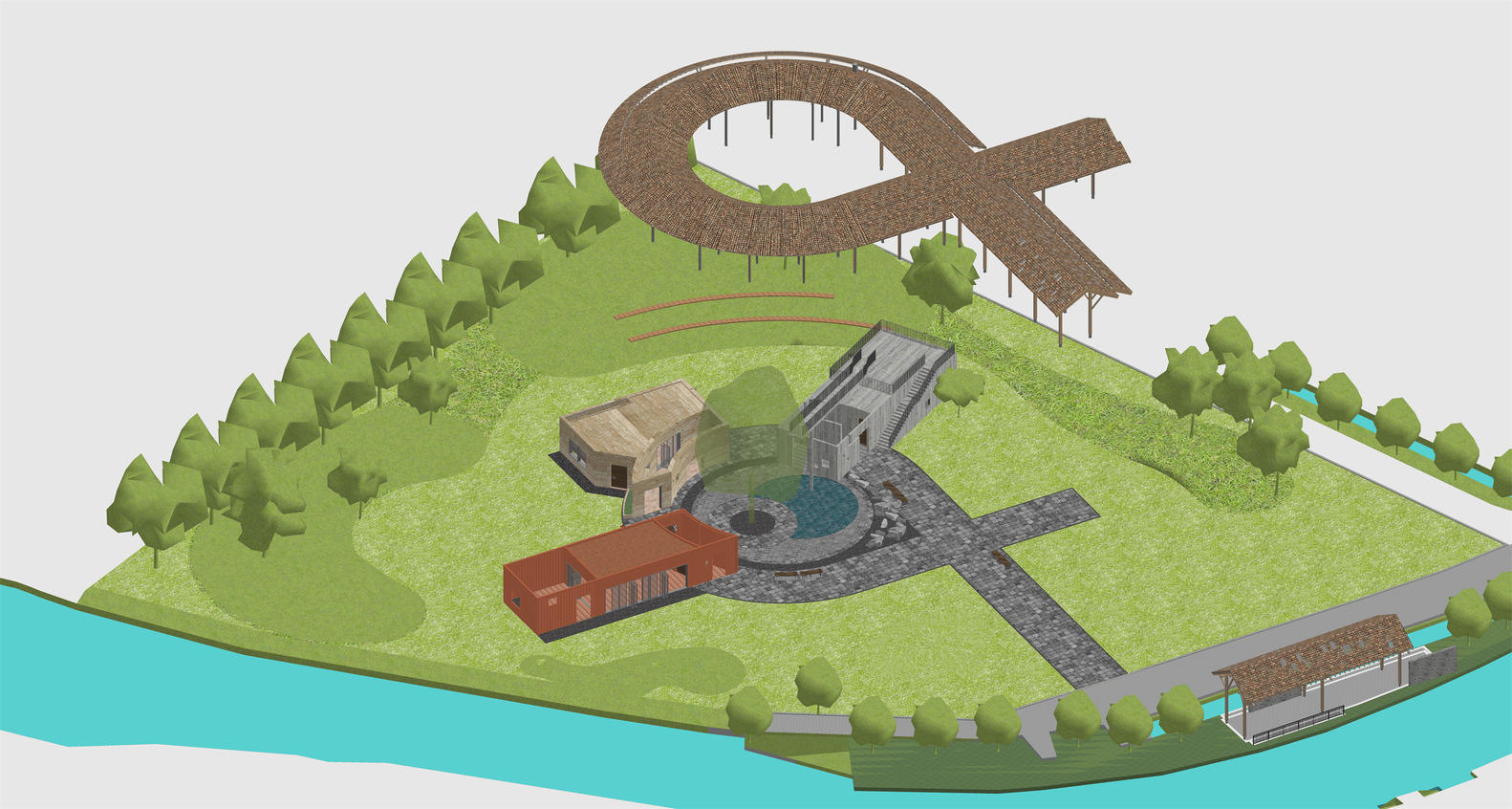
The architectural space is interwoven by three landscape structures of different materials and a corridor. Simultaneously, local materials and construction methods are contemporarily reinterpreted: the hollow masonry technique of the red brick structures forms a semi-transparent, breathing interface; the rammed earth walls present an original warmth and texture; the geometric cutting of timber-textured fair-faced concrete and the large cantilevered decks; the use of ceramic tiles on the roof of the steel-wood combined corridor roots the architecture firmly in the texture of the site. The three boxes create diverse spatial perspectives based on the surrounding environment—the stream, trees, mounds, vegetable fields, and old buildings—becoming "viewing devices" that capture different landscapes.
二、“在地性”的社区记忆再生与“柔性”气候适应性设计
1.“在地性”的深度转译
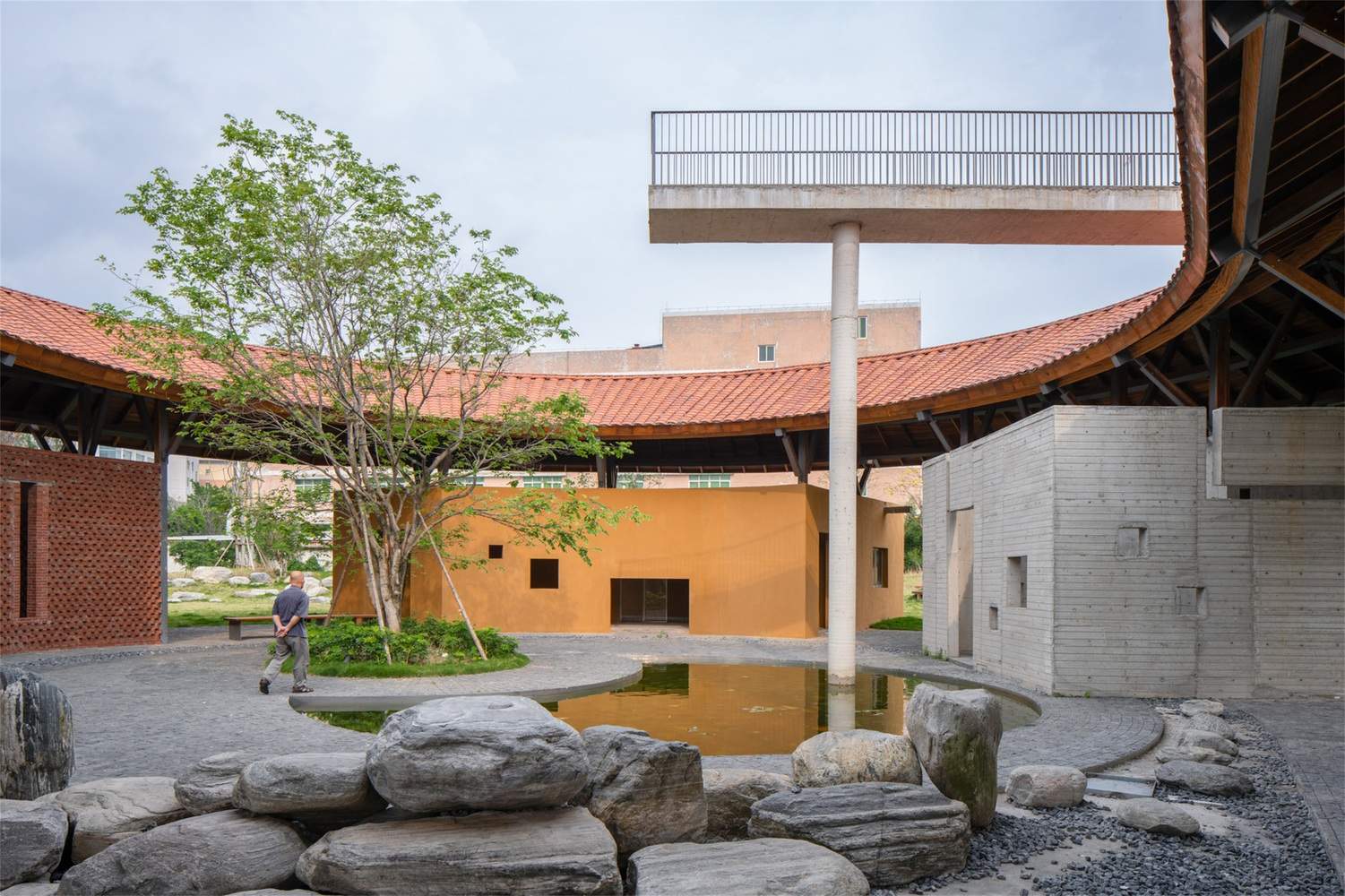
建筑空间由三个不同材料的景观构筑物与廊道交织而成。同时对本土材料与建造方式进行当代转译,红砖构筑物镂空砌法形成半通透呼吸般的界面;夯土墙体呈现出原始的温度与质感;木纹清水混凝土的几何切割与大挑台;土陶瓦在钢木结合廊道顶部的运用,使建筑植根于场所的肌理。三个盒子依据周边涌、树、丘、菜地及老建筑等周边环境营造多种空间视角,成为捕捉不同风景的“观景器”。
© 吴嗣铭
© 吴嗣铭
The three boxes create diverse spatial perspectives based on the surrounding environment—the stream, trees, mounds, vegetable fields, and old buildings—becoming "viewing devices" that capture different landscapes.
三个盒子依据周边涌、树、丘、菜地及老建筑等周边环境营造多种空间视角,成为捕捉不同风景的“观景器”。
© 吴嗣铭
© 吴嗣铭
2. "Flexible Architecture" and Climatic Adaptability
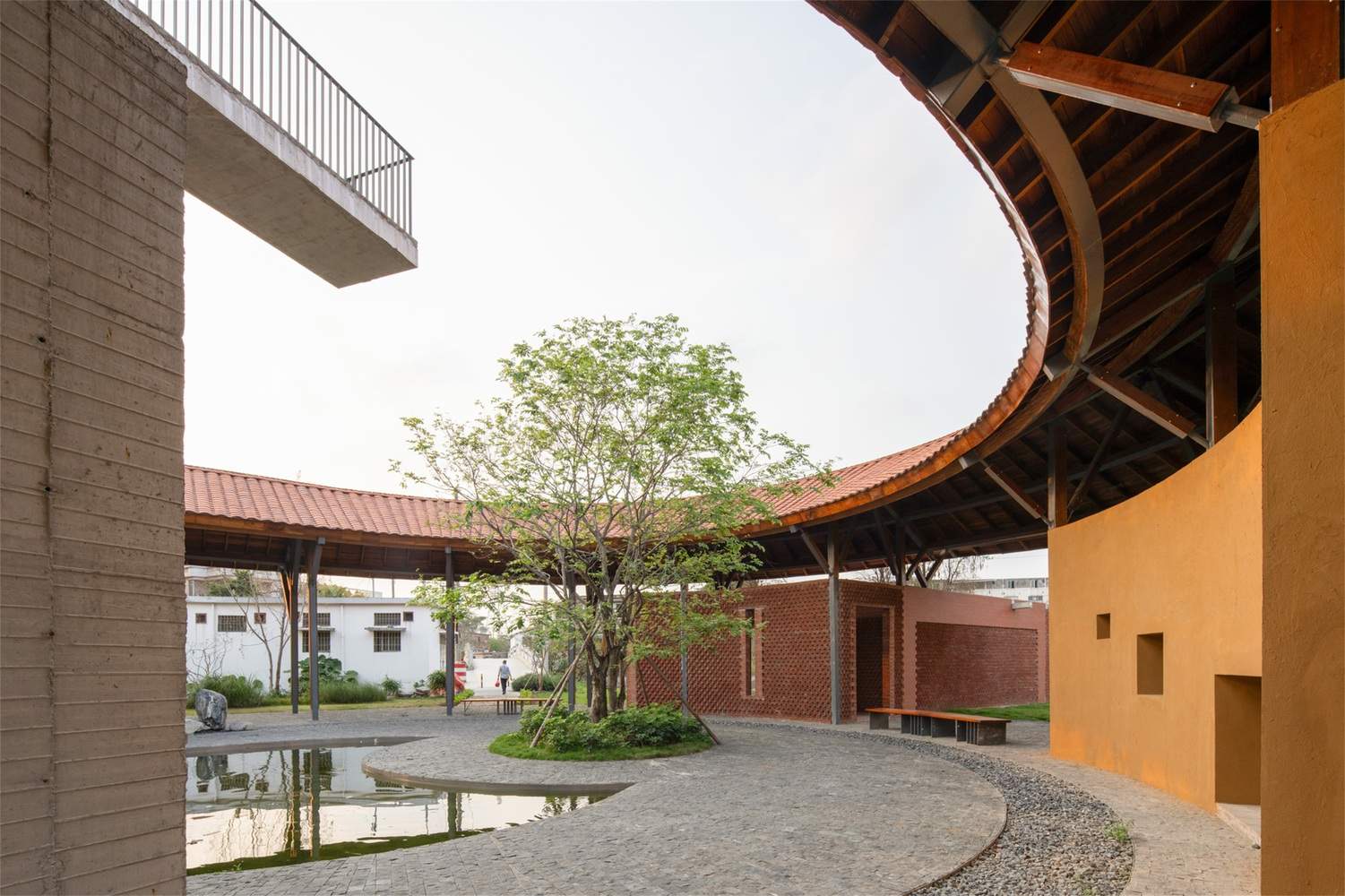
The continuous elevated corridor system is not only an iconic connection for "The New Dragon Gazing Upon the Old Dragon," but functionally creates shaded transitional spaces adaptable to Lingnan's hot and humid climate. This sequence of spaces (⅓ solid, ⅓ semi-void, ⅓ fully void) encourages natural ventilation and light interaction, making the architecture itself a "breathing," adjustable ecological interface that directly serves human comfort and activity. It creates a "flexible architecture" capable of adjusting to constantly changing needs and conditions.
2.“柔性建筑”与气候适应性
连续的架空廊道系统,不仅是“新龙望老龙”的意象连接,在功能上创造了可适应岭南炎热潮湿气候的阴影灰空间。这些空间序列( ⅓ 实体、 ⅓ 半虚、 ⅓ 全虚)鼓励自然通风与光影互动,使建筑本身成为一个会“呼吸”、可调节的生态界面,直接服务于人的舒适与活动。打造根据不断变化需求与条件进行调整的“柔性建筑”。
© 吴嗣铭
© 吴嗣铭
3. "Paradigm Reshaping" of Community Spaces
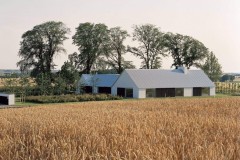
The three landscape "boxes" and the corridor enclose public spaces of varying scales, naturally attracting residents to gather, stroll, and communicate around the central water feature and large tree. It transforms a commemorative site into a lively and inclusive "rural living room" that accommodates daily life, strengthening residents' daily routines and collective identity.
3.社区空间的“范式重塑”
三个景观“盒子”与廊道围合出尺度各异的公共空间,围绕中心水景与大树,自然地吸引居民聚集、漫步与交流。将一个纪念性场所,转化为一个承载日常生活的、生动而包容的“乡村客厅”,强化了居民的日常生活与集体认同。
© 吴嗣铭