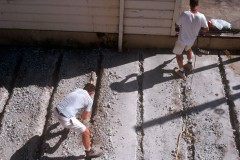
历史文脉与空间叙事的精妙融合:该项目成功地将场地深厚的工业历史(上海第十二棉纺厂,曾以生产优质卡其布闻名)与现代滨江公共空间的需求巧妙地“编织”在一起。设计没有拘泥于实体遗存的重建,而是通过概念性的设计语言,如“编织”的机理和对“卡其色”的材质呼应,实现了从“棉花加工”到“绿色生态空间”的叙事逆转,既满足了防汛更新的工程要求,又在精神层面延续了场地与市民生活的关联,展现了当代城市更新中对非物质文化遗产的深刻理解与转化。
多重机理的动态交织与体验层次的丰富:设计的核心策略是“编织”,有效整合了场地原有的两条关键机理——代表工厂结构的斜线和代表滨江慢行动线的横向元素。通过这种编织手法,设计不仅优化了防汛体系,更置换出了大量的绿色空间,形成连续的林荫步行网络。嵌入其中的多样化活动场地(如无动力游乐设施)和富含工业意象的水景轴线(纱泉广场),极大地丰富了市民的滨江体验,将原本的工业锈带转化为富有趣味和高参与度的城市客厅。
生态优先与材料叙事的精准表达:作为少有的具备良好覆土条件的滨江地块,项目充分利用了生态优势,实现了高绿量和自然的风貌。特别是对地面材料的选择,采用了特殊配方的卡其色透水材料,这不仅解决了透水性要求,其颜色和质感更是对十二棉“卡其大王”历史的直接且克制的致敬。这种在工程需求(防汛、透水)与场地记忆(卡其色)之间寻求高度统一的设计决策,体现了专业设计对细节的极致把控和对环境友好性的承诺。
The Twelfth Cotton Mill in the southern section of Yangpu Riverside was the first section of the 5.5-kilometer shoreline to be formally tendered. It completed its transformation from industrial use to commercial land 20 years ago, but the initial development strategy resulted in the loss of retained historical relics. In the context of the continuous connection of the public spaces along the Huangpu River banks, the design team faced the dual challenges of updating the flood control embankment and continuing the historical memory.
杨浦滨江南段的十二棉厂是5.5公里岸线中第一块正式出让的滨江地块,在20年前即完成了从生产用途到商业地块的转型,但早先的开发策略也使得地块没有了保留的历史遗存。在黄浦江两岸公共空间贯通的背景下,设计团队面临着防汛堤岸更新与历史记忆延续的双重挑战。
© 丘文三映
© 丘文三映
The site was originally the Da Kang Cotton Mill (founded in 1912) by Japanese businessmen, later transforming into the state-owned Shanghai No. 12 Cotton Mill. Historically, the cotton mill converted plants (cotton) into textiles usable by people. Today, the opening of the riverside public space reverses this process, turning the factory back into a green, plant-filled space usable by people, continuing the site's connection to people's lives.
基地原为日商创办的大康纱厂(1912),之后转型为国营上海第十二棉纺厂。历史上棉纺厂将植物(棉花)加工转换为人们可使用的纺织物品,如今滨江公共空间的开放将工厂再逆转为人们可以使用的绿色植物空间,延续着这块场地与人们生活的关联度。
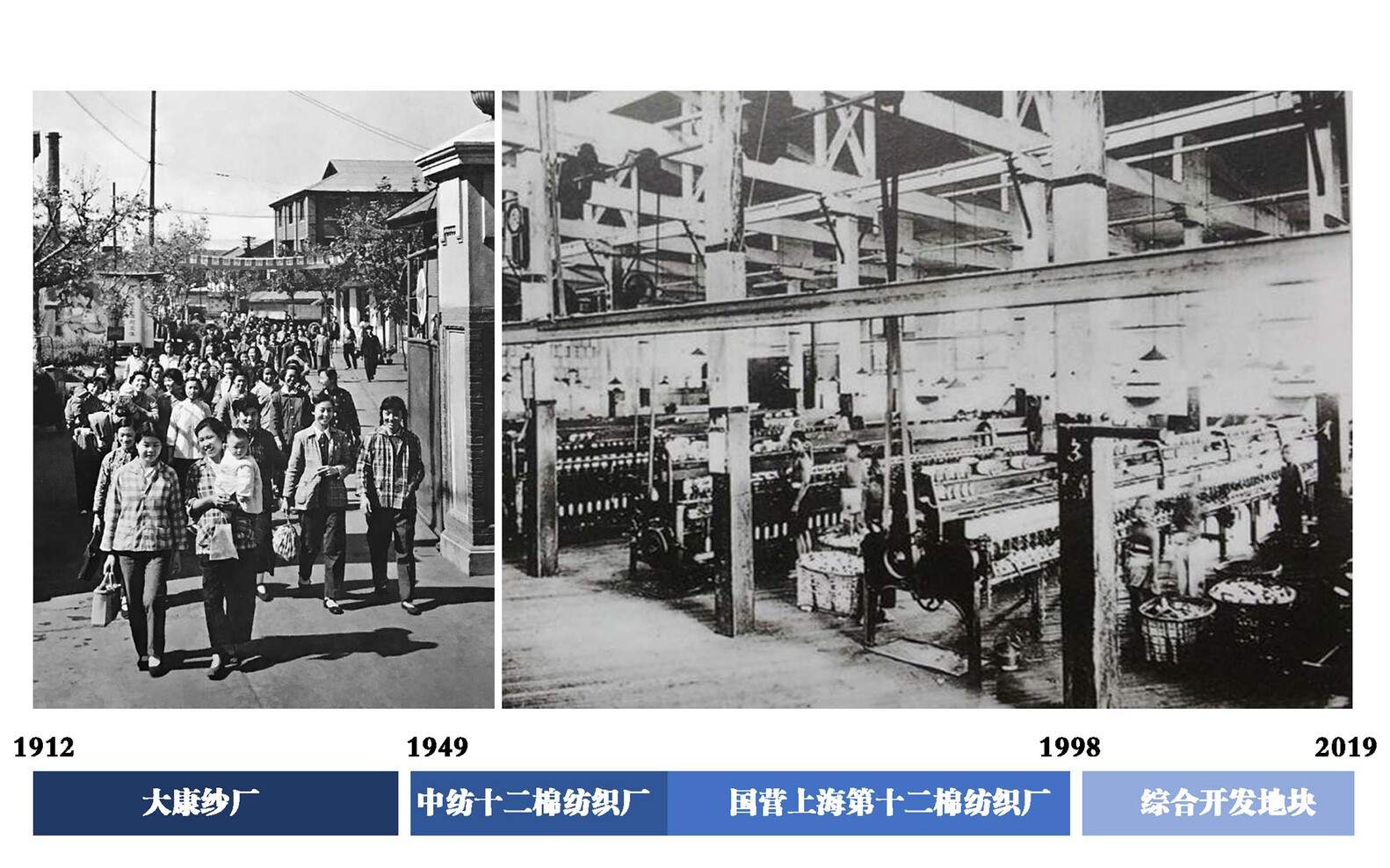
原工厂
© 金笑辉
© 丘文三映
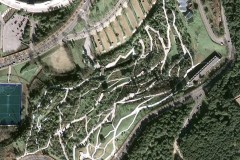
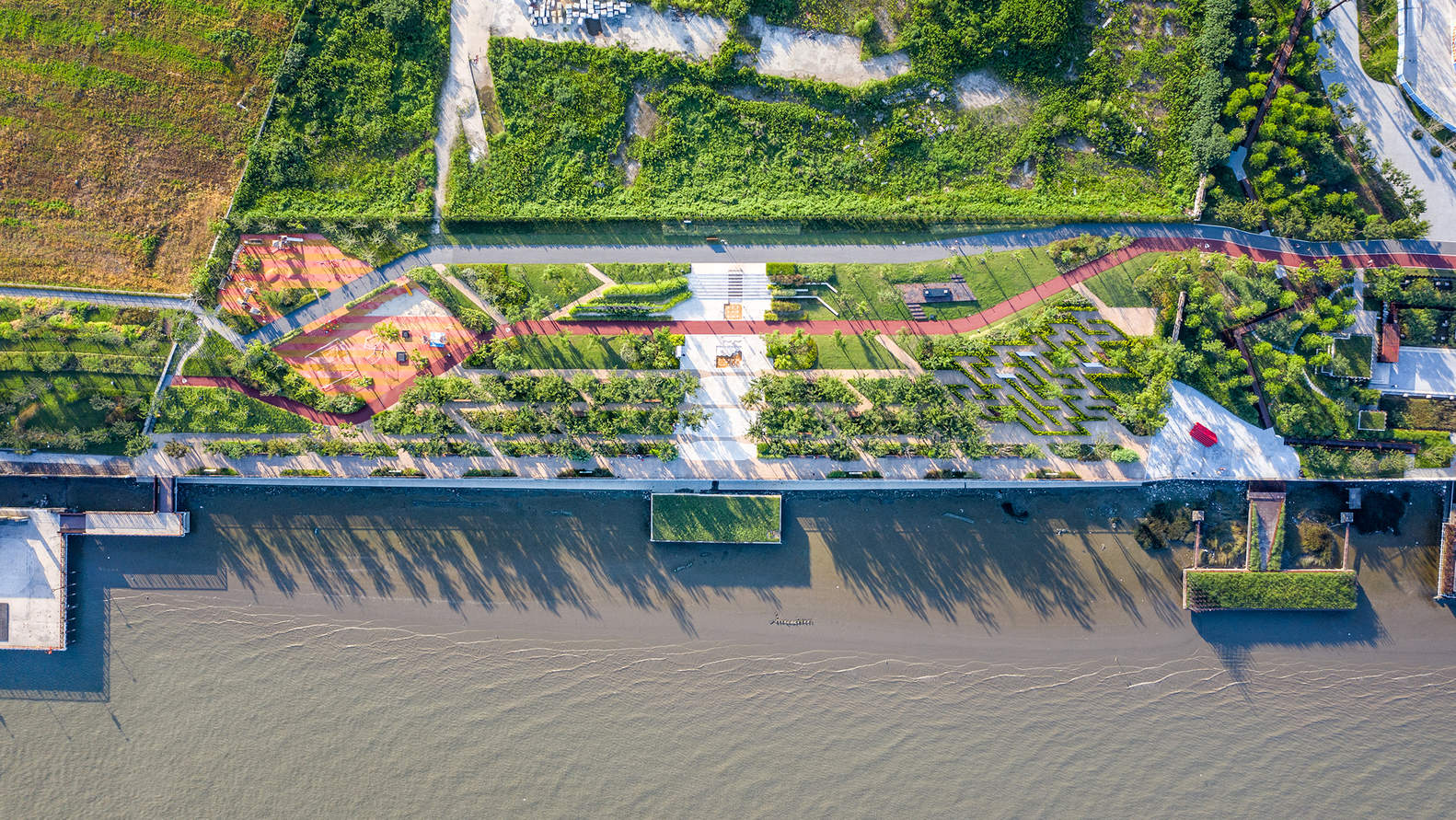
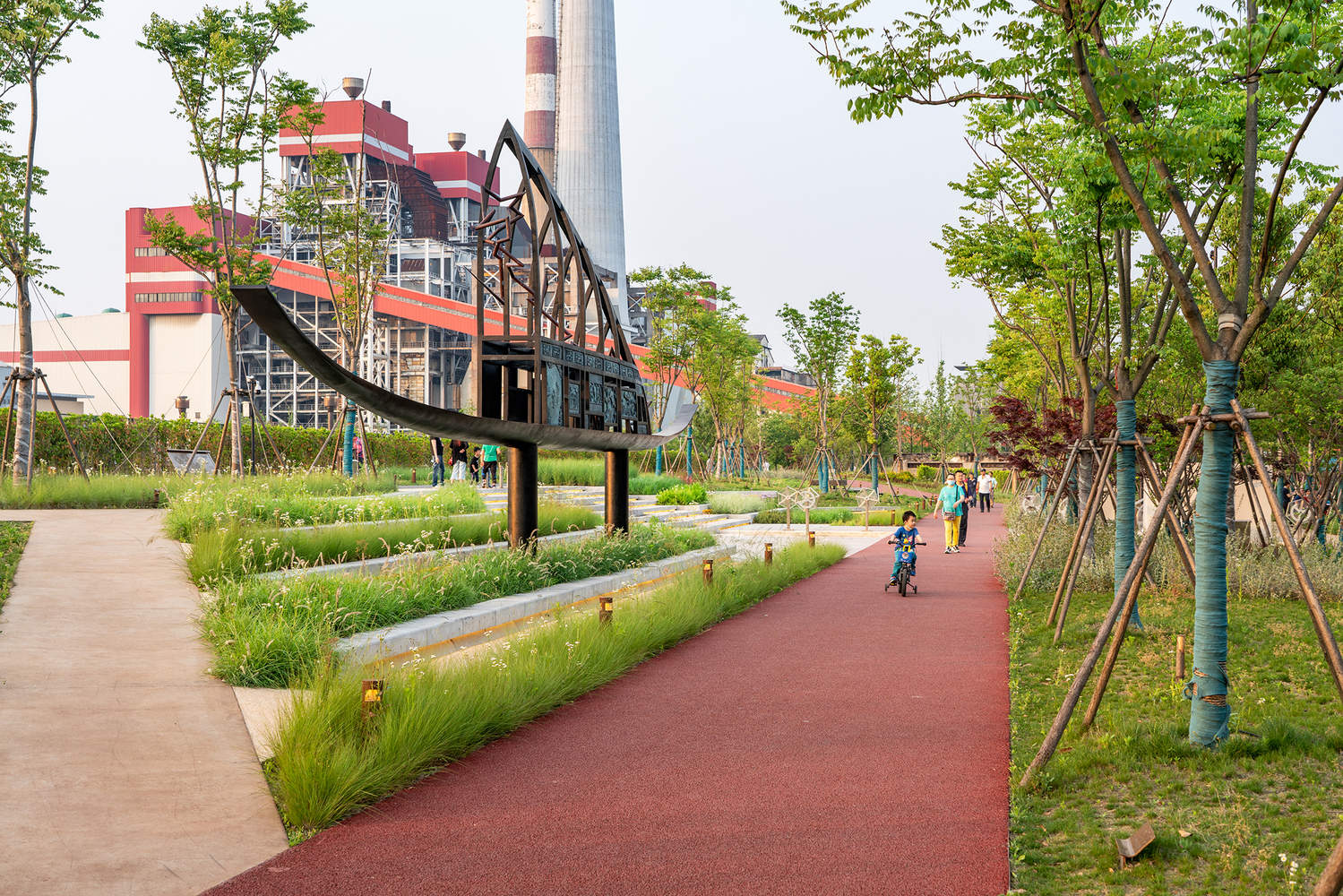
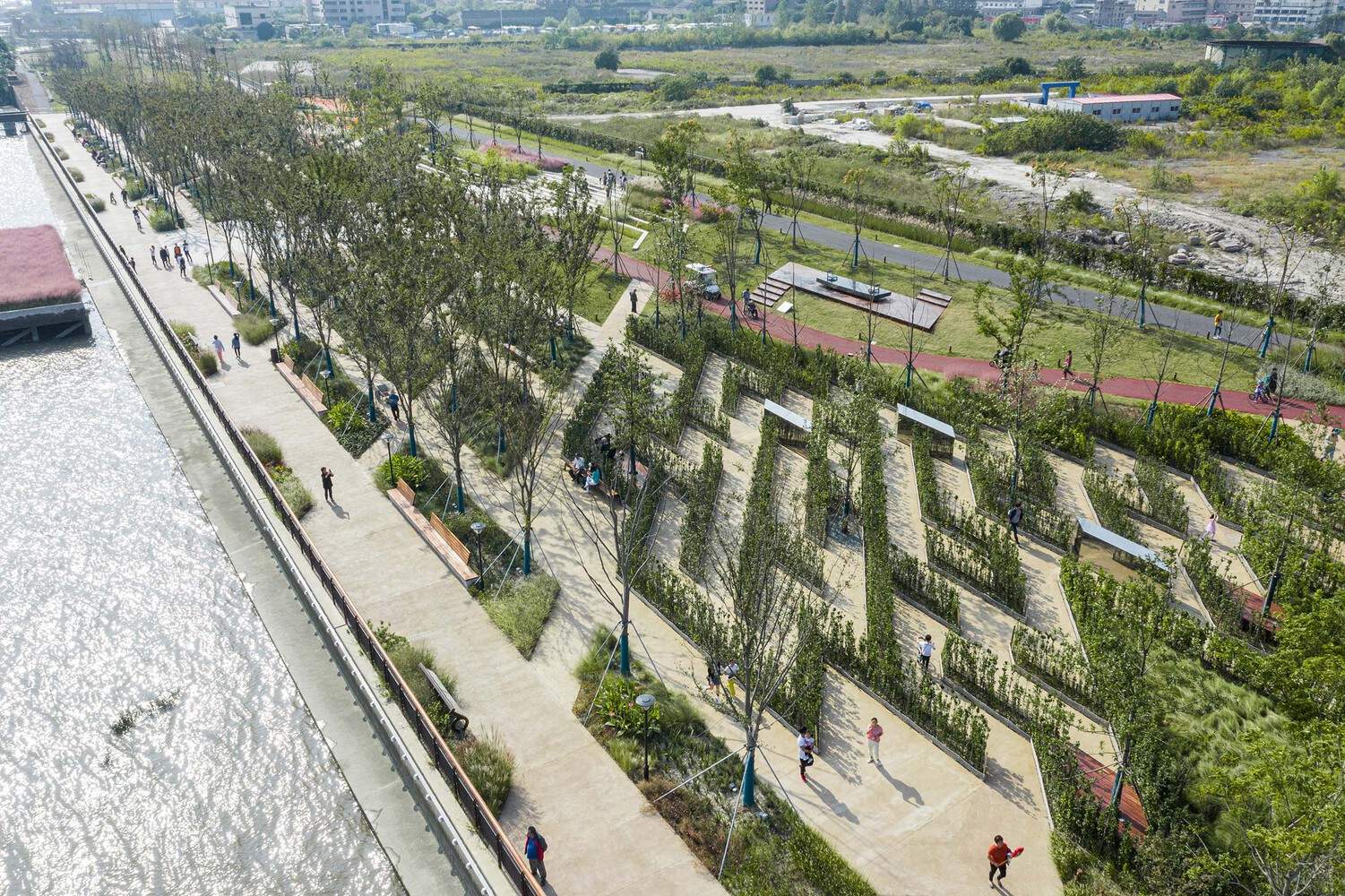
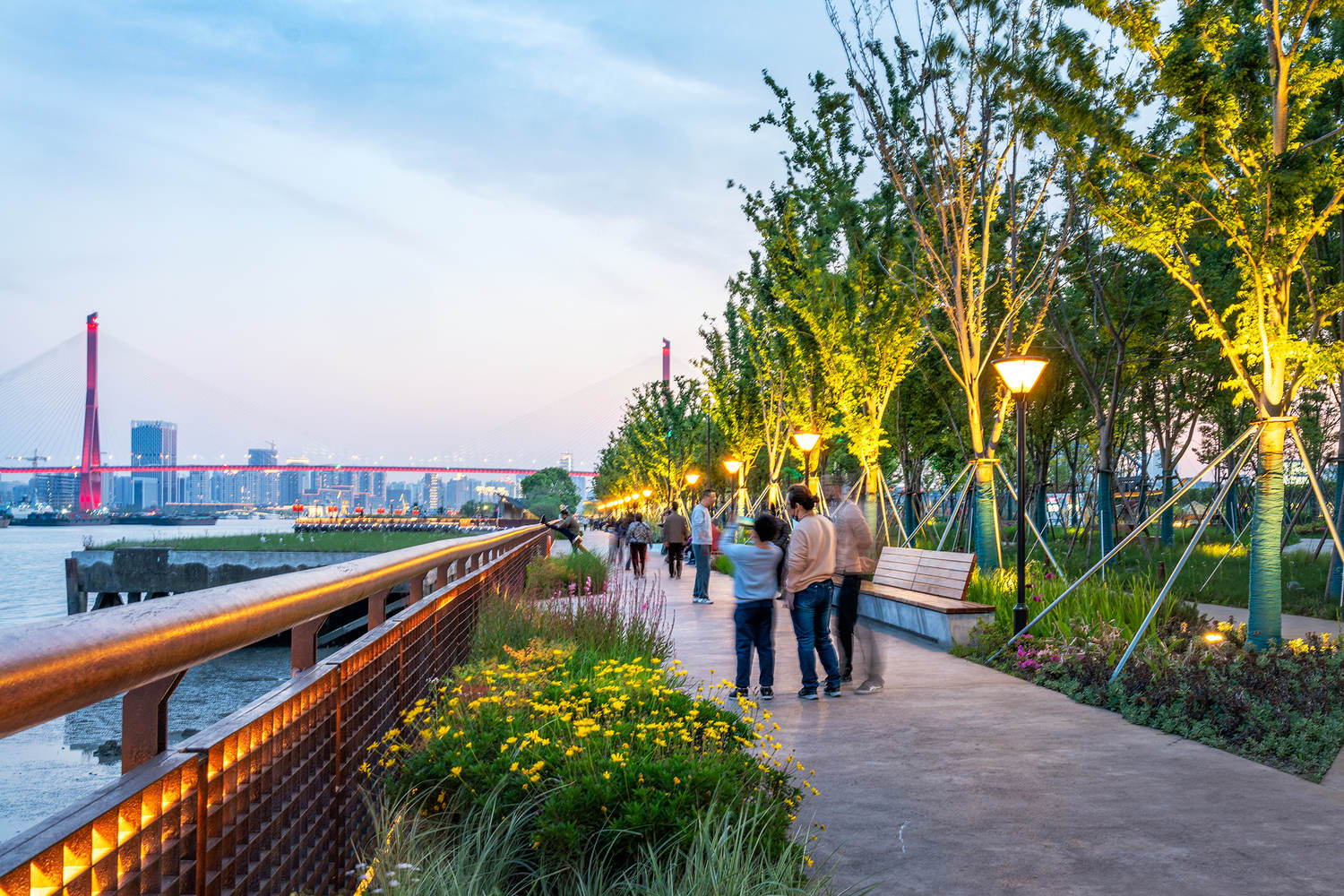
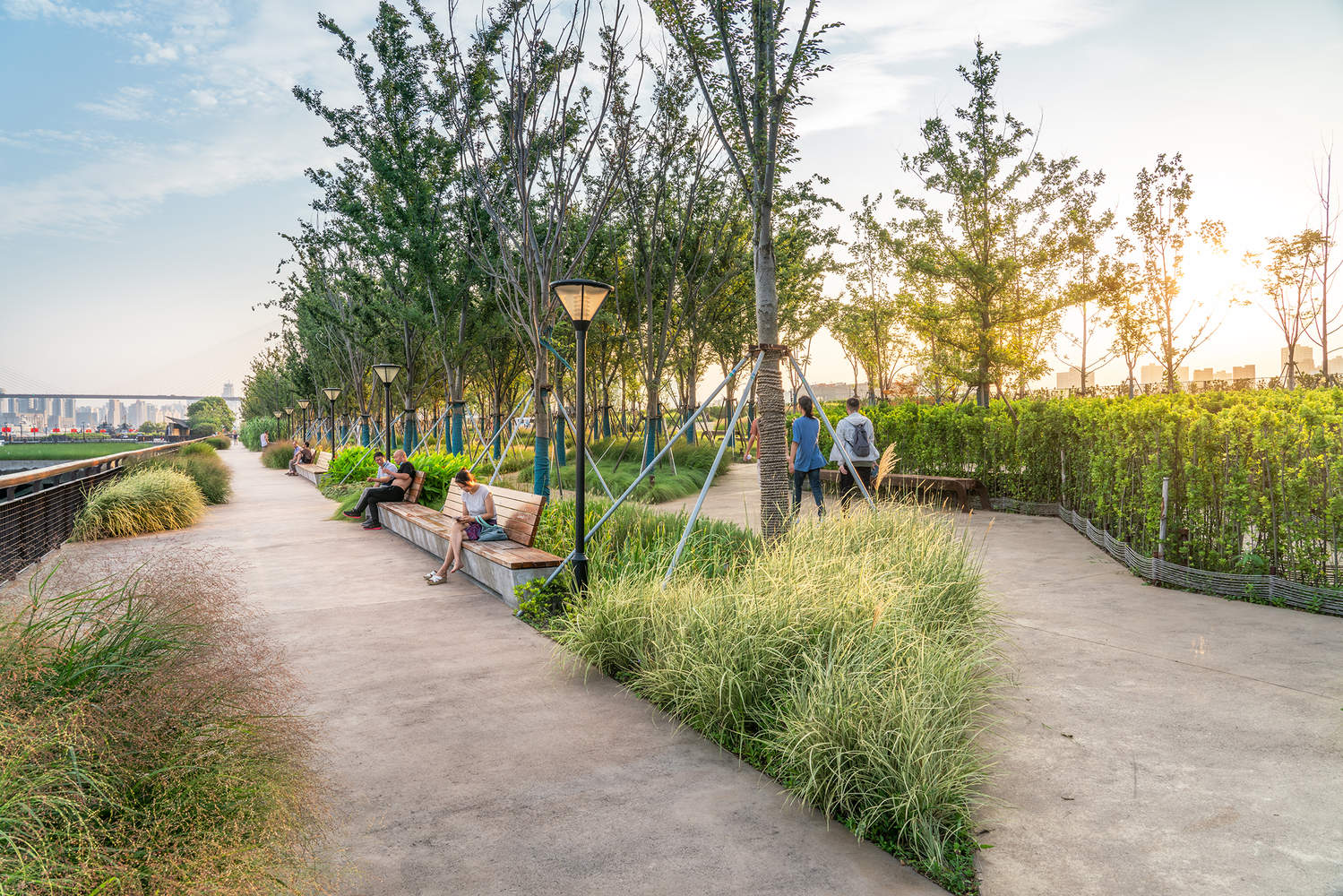
The most prominent features of the site are the diagonal lines representing the original factory structure and the horizontal lines representing the slow-moving traffic flow along the river. The design concept uses "weaving" to integrate these two mechanisms, combined with the newly constructed flood control system, replacing it with more green space, forming a continuous riverside shaded pedestrian network, and embedding activity areas and rest facilities within it to create diverse riverside experiences.
场地中最显著的特征是代表原有工厂的斜线与代表沿江慢行动线的横向两种机理,设计方案以“编织”为概念将两者融合,结合新构建的防汛体系置换出了更多的绿色空间,形成了一段连续的滨江林荫步行网络,并在其中嵌入活动场地与休憩设施,创造多样化的滨江体验。
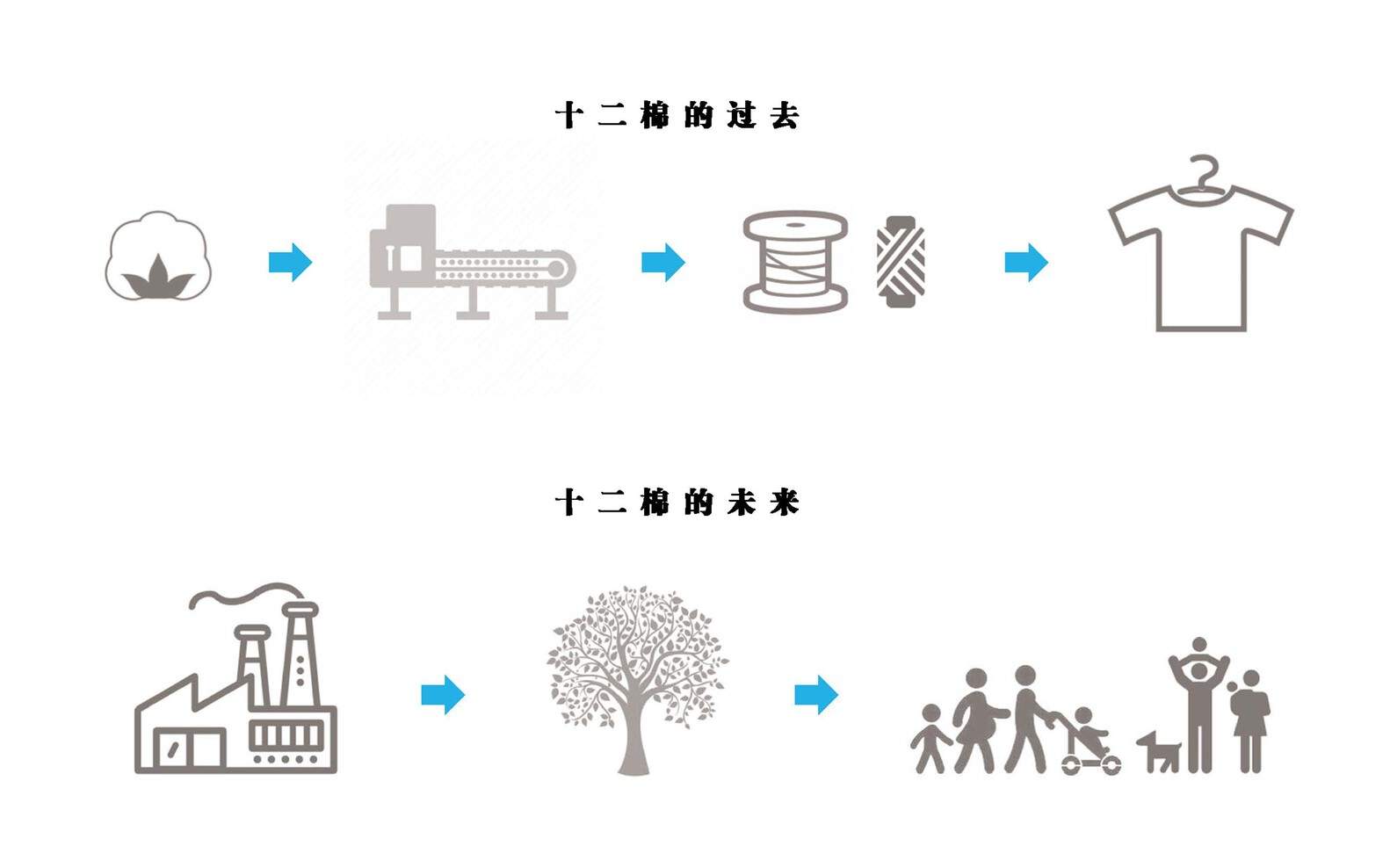
分析图
© 金笑辉
分析图
© 丘文三映
© 丘文三映
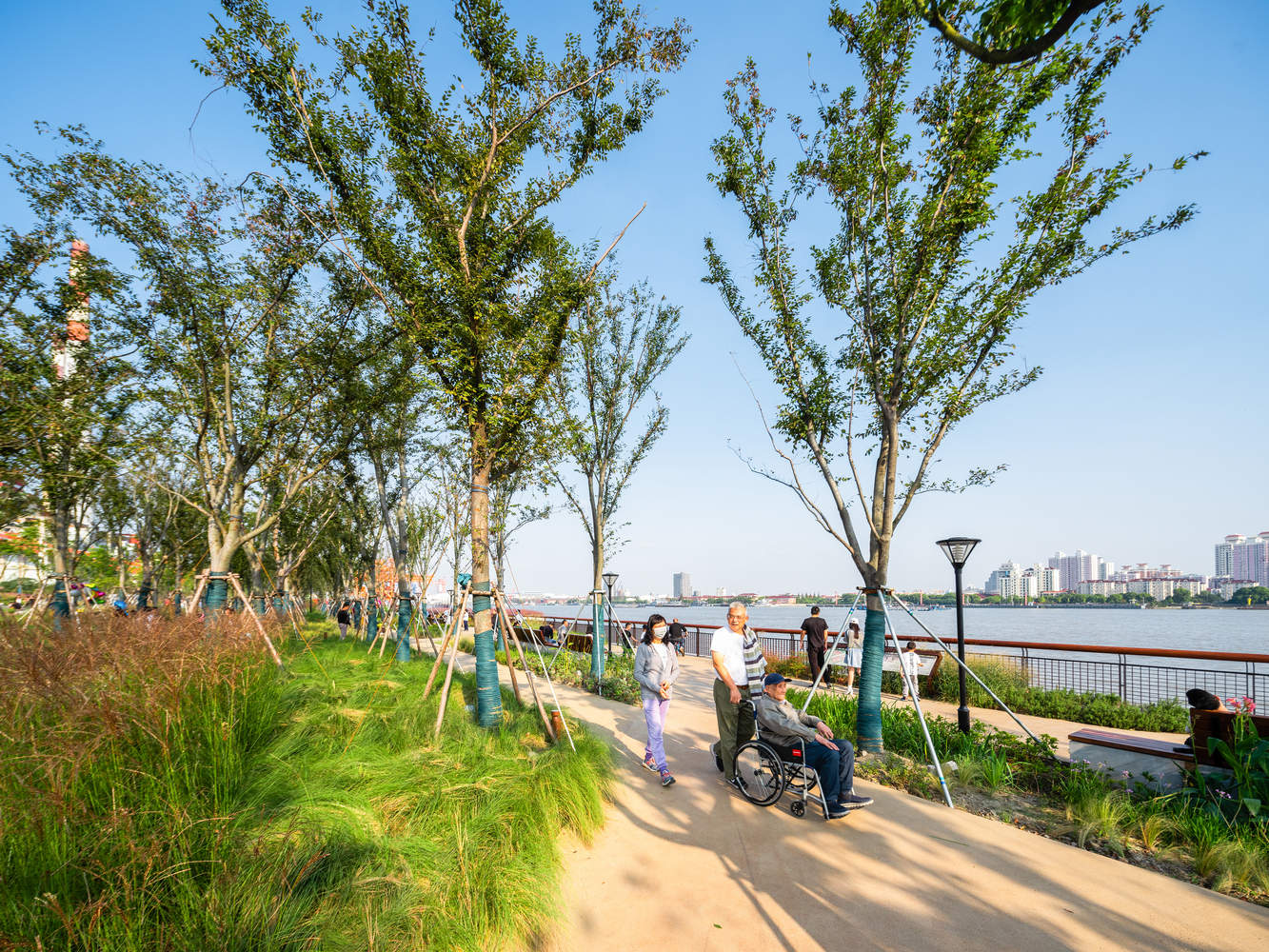
As the only shoreline section in the southern part of Yangpu Riverside without large-scale elevated wharves, the favorable conditions for topsoil planting brought ample greenery and a natural ecological landscape. The site selected a specially formulated permeable ground material in khaki, whose color and texture closely resemble real soil, responding to the glorious history of the No. 12 Cotton Mill, which was known as the "King of Khaki" due to its leading production of high-quality khaki cloth.
作为杨浦滨江南段唯一没有大面积高桩码头的岸线,良好的覆土种植条件带来了充足的绿量和生态自然的风貌。场地选用了经过特殊配方的卡其色透水性地面材料,颜色和质感与真实的土壤非常接近,回应了十二棉因生产行业领先的优质卡其布而被称为“卡其大王”的辉煌历史。
© 丘文三映
© 丘文三映
© 金笑辉
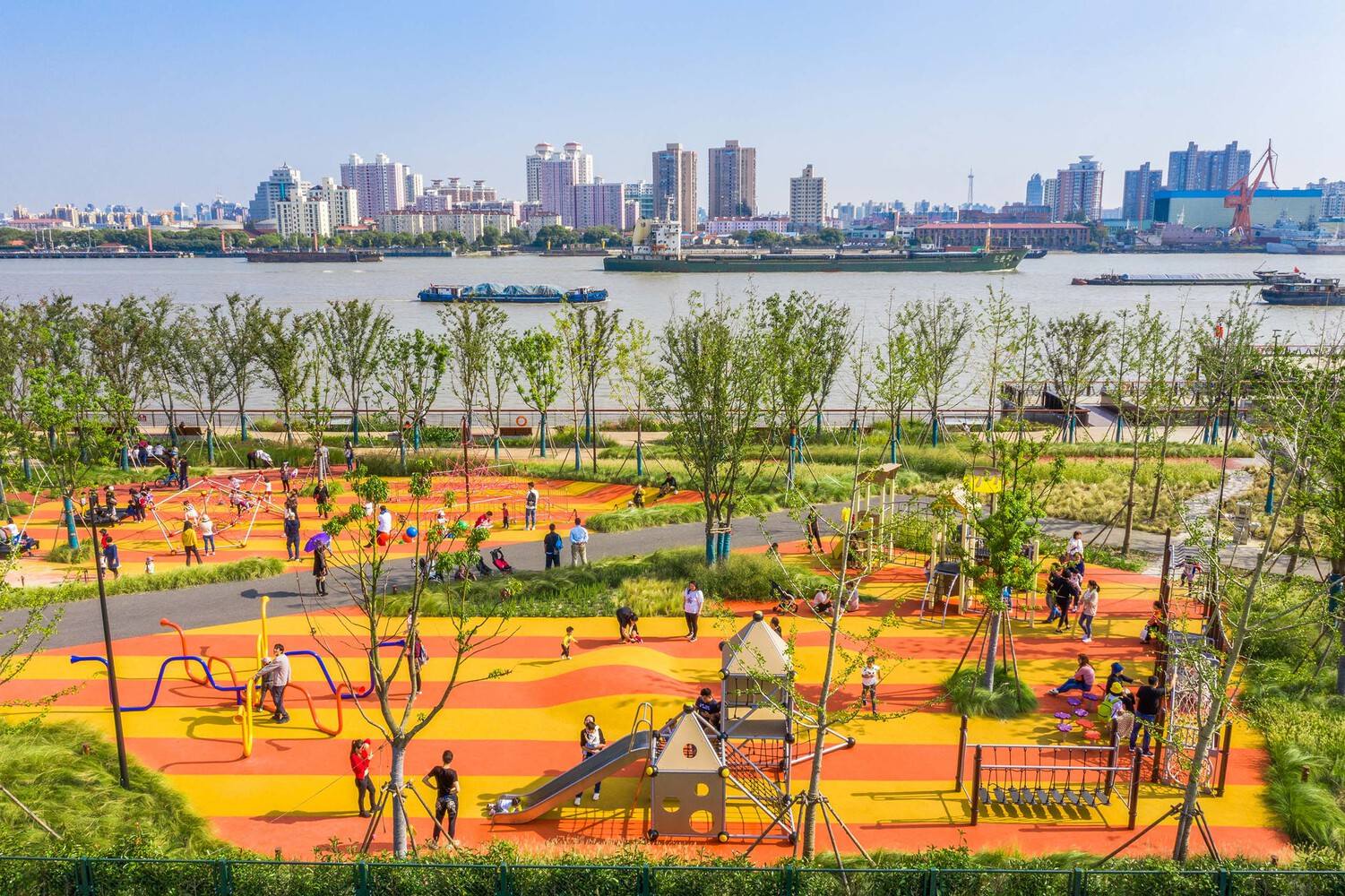
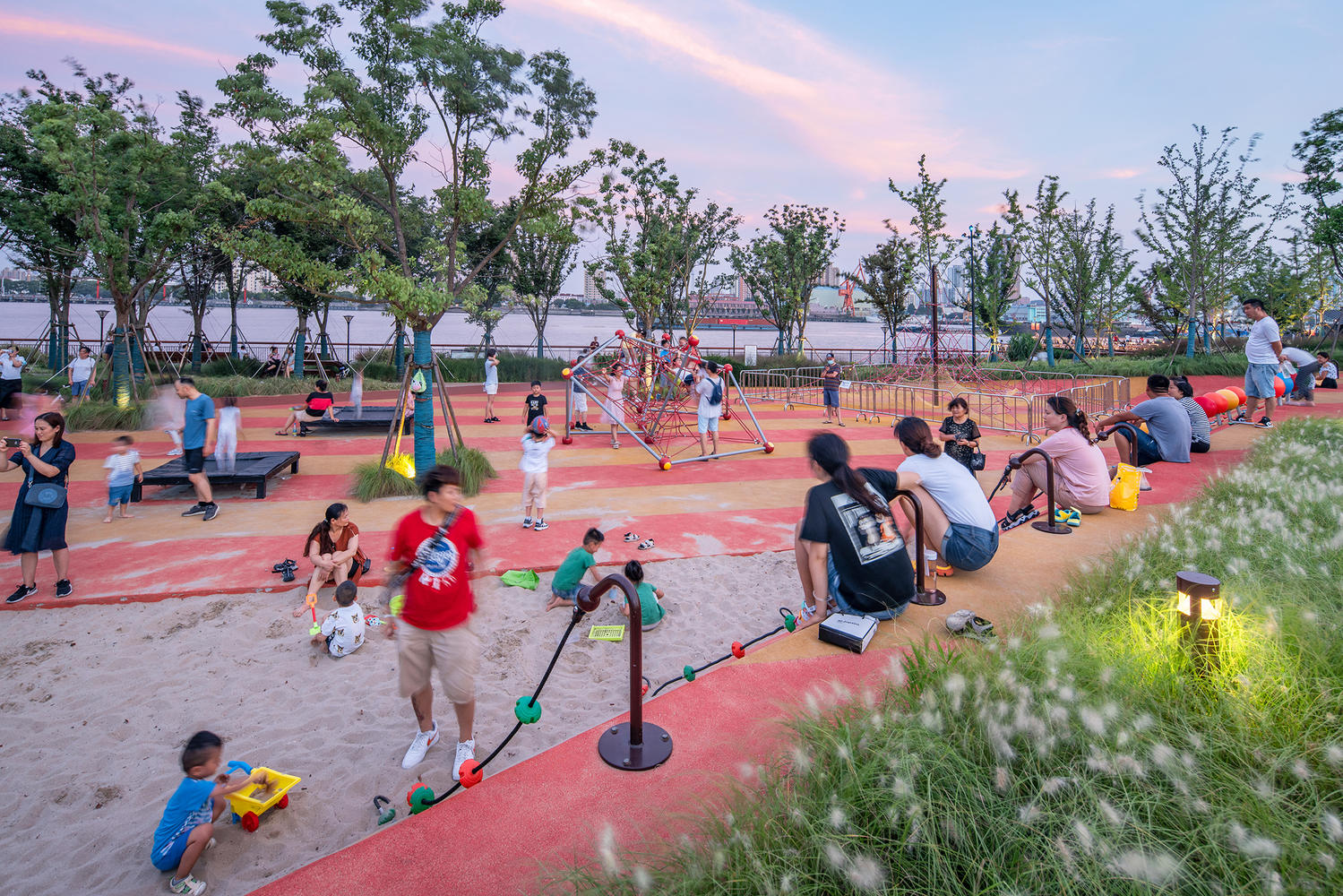
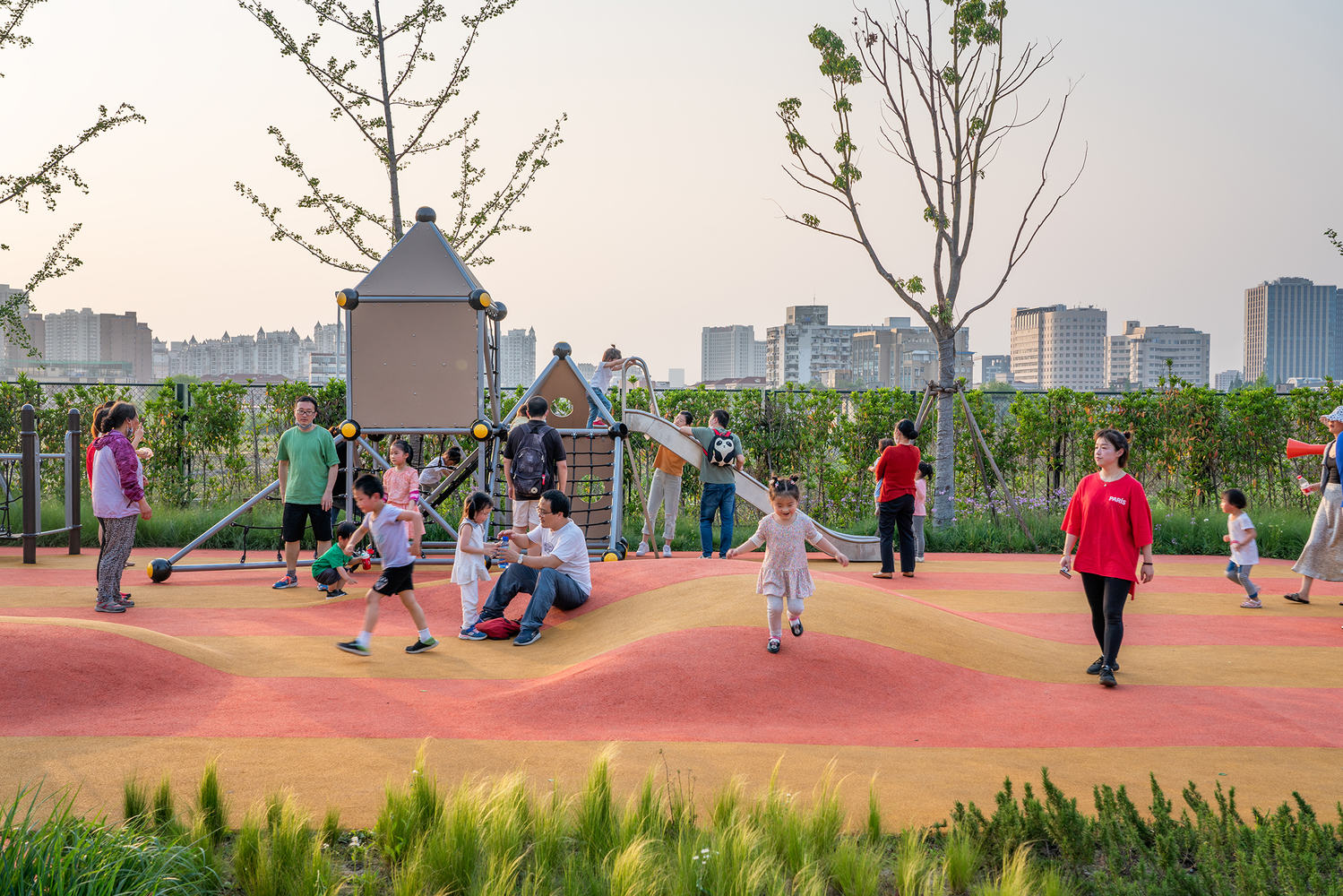
The non-powered playground equipment space, set alongside the slow-moving system, continues the weaving theme and is suitable for children of different age groups. The combination of topography—the height difference with the flood control system—creates a highly engaging and playful experience.
结合慢行系统设置的无动力游乐设备空间延续编织的主题,适合不同年龄段儿童的使用,并通过与防汛体系高差的地形组合形成高参与度、趣味型的活动体验。
© 丘文三映
© 金笑辉
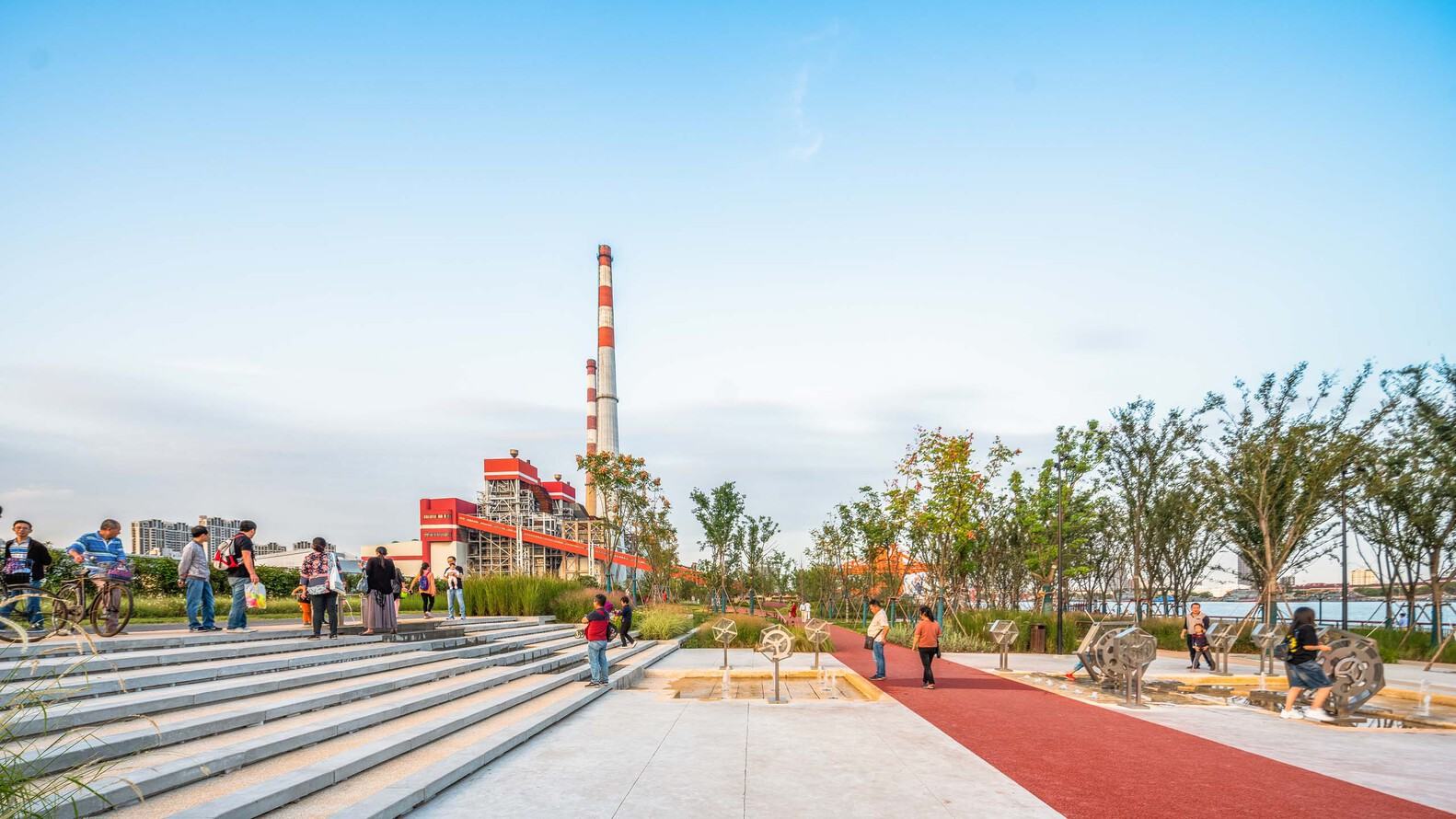
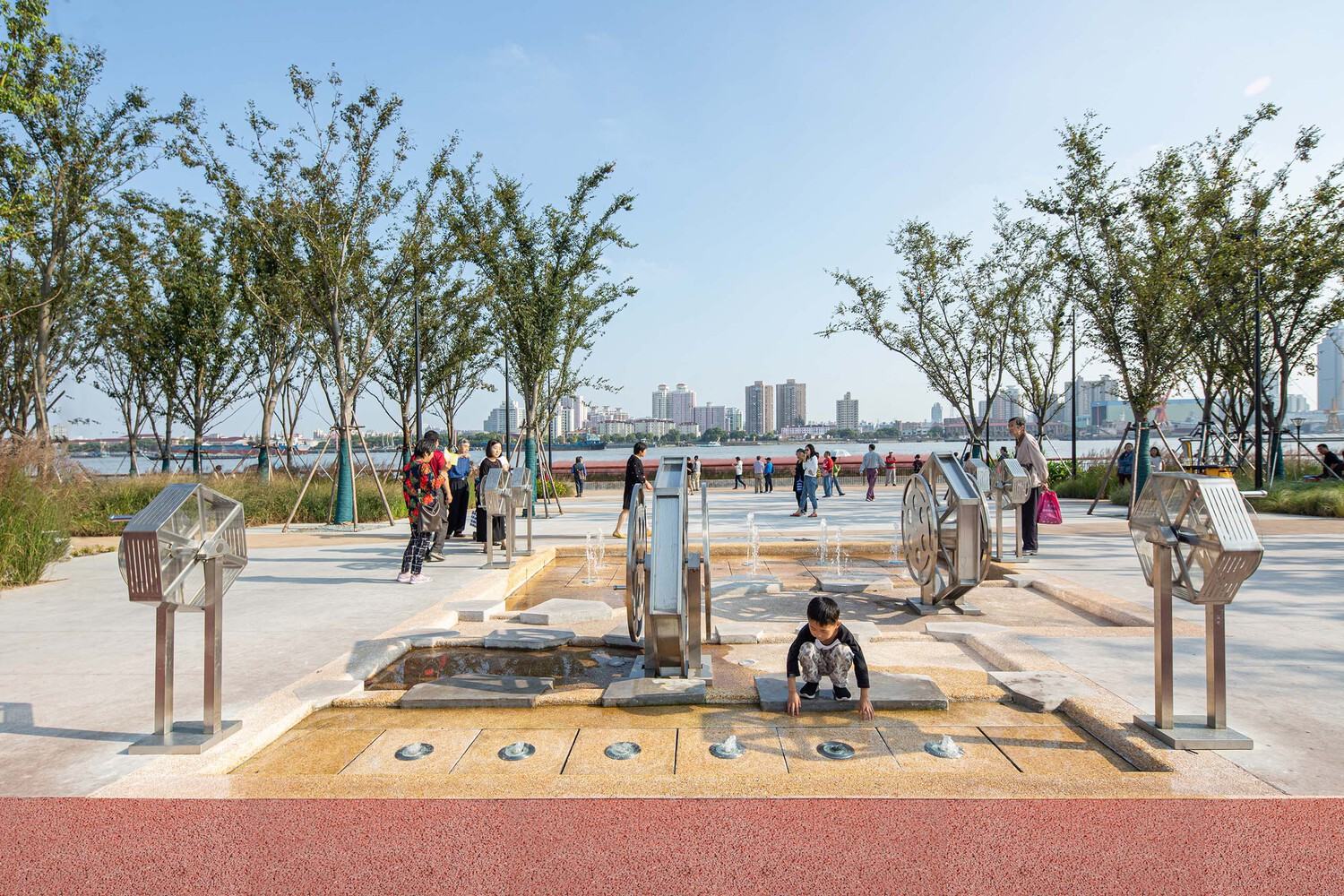
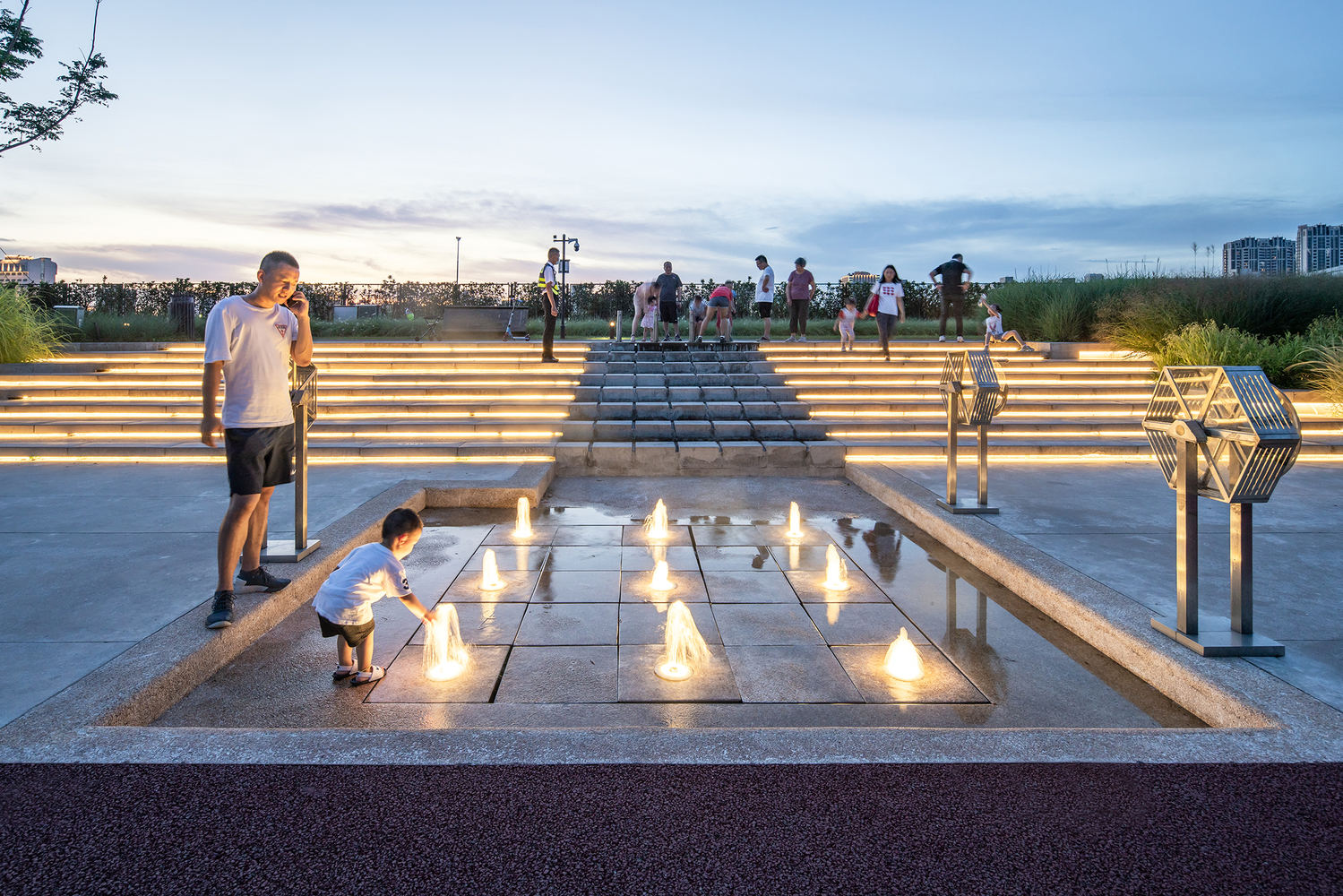
The central "Yarn Spring Plaza" utilizes height differences to create stepped pools cascading down, forming a water feature axis connecting the riverside to the rear land. Interactive simulated yarn-spinning machines are placed by the pools, allowing control over the fountain height, and waterwheel play devices modeled after textile machine parts are designed within the pools, offering citizens a rich, themed interactive visiting experience.
中部的纱泉广场利用高差形成石阶水池层层跌落,形成一条联系江边与后方地块的水景轴线。水池边互动型模拟摇纱机,可控制喷泉的高度,水池内以纺织机零件为原型设计水车游乐装置,为市民提供丰富的主题互动式游览体验。
© 金笑辉
© 金笑辉
Before the renovation, the riverside space of the No. 12 Cotton Mill retained virtually no historical relics. Therefore, the focus of the public space was placed more on human experience and activity, with historical clues appropriately integrated. Closest to the Huangpu River, a space dominated by green, playful, and explorable elements was created, adding a relaxed and soft texture to the industrial rust belt.
十二棉的滨江空间在改造前基本没有了历史遗存,因此公共空间的重心更多的放在了人的体验和活动上,并适当融入历史线索。在离黄浦江最近的地方,营造一片以绿色为主,趣味、可游玩的空间,为工业锈带加入轻松、柔和的质感。
© 金笑辉