历史记忆的重构与空间对话:本项目设计的精髓在于其对场地原有复杂空间记忆的深刻洞察与巧妙重构。建筑师并未试图抹除场地原有的工业厂房(高大规整,白/黑金属元素)与民居(小体量,红砖墙)的差异,而是通过一条综合红砖与黑钢双重材料记忆的公共连廊系统,建立起南北两侧不同尺度和材质建筑之间的有机连接与对话。这一设计不仅在视觉上创造了统一的叙事线索,更重要的是,通过人车分流和中央主轴的设立,极大地优化了人流组织和公共空间体验,使历史肌理在新的功能框架下获得了有逻辑的延续与激活。
低干预策略下的“废屋再生”与时间缝隙:在有限的预算和对历史肌理尊重的前提下,建筑师采取了极具巧思的“低干扰”改造策略。尤其体现在对废弃保安室的再生设计中,通过保留其原有结构骨架,并以新结构(钢结构)在内部“生长”出二层艺术空间,并在新旧结构之间保留20公分的“时间缝隙”,让光线渗透。这种处理方式,既赋予了旧建筑新生,又清晰地标注了新旧介入的时间层次,是对现有存量建筑进行有尊严、有情感的微创手术式干预的典范。
经济约束下的空间效率最大化:面对主场馆净空严重不足的挑战,建筑师团队展现了卓越的成本控制与空间智慧。放弃高成本的整体屋顶抬升方案,转而采用在中心“下挖”1.5米的方式,以最小的工程造价实现了高净空展览空间的需求。这一“内向挖掘”的设计决策,不仅解决了功能上的核心矛盾,还巧妙地形成了兼具雕塑感和几何抽象美感的外立面(呼应山墙与群山),成功地将预算约束转化为独特的空间体验和建筑语汇,确保了项目在实际应用中的可行性和艺术价值。
The Pingshan Sculptural Art Creative Park is located in an old industrial factory complex at the foot of Maluan Mountain in Pingshan District, Shenzhen. Covering an area of 30,000 square meters, it has successively attracted dozens of design studios and artists engaged in sculpture, oil painting, calligraphy, and other art fields since around 2010.
深圳坪山雕塑艺术创意园坐落于深圳市坪山区马峦山脚下一片旧工业厂房园区中,占地面积3万平米,自2010年左右陆续吸引了数十家从事雕塑、油画、书法等艺术门类的设计工作室和艺术家入驻。
© 张超
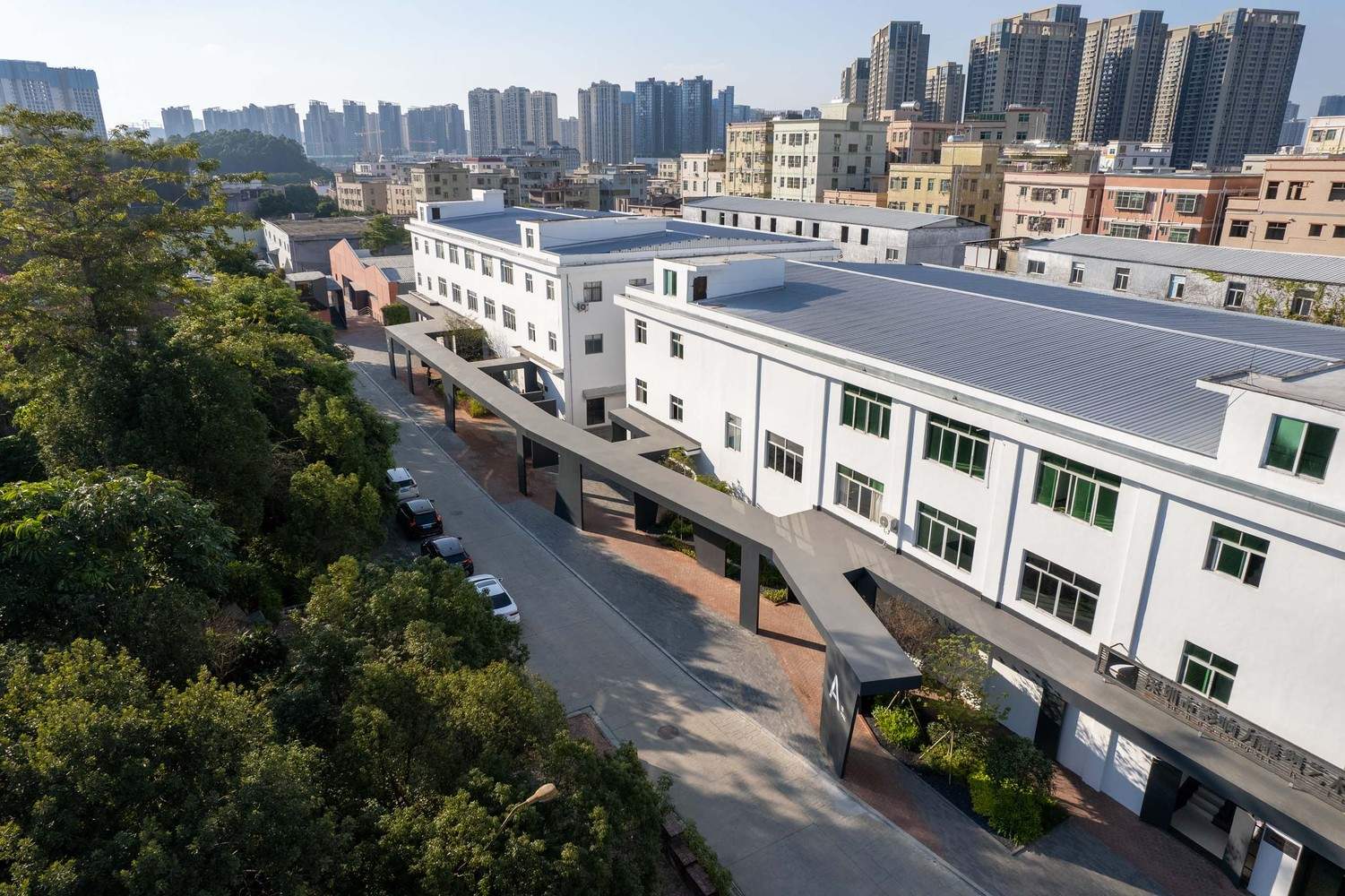
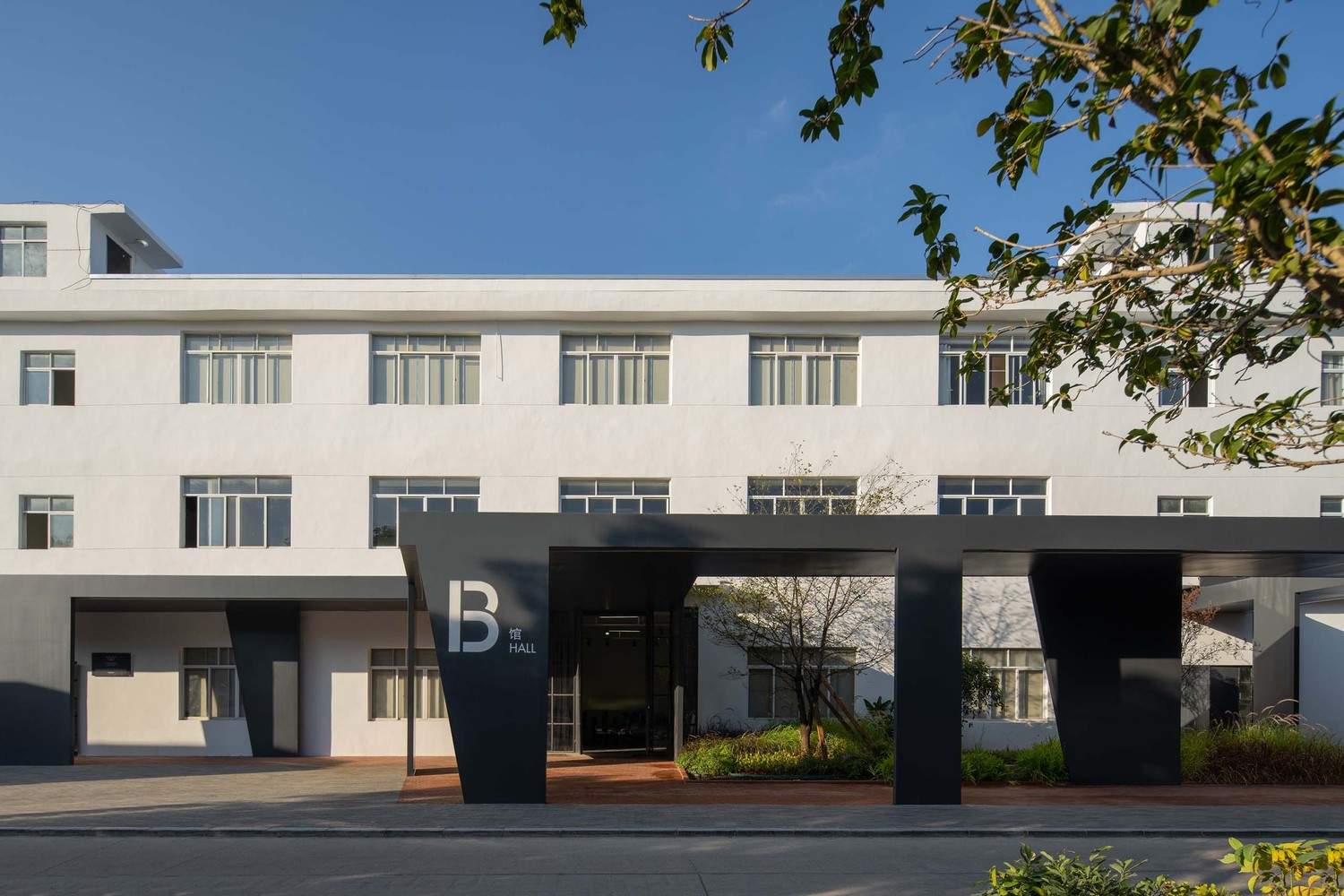
In 2019, when the architects were invited by Liu Xiaodu, the director of the Pingshan Art Museum, and Shenzhen Eastern Cultural Development Co., Ltd. to undertake the upgrade and renovation design of the park, they discovered during the site survey that the park was composed of two different spatial memories. The northern area consisted of old factory buildings, characterized by tall, regular volumes adorned with white paint and black metal doors and window frames; the southern area was composed of a series of small, red-brick residential buildings and paved steps, nestled under the shade of trees.
2019年,当建筑师受到坪山美术馆馆长刘晓都及深圳市东部文化发展有限公司邀请对园区进行升级改造设计时,在现场调研中发现园区由两种不同的空间记忆组成,北侧区域由旧厂房组成,体量高大规整,饰以白色涂料和黑色金属门、窗框;南侧区域则由一系列小体量红砖墙民房、铺地台阶组成,掩映在树木的荫庇之中。
© 张超
© 张超
Rebuilding Connections
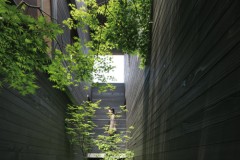
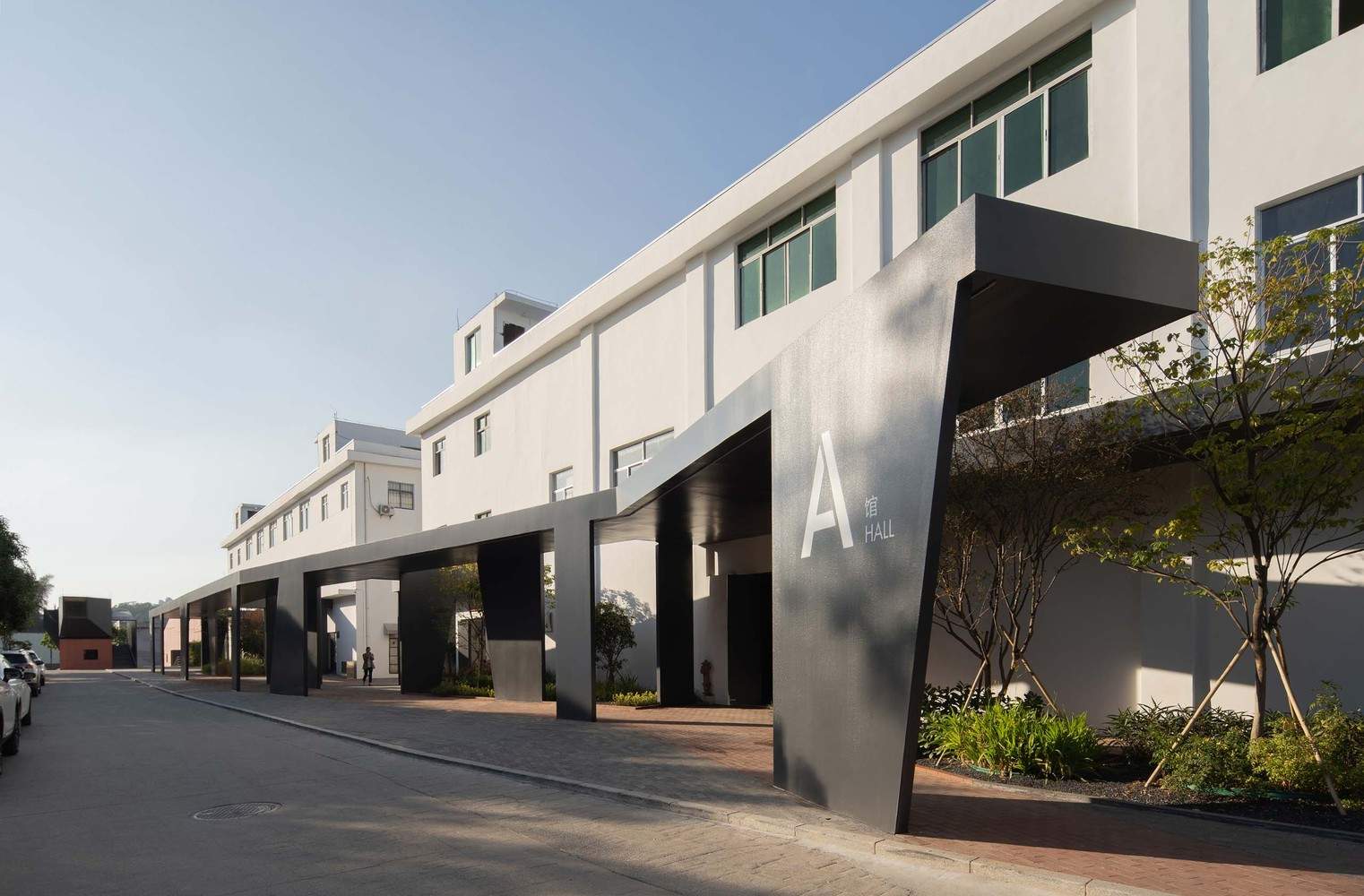
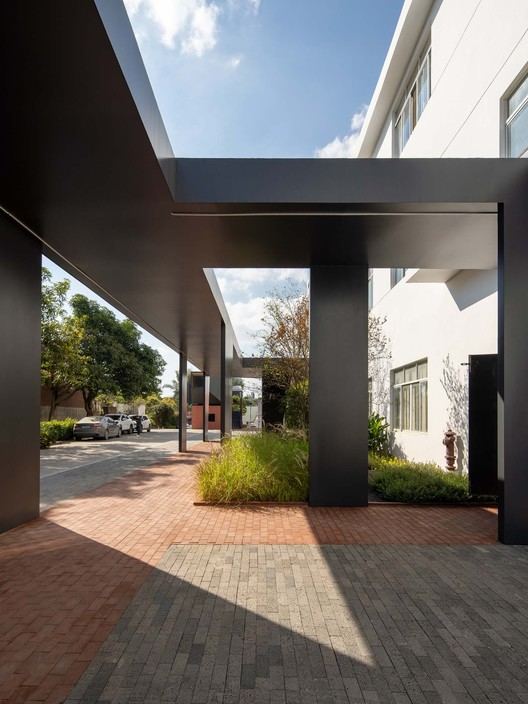
Facing the mutually isolated old factories and residential buildings scattered on the north and south sides of the main street, the architects proposed to establish a central main axis of public space with limited renovation funds, allowing existing buildings of different materials and scales to connect and dialogue. A corridor, integrating the material memories of both red brick and black steel, begins at the park entrance, connecting the entrances of the three main exhibition halls. Parking previously along the main street was centralized on the west side of the park, freeing up public space for pedestrian visitors and achieving separation of people and vehicles.
面对相互孤立、散落在主街南北两侧的旧工厂及民居,建筑师提出用有限的改造资金在园区中央建立一条公共空间主轴,让不同材质、不同尺度的现状建筑进行连接与对话。一条综合红砖和黑钢两重材料记忆的连廊纽带从园区大门开始连接起三个主要展馆的入口。原先主街路边停车被集中组织在了园区西侧,腾挪出供步行游客使用的公共空间,实现了人车分流。
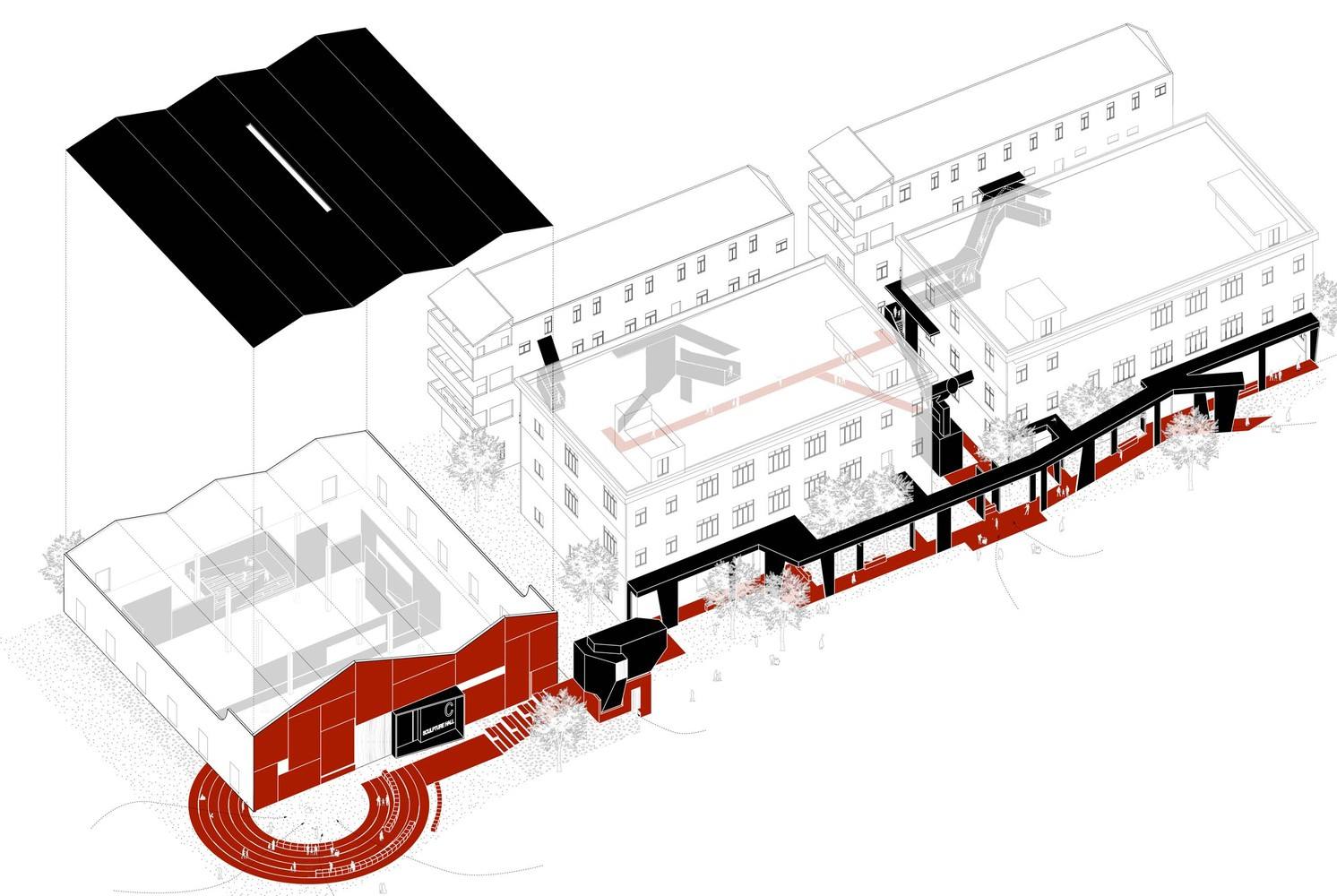
Axonometric Drawing
轴测图
© 张超
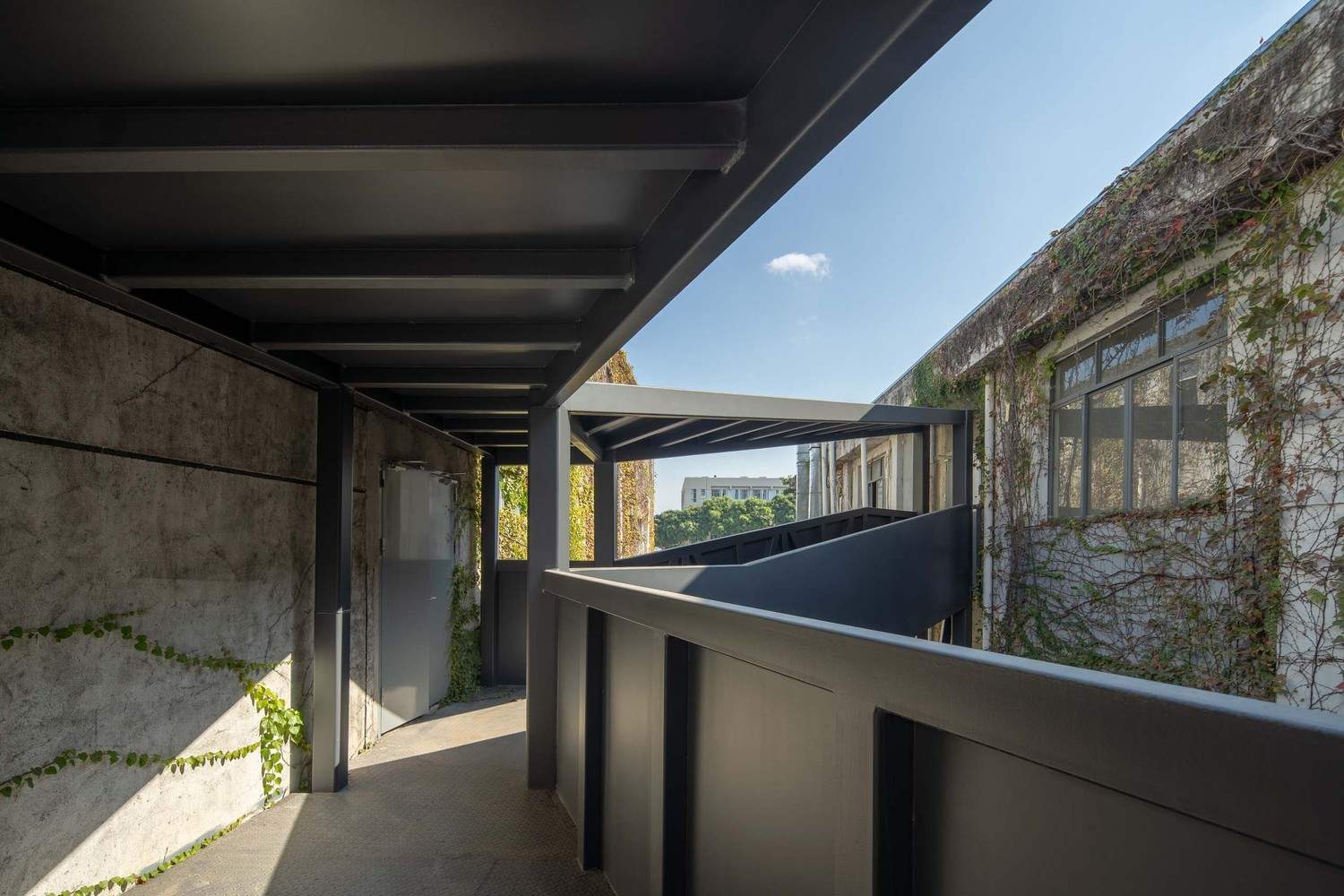
The corridor system also extends from the main street to the rear street, not only providing public space guidance but also offering necessary evacuation routes for different floors of some old factory spaces. The renovation adopted a low-interference strategy, ensuring that the original building structure was not disturbed or damaged on one hand, and allowing historical traces such as climbing plants and murals on the walls to be preserved as much as possible on the other.
连廊系统也从主街延伸向后侧街道,在提供公共空间指引的同时,也为部分旧厂房空间提供了各楼层所需要的疏散通道。改造采取低干扰的策略,一方面保证原有的建筑结构不被干扰与破坏,另一方面也让墙面爬藤植物、彩绘等历史痕迹被尽可能保留下来。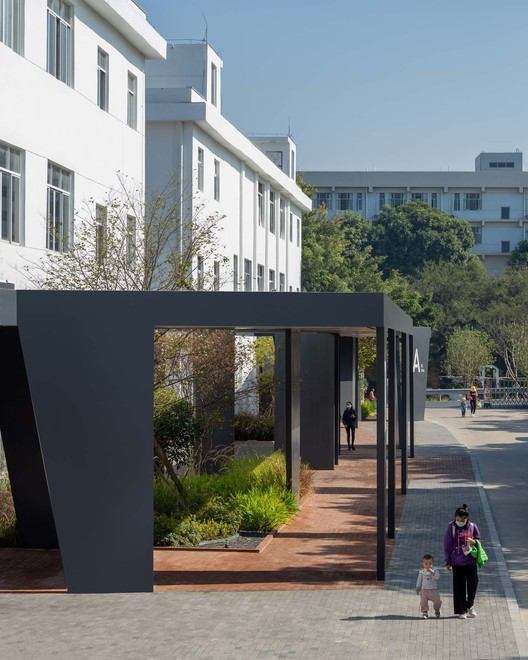
© 张超
© 张超
Rebirth of an Abandoned Structure
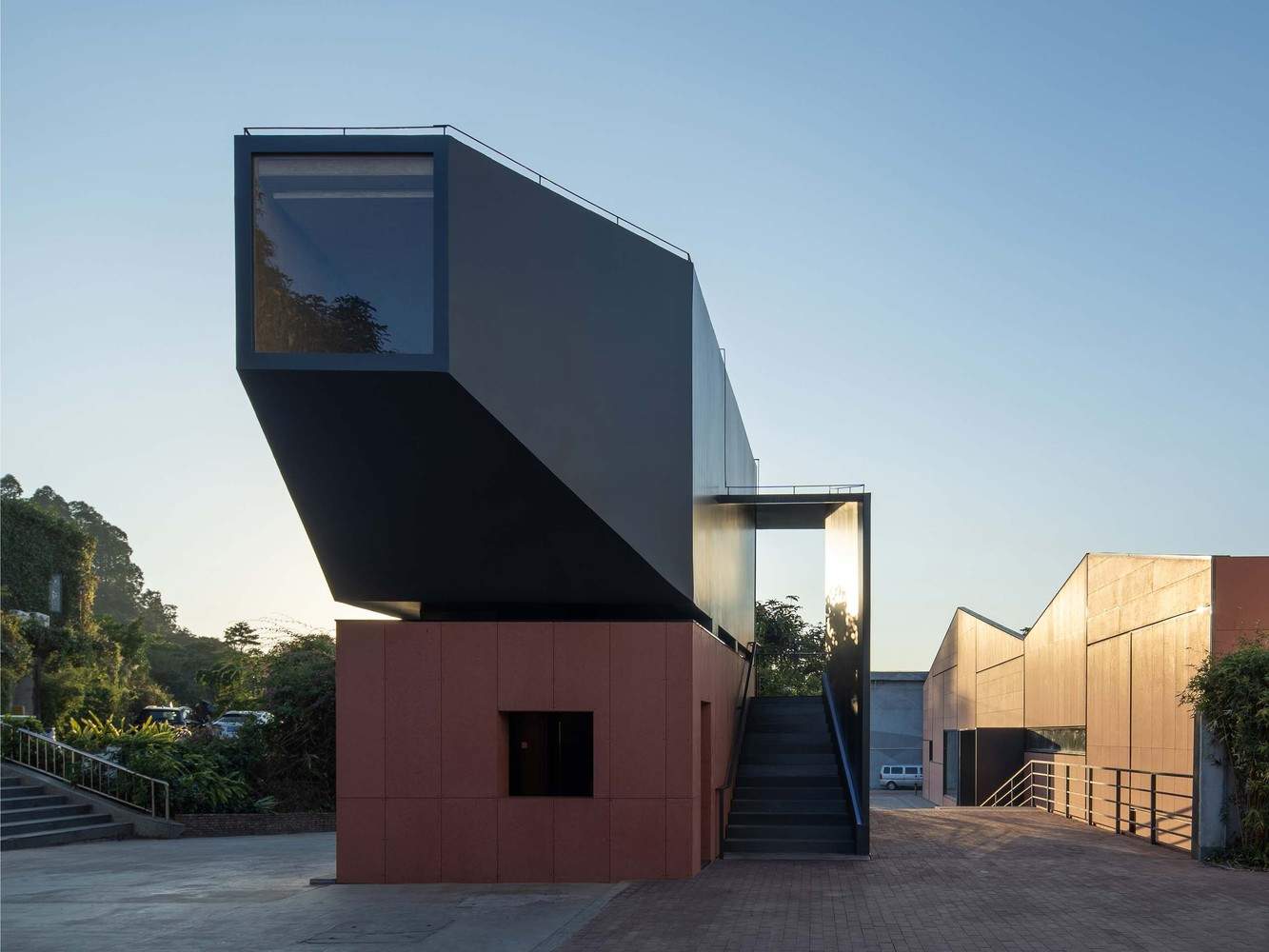
There was originally an old, abandoned security booth in the center of the park planned for demolition. The architects proposed to preserve this fragment of building memory and revitalize it. Thus, a small art lighthouse was created within this abandoned security booth: the second floor serves as a temporary exhibition or rest area, while the ground floor remains open for use as a visitor center for exhibition information dissemination and tea/beverage sales.
园区中央原有一座保安室年久废弃,施工计划将其拆除。建筑师提议保留这个建筑记忆碎片并焕发其新生,于是在这个废弃的保安室中新创造了一个小型艺术灯塔:二层作为临时展览或者休憩场所。一层保持开放作为展览信息发布及茶饮售卖的游客中心使用。
© 张超
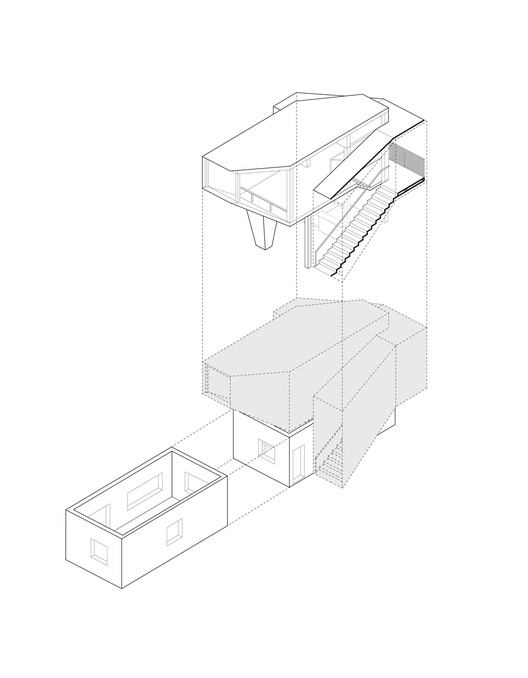
Axonometric Drawing
轴测图
The original skeleton of the security booth—walls, doorways, and windows—was preserved and clad with red fiber cement panels. The art space on the second floor, however, grew out of its interior in the form of a steel structure. A 20 cm gap was left between the new structure and the old wall on the ground floor, allowing light to project through the fissure between old and new times.
保安室的原有骨骼——墙体、门洞与窗户被保留下来,并以红色水泥纤维板进行包裹。而二层的艺术空间则以钢结构形式从其内部生长出来。新增结构与首层老墙之间留有 20 公分距离,允许光线从新旧时间的缝隙里投射出来。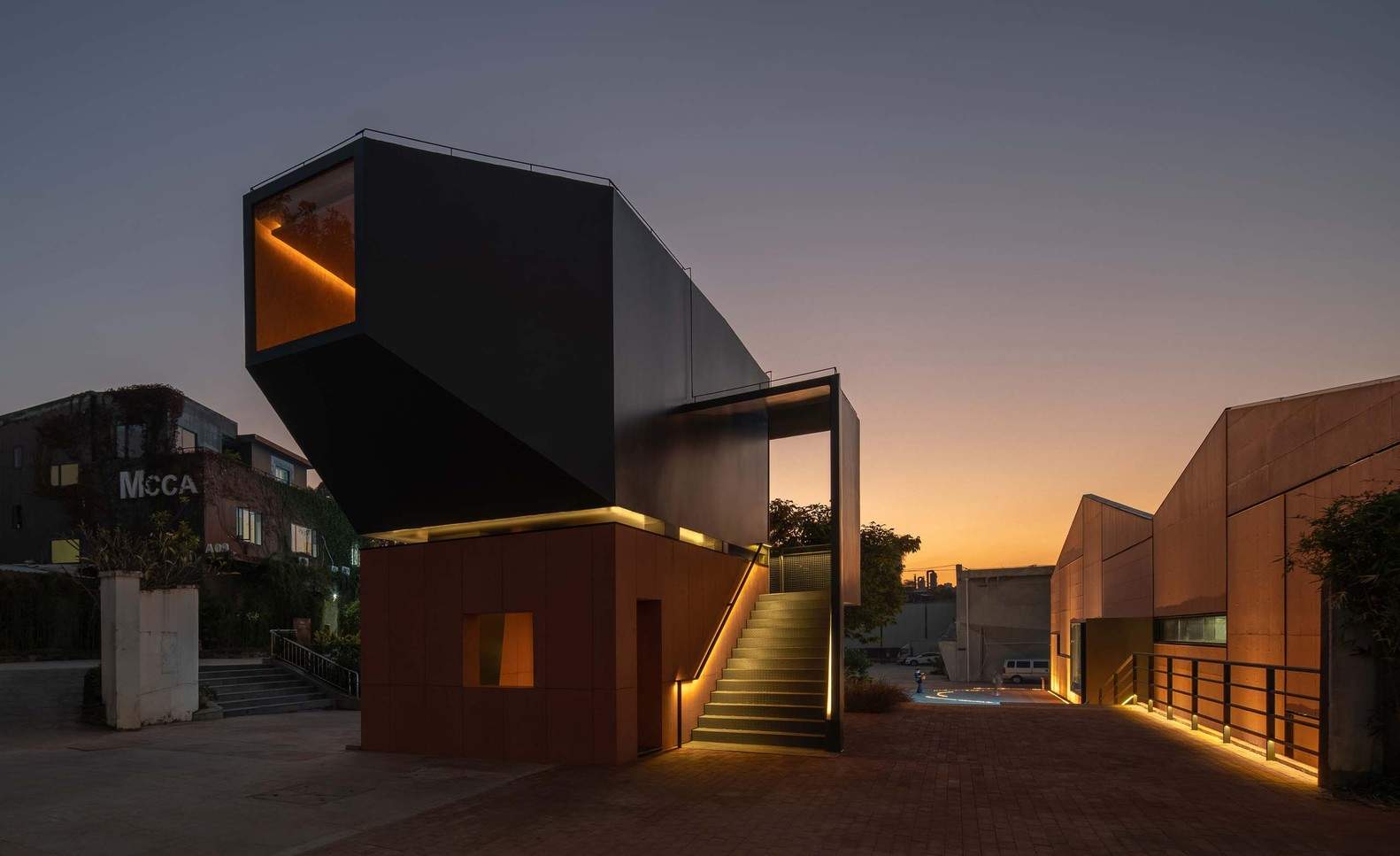
© 张超
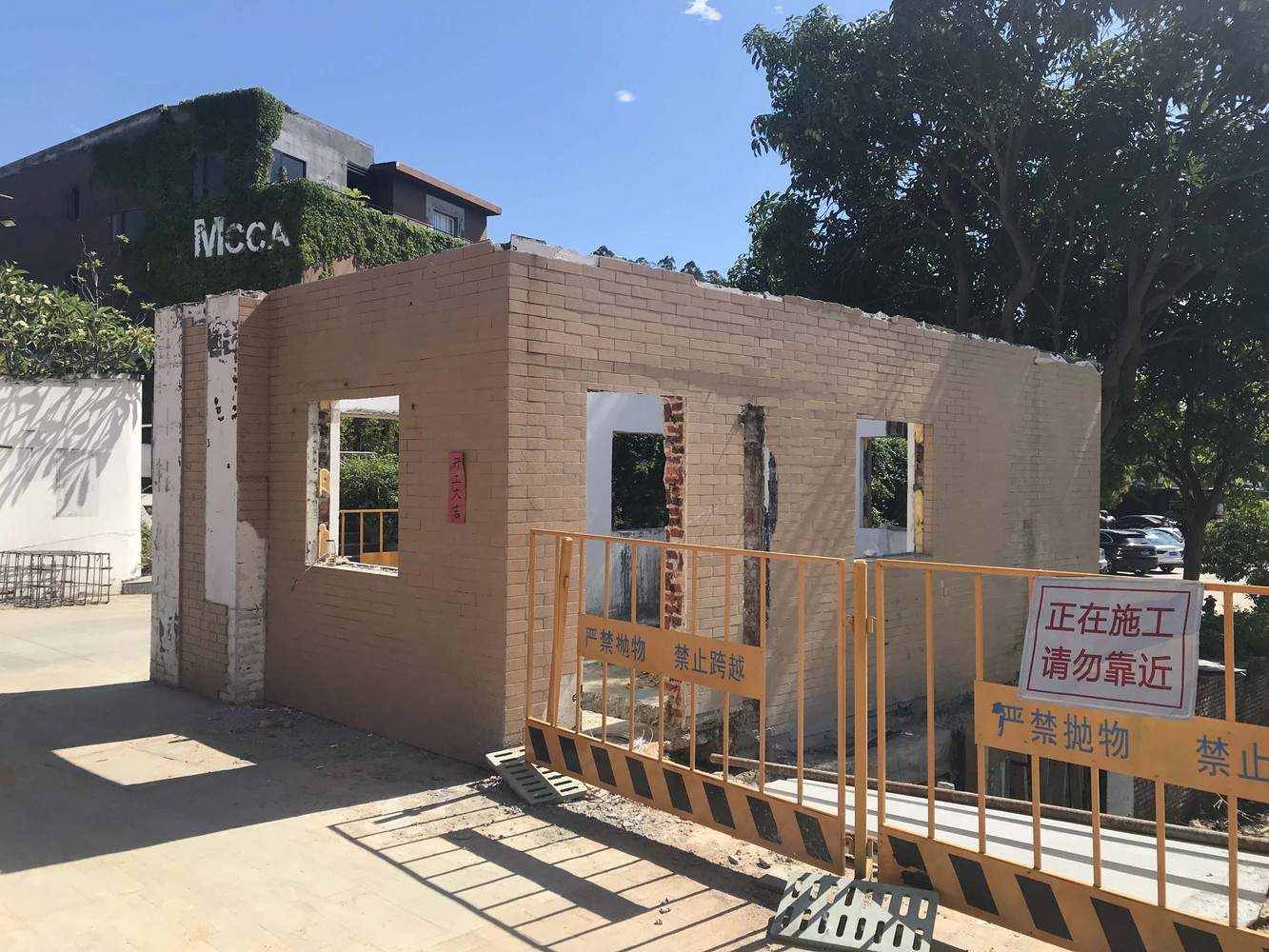
Guardhouse before renovation
改造前的警卫室
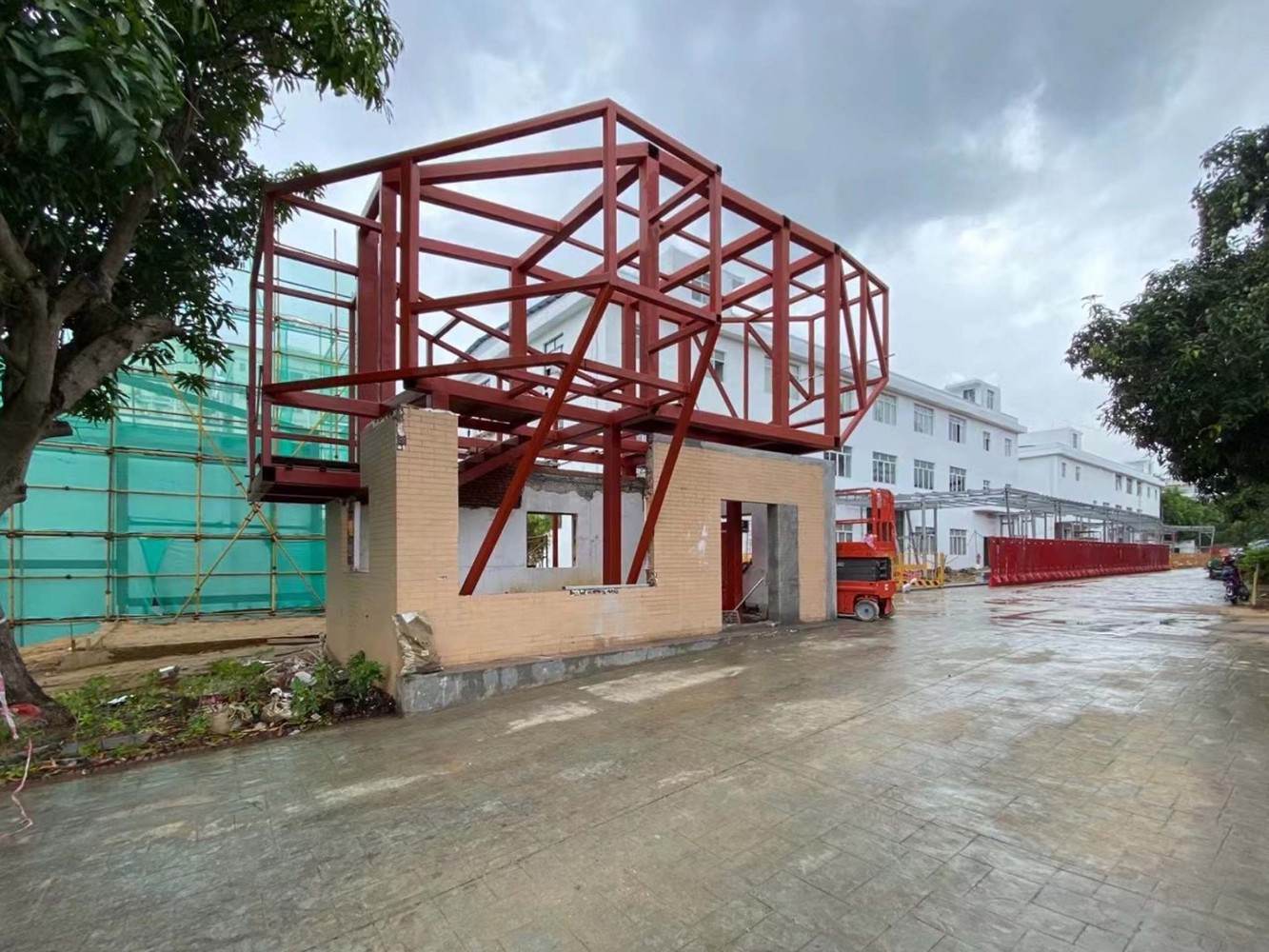
The structure that grew out
生长出的结构
Internal Excavation
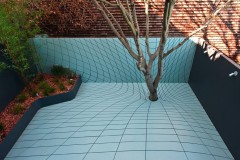
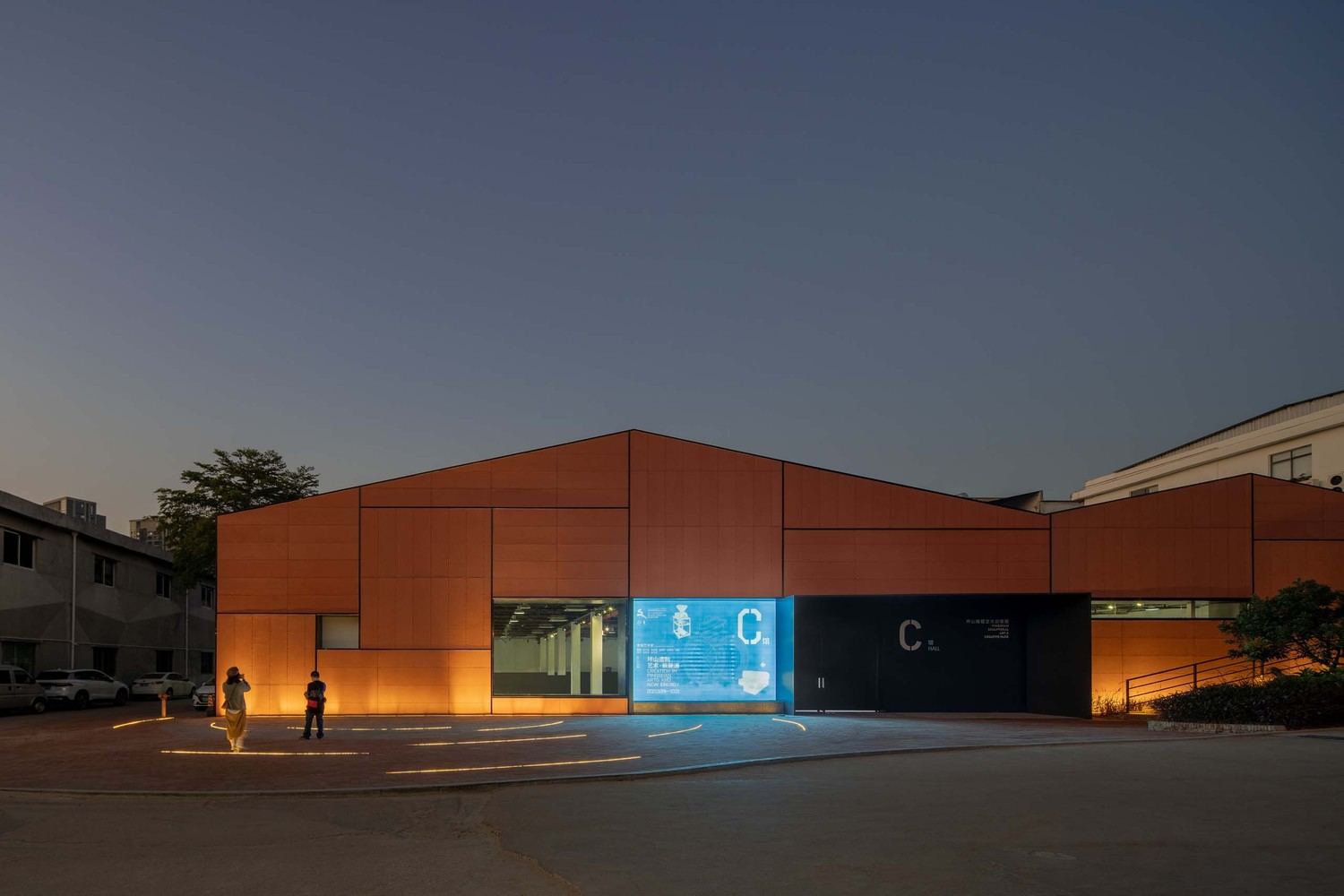
The renovation of the main venue's exterior facade continues the narrative of red and black nesting, echoing the original gable roof of the factory building and the nearby mountains, forming an abstract, geometrically constructed hill. The interior of the main venue has a usable area of 1000 square meters, but the clear height under the trusses is only 3 meters, which is severely insufficient to meet the needs of contemporary art exhibitions. Under extremely limited engineering budgets, after several discussions with Director Liu Xiaodu and the construction team, the architects ultimately abandoned the initial plan to lift the main exhibition hall's truss roof entirely, opting instead to excavate 1.5 meters in the center of the hall to create a high-clearance exhibition space at minimal cost.
主场馆的外立面改造延续了红与黑相互嵌套的叙述,呼应厂房原有的坡形山墙屋顶与不远处的群山,形成了一座抽象线条构成的几何山丘。主场馆内部有 1000 平米的使用面积,但桁架下净空高度仅有 3 米,严重不足以满足当代艺术展览的使用需求。在非常有限的工程预算条件下,建筑师与刘晓都馆长及施工团队经过几次讨论之后,最终决定放弃了最初设想整体抬升主展馆桁架屋顶的计划,改为在展馆中心下挖 1.5 米,以最小成本改造出了高净空展厅。
© 张超
When the Pingshan Sculpture Park was completed in September 2021, it served as the Pingshan sub-venue for the 17th China (Shenzhen) International Cultural Industries Fair, housing sculpture exhibitions by dozens of artists. Many large pieces were successfully installed in the central sunken exhibition hall. In the future, the Pingshan Sculpture Creative Park is expected to become part of Pingshan District's cultural and artistic cluster, providing fertile ground for culture and art production in this rapidly industrialized city.
坪山雕塑园于 2021 年 9 月落成之际即作为深圳市第 17 届文博会坪山分展馆容纳了数十位艺术家的雕塑艺术作品进行展览,许多大件作品顺利设置在了中央下沉展厅内。未来坪山雕塑创意园期待可以成为坪山区文化艺术群落的一部分,为这座快速工业化拔地而起的城市提供一处文化与艺术生产的土壤。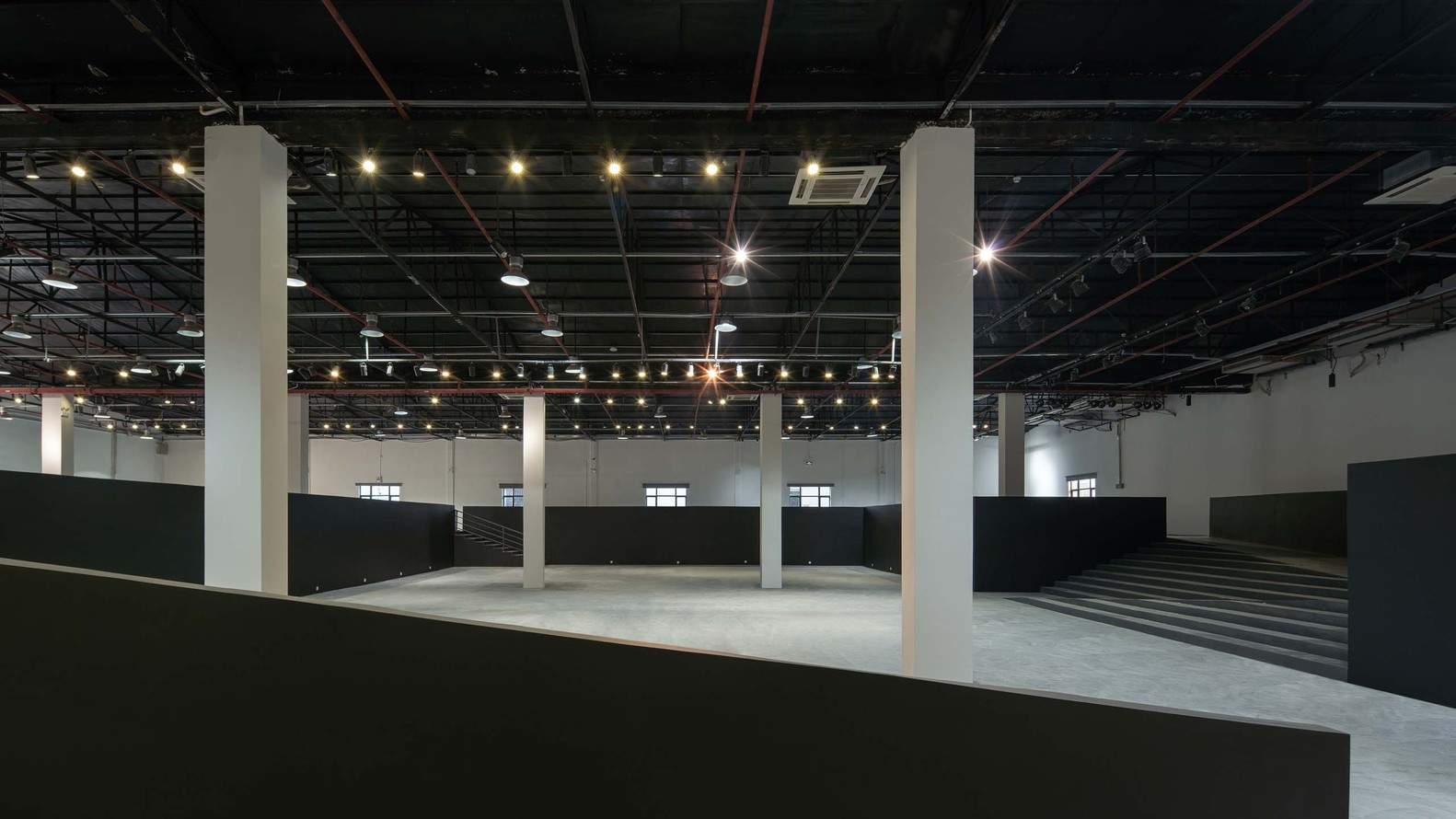
© 张超
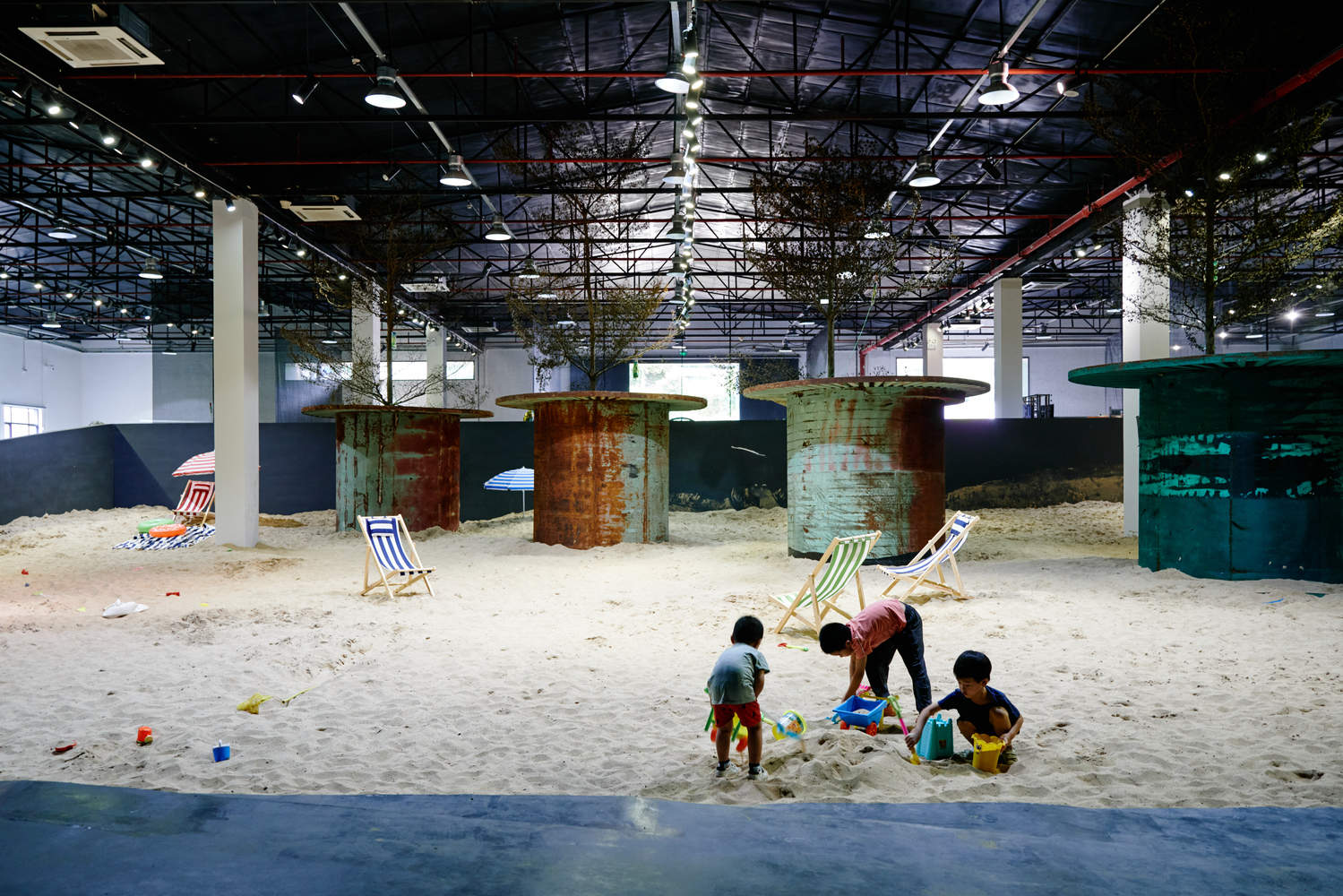
Artworks in the sunken area of the main exhibition hall © Mao Ji Wu