化解场地劣势,重塑社区核心:该项目巧妙地应对了场地原有的极端挑战——一个位于居住区中央、高差巨大、零散且难以利用的狭长地块。设计师并未回避这些“灰空间”的不足,而是将其转化为机遇,通过引入和重塑水系,成功地将原本被视为场地的“边界”转变为社区共享的、高价值的公共核心。这种将挑战转化为资产的设计策略,是其最核心的精髓之一。
水系驱动的序列空间体验:设计的核心在于以“水”为叙事主线,串联起原本分散的四个地块。通过模仿自然河流形态,抽象地呈现出峡谷、瀑布、浅滩等多样化的水文地貌,创造出数十种互动的体验节点。这种线性而又富于变化的序列,使得公园成为一个城市级的景观系统,极大地丰富了居民的感知和使用方式。
公共性与生态韧性的有机融合:项目不仅关注了居民的社交和休憩需求,更深度整合了生态考量。通过精细的水资源管理,实现节水和高效运行,并赋予公园在汛期作为雨水花园和辅助麓湖疏浚的韧性功能。这使得水线公园在提供宜人社区空间的同时,也成为一个具有环境服务价值的、可持续的城市基础设施。
The greatest challenge in the design of Waterline Park was that the site was a drainage ditch with a huge elevation difference from the surroundings. It was located in the center of a residential area, surrounded by several major residential blocks, and distributed across four scattered plots. However, despite the formal shortcomings, it was one of the few terrestrial "public spaces" on the site, still extremely precious to residents. The design introduced water into the site, creating ever-changing water topographies, utilizing the original gray spaces to transform them into interesting public spaces for community residents to gather and use.
在水线公园的设计中,景观面临的最大挑战是场地是一条与周围有巨大高差的水沟,它在居住区的中央位置,被几大居住地块包围,并且分布在四块零散的地块中。然而,抛开形式上的不足,它却是场地内为数不多的陆上“公共空间”,对于居民来说依然是弥足珍贵的。设计将水引入场地,创造出千变万化的水地形,原本的灰空间被利用起来,变成有趣的公共空间供社区的居民聚集、使用。
© Holi
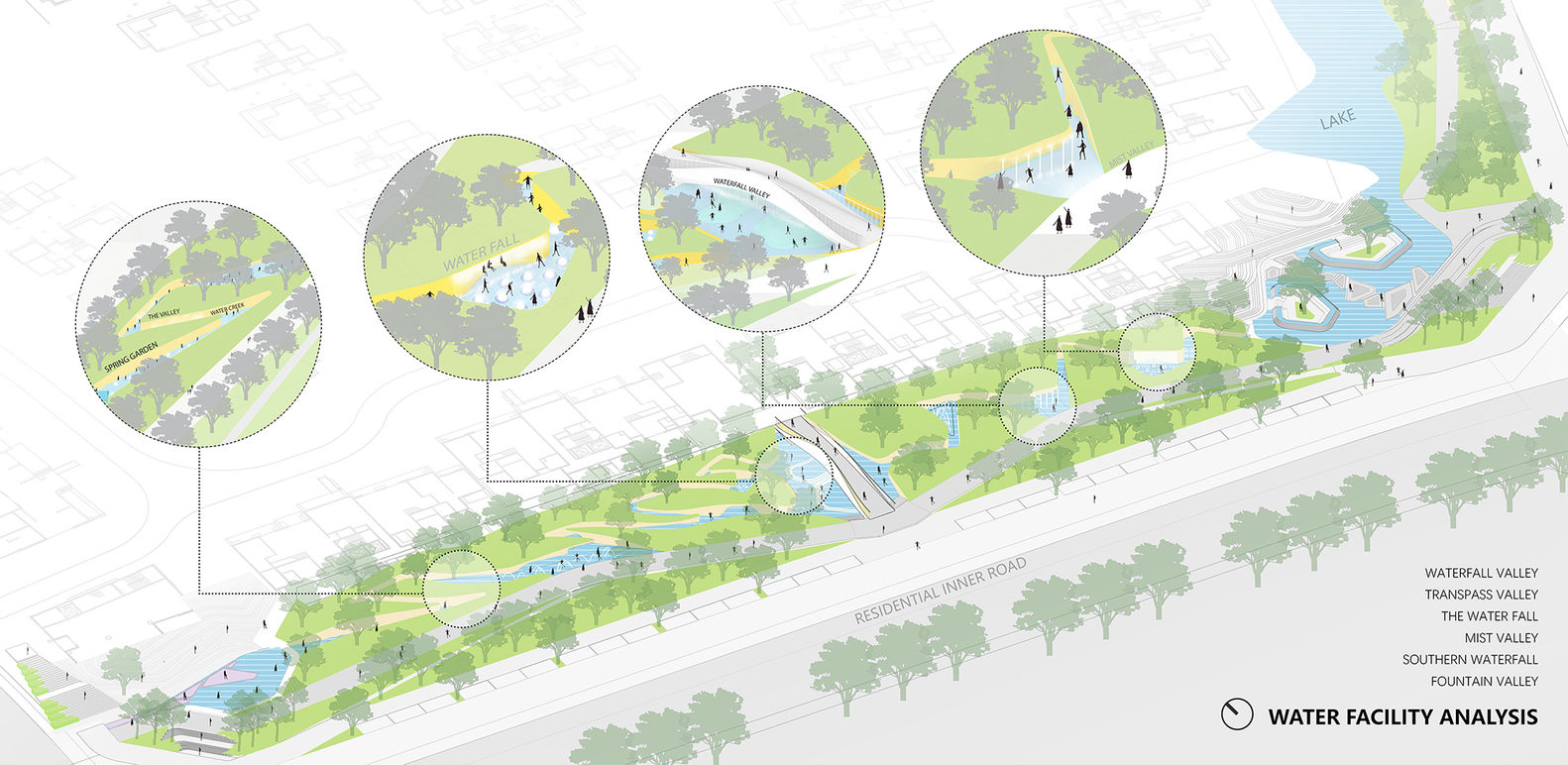
Node analysis of the water crossing section
穿水段节点分析
Design Challenge
The greatest challenge faced by the design came from the site itself. Although located within a cluster of residential buildings, the site was not a traditionally reserved green space planned in advance for the residential area, but rather resembled a neglected brownfield. The site was a 1.5km long strip, but its narrowest point was only 40m, and it formed an elevation difference of 5-7m with the surrounding roads, resulting in extremely low usability. However, besides the buildings, the residential area had a large water surface area, making a land-based park an extremely precious public space for residents.
设计挑战
设计面临的最大挑战来自于场地本身。虽地处在居住区建筑群中,场地并非传统意义上居住区提前规划预留的绿地,而更像一块无人问津的棕地。1.5km的长条形场地,最窄处却只有40m,与周边道路更是形成了5-7m的高差,可用性极低。然而,居住区除了建筑以外水域面积巨大,陆地公园对于居民来说依然是弥足珍贵的公共空间。
© Bing Lu
© Bing Lu
Diverse Spatial Experience
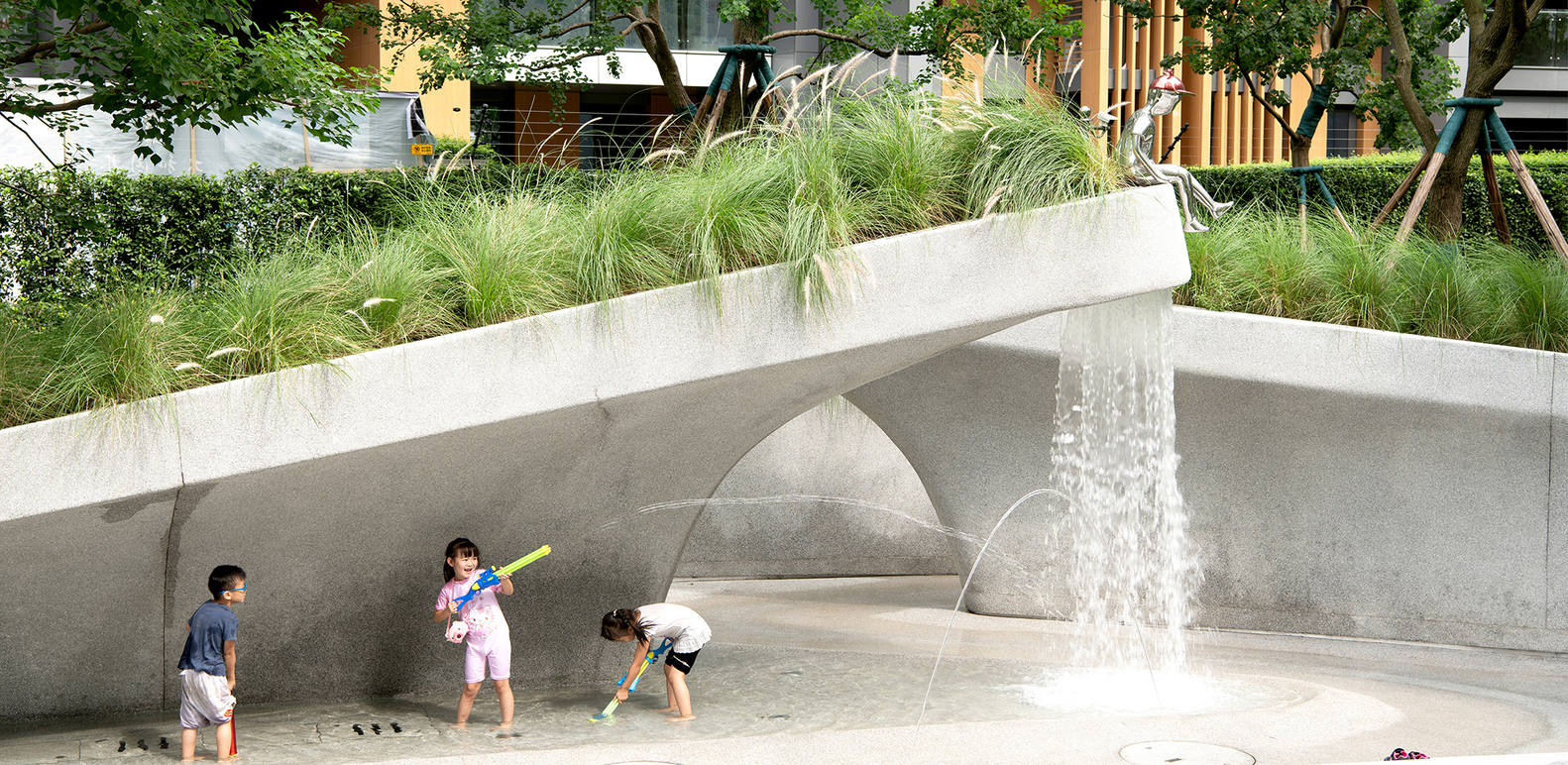
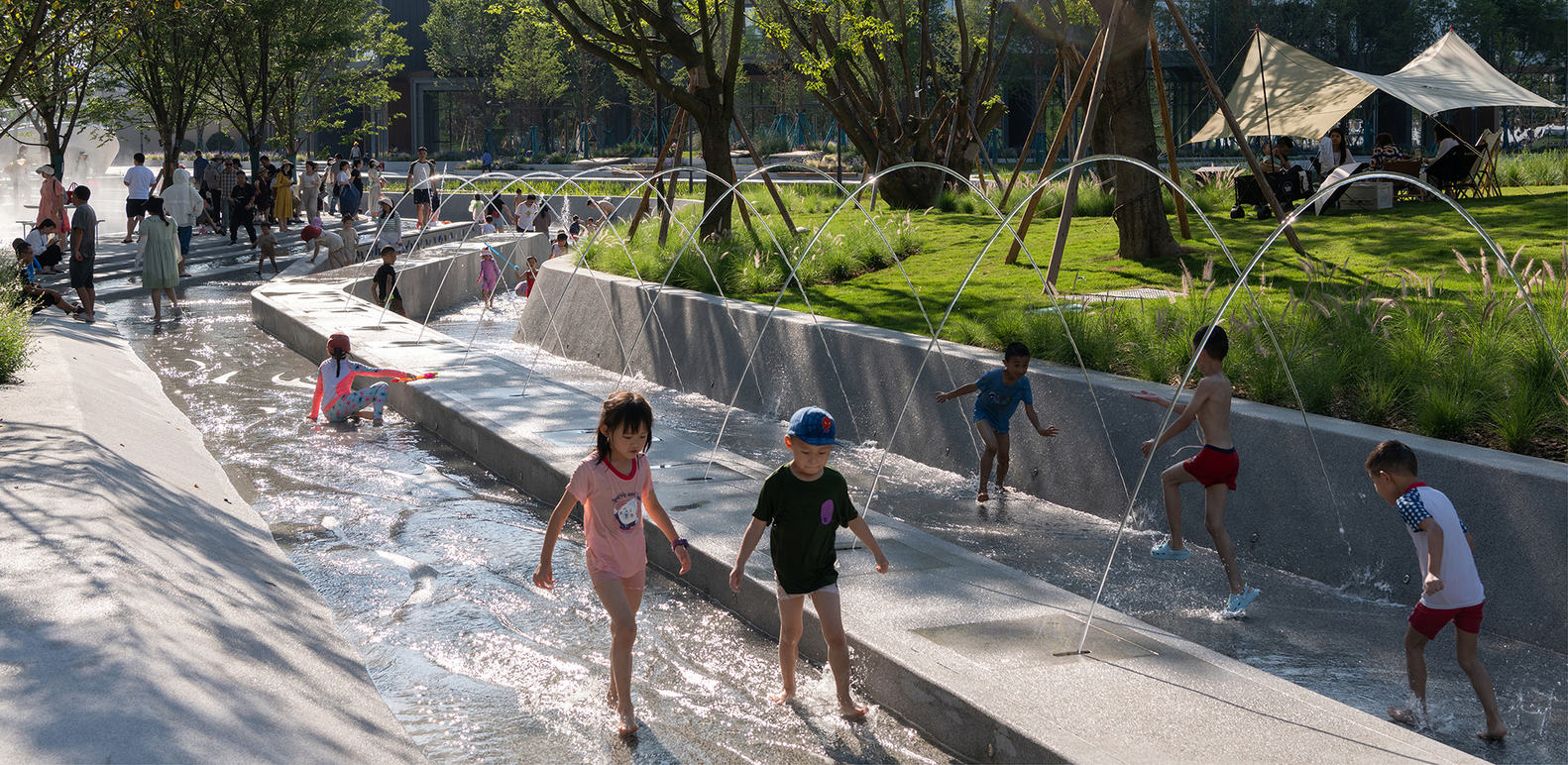
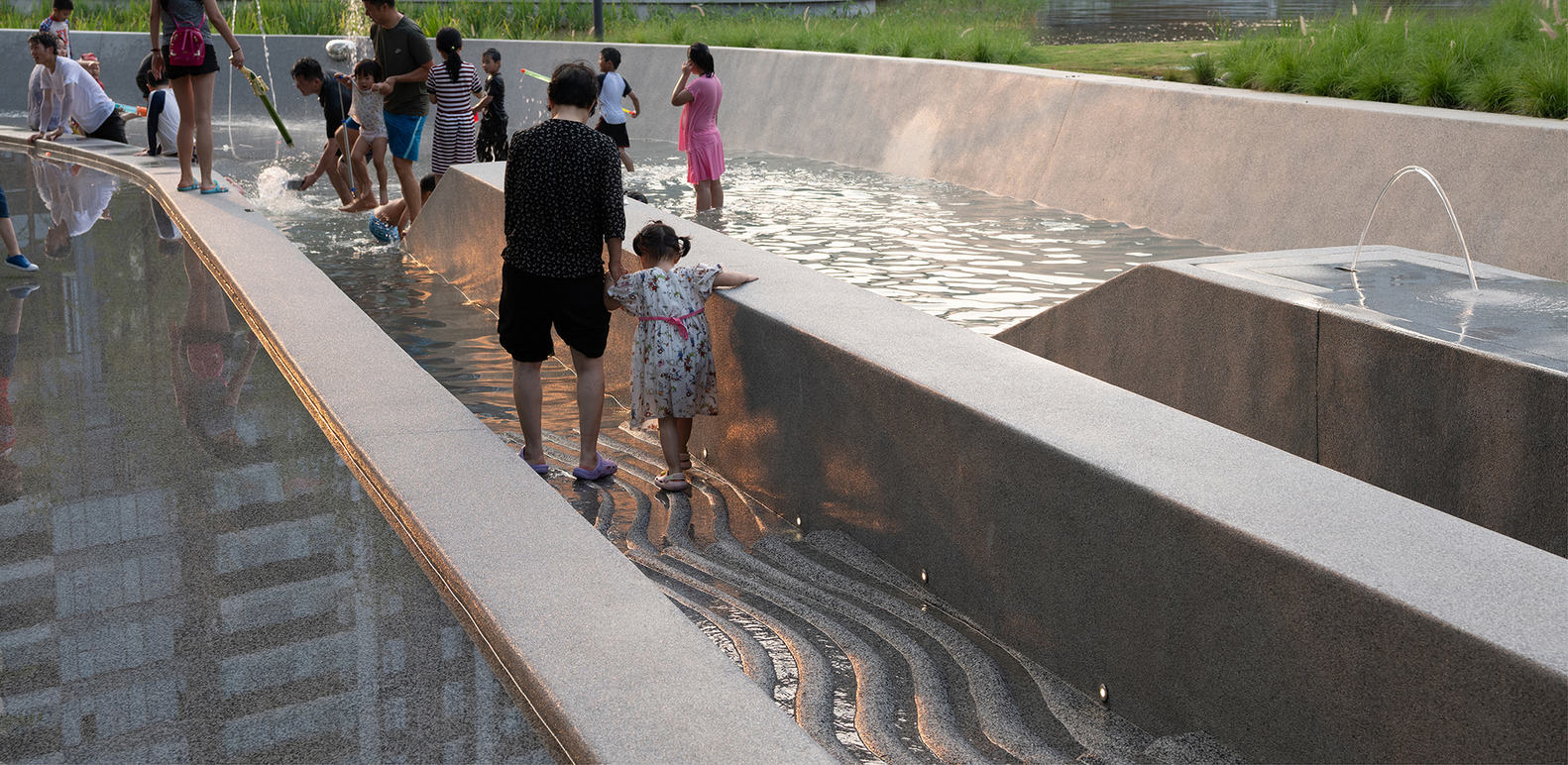
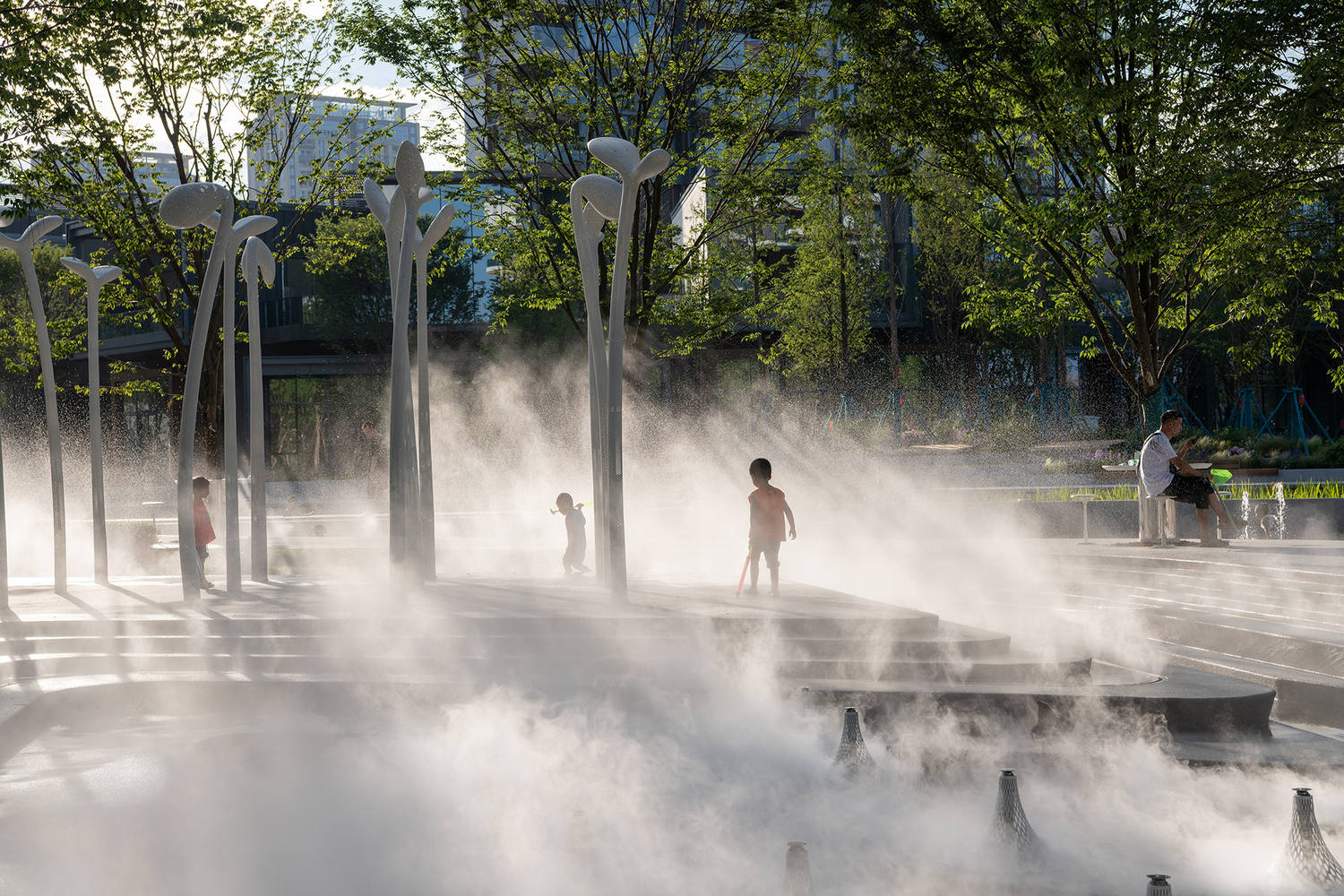
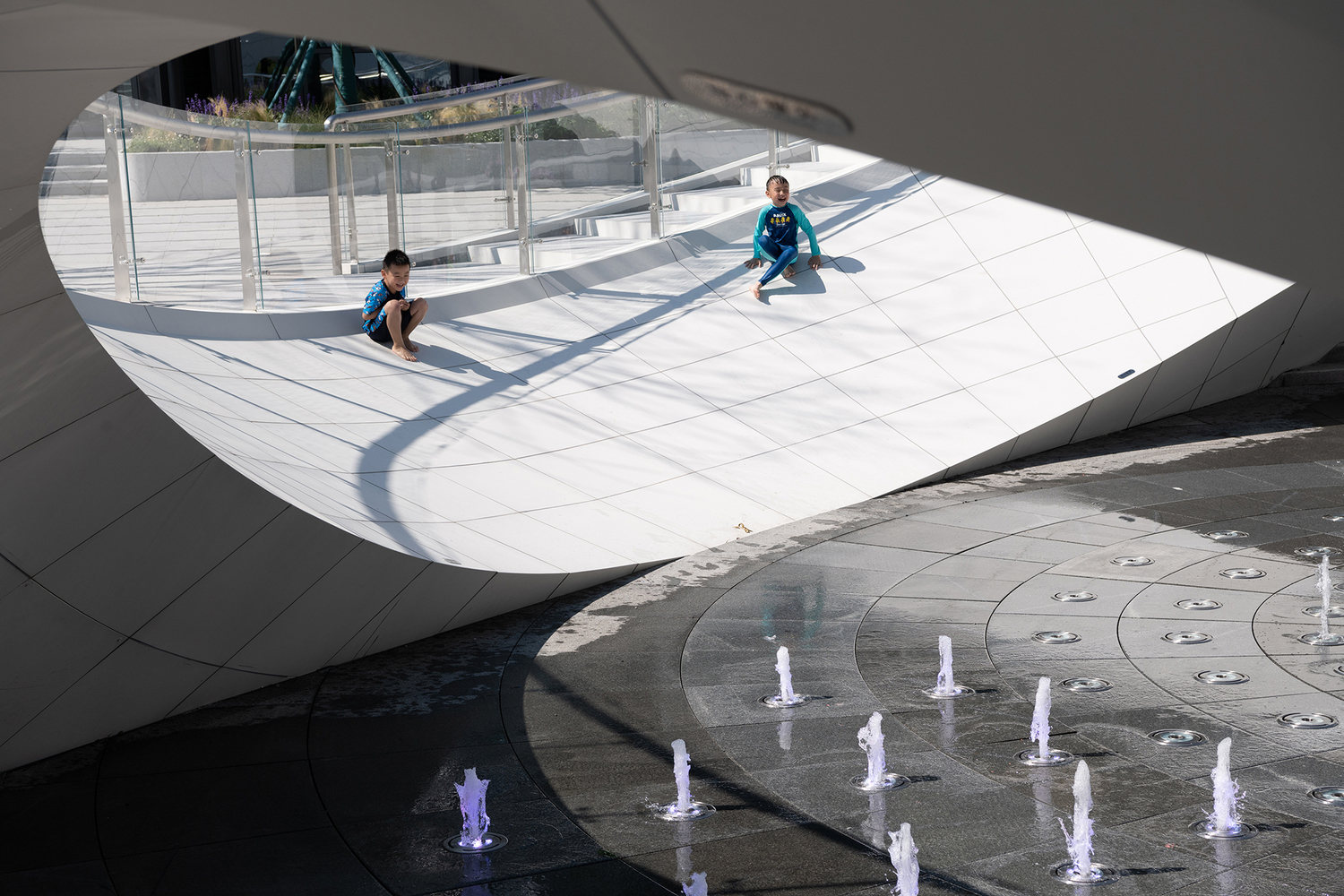
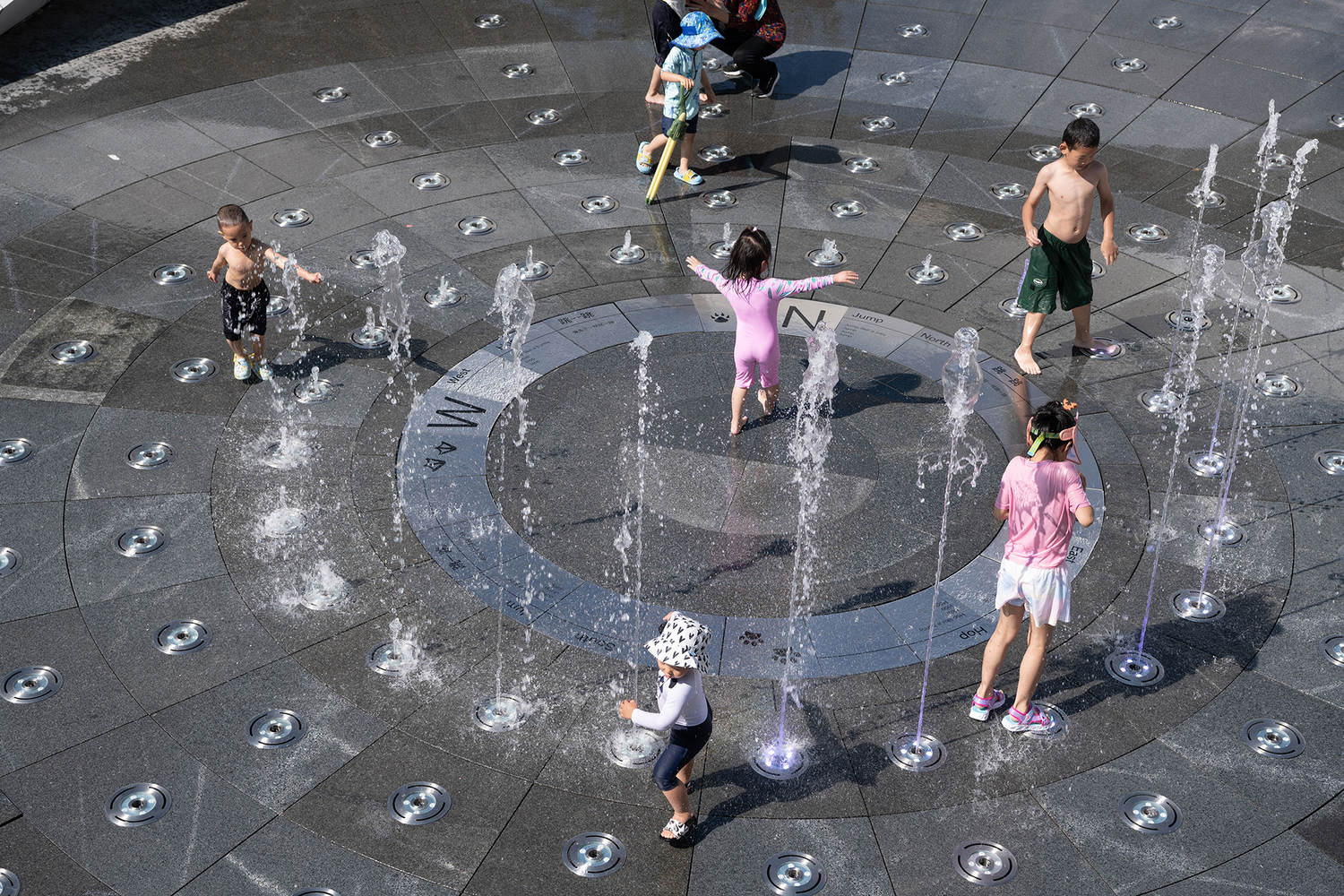
The design introduced water into the site, connecting the originally elongated four plots with a continuous water system, allowing them to converse with each other. All pathways, plazas, and spaces unfolded along this water system, forming a city-scale linear park system where water is the protagonist. Canyons, waterfalls, canals, shallows, and reefs—the design draws inspiration from natural rivers and expresses it through abstract design language, creating different topographies and carving out distinct textures, resulting in dozens of different ways to interact with water and creating rich waterscape spaces.
多样空间体验
设计将水引入场地,原本冗长的四块场地用一条水系串联,彼此对话。所有的步道、广场、空间都沿着这条水系展开,形成了以水为主角的、城市级的线性公园系统。峡谷、瀑布、运河、浅滩、岛礁-设计从自然的河流中汲取灵感,并用抽象的设计语言表达,形成不同的地形、刻画出不同的纹理,几十种不同的水互动方式,创造出丰富的水景空间。
© Bing Lu
© Bing Lu
Activity Spaces
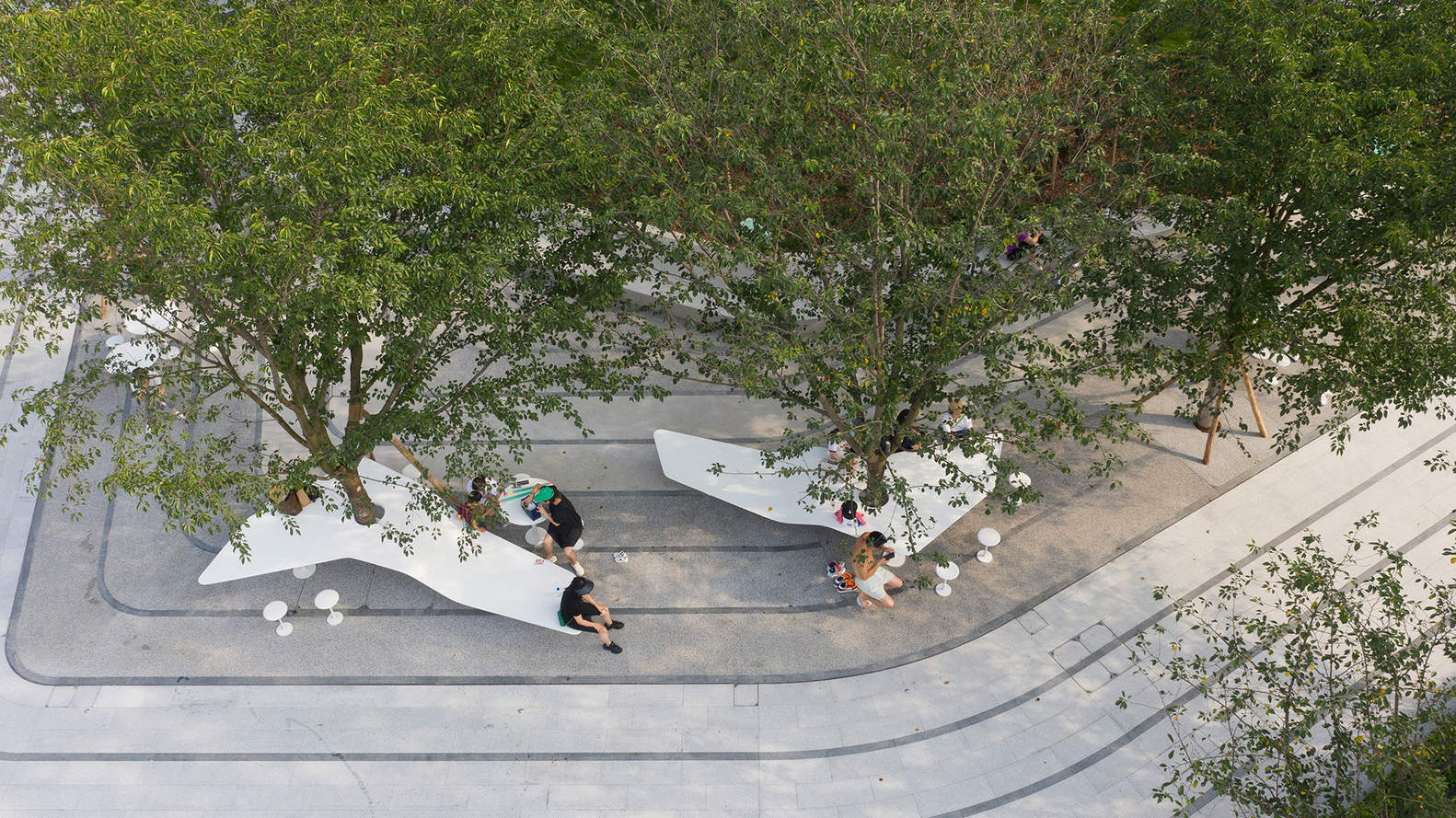
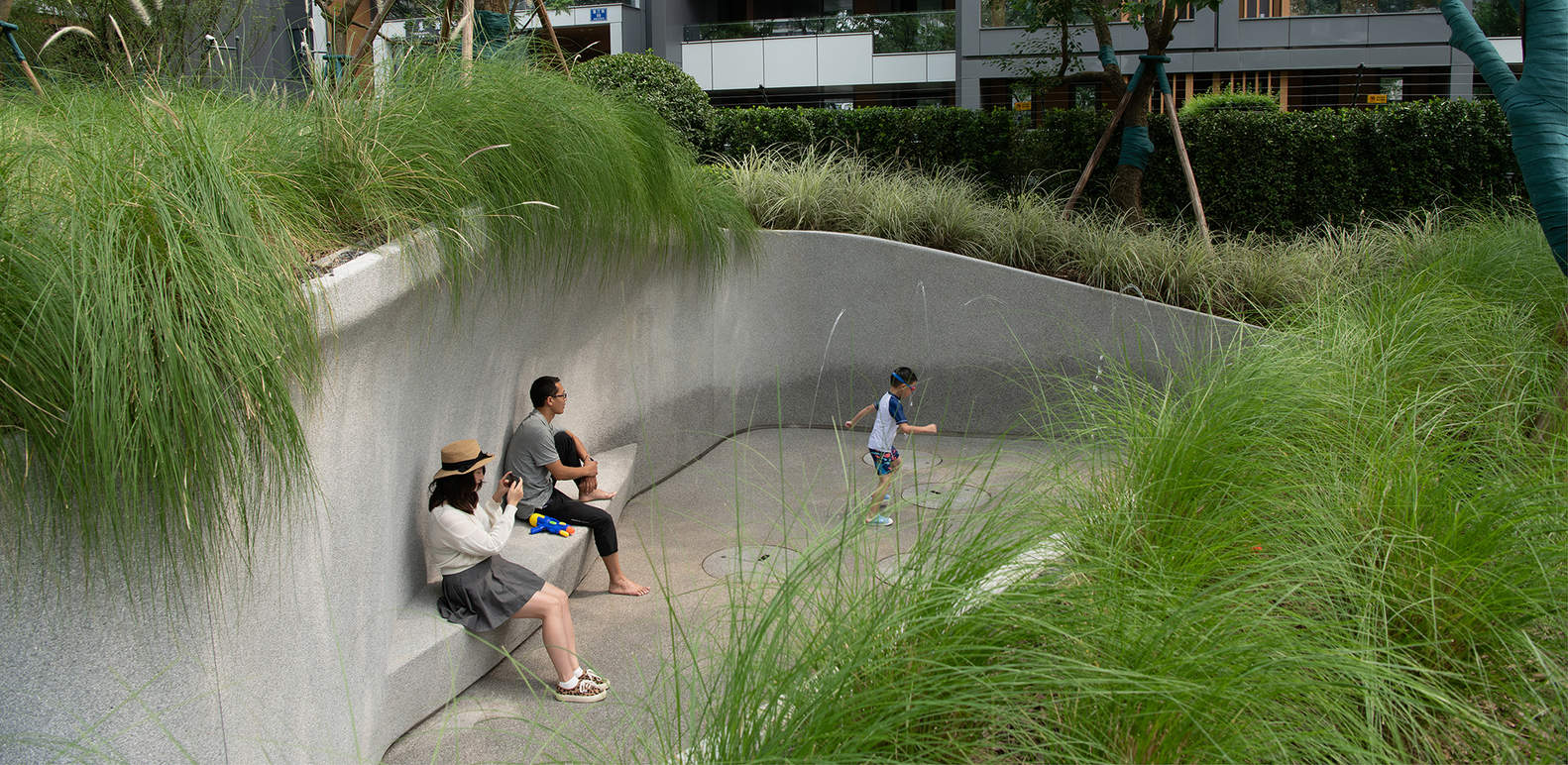
Various forms of stopping points extend along the main water system within the site, ensuring the area is more than just water, providing more possibilities for people's rest, lingering, and enhancing the site's interest. The topography within the canyon constantly changes, creating evolving environments that offer people seating and relaxation spaces from which they can enjoy the greenery of the canyon. The design transforms the site into a vibrant public space, connecting the community with nature, increasing neighborly interaction, and fostering a sense of belonging among residents.
活动空间
沿着场地内的主要水系延展出不同形式的停留点,让场地不止于水,也为人们的休憩、驻足和场地的趣味性提供更多的可能。峡谷中的地形不断变化,也创造出不断变化的环境,给人们提供了座椅和放松的空间,人们可以从这里欣赏峡谷的绿意。设计把场地变为生动的公共空间,将社区与自然联系起来,增加了邻里之间的互动和居民的归属感。
© Bing Lu
© Bing Lu
Ecological Integration
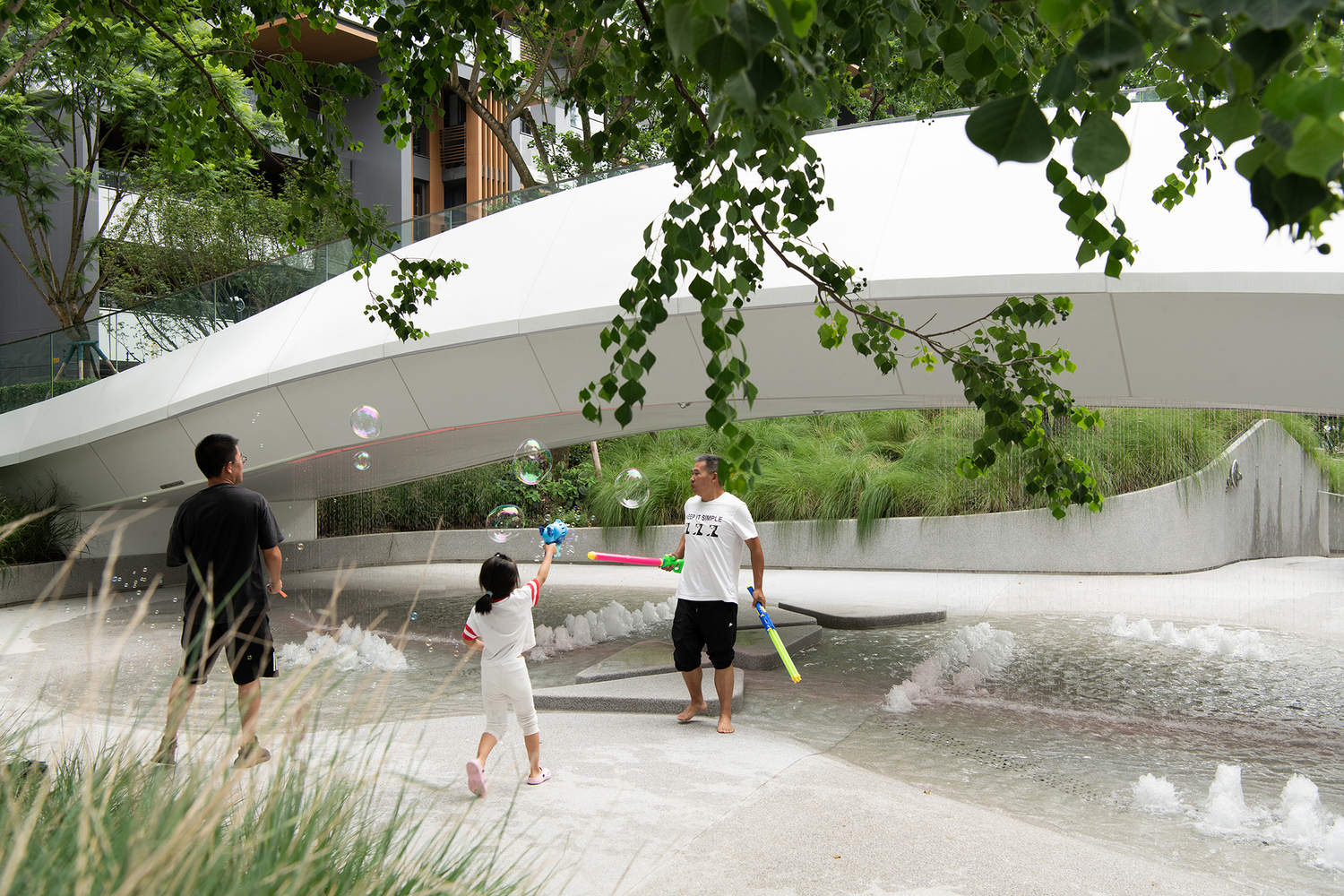
The design incorporates extensive ecological planting to create a verdant urban canyon. It also leverages the existing water advantages of the Luhu site to holistically consider and plan the water system, water usage, and filtration, ensuring that the completed waterscape minimizes water consumption and operates with maximum efficiency. The water volume in the water playground can be adjusted according to natural laws and seasonal changes, and the entire water interaction is controllable by time and zone. While serving as an activity space for residents, Waterline Park can also function as a rain garden during flood seasons to assist in the dredging of Luhu Lake.
生态融入
设计融入了大量的生态种植,营造出一条绿意盈盈的城市峡谷。更是借用麓湖本身场地的水域优势,对水景系统、水的使用和过滤进行了统一考量和规划,使建成后水景可以减少水消耗量、最高效地运行。水乐园的水量大小可以根据自然规律、季节变化调整,并且整个水景互动都分时分区可控。水线公园虽为居民的活动空间,亦可以在汛期作为雨水花园,辅助麓湖疏浚。
© Bing Lu
To be continued
The completed Waterline Park has already attracted more people to choose to live in Luhu, and besides the parts that have been implemented, the third and fourth sections of Waterline Park will be gradually completed within the next three years.
未完待续
已经落成的水线公园已经吸引了更多人选择到麓湖居住,而除了已经落地的部分,水线公园的第三段和第四段则将在未来的三年内逐渐建成。
© Bing Lu