社会韧性与食物公平的城市再生范式:本项目最精髓之处在于其对城市韧性(Resilience)的深刻回应,通过对传统农贸市场的现代化改造,直接干预了食物供应链的本地化和公平获取问题。建筑设计巧妙地融合了公园休憩功能与市场交易需求,创造了一个动态的混合公共空间。这种模式不仅复兴了社区经济和邻里关系,更重要的是,它构建了一个在粮食和气候危机背景下,保障弱势群体获取健康、廉价食物的实体平台,体现了建筑设计在社会公平层面的积极介入和可持续价值。
多功能一体化与“阴影建筑”的当代诠释:设计通过一个标志性的多功能白色屋顶系统,将遮阳、挡雨和光线反射等气候应对策略集成于一体。屋顶下方的商户展示台在收市后转变为市民的社交和休憩阶梯座椅,实现了空间使用上的高效复合与时间上的连续性。这不仅是对Aleksandra Wasilkowska“阴影建筑”概念的当代实践——将非正式的街头贸易场所进行结构化升级——同时也通过灵活的布局(如光滑的混凝土广场)确保了不同群体(包括行动不便者)的无障碍流通,提升了场所的包容性。
生态策略与场所精神的有机融合:项目在硬质景观之上引入了丰富的生物多样性策略,通过在屋顶边缘及周边种植本地树木、灌木和花卉草甸,形成了“自然绿岛”,为城市生态系统提供了食物和庇护所。雨水收集系统(储雨盆)的设置,将屋顶径流转化为灌溉水源,最大化雨水渗透,实现了对场地水文的积极管理。这种将生态修复与市民游乐(如带木雕摇椅的游乐花园)相结合的设计手法,不仅美化了环境,也使得市场空间在功能上超越了单纯的交易场所,成为一个具有生态教育和社区疗愈功能的场所。
Our way of eating and the places we shop are crucial for the health and resilience of people and the entire ecosystem. Food and climate crises, along with increasing social stratification, urge us to adopt solutions that shorten supply chains and promote equitable access to healthy and affordable food. Creating markets for local produce enhances the city's resilience and equal opportunities for all social groups to access healthy and low-cost food, while also improving small businesses and neighborhood relations.
我们的饮食方式和购物地点对于人们和整个生态系统的健康和复原力至关重要。粮食和气候危机以及加剧的社会阶级分层促使我们采取缩短供应链、并促进公平获取健康和廉价食物的解决方案。打造当地农产品买卖的集市可增强城市的复原力和所有社会群体获得健康及低成本食物的平等机会,也能改善小型企业和邻里关系。
Aleksandra Wasilkowska Architectural Studio was responsible for the redevelopment of the market in Blonie, which has been exploring the concept of "shadow architecture"—informal street trading and markets—for 15 years. The renovated open-air market is located in the town of Blonie, near Warsaw. For centuries, the local community has maintained the tradition of the market, which is highly popular and has provided people with cheap, high-quality food sold directly by producers and farmers for many years. The Blonie community decided to renovate it to address poor sanitary conditions and a lack of infrastructure.
Aleksandra Wasilkowska 建筑工作室负责布沃涅(Blonie)市场的重建,其15 年来一直在探索“阴影建筑”的概念——非正式的街头贸易和集市。改造后的露天市场位于华沙(Warsaw)附近的布沃涅城镇。几个世纪以来,当地社区一直在传承集市的传统,市场也备受欢迎,多年来一直为人们提供由生产商和农民直接销售的廉价、优质食品。布沃涅社区决定对其进行改造,以解决糟糕的卫生条件和基础设施匮乏的问题。
© Nate Cook
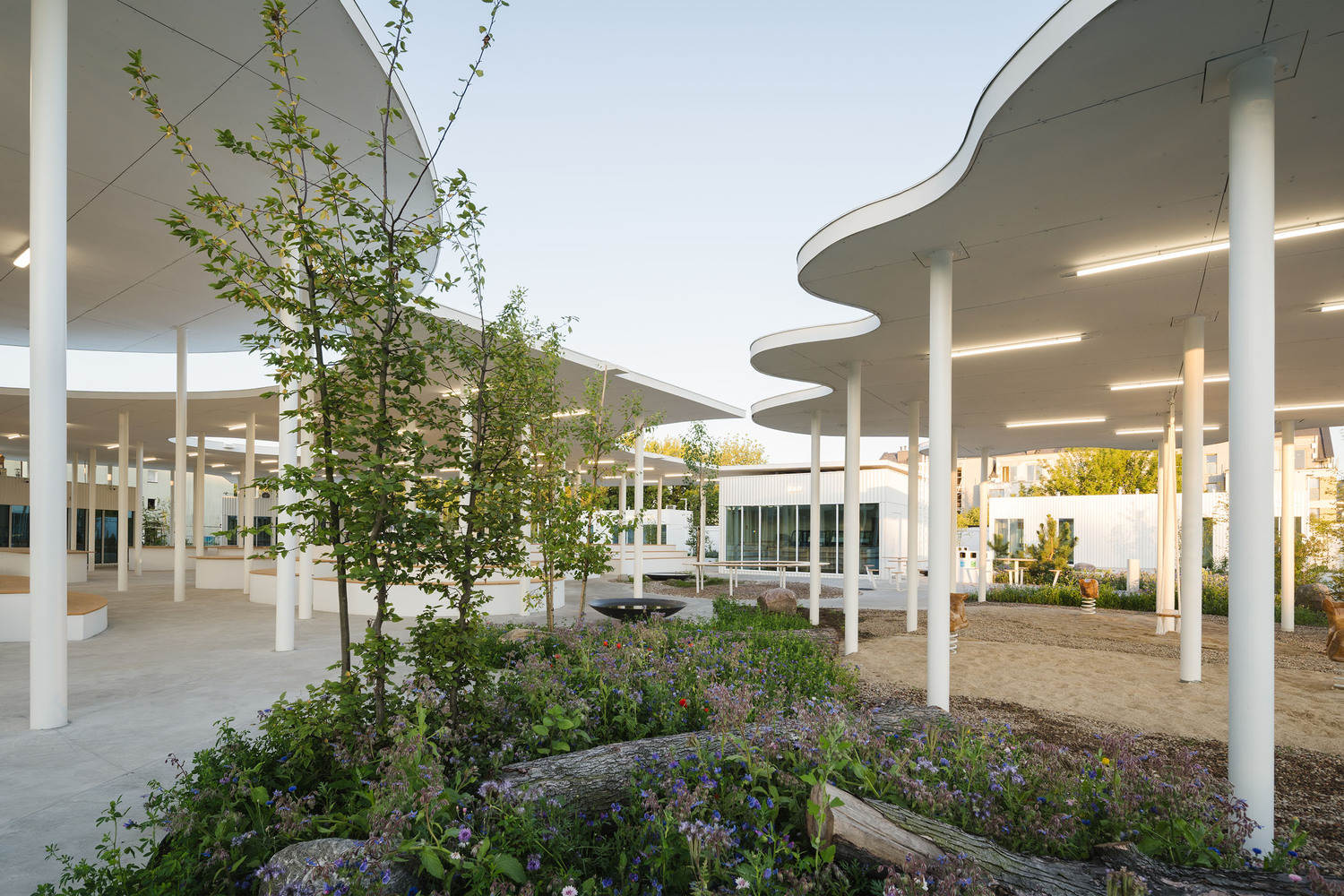
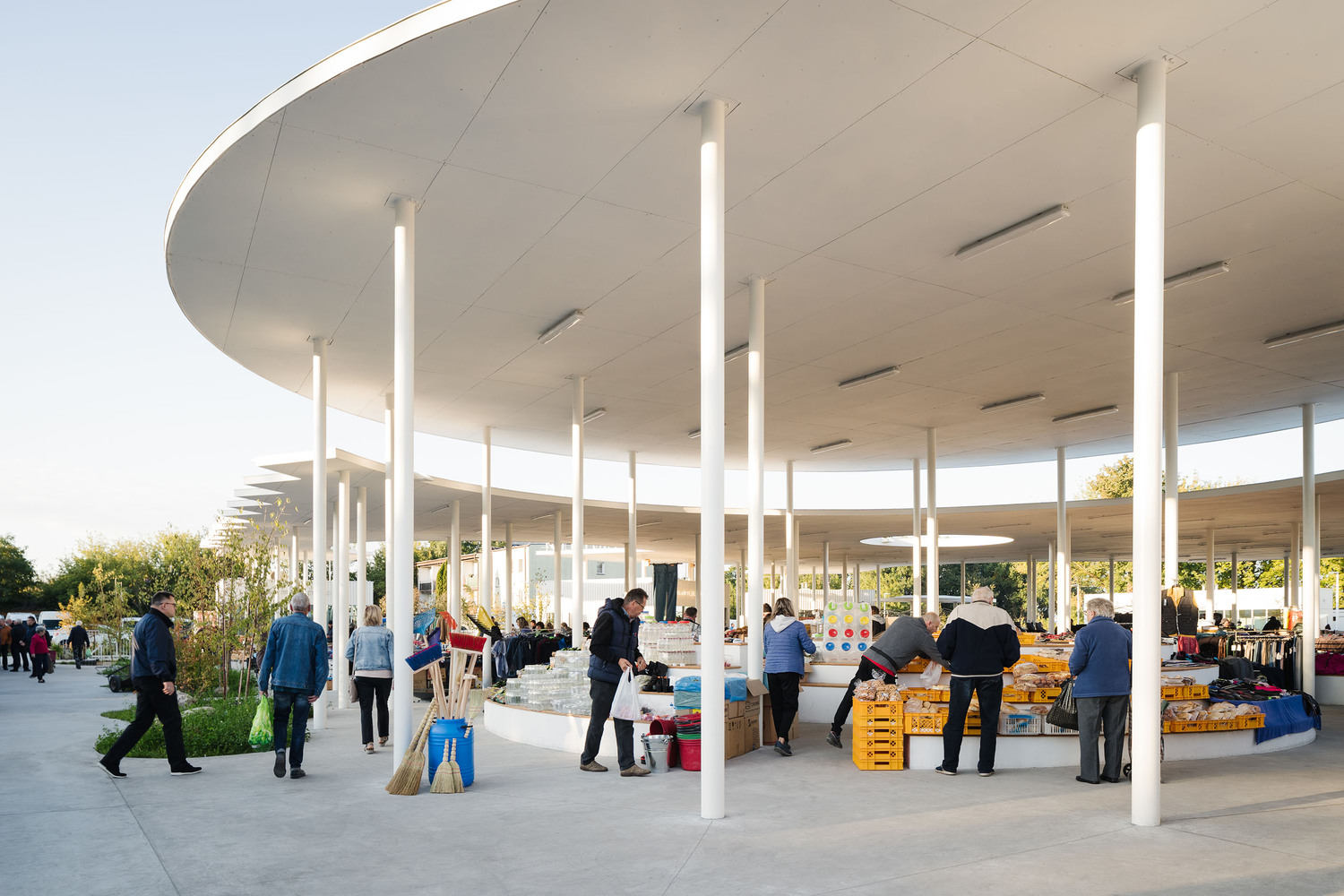
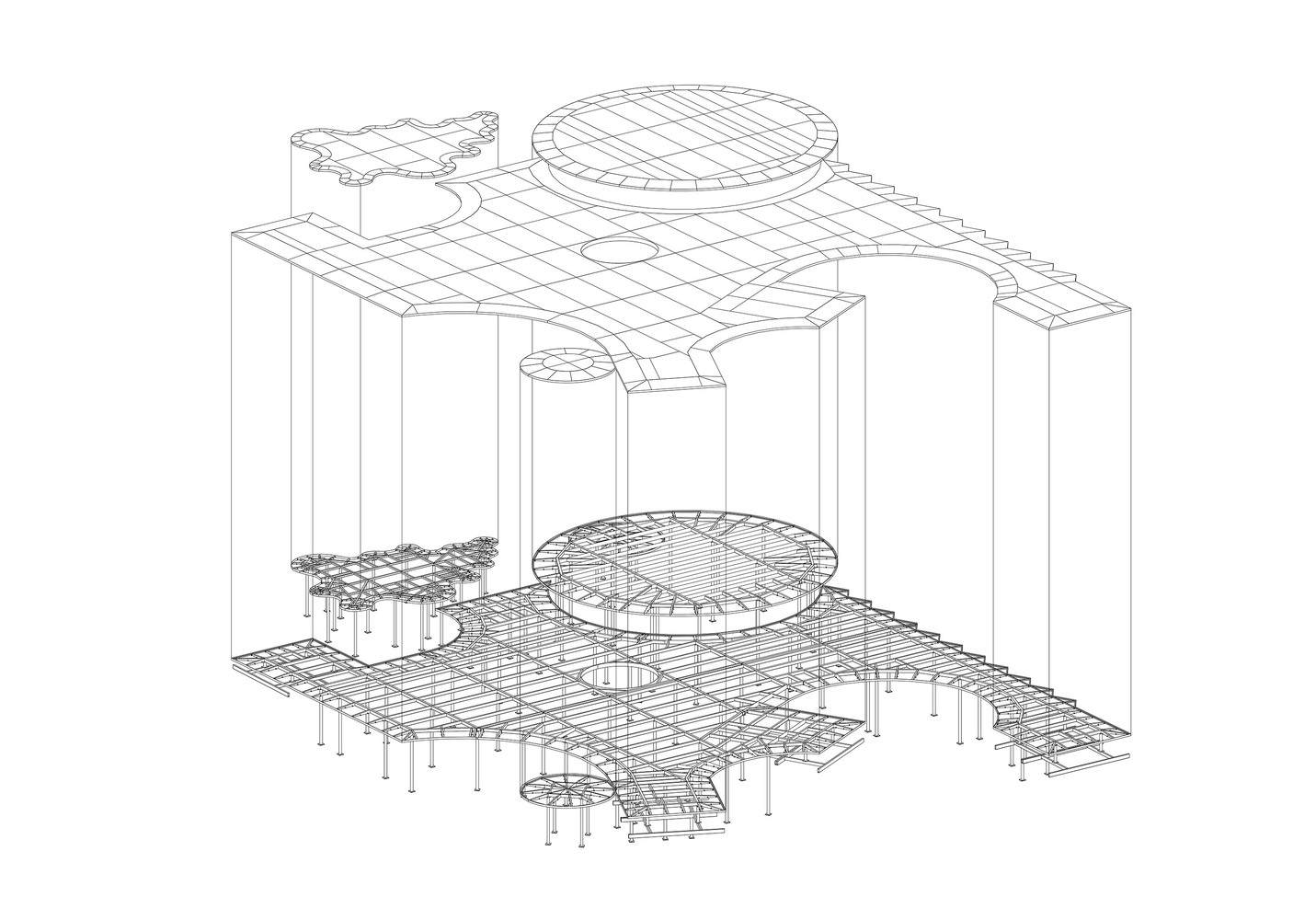
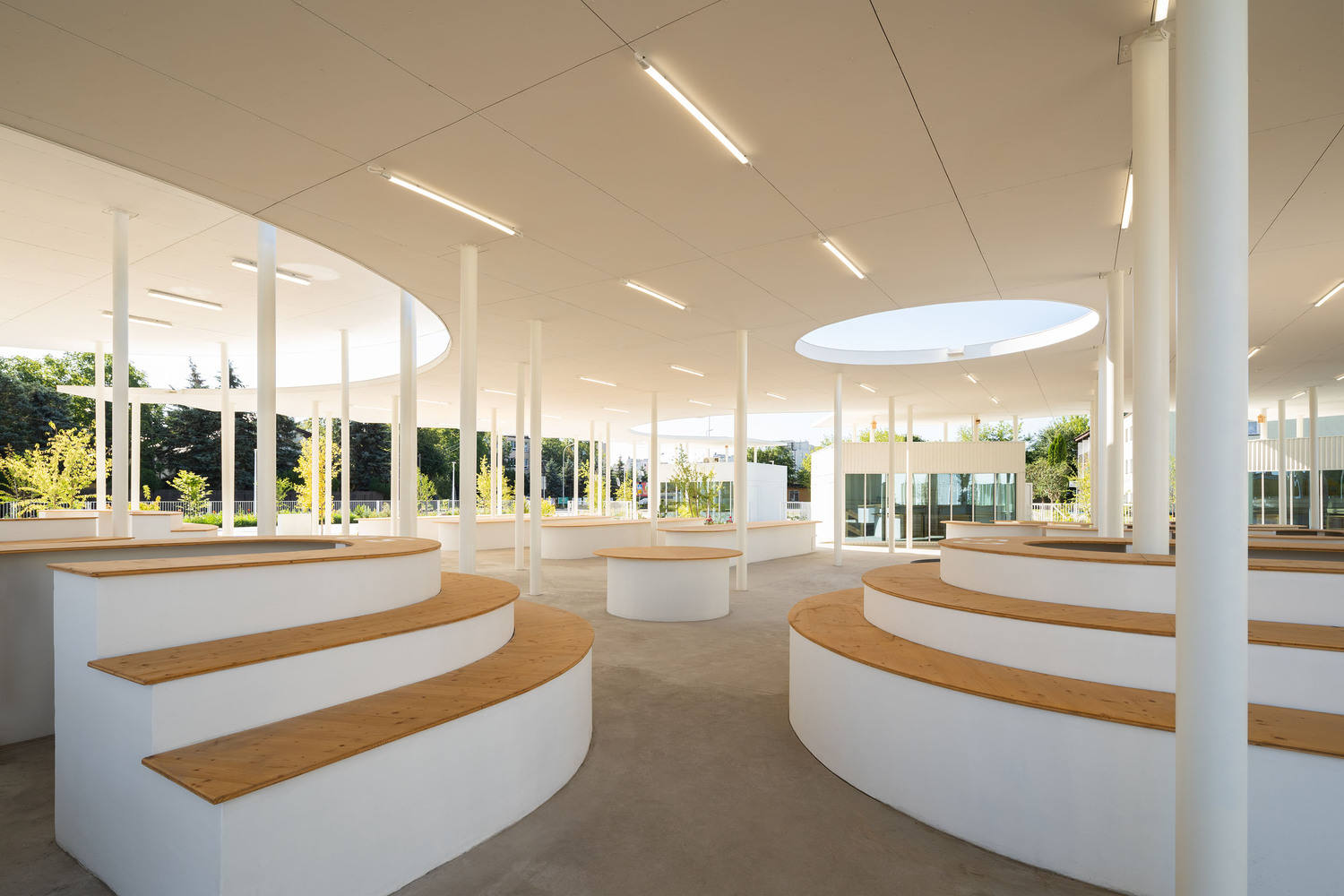
The redevelopment project involved creating a hybrid public space combining two social functions: a park and a marketplace. The multi-functional white roof reflects light and provides shelter from the rain. After closing, the stepped merchant display platforms with wooden tops can be used as seating and space for spontaneous gatherings. Beneath the edge of the roof, the shops and service kiosks, clad in white corrugated sheets on the facade, feature full-height glazed fronts.
重建项目包括创建一个结合两种社会功能(公园和集市)的混合公共空间。多功能的白色屋顶可以反射光线及挡雨。收市后,带有木台面的阶梯式商户展示台可用作座位和自发聚会的空间。在屋顶外围之下,外立面覆盖着白色波纹板的商店和服务亭设有落地窗门面。
© Nate Cook
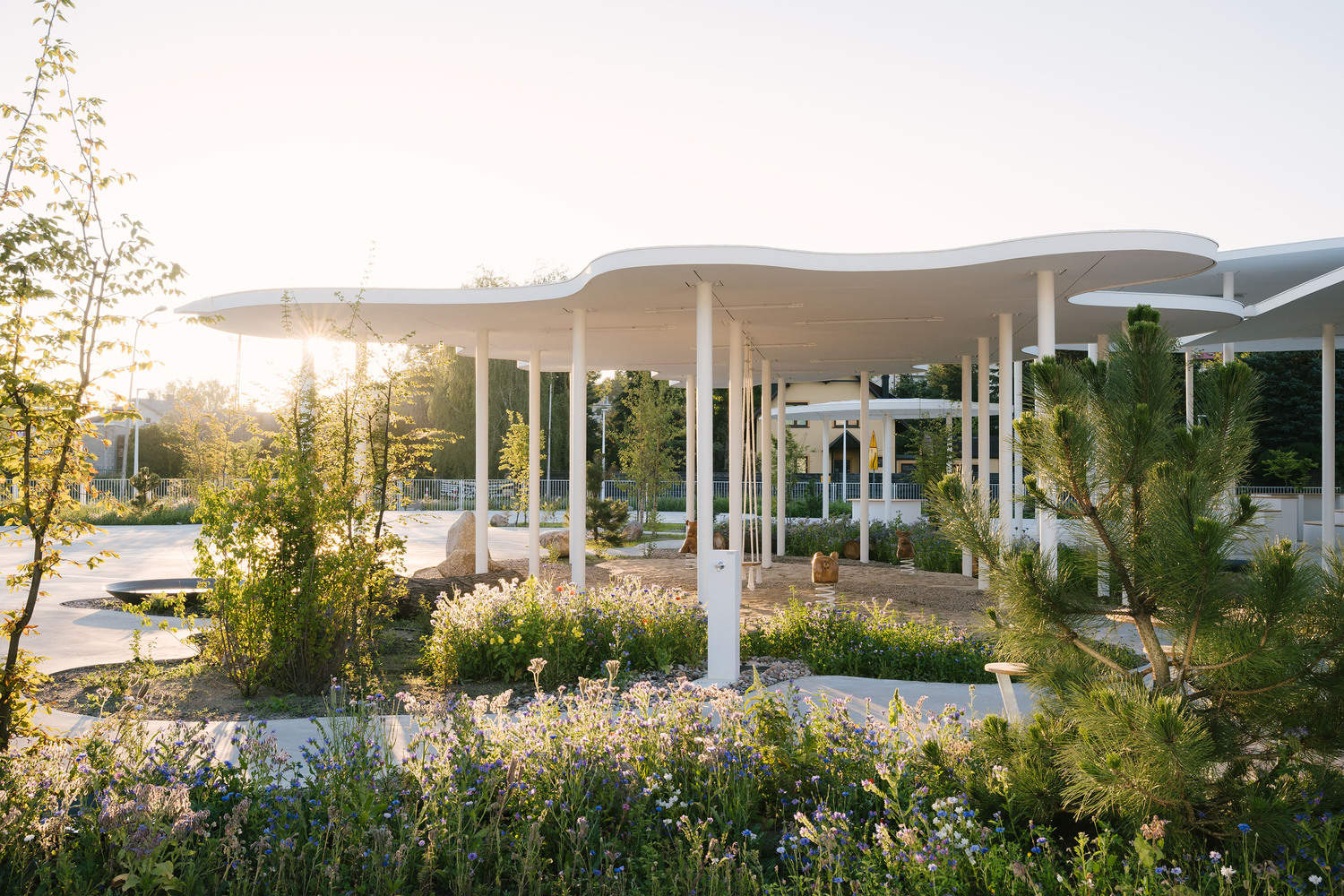
The square also features restrooms and an administrative pavilion, with a bar and a shared table connected to a children's play area in the center of the market. Around the roofed market, a passage allows for product transport to the pavilions and commercial spaces, as well as the movement of trade stalls with vans and agricultural produce. The smooth concrete surface of the square has been carefully treated so as not to create obstacles, allowing for free and safe movement around the market for pedestrians, wheelchairs, or skateboards.
广场上还建有洗手间与行政亭,市场的中心设有与儿童游戏区相连的吧台和一张共用桌子。屋顶集市周围有一条通道,可以将产品运送到展亭和商业场所,以及货车和农产品流动的贸易露天摊位。广场光滑的混凝土表面经过精心处理,不会成为路障,允许步行、轮椅或滑板在市场周围自由安全地移动。
© Nate Cook
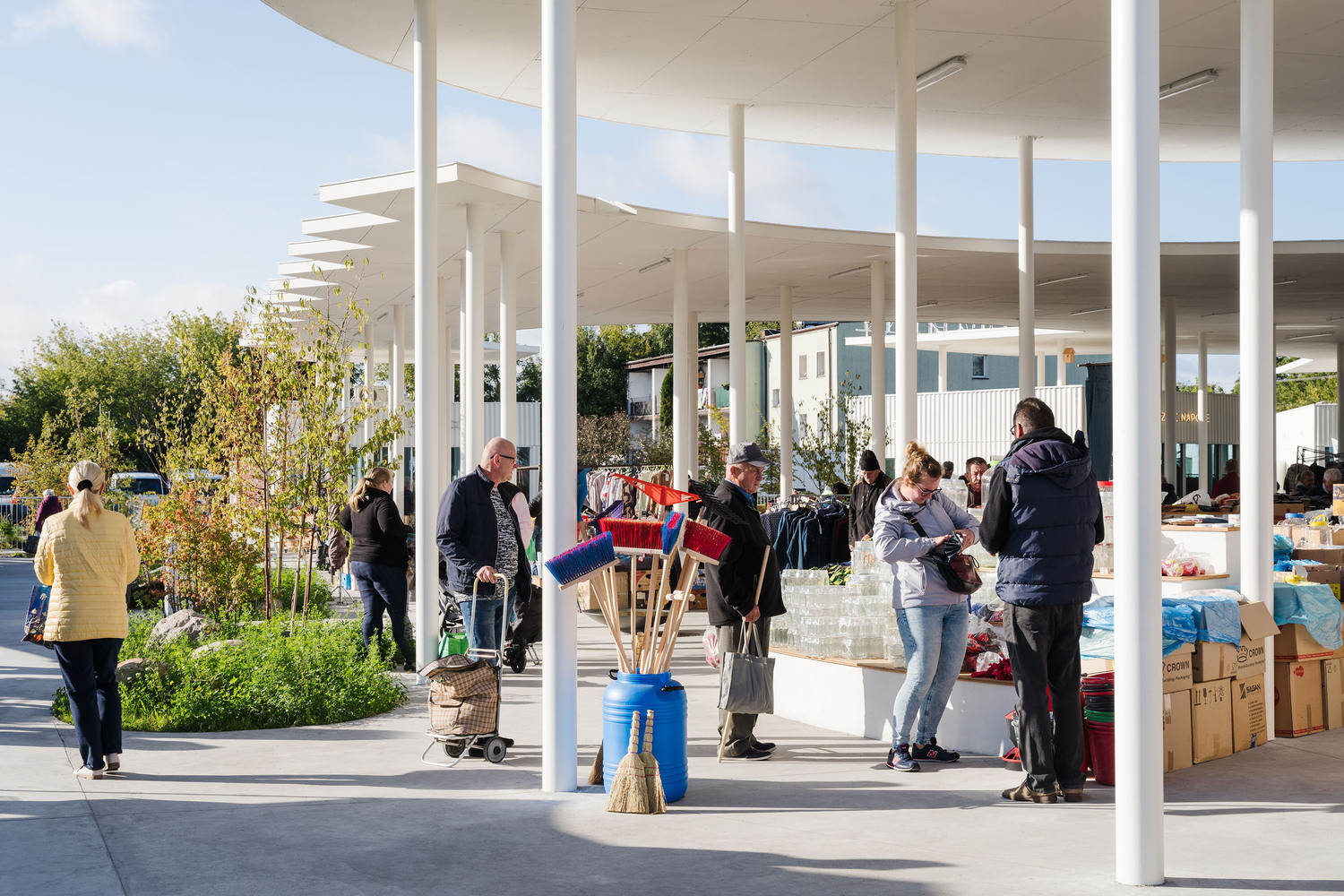
The revival of the market and the increase in biodiversity are fundamental features of the project. Natural green islands with pine trees, hornbeam, beech, and alder have been designed around the roof and pavilions. Once they grow to a certain height, the trees and shrubs will provide additional shade for the open-air trading posts, offering food and shelter for birds and insects.
市场的复兴和生物多样性的增加是该项目的基本特征。屋顶和亭子周围设计了带有松树、多茎鹅耳枥、山毛榉和桤木的自然绿岛。当成长到一定高度后,为鸟类和昆虫提供食物和庇护的树木和灌木将为露天贸易站提供额外的遮荫。
Clematis and wisteria, various flowering meadows, shrubs, and fruit trees are also planted along the fence enclosures. Rainwater falling on the roof is retained in rainwater basins, and the excess water is used for watering plants and for infiltration into the ground. The geometry of the square has been carefully designed to maximize rainwater runoff into the rain gardens, flower meadows, perennials, and shrubbery.
铁线莲和紫藤、多种花卉草甸、灌木和果树也沿着篱笆围墙种植。落在屋顶的雨水被保留在储雨盆中,其多余的水用做浇灌植物并渗入地下。广场的几何形状经过精心设计,使流入雨水花园、花卉草地、多年生植物和灌木丛的雨水最大化。
© Nate Cook
Various street fixtures embellish the final design, such as white circular information boards, bicycle racks, boulders, bird and insect houses, and communal tables and chairs. Under the distinctive organic roof, there is also a play garden with rocking chairs shaped like wooden animals.
各种街道固定装置点缀了最后的设计,如白色的圆形信息板、自行车架、巨石、鸟类和昆虫屋及社区共用桌椅。在极具特色的有机屋顶下,还设有带木雕动物造型摇椅的游乐花园。
© Nate Cook
As a hybrid building functioning as both a park and a marketplace, the Blonie Market improves the microclimate, strengthens the development of small entrepreneurship, and enables residents to access locally produced food in an open-air setting, thereby enhancing the city’s resilience in the face of pandemics, as well as the food and climate crises.
作为公园集市的混合功能建筑,布沃涅市场改善了微气候,加强了小型创业的发展,并让居民能够在露天市场获得当地生产的食物,从而增强了城市在疫情以及食品和气候危机时期的复原力。