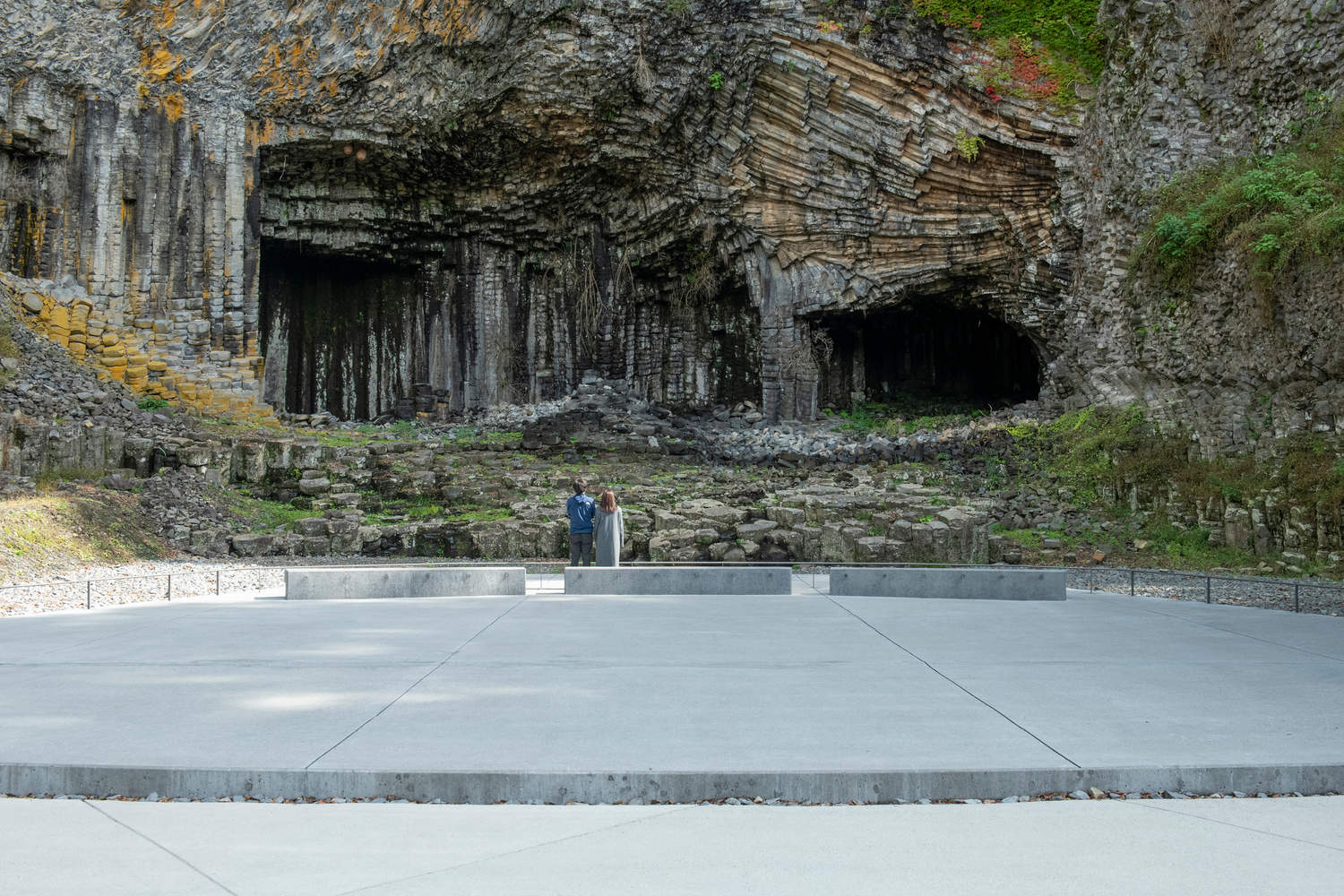
地质奇观的沉浸式体验设计:该项目成功的核心在于其对玄武洞柱状节理这一独特地质特征的尊重与强化。设计通过在“玄武洞”和“青龙洞”前设置粗糙表面的混凝土观景平台及长椅,巧妙地在人工干预与自然形态之间建立了对话。这种处理方式不仅提供了游客与自然“面对面”的沉浸式体验,更通过材料质感(喷砂混凝土)的呼应,使新建构筑物消隐于粗犷的岩石背景之中,实现了对“大自然的雕塑”力量的突出和升华。
谨慎的干预与视觉障碍的消除:项目精髓在于其克制的介入策略,旨在“重新编辑”而非彻底颠覆现有景观。设计团队识别并解决了原有设施(如淡黄色铺面和碍眼的栅栏)对观赏体验造成的负面影响。通过拆除或弱化视觉干扰物,以与环境融合的钢筋和灰色调取代,设计极大地拉近了观者与岩洞的距离。售票处等新增功能被控制在最小尺度,确保自然景观永远是场域的绝对主角,体现了对遗产地敏感的修复理念。
材料与色彩的统一性与时间性考量:设计在细节处理上展现了对建筑语汇的成熟运用。通过将现有设施外墙和楼梯扶手统一为灰色调,创造了整体的视觉连贯性。更重要的是,售票处和标识采用了磷酸盐处理过的金属,这种材料选择体现了对时间流逝的考量,即材料将随时间推移自然老化、融入环境,与粗糙的混凝土平台共同构建了一个有机的、可持续的设计叙事,确保了新旧元素的和谐共存。
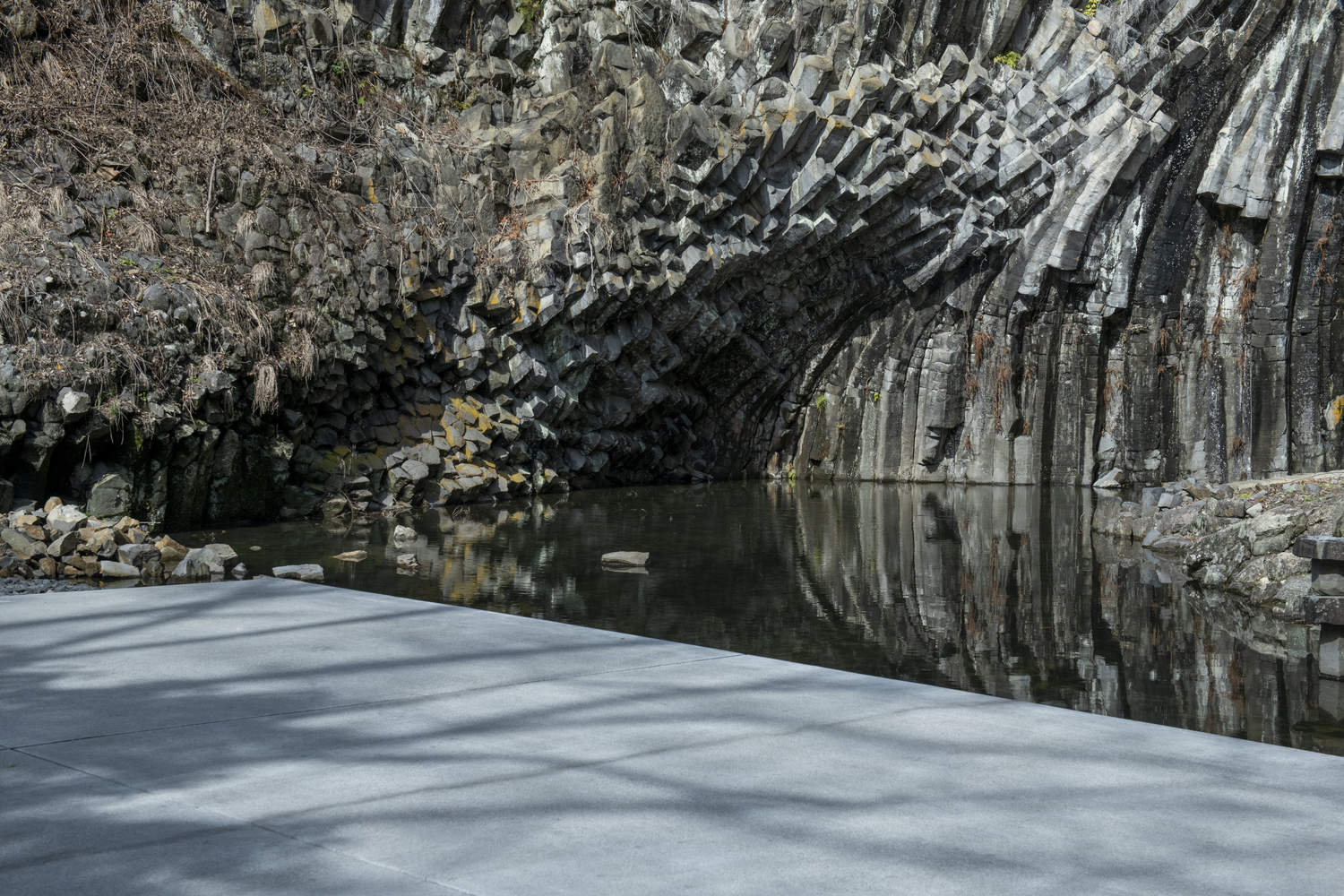
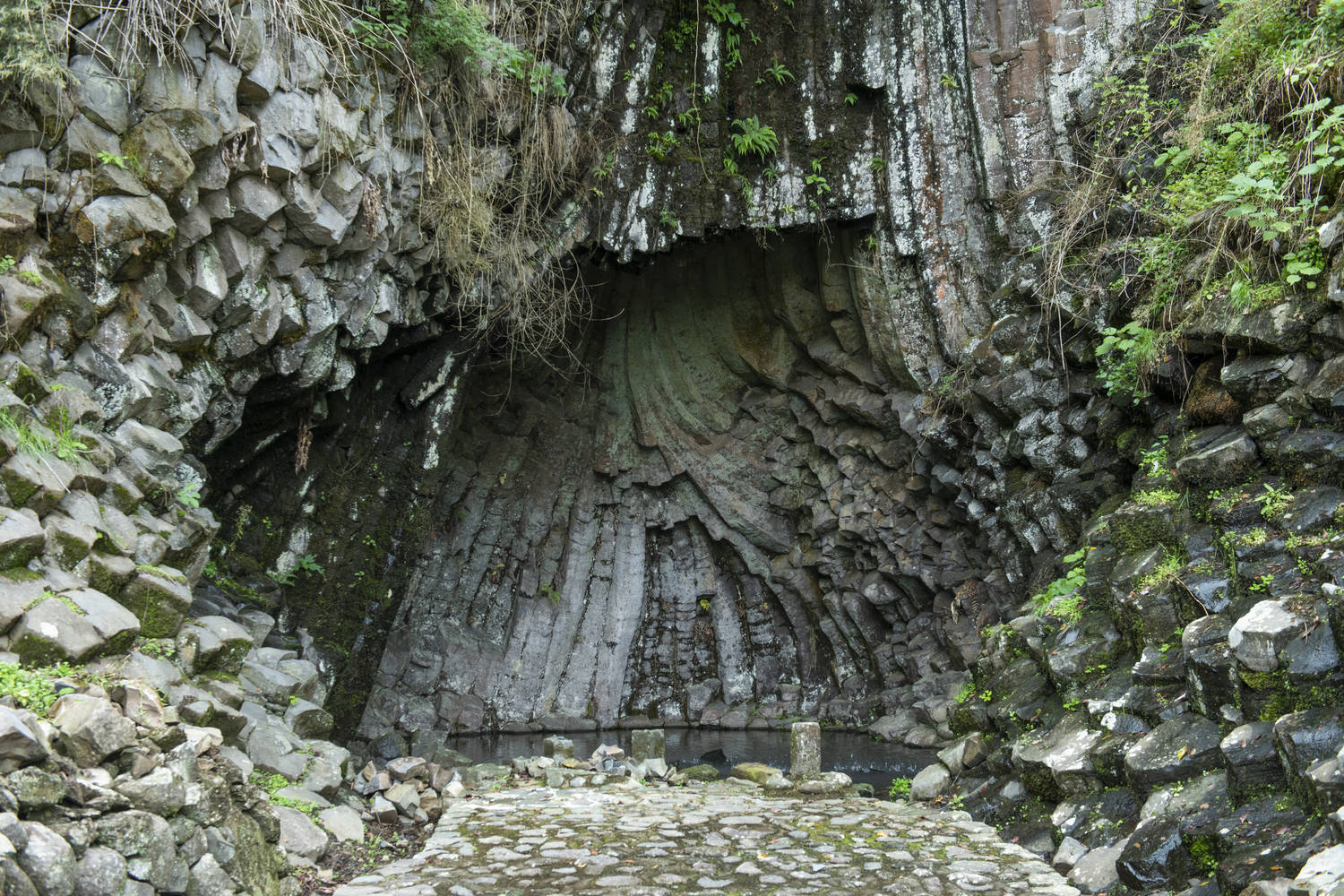
The rough rock surface presents a huge, rippling wave-like form. A hard wall with layered hexagonal rock sections can be seen. Genbudo Park, located in Toyooka City on the western side of Hyogo Prefecture, is a natural park where visitors can see the characteristic geological feature known as "columnar jointing," formed approximately 1.6 million years ago when magma cooled and solidified. This area has been a scenic spot for many years, and this project is a redevelopment plan for it, along with its transition to a paid system. Throughout the planning process, the most discussed issue was how to allow visitors to experience the power of the columnar jointing, which is also called "nature's sculpture." Another issue was how to balance retaining the existing elements of the park with adding new ones.
粗糙的岩石表面呈现出一个巨大的,有着无数波纹的波浪形态。人们可以看到一堵坚硬的墙,上面有层层叠叠的六边形岩石截面。位于兵库县西侧丰冈市的 “玄武洞公园”是一个自然公园,游客可以看到大约 160 万年前岩浆冷却和凝固时形成的被称为“柱状节理”的特色地质特征。这里多年来一直是一个风景区,这个项目是对它的再开发计划以及向收费系统转型。在整个规划过程中,讨论最多的问题是如何让游客体验到柱状节理的力量,它也被称为“大自然的雕塑”。而另一个问题则是如何达到保留公园现有元素和添加新元素之间的平衡。
© Hiroshi Mizusaki
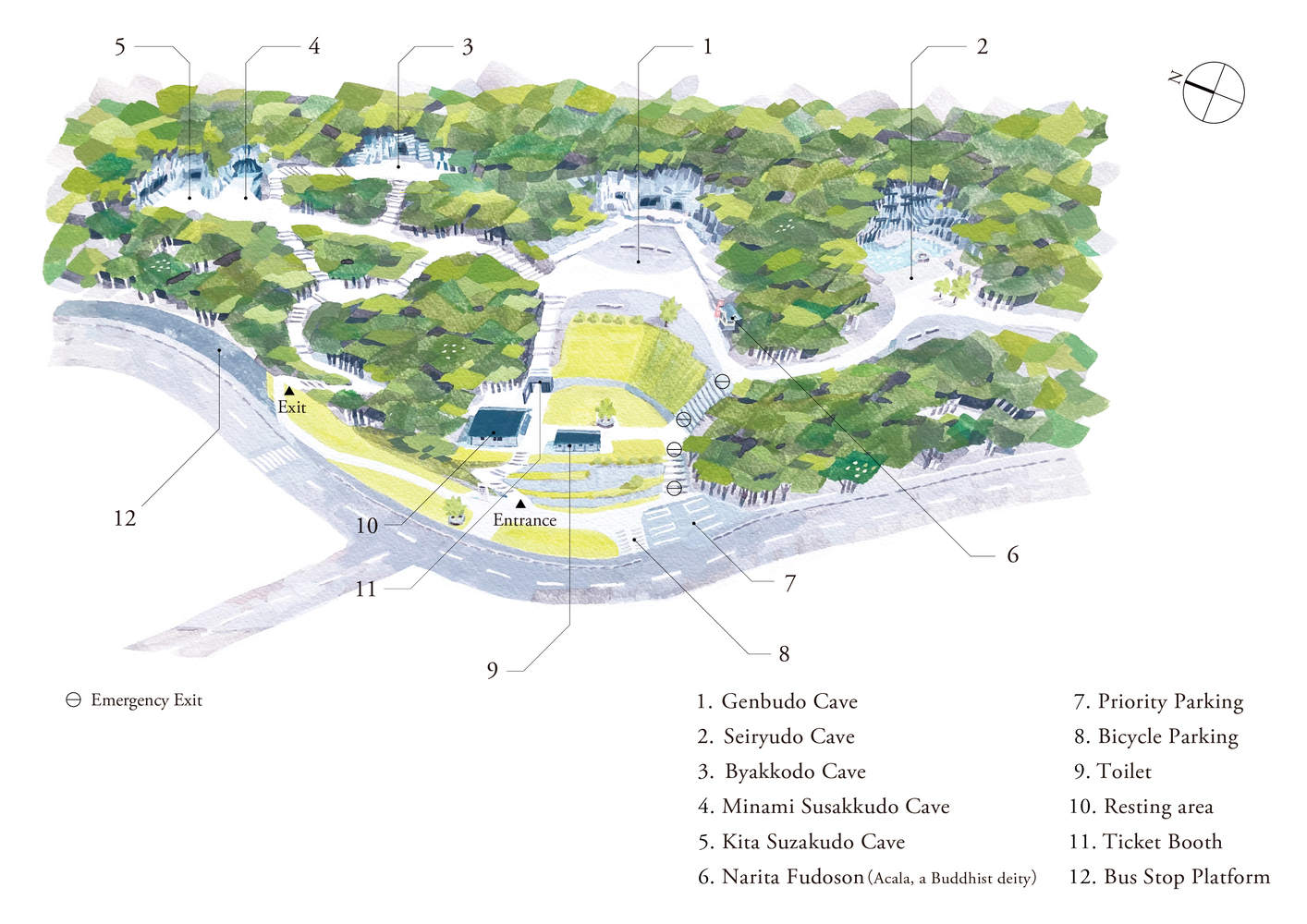
Floor Plan
© Hiroshi Mizusaki
平面图
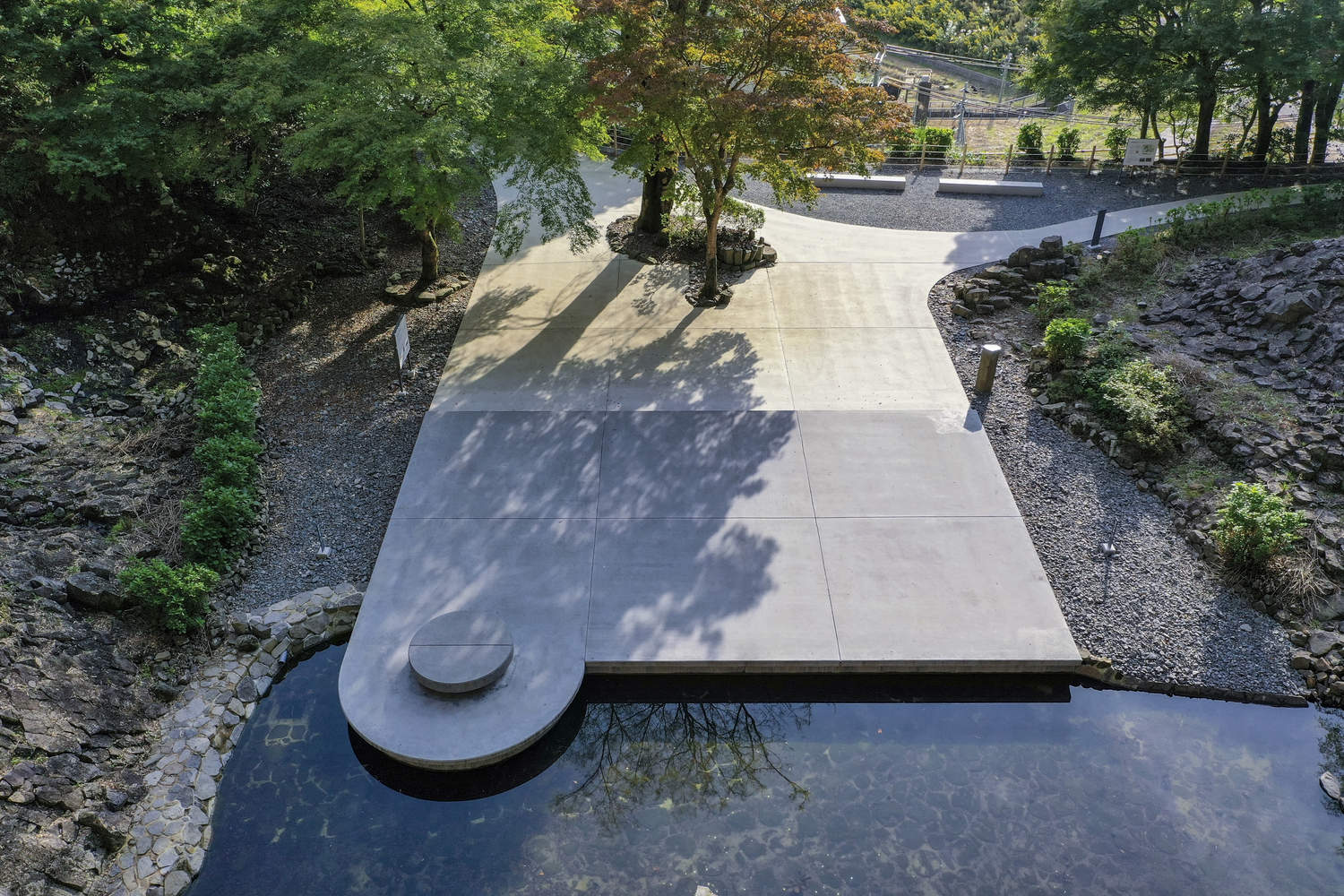
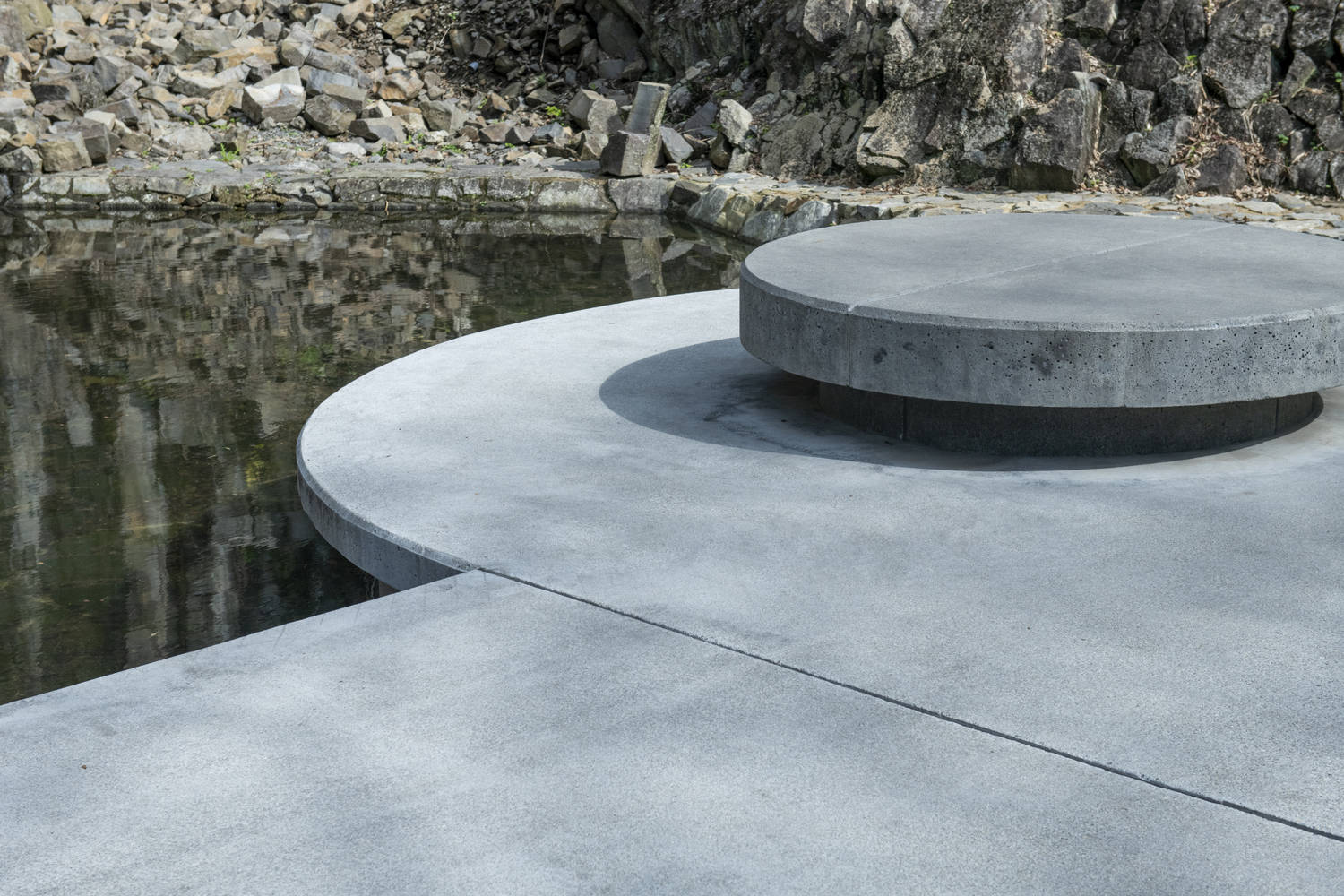
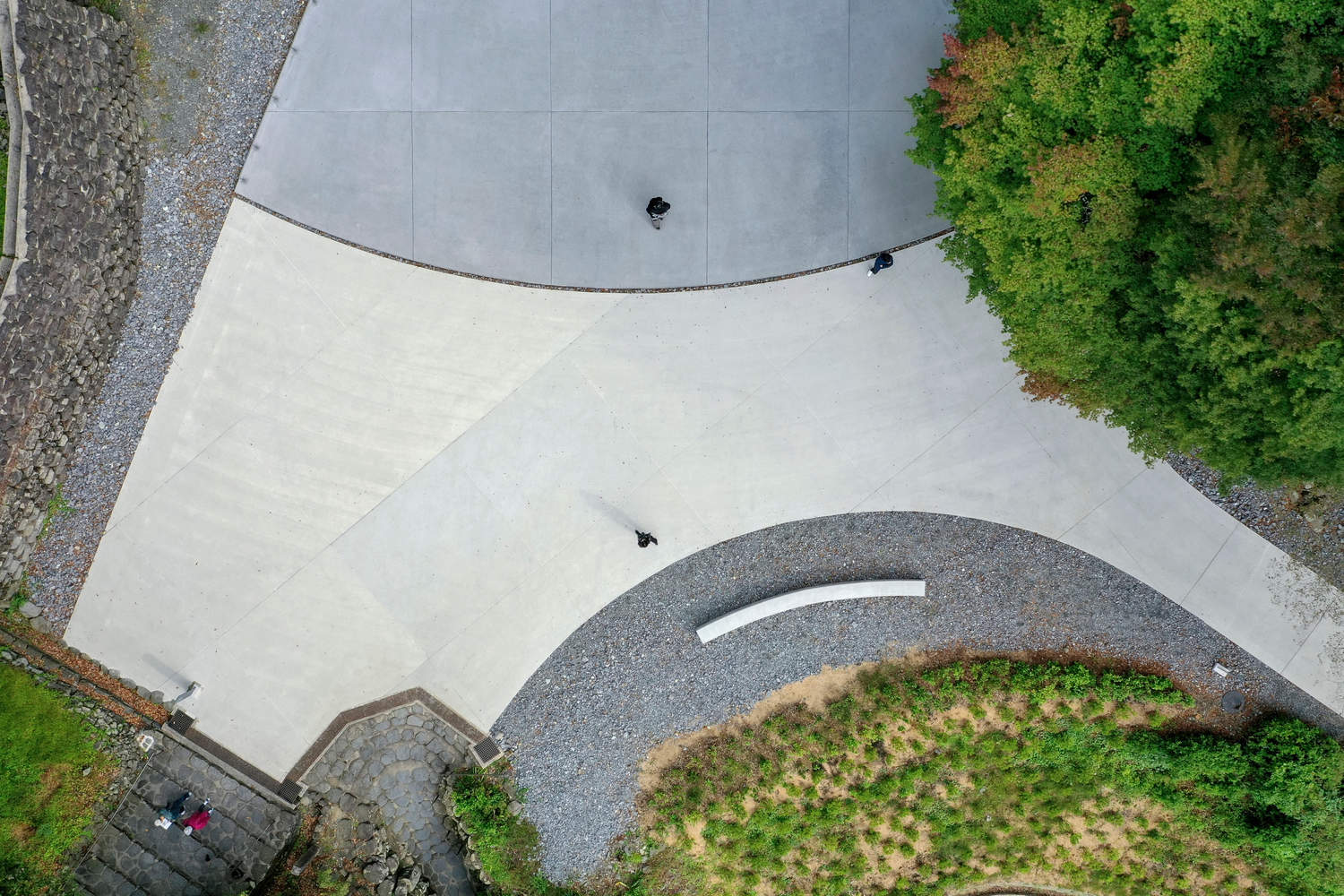
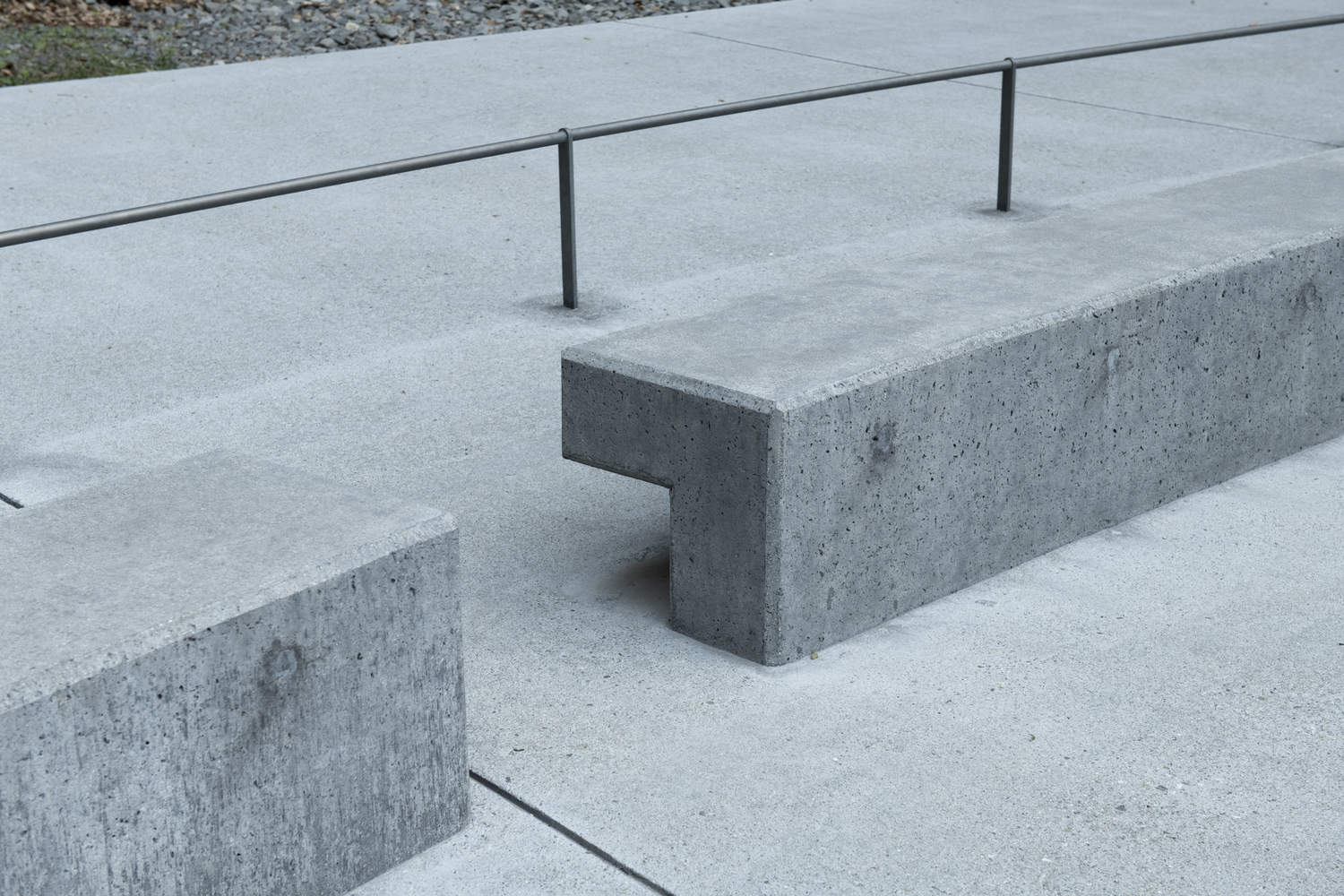
The core of this maintenance work is the construction of large concrete "platforms" in front of the "Genbudo" and "Seiryudo" caves, which feature particularly large columnar joints. Benches are placed in front of each platform, creating a space where visitors can face nature, as if looking up at the caves before them. Furthermore, the surfaces of the platforms and benches are sandblasted to create a rough finish, allowing them to blend visually with nature even though they are made of concrete. The roads throughout the park use the same materials and finishes, and both curved and straight lines are used to contrast with the organic lines of the natural landscape.
© Hiroshi Mizusaki
© Hiroshi Mizusaki
这项维护工作的核心是在“玄武洞”和“青龙洞”岩洞前搭建大型的混凝土“平台”,这些岩洞有着特别大的柱状节理。每个平台前都放置了长椅,从而创造了一个空间,在这里游客可以面对自然,就像他们抬头看眼前的岩洞一样。此外,平台和长椅的表面经过喷砂处理,外表粗糙,即使他们是由混凝土制成的,外观上也能与自然相容。整个公园的道路也使用了同样的材料和饰面,并使用了曲线和直线线条,与自然景观的有机线条形成了对比。
Behind the development of these improvements are several issues found within the existing park. The first is the issue of color, which is very striking when observing the caves. Some of the existing paving retains a light yellow tone, which, while mild, creates a harsh visual impression for observing nature. Another challenge was the old fences installed to prevent visitors from entering the caves. Given the danger of falling rocks in some areas of the park, fences were installed to restrict access, but these fences, while ensuring visitor safety, also created a visual barrier to appreciating nature. Therefore, new platforms were designed to address these issues. The problematic existing fences were removed and replaced with rebar where necessary, integrated with the platforms to minimize their presence as much as possible. By examining the color, material, and form of the structures, we shortened the spatial distance between the caves and the viewers, allowing them to experience the power of nature itself.
制定这些改进措施的背后是现有公园内发现的几个问题。首先是颜色的问题,在观赏岩洞时,颜色是十分引人注目的。一些现有的铺面保持着淡黄色的色调,虽然颜色温和,但为观赏自然创造了一种粗暴的视觉印象。另一个挑战则是为防止游客进入各个岩洞而安装的旧栅栏。鉴于公园某些区域有落石的危险,公园安装了栅栏来限制游客进入这些区域,但这些栅栏在确保公园游客安全的同时,也对欣赏自然造成了视觉上的障碍。因此,我们设计了新平台来解决这些问题。存在问题的现有栅栏被拆除,在必要的地方以钢筋替代,并与平台融为一体,尽可能地减少它的存在感。通过研讨结构的颜色、材料和形态,我们缩短了岩洞和观者之间的空间距离,使观者能够体验到大自然本身的力量。
© Hiroshi Mizusaki
© Hiroshi Mizusaki
© Hiroshi Mizusaki
© Hiroshi Mizusaki
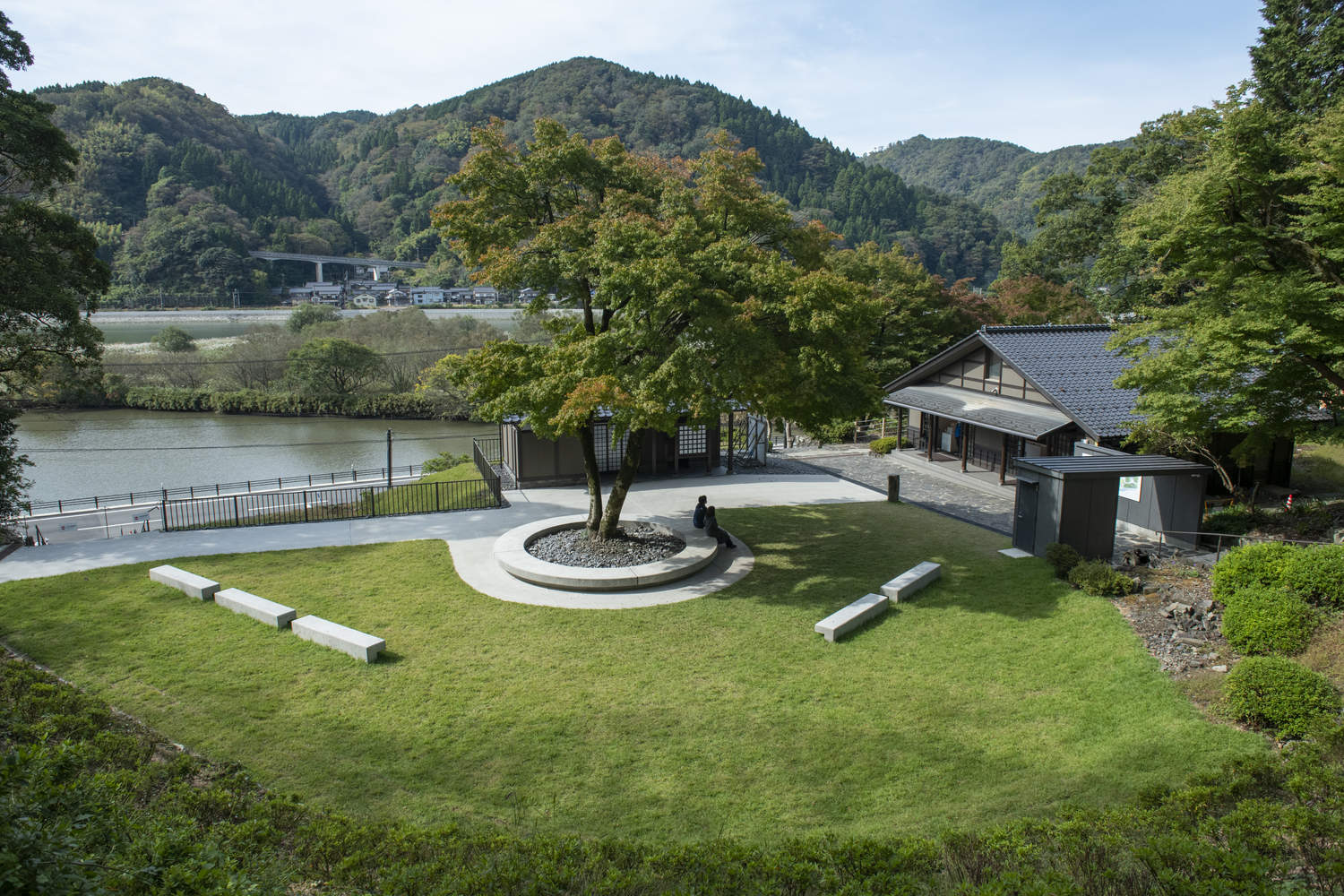
Other major improvements include changing the exterior walls of existing facilities within the park from yellow to gray, and changing the color of the stair handrails from orange to gray while retaining the existing support columns. The ticket office, newly added due to the transition to a paid system, was built to the smallest necessary size so that the natural scenery would become the stage's centerpiece. To unify the design, phosphate-treated metal was used for the exterior walls of the ticket office and new signage, similar to the concrete platforms, these materials will blend with the environment over time. The resting and relaxation buildings in the park previously housed display panels explaining the history and geological background of Genbudo; however, these panels contained too much information relative to their size. Therefore, we reorganized the necessary information with the help of experts and created a graphical and readable layout.
其他主要的改良包括将公园内现有设施的外墙从黄色改为灰色,以及在保持现有支撑柱的情况下将楼梯扶手的颜色从橙色改为灰色。因为改成收费系统而新增的售票处以最小的必要尺寸建造,使自然风景成为舞台的中心。为了统一设计,磷酸盐处理过的金属被用于售票处的外墙和新放置的标示,与混凝土平台类似,这些材料会随着时间的推移与环境相融合。公园内用于休息和放松的建筑曾放置了解释玄武洞的历史和地质背景的展示板,然而这些展示板相对于它们的大小来说包含了过多的信息,于是我们在专家的帮助下重组了必要的信息,并创造了一个图形化的具有可读性的布局。
© Hiroshi Mizusaki
© Hiroshi Mizusaki
© Hiroshi Mizusaki
© Hiroshi Mizusaki
Overall, we did not attempt a major, comprehensive renovation of the site. While utilizing everything that could be utilized, we made necessary modifications to areas that posed problems. Our goal was to maintain the good atmosphere of the past while simultaneously "re-editing" the site to be remembered by visitors of the new era.
Text description provided by the architect
Translator: Kong Dexin
总的来说,我们并没有尝试对这个场地进行重大的、全面的翻新。在利用一切可利用的东西的同时,我们对存在问题的地方进行了必要的修改。我们的目标是保持过去的良好氛围,与此同时对场地进行“重新编辑”,使其被新时代的游客们记住。 文字描述由建筑师提供 译者:孔德馨
© Hiroshi Mizusaki
© Hiroshi Mizusaki