生态优先与水文韧性的典范:该项目最核心的亮点在于其对白洋淀这一中国北方最大淡水湖的生态修复与水文重塑。面对农业污染和气候变化带来的洪水/干旱挑战,设计巧妙地通过区域性的水源净化和城市径流管理,成功建立了清洁的水文循环系统。这不仅逆转了传统城市化对环境的负面影响,更通过恢复原生芦苇和莲花,使湖泊重新具备自净能力,巩固了其作为重要迁徙通道的生物多样性价值,实现了生态效益与城市发展的和谐共存。
文化传承与当代公共空间的融合:项目精准捕捉了白洋淀深厚的历史文化底蕴,特别是当地居民对渔业、芦苇编织等传统生计的依赖。设计将“码头”这一核心功能予以保留和强化,以满足现代游客和当地居民对自然体验和休闲娱乐的需求。通过一系列生态堤坝和码头的有机结合,项目将历史的“前世今生”融入现代的慢行网络(徒步、骑行),使恢复后的湖泊成为新城市首要的生态设施和开放空间,实现了文化记忆的延续与功能性的当代转化。
叙事性的滨水体验与城市前言:白洋淀滨水公园的设计具有极强的叙事性和导览性。通过设置芦苇屋顶的展馆群落和“微缩白洋淀”活力区,设计为游客提供了一个进入淀区的“预演”或“序章”。这个精心设计的景观桥梁网络,集中展示了“围埝”、“生态堤”和“芦苇编织艺术”,使得游客在进入核心水域前,已全面感知白洋淀的生态场景和文化精髓。作为雄安首个公共开放空间的自然系统项目,它有力地确立了“生态优先”的城市建设原则和范式。
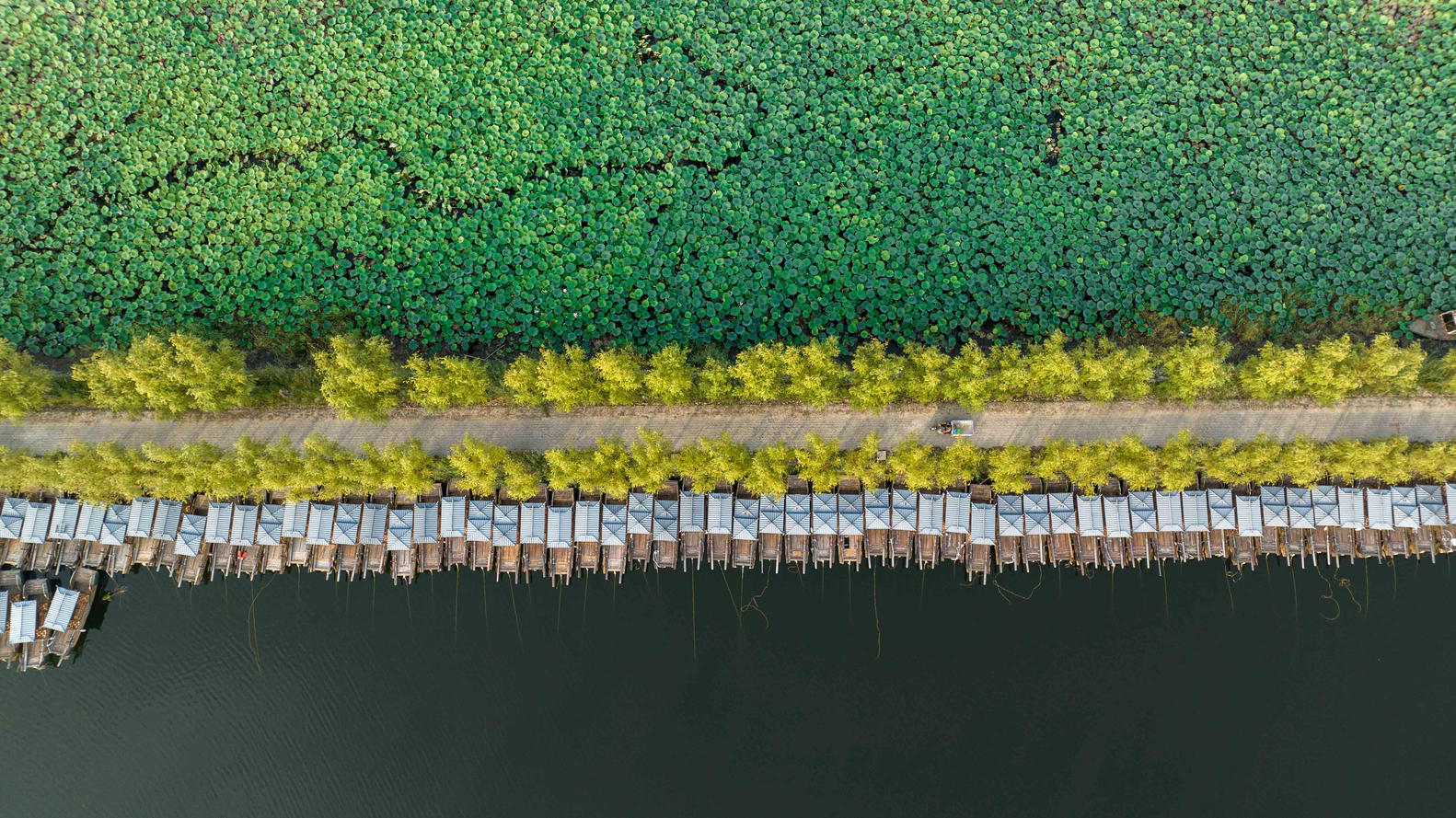
The design hopes to rely on the landscape pattern of lotus ponds and reed sea; interpreting the past and present of the "Baiyangdian Wharf" through a series of ecological embankments and new public wharves, solving modern flood and ecological problems.
设计希望依托荷塘苇海的风貌格局; 以一系列生态堤坝和新的公共码头来,来演绎“白洋淀码头”的前世今生,解决现代洪水和生态问题。
© Xiaohui Jin, Mu Yu
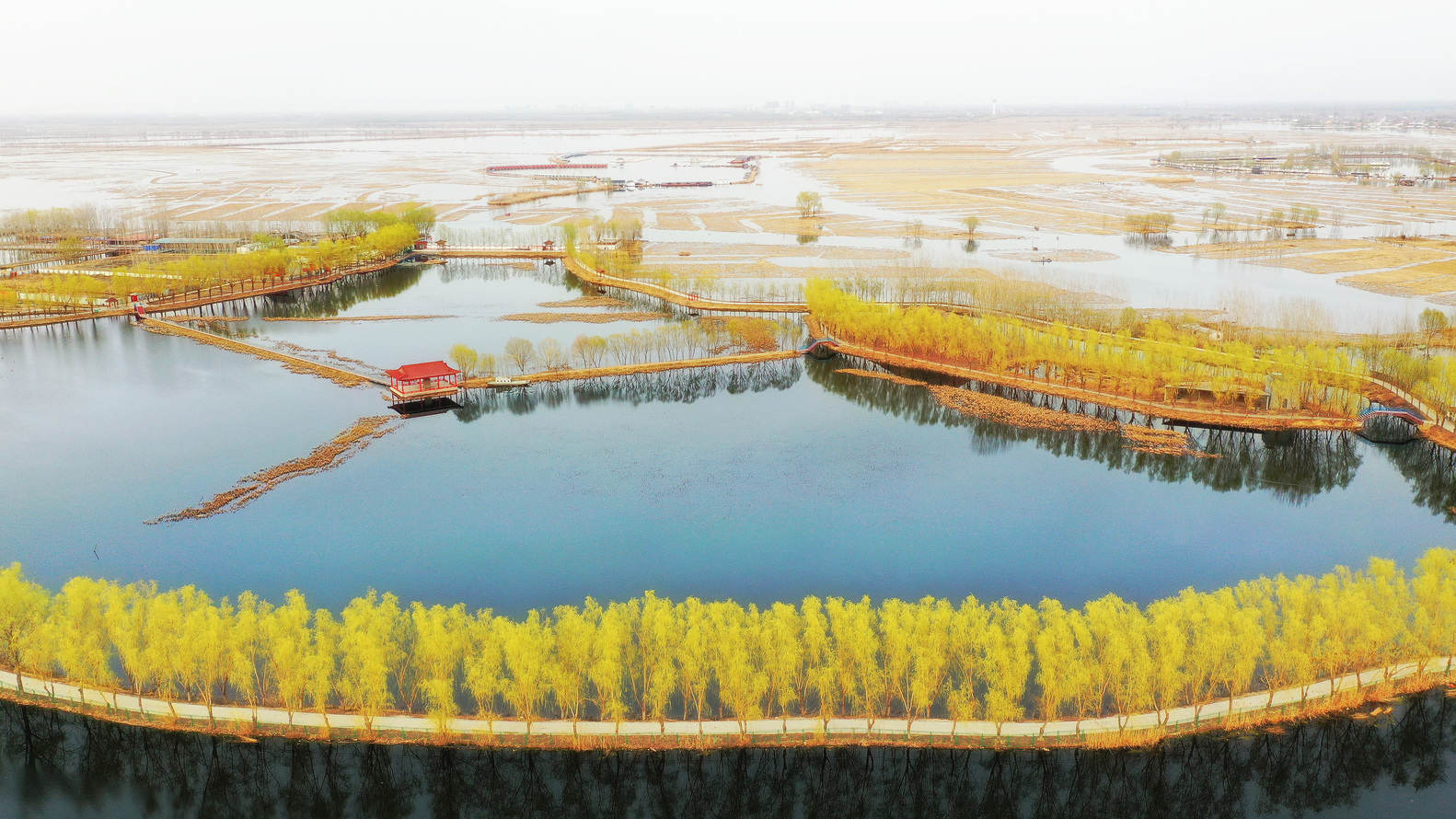
A small number of vast shallow lakes exist in northern China; Baiyangdian, the site of the new Xiongan New Area, is one of them and the largest freshwater lake. A watershed with nine rivers supplies water to the lake. Unlike ordinary lakes, the center of Baiyangdian is only 3 meters deep, making it extremely vulnerable to agricultural pollution from surrounding farms and the cycles of flooding and drought exacerbated by climate change. Usually, the pollution from a new city of one million people would worsen the surrounding environment, but the Baiyangdian area is the exact opposite.
中国北部有少量广阔的浅湖;雄安新城旧址白洋淀就是其中之一,并且是最大的淡水湖。一个有九条河流的区域分水岭为湖泊提供水。区别于一般湖泊,白洋淀它中心深度只有 3 米,极易受到周围农场的农业污染以及因气候变化而加剧的洪水和干旱循环的影响。通常一个百万人口的新城市的污染会使周边环境变得更差,但白洋淀区域恰恰相反。
© Xiaohui Jin, Mu Yu
© Xiaohui Jin, Mu Yu
© Xiaohui Jin, Mu Yu
Through regional efforts, the water input of the basin has been successfully purified, and the runoff of the new city is widely managed and recycled within its own system before only clean freshwater is injected into the lake. This new hydrological stability allows the lake to begin cleaning its waters and sediments again through lush native reeds and lotus flowers. This once again proves its importance as an Asian migratory route; the lake and surrounding forests are home to a wide variety of birds as well as aquatic mammals and fish—the lake will be vibrant again in the future.
通过区域性的努力,流域的水源输入已经被成功的净化,新城市的径流在其自己的系统内得到广泛的管理和回收,然后只将清洁的淡水注入湖中。这种新的水文稳定性允许湖泊通过茂盛的原生芦苇和莲花开始再次清洁其水域和沉积物。这再次证明了它作为亚洲迁徙路径的重要性,湖泊和周围的森林是种类繁多的鸟类以及水生哺乳动物和鱼类的家园——湖泊未来将再次充满生机。
© Xiaohui Jin, Mu Yu
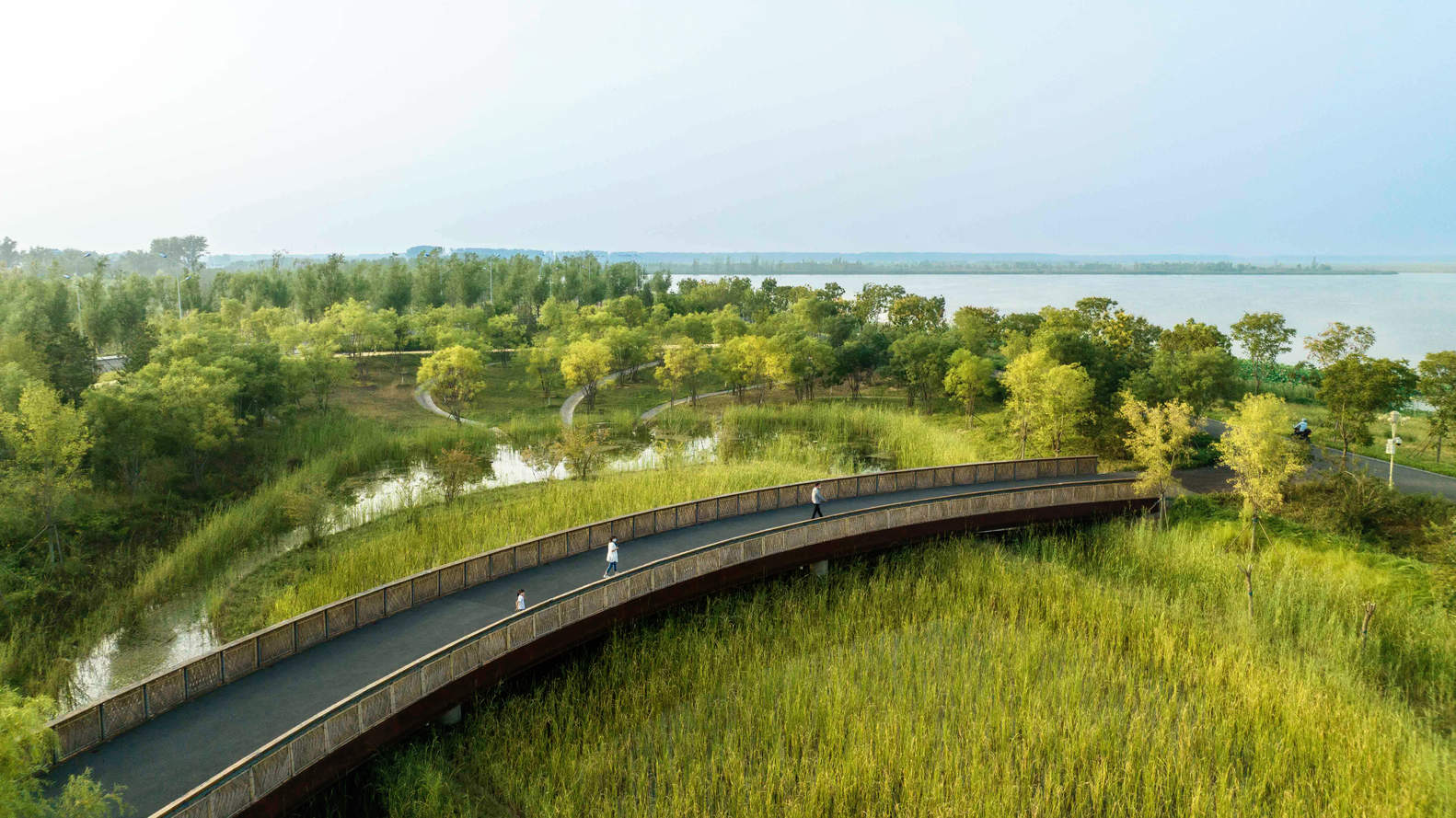
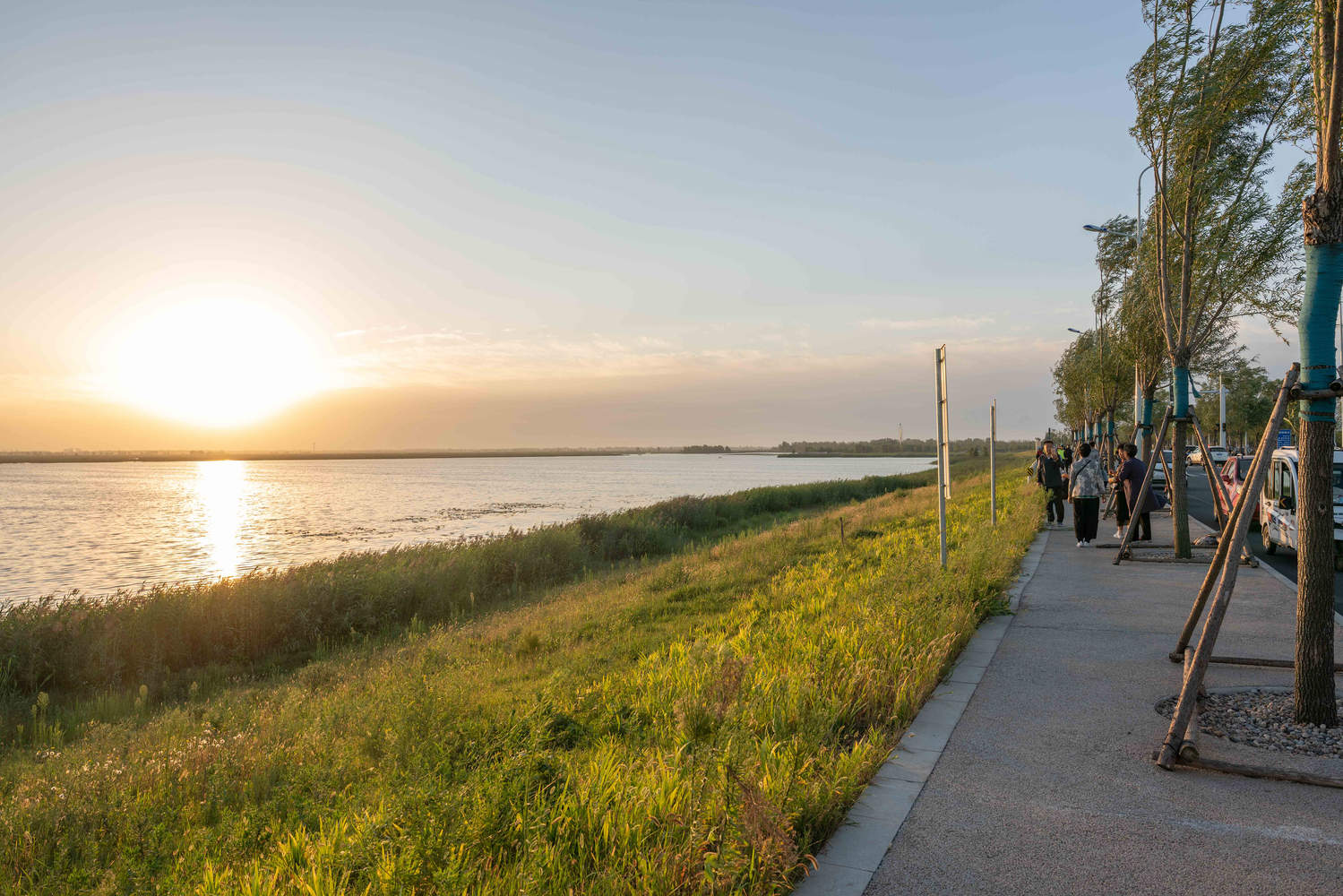
Baiyangdian has a long cultural history; local people have historically relied on fishing, reed weaving, and picking lotus roots for their livelihood. To this day, not only do local people enjoy boating through the maze-like channels among the reeds and open water, but tourists from all over the world also hope to penetrate deep into the lake area to experience the style of this northern pearl. Therefore, our design will retain the main function of the wharf to meet the desires of local residents and tourists for natural experience and recreation. They enjoy hiking, running, and cycling along the network of embankments and shores, some of which extend into the reeds and water. In this way, the restored lake can become the main ecological facility and open space for the new city, integrated with urban renewal and renovation, rather than being destroyed by urbanization.
白洋淀拥有悠久的文化历史,当地百姓历史上就以捕鱼、芦苇编制和采摘莲藕等为生活来源。时至今日,不仅当地人喜欢通过芦苇和开阔水域在迷宫般的渠道中划船,来自四海八方的游客更是希望能够深入淀区,深度感受这北方明珠的风采,由此我们设计将会保留码头这个主要功能,以满足当地居民以及游客对自然体验和和休闲娱乐的渴望。他们喜欢沿着堤坝和堤岸网络远足、跑步和骑自行车,其中一些堤坝延伸到芦苇和水中。这样,恢复后的湖泊就可以成为一个新城市的主要生态设施和开放空间,而不是被城市化破坏,而是与城市化改造和更新融为一体。
© Xiaohui Jin, Mu Yu
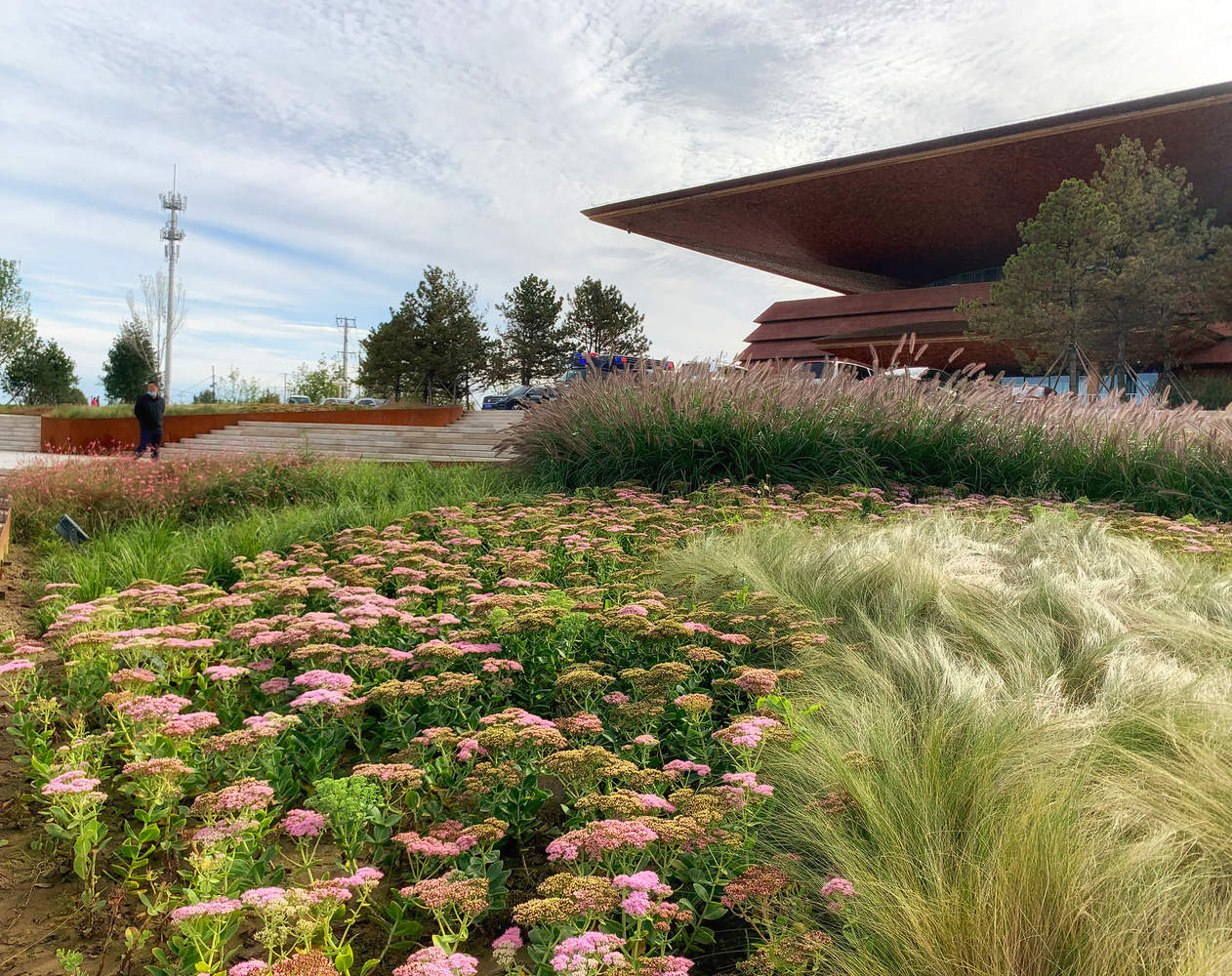
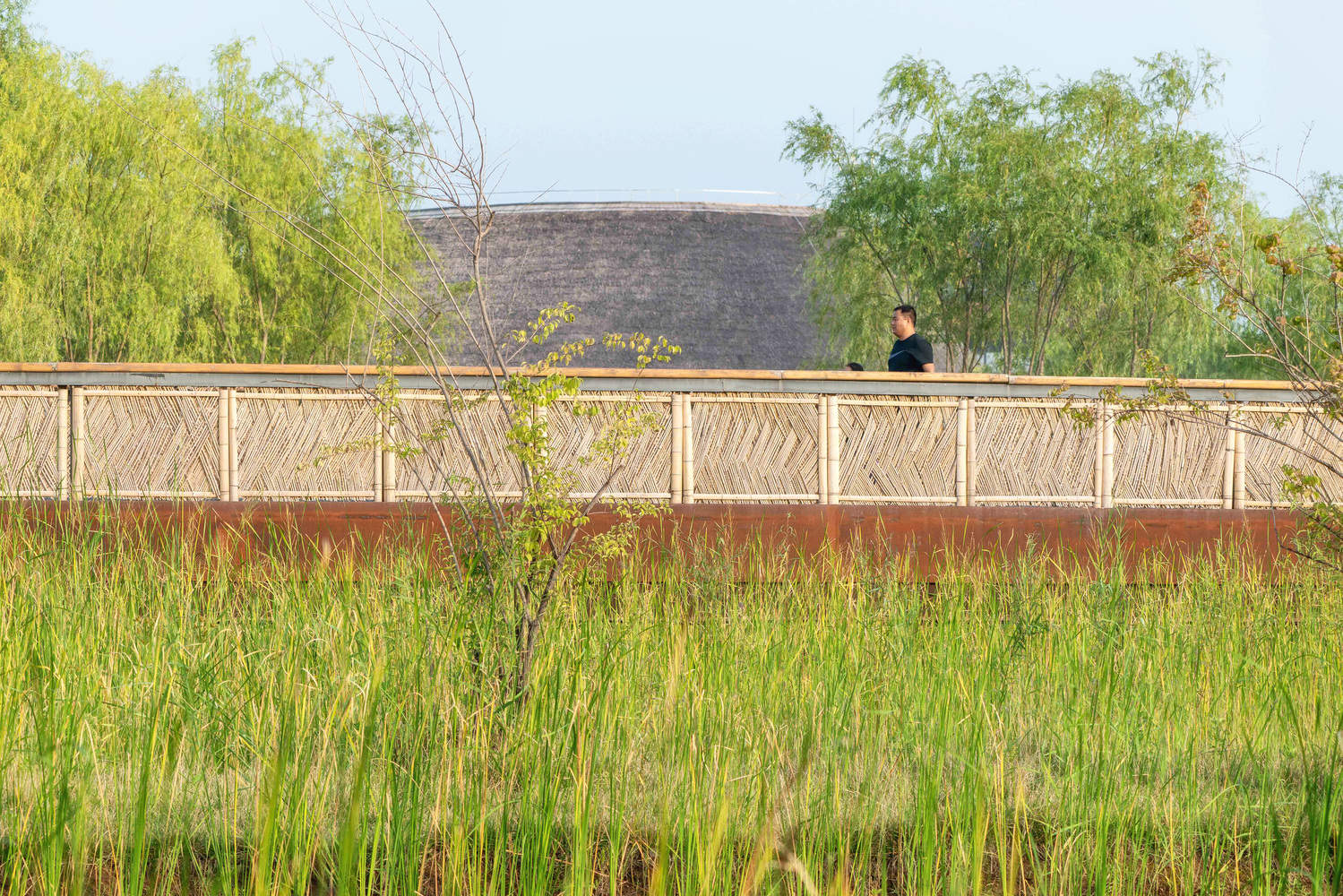
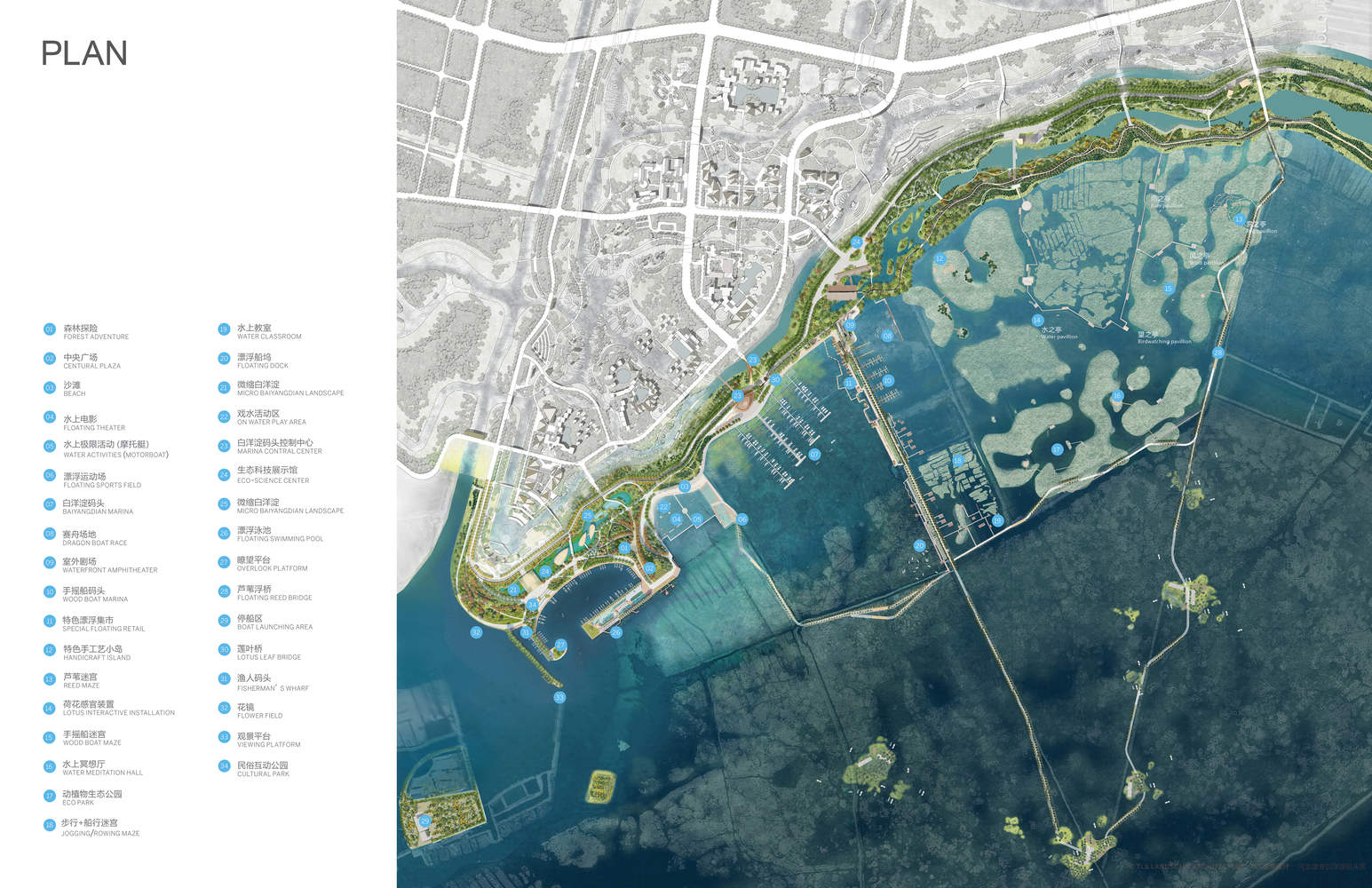
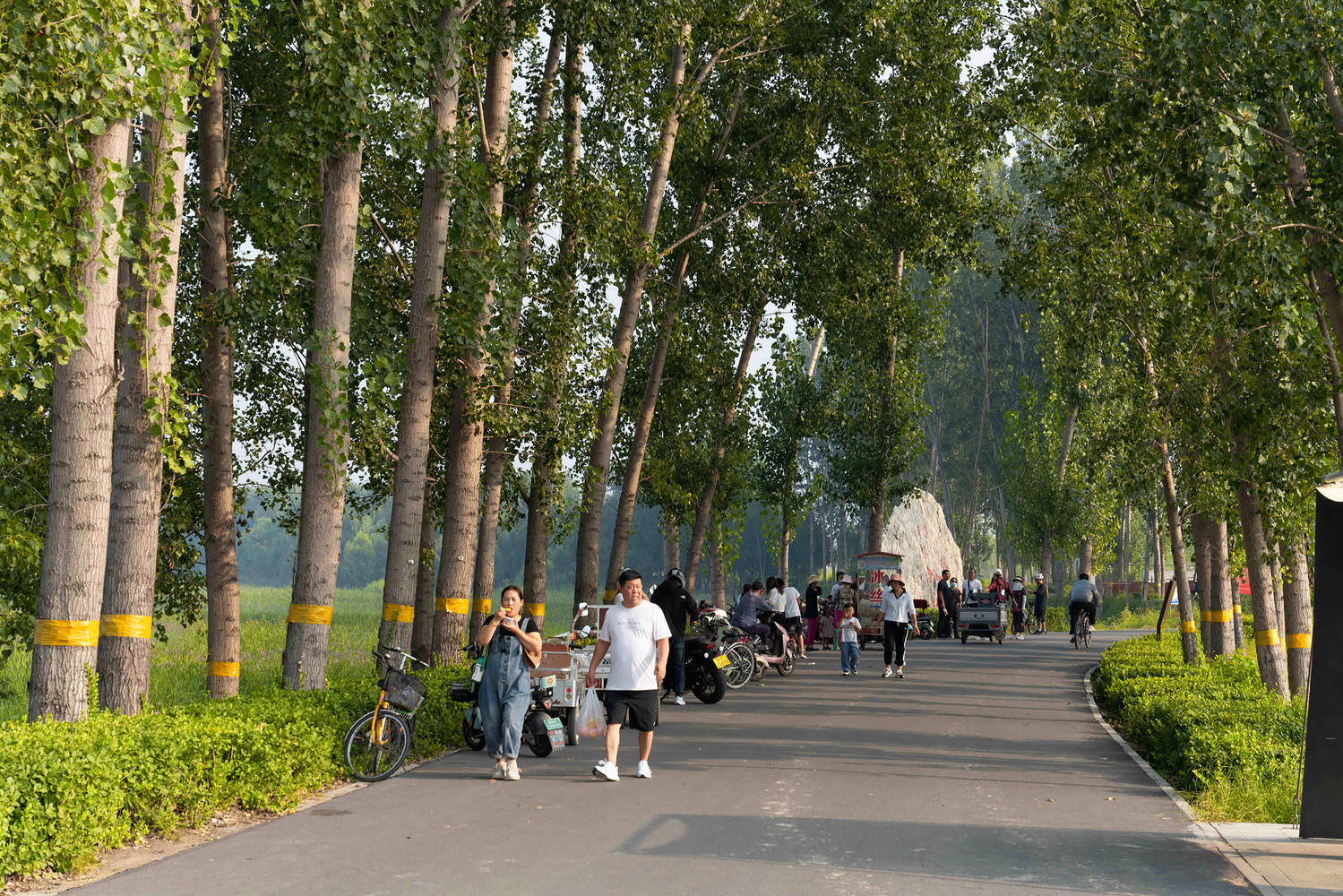
The new Baiyangdian Waterfront Park opened to the public last year, featuring a series of reed-roofed pavilions filled with exhibits and historical demonstrations. The landscape surrounding the buildings is composed of a "Miniature Baiyangdian" vitality zone and a series of characteristic landscape bridges, which concentrate the display of Baiyangdian's "dike enclosure," "ecological embankment," and "reed marsh" reed weaving art. This serves as a "preview" for tourists before they enter the lake area by boat, allowing them to browse all the ecological scenes and key species of the Baiyangdian area in advance. The ecological embankment and wharf project is the first natural system project for public open space in Xiongan, powerfully demonstrating the primary principles of the new city's ecological priority and construction.
新的白洋淀滨水公园从去年开始向公众开放,其中包括一系列充满展品和历史示范的芦苇屋顶。建筑周围的景观由“微缩白洋淀”活力区与一系列特色景观桥梁组成,将白洋淀“围埝”“生态堤”“芦塘苇海”芦苇编织艺术集中展示,是游客划船进入淀区前的一个“预演”,提前浏览白洋淀区域所有的生态场景和主要物种。生态大堤和码头项目是雄安的第一个公共开放空间的自然系统项目,有力地展示了新生态优先和新城市建设的首要原则。
© Xiaohui Jin, Mu Yu
Note: SOM and TLS teams collaborated to win the excellence award for the Xiongan New Area Start-up Zone in 2018. TLS began participating in the landscape design of the Baiyangdian waterfront area in 2019.
注:2018 年SOM 和 TLS 团队合作获得雄安新区启动区优胜。 2019年开始,TLS开始参与白洋淀滨水区景观设计。