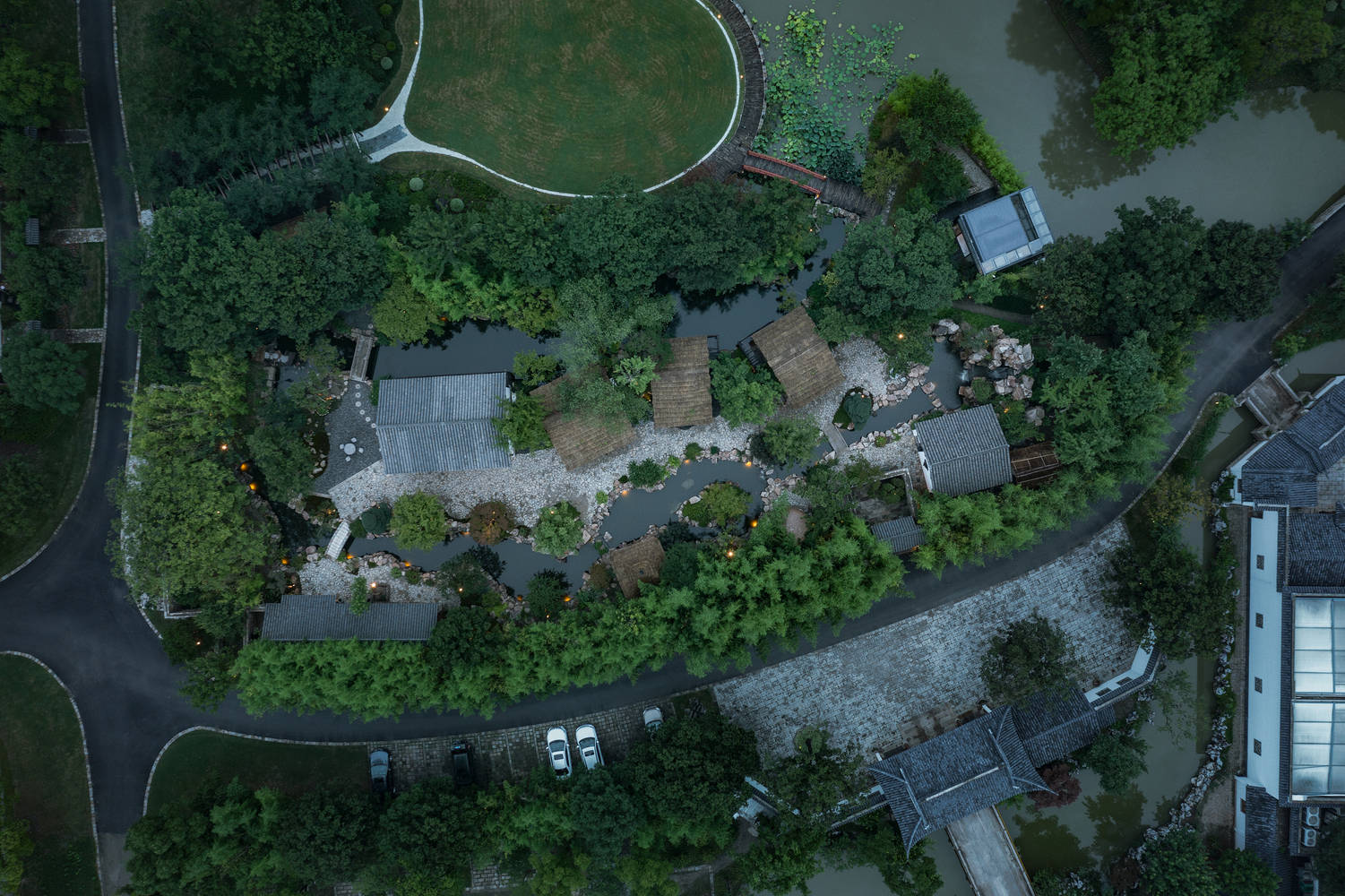
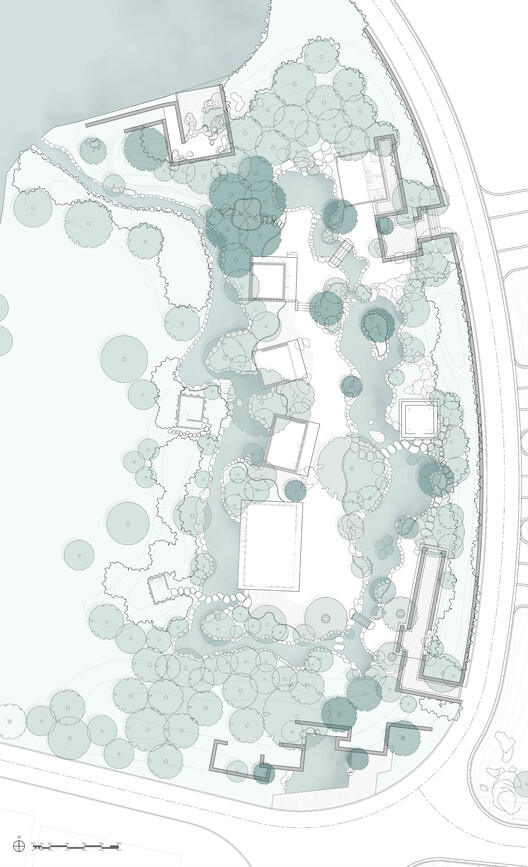
文脉传承与空间叙事:该项目以王羲之《兰亭集序》中的“上巳雅集”为核心概念,巧妙地将古典文人精神与现代景观设计相结合。通过一条U形水系组织主要户外活动流线,使得茶室依水而设,形成了富有层次感的空间序列。入口设计尤其精妙,采用“递进式”体验,从北入口经过月洞门进入,再通过南入口的阴翳山野过渡,最终豁然开朗进入园内旷地,这种空间转换极大地增强了到访者的场所感和情绪张力。
沉浸式“山野”环境营造:设计精心地通过景观元素的组织,实现了对外部环境的有效切分和内部“山野”氛围的纯粹营造。通过水系、植物、假山和地形的综合运用,将场地四面自然地围合起来,实现了“俗则摒之”的意境,使视线牢牢锁定在园内的景致之中。特别是对“茂林修竹”的模拟和对“崇山峻岭”的象征性表达,确保了访客始终处于一种高度沉浸式的自然体验中。
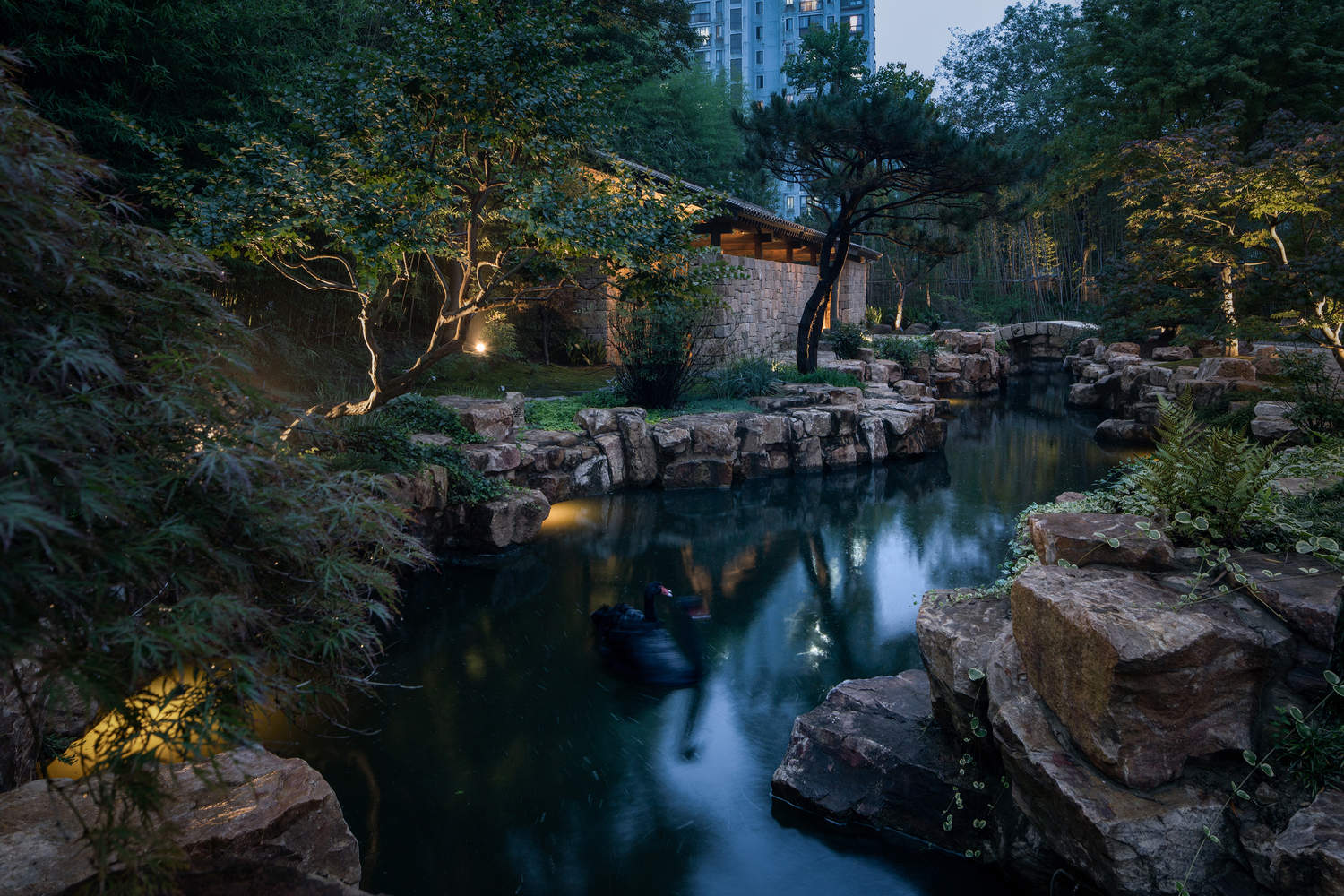
材料语汇与当代文人园林的反思:在材料和工艺选择上,项目坚持回应“山野自然”的主题。大量采用黄石和毛石,展现了粗粝的“野趣”,茶室的茅草顶进一步模糊了建筑与环境的边界。植物配置上以杂木和苔藓为主,强化了林间氛围。这种对传统文人审美和材料的当代转译,不仅是对古典园林精神的致敬,更是在探讨当代语境下,人与水、人与自然关系的再定义,具有深刻的理论和实践意义。
The concept for this garden originates from the elegant gathering at the Shangsi Festival described in Wang Xizhi's Lantingji Xu (Orchid Pavilion Preface) a thousand years ago, which expressed his contemplation on the impermanence of life through the beauty of mountains, waters, and joyful sentiments.
这次的造园概念正是来自于这场雅集。整体布局沿一条U形水系展开,园内户外活动沿水岸展开,茶室依水而落,自由布置
© 吴清山
© 吴清山
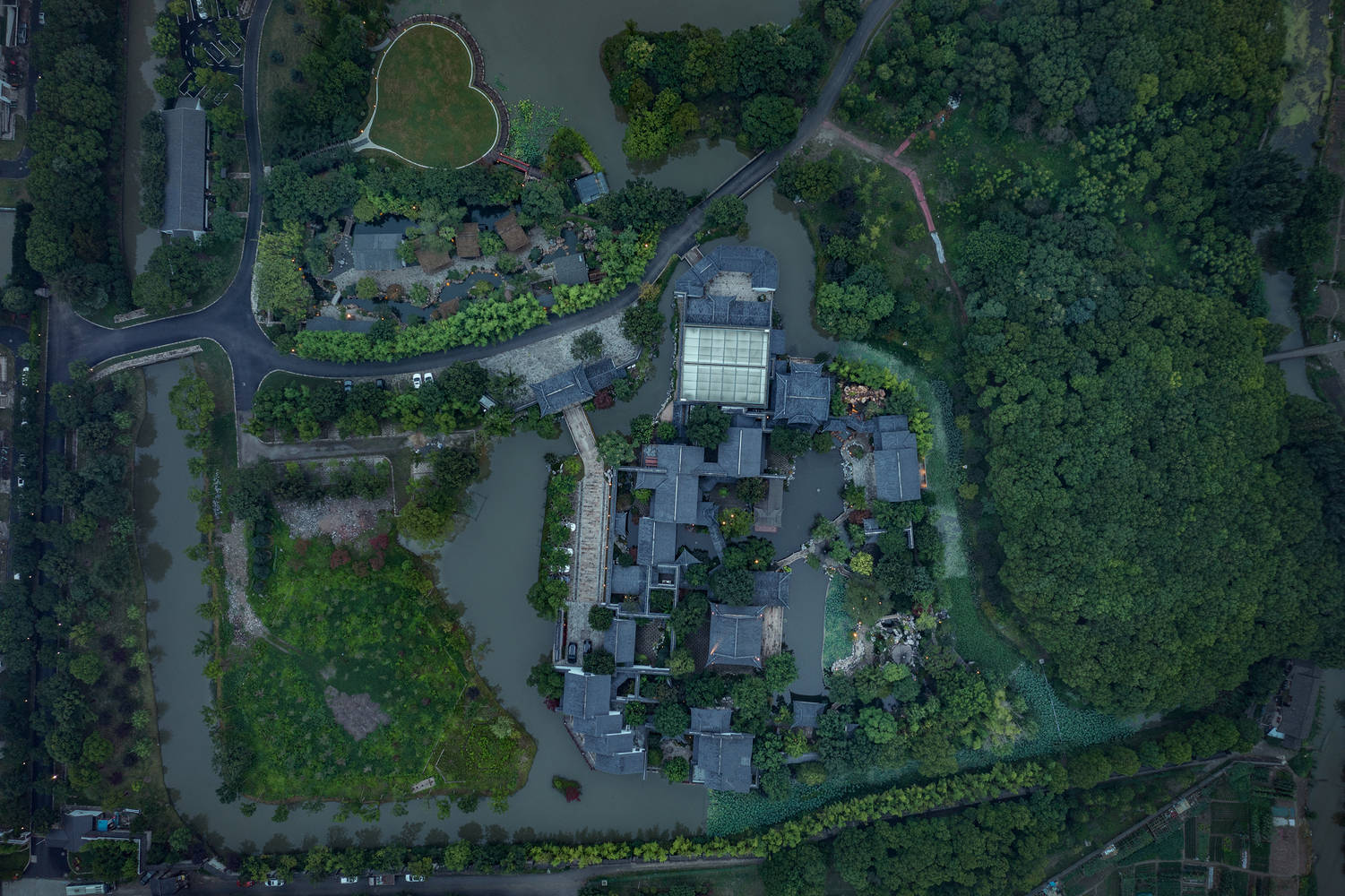
The project is located in the Juyuan area, north of Jiading Ancient City, approximately 2 kilometers away from the ancient city center. The east and south sides of the site border internal roads, while the northwest side is adjacent to water.
项目位于嘉定古城北侧的菊园片区。离古城大约2公里。场地的东侧和南侧是内部道路,西北侧临水
© 吴清山
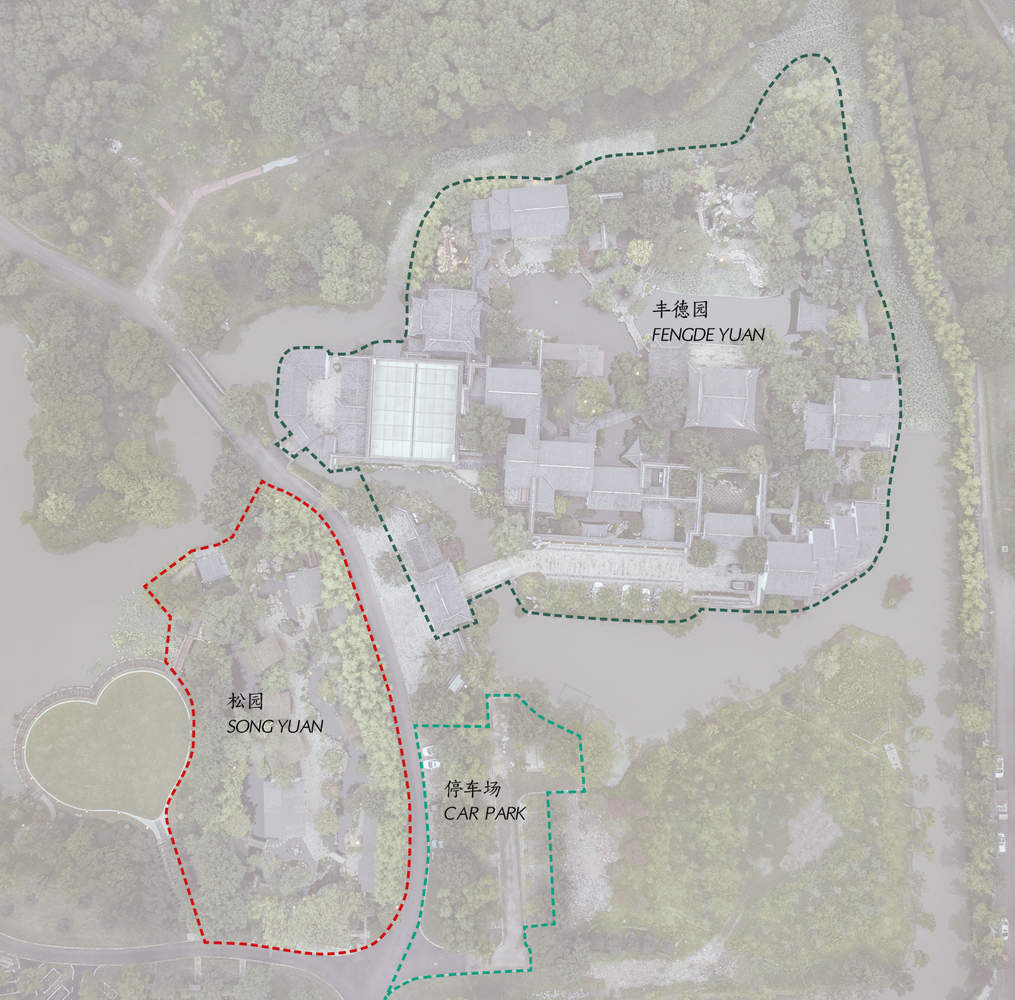
General Site Plan
© 吴清山
© 吴清山
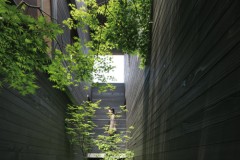
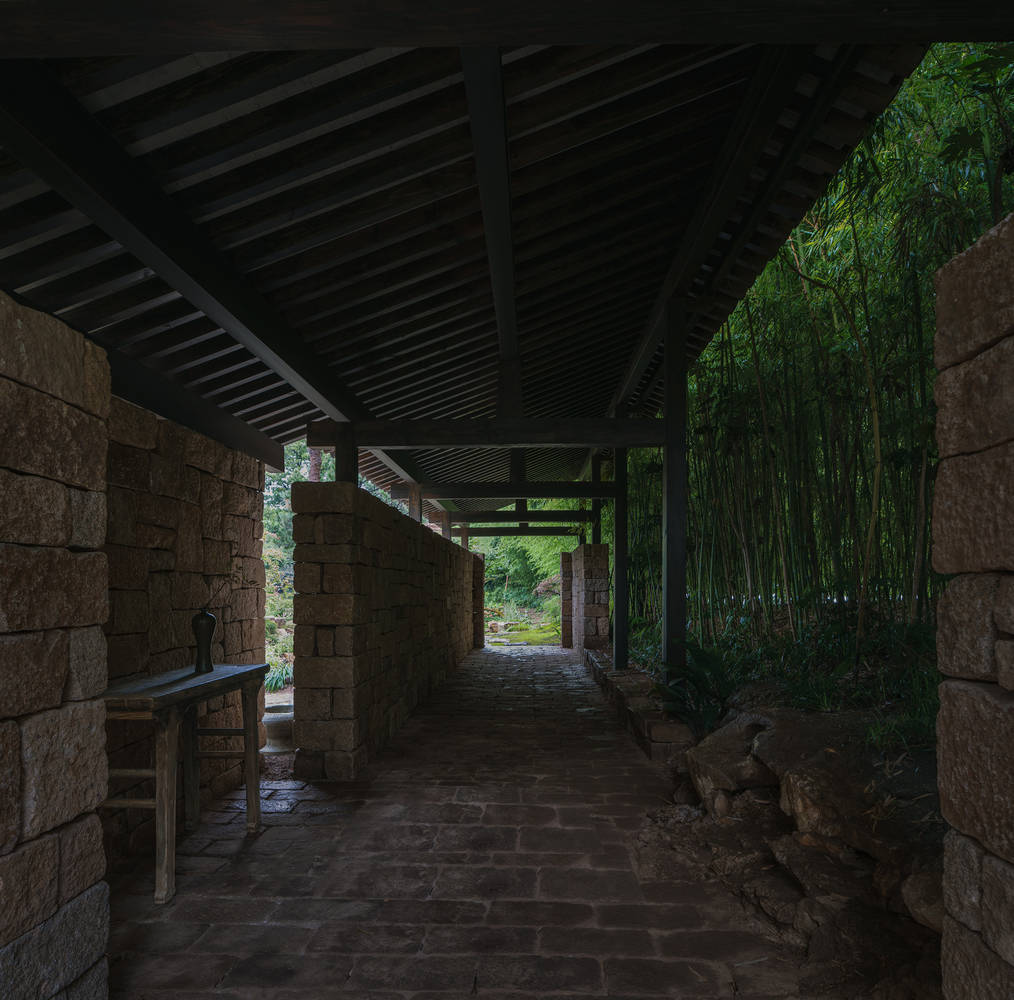
The North Entrance serves as the main entry. Visitors enter the garden by passing through a moon gate from a small courtyard to the south, creating a sequential, "progressive" experience. The South Entrance corresponds to the parking lot on the east side of the road. To prepare visitors for the subsequent experience in the "wild, natural land" within the garden, an initial feeling of shadowed, wild mountain entry is created. After passing through this entrance corridor, one turns around to suddenly enter an open expanse of mountains.
北入口为主入口,从小院向南穿过一道月洞门进入园子,这样有一个“递进”式的体验。南入口对应着路东侧的停车场,为了给后续进入园内“山野自然之地”做铺垫,会先营造一种阴翳的山野进入体验。通过这个入口走廊后转头才能豁然进入山中旷地。
© 吴清山
© 吴清山
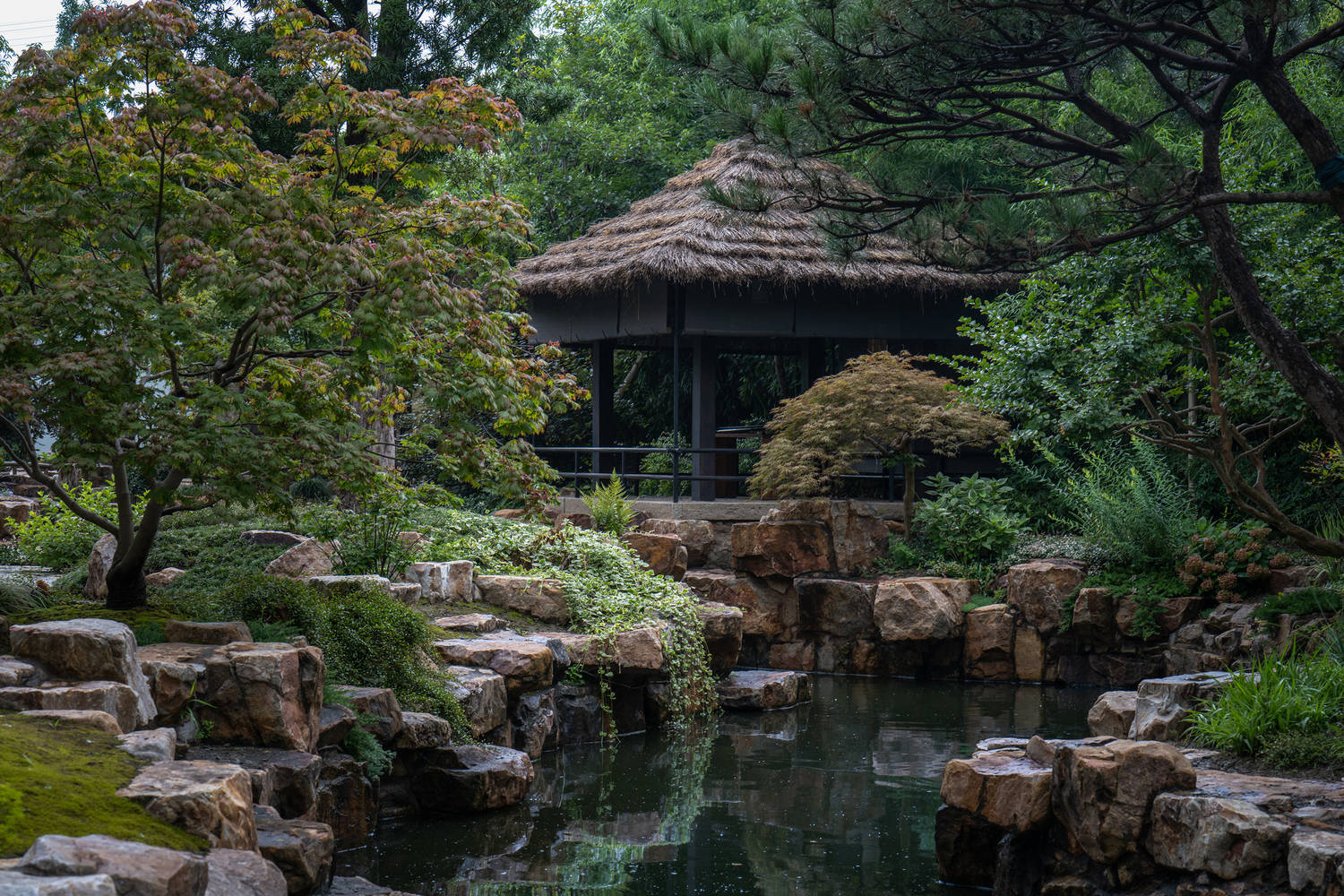
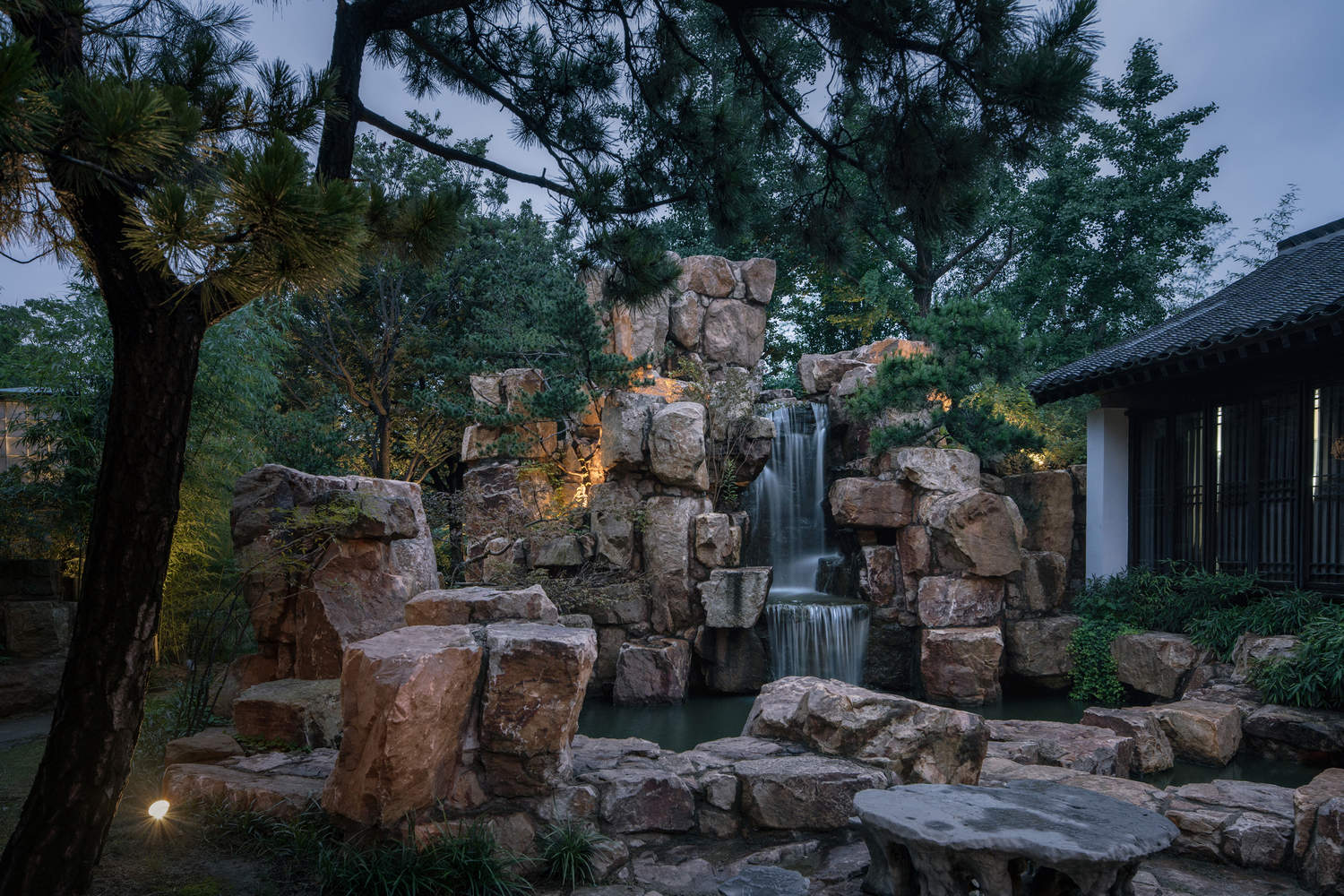
It is not difficult to see from various paintings of the Lanting theme that they all depict a waterside location in the suburban mountains and forests—"meeting at the Orchid Pavilion in Shanyin, Kuaiji..." The text's descriptions of "lofty mountains and steep ridges," "dense forests and tall bamboo," and "clear streams and rapid currents" are mainly expressed by the latter two elements in the visual presentation. Our further step to immerse visitors in nature is achieved by separating the external environment from the interior of the garden. The west side utilizes water features and vegetation, the north side has rockeries and topography, the south side is defined by plants, and the east side features "dense forests and tall bamboo." Thus, by utilizing "natural" elements, people are constantly immersed in the garden's "wildness." As stated in the *Yuan Ye* (The Craft of Gardens): "Reject the vulgar," we isolate a portion of the external environment so that, once inside the garden, one's sight is primarily drawn to the internal scenery.
从各种兰亭主题的绘画中也不难看出,其表现的也是在郊野山林的某个水边的场地——“会于会稽山阴之兰亭……”。文中的“崇山峻岭”、“茂林修竹”、“清流急湍”放在画面中也主要表现后两者。而我们进一步让到访者置身于自然的感受就是将场地外部的环境与园内做了切分。西侧利用水系与植物,北侧是假山与地形,南侧以植物,东侧则是“茂林修竹”。这样,利用“自然”的元素使得人们始终沉浸在园内“山野”里。如《园冶》所写:“俗则摒之”,我们将一部分外界环境隔离,身处园内,视线基本被园内景致所吸引。
General Site Plan
© 吴清山
Model View
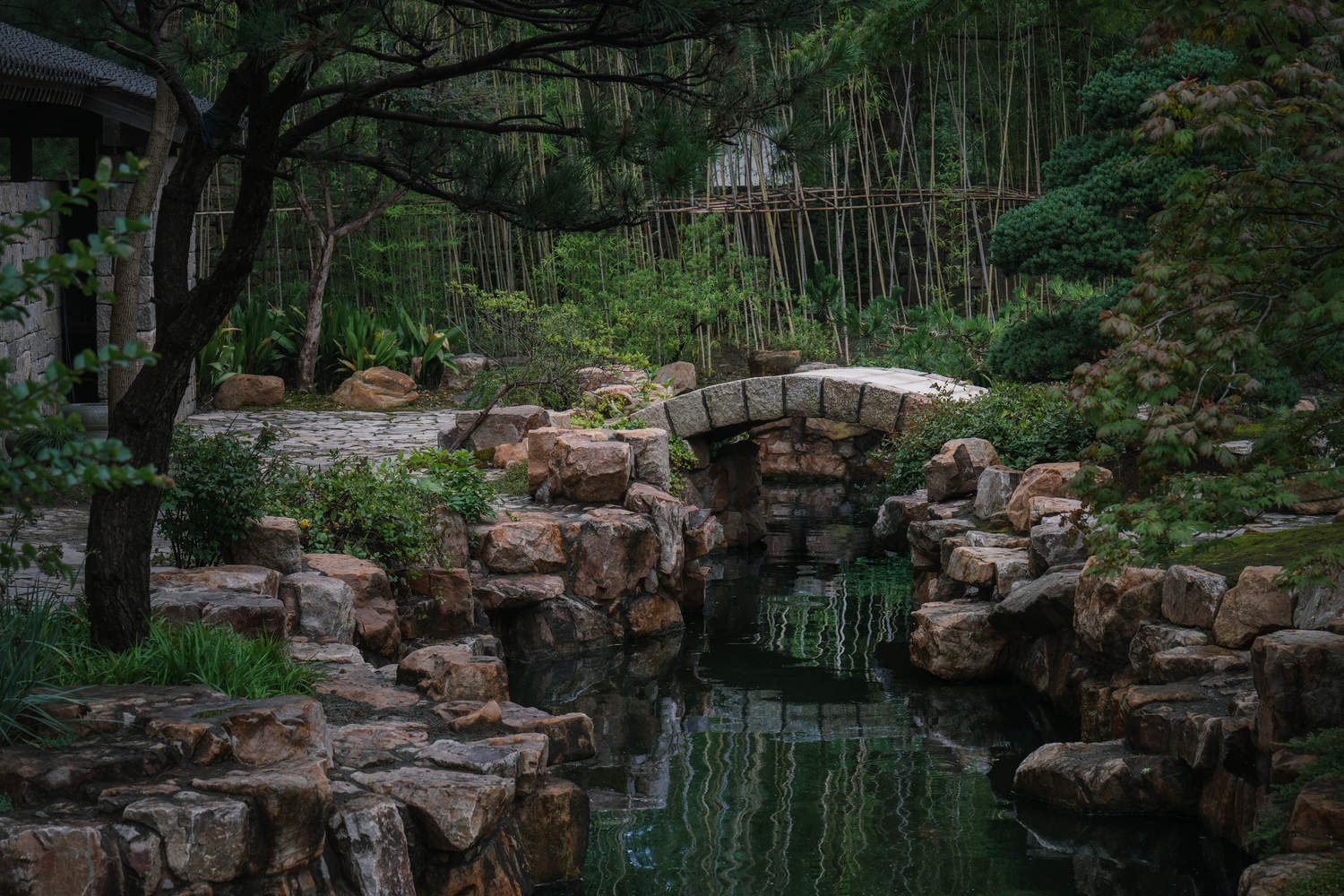
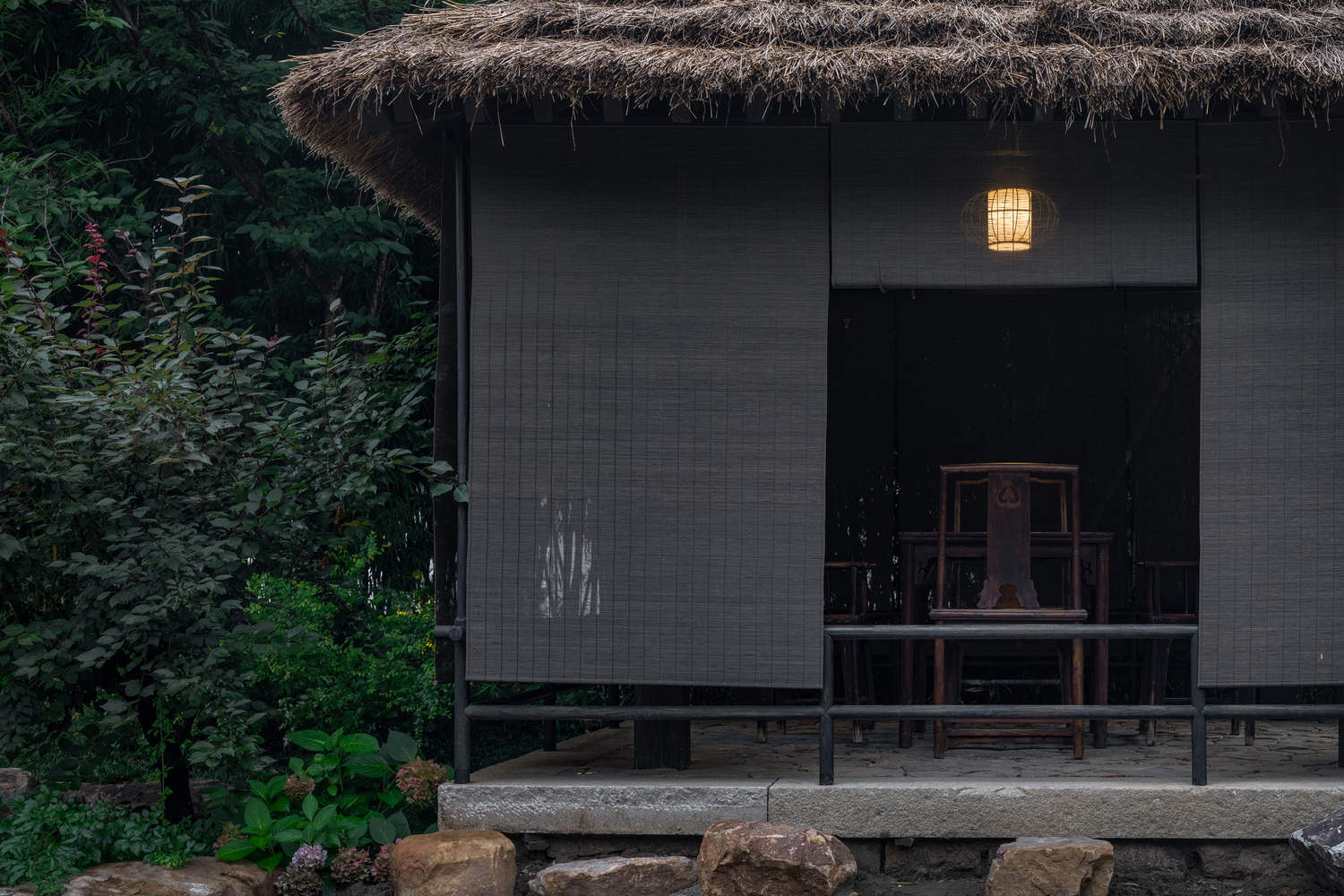
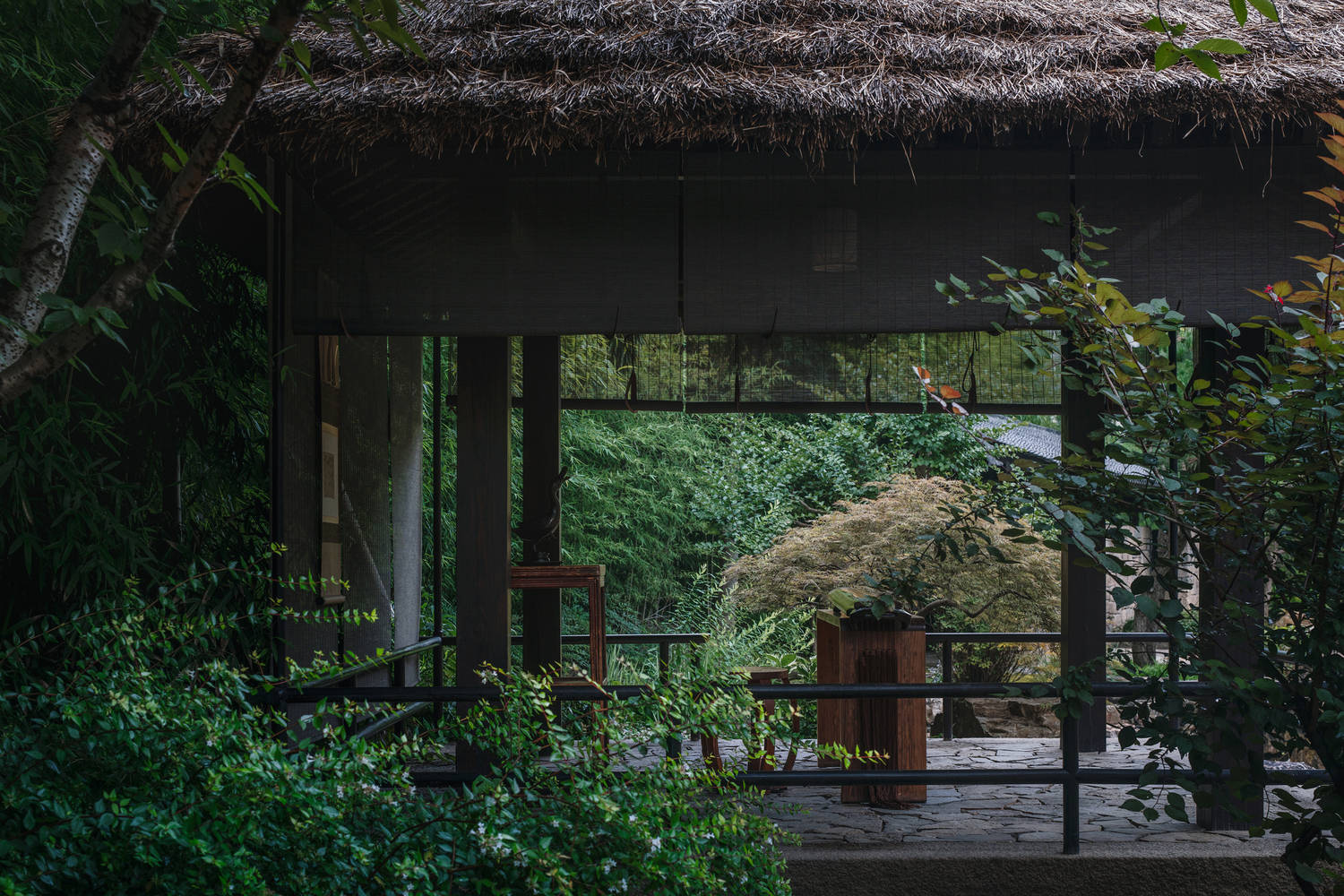
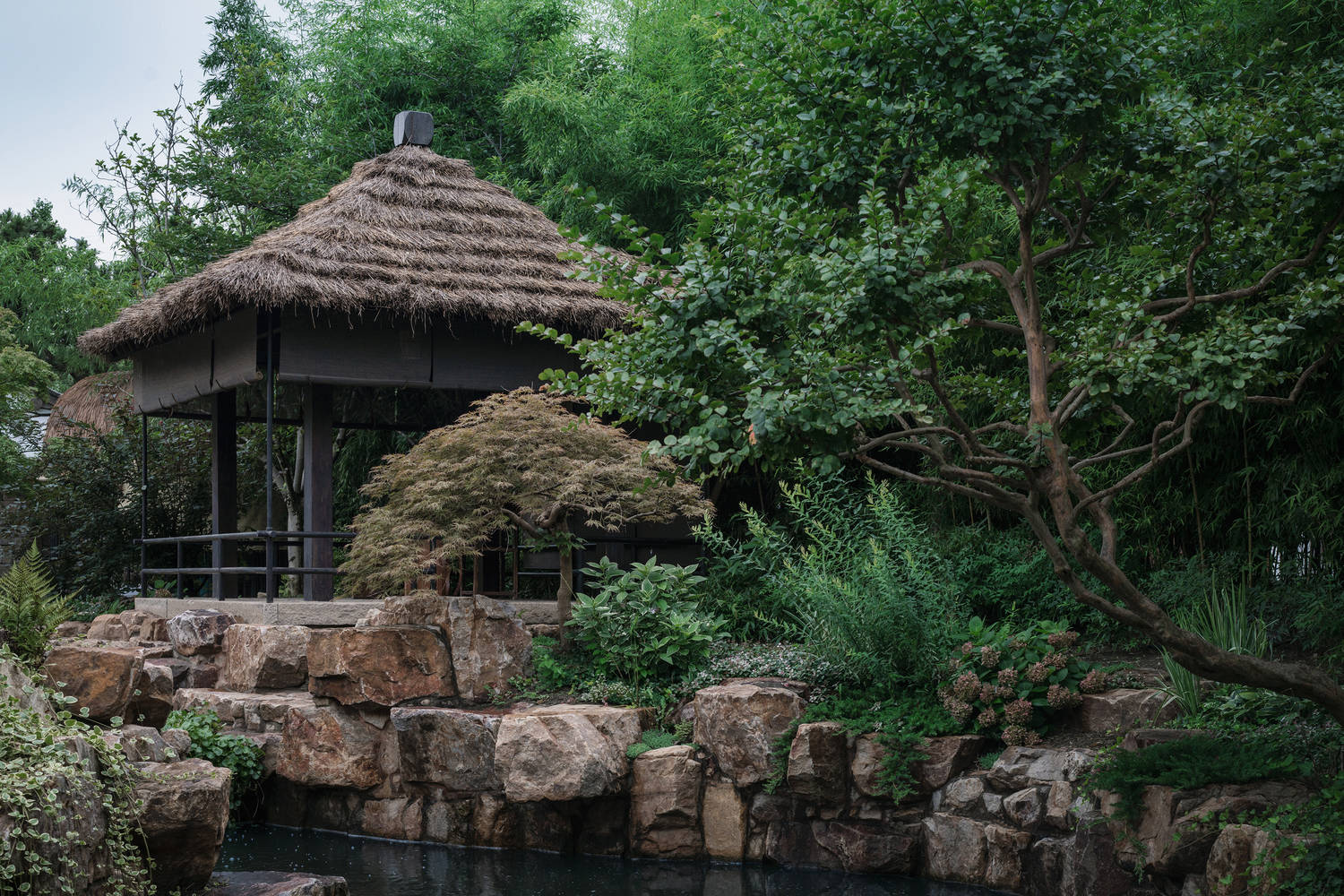
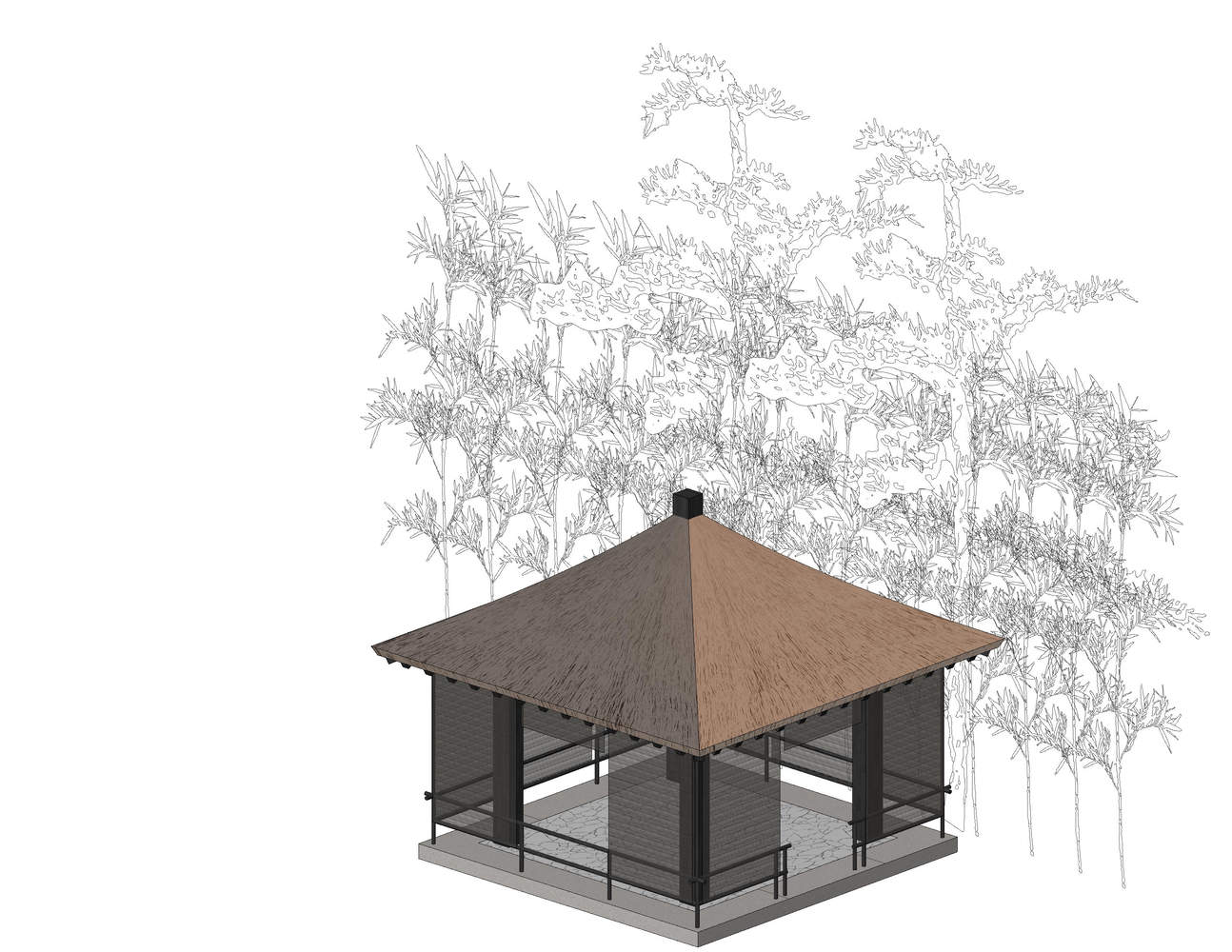
Similarly, in the selection of materials and construction methods, the principle of "wild nature" is consistently addressed. The stone used in the garden is primarily yellow rock, with rubble stone used for partial corridors and retaining walls; both express a "rustic charm." The roofs of the tea houses are mostly thatched, which helps integrate the architecture with the environment. For plant configuration, besides the Japanese Black Pine specified by the owner, the design mainly uses miscellaneous timber, and the ground cover utilizes moss, further enhancing the forest-like wildness of the environment.
同样,在材料的选择及工艺做法上,也始终回应“山野自然”。园内石料主要用的是黄石,局部廊道及挡土墙用的是毛石,两者都表现了“野趣”。茶室的屋面基本用的茅草顶,这也使得建筑与环境相融,植物的配置上,除了业主指定要安放的大阪松之外,以杂木为主,地被采用的是苔藓,这又增加了环境中的山林野趣。
© 吴清山
Ultimately, through this project, we hope to explore the relationship between people and water, and people and nature, within the context of literati culture, while also contemplating how gardens can be presented in contemporary times and what roles they might play.
最终,我们是希望通过这个项目探讨在文人语境里人与水、人与自然的关系,也思考了园林在当代的可以如何呈现以及可能扮演的角色。
© 吴清山