社区共生与灵活介入的典范:“Oishii 公园”项目成功地将一块私人田地转化为一个具有高度公共属性的“私人公共空间”,有效连接了相邻的“Youth Library ENGAWA”和周边社区,特别是面向小学的开放性,使其成为一个动态的社区学习与互动场所。其精髓在于以最小的干预激活现有空间,通过“播种、收获、吃、玩、学”的理念,赋予场地丰富的日常使用场景,体现了对地方文脉(如熊野的河流、瀑布、山脉)的抽象表达与场所精神的重塑,而非传统的宏大建筑叙事。
应对疫情挑战的创新建造策略:在 Covid-19 疫情的特殊背景下,项目展现了极高的适应性和前瞻性。通过将复杂的结构设计转化为易于非熟练工人操作的 DIY 建造流程,并创新性地采用“大学预制、当地组装”的模式,极大地减少了现场接触风险,保障了项目在特定社会环境下的顺利推进。这种将设计复杂性转化为建造易用性的策略,体现了对项目实施过程和社会责任的深刻考量,同时也为参与者提供了木工学习的机会。
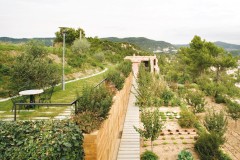
介于建筑与家具之间的尺度哲学:该项目超越了传统建筑的定义,定位为一个“小型设施”对现有场地的“微更新”。通过一个三维流动长凳作为核心元素,设计巧妙地平衡了形式美感(模仿自然地貌)与实用功能(聚集、阅读、停留)。这种尺度上的克制,旨在“稍微改善”场地而非彻底颠覆,体现了一种高度成熟的建筑哲学:即在尊重原有场所意义的基础上,通过精妙的设计介入,实现功能与体验的增值,是一种低成本、高效率的城市/社区家具化设计实践。
Seeding, harvesting, eating, playing, learning! "Oishii" means delicious in Japanese.
播种,收获,吃,玩,学!“Oishii”在日语中表示美味。
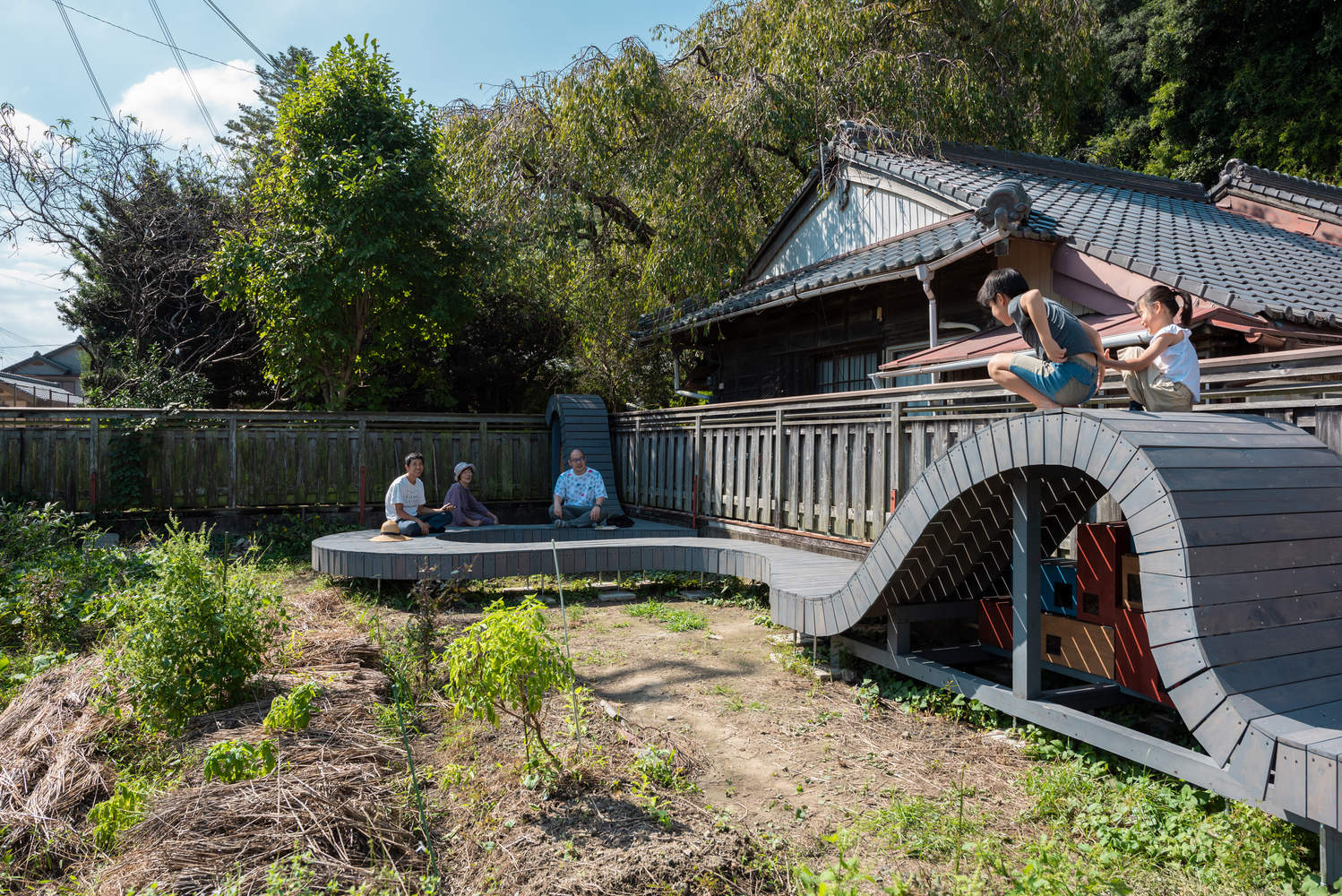
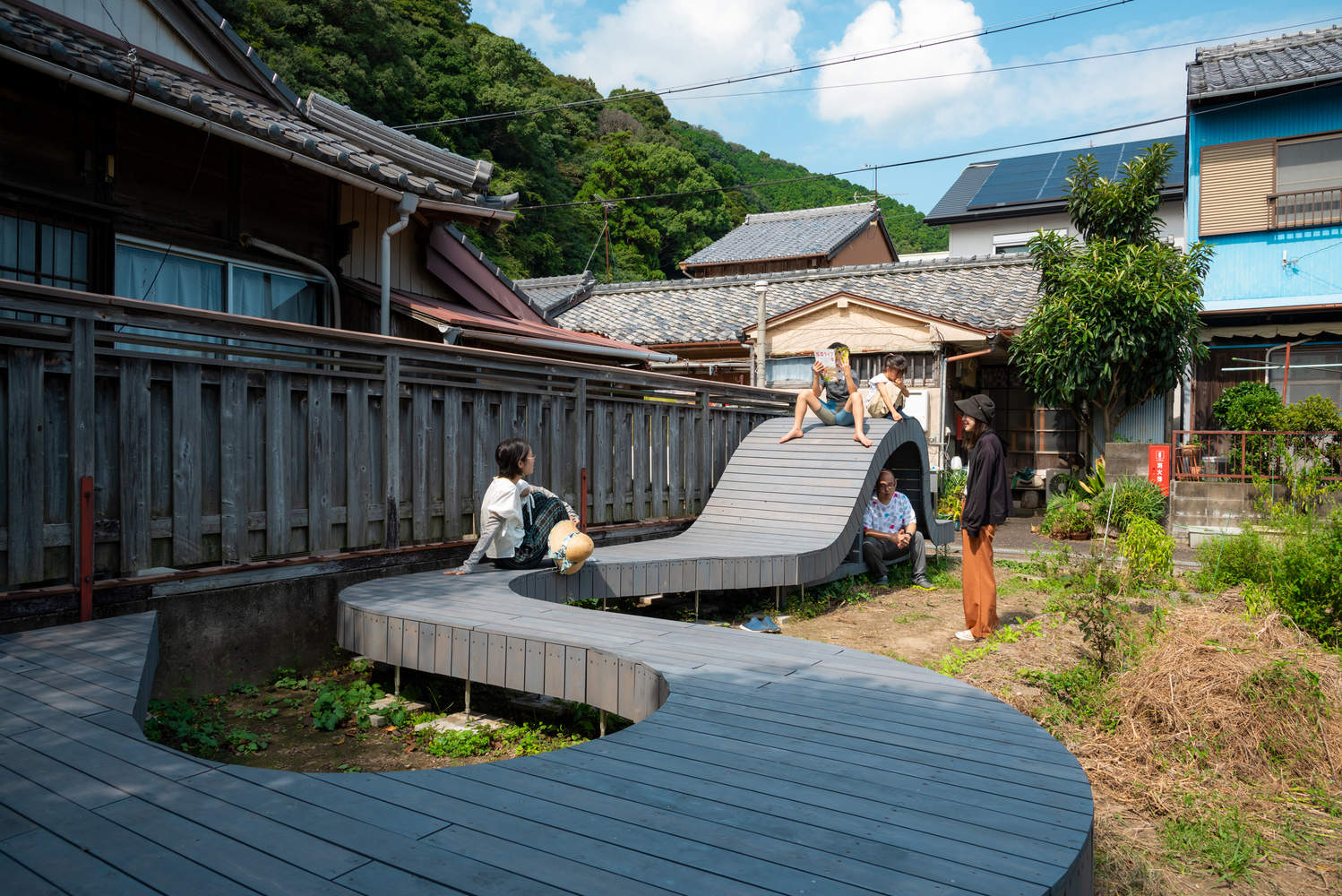
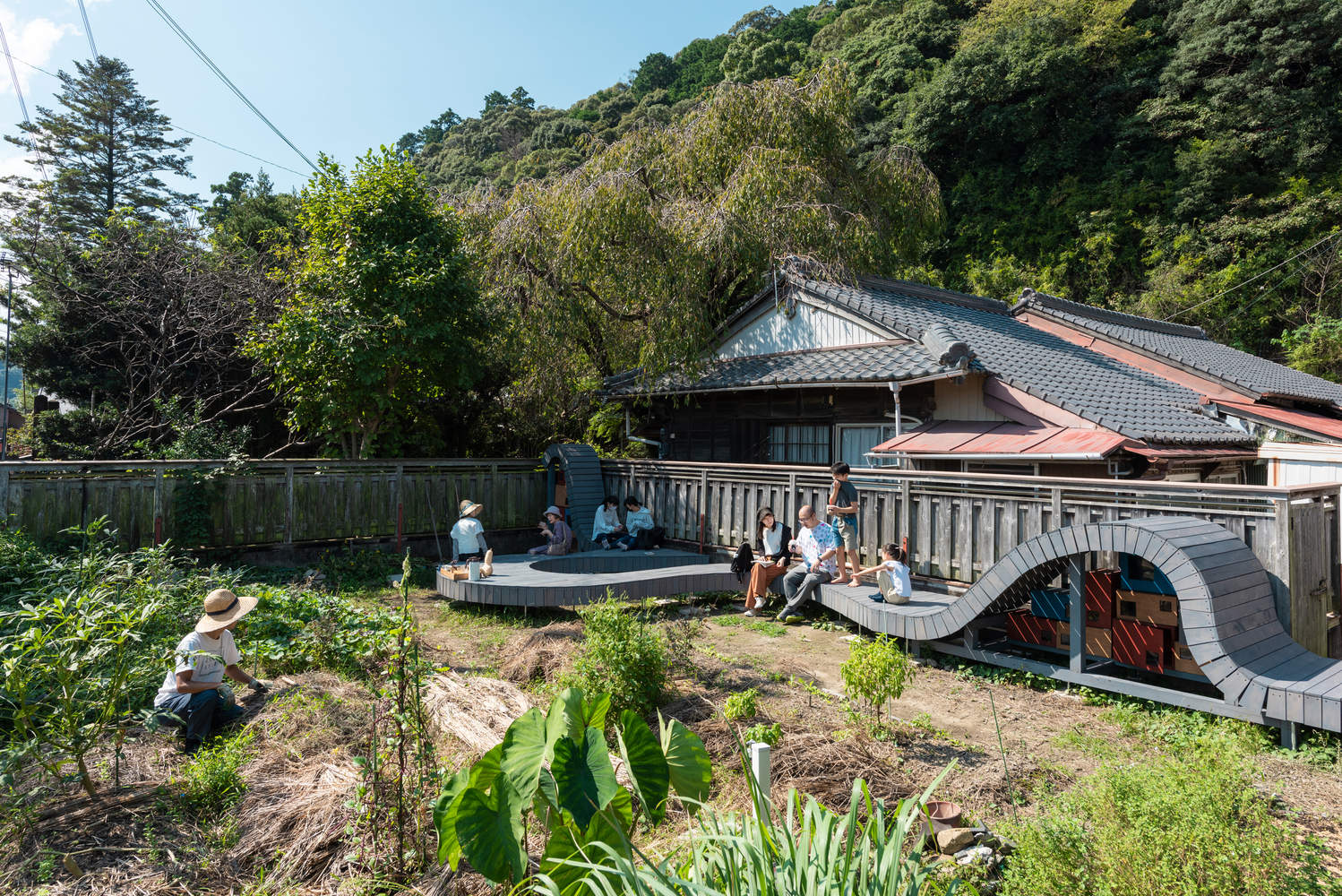
The project opens up a small plot of land in Shingu, Kumano, as a private public space (a park, a library). The site is two houses away from the "Youth Library ENGAWA," separated by a temple. Across the street is an elementary school, from which children can clearly see the place. The "Youth Library ENGAWA" opened in 2013 by renovating an old private house as a "library where you can stay." While providing accommodation for travelers, it also serves as an open public space for local residents, especially children.
项目将熊野新宫的一小块田地开放为私人公共空间(一个公园、一个图书馆)。场地距离“Youth Library ENGAWA”有两栋房子,隔着一座寺庙。街对面有一座小学,孩子们能清楚地看到这个地方。“Youth Library ENGAWA”在 2013 年开业,通过翻新旧民宅作为一个“可以住宿的图书馆”。在为旅客提供住宿的同时,它也为当地居民(尤其是儿童)提供了一个开放的公共空间。
© Matsumura Kohei
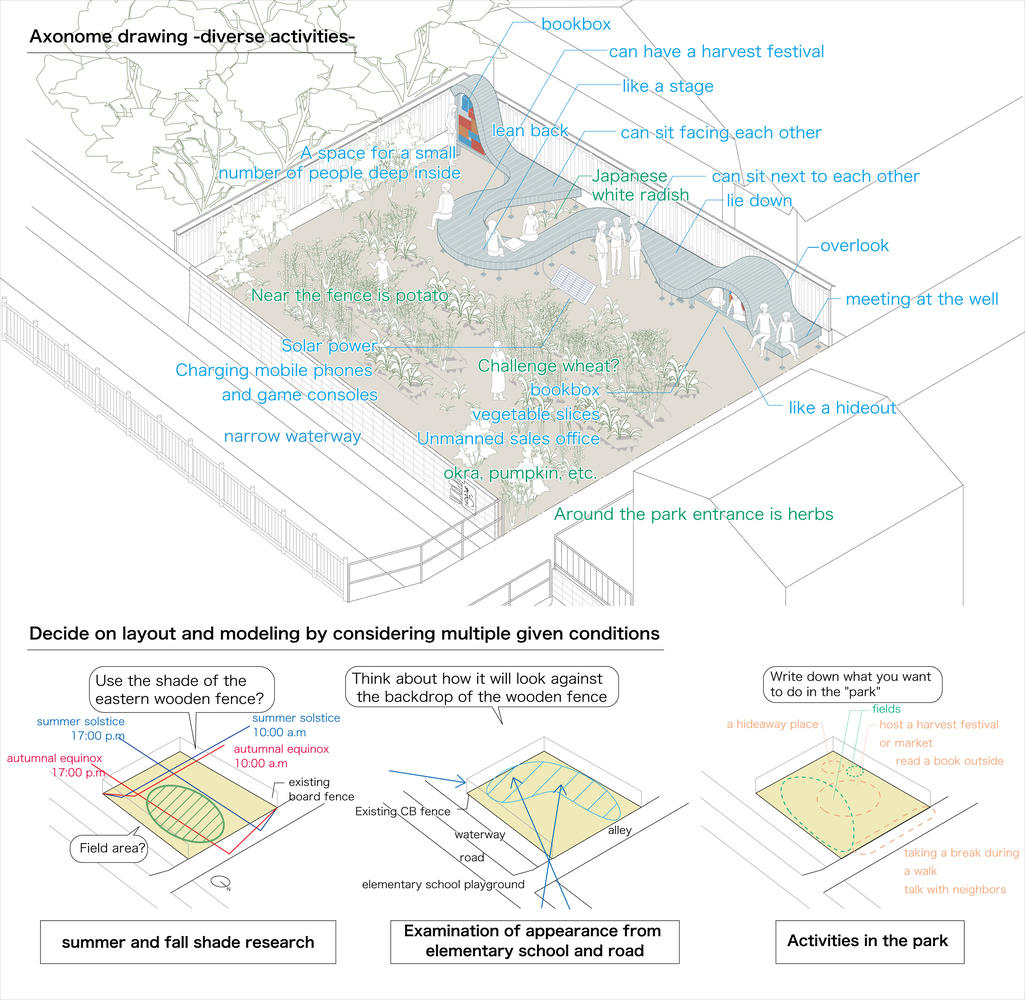
Axonometric view
轴测图
© Matsumura Kohei
In 2020, with the spread of Covid-19, the "Youth Library ENGAWA" began to consider new forms of outdoor public space. The concept that emerged was this "Oishii Park," opening the field as a park to the community and making it a place to read, connecting with the "Youth Library ENGAWA." We conducted extensive research on how to create a place where people can visit, gather, stay, read, and interact. We surveyed the changes in summer sunlight shadow positions, discussed what we wanted to do in "Oishii Park," and investigated how the park looks from the elementary school and the alley.
2020 年随着 covid-19 疫情扩散,“Youth Library ENGAWA”开始思考户外公共空间的新形态。浮现的构想是这个“Oishii 公园”,将田地作为一个公园向社区开放,并使其成为一个读书的地方,与“Youth Library ENGAWA”连接起来。就如何创造一个人们可以参观、聚集、停留、阅读和互动的场地,我们做了很多研究。我们调研了夏季日照阴影位置变化,讨论了在“Oishii 公园”我们想做些什么,调查了从小学和小巷看公园的样子。
© Matsumura Kohei
© Matsumura Kohei
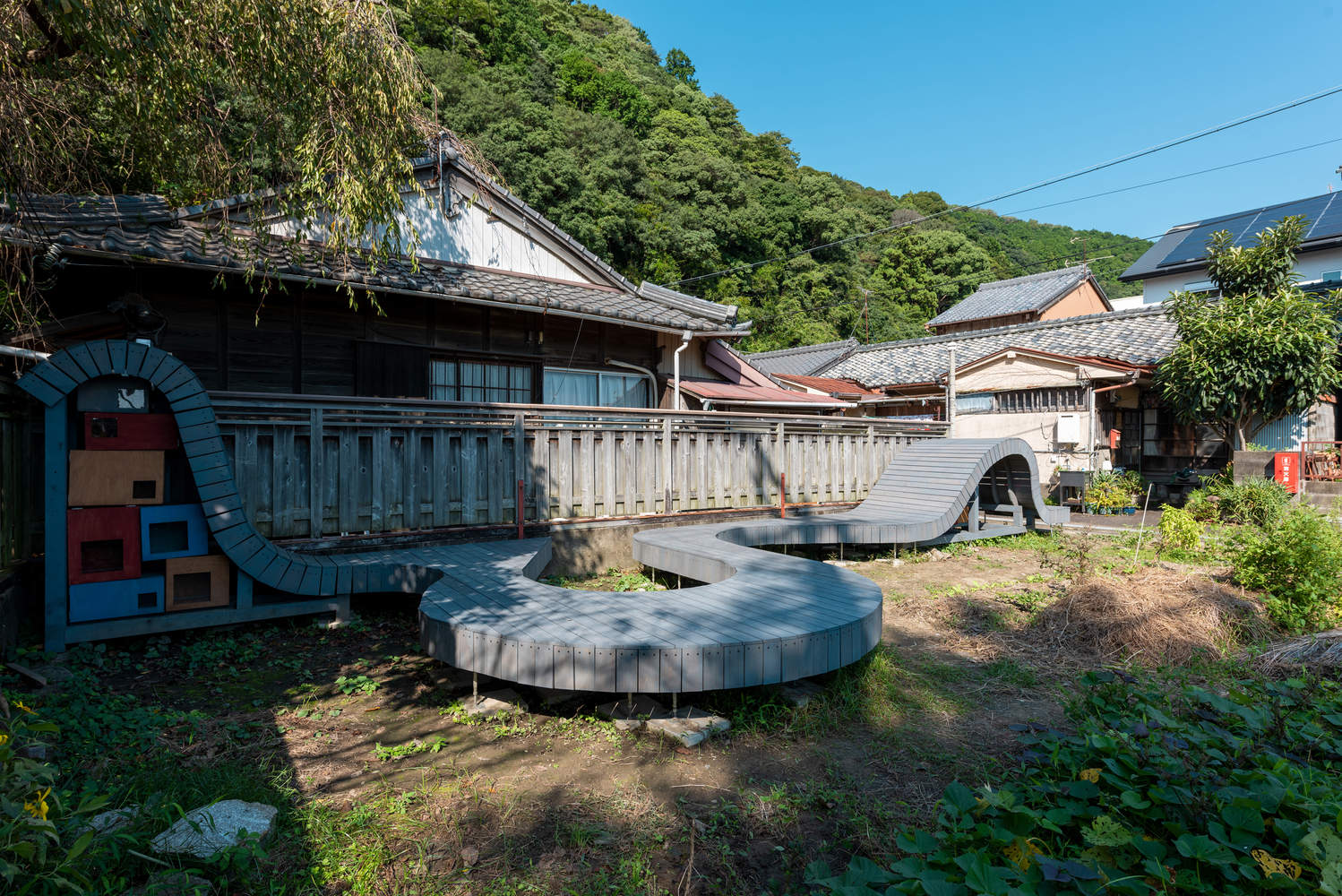
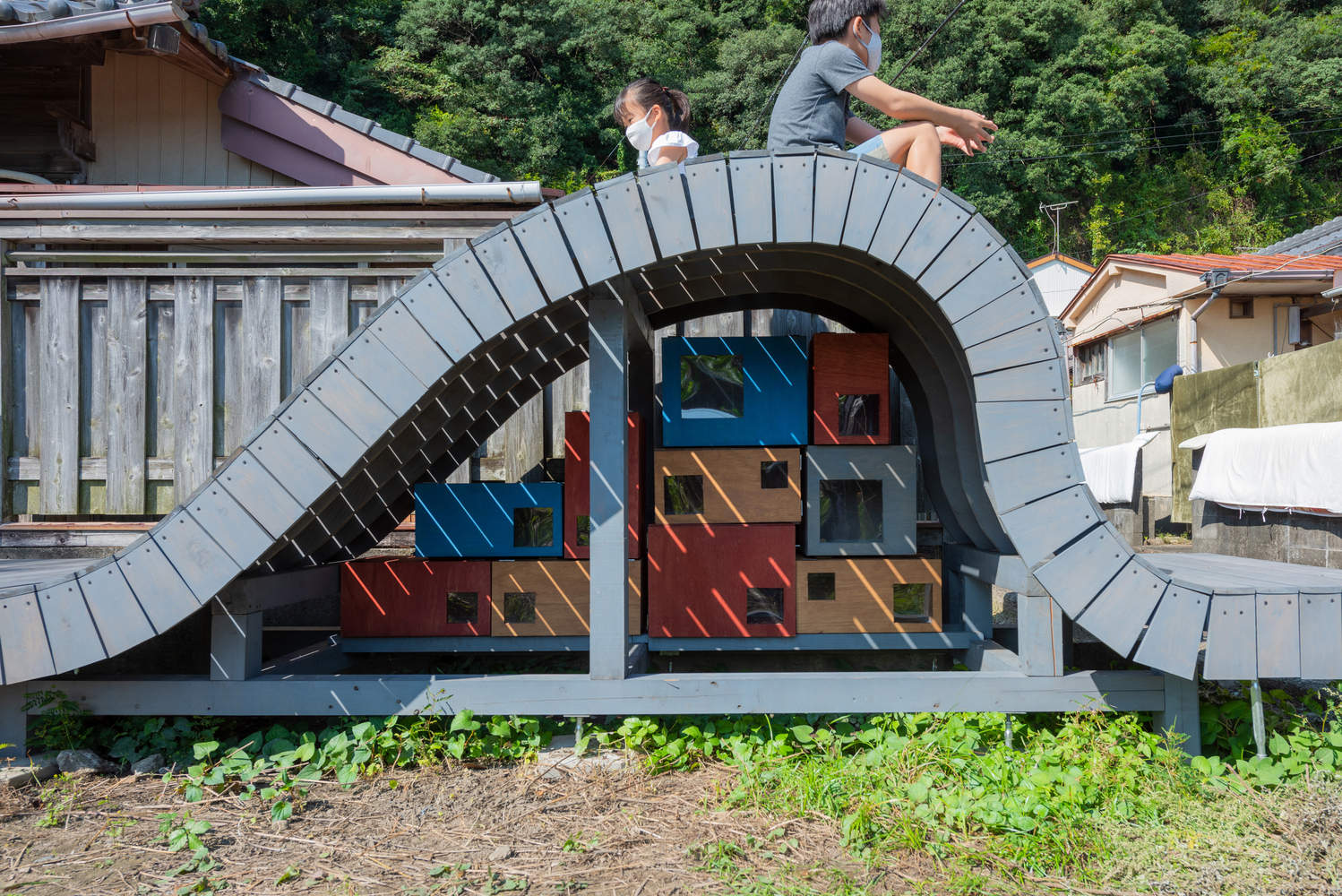
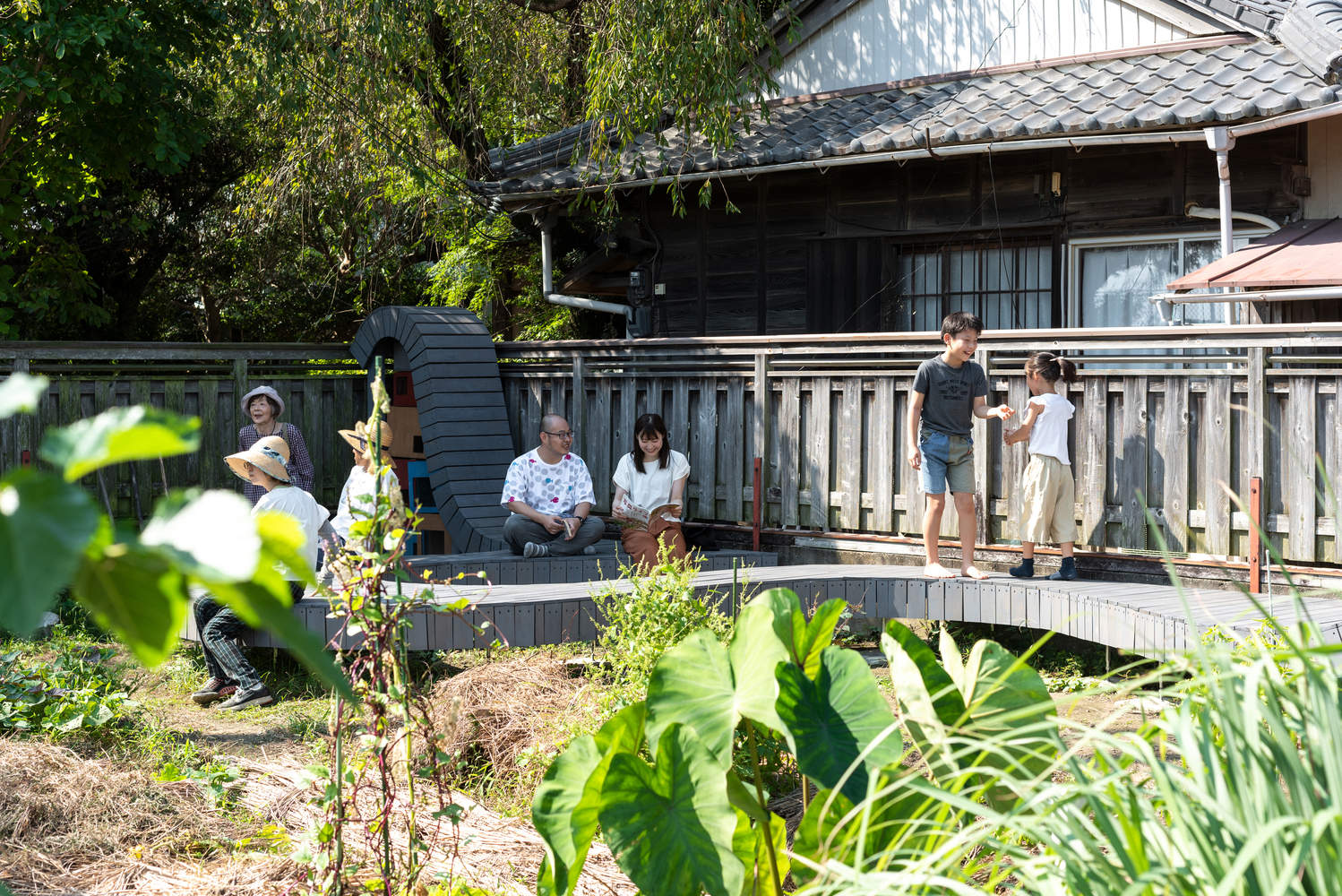
As a result of the above overlay, I decided to create a long, three-dimensional bench flowing along the west end of the site (it reminded me of the rivers, waterfalls, and mountains of Kumano). Since it was to be built DIY, this bench could be constructed without skilled labor, while also providing a process for learning woodworking techniques.
作为上述内容叠加的结果,我决定打造一个长长的三维长凳在场地西端流动(它让我想起熊野的河流、瀑布和山)。考虑到是 DIY 建造,这个长凳可以在没有熟练技能的情况下搭建,同时也有学习木工技术的过程。
© Matsumura Kohei
© Matsumura Kohei
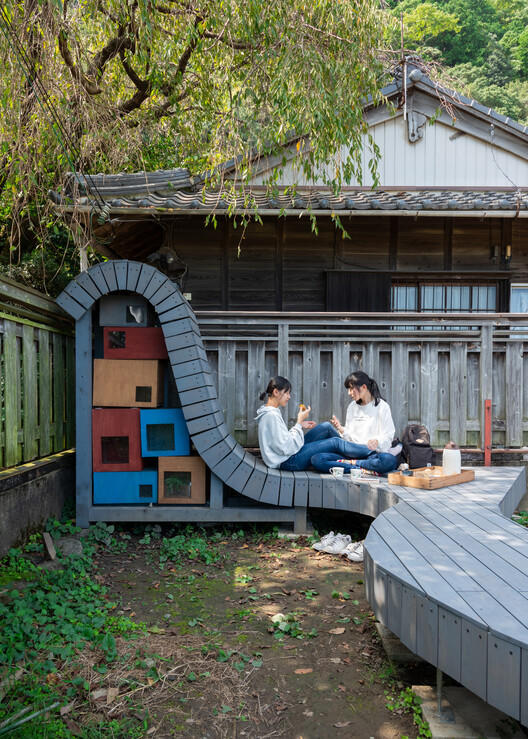
Furthermore, our goal was to create a complex design that would not look DIY. We have carried out several projects with students from Kumano over the past seven years. However, under the COVID-19 pandemic, there were various risks in advancing projects in a rural area with many elderly people. So we came up with a method of fabricating the parts at the university and assembling them locally, minimizing contact with local residents.
此外,我们的目标是创造一个看不出是 DIY 的复杂设计。过去七年里,我们同熊野的学生一起开展了多个项目。但是,新冠疫情下,在一个老年人较多的乡郊地区推进项目存在各种风险。所以我们想到了一种方法,即在大学里制作部件,然后在当地组装,尽量减少与当地居民的接触。
© Matsumura Kohei
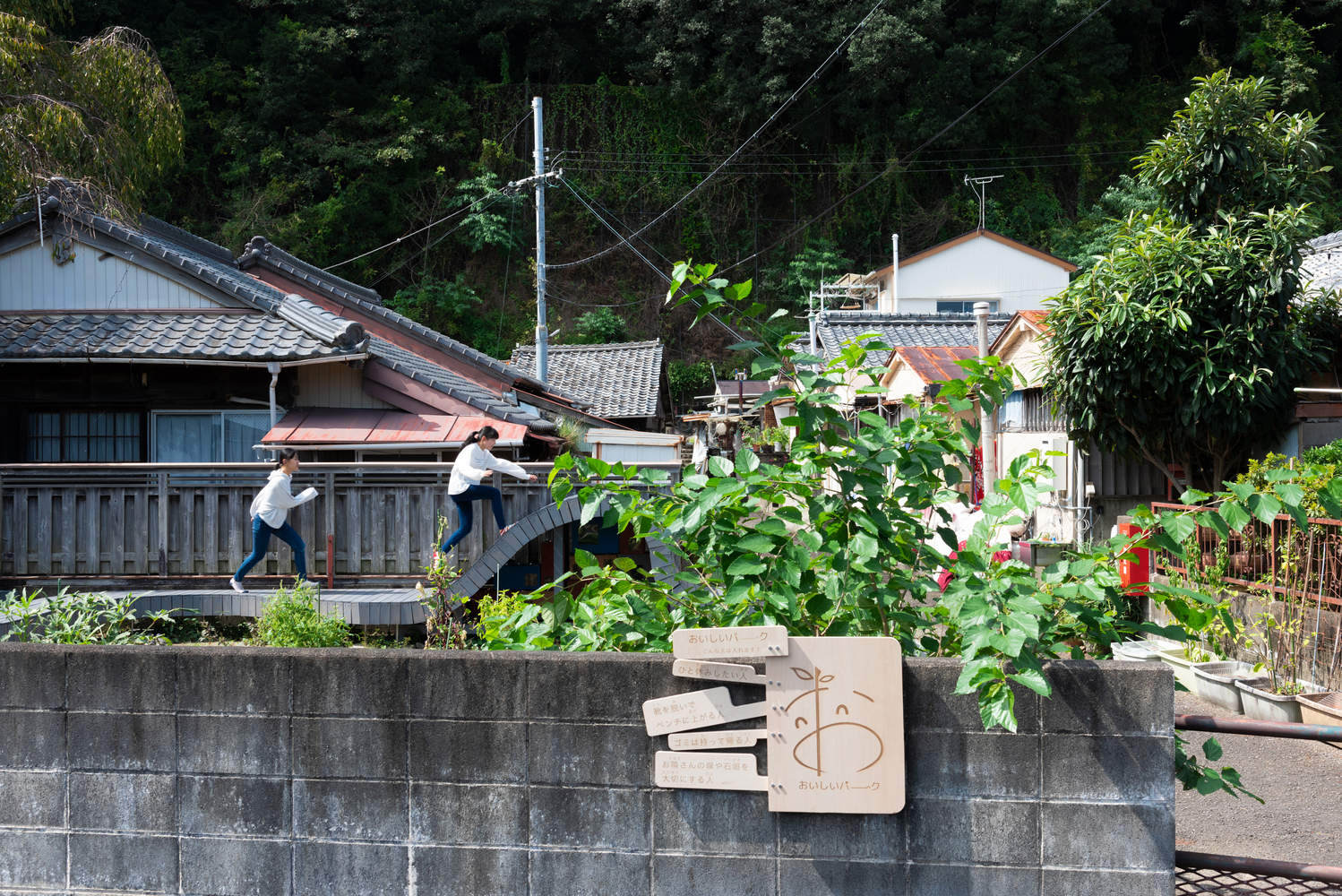
The planning and design considered the transportation of items (checking dimensions, weight, assembly procedures) and reducing on-site labor (improving efficiency, standardization through numbering). We hope that "Oishii Park" will not only yield delicious food but also provide the region with rich experiences, encounters, and community.
在规划与设计中考虑了物品的运输(检查尺寸、重量、装配程序)和减少现场劳动力(提高效率、通过编号标准化)。我们希望“Oishii 公园”不仅可以收获美味的食物,还可以为地区提供丰富的体验、相遇和社区。
© Matsumura Kohei
This project is neither what is commonly called architecture nor simply furniture. We aim to update the existing site with small-scale facilities. I thought about how architecture should be, aiming to make it slightly better, rather than completely rewriting the meaning and function of the site.
这个项目既不是所谓的建筑,也不单单是家具。我们旨在用小型设施更新现有场地。不是完全改写场地的意义和功能,我思考的是建筑应该如何,旨在让它变得稍微好一点。
Text description provided by the architect
文字描述由建筑师提供
Translated by FynnChu
译者:FynnChu