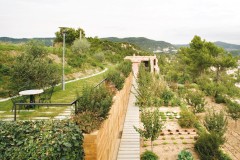
滨水空间策略的精妙平衡:该项目在3.6公里的狭长滨水地带,成功平衡了新建、更新以及亲水性与防汛安全之间的复杂关系。通过“更新与新建”策略,针对不同段落的现状采取差异化设计,同时巧妙利用防汛墙的退让与渗透性,最大限度保障了连续、舒适的慢行系统。尤其在空间受限处,通过抬高步道利用防汛墙宽度拓展通行空间,体现了对城市基础设施约束条件下的高超设计智慧和对使用者体验的极致追求。
历史记忆与城市活力的有机融合:设计深刻理解无锡“码头城市”的历史底蕴,将废弃的码头吊机承台、江尖水利枢纽等城市记忆元素转化为“林下博物馆”和文化标识展示。通过植入“米市文化”等核心IP,项目将原先功能单一的滨水空间转变为集文化展示、休闲健身、亲子娱乐于一体的复合活力区。这种对历史遗存的活化利用,有效重塑了运河的新城市记忆,使滨水空间具备了强大的文化吸引力和社区粘性。
全龄友好与人文关怀的践行:项目从城市友好和全龄尺度的角度出发,不仅关注慢行系统的连贯性,更在有限空间内精心布局了儿童游乐、健身场地等多元功能,打造了“码头乐园”和“米宝乐园”。对无障碍设计的强调,体现了对所有使用者需求的尊重和关爱。通过亲水策略(靠水、看水、远眺水)和文化符号的嵌入,本项目成功地修复了运河与市民之间因时空变迁而疏离的情感连接,真正实现了滨水空间的“焕活”与“赋能”。
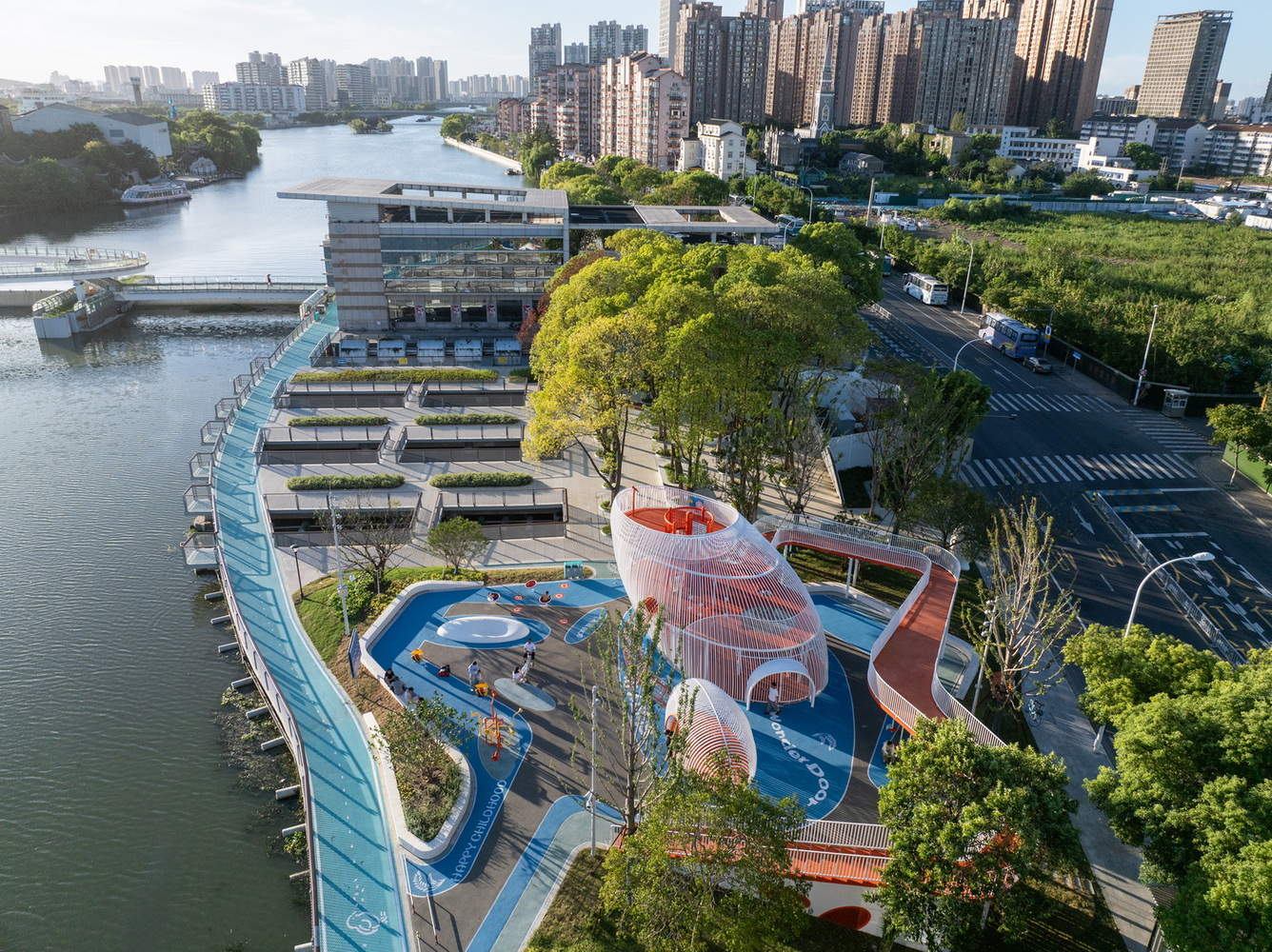
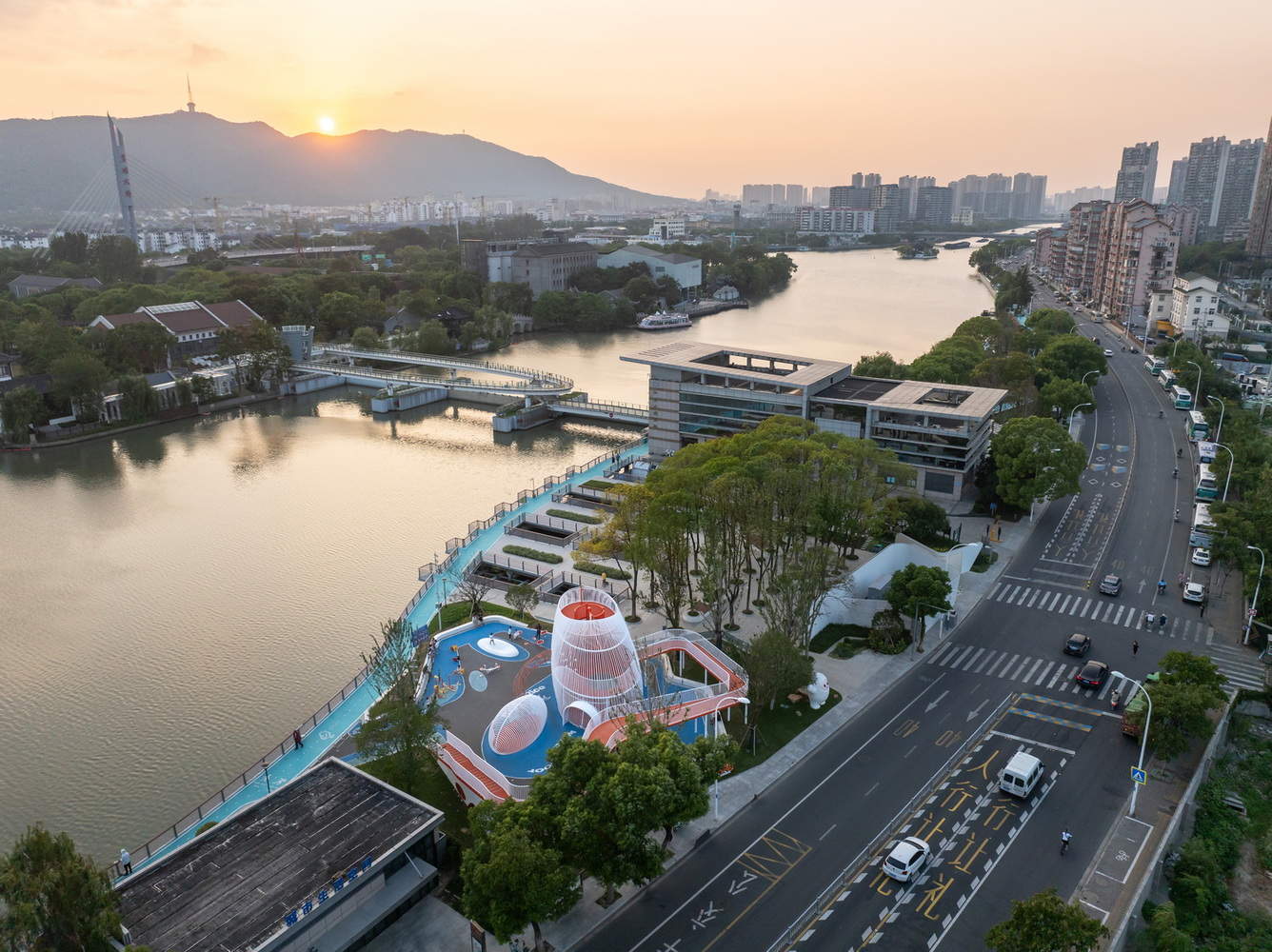
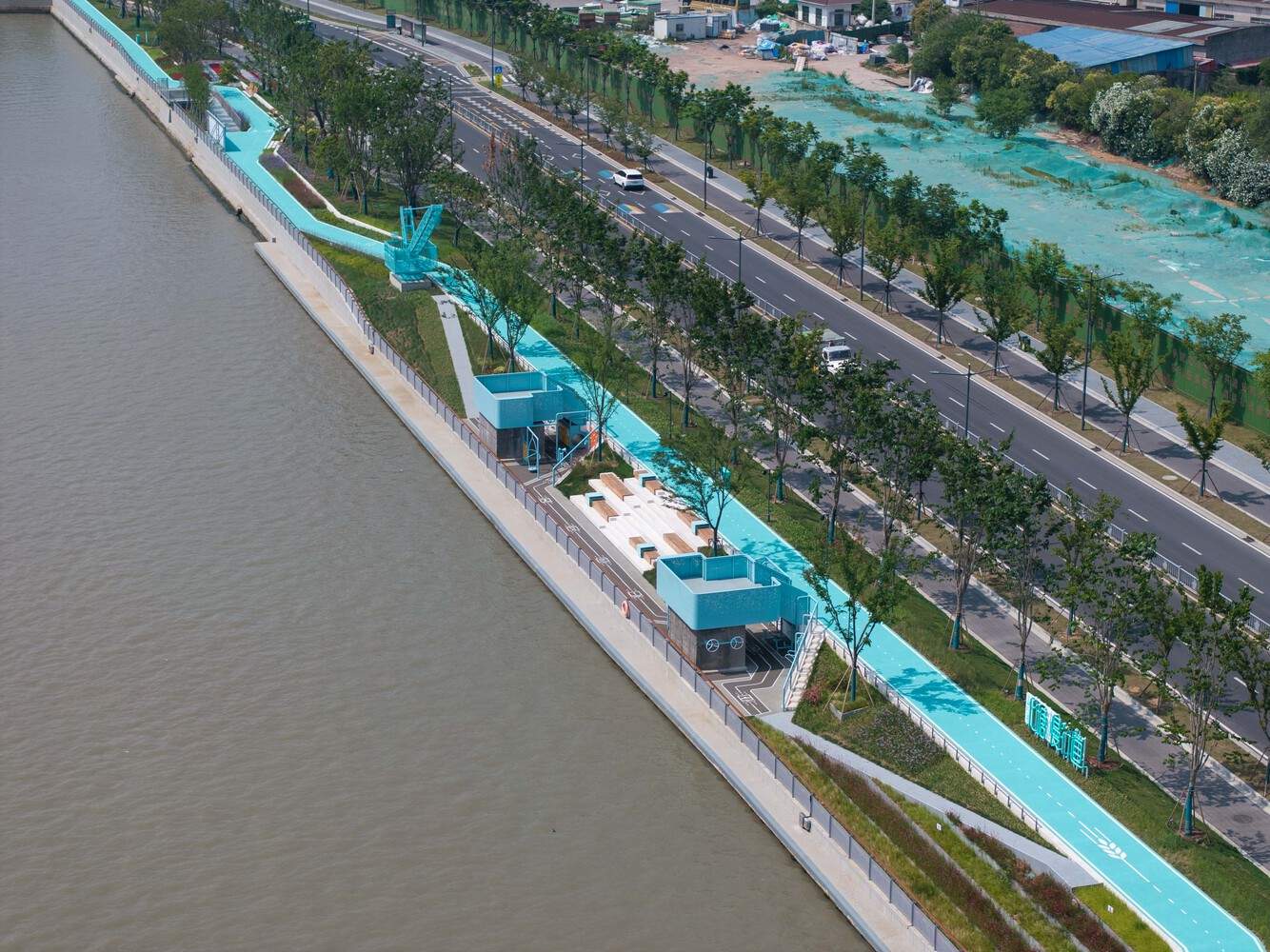
The overall design strategy, informed by the overall plan for the Beijing-Hangzhou Grand Canal (Wuxi Section) revitalization, focuses on phased implementation through "remediation, greening, connectivity, revitalization, and empowerment." In 2023, the Liangxi District of Wuxi launched the construction of the waterfront space along the Beitang Street section. The project spans approximately 3.6 kilometers, starting from Jieguan Ting Lane at Beitang Street and ending at the planned Beijian Park, serving as a vital waterfront green corridor connecting Beijian Park with the ancient Grand Canal ring park belt.
2022年5月,京杭大运河(无锡段)整治提升规划编制完成,提出了“整治、覆绿、贯通、焕活、赋能”逐步实施的设计策略。2023年,无锡市梁溪区启动了北塘大街段的滨水空间建设。项目全线长约3.6公里,起点位于北塘大街接官亭弄处,终点至规划建设中的北尖公园,为连接北尖公园与环城古运河公园带的滨水绿廊。
© 金笑辉
© 金笑辉
Renewal and New Construction: The northern section (Shanshan Bridge - Fengxiang Bridge) within the 3.6 km segment, apart from a small number of surviving pier facilities, is largely devoid of existing construction and can be considered a new build. In contrast, the southern section (Fengxiang Bridge - Jiangjian Bridge) already possesses numerous landscape facilities and greenery, necessitating an upgrade strategy focused on partial renewal. The differing urban contexts of the two sections imposed different design requirements. Furthermore, the existing space along the entire section is relatively narrow, mostly linear waterfront space about 10 meters wide, except for a few widened areas, posing a significant challenge to establishing a continuous, comfortable, and convenient slow-traffic system.
更新与新建: 3.6公里区段内北段(山北大桥-凤翔大桥)除少量码头设施遗存外基本无建设内容,可以视为新建,南段(凤翔大桥-江尖大桥)已有景观设施、绿化较多,只能以局部更新的策略来进行提升。两段不同城区建设现状给设计提出了不同的要求。同时,全段现状空间较窄,除几处放大空间外,基本为10米宽的线性滨水空间,对于实现连续、舒适、便捷的慢行系统形成较大挑战。
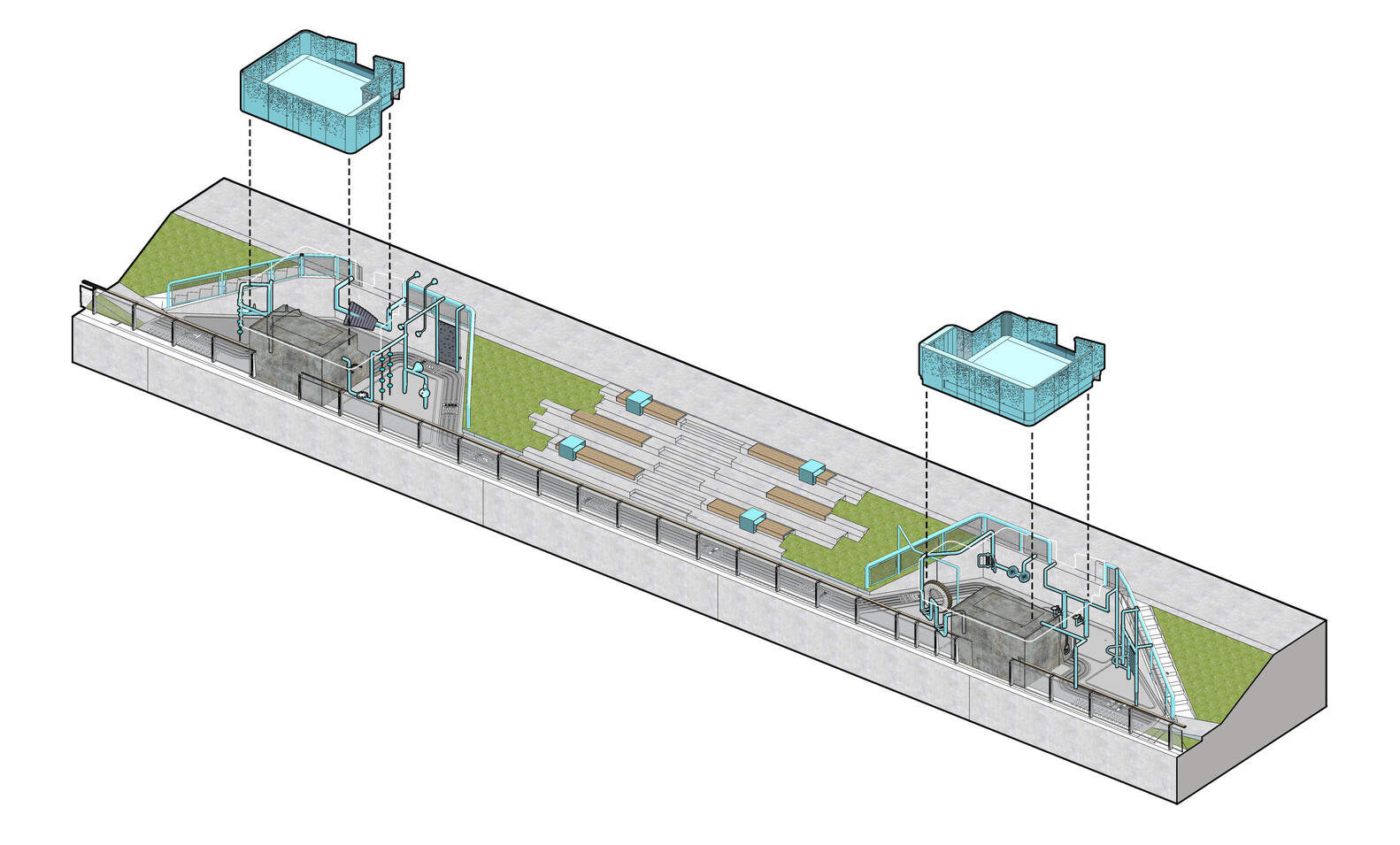
轴测图
© 金笑辉
Culture and Vitality: Although the current site has many "attractions," their space and function are relatively singular, failing to meet the broader public demand for riverside activities and lacking appeal to surrounding community residents. Therefore, changing the status quo of "only cultural attractions, no vitality facilities" is a major task for this project. The project hopes to realize the vision of seizing the opportunity presented by the completion of the slow-traffic path and flood control compliance works, integrating existing cultural attractions and water heritage sites to rebuild a new IP for the canal waterfront space and reshape the new urban memory of the Grand Canal.
文化与活力: 虽然现状“景点”较多,但空间和功能都相对单一,无法满足市民对滨河活动更广泛的诉求,对周边社区居民也缺少吸引力。所以,改变“只有文化景点、没有活力设施”的现状,是本项目的重要任务。 如何趁此慢行道贯通和防汛达标工程的机会,结合现状人文景点及水利遗存,重新打造运河滨水空间的新 IP,重塑大运河新的城市记忆,是本项目希望能够展现的美好愿景。
© 金笑辉
© 金笑辉
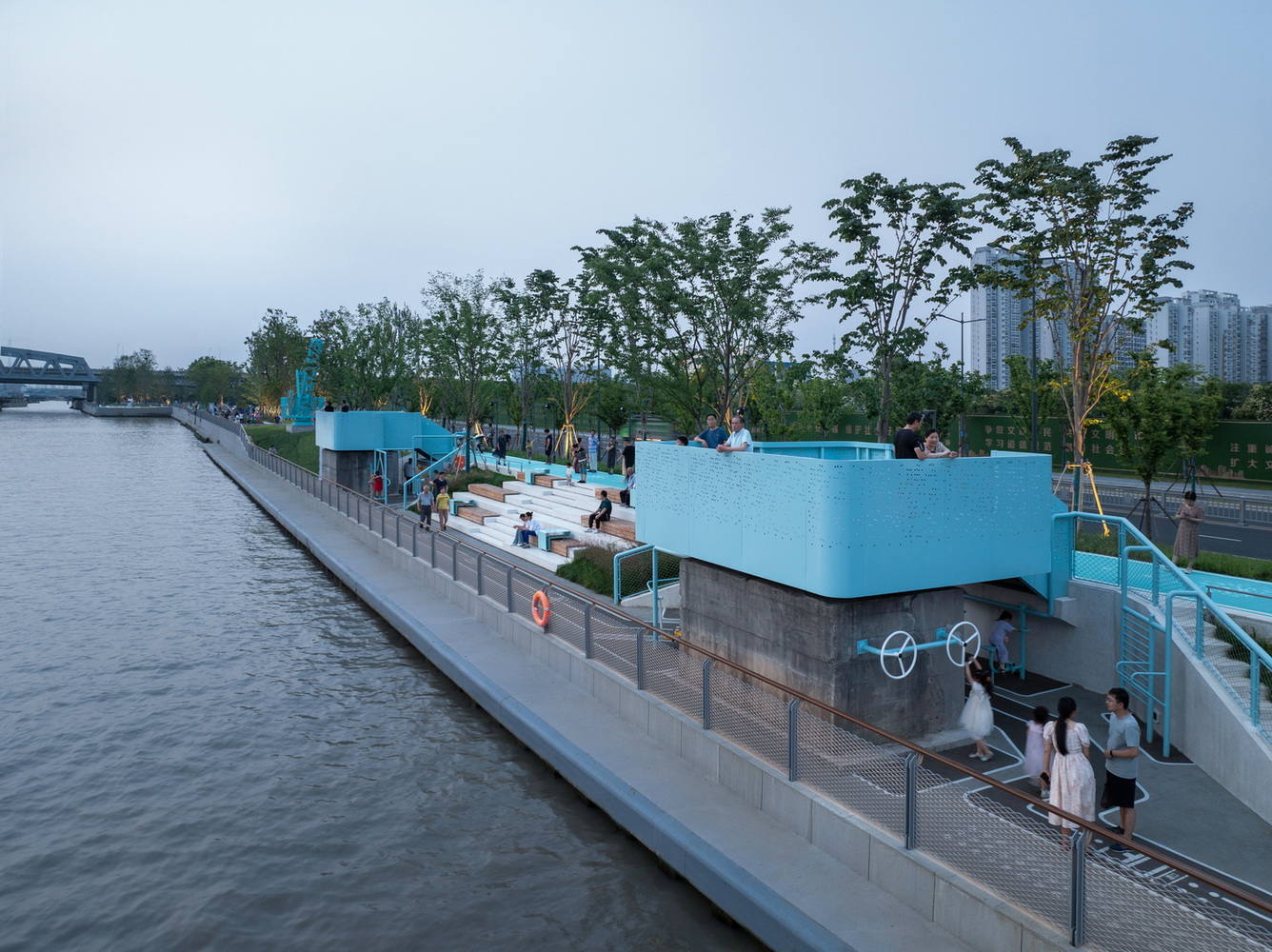
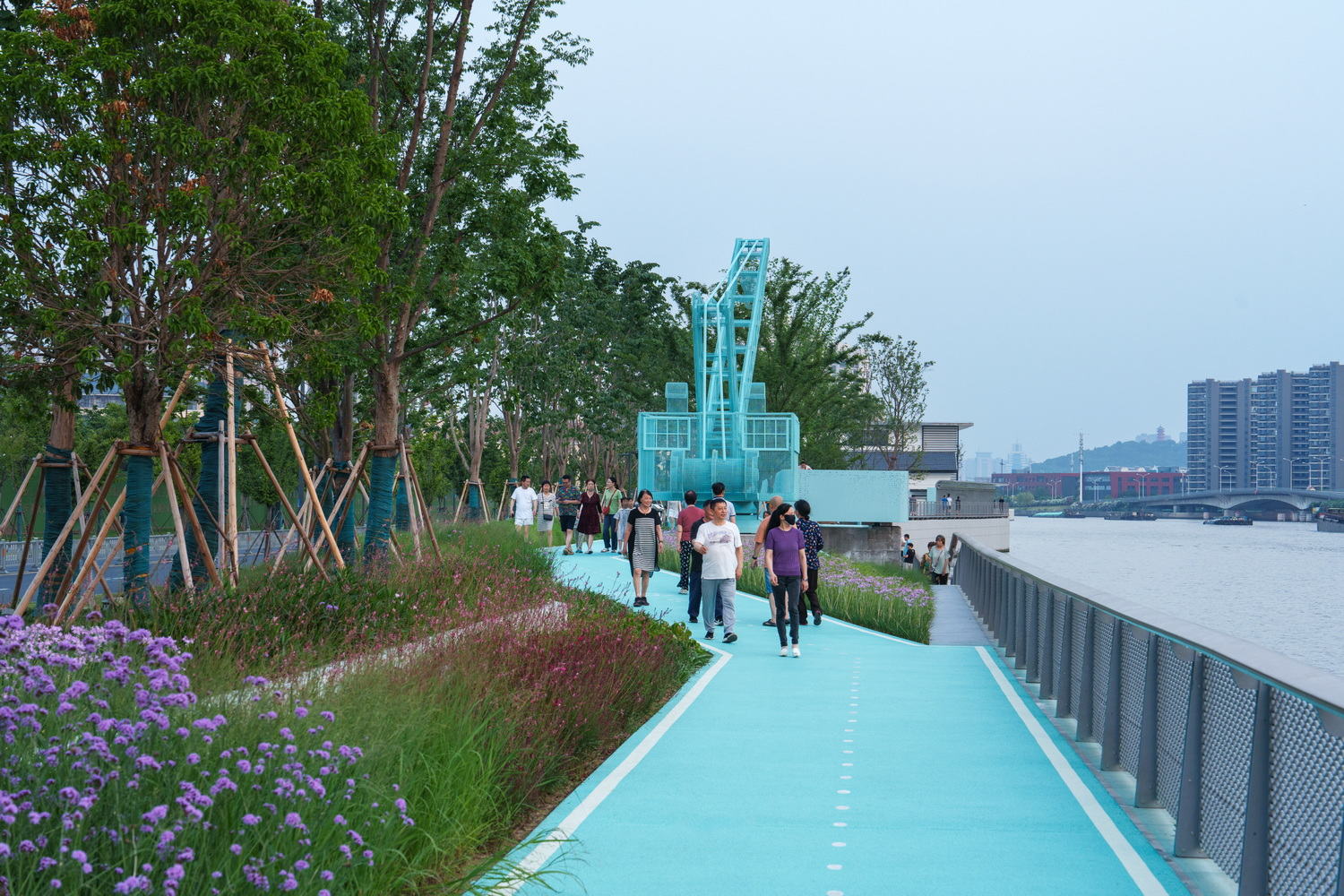
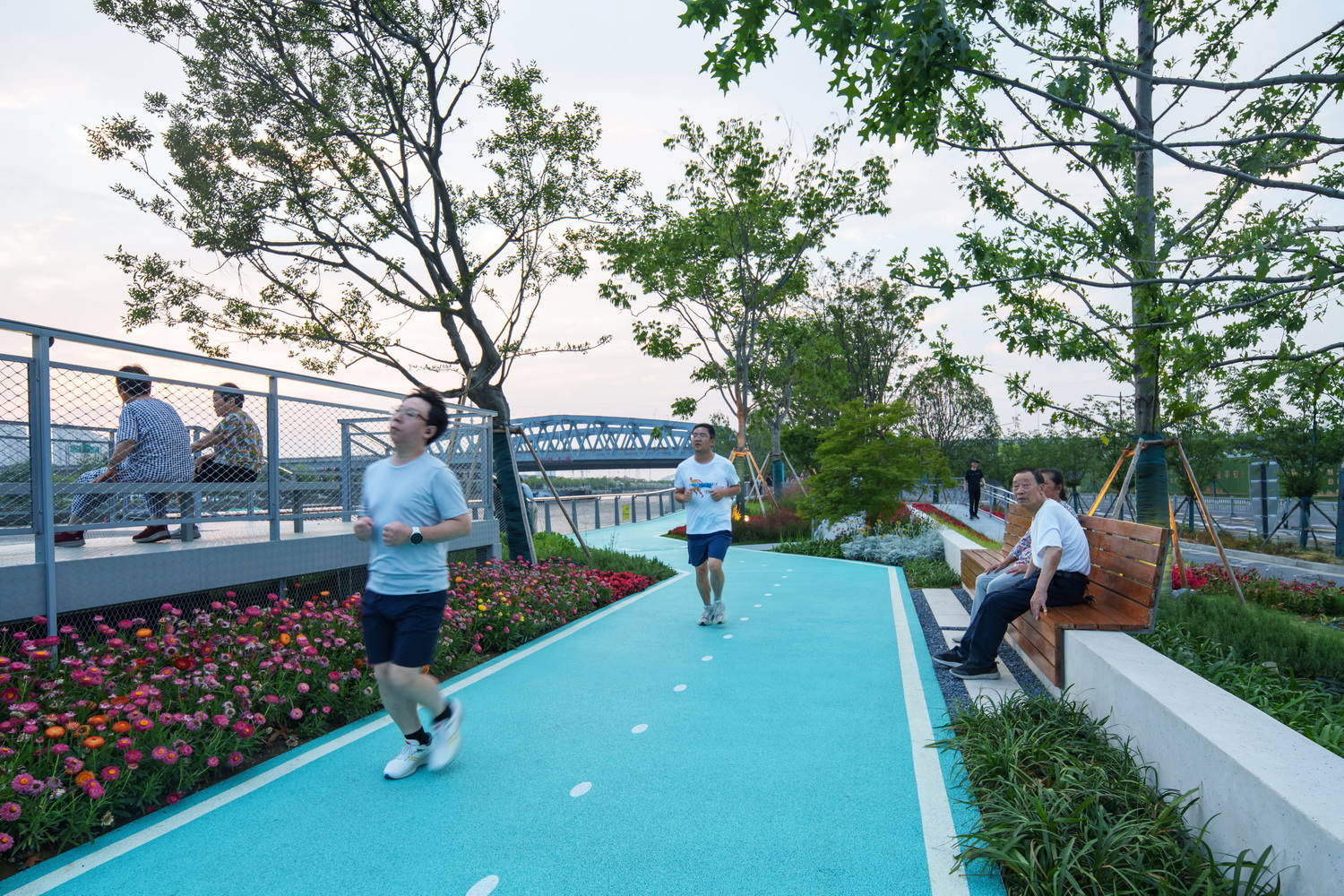
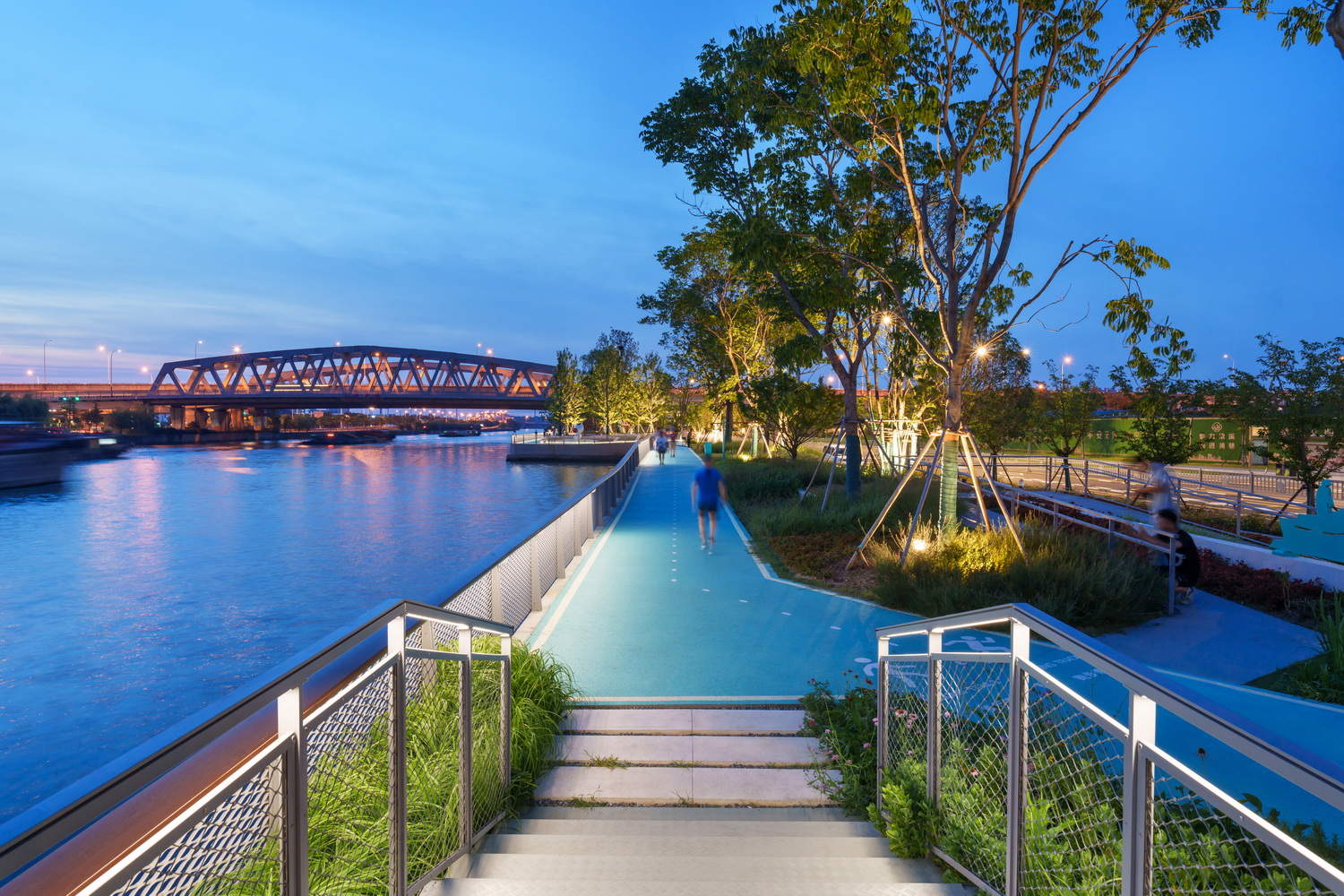
01 Water-Friendly and Water-Viewing Strategies:Proximity to Water – Considerations for the Integrated Slow-Traffic Path: Constrained by the existing revetment conditions, the current paths were not fully set right next to the water. This renewal prioritizes placing the integrated slow-traffic path close to the waterfront to maximize the feeling of being close to the water.
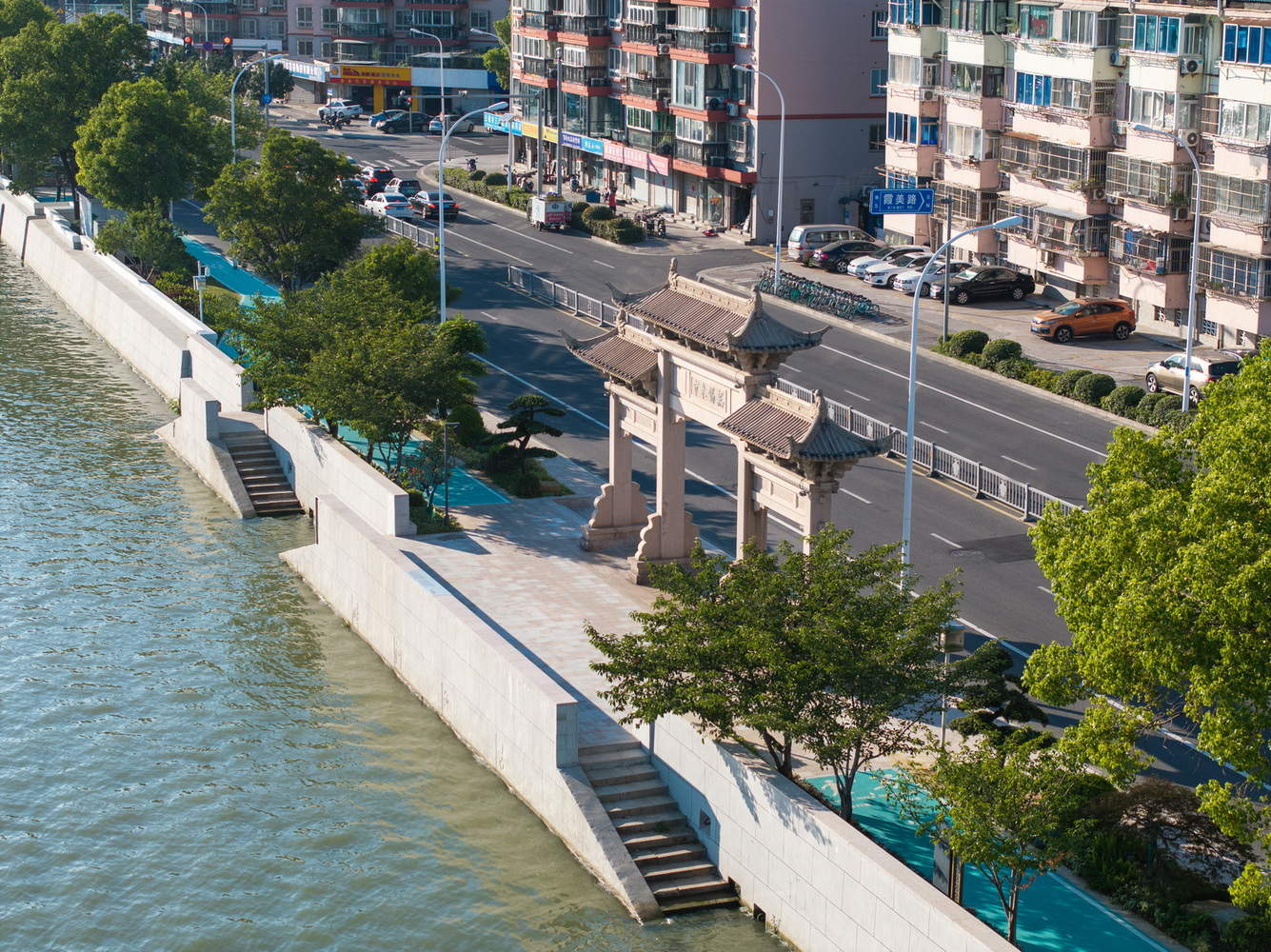
Seeing the Water – Considerations for Flood Control Walls: To meet flood control standards, some revetments needed to be raised or newly constructed. For better water viewing, the compliance revetments employ "receding" and "permeability" strategies, aiming to open up sightlines to the water as much as possible and minimize the negative visual impact of solid flood control walls.
01 亲水看水的策略: 靠近水——综合慢行道设置的思考:受限于原有驳岸情况,现状的步道并未完全临水设置,本次更新综合慢行道首选靠近水岸设置,尽可能的增强亲水感受。
看见水——防汛墙的思考:根据防汛达标的要求,局部驳岸需要加高或新增。为了更好的亲水看水,达标驳岸运用“退”和“透”的策略,结合现状情况,尽可能开放看水视线,减少实体防汛墙的负面景观影响。
© 金笑辉
© 金笑辉
© 金笑辉
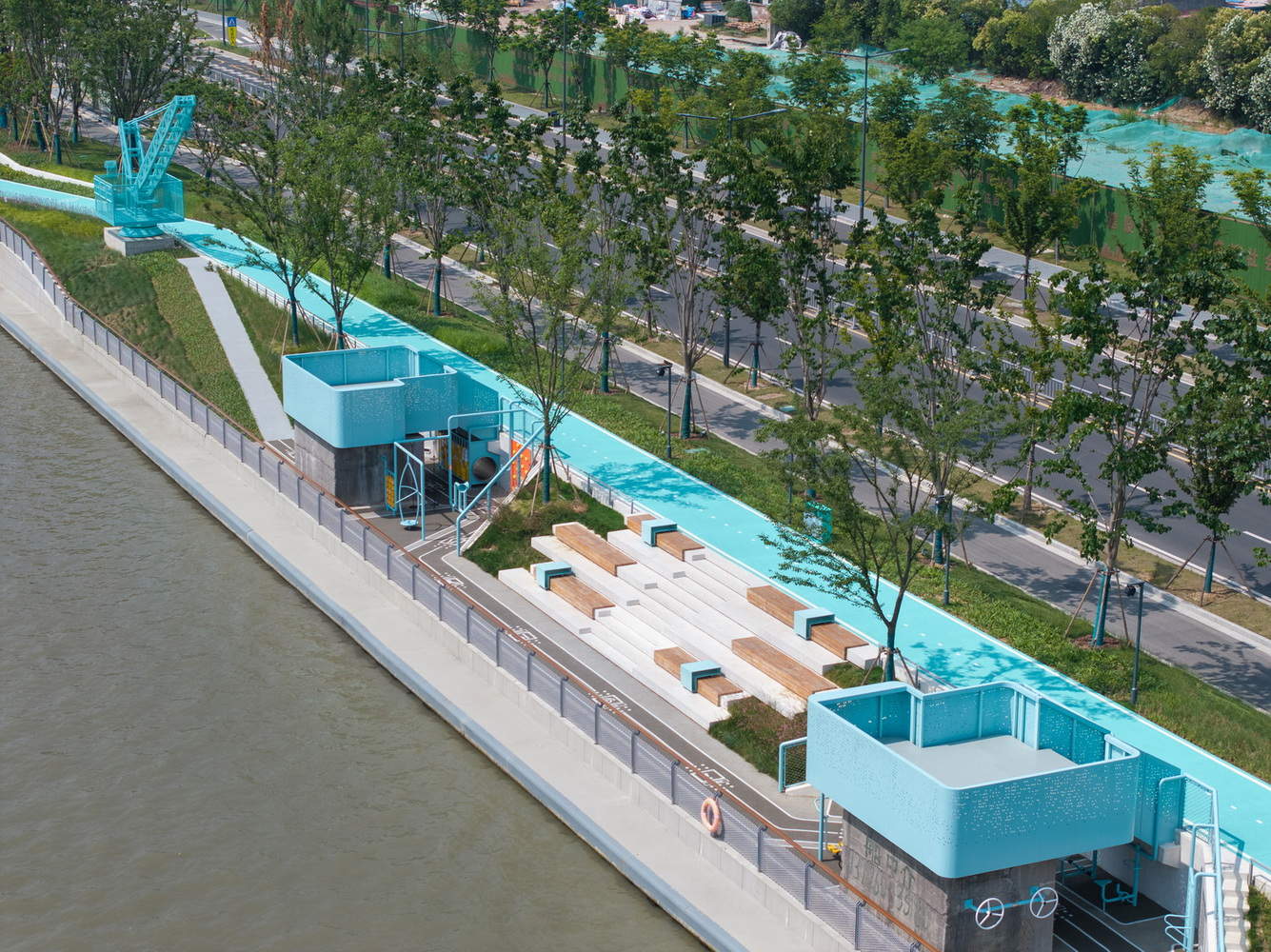
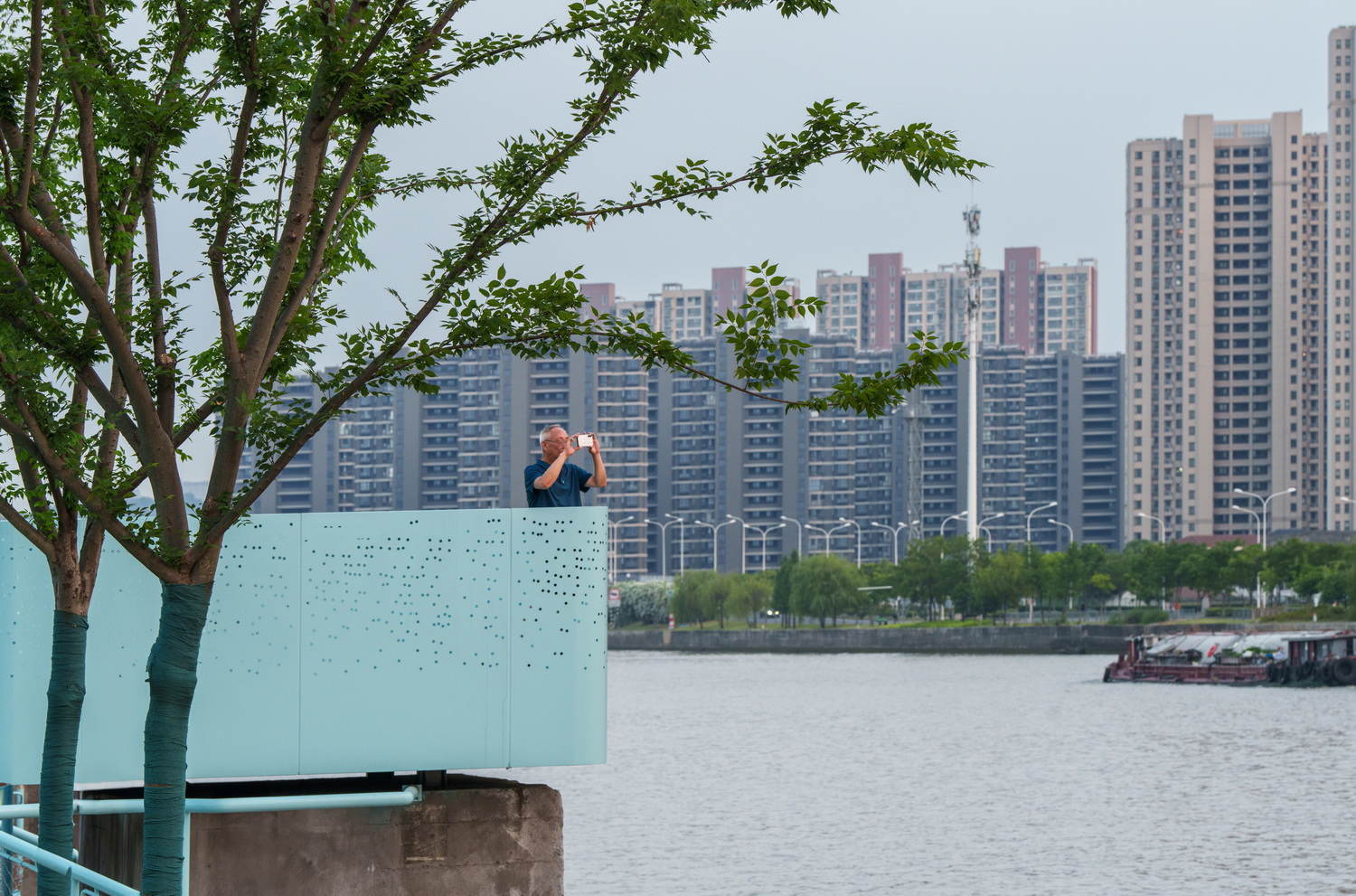
Looking Far at Water – Viewing Scenery from Higher Ground: People naturally enjoy looking into the distance. To satisfy the desire for panoramic views, the design intentionally provided several small sites or structures for "climbing up for a distant view," which were unexpectedly popular among participants.
No Break – Connectivity in Limited Space: At municipal water conservancy building nodes, the effective width for passage along the water was only 1.1 meters. The design elevates the path to the top of the flood control wall, utilizing the wall's own 0.5-meter thickness to expand the traversable width, ensuring the comfort of the waterfront pedestrian space.
远望水——向高处看风景:人都喜欢向远处看,为了满足远眺风景的期望,在设计中有意提供了多个“登高远眺”的小场地或构筑,出乎预料地受到了参与者的喜欢。
无断点——有限空间内的贯通:市政水利建筑节点处,临水有效通行宽度仅1.1米。设计将步道抬升至防汛墙顶,利用防汛墙自身0.5米的厚度,拓展可通行宽度,确保滨水步行空间的舒适度。
© 金笑辉
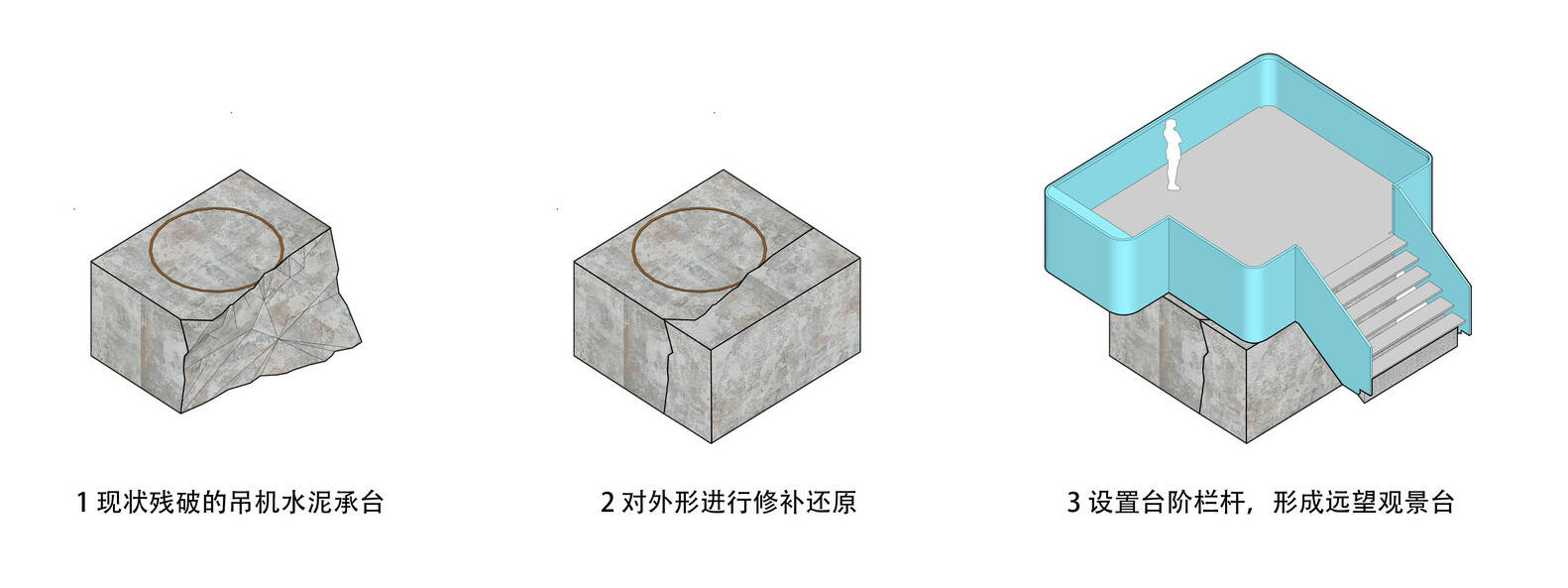
分析图
02 Reshaping Urban Memory:- Pier Stories: Wuxi is a "port city" built around the canal, and the piers that once lined both banks of the canal formed a scenic sight and a distinctive pier culture. With the changing times, most piers have faded from history, leaving behind only abandoned crane platforms as witnesses to this history.
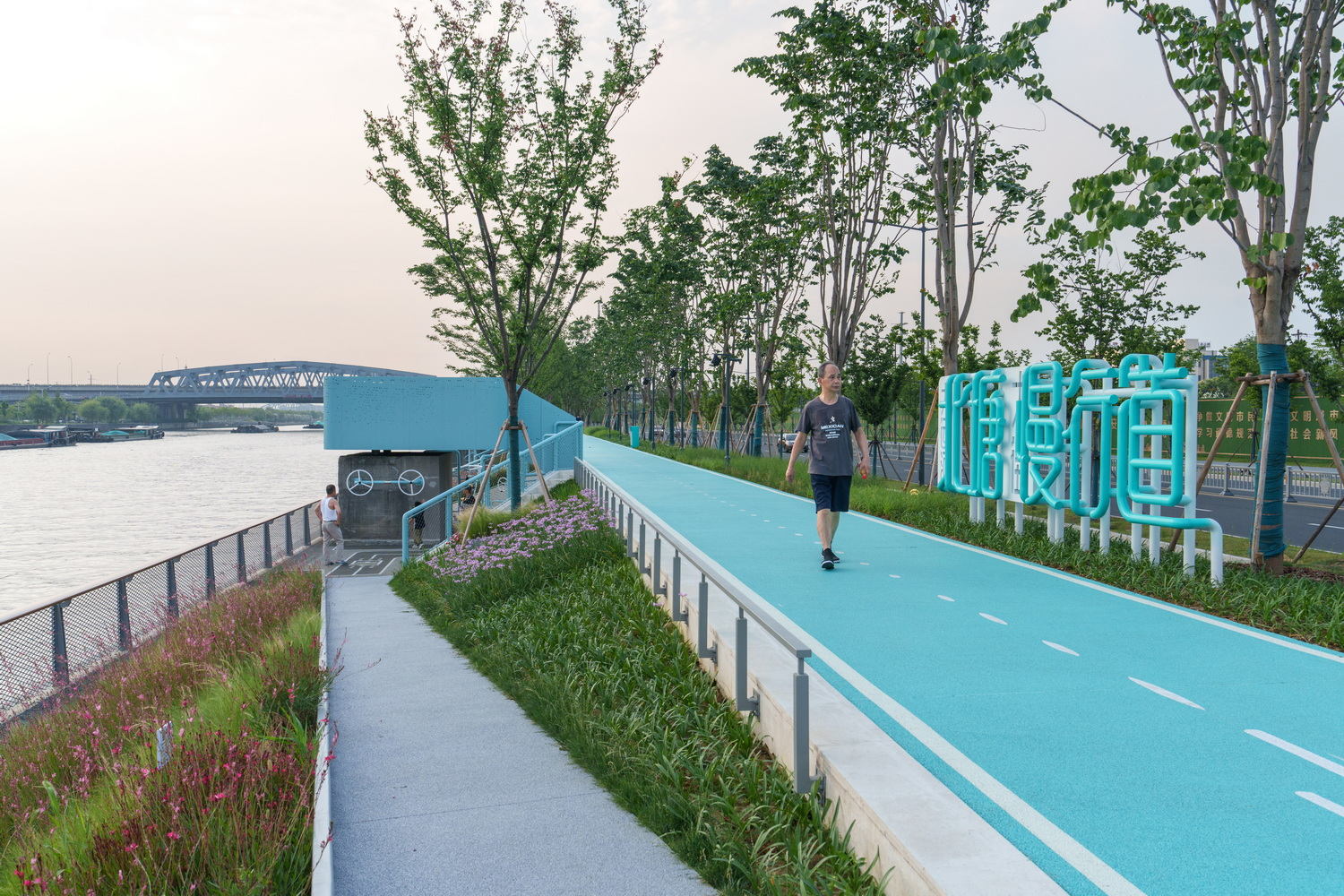
- Water Conservancy Hub: The Jiangjian Water Conservancy Hub is one of the eight major control structures in Wuxi's East Canal Encirclement. The overall planar design utilizes the space above the water of the inlet and outlet channels of the right bank pump station for green landscaping, integrating it with the landscape belt on the right bank. The original planar design was shaped like a "fish," and a cylindrical building named 'The Granary of the World' was placed on the left bank shoreline, continuing the historical 'Rice Market' culture. In the design, in addition to ensuring the continuity of the integrated slow-traffic path, all spaces are opened up as much as possible, and corresponding cultural and landscape functions are integrated.
02 城市记忆的重塑:-码头故事: 无锡是一座因运河而兴的“码头城市”,曾经遍及运河两岸的码头成为亮丽的风景线,也形成了特色的码头文化。随着时代变迁,大部分码头已经退出历史舞台,仅留下了一座座废弃的吊机承台见证着这段历史。
-水利枢纽: 江尖水利枢纽是无锡市运东大包围的八大控制建筑物之一,整个枢纽平面设计上利用右岸泵站进、出水渠水面上方空间进行绿化造景,与右岸景观带融为一体。原设计平面造型设计成‘鱼”的形状,左岸岸边布置一座圆筒形建筑,取名为‘天下粮仓’,延续着‘米市’文化的历史。设计上除满足综合慢行道贯通外,尽可能开放所有空间,并植入相应文化景观功能。
© 金笑辉
© 金笑辉
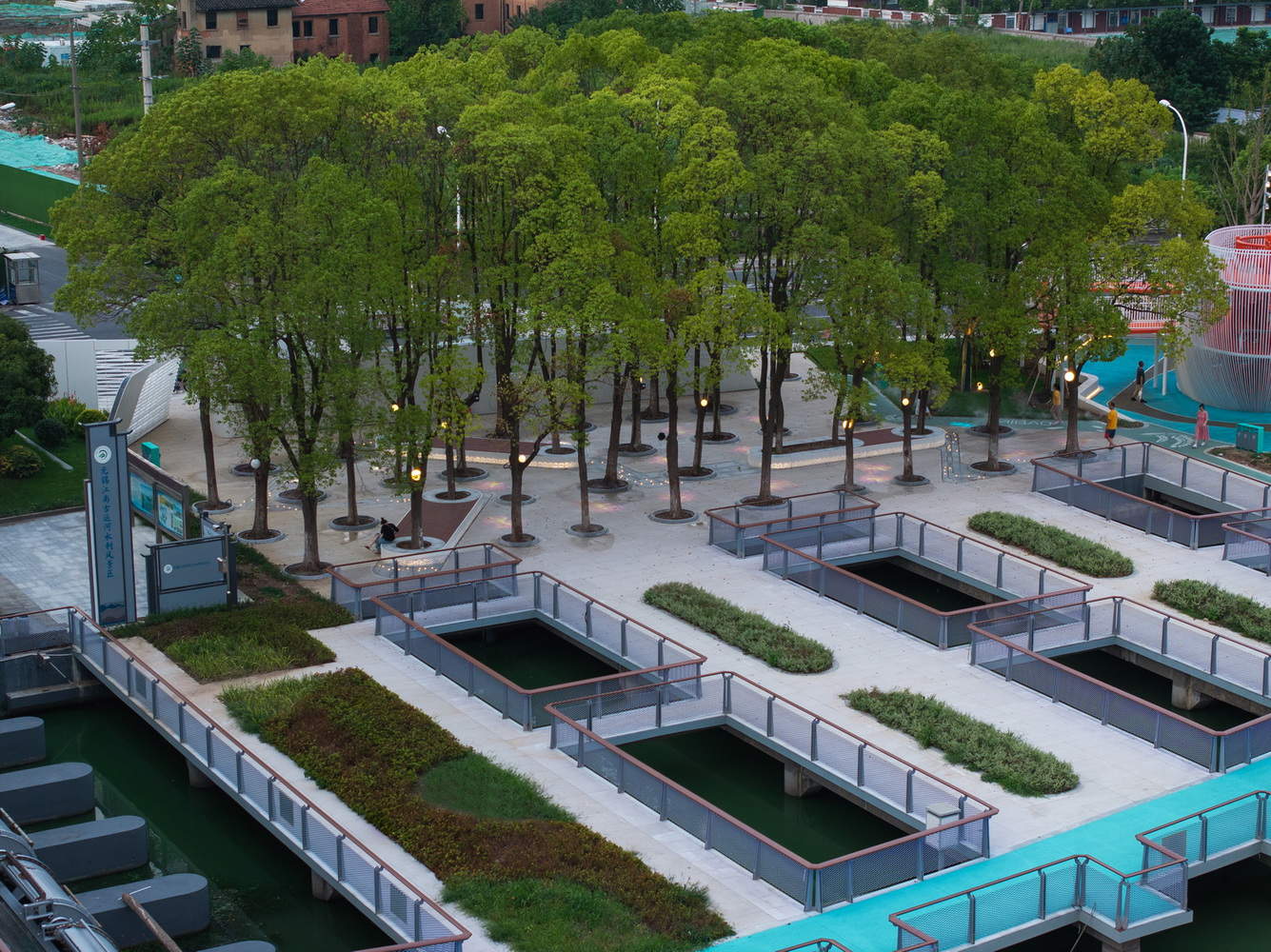
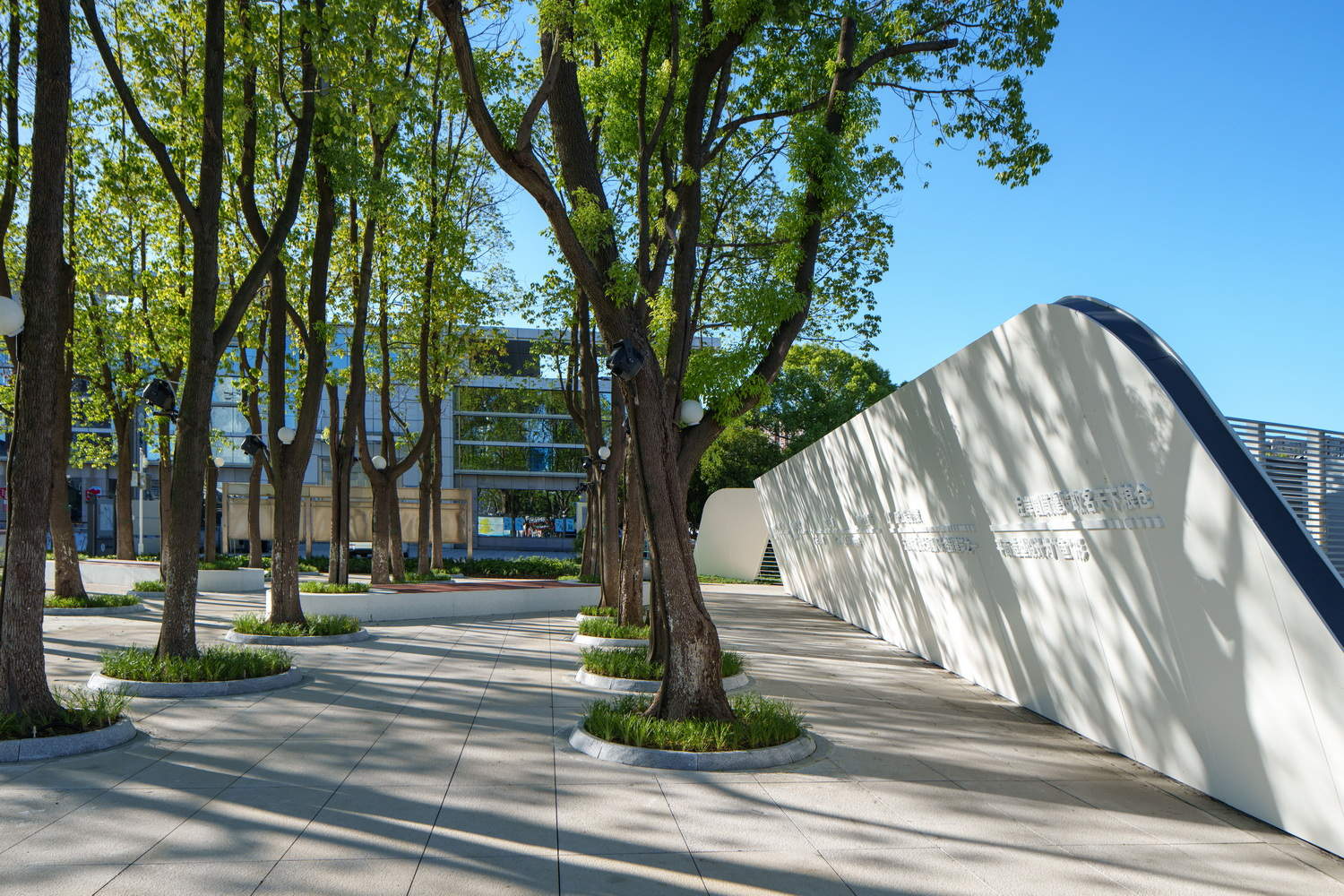
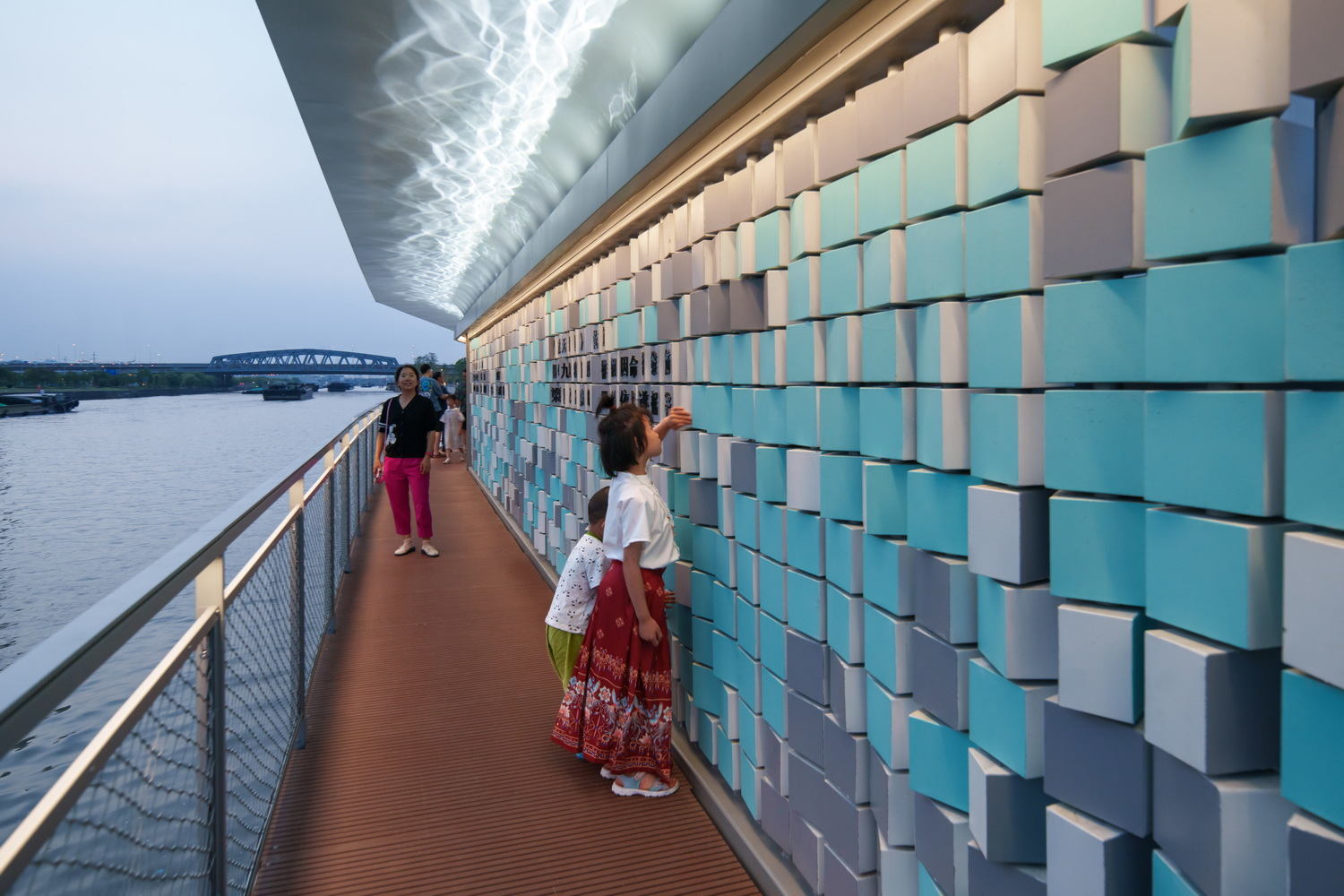
- Understory Museum: The understory space south of the hub is opened up to form an accessible leisure plaza, and the enclosure for the transformer box is transformed into an exhibition wall for water conservancy facility construction, creating an open micro-museum.
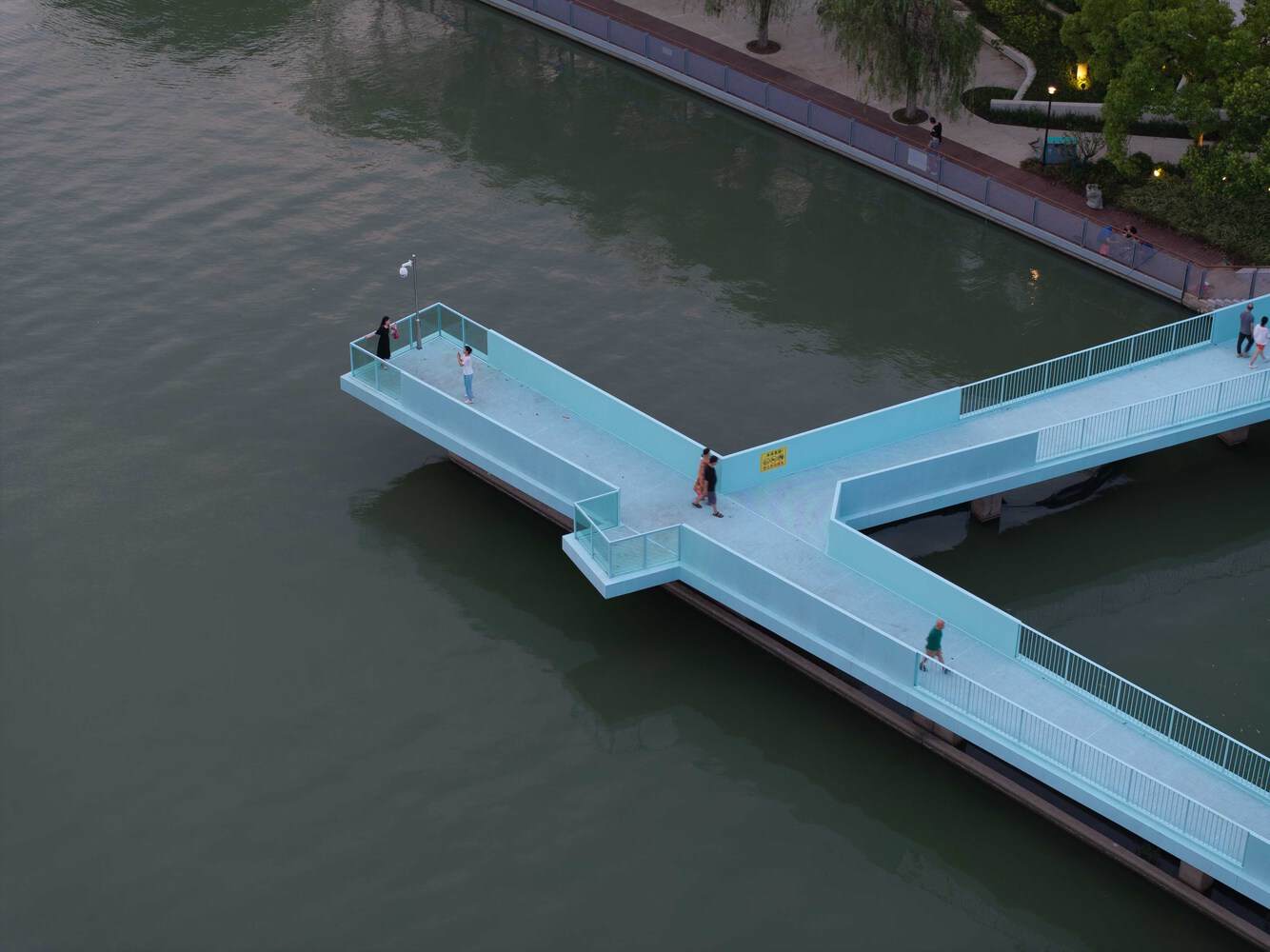
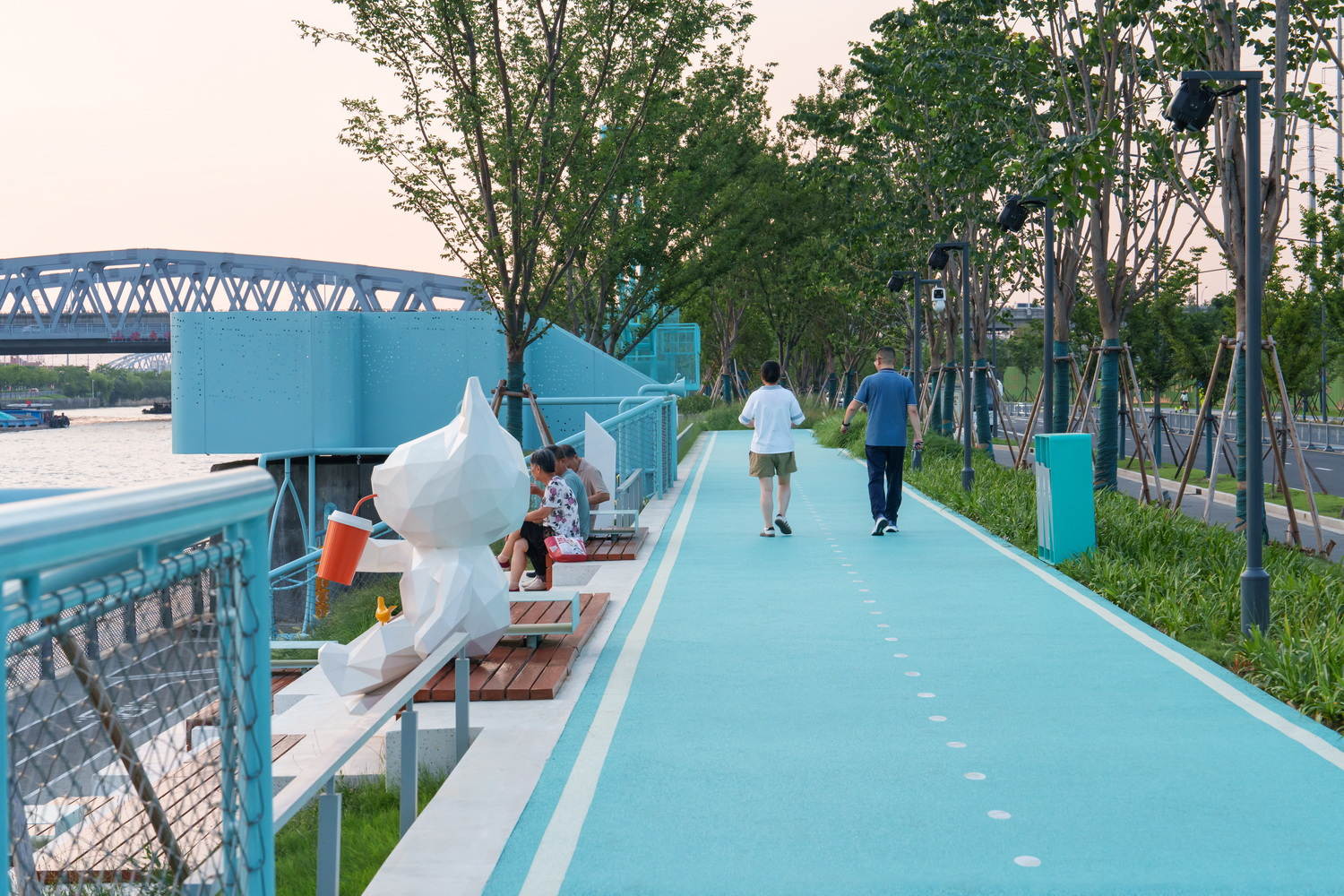
- Water Promenade: The area north of the water conservancy hub has good native vegetation, and the renovation mainly focuses on connecting the slow-traffic path. Meanwhile, the existing waterside platform is integrated to form a new blue promenade on the water side of the water conservancy hub. The platform allows for close views of the canal and distant views of Huishan, becoming a new check-in spot.
-林下博物馆: 枢纽南部开放林下空间,形成可进入式的休闲广场,并将变电箱的围挡营造成为水利设施建设展示墙,形成一个开放式的微型博物馆。
-水上漫步道: 水利枢纽北侧原生植被较好,更新主要以慢行道贯通为主。同时将原有水上平台一并结合考虑,形成水利枢纽侧新的水上蓝色漫步道,平台处可以近看运河、远观惠山,变成了新的打卡点。
© 金笑辉
© 金笑辉
03 Cultural Allusions:- Update of Service Facilities: Several traditional scenic spots and facilities are preserved in this project, incorporating two design strategies: first, new flood control facilities do not interfere with the original experience of getting close to and viewing the water; second, leisure and service functions are added according to local conditions.
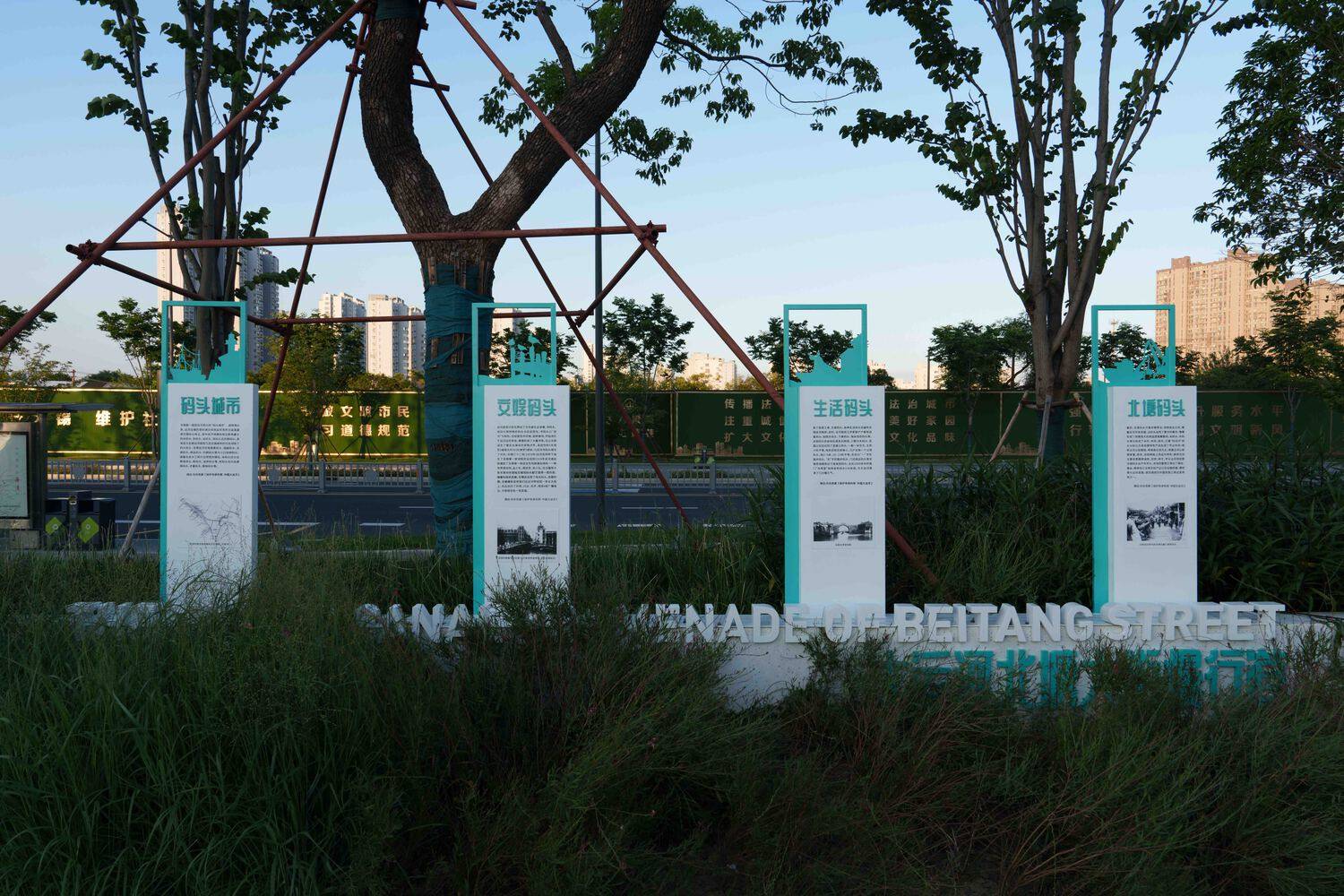
- Display of Cultural Symbols: During the Qing Dynasty, Wuxi's Grand Canal area formed the "Eight Sections of Rice Markets," becoming the largest among the four major rice markets in China. Most of the rice shops were distributed in the Sanli Bridge and Beitang areas, which were always the most prosperous sections for grain commerce along the canal. Therefore, the element of "rice" runs throughout the entire project.
At the same time, the Grand Canal carries a rich historical and cultural heritage, producing a number of historical figures whose glory endures. Materials such as poems, songs, historical events, cultural relics, local customs, and administrative systems along the canal are excavated and sorted to serve as important content for cultural display. This project uses diversified signage for interpretation and presentation.
03 人文典故:- 服务设施更新: 在本项目中保留若干传统景点设施,在设计中体现两个设计策略:一是新增防汛设施不影响原有亲水观水体验;二是因地制宜的增设休闲服务功能。
- 文化标识展示: 清代无锡大运河沿岸形成“八段米市”,成为中国四大米市之首,也是运河中最大的米市。其中大部分米行分布在三里桥、北塘一带,始终是无锡粮食商业最繁华地段。所以“米”的元素至终贯穿全项目。
同时,大运河承载着丰厚的历史文化底蕴,造就了一批光耀千秋的历史名人。挖掘梳理运河沿线的诗词歌赋、历史事件、文化遗迹、乡风民俗、行政制度等素材,作为重要的人文展示内容。本项目通过多样化的标牌进行了解说和展示。
© 金笑辉
© 金笑辉
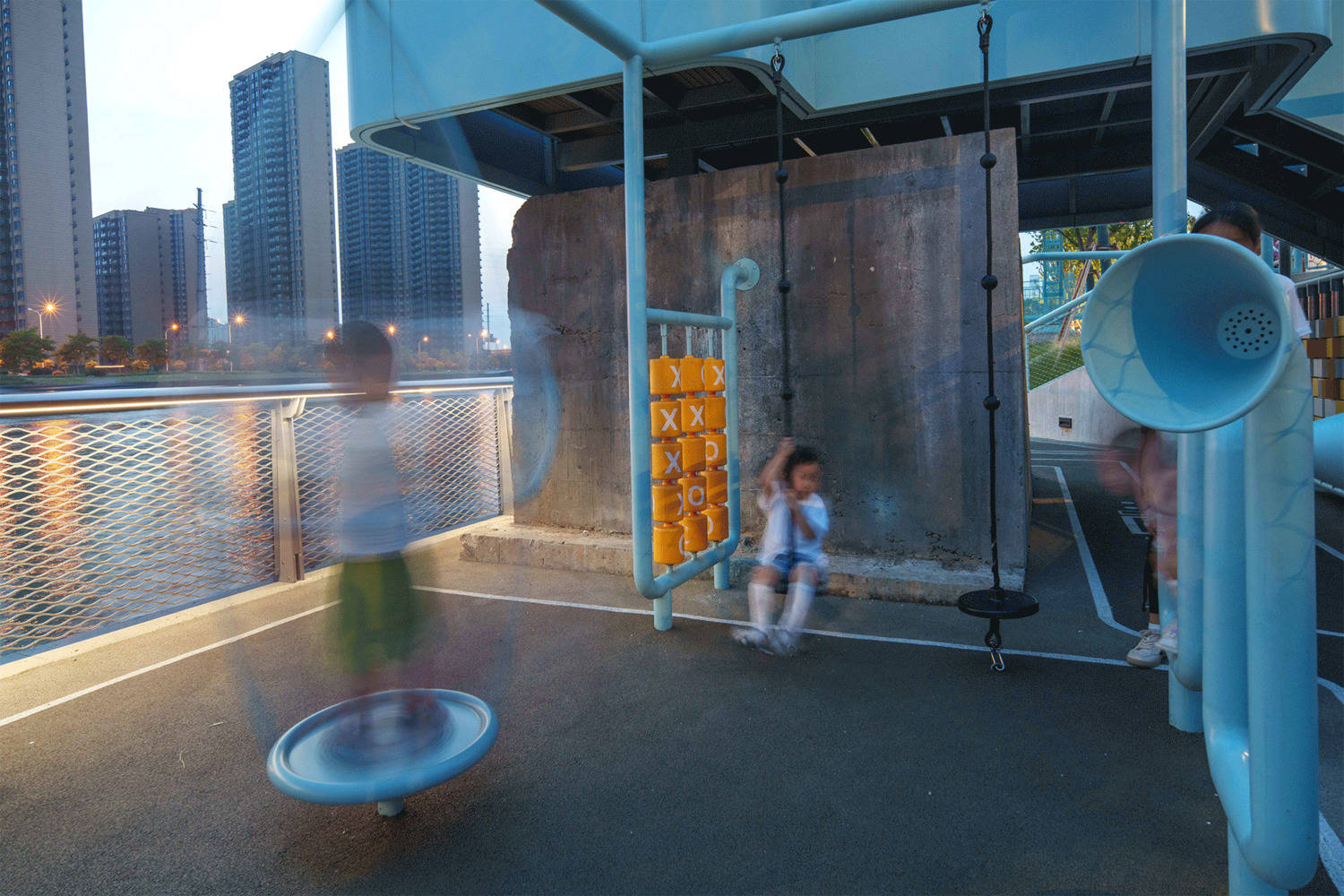
04 Cultivating City Friendliness:- All-Age Friendliness: Spatial design and functional layout are developed from an all-age-friendly perspective, accurately grasping the daily needs and spatial usage patterns of various age groups, ensuring that all people coming to the site can enjoy a friendly, healthy, and diverse waterfront environment and services. Four children's and fitness areas are set up on the project site based on existing conditions.
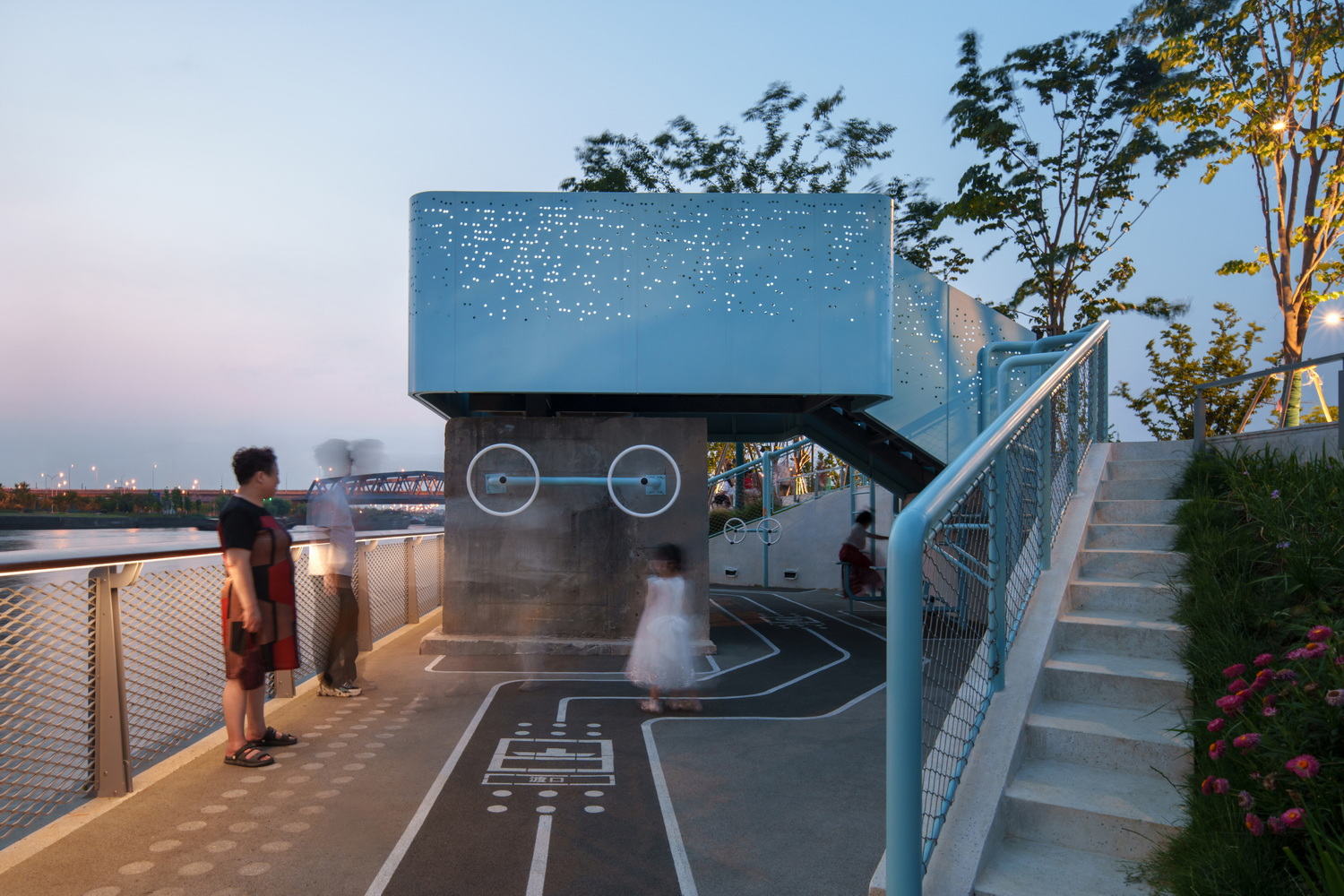
- Pier Park: An existing small loading/unloading pier, approximately 100 meters long, is utilized. By setting back the flood control wall and expanding the activity area on the pier's platform, it is transformed into a pier park integrating diverse functions such as parenting, fitness, and recreation.
- Waterfront Fitness Plaza and Children's Play Area: In the narrower linear spaces in the middle section, small fitness and children's spaces are retained and newly added as much as possible.
04 城市友好的营建:-全龄友好: 从全龄友好的视角展开空间设计及功能布置,准确把握各年龄群体的日常需求与空间使用状态,使所有来到基地的人群,均能享受友好、健康、多元的滨水环境与服务。本项目根据现状条件设置了四处儿童及健身场地。
-码头乐园: 现状一处长约100米的顺岸装卸小码头,利用码头地坪,退防汛墙、扩活动场,改造为融亲子、健身、休憩等多元功能于一体的码头乐园。
-滨水健身广场与儿童游乐: 在中段较窄的线性空间内,尽可能保留并新设小型的健身和儿童空间。
© 金笑辉
© 金笑辉
© 金笑辉
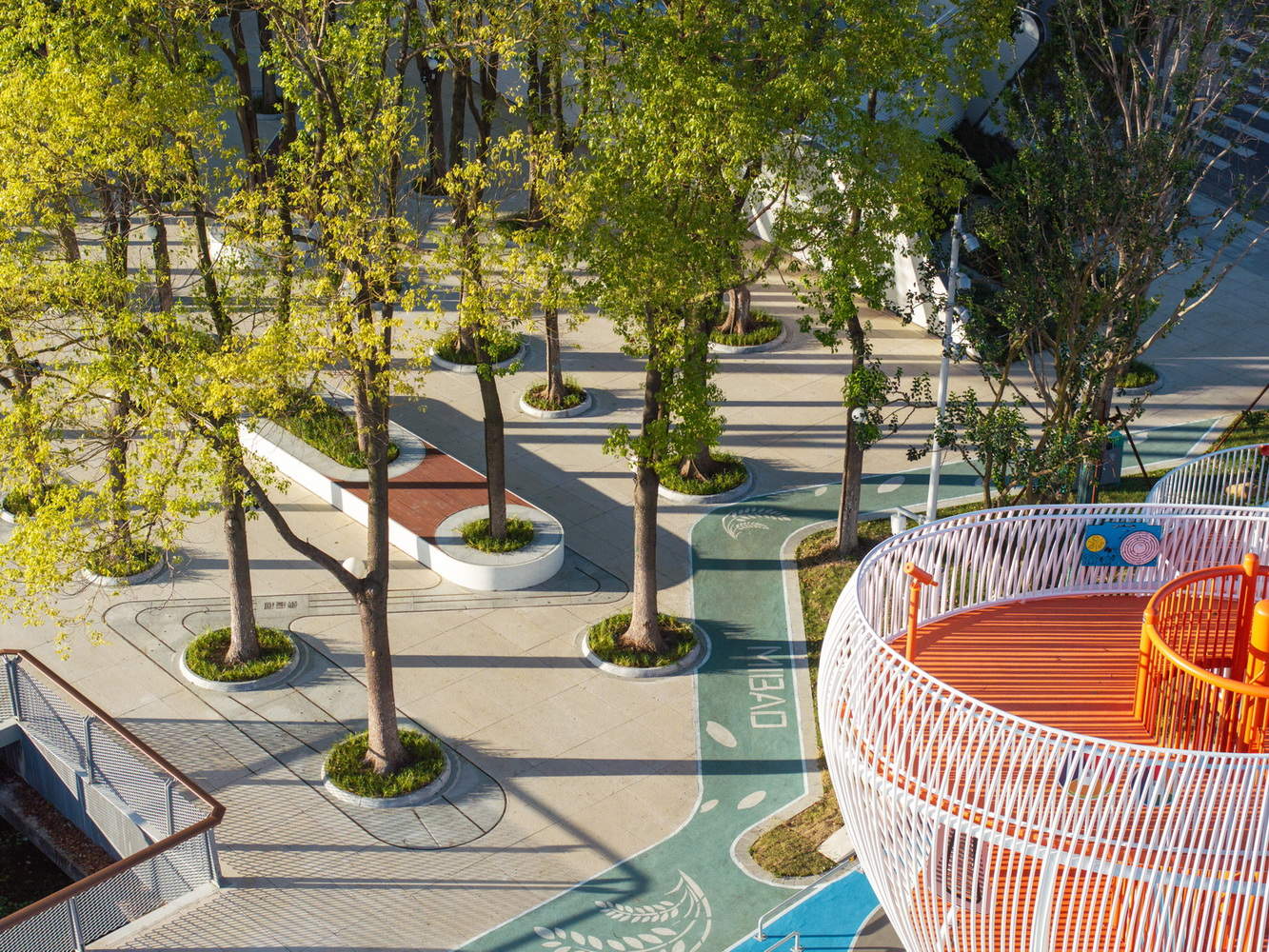
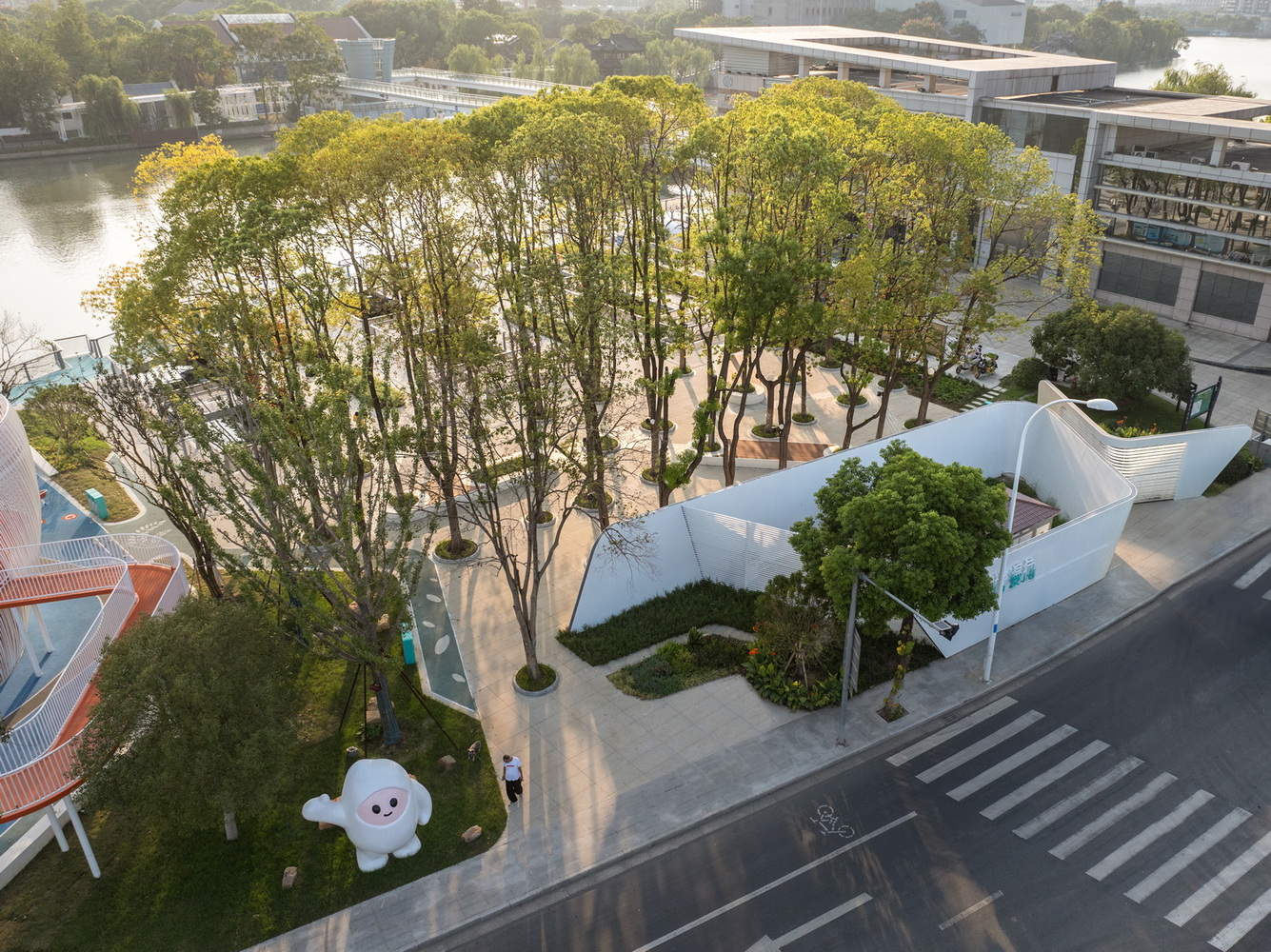
- Rice Treasure Playground: South of the Understory Museum, a children's themed playground is inserted among existing large trees, continuing the cultural concepts of "Land of Fish and Rice" and "Rice Market" related to original water conservancy facilities, organizing various play facilities based on the concept of "three grains of rice" to create a highly attractive children's paradise.
- Barrier-Free Design: Barrier-free design goes beyond mere function and standards; it lies in respect, understanding, and care for the users, fully considering their feelings and needs to make the design more engaging, approachable, and warm.
-米宝乐园: 林下博物馆南侧在原有大树之间,插入一个儿童主题乐园,依旧结合原有水利设施“鱼米之乡”“米市”的文化概念,以“三个米粒”为概念,组织各项游乐设施,形成极具吸引力的儿童天地。
-无障碍设计: 无障碍设计,不只是功能与规范,更在于对使用者的尊重、理解与关爱,充分考虑使用者的感受与需求,使设计更有趣、更具亲和力和温暖感。
© 金笑辉
© 金笑辉
Conclusion: Historically, the diversion of the canal brought new development opportunities to the city and shaped a new urban texture. The project is located at the junction where the ancient Grand Canal and the current Grand Canal converge in the Beitang section of Wuxi, witnessing this temporal transition and change. The design targets the narrow linear zone between the urban road and the river revetment, integrating with water conservancy infrastructure, weaving historical relics and green spaces into the urban slow-traffic system, and establishing dialogue with surrounding communities. With an approachable and friendly posture, it has boosted the appeal of the waterfront space and re-established the memory and emotional connection between the Grand Canal and the public.
结语: 历史上,运河的改线为城市带来新的发展机遇,也造就了新的城市肌理。项目位于无锡北塘段的古运河和如今大运河的并线处,见证了这一时空的转换与变迁。设计针对城市道路与河道驳岸狭长线型地带,与水利基础设施融合,将历史遗存和绿地接入城市慢行系统,与周边社区实现对话,以亲和友好的姿态提振了滨水空间的吸引力,重新建立起大运河与民众的记忆与情感连接。
© 金笑辉