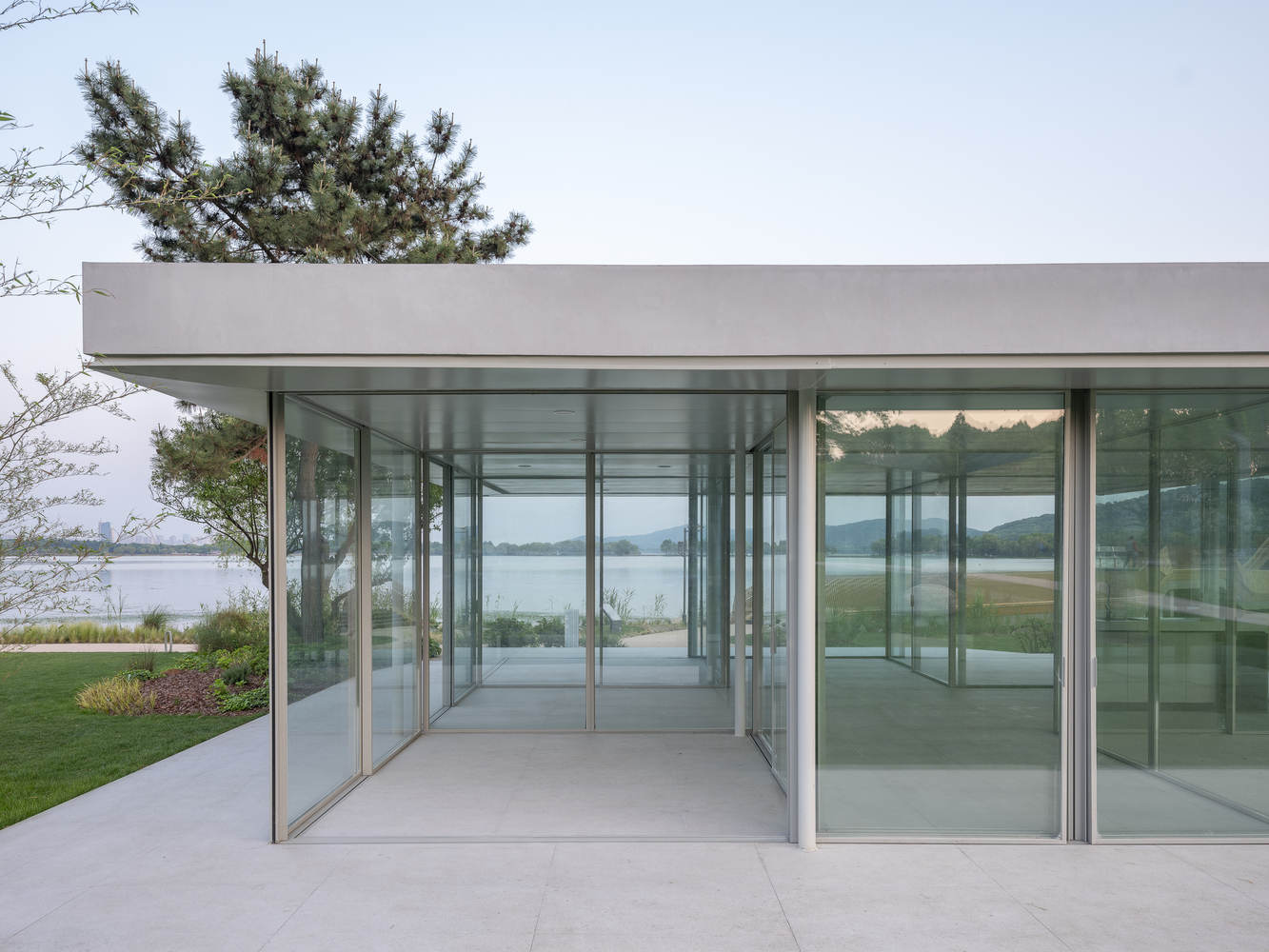
景观对话与物质性重塑:该项目在太湖之畔的优越景观环境中,成功地将玻璃这一传统材料从单纯的“通透性”追求中解放出来,转而强调其作为“物质性”实体——即空间分界与隔断的角色。通过对玻璃幕墙的并置与交错设计,建筑师创造了一种多层次的透明性体验,使建筑既能回应周边环境,又能在界定空间上展现其本体的张力。这种对材料特性的深入挖掘,是本项目在美学和空间叙事上的核心亮点。
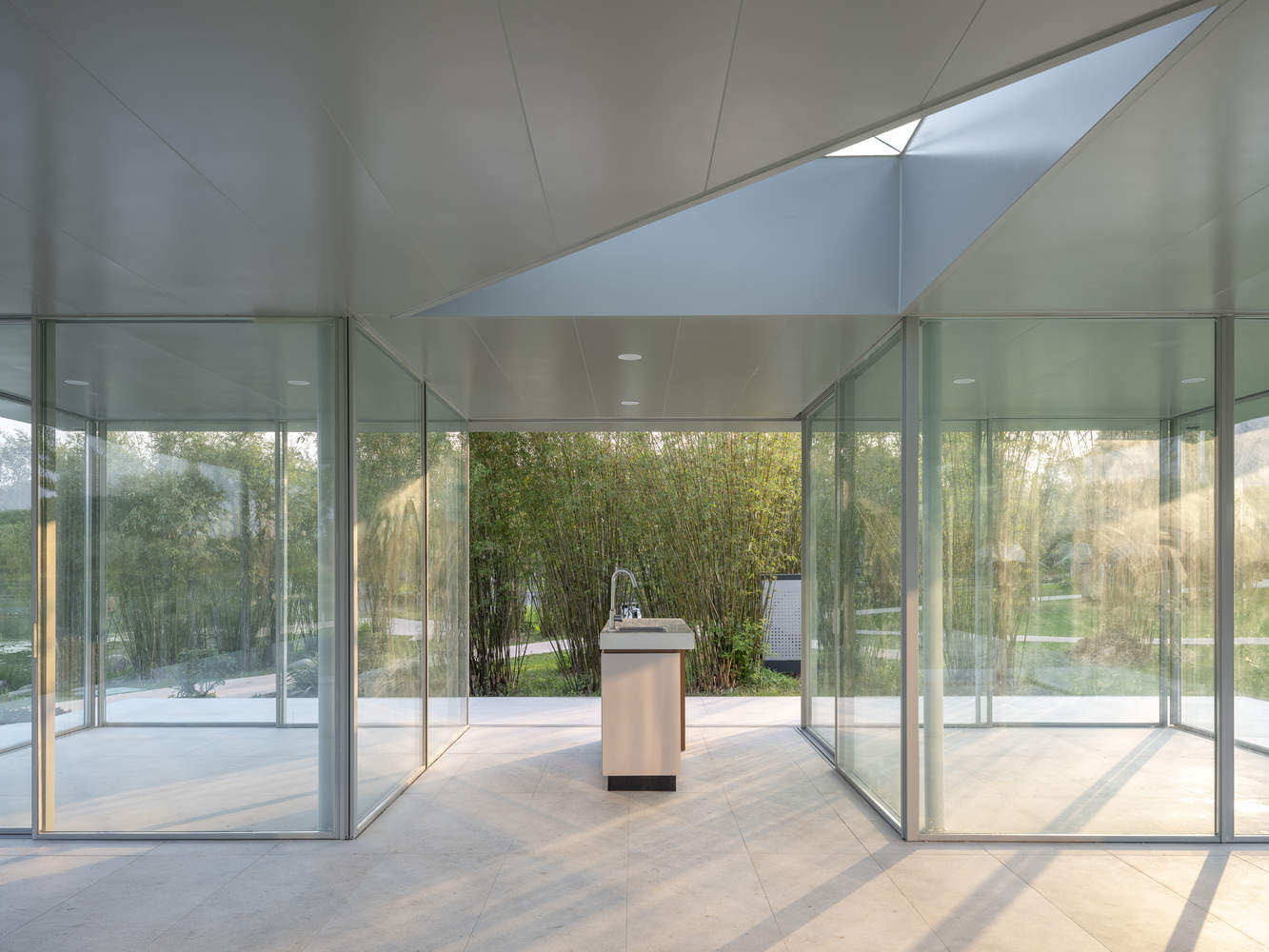
“九宫”系统的空间组织与灵活性:设计巧妙地引入了中国传统的“九宫”格局作为空间组织母题,在3.3米见方的网格系统上进行了具象化。通过12组纤细的钢柱支撑厚重屋面,并以24道玻璃滑轨门为核心构件,实现了高度可变的内部空间形态。这种基于网格和可动元素的集成,使得亭子能够根据不同的使用需求,在“十字模式”和“田字模式”等不同围合状态间自由切换,极大地增强了空间的使用弹性和场景适应性。
结构与动态体验的轻盈融合:项目在结构处理上体现了精妙的平衡艺术。纤细的圆形钢柱在支撑起厚重屋面的同时,保持了场地的通透感。更关键的是,灵活的玻璃滑轨门被赋予了“屏风”的功能,其开合动作直接定义了室内外的关系和景观的取景。这种动态的介入,使得使用者在移动隔断的过程中,能够切实体会到建筑的轻巧、灵动,并沉浸式地感受太湖水波与风光的环绕与叠加,实现了功能、结构与体验的和谐统一。
The Deforming Pavilion by the Taihu Lake
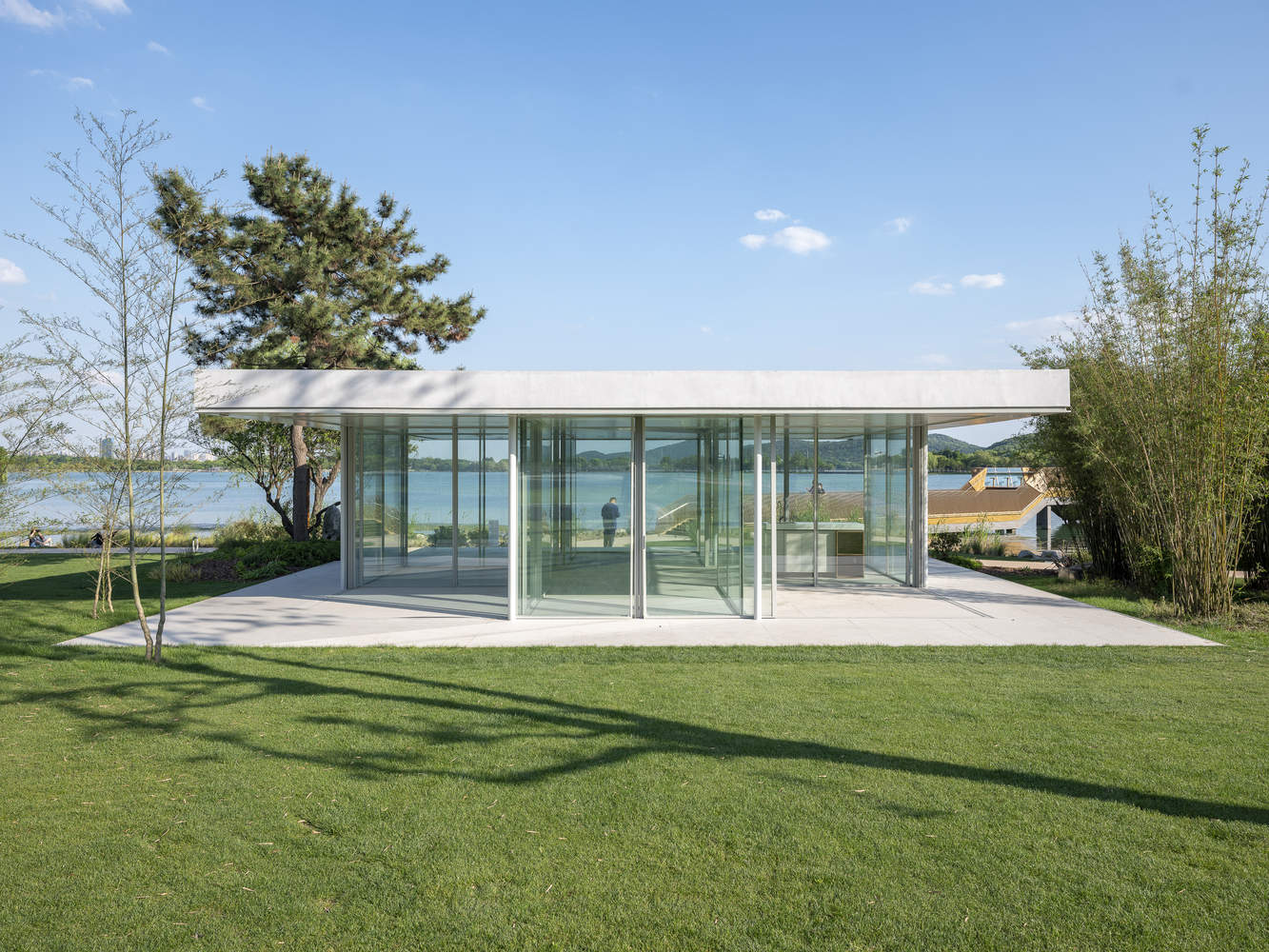
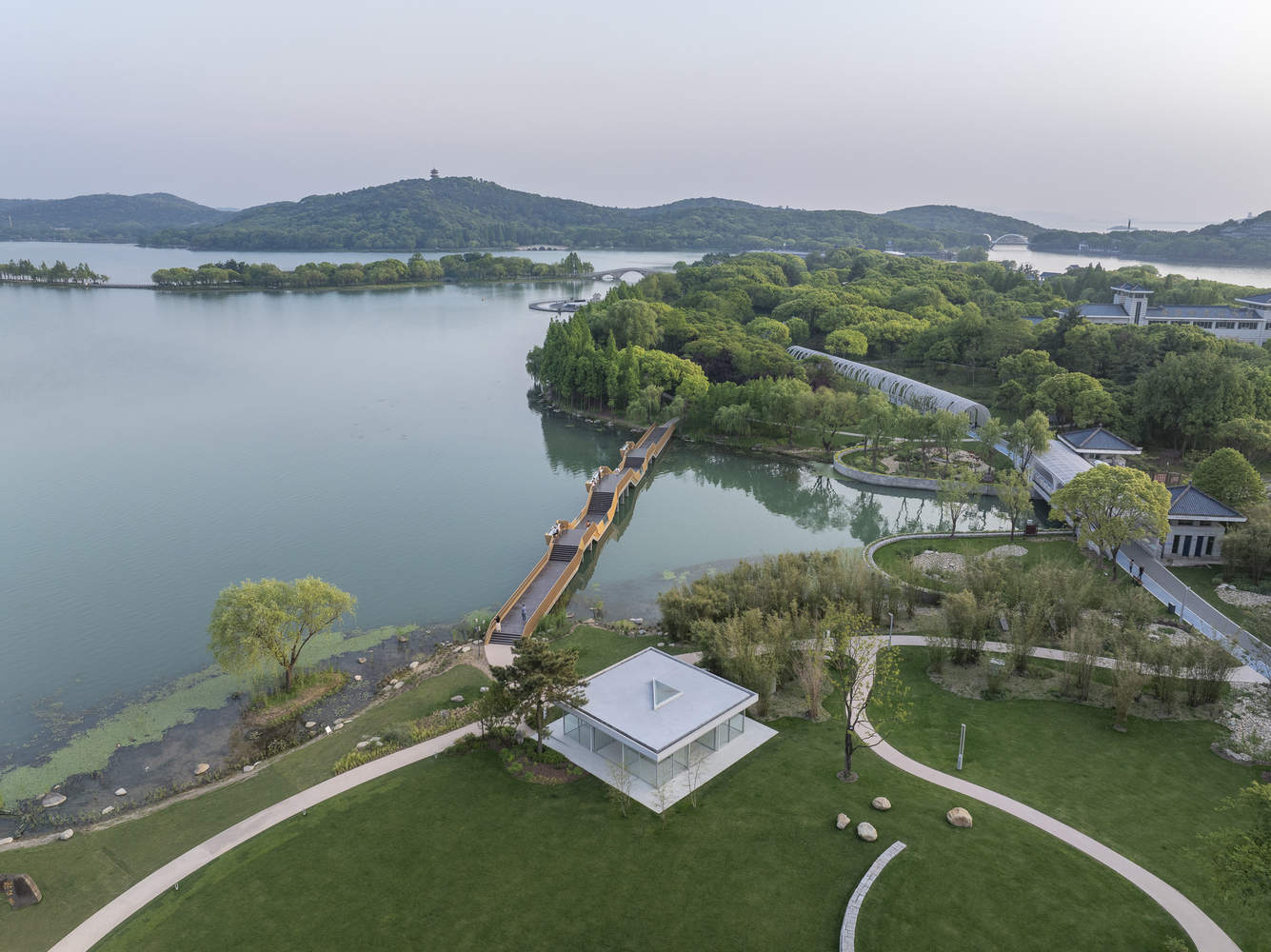
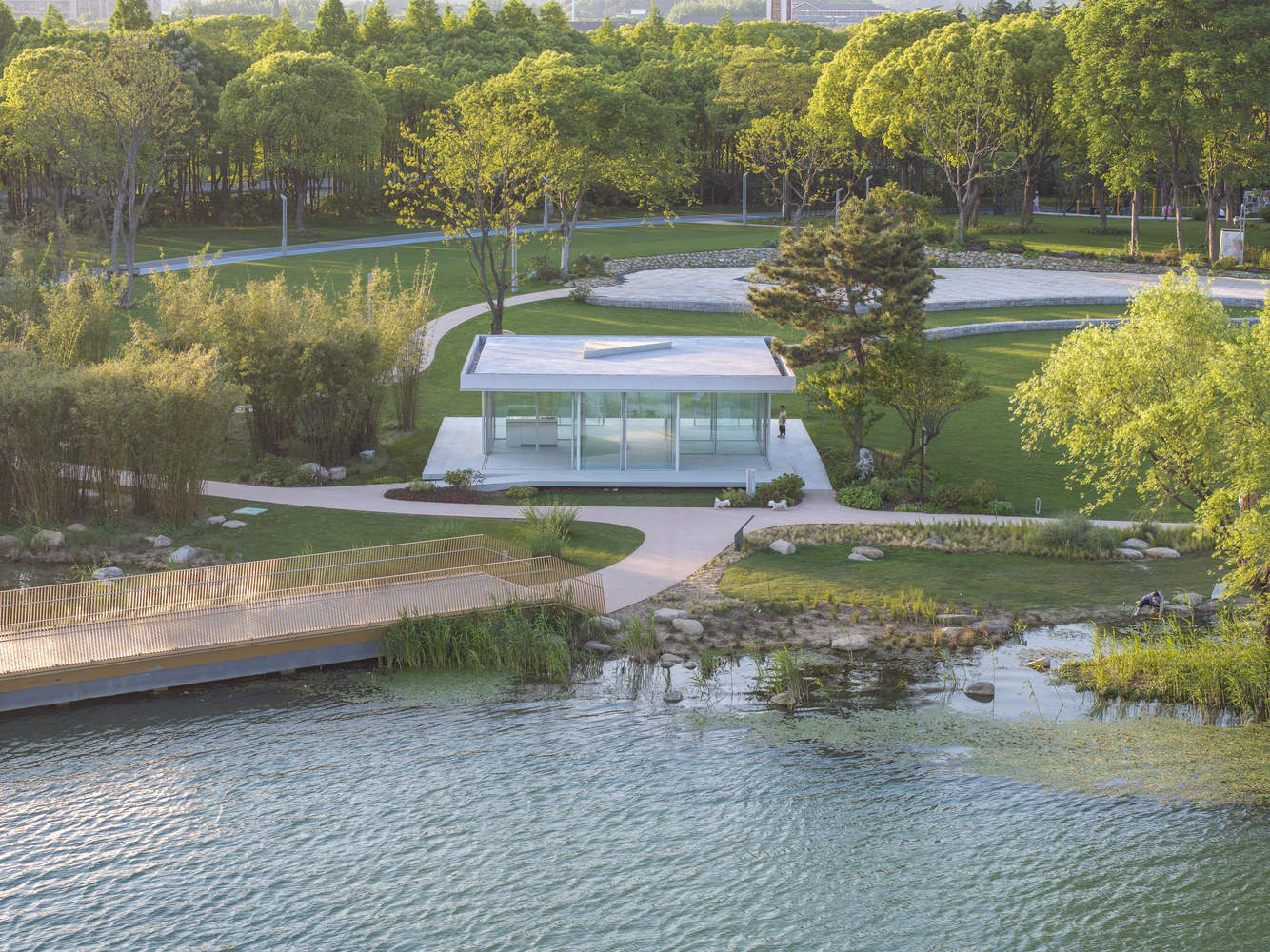
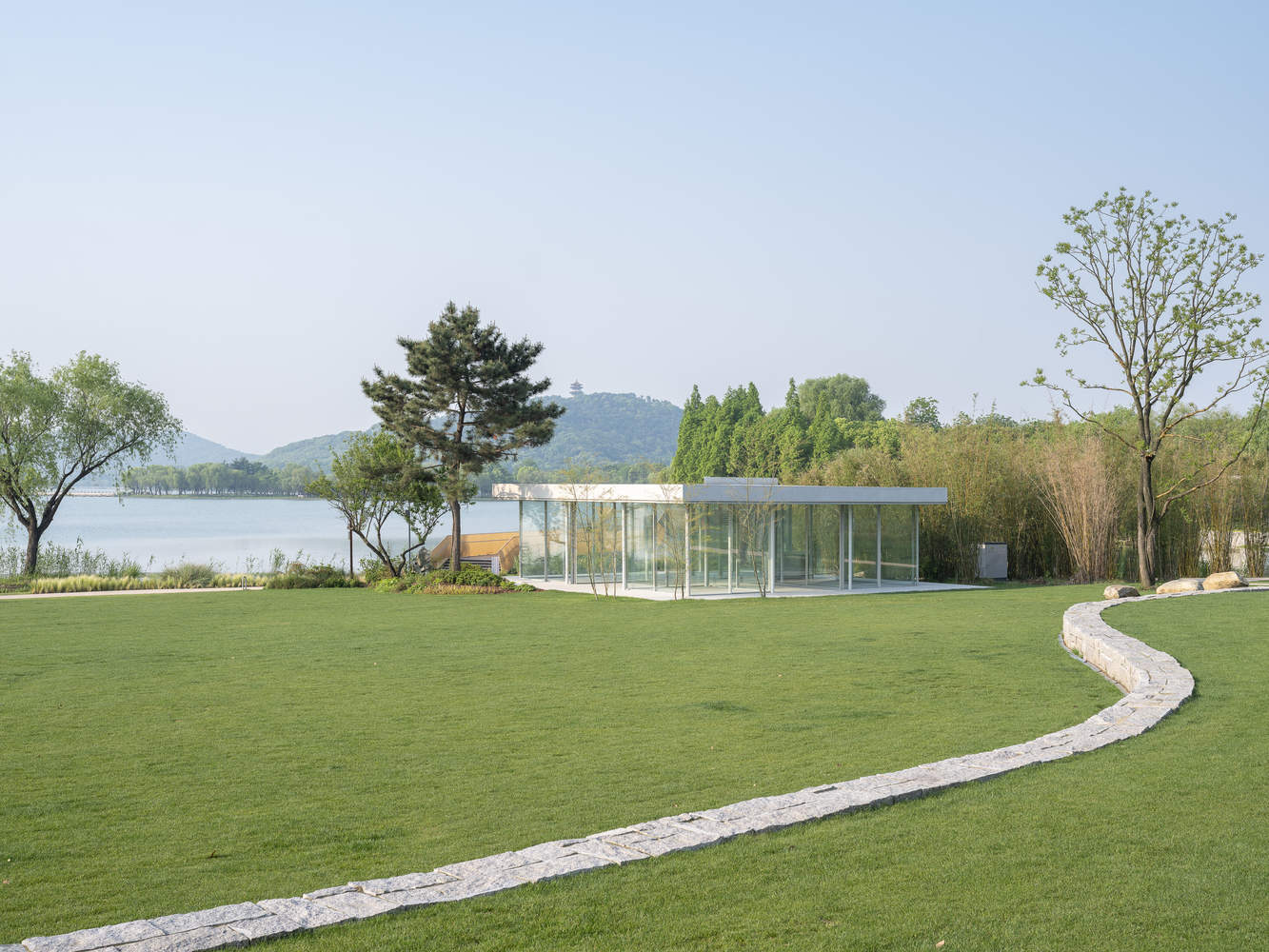
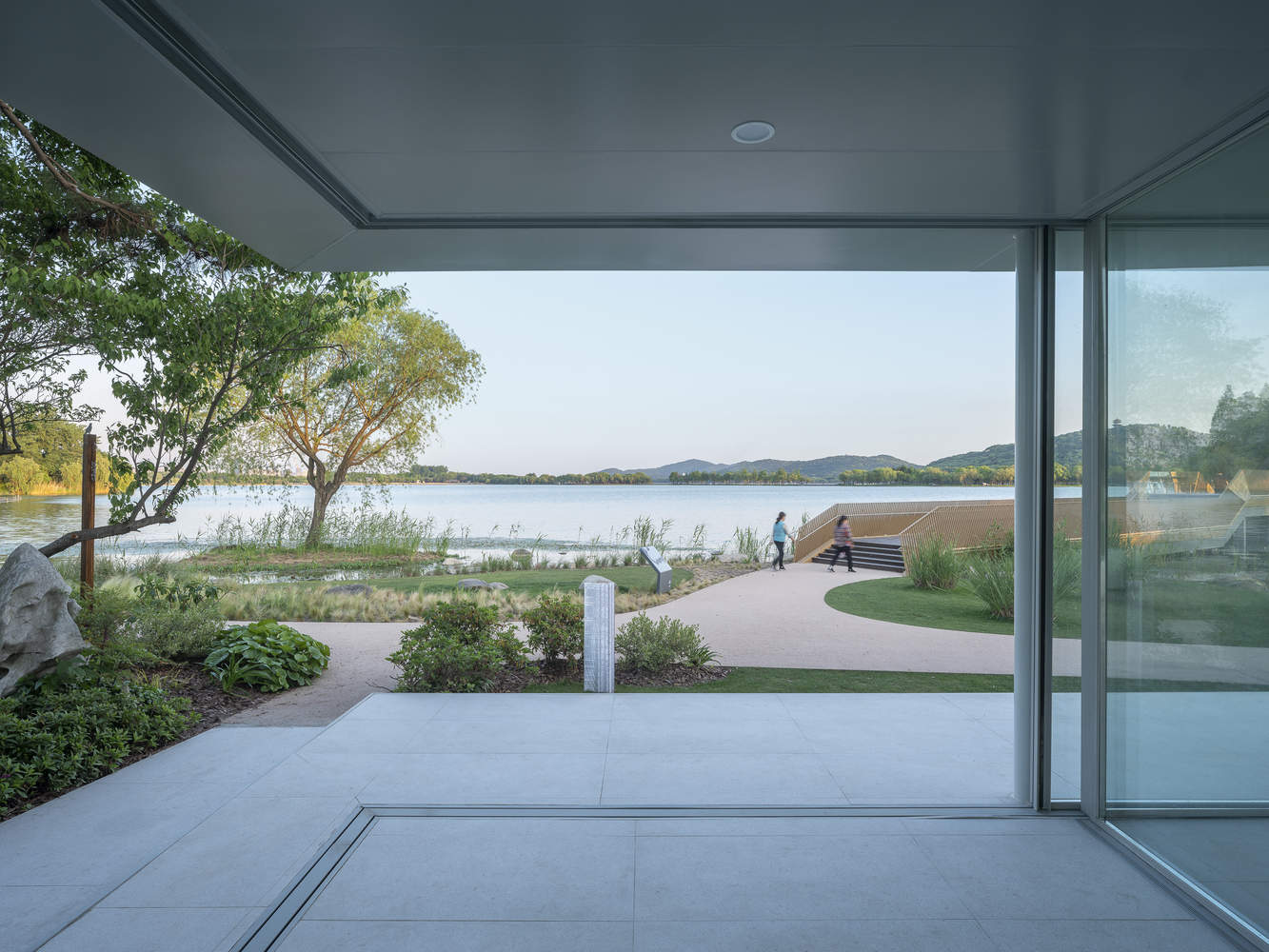
The Nine Square Pavilion is located in the Bò Gōng Island Ecological Park in Wuxi City. The site is adjacent to the Qín Yīn Bridge, boasting an open view to the east, a landscape bamboo forest to the west, and being merely ten meters away from Lǐ Lake, an inner lake of Taihu Lake, to the south, granting it extremely superior landscape resources. The project's function is a teahouse, and based on the landscape conditions, we first conceived of a glass pavilion with a certain degree of interior space.
© 田方方
© 田方方
The Materiality of Glass
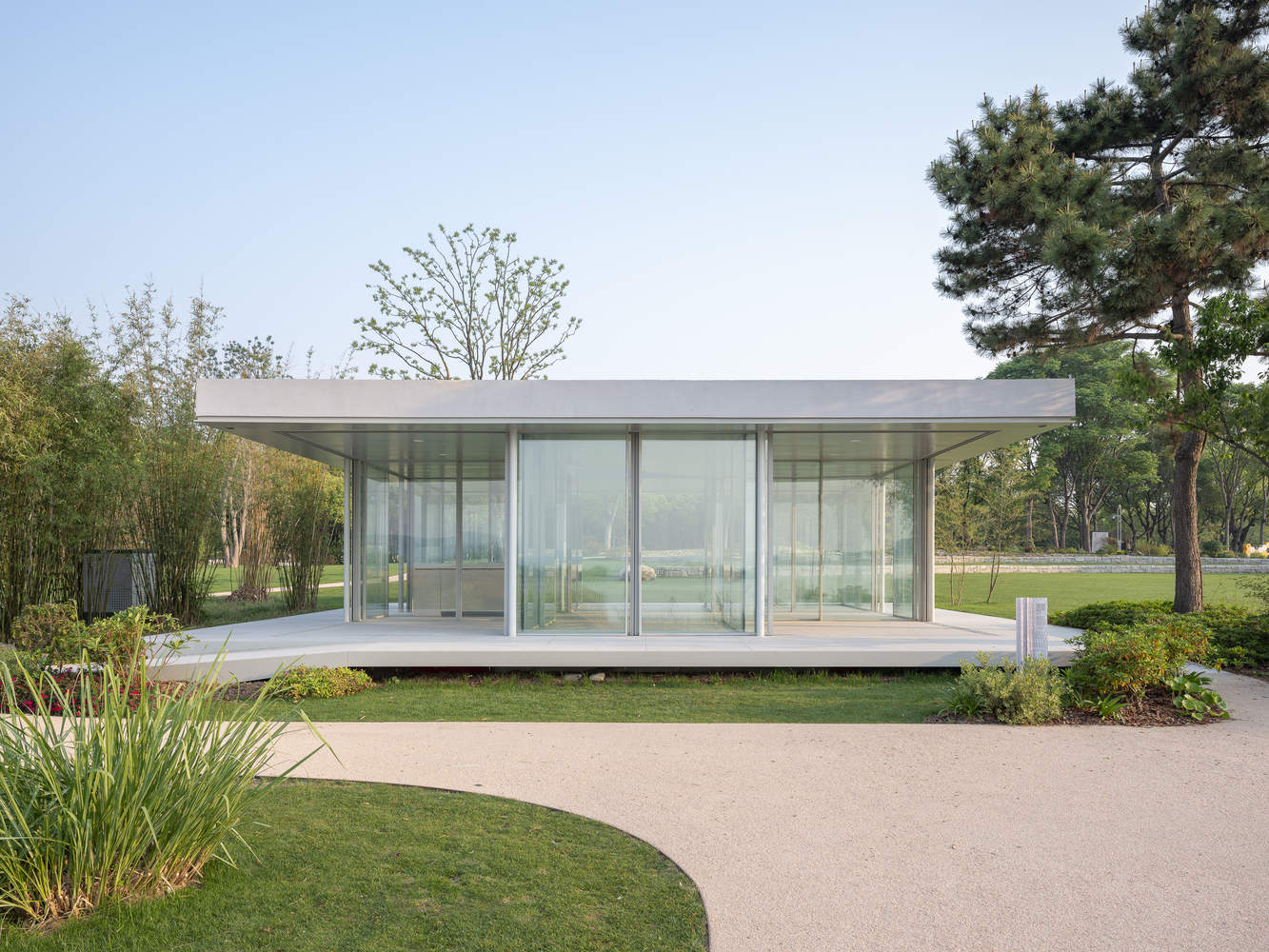
For glass curtain walls, people often focus primarily on their transparency, as if the application of glass stems from the sense of boundlessness brought by the partial absence of its materiality. This is also the view held by some classic modernist glass buildings: to use glass in order to not feel the glass. In the Nine Square Pavilion, we hope to re-emphasize the materiality of glass: it is both an internal-external boundary and a spatial partition; at the same time, we attempt to reflect the superposition and variation of transparency through the juxtaposition and intercrossing of glass partition walls.
© 田方方
© 田方方
© 田方方
© 田方方
© 田方方
The Flexible Pavilion
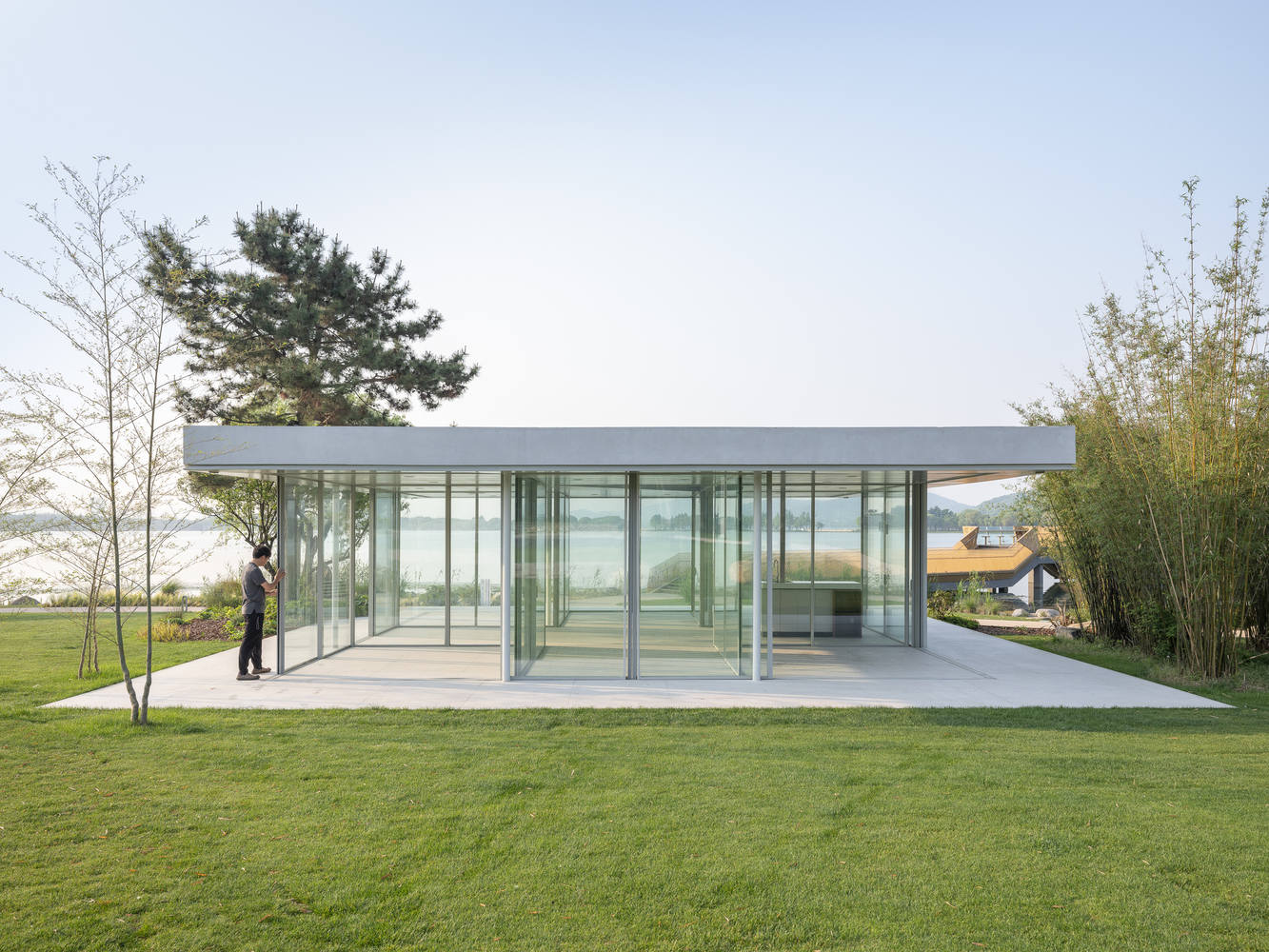
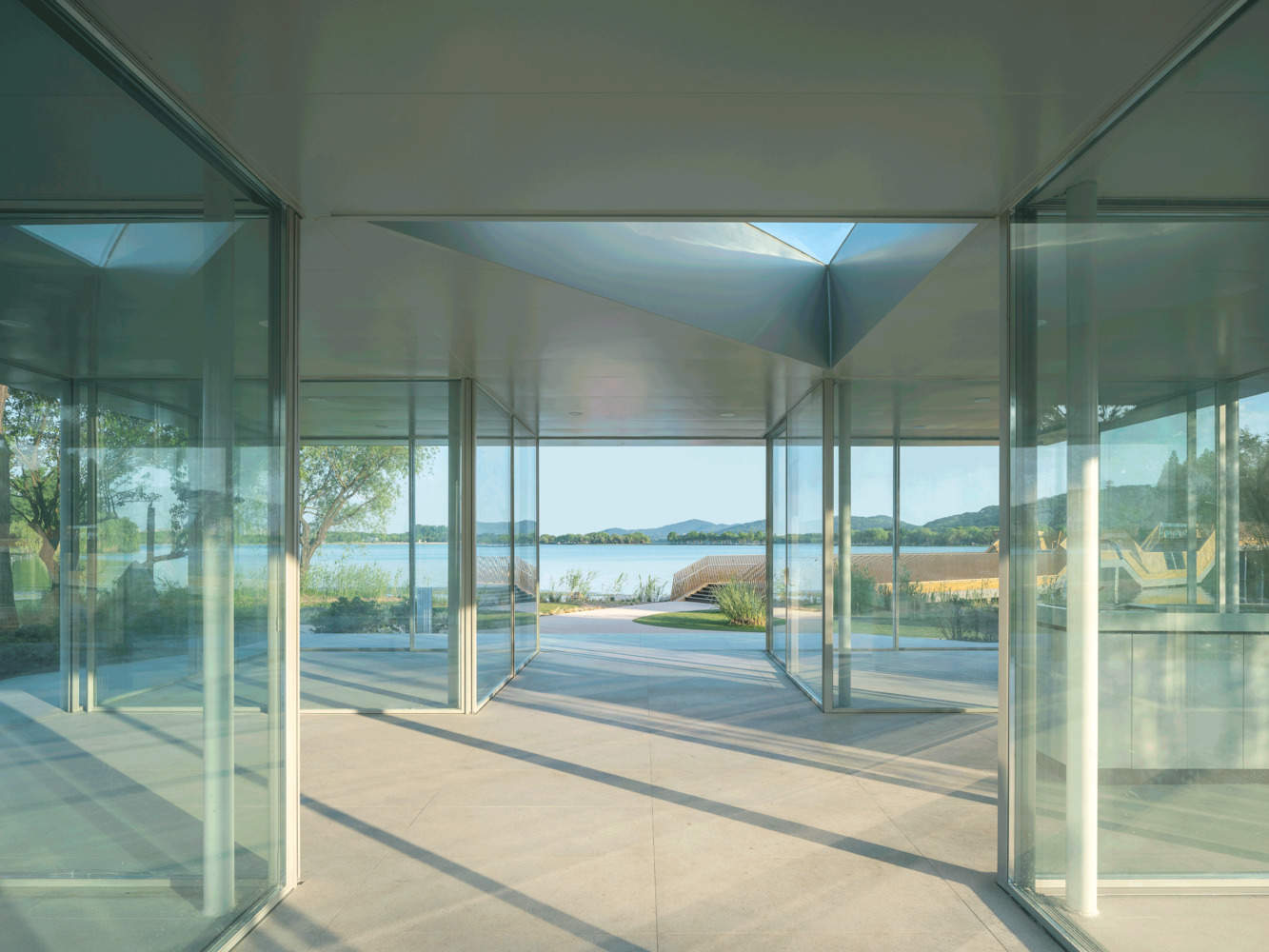
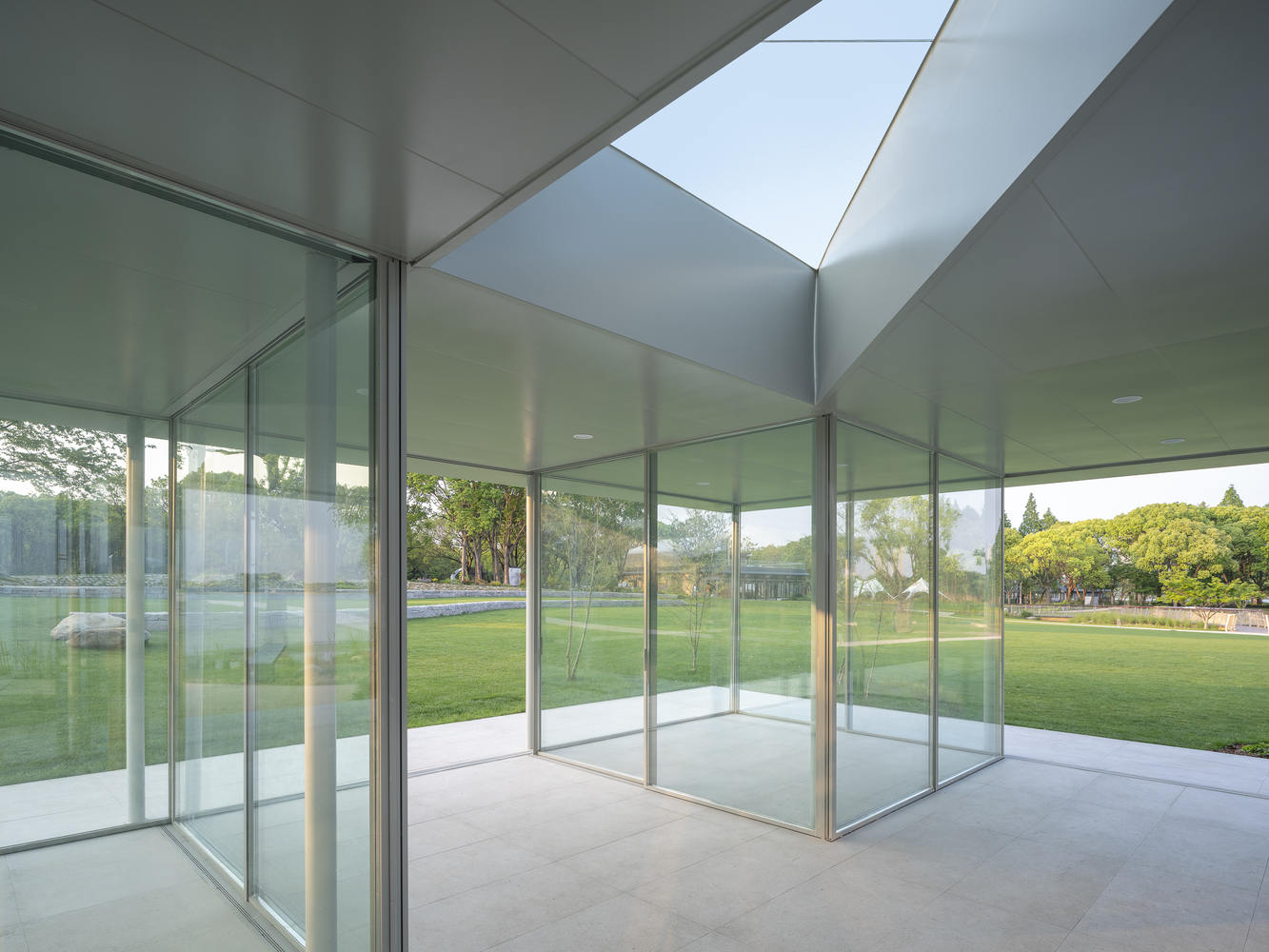
The Nine Palaces, as a traditional Chinese diagrammatic pattern and numerical game, embodies the development and change of things within a 3x3 grid. We delineated a Nine Square grid system, with each cell measuring 3.3m x 3.3m, on the square platform. Twelve sets of slender circular steel columns support the heavy roof at the intersections of the grid. Twenty-four glass sliding doors are arranged along the grid edges, enclosing a variable glass partition system. By moving the sliding doors to change the enclosure method of the partition according to different usage scenarios, the interior “palaces” and semi-outdoor “palaces” transform into each other, allowing one to experience flexible space and usage through the transition between the “Cross Pattern” and the “Tianzi Pattern” (Field Pattern).
© 田方方
© 田方方
© 田方方
People can either stay indoors or sit under the eaves, experiencing the embracing and superposition of the lake waves and wind through the reflections cast by the glass partitions. The sliding doors also transform into light screens, narrating the lightness and agility of this small pavilion by the Taihu Lake through their opening and closing.
© 田方方