从场地基因到功能创新的场所塑造:本项目成功的核心在于精准捕捉并尊重了寿二小区独特的“90°”与“45°”空间约束下的环境基因。设计师将一个原先功能杂乱的“角形”宅间绿地,转化为一个具有高度场所认同感的社区花园。设计策略上,巧妙地利用居民晾晒衣物的日常需求,将其转化为具有围合感的“角形”廊架结构,这一设计不仅解决了功能诉求,更重新定义了公共空间的边界,实现了从被动使用的角落到主动界定场所的转变,是微观尺度下对文脉敏感性设计的典范。
围合与渗透的界面策略:设计亮点在于对场地边缘的处理——将晾衣廊与小区围墙进行一体化整合,并适度内退围墙,创造出面向外部街道的休憩空间。这种处理方式打破了传统围墙的封闭性,实现了“内外渗透”。同时,通过在围墙上植入玻璃砖,策略性地引入街道光影,既丰富了夜间景观,又在视觉上弱化了外部干扰,保障了内部休憩的私密性和心理安全感,实现了功能性、美学性和安全性的多重平衡。
基于肌理的精细化空间建构:在空间建构层面,项目严格遵循小区既有的“2米×2米”模数和“90°/45°”网格,确保了新设计与原有肌理的高度契合。材料上选用与红砖围墙同色的主材,营造温暖质朴的社区氛围,并通过局部玻璃砖、特色乔木(鸡爪槭)的引入,提升了休憩体验和景观品质。这种基于环境基因的“模数化”和“材料呼应”的设计手法,使得360㎡的空间在有限的尺度内,既具备了商业景观的“组团入户花园”体验,又形成了稳定、半内向的林下休闲场所。
The Corner Garden is a community garden renovation project covering 360㎡, situated in the heart of the Shou Ergong residential area in Pudong New Area, Shanghai, amidst chaotic existing greenery, residents' self-built drying racks, and dilapidated ground conditions.
角园是位于上海市浦东新区沪东新村街道中心腹地的寿二小区内的一个社区花园更新项目,占地360㎡,改造前场地绿化杂乱、居民私建晾衣架、场地破损。
© CreatAR Images
© CreatAR Images
01. A “Corner Garden” by Nature
The Shou Er area, where Shou Ergong is located and built in the 1990s, is one of the two most rigorously and characteristically laid out spatial clusters in the jurisdiction of Hudong Xincun Street, the other being the Hudong Xincun and Hu Yi residential areas built in the 1950s.
建于 1990 年代的寿二小区所在的“寿一、寿二片区”是沪东新村街道属地范围内从建筑空间布局最严谨最有特色的两个片区之一,另一个是建于 1950 年代的“沪东新村、沪一小区片区”。
© CreatAR Images
© CreatAR Images
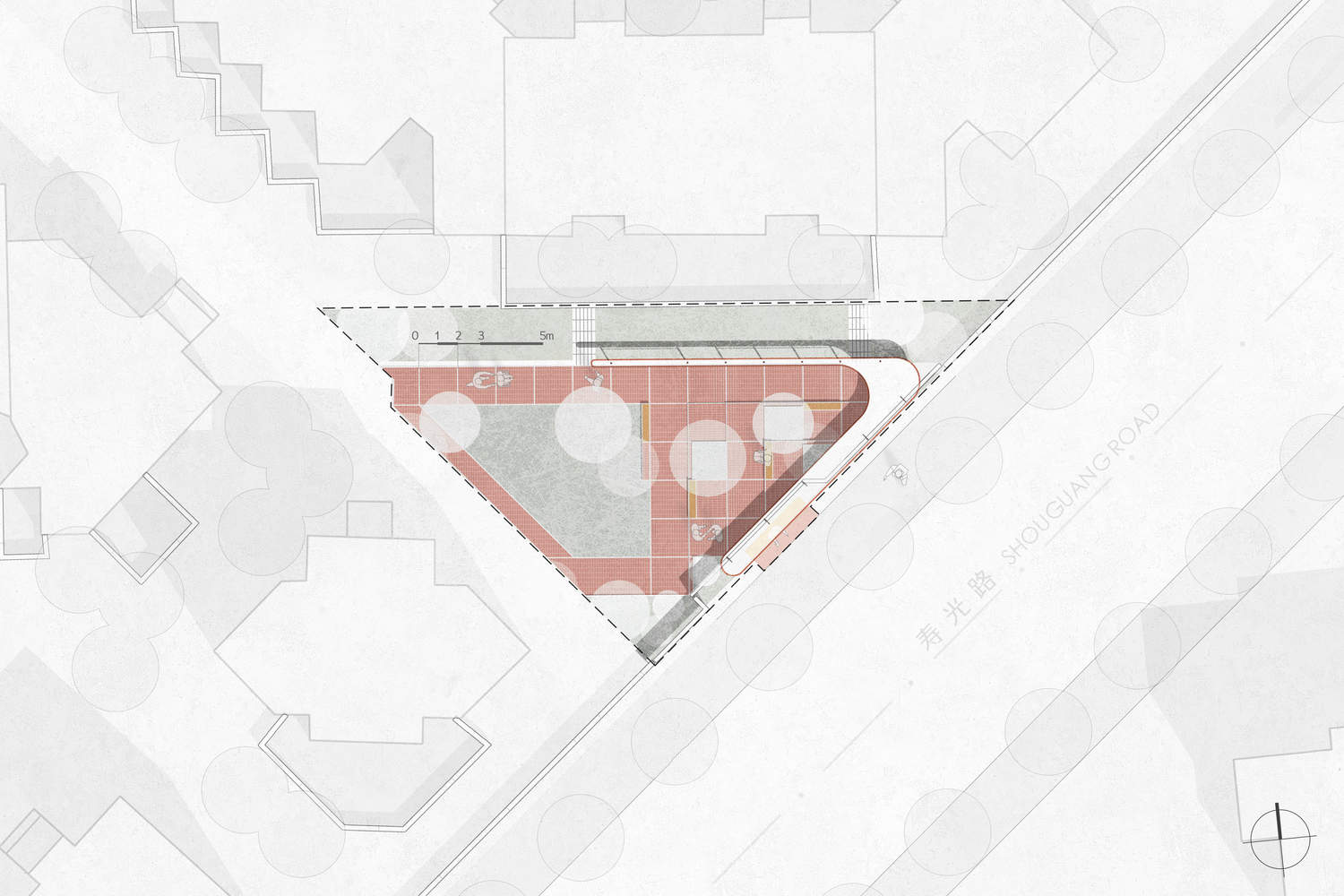
The building layout of Shou Ergong is the product of the interaction between two factors: the rationality of living experience resulting from optimal North-South lighting, and the rationality of the spatial cluster induced by the tilted rectangular land plot, ultimately forming a courtyard-style residential cluster constrained by spaces in "90°" and "45°" directions. This layout naturally forms a series of "corner-shaped" spaces outside the residential footprint, which are currently used for ground parking, community public service facilities, concentrated green areas, small squares, and green spaces between residences. The Corner Garden in this design was also a "corner-shaped" green space between residences before its renovation, so "Corner Garden" as the name of this community garden is quite natural.
寿二小区的建筑布局是“正南北采光最优导致的生活体验合理性”与“倾斜的矩形用地街坊引发的空间聚落合理性”两个因素互动的产物,最终形成了以“90°”与“45°”两个方向空间约束的院落式的小区建筑聚落。这样的布局特征也自然在住宅占地以外形成了一系列的“角形”空间,这些空间目前的使用功能主要是:地面停车、小区公服设施、小区集中绿地、小广场、宅间绿地等。而本次设计的角园在更新前也是寿二小区内的一处“角形”宅间绿地,于是“角园”作为这个社区花园的名称也算是自然而然的。
Corner Garden Plan
© CreatAR Images
02. Breaking the Wall with Drying Racks
The Corner Garden started design almost simultaneously with VIA's other project, "The Paper House." Here, besides the residents' desire for outdoor clothes drying functionality, it was largely a theme-less design. Furthermore, because the Corner Garden is located at a corner edge adjacent to the community wall and the site area is too small, we believed that no dynamic activities should be introduced here; the environmental atmosphere should be set to "stillness," with only a simple resting function.
角园是和 VIA 的另一个项目“纸片屋”几乎同时开始设计的,在这里除了居民希望可以有室外晾衣的功能之外,基本上是一个无主题设计。此外,由于角园位于紧邻小区围墙的小区边缘一角且场地面积过小,我们认为在这里不应当引入任何动态的活动,当以“静”为环境气氛设定,具有一定的简单休憩功能即可。
© CreatAR Images
© CreatAR Images
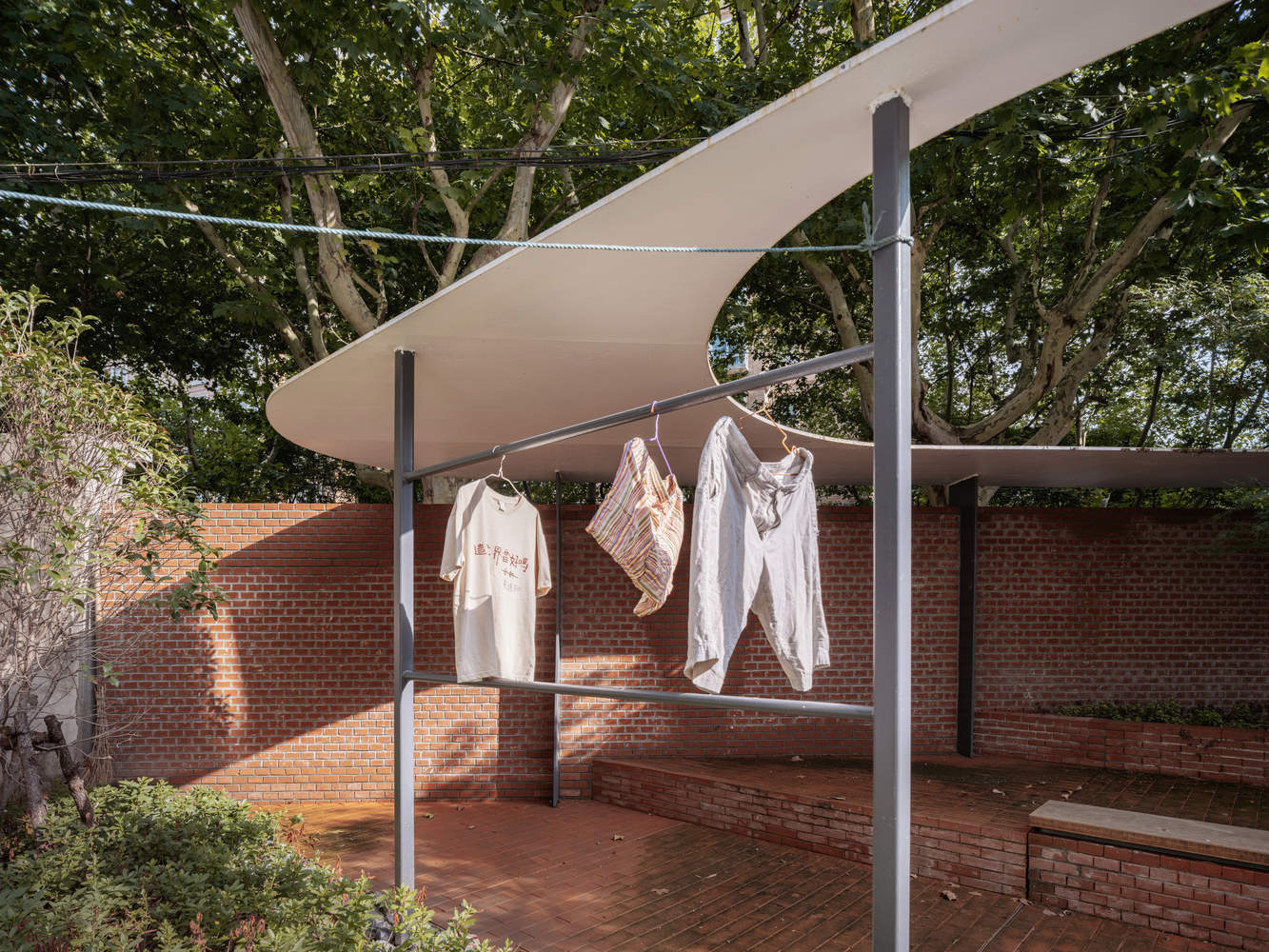
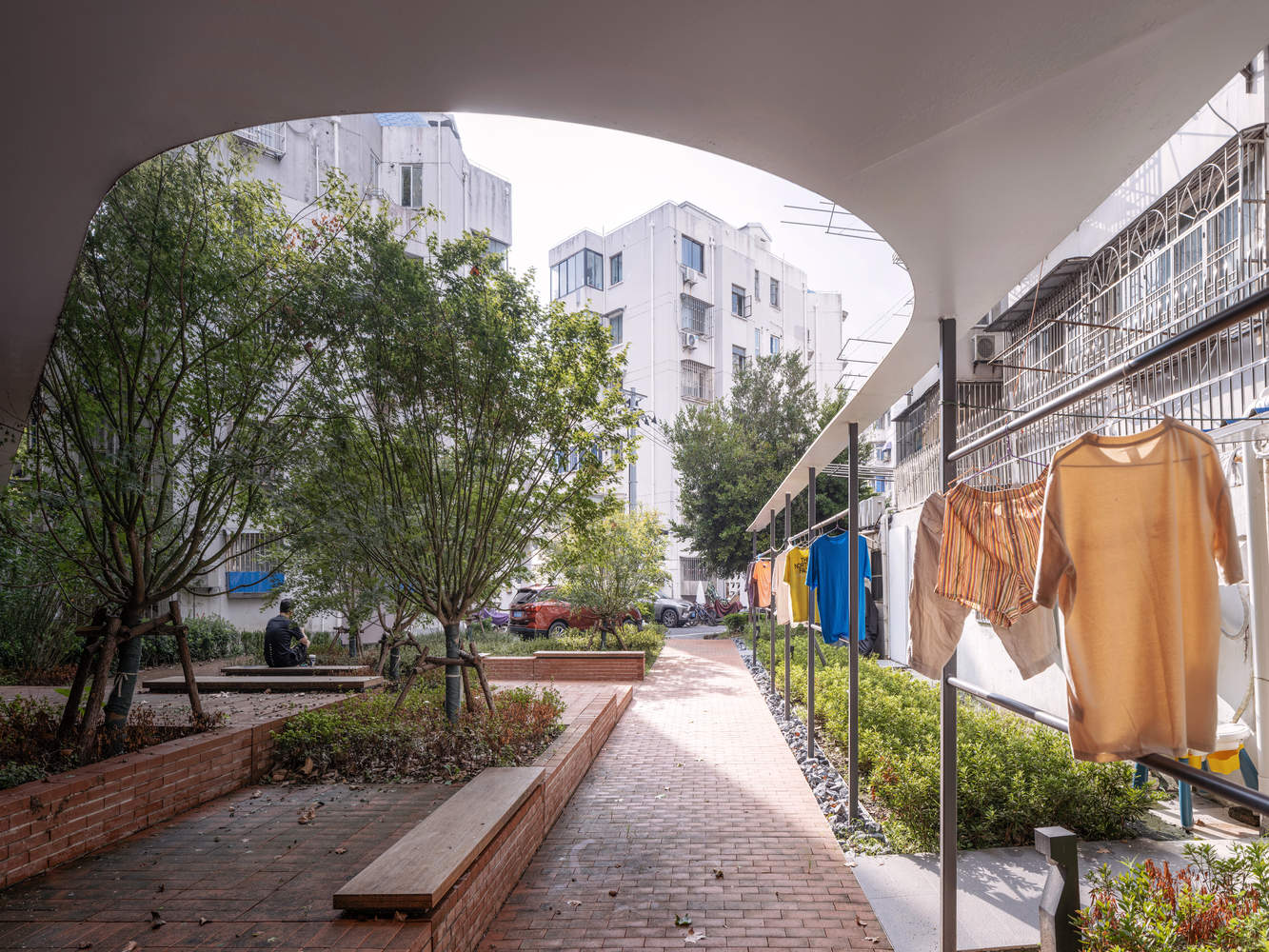
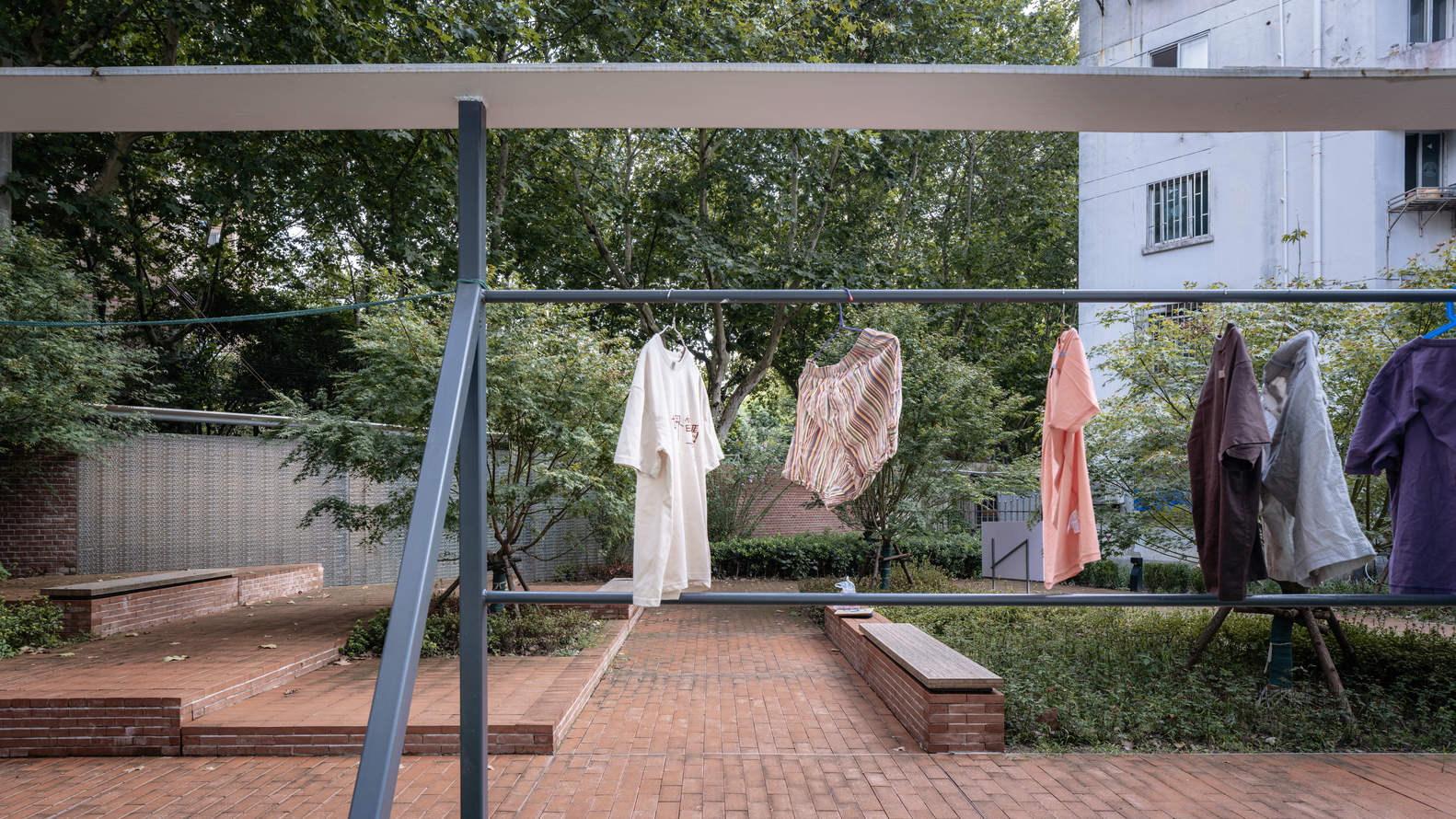
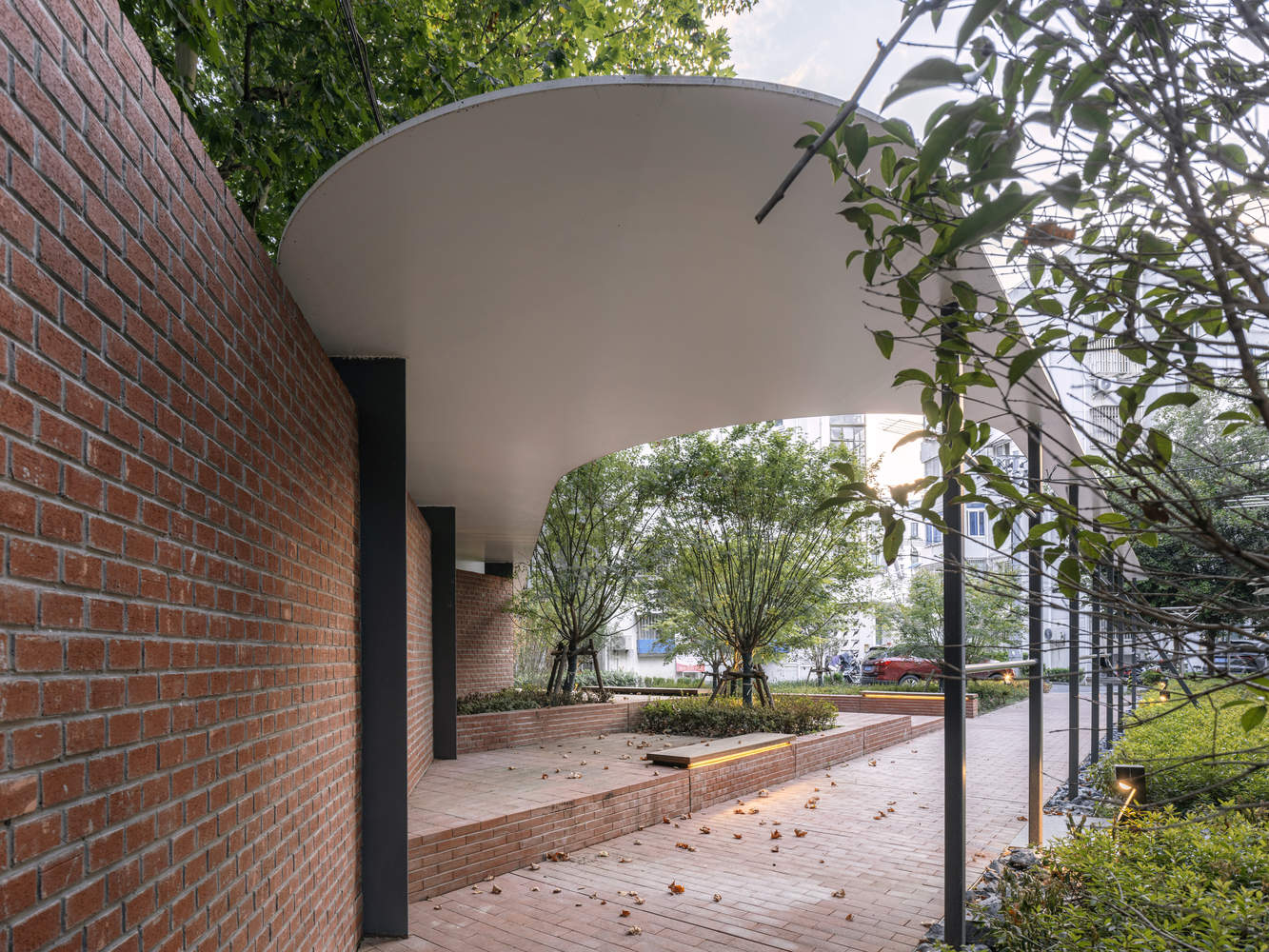
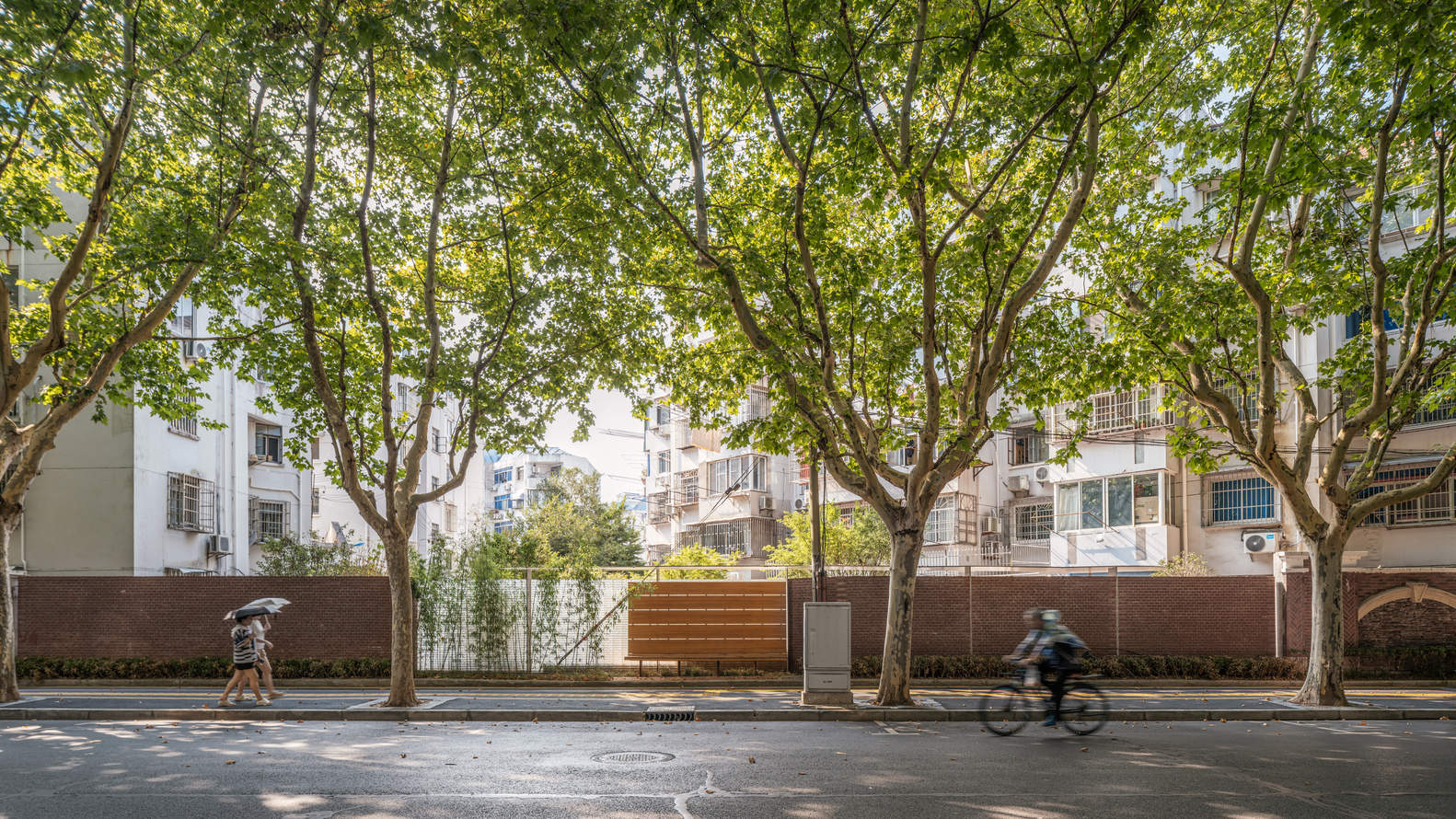
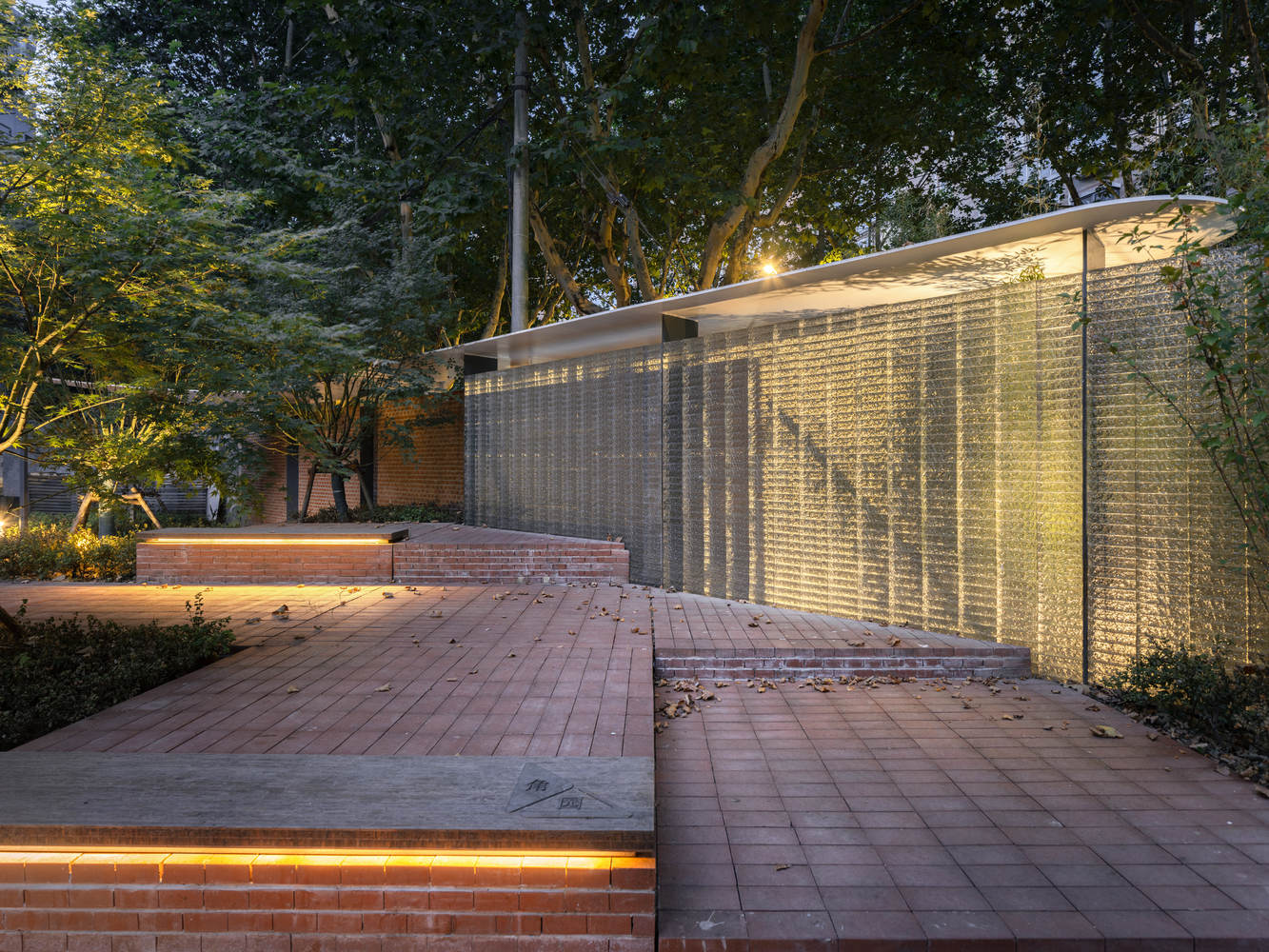
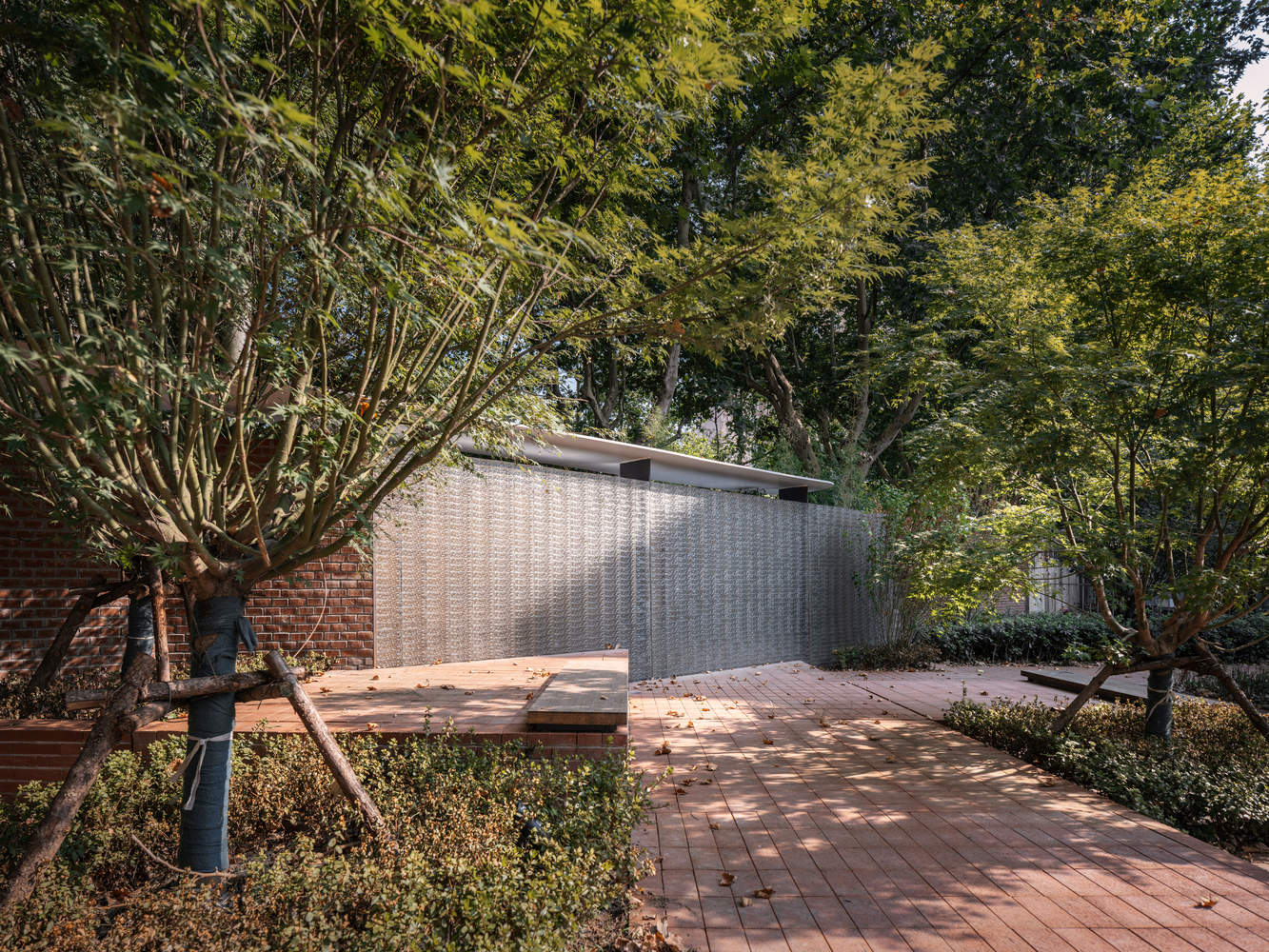
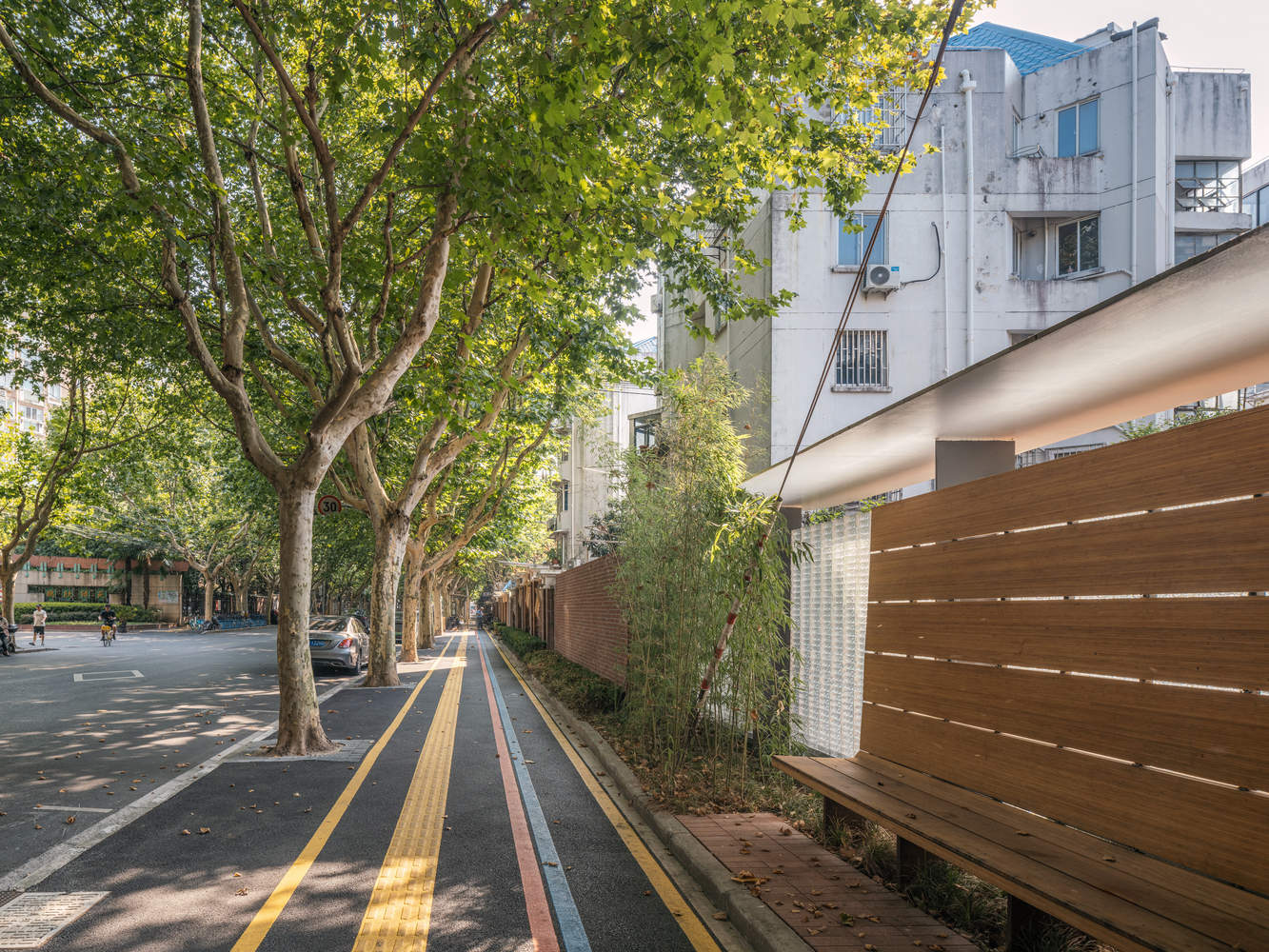
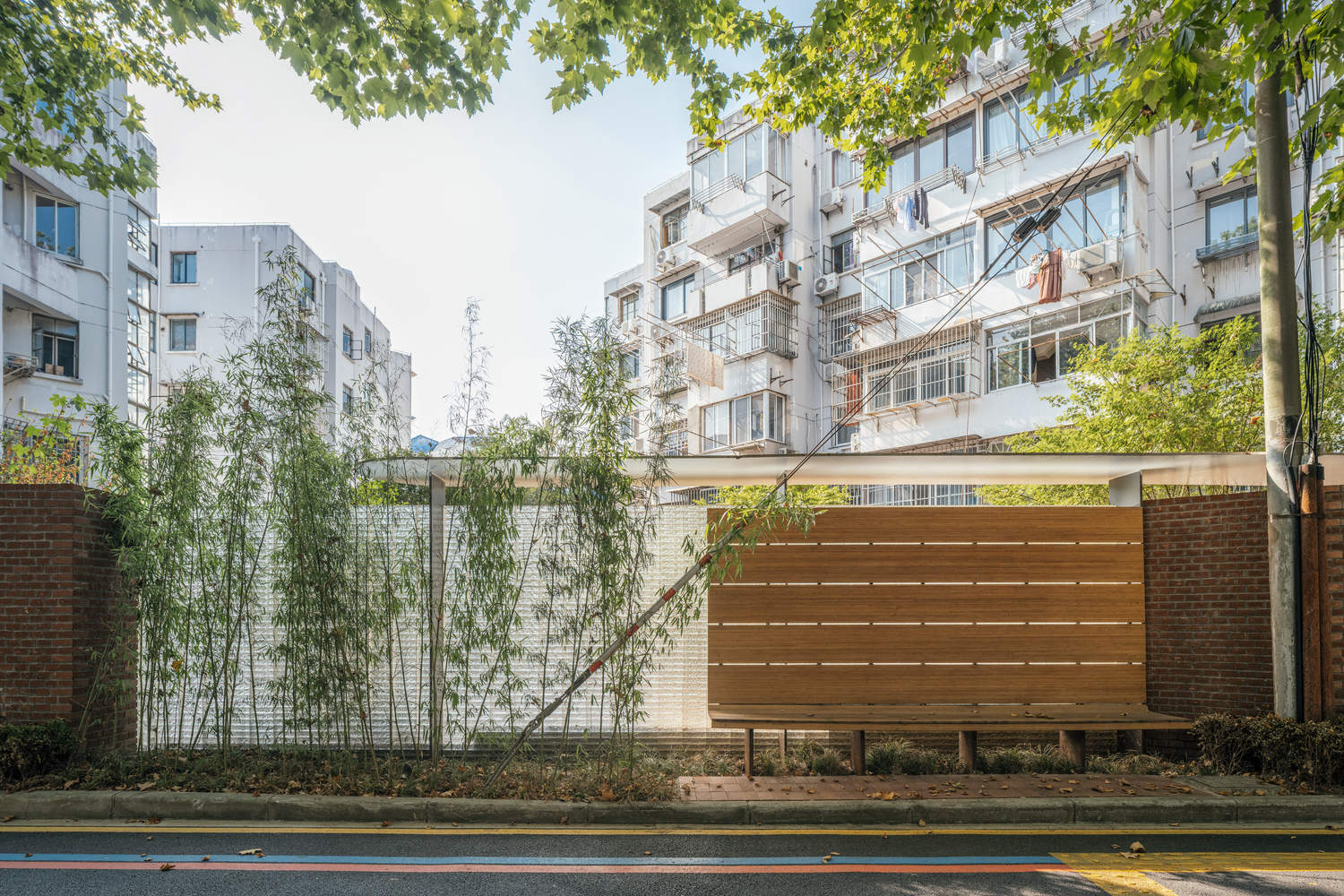
During the first site visit, we formed the core renovation design strategy: making the drying rack the primary element in terms of function and vision, so that the drying rack not only meets functional requirements but also becomes the "enclosing" interface of the Corner Garden space, by designing the drying rack as a "corner-shaped" corridor. Simultaneously, we integrated the corridor with the adjacent community wall, recessing part of the community wall by about 1 meter. Thus, this corner-shaped corridor, mainly for drying clothes, naturally forms a resting space facing Shouguang Road as it turns towards the wall interface. In this way, on one hand, the renovation of the internal community garden enhances the adjacent external streetscape; on the other hand, by embedding glass bricks in the wall, we weaken the streetlights and car lights at night and introduce them into the community garden, creating dynamic and interesting light and shadow effects in the Corner Garden without disturbing residents' rest, while also ensuring psychological safety for the public space located at the community's edge during nighttime use.
在第一次看现场的当时,我们就形成了最核心的更新设计策略,即:以晾衣架为功能与视觉上的第一要素,让晾衣架不仅满足使用功能要求,同时成为角园空间的“围合”界面,将晾衣架设计成“角形”的廊。同时,我们将廊与紧邻的小区围墙进行一体化设计,将部分小区围墙内退 1 米左右。于是,这个以晾衣为主要功能的角形的廊在转折向围墙界面的时候,也自然形成了面向寿光路的休憩空间。这样,一方面通过小区内部社区花园的更新可以提升相邻外部街景;另一方面,我们通过在围墙上植入的玻璃砖将夜间街道的路灯、车灯弱化后引入社区花园,形成不干扰居民生活休息又动态有趣的角园光影,也保证了位于小区最边角位置的公共空间在夜间使用上的心理安全。
© CreatAR Images
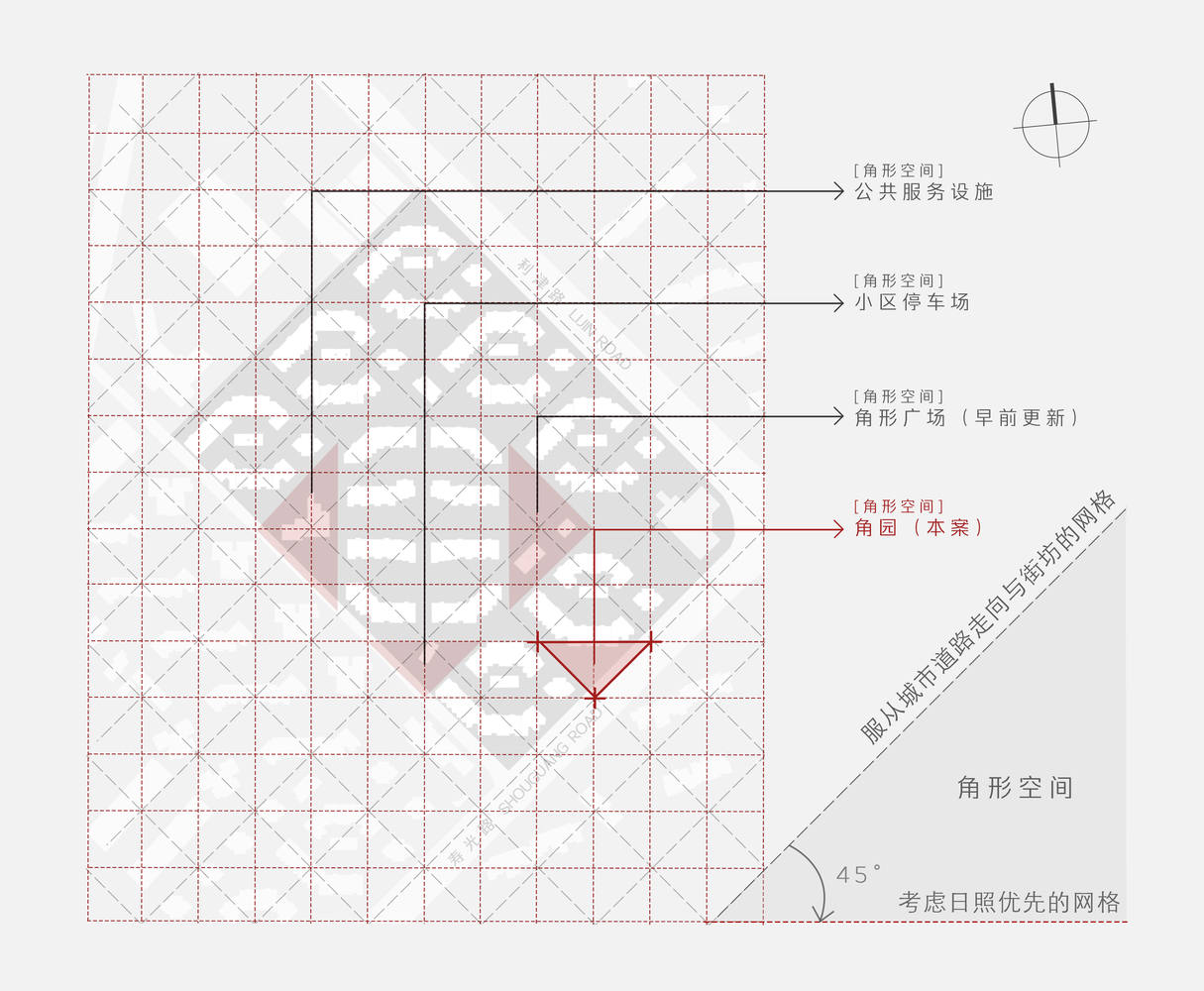
Analysis of the Basic Spatial Pattern of Shou Er Community
03. Spatial Construction of the Corner Garden Based on Environmental Genes
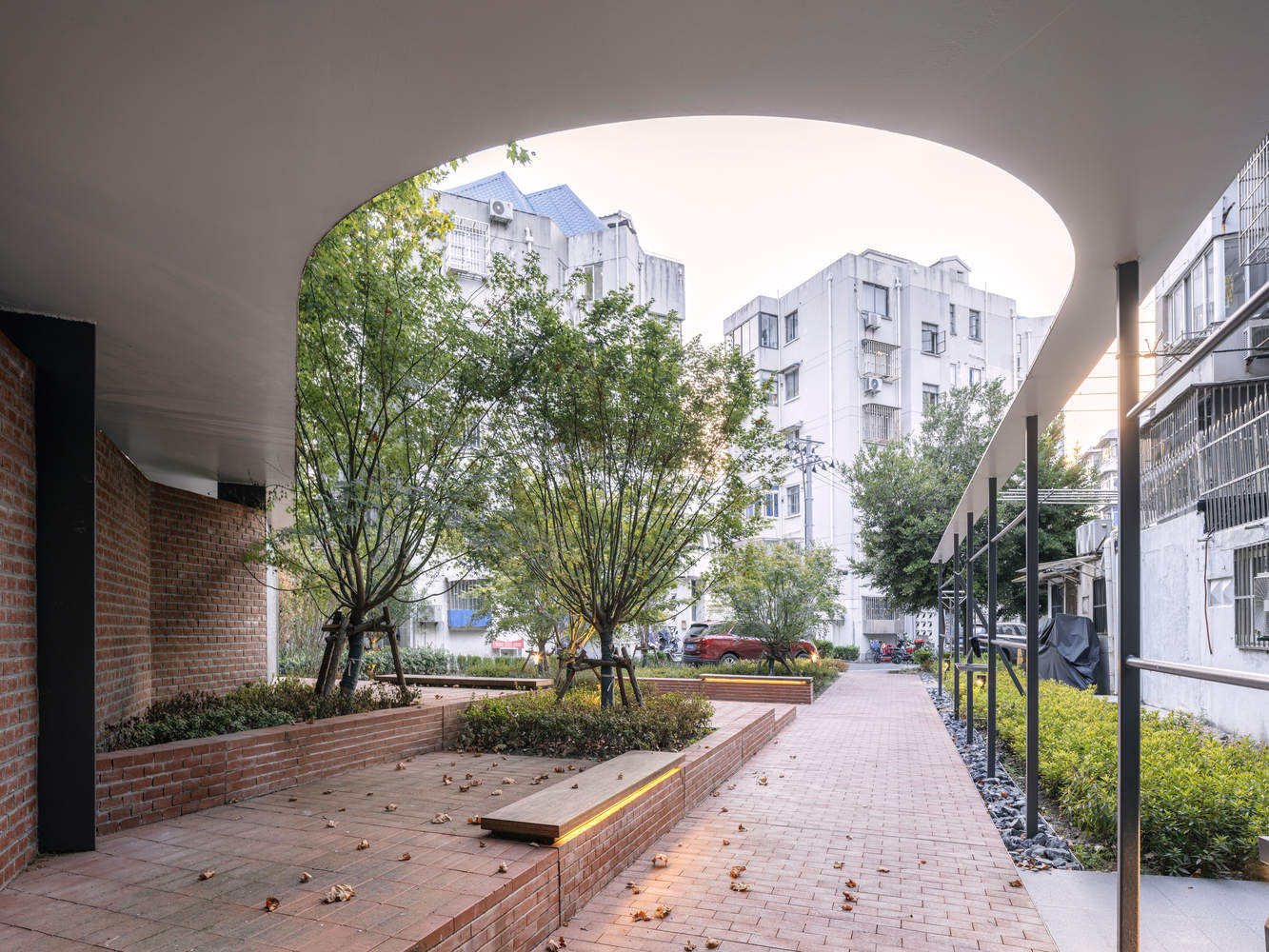
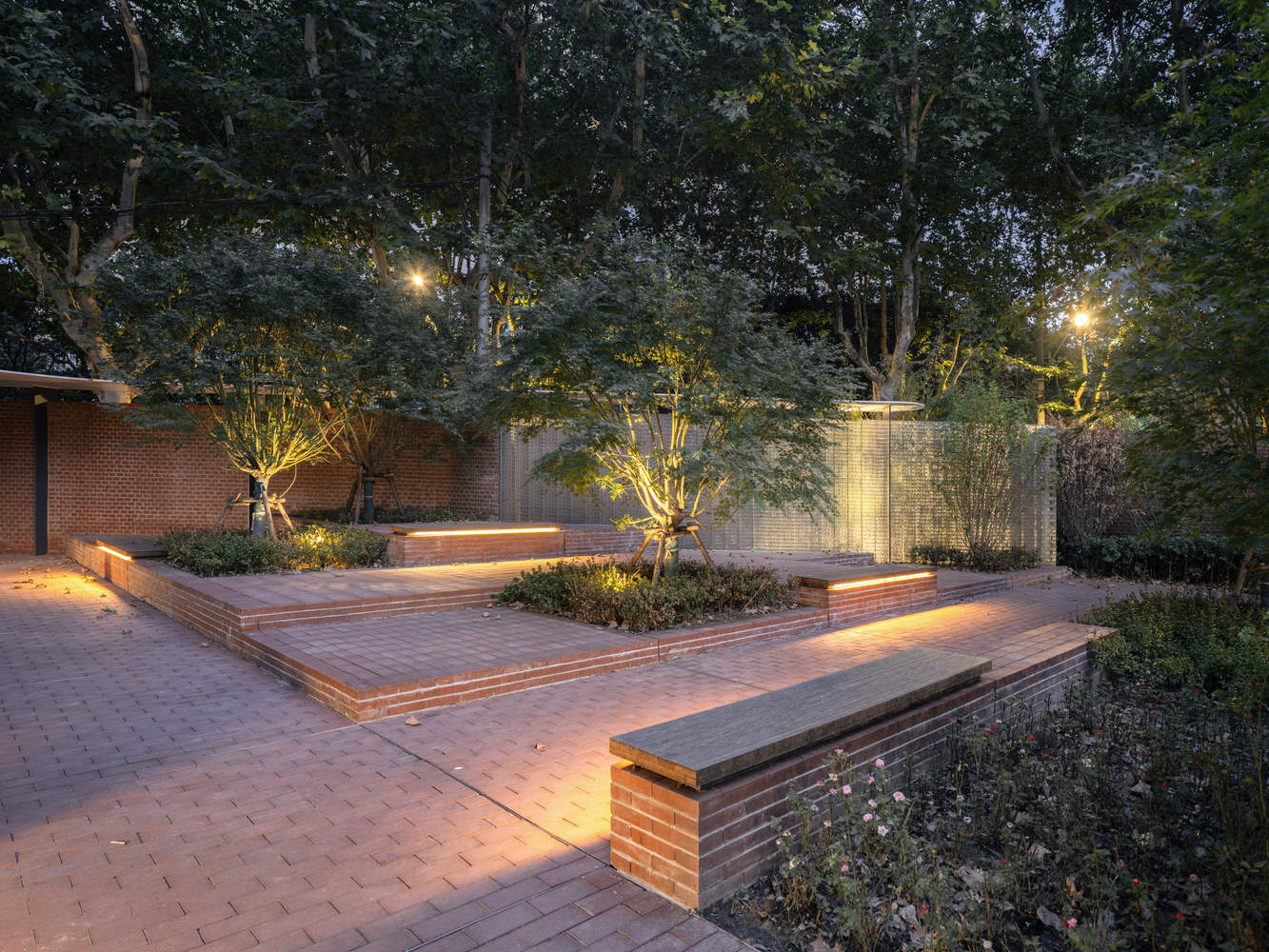
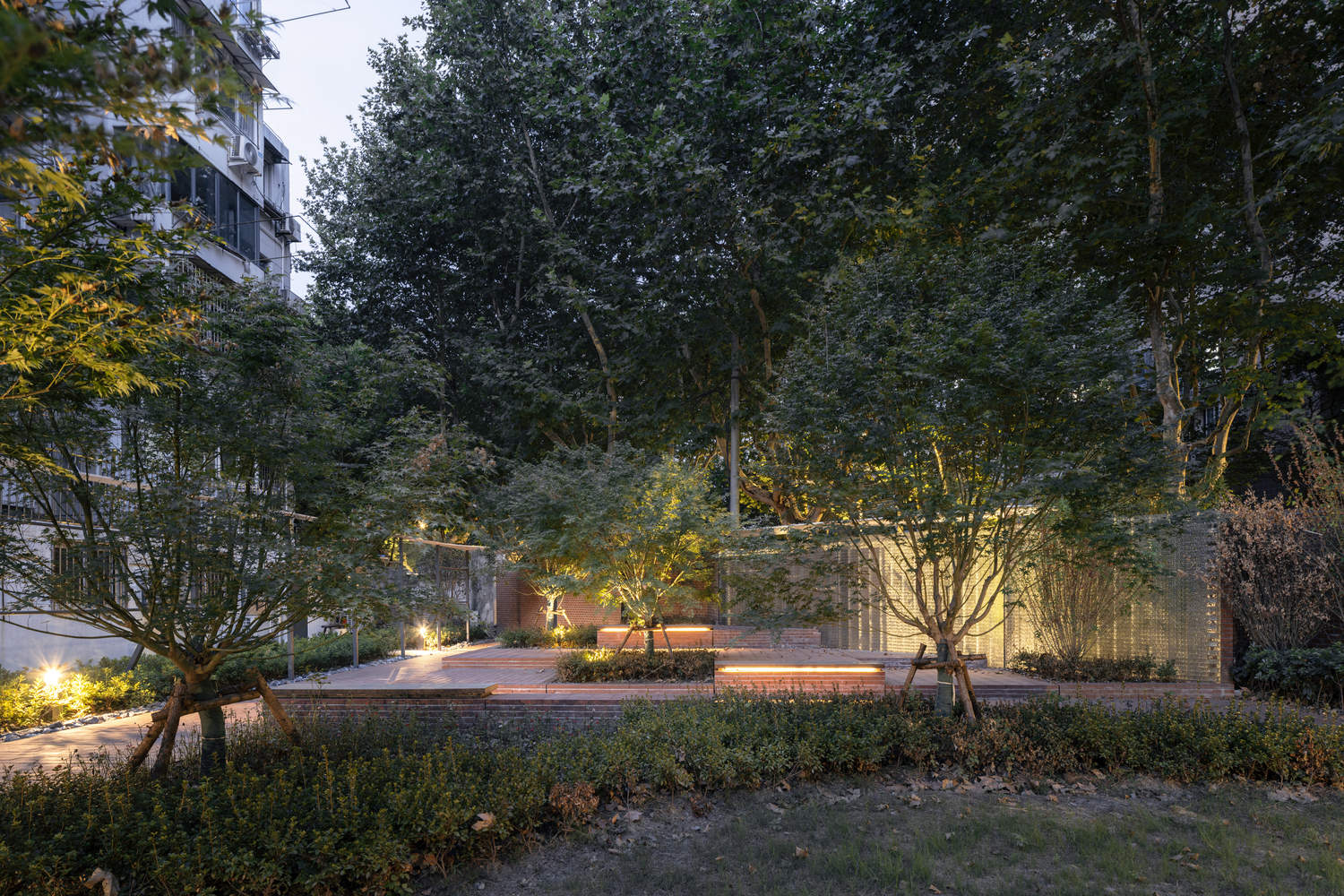
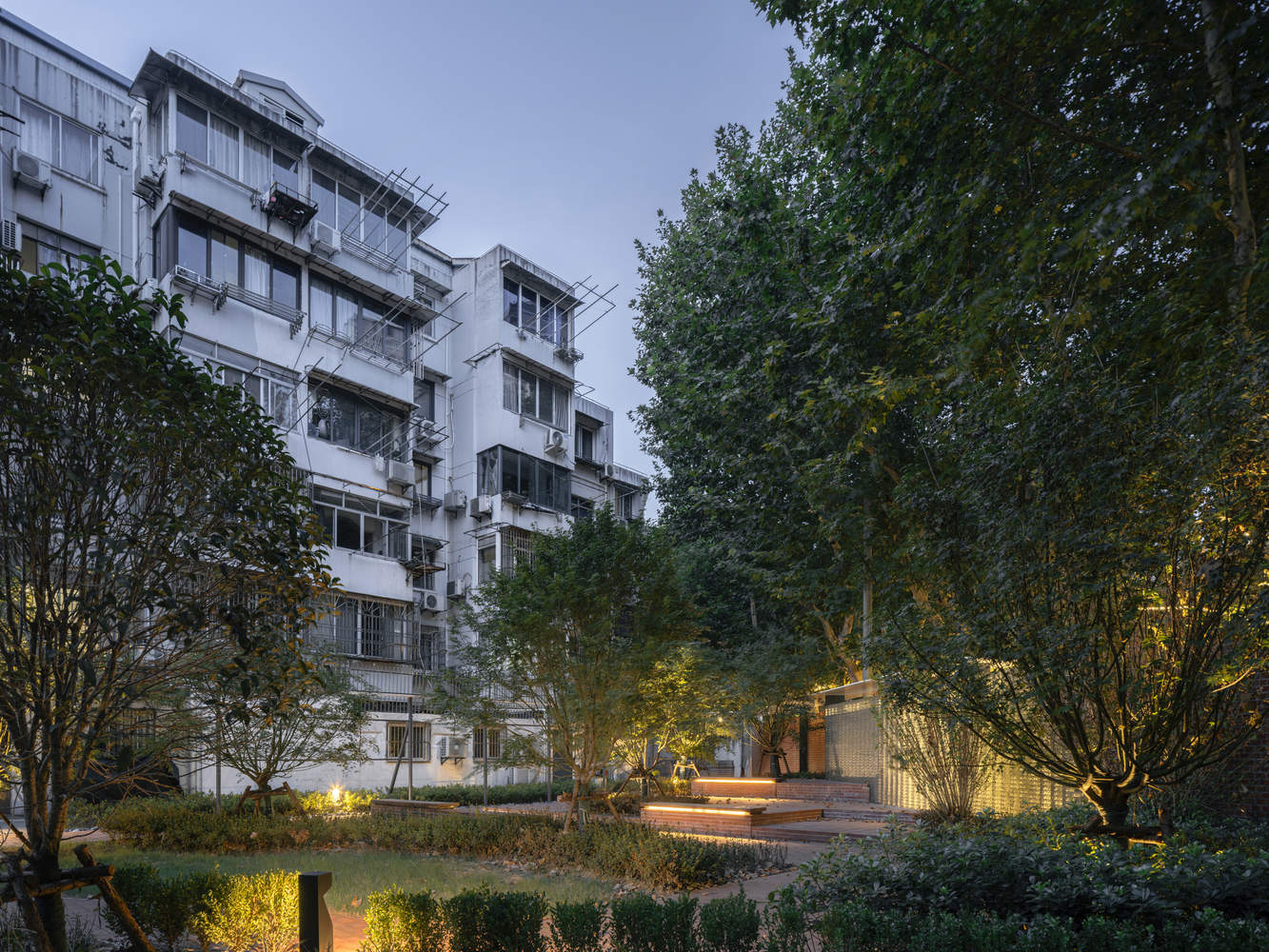
The Corner Garden is generally composed of two parts. One is the green space adjacent to the community sub-road, mainly composed of lawn and trees, which appropriately blocks the poor perception formed by continuous parking along the road, giving the overall Corner Garden an experience similar to an "enclave courtyard garden" in commercial residential landscape projects. The other part is the more inward-facing space closer to the wall, which forms a relatively stable and independent shaded leisure area through the organization of small-scale activity spaces and circulation paths combined with trees. This area is enclosed on both sides by the white corridor with a drying rack function, integrating the partial renovation of the wall, forming the basic spatial pattern of the Corner Garden.
角园在总体上是由两部分构成的。一是临近小区支路的绿地部分,由草坪与乔木为主构成的绿色空间适当阻隔了道路沿线连续停车形成的不佳感受,令整体角园具备类似商业住宅景观项目中“组团入户花园”的体验感受;另一部分是靠近围墙较内向的空间,通过结合乔木的小尺度活动场地与通行空间的组织,形成相对稳定独立的林下休闲场所。并以具有晾衣架功能、结合局部围墙改建的白色廊围合两侧边界,形成角园的基础空间格局。
© CreatAR Images
© CreatAR Images
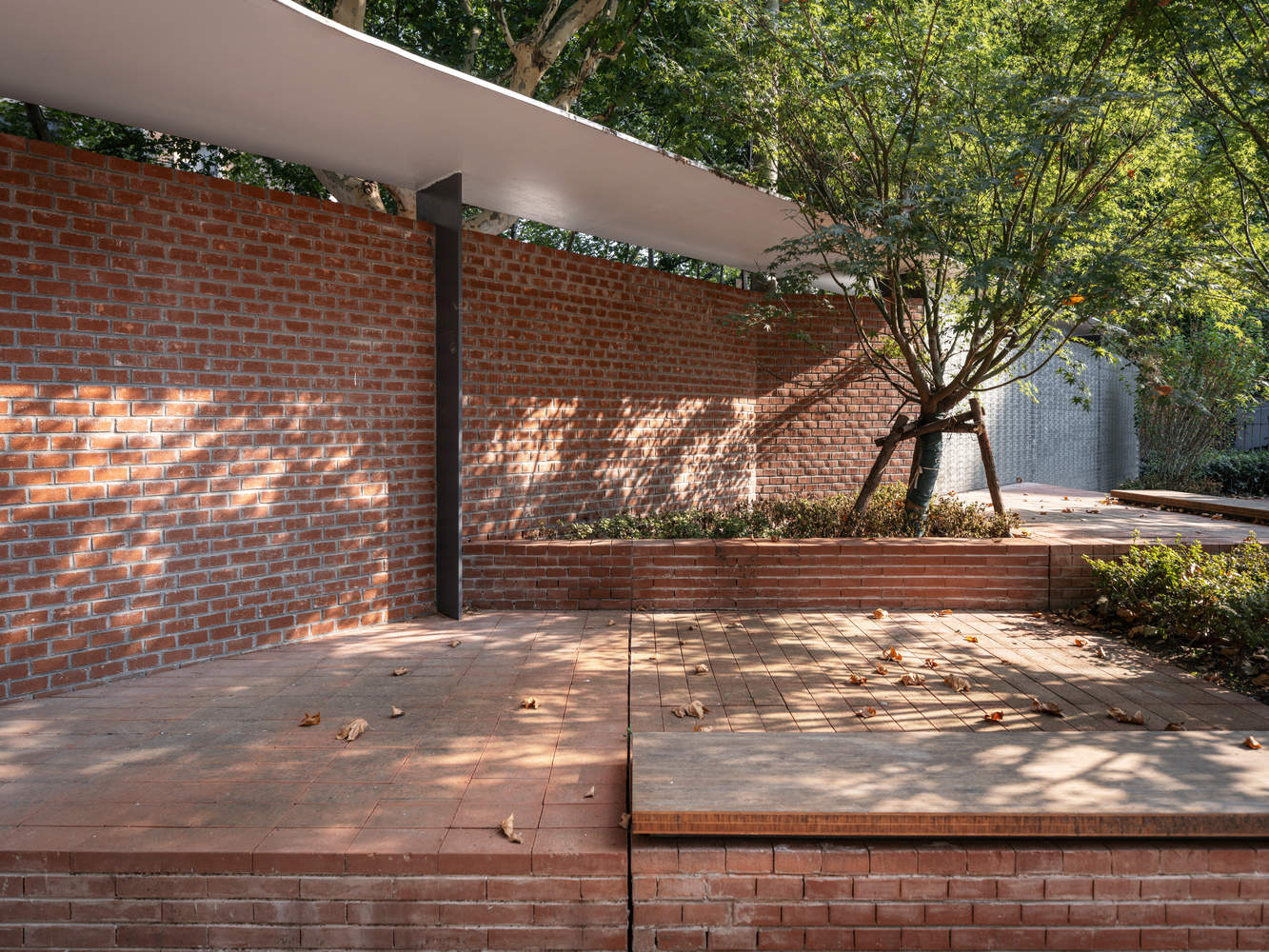
In terms of specific spatial construction, the Corner Garden is designed entirely based on the environmental genes of the Shou Er community. In terms of plane and spatial relationships, the design of the Corner Garden is based on the interwoven relationship of the community's existing "90°" and "45°" grids, with a planar composition based on a "2m × 2m" module, incorporating simple integrated spatial design with facilities like tree pools and benches in local areas. For the main material selection, red brick, which is the same color as the community wall, is used to create a relatively warm and simple environmental feeling, and glass bricks are used in parts to introduce gentle and dynamic urban light and shadow. Considering better sunlight conditions and a landscaped resting experience, the Chinese Maple (Acer palmatum) is chosen as the main tree species for the Corner Garden.
在具体的空间建构上,角园是完全基于寿二小区的环境基因进行设计的。在平面与空间关系上,角园的设计依据小区既有“90°”、“45°”两套格网的交织关系、以“2米×2米”的模数进行平面构成,并在局部结合树池、坐凳等设施做简洁的一体化空间设计;在主要材料选择上,采用与小区围墙同色的红砖为主,形成相对温暖质朴的环境感受,并以局部的玻璃砖导入温和动态的城市光影。考虑到更好的日照效果与景观化的休憩体验,以鸡爪槭为角园的主要乔木品种。
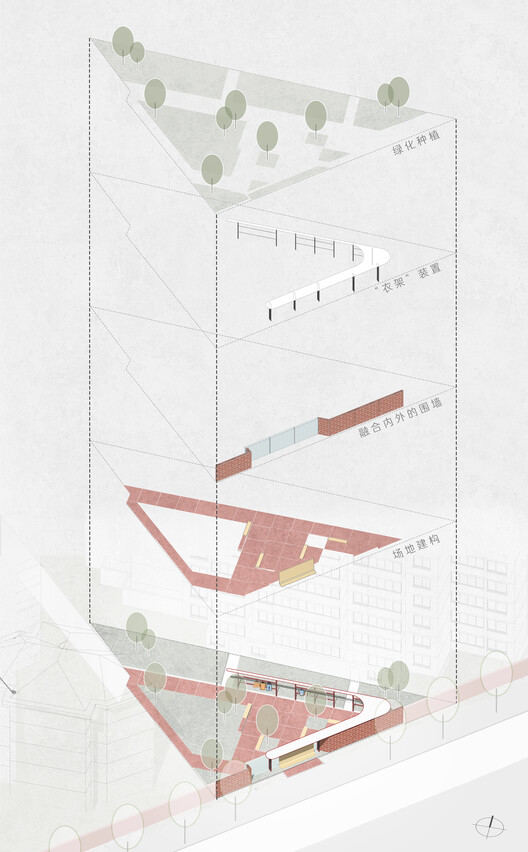
Corner Garden Spatial Construction
04. Reflections Triggered by a Few Aerial Photos
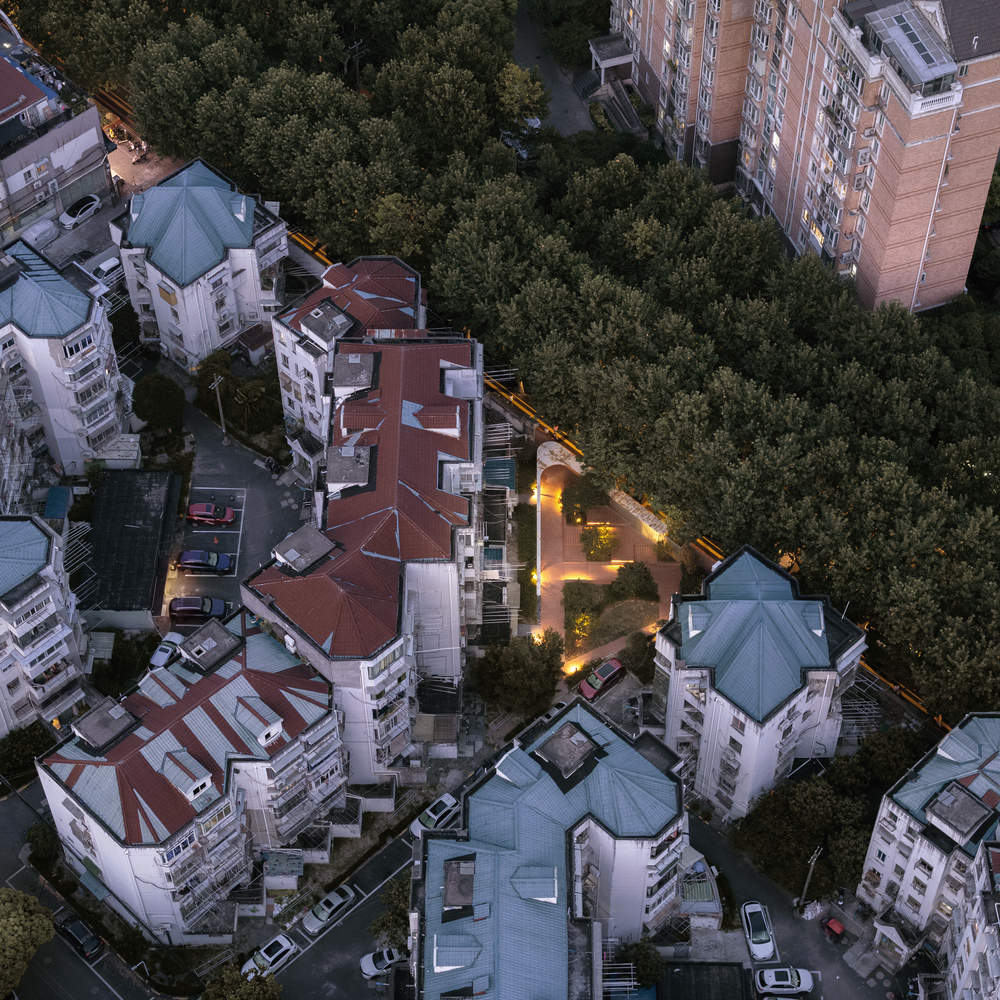
Observing the overall aerial and overhead views of Shou Ergong, we find phenomena that are usually overlooked, mainly concentrated in three aspects. First, the basic "corner-shaped" outdoor spaces updated according to the needs of different periods possess completely different spatial languages and material choices. Except for the Corner Garden in this renovation, which is designed based on environmental genes, the others have little relationship with the spatial characteristics of the Shou Ergong community.
仔细观察寿二小区的整体鸟瞰、俯瞰图,我们会发现一些平时可能不太关注的现象,主要集中在三个方面。第一,不同时期根据当时需求更新的基础“角形”室外空间存在完全不同的空间语言与材质选择,除了本次更新的角园是基于环境基因进行设计的,其他都与寿二小区空间特征关系不大。
© CreatAR Images
© CreatAR Images
The corner square in the central-eastern part of the community clearly suffers from spatial over-concentration, underutilization, and a tendency to cause noise pollution due to resident gatherings. In contrast, the smaller corner green space north of the community service facilities in the central-western part is landscaped with complex, indescribable curves. It is evident that there are differences in the understanding of updating old residential environments across different periods, but this also reflects that the involvement of design teams possessing basic environmental analysis capabilities and professional design literacy in the renewal of old communities remains insufficient for now. Second, to solve the parking difficulty in old communities, relevant management departments and grassroots governments have invested a lot of energy, generally forming an efficient and orderly internal parking environment. However, there are still a certain number of scattered non-parking and vehicle passage areas that can be optimized and streamlined, and a certain proportion of these scattered spaces can be used as green spaces to increase the community's green coverage. Third, the slopes resulting from the "flat-to-slope" roof renovation generally present a state dominated by blue, with scattered brown mixed with blue, which is likely due to repairs over time. These are all visible from the sightlines of residents in high-rise buildings of adjacent blocks and surrounding high-rise communities.
位于小区中东部的角形小区广场显然存在空间过于集中、未能有效利用、容易引发居民聚集产生噪音等问题,而位于小区中西部小区公服设施北侧的较小的角形绿地则是以难以描述的复杂曲线来造景。很明显,不同时期对于老旧社区环境更新的认知肯定存在差异,但同时也反映出具备基础环境分析能力和专业设计素养的设计团队在老旧小区环境更新方面的介入程度在目前看依旧是不足的。第二,为解决老旧小区停车难问题,有关管理部门与基层政府投入大量精力,总体形成了高效有序的小区内部停车环境,但依旧存在一定数量零散的非停车与车辆通行场地可以优化梳理,其中一定比例的零散空间是可以用作绿化空间、提升小区绿量的。第三,平改坡的坡顶呈现总体以蓝色为主、局部褐色掺杂蓝色的状态,这应当是历时修补导致的,这都是在小区内相邻楼栋高区居民、周边高层小区居民的视线范围内的。
© CreatAR Images
© CreatAR Images
It is clear that this is by no means an individual problem of any one community; observing these aerial photos allows for a glimpse of the broader situation. Taking Shanghai as an example, Shanghai has always focused on the renovation and improvement of old residential areas, treating it as an important livelihood project for continuous public investment. However, for the same community, the renewal is often completed through phased renovation projects, some involving implementation projects under different competent authorities. This poses challenges to the continuity and coordinated unity across the use of space, material technology updates, and other aspects involved in successive renovations. Meanwhile, the maintenance and renovation of old communities generally follow the traditional process of "resident reporting - property management statistics and summarization - sporadic repair/reporting to competent authorities by the subdistrict office for project implementation." Based on the "Community Planner System" promoted across the city, we believe there is still significant room for professional renewal design teams to intervene in the continuous improvement of environmental quality in old communities, by clarifying problem lists, formulating renewal blueprints, grasping the basic characteristics of the community environment, and guiding the direction of environmental quality improvement from a more complete spatio-temporal and professional perspective.
很明显,这绝不是任何一个小区的个体问题,我们观察这些鸟瞰图片其实是具有窥斑见豹作用的。以上海为例,上海一直关注老旧小区改造提升,将其视为重要民生工程持续进行公共投资,但针对同一小区往往是以分批次的改造项目来历时完成改造更新的,有的还涉及不同主管部门的实施项目,这就对历次改造中涉及的空间利用方式、材料工艺更新迭代等诸多方面的连续性和协调统一性产生了挑战。同时,老旧小区在物业维修改造上大致是“居民保修-物业公司统计归纳-零星维修/街镇上报主管部门落实项目”的传统流程。如果基于全市推行的“社区规划师制度”,我们认为专业更新设计团队在老旧小区持续环境品质提升上还有较大的介入空间,可以从更完整的时空与专业视角为老旧小区的厘清问题清单、制定更新提升蓝图、把握社区环境基础特质与环境品质提升走向。
© CreatAR Images