叙事性路径与空间序列的精妙构建:该纪念公园设计的核心精髓在于其对灾难叙事的巧妙转译。建筑师通过一条精心设计的路径系统,将游客的体验与飞机最后六分四十四秒的飞行时间紧密联系起来,实现了一种时间性的、沉浸式的导览。主要通道直接导向坠机现场和墓地,象征着对事件核心的直接面对与追思。同时,次要路径提供了“揭示”与“治愈”的替代叙事线索,确保了纪念活动的庄重性与游客情感调节的平衡。这种将时间、空间与纪念主题深度耦合的设计手法,远超一般纪念场所的静态纪念,实现了动态的情感旅程。
象征主义与材料语汇的深刻融合:设计在多个尺度上运用了强烈的象征性元素,特别是主纪念碑的设计。四座倾斜的土红色混凝土结构,不仅在视觉上具有强大的冲击力,更象征性地代表了四大洲的逝者,其粗粝的纹理灵感来源于当地的岩石凿刻艺术,成功地将地域文脉融入了普世的哀悼主题。此外,将坠机坑无缝融入景观并覆盖绿色屋顶,体现了对“缺席”的尊重和对“治愈”的承诺。听觉特征的使用,使得纪念碑能够与集体记忆产生“回声”的互动,是空间设计中对非物质体验的成功捕捉。
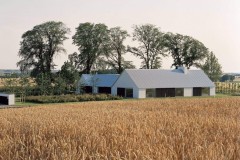
场所精神的有机塑造与功能的可持续性:项目成功地将纪念空间与周围的农田环境进行了高度的有机融合。通过使用本土材料(如当地石头)和本土植被,以及在主要建筑上采用绿色屋顶,建筑消隐于环境中,体现了对自然环境的尊重。聚会空间如露天剧场和岩石花园,提供了结构化的哀悼与社区联系的场所,丰富了纪念活动的多样性。这种对场所精神的细致雕琢,结合对后勤设施(停车场、安保、看护人住宅)的低调整合,确保了纪念公园在履行其庄严使命的同时,具备了长期的场所韧性和可持续性。
From the architect. ET-302 Memorial Park is a tribute to the 157 people of the flight, telling the story of its final moments. It incorporates the narrative of the crash into its design, guiding visitors along paths leading to the crash site, the gravesite, and areas for reflection, healing, and connection, while naturally integrating with the surrounding farmland.
来自建筑师。ET-302 纪念公园是对全世界 157 个人的致敬,讲述了这次飞行的最后时刻的故事。 它将坠机事件的叙述融入其设计中,引导游客沿着通往坠机现场、墓地和反思、治疗和联系区域的路径前进,同时自然地融入周围的农田。
Plan Level 0.00 - Main Monument
Plan Level 0.00 - 主纪念碑
The design is based on three guiding principles: Absence (reflecting loss), Revelation (unveiling the crash story), and Healing (providing solace). At the heart of the complex lie the crash site and the gravesite, both treated with solemn care. The main pathway, originating from the southwest entrance, narrates the plane's final six minutes and forty-four seconds, leading visitors step-by-step toward a striking monument of four inclined, earth-red concrete structures, symbolically marking the final moments and commemorating the lost lives. A secondary path extending from the northwest offers a more contemplative way to approach the monument, while other routes lead to an amphitheater, gathering spaces, and the rock garden. The gravesite is a sacred circle, 28 meters in diameter, preserved in its natural state and encircled by a matching concrete walkway and discreetly inclined steel rails, forming a respectful boundary. Visitors are encouraged to experience this space from the exterior paths, ensuring a quiet, reflective interaction with the past.
该设计基于三个指导原则:缺席(反映损失)、揭示(揭露坠机故事)和治愈(提供慰藉)。 纪念碑的中心是坠机现场和墓地,两者都得到了庄严的照顾。 从西南入口出发的主要通道讲述了飞机最后六分四十四秒的飞行,引导游客一步步走向一座由四座倾斜的土红色混凝土结构组成的醒目纪念碑,象征性地标志着最后时刻,纪念逝去的生命。 从西北方向延伸出的次要路径为纪念碑提供了更令人沉思的参观方式,而其他路线则通往露天剧场、聚会空间和岩石花园。 墓地是一个直径 28 米、保留了自然状态的神圣圆圈,周围环绕着与之相匹配的混凝土走道和谨慎的倾斜钢轨,形成了一个尊重的边界。 鼓励游客从外部路径体验这个空间,确保与过去进行安静、反思性的互动。
Axonometry
轴测图
At the core of the memorial is the main monument, marking the exact crash location. Four sculptural forms, each representing Africa, Europe, North America, and Asia, rise from the earth with textures inspired by Ethiopian rock-hewn architecture and the Rift Valley. Beneath these rugged surfaces, a plaque the size of a Boeing 737 MAX window lists the victims' details by continent, while alcoves invite private contemplation. The monument seamlessly integrates the infilled crash pit into the landscape, with a green roof merging the structure into its surroundings. Acoustic features allow visitors' voices to echo, symbolizing the monument's connection with collective memory, while four radiating paths extend its narrative.
纪念馆的中心是主纪念碑,标志着确切的坠机地点。 四种雕塑形式,每种代表非洲、欧洲、北美和亚洲,从地球升起,其纹理灵感来自埃塞俄比亚的岩石凿刻建筑和裂谷。 在这些粗糙的表面之下,一块波音 737 MAX 窗户大小的牌匾按大陆列出了受害者的详细信息,而小隔间则邀请人们私下沉思。 纪念碑将填埋的坠机坑无缝地融入景观中,绿色的屋顶将建筑融入环境中。 听觉特征允许游客的声音产生回声,象征着纪念碑与集体记忆的接触,而四条辐射路径则延伸了它的叙事。
Sections - Main Monument
剖面图 - 主纪念碑
Situated between the Asian and African structures and leading to the amphitheater is the healing monument—a Corten steel sculpture evoking aerodynamic grace and resilience. Its weathered surface is punctuated by circular perforations that filter light like rays of hope, including rivet details reminiscent of aircraft structures. Anchored by an L-shaped base surrounded by a circular walkway, it visually connects with other parts of the site while symbolizing strength and renewal. The amphitheater, located between the African and European monuments, offers six concentric, stepped seating platforms with elegant, accessible pathways. Capable of hosting over 360 people, its central circular platform is designed for speeches, performances, and commemorative ceremonies, fostering community connection and remembrance. The rock garden lies on the axis between the African and European monuments. Originally intended as a garden, it now features large, straight stones sourced locally, creating a serene, meditative space. Two concentric walkways meander through the stones, inviting visitors to slow down, reflect, and connect with the enduring nature of memory.
位于亚洲和非洲建筑之间并通往圆形剧场的疗愈纪念碑是一座科尔滕钢雕塑,唤起空气动力学的优雅和韧性。 其风化的表面点缀着圆形穿孔,如希望的射线般过滤光线,包括让人联想到飞机结构的铆钉细节。 它固定在一个 L 形基础上,周围环绕着一条圆形走道,在视觉上与场地的其他部分相连,同时象征着力量和更新。 圆形剧场位于亚洲和非洲纪念碑之间,提供六个同心阶梯式座位平台,并设有优雅的无障碍通道。 可容纳 360 多人,其中心圆形平台专为演讲、表演和纪念仪式而设计,促进社区联系和纪念。 岩石花园位于非洲和欧洲纪念碑之间的轴线上。 这里原本是一个花园,现在以当地采购的巨大、笔直的石头为特色,营造出宁静、冥想的空间。 两条同心步行道蜿蜒穿过石头,邀请游客放慢脚步,反思并与记忆的持久性联系起来。
The facility building blends seamlessly with the landscape near the main entrance, encompassing a parking area for over 30 vehicles, solar panel canopies, a security post, and a caretaker's residence. Two wings—one housing storage, a multipurpose room, and men's restrooms, and the other accommodating women's and accessible restrooms, caretaker quarters, and essential services—are connected by a central hall and a weathering steel canopy. Metal mesh panels clad the wings, enhancing privacy while complementing the design's natural aesthetic. Walls leading to the monuments display plaques detailing the site's creation process and the contributions of participants. Finally, the overall landscape design of the memorial reflects the ripples of the crash. The layout of green lawns, wooded areas, planted clusters, stone elements, and open paved spaces echoes local agricultural textures. Green roofs on the monuments and facility building integrate with the site, while native trees and approximately 120,000 diverse plants offer ecological value and visual continuity, ensuring the park remains cohesive and reflective of loss, resilience, and hope.
该设施建筑与主入口附近的景观无缝融合,包括可停放 30 多辆车的停车场、太阳能电池板遮阳棚、安保点和看护人住宅。 两个侧翼,一个带有储藏室、多功能室和男卫生间,另一个带有女卫生间和无障碍卫生间、看护宿舍和基本服务,由中央大厅和耐候钢盖连接。 金属网板包裹着机翼,增强了隐私性,同时增强了设计的自然美感。 通往纪念碑的墙壁上展示着记录该遗址创建过程和参与者的贡献的牌匾。 最后,纪念馆的整体景观设计反映了坠机事件的涟漪。 绿色草坪、森林地带、种植丛、石质元素和开放铺装空间的设计与当地农业纹理相呼应。 纪念碑和设施建筑上的绿色屋顶与场地融为一体,而本土树木和约 12 万种不同的植物提供了生态价值和视觉连续性,确保公园保持统一和反思,以纪念损失、复原力和希望。