文化遗产的活化与空间叙事:本项目成功的核心在于对彭白铁路这一重要集体记忆载体的深度挖掘与活化。设计并未简单地修复或纪念,而是通过“时光折叠·轨上新生”的概念,将历史轨道转化为一条串联多重体验的“线性公园”。棚朋儿餐厅作为首站,巧妙地以“老站新生”激活了关口老站的物理空间和情感价值。通过结构介入,如在老站旁延展的倾斜棚顶,实现了对历史建筑的尊重与有机的功能嫁接,使新旧空间对话,成功地将一个停运的铁路站点转化为具有复合功能的社区客厅与旅游节点。
结构创新与材料的诗意表达:建筑设计在结构语言上展现了精湛的平衡与张力。轻质钢结构的使用和倾斜钢柱的布局,不仅塑造了轻盈通透的“棚棚儿”形象,也巧妙地体现了地域习俗与现代构造的融合。特别是暴露的瓦片檩条系统、穿透屋顶的树木,以及白天光斑点点、夜晚星光闪烁的屋顶处理,都为空间注入了强烈的诗意和动态美感。这种对材料和结构的精心处理,使得建筑在满足功能的同时,也成为了叙事性的景观元素。
场所精神的深度营造与社区融合:设计高度关注场所精神的重塑,通过多层次的空间策略实现建筑与自然的深度融合。从尊重并移植原有树木到补种栾树,体现了对场域生态的关怀;到室内外空间的灵活转换(如折叠门),以及通过绿植系统在建筑内部创造的“立体绿窗”,都模糊了人工与自然的边界。更重要的是,通过现浇清水混凝土吧台的实验性浇筑、复用老枕木的细节处理,以及餐厅成为社区客厅的功能定位,项目超越了旅游设施的范畴,成功地将其融入地方生活肌理,构建了过去、现在与社区之间富有生命力的联系。
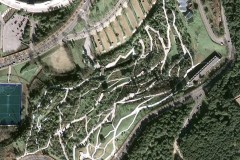
Located in Danjingshan Town, Pengzhou, Sichuan, the Jianjiang Little Train Linear Park is a comprehensive tourism route centered around the railway station, organically connecting catering, exhibitions, family activities, art, outdoor sports, heritage revitalization, and natural landscapes. It was formerly the Pengbai Railway, carrying deep collective memories of the people of Pengzhou. This 39-kilometer narrow-gauge railway, opened in 1961, once traversed mountainous areas and served as an important route for residents to travel, study, and go to the market. Although it ceased operation and was dismantled around 2000, it has always remained an irreplaceable emotional bond for the people of Pengzhou. In 2017, the Pengzhou Municipal Government restored the 3.5-kilometer track section in the Danjingshan area to create the Jianjiang Little Train cultural tourism route, but it ceased operation again in 2022 due to the pandemic and operational issues. In 2024, driven by the concept of "operation first," the operating team Jiulong Xinchuang and Weiji Architecture jointly launched the Pengbai Railway Revitalization Plan, giving birth to the Jianjiang Little Train Linear Park anew. We proposed the shared concept of "Time Folding, Rail Rebirth," connecting five stations and four thematic landscapes with the 3.5-kilometer track, and linking thirteen project nodes in Danjingshan Town. The small train acts as a time capsule, guiding visitors through a montage of memories. Currently, three of the five main stations are taking shape, with the entire line expected to be fully operational in the spring/summer of 2026.
位于四川彭州丹景山镇的湔江小火车线性公园,是一条以火车站为核心,有机串联餐饮、展览、亲子、艺术、户外运动、遗产活化与自然景观的综合性旅游动线。其前身为彭白铁路,承载着彭州人深厚的集体记忆。这条 1961 年通车的 39 公里窄轨铁路,曾穿行山区,是居民出行、求学、赶集的重要通道。虽于 2000 年左右停运拆除,却始终是彭州人心中不可替代的情感纽带。2017 年,彭州市政府恢复了丹景山段的 3.5 公里轨道,打造湔江小火车文旅线路,后因疫情与运营问题于2022年再度停运。2024 年,在“运营前置”理念推动下,运营团队九陇新创与未集建筑共同启动了彭白铁路复兴计划,湔江小火车线性公园由此新生。我们提出“时光折叠·轨上新生”的主客共享概念,以 3.5 公里铁轨串联五个站点、四段主题景观,并联动丹景山镇十三个项目节点。小火车如同时空胶囊,引领游客穿行于记忆的蒙太奇。目前,五个主要站点中已有三个初具规模,预计 2026 年春夏全线贯通。
© 刘松恺
© 刘松恺
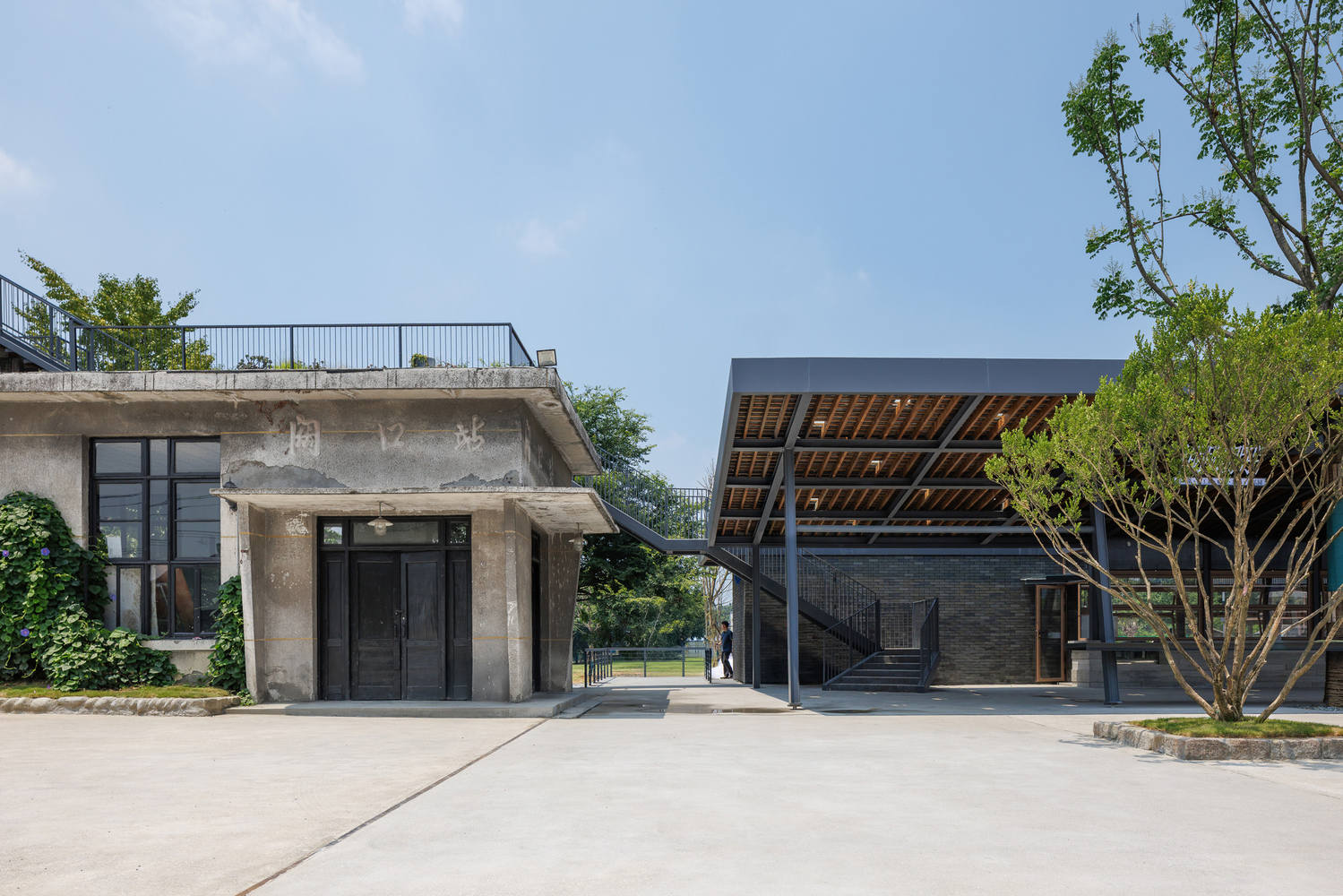
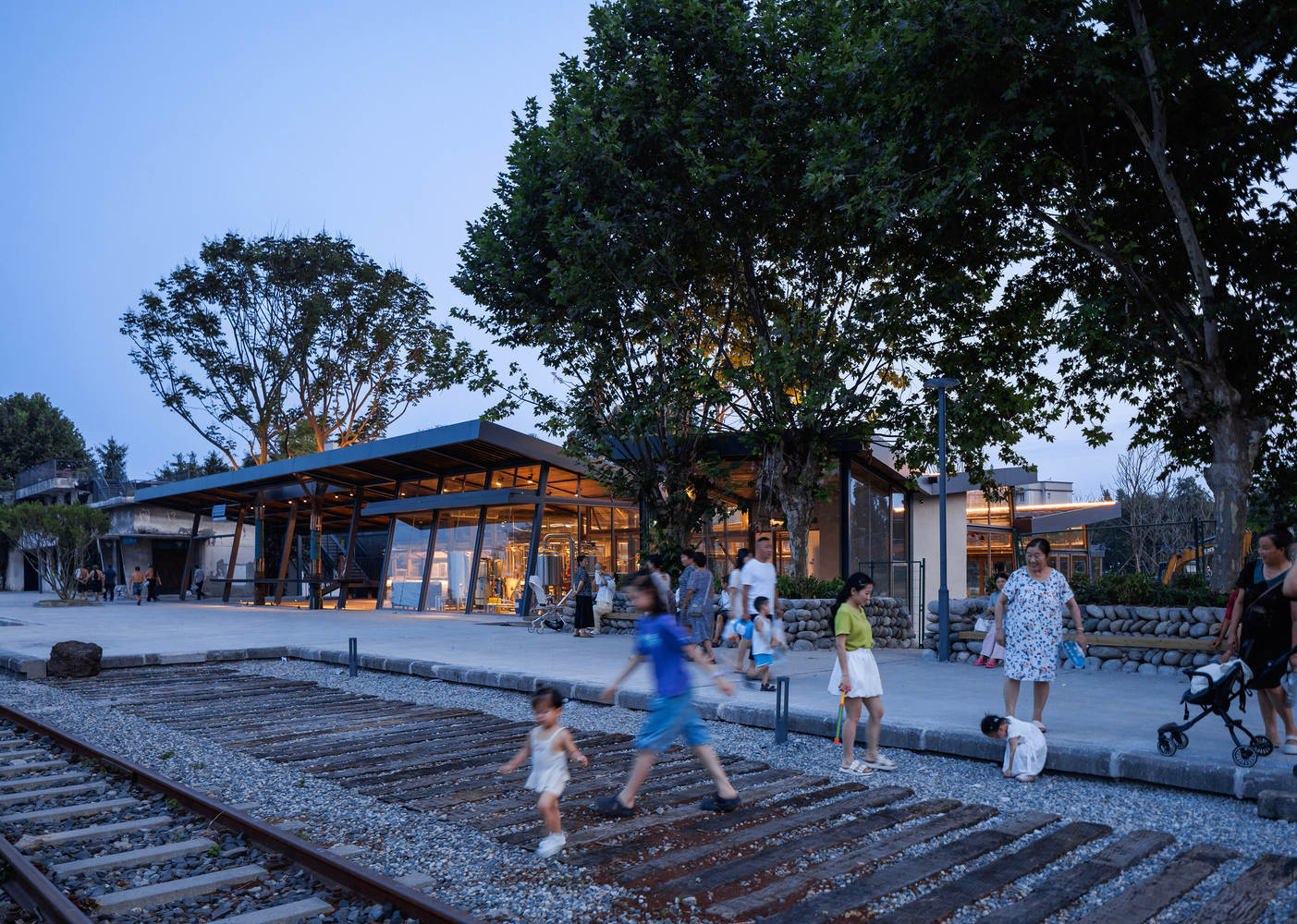
The Peng'er Restaurant, as the first stop of the linear park, is adjacent to the symbol of the Pengbai Railway—the Guankou Old Station built in 1961. The restaurant adopts the concept of "New Life for the Old Station," replicating the leisurely lifestyle of Chengdu people "gathering friends for tea under a shed," integrating tea, coffee, craft beer, barbecue, and Sichuan-style Western cuisine, injecting new vitality into the historical station.
棚朋儿餐厅作为线性公园的首站,毗邻彭白铁路的标志 —— 1961 年建成的关口老站。餐厅以“老站新生”为理念,复刻成都人“约三五好友,棚下喝茶”的闲适生活,融合茶咖、精酿、烧烤与川式西餐,为历史站点注入新活力。
© 刘松恺
© 刘松恺
© 刘松恺
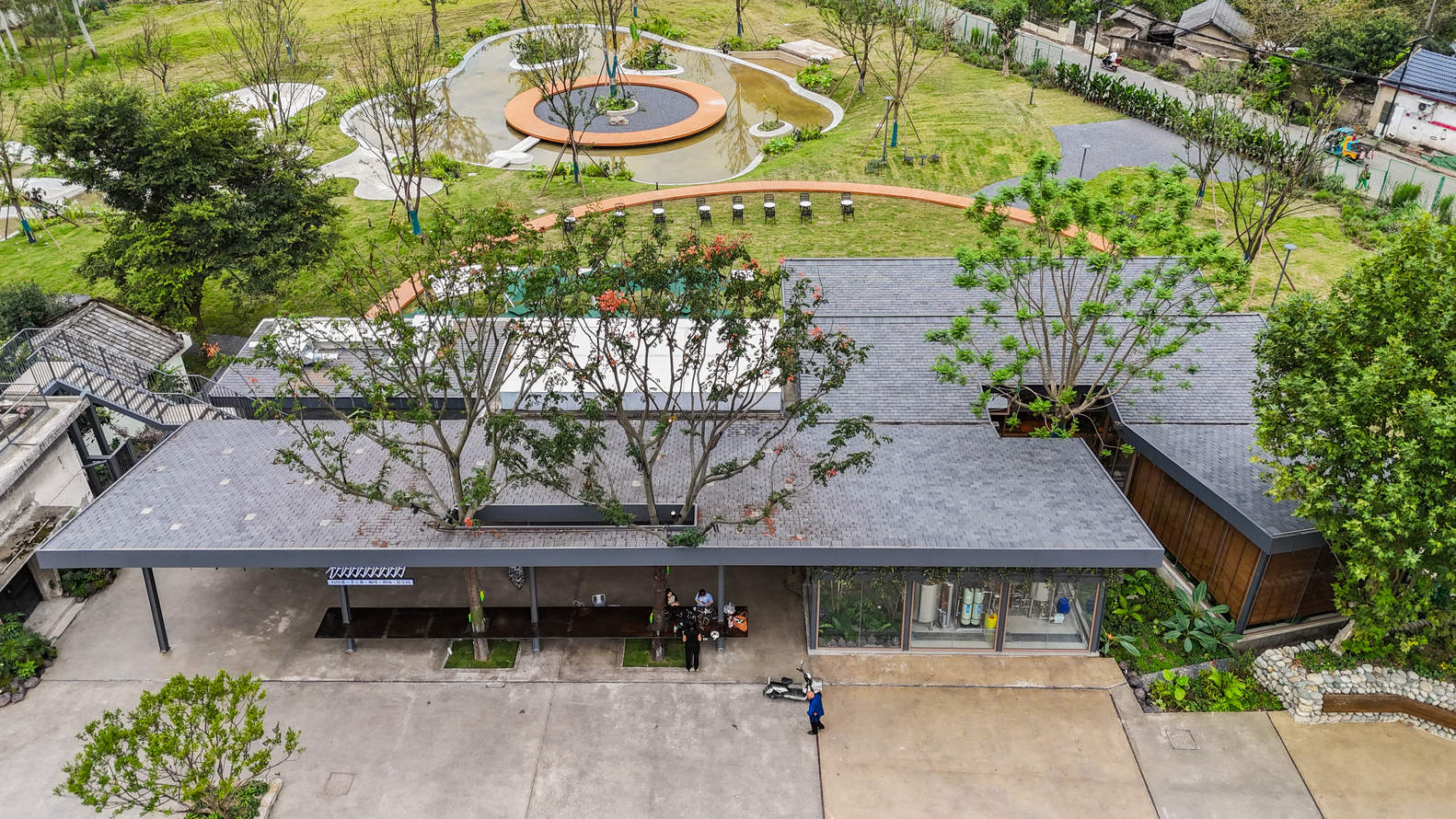
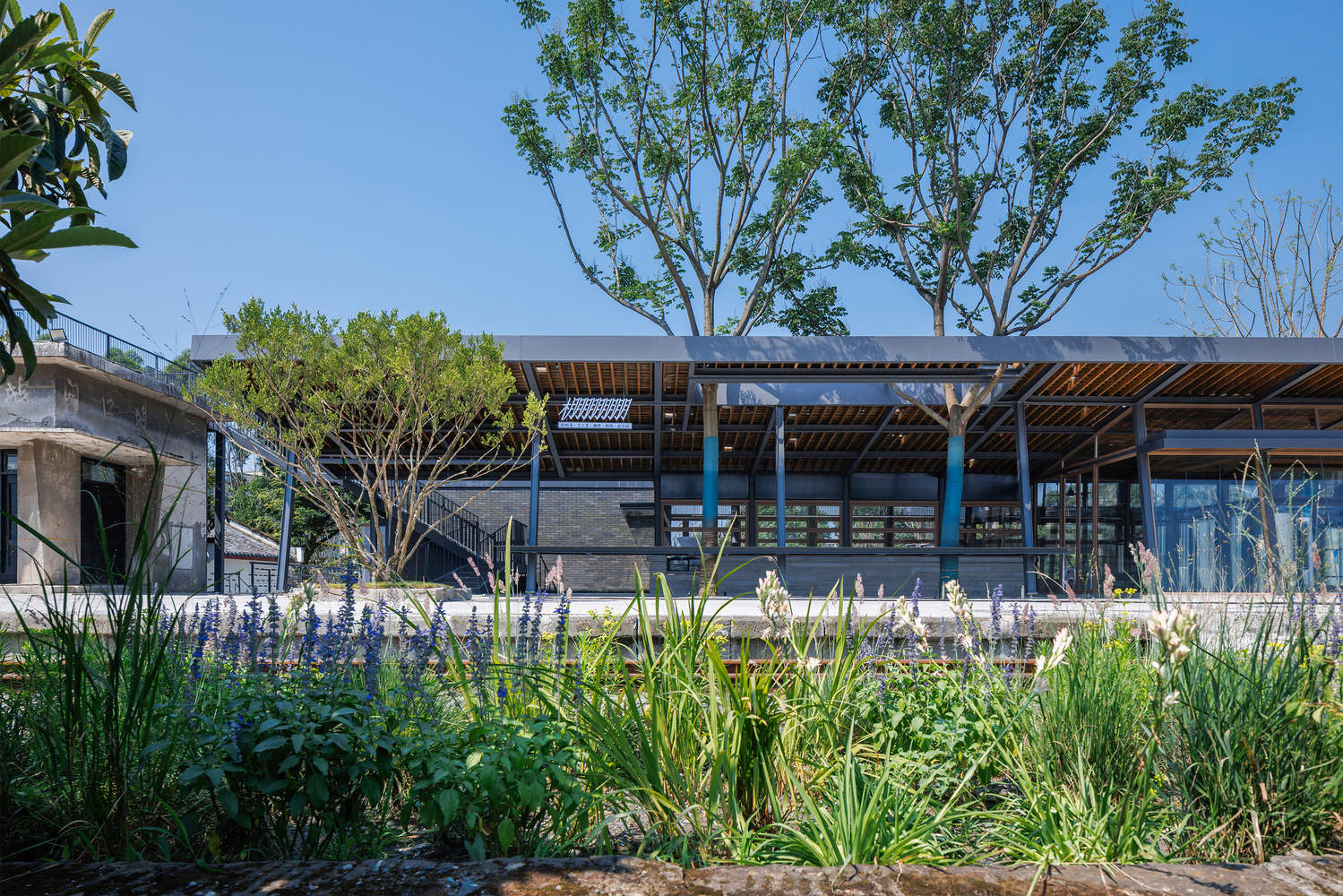
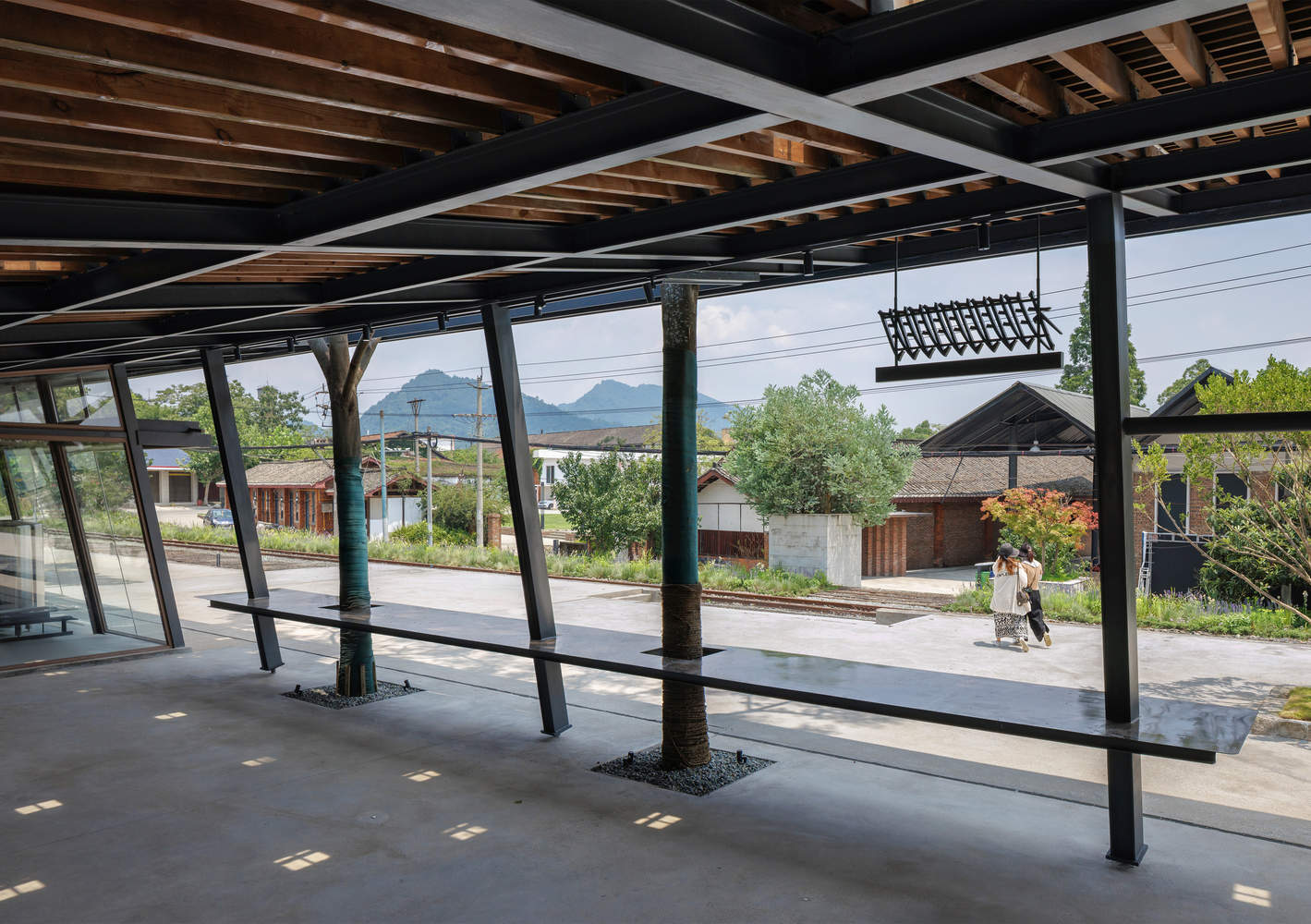
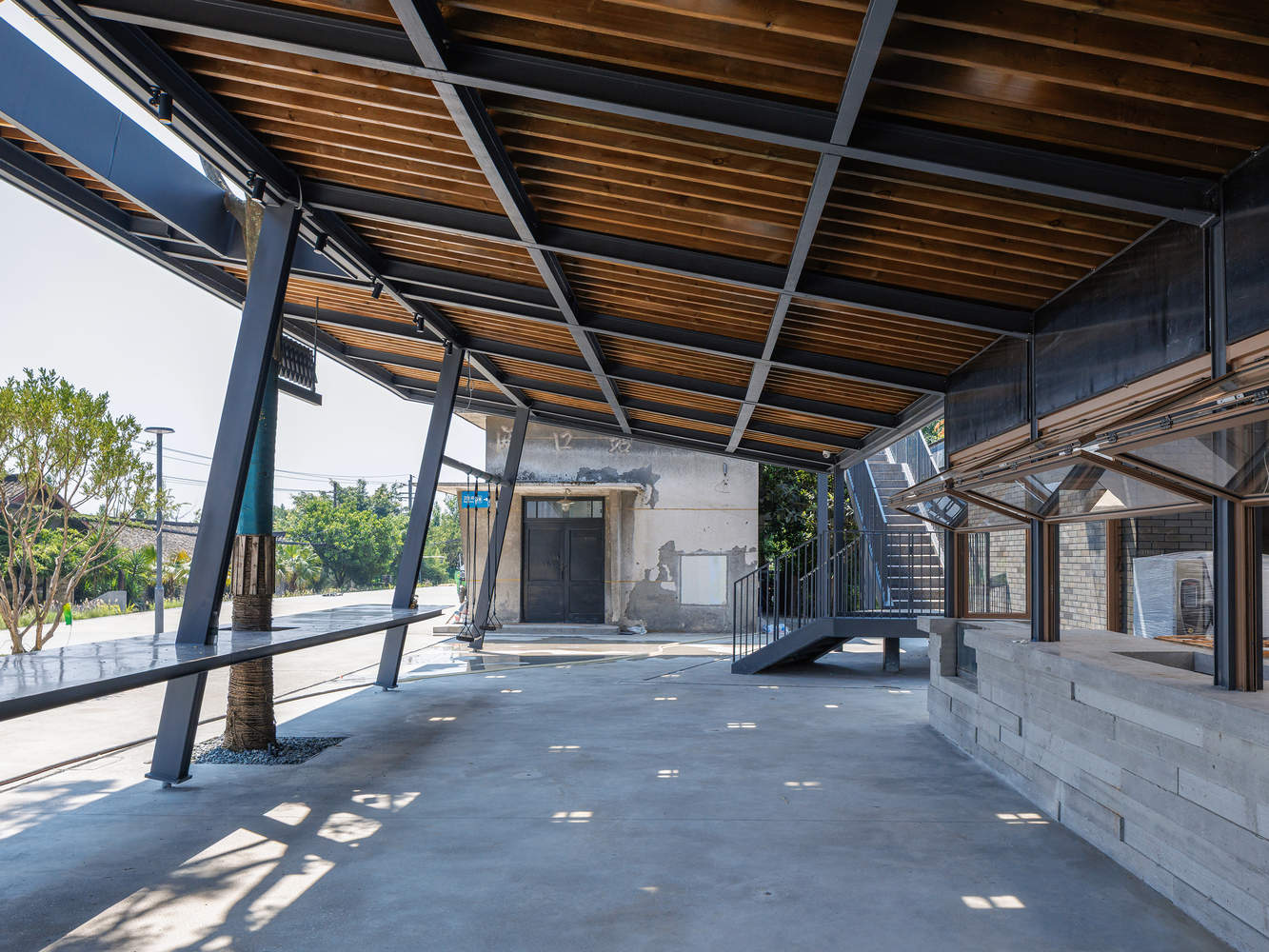
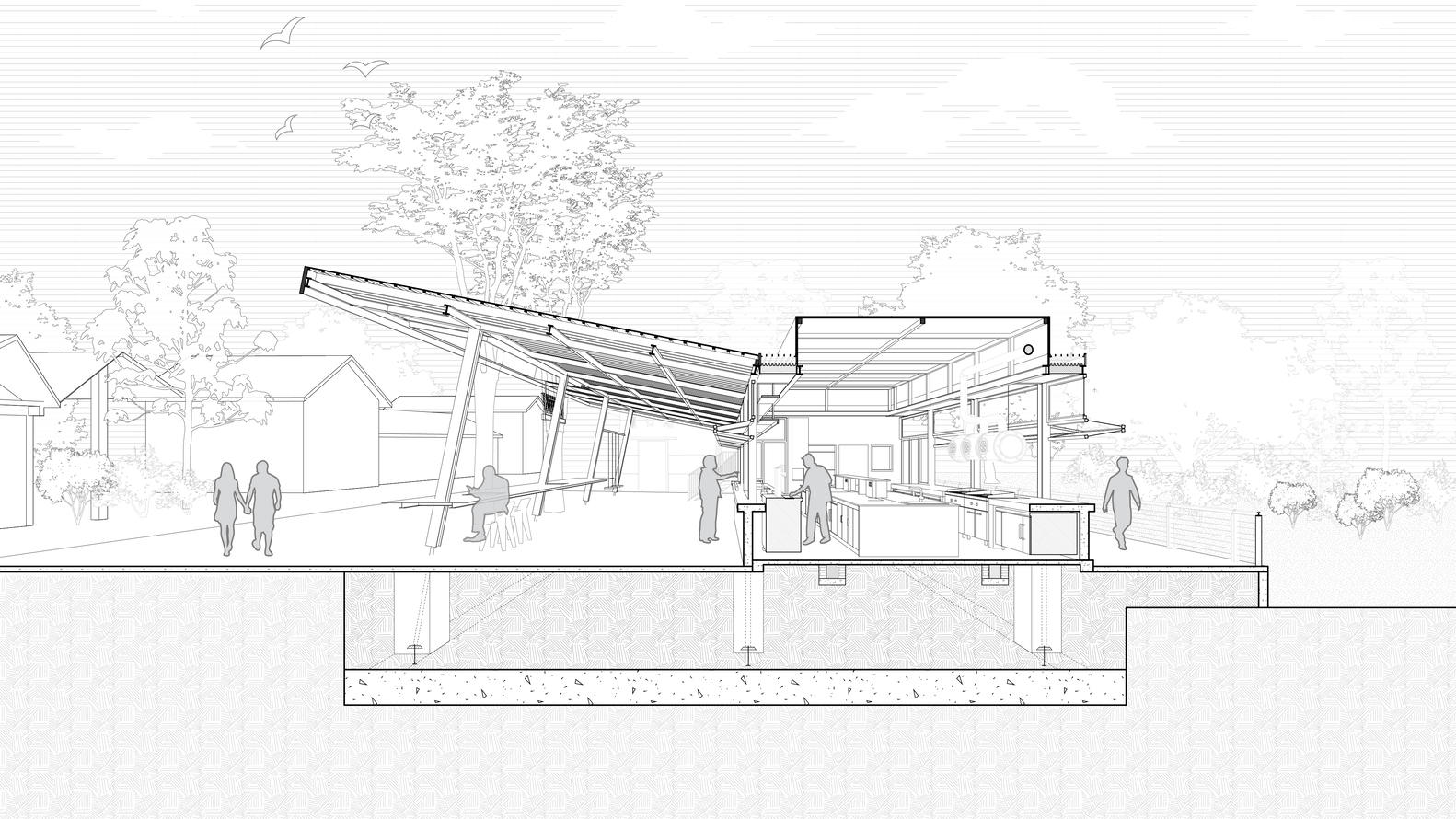
The design closely follows this regional characteristic of the Western Sichuan plain laborers’ custom of "building a shed" (搭棚棚儿) and the theme of "New Life for the Old Station." A quarter of the red line area was deliberately left open, extending a tilted semi-outdoor canopy, parallel to the original Guankou Old Station. This canopy serves as both a waiting area and the core of the restaurant. A lightweight steel staircase connects the canopy to the old station's roof platform without disturbing the original structure, transforming the historical space into an organic extension of the restaurant. To shape a light and transparent "shed," the main body of the building uses a steel structure. The steel columns under the shed incline along the ground, connecting at a 90-degree angle with the uplifted steel beams of the shed roof, "rooting" on the platform with a balance of strength and beauty.
川西坝子的劳动人民历来有着“搭棚棚儿”的习俗,设计紧扣这一地域特色与“老站新生”的主题,特意让出四分之一的红线范围,在原有关口老站一侧延展出一个与之齐高的倾斜半室外棚顶,既作候车区,亦为餐厅核心。一座轻质钢楼梯在不扰动老建筑的前提下,将棚顶与老站屋顶平台相连,使历史空间转化为餐厅的有机延伸。为塑造一个轻盈、通透的“棚棚儿”,建筑主体采用钢结构。棚儿下的钢柱顺势倾斜,与棚儿顶扬起的钢梁呈 90 度角衔接,轻盈而坚定地“扎根”于站台之上,展现出力与美的平衡。
© 刘松恺
剖透视
© 刘松恺
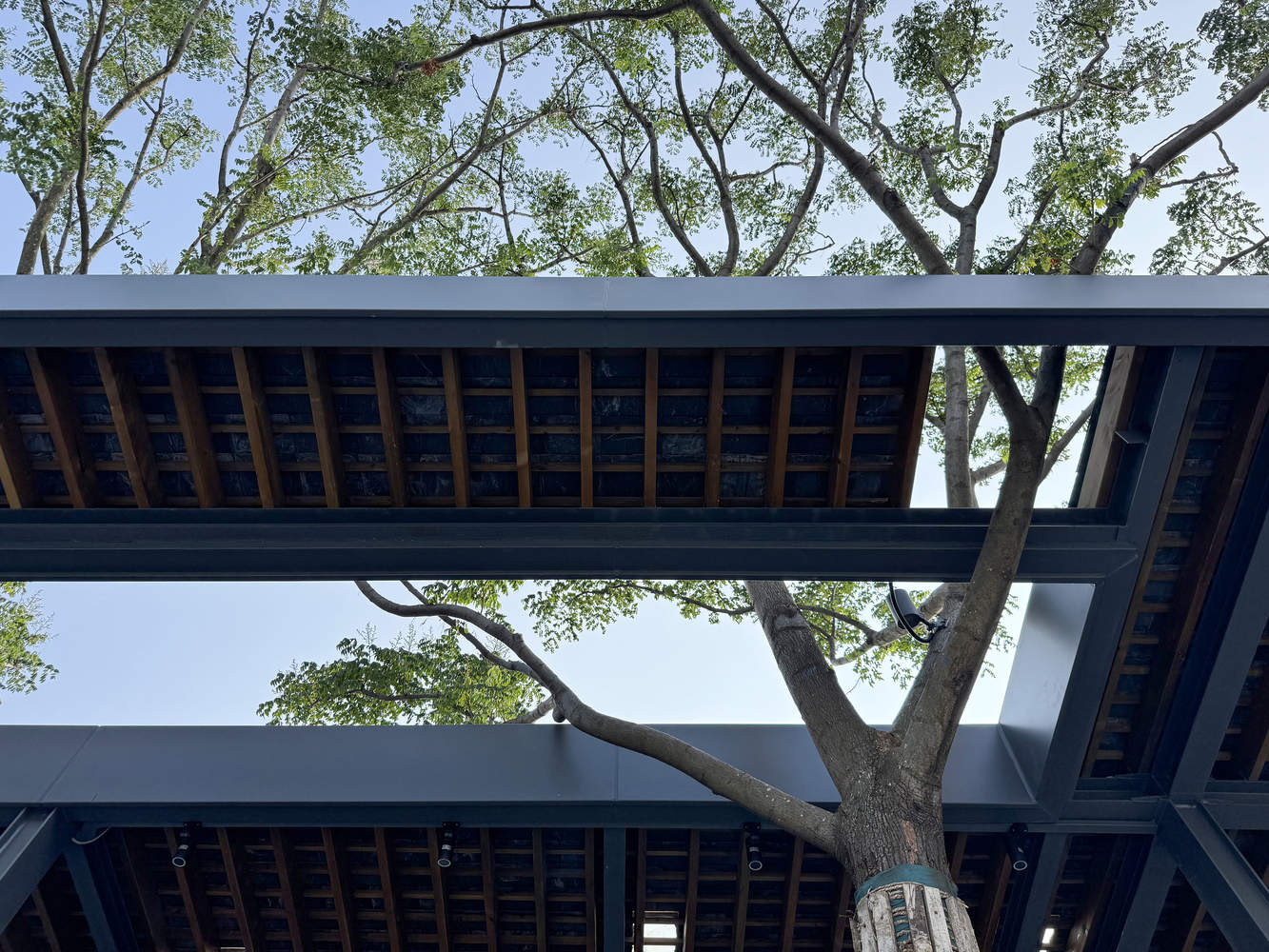
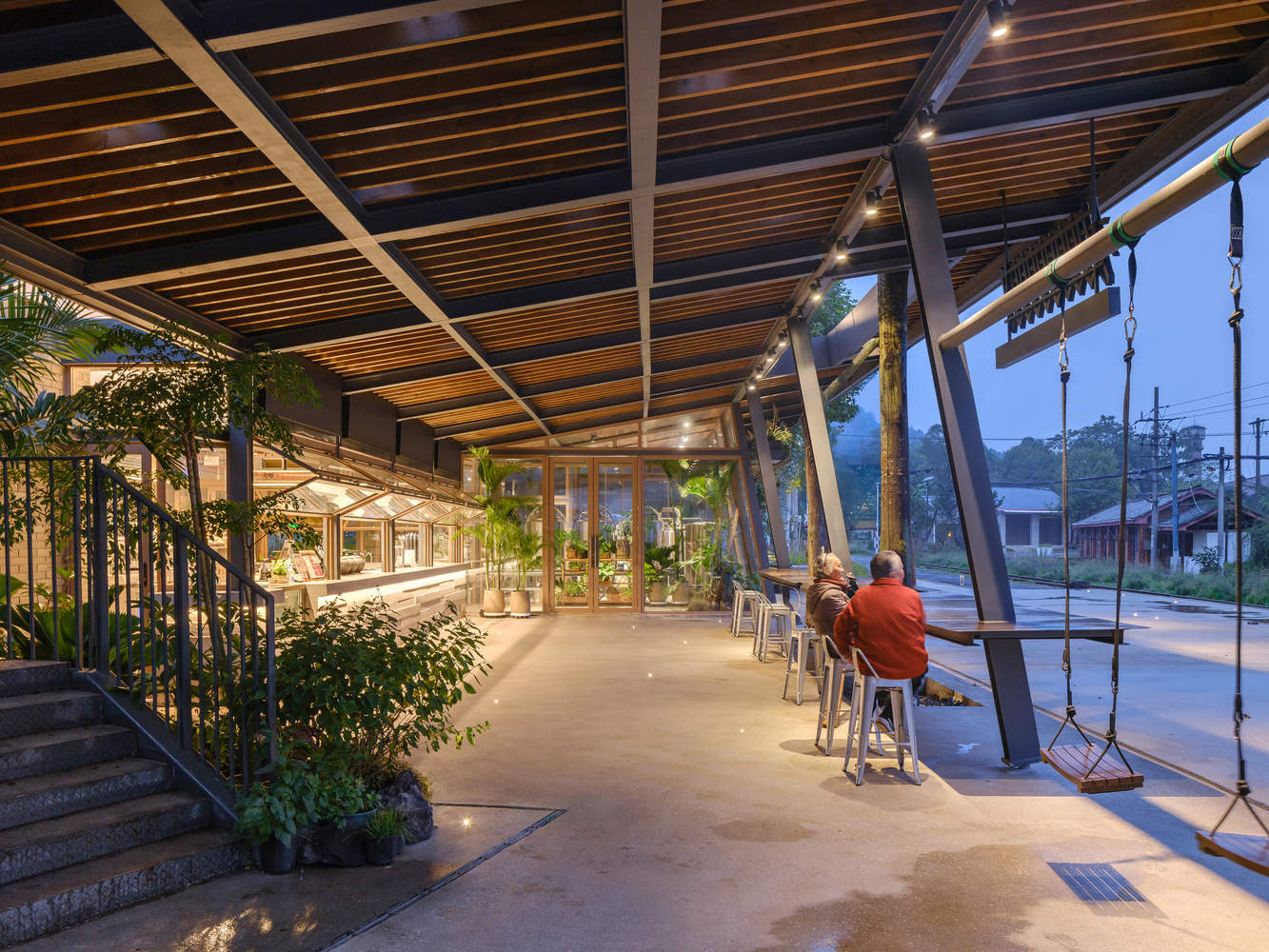
The purlin system supporting the tiles on the semi-outdoor shed is deliberately exposed, creating a unique visual experience overhead. Transparent tiles are interspersed randomly with slate tiles; during the day, sunlight filters through, creating dappled light spots; at night, tiny ground lights embedded in the floor project points of light, like scattered starlight, creating a romantic transition between day and night. There were originally two plane trees in front of the restaurant, and the shed was initially designed to have an opening for them. However, during excavation, it was discovered that the roots of both trees were hollowed out, and prolonged exposure during construction caused irreversible decline in their health. The two plane trees were relocated to a more suitable environment within the park, and two mature soapberry trees were replanted in their original positions. The branches of the new trees break through the shed roof, with the treetops offering a distant view of Longmen Mountain, becoming part of the architecture and continuing to grow.
半室外棚棚儿布置瓦片的檩条系统被直接暴露,形成独特的顶部视觉。透明瓦与石板瓦随机穿插,白天阳光渗下,光斑点点;夜晚地上预埋的极小地埋灯透出点点亮光,如星光洒地,日夜浪漫交替。餐厅前场原有两棵梧桐树,棚棚儿原本为它们预留出破顶的空间。但开挖过程中发现两棵树的根系已空,又在施工中长期暴露,健康状况出现不可逆的衰退。两棵梧桐树被移植至公园内更适宜的环境,并在原址补种了两棵成熟的栾树。两棵树枝桠突破棚儿顶,树梢远眺远处的龙门山,他们成为建筑的一部分,持续生长。
© 刘松恺
© 刘松恺
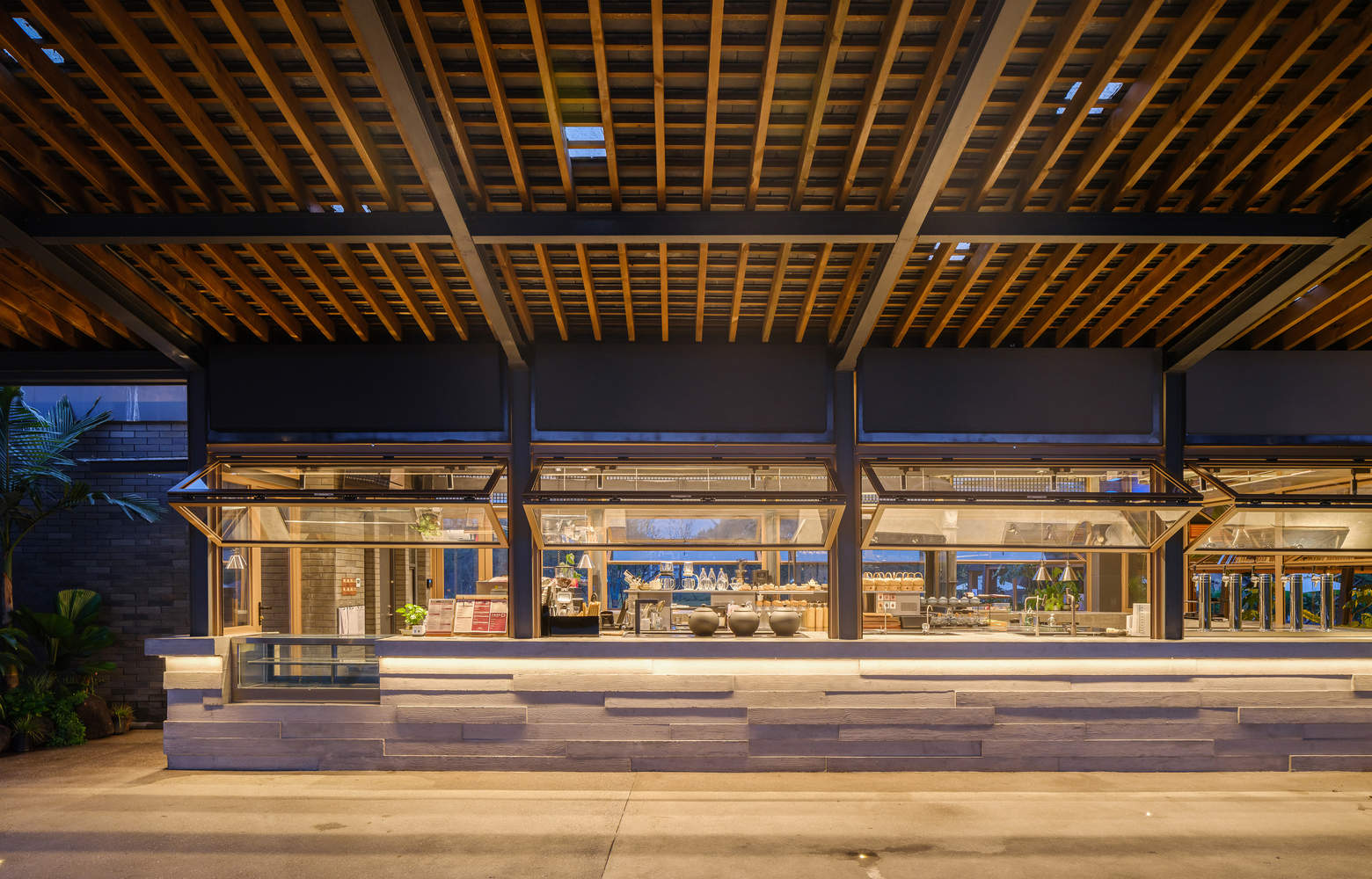
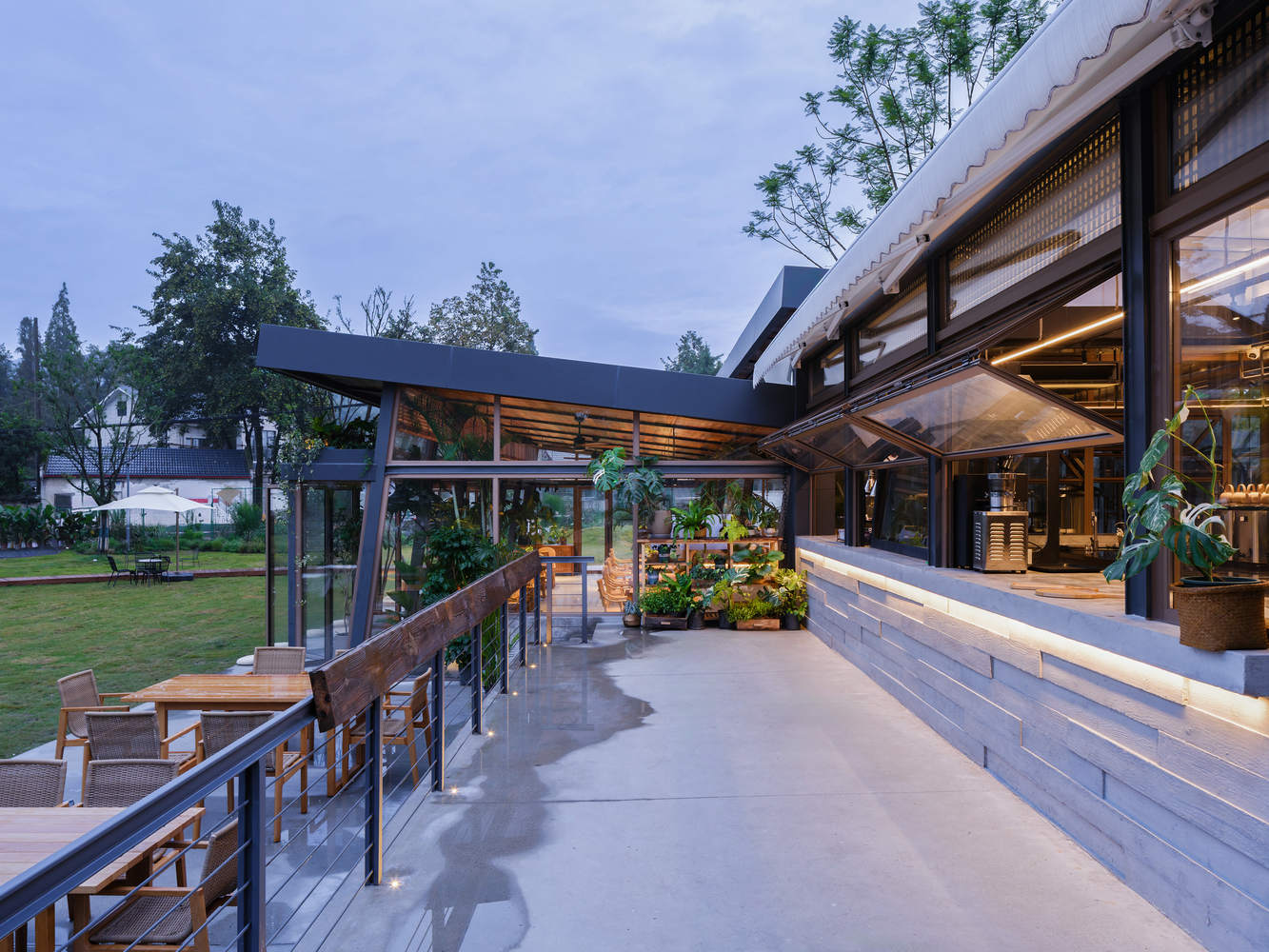
The under-shed space offers flexible and composite functions: The cast-in-place fair-faced concrete bar softens the rigidity of the material with its wood grain texture; the suspended long table supported by the inclined columns can be used for both waiting and small gatherings for drinks; swings set up on the old station side have become a favorite play corner for residents. The 10-meter long central cast-in-place bar is the functional and visual focal point, serving the platform, the park behind it, and the indoor dining area. In terms of architectural language, it is independent of the main roof and features a semi-transparent PC panel roof, embedded within the dark gray steel structure. At night, it radiates warm light like a lantern, conveying a warm sense of vitality outward.
棚下空间功能灵活复合:现浇清水混凝土吧台以其木纹肌理柔化了材质的冷峻;依托斜柱的悬浮长台既可候车小憩,也适合友人小酌;老站一侧设置的秋千,已成为深受居民喜爱的游戏角落。10 米长的中央现浇吧台是功能与视觉的焦点,同时服务于站台、后侧公园与室内就餐区。在建筑语言上,它独立于主体屋顶,采用半透 PC 板屋面,嵌入深灰色钢构之中。夜晚,它如灯笼般漫射出暖光,向外传递着温暖的烟火气息。
© 刘松恺
© 刘松恺
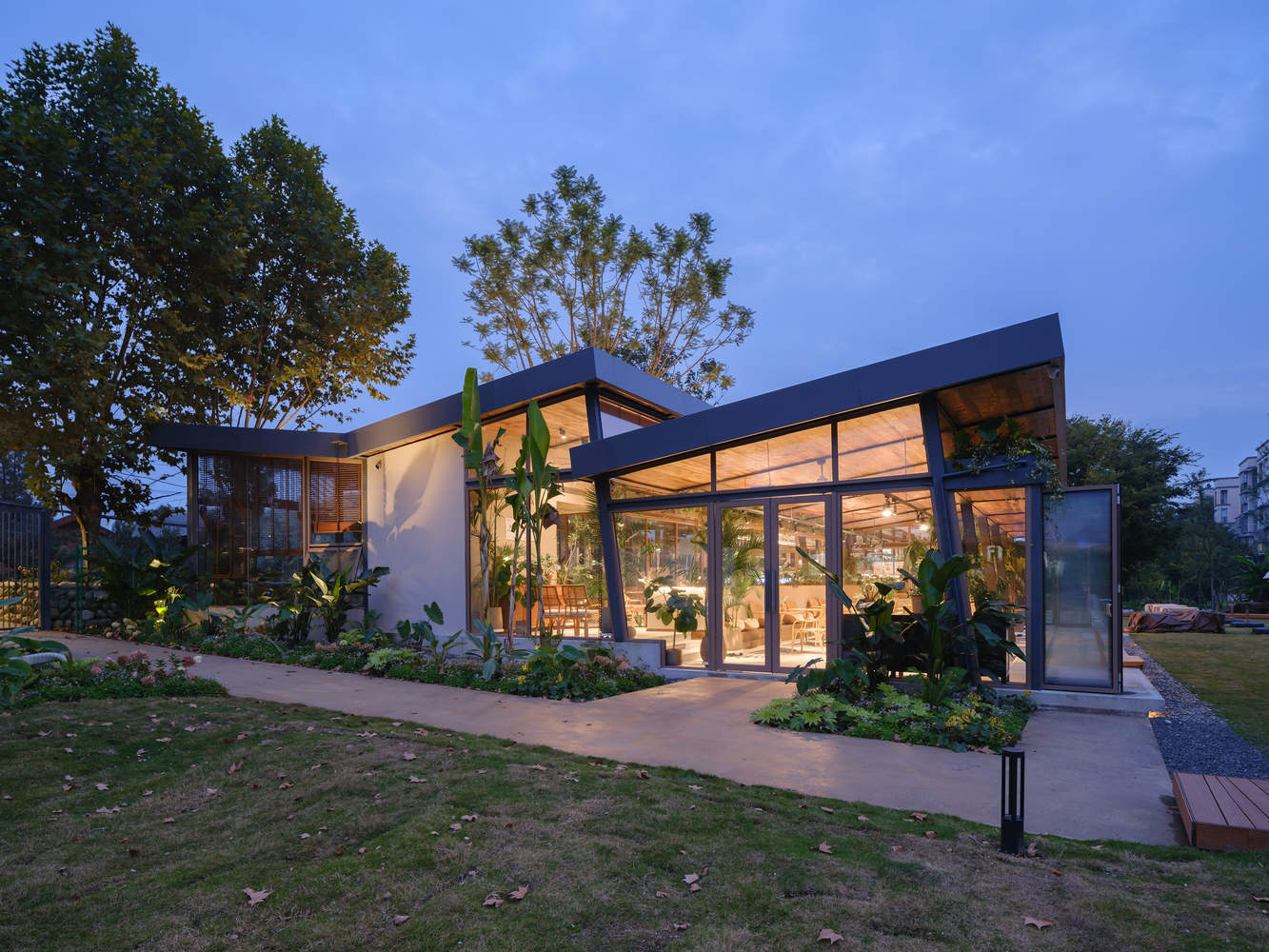
The original 1.2-meter height difference on the site is resolved through three terraces, with the lowest level becoming seating areas for rest. The inclined column system extends indoors, and the single-slope roof follows the contours of the terrain with its stepping form, ensuring a comfortable clear height of 3.2 meters while creating a rhythmic spatial sequence. Divided by the central bar and the courtyard, the single-slope roofs on both sides form a V-shape, which not only organizes drainage but also directs the building's "potential energy" towards the central bar area.
场地原有的 1.2 米高差通过三级台地消化,最低处成为休憩座面。斜柱体系延续至室内,单坡屋顶顺应地形起伏,屋顶形式呼应地形的层层跌落,采用单坡屋面,在保证 3.2 米舒适净高的同时,营造出富有节奏的空间序列。以中央吧台与庭院为界,两侧的单坡屋顶呈V形,不仅组织了排水,更将整个建筑的“势能”引向核心的吧台区域
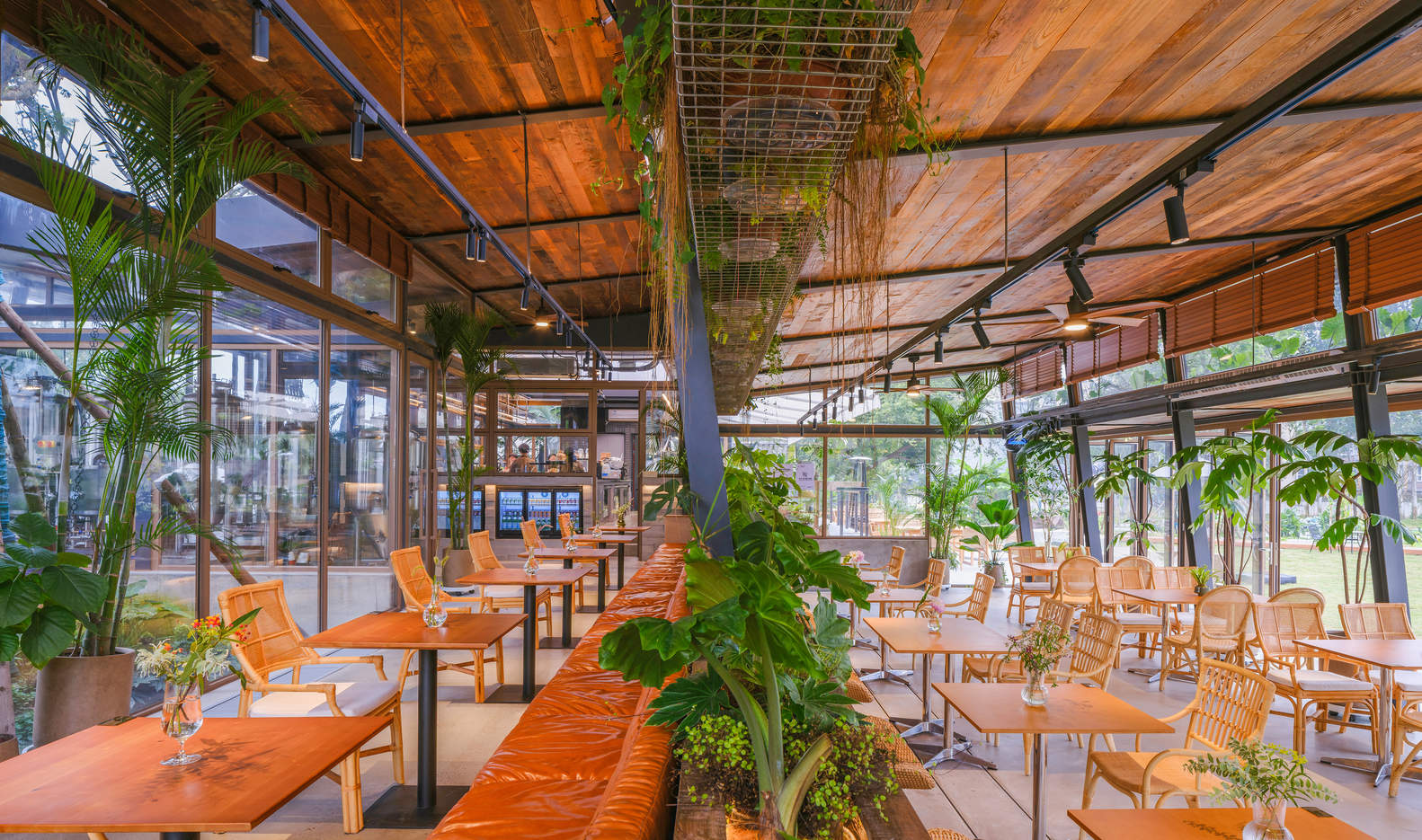
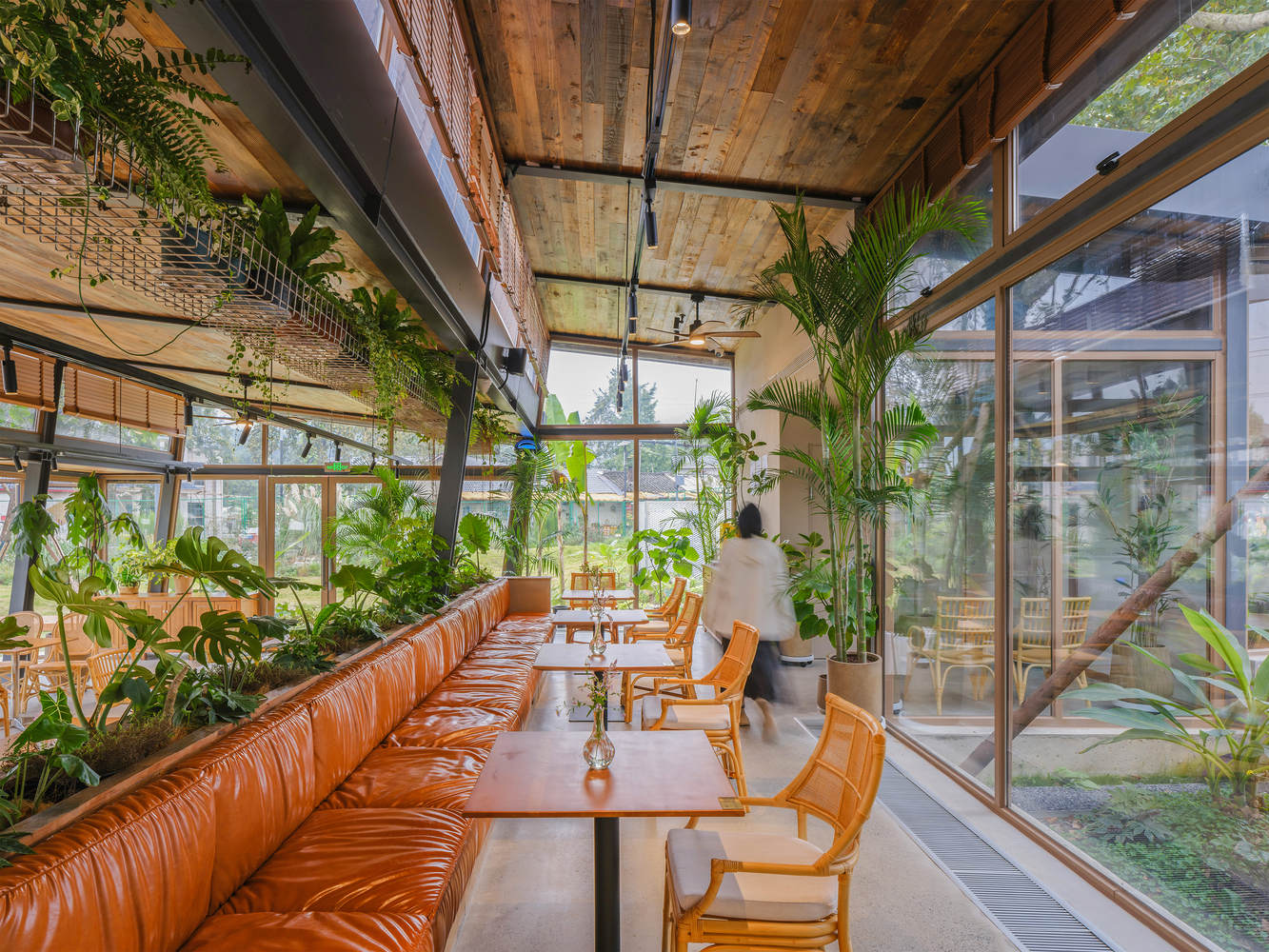
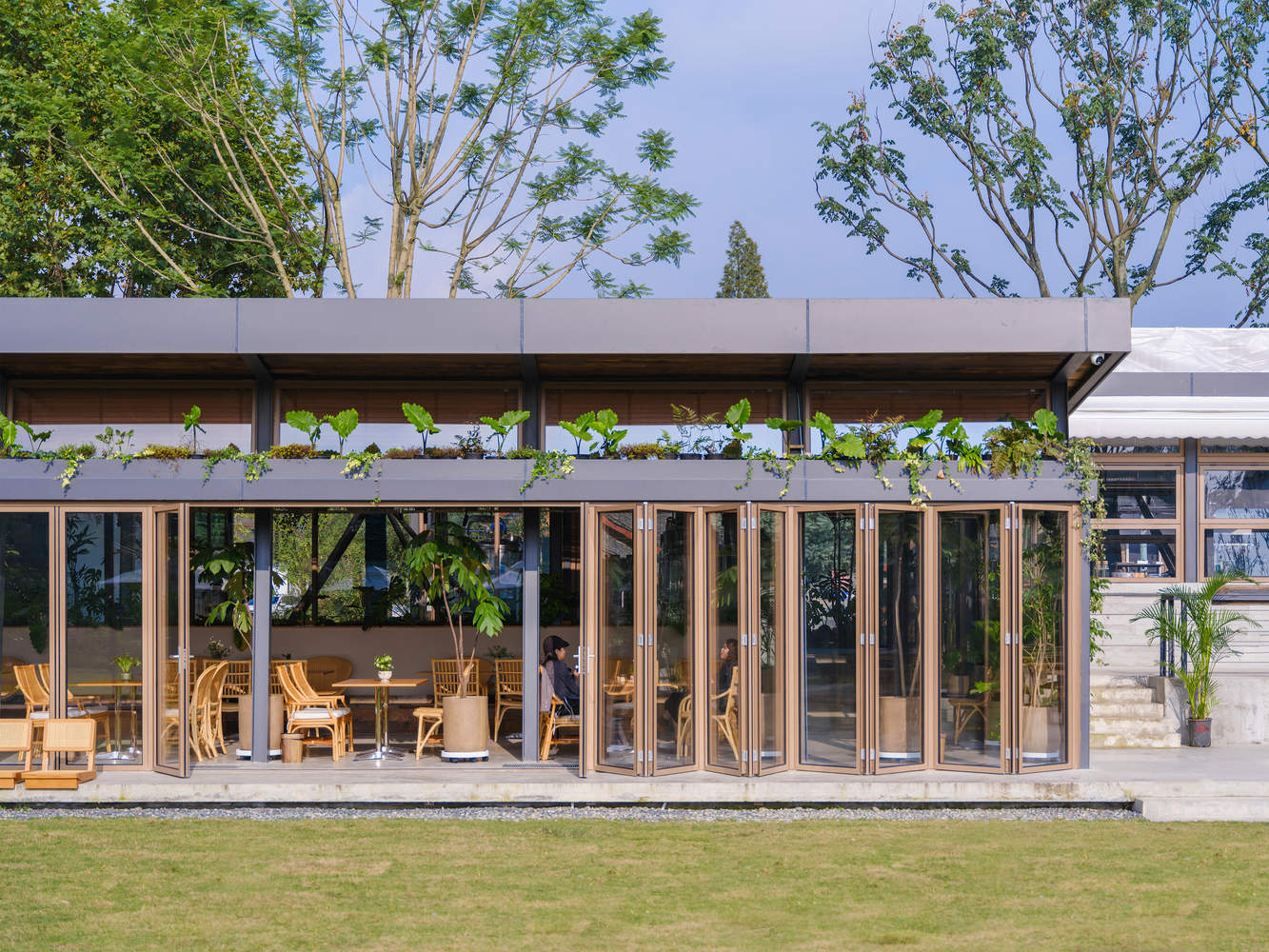
The facade is predominantly large-span glass to maximize the restaurant's transparency and openness. To achieve the ultimate lightweight roof appearance, all HVAC equipment is buried underground. On the basis of dark gray steel structure and concrete, the interior extensively uses warm old wood, rattan weaving, and solid wood furniture, inspired by the bamboo chairs of old Chengdu, recreating local leisure memories. The ceiling and skirting boards uniformly use fir wood, and the aluminum window frames of the curtain wall also use the same color system. The triangular green space behind the restaurant is planned as a parent-child water play area, and the entire folding door can be fully opened in suitable seasons, integrating the interior and exterior. We have also set up multi-level outdoor platforms as outdoor dining and rest areas.
立面以大面积玻璃为主,最大化餐厅的通透性与开放性。为了达到极致的轻薄屋顶观感,所有暖通设备均被预埋于地面之下。在深灰色钢结构与混凝土的基调上,室内大量运用温暖的老木、藤编与实木家具,灵感源自老成都的竹编椅,重塑本地休闲记忆。天花与踢脚线统一采用株木,幕墙铝窗框也选用同色系。餐厅后侧的三角绿地规划为亲子嬉水乐园,整面折叠门可在适宜季节完全打开,使室内外融为一体。我们也设置了多级室外平台作为室外就餐和休憩空间。
© 刘松恺
© 刘松恺
Green plants are systematically integrated into the architecture: The atrium between the craft beer area and the private rooms becomes a quiet garden; the rain canopy above the inclined columns is designed as a continuous planting trough, with leaves hanging down and grass growing under the shed; continuous flower beds are embedded in the indoor booth area, with metal mesh racks for placing plants suspended above, forming a "three-dimensional green window" that changes with plant growth; the dining tables in the private rooms are also surrounded by large-leaf plants, further blurring the boundary between indoors and nature. Details pay homage to industrial heritage: Platform railings and main door handles are sourced from small-sized railway tracks; steps in the private rooms reuse old sleepers, awakening historical memories with their warm texture and traces of time; one side of the indoor booths uses embedded tracks, allowing seats to move flexibly according to usage needs, enhancing spatial adaptability.
绿植被系统性地融入建筑:精酿区与包间之间的中庭成为静谧花园;斜柱上方的雨棚设计为连续种植池,叶儿垂下,棚儿下长草;室内卡座区间嵌入连续花池,并在上方悬挂摆放植物的金属网架,构成一幅可随植物生长而变化的“立体绿窗”;包间的餐桌周边亦环绕一圈大叶植物,进一步模糊室内与自然的边界。细节处致敬工业遗存:平台栏杆、大门把手取材自小尺寸铁轨;包间阶梯复用老枕木,以温润的质感和岁月的痕迹唤醒历史记忆;室内单侧卡座采用了内嵌式轨道,方便座椅能根据使用需求灵活移动,增强了空间的适应性。
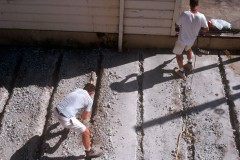
The project encountered many challenges during the construction phase, the most representative of which was the cast-in-place construction of the central bar. To ensure the final effect, the design team led several experimental castings within the park, finally determining the optimal solution by repeatedly comparing the effects of different material ratios and wood formwork systems. A small sample of one concrete bar was intentionally preserved and became a unique landscape feature within the park, witnessing the complete process from experiment to realization.
项目在施工阶段遭遇了不少挑战,其中最具代表性的是中央大吧台的现浇施工。为了确保最终效果,设计团队主导在园区内进行了多次实验性浇筑,通过反复比对不同材料配比与木模板体系的效果,最终确定了最优方案。其中一个混凝土吧台小样被特意保留下来,成为园区内一处独特的景观小品,见证着从实验到实现的完整过程。
Today, as the little train enters the trial operation phase, the Peng'er Restaurant has evolved beyond the single function of a station to become a beloved community living room and daily hub for local residents. It has not only successfully activated the historical station but has also become a vibrant link connecting the past and the present, tourists and residents, nature and architecture, writing a vivid prologue to the comprehensive revival of the Jianjiang Little Train Linear Park.
如今,随着小火车进入试运行阶段,棚朋儿餐厅也已超越单一的车站功能,演变为深受本地居民喜爱的社区客厅与日常据点。它不仅成功激活了历史站点,更成为连接过去与现在、游客与居民、自然与建筑的活力纽带,为湔江小火车线性公园的全面复兴写下了生动的序章。
© 刘松恺