Mi Ao Office/Atelier Mearc
米凹办公室 / atelier mearc
© 梁山
© 梁山
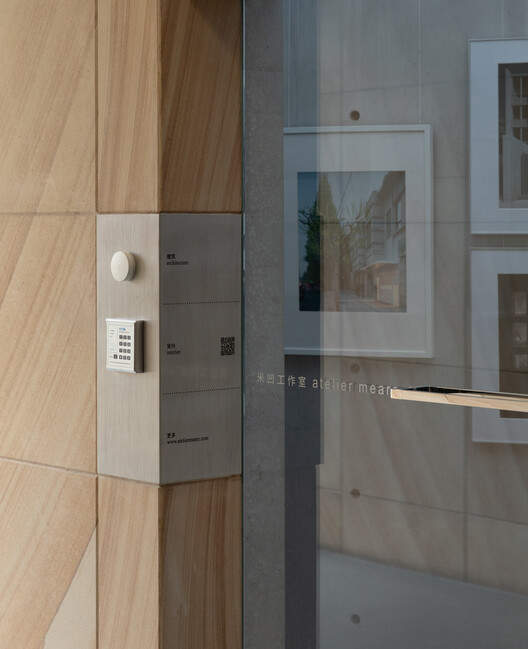
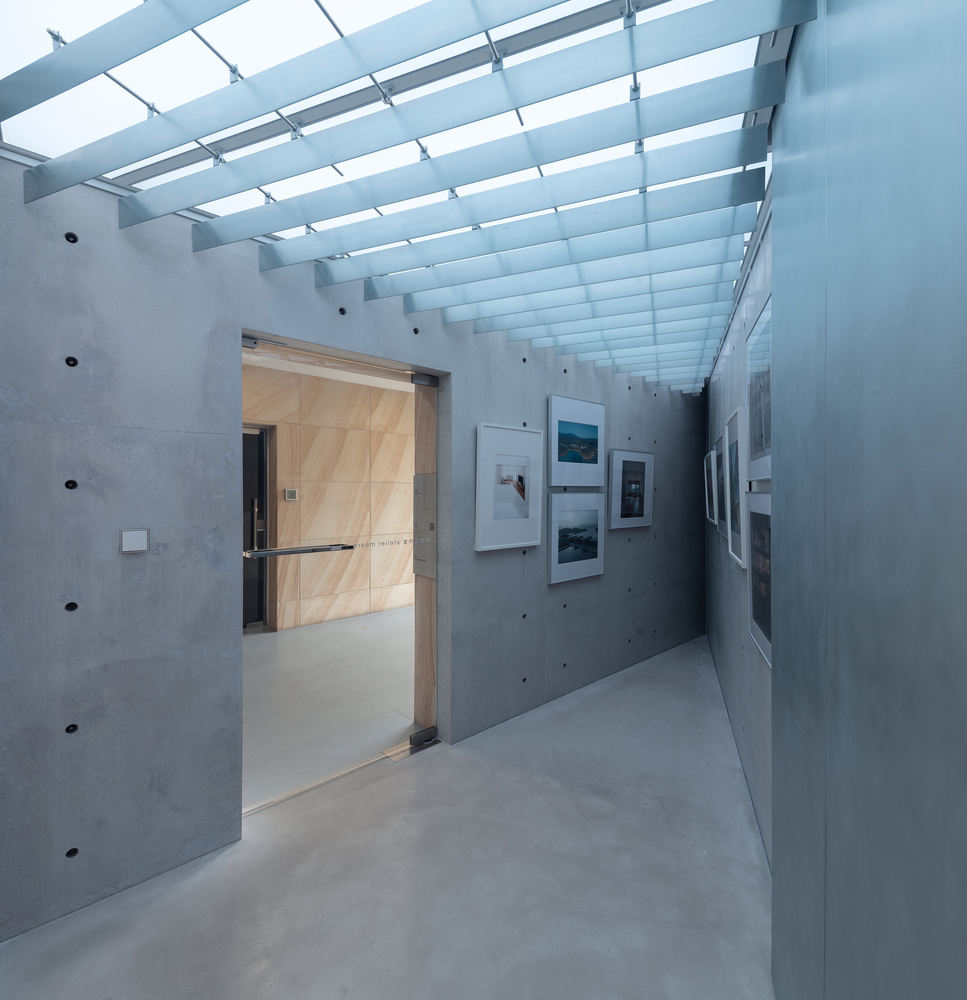
Xiangyang South Road, formerly known as Ladu Road, was built by the French Concession Public Council in the 1920s. If we consider it as an open and public urban landscape, and the building where the office is located as a enclosed, inward looking, semi private community landscape, the office is like a transitional space between the two, bringing the line of sight from the street and returning to the city block through the inward space.
襄阳南路原名拉都路,1920 年代由当时的法租界公董局修筑完成。如果把它看作开放、公共的城市图景,办公室所在大厦看作围合、内向、半私密的社区图景,办公室则像是介于二者之间的过渡空间,将视线由街道引入,穿过内向空间重返城市街区。
© 梁山
© 梁山
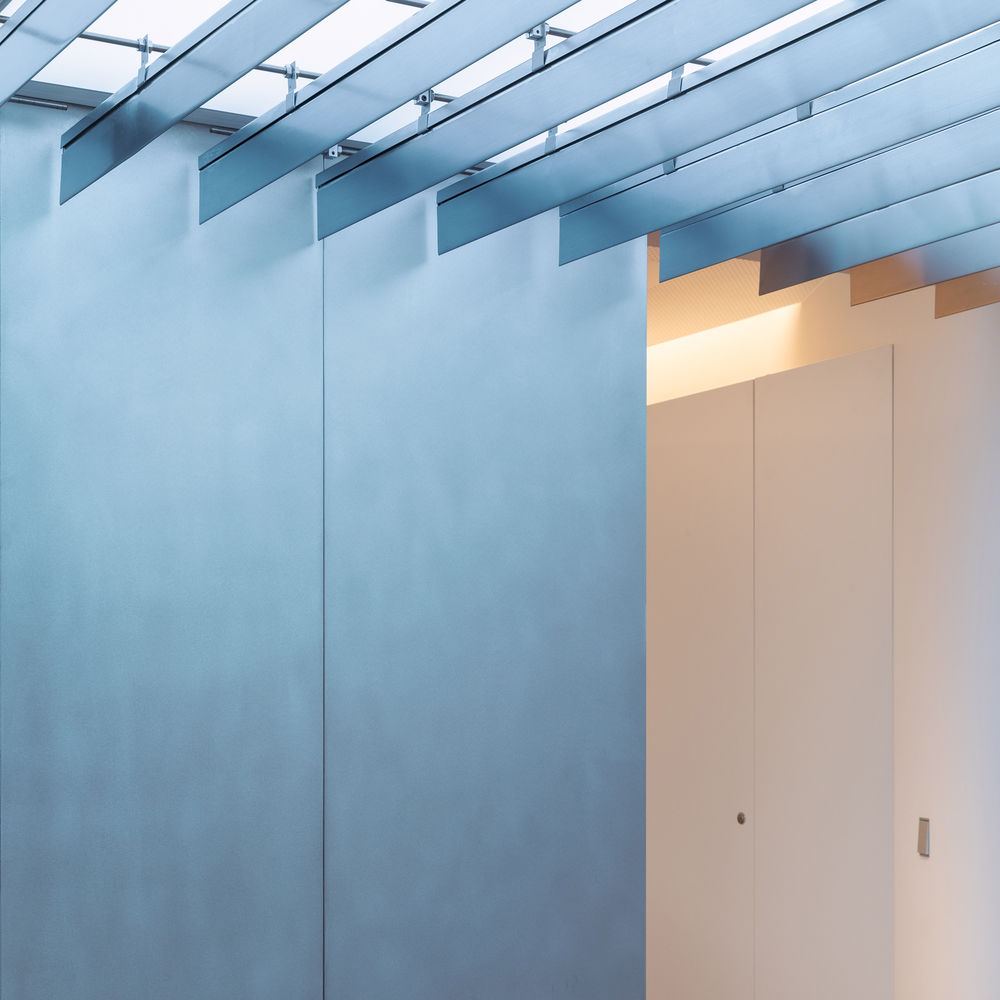
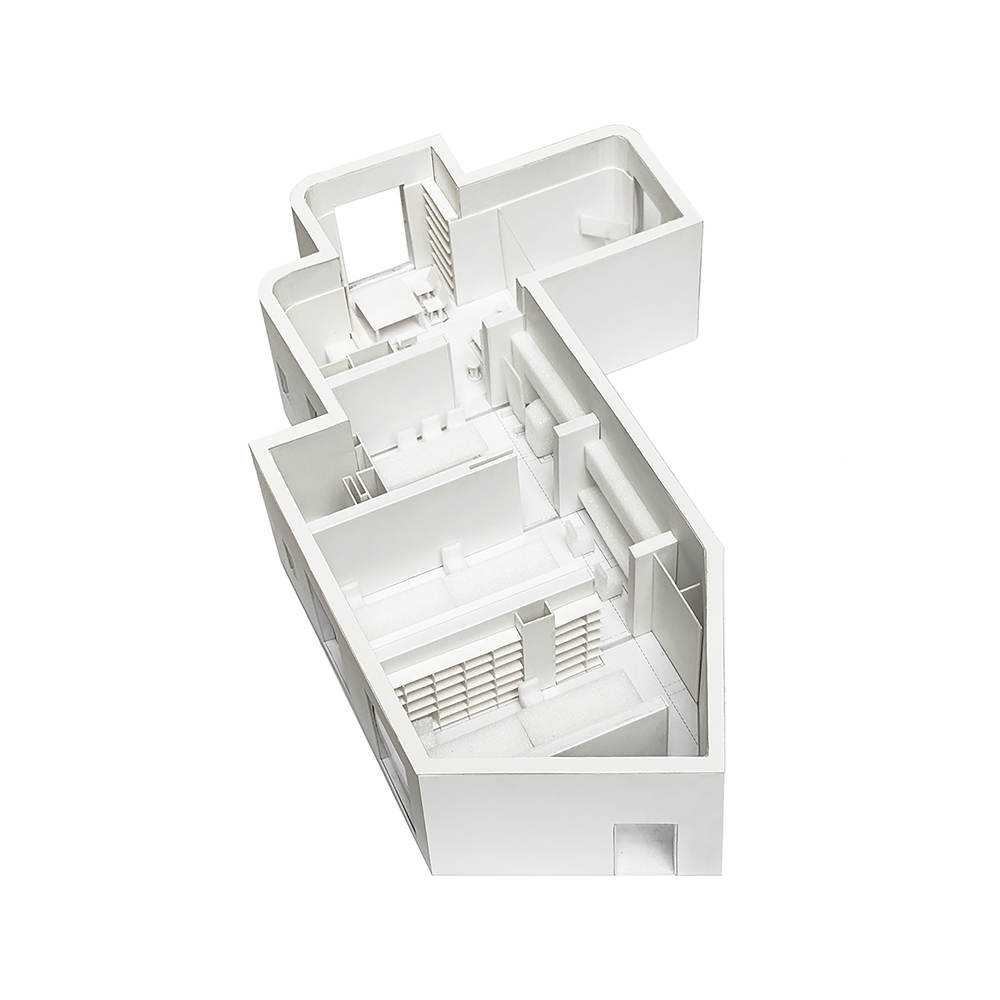
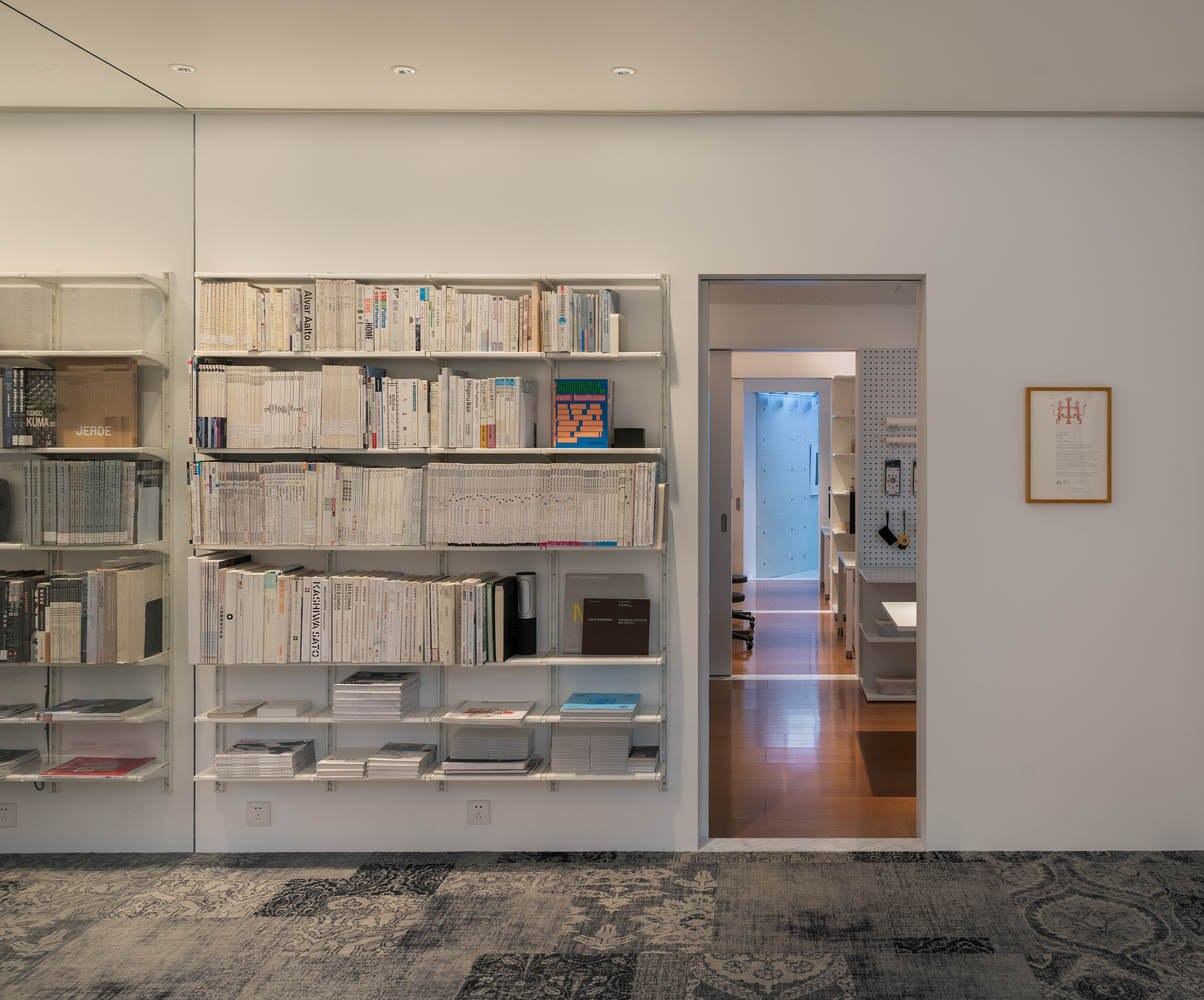
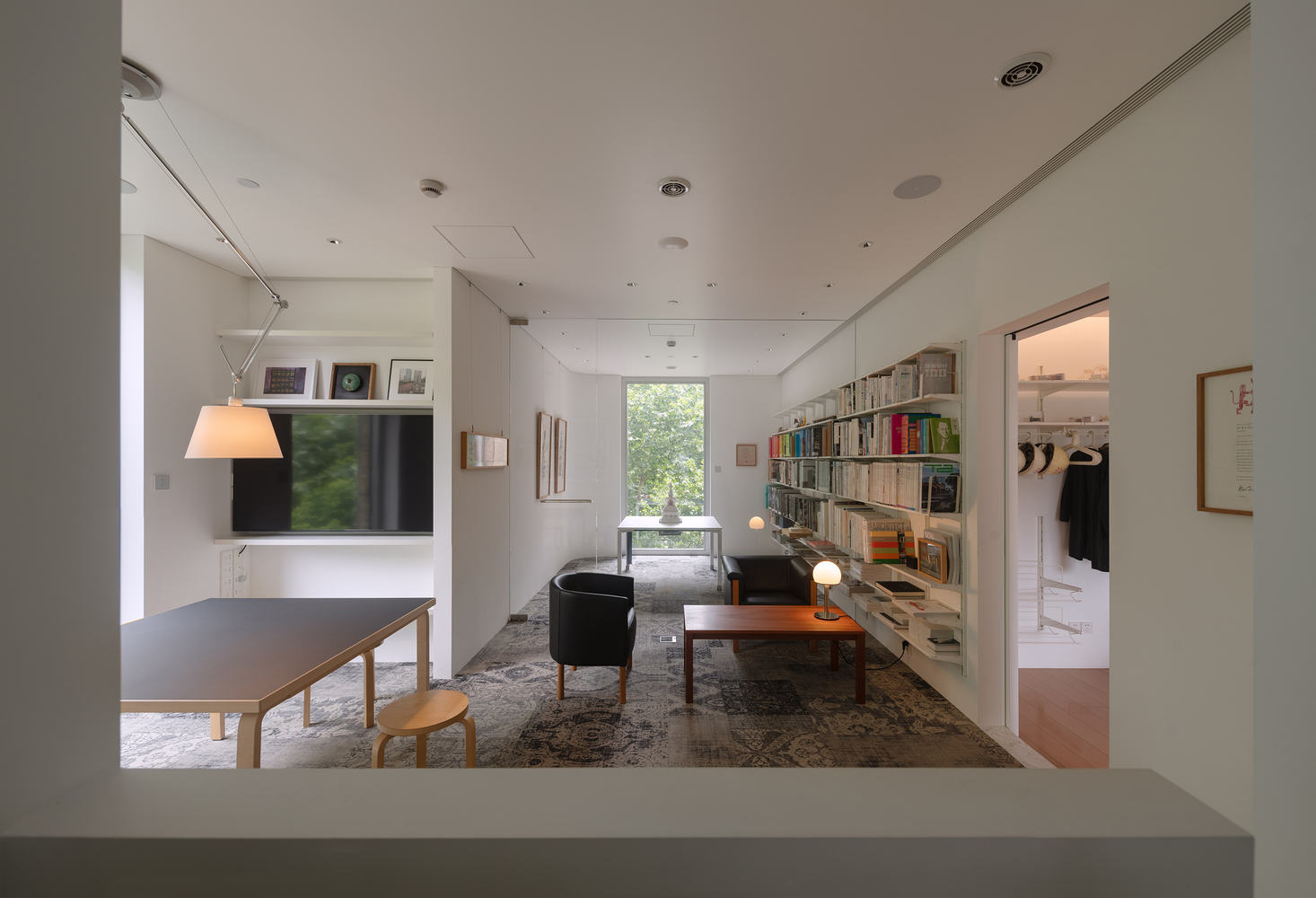
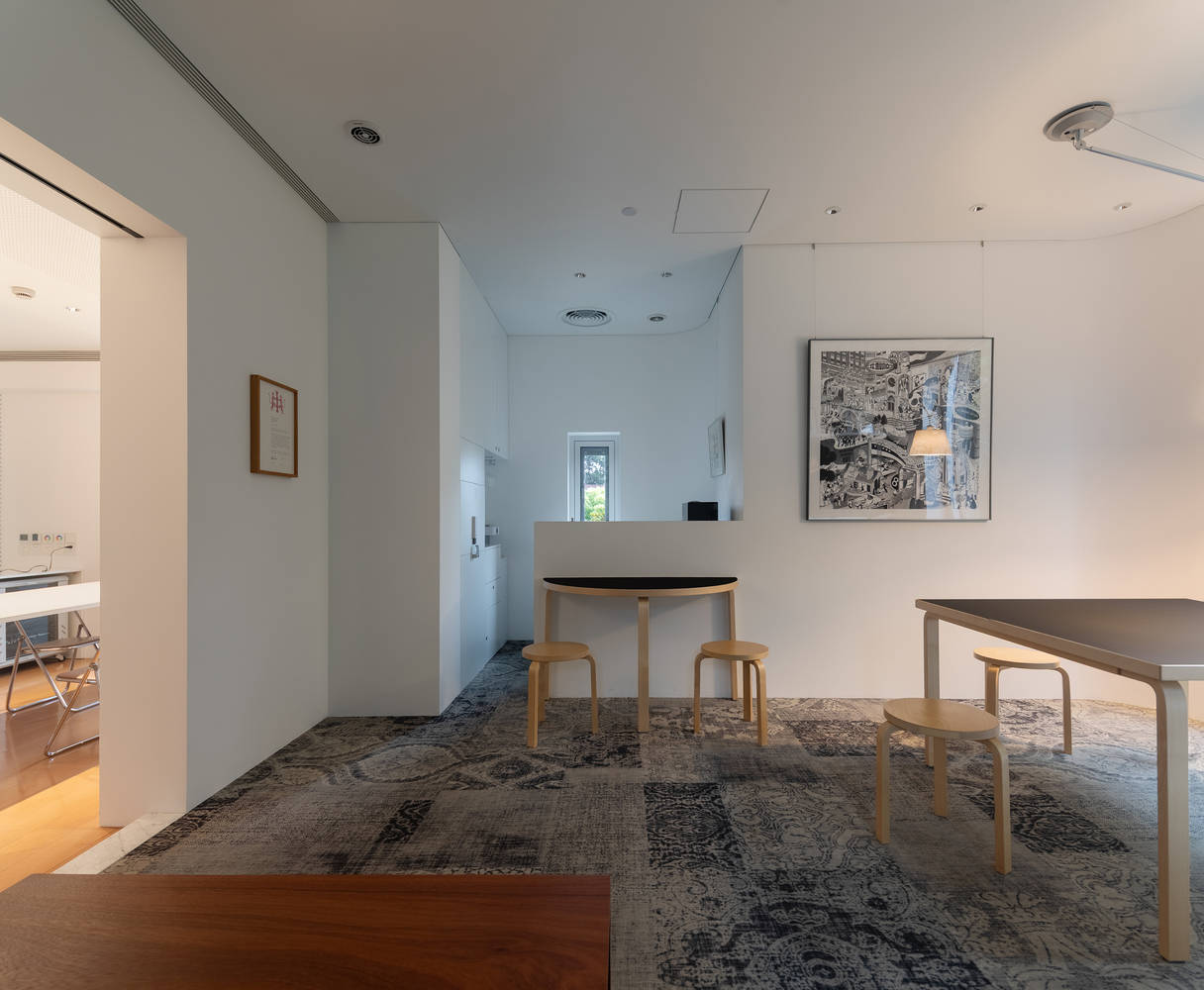
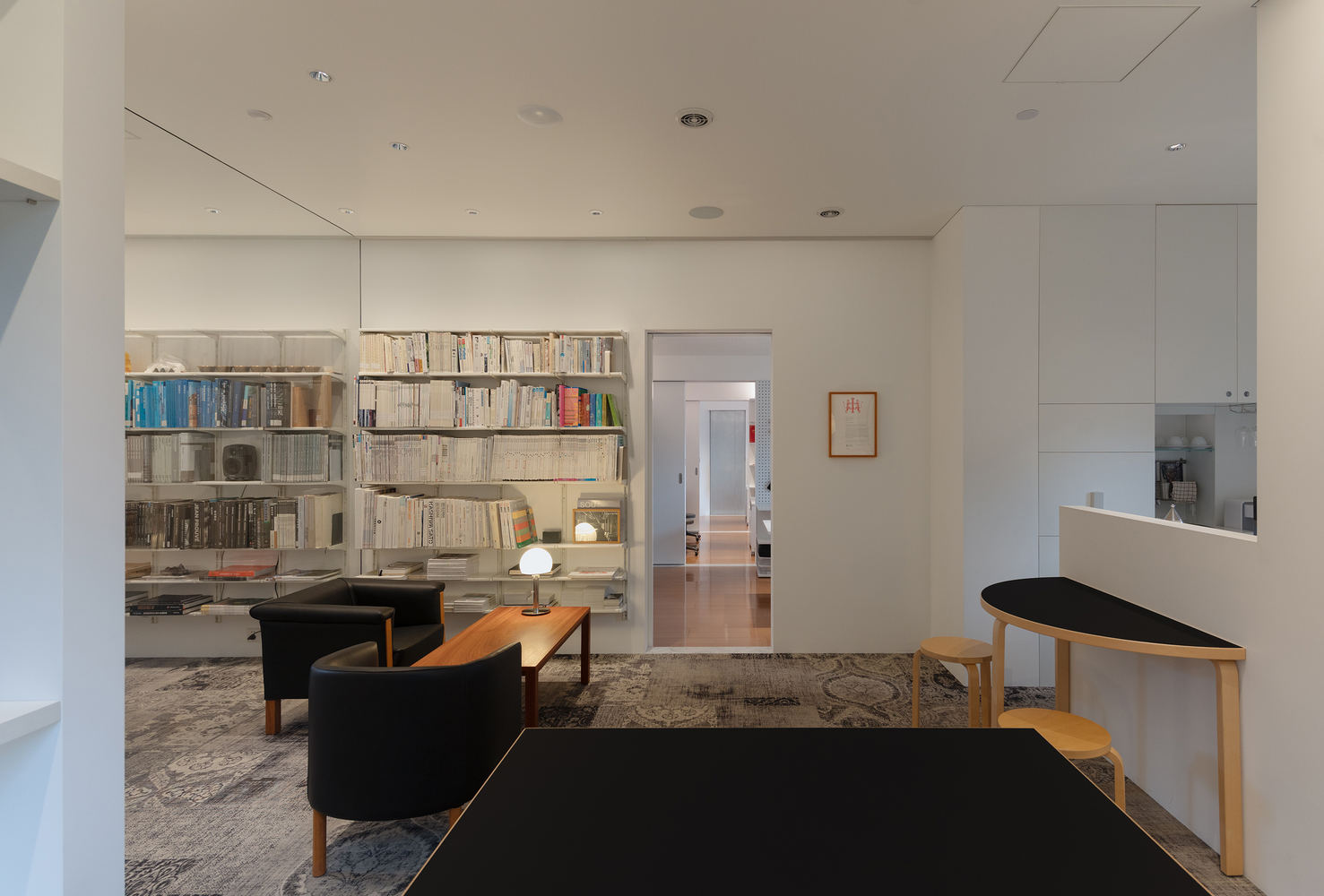
The office space of the podium building and the tower apartments share the same load-bearing system, forming an office space pattern that includes both residential scale and several times larger than the apartment layout. The design of the Mi Ao office starts from the triangular space at the entrance and generates four spaces from west to east in sequence. The original north-south residential space activity route within the building has been adjusted to an east-west travel route, incorporating a sense of familiarity with the residential area and openness in the public space while crossing the spatial layout.
大厦裙楼的办公空间与塔楼公寓共用同一套承重体系,形成同时包含住宅尺度和大于公寓户型几倍范围的办公空间格局。米凹办公室以入口的三角形空间为设计起点,自西向东依次生发出四个空间。建筑内原本南北向的居住空间活动路线被调整为东西向行进路线,穿越空间布局的同时融入住宅的亲切感觉与公共空间的开放感。
© 梁山
© 梁山
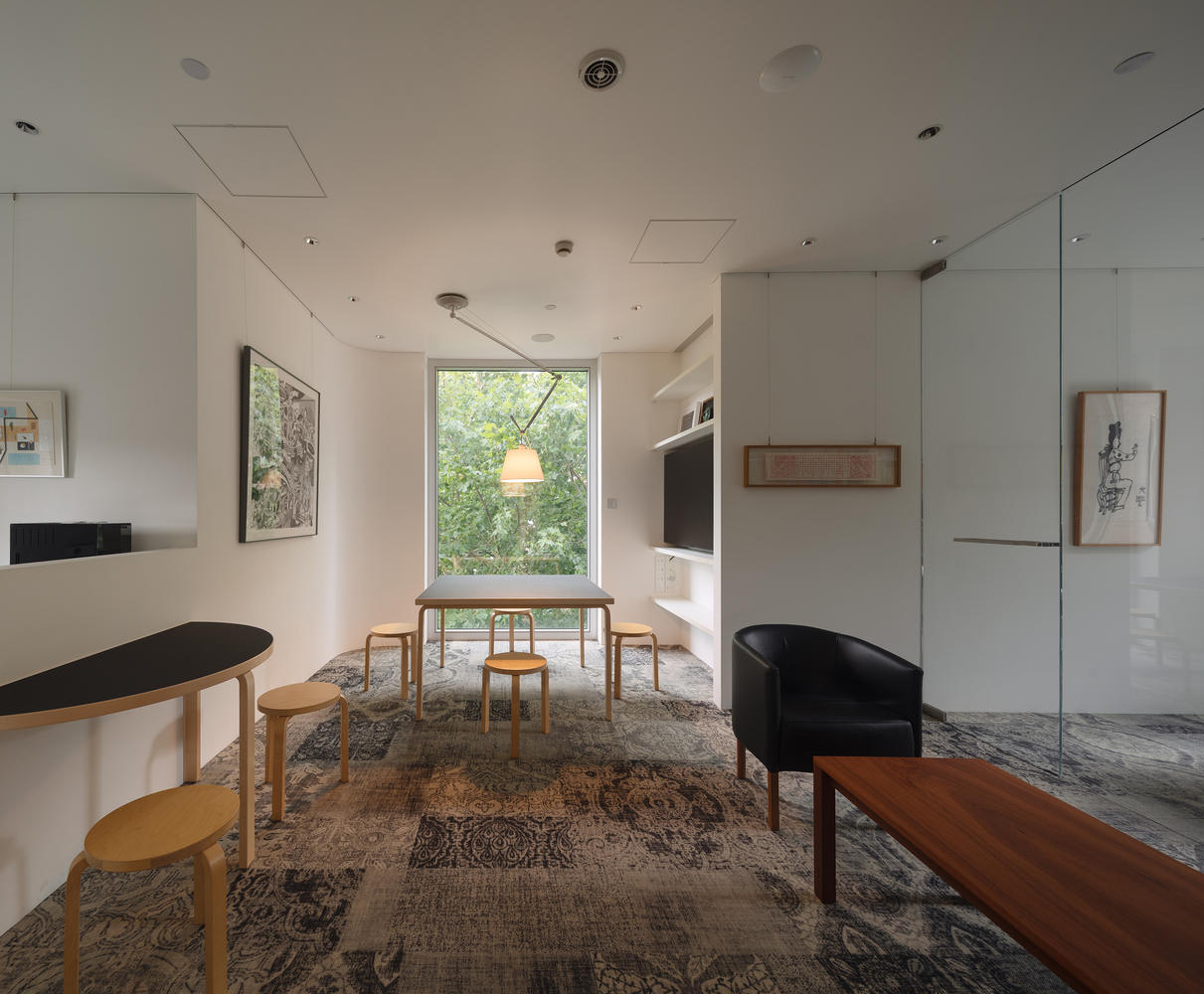
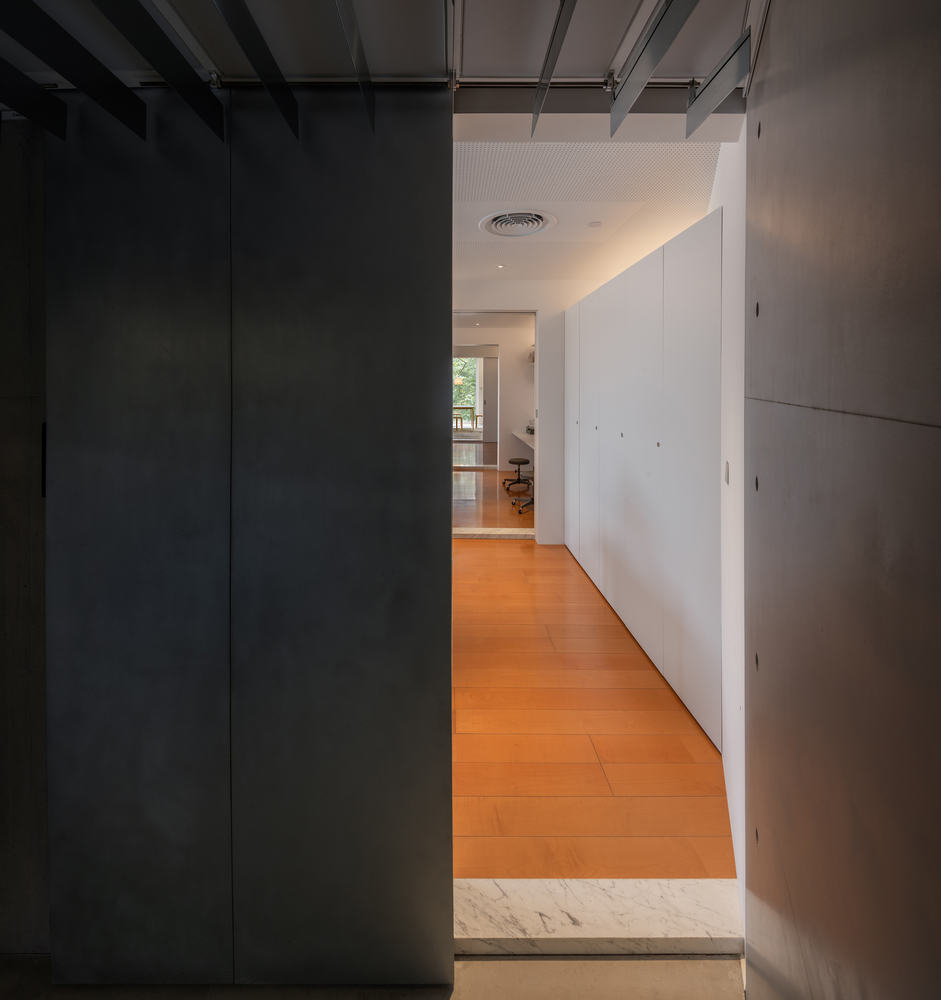
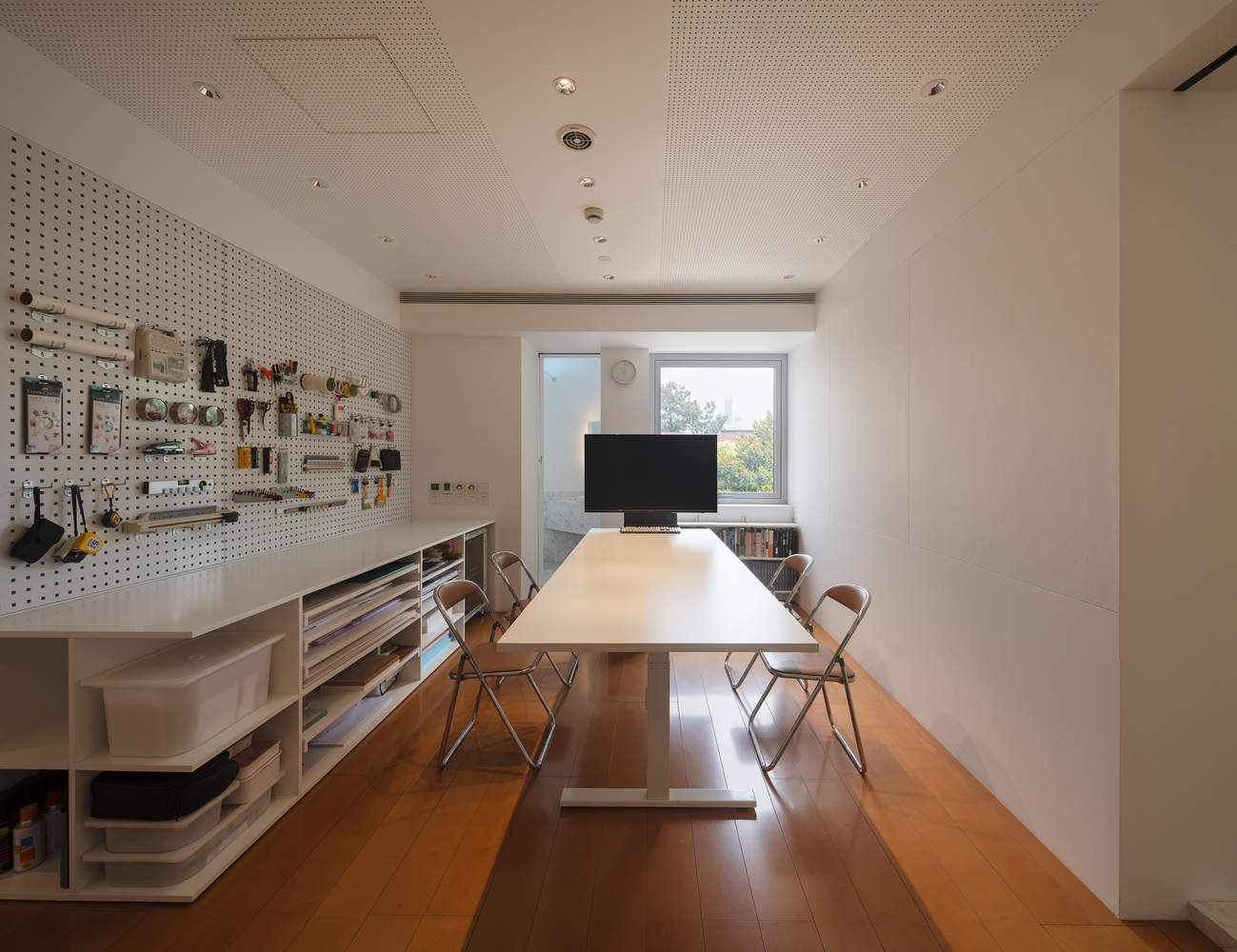
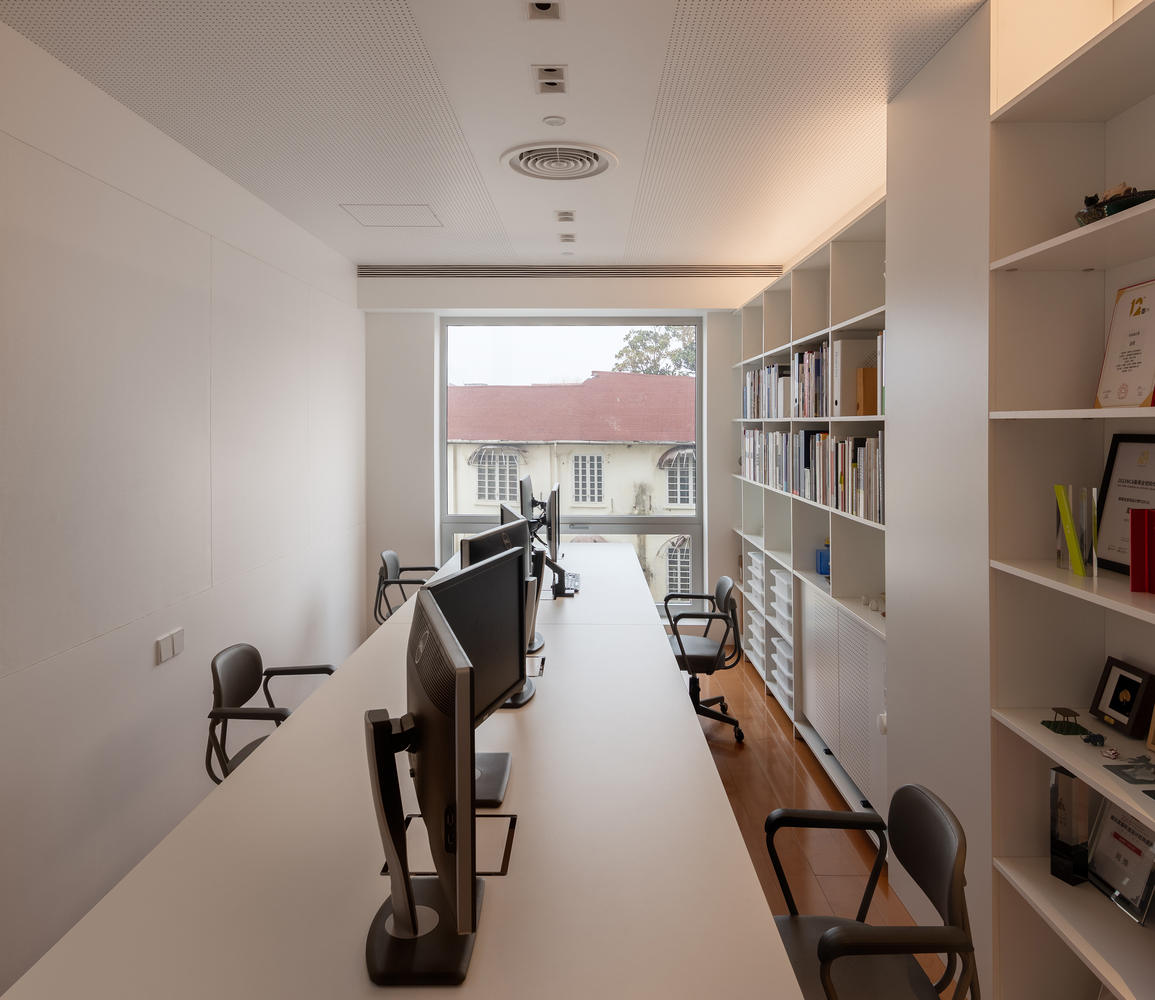
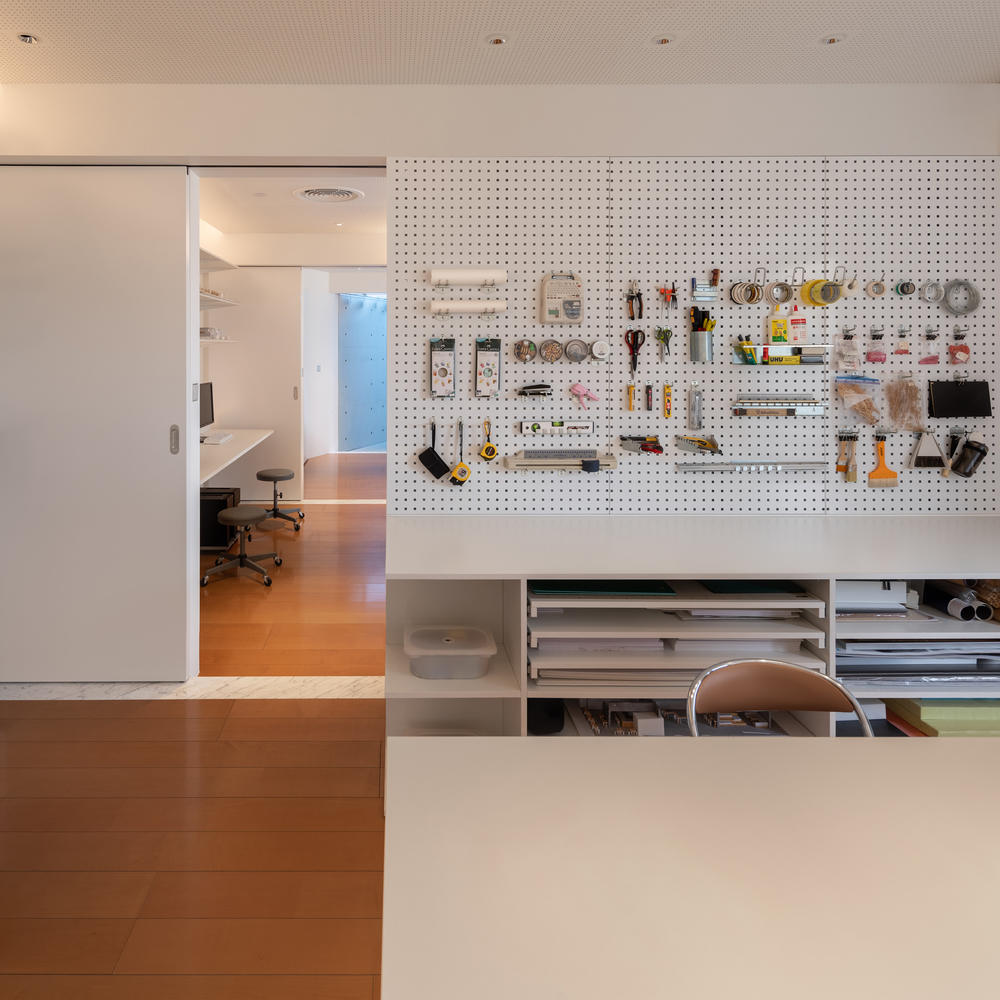
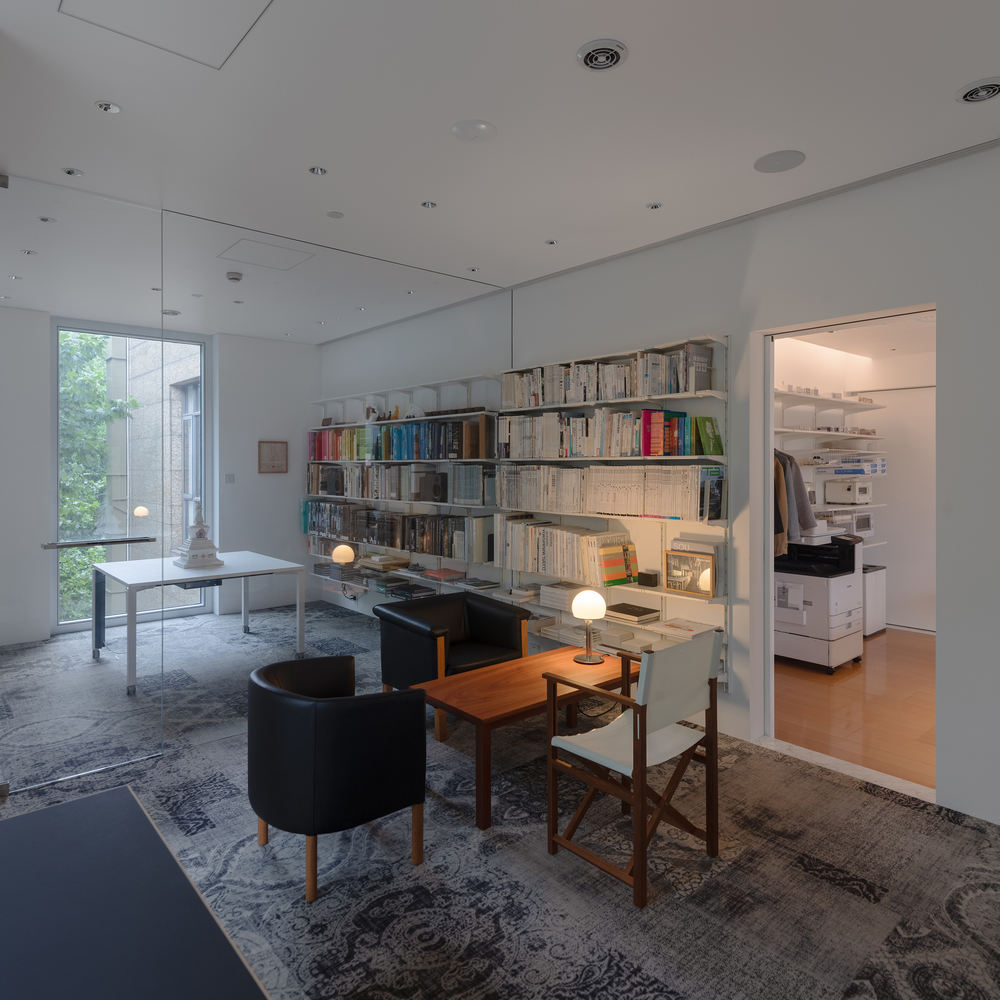
The three spaces parallel to the entrance retain the same floor height as the conventional residential space, and steps are added at the connection between adjacent spaces. The architectural technique of gradually raising the ground is used to plan a body memory with clear directionality. The large space on the east side of the living room corresponds to the living room in a residential building in terms of form. The entry method is similar, with the floor height raised and steps added to naturally adjust the ground. Two large-scale floor to ceiling glass windows are placed to make the space a more open and diverse public area.
与入口平行的三个空间保留与常规居住空间形态一致的层高,在相邻空间连接处增加台阶,用逐级抬高地面的建筑手法规划出带有明确方向性的身体记忆。东侧客厅大空间在形态上对应住宅中的客厅,进入方式与之相似,抬升层高以及增加台阶带来地面自然调整之后,置入两扇大尺度落地玻璃窗使空间成为更具开放性和丰富性的公共区域。
© 梁山
© 梁山
© 梁山
Driven by low-carbon goals, sustainable design completes a complete framework from construction to use in terms of reducing energy consumption and reusing materials. Reinstall the insulation system on the inside of the building to avoid cold bridges. Replace the entire set of doors and windows, and design precise nodes with high-performance doors and windows to achieve excellent airtightness.
在低碳目标驱使下,可持续设计在降低能耗和材料再利用两方面完成从建造到使用的完整构架。在建筑内侧重新搭建保温系统避免冷桥。对全套门窗进行更换,配合高性能门窗设计精密节点,达到优异气密效果。
© 梁山
© 梁山
In terms of equipment utilization, use the air conditioning system provided by the building property during working hours, and add a VRV air conditioning system as a supplement during transition seasons and non cooling/heating periods. The use of a total heat exchange fresh air system has improved the efficiency of heat recovery. Through the construction and application of the entire system, the energy consumption of the Mi Ao office is controlled at 70 kilowatt hours per square meter per year.
设备利用上,在工作时段使用大厦物业提供的空调系统,并增加一套 VRV 空调系统在过渡季和非供冷/供热时间段作为补充。全热交换新风系统的使用提高了热回收效率。通过整个系统的搭建和运用,米凹办公室能耗被控制在每年每平方米 70 千瓦时。
© 梁山
© 梁山