Anaya Entrance Hall/Shisuo
阿那亚入户大堂 / 是所SHISUO
设计理念与空间营造:这个项目最令人印象深刻的,是其对设计理念的深度挖掘和对空间氛围的精妙营造。建筑师并未将入户大堂简单视为财富展示或材料堆砌的场所,而是深入思考“归家”的本质,以及如何通过空间设计传递情感。通过对建筑原有地形和采光条件的充分利用,设计师创造了一个充满诗意的日常空间。日光庭院的引入,火山岩、竹木、亚麻等本土材料的运用,以及对细节的极致追求,都体现了设计师对环境的尊重和对居住者体验的关注,最终呈现出一个兼具实用性、美观性和精神慰藉的理想空间。
材料与工艺的巧妙运用:项目的亮点之一在于对材料和工艺的精湛运用。设计师巧妙地利用当地的材料,如火山岩、竹木,赋予空间独特的地域特色和文化内涵。竹木格栅不仅解决了功能性问题,还通过对光线的过滤,创造出一种近乎神圣的氛围。而藤编手柄、黄铜细节等,则体现了设计师对细节的极致追求和对材料的深入理解。这些细节不仅提升了空间的品质,也展现了设计师对本土文化和传统工艺的尊重。项目对材料的巧妙运用,是其区别于其他项目的关键所在,也为居住者带来了独特的感官体验。
空间组织与功能融合的创新:该项目在空间组织与功能融合方面展现出创新性。设计师充分利用原有建筑的局限性,化不利因素为有利条件。将入户大堂划分为不同功能区域,如前厅、庭院和走道,并在其中巧妙地隐藏了管线和设备。这种处理方式不仅提升了空间的美观度,也保证了功能的实用性。通过对不同区域的精细划分和相互之间的连接,设计师创造了一个既开放又私密的入户空间,让居住者在归家途中感受到过渡与变化,最终营造出一种舒适、温馨、充满仪式感的氛围,真正体现了建筑设计的价值和意义。
© Sanif
© Sanif
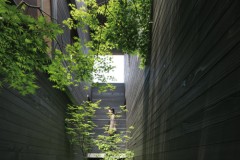
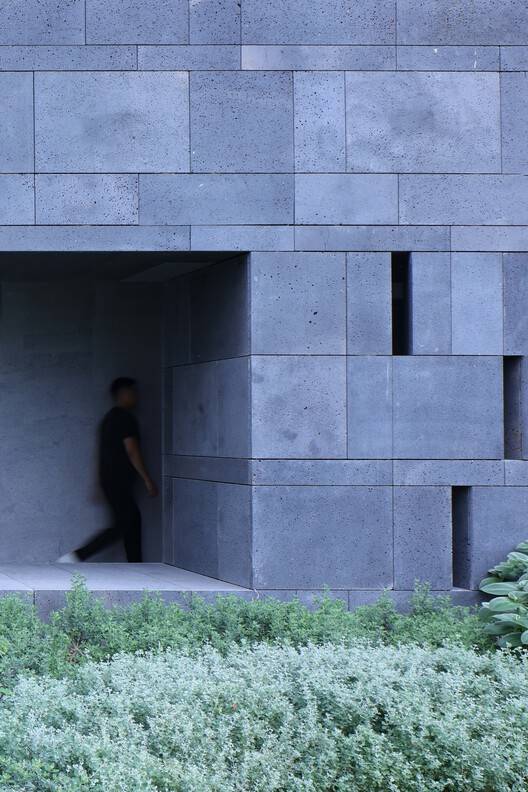
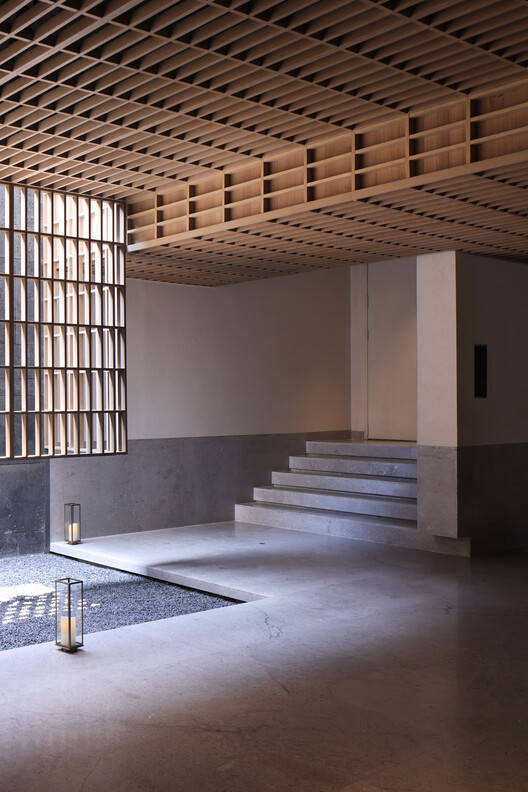
From the architect. In 2024, SHISUO was invited by Anaya to design entrance lobbies located on elevated levels for two mountain view residential buildings in Sanya. The original building utilized the height difference of the terrain, with one side of the elevated floor leaning against the mountain, but leaving a narrow daylight well for the indoor space, and the other side connecting to the terrace, becoming the entrance for residents to return home. A section of veranda becomes a prelude to returning home - a volcanic rock exterior wall or a framed cave opening is created to capture the external landscape; Or combined into a screen, allowing light to pass through the gaps. These changes in brightness and darkness give rhythm to the tall space and serve as a mediator between the exterior and interior.
来自建筑师。2024 年,是所 SHISUO 受阿那亚之邀,为其三亚的两栋山景住宅设计位于架空层的入户大堂。原有建筑利用地形高差,架空层一侧虽倚靠山体,但为室内空间留出一段狭长的采光井,另一侧则衔接台地,成为住户们归家的入口。一段外廊成为归家的前奏 —— 火山岩构成的外墙或塑造出一段框景洞口,捕捉外部的景观;或组合为一面屏风,让光线从缝隙中透入。这些明暗变化为颀长的空间赋予节奏,并成为外部与内部的调和者。
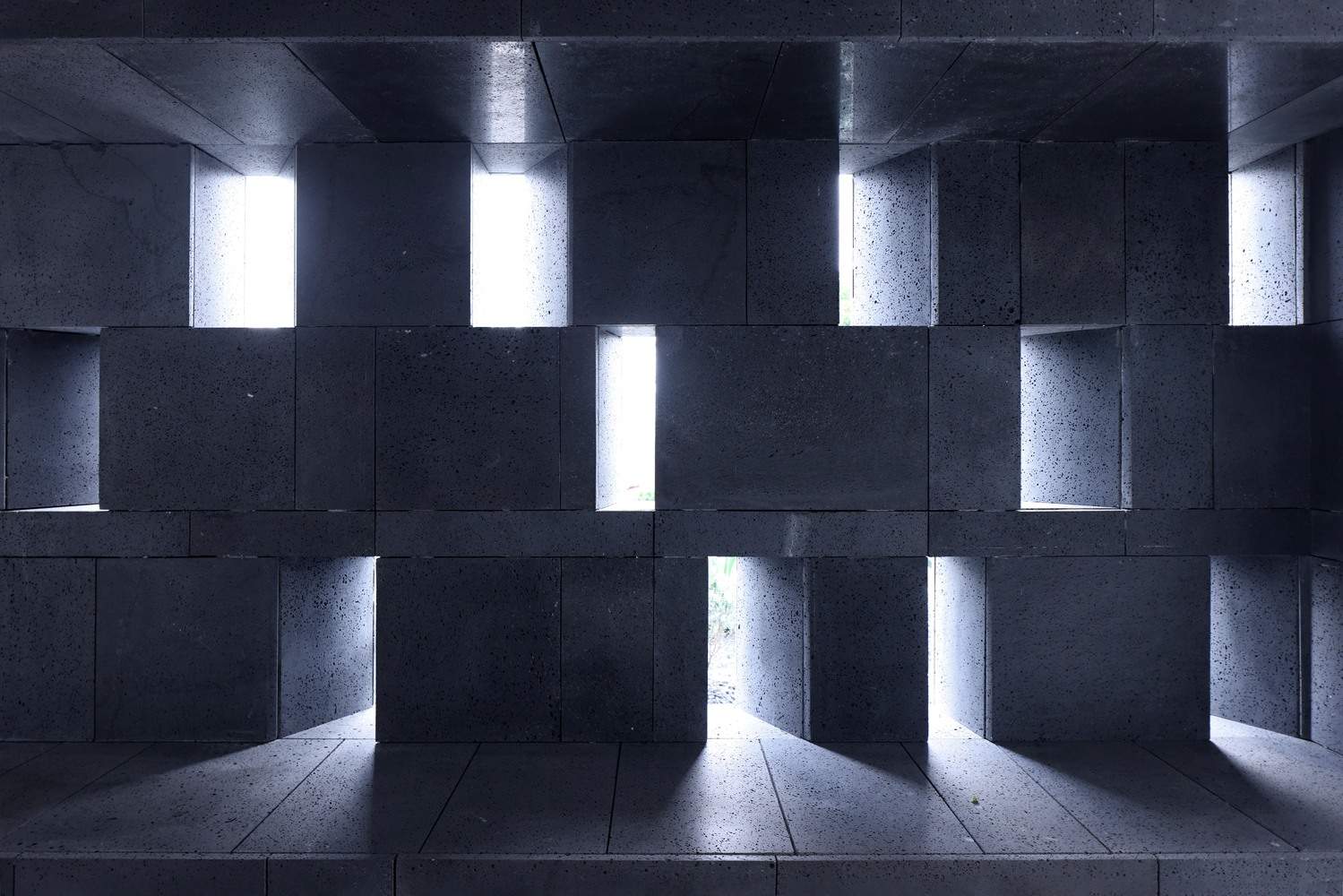
© Sanif
Indoors, we have created a sunlit courtyard using the skylights left by the building. It not only provides natural light for the indoor space, but also brings a healing and poetic atmosphere to the residents' home experience. Unlike the common entrance hall, we do not see it as a superficial display of wealth, nor do we rely on the stacking of decorations or expensive materials. Instead, we create a poetic daily space and capture its sacred moments to comfort the returning heart. Sunlight, originating from the sun, is one of the most precious things in this world.
在室内,我们借助建筑留下的采光井塑造了一处日光庭院,它不仅为室内空间提供采光,也为住户的归家体验带来疗愈之感与诗意之境。与常见的入户大堂不同,我们并不把它视为表面的、财富的彰显,也不依赖于装饰品的堆砌或是昂贵的材料,而是创造出饱含诗意的日常空间,并捕捉属于它的神圣时刻,以慰藉归家的心。日光,源自于太阳,是这世界上最珍贵的事物之一。
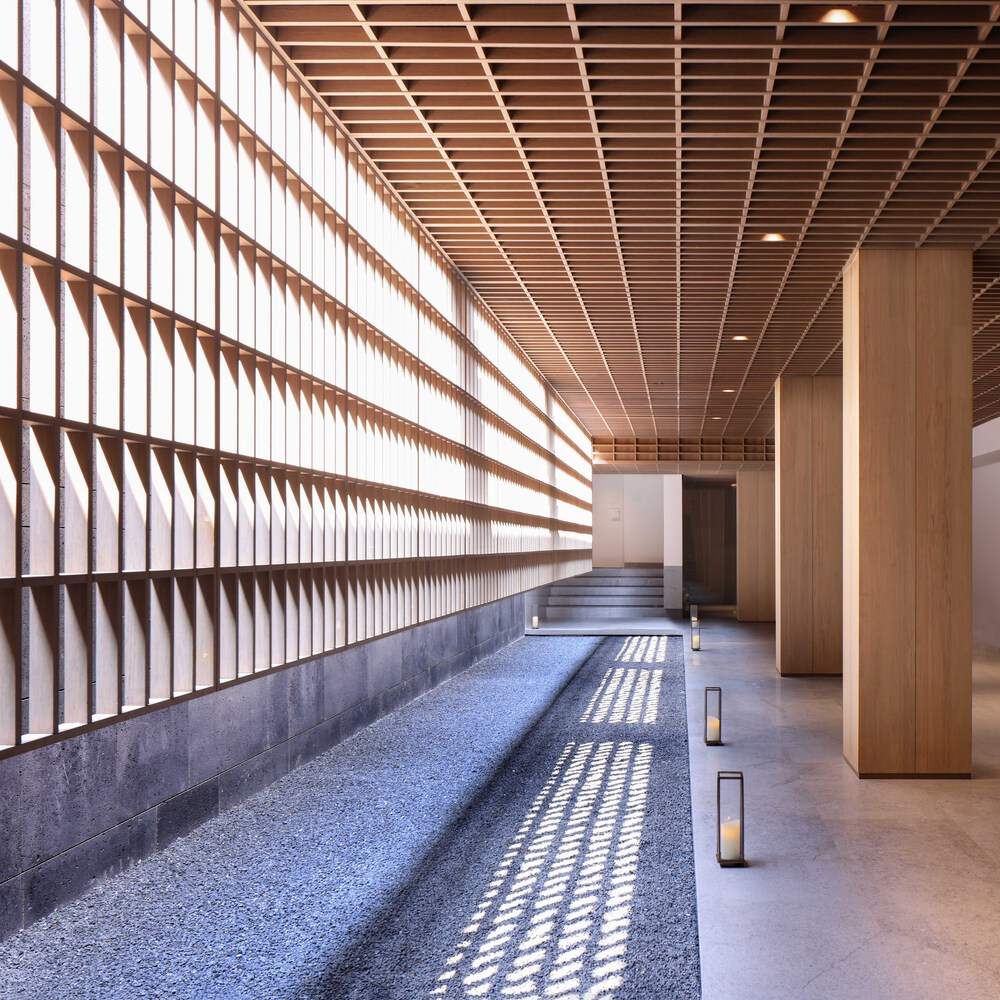
© Sanif
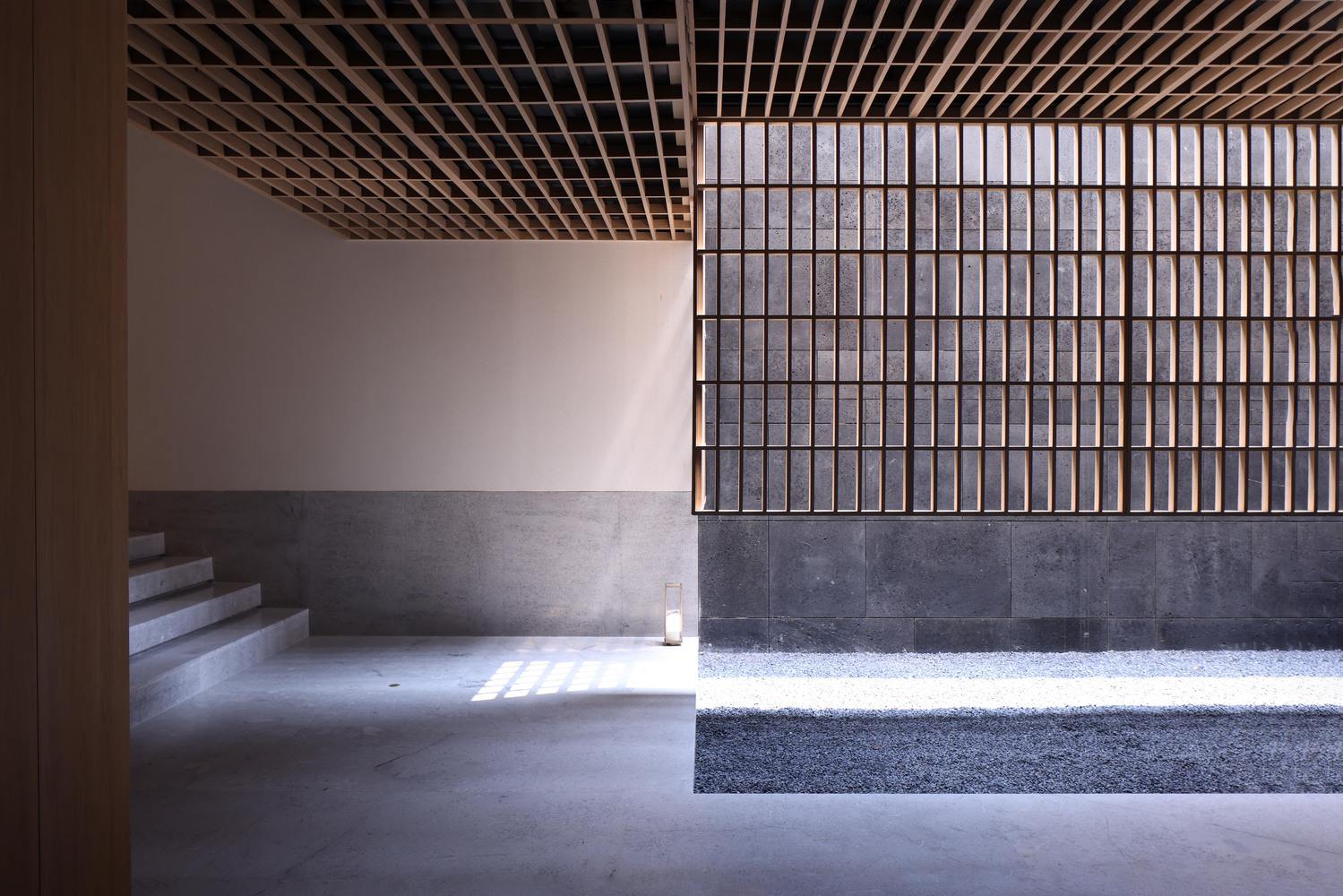
© Sanif
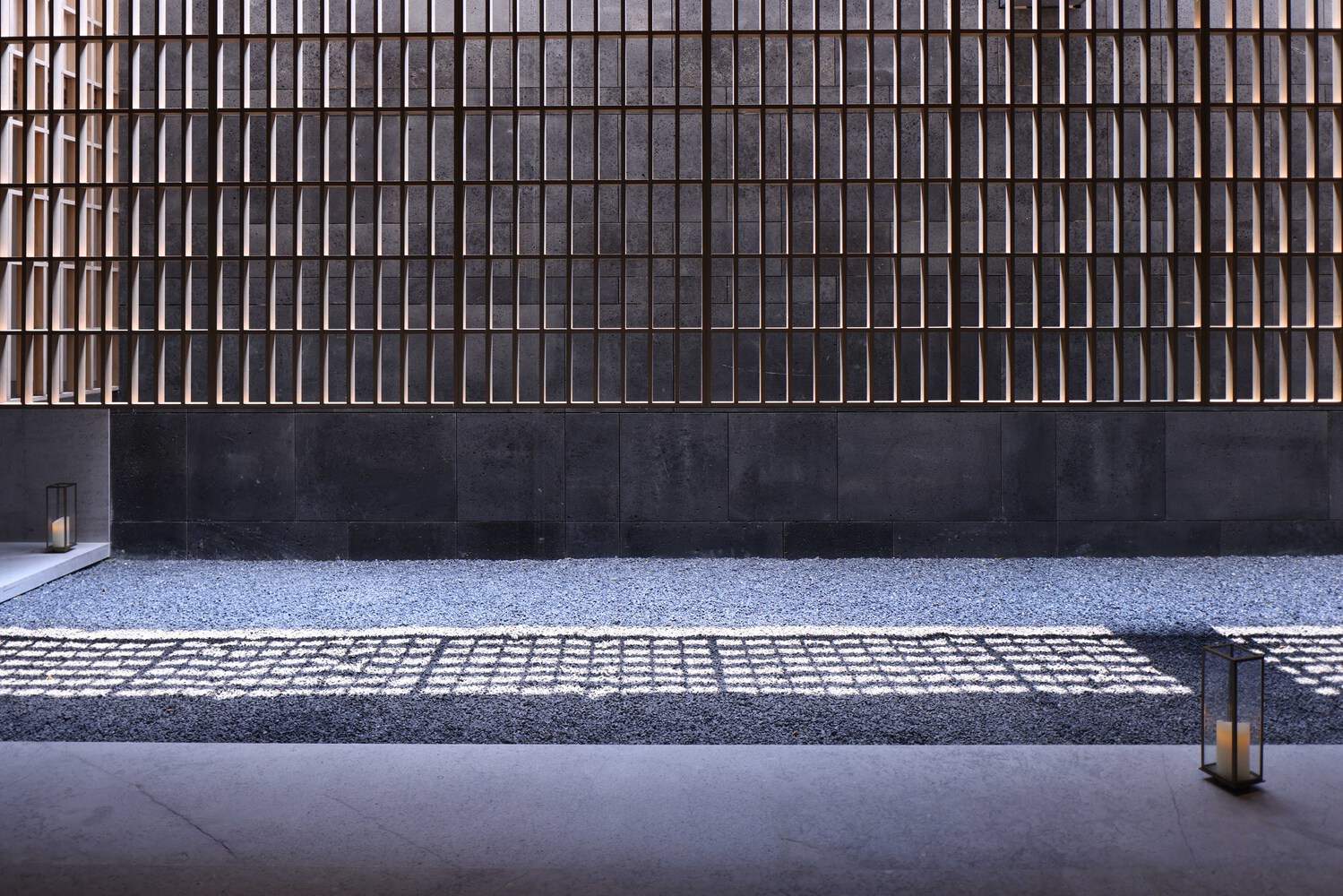
© Sanif
Sanya is located at the southernmost tip of Hainan Island, with its latitude close to the equator, which creates strong sunshine and diverse climate. On this land, sunlight, mountain winds, rocks, bamboo and wood enable people to feel the spirit of nature in their daily lives. The selection of these materials has profound implications:
三亚地处海南岛的最南端,因其纬度靠近赤道,造就了强烈的日照与迥异的气候。在这一片土地上,日光、山风、岩石、竹木使人能够在生活的日常中感受到自然的精神。这些材料的选择皆有深意:
Vine woven handle: Vine woven comes from rattan and grows in the tropics, with a smooth and durable feel.. We make it the grip of a metal handle, revealing a warm touch in every detail.
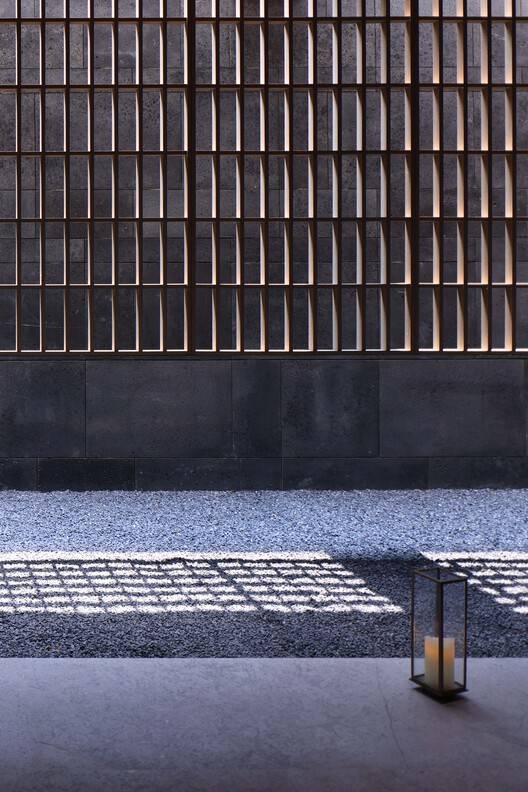
竹木格栅: 竹子纤维经过淘洗并在高温与高压条件下重组成为竹木,更稳定的材料属性让它充分适应三亚的湿热气候。强烈的日光经由竹木格栅过滤,转化为柔和的光影,赋予室内空间近乎神圣的静谧感;
当地火山岩: 灰色火山岩取自当地,是海南岛原住民长久以来的建筑材料,多孔的质地让它具有吸湿的属性,有助于使室内空间在夏天保持清凉干爽;
天然亚麻纱帘: 天然亚麻织就的纱帘随山风浮动,消弭了室外的喧嚣,让氛围变得沉静而柔和;
藤编手柄: 藤编来自于藤条,生长在热带,手感平滑而经久耐用。我们让它成为金属把手的握面,在细微之处显露温情的触感。
© Sanif
© Sanif
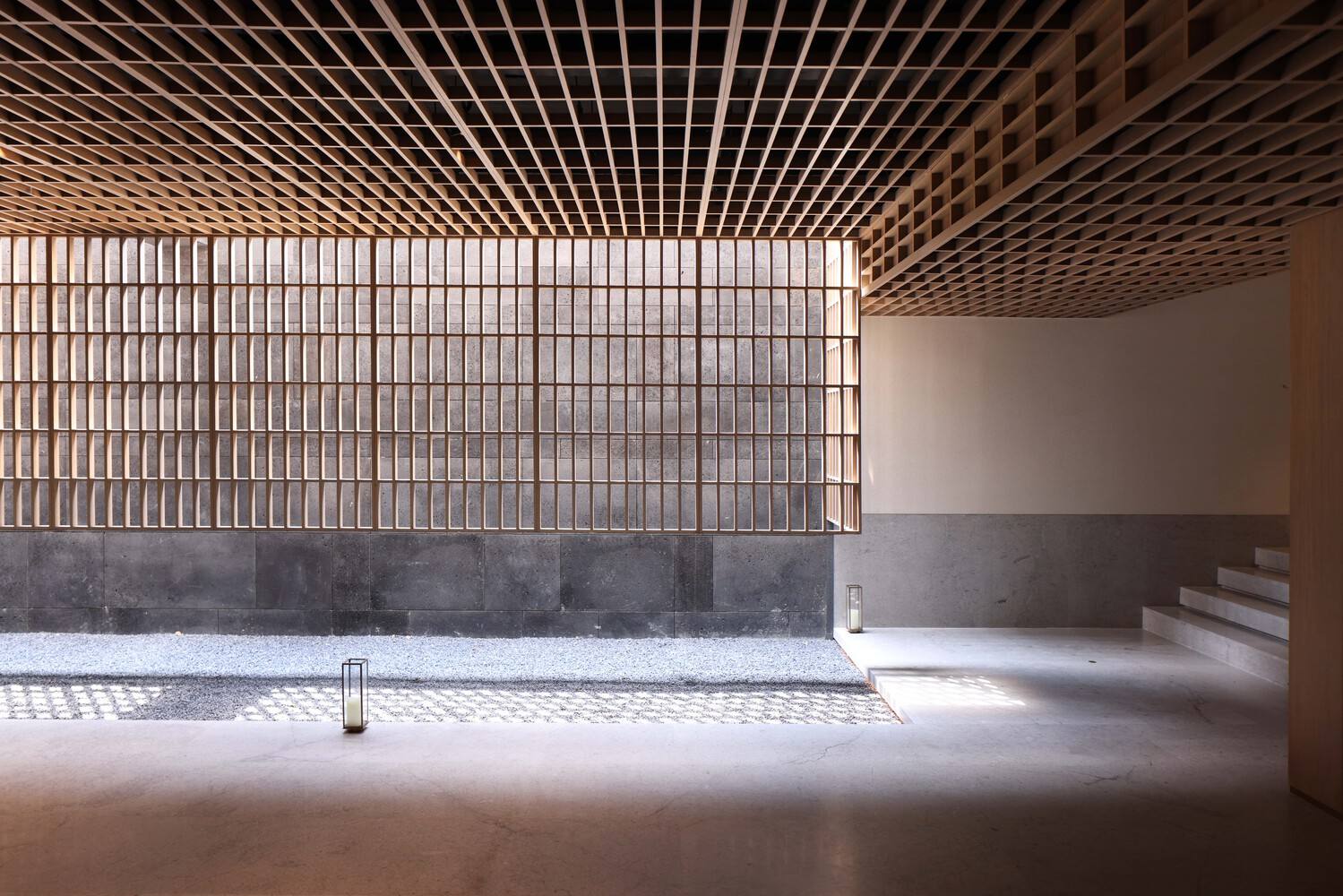
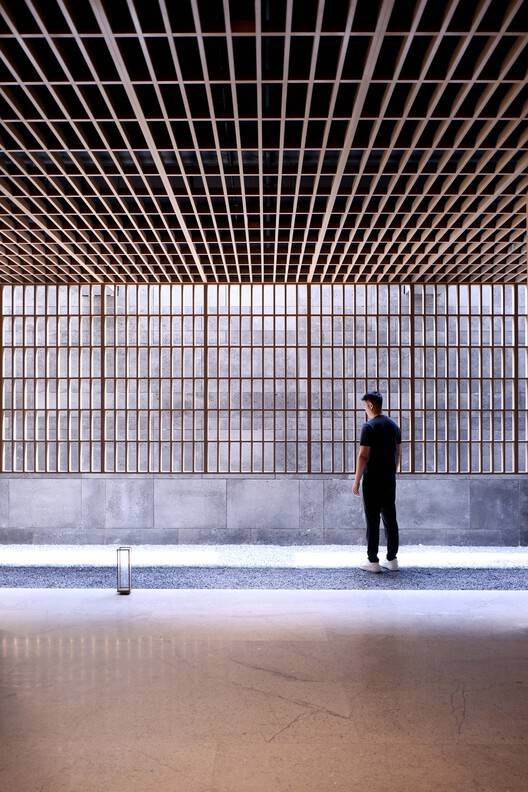
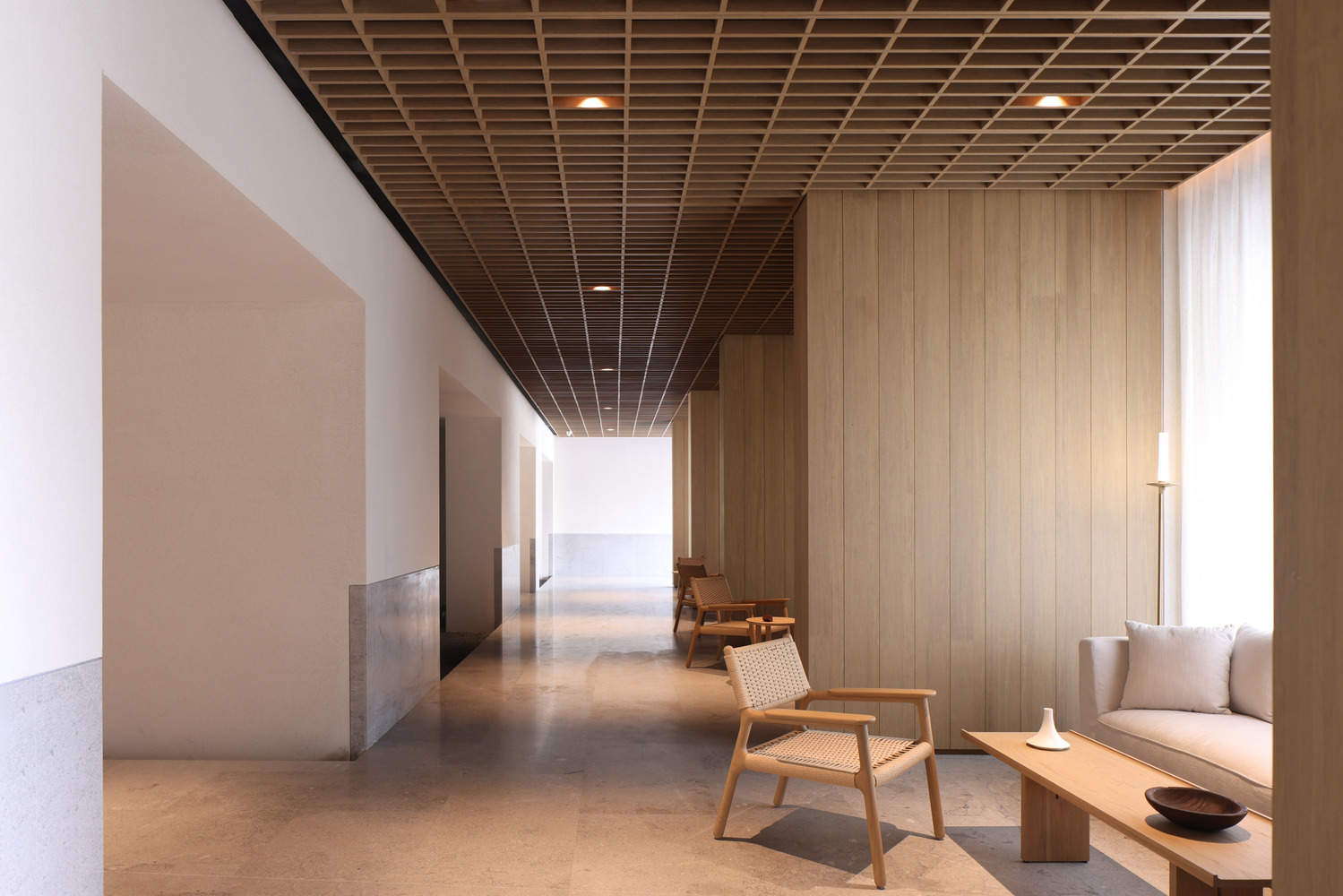
Laying bamboo and wood grilles on the ceiling is to conceal various existing pipelines and firefighting equipment. Because before the intervention of interior design, the upstairs residents had already moved in, and the elevated floor received pipelines and equipment from the upper floors and could not be adjusted. We sprayed the ceiling black and weakened the negative impact of the current situation together with the bamboo and wood grille. The width dimension of the grille unit is derived from the diameter of the emergency lighting fixture, while the proportion is consistent with the concrete hollow bricks on the building facade, which creates a harmonious and unified visual relationship between the interior and the building. Different from the common wood grain heat transfer printing on the market, it is composed of aluminum square strips pasted with bamboo and wood veneer, which not only meets the A-level fire protection requirements, but also presents a natural texture of the real bamboo and wood veneer.
在天花铺设竹木格栅,是为了隐藏现有的各类管线与消防设备。因为在室内设计介入之前,楼上住户已经入住,而架空层承接着来自上部楼层的管线与设备且无法调整。我们将吊顶喷黑,连同竹木格栅一起弱化了现状的不良影响。格栅单元的宽度尺寸源自于应急照明灯具的直径,而比例则与建筑外立面的混凝土空心砖一致,这使得室内与建筑呈现出和谐统一的视觉关系。有别于市面上常见的木纹热转印,它由铝方通贴竹木皮构成,在满足A级防火要求的同时,真实的竹木皮呈现了自然质感。
© Sanif
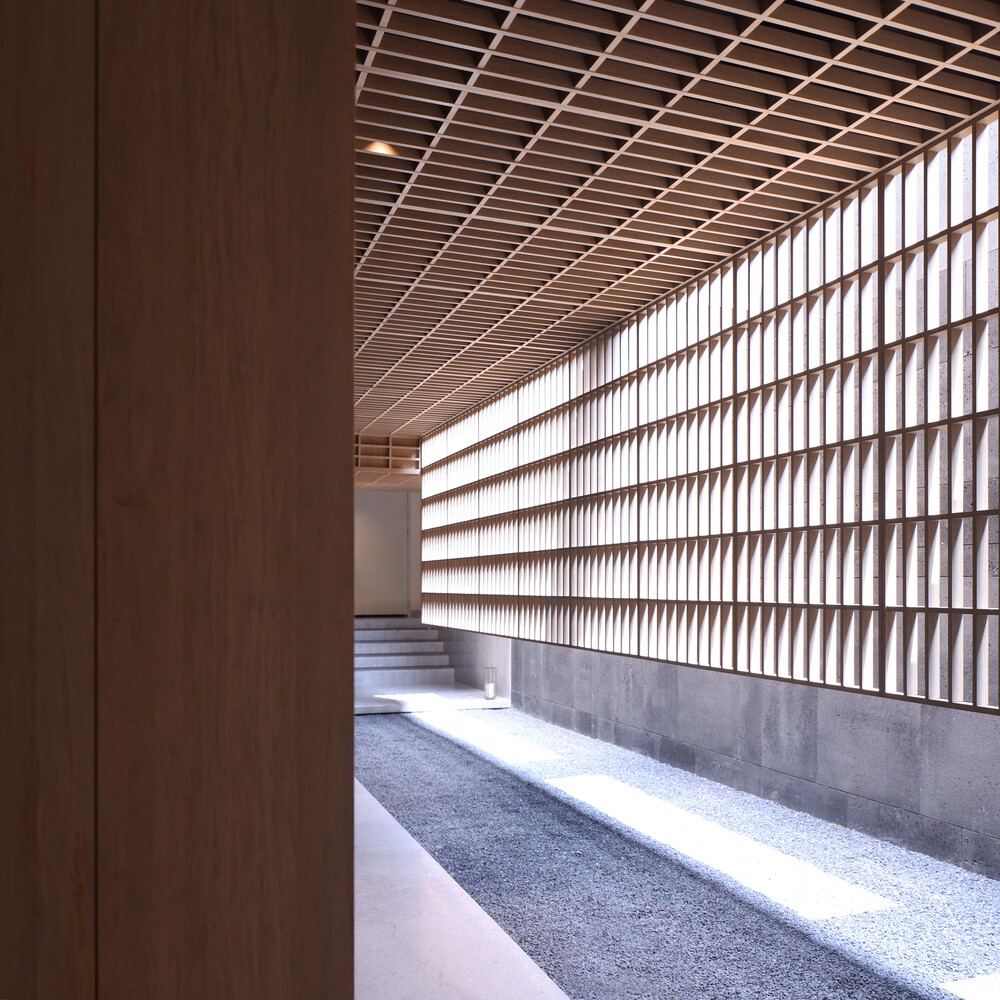
Strolling through it, there are no air conditioners, sprinklers, cable trays, pipelines, or even lighting fixtures hidden outside the grille, silently serving people's daily lives. The shear walls and connecting beams extending downwards from the residential area do not provide the possibility of flexible layout for the plan, and a large number of vertical pipelines and electrical boxes need to be concealed. The interior design still follows the trend and divides the entrance lobby into two parts: a shear wall array is arranged at the entrance lobby, and the raised bamboo and wood grilles resemble tree crowns, providing a series of pocket spaces for temporary rest and waiting; The deep courtyard brings in the sunlight and mountain breeze, connecting the elevator halls of two residential buildings. Between the two, there is a short but powerful corridor, and at the end of the line of sight, frame their respective scenes.
漫步其中,不见空调、喷淋、桥架、管线甚至灯具,它们隐退在格栅之外,悄无声息地服务着人们的日常。由住宅延伸向下的剪力墙与连梁并没有给平面带来灵活布置的可能,更有大量的竖向管道与电箱需要隐蔽。室内设计依旧顺势而为,将入户大堂分成两个部分:入口前厅处剪力墙阵列排开,举起的竹木格栅仿佛撑开的树冠,庇护出一系列口袋空间用于临时休憩与等候;深处的庭院引入天光与山风,连接着两栋住宅的电梯厅。二者之间,一段不长但有力的走道,在视线尽头框画出各自的场景。
© Sanif
© Sanif
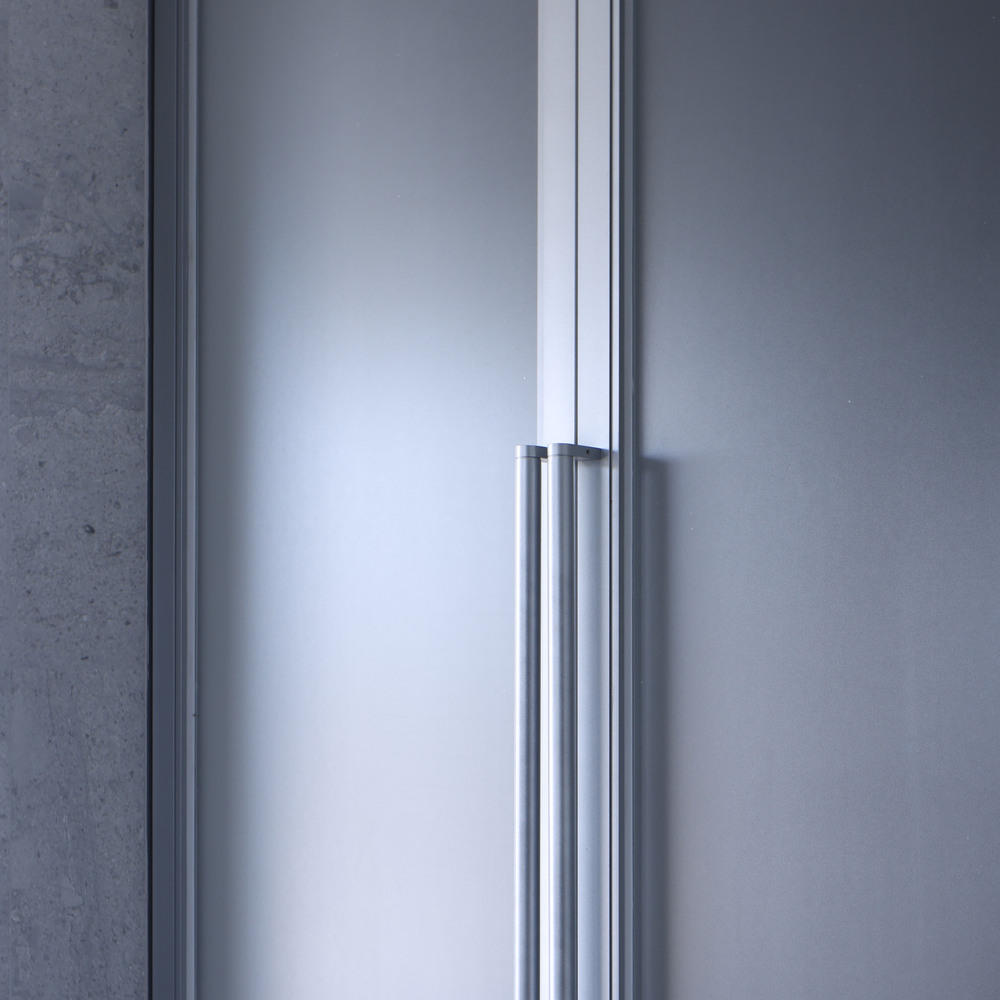
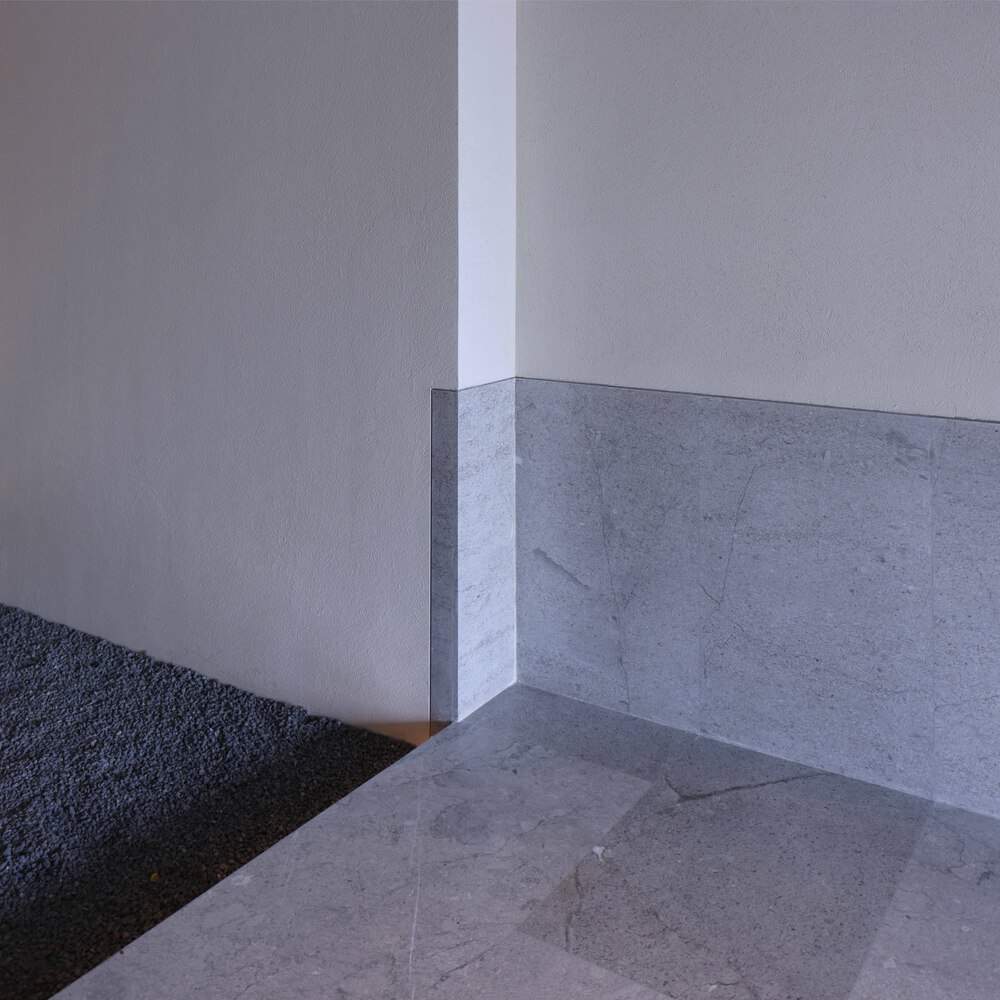
The pursuit of spatial quality is more reflected in details - the sky and earth axis uses hidden stone cover plates instead of ugly metal cover plates; The tube lamp uses a double-layer gypsum board base to lift 2cm and embed it, avoiding the generation of glare; The rattan handle and metal handle correspond to the customer and logistics respectively, in order to distinguish the different spatial properties; At the boundary between indoor and outdoor climate and indoor steps, the brass details embedded in the floor suggest to people that the space is undergoing a transformation; The stone wall skirt unfolds with the paint and stops at the gravel to protect it from stains or impacts... These attention to detail demonstrates the designer's proficiency and confidence in materials, craftsmanship, and technology.
对于空间品质的追求更体现在细节中——天地轴采用隐藏式石材盖板替代丑陋的金属盖板;筒灯利用双层石膏板基层抬高 2cm 并内嵌其中,避免了炫光的产生;藤编把手与金属把手分别对应面客与后勤,以此区分空间性质的不同;在室内外气候分界与室内台阶处,地面镶嵌的黄铜细节向人们暗示空间正在发生转变;石材墙裙伴随着涂料展开并在碎石处停止,是为了保护它不受污损或撞击……这些对于细节的关照,展现了设计师对材料、工艺和技术的纯熟与自信。
© Sanif
© Sanif
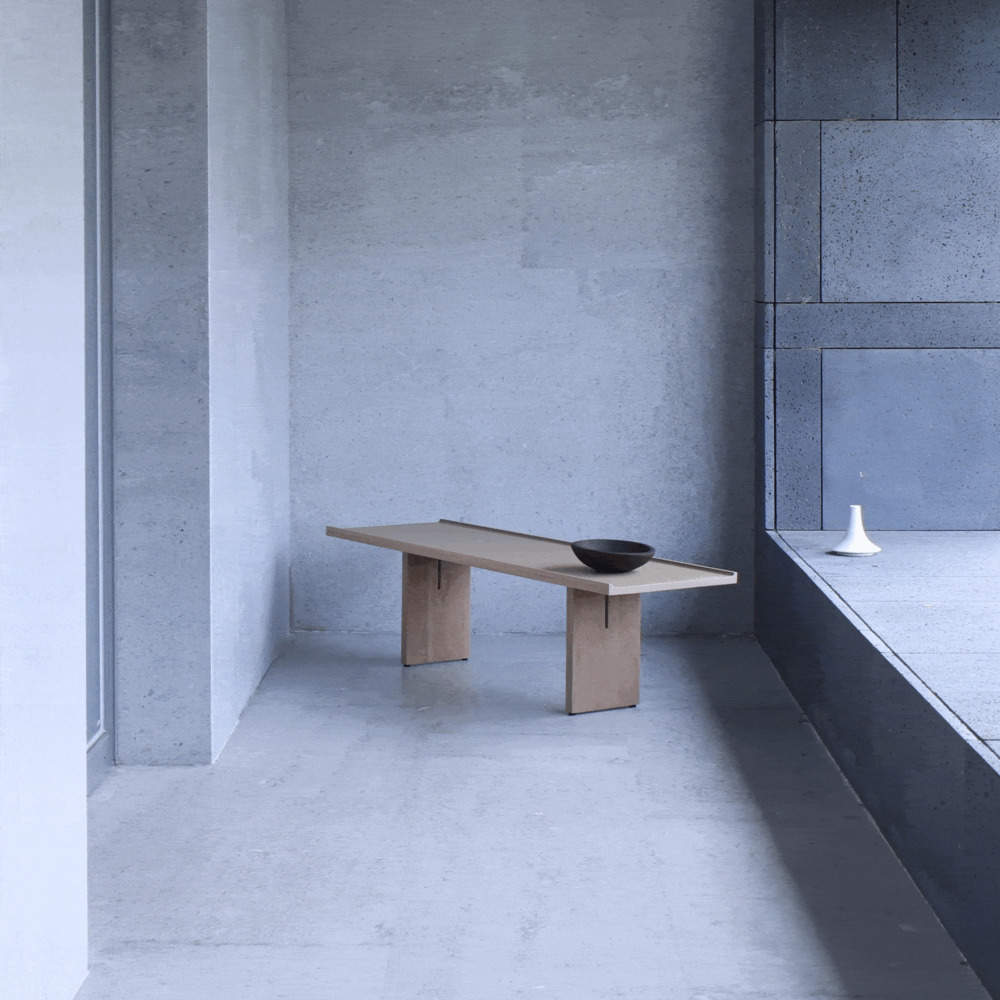
The lighting fixtures, sofas, tables and chairs, accessories, and even fire boxes in the lobby are all custom designed by SHISUO, while the utensils are sourced from the Chinese domestic ceramic brand OPEN Object. To solve the problems left by the place, adapt to the situation, and create harmony with the mountain breeze and sunlight, SHISUO hopes to use this space for returning home to soothe people's tired hearts.
大堂中的灯具、沙发、桌椅、配饰甚至消防箱盒均由是所 SHISUO 定制设计,器皿则来自于中国本土陶瓷品牌 OPEN OBJECT。解决场所遗留的问题,因势利导,与山风日光形成和声,SHISUO 是所希望以这一处归家的空间抚慰人们疲惫的心。
Gif