历史与自然的深度融合:该项目成功地将韩国江原道三陟市深厚的历史底蕴与自然景观进行了有机结合。通过挖掘场地,恢复了与历史人物伊萨布将军和六香山相关的“六香池”,不仅恢复了历史地理形态,更创造了一个具有文化象征意义的新地标。建筑设计巧妙地将历史遗迹(如三陟堡城)融入参观动线,使游客在体验展览的同时,能够沉浸式地感受场地自古以来作为海洋岛屿下游区域的演变,实现了对逝去景观的现代性追溯与重建,是场地文脉保护与激活的典范。
灵活多变的参观体验与功能复合:设计打破了传统博物馆单向、被动式的参观模式。伊萨布独岛博物馆由四个独立功能区(游客信息中心、领土防御纪念馆、独岛体验空间、多功能社区空间)组成,形成了可自由选择、穿插休息与户外观景的参观路径。这种布局使得建筑既是一个整体展览空间,又能承载独立展览。户外空间被策略性地规划为连接各功能区的“半展厅”,鼓励游客与周边自然环境互动,极大地丰富了用户体验的层次感和自由度,使到访者不仅是参观者,更是体验者。
材质与空间序列的韵律表达:建筑在材料和空间处理上展现了高度的语境敏感性。通过实心石材(上层)与透明玻璃(下层)的对比运用,平衡了历史的厚重感与空间的开放性。特别值得称赞的是材料模数化的精细控制,如2400×300mm的洞石模块与1200mm、600mm地面石材的相互呼应,实现了建筑体量方向性与室内外地面的视觉和结构统一。这种对细节的关注,确保了建筑在宏大叙事下,依然能以细腻的尺度与环境对话,并对历史遗迹的保护做出了适应性调整。
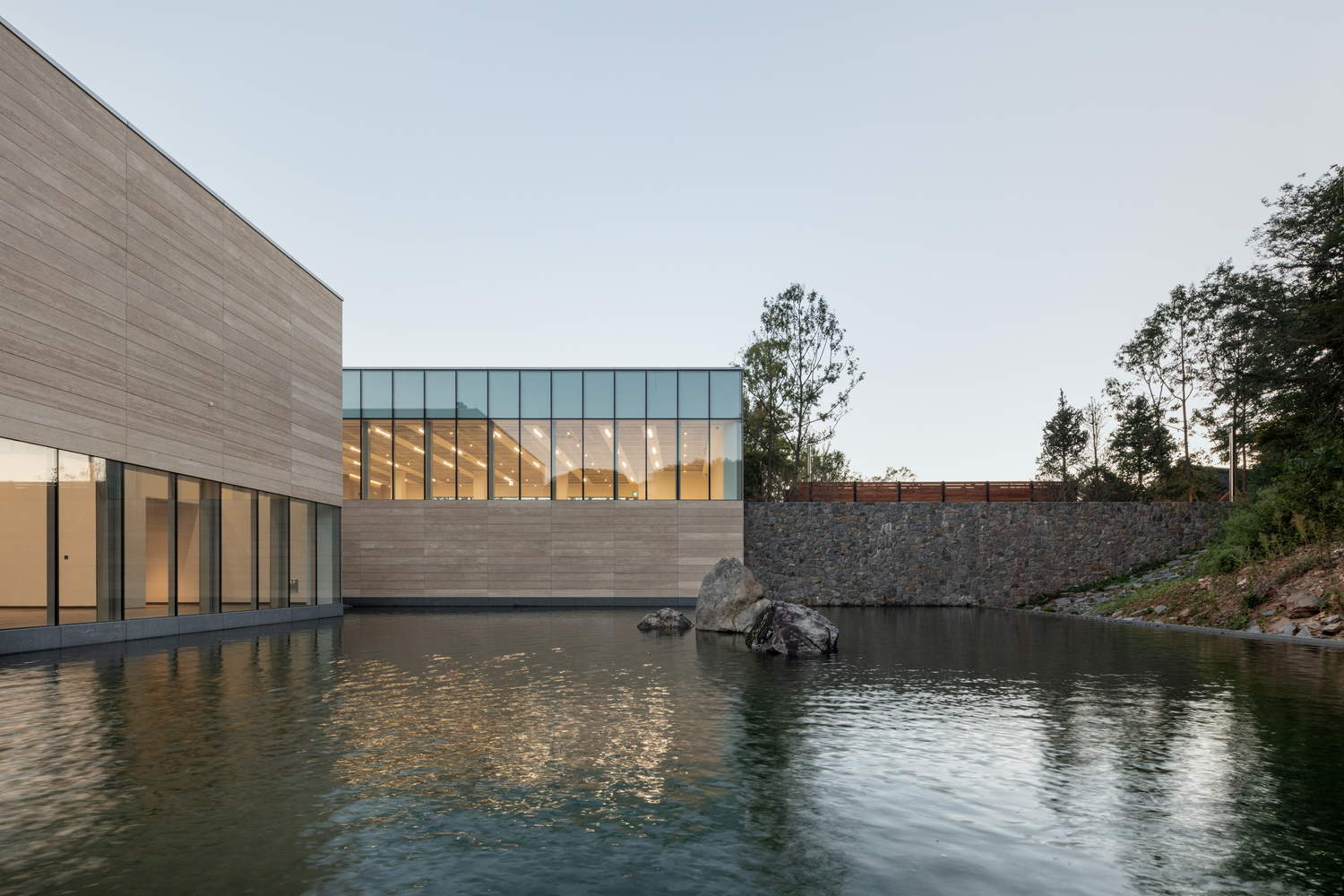
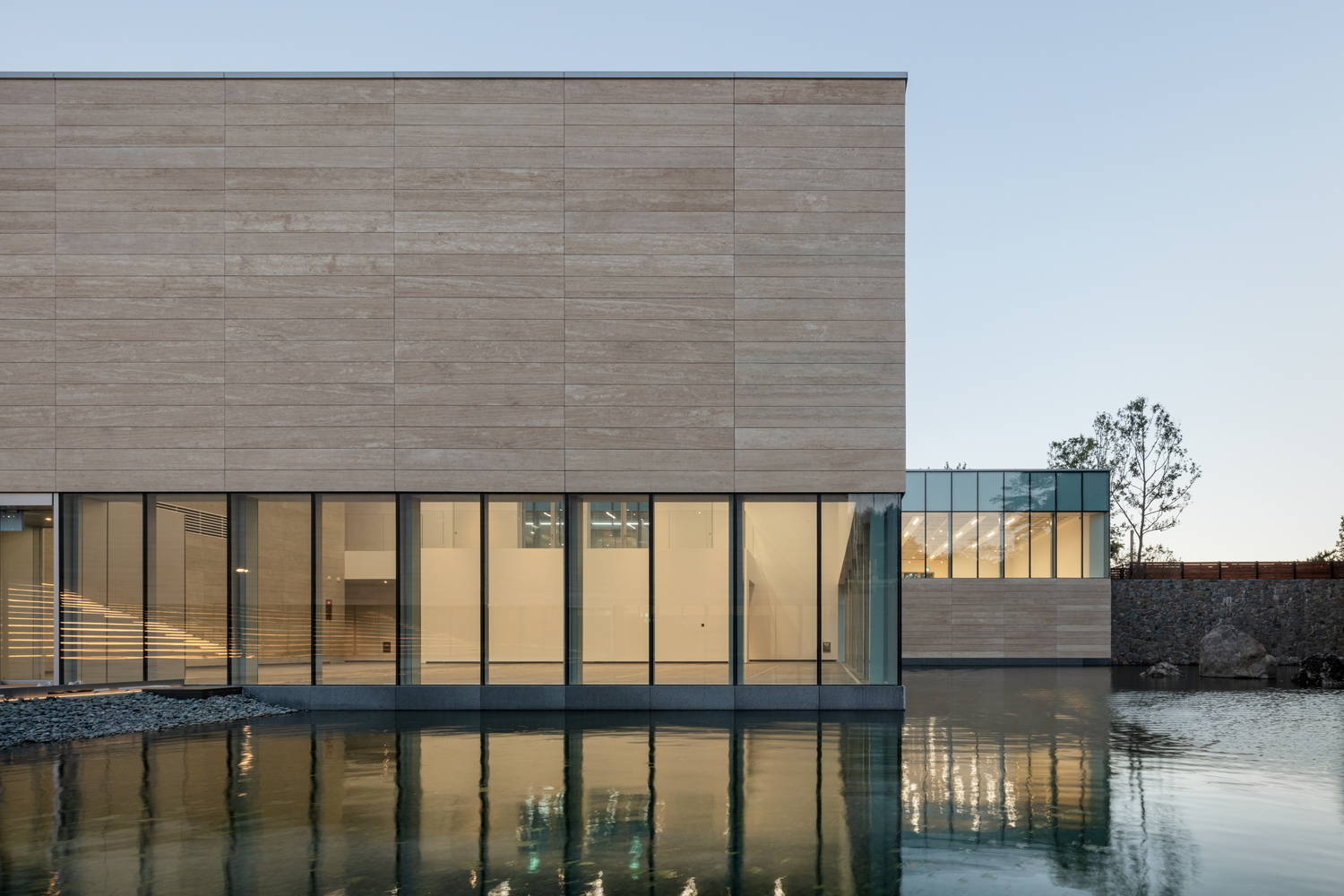
The site is located in Jeongna-dong, Samcheok, Gangwon-do, South Korea. Samcheok Port is to the east of the site, with industrial areas to the east and south, a commercial area to the north, and a residential area to the northwest. In 512 AD (the 13th year of King Jijeung’s reign), General Isabu of Silla departed from this place in Samcheok with a naval force and conquered Usanguk (present-day Ulleungdo) and Dokdo (which belonged to Silla at that time). Yukhyangsan Mountain, located in the center of the site, was once a sea island when Isabu set out, but it has now become a mountainous area. Beneath this reclaimed land lies the downstream area of Yukhyangsan, which was formerly an island. By excavating the downstream of Yukhyangsan, the site was lowered to its original elevation, and water was introduced. The water introduced into this area is presented in the form of a pond called Yukhyangji, associated with Yukhyangsan Mountain, evoking the image of a sea island. The exhibition space, which traces historical features on the newly revealed site, will become a new cultural landmark for Samcheok and restore the part of the landscape that has vanished into the past.
该场地位于韩国江原道三陟市正纳洞。三陟港位于场地东侧,其东面和南面为工业区,北面为商业区,西北面为住宅区。公元 512 年(智证王统治的第13年),新罗将军伊萨布从三陟的此地率领海军部队出发,征服了乌桑国(即今日的郁陵岛)和独岛(当时属新罗领土)。位于场地中心的六香山,在伊萨布出发时曾是一座海洋岛屿,如今已变为山区。在这片填海造地之下,是曾经作为岛屿的六香山的下游区域。对六香山下游进行挖掘,将场地降至原有海拔,并引入水源。引入该区域的水以池塘的形式呈现,名为六香池,与六香山相关联,让人联想到海上岛屿的景象。在新揭露的场地上追溯历史特征的展览空间,将成为三陟的一个新的文化地标,并恢复这片景观中已消逝于过去的部分。
© Kyungsub Shin
© Kyungsub Shin
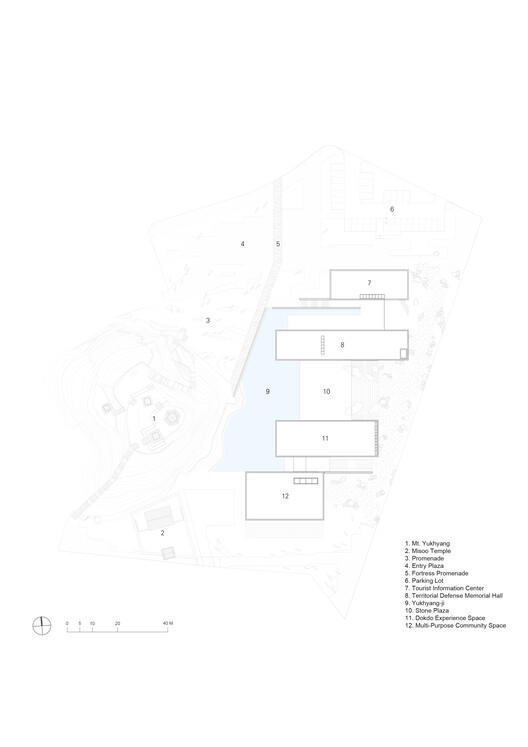
The Isabu Dokdo Museum is composed of four functional zones: a visitor information center, a territorial defense memorial hall, a Dokdo experience space, and a multi-purpose community space. These four independent functional zones form the layout of the exhibition and influence the way visitors tour the exhibition, while also ensuring a smoother visitor flow. This project, composed of multiple independent parts, is both a single exhibition hall and a venue that can host independent exhibitions. Unlike the passive method of visiting exhibitions in a predetermined order and controlling the circulation path, here, visitors can move freely between the parts, interspersing indoor exhibition spaces with outdoor natural landscapes, resting at different points to view the exhibits, or starting from the middle point to selectively view content of interest. Outdoor spaces, from which the surrounding natural landscape can be viewed, are cleverly filled and planned between the parts to achieve connection, harmonizing the architecture with the landscape. Visitors can interact not only with the exhibits in the exhibition halls but also with the surrounding outdoor spaces; they come not only to see the exhibition but also to enjoy and appreciate the place.
伊萨布独岛博物馆由四大功能区组成:游客信息中心、领土防御纪念馆、独岛体验空间以及多功能社区空间。这四个独立的功能区构成了展览的布局,并影响着游客参观展览的方式,同时也确保了更为流畅的参观动线。该项目由多个独立部分组成,既是一个单一的展览厅,也是一个可以安装独立展览的场所。与传统的按照既定顺序参观展览、控制参观动线的被动方式不同,在这里,游客可以在各部分之间自由穿梭,或间隔体验室内展览空间和户外自然景观,或移步至不同地点休息并观赏展览,或从中间点开始,选择性地观看自己感兴趣的内容。在各部分之间,那些可观赏周边自然景观的户外空间被巧妙地填充和规划,以实现连接,使建筑与景观和谐统一。游客不仅可以与展览厅内的展品进行交流,还可以与户外的周边空间互动,来此不仅是为了参观展览,更是为了享受和欣赏这个地方。
© Kyungsub Shin
© Kyungsub Shin
The exhibition experience for visitors touring the Isabu Dokdo Museum begins at the visitor information center. The upper floor of the building is accessible from the road level, where a café is located for use by both visitors and local residents. Going down the stairs to the lower floor, one finds an entrance lobby and information center where visitors can get information about the Isabu Dokdo Museum. This is the true starting point of the Isabu Dokdo Museum experience. Exiting the visitor information center and following the path leading to the Territorial Defense Memorial Hall, the first thing that comes into view is a wall made of rubble stones. The introduction of this wall reflects the historical significance of the site by preserving the remains of the Samcheok Fortress, which once served as a naval base for the Silla Empire.
游客参观伊萨布独岛博物馆的展览体验始于游客信息中心。建筑的上层可从道路层面进入,那里设有一家咖啡馆,可供游客和当地居民使用。沿着楼梯下到下层,会看到一个入口大厅和信息中心,游客可以在这里获取有关伊萨布独岛博物馆的信息。这是真正开始体验伊萨布独岛博物馆的起点。从游客信息中心出来,沿着通往领土防御纪念馆的小径前行,首先映入眼帘的是一面由碎石砌成的墙。这面墙的引入是为了通过保留三陟堡城曾作为新罗帝国海军基地的遗址,来反映该场地的历史意义。
Siteplan
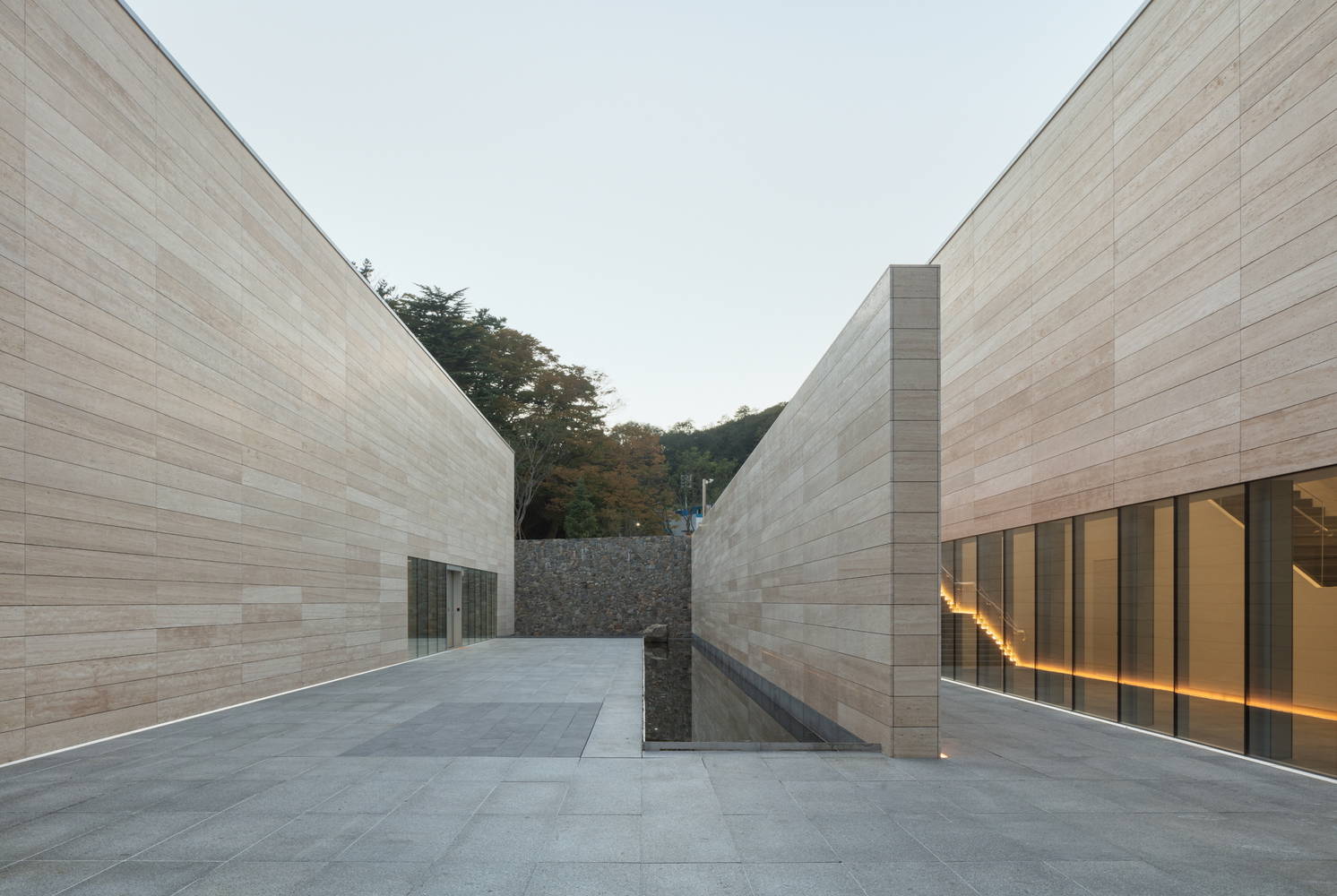
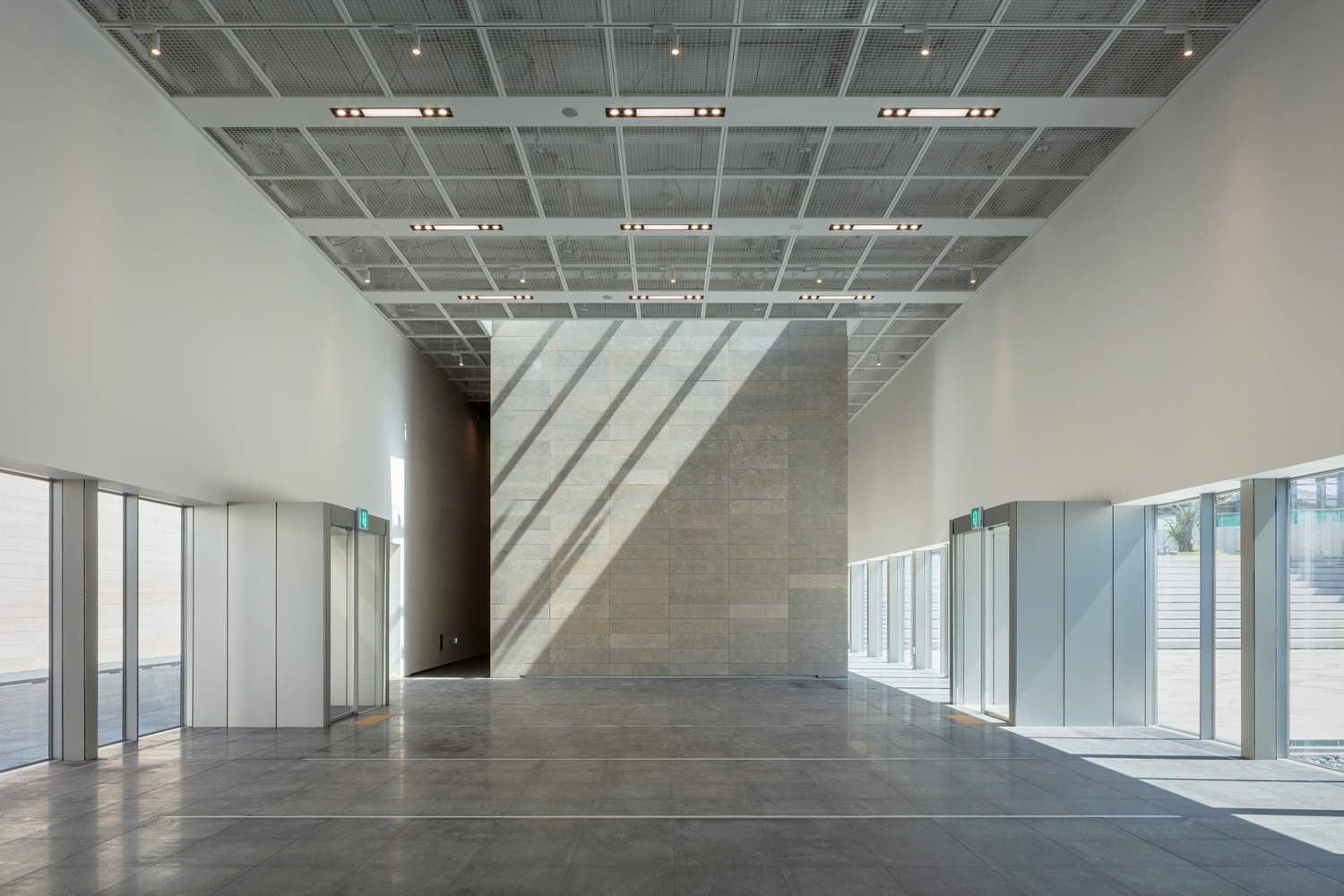
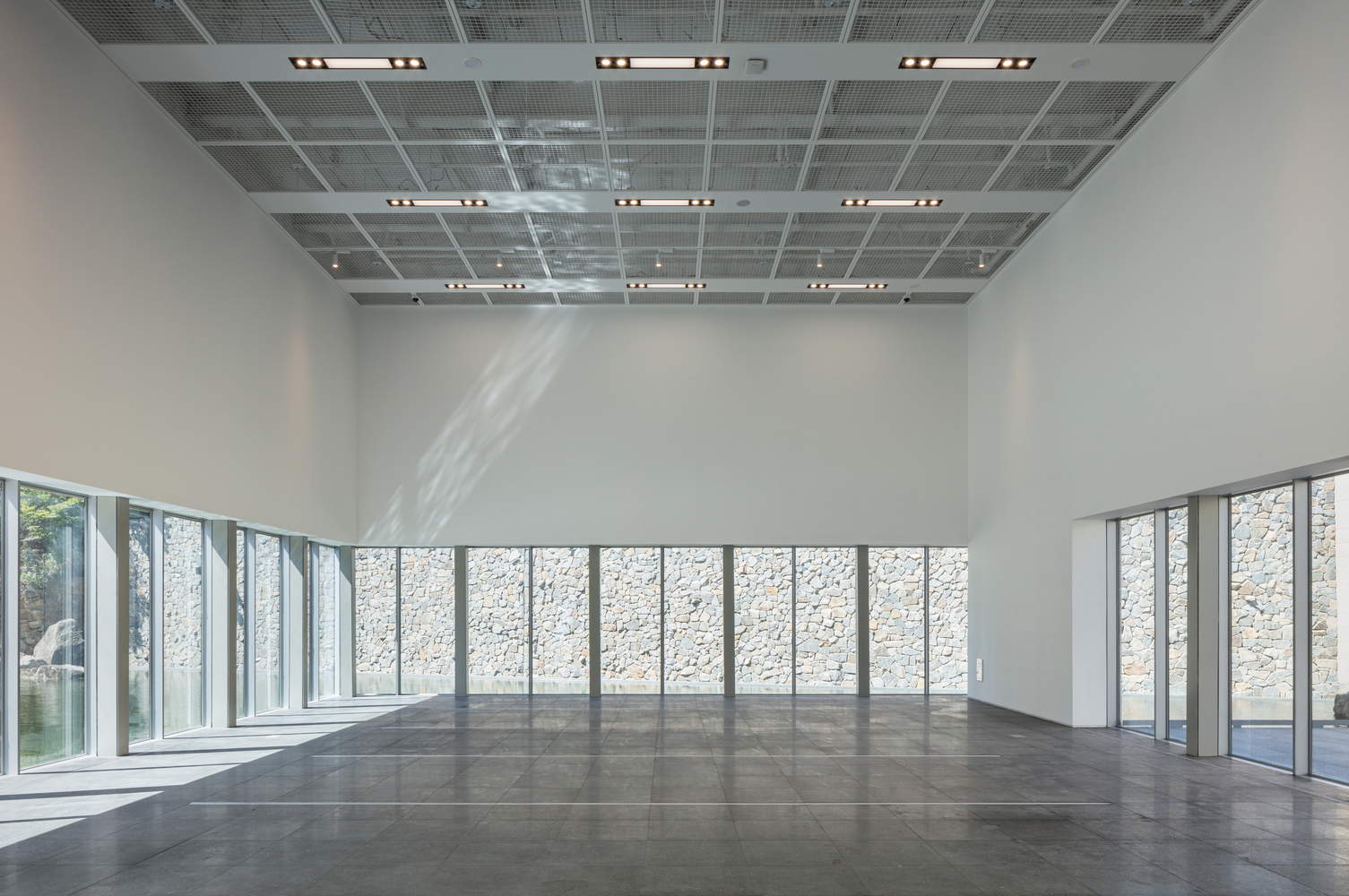
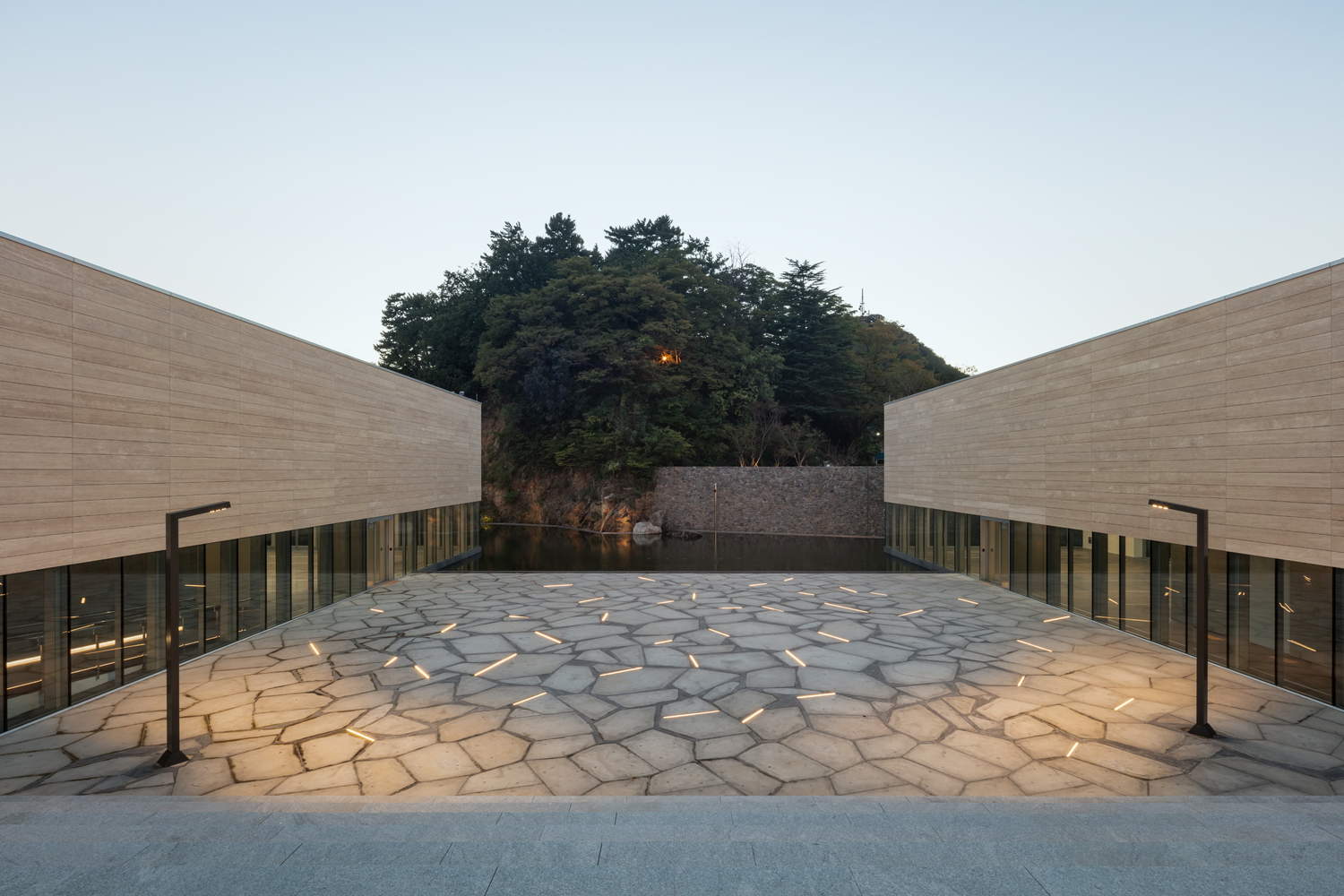
Going up the outdoor stairs on the side of the visitor information center to the upper level, one finds a fortress road and path engraved with the location of the Samcheok Fortress. Entering the second functional zone—the Territorial Defense Memorial Hall—visitors are greeted by a high-ceilinged hall where light streams in through upper windows onto the stone walls. This space serves as both a waiting room for touring visitors and a lounge where people can rest and enjoy the scenery. The stone plaza located between the Territorial Defense Memorial Hall and the Dokdo Experience Space faces Yukhyangji Pond and Yukhyangsan Mountain. This is a place where one can feel Dokdo more fully, allowing people to sit in contemplation or engage in various activities.
沿着游客信息中心一侧的户外台阶上行至上层,会看到一条堡垒道路和小径,上面刻有三陟堡城的位置。进入第二个功能区 —— 领土防御纪念馆,一个高挑的大厅迎接游客,光线从上方的窗户透过石质墙面洒入空间。这个空间既是展览游客的等候室,也是人们可以休息并欣赏风景的休息室。位于领土防御纪念馆和独岛体验空间之间的石质广场,面向六香池和六香山。这是一个可以更全面地感受独岛的地方,人们可以在此静坐沉思或体验各种活动。
© Kyungsub Shin
© Kyungsub Shin
Passing through the stone plaza, one arrives at the lobby of the Dokdo Experience Space, where the lower part of the Yukhyangsan rocks can be viewed through the windows. A slope surrounding the Dokdo Experience Space guides people upward to the upper level, where the lobby allows people to view the exhibition from an overlooking perspective again. Crossing the bridge connected to the south side of the Dokdo Experience Space leads to the Multi-purpose Community Space. Visitors cross the bridge, again appreciating the lower part of Yukhyangsan and Yukhyangji Pond, and after crossing the bridge arrive at the Multi-purpose Community Space, which can be used as a multi-functional space for resident facilities, a book café, lectures, and events.
穿过石质广场,便来到独岛体验空间的大厅,透过窗户可以欣赏到六香山岩石的下部。围绕独岛体验空间的斜坡引导人们向上层移动,在这里的大厅,人们可以再次以俯瞰的视角观赏展览。穿过与独岛体验空间南侧相连的桥梁,便可到达多功能社区空间。游客穿过桥梁,再次欣赏六香山的下游和六香池,穿过桥梁后到达的多功能社区空间可用作居民设施的多功能空间、图书咖啡馆、讲座、活动等场所。
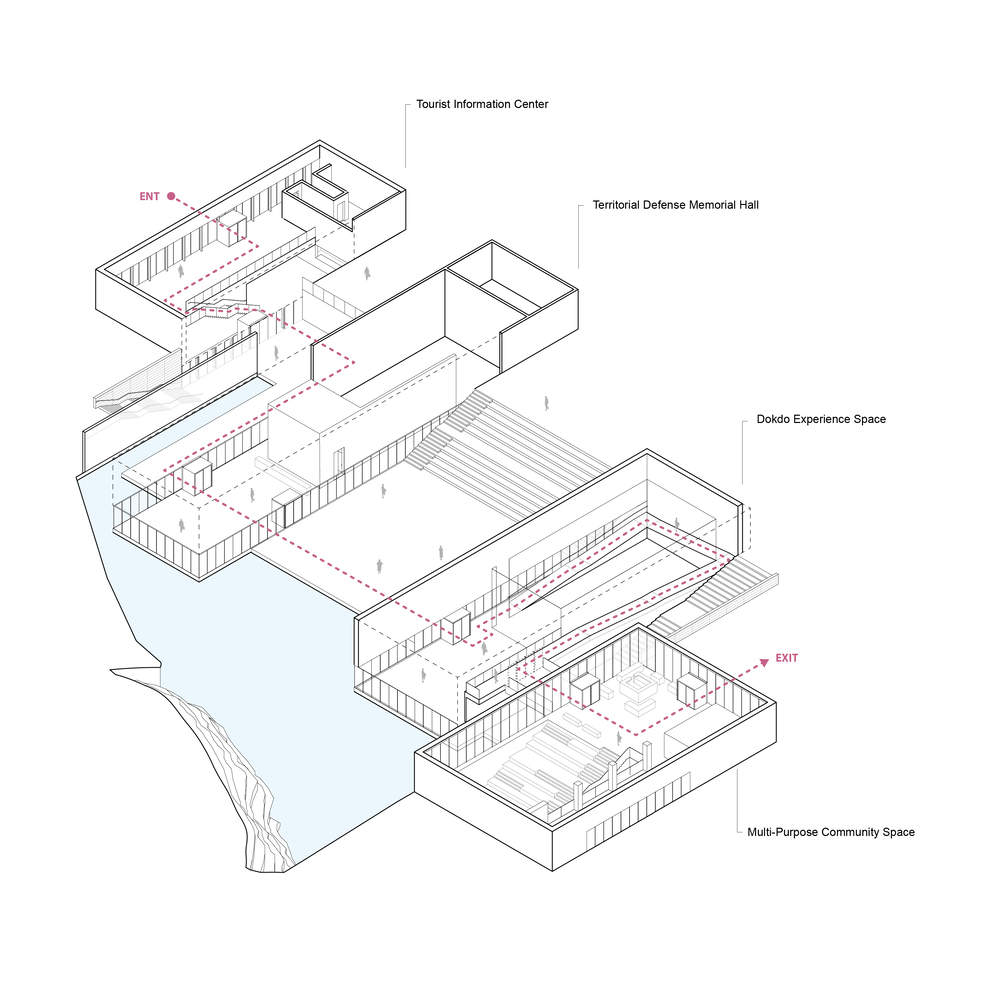
Axonometric drawing
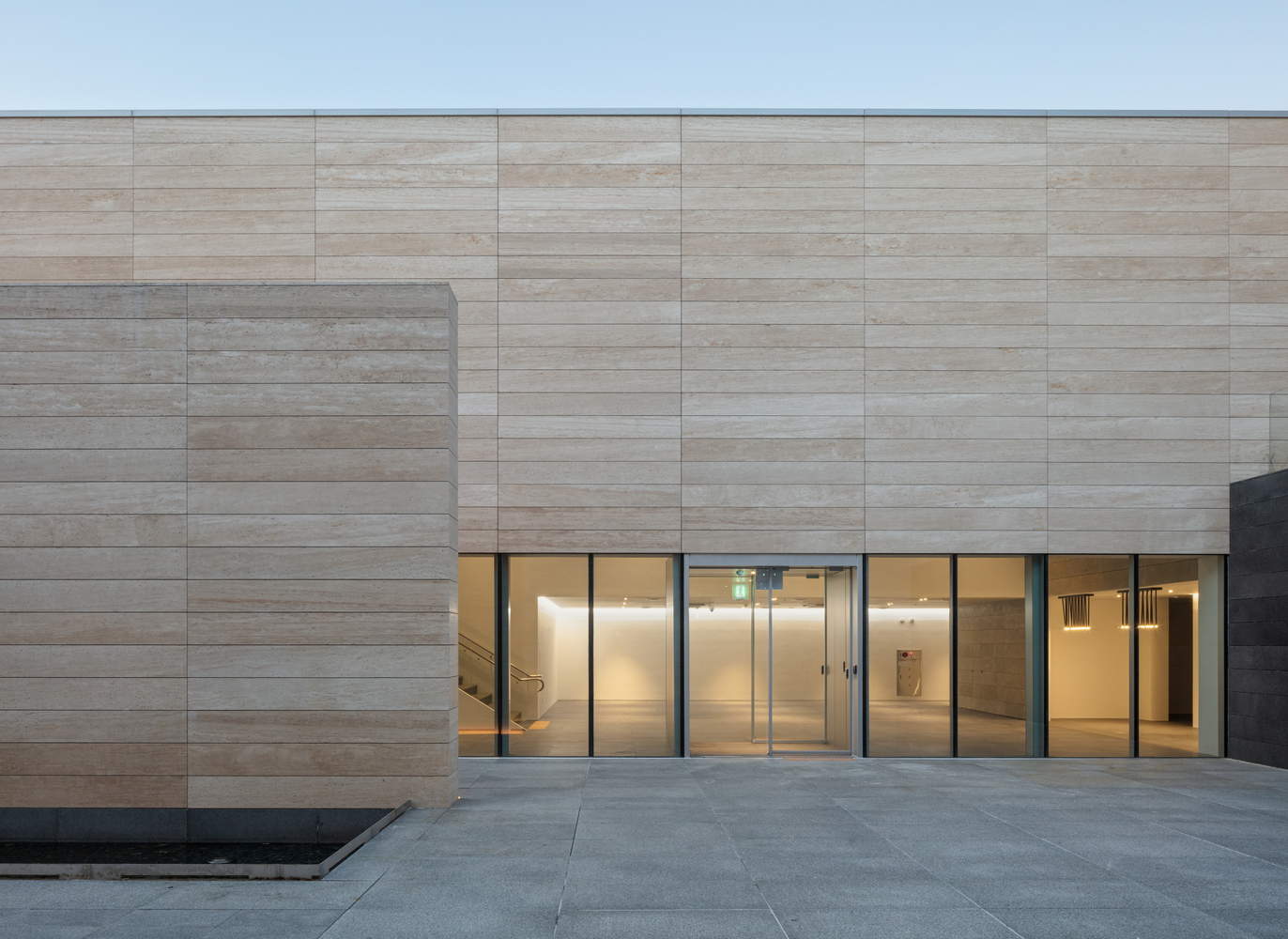
The upper levels of the Territorial Defense Memorial Hall and the Dokdo Experience Space are decorated with solid stone, while the lower levels are decorated with transparent glass. The glass on the lower level allows for communication between indoor and outdoor spaces, permitting observation of the exhibition and its spaces from the outside, while also allowing those inside to view the natural scenery of Yukhyangsan Mountain and Yukhyangji Pond. In the multi-purpose community space, which is set up for local residents, the upper level also uses glass to emphasize a sense of openness. This project uses travertine, which harmonizes with the natural environment, and the 2400 × 300mm module emphasizes the directionality of the long and narrow building body. The exit of the lower part of the building body is composed of 1200mm (half of the stone module), and the indoor floor is finished with 600 × 600mm square stones. Therefore, the indoor and outdoor areas of this project are connected not only visually or along the circulation path but also unified in terms of indoor and outdoor modules.
领土防御纪念馆和独岛体验空间的上层采用实心石材装饰,而下层则采用透明玻璃装饰。下层的玻璃使得室内外空间得以交流,允许从外部观察展览及其空间,同时也让室内的人能够观赏到六香山和六香池的自然景观。在为当地居民设置的多功能社区空间中,上层也采用了玻璃,以强调开放感。该项目采用与自然环境相协调的洞石完成,通过使用 2400 × 300mm 的模块,强调了长而窄的建筑体的方向性。建筑体下层的出口由 1200mm(即石材模块的一半)组成,室内地面则采用 600 × 600mm 的方石完成。因此,该项目的室内外区域不仅在视觉元素或动线上相互连接,还在室内外模块上实现了统一。
© Kyungsub Shin
The outdoor spaces around the building have been planned so that the building harmonizes with the landscape rather than becoming an overly protruding or conspicuous structure. The outdoor spaces are also considered as potential exhibition spaces, intended to lay the foundation for the landscape experience. If the initial main attraction was to view the lower part of the bedrock from inside the exhibition hall, showing as much of the lower part of Yukhyangsan as possible, then after discovering a part of the Samcheok Fortress remains from the Silla era on the site, it meant that part of the building needed to be replanned, and the area of Yukhyangji Pond was reduced and separated by a wall to protect the remains. Unfortunately, the original landscape of the lower part of Yukhyangsan was largely modified into a wall.
建筑周围的户外空间经过规划,使建筑与景观和谐融合,而非成为过于突兀或显眼的结构。户外空间也被视为潜在的展览空间,旨在为景观体验奠定基础。如果最初的主要吸引力是从展览厅内外观赏基岩的下部,尽可能多地展现六香山的下部,那么在场地发现部分三陟堡城作为新罗时代遗迹后,就意味着部分建筑需要重新规划,六香池的面积被缩小,并用墙隔开,以保护遗迹。遗憾的是,六香山下部的原有景观在很大程度上被修改,变成了一面墙。