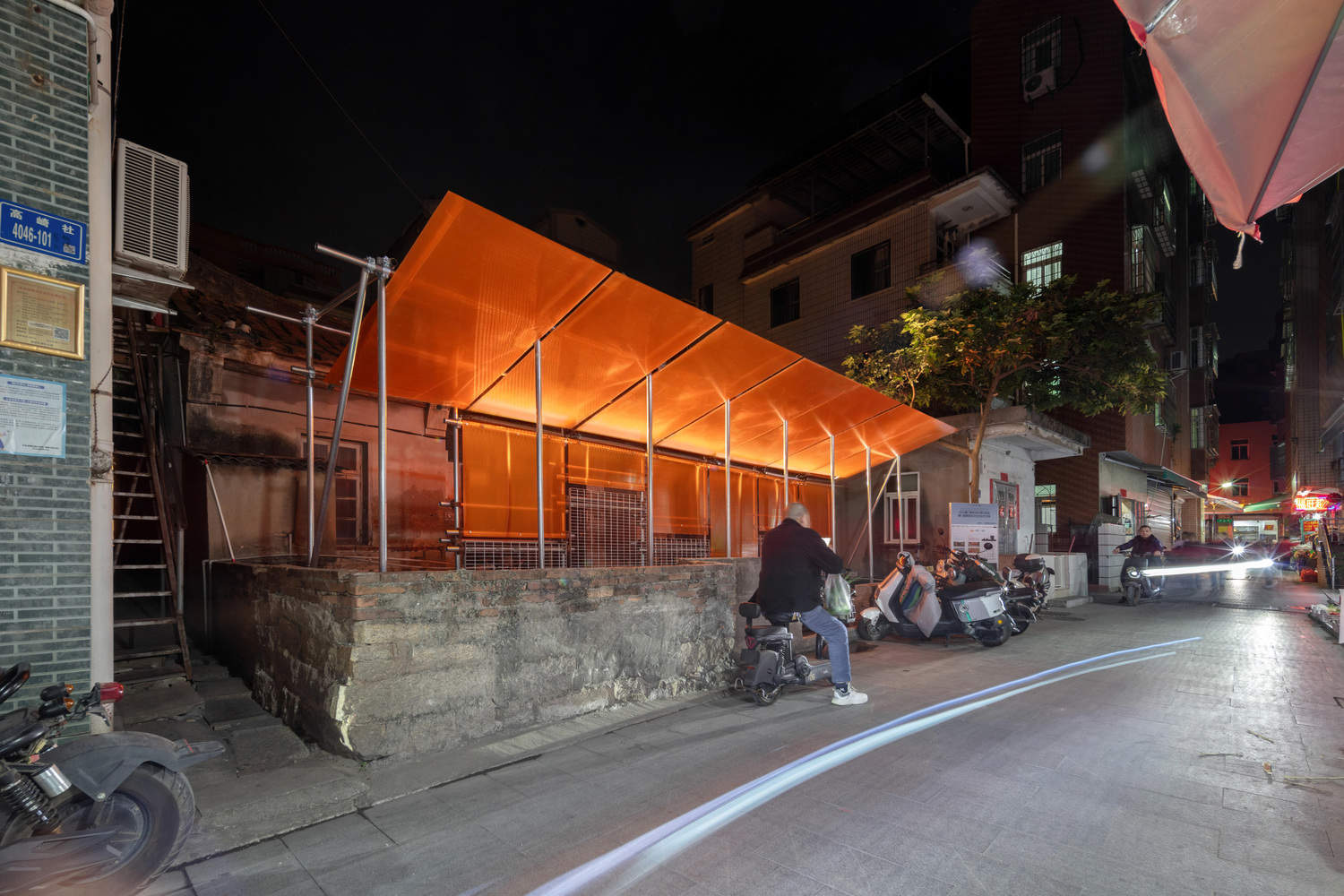
场地文脉的尊重与创新转化:该项目巧妙地立足于高崎社这一因机场建设而独特的“飞机下的渔村”文脉,保留了原始肌理。设计对本土闽南古厝的传统元素——红瓦、红砖——进行了大胆的现代转译,使用回收脚手架和橘红色半透明阳光板,以极低的成本(不到3万元人民币)重构了传统立面语汇。这种对地域精神的深刻理解和材料的创新运用,使得新干预不仅是对历史的延续,更是一种低成本、高效率的当代艺术表达,成功激活了社区的公共空间叙事。
“施工围挡”的多功能动态策略:项目最精妙之处在于其“施工围挡”的临时性与永久性的双重身份设定。初期,它作为城市艺术节的契机,解决了废弃古厝施工期间的杂乱界面问题,同时嵌入了便民的摊位和车棚功能,实现了“施工美学”与社区服务的结合。后期,随着社区服务中心的落成,该装置无缝过渡为入口门厅、信息公告栏和小型展廊,展现了极高的设计韧性和经济效益,体现了精明的公共资产运营思维。
成本效益下的社区界面更新:在社区公共设施严重匮乏的背景下,本项目以不到4000美元的极低预算,实现了对社区关键节点的形象提升。通过阳光板与不锈钢格栅的交错排布,模仿传统“出砖入石”的肌理,创造出既有隐私又可窥视(“小窗口”)的立面效果。这不仅解决了资金限制的挑战,更提供了一种可复制、可推广的社区微更新范式——用极简的材料和巧妙的构思,为高密度社区创造出既有文化关联性又具现代活力的公共界面。
Images are preserved as is, and the copyright notices below them remain untranslated.
The Fishing Village Under the Airplane
Gaoqi Community is located at the northernmost tip of Xiamen Island, which historically served as the closest ferry crossing from the mainland to Xiamen. In the 1980s, the city airport was sited near the village. Due to height restrictions imposed by the flight path, this fishing village under the flight path escaped the fate of demolition during China's rapid urbanization process, preserving its original texture and quietly developing its traditional fishery. The village has over 20,000 permanent residents, but suffers from a clear lack of public community facilities. Therefore, the local government aimed to restore and renovate a long-abandoned Lin Ancestral House to serve as a community service center radiating to surrounding residents.
高崎社位于厦门岛的最北端,在古代是从大陆乘船抵达厦门的最近渡口,上世纪 80 年代城市机场在村落附近选址建设,受航路控高的限制,这个飞机下的渔村在中国快速的城市化进程中,逃脱了被拆迁消失的宿命,保留住了原始的肌理,安静地发展着传统渔业。村中有两万多常住居民,社区公共设施明显匮乏,因此本地政府希望对一处废弃多年的林氏古厝进行修复改造,成为辐射周边居民的社区服务中心。
Leveraging the City Art Festival
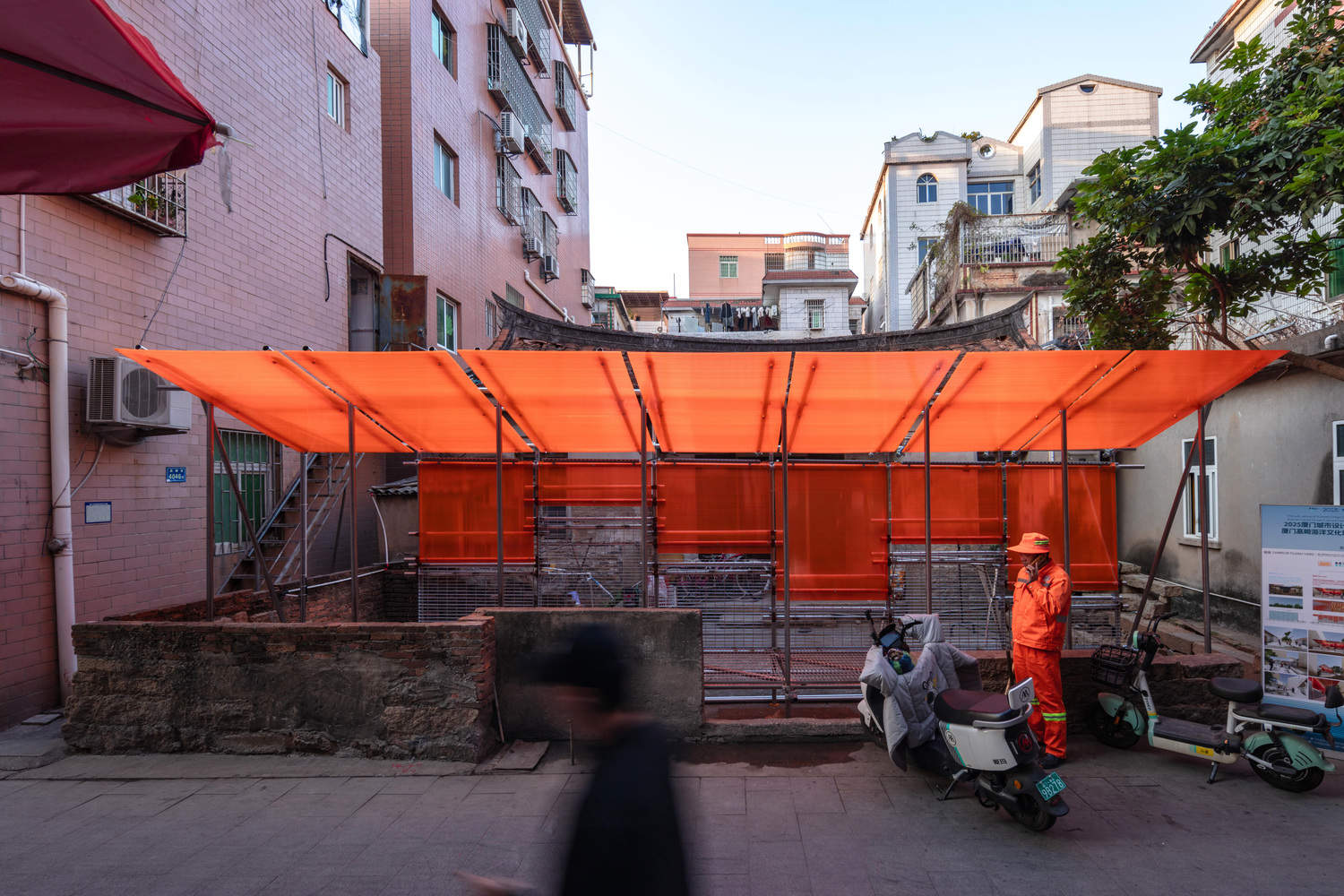
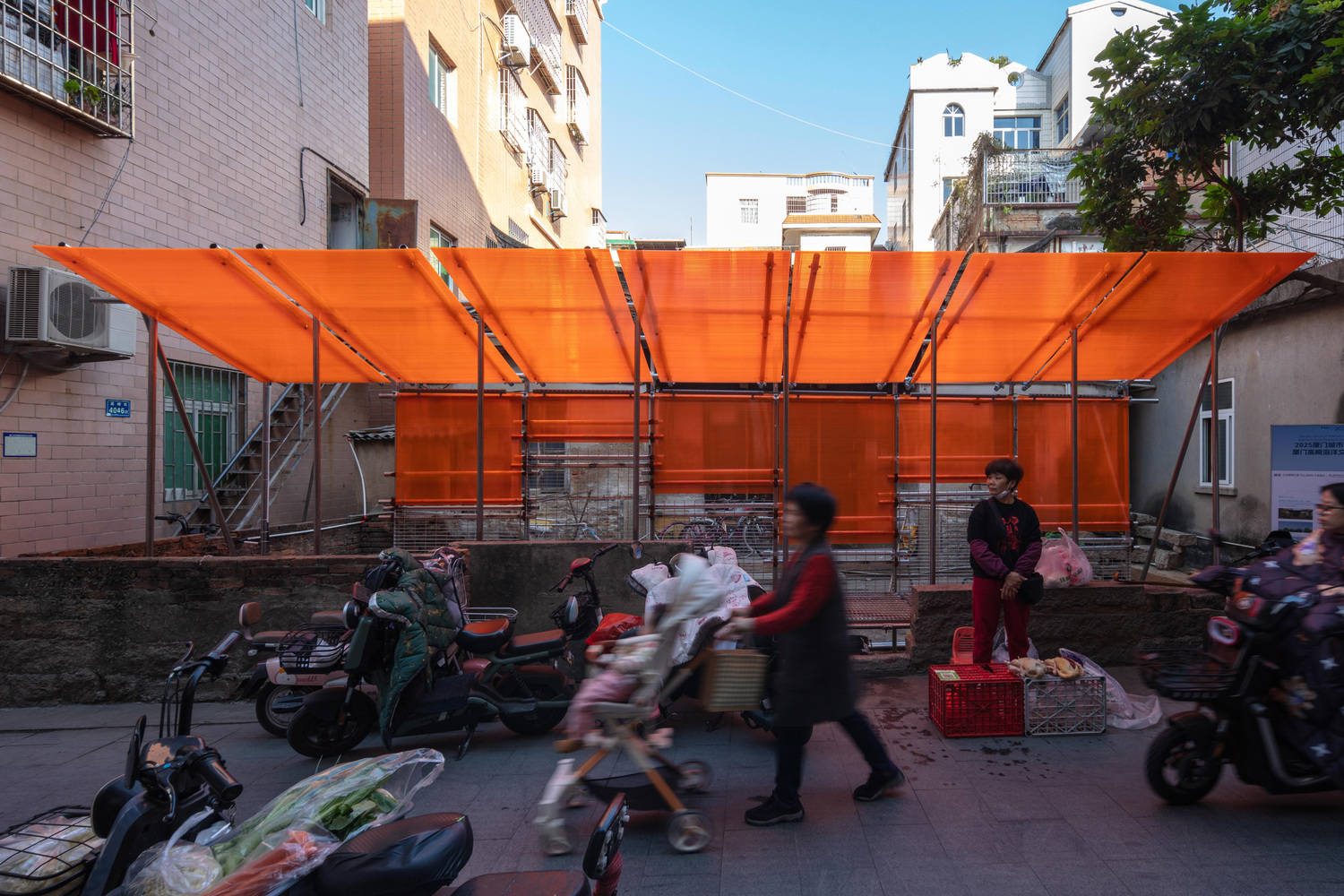
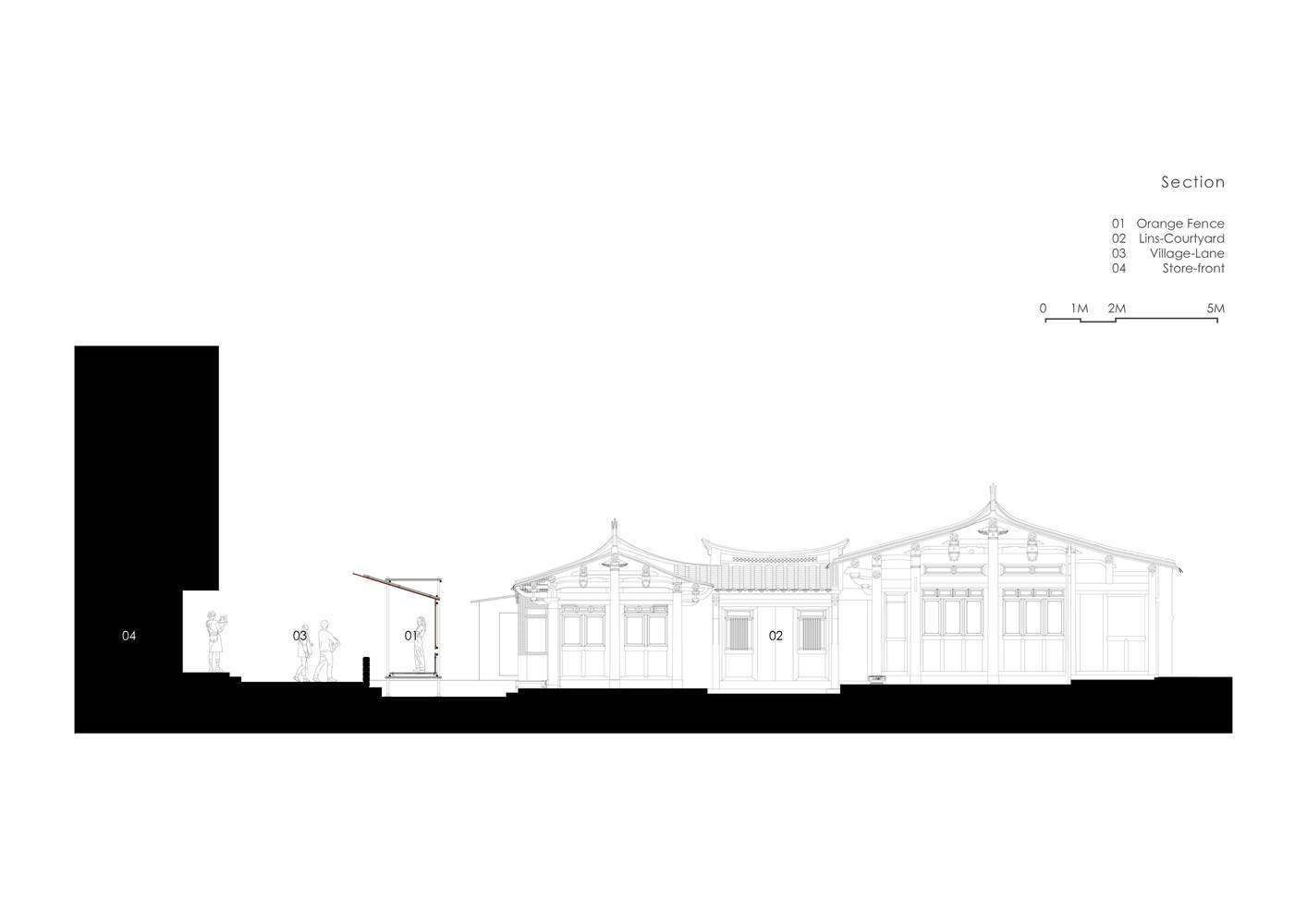
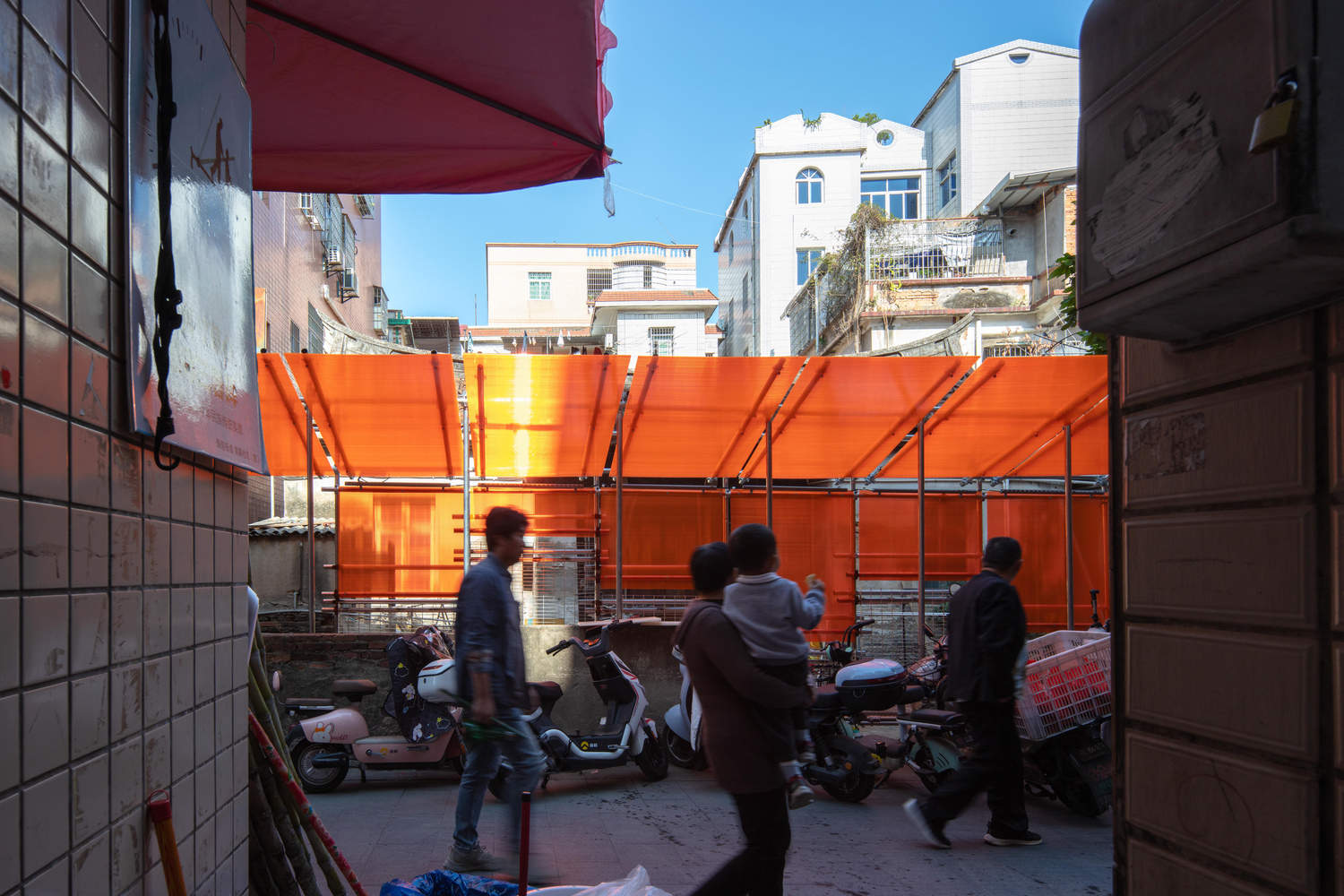
The 2025 Xiamen City Art Festival plans to inject artistic vitality into Gaoqi Community through site-specific installation placements. Therefore, for the installation point in the front yard of the Lin Ancestral House, we plan to utilize the art festival funding to support the community's renewal and improvement efforts. The design positions the art installation as a multi-functional "construction hoarding." During the restoration of the ancestral house, the installation will screen the messy construction site internally, creating a safe, clean, and positive spatial interface for the alleyways, while also providing small stalls for itinerant vendors and temporary sheds for electric bicycles. After the community service center is completed, the installation can remain, serving as the main entrance space for the service center, and doubling as a community information board and an open-air small exhibition gallery for public facility use.
2025 年厦门城市艺术节计划为高崎社注入艺术活力,点状进行植入设计装置,因此在林氏古厝前院点位中,我们计划利用艺术节活动资金,助力社区更新提升建设。设计将艺术装置定位为一处多功能的“施工围挡”。在古厝修复施工时,装置遮挡内部杂乱场地,为街巷营造安全、整洁、积极的空间界面,同时提供少量流动商贩的摊位和电动自行车的临时车棚;社区服务中心完工后,装置依然可以保留,作为服务中心的主入口空间,并兼作社区信息通知栏、开放式小展廊等公共设施使用。
Low-Cost Modern New House Style
Although Gaoqi Community has retained its traditional layout texture, most traditional dwellings have been replaced by modern private houses. The Lin Ancestral House is one of the few survivors, so the design attempts to evolve the facade of traditional Minnan dwellings using modern vocabulary to convey a new artistic expression for the ancestral house.
高崎社虽保留住了传统的布局肌理,但传统民居大多被现代私宅所取代,林氏古厝是为数不多的幸存者,因此设计尝试以现代语汇演化传统闽南民居的立面,创造古厝的新艺术传达。
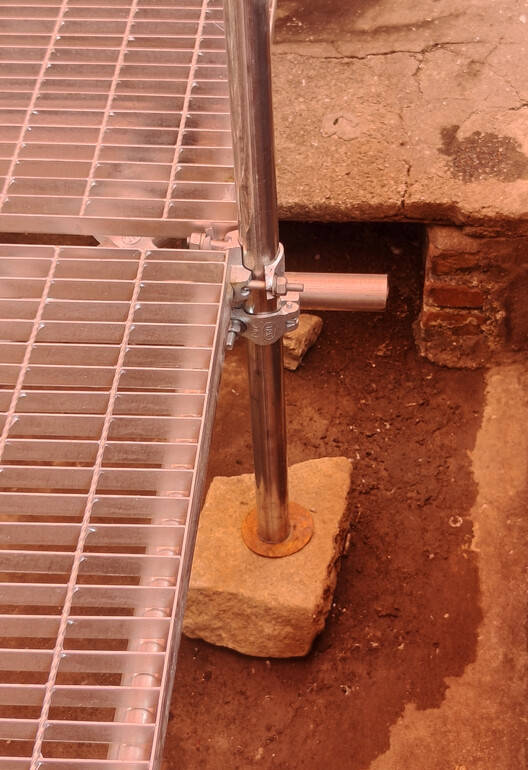
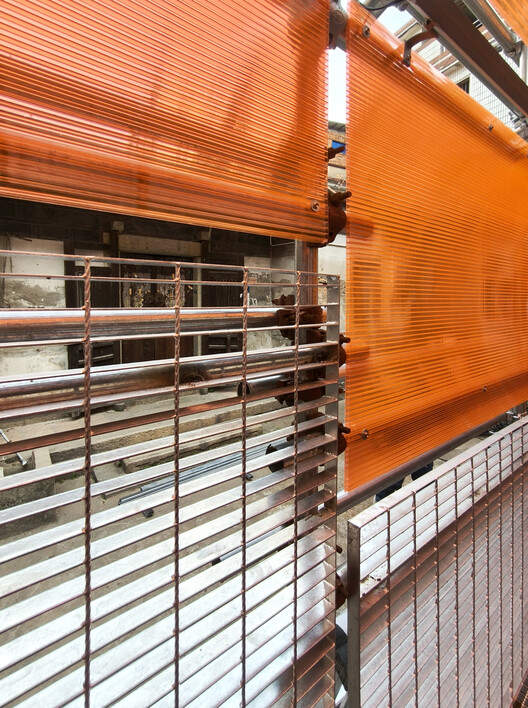
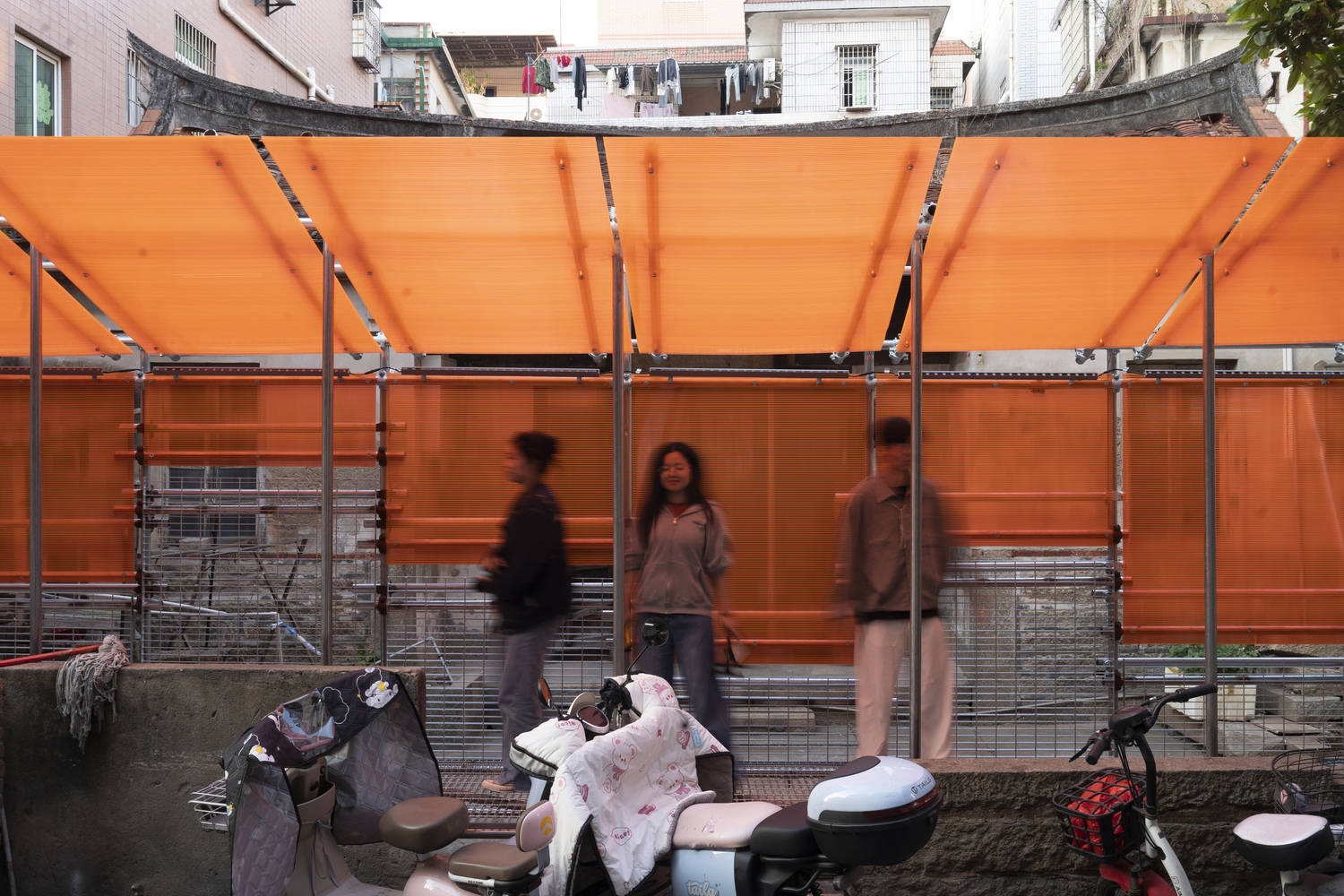
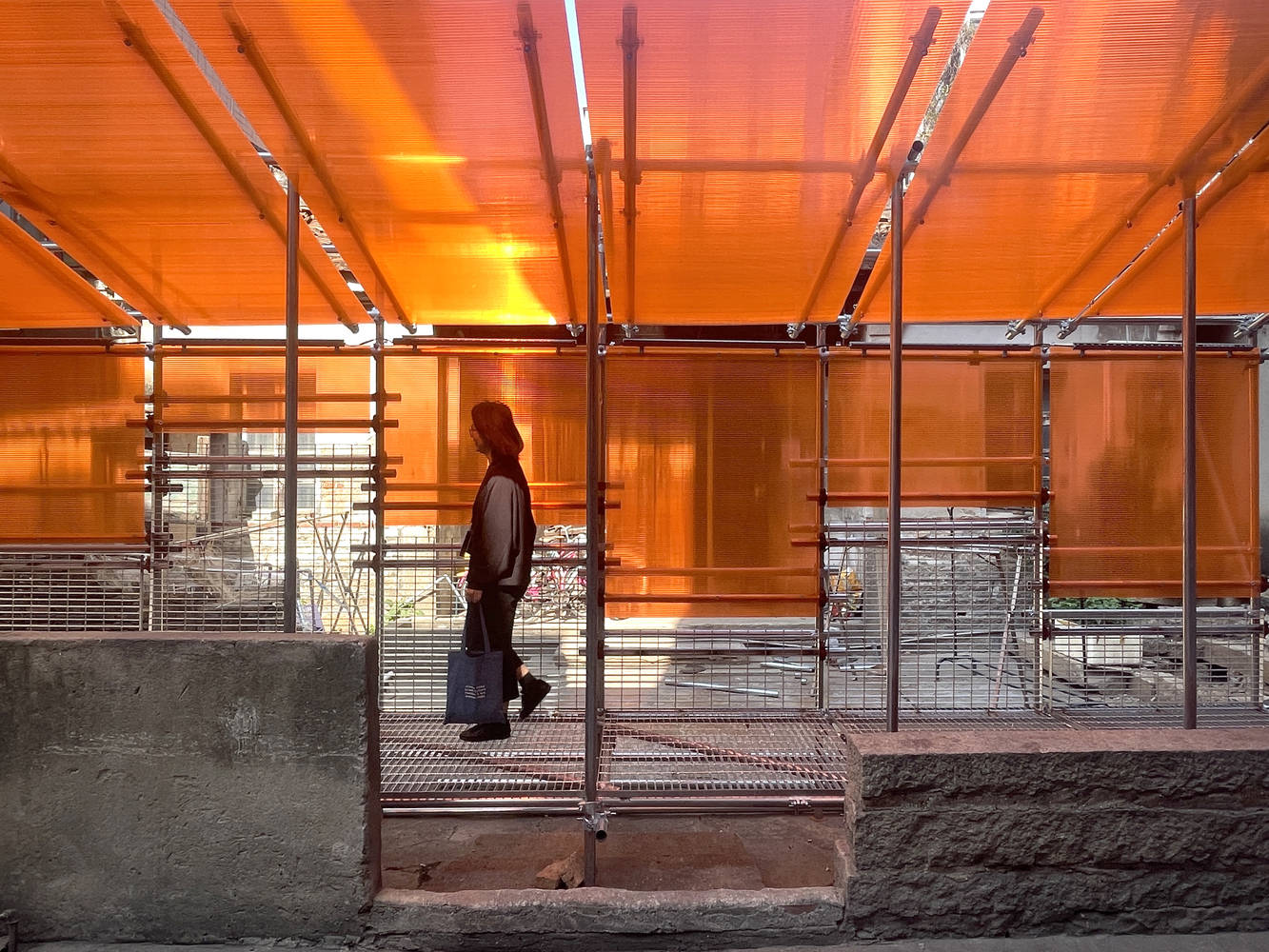
The local ancestral houses mainly consist of three parts: red tile roofs, red brick walls, and stone plinth bases. The design uses some recycled construction scaffolding to erect the main structural frame, interpreting the red tiles and red bricks with orange translucent polycarbonate sun panels. The top is tilted and suspended to shape the eaves.
本土古厝主要由红瓦屋顶、红砖墙身和条石基座三部分组成,设计使用部分回收的工地脚手架搭建起主体结构框架,以橘红色聚碳酸酯半透明阳光板诠释红瓦和红砖,顶部倾斜悬挂塑造屋顶飞檐。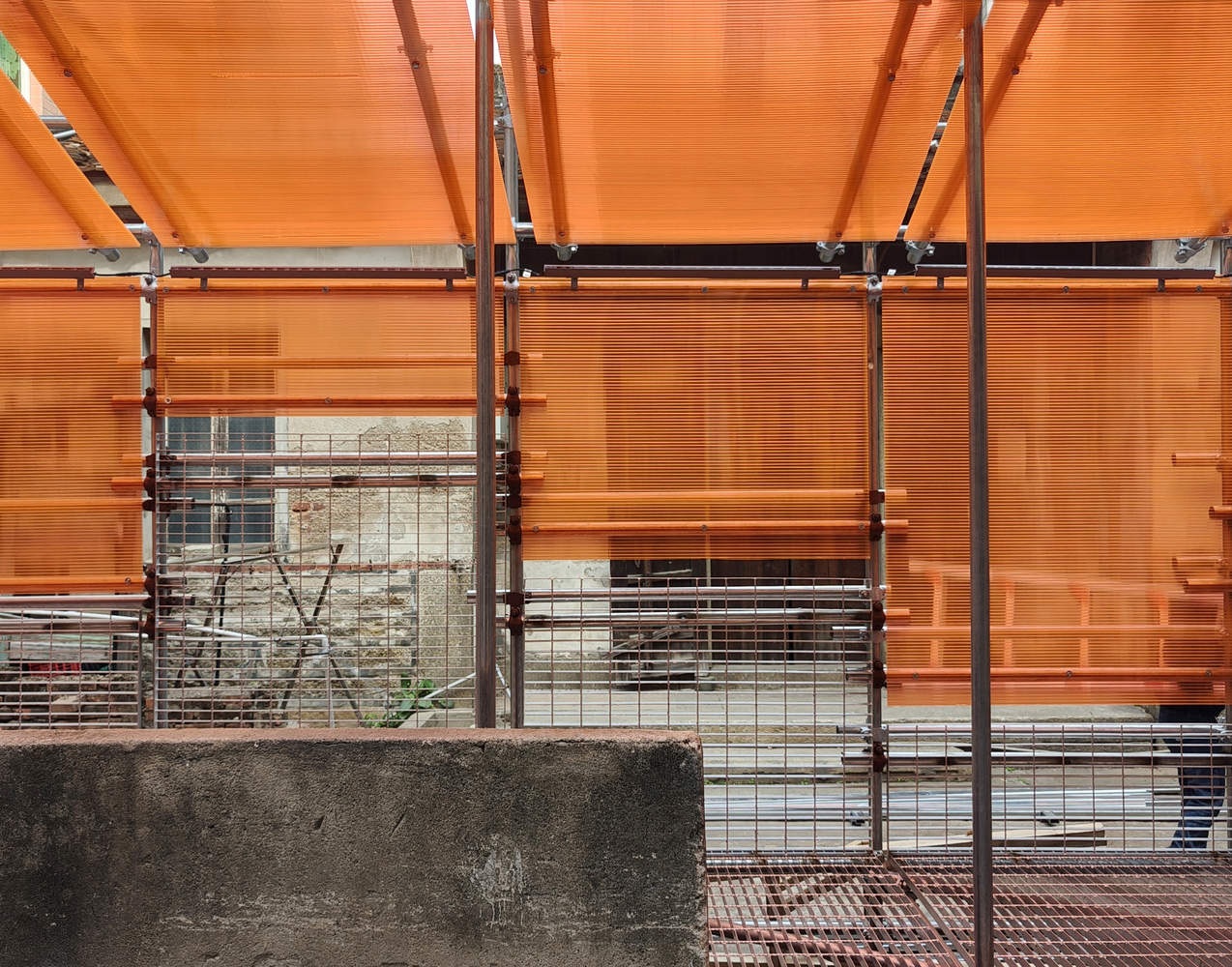
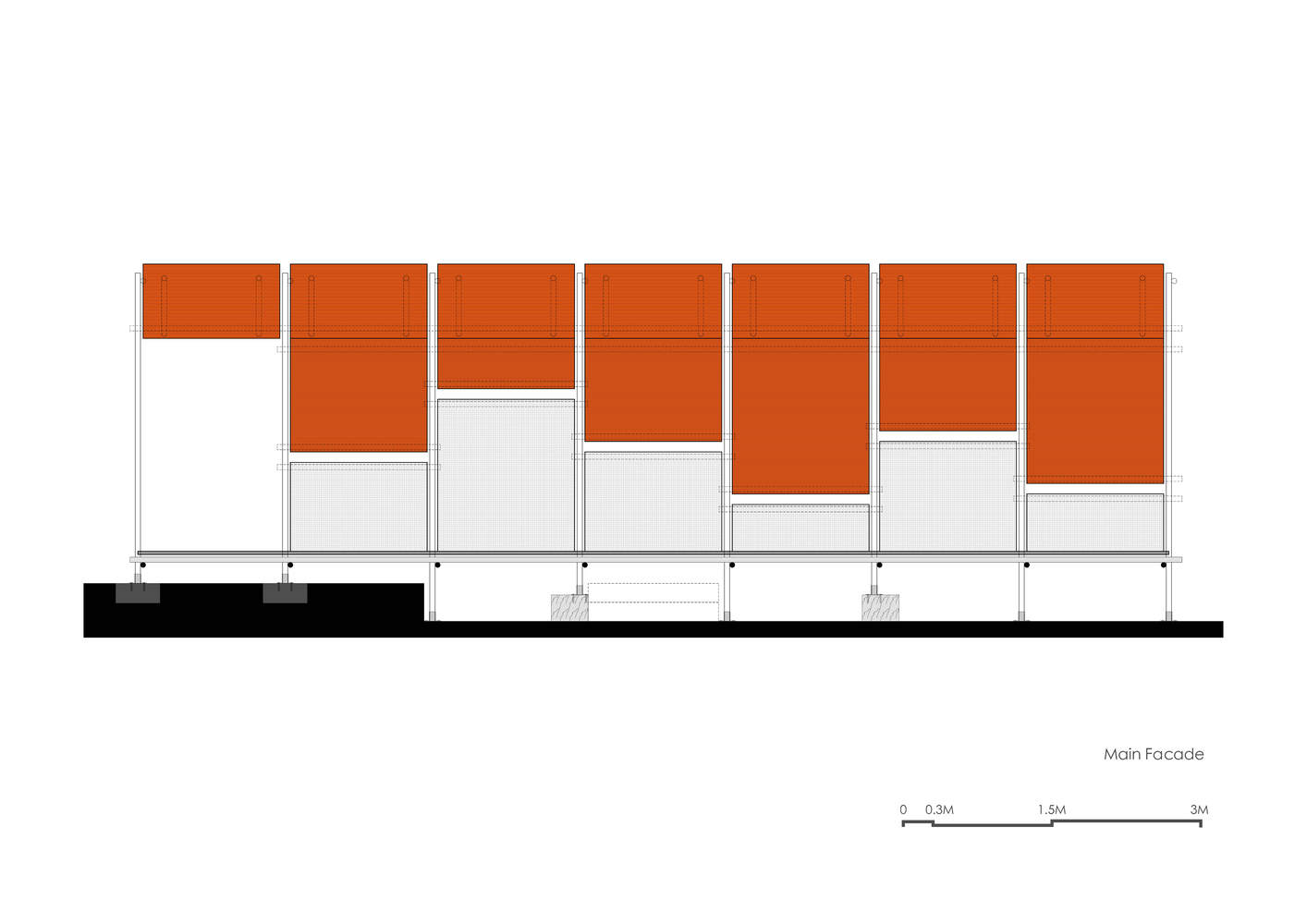
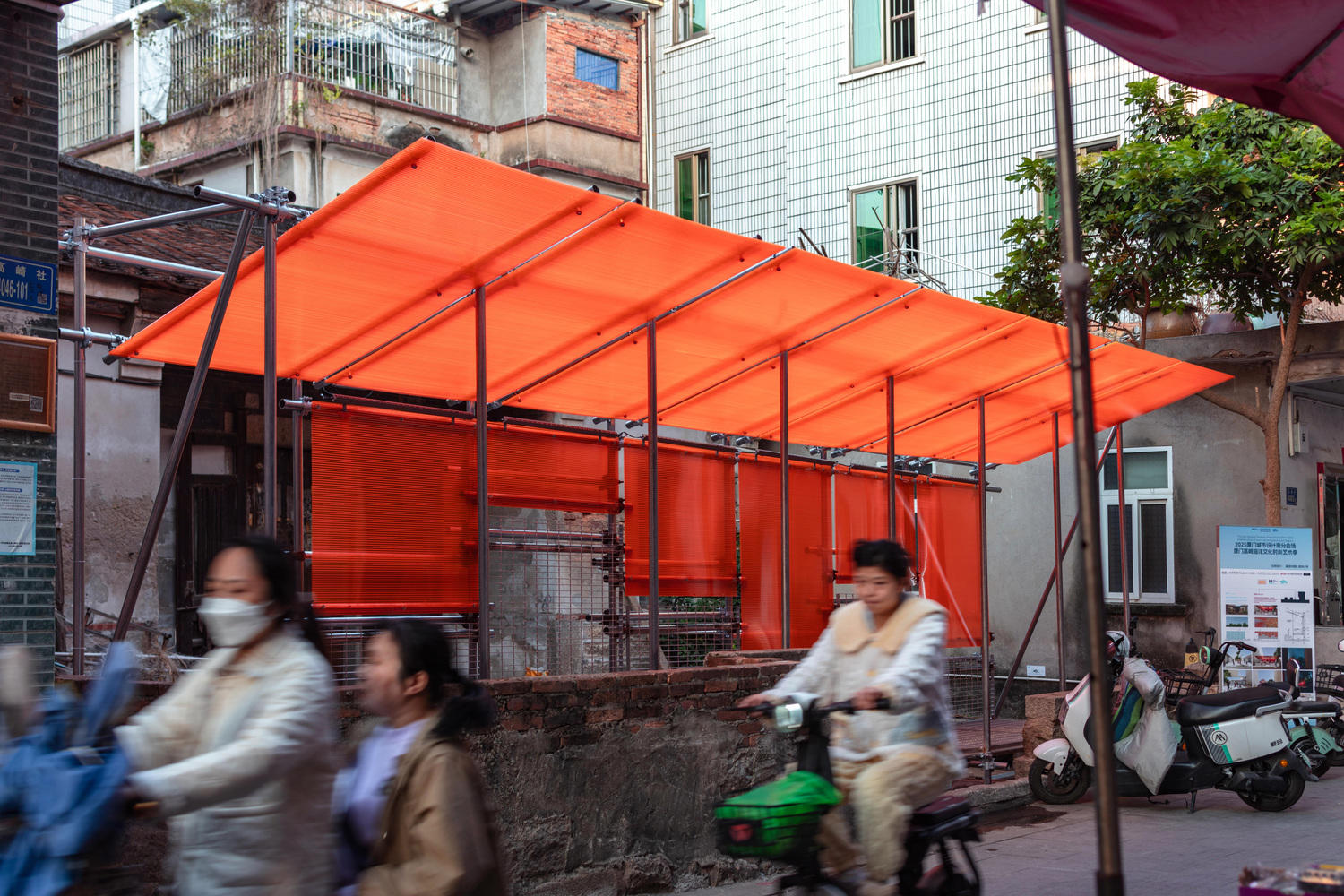
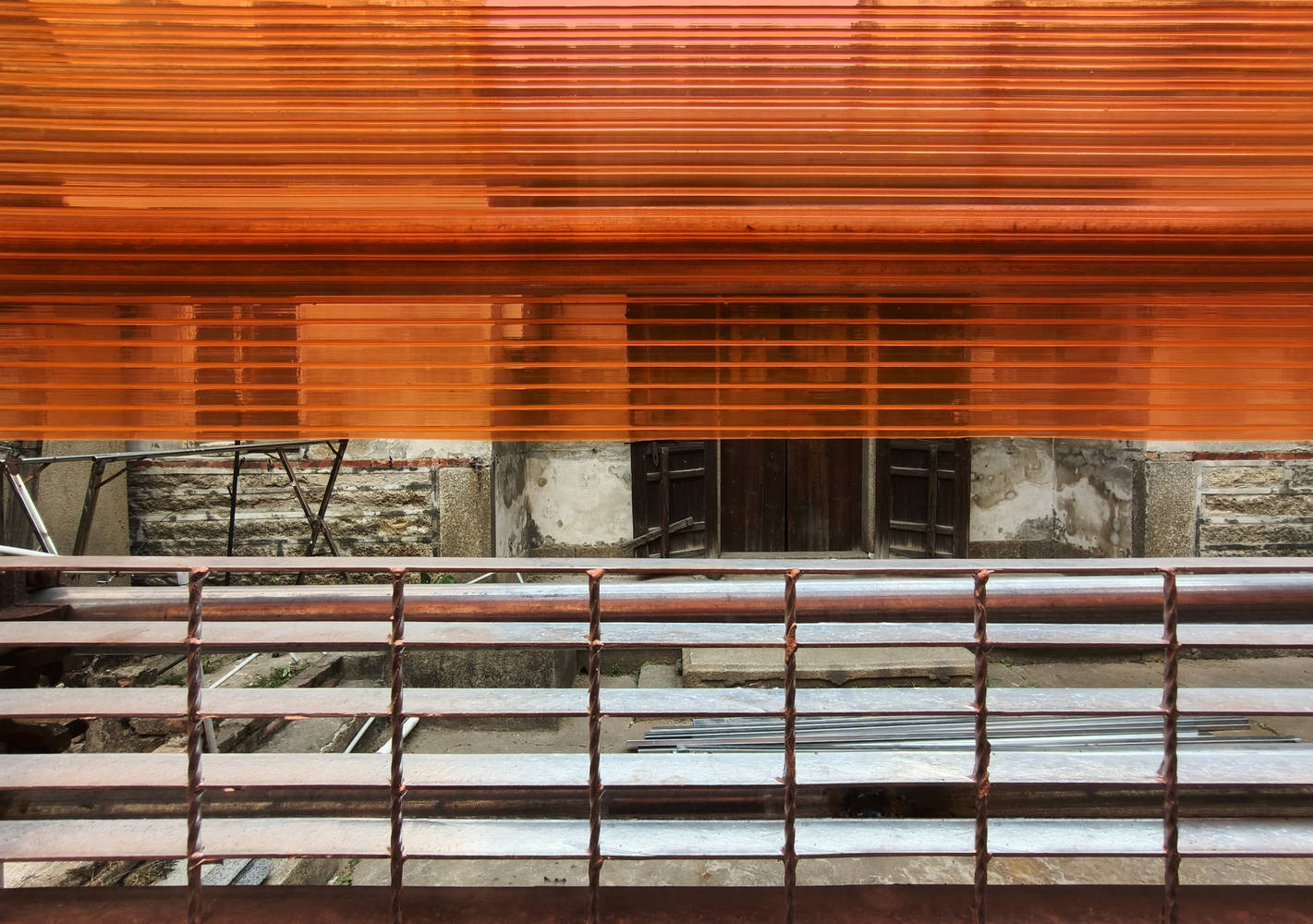
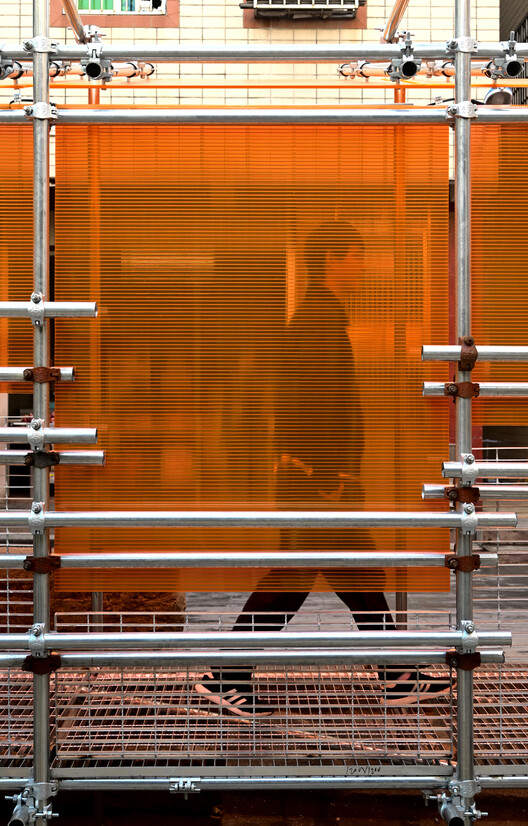
The facade features an alternating and staggered arrangement of sun panels and stainless steel grating panels, leaving a 100mm wide gap between them, mimicking the irregularly distributed exposed bricks and embedded stones in traditional ancestral house walls, providing a small window for glimpsing the restoration and renewal of the Lin Ancestral House. Through the recycling of discarded materials and the varied use of inexpensive materials, the design creates a multi-functional "construction hoarding" for the local community at an extremely low cost of less than RMB 30,000 (USD 4,000).
立面则以阳光板与不锈钢格栅板交错参差排布,二者间留出 100mm 宽度的缝隙,如传统古厝墙面中随机分布的出砖入石,提供一处窥视林氏古厝修复更新的小窗口。设计通过废旧材料的回收利用、廉价材料的变化使用,以不到 3 万元人民币(4000 美元)的极低成本,为本地社区营造了一处多功能的“施工围挡”。