光影对话与文化交融的精妙体现:该项目最核心的亮点在于其对“光影”主题的深刻诠释,成功地在阿拉伯和日本文化背景下,探索了可见与隐藏、永恒与变幻之间的哲学张力。设计将卢浮宫标志性的、静止的球形穹顶光影作为参照基准,通过一座自由形态、随风摇曳的亭子与其形成鲜明对比和对话。这种动静结合的方式,不仅呼应了策展主题,更在建筑语汇上实现了东西方文化中对光影哲思的精妙融合,展现了极高的设计敏感度和文化理解力。
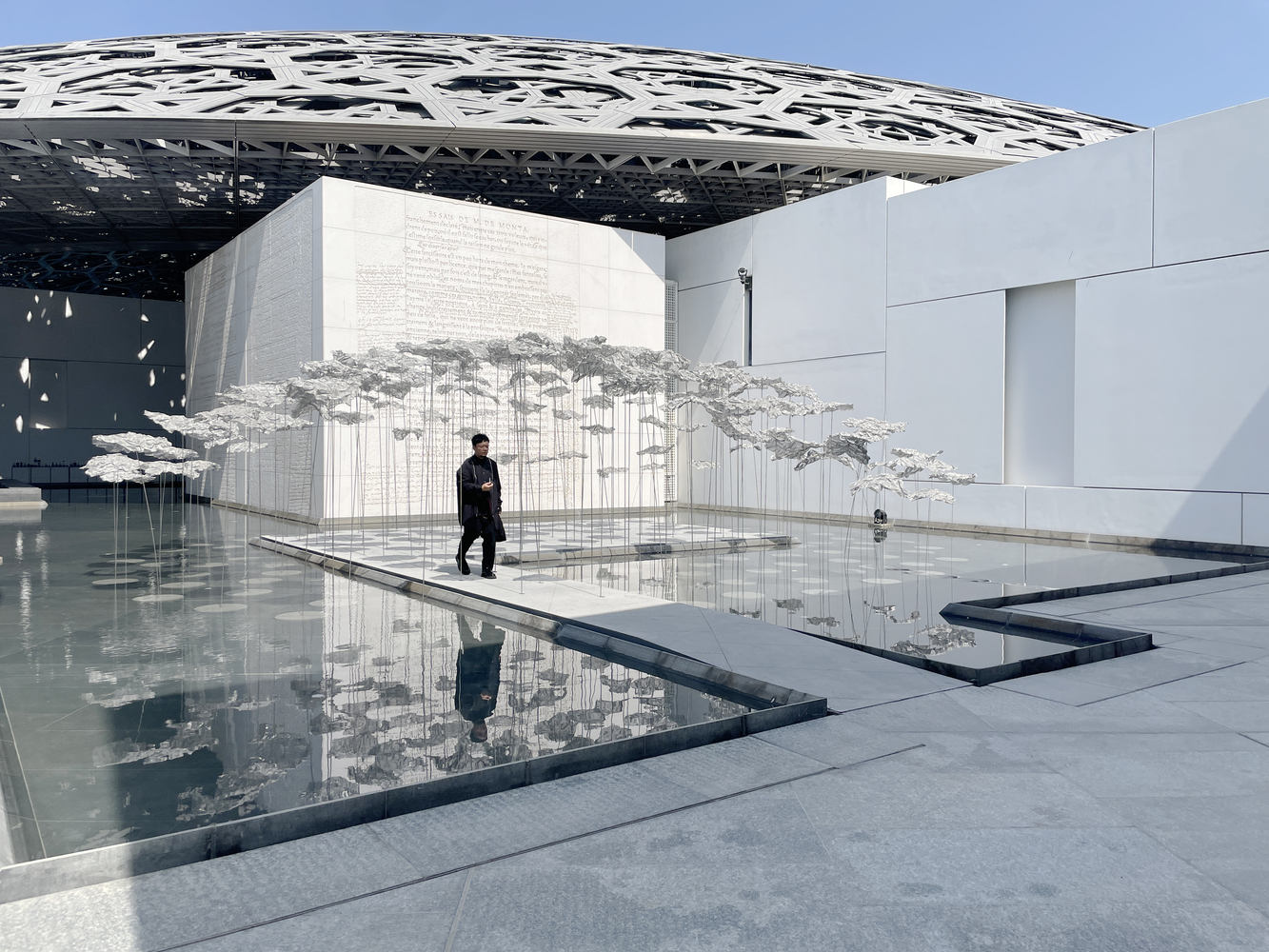
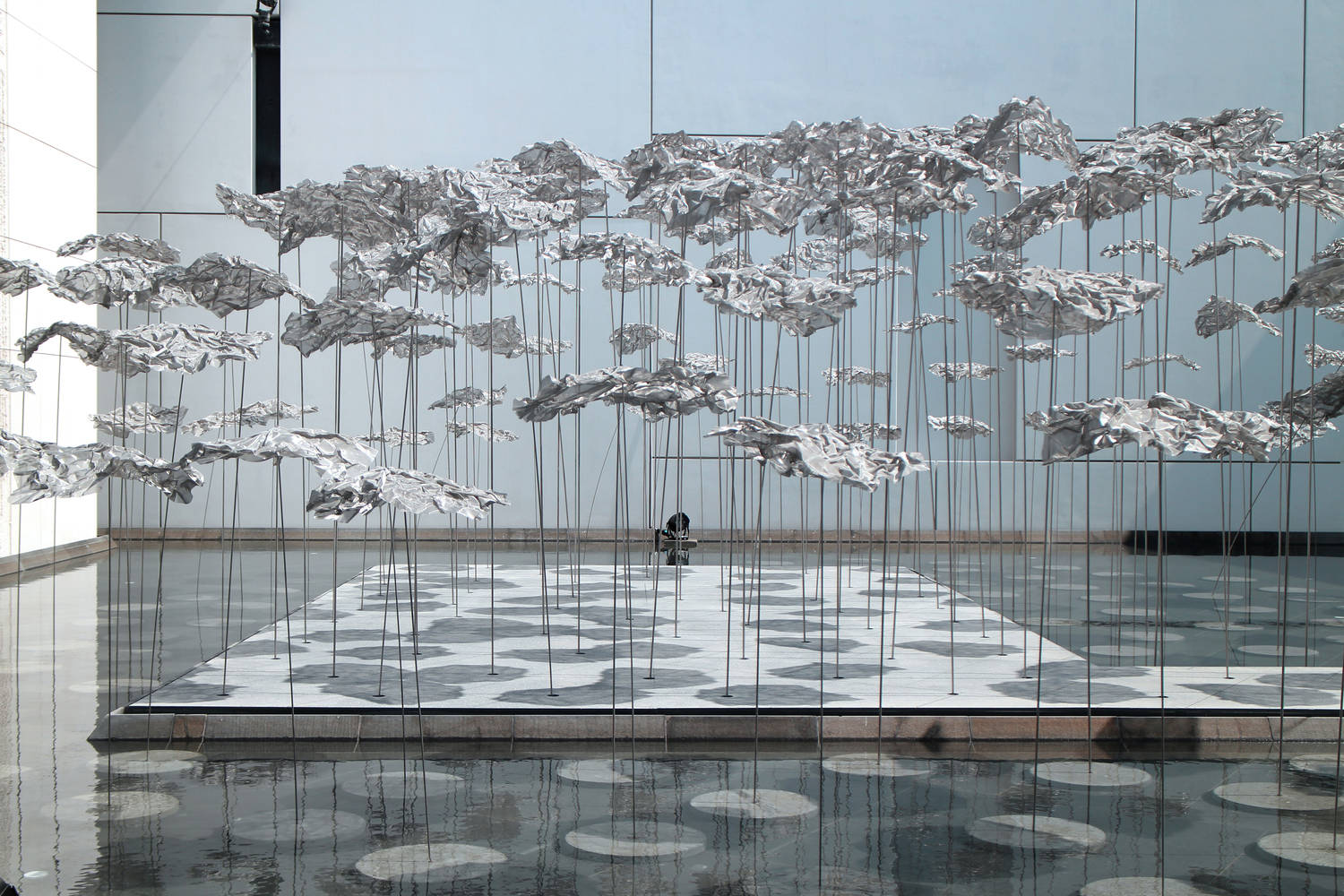
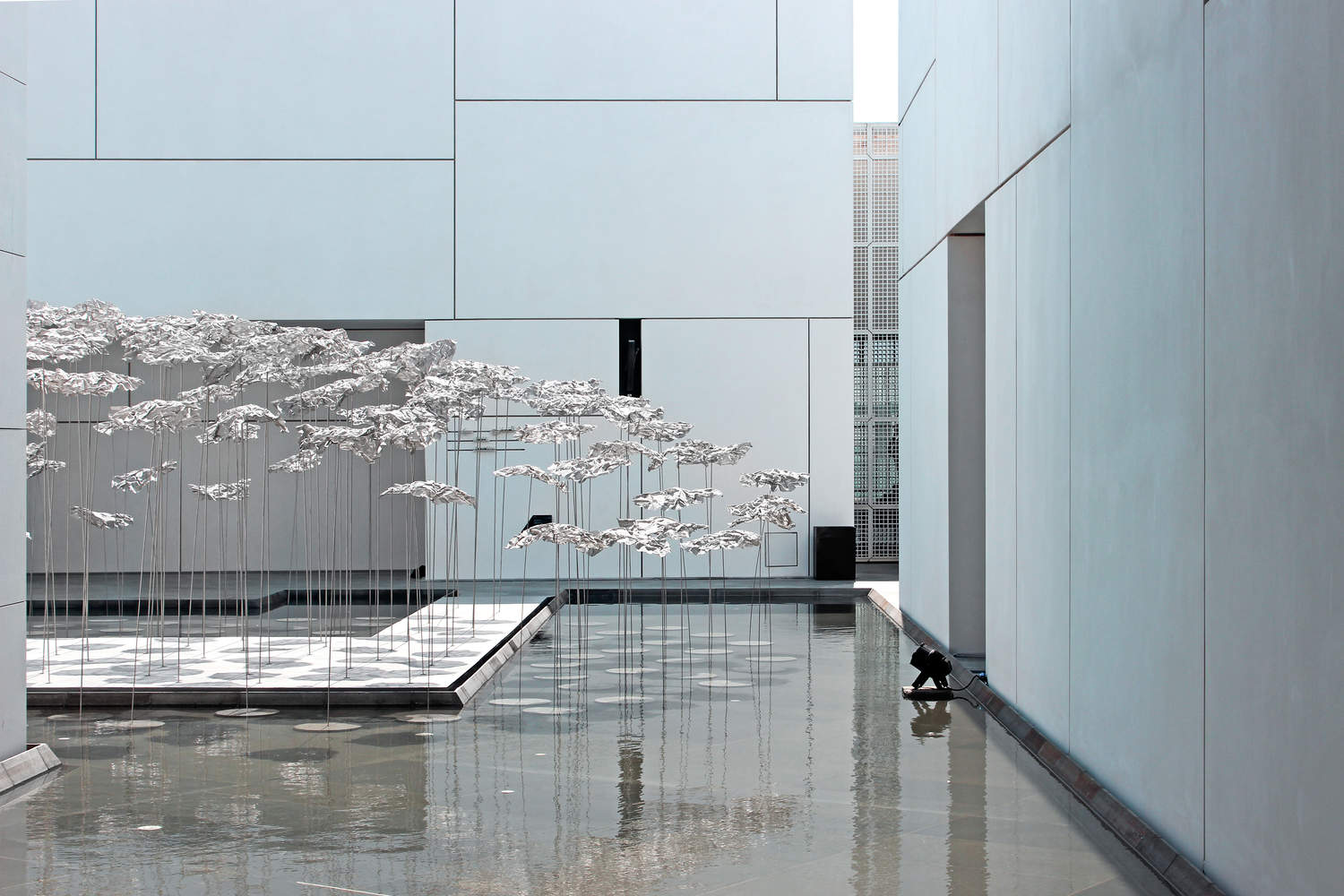
结构创新与动态形态的诗意表达:项目在技术实现上达到了轻盈与动态的极致。亭子采用超轻编织不锈钢网作为屋顶,并由152根超细立柱支撑,直径控制在6mm至12mm之间,这使得结构本身几乎消隐,完全突出了光影的表演性。更具巧思的是,设计师借鉴日本“不倒翁”(Okiagari Koboshi)的自平衡概念,将立柱底部设计成球形基础。这种结构上的“摇摆”机制,赋予了亭子生命般的动态,使其阴影如同自然界中云朵或树叶般“翩翩起舞”,将建筑从静态物体升华为一种可感知的、随环境变化的艺术编舞。
场地特定性与环境互动的完美契合:此装置的精髓在于其高度的“场地特定性”。它被精心设计为卢浮宫穹顶之下的一个“对立面”——静止的几何穹顶过滤光线,而亭子则主动捕捉和重塑光影。这种关系超越了简单的并置,而是形成了一种共生结构,共同创造出不断演变的空间体验。通过对自然界(云朵、树叶)瞬息万变的影子景观的抽象提炼,设计师成功地在人造的建筑环境中重现了自然之美,实现了对“介于自然与建筑之间”的理想状态的追求。
YOKOMAE et BOUAYAD announced at the Louvre Abu Dhabi that their work has been selected from five other finalists to win the Richard Mille Art Prize. The "Art Here 2025" exhibition opens under the Louvre Abu Dhabi's iconic dome on October 10 and runs until December 28. The Richard Mille Art Prize launched an international competition that attracted over 400 submissions, aiming to design and build five art installations and/or architectural pavilions based on this year’s theme of "Light and Shadow."
来自建筑师。YOKOMAE et BOUAYAD 在阿布扎比卢浮宫宣布,其作品从另外五件入围作品中脱颖而出,成功入选理查德·米勒艺术奖(Richard Mille Art Prize)。“2025 此地艺术展”(Art Here 2025)于 10 月 10 日在阿布扎比卢浮宫标志性的穹顶下盛大启幕,并将持续至 12 月 28 日。理查德·米勒艺术奖发起了一项国际竞赛,吸引了超过 400 个项目参与,旨在设计和建造五座艺术装置及/或建筑亭,围绕今年“光影”主题展开创作。
© YOKOMAE et BOUAYAD
Conceived by guest curator Sophie Mayuko Arni, the competition invited architects and artists to create work around the theme of "Light and Shadow" drawn from Arab and Japanese cultures, exploring the interplay between light and absence, visibility and concealment, and the multi-layered dimensions of memory, identity, and transformation.
该竞赛由客座策展人索菲·玛由科·阿尔尼(Sophie Mayuko Arni)构思策划,邀请建筑师与艺术家围绕阿拉伯与日本文化中的“光影”主题进行创作,探索光与缺失、可见与隐藏之间的相互作用,以及记忆、身份与转变的多层次维度。
© YOKOMAE et BOUAYAD
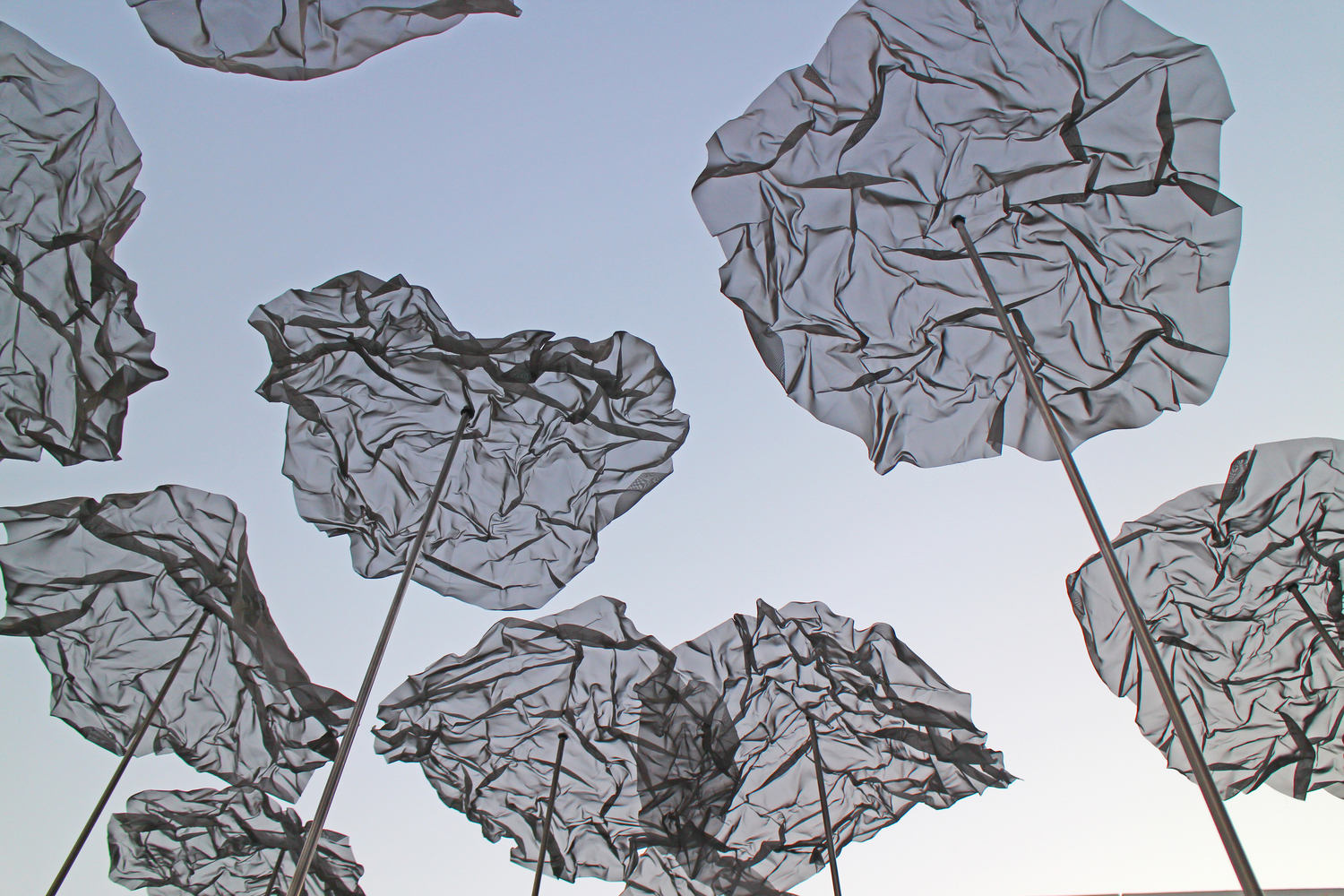
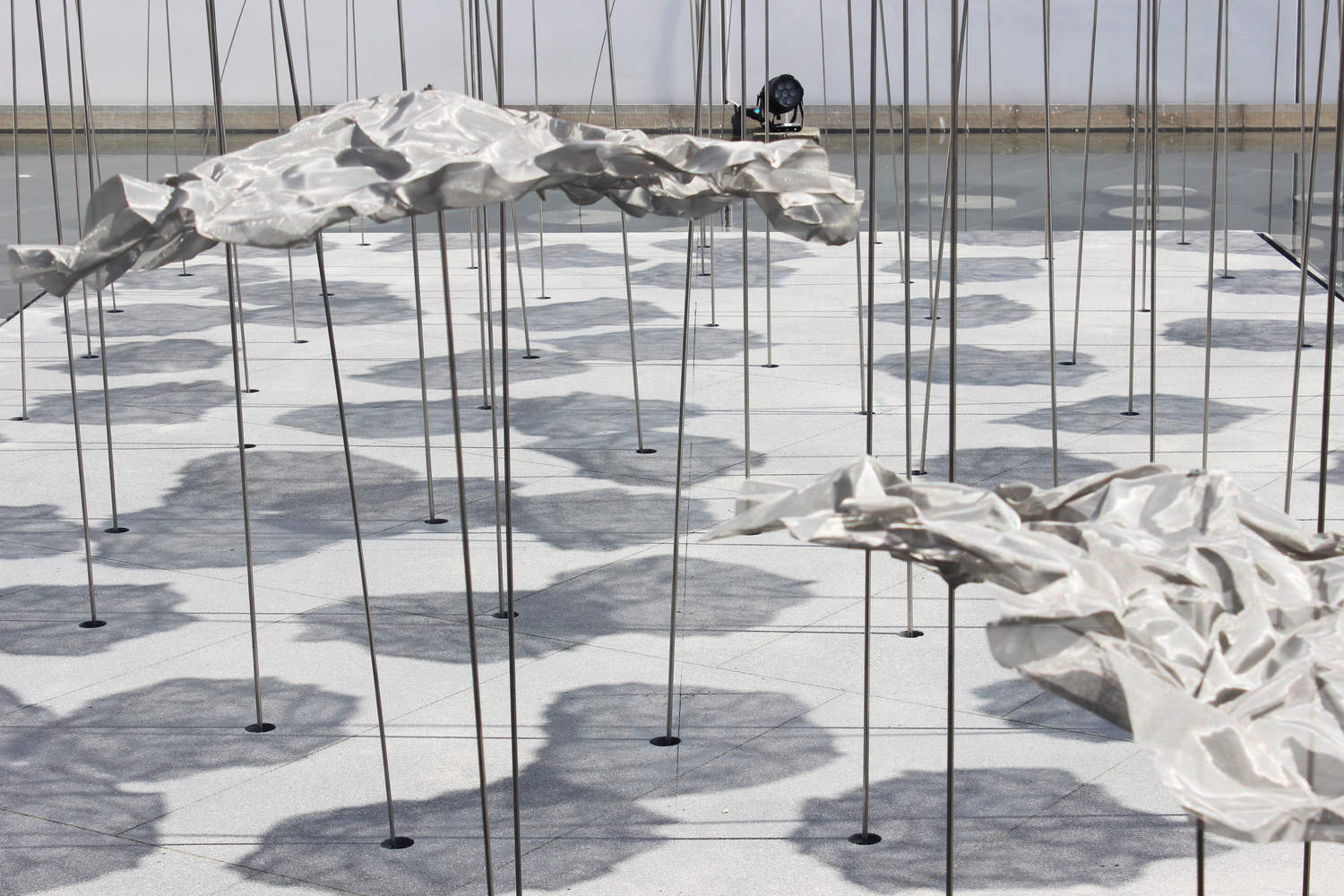
The designers aimed to create an architectural space that hosts the variations of light and shadow, inspired by nature. In nature, the constantly changing shadows cast by clouds, trees, and leaves swaying in the wind are profoundly beautiful and touching. The designers pondered whether this ever-evolving landscape and space could be demonstrated in an architectural setting, striving for a subtle state between nature and architecture, as if standing under a large tree or beneath a vast roof.
设计师旨在以自然为灵感,打造一个承载光影变幻的建筑空间。自然中,云朵、树木以及随风摇曳的树叶所投射的不断变化的影子,美得深邃,能触动人心。设计师思索,能否在建筑环境中展现这种不断演变的景观与空间,追求一种介于自然与建筑之间的微妙状态,如同置身于大树之下,或是在广阔的屋顶之下。
© YOKOMAE et BOUAYAD
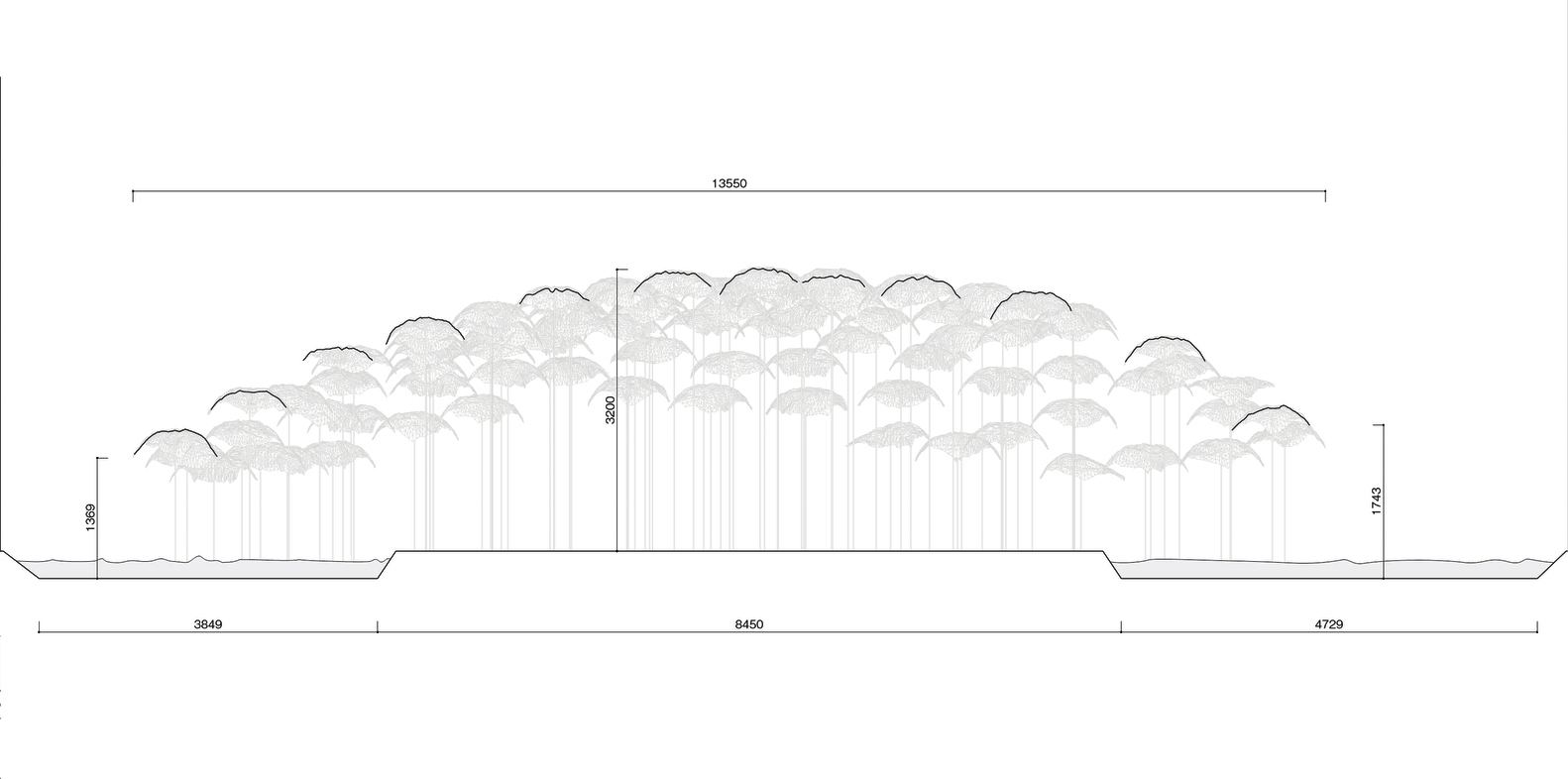
For "Art Here 2025," the designers created a structure that could only exist within and in sharp contrast to its specific environment—the Louvre Abu Dhabi and its grand roof. The museum’s spherical dome is static, filtering light through its multi-layered geometric canopy, while the pavilion sways with the wind, casting ever-changing shadows beneath it. The pavilion is also non-spherical, featuring a free-form roof whose appearance changes with the viewing angle.
为 “2025 此地艺术展”,设计师创作了一座仅能存在于其特定环境 —— 阿布扎比卢浮宫及其宏大屋顶之下,同时又与之形成鲜明对比的建筑。博物馆的球形穹顶静止不动,通过其多层几何图案的屋顶过滤光线,而亭子则随风摇曳,在其下方投射出变幻莫测的影子。亭子也非球形,而是拥有自由形态的屋顶,其外观随视角变化而变化。
Section
剖面图
Section
剖面图
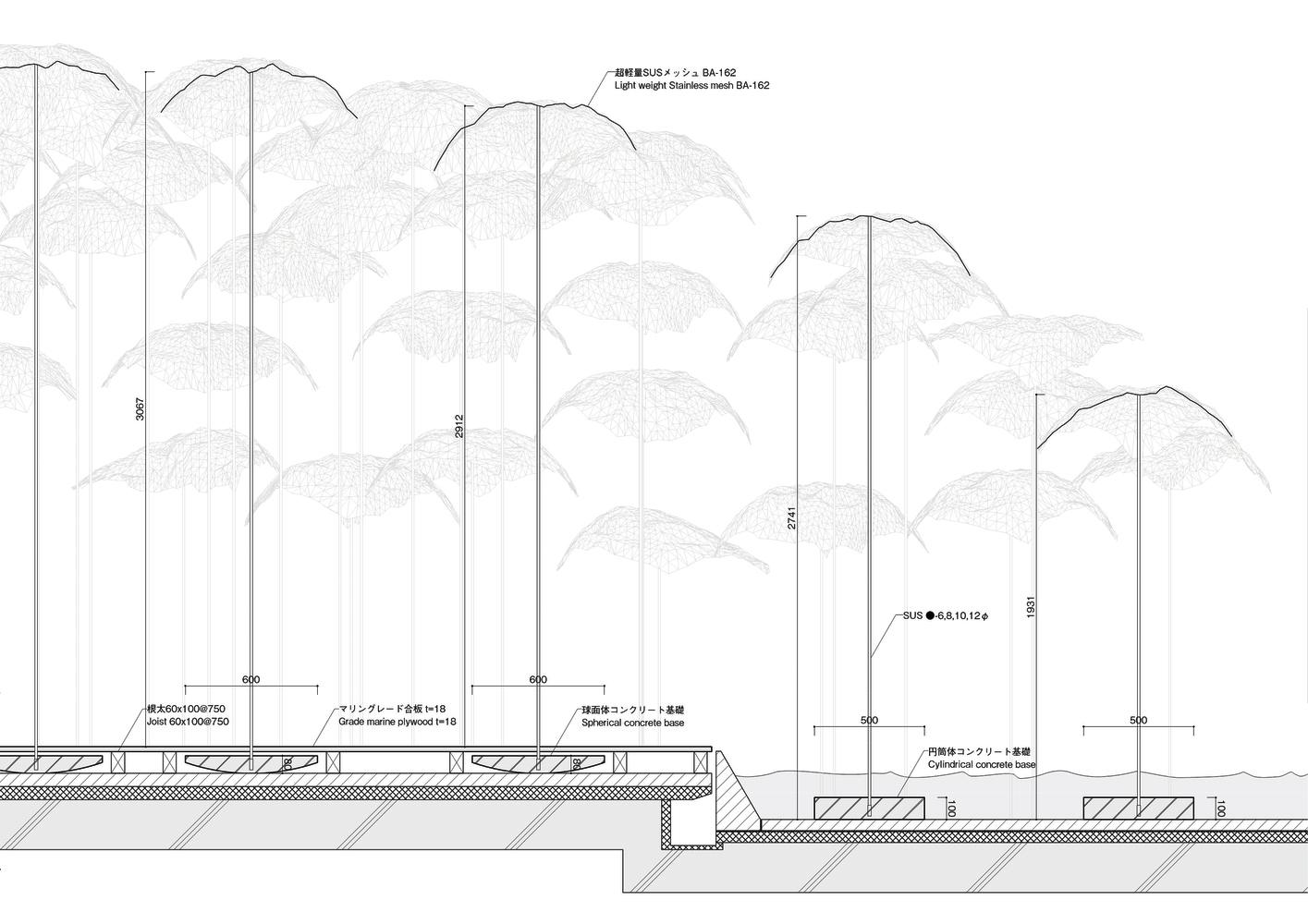
Gently swaying in the Abu Dhabi breeze, the pavilion’s ultralight woven stainless steel mesh roof and its supporting 152 ultra-thin columns (with diameters ranging from 6φ to 12φ mm) create ever-changing forms, patterns, graduated transparency, and layers of clarity.
在阿布扎比的微风中轻轻摇曳,亭子的超轻编织不锈钢网屋顶及其支撑的 152 根超细立柱(直径在 6φ 至 12φ 毫米之间)创造出不断变化的形态、图案、透明度渐变及清晰度层次。
© YOKOMAE et BOUAYAD
The designers applied the concept of the traditional Japanese self-balancing toy, the "Okiagari Koboshi," to the base of each column, sculpting the base concrete into a sphere. This creates a structure that slowly shifts from the bottom of the columns, mimicking natural behavior. The designers named the pavilion, whose shadows seem to dance and choreograph their own movements, "Choreography of a Cloud: Dancing Shadows."
设计师将日本传统自平衡玩具“不倒翁”(Okiagari Koboshi)的概念应用于每根立柱的基础,将基础混凝土塑造成球形。这创造了一种从立柱底部缓慢移动的结构,宛如自然行为。设计师为这座影子似乎在翩翩起舞、共同编排自身动作的亭子命名为:《云之编舞:舞影》。
© YOKOMAE et BOUAYAD