文脉传承与城市意象的建筑转译:该项目最大的亮点在于其深厚的文化内涵与创新的建筑表达的完美结合。设计灵感紧扣合肥地名“合肥”的由来——两水相汇,通过两个交叠起伏的形态具象化了“归异出同流”的地域文脉,实现了建筑形式与文化精神的“形神合一”。特别是面向城市的东立面,以铜画卷幕墙的形式抽象转译了石涛《巢湖图》和吴山铁字技法,构建出“巢湖金粼”的城市艺术之窗,成功地将地方历史记忆转化为具有当代美学价值的建筑符号。
多维体验导向的公共空间策略:设计巧妙地将美术馆定位为一个“全方位的艺术空间和艺术公园”,摒弃了传统单一的文化场馆形象。通过界定“仪、雅、悦、趣”四种界面,建筑的每一面都与周边的城市环境和市民生活产生了差异化且富于情感的互动。从城市主干道的“仪雅”形象展示面,到园区中心的“典雅”体验入口,再到面向居住区的“愉悦”立体公园和街角“趣味”的下沉广场,实现了艺术与城市、公共性与生活性的无缝渗透与融合。
结构创新与表皮的精细化设计:在结构和表皮处理上,项目展现了高超的技术集成能力。内部通过四个巨大的卷曲“筒体”作为结构核心,塑造了流动交汇的公共流线,并结合了独特的桁架和巨型悬挂旋转楼梯,形成了复杂的结构体系。表皮设计则更具匠心,借鉴桂花、烙画葫芦等元素,采用参数化手段设计出具有像素肌理的穿孔模块,这不仅是对传统工艺的现代转译,同时也实现了内部采光与外立面美学的协同优化,体现了设计在技术层面的深度与精度。
The Hefei Art Museum is an essential foundational facility for Hefei to build itself into a "Famous City of Great Lakes and a Hub of Innovation" and a sub-center city in the Yangtze River Delta world-class urban cluster. It is an important component for showcasing Anhui's profound and long history and the current state of contemporary art and calligraphy creation, as well as for prospering the cultural undertakings of our city.
合肥美术馆是合肥打造“大湖名城、创新高地”、建设长三角世界级城市群副中心城市的重要基础性设施,是展示安徽深厚悠久文脉和当代美术、书法创作现状及繁荣我市文化事业的重要组成部分。
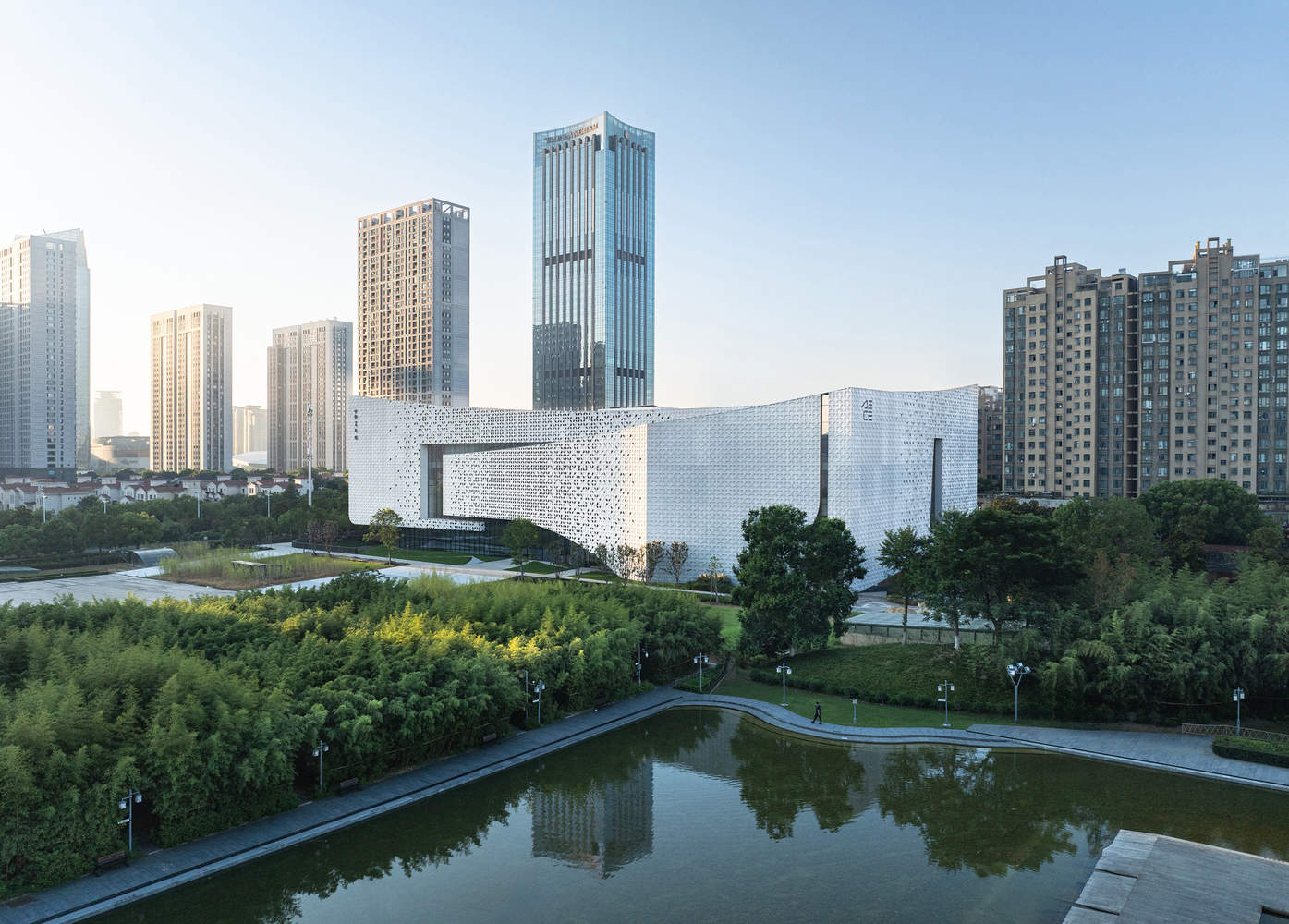
The project is located in the southeast area of the Cultural and Museum Park plot in Anhui Province, forming an axially symmetrical layout with the Anhui Provincial Museum and the Anhui Paleontology Museum. It has 4 above-ground floors and 2 underground floors, with a total construction area of approximately 36,000 square meters.
项目位于安徽省文博园地块东南片区,与安徽省博物馆、安徽古生物博物馆一同形成中轴对称布局。项目地上 4 层地下 2 层,总建设面积约 3.6 万平方米。
© 马元
© 马元
© 马元
3D 打印工作模型
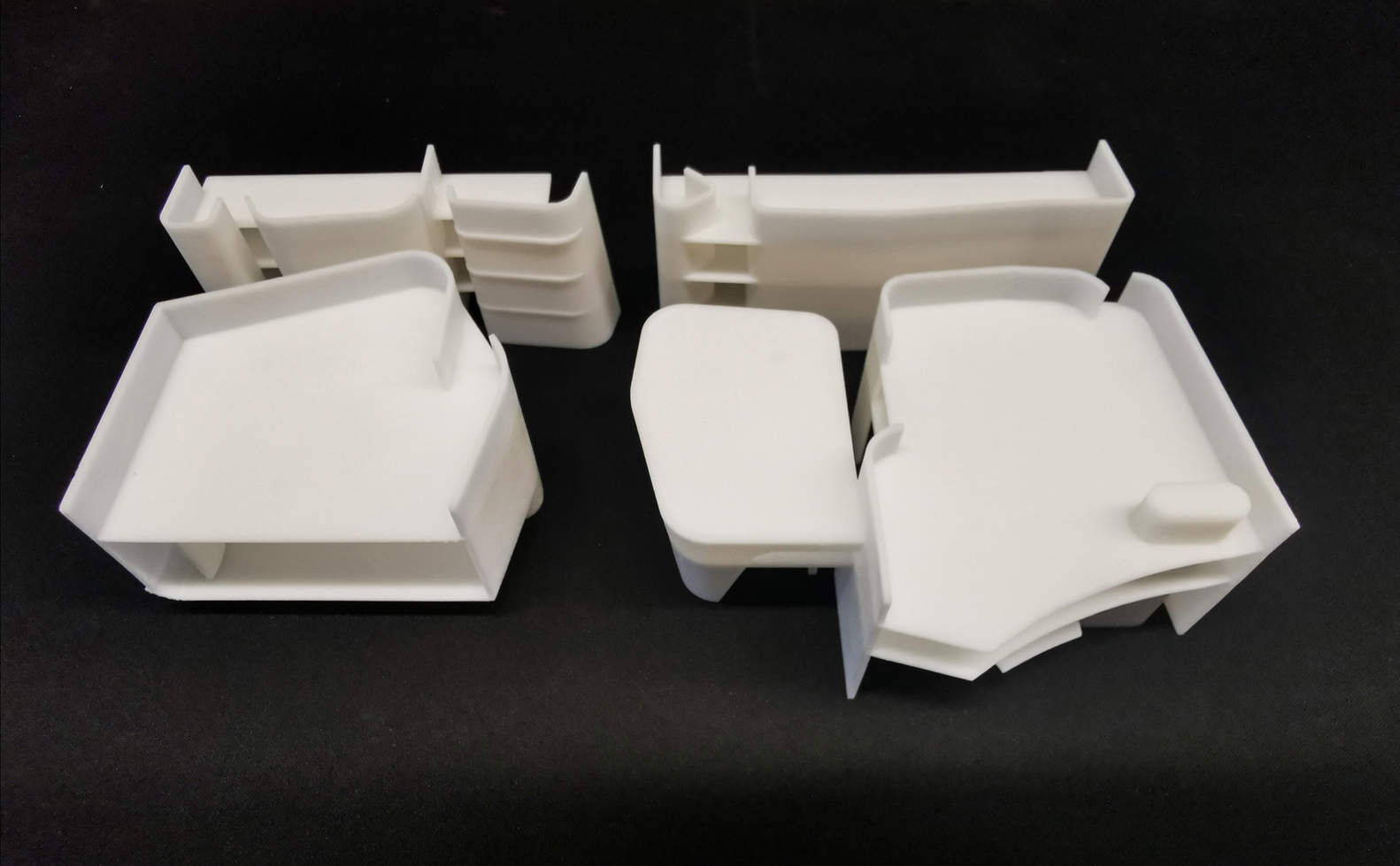
The design inspiration originates from the derivation of the name Hefei. The *Erya·Shi Shui* states: "Rivers that merge and flow from the same source, (are called) Fei." Hefei is named because both the Dongfei River and the Nanfei River originate from this place—"Converging into one source, then dividing into two, hence Hefei." The scheme uses two undulating, wave-like forms overlapping to express the design concept of two waters converging, separating, yet sharing a source.
设计灵感源于合肥地名的由来。《尔雅·释水》中说:“归异出同流,(曰)肥”。合肥正因东淝河与南淝河均发源于此地而得名 —— “合于一源,分而为二,故曰合肥。方案以两个如波澜起伏的形体交叠来表现两水相汇、归异出同的设计理念。既形“美”又神“合”。
© 马元
© 马元
Art is never one-sided. The Hefei Art Museum is an all-around art space and art park. From the moment people step into this realm, they should feel the breath of art. For this reason, we have endowed the architecture with four different characters corresponding to different site attributes: "Dignity (仪), Elegance (雅), Delight (悦), and Interest (趣)."
艺术从不止一面。合肥美术馆是一个全方位的艺术空间和艺术公园,当人们踏入这个领域的那一刻起,就应当感受到艺术的气息。为此我们将建筑根据不同的场地属性赋予了不同的性格 —— “仪雅悦趣”四种界面。
© 马元
© 马元
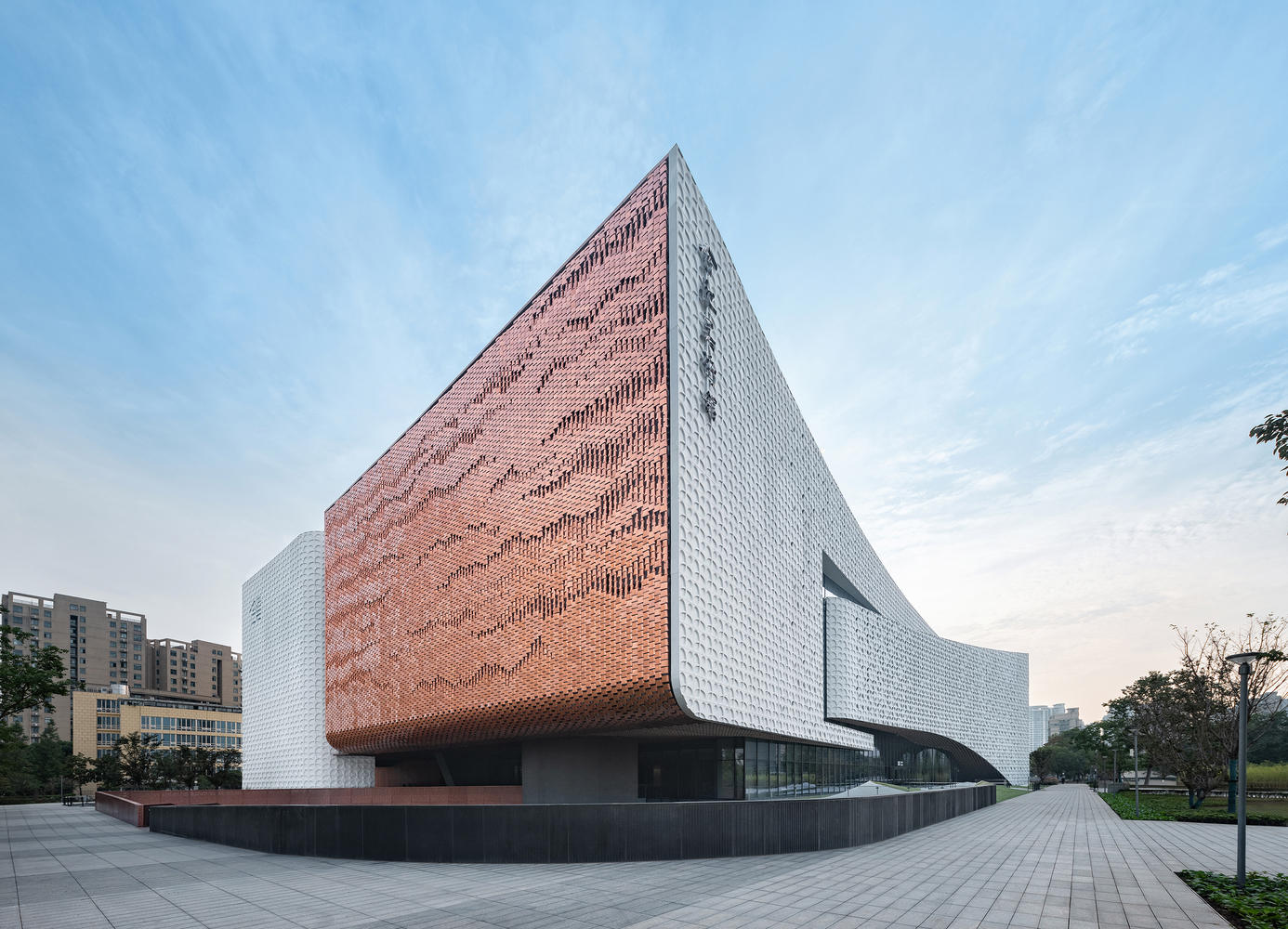
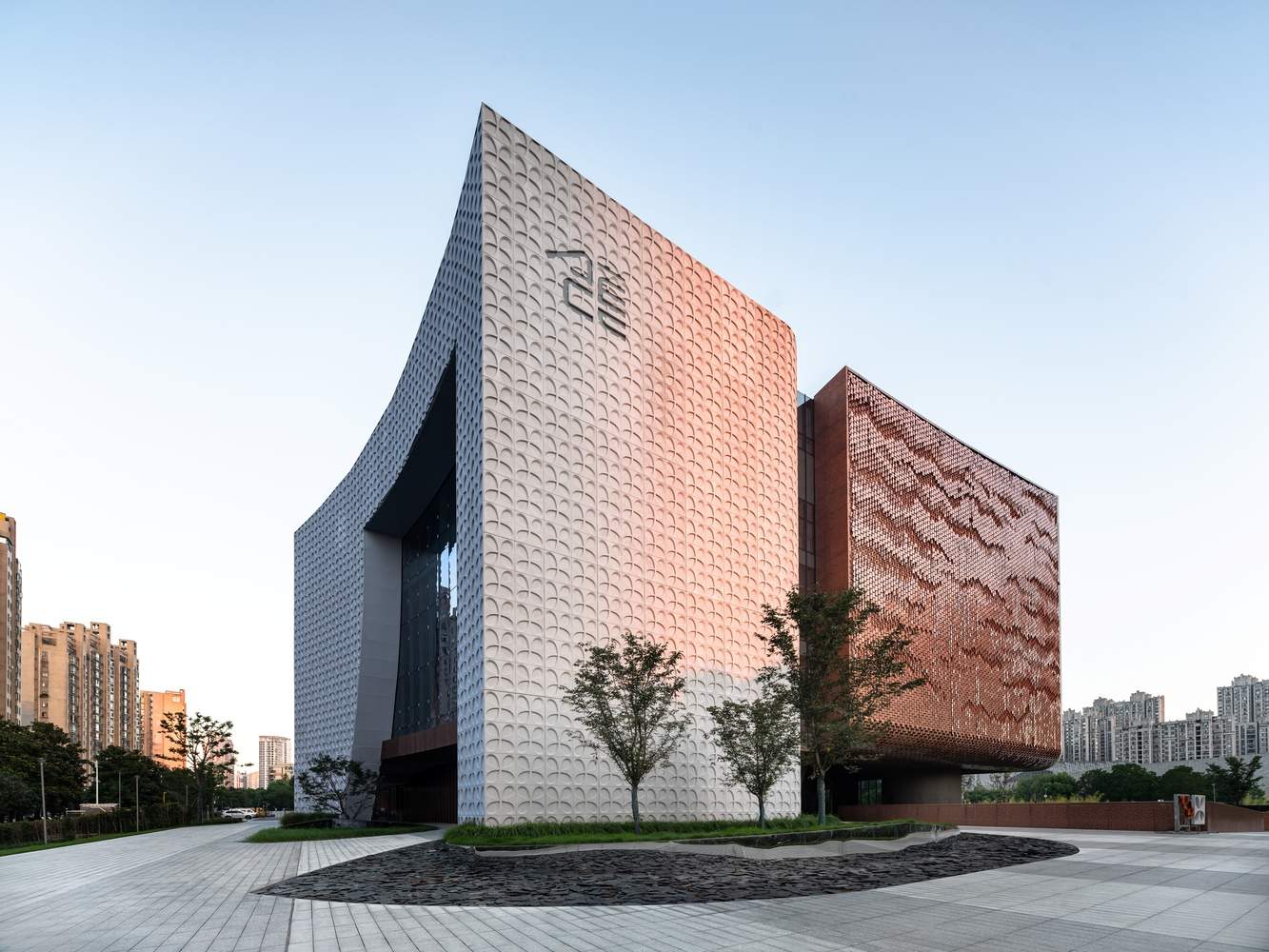
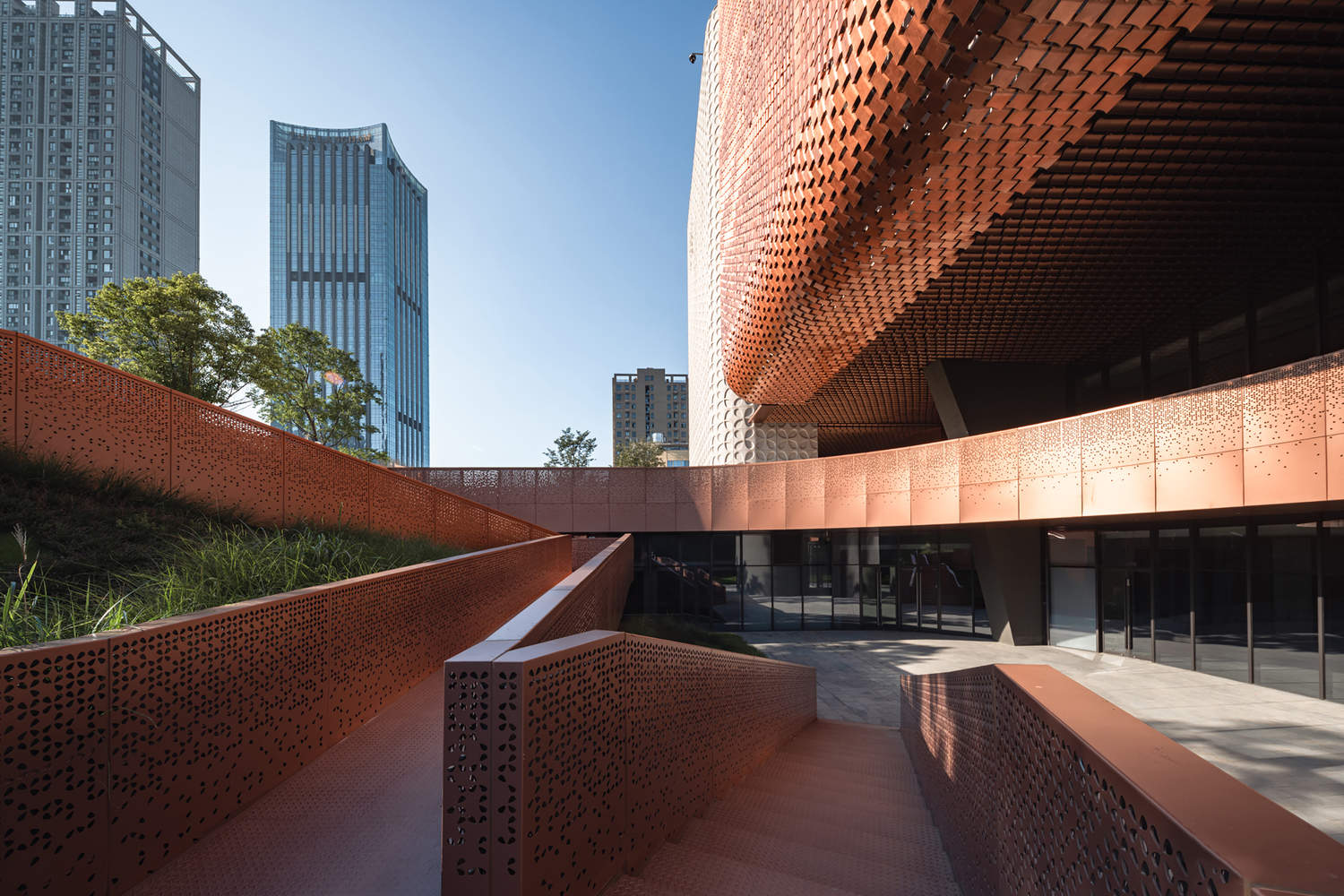
Dignity (仪) — The city image facade, embracing and hiding artistic excellence: Through a flowing, curled form, a copper scroll curtain wall is created on the East facade facing the main city road, depicting an abstract landscape painting—"Golden Ripples of Chaohu Lake." This establishes an excellent window for promoting and showcasing Hefei's traditional artistic skills and achievements.
仪 —— 怀墨藏秀的城市形象面:设计通过一个流动的卷曲形态,以铜画卷幕墙的形式在面向城市主干道的东立面打造出一幅抽象的山水画卷 —— “巢湖金粼”。从而打造一个宣传、展示合肥传统美术技艺和艺术成就的绝佳窗口。
© 马元
分析图
© 马元
Elegance (雅) — The elegant and tranquil park interface: Meandering paths lead to a solemn and elegant entrance, opening the way for a beautiful artistic experience. Facing the park center, we utilize the existing plaza and the dense, serene bamboo grove to create a main entrance interface that is aesthetic, graceful, and winding.
雅 —— 典雅沉静的园区界面,曲径通幽、典雅端庄,开启唯美的艺术体验之路。在面向园区中心的界面,我们利用现状广场和场地上茂密幽雅的竹林,意图打造一个唯美雅致曲径通幽的主入口界面。
© 马元
© 马元
Delight (悦) — The delightful citizens' park: An art park open for strolling 24 hours a day, thoroughly integrating art into people's lives. On the south side of the building, facing the residential area, we aim to create a three-dimensional art park seamlessly connected with citizens' daily lives by utilizing the site and the building's grey spaces, making it a part of their everyday routine.
悦 —— 愉悦人心的市民公园,全天候、24 小时可以闲逛的艺术公园,将艺术彻底融入人们的生活。建筑南侧面向住区,我们希望在南侧结合场地和建筑灰空间打造一处与市民生活无缝连接的立体艺术公园,成为市民日常生活的一部分。
© 马元
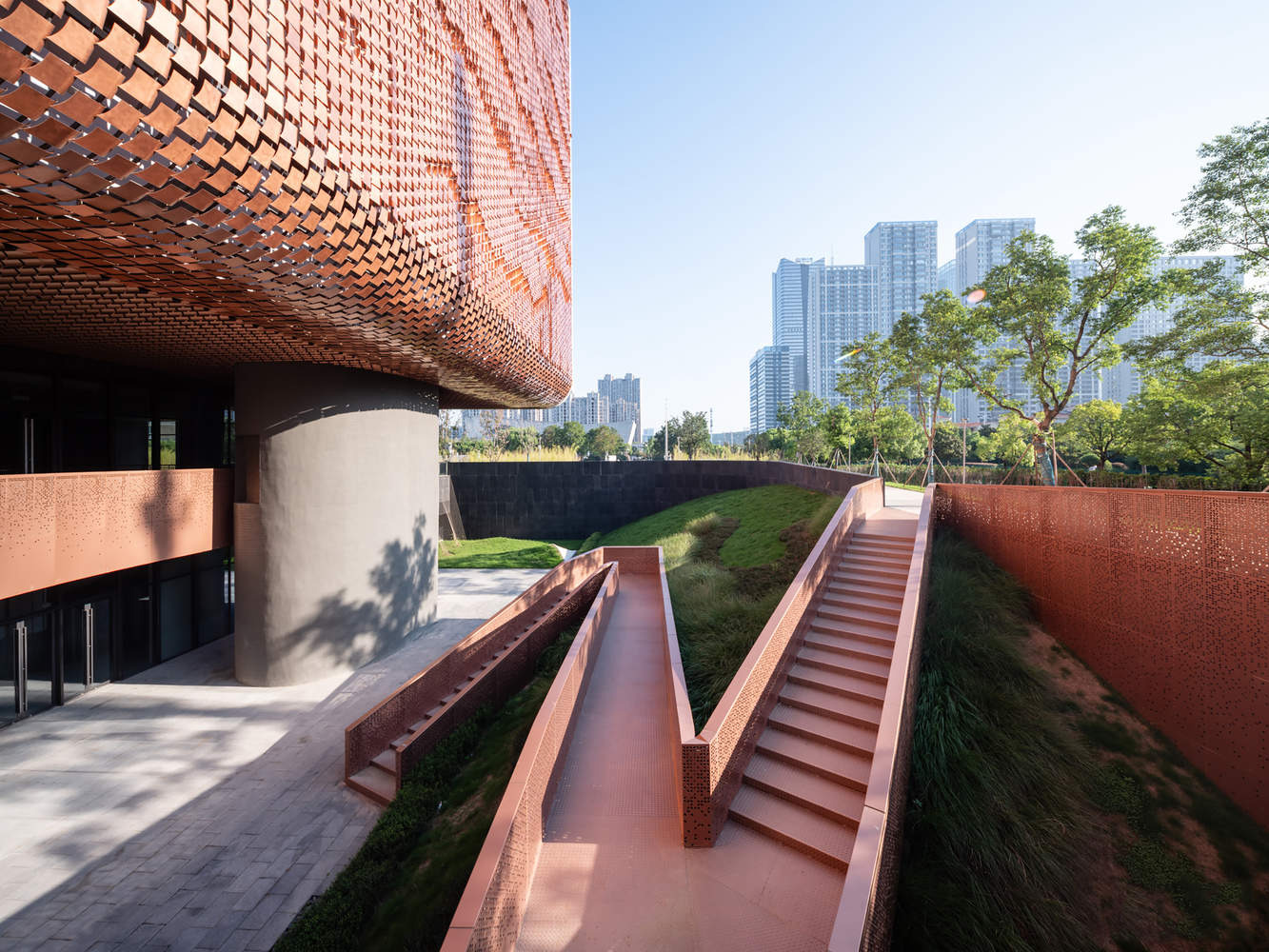
Interest (趣) — The engaging sunken courtyard: A hidden realm where the spirit and art can settle together. We hope to open up the urban corner to form an urban plaza. This area, featuring vast open spaces, greenery, and art sculptures, will serve as a platform and window for the museum to dialogue with the city. A sunken plaza is set on the east side of the building to form a layered entrance space, attracting vital human flow. The design of the building's skin references elements and techniques from traditional culture and art crafts, translating the traditional context through modern means to embody the grand momentum of contemporary Hefei shining alongside ancient Luzhou.
趣 —— 趣味盎然的下沉庭院。别有洞天, 让心灵和艺术一同沉淀。我们希望能打开城市转角形成城市广场。这里有大片开阔的广场、绿化、艺术雕塑,将是美术馆与城市对话的平台和窗口。建筑东侧设置下沉广场形成层次丰富的入口空间,塑造活力吸引人流。建筑表皮的设计借鉴了传统文化和美术工艺中的元素与技法,通过现代手段将传统文脉转译,体现出当代合肥与古代庐州古今同辉的磅礴之势。
© 马元
© 马元
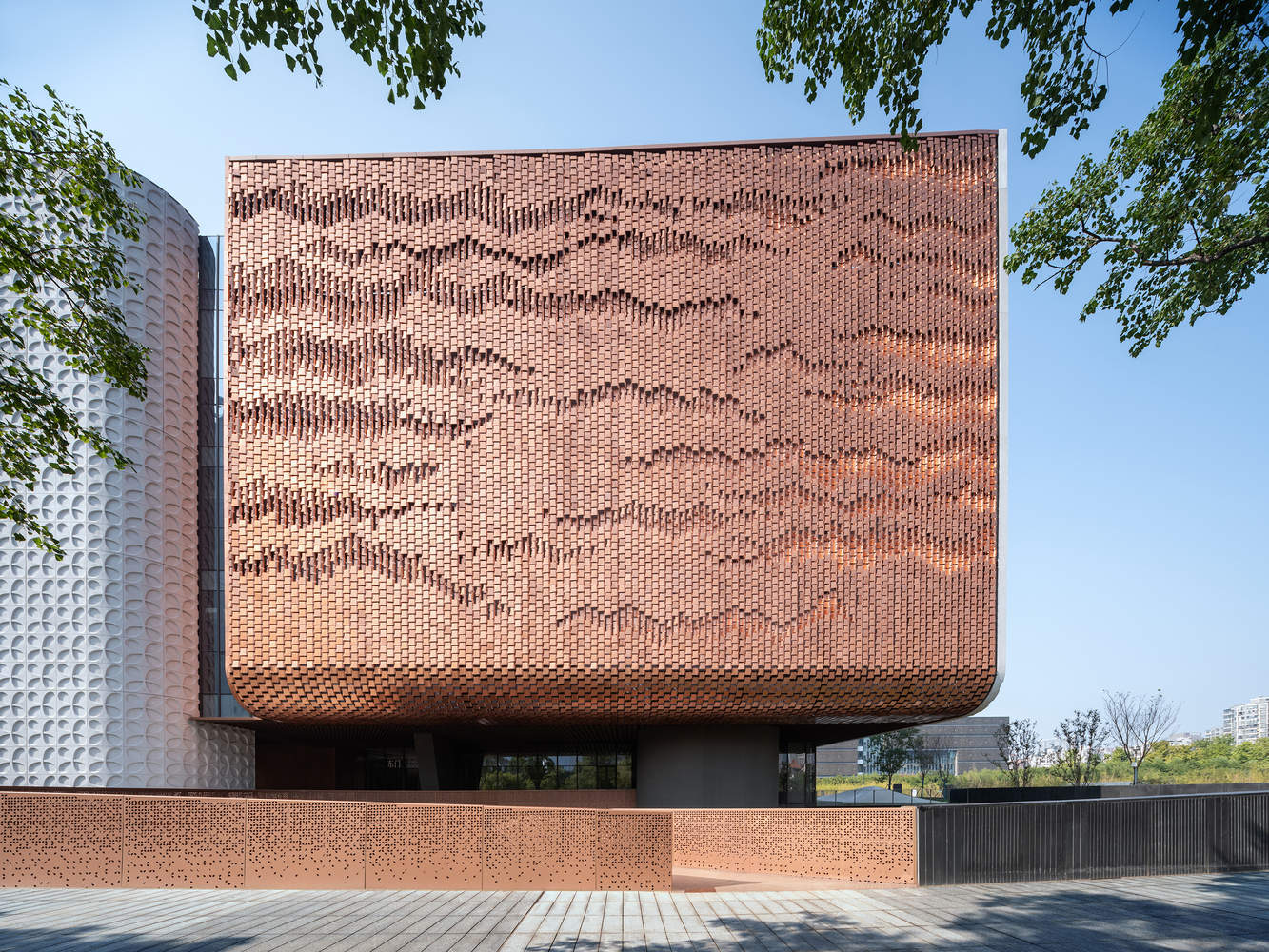
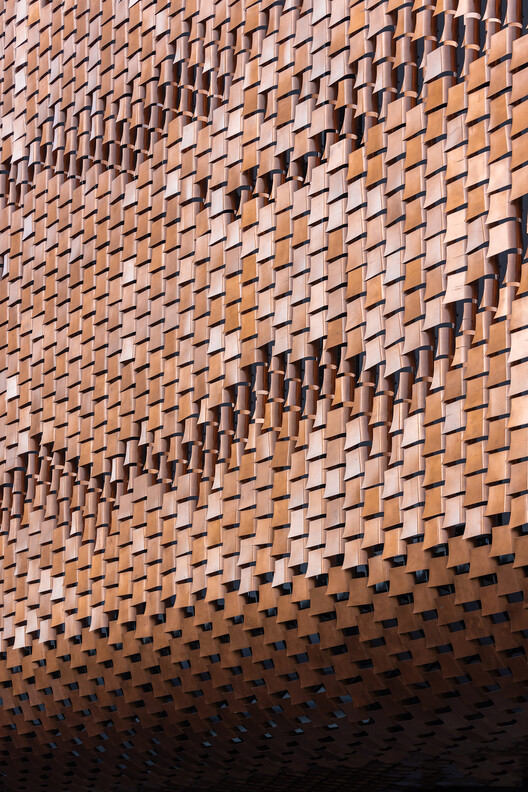
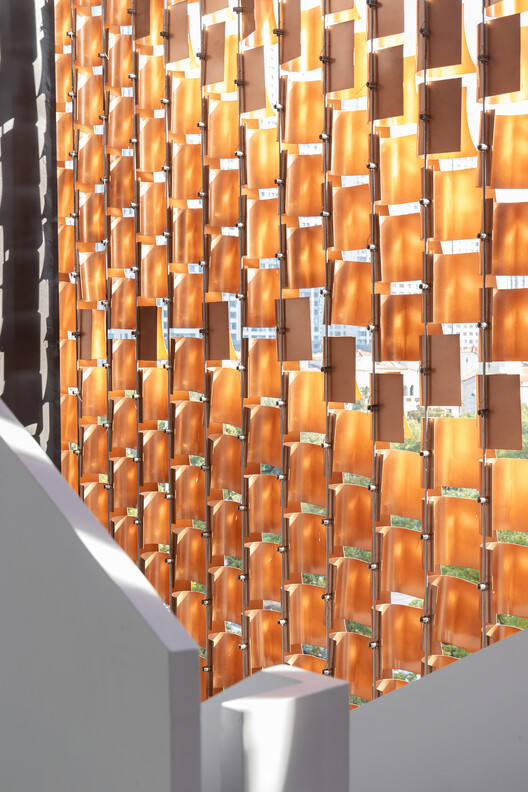
The City's Window to Art — Inheritance of Technique, Landscape Scroll: On the East facade facing the city, a landscape scroll reflecting the characteristics of Hefei's cultural context is created. The design team draws inspiration from the "Wushan Iron Engraving" technique in Luzhou culture, using Shi Tao's classic painting *View of Chaohu Lake* from the late Ming and early Qing dynasties as a blueprint. Through the clever combination of three scroll structures, the turbulent lake surface in the painting is translated into abstract patterns, thus constructing a giant copper scroll of "Golden Ripples of Chaohu Lake" on the East facade facing the main road. This both distinctly stamps Hefei's identity and showcases the innovative vitality of modern architectural art.
城市的艺术之窗 —— 技法传承、山水画卷:在面向城市的东立面上,打造有一幅展现合肥文脉特色的山水画卷。设计团队借鉴庐州文化中“吴山铁字”的技法特点,以明末清初著名画家石涛经典画作《巢湖图》为蓝本,通过三种画卷结构的巧妙组合将画中湖面波涛转译成抽象图案,从而在面向主干道的东立面构建了一幅巨幅“巢湖金粼”铜画卷,既鲜明烙印了合肥标识,又彰显了现代建筑艺术的创新活力。
© 马元
© 马元
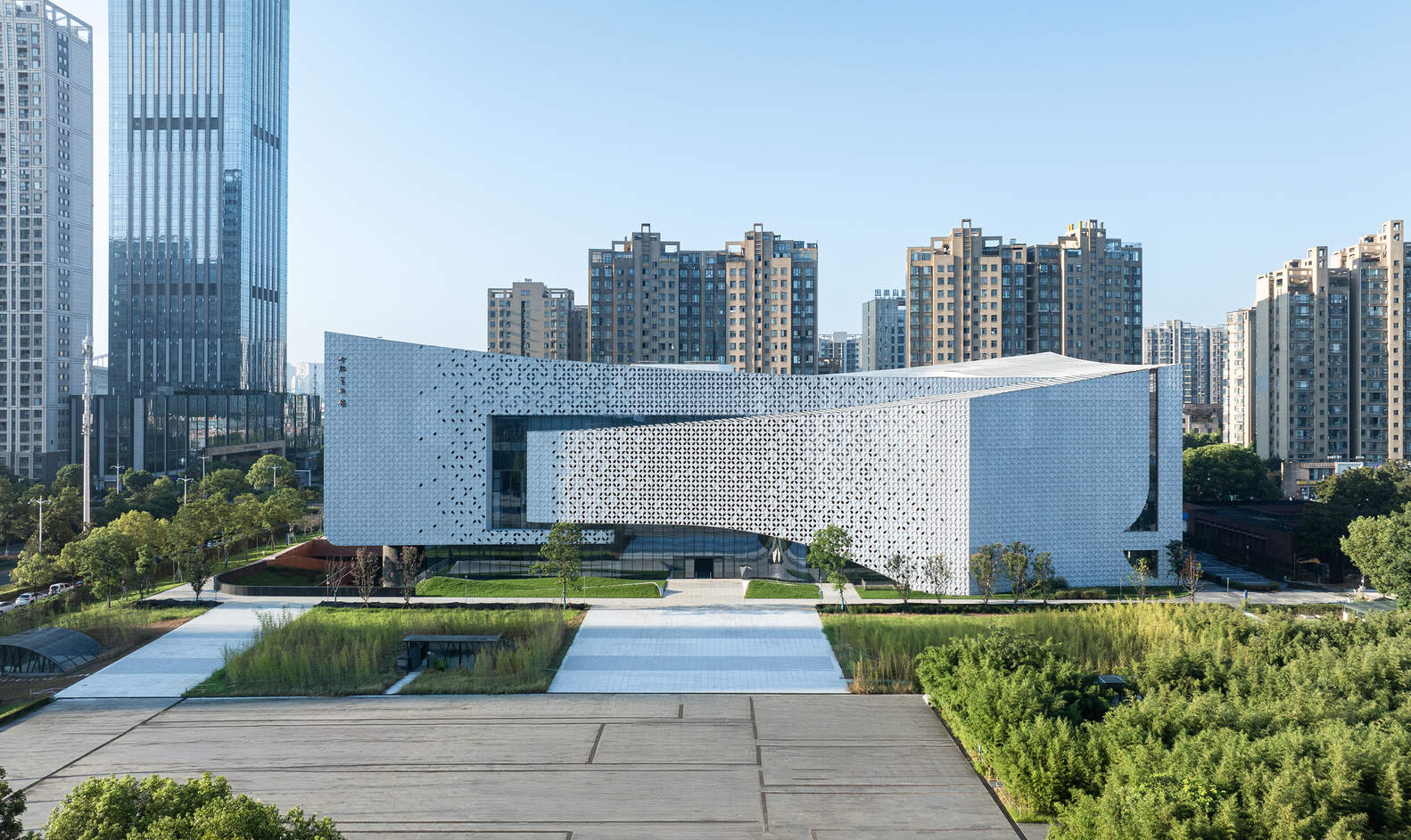
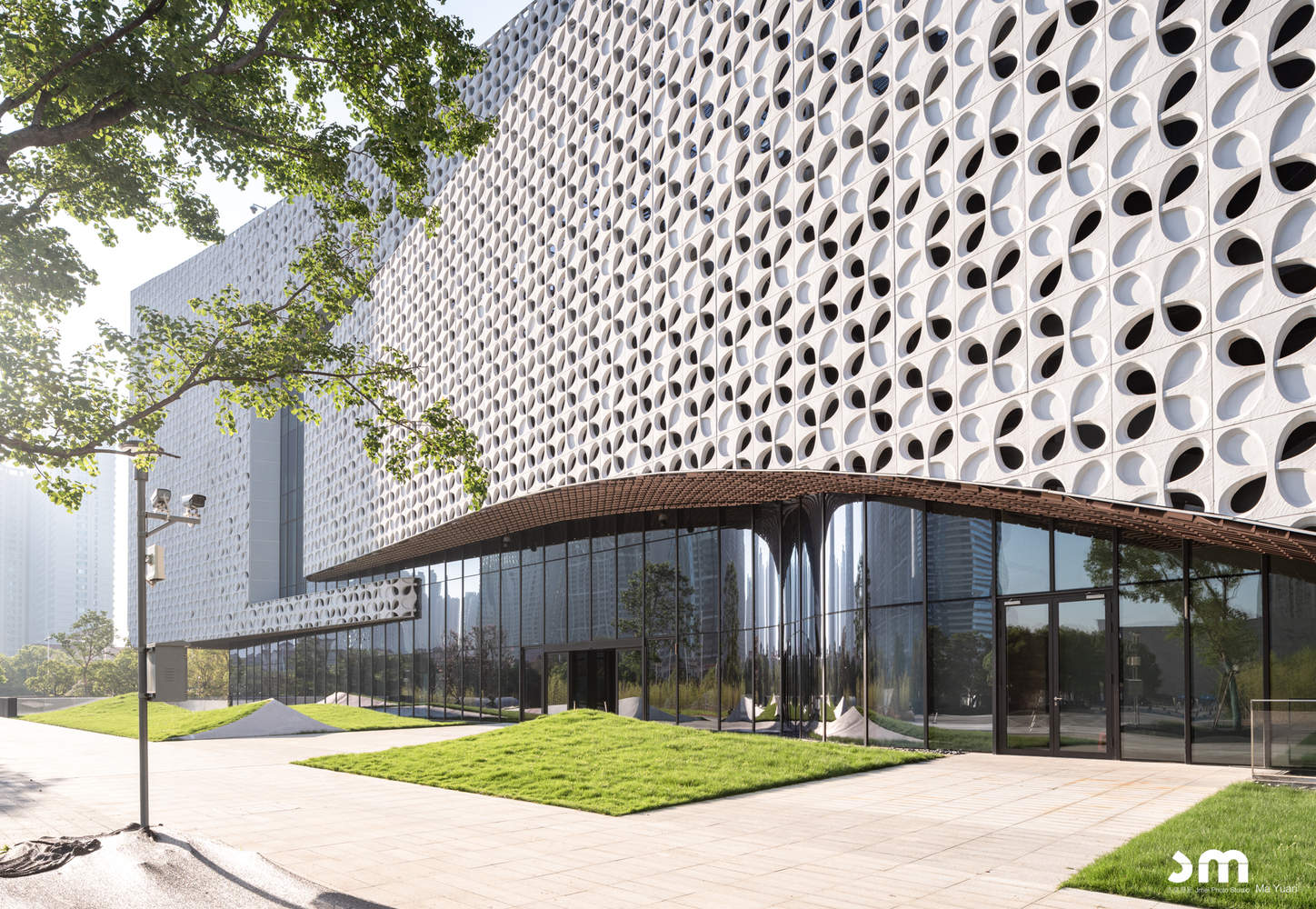
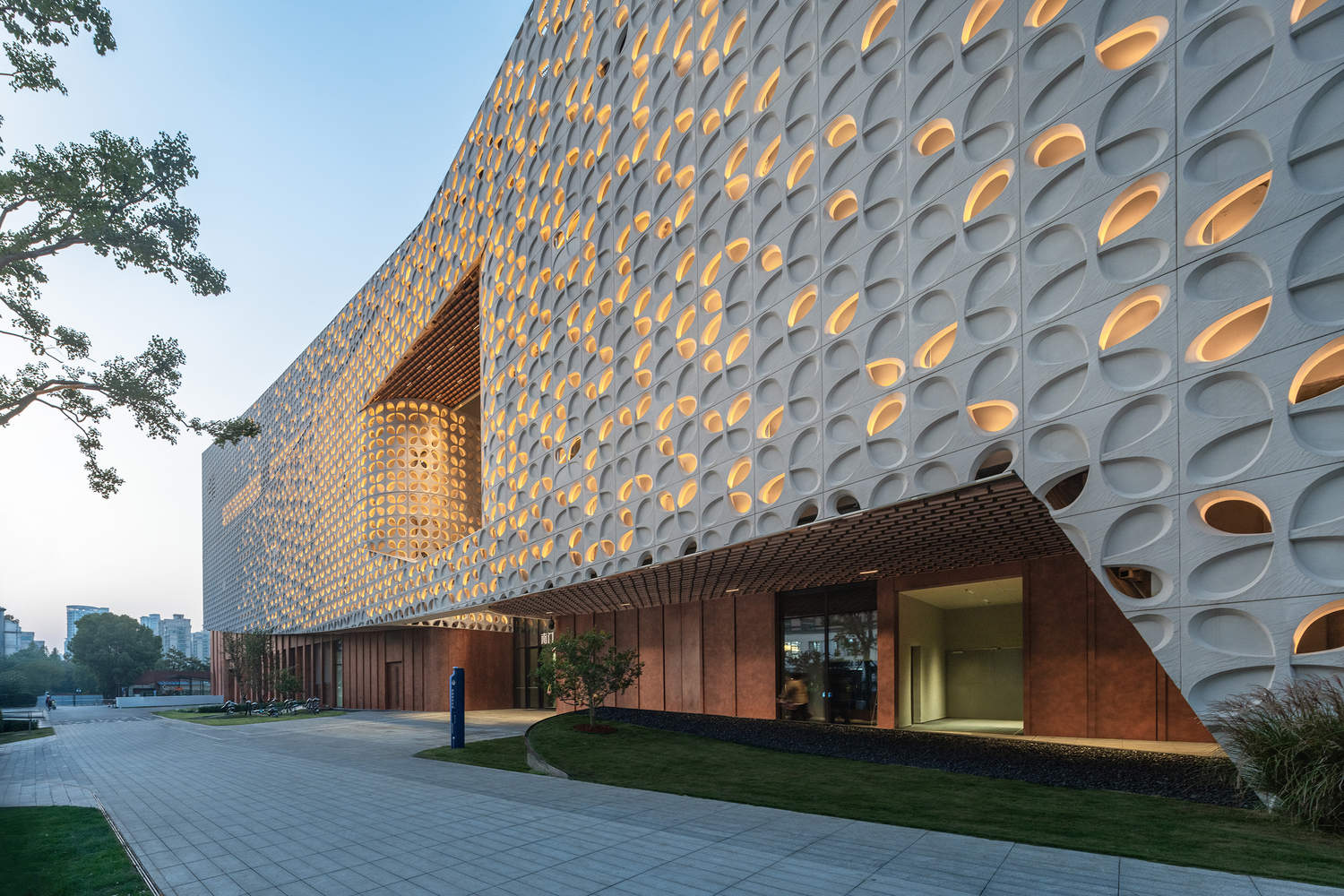
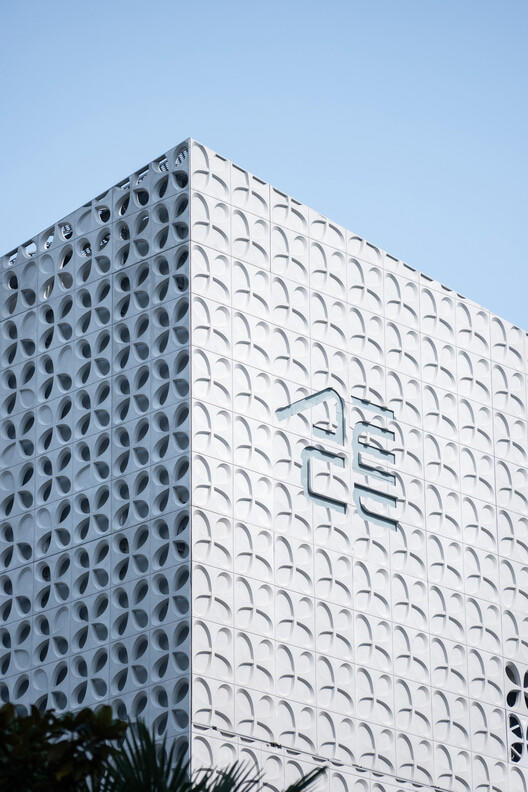
The City's Cultural Carrier — Inheritance of Craftsmanship, City Imprint: Inspired by the Osmanthus, the city flower of Hefei, the scheme abstractly incorporates the essence of techniques like Wushan Iron Engraving and painted gourds to create a set of perforated unit modules for the building envelope. The density of the perforations is set through parameterization, forming a pixelated skin texture. This variation in density simultaneously matches the interior daylighting requirements.
城市的文化载体 —— 技艺传承、城市印记:方案以合肥市花桂花为灵感,以抽象的手法借鉴吴山铁字、烙画葫芦的技法内涵,制作出一套穿孔的建筑表皮的单元模块。通过参数化设定穿孔的疏密度从而形成一种像素化的表皮肌理。它的疏密变化同时又与建筑内部的采光需求相匹配。
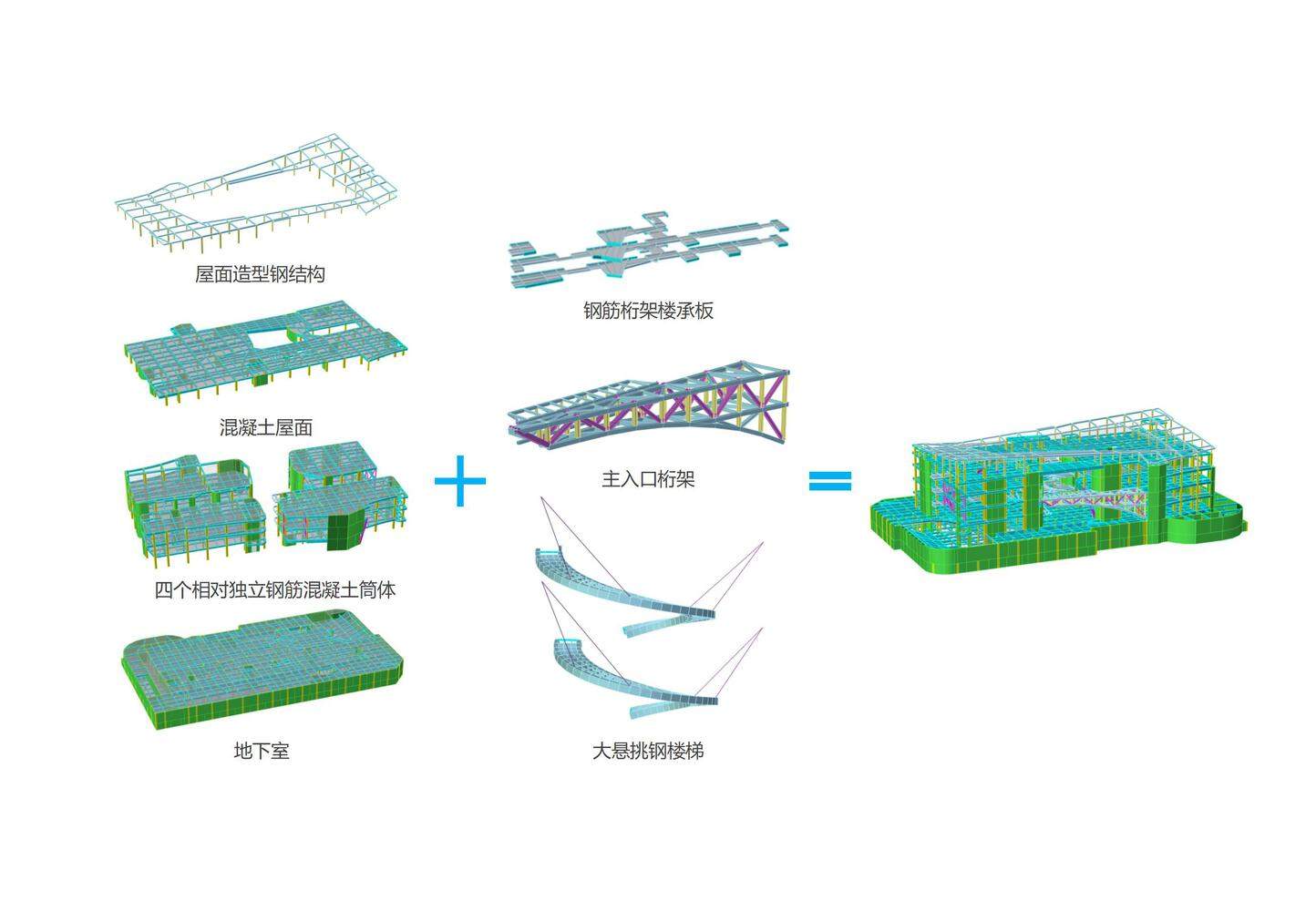
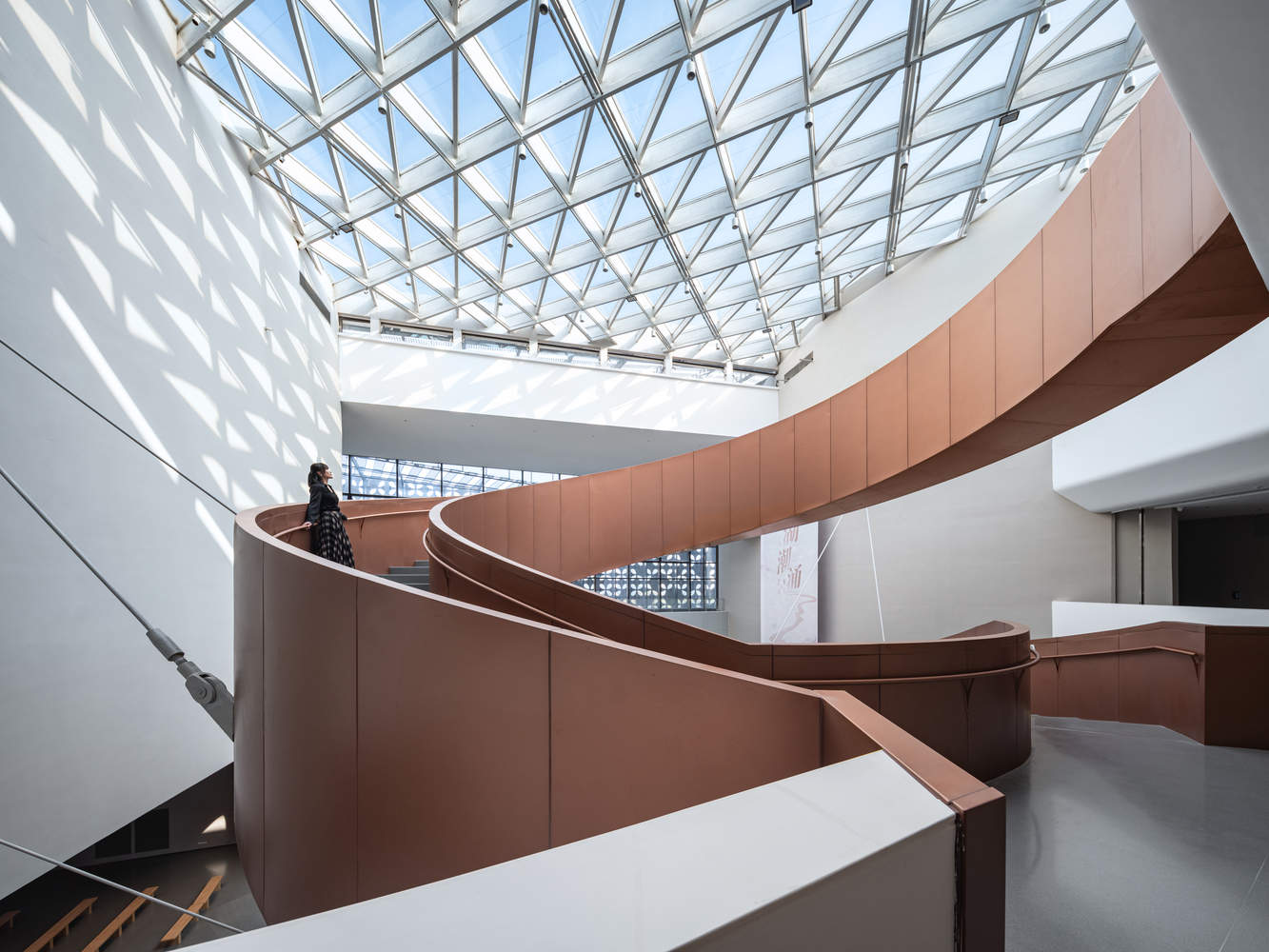
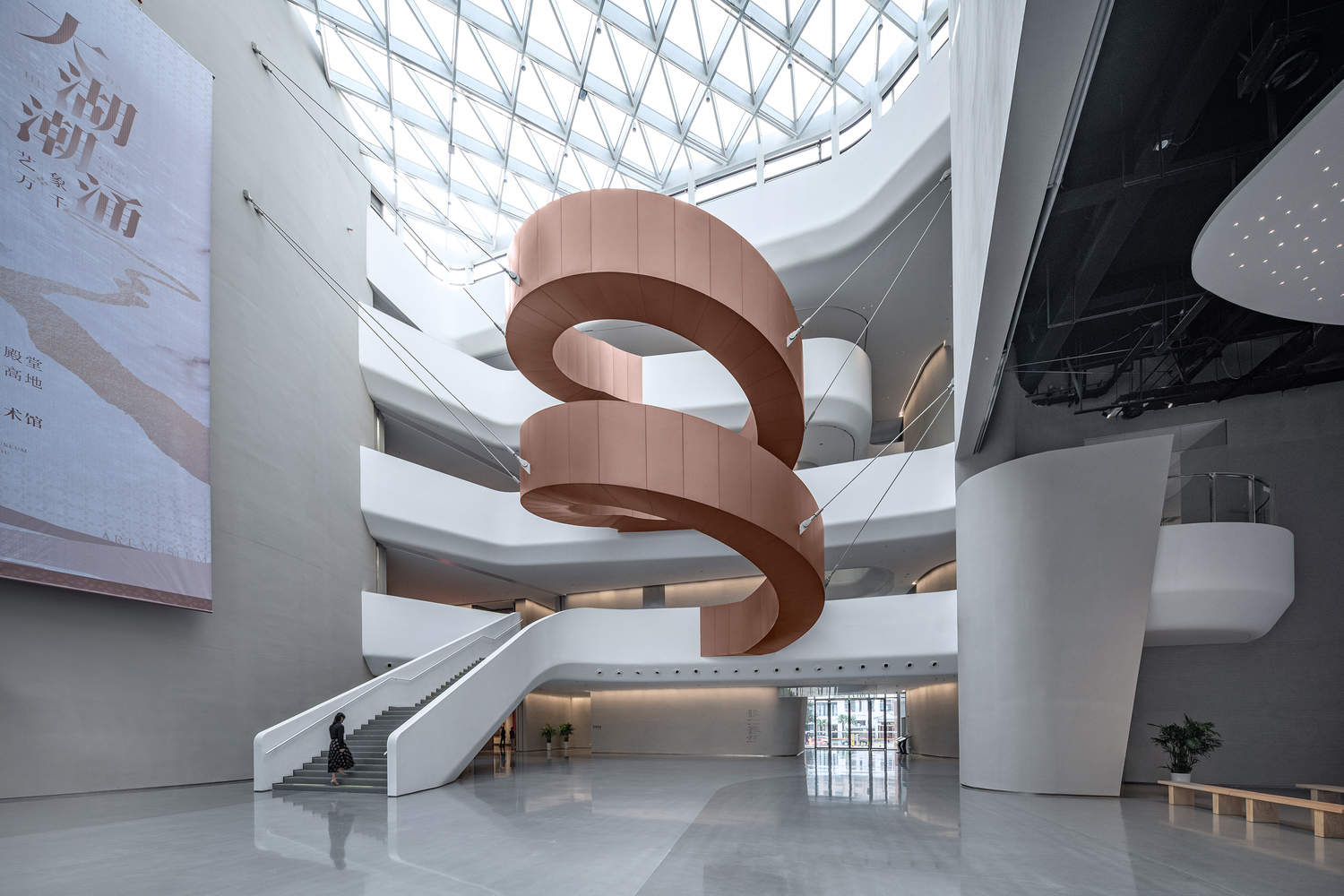
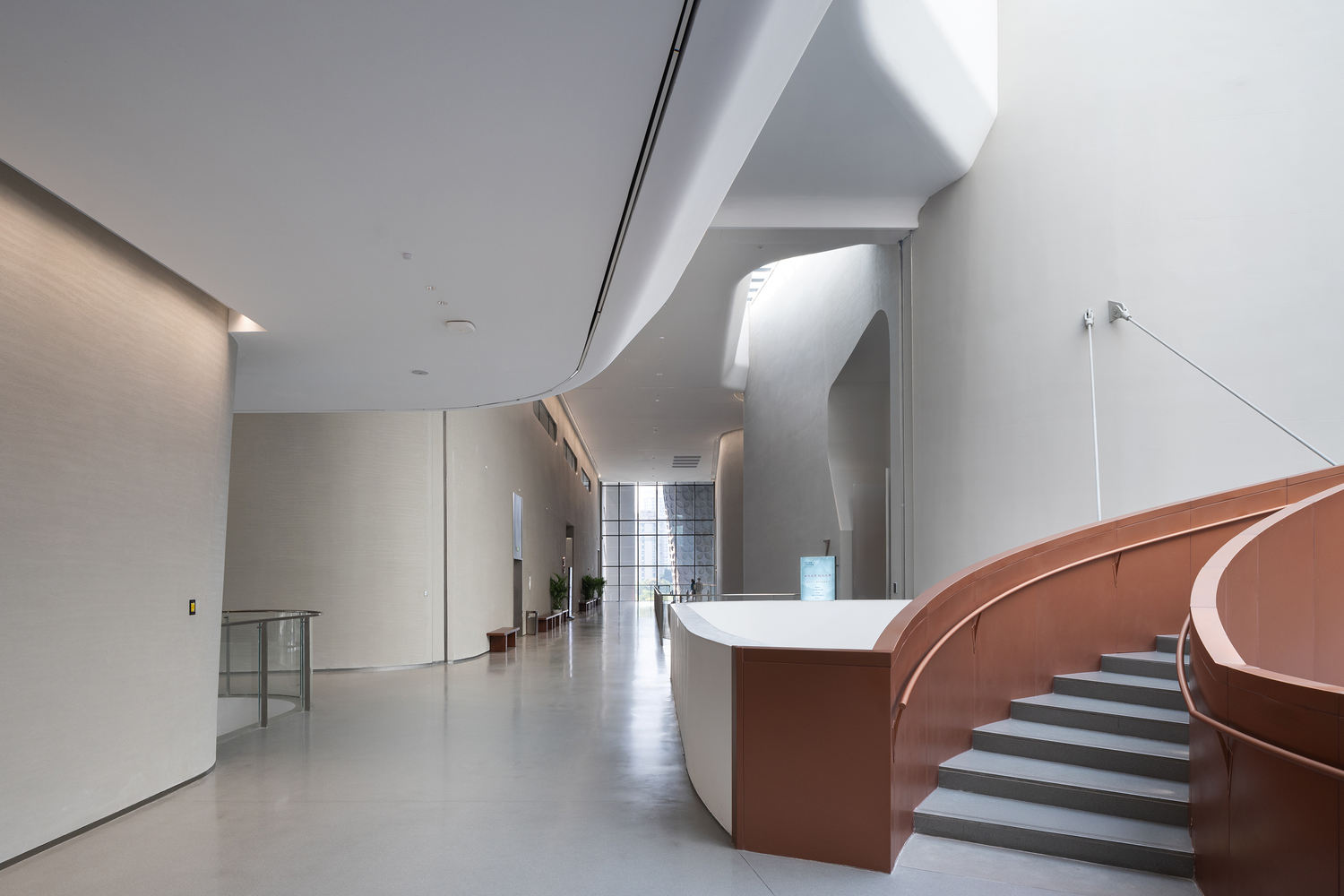
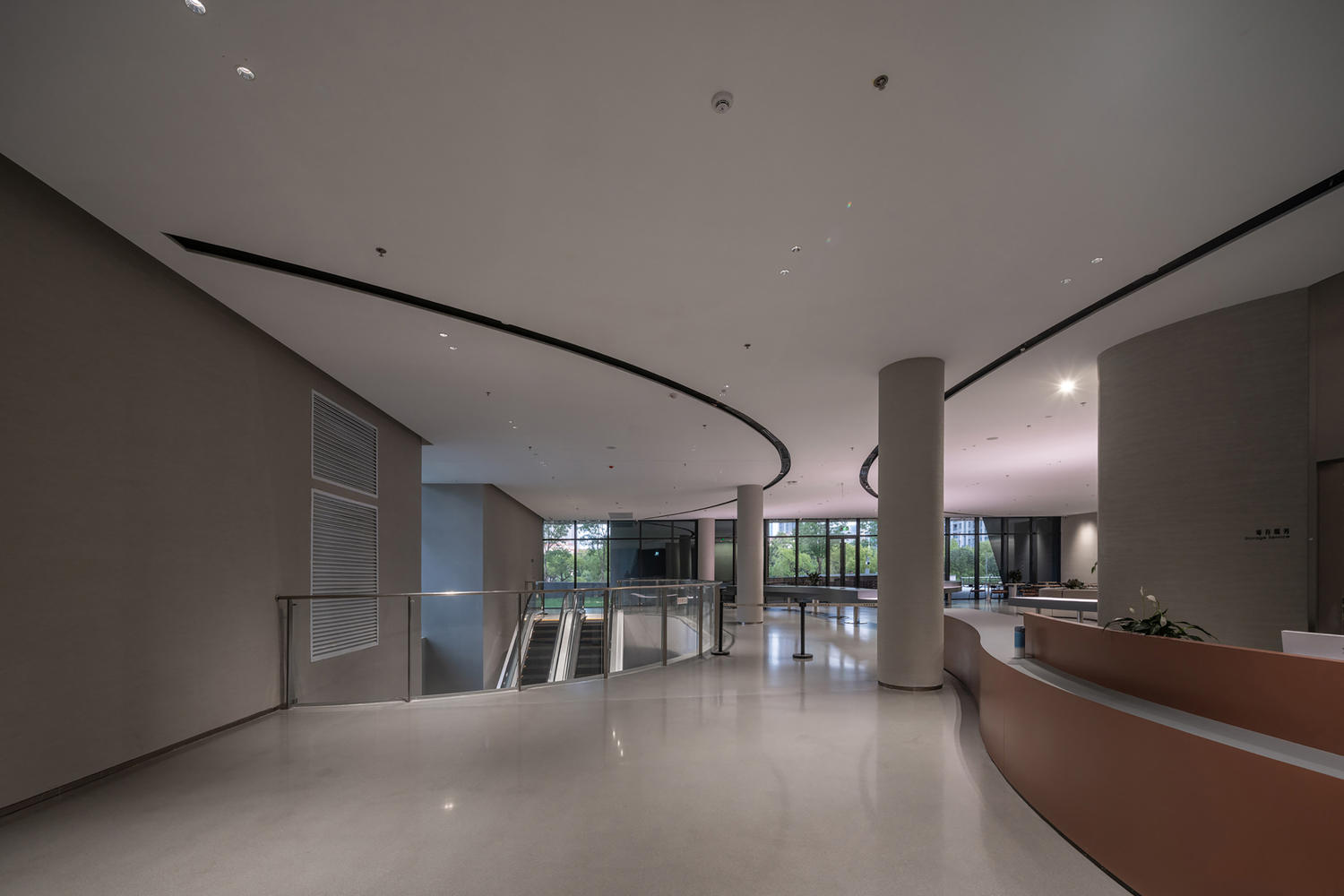
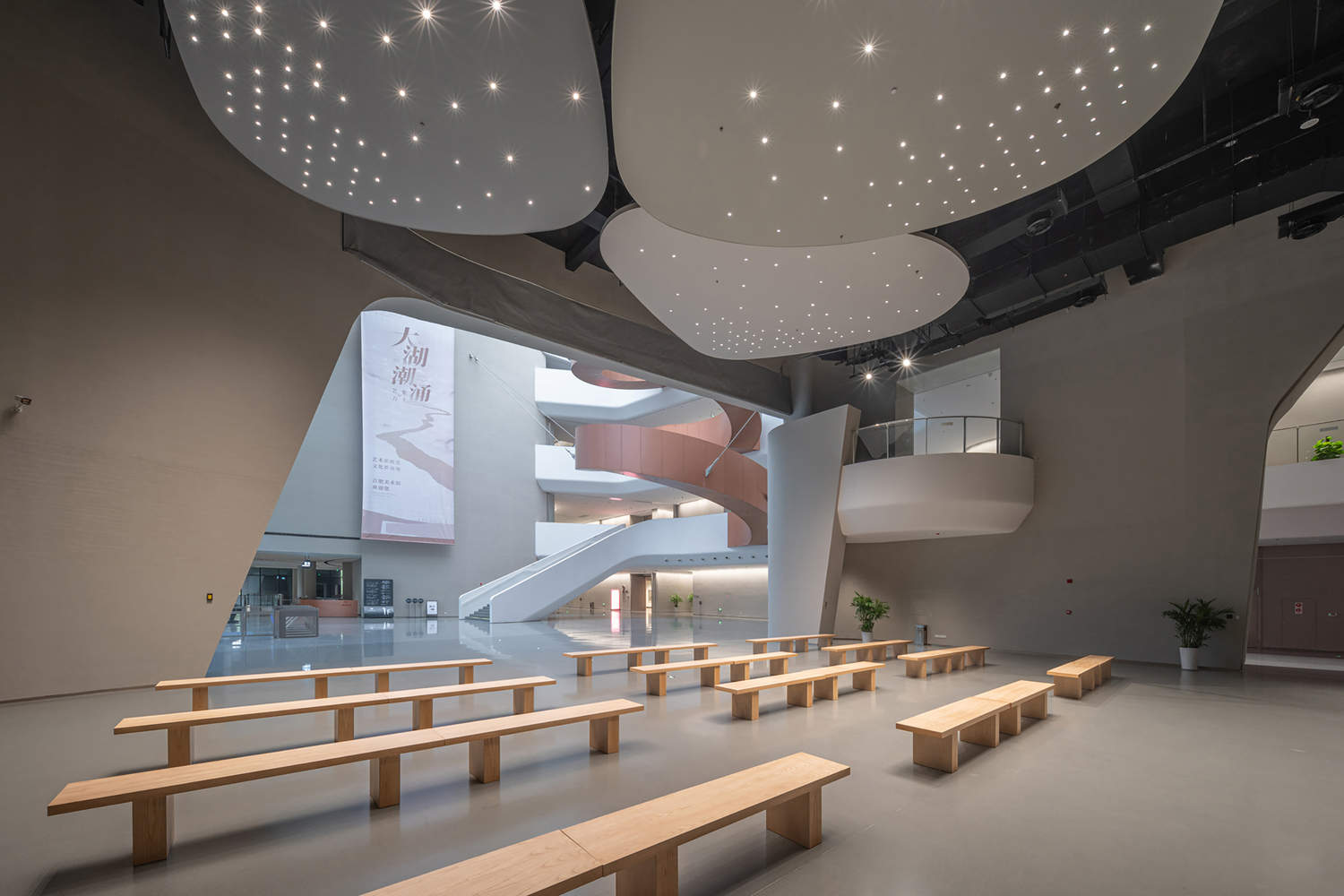
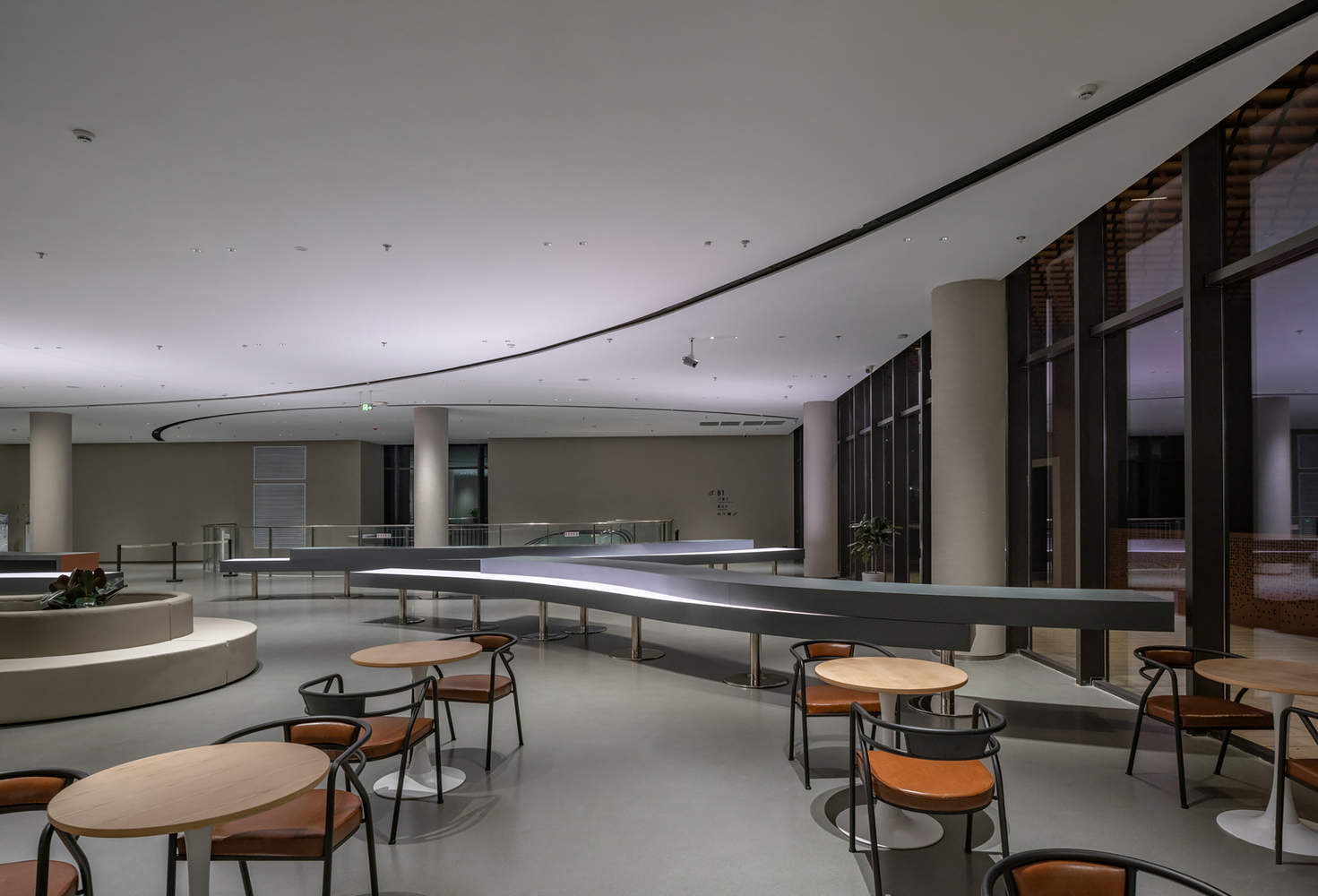
The museum's interior space continues the theme of "Flowing" and "Converging" based on the concept of sharing a source while diverging. Four huge curled "cylinders" serve as structural cores while simultaneously shaping the fluid public spaces—the Hall of Convergence and the Canyon Corridor. Coupled with the bridge truss at the main entrance and the large-sized (radius approx. 6.12 m) suspended revolving staircase, two spatial-structural highlights, they form a "complex multi-story structural system composed of various structural components."
美术馆的内部空间延续归异出同的“流动”与“交汇”的主题,4 个巨大的卷曲“筒体”作为结构核心的同时,又塑造了流动的公共空间 —— 交汇之厅、峡谷游廊。再结合主入口桥式桁架、大尺寸(半径约 6.12 m)悬挂旋转楼梯两个空间-结构亮点,进而形成了“多种类结构构件组合的复杂多层结构体系”。
© 马元
© 马元
© 马元
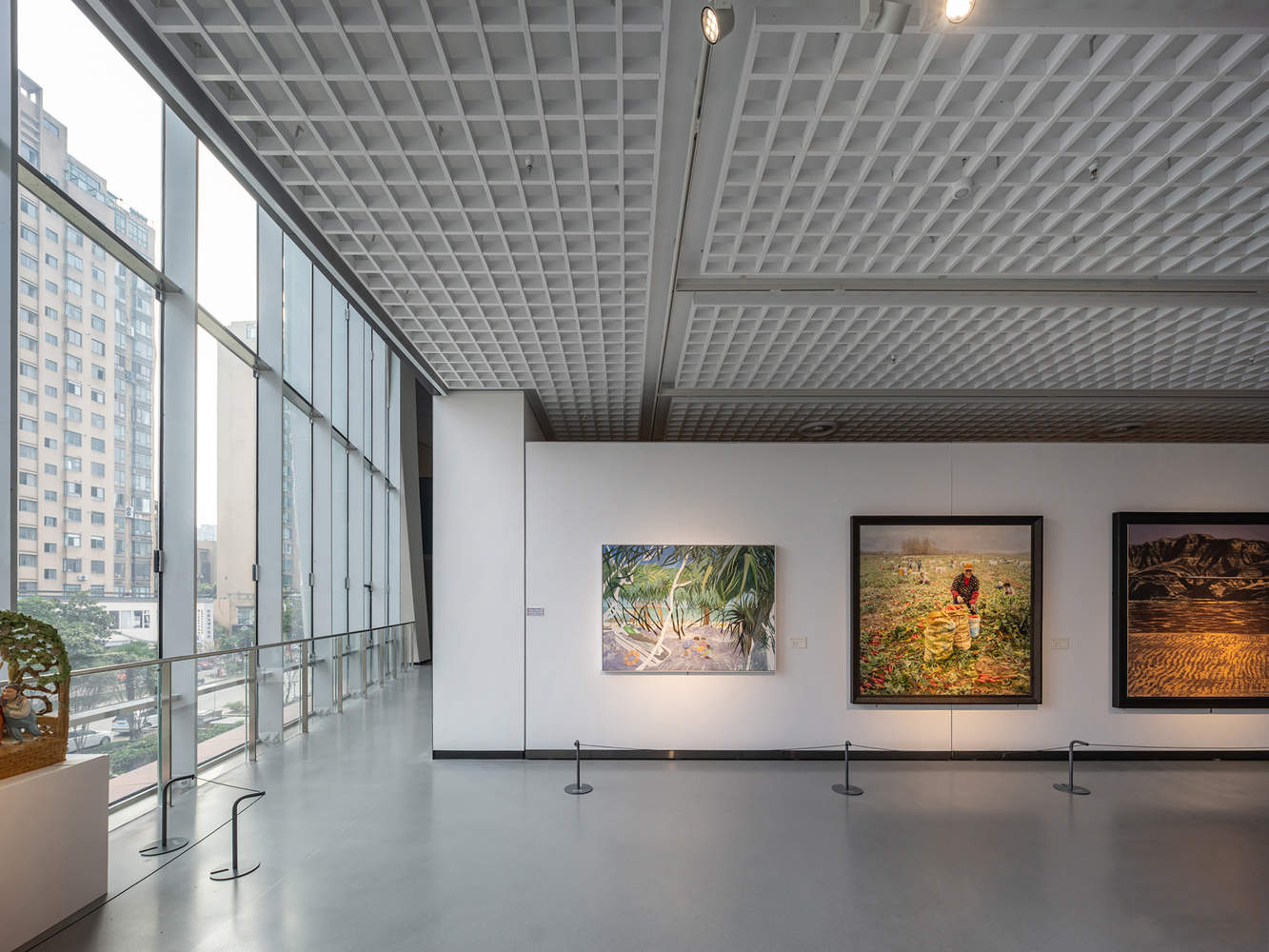
Guided by the city's new positioning, aiming to enhance the city's overall carrying capacity and public service level, taking the inheritance and promotion of excellent traditional Chinese culture as the main line, and focusing on promoting international cultural exchange and integration, and facilitating public cultural dissemination and interaction, the Hefei Art Museum will become a new cultural star of the new era, integrating art display and exchange, cultural creativity, and cultural leisure, where elegant culture and popular culture shine and merge deeply, characterized by openness, mass appeal, internationalization, and modernization!
合肥美术馆,以城市发展新定位为指引,以提升城市综合承载能力和公共服务水平为理想,以传承与弘扬中华优秀传统文化为主线,以促进国际文化交流融合、推动社会大众文化传播互动为重点,将成为集艺术展示交流、文化创意、文化休闲为一体,高雅文化与大众文化竞相辉映、深度融合的开放型、大众化、国际化、现代化的新时代文化新星!