生态优先与低姿态融入:该项目最精髓之处在于其对基地生态本底的深度尊重与巧妙整合。设计师通过主动避让基地内原有的大树和竹林,将建筑体量“化大为小”,主要功能置于地下,地面仅保留约三分之一的尺度,实现了“屋在竹中”的理想共生状态。建筑高度严格控制在15米以内,确保博物馆能低伏、平和地隐匿于林盘的天际线中,避免对原有田园视野的破坏,这体现了对地域文脉和自然环境高度敏感的现代设计策略。
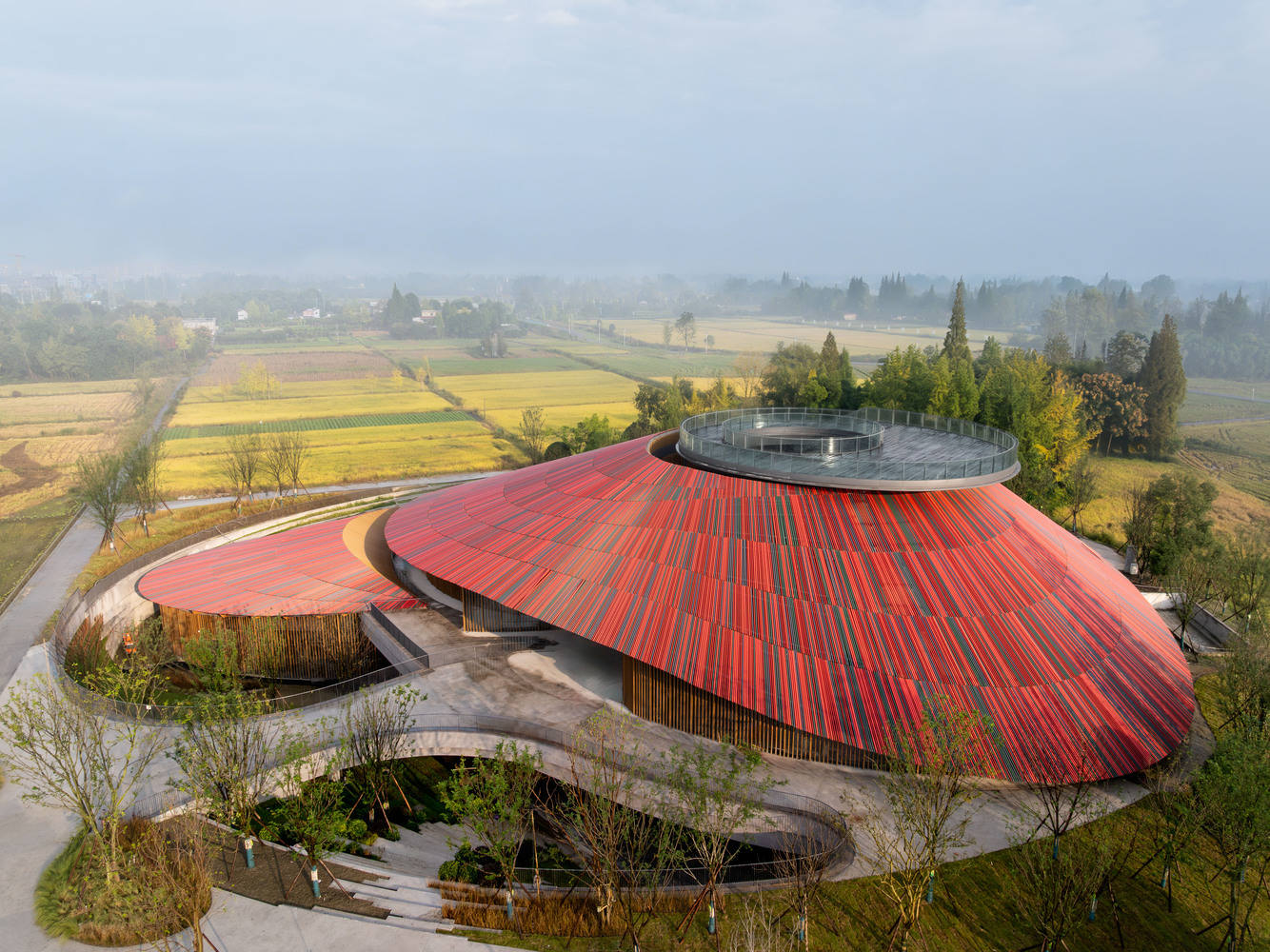
传统意象的当代精妙转译:建筑通过对川西坡屋顶的当代化表达,形成了强烈的在地识别性。三片交错、依循地形起伏的屋顶形态,轻盈地呼应了传统民居的自由造型。更具创新性的是,屋面采用了以“彩椒”为灵感的铝合金圆管系统,随机分布的四种色调(红、深红、墨绿、深灰)不仅模仿了豆瓣和辣椒的自然色彩演变,更在建构层面与内部钢环梁结构精准耦合,使表皮和结构相互强化,实现了传统意象与现代技术、材料的完美融合。
院落精神的空间再生:项目成功地将川西林盘中“院落”这一核心生活场景进行了空间上的再生。中心开放式院落作为人流的组织核心,打破了水平限制,创造出强烈的向上延伸感,并巧妙利用弧形楼梯和格栅,引入斑驳光影,实现了“借景自然、虚实相生”的传统意境。同时,朝南下挖的月牙形下沉庭院,不仅为地下空间引入自然光,也通过绿阶和水洗石的运用,将博物馆的内部体验无缝连接到周边的农田景观中,重现了林盘生活的社区交往氛围。
© 404NFSTUDIO
© 404NFSTUDIO
The flavor of Sichuan cuisine is encapsulated in the four words: "numbing, spicy, fresh, and fragrant." The soul of Sichuan cuisine lies in a fermented bean paste flavor passed down for three hundred years: Doubanjiang. It germinated in Pidu District, northwest of Chengdu—a place situated in the core irrigation area of Dujiangyan, the fertile land of Bashu farming civilization, and a model of the Linpan (wooded homestead) landscape in Western Sichuan. Amidst the fields and forests nurtured by this land, the Doubanjiang Museum quietly integrates, taking the form of a modern pitched roof and drawing inspiration from courtyard spaces, interpreting the essence of co-existence between architecture and Linpan.
川菜之味,尽在“麻辣鲜香”四字。而川菜之魂,系于一味传承三百年的酱香:豆瓣。它孕育于成都西北部的郫都区 —— 这里地处都江堰核心灌溉区,是天府农耕文明的沃土、川西林盘场景的典范。在这片土地孕育的农田林木之中,豆瓣博物馆悄然融入,以现代坡顶为形,取意院落空间,诠释着建筑与林盘共生的本质。
© 404NFSTUDIO
© 404NFSTUDIO
Architectural Volume Control Integrated into the Linpan Landscape
Ande Town, where the site is located, is part of the精华 irrigation area of Dujiangyan. Traditional farming culture and modern sauce factories blend here, seemingly echoing the texture spontaneously generated among the Western Sichuan Linpans. Surrounded by wood and bamboo, with farmhouses scattered among the fields, this is the ecological bedrock—protecting the cultural and natural ecology of this site was the starting point throughout the project.
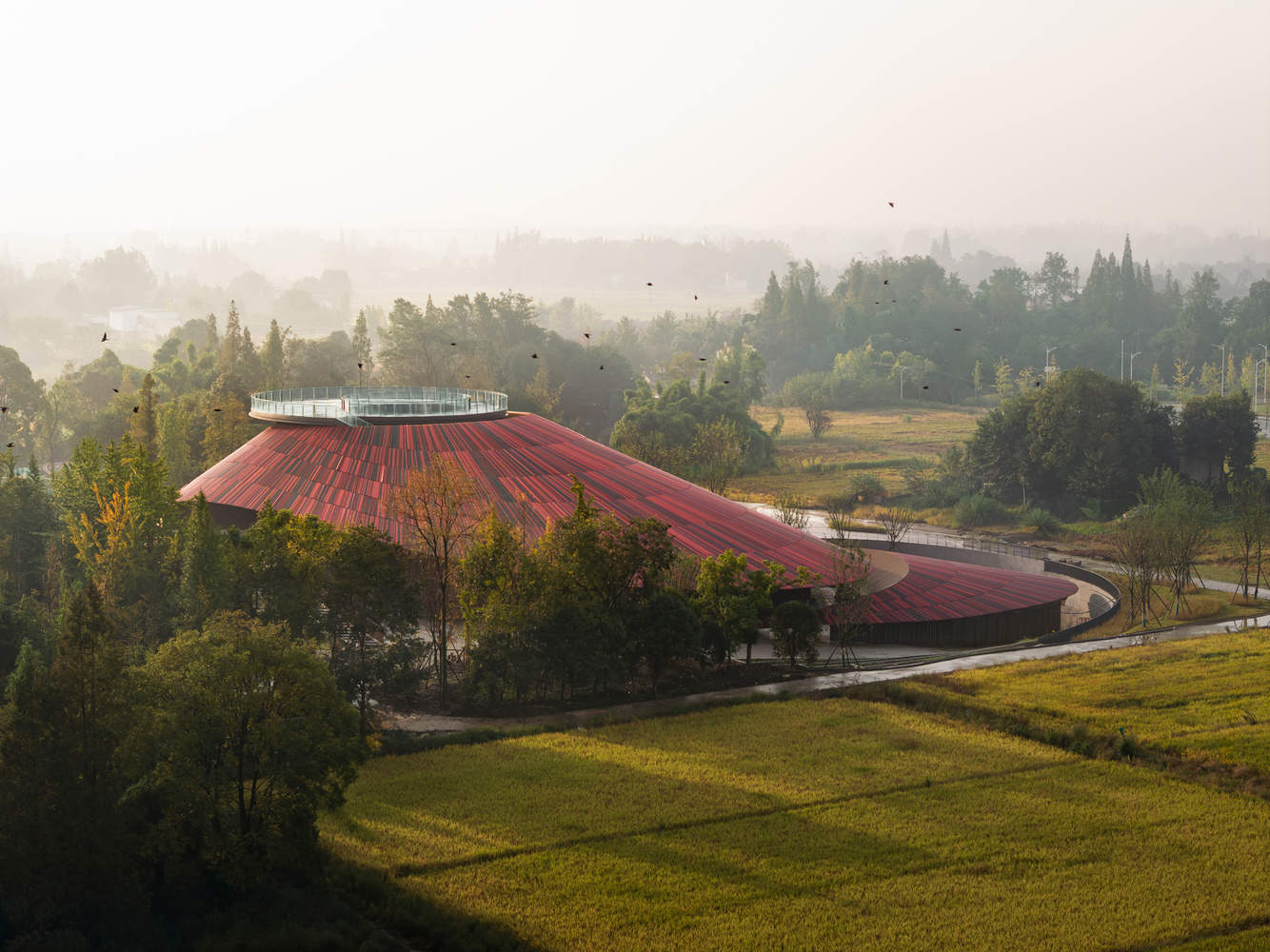
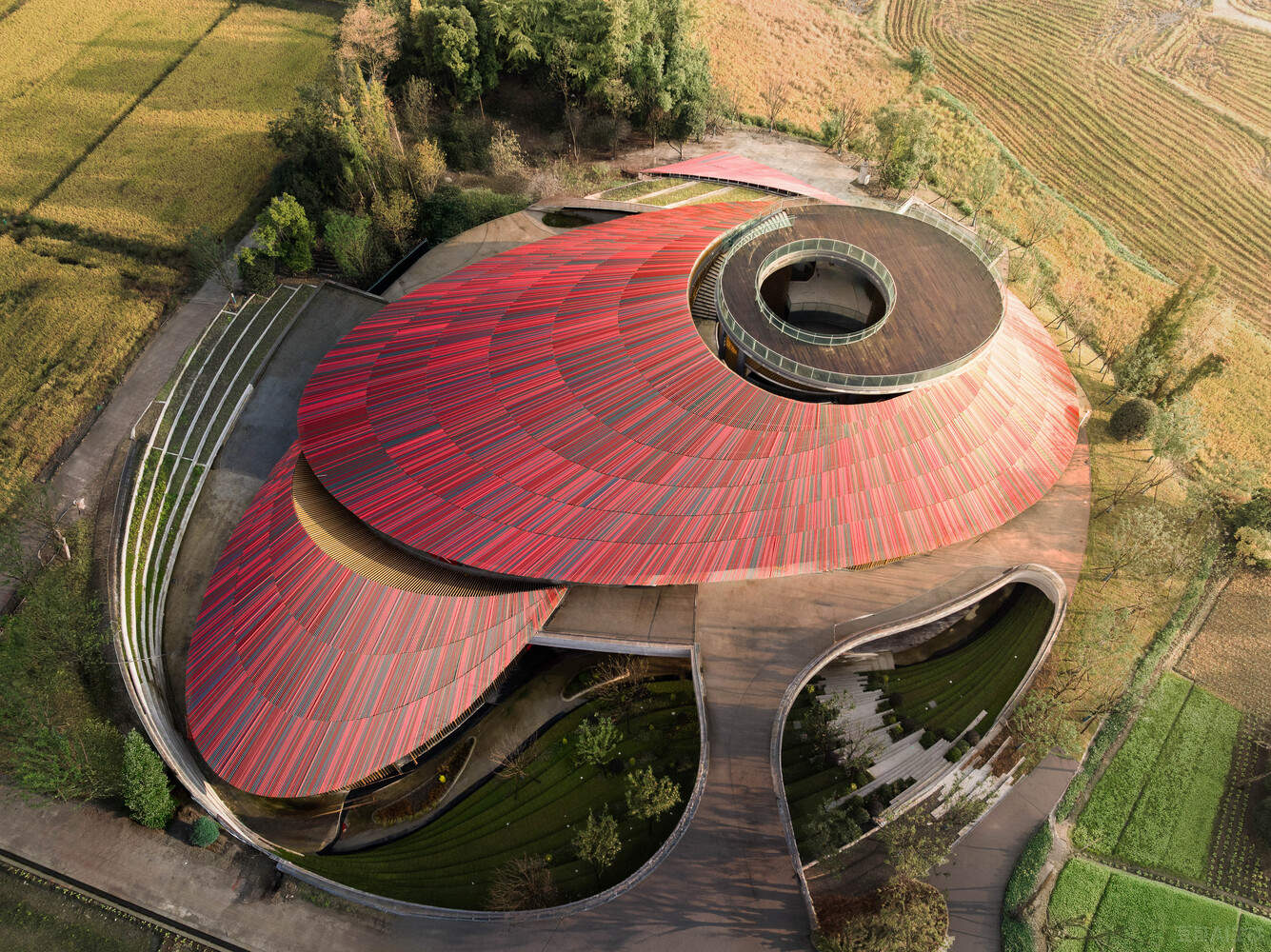
Preserving the Ecological Bedrock: The site contains many existing trees and bamboo groves. At the initial design stage, trees with a diameter at breast height (DBH) greater than 20 cm and clustered bamboo were marked, with the hope of integrating them into the site according to the existing landscape, thus preserving the site's ecological foundation. The architectural mass actively yields to and wraps around these elements, creating a symbiotic scene of "the roof amidst the bamboo."
Controlling Building Volume: The museum has a total construction area of approximately 7,200 square meters. To minimize the above-ground volume as much as possible, the main functions and logistical areas are placed underground, with only about one-third of the volume remaining on the ground floor, used as the entrance hall and temporary exhibition hall, realizing the strategy of "reducing the large to the small." In terms of height, the building is strictly controlled within 15 meters, just enough to allow the Metasequoia trees surrounding the site to reveal their crowns. The building is concealed among the trees, integrating into the Linpan skyline with a low, calm posture, avoiding abrupt cuts to the pastoral view. Through three interlocking roof sections, the design meanders, following the original terrain undulations and natural脉络 (veins/patterns) of the site.
© 404NFSTUDIO
© 404NFSTUDIO
Contemporary Expression of the Pitched Roof
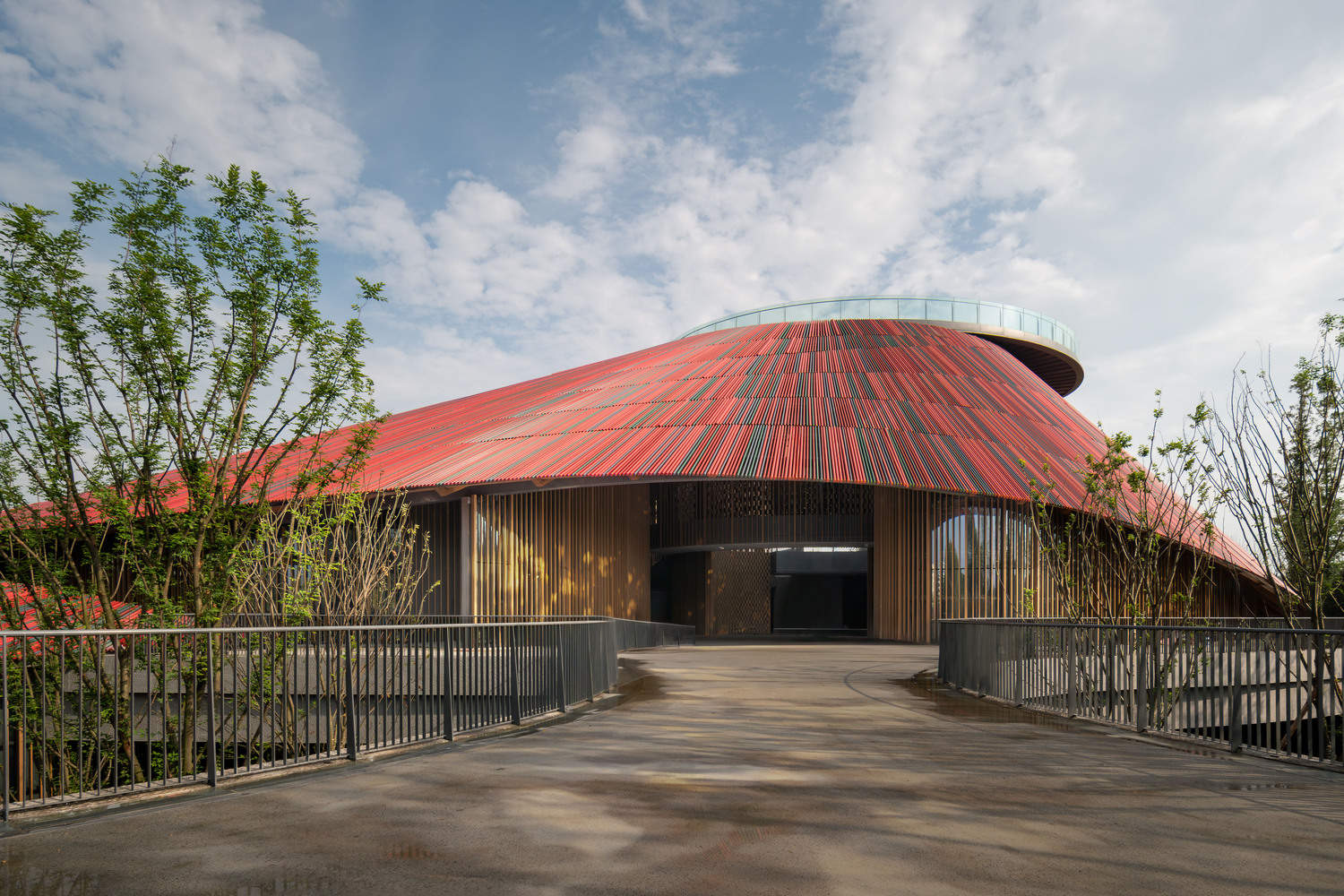
The pitched roofs of traditional dwellings in the Chengdu Plain have a light and free form characterized by "deep eaves and thin fascia." The museum's design involves delicate consideration across the form, color, and construction aspects, integrating into the spatial texture of the natural ecology of Western Sichuan Linpans.
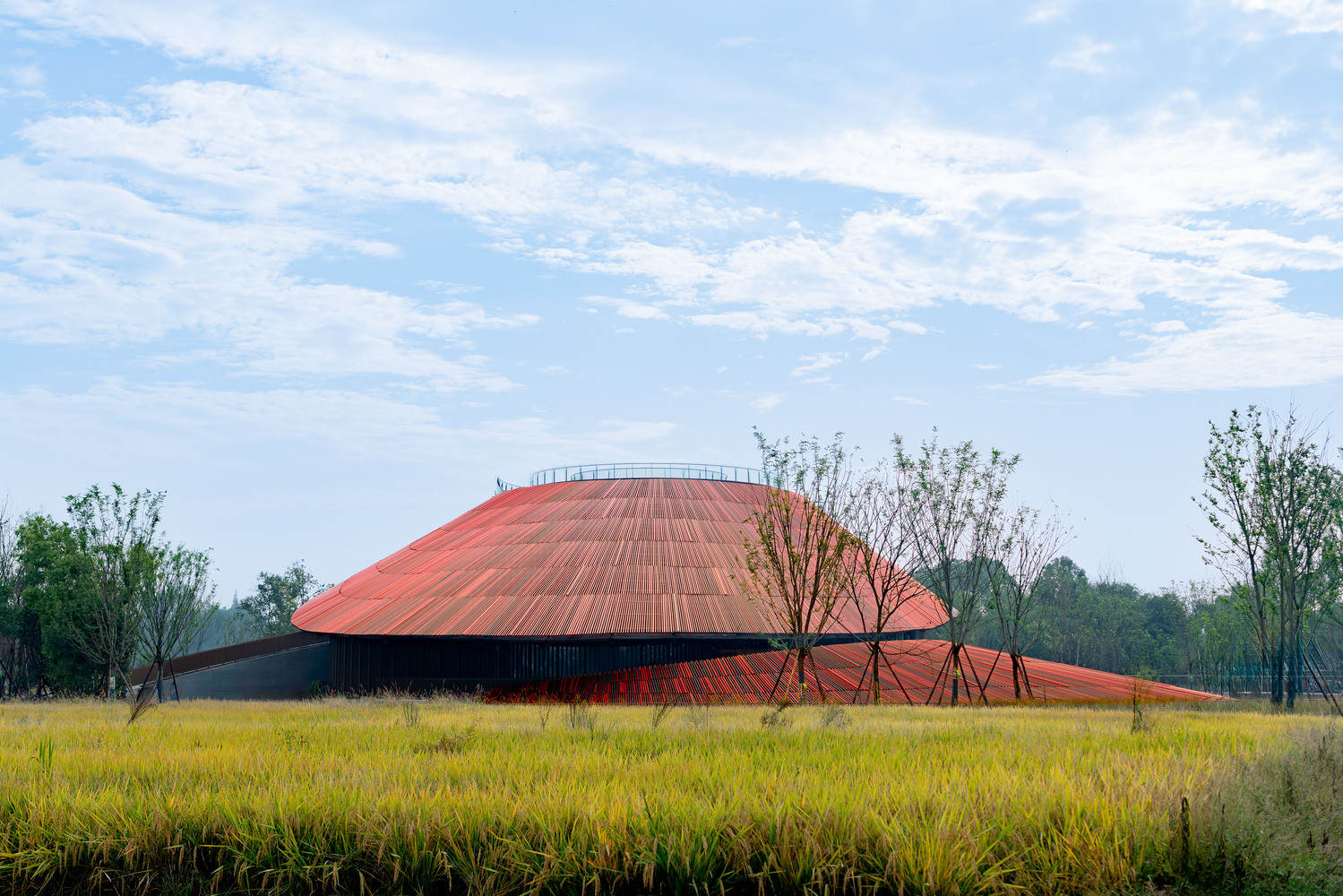
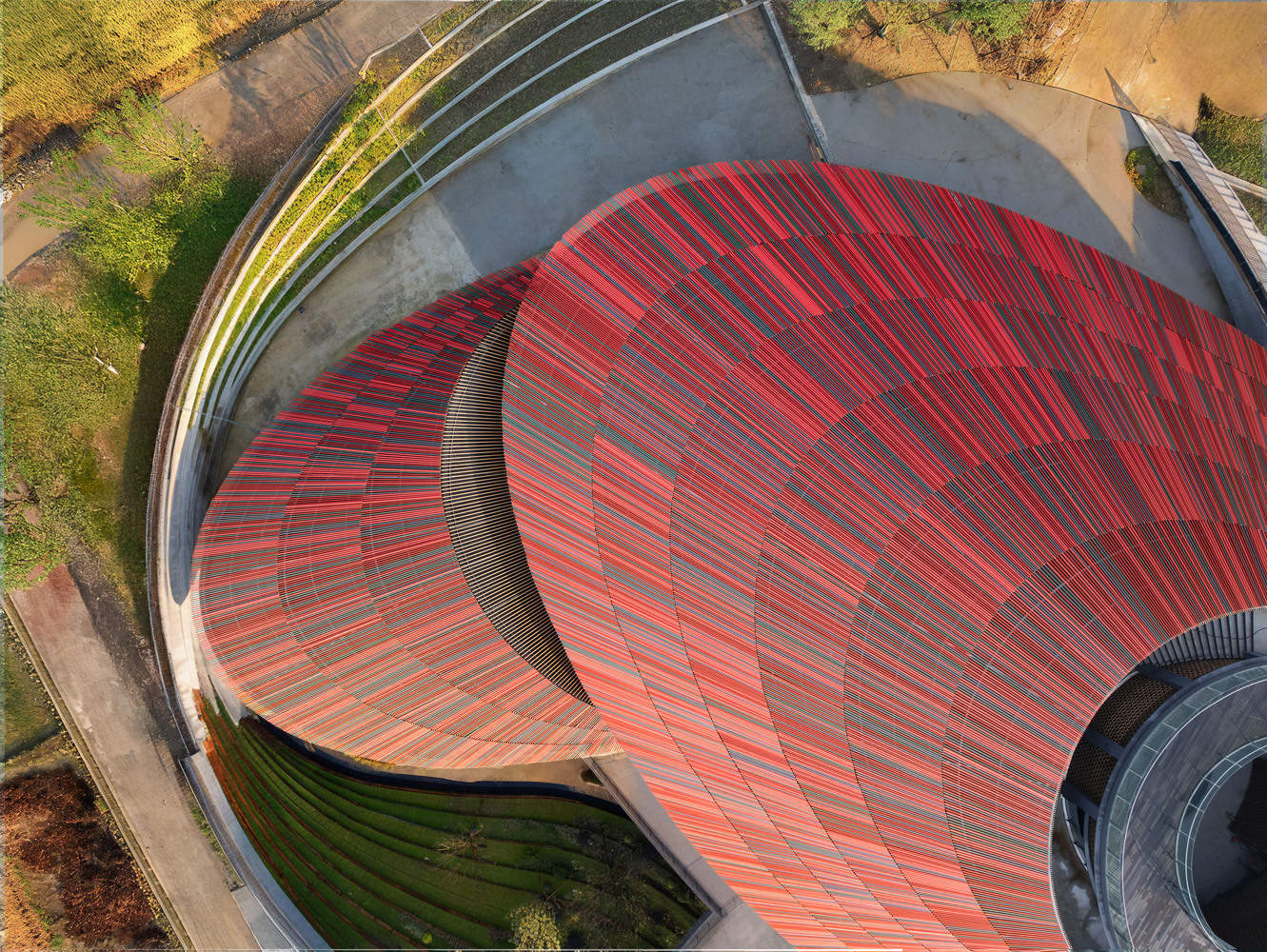
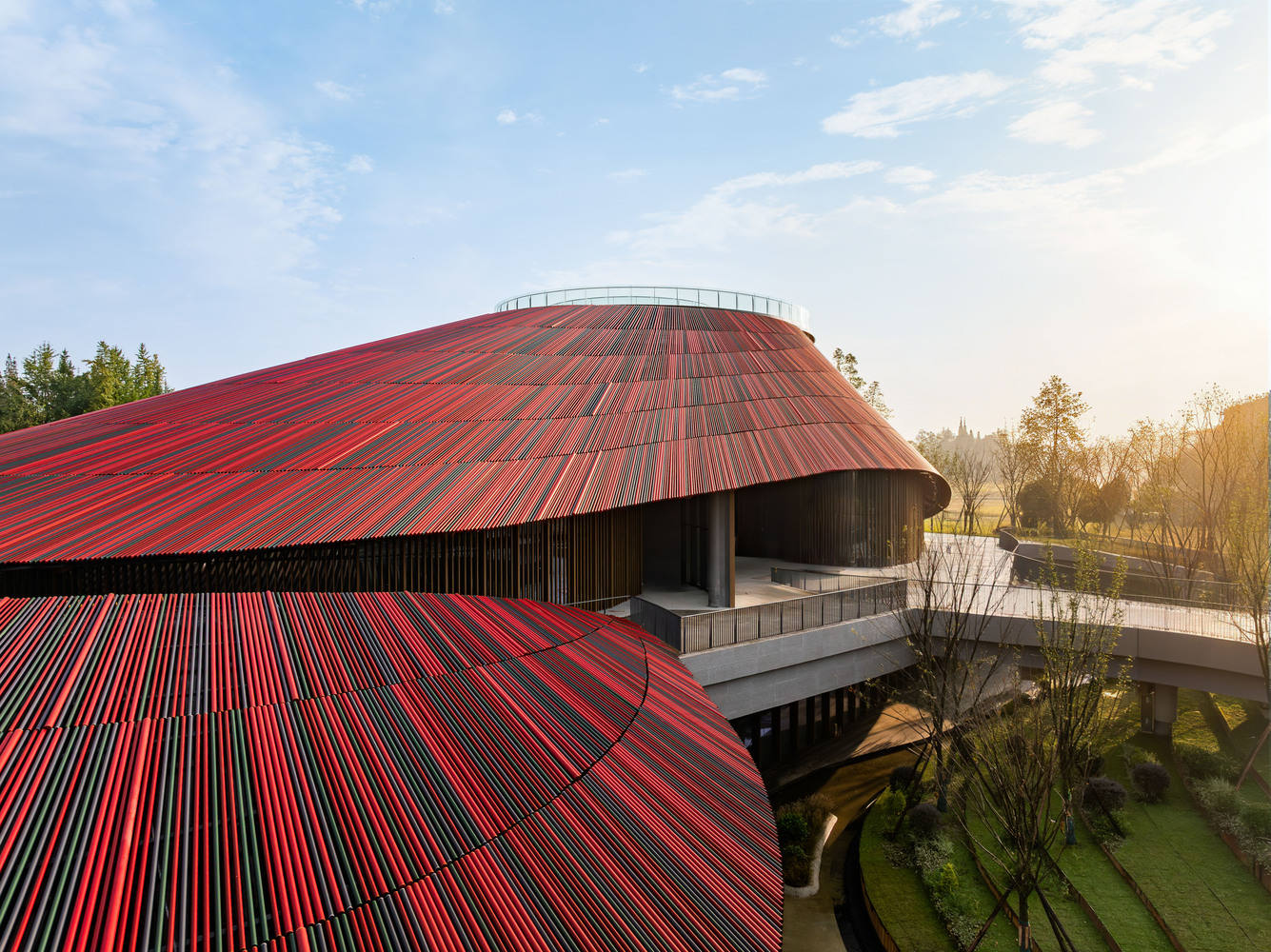
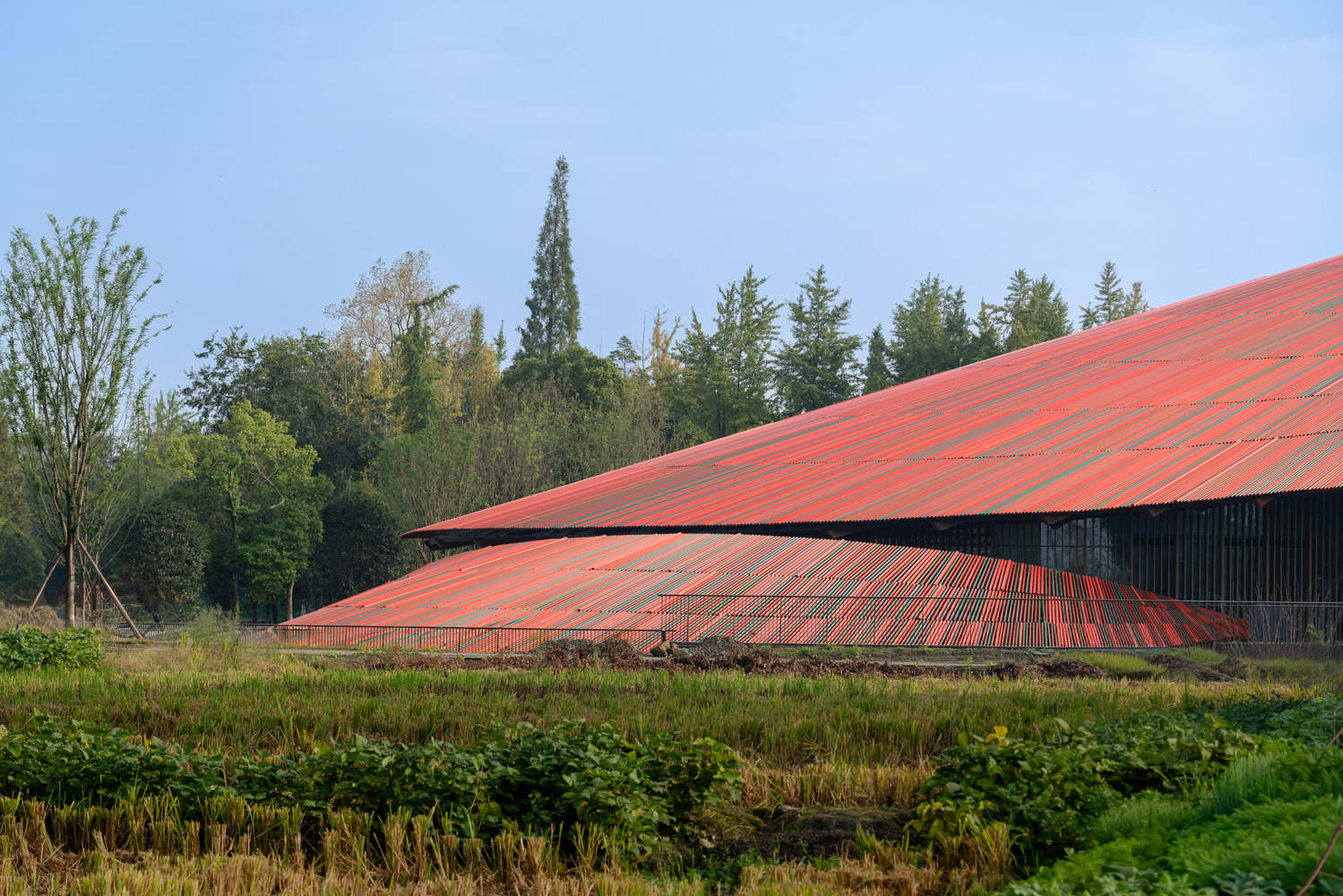
Pitched Roof: The pitched roofs of dwellings in these Linpans are mostly adapted to the constantly humid and rainy climate. For the contemporary translation of this traditional gene, the classic form of the traditional dwelling's pitched roof is modernized and made artistic. Starting from the fields that gradually rise from north to south, the main roof surface adopts an elliptical curved surface resembling a Doubanjiang bean. A small roof section on the north side rises from the ground to the exhibition hall roof, while the small roof section on the south side is embedded in a sunken courtyard. These three roof planes correspond to the changes in the terrain, overlapping with each other, fully expressing the light and free nature of Western Sichuan roofs.
Colored Peppers: The traditional small blue roof tiles are innovatively replaced by "Colored Pepper" elements. The "Colored Pepper" decoration on the roof is inspired by the natural color evolution of chili peppers as they mature and dry—from green to red, and then from red to dark. After half a year of repeated sampling and debugging, we ultimately extracted four key colors and determined their compositional ratio on the roof surface: Red (30%), Dark Red (36%), Dark Green (14%), and Dark Gray (20%), distributed randomly on the roof. In terms of form, the design abstracts the cross-sectional profile of the "ErjingTiao chili pepper," using aluminum alloy tubes with a diameter of 80 mm as the basic unit, interspersed randomly with enlarged tubes of 140 mm in diameter to enhance the visual layering and dynamic variation of the roof. The entire roof is constructed from over eighteen thousand "Colored Pepper" tubes of varying lengths and interwoven colors, as if countless chili peppers were lightly scattered over the building. This design continues the charm of traditional architecture while imbuing the roof with a distinct contemporary texture and aesthetic interest.
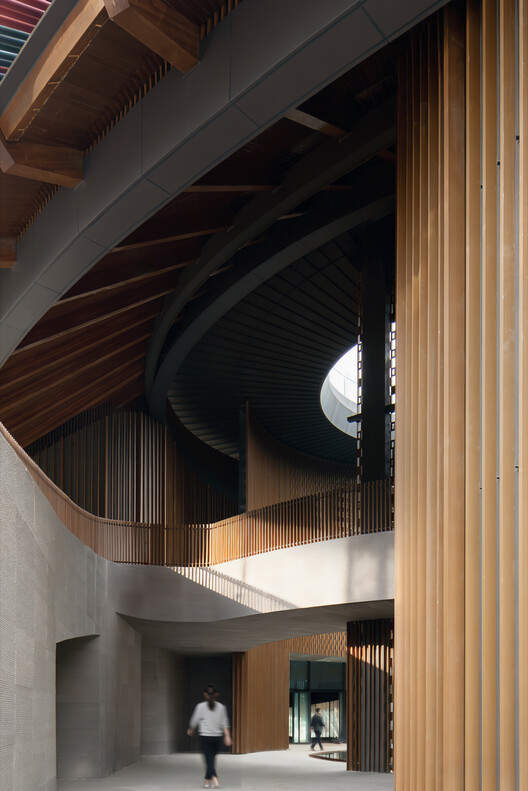
Construction: Traditional Western Sichuan architecture primarily uses the pierced-pillar wooden structure for roof trusses. The project uses glued laminated timber beams as the framework, with wood strips used for battens and fascia boards, restoring traditional materials while meeting contemporary construction needs. The structure is supported by hyperbolic steel ring beams at the top of steel columns, which satisfies the need for large museum spaces and maximizes the utilization of the mechanical properties of the wooden beams. The arrangement of the steel ring beams not only aligns with the architectural floor plan but also forms a deep connection with the metal "pepper" divisions on each ring of the roof: the dividing lines of the metal peppers naturally extend along the curved trajectory of the steel ring beams, fitting precisely, making the structural frame no longer a "skeleton" hidden beneath the skin, but rather an entity that interprets and strengthens the expressive skin.
© 404NFSTUDIO
© 404NFSTUDIO
Spatial Recreation of the Sichuan Flavor Courtyard
The courtyards and patios in Western Sichuan Linpan residences are not only an extension of the ritualistic "Four Waters Returning to the Hall" principle; the surrounding covered walkways and main halls are also vital spaces for community life.
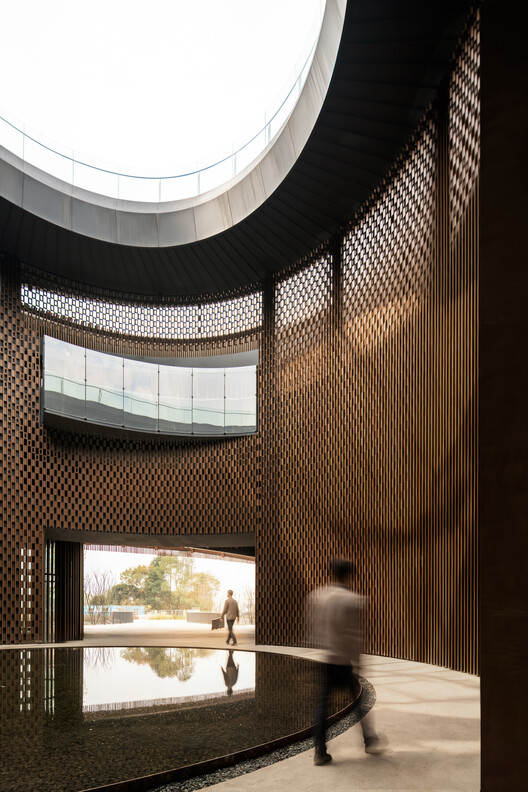
Central Courtyard: The central space of the museum continues the concept of a "courtyard," an enclosed space open at the top, breaking the limitations of horizontal space and creating a strong sense of upward extension. The central courtyard is also the core for organizing the museum's spatial flow. Visitors arrive from the city, enter the vestibule here for touring, and return here after viewing to head towards the fields. Everyone gathers around the water feature in the central courtyard to chat and exchange, recreating the living scene of "gathering for conversation" (bǎi lóngmén zhèn) in the courtyard. The curved staircase surrounding the atrium allows natural light to filter through the grille and sprinkle onto the steps, creating mottled, flowing light and shadow effects, guiding people up to the roof platform to overlook the fields. This not only continues the traditional architectural concept of "borrowing scenery from nature and generating vitality through emptiness and solidity" but also injects warm vitality into the contemporary exhibition space.
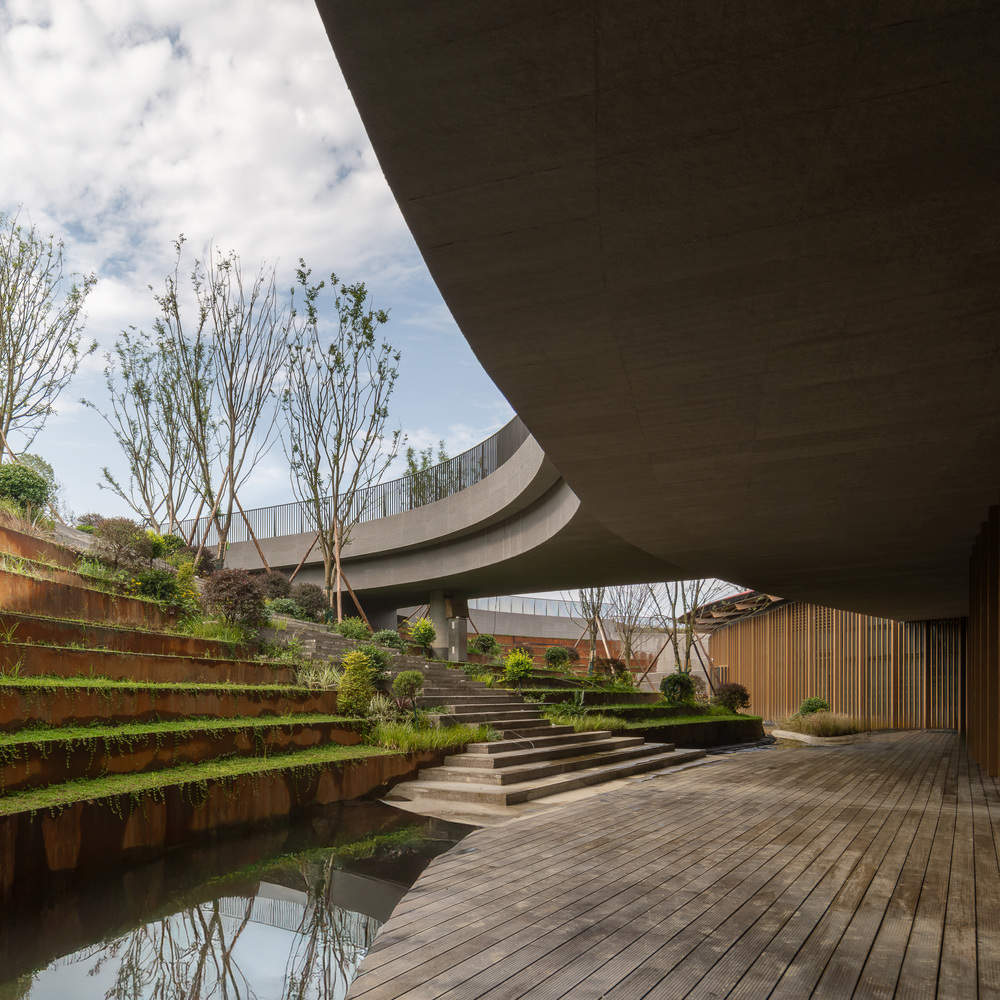
Sunken Courtyard: The south side of the site is excavated to form a crescent-shaped courtyard, introducing natural light into the semi-basement multi-functional hall and public spaces. The gradually descending green steps allow visitors to enjoy the greenery immediately after their tour. The integrated steps made of exposed aggregate concrete and the gravel ground blend unintentionally with the open field landscape, interpreting the simple and rustic aesthetic of Sichuan flavor.
© 404NFSTUDIO
© 404NFSTUDIO
Conclusion
The museum, scattered across the fields like scattered Doubanjiang beans, is naturally embedded in the natural environment of the Western Sichuan Linpan—where "farmland forms the base and courtyards form the pattern." The pepper-inspired roof surface forms a highly recognizable "Jiao Ding" (Pepper Top), continuing the Linpan's gentle pitched roof feature, adapted to the basin climate, interpreting the hierarchical relationship of the roof layer with modern techniques, and recreating the layered and vivid morphological characteristics. From the mortise-and-tenon aesthetic of glued laminated timber to the light and shadow narrative of the bamboo grille, local materials and modern craftsmanship coexist in collision, deeply merging Linpan genes with Doubanjiang culture. This provides a vivid footnote for local innovation in Western Sichuan architecture.
© 404NFSTUDIO