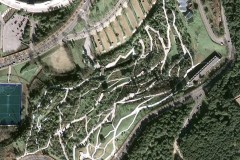
历史文脉与场地消隐策略:该项目成功地在严格的文物保护控制区内,通过“下沉与消隐”的设计策略,实现了对厚重历史环境的尊重与消解。场地整体下沉1.5米,巧妙地将宏大的建筑体量融入周边,并借鉴秦汉“里坊雏形”的规划格局,构建了以多层级广场、庭园、平台和坡道为核心的立体步行系统,有效平衡了功能需求与文化敏感性,展现了高超的场地适应性与文脉回应能力。
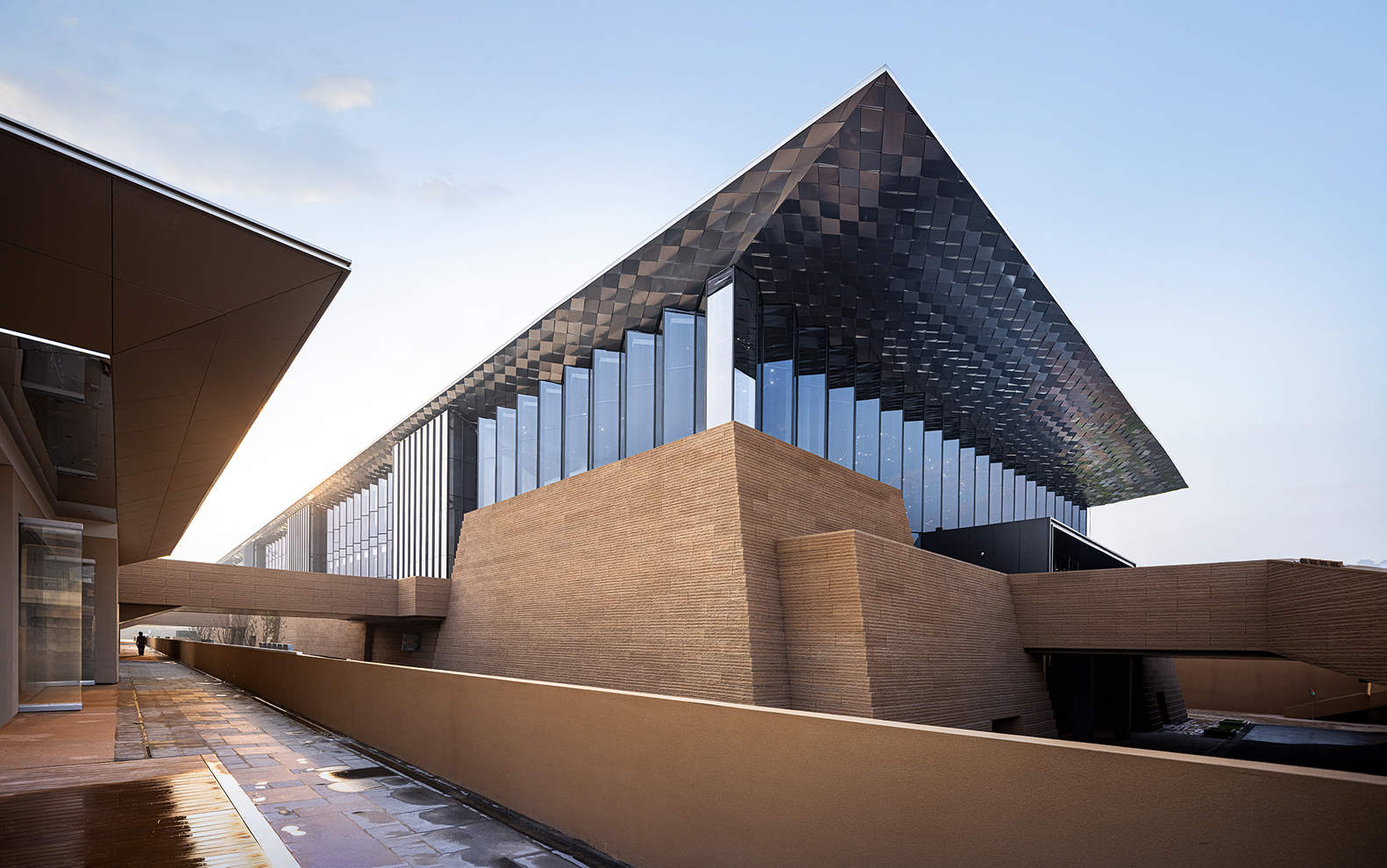
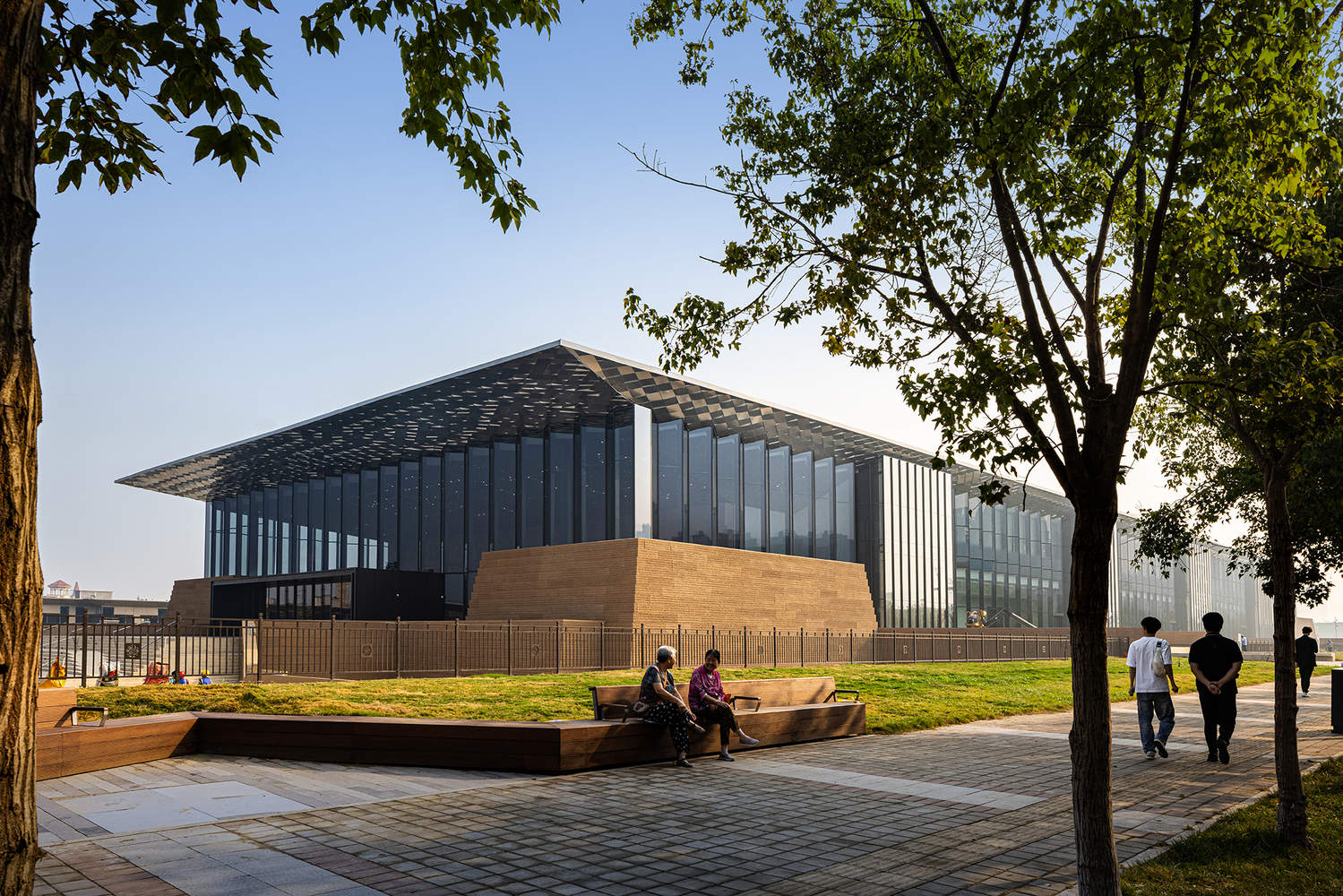
秦汉精神与当代审美的融合:建筑设计在处理演艺剧院这一核心功能时,实现了历史厚重感与当代轻盈感的精妙对话。通过借鉴秦代夯土基座的元素,采用粗面混凝土叠涩处理,使建筑仿佛从大地中生长而出,锚定了厚重的历史基调。而上部则采用全通透玻璃立面和雾面铝质屋顶,营造出轻盈、现代的姿态,形成了强烈的视觉对比,既呼应了秦文化,又确立了其作为创新文化地标的当代身份。
颠覆性的“超级剧院”空间创新:作为项目一期的核心亮点,演艺剧院的设计彻底颠覆了传统剧院的固定模式,与演出内容深度融合,打造了全球首个行进式高科技剧院。通过为1500座观众席设计可自由移动的机制,并结合大型室内移动舞台和数智化媒体技术,实现了舞台与观众席的边界消融,构建了一个沉浸式、全景式的演艺空间,并因此获得吉尼斯世界纪录认证,体现了建筑设计在文化体验驱动下的前沿探索和技术集成能力。
© Schran Image
© Schran Image
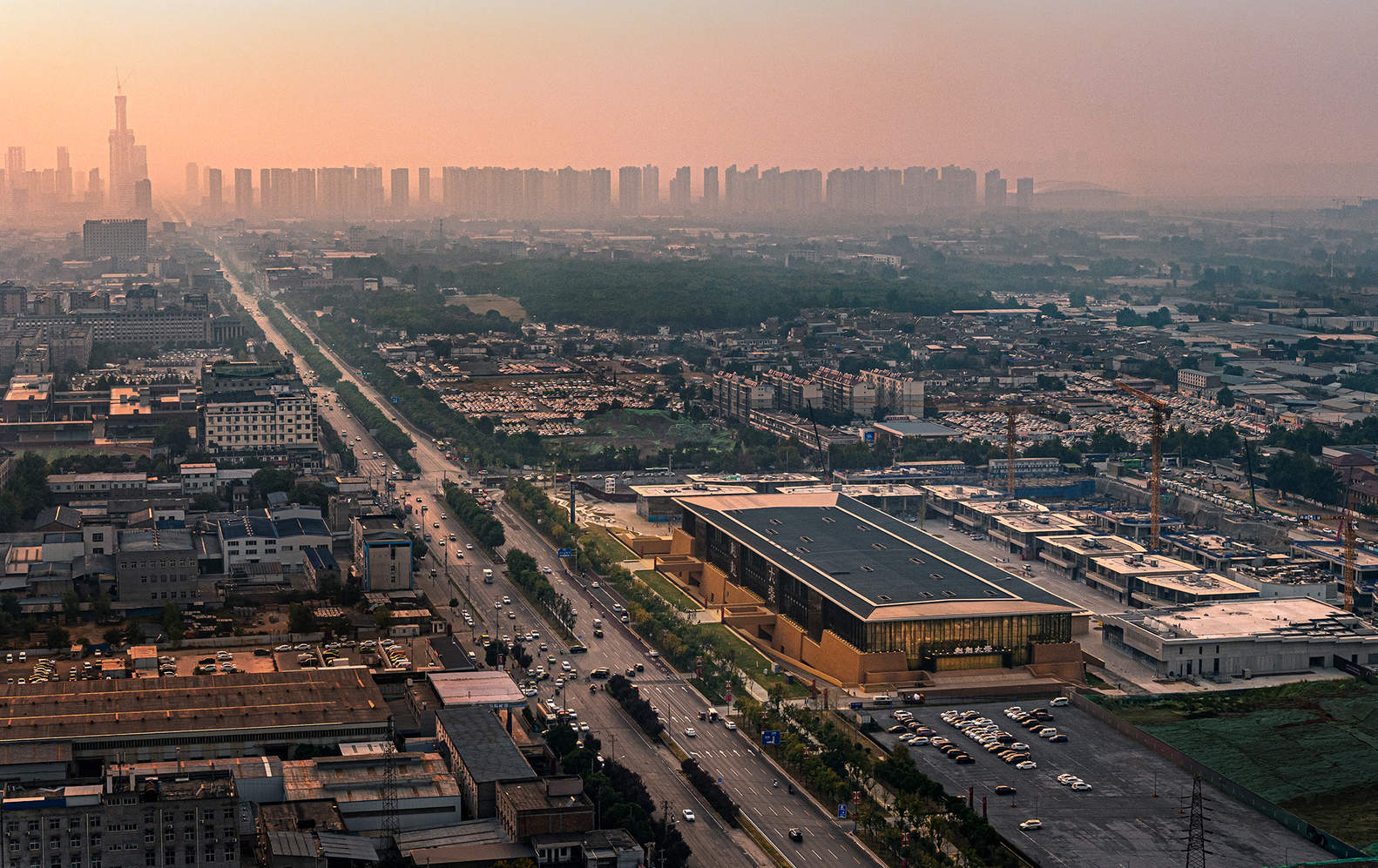
The Shaanxi Culture and Art Museum project is located in the Xixian New Area of Xi'an, adjacent to the West Third Ring Road to the east and the Epang Palace ruins to the west. The planned site area is 94,000 square meters, with a total construction area of 135,000 square meters, mainly comprising a performance theater, a Silk Road Art Museum, and comprehensive cultural supporting facilities. Phase I is the performance theater, measuring 220 meters long and 66 meters wide, with a construction area of 32,000 square meters. It regularly stages the epic illusion performance "Jiu Jiu Da Qin," integrating teams in architectural design, cultural creativity, set design, and smart technology to create an innovative cultural landmark for Xi'an. The Shaanxi Culture and Art Museum is listed as a major cultural tourism project for Shaanxi Province during the 14th Five-Year Plan and a major cultural industry project for the province, driving regional overall and cultural tourism industry upgrades through an innovative "Culture + Technology + Tourism" model. Upon completion, it was selected as one of the top ten new cultural landmarks in Xi'an.
陕西文化艺术博物院项目位于西安西咸新区,东临西三环,西依阿房宫遗址,规划用地面积 9.4 万平方米,总建筑面积 13.5 万平方米,主要包括演艺剧院、丝路艺术馆及综合文化配套设施。项目一期为演艺剧院,整体长 220 米、宽 66 米,建筑面积 3.2 万平方米,常态化上演史诗幻境演出“赳赳大秦”,汇聚建筑设计、文化创意、编剧舞美、智能技术等团队,打造西安创新文化地标。陕西文化艺术博物院被列入陕西省“十四五”重大文旅项目、陕西省重大文化产业项目等,以“文化+科技+旅游”创新模式带动区域整体与文旅产业升级。项目投入使用后,被选为西安十大新文化地标。
© Schran Image
© Schran Image
The project is situated in an important historical and cultural environment, within the construction control zone established by national heritage authorities for the Epang Palace front hall ruins, surrounded by significant ancient cultural relics such as Epang Palace and Shanglinyuan. There are height restrictions on the site: 8 meters for the Class I construction control zone and 18 meters for the Class II construction control zone.
项目位于重要的历史文化环境,在国家文物部门划定的阿房宫前殿遗址的建设控制地带内,周边分布着阿房宫、上林苑等重要古迹文化遗址。基地内有一类建设控制地带8米、二类建设控制地带 18 米的限高要求。
© Schran Image
© Schran Image
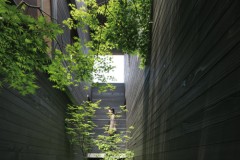
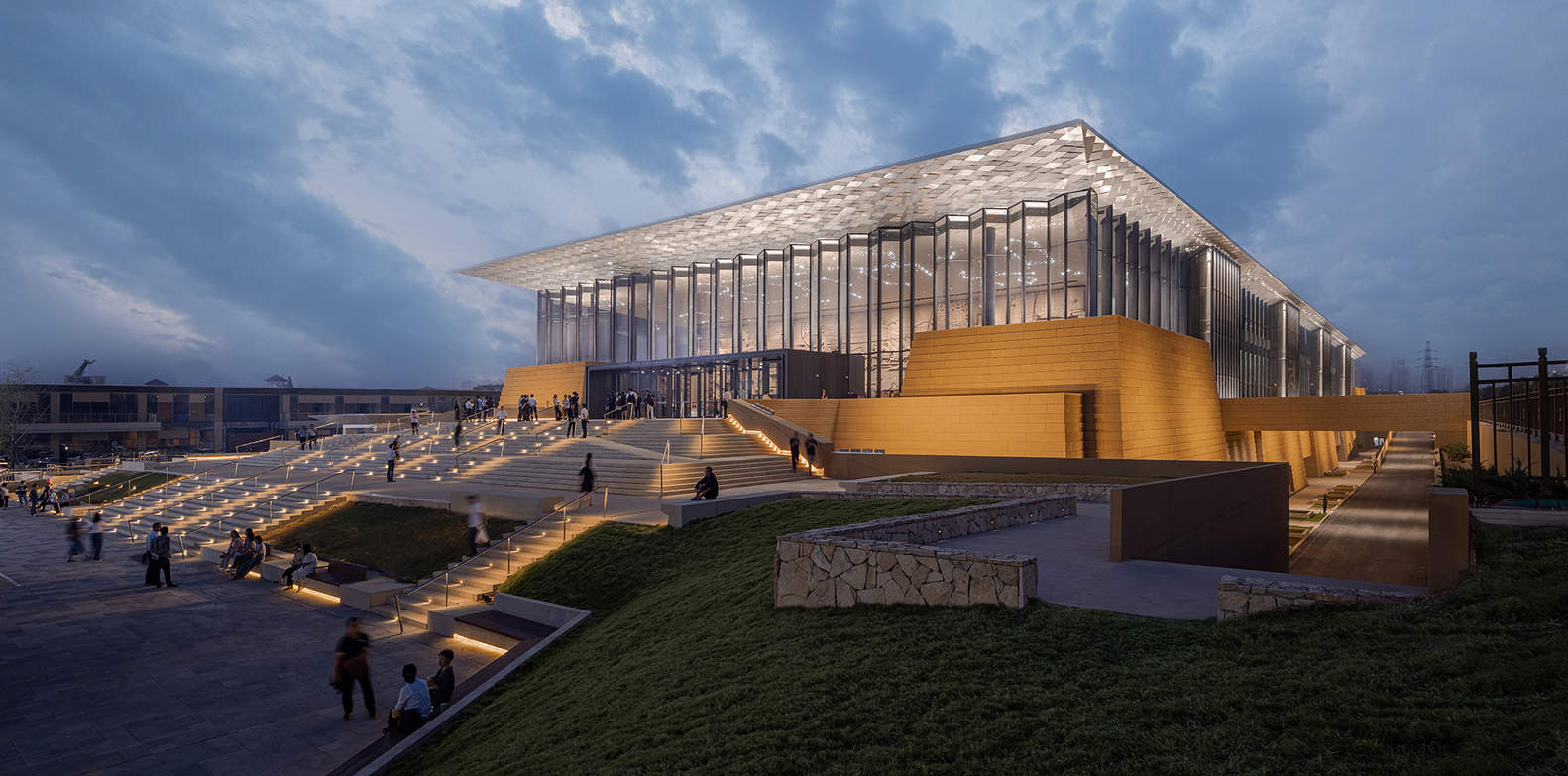
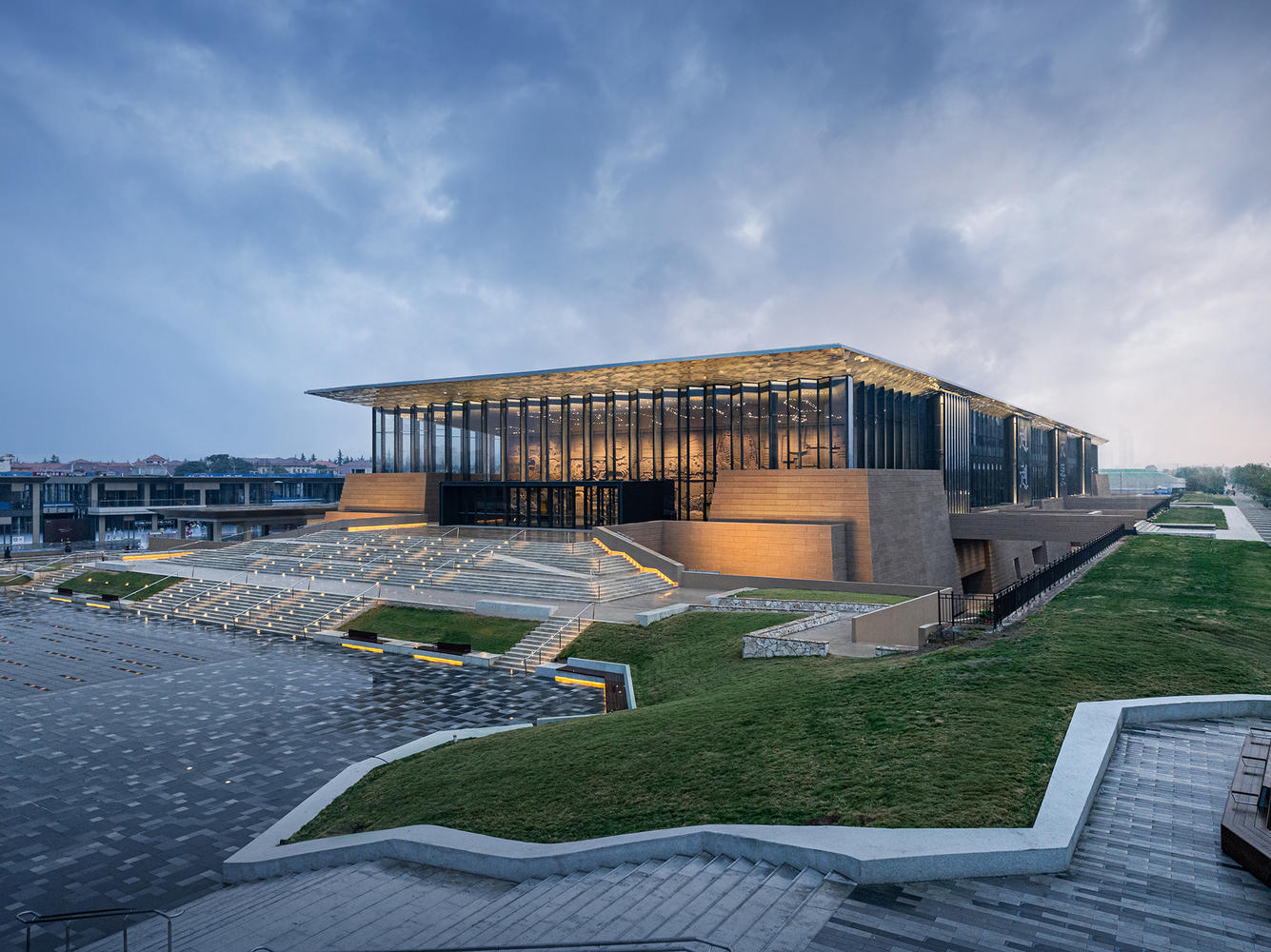
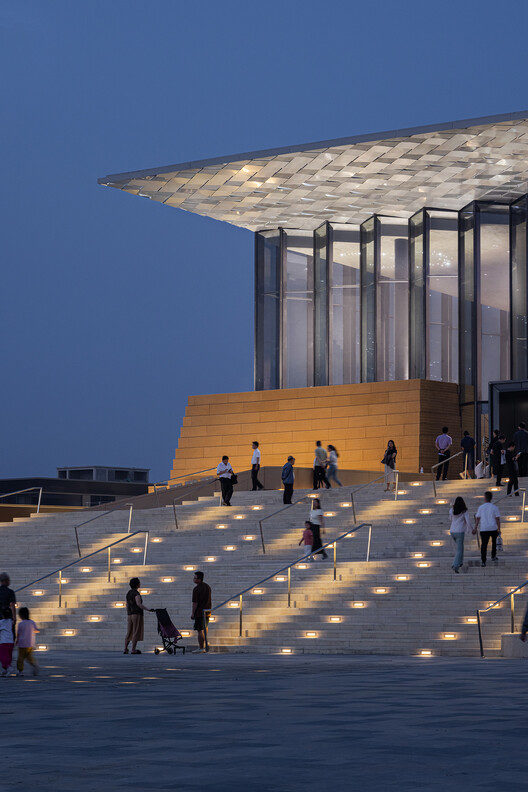
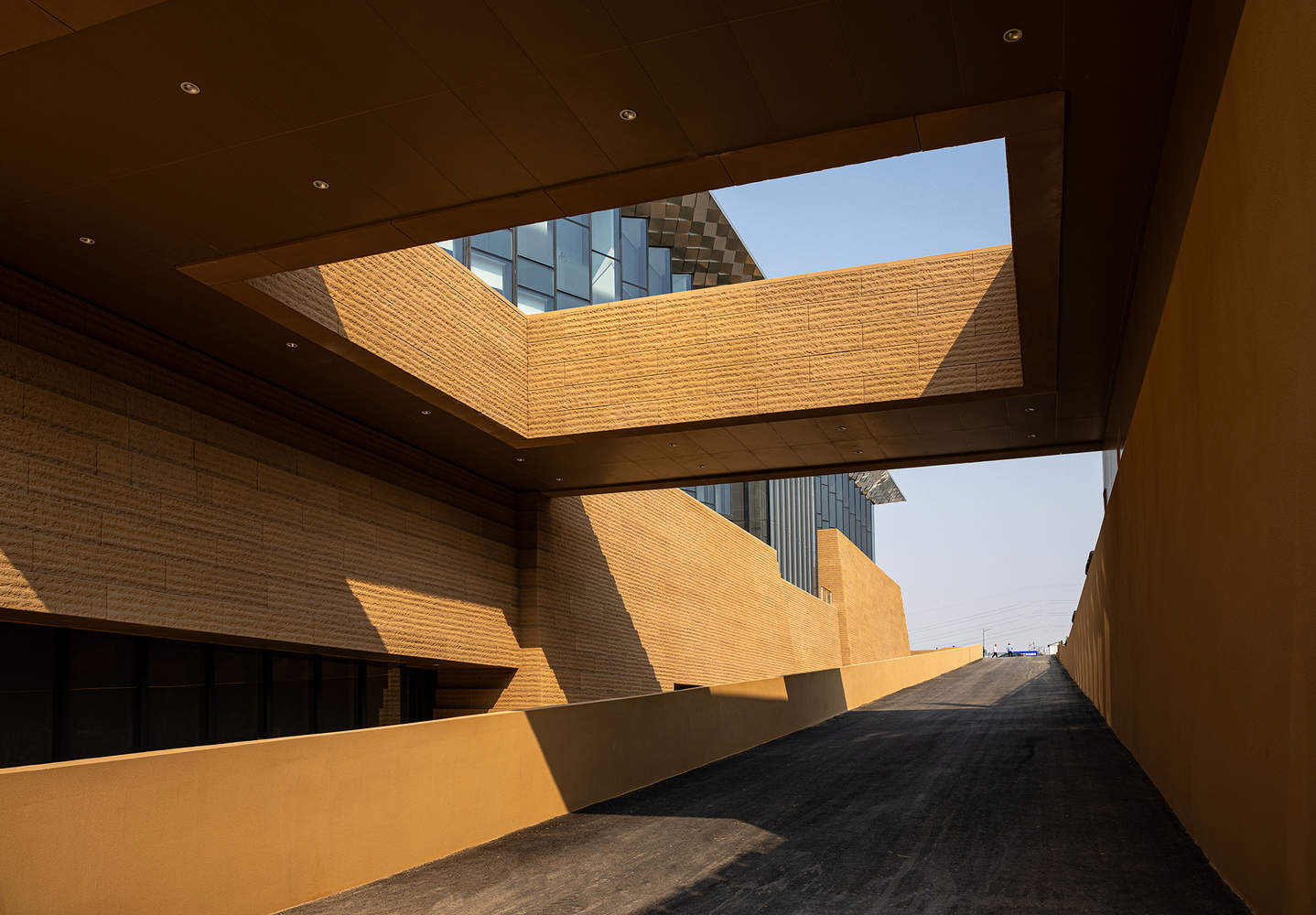
The design actively responds to the unique historical context and stringent external constraints. The overall architectural complex adopts a "sunken and concealed" design strategy. The site is lowered by 1.5 meters overall, creating a placid, inclusive atmosphere and tone. The overall site planning references the nascent grid layout ("Lǐ Fāng") of the Qin and Han dynasties, echoing the flow of people and urban spaces from multiple directions. A framework of crisscrossing streets and alleys organizes the public space situated between the large-scale performance theater, art museum, and supporting buildings. Multi-level "plazas, courtyards, platforms, and ramps" become the core organizing elements of the public space system, resulting in a three-dimensional and rhythmic pedestrian circulation network.
设计积极回应独特的历史文脉与严苛的外部条件制约,总体建筑群体采用“下沉与消隐”设计策略,场地整体下沉 1.5 米,造就平展内含的场所氛围和基调。建筑总体规划借鉴秦汉“里坊雏形”格局,呼应多个方向的城市空间与人流来向,以纵横错落的街巷为框架,在大体量的演艺剧院、美术馆和配套建筑之间设置公共空间,多层级的“广场、庭园、平台、坡道”成为公共空间系统核心组织要素,造就立体而有节奏的步行系统。
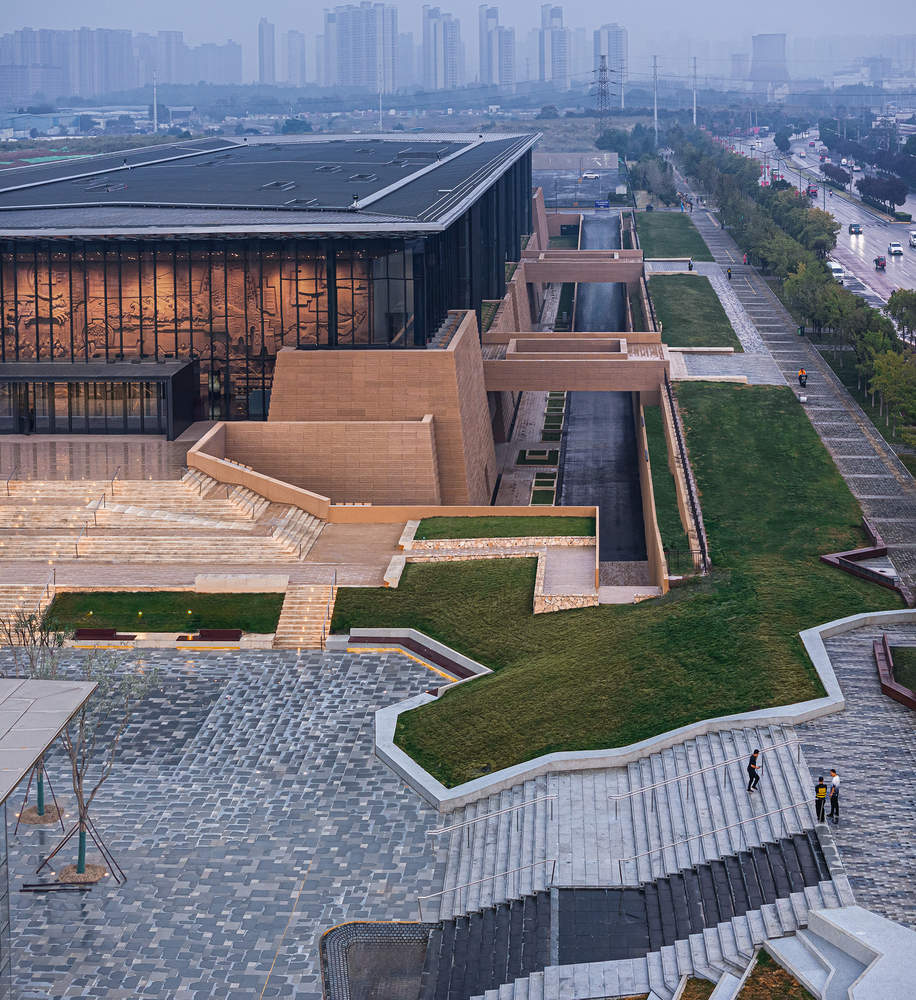
© Schran Image
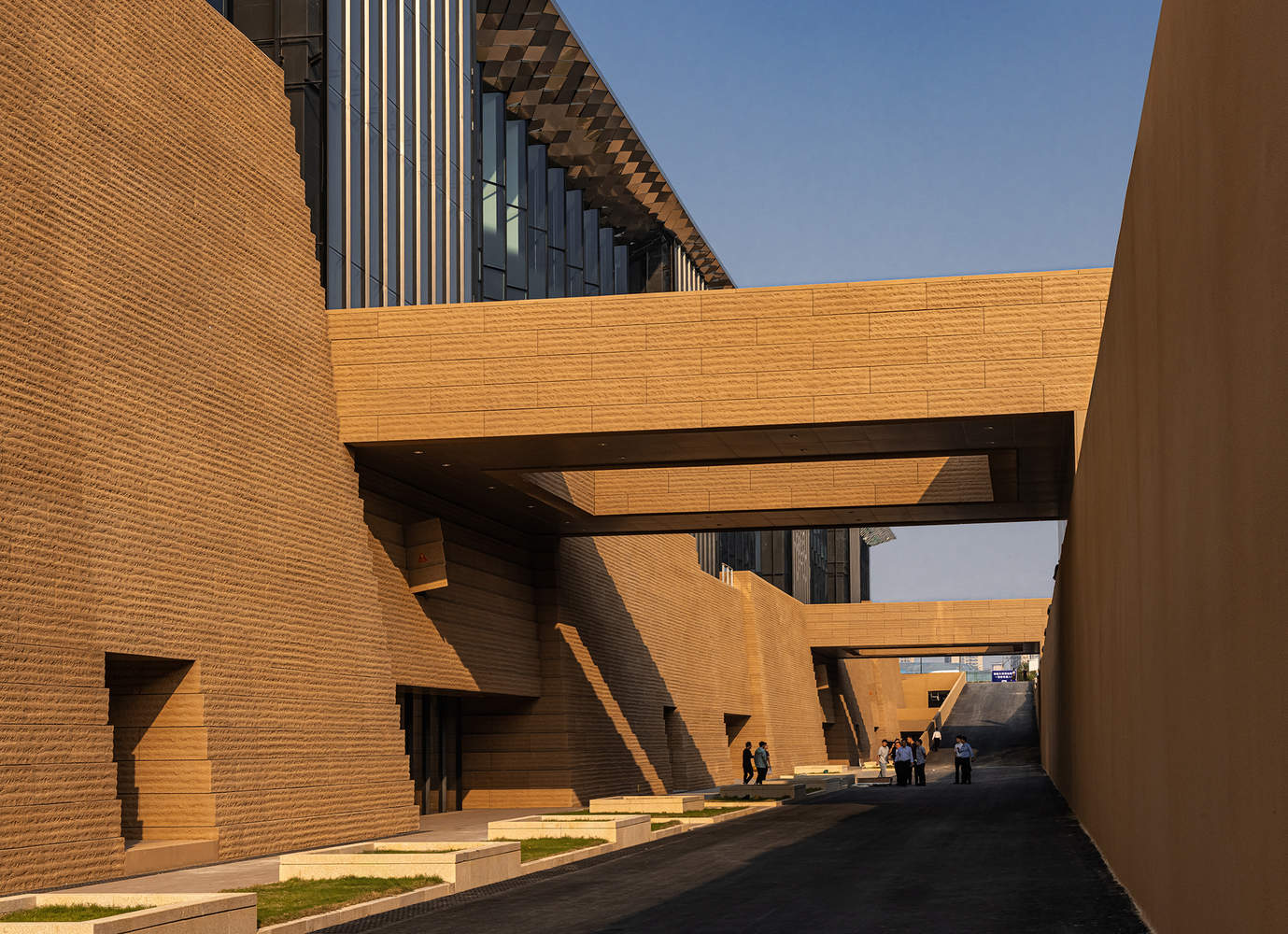
© Schran Image
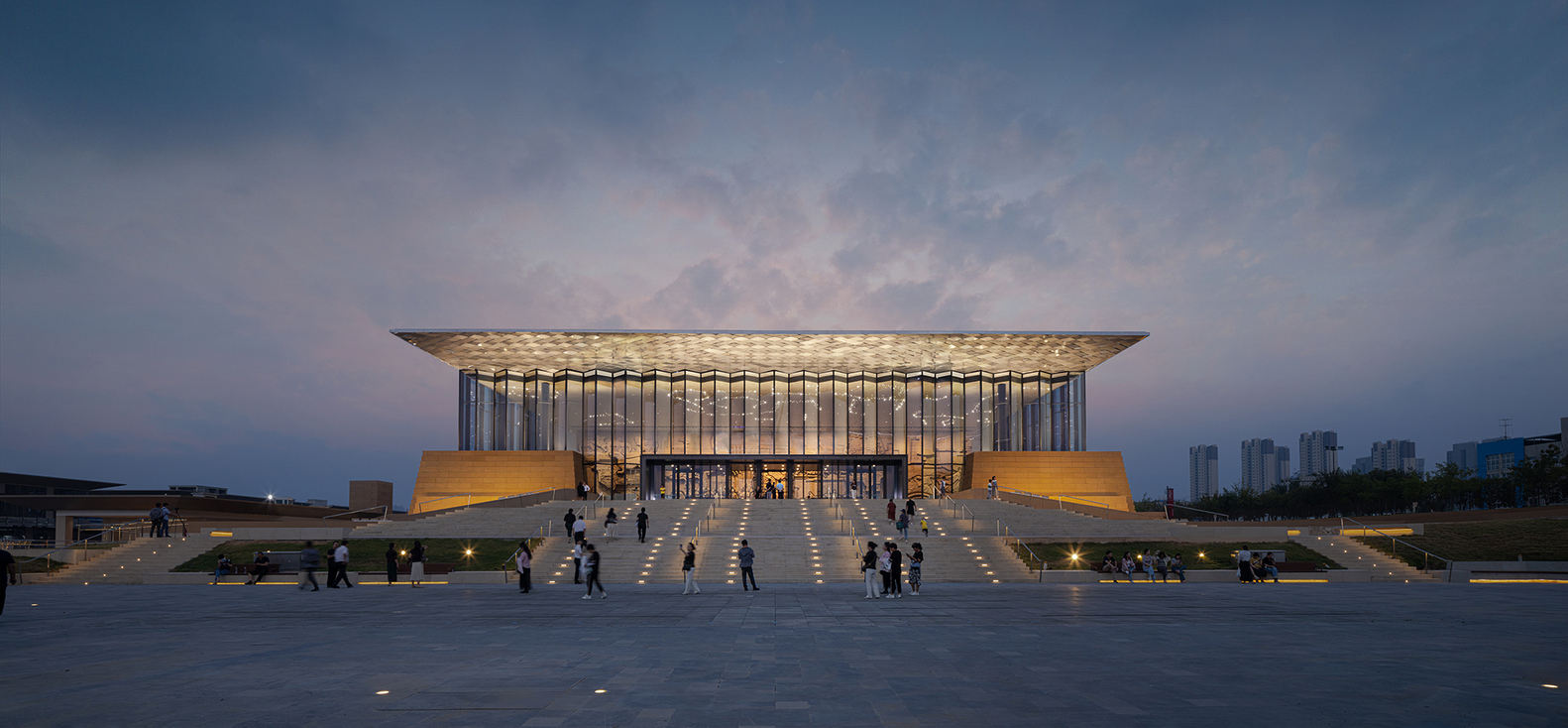
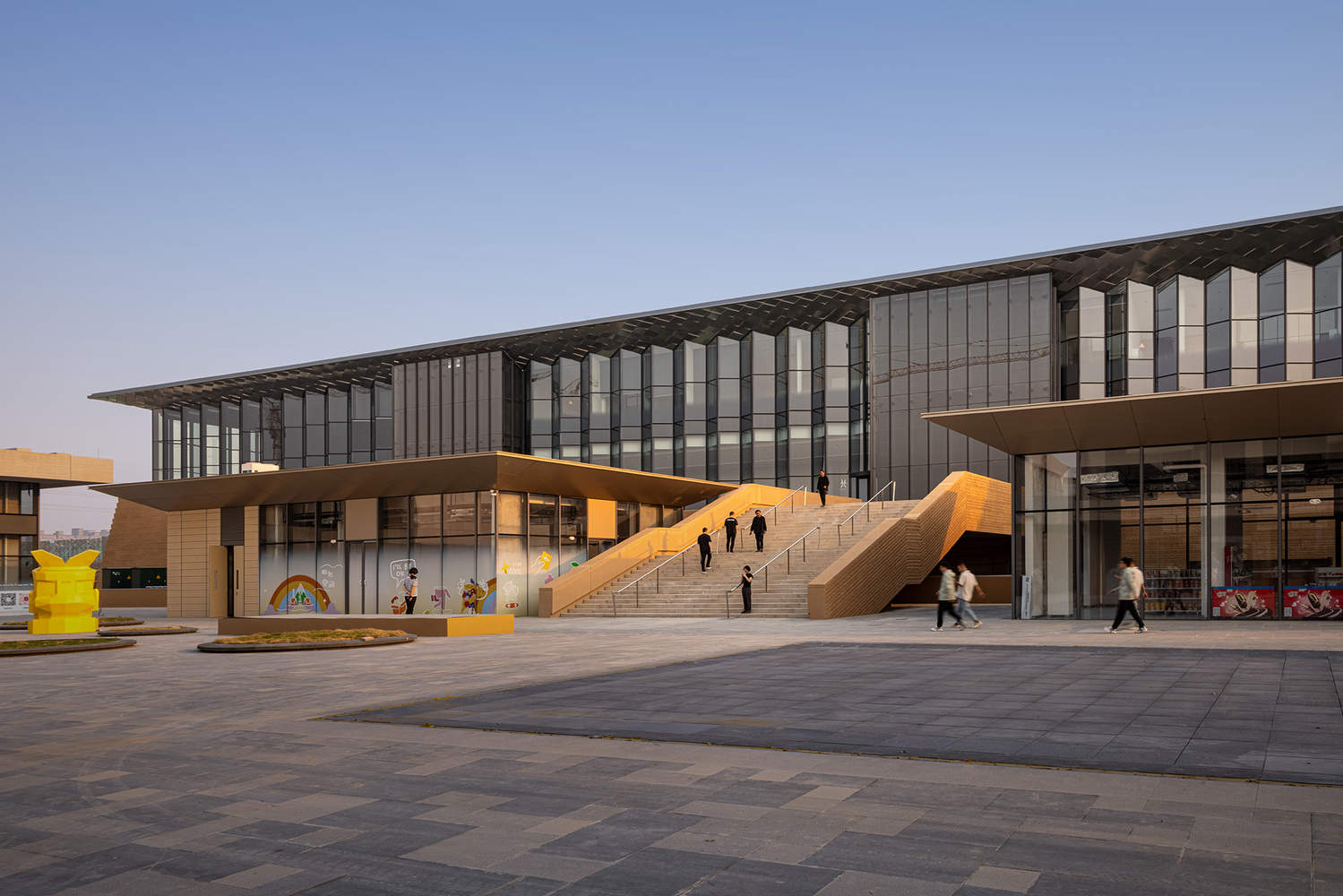
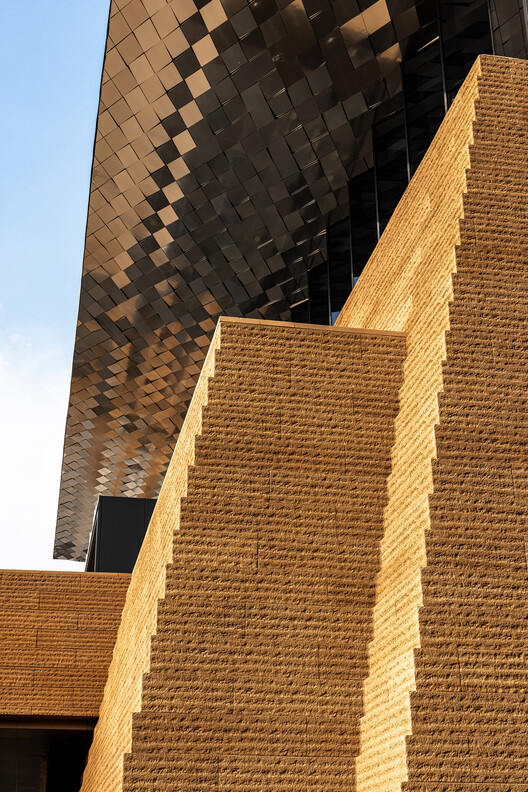
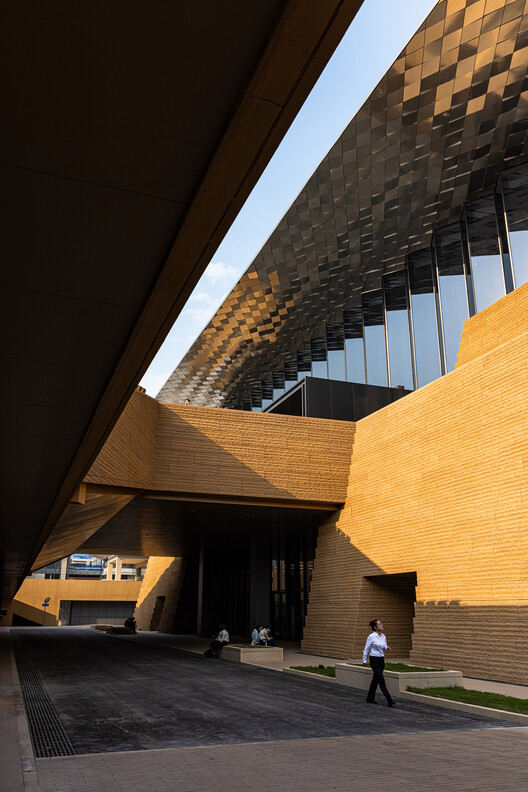
Phase I, the performance theater, seeks to continue, differentiate, and dialogue with the historical cultural scene, exploring the unique posture of contemporary architecture within that historical context. The theater has the largest volume and is located in the southeast corner of the site, furthest from the ruins, adhering to the 18-meter height limit. The stage pit is partially sunken by 5 to 8 meters. The sunken architectural volume references the rammed earth base elements of Qin dynasty architecture, anchoring the building firmly into the site, as if naturally emerging from the earth. The use of rough-textured concrete cladding in a corbeling arrangement and horizontal lines reinforces the horizontal extension of the base.
一期演艺剧院试图与历史文化场景形成延续、差异与对话,探索历史文化场景中当代建筑的独特性姿态。剧院体量最大,设在整体场地离遗址最远处、 18 米限高的东南角,舞台基坑部分下沉 5—8 米不等;下沉建筑体量借鉴秦代建筑的夯土基座要素,建筑与场地紧紧嵌接在一起,如同从大地中自然生长而出;粗面肌理的混凝土挂板构成的叠涩处理和横向线条,强化基座的水平延展感。
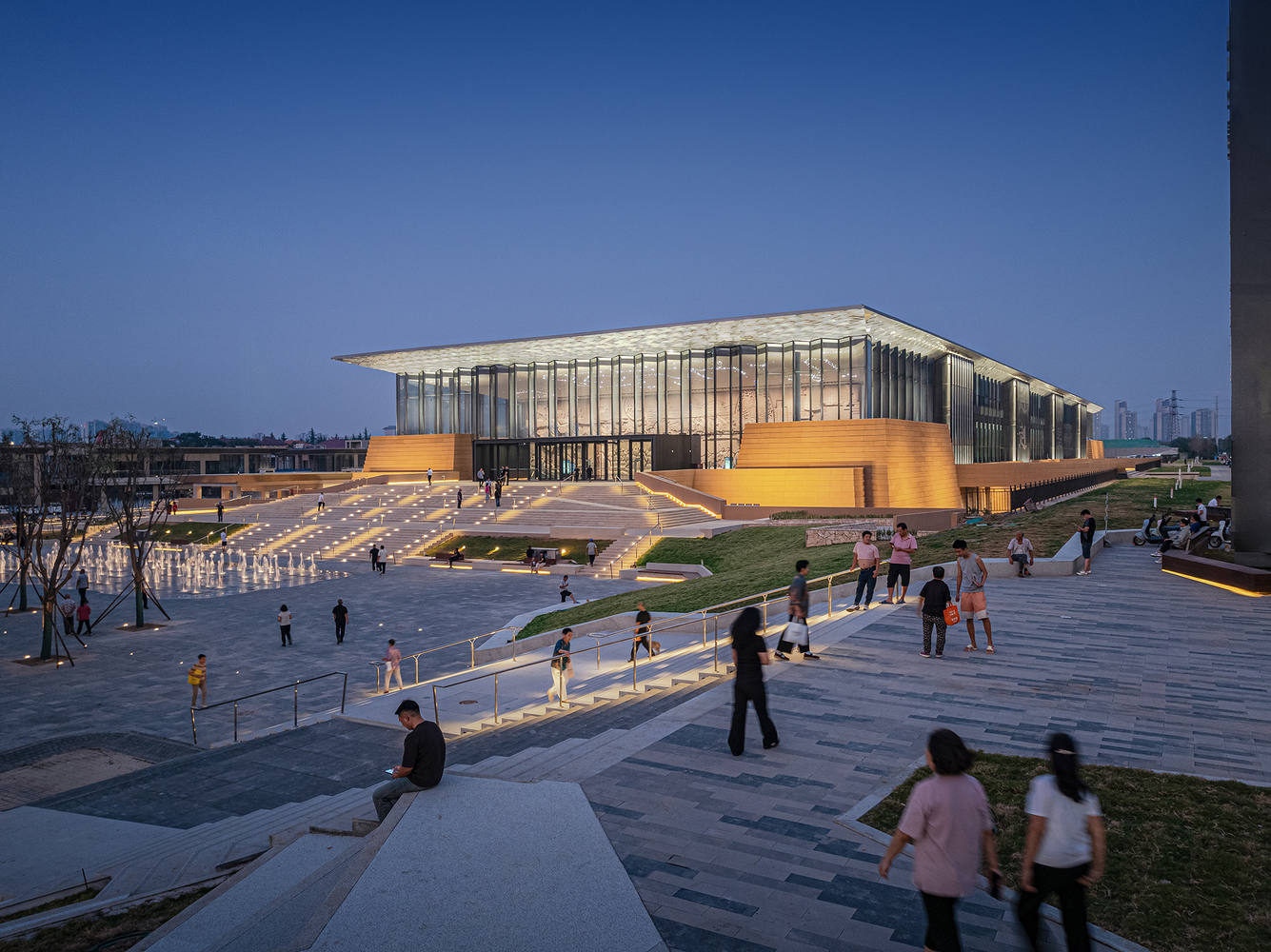
© Schran Image
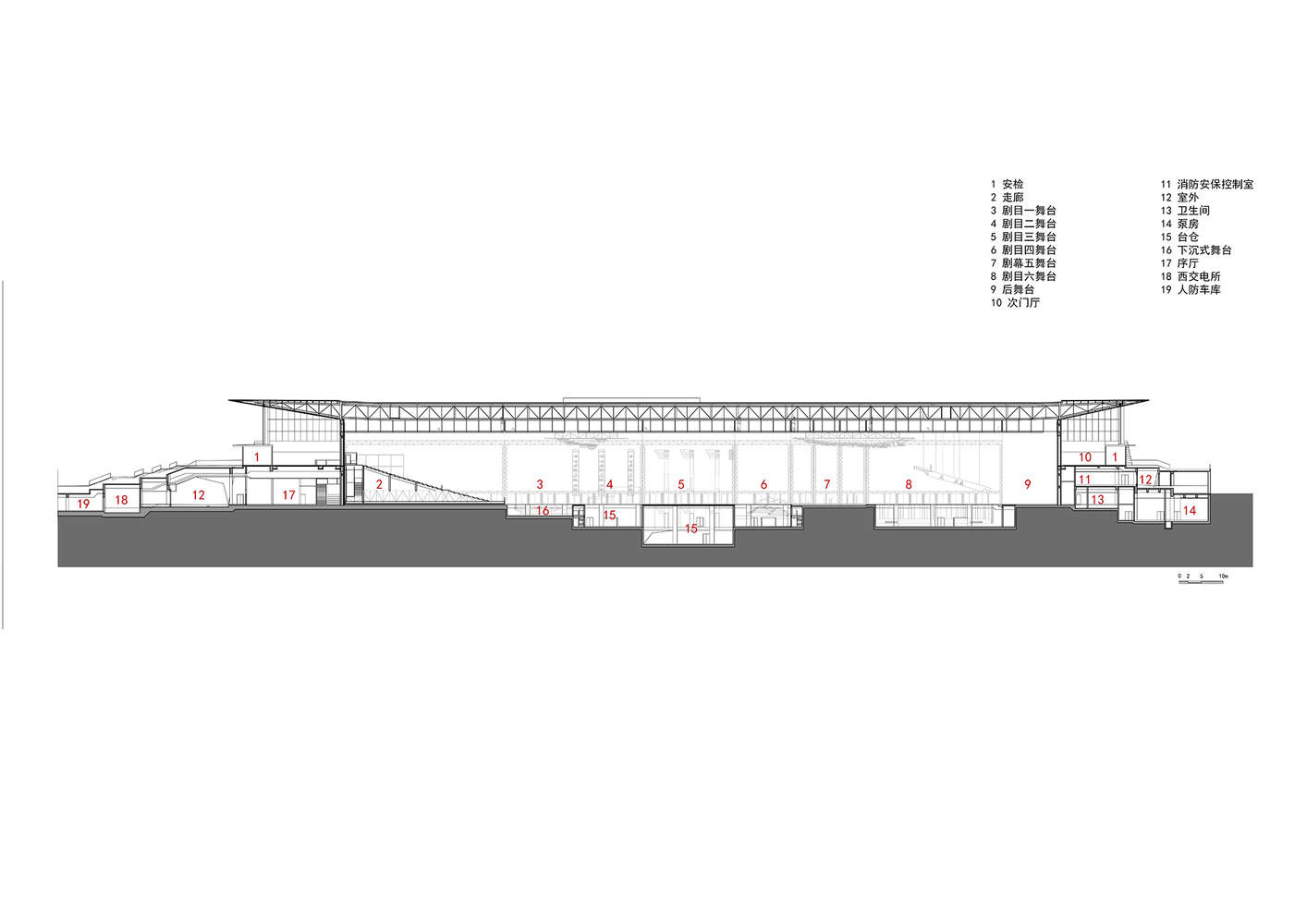
© Schran Image
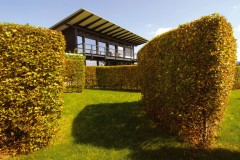
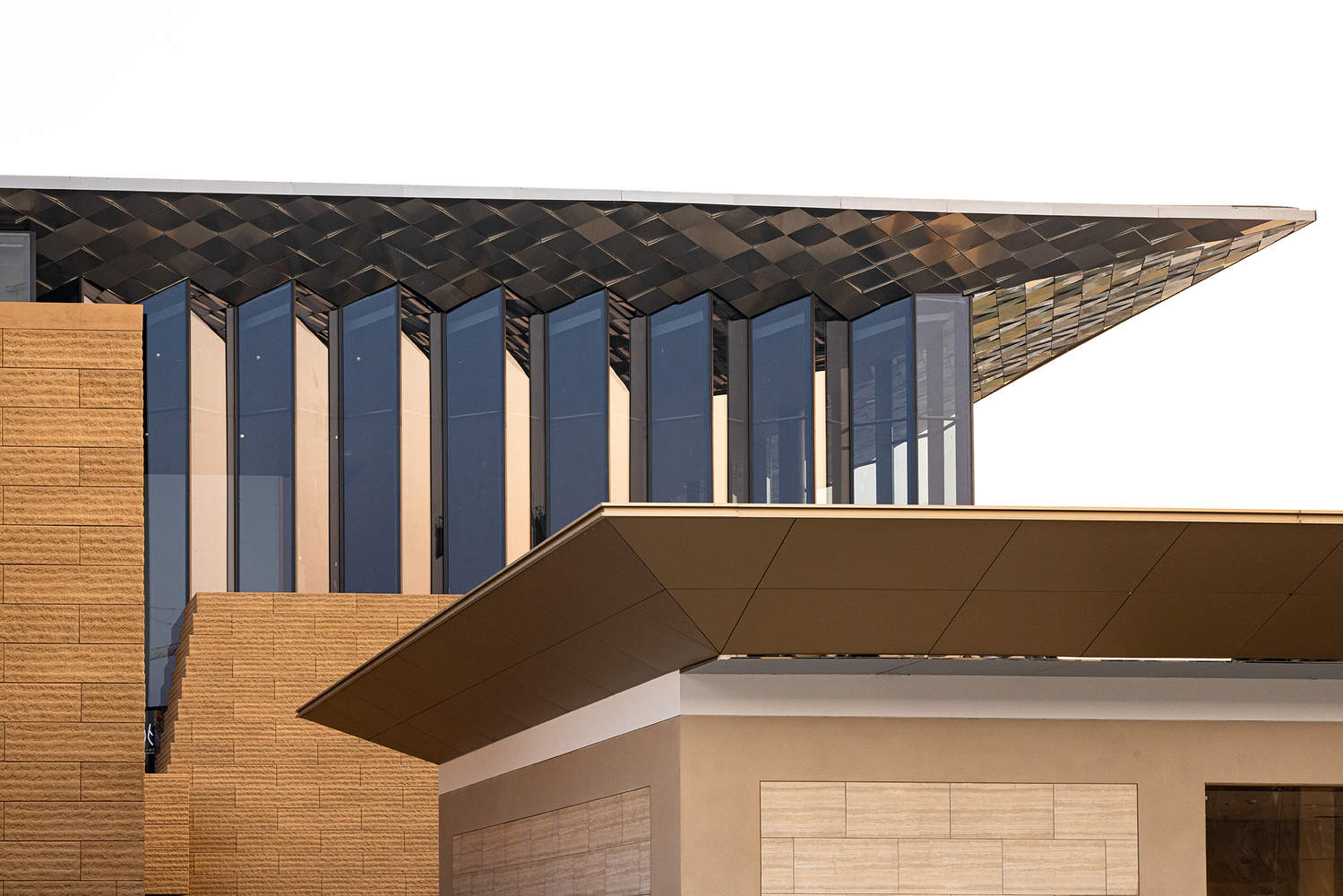
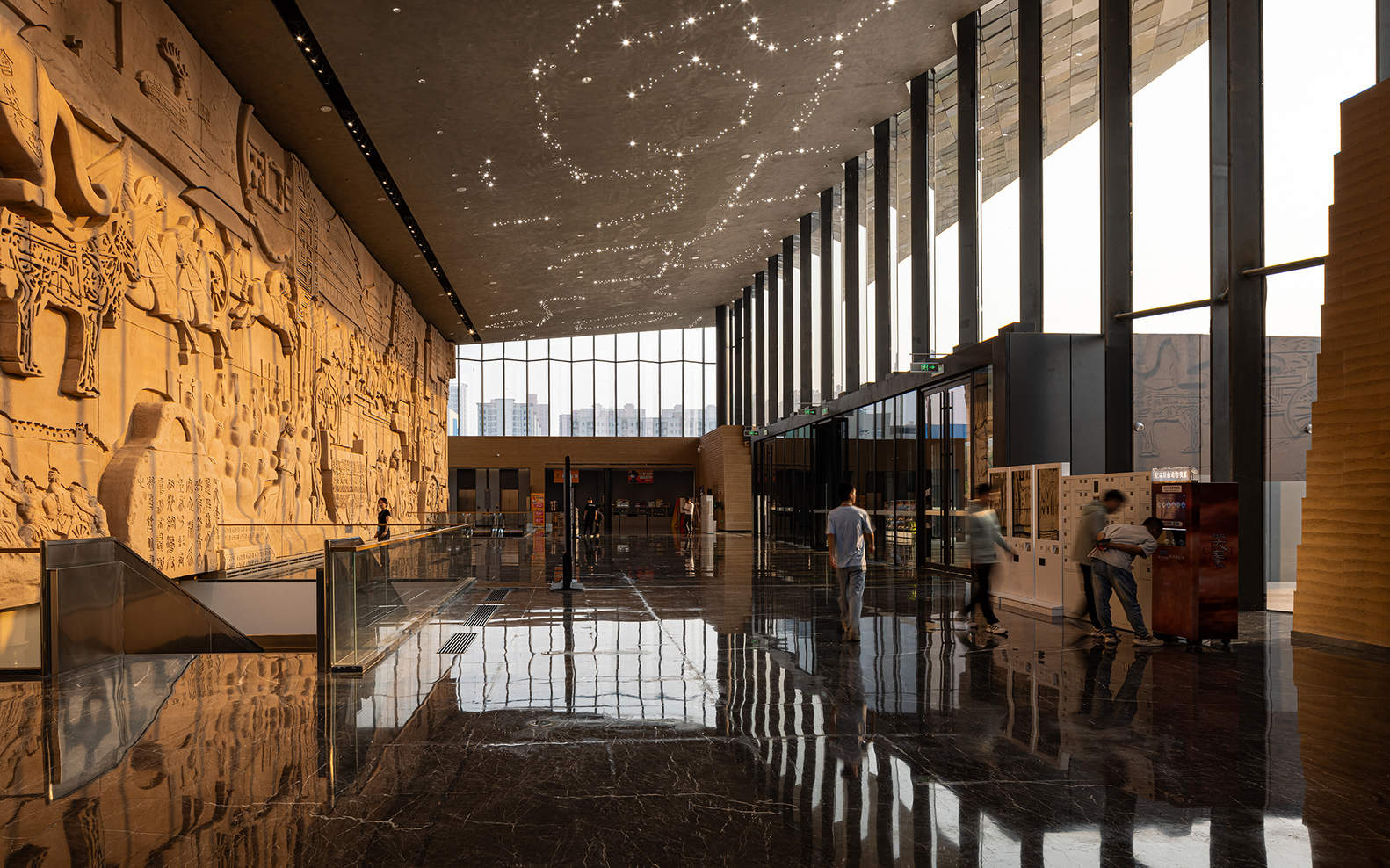
The main body of the upper building and the roof use a fully transparent glass facade and a frosted, purely reflective aluminum roof. The folding plate ultra-clear glass material and construction techniques shape a light and transparent contemporary facade. The internal cubic form of the theater is expressed directly and combined with a massive relief sculpture showcasing Qin culture, emphasizing the contrast between heavy historical sentiment and light contemporary feeling.
上部建筑主体与屋盖采用全通透玻璃立面和雾面半反射纯铝质屋顶,折板形超白通透玻璃材料与施工工艺塑造出立面轻盈通透的当代感;建筑内部方盒形的剧院形体则直观地加以表达,并与展现秦文化的巨型浮雕相结合,突出厚重的历史感与轻盈的当代感。
© Schran Image
© Schran Image
© Schran Image
The design and construction of the performance theater proceeded synchronously with the development, construction, and rehearsal of the "Jiu Jiu Da Qin" performance. The architectural team closely collaborated with the stage master George Cespel’s team to provide an indoor space integrating a 160-meter-long, 40-meter-wide mobile seating area and stage, where the 1,500 seats can move freely. Simultaneously, combined with the mobile lifting stage scene and digital sound, light, and electric media technology, it shapes a panoramic immersive performance space.
演艺剧院与“赳赳大秦”剧目同步展开设计、建造与排演,建筑团队与舞台剧作大师乔治·西平团队紧密协同,为演艺提供一个 160 米长、40 米宽的室内移动座席与舞台一体化空间,1500 座观众席可自如移动;同时,结合移动升降舞台场景和数智化声光电媒体技术,塑造了一个全景沉浸式的演艺空间。
© Schran Image
© Schran Image
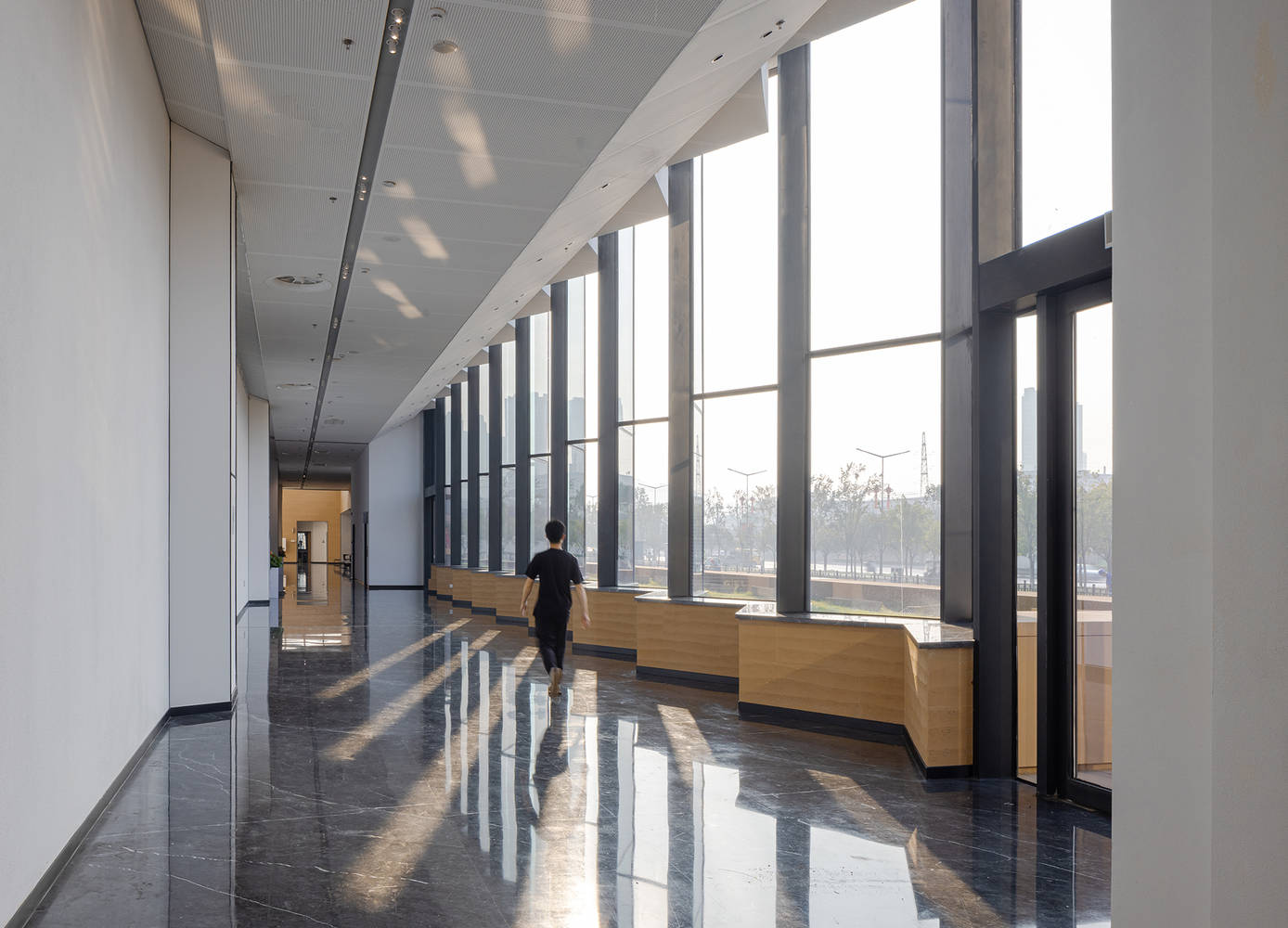
The design subverts the traditional theater model of fixed seating performances, breaking the dichotomy between stage and audience seating, dissolving boundaries to merge them into a unique paradigm of a "Super Theater." Multi-level foyers, lounges, cafes, and cultural and creative spaces are arranged around the main performance area. Actor and logistics/prop circulation paths are developed three-dimensionally around and above the main performance space. The vast space formed by the steel structure under the canopy, the lower levels, and the surrounding corridors creates the actors' domain. The mobile seating and panoramic stage present unique challenges and innovations for design and fire safety regulations.
设计颠覆传统剧院的固定座席演出模式,突破舞台与观众席的二分法,打破边界、融为一体,形成一座独一无二的“超级剧院”新范式。主体演艺空间周边布设立体化门厅、休息厅、咖啡与文创等功能;演员与后勤道具流线围绕主体演艺空间周边和上下立体化展开,巨大的天幕钢构空间内部、下部及周边通道形成演员空间;移动式座席和全景式舞台为设计和消防等提出独创性挑战和创新。
© Schran Image
© Schran Image
The performance theater features a six-act story, pioneering a processional seating arrangement, a multi-space traversing theater, and immersive multimedia audio-visual effects, making it the world's first high-tech processional theater and the largest immersive super-theater, receiving Guinness World Records certification for the largest theater stage.
演艺剧院演出六幕剧情,首创行进式坐席、多空间贯穿式剧场以及多媒体沉浸视听效果,使之成为全球首个行进式高科技剧院和最大的沉浸式超级剧场,获得吉尼斯世界纪录最大的剧院舞台认证。