教育集群的空间组织与功能复合:该项目成功整合了初中、小学和幼儿园三大教育功能,通过“三明治”式的总平面布局和地下室一体化设计,实现了高效的空间组织。尤其值得称赞的是,初中和小学在纵向上细致划分了辅助、主教学和兴趣空间三大功能区,这种复合化的功能分区不仅适应了高容积率下的设计挑战,更通过空间的高度渗透和变化,极大地丰富了教学体验,为师生创造了多元且富有活力的学习环境。
差异化设计与动态立面表达:建筑师在统一的整体框架下,巧妙地实现了初中与小学的差异化设计。初中以围合式布局和具有退台式露天剧场的报告厅,突出了公共性和复杂性;而小学则更注重低龄儿童的空间认知规律。面向西侧操场的立面设计,通过巨型框架、波浪形台阶下的图书馆和悬浮的异形体块,形成了自由奔放、动感十足的“合唱”立面,展现了建筑语言的张力和艺术表现力。
社区互动与城市活力的激发:项目在处理学校与周边社区的关系上体现了前瞻性。通过东侧的三道退台草坡,不仅创造了半室外休憩空间,更通过预留的艺术教室展示窗口,积极构建了学校与社区的“互动界面”。这种设计策略不仅服务于教育本身,更通过激活校园边缘空间,促进了社区居民的参与和归属感,有效提升了区域的城市活力,避免了传统封闭式校园可能带来的城市活力衰减。
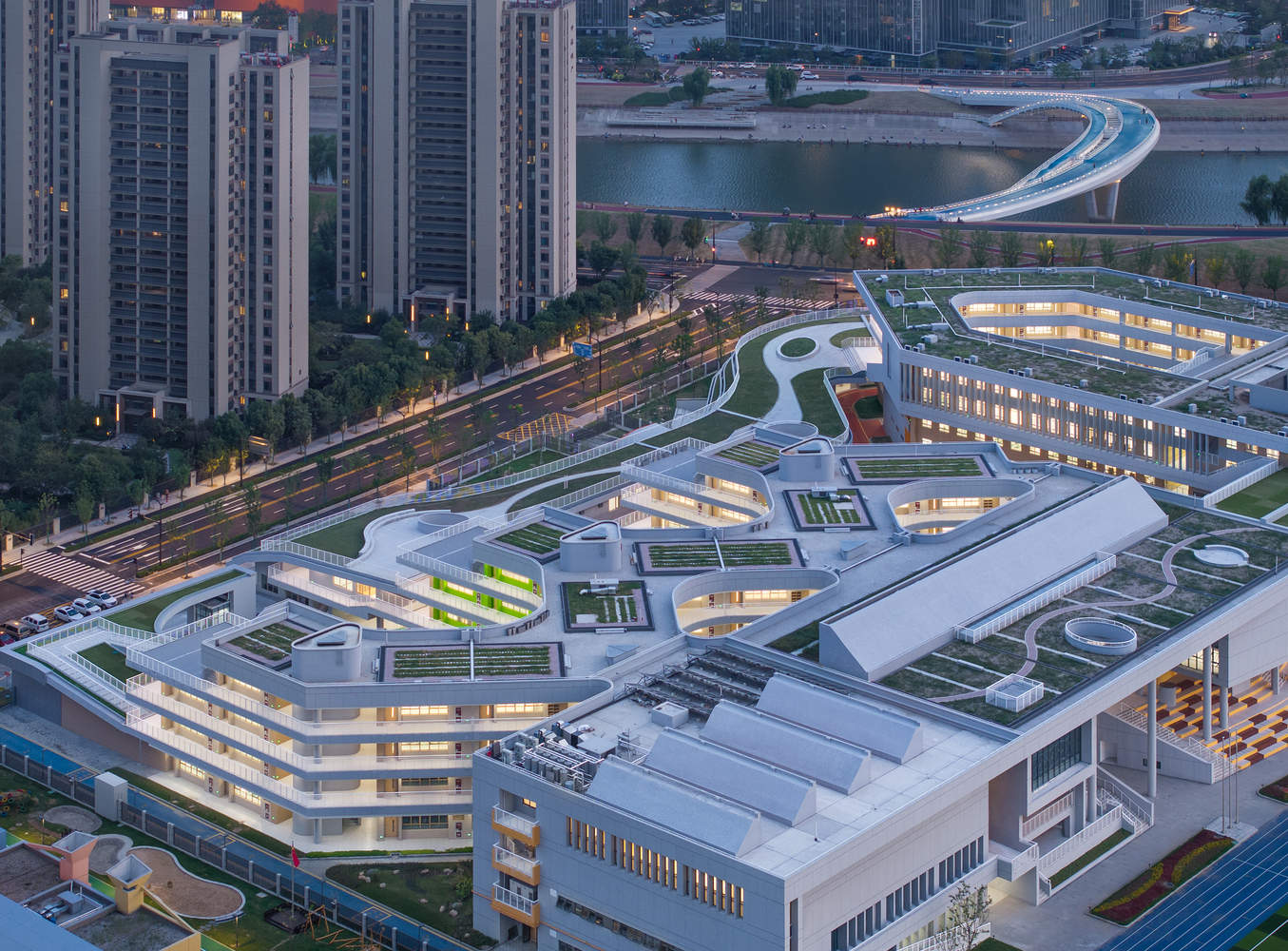
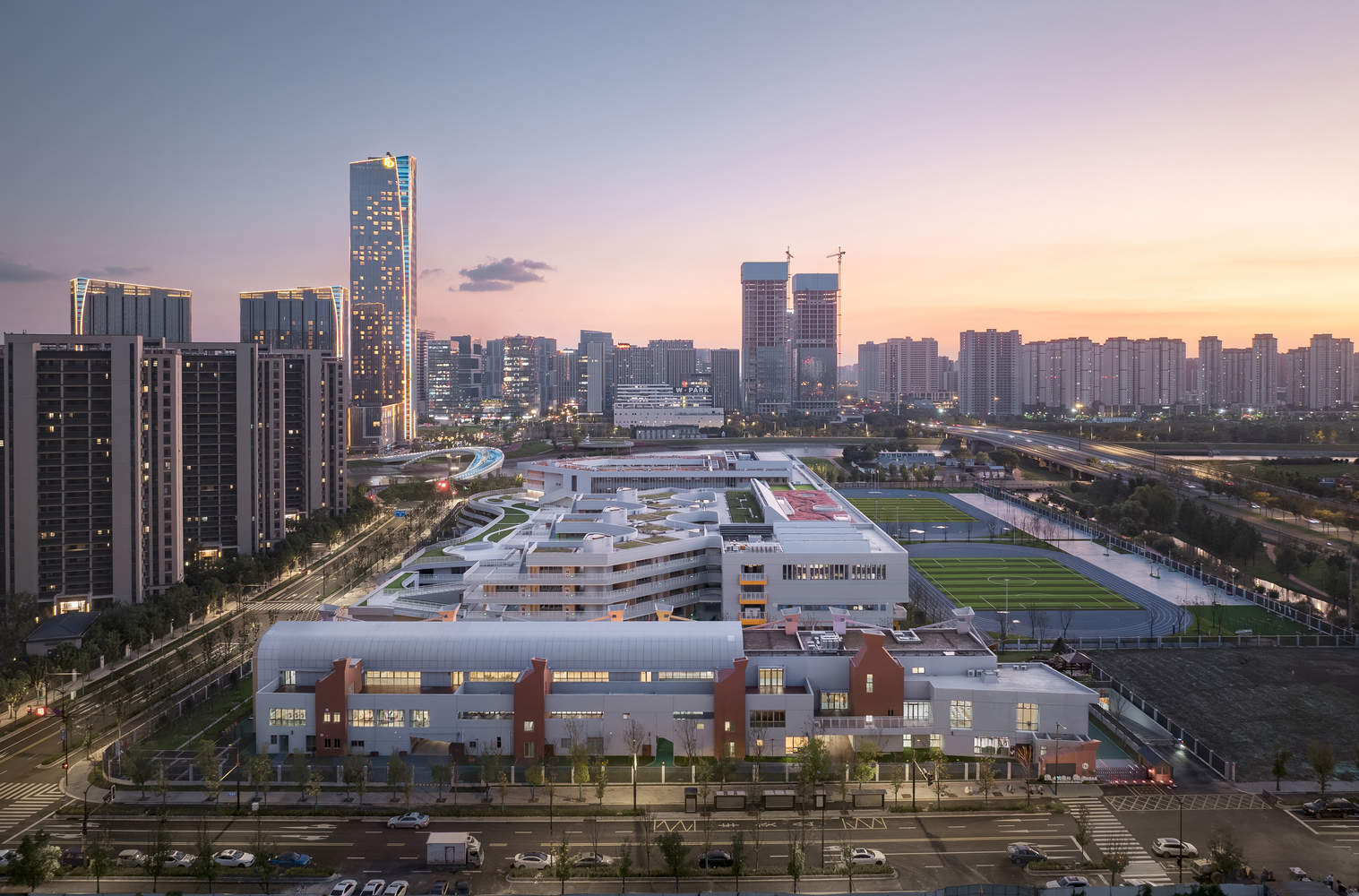
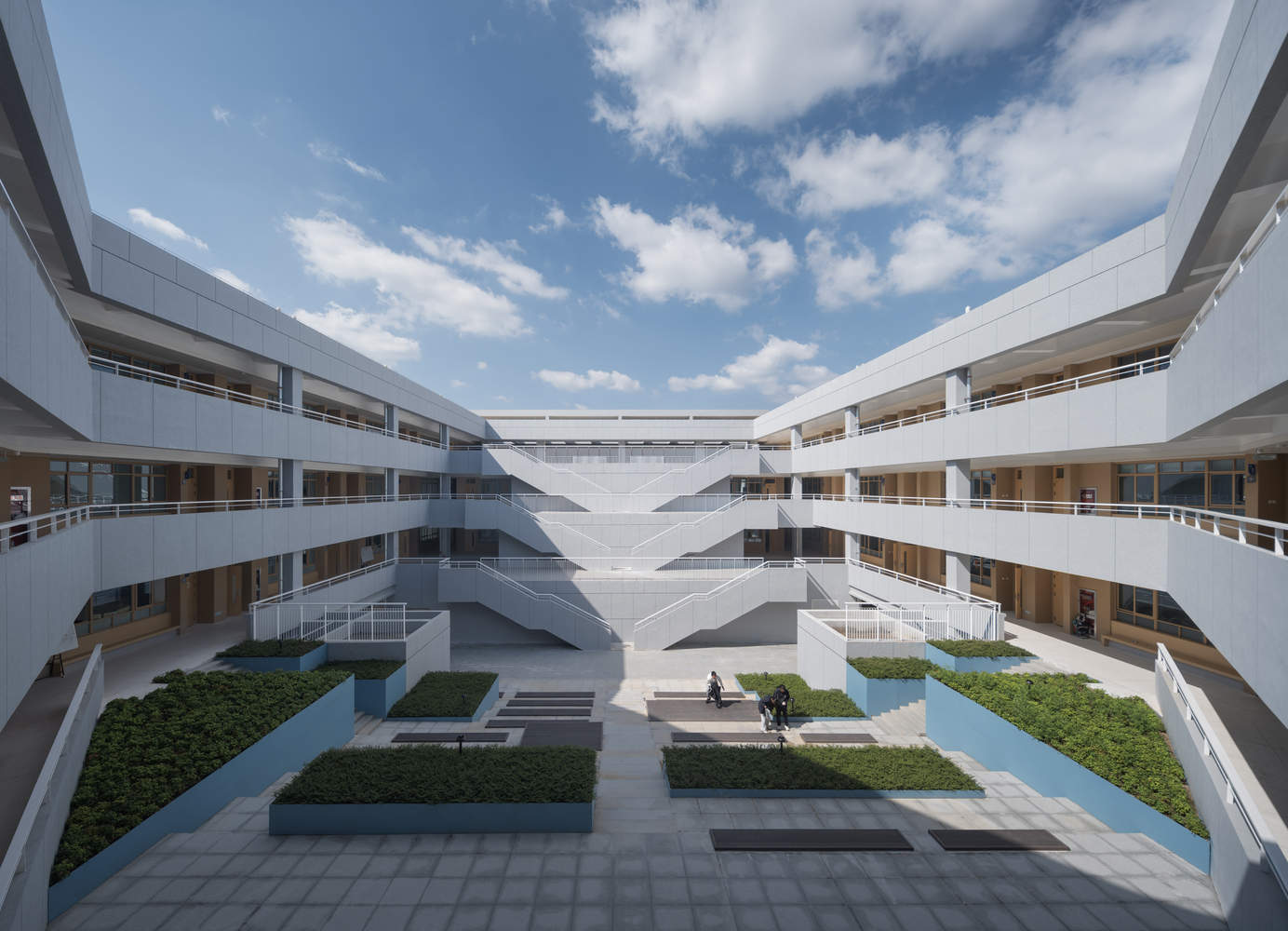
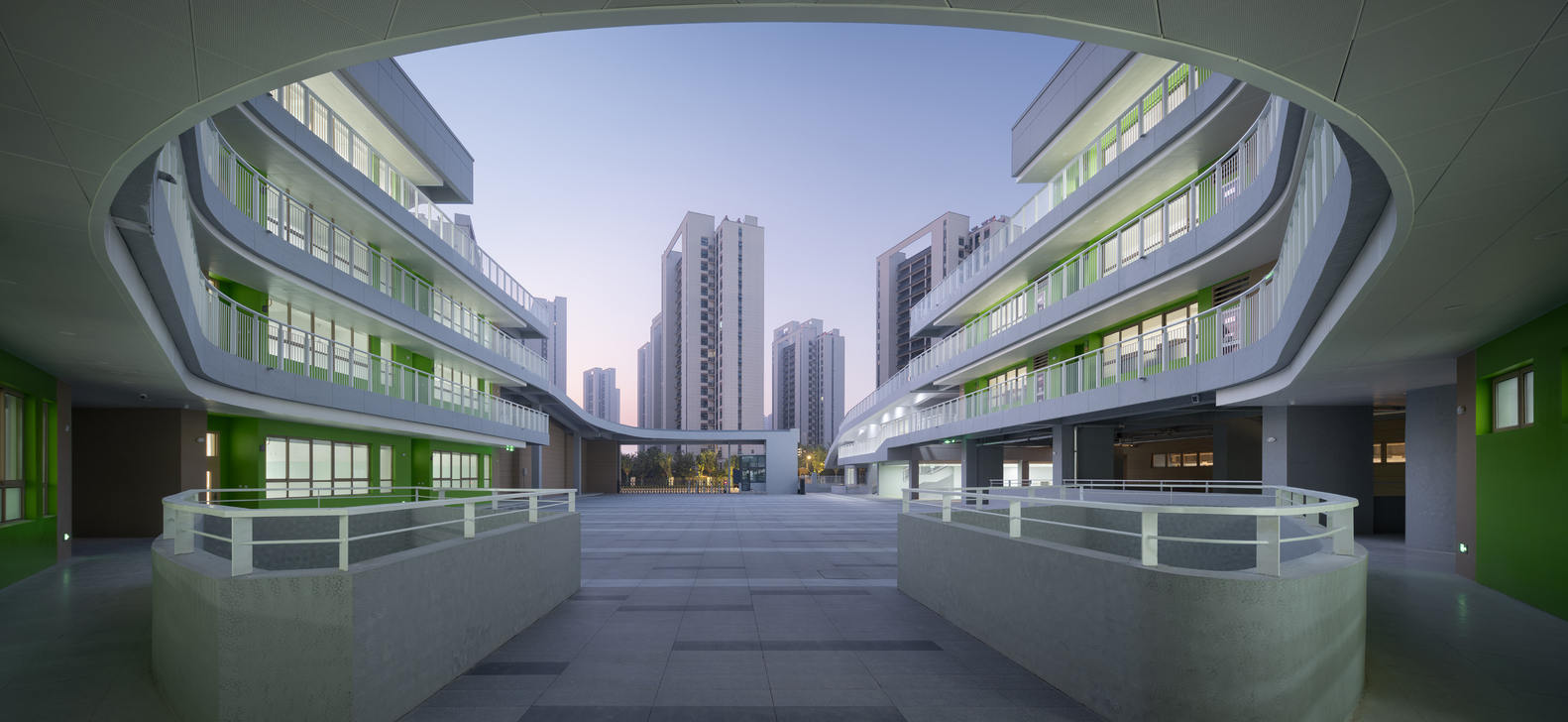
The complex comprises a 24-class junior high school, a 30-class primary school, and a 24-class kindergarten, arranged sequentially from south to north, with integrated basement levels. The three architects responsible for the principal design engaged in an interesting "pen talk," balancing division of labor with collaboration. The junior high and primary schools are closely linked, leading to an agreement on the master plan: both adopt a similar "sandwich" layout, strictly controlling the dimensions of the connecting elements at key junctions before developing their respective designs. The junior high and primary school buildings are divided longitudinally into three functional zones, arranged from west to east as auxiliary teaching spaces, main teaching spaces, and extracurricular interest spaces.
建筑群由一座24班初中、一座30班小学和一座24班幼儿园组成,三者由南向北依次布置,地下室连成一体。负责主创设计的三位建筑师既有分工又有协同,进行了一场有趣的“笔谈”。初中和小学联系紧密,所以在总平面方面进行了约定:两者都采用类似“三明治”的布局,首先在关键的交接处严格控制住连接体尺寸,然后各自发挥。 初中和小学建筑在纵向分成三个功能区,自西向东分别布置着辅助教学空间、主教学空间和课外兴趣空间。
© 侯博文
© 侯博文
© 侯博文
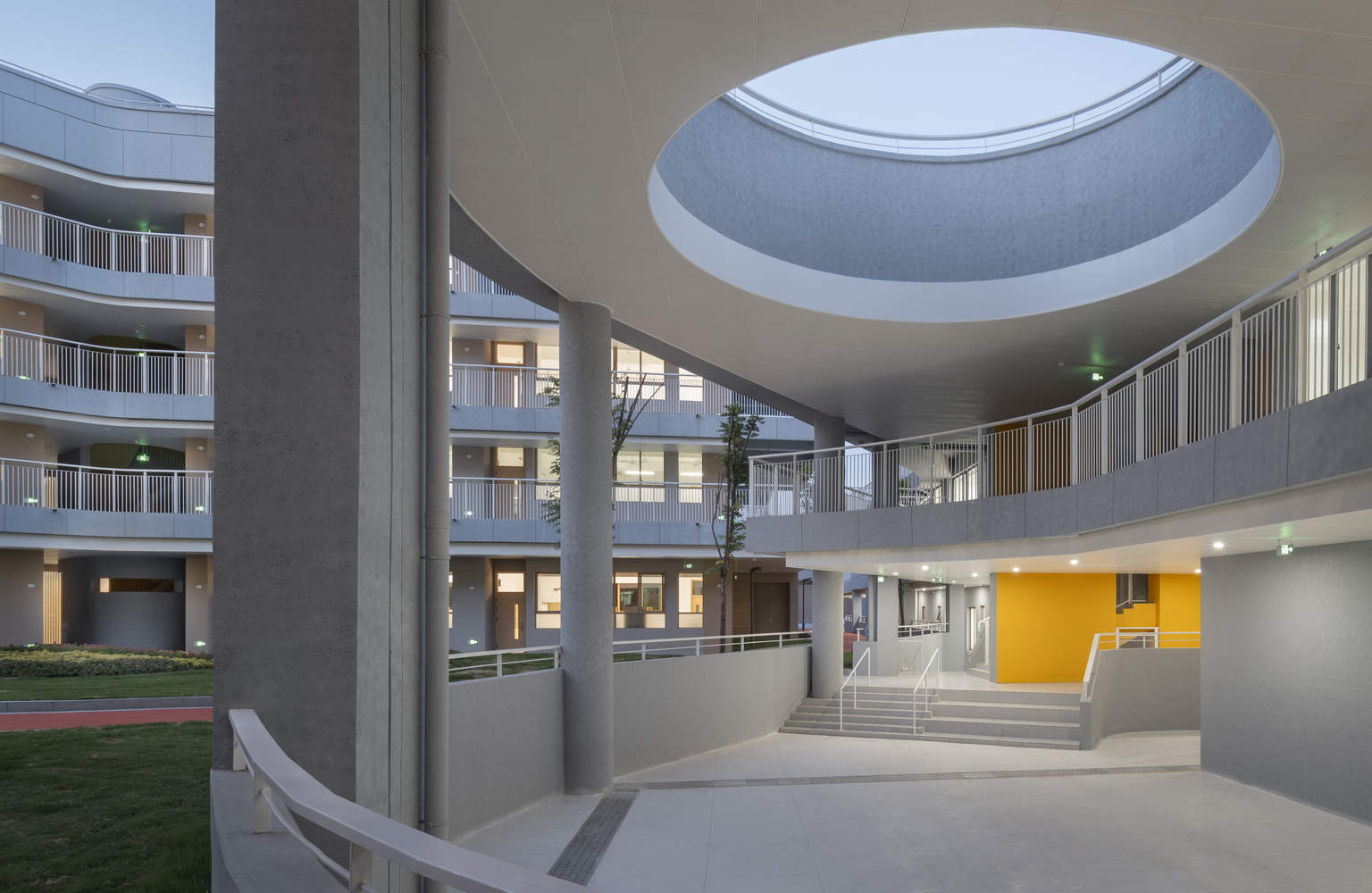
Both the junior high and primary schools achieve a floor area ratio (FAR) of 0.9, making them relatively "crowded" campuses. While this high-intensity design condition increases complexity, it also enhances spatial compounding, easily leading to diverse spatial effects. The main differences between the junior high and primary schools lie in three areas: the organization of the main teaching block, the core space of the auxiliary building, and the treatment of the west facade. The main teaching block of the junior high school is located at the head of the complex, featuring an almost rectangular, enclosed form. A lecture hall is placed in the center, with its roof designed as receding terraces to provide a public open-air theater for teachers and students. The library and specialized classroom area on the west side boast highly compounded spatial heights; the complex sectional design allows this atrium space to exhibit horizontal and vertical permeability, making it the most attractive location in the building. The design for the primary school considers the lower spatial cognitive ability of younger children, ensuring a certain regularity in spatial operations.
初中和小学的容积率均达到了0.9,属于较为“拥挤”的校园,这样高强度的设计条件虽然增加了设计难度,但是可以提高空间的复合度,容易形成变化多端的空间效果。初中和小学的不同之处主要体现在三个区域:主教学楼的组织方式、辅助教学楼的核心空间、西立面的处理。初中的主教学楼位于建筑群的头部,为接近矩形的围合式。教学楼中间放置报告厅,其屋顶设置层层退台,为师生们提供公共化的露天剧场。西侧的图书馆和专业教室区域空间高度复合,复杂的剖面设计使这个中庭空间呈现出水平方向与垂直方向的渗透,使这里成为这座建筑最具有魅力的场所。小学部的设计考虑到低龄儿童较低的空间认知能力,空间操作会有一定的规律性。
© 侯博文
© 侯博文
© 侯博文
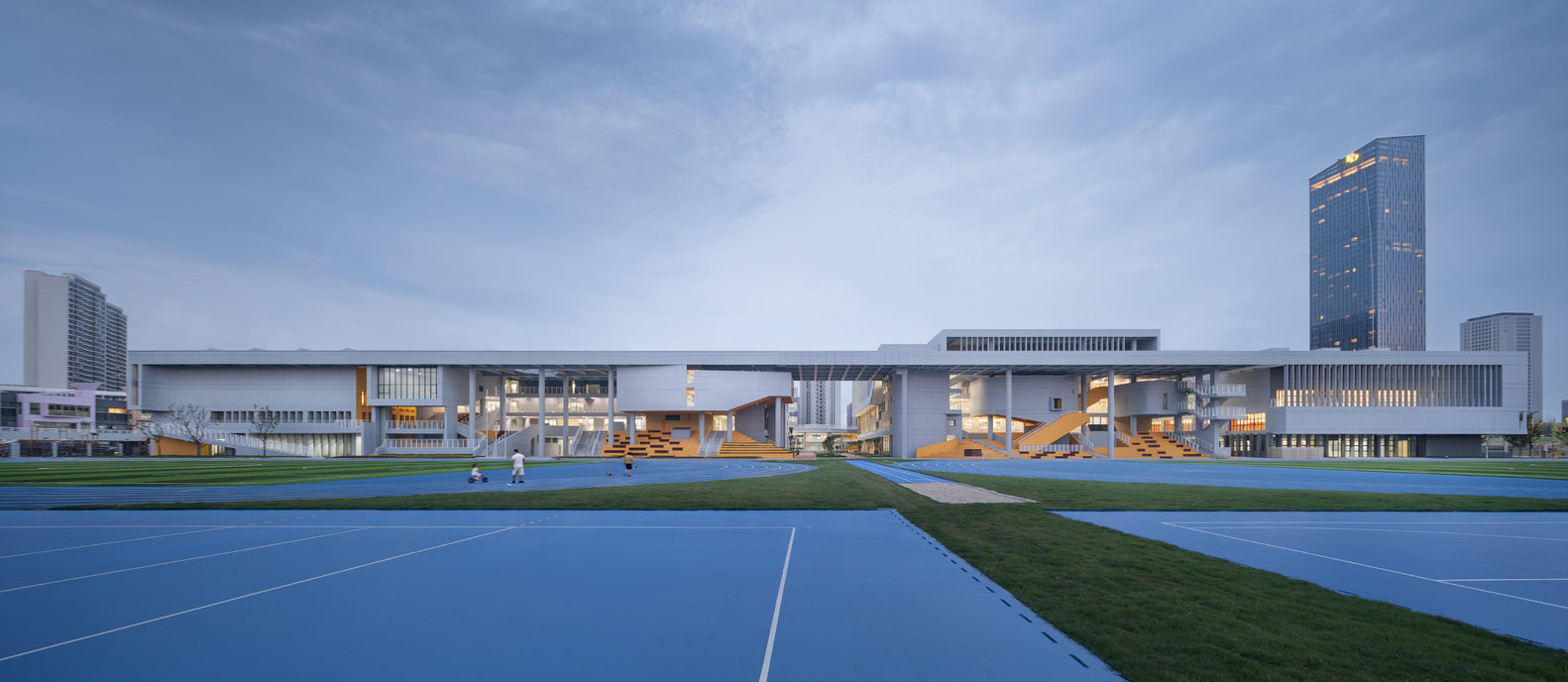
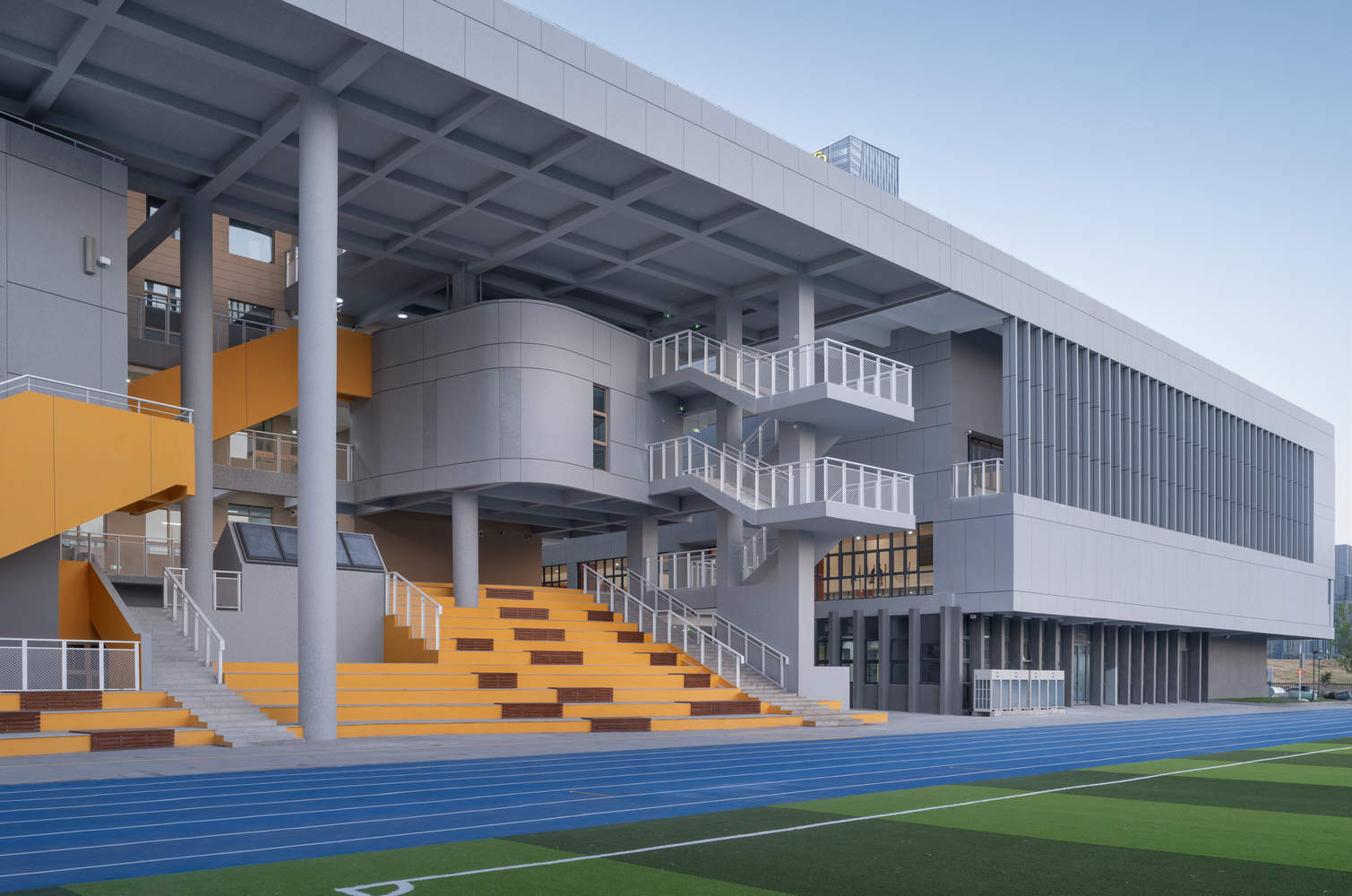
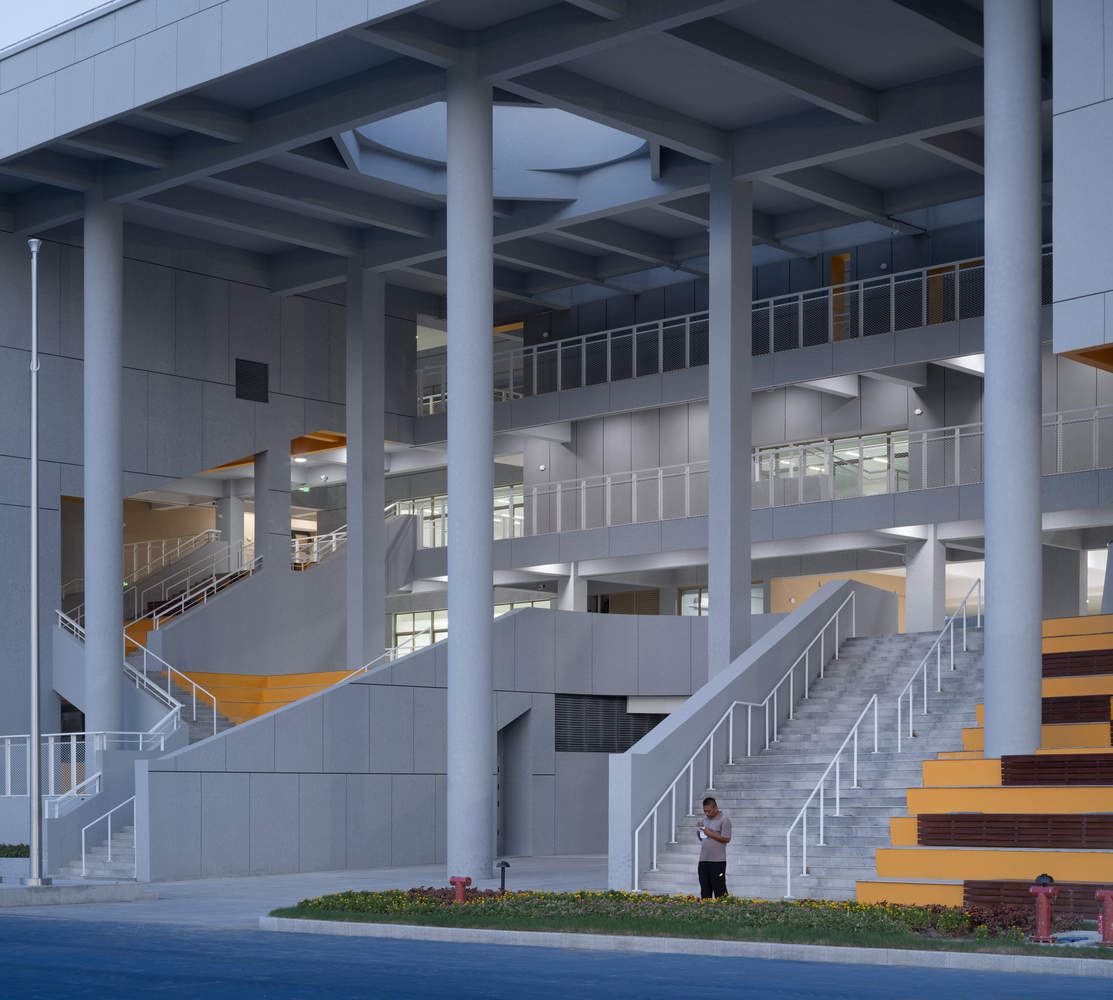
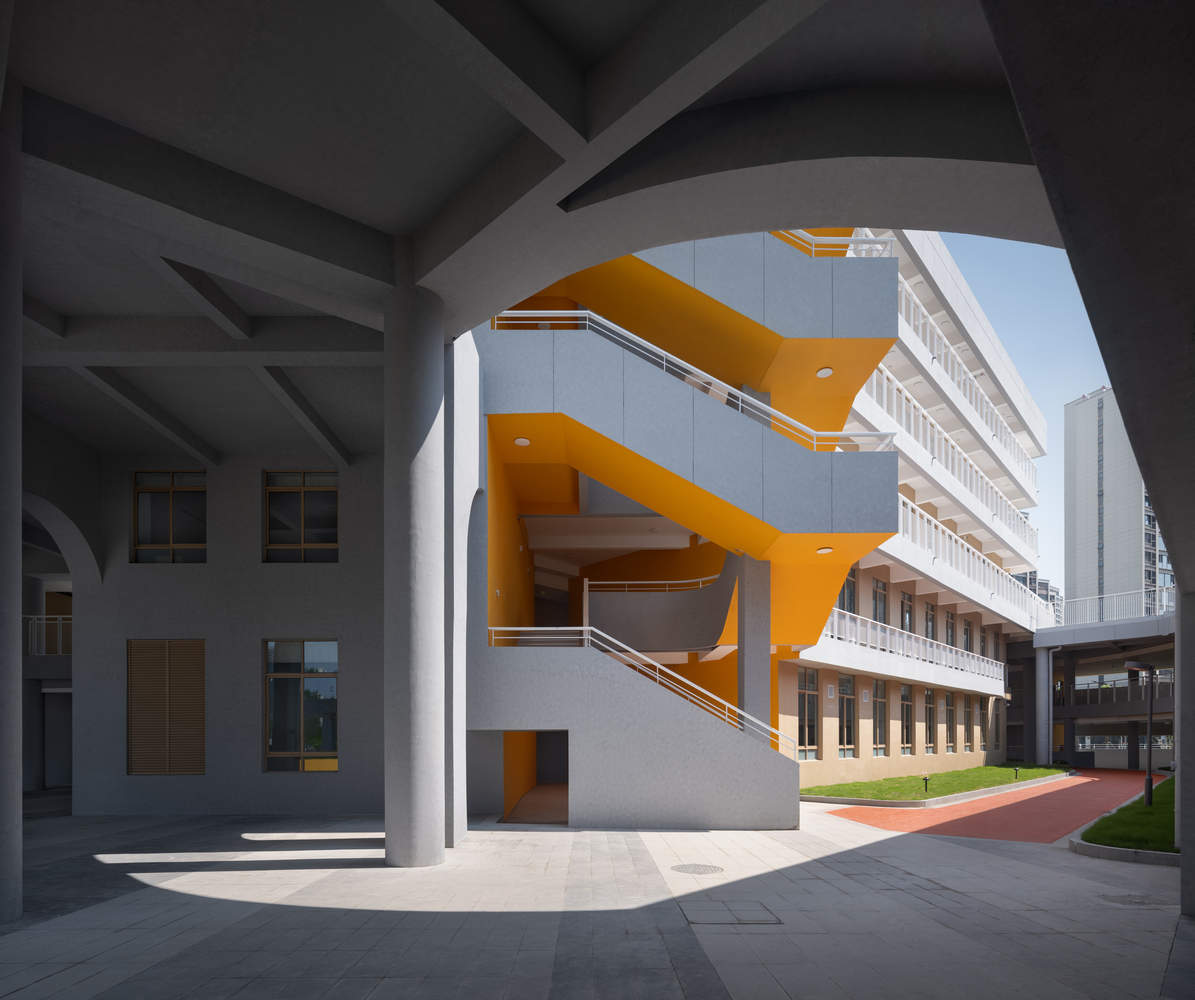
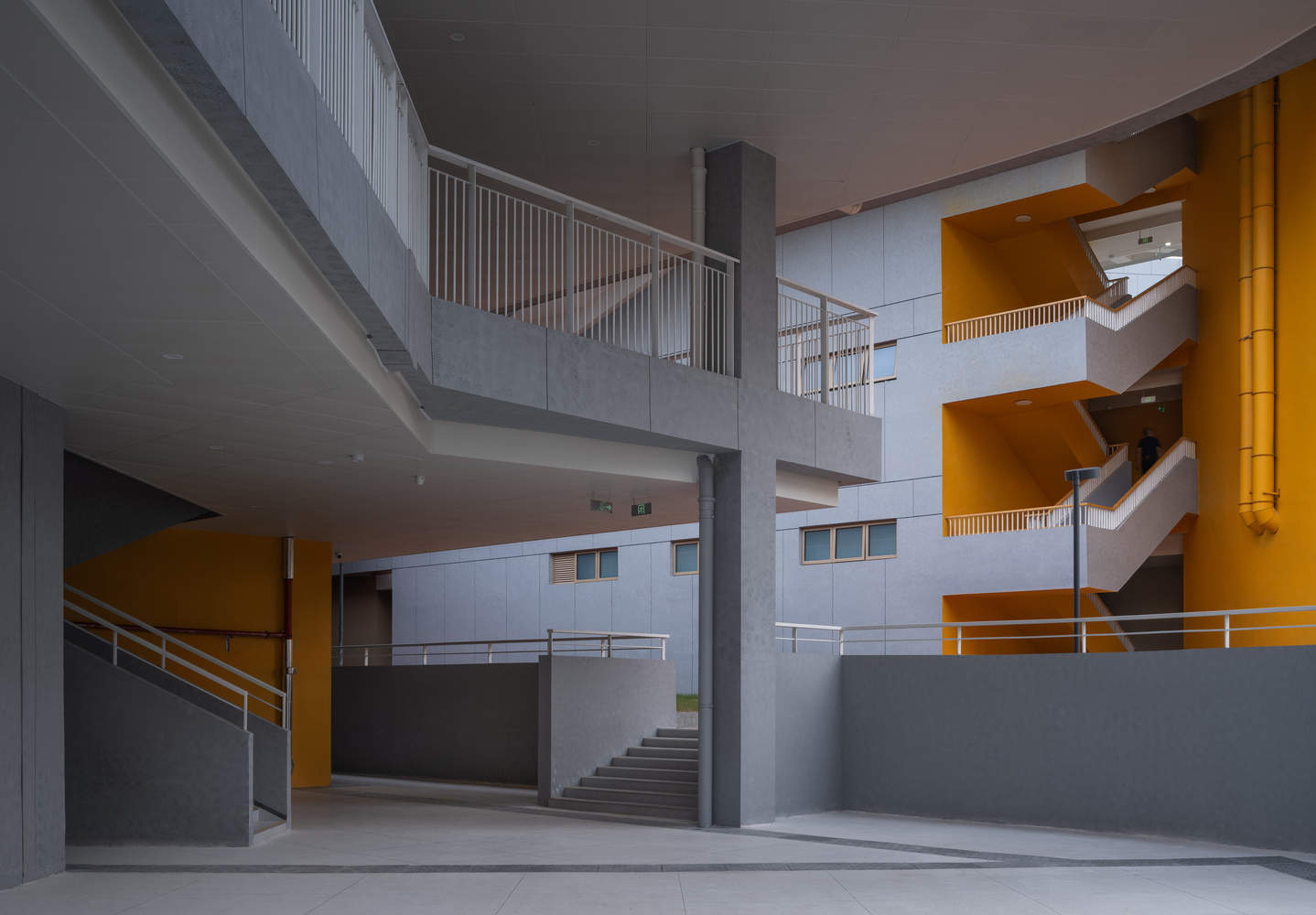
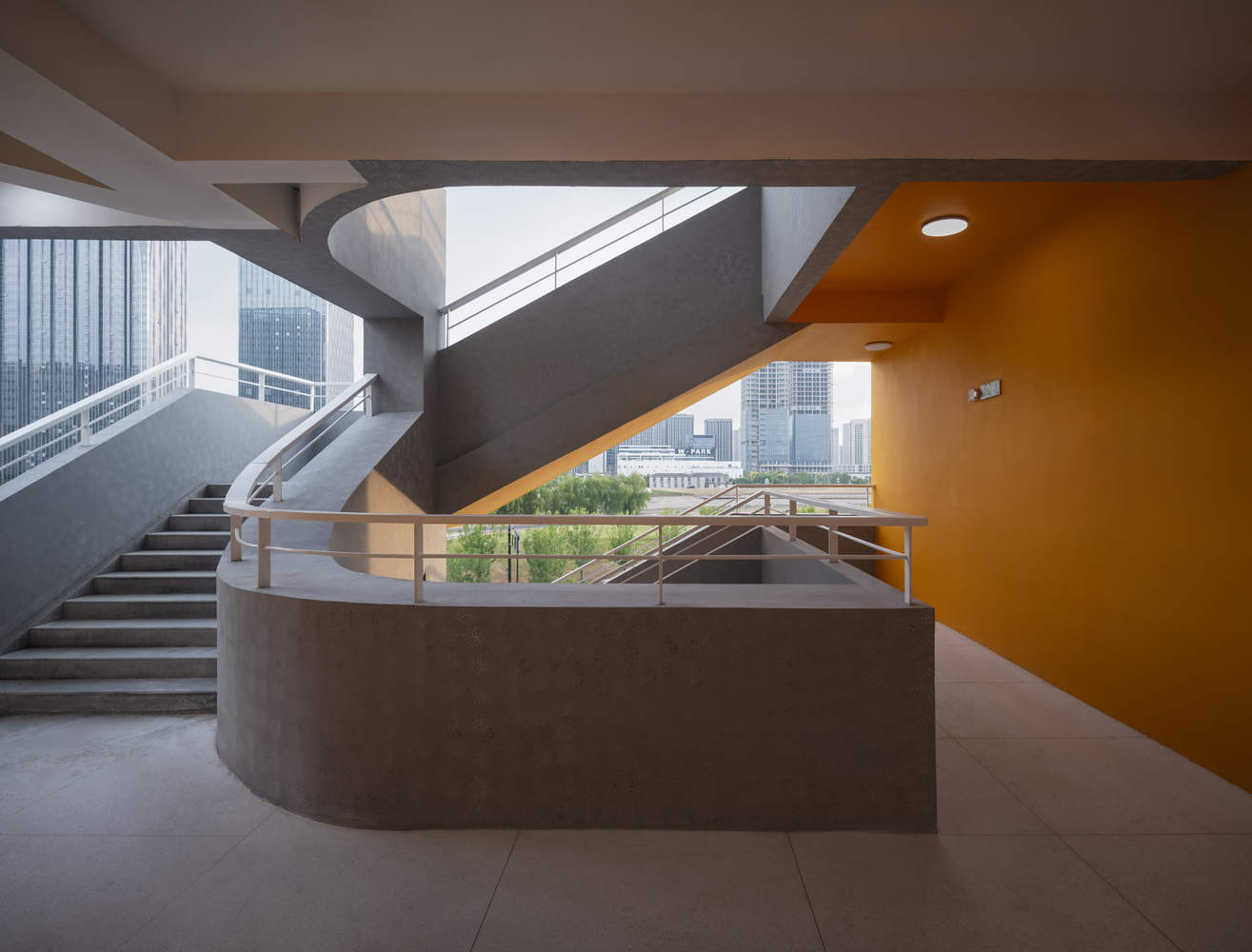
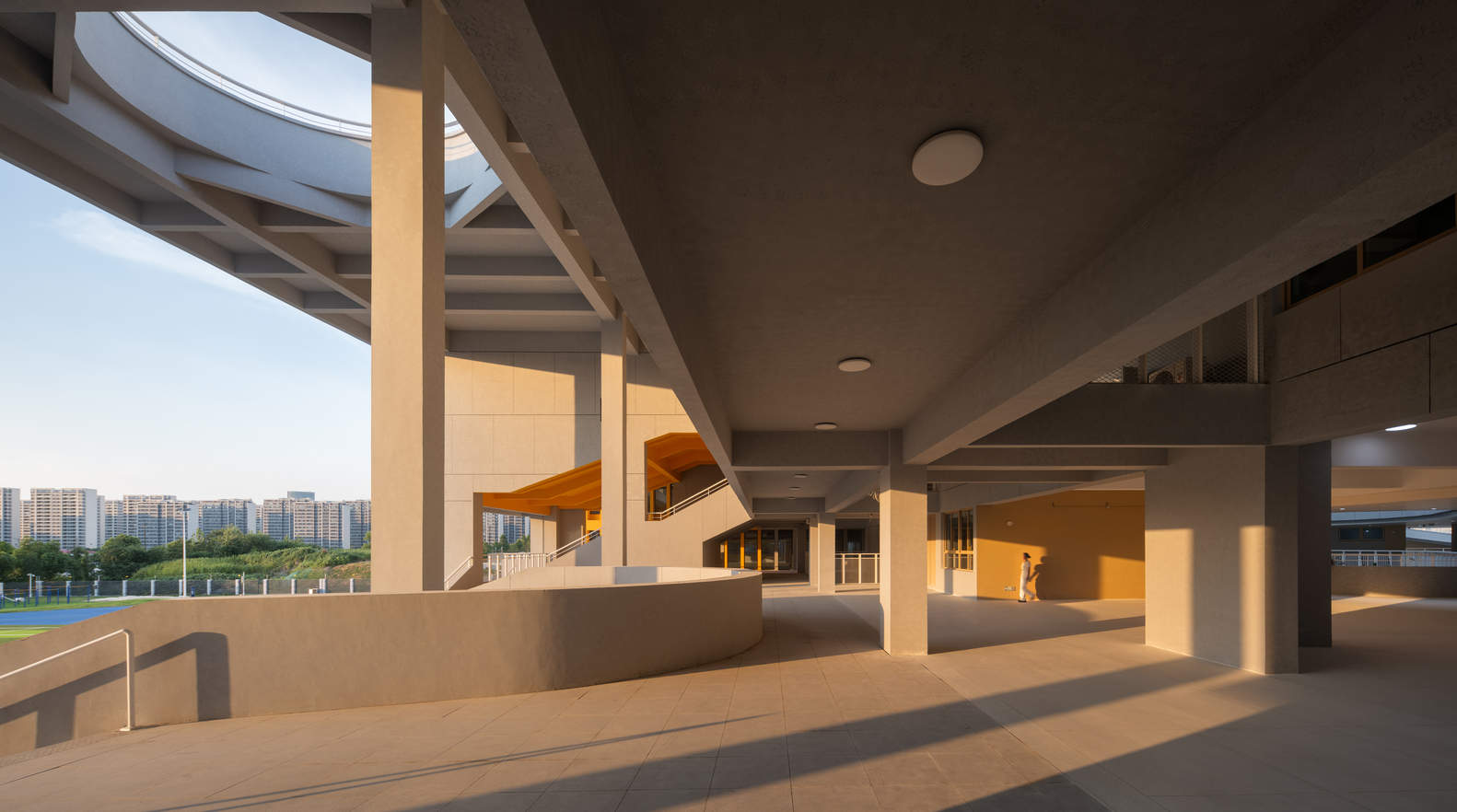
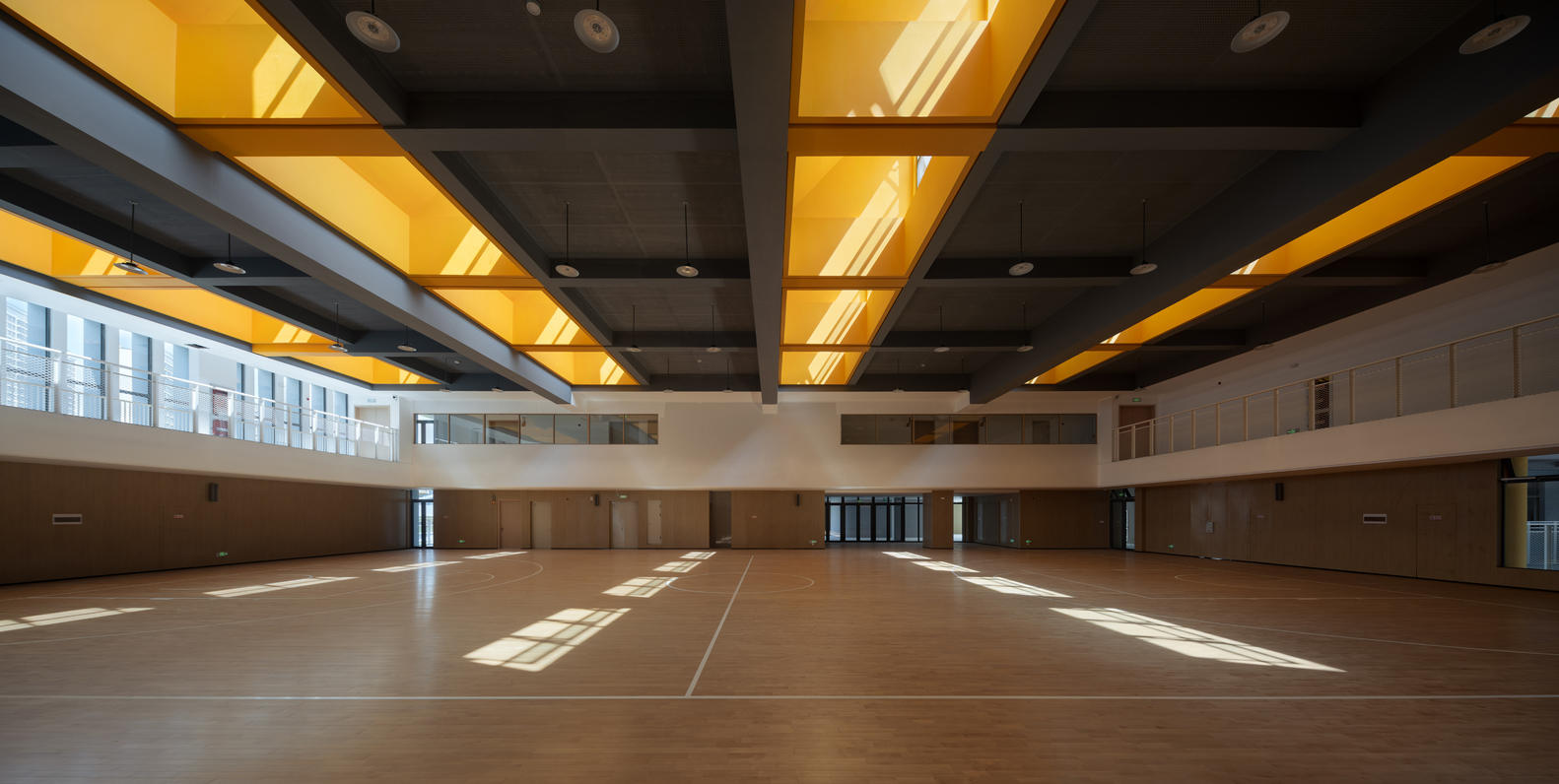
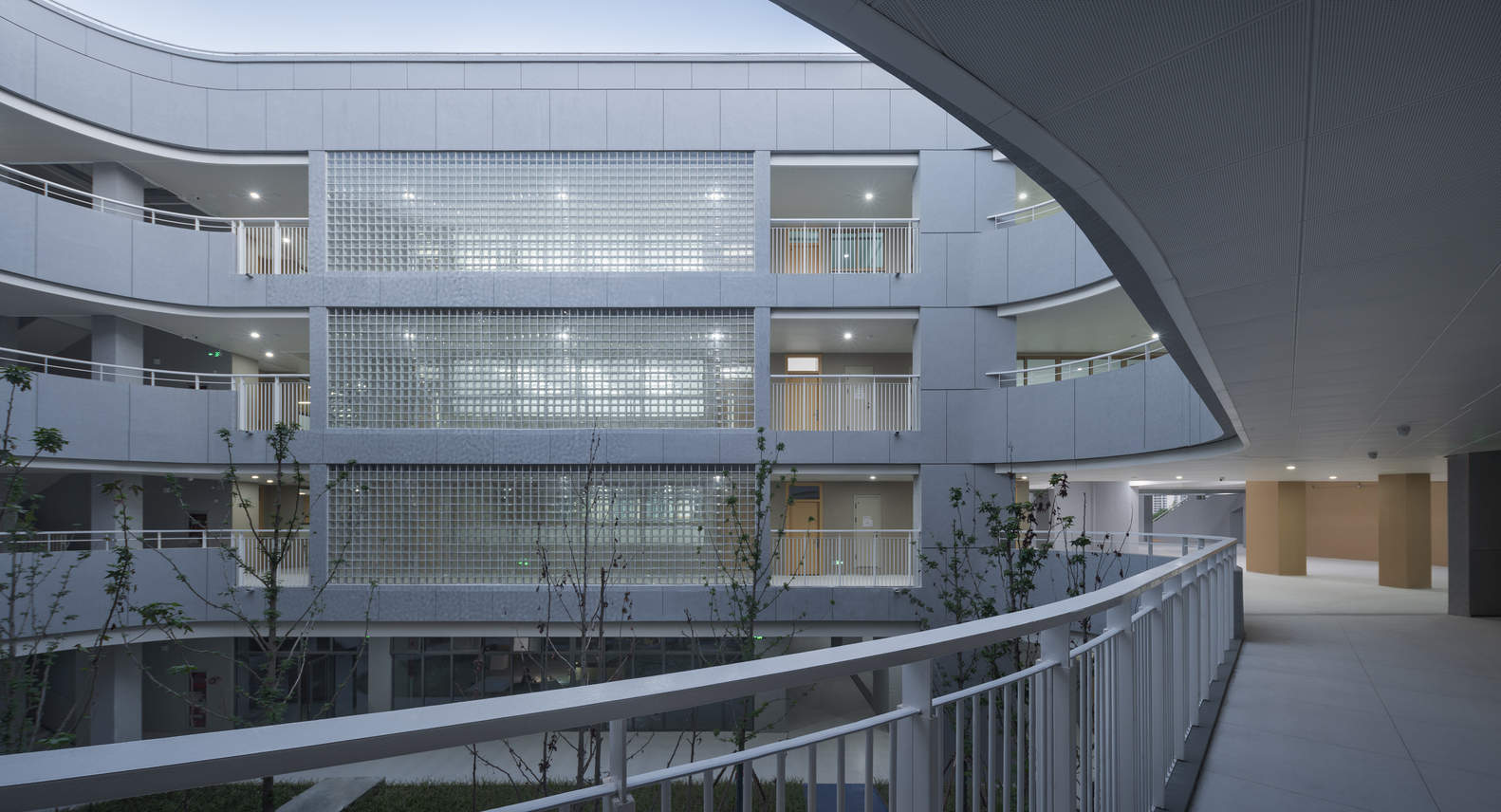
The floor plan of the teaching building is composed of two combined "Y" shapes. The long arms of the "Y" shape house regular classrooms, while the short branches accommodate teacher offices, restrooms, and flexible classrooms; the intersection of these forms constitutes the cluster's circulation core and public activity area. The interface facing the west sports field for both the junior high and primary schools is a "chorus" resulting from multiple rounds of coordination between the two architects—the massive indoor/outdoor gymnasiums at the north and south ends serve as "supports," holding up a giant frame. The architectural language within the frame is free and unrestrained: the library is hidden beneath wave-like steps, with huge light scoops extending from the steps; the lecture hall, electronic reading room, and small theater "float" in the air as irregular masses; vibrant orange staircases, extending ramps, and corridors interweave among them. The harmony yet diversity in the design of the junior high and primary schools stems not only from the different approaches the two principal architects took toward the two distinct educational stages but also reflects their individual personalities within a shared creative concept.
教学楼的平面是两个“Y”型组合而成,“Y”型平面长端是普通教室,短支为教师办公、卫生间和机动教室,三者交汇点是组团的交通核心和公共活动区域。初中和小学面向西侧操场的界面是两位建筑师多次协调后的“合唱”——南北端用两座体量巨大的风雨操场作为“支撑”,架起巨型框架。框架中的建筑语言自由而奔放:图书馆隐藏在波浪形的台阶下,巨大的采光筒从台阶上伸出来;阶梯教室、电子阅览室和小剧场以异形体块的方式“悬浮”在空中;鲜艳的橙色楼梯和伸展的坡道、走廊穿插其间。初中和小学在设计上的和而不同,不但源于两位主创建筑师在对待初中和小学这两个不同教育阶段的手法的差异,而且也体现出了他们在共同的创作理念下的个性差异。
© 侯博文
© 侯博文
© 侯博文
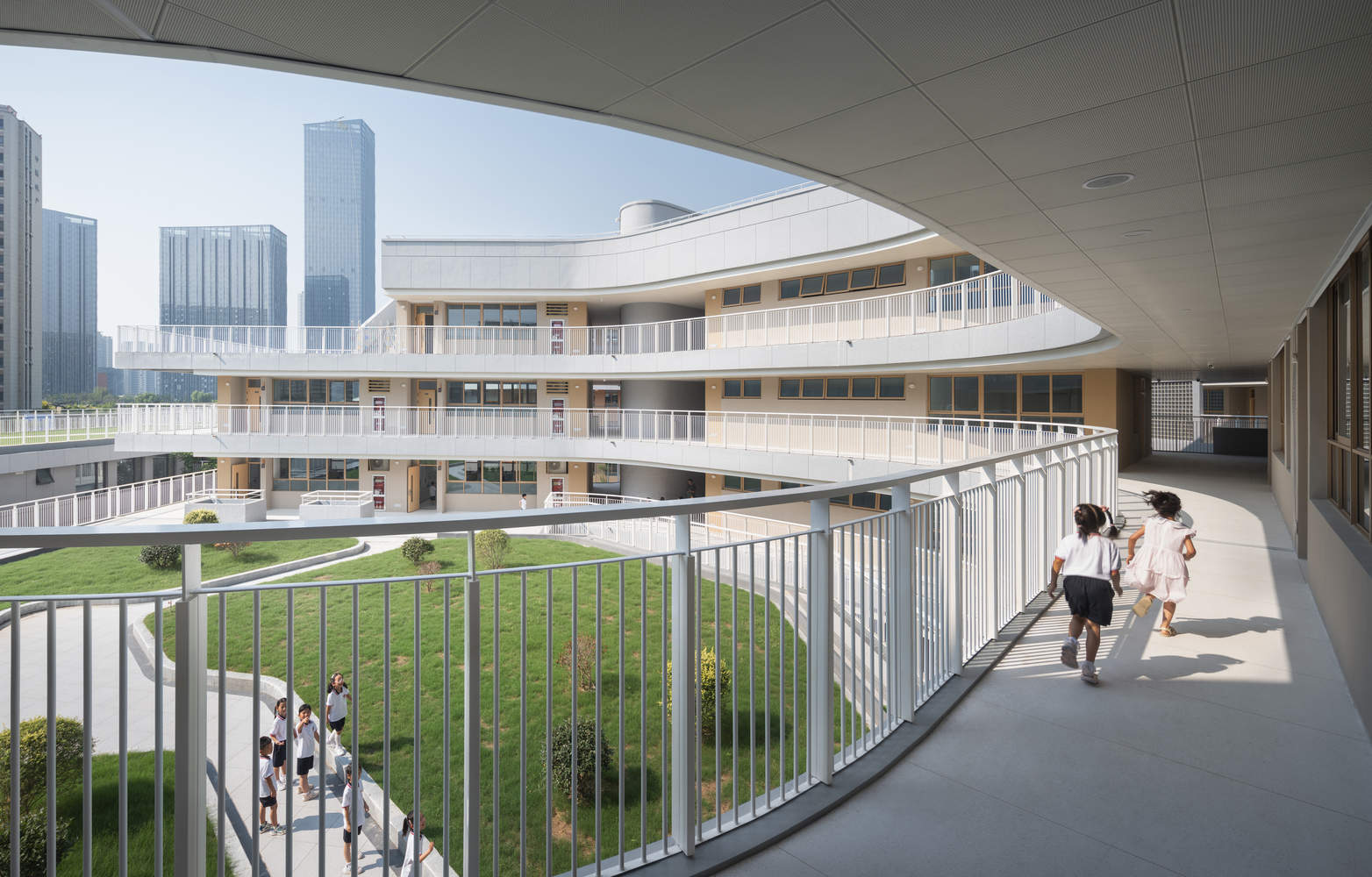
Both the junior high and primary schools are educational facilities catering to the surrounding residential areas and should be closely integrated with them. Facing the residential area to the east, both schools use three levels of stepped grass slopes as a unified interface. Beneath the grass slopes are art classrooms and club activity rooms for the two schools, which can currently showcase the school's artistic activities outward through glass windows, while reserving the possibility of opening to the community in the future. The edges of the grass slopes overhang, combined with a sunken ground level, provide a sheltered waiting area for parents dropping off or picking up children, and will also become a semi-outdoor space for surrounding residents to relax. This "interactive interface" between the school and the community reflects the complex's proactive attitude of integrating with the neighborhood, stimulating the children's interest in understanding society, and encouraging community residents to care more about the schools belonging to their community.
初中和小学都是为周边住区配套的教育设施,应该和周边住区紧密结合。初中和小学面向东侧住区以三道退台草坡作为统一的界面,草坡下设置了两个学校的艺术类教室和社团活动室,近期可以透过玻璃窗向外展示学校的艺术活动,并预留远期面向社区开放的可能性。草坡边缘出挑,结合地坪下沉,为接送孩子的家长提供了可以遮风挡雨的驻留场所,也会成为容纳周边住区居民休憩的半室外空间。学校与社区的“互动界面”体现了这个建筑群积极与社区相融合的态度,激发了校园中的孩子们了解社会的兴趣,也促进社区居民更加关心归属于自己社区的学校。
© 侯博文
© 侯博文
© 侯博文
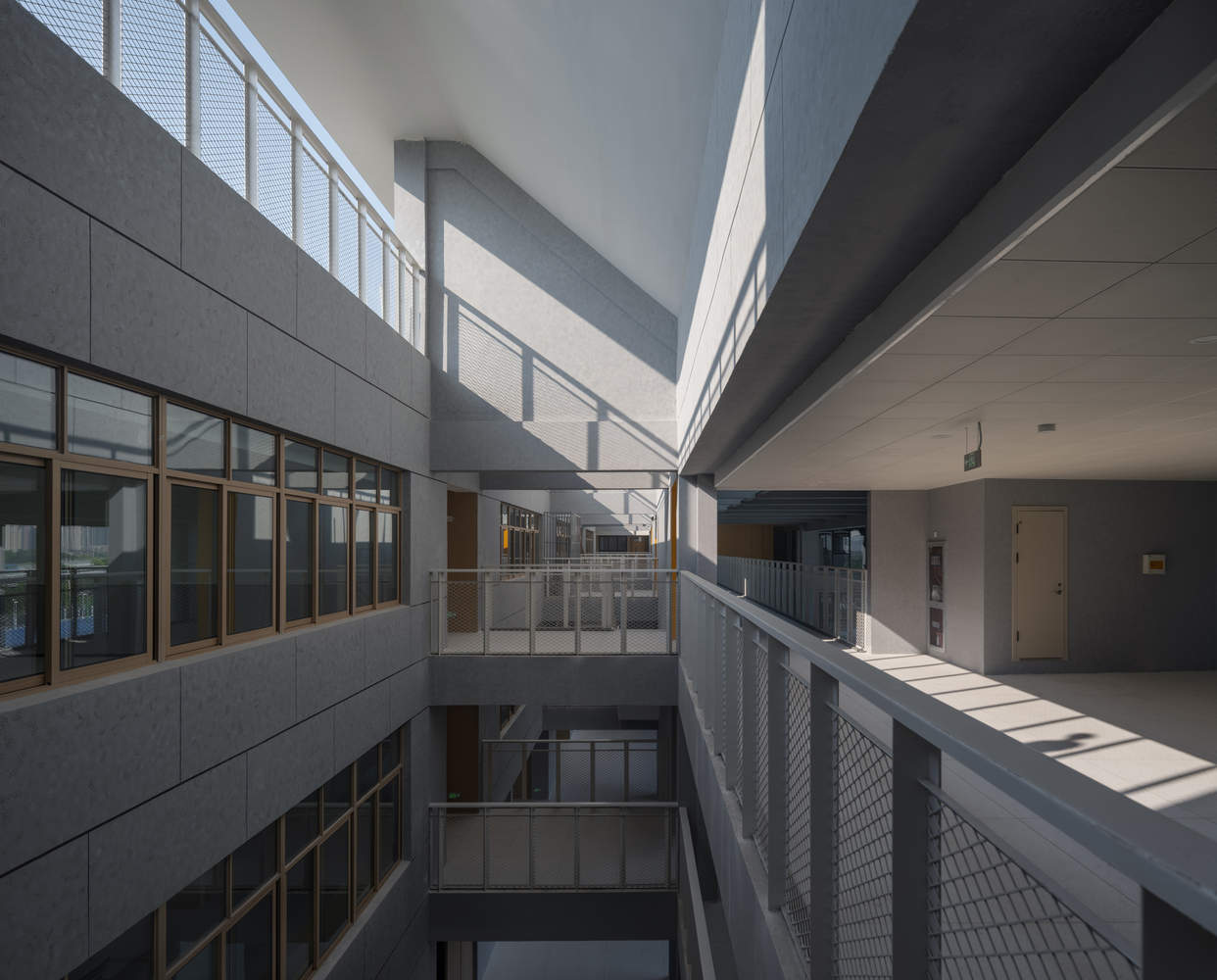
The kindergarten is an independent building. Its narrow, long site and the scale of 24 classes necessitated a linear layout. Its north facade has a rigorous outline, serving as a "rest note" for the entire complex. The south facade has a projecting first floor, forming an activity platform. The second and third floors above the platform, housing children's activity rooms, are designed as a set of separated, colorful blocks, like "colorful candies on a tray," symbolizing a gift for the children. The kindergarten connects various activity rooms via a narrow atrium, where the cross-section constantly changes, creating a dramatic spatial effect.
幼儿园是一个独立的建筑,窄长的用地和多达24个班的规模使方案的布局只能选择一字排开的形式。其北立面轮廓严整,为整个建筑群画上“休止符”。南立面一层突出,形成一个活动平台。平台上部的两层幼儿活动室被设计成一组分离的彩色体块,就像“托盘上彩色的糖果”,其寓意是:送给孩子们的一份礼物。幼儿园以一个狭长的中庭来串接各个活动室,中庭的剖面不断发生变化,形成了戏剧性的空间效果。
© 侯博文
© 侯博文
© 侯博文
In an era of rapid urbanization, it is common to see large areas occupied by contemporary architectural complexes of uniform style and volume, which often leads to decreased urban vitality in those areas. A vibrant city block should possess "biodiversity," much like a natural jungle. Although the Kangsheng Road Complex in Nanjing Jiangbei New Area was completed through the collaboration of three architectural teams led by three architects, their seamless coordination and appropriate design methodologies ensured that the project avoided the common disharmony found in collaborative design. Instead, it presents a richly varied morphology under a unified set of rules, contributing significantly to increasing the vitality of this urban sector.
在快速城市化时代,城市中经常出现一次建设的、风格体量一致的建筑群占据了一大片区域的现象,这往往会导致该区域城市活力下降。好的城区应该像自然界的丛林一样,具有“生物多样性”。南京江北新区康盛路建筑群虽然由三名建筑师领带各自的团队合作完成,由于各方配合默契,设计方法得当,不但没有出现合作设计中常见的不协调,而且呈现出在统一的规则下变化丰富的形态,为增加城市片区的活力做出了贡献。
© 侯博文