基于“堂名担”逻辑的空间活化与文化再生:本项目最精髓之处在于,建筑师没有局限于对现有空间(一个65平米的小附属用房)的物理改造,而是深入挖掘了其文化背景——与昆曲文化的深度绑定。通过提取传统戏班便携式门面“堂名担”的“可拆可合、走着演”的逻辑,设计了一种动态的、具有“生产能力”的“书店+”新节点。这种策略将一个旧有的、脱离文脉的出口空间,转译为一个嵌入式的“微型剧场”,实现了从被动展示到主动发生的功能重塑,体现了对文化元素的深刻理解与当代设计语言的巧妙转译。
“可被带走”的剧场意识与灵活结构:设计核心是一个名为“新堂名担”的独立装置,它巧妙地游走于“剧场门面”与“构造核心”之间,以不到7平米的尺度定义了整个空间的核心。这个装置通过植入四面不同材质和语意的立面,在物理上聚焦空间、象征上激活仪式感。更重要的是,整个空间机制围绕“拆与合”的演出逻辑构建:展陈结构可移动、墙面磁吸、帘幕可收合,导视模块化,确保空间能够“轻装上阵、快速转场”,以支持多样的文化活动和灵活的叙事嵌入,展现了高度适应性和操作性。
新旧材料的叙事性转译与边界模糊:建筑师通过材料的选择和处理,构建了清晰的空间叙事层次。一方面,对回收旧门板进行炭烧处理,保留了前身空间的“文化残件”——镂空花窗,赋予空间历史的温润肌底。另一方面,南面则采用工业材料穿孔镀锌钢板,其打孔图案抽象提炼自昆曲头面结构及“堂名”书法笔触,形成一种“像传统又不是传统”的模糊秩序。这种新旧材料的并置和转译,不仅丰富了空间的触感和视觉层次,更强化了空间“可再书写性”的理念,强调其作为持续发生文化事件的平台属性。
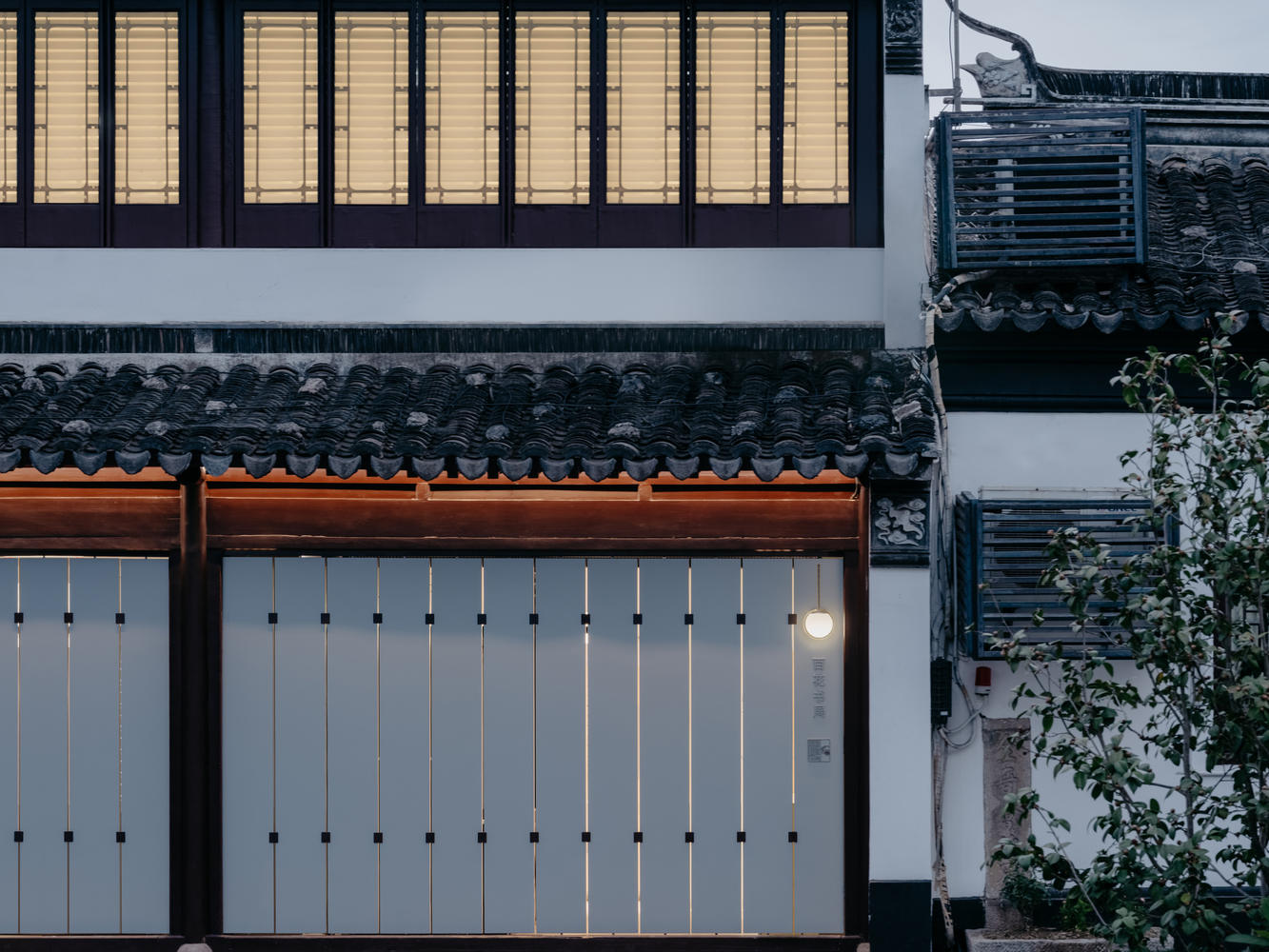
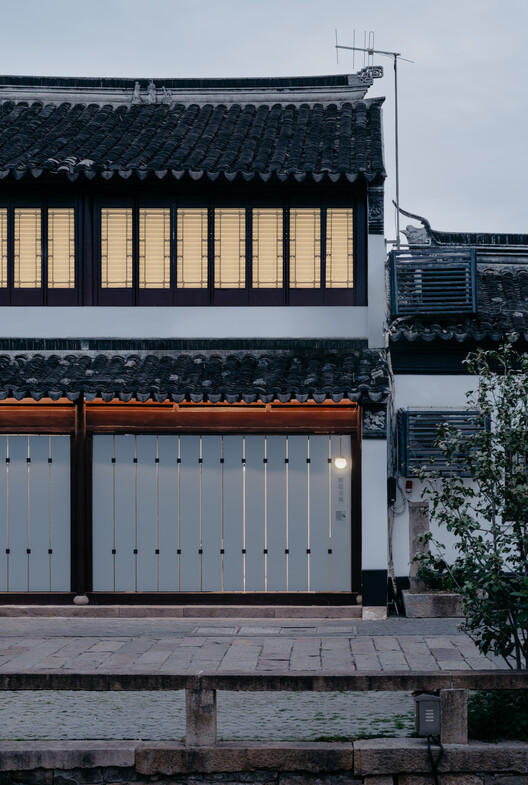
1993 年,百花书局诞生于苏州;三十余年来,它始终与昆曲文化深度捆绑。在接到百花书局改造的任务时,我们面临的是一个尺度极小、年久失修的附属用房。
In 1993, Baihua Bookstore was established in Suzhou; for over thirty years, it has been deeply intertwined with Kunqu Opera culture. When commissioned for the renovation of Baihua Bookstore, we were faced with an ancillary building that was extremely small in scale and severely deteriorated.
© Wen Studio
© Wen Studio
它原为中国昆曲博物馆内部的一间书屋,面积仅 65 平方米,常年作为博物馆出口,功能与结构已基本脱离原有文脉。但我们并未仅将它视为“空间改造”,而希望它能重新纳入博物馆的文化系统中,成为一个具有“生产能力”的“书店+”模式新节点。
It was originally a bookstore within the China Kunqu Opera Museum, spanning only 65 square meters, and had long served as the museum exit, its function and structure largely disconnected from the original context. However, we did not view this merely as a "space renovation," but hoped it could be reintegrated into the museum's cultural system, becoming a new node in a "Bookstore+" model possessing "productive capacity."
© Wen Studio
© Wen Studio
© Wen Studio
© Wen Studio
“堂名担”:传统戏台的便携性逻辑
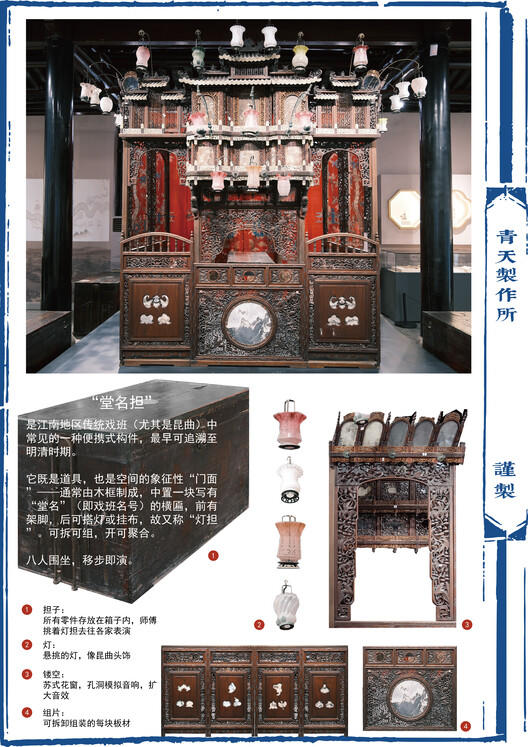
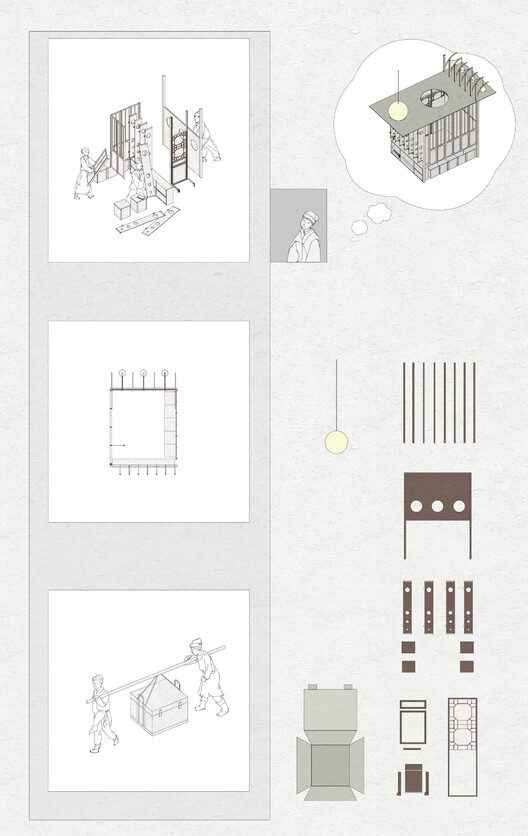
我们从一个极小的元素切入:一件常被忽略的博物馆藏品 ——“堂名担”。这是我们介入设计的起点,也是整个空间改造的主轴。“堂名担”是江南传统戏班中使用的便携式门面结构。结构轻巧、可拆可合,是一种“走着演”的舞台机制。这类构件虽然微小,却浓缩了古代戏曲文化的移动性、适应性与组织结构,也体现出舞台精神与民间社会之间紧密的互动关系。我们不复刻它,而是提取其中的逻辑,并转译为当代表达的空间语言。
"Tang Ming Dan": The Logic of Portability in Traditional Stages
We started with an extremely small element: a frequently overlooked museum artifact—the "Tang Ming Dan" (a portable stage facade). This became our starting point for design intervention and the main axis for the entire spatial renovation. The "Tang Ming Dan" is a portable facade structure used by traditional Jiangnan opera troupes. It is lightweight, collapsible, and embodies a stage mechanism for "performing on the move." Although small, this component encapsulates the mobility, adaptability, and organizational structure of ancient opera culture, also reflecting the close interactive relationship between the spirit of the stage and folk society. We did not replicate it, but instead extracted its logic and translated it into a spatial language for contemporary expression.
© Wen Studio
© Wen Studio
一种“可被带走”的剧场意识
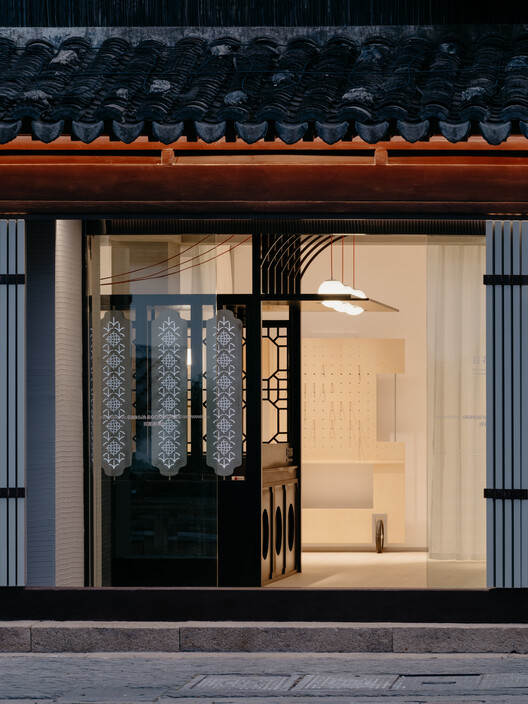
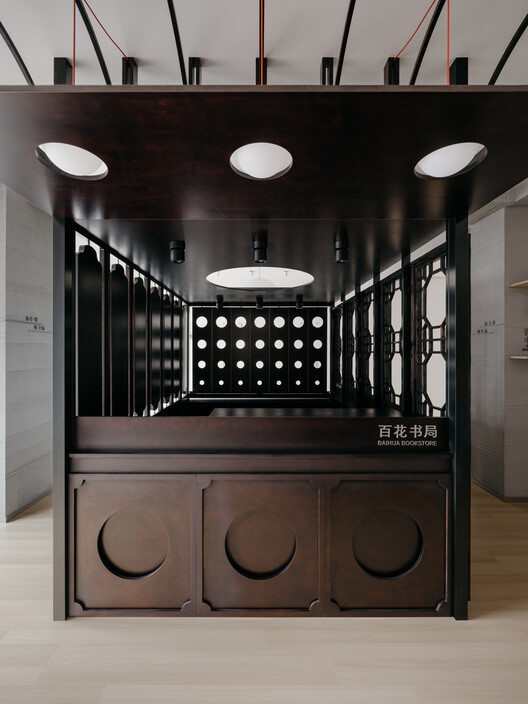
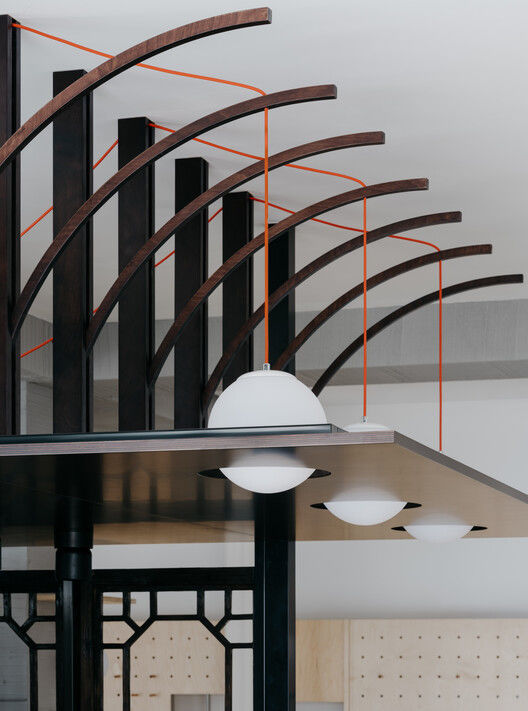
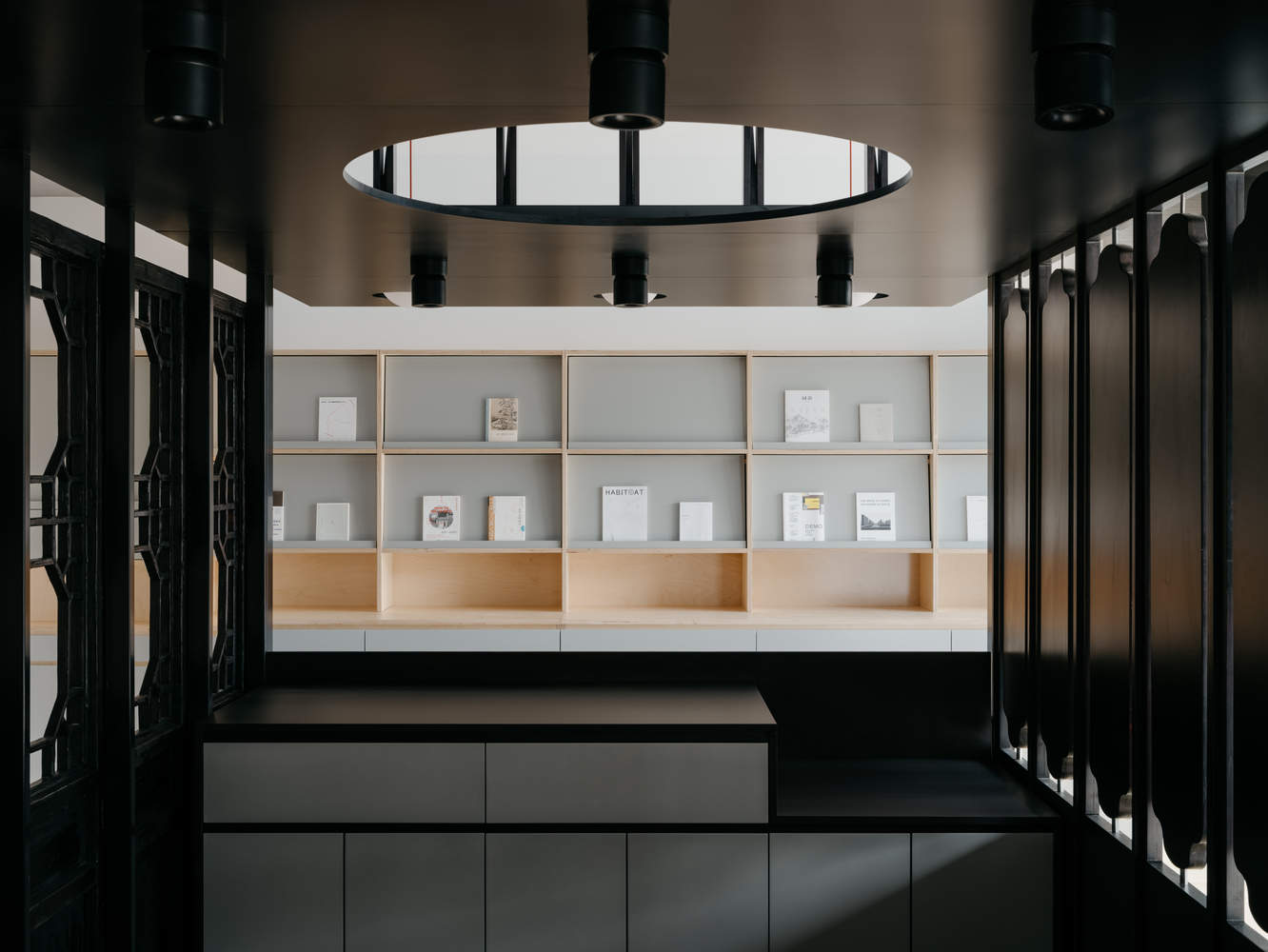
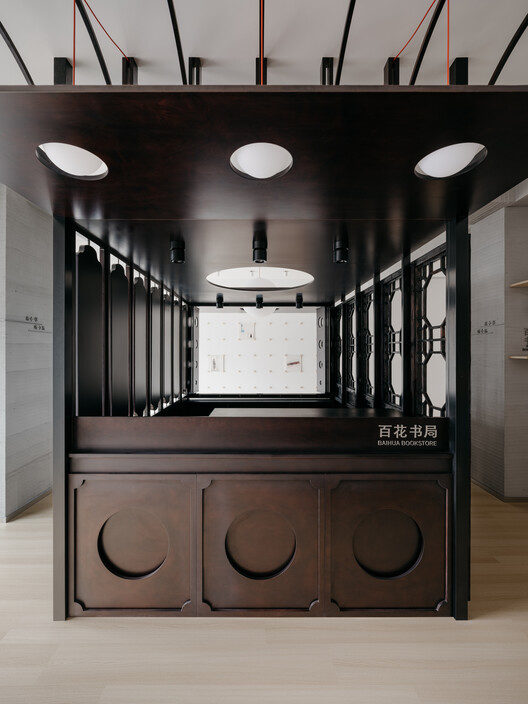
百花书局的空间改造,围绕“堂名担”展开。它不再是单一功能的展陈场所,而是被重新定位为一个动态的文化发生地——一个“嵌入式的微型剧场”。我们把“堂名担”从昆曲语境中解构为三种空间元素:标识性、生成性、可移动性,并据此建立起书局的空间策略。整个空间的视觉与动线中心被交由一个独立装置承担,它即是“新堂名担”。不是道具,也非纯装置,它游走于“剧场门面”与“构造核心”之间。在这个不到7平米的结构中,我们置入了四面不同材质与语意的立面,使其在物理上定义空间中心,在象征上激活仪式感,在操作上支持不同活动的灵活展开。
A Theatrical Awareness of Being "Takeable"
The spatial renovation of Baihua Bookstore revolves around the "Tang Ming Dan." It is no longer a space for single-function display but is repositioned as a dynamic cultural site—an "embedded micro-theater." We deconstructed the "Tang Ming Dan" from the Kunqu context into three spatial elements: identity, generation, and mobility, and based on these, established the bookstore's spatial strategy. The visual and circulation center of the entire space is entrusted to an independent installation, which is the "New Tang Ming Dan." Neither a prop nor a pure installation, it maneuvers between a "theater facade" and a "structural core." Within this structure of less than 7 square meters, we incorporated four facades with different materials and connotations, allowing it to physically define the spatial center, symbolically activate a sense of ritual, and operationally support the flexible unfolding of various activities.
© Wen Studio
© Wen Studio
拆与合:从演出逻辑生成空间逻辑
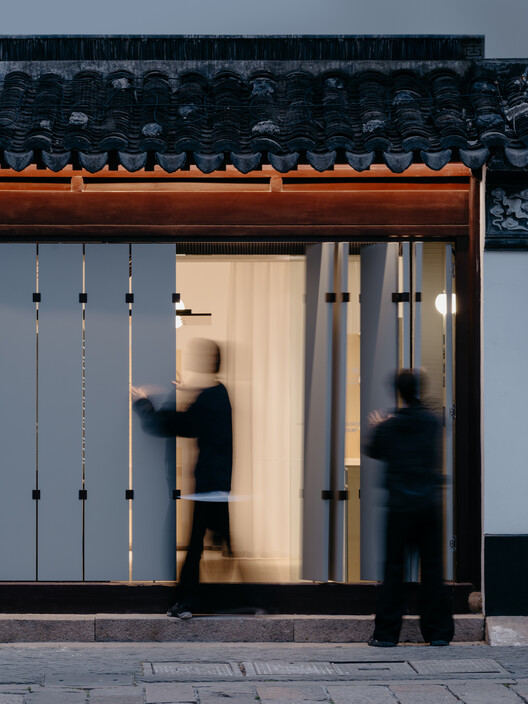
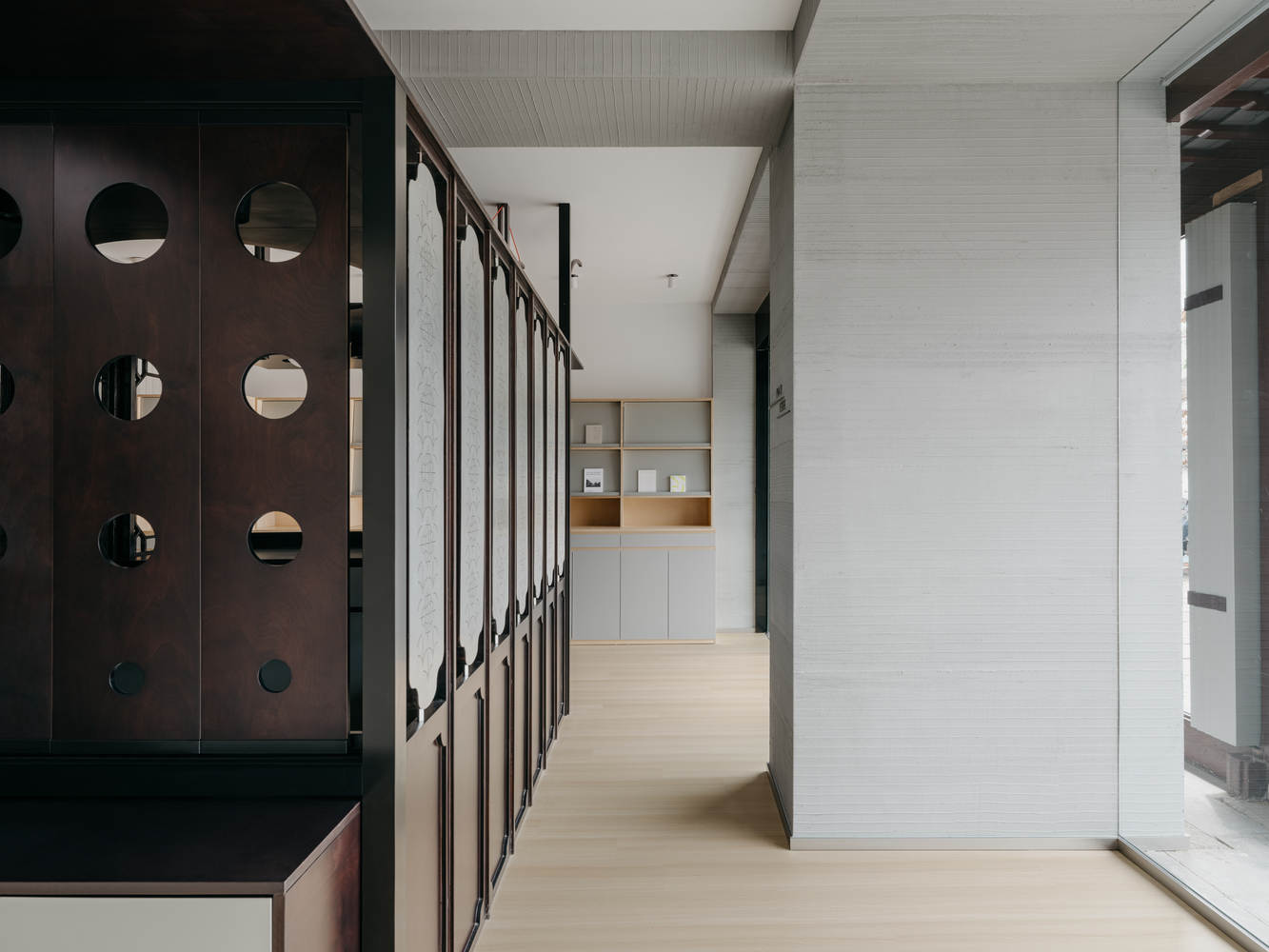
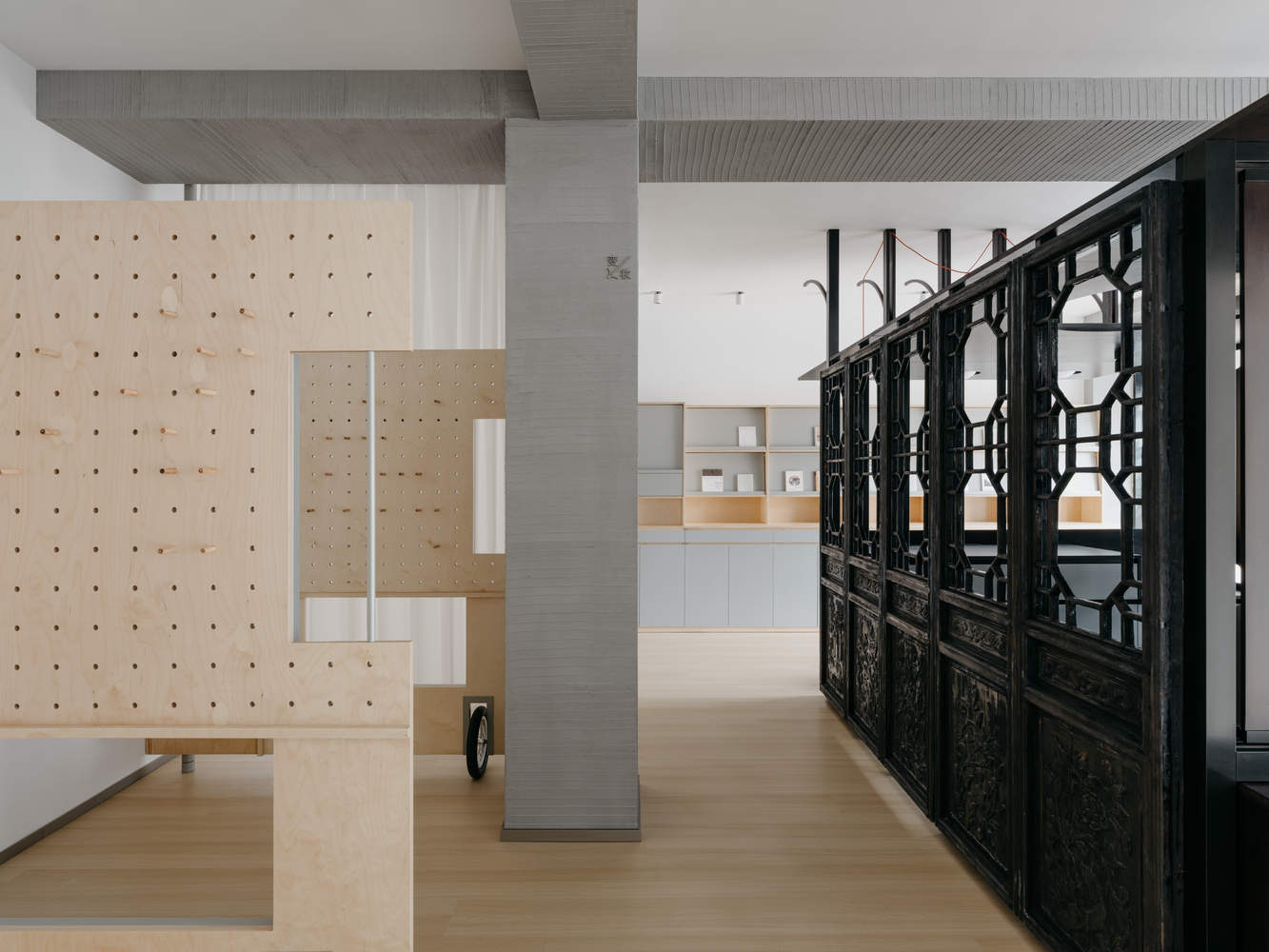
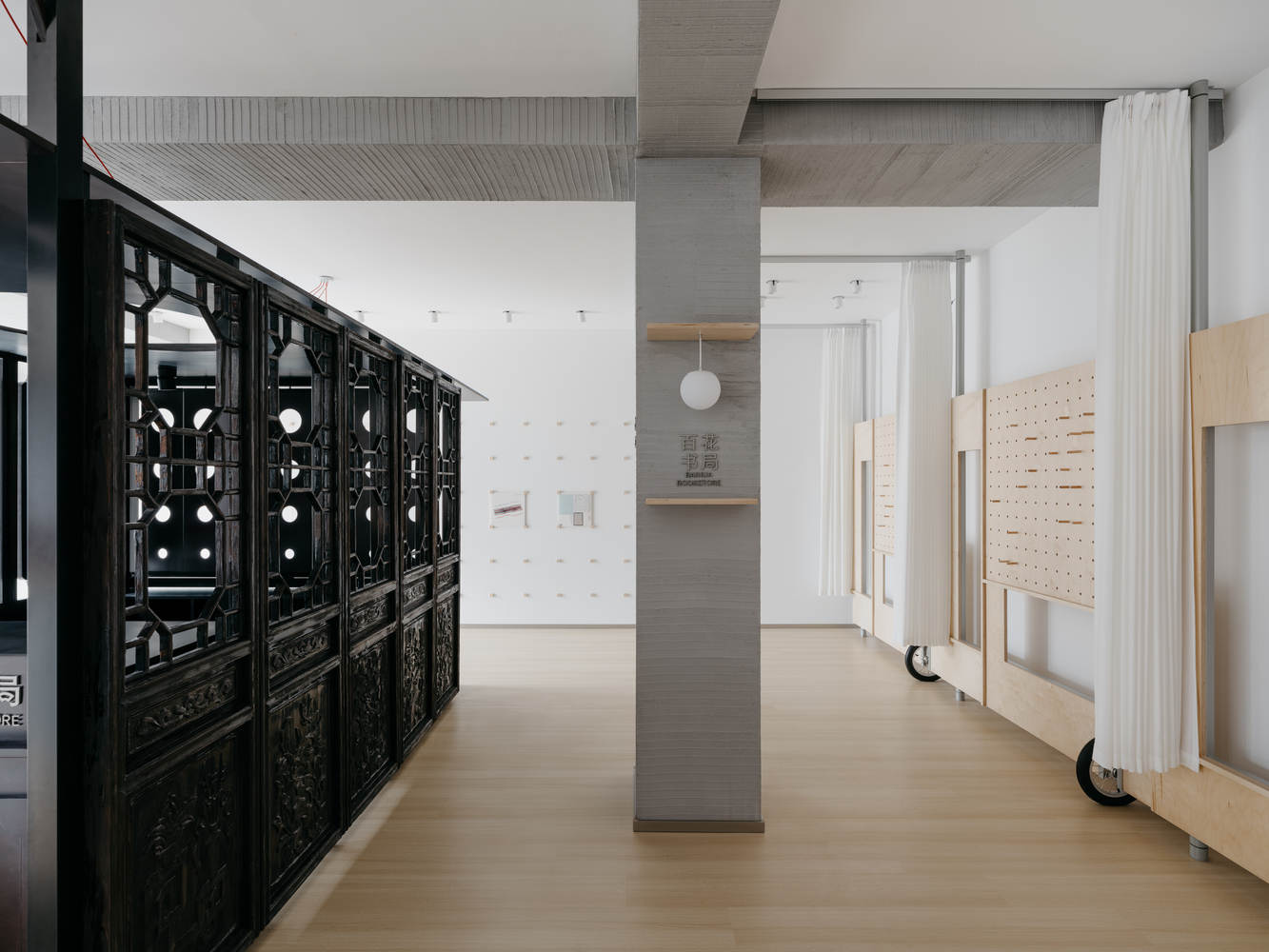
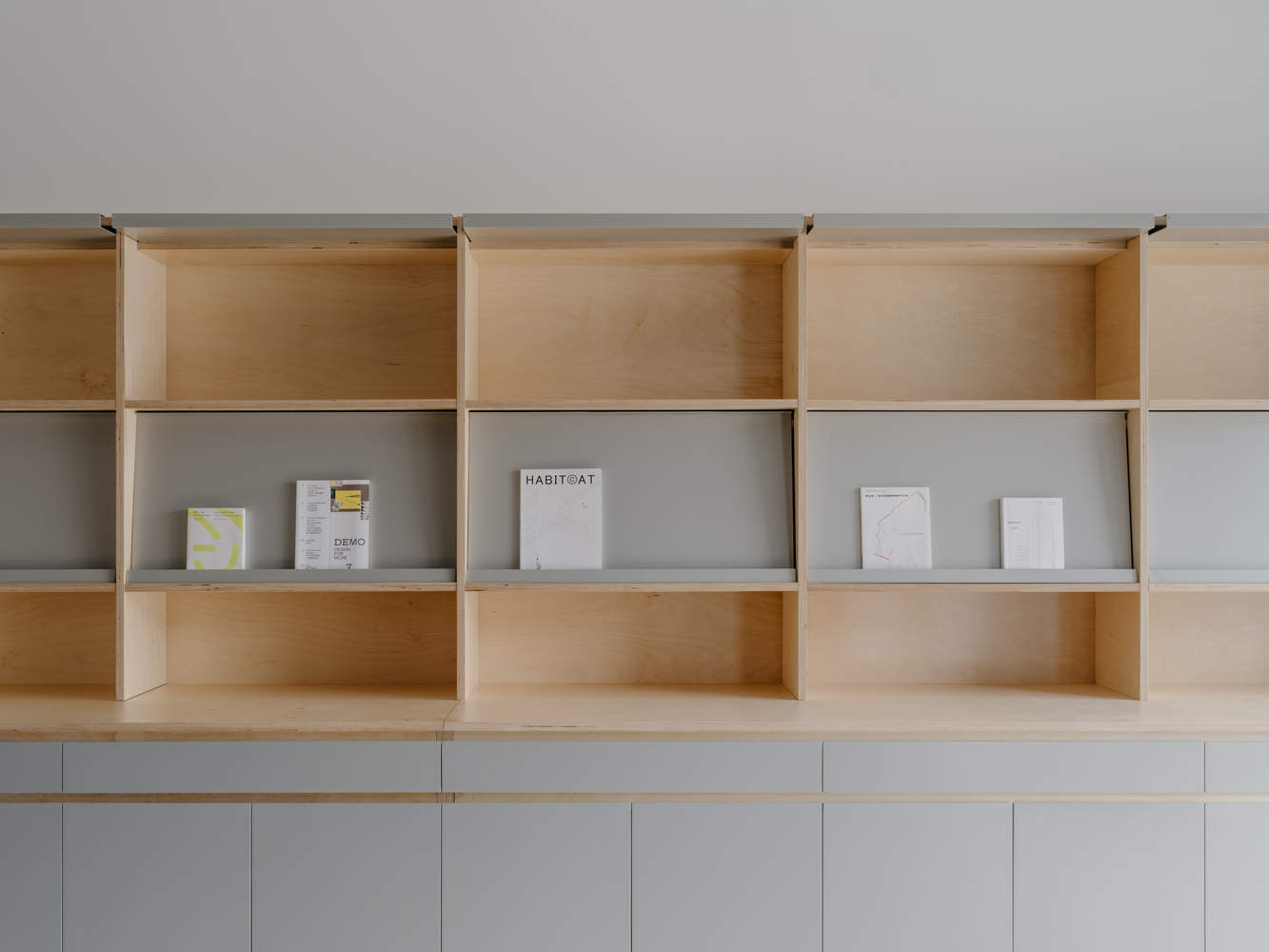
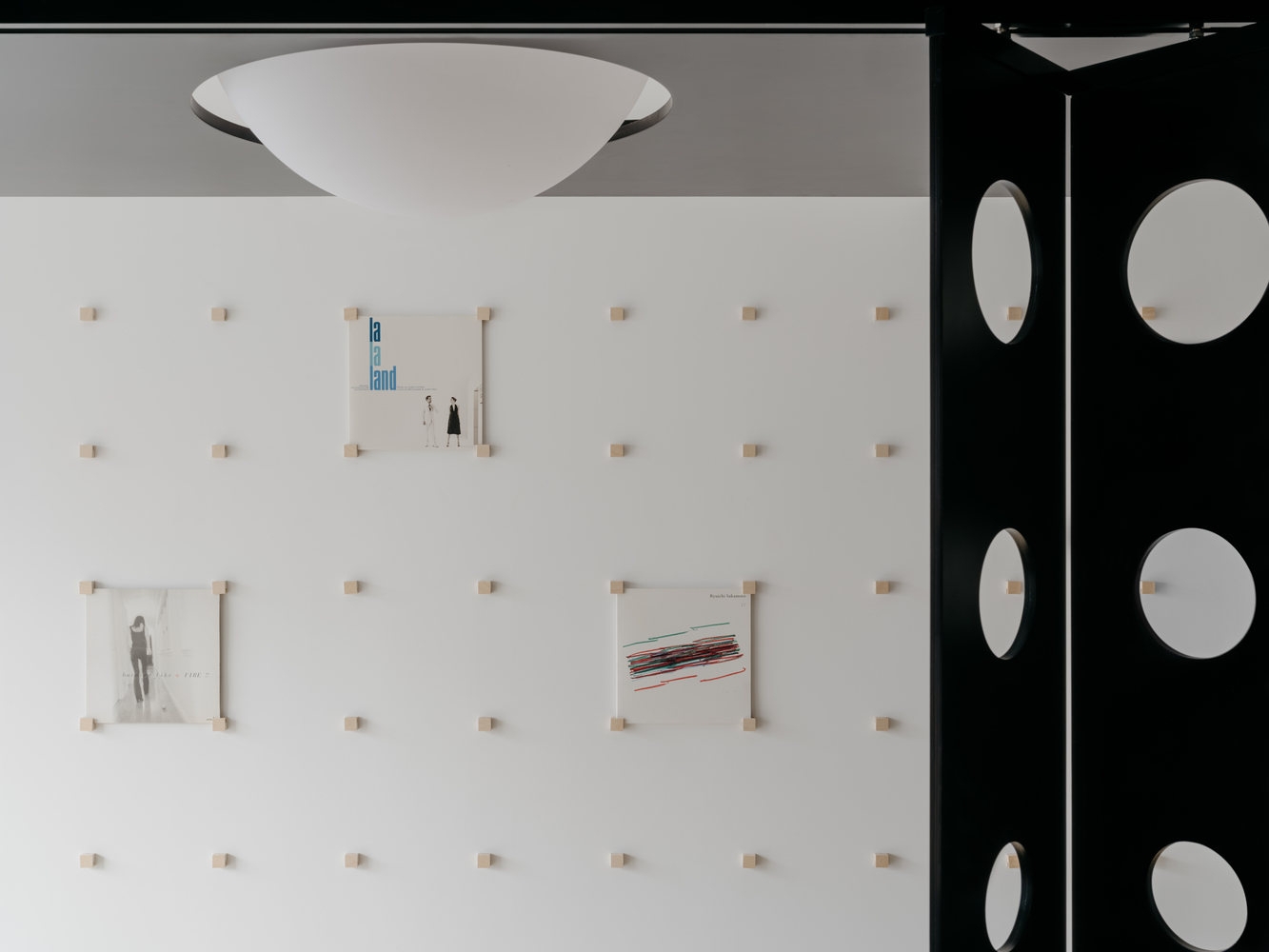
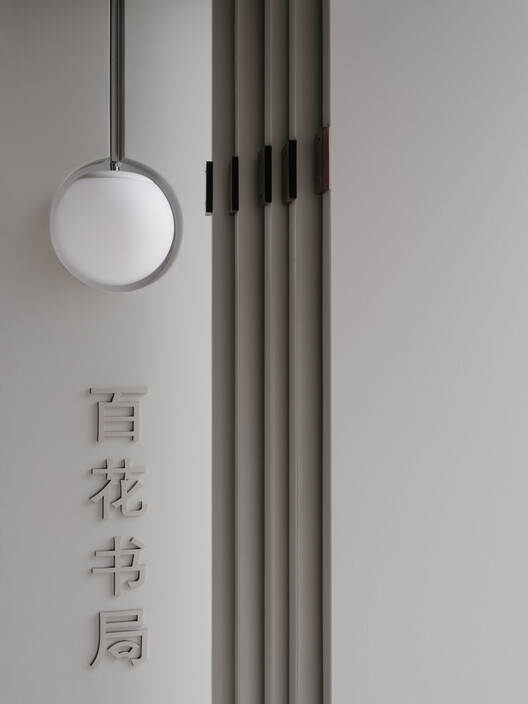
我们没有追求空间形式上的“像舞台”,而是更专注于舞台如何生成。传统戏班带着“堂名担”走街串巷,其空间逻辑是拆—合、开—聚、现—隐。这种方式启发我们建立起空间的基础机制:所有展陈结构都可移动;墙面为磁吸系统;帘幕可收合;导视为模块化——这是为了让空间可以轻装上阵、快速转场,支持多样的文化活动从日常中生成。例如北侧墙面设有三组带轮装置的木展墙,既可贴墙展陈,也可推动至中央围合空间,与“堂名担”协同形成临时剧场。西侧为戏曲黑胶展区,借由“堂名担”西面可开启门板与镂空窗,观者可透视另一空间中的播放装置,强化“台前台后”的视觉联系,形成文化事件可预见、可延展的临界状态。
Disassembly and Assembly: Generating Spatial Logic from Performance Logic
We did not strive for a spatial form that merely "resembled a stage," but focused more intensely on how a stage generates space. Traditional opera troupes moved through streets and alleys carrying the "Tang Ming Dan," and their spatial logic was one of disassemble-assemble, open-gather, appear-conceal. This method inspired us to establish the fundamental mechanism of the space: all display structures are movable; walls utilize a magnetic system; curtains can be retracted; and signage is modular—this allows the space to be lightly equipped, transition quickly, and support the generation of diverse cultural activities from daily routines. For example, the north wall features three sets of wooden display walls with wheeled mechanisms, which can either be placed against the wall for display or pushed to the center to enclose space, coordinating with the "Tang Ming Dan" to form a temporary theater. The west side is the opera vinyl exhibition area; utilizing the openable door panels and lattice windows on the west side of the "Tang Ming Dan," viewers can see the playback equipment in another space, strengthening the visual connection between "front stage and back stage," thus forming a critical state where cultural events are both predictable and extendable.
© Wen Studio
© Wen Studio
材料转译:从旧门板到穿孔钢板
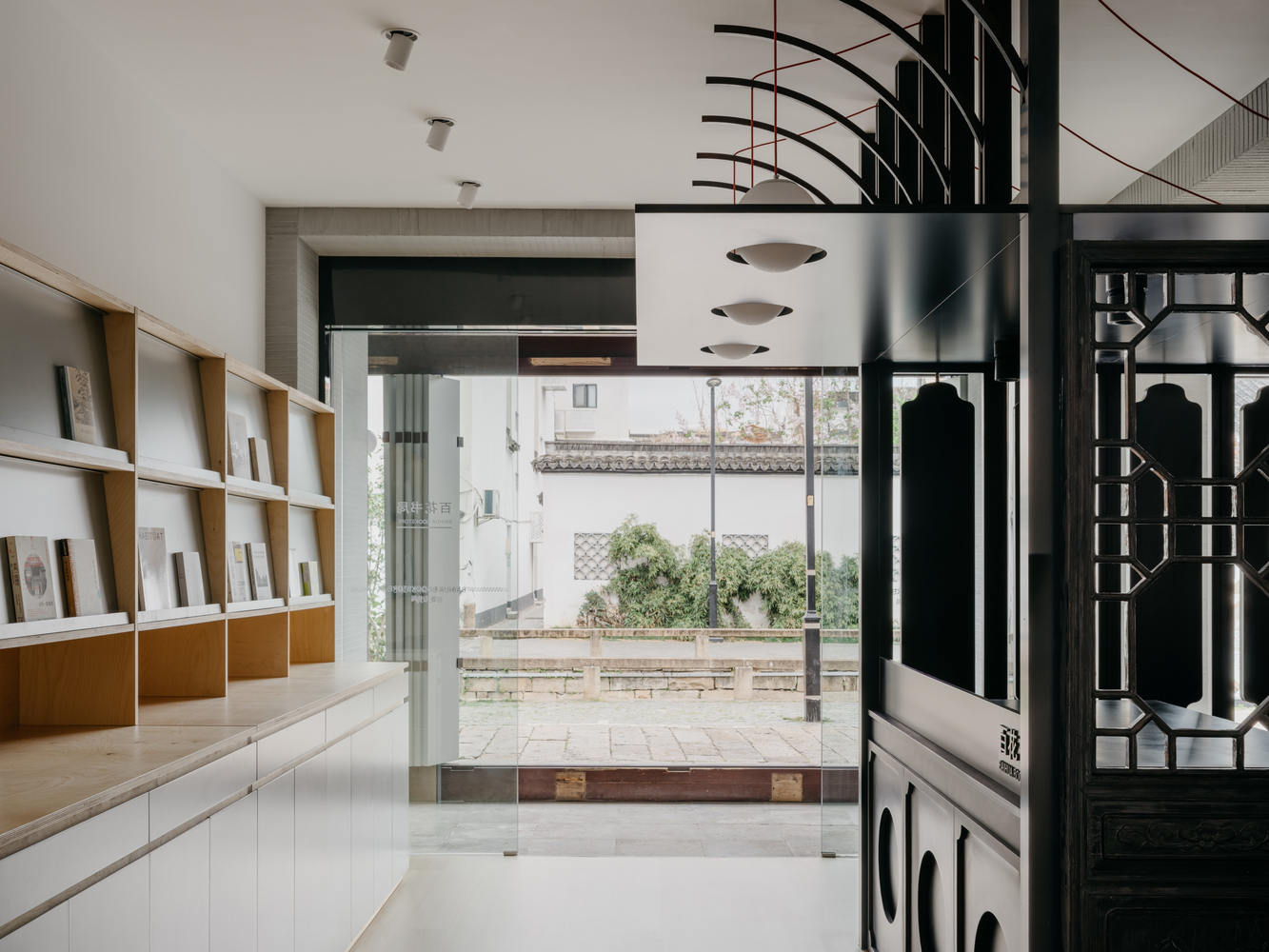
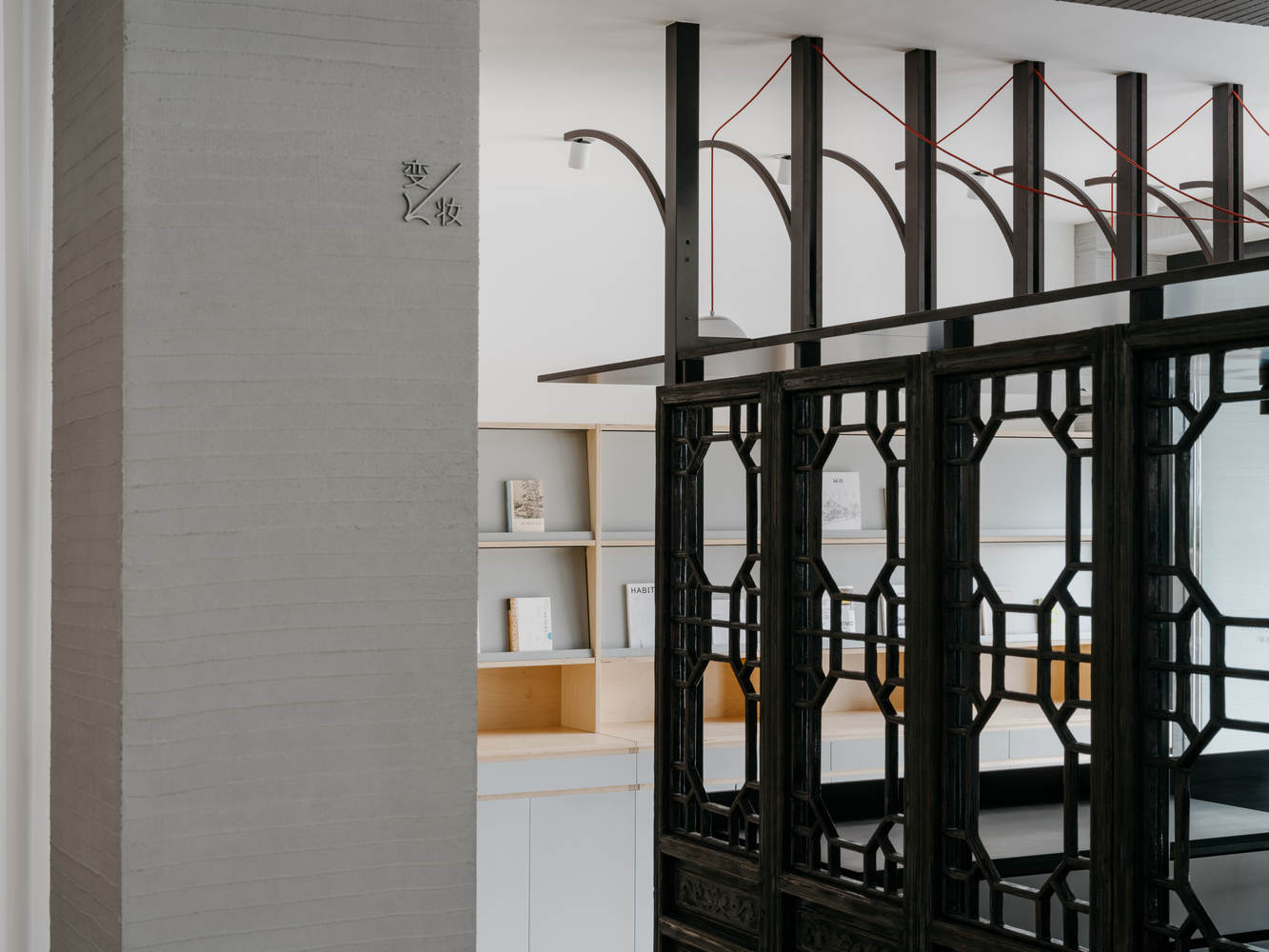
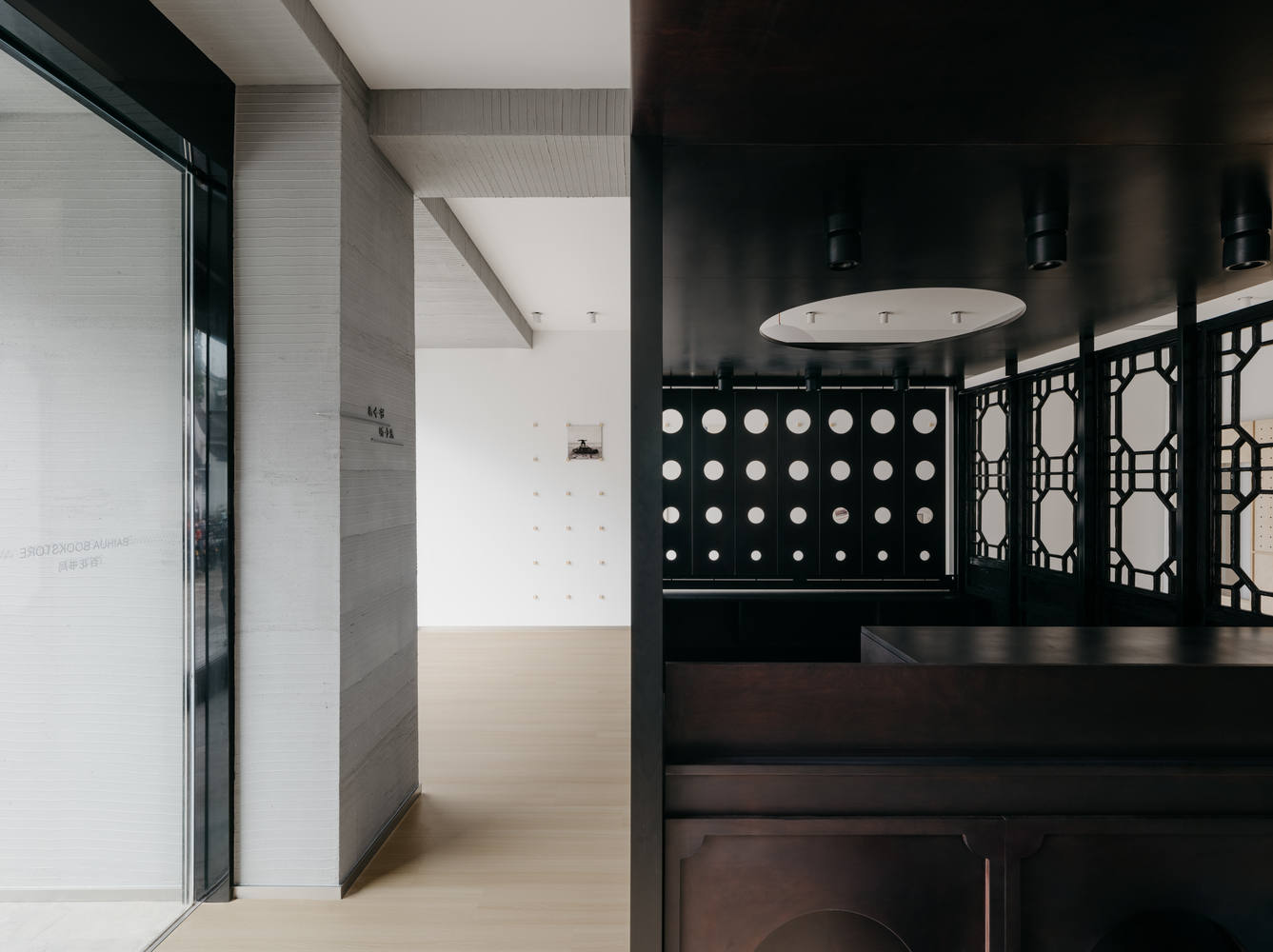
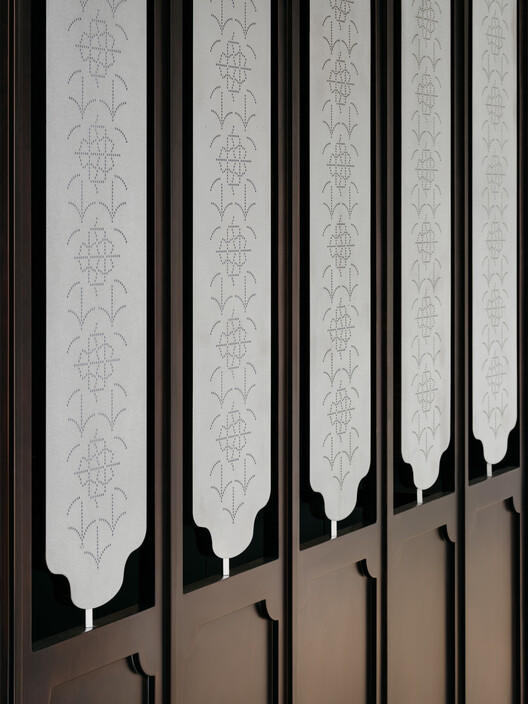
“堂名担”的北面使用了现场回收的旧木门板,我们以炭烧工艺将其脱漆显纹,使其转化为温润的木肌底色。镂空的花窗被保留,作为来自前身空间的“文化残件”,它不是背景,而是成为新的叙事接口。南面则反向使用当代语言。我们以工业材料 —— 穿孔镀锌钢板构成其立面,打孔图案脱胎于昆曲演员头面上的“一弯”结构,通过抽象提炼与图案重组,形成一种“像传统又不是传统”的模糊秩序。细看每一块钢板,它的几何节奏实则源自“堂名”书法的线性笔触。
Material Translation: From Old Door Panels to Perforated Steel Sheets
The north side of the "Tang Ming Dan" utilizes reclaimed old wooden door panels from the site. We used a charring process to strip the paint and reveal the grain, transforming them into a warm, wooden base tone. The openwork flower windows were preserved, serving as "cultural remnants" from the previous space; they are not a mere background but become new narrative interfaces. The south side, conversely, employs a contemporary language. We constructed its facade using an industrial material—perforated galvanized steel sheets. The perforation pattern is derived from the "Yiwang" (a curved structure) on Kunqu opera performers' headwear, abstracted and recomposed to form a vague order that is "like tradition yet not tradition." Upon closer inspection, the geometric rhythm of each steel sheet actually originates from the linear strokes of the "Tang Ming Dan" calligraphy.
© Wen Studio
© Wen Studio
© Wen Studio
以叙事书写空间构造
此次 65 平米的小空间里,我们希望并非强调“设计完成”,而是像传统的“堂名担”,强调其可再书写性:空间可以被反复使用、被不同使用者接管、被新叙事重新嵌入。
Constructing Space Through Narrative Writing
In this small 65-square-meter space, our hope was not to emphasize "design completion," but rather, like the traditional "Tang Ming Dan," to emphasize its re-writable nature: the space can be repeatedly used, taken over by different users, and re-embedded with new narratives.
© Wen Studio
© Wen Studio
© Wen Studio
近两年我们持续尝试在一些尺度较小、处于边缘状态的城市公共空间中,探索“最小介入”下的结构再生与文化嵌入。它们的共同特点是条件受限、预算有限、公共性模糊,设计无法依赖单一形式的表达,也难以通过一次性完成来实现“项目闭合”。但正是在这些缝隙空间中,我们反而找到了可能:通过一种轻量、嵌入式、可再书写的空间结构,使它们重新被公众看见、使用,并参与到新的叙事当中。
In the last two years, we have consistently attempted to explore structural regeneration and cultural embedding through "minimal intervention" in small-scale, marginal urban public spaces. Their common characteristics are limited conditions, constrained budgets, and ambiguous public utility, meaning the design cannot rely on a single form of expression, nor can it achieve "project closure" through a one-time completion. However, it is precisely in these interstitial spaces that we have found possibilities: through a lightweight, embedded, and re-writable spatial structure, these spaces can be seen and used by the public again, participating in new narratives.