在地文化精神的现代转译与场所精神重塑:该项目成功的核心在于对客家文化中“围屋”这一核心聚落形态的深刻理解和现代语言的精准转译。设计师并未简单复刻传统形式,而是提炼了围屋的“领域感”和“院落逻辑”,将其转化为现代建筑的空间组织方式,成功重塑了校园的场所精神。通过对场地自然文脉(山、树)和历史文脉(大王伯公庙、围屋)的梳理与激活,建筑成为了激活社区文化的载体,而非孤立的教育设施。这种基于地域类型研究的场所营造,确保了建筑在快速城市化背景下,依然能深植于本地文化根脉之中。
高密度复杂环境下的空间优化与边界重构:项目面对龙岗区住宅、工业园和城中村交织的复杂高密度环境,展示了高超的空间整合能力。特别是针对不规则地块和高楼环伺的挑战,采用“外折内圆”的平面策略,最大化地利用了基地面积,并有效缝合了碎片化的城市肌理。更重要的是,设计策略性地弱化了传统学校的封闭边界,将文体功能置于底层向社区开放,利用中心运动场成为社区公共舞台,实现了书院与社区的共享共营,有效提升了城市公共空间的质量和活力。
适应性气候策略与多元立面语汇的构建:建筑设计在回应功能需求的同时,高度关注了应对本地气候的适应性策略。通过借鉴客家民居的建筑智慧,设计发展出了一套多元且富有层次的立面语汇。这套语汇不仅在美学上回应了地域特征,更在功能上解决了高密度校舍在遮阳、自然通风以及平衡校园私密性与对外部开放性之间的矛盾。这种对气候、功能与地域美学的多维度集成,体现了当代建筑实践中对可持续性和人文关怀的深刻思考。
In the rapid process of contemporary Chinese urbanization, how to safeguard cultural roots and reshape humanistic spaces amidst the forest of steel and concrete has become an important proposition for architectural practice. In 2021, Shenzhen's "Towards New Campuses" initiative ushered in its third season, launching an architectural practice themed "Six Exhibitions on Academy Creation" in Longgang District, the root of Hakka culture.
在当代中国快速城市化的进程中,如何在钢筋水泥的森林中守护文化根脉、重塑人文空间,成为建筑实践的重要命题。2021年,深圳的“走向新校园”行动迎来了第三季,以“书院营造六联展”为主题,在客家文化的根脉——龙岗区,展开了一场建筑实践。
© TAL
Axonometric drawing
© TAL
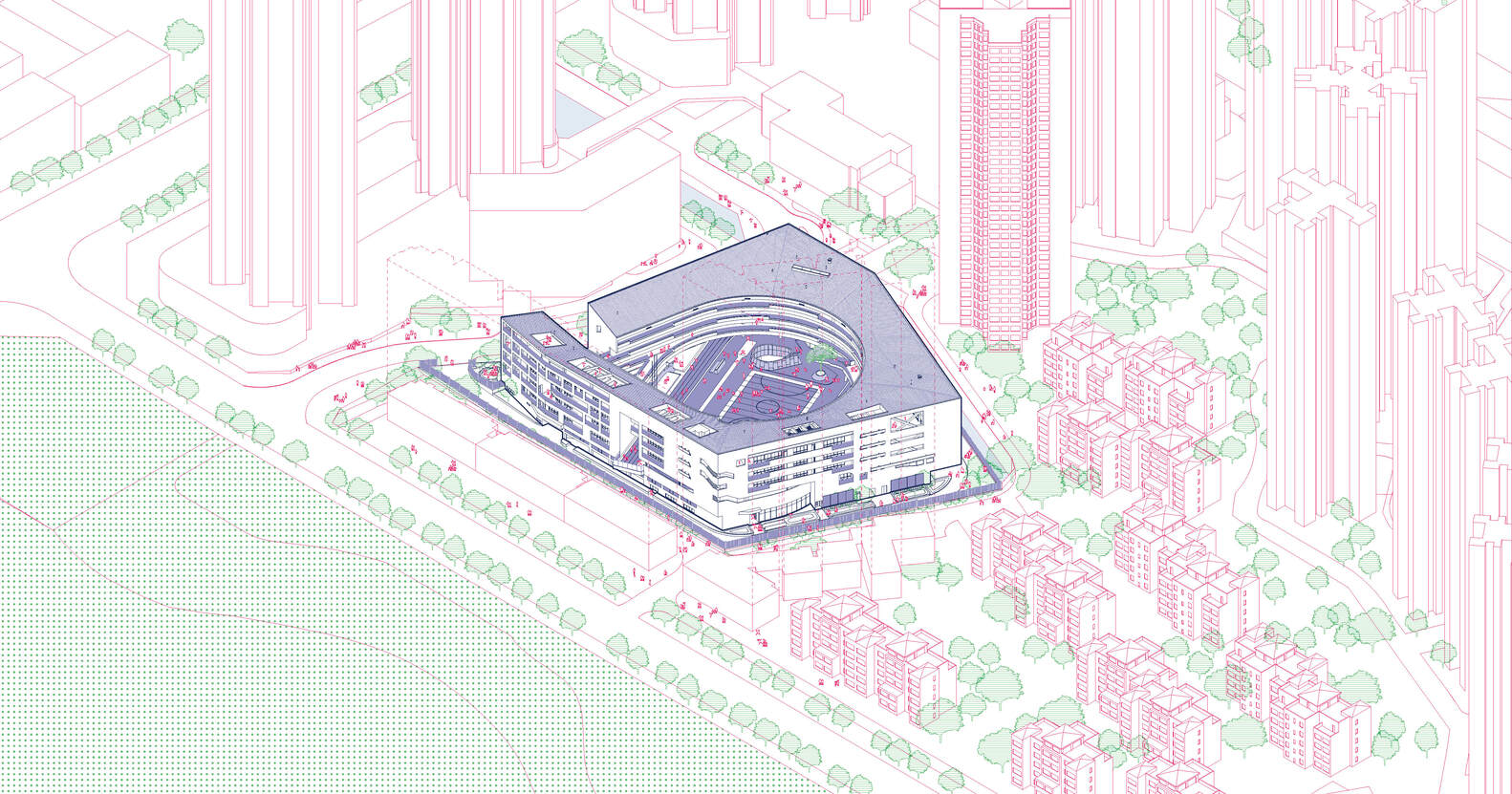
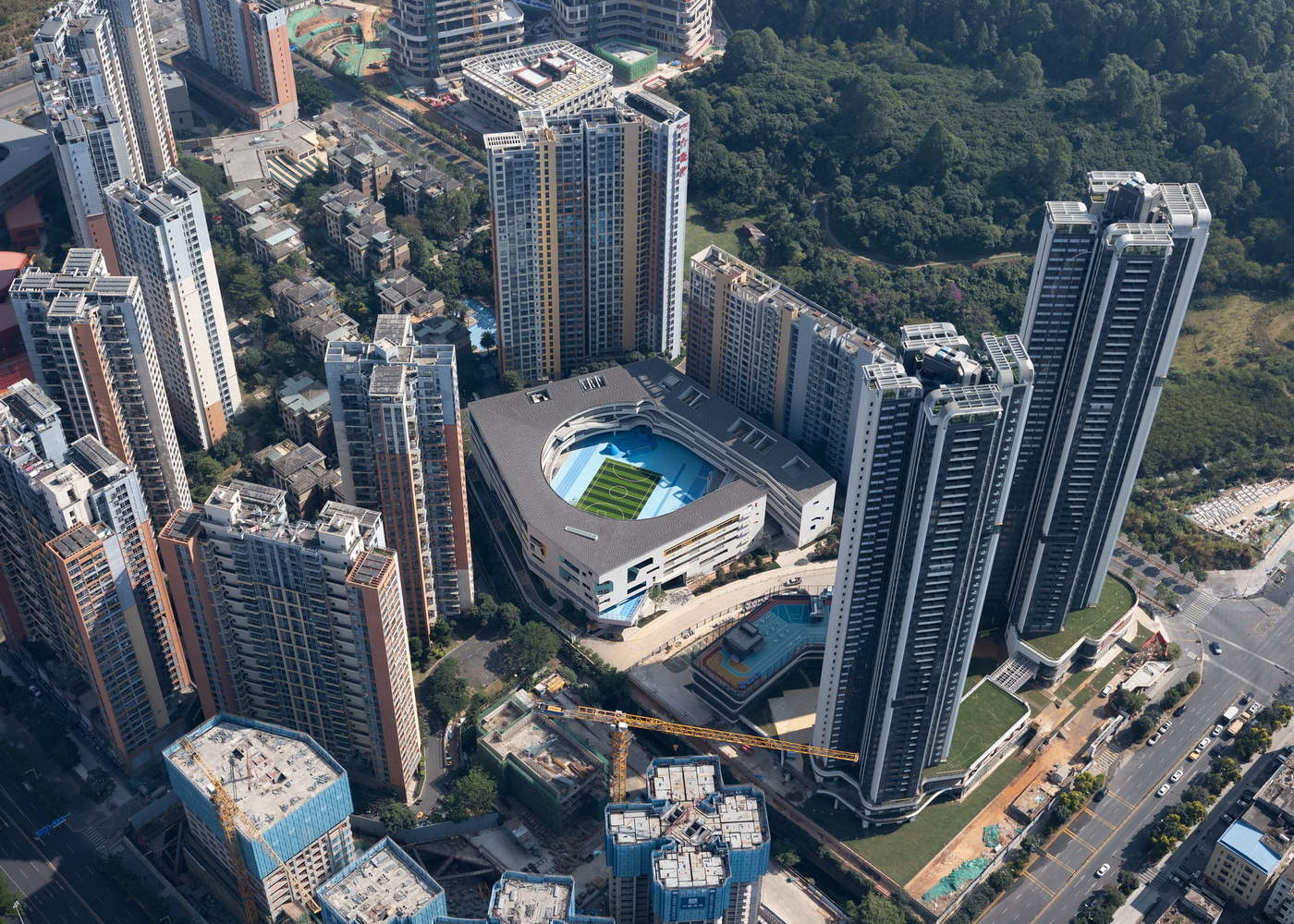
The site is distributed with residential areas, industrial parks, and urban villages. The Great King Ancestral Temple under the century-old banyan tree at the village entrance still has continuous incense burning, and the Hakka walled village Qixing Shiju is a few hundred meters to the north. The mountains and the tree in the north and south form a faint urban natural vein. The Weilong Academy (primary and secondary school) in the northeast corner is adjacent to the main urban road, and the Waiwu Academy (primary school) in the southwest has a small river passing by, with a high-rise residential complex in the middle.
地块上分布着住宅、工业园区和城中村,村口一棵百岁大榕树下的大王伯公庙至今香火不断,北侧几百米处有客家围屋七星世居,南北两山一树形成一条微弱的城市自然文脉。东北角围龙书院(中小学)紧邻城市干道,西南的围屋学社(小学)有小河流过,中间有一个高层住宅小区。
© TAL
© TAL
The core settlement form in Hakka culture—the walled enclosure (Wei-wu)—possesses a strong sense of territory and rich courtyard spaces. We drew inspiration from this traditional institution, reinterpreting the spatial logic of the walled enclosure using modern architectural language. We hope to explore place-making based on regional typological research, reshape campus boundaries, realize community sharing of the academies, and discuss systemic innovation in public space management strategies.
客家文化里核心聚落形态 —— 围屋,具有强烈的领域感和丰富的院落空间,我们从这一传统建制中汲取灵感,用现代建筑语言重新诠释围屋的空间逻辑,希望探索基于地域类型研究的场所营造,重塑校园边界,实现书院的社区共享,并探讨系统性创新的公共空间管理策略。
© TAL
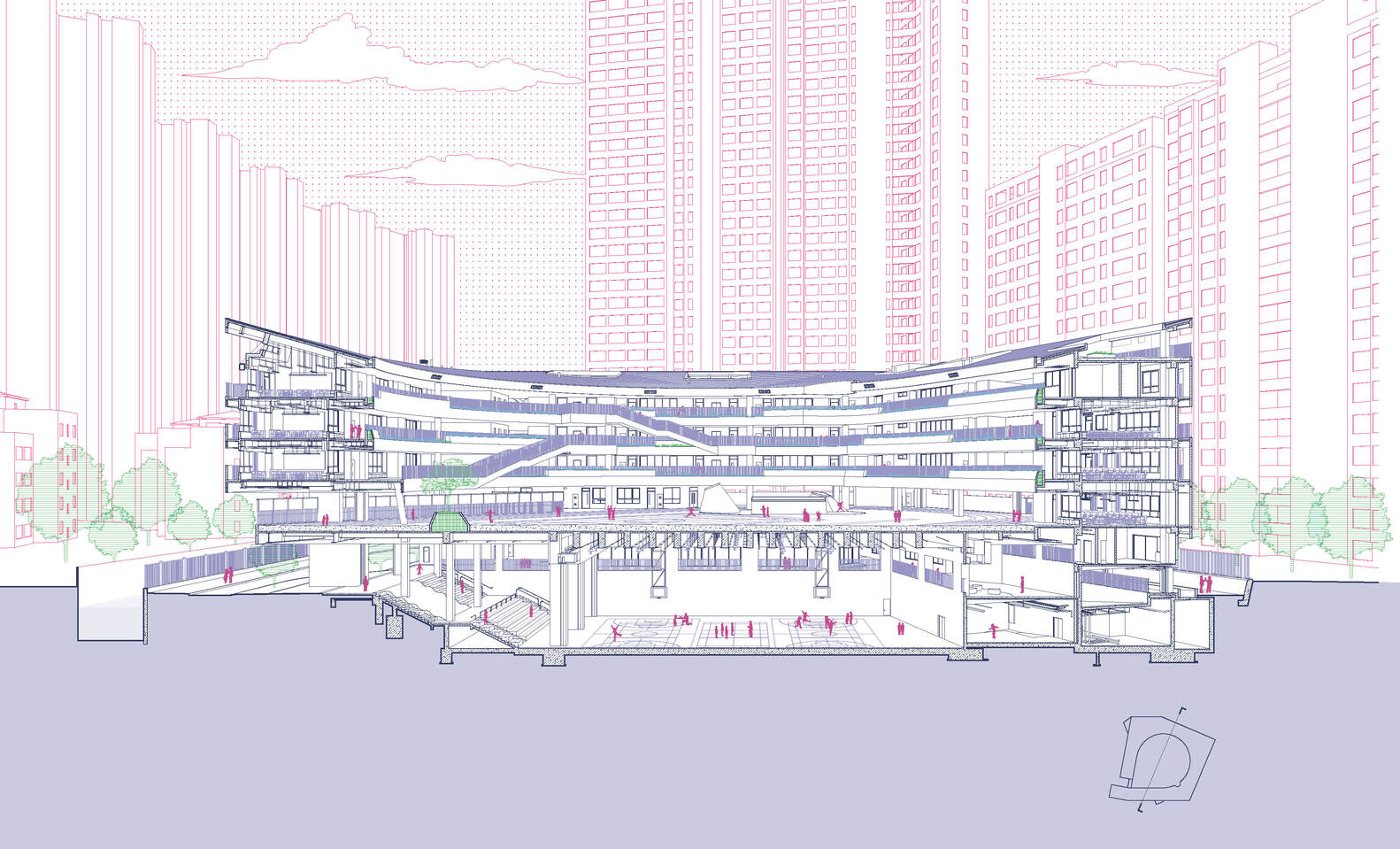
剖面图
© TAL
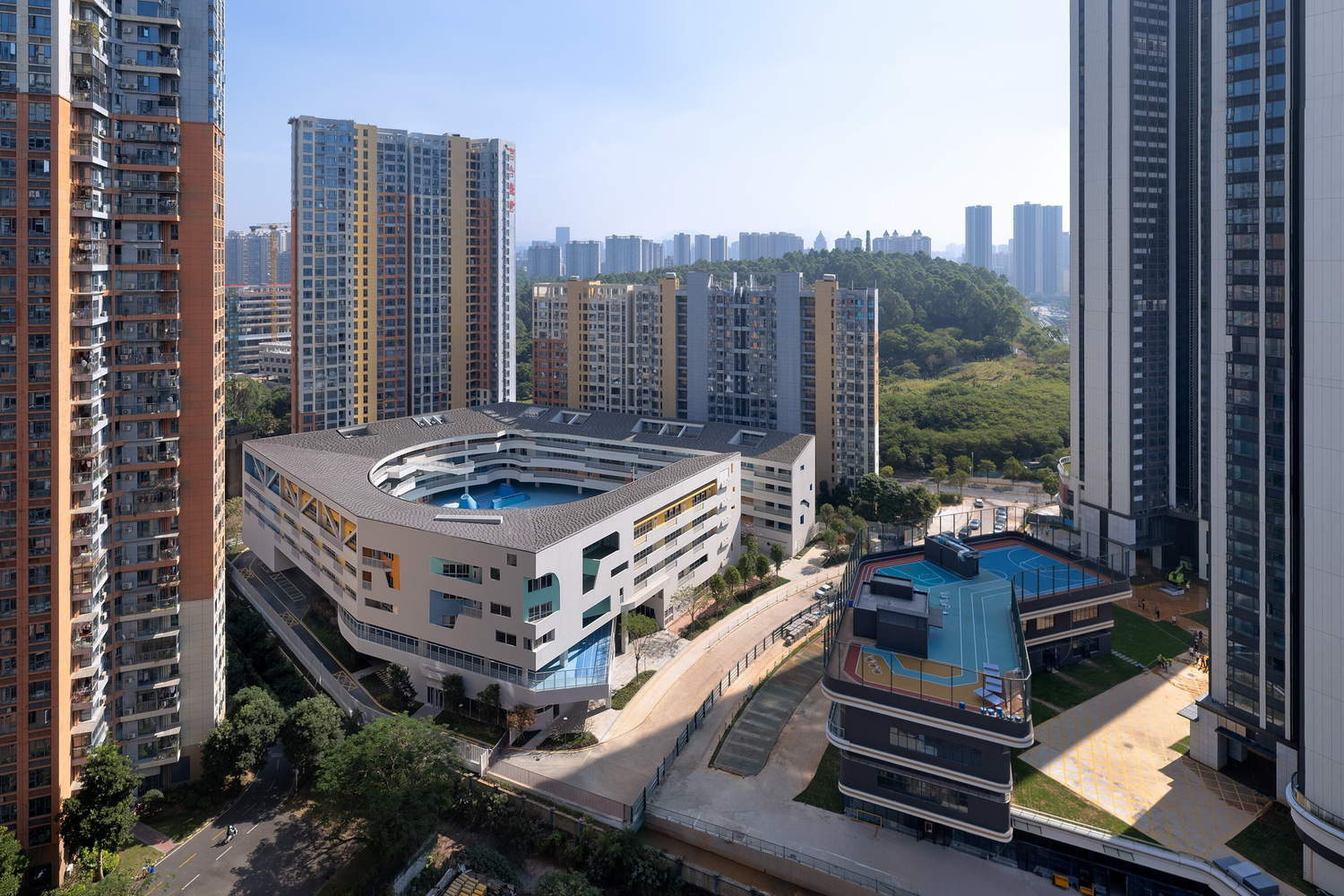
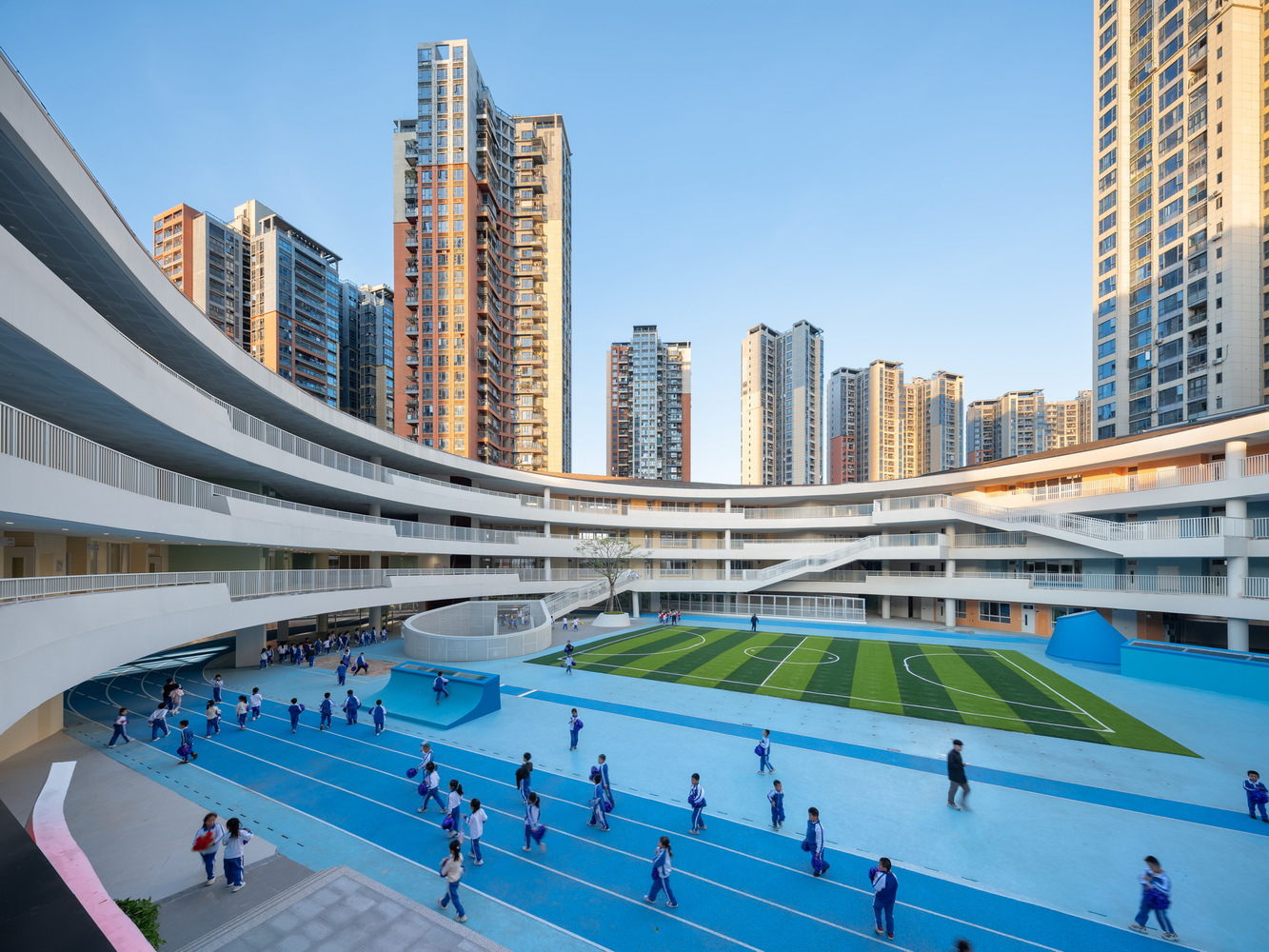
The Waiwu Academy site has an irregular shape and is surrounded by high-rise buildings. The outward-folding and inward-curving planar form maximizes site utilization. The design strategy responds to the high-density environment while striving to suture the fragmented spatial texture and reintroduce the cultural and spiritual core of the community.
围屋学社场地形状不规则且周边高楼环伺,外折内圆的平面形态将基地使用最大化,设计策略回应高密度环境的同时,力图缝合碎片化的空间肌理并重新植入社区的文化与精神性内核。
© TAL
© TAL
© TAL
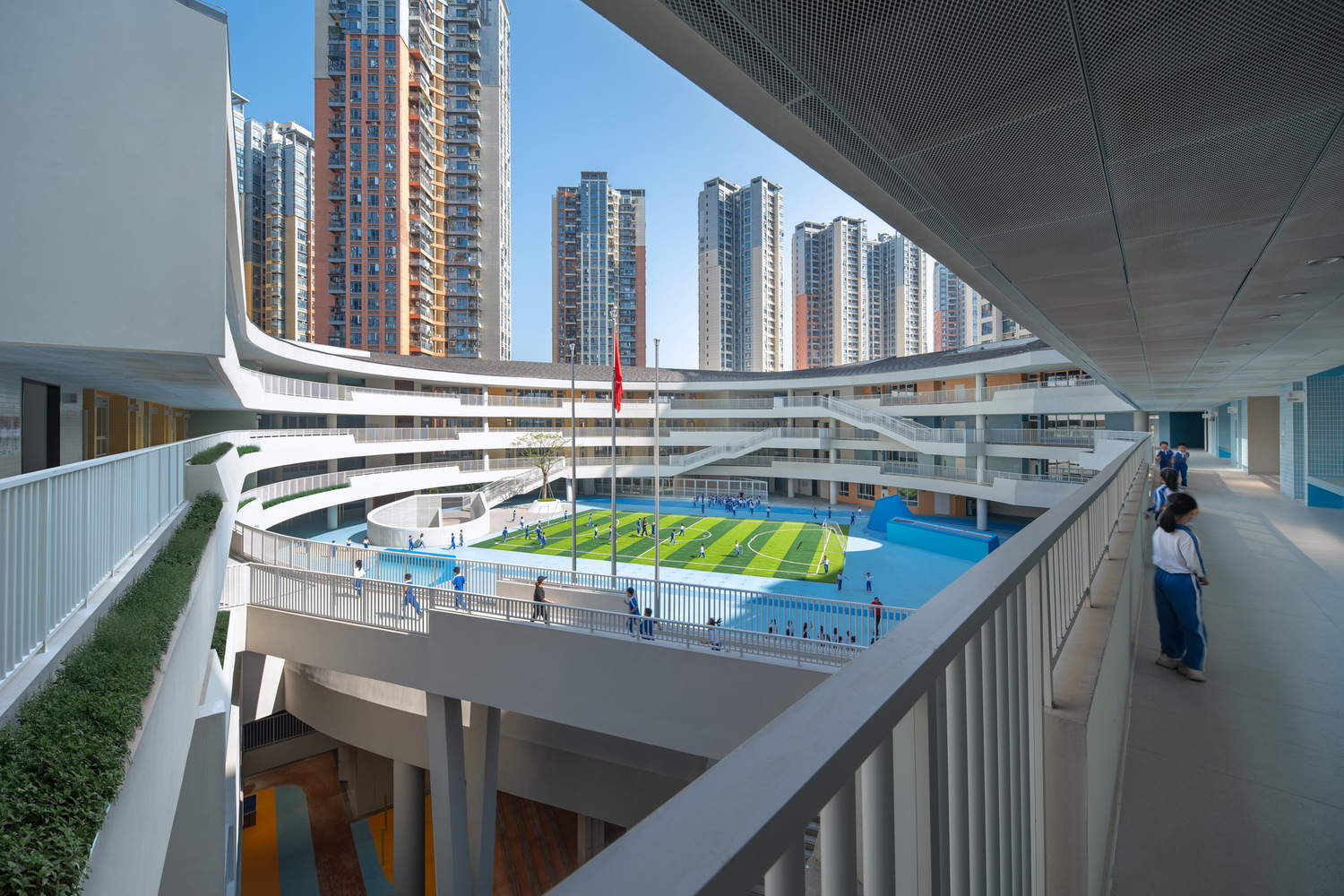
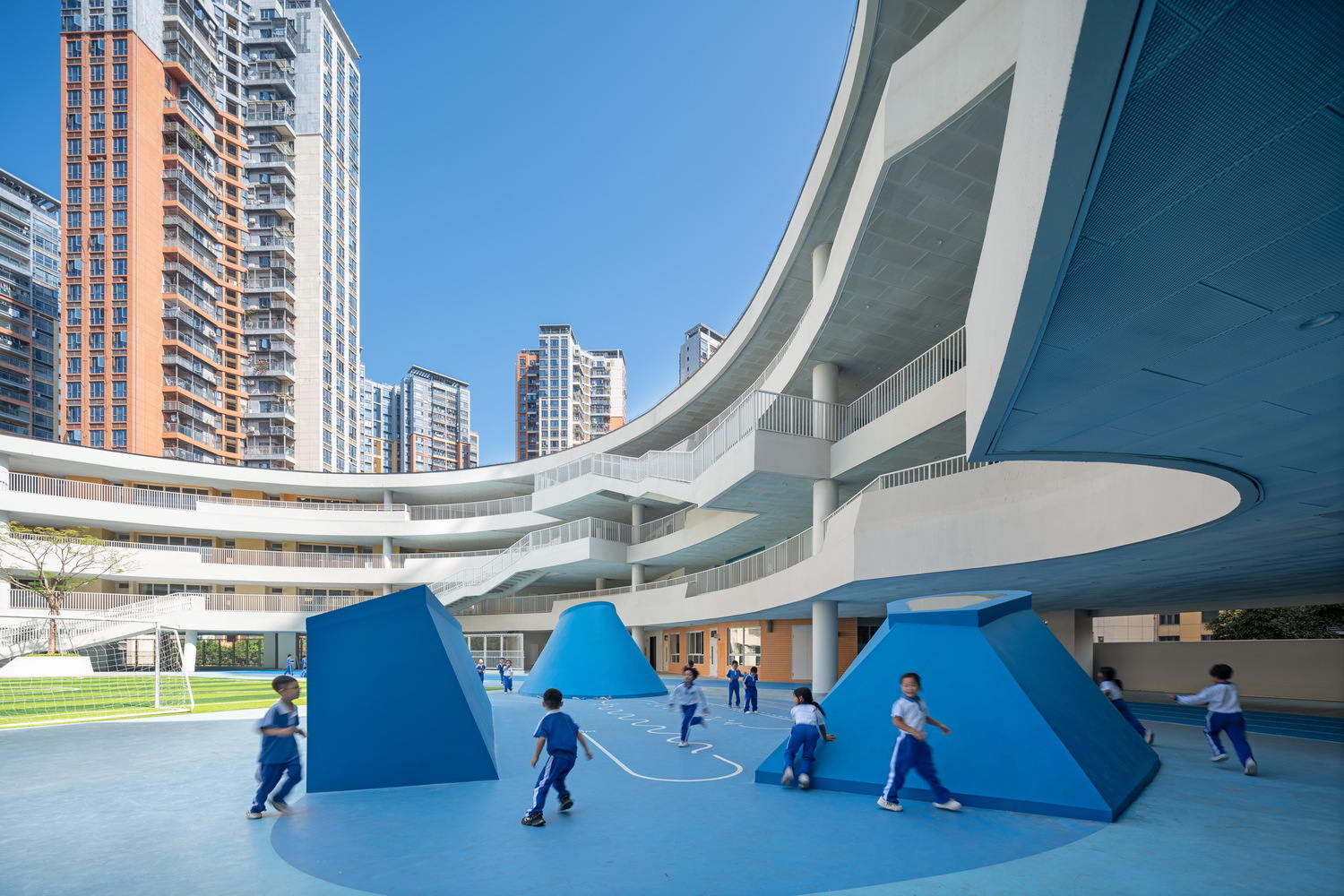
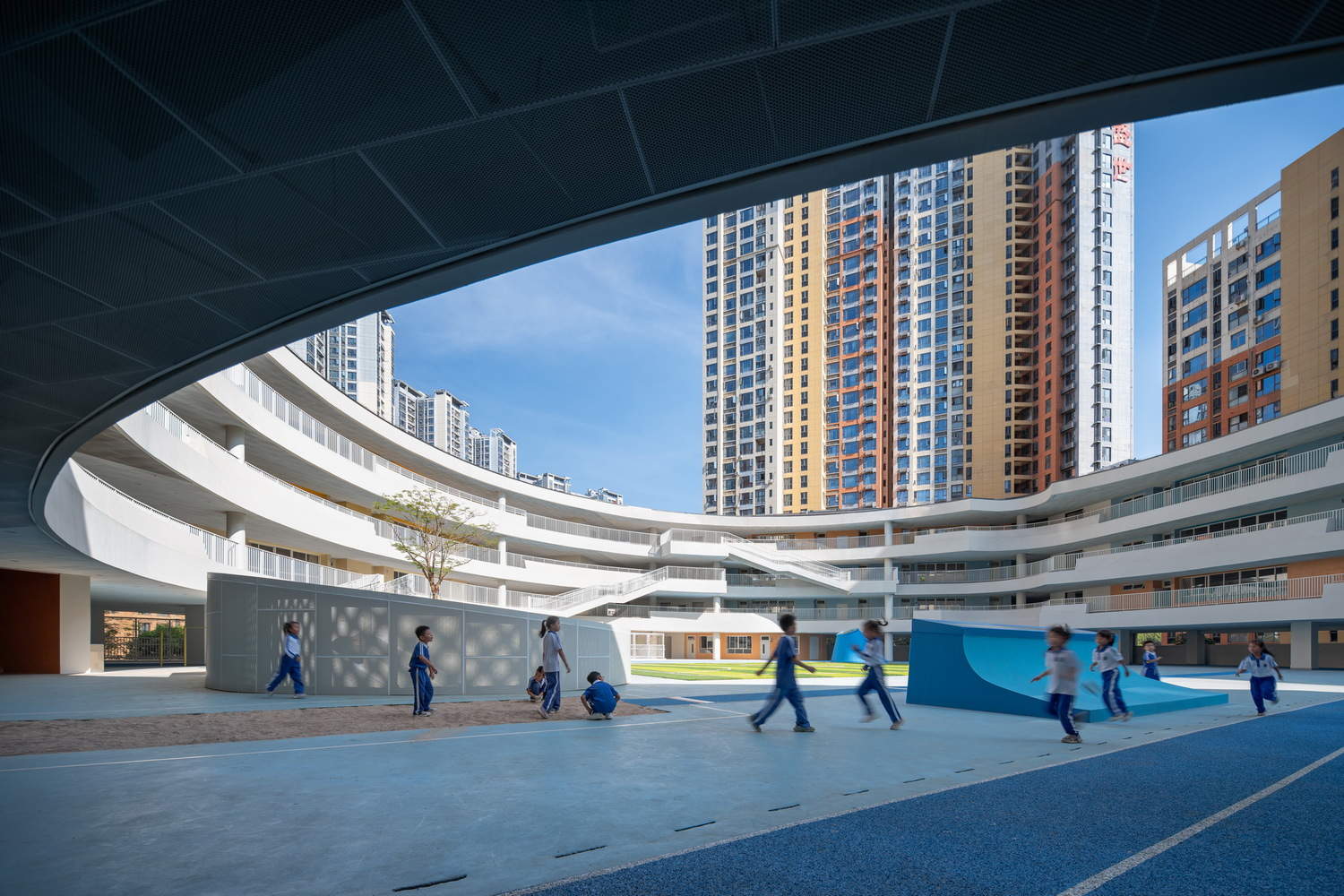
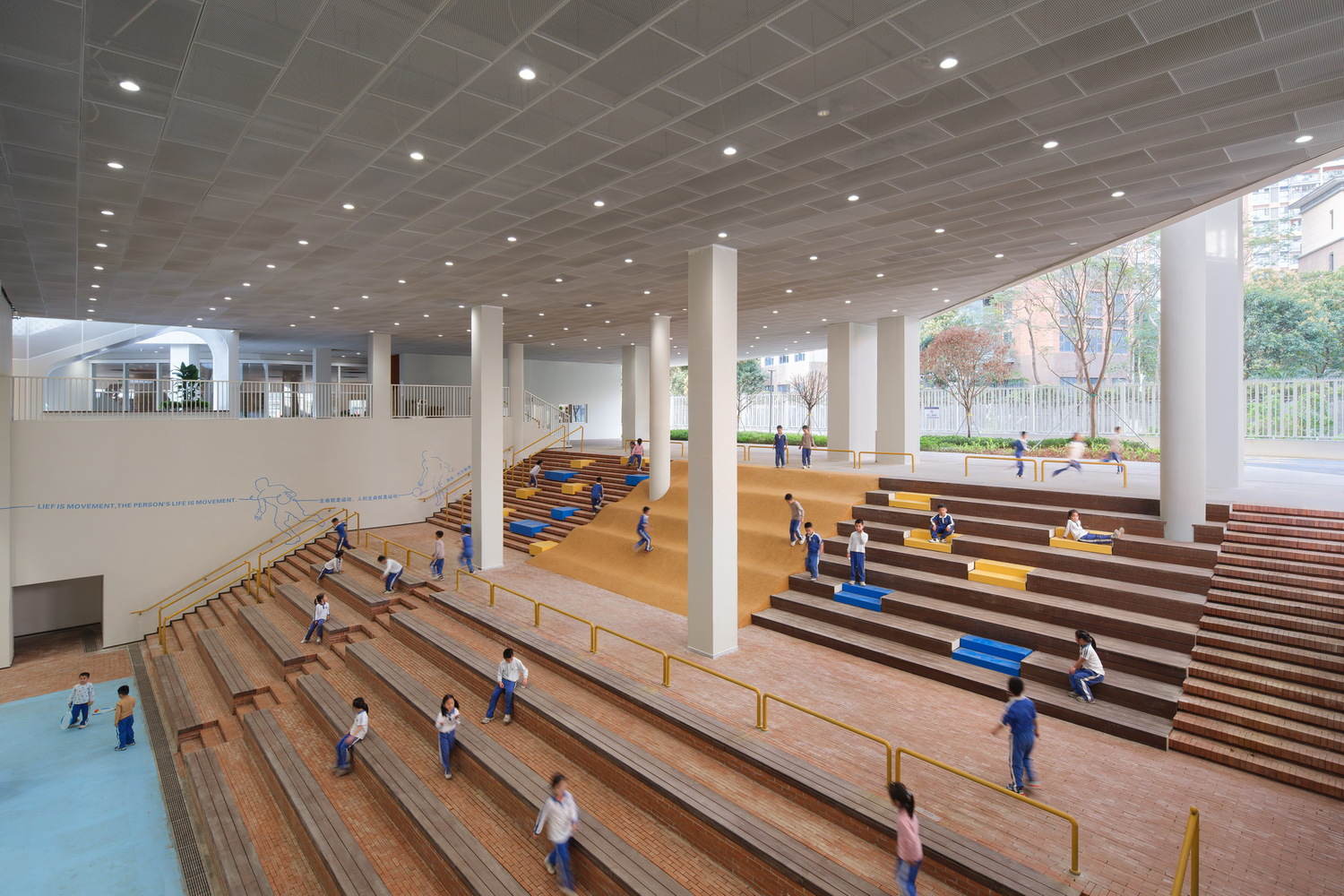
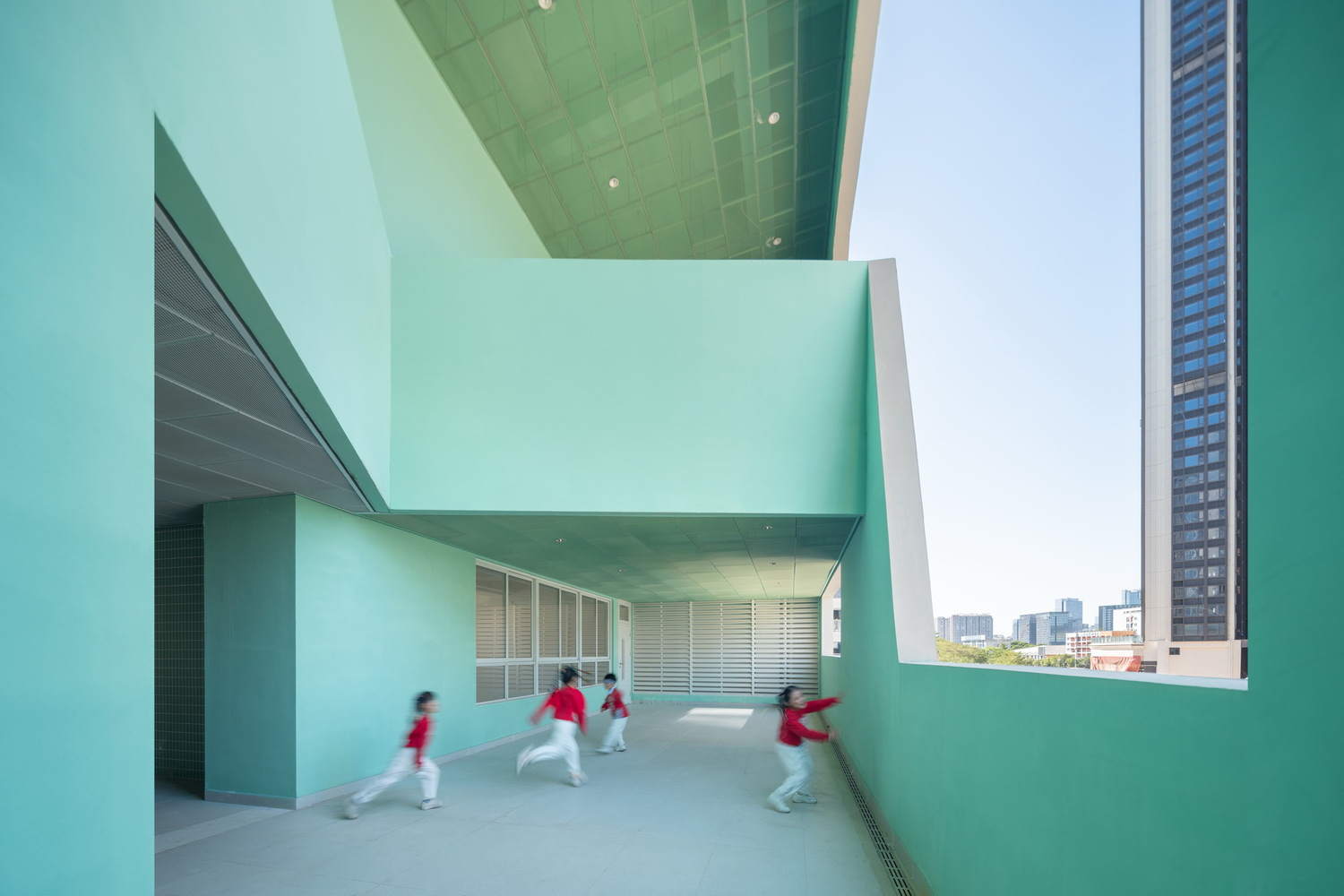
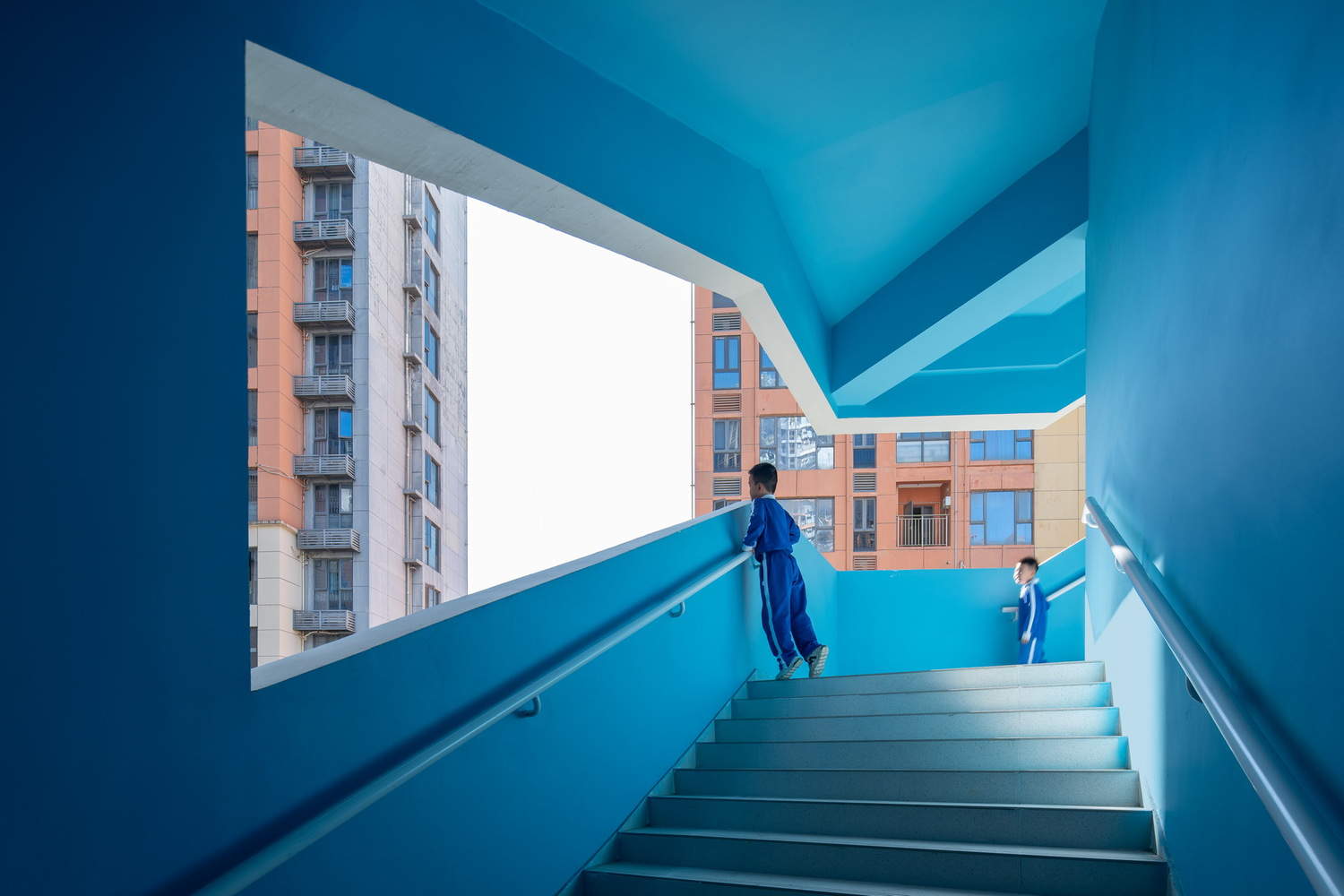
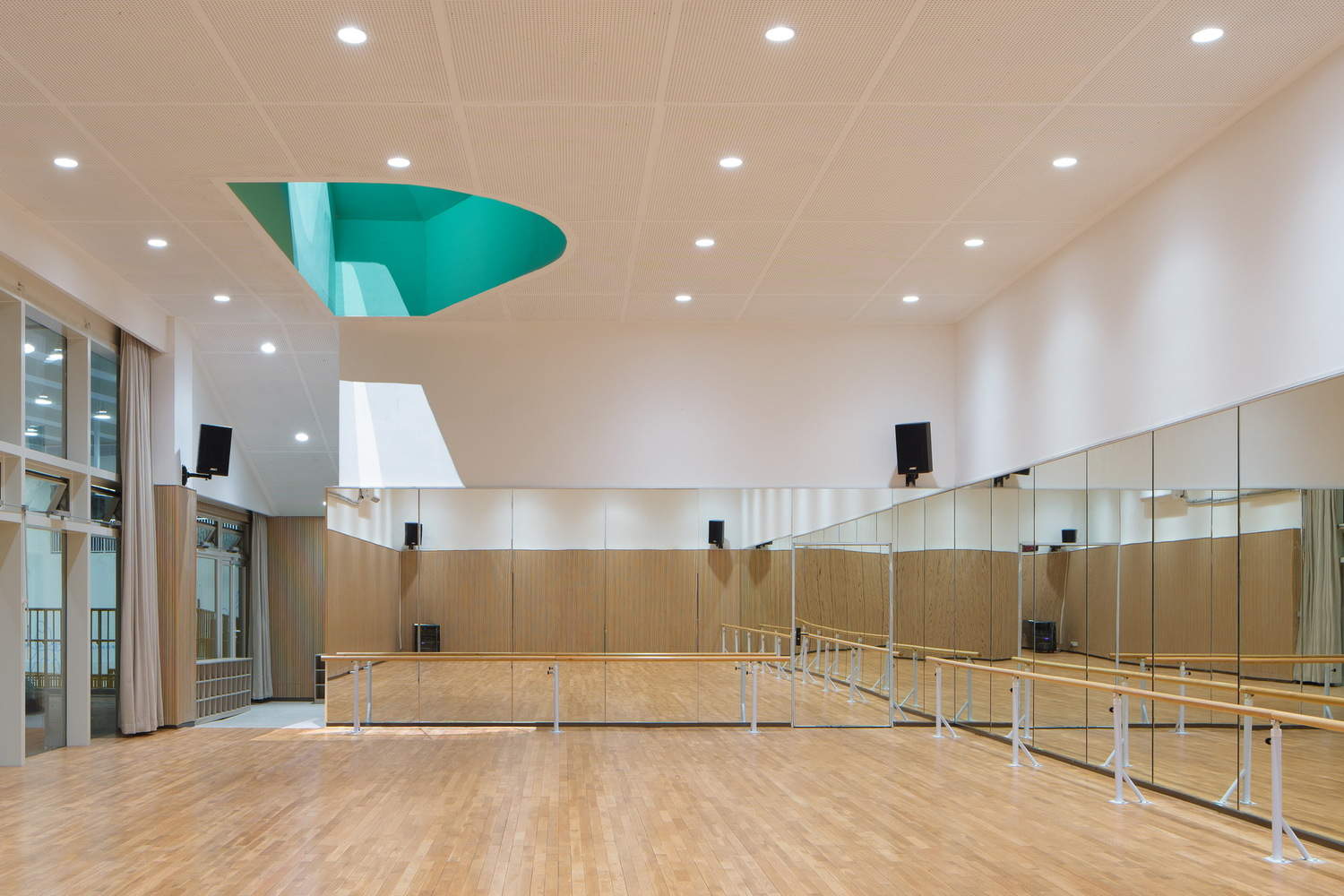
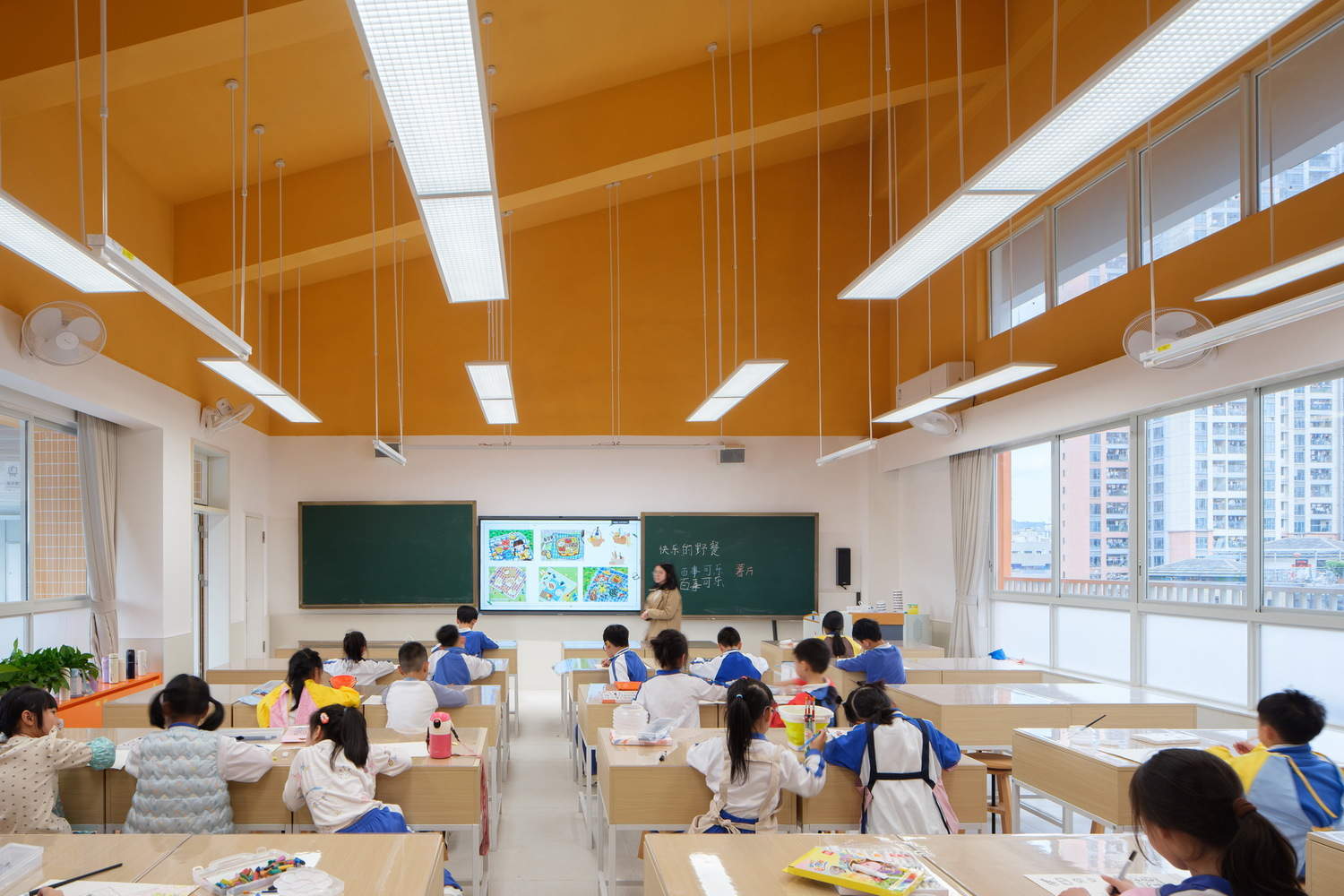
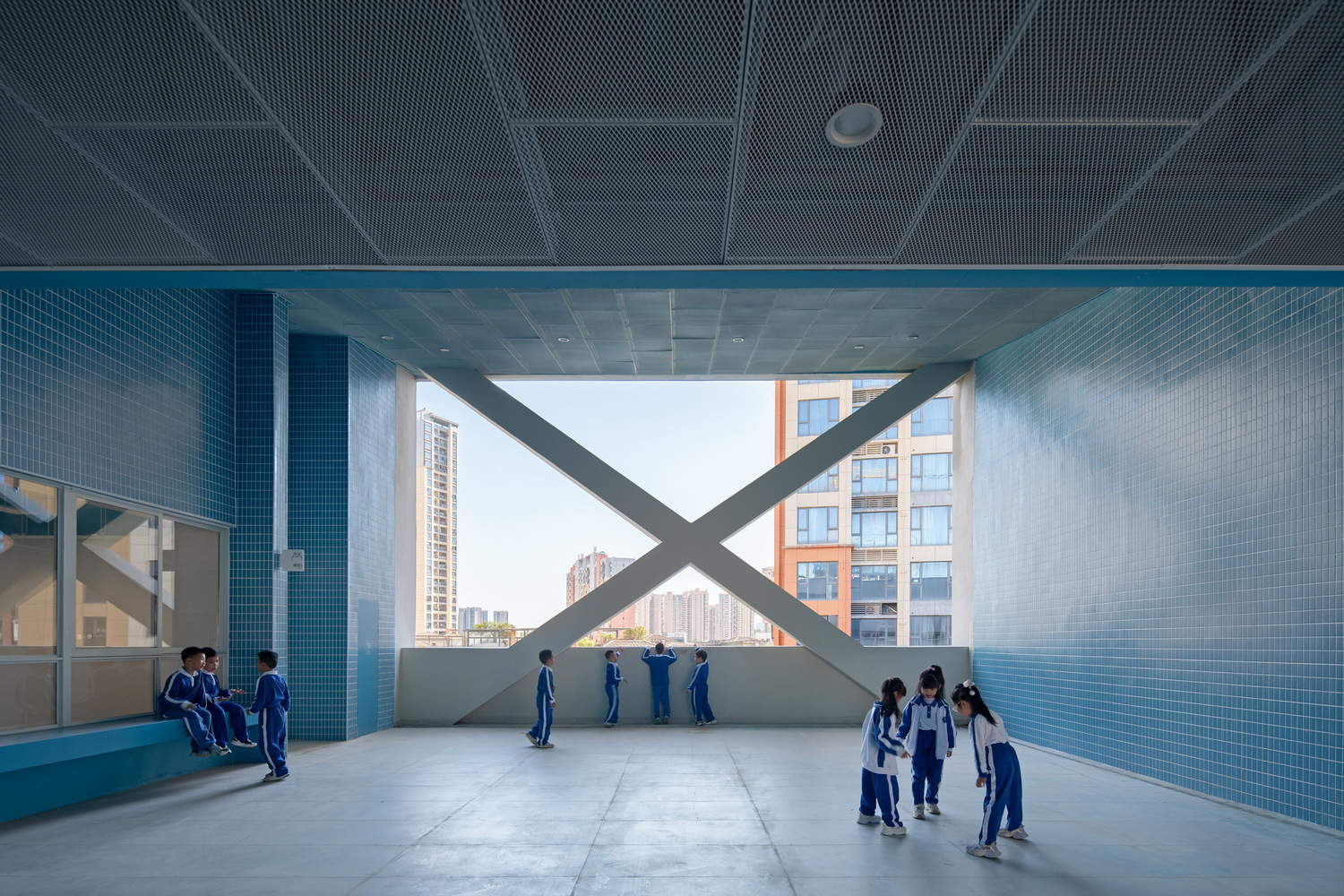
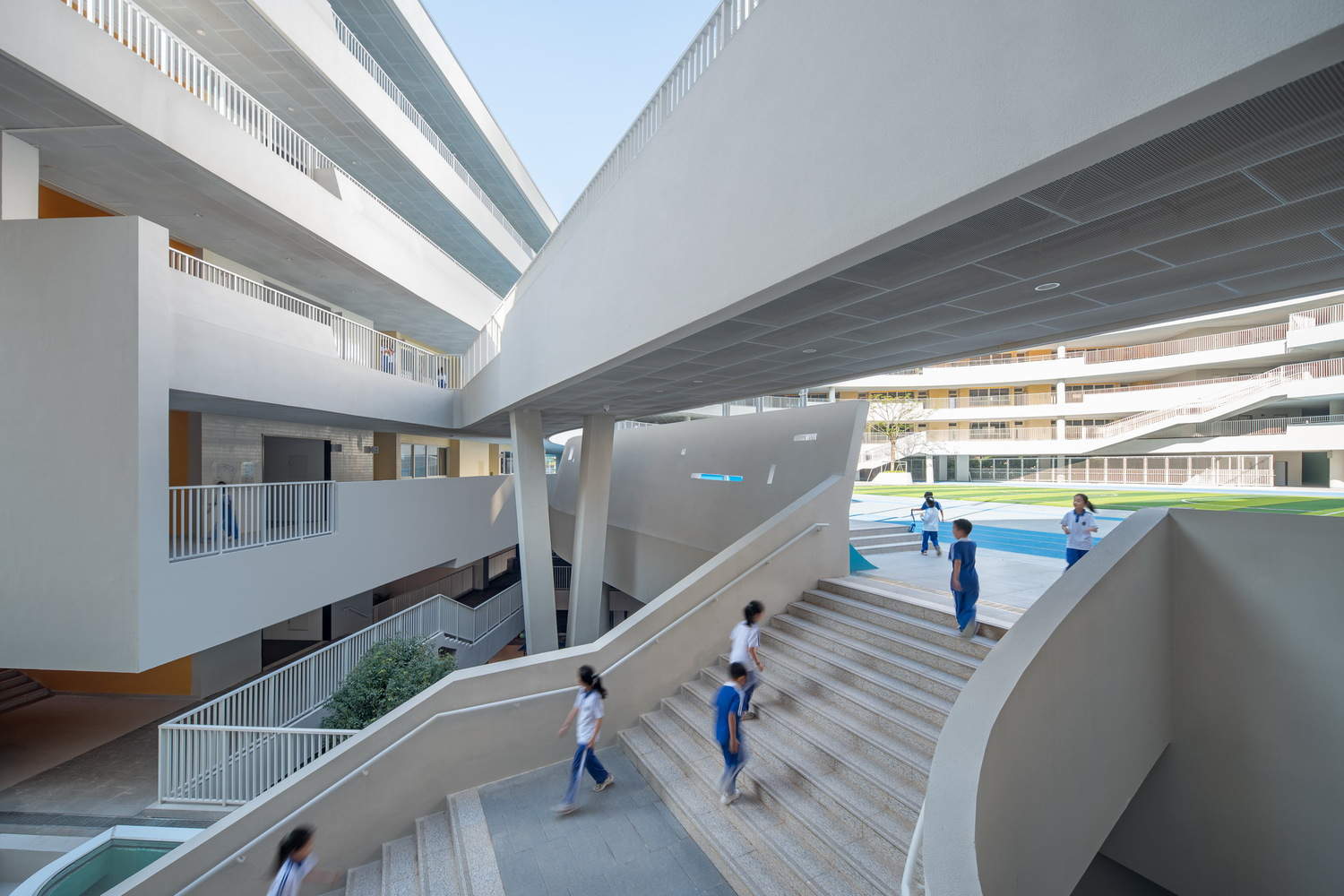
While emphasizing enclosure in the upper levels, shared cultural and sports functions between the school and the community are placed on the ground floor. The large central sports field can serve as a stage for large community events, enhancing community cohesion. The architectural language draws inspiration from Hakka dwellings, combined with local climate and the school's functional needs. The diverse facade vocabulary responds to issues of shading, ventilation, privacy, and openness for high-density school buildings.
在强调上部围合的同时,将学校与社区可共享的文体功能置于底层。中心大面积的运动场可为社区提供大型活动的舞台空间,增强社区凝聚力。建筑语言从客家民居中汲取灵感,结合本地气候与学校的功能需求,多元的立面语汇回应了高密度校舍在遮阳、通风以及私密性与开放性等方面的问题。
© TAL
© TAL
© TAL
It is urgently needed to mend the fragmented urban blocks left behind by years of frantic real estate development and reweave them into complete, livable spaces. In this high-rise residential area in Longgang District, surrounded by urban villages, industrial parks, and main urban roads, we inserted the two primary and secondary schools, completing the construction of the overall block. The powerful geometric order of the Hakka walled enclosure serves as an anchor against the surrounding homogenized development. The open campus boundary and the internally connected settlement are not only public spaces for children to discover their potential but also provide the conditions for breaking down the closed walls of the campus and exploring co-management with the community, making it possible for the academy to nurture and grow together with the community.
当下亟需织补多年来疯狂的地产开发遗留下支离破碎的城市街区,将其重新编织成完整、宜居的生活空间。在龙岗区这个被城中村、工业园及城市主干道环绕的高层住宅区,我们把两所中小学填充进来,完成了整体街区的营建。客家围屋般强有力的几何秩序,成为抵御周边同质化开发的锚点。开放的校园边界和内部串联的聚落既是孩子们发现自我潜能的公共空间,也提供了打破校园封闭的围墙界面、探索社区共营的空间条件,让书院滋养社区并与社区共同成长成为可能。
© TAL
© TAL