在地文脉的抽象与重塑:该项目最精髓之处在于其对安吉在地文脉——“青山绿水”和“竹文化”——的深刻理解与艺术化抽象。建筑造型大胆地将两条山脉交汇穿插、汇聚成“山谷”的意象融入主体结构,屋顶轮廓高低错落,直接呼应了基地周边的自然山体形态。屋面更被设计成仿若竹片编织的卷轴,这种对竹子“弯而不折”韧性的结构表达,不仅体现了地域的物质文化,更深层次地诠释了以吴昌硕为代表的安吉文人精神,实现了建筑形式与精神内涵的高度统一。
十字形核心布局与轴线通透性:在功能组织上,项目采用了高效的“十字形布局”,巧妙地将核心公共空间置于交叉点,辅助功能环绕四周。其东-西向轴线被定位为重要的城市景观廊道,成功地连接了城市干道与西侧的滨水景观带,并利用轻盈的结构形式保证了“望山见水”的视觉通透性。南北向的“会议谷”则充当了人流最核心的集散与交流空间,确保了展厅、酒店等不同功能区的有机串联,体现了以人为本的流线设计逻辑。
结构美学与材料语汇的融合:结构设计与建筑意境的结合堪称典范。尤其是大跨度无柱展厅采用了拱起的钢结构桁架,其简洁有力的线条不仅满足了功能需求,其内在的拱形曲线也恰好呼应了屋面弯曲的造型,使结构本身成为室内景观的重要组成部分。细节处理上,通过铝板与HUPC等材料的运用,创造出富于变化的光影效果和竹片般的肌理,使得整个建筑群在不同角度下呈现出“群山”般舒展、起伏的动态美感,最终目标是创造一个融入青山绿水的环境地标。
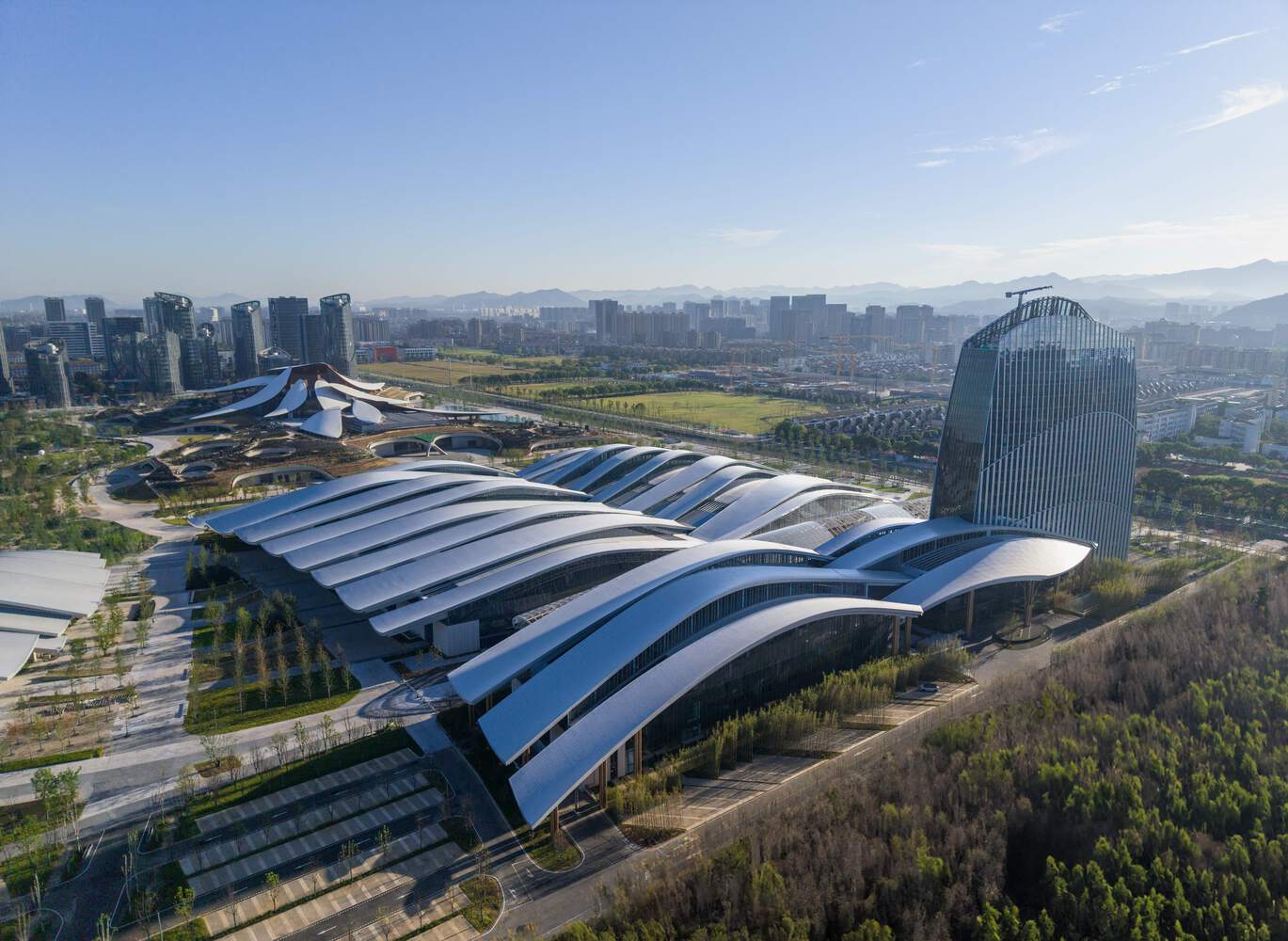
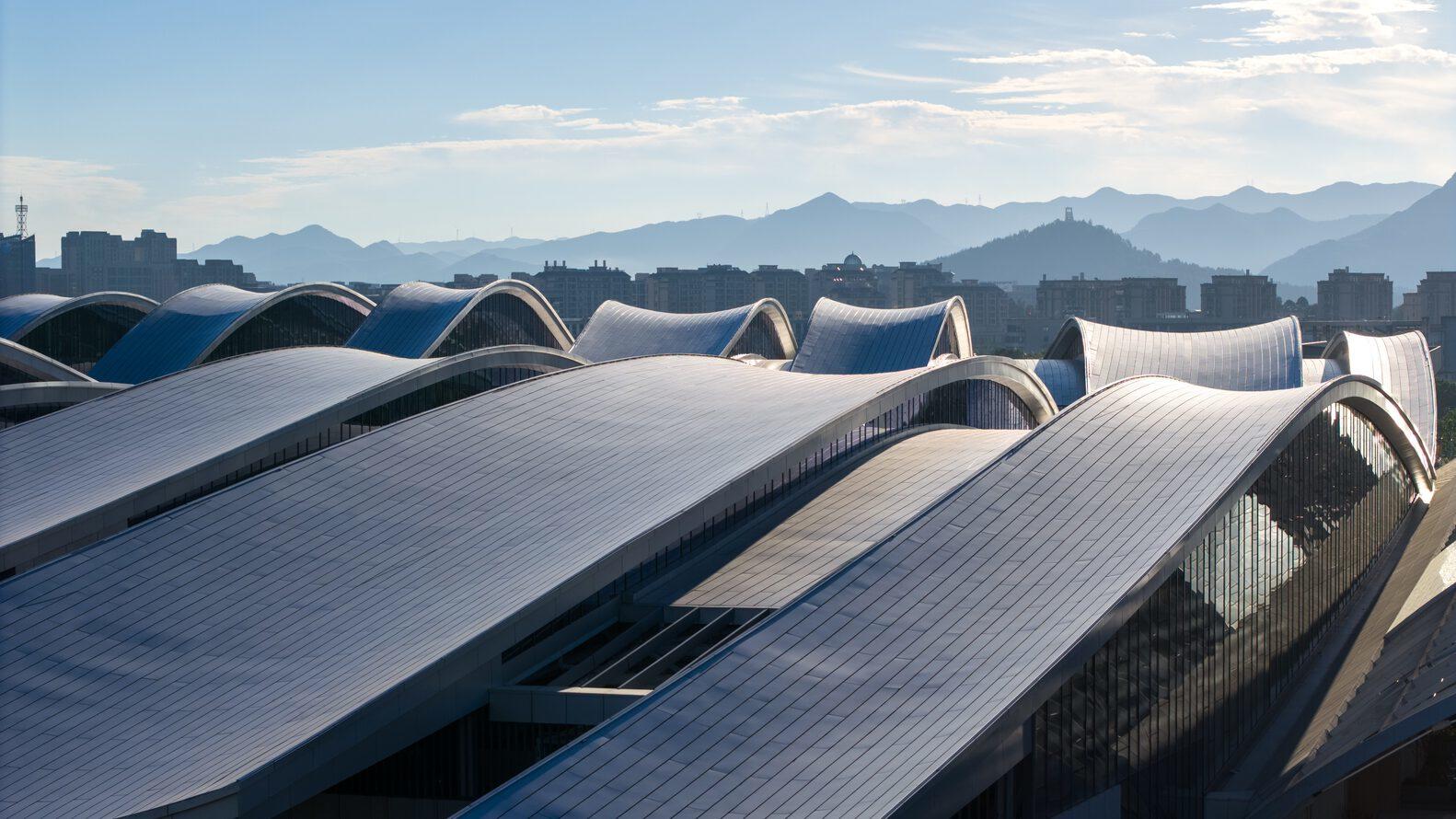
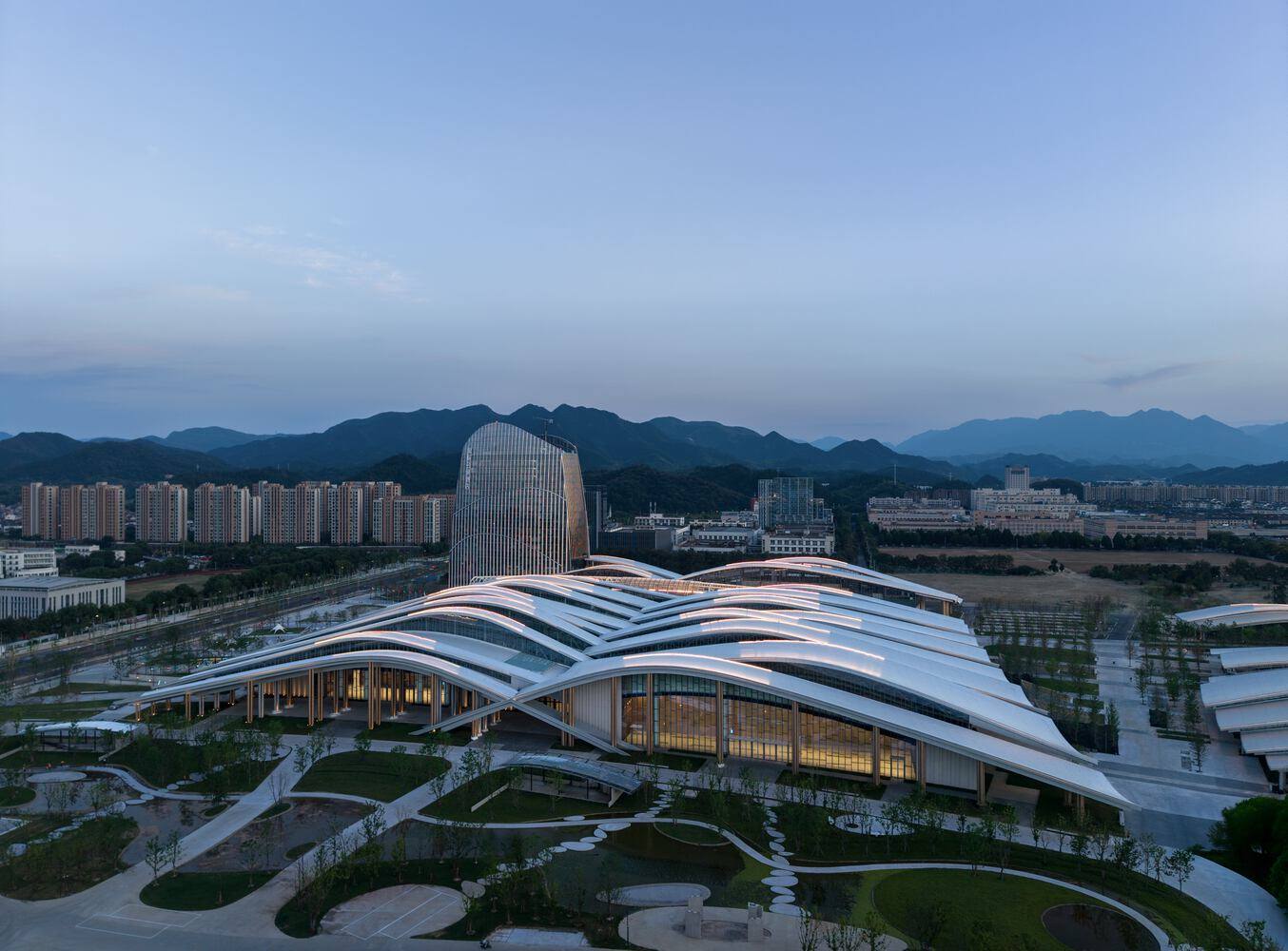
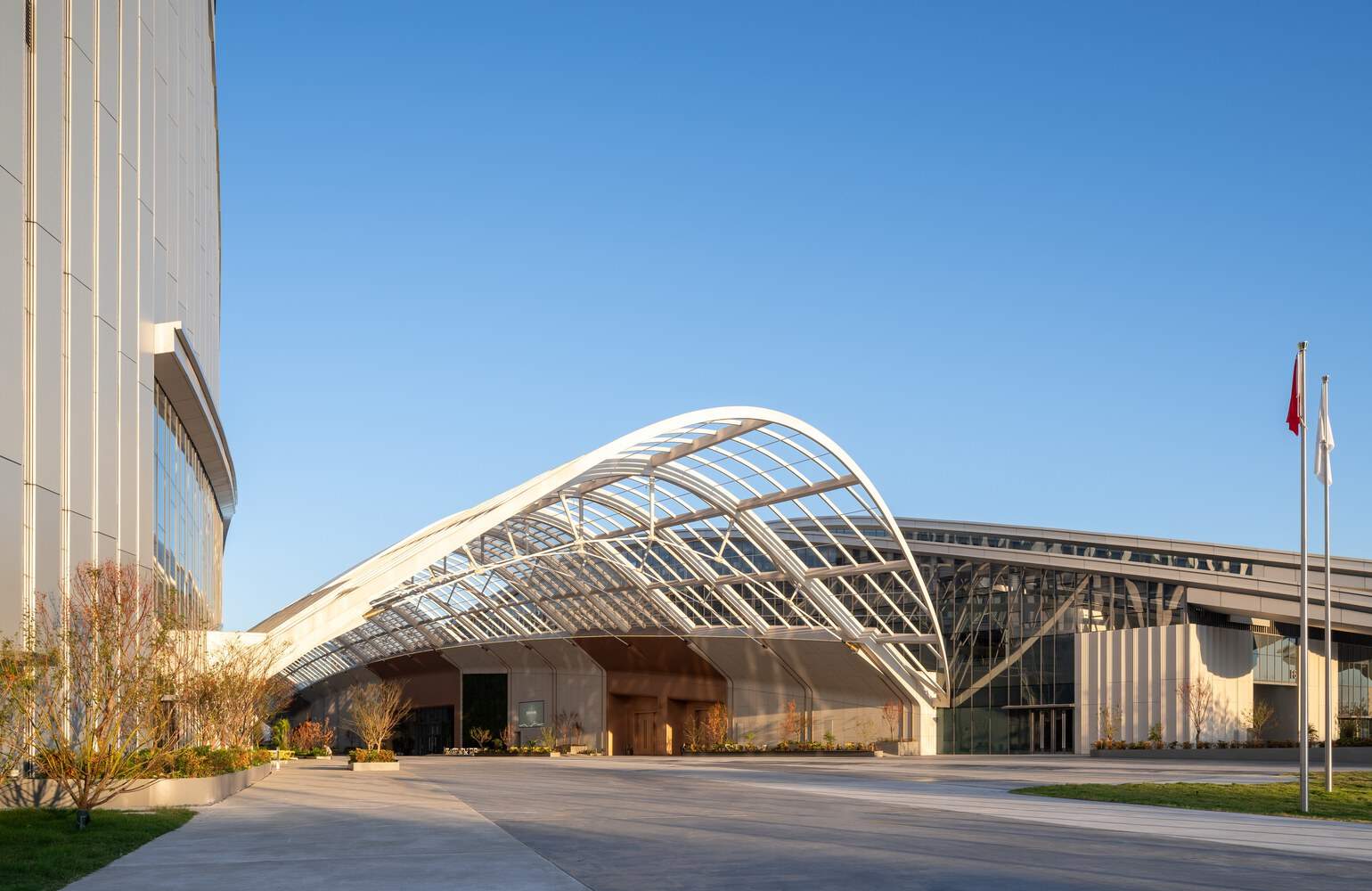
Views from the surrounding natural mountain contours provided the greatest inspiration for the building. The architectural concept derives from "Two Mountains Meet One Valley," where the overall form simulates two mountain ranges intersecting and converging into a valley. The roof profiles of the two sides are staggered in height, resembling continuous, overlapping mountains.
基地周边自然优美的群山轮廓给予建筑最大的灵感。建筑概念取义“两山会一谷”,整体造型如两条山脉交汇穿插,汇聚成一条山谷。两侧建筑的屋顶轮廓高低错落,如连绵的群山层峦叠嶂。
© 三千影像
© 三千影像
© 三千影像
The roof resembles layers of split bamboo strips, woven into a long scroll painting of landscapes. The raised roof, through a highly tensile curved structural form, embodies the toughness of bamboo that bends without breaking, reflecting the resilient and unrestrained spirit of Anji literati, represented by Wu Changshuo.
屋面如同一片片劈开的竹片,编织成一幅山水长卷。隆起的屋顶,通过极具张力的弯曲结构造型,如竹片弯而不折的韧性,也体现出以吴昌硕为代表,安吉文人的刚韧洒脱精神。
© 三千影像
© 三千影像
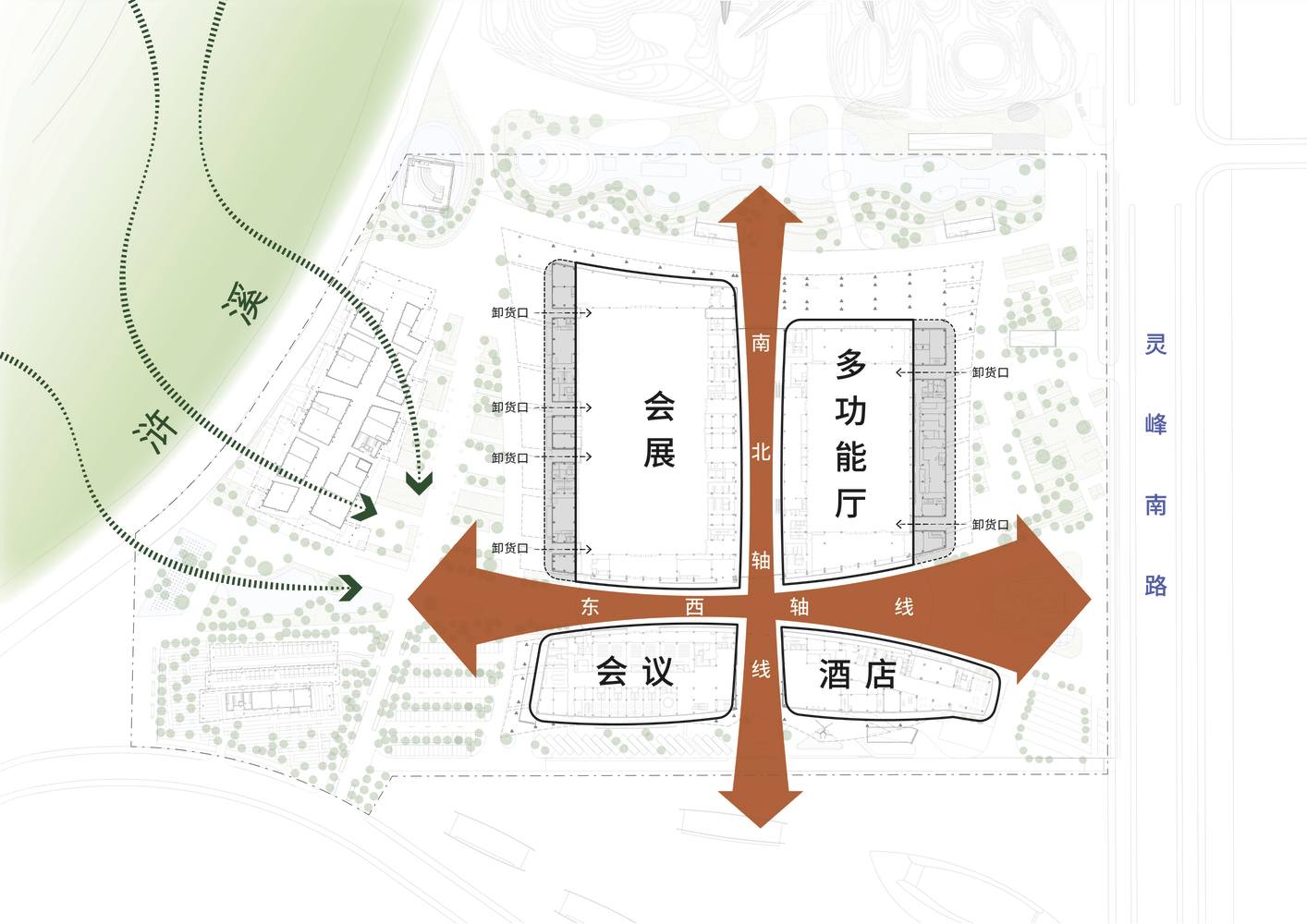
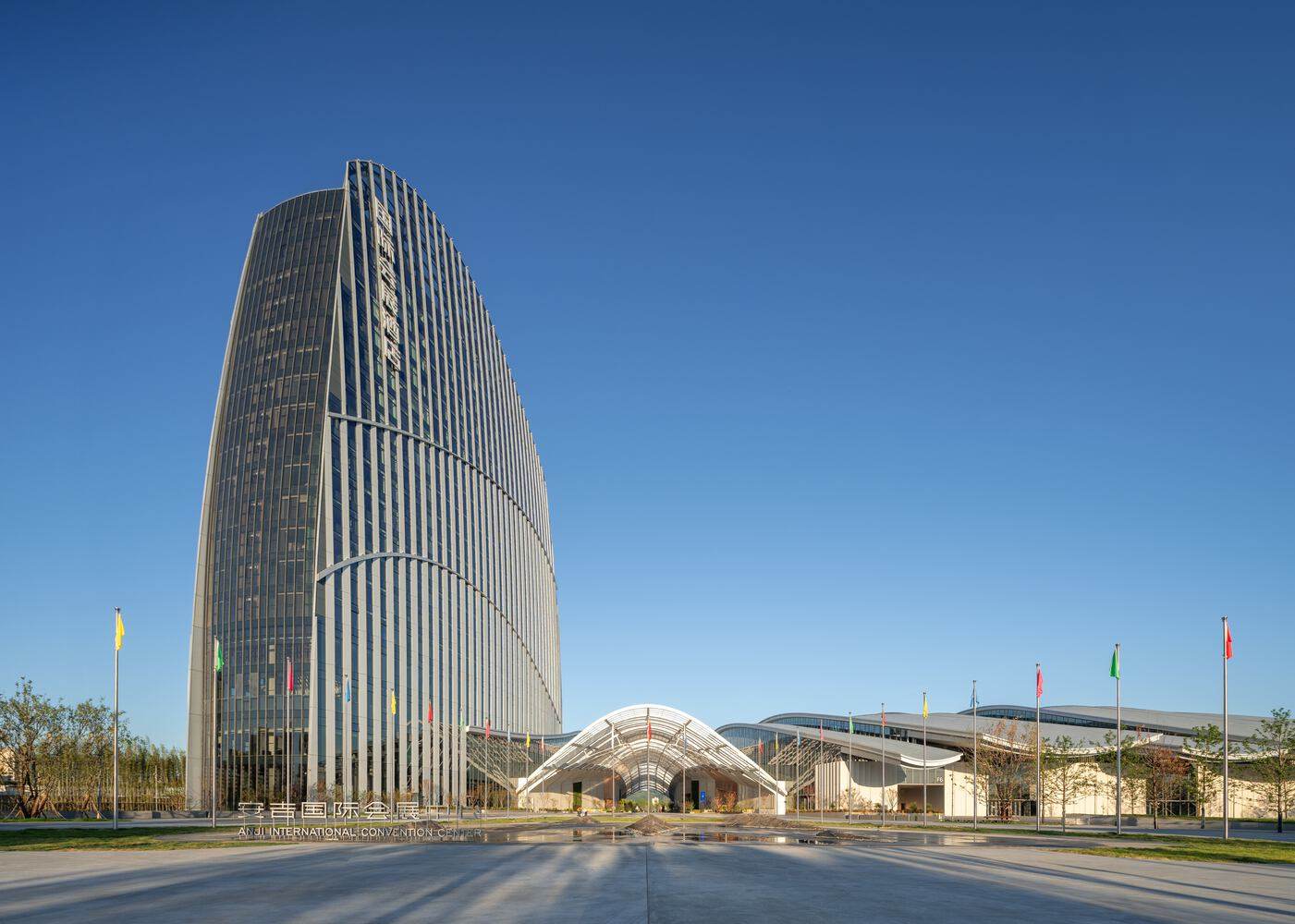
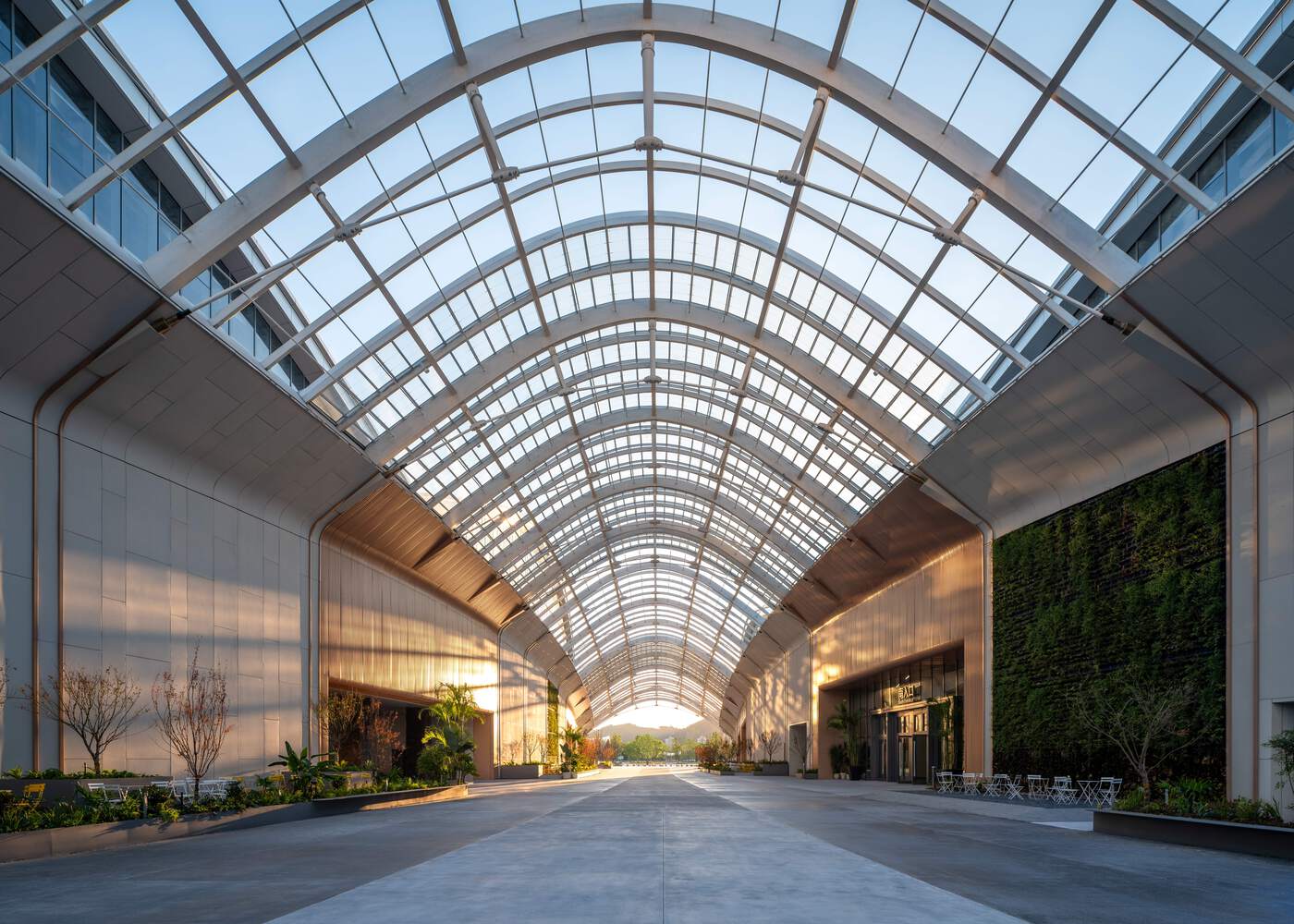
The building's overall functional organization adopts a cruciform spatial arrangement: important public spaces are located in the inner part of the cross, while auxiliary functions such as freight and logistics are arranged on the periphery. The East-West corridor serves as the most important axial space, connecting Lingfeng South Road, the major city road on the east, to the natural waterfront landscape belt of Huxi River on the west. Exhibition functions are arranged on the north side of the corridor, and hotel functions on the south side. This corridor uses a light yet powerful structural form to ensure a transparent visual effect that allows views of the mountains and water along this urban landscape axis.
建筑整体采用十字形空间组织功能:重要公共空间位于十字形内侧,外围布置货运后勤等辅助功能。东西向通廊为最重要轴线空间,联系东侧的城市干道灵峰南路,至西侧浒溪河畔的自然滨水景观带。通廊的北侧布局会展、南侧布局酒店功能。这条通廊用轻盈有力的结构形式,保证这条城市景观轴线望山见水的通透视觉效果。
© 三千影像
© 三千影像
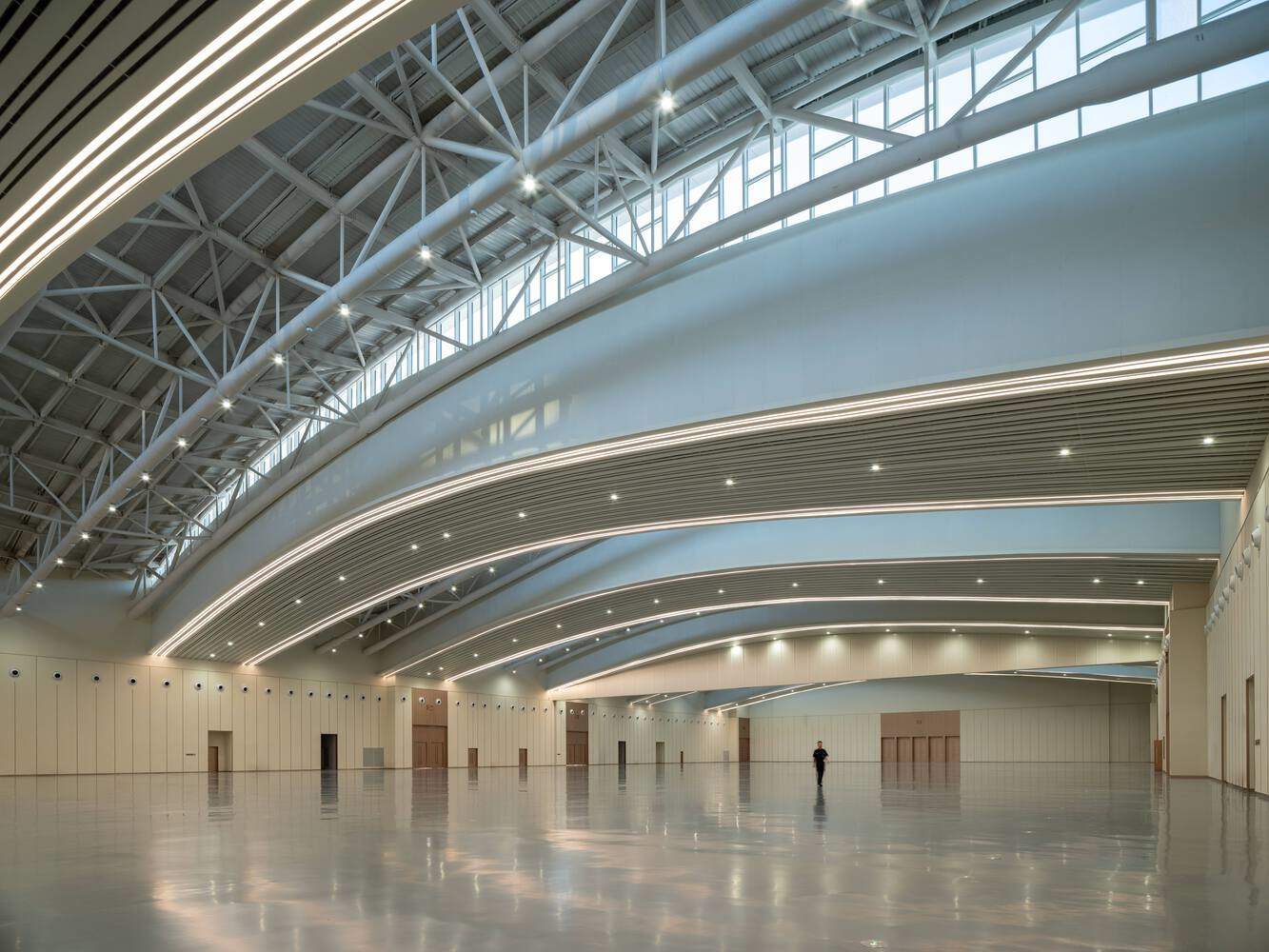
The North-South axis, the "Meeting Valley," connects the Cultural and Art Center on the north to the Urban Business District on the south. This wide indoor space along the North-South axis is the busiest public area of the exhibition center and the most lively all-weather marketplace during exhibition events. The 10,000 square meter main exhibition hall and the 5,000 square meter multi-functional exhibition hall are arranged on either side of this North-South axis. Both halls are column-free spaces supported by large-span trusses. The entire steel structure truss arches along the roof profile, with clean and powerful lines, fully visible in the main exhibition hall interior.
南北向轴线的“会议谷”连接北侧文化艺术中心至南侧城市商务区。这条宽阔的南北向室内空间,是会展中心最繁忙的公共空间,也是展会活动期间最热闹的全天候市集。沿这条南北轴线两侧分别布置 10000 平米主展厅和 5000 平米多功能会展厅。这两个展厅为大跨度桁架的无柱空间。整体钢结构桁架沿屋面造型拱起,线条简洁而有力,在主展厅室内一览无余。
© 三千影像
© 三千影像
© 三千影像
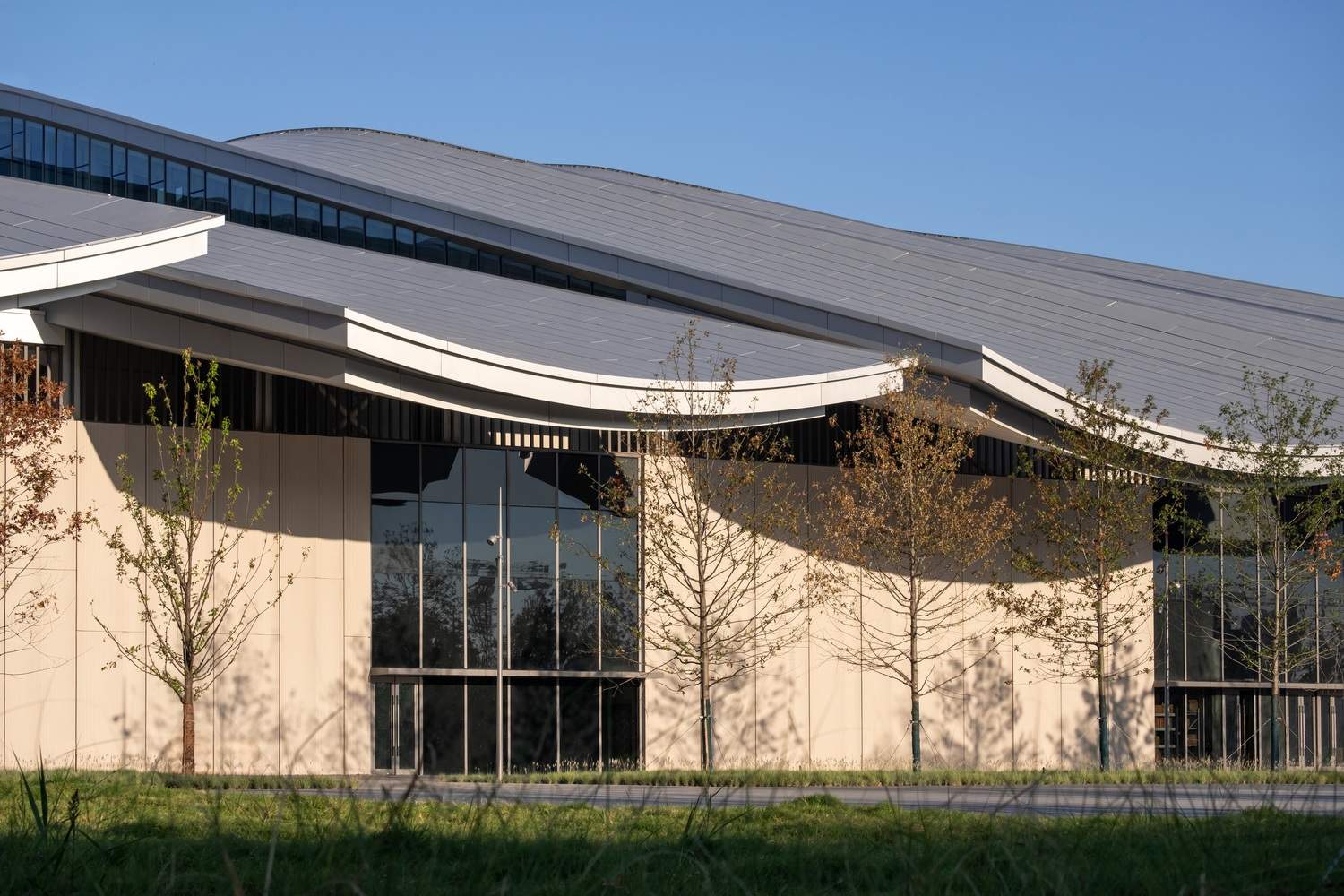
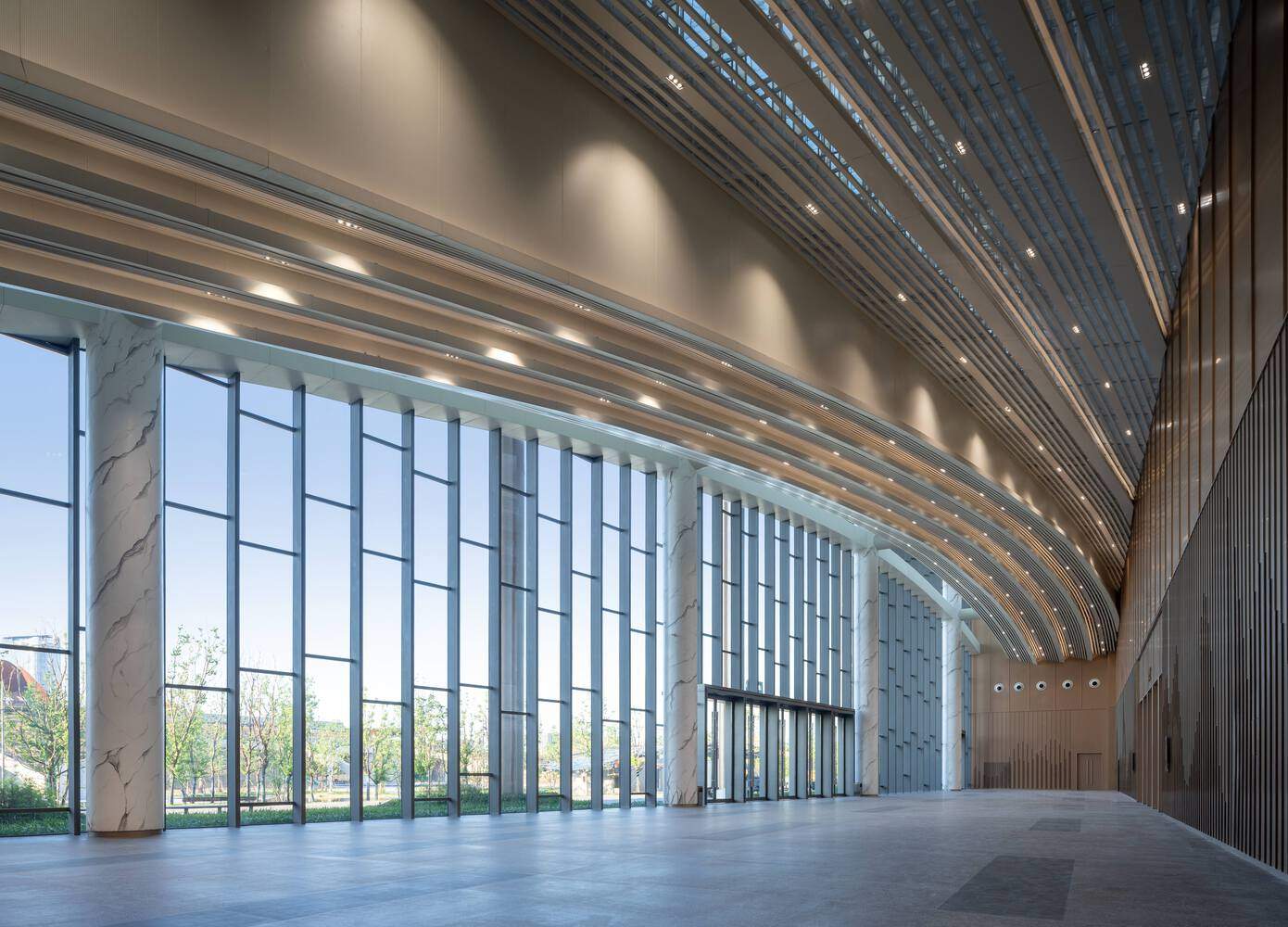
The details of the architecture utilize materials such as aluminum panels and HUPC to create rich and varied light and shadow changes, resembling the concave and curved texture of bamboo pieces. The entire building complex, like a mountain range, sometimes lies low on the ground, sometimes rises abruptly, and sometimes stretches into the distance. By employing lines reminiscent of natural landscapes, it creates a landmark that integrates with the surrounding environment and urban temperament beside the green hills and clear waters.
建筑的细部利用铝板与 HUPC 等材料创造出丰富多变的光影变化,也如同竹片凹曲的肌理造型。整个建筑群如群山一般,时而匍匐在地面,时而拔地而起,时而舒展伸向远方,运用如自然山水的线条,在青山绿水边创造一个融入环境与城市气质的地标。