可持续再生成为设计核心:本项目最精髓之处在于其对可持续改造的坚定承诺。设计师深入挖掘场地的物质语境,将原售楼中心的建筑改造与自然环境的保护性再生成为一体。通过“轻介入”策略,优化了空间流线和功能布局,同时最大限度地利用了场地内外的可再生材料,如竹笋壳、废弃木材、当地石材和施工废料。这种将“废物”转化为设计资源的实践,不仅体现了对环境负责的态度,也为建筑的未来运营奠定了独特的物质基础和叙事性。
在地材料的诗意重构与文化传承:设计成功地将重庆金佛山地区的在地材料和建造智慧提升到精品酒店的语境中。通过系统地梳理和应用竹笋壳、龙鳞石、碳化木等材料,建筑的质感与山林景观实现了有机的融合。特别值得称赞的是,设计团队与当地非遗竹编匠人合作,将传统的编织工艺融入室内外空间,使酒店成为在地文化和精湛手工艺的当代展示窗口。这种将物质性、在地性和文化性高度统一的策略,赋予了项目深厚的场所精神。
场所精神的流线与视野营造:项目在空间组织上展现了对山地地形的深刻理解。通过将大堂层设置在顶层,确保了24间客房拥有全向的山景视野,极大地提升了体验感。建筑立面通过“框架—填充”的逻辑,用竖向结构柱呼应山势,横向的竹排和片石则强化了建筑与地面的和谐关系。屋顶半开放的遮棚结构,借鉴了当地民居的屋檐特征,成功模糊了室内外的边界,使居住者能更沉浸式地感受山林环境。
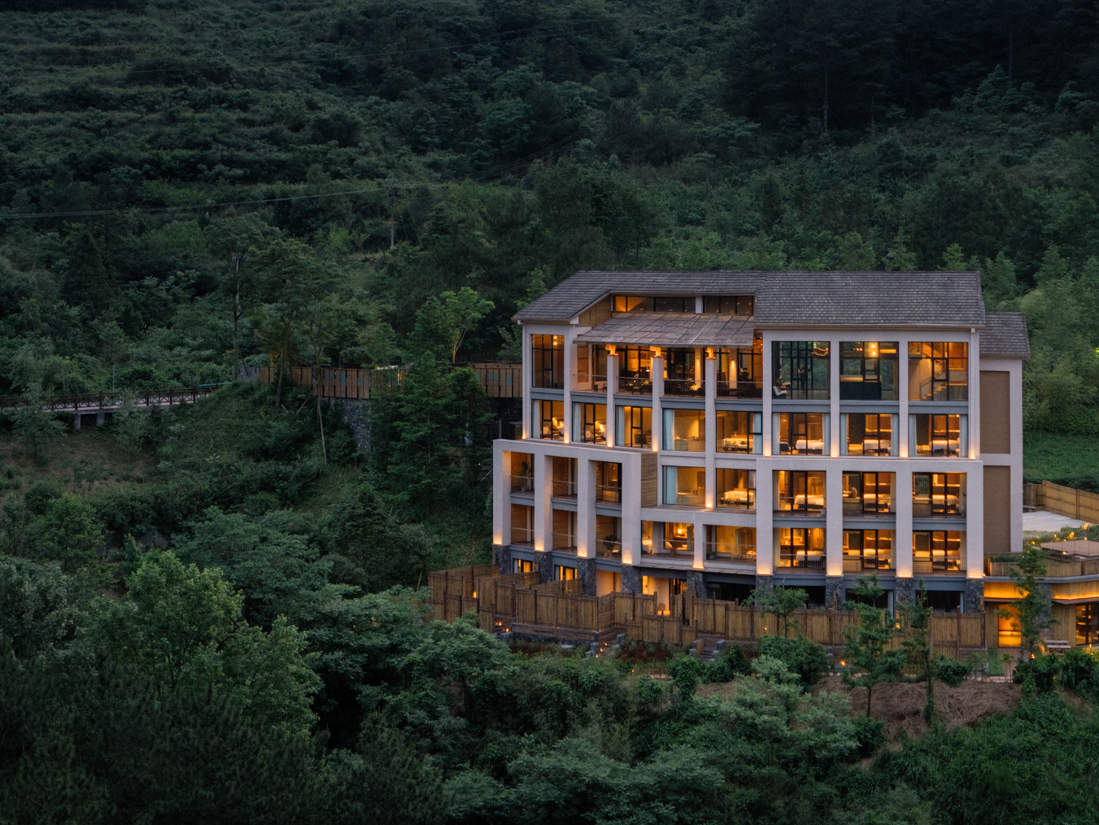
The Cloudhaus Hotel is located at an altitude of 1,200 meters on the northern slope of Mount Jinfo in Nanchuan District, Chongqing, and was originally a resort sales center. With the functional update, the project was transformed into a 24-room boutique hotel that integrates the natural context and local culture. The site is surrounded by mountains and rich in materials; bamboo forests, square bamboo shoots, and mountain stones form a unique mountain landscape. The design takes sustainable renovation as its core, reconstructing the flow lines, sightlines, and functions through a light intervention strategy, allowing the building to maintain a dialogue with the mountain forest while meeting new operational needs.
Cloudhaus Hotel 位于重庆南川区金佛山北坡海拔 1200 米处,原为度假区售楼中心。随着功能更新,项目被转型为一座融合自然语境与在地文化的 24 间精品酒店。场地群山环绕、材料丰富,竹林、方竹笋及山石构成了独特的山地景观。设计以可持续改造为核心,通过轻介入策略重构流线、视野与功能,使建筑在满足新运营需求的同时,继续与山林保持对话。
© Wen Studio
© Wen Studio
顶层阳台雨棚结构
© Wen Studio
The design team conducted in-depth fieldwork instead of traditional research to systematically sort out usable mountain materials and draw inspiration from village construction methods and natural textures. The materials were all sourced from the mountains and construction processes: bamboo shoot shells, bamboo strips, bamboo weaving, dragon scale stones, discarded mountain house lumber, carbonized old wood, and construction core drilling waste were rewoven into the space, forming a continuous texture that seems to grow naturally. Collaboration with local intangible cultural heritage bamboo weaving artisans allowed traditional weaving to achieve contemporary expression within the hotel, strengthening cultural continuity.
设计团队以深入的田野调查替代传统调研,系统梳理可利用的山地材料,并从村落建造方式与自然纹理中提取灵感。材料均从山中及建造过程中取得:竹笋壳、竹条、竹编、龙鳞石、废弃山屋木材、碳化旧木、施工钻芯废料等,被重新编织进空间之中,形成自然生长般的连续质感。与当地非遗竹编匠人合作,使传统编织在酒店内得到当代表达,强化文化延续性。
© Wen Studio
© Wen Studio
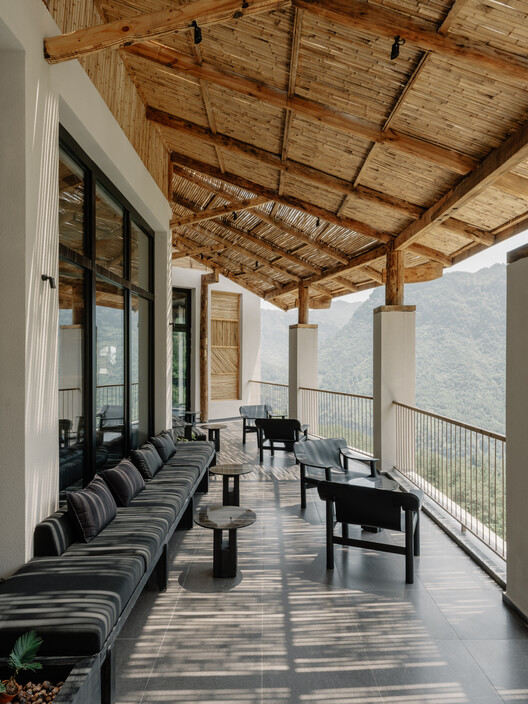
The facade reconstructs the original order based on the logic of "frame-filling": eight gray-white vertical structural columns emphasize the longitudinal rhythm of the mountain terrain, while the side facades use local bamboo slats and rubble masonry to form a horizontal texture, creating a more harmonious relationship with the mountain body. The canopy structure of the top-floor terrace extends the spatial characteristics of local residential eaves, forming a semi-open shelter through a wooden structure and bamboo slat frame, blurring the boundary between indoors and outdoors.
立面以“框架-填充”的逻辑重构原有秩序:八根灰白色竖向结构柱强调山势的纵向节奏,侧立面采用本地竹排与片石砌筑,形成横向肌理,与山体关系更为和谐。顶层露台延伸当地民居屋檐的空间特征,通过木构与竹排框架构成半开放遮棚,模糊室内外界限。
© Wen Studio
© Wen Studio
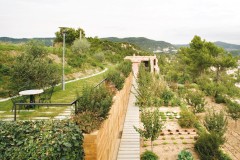
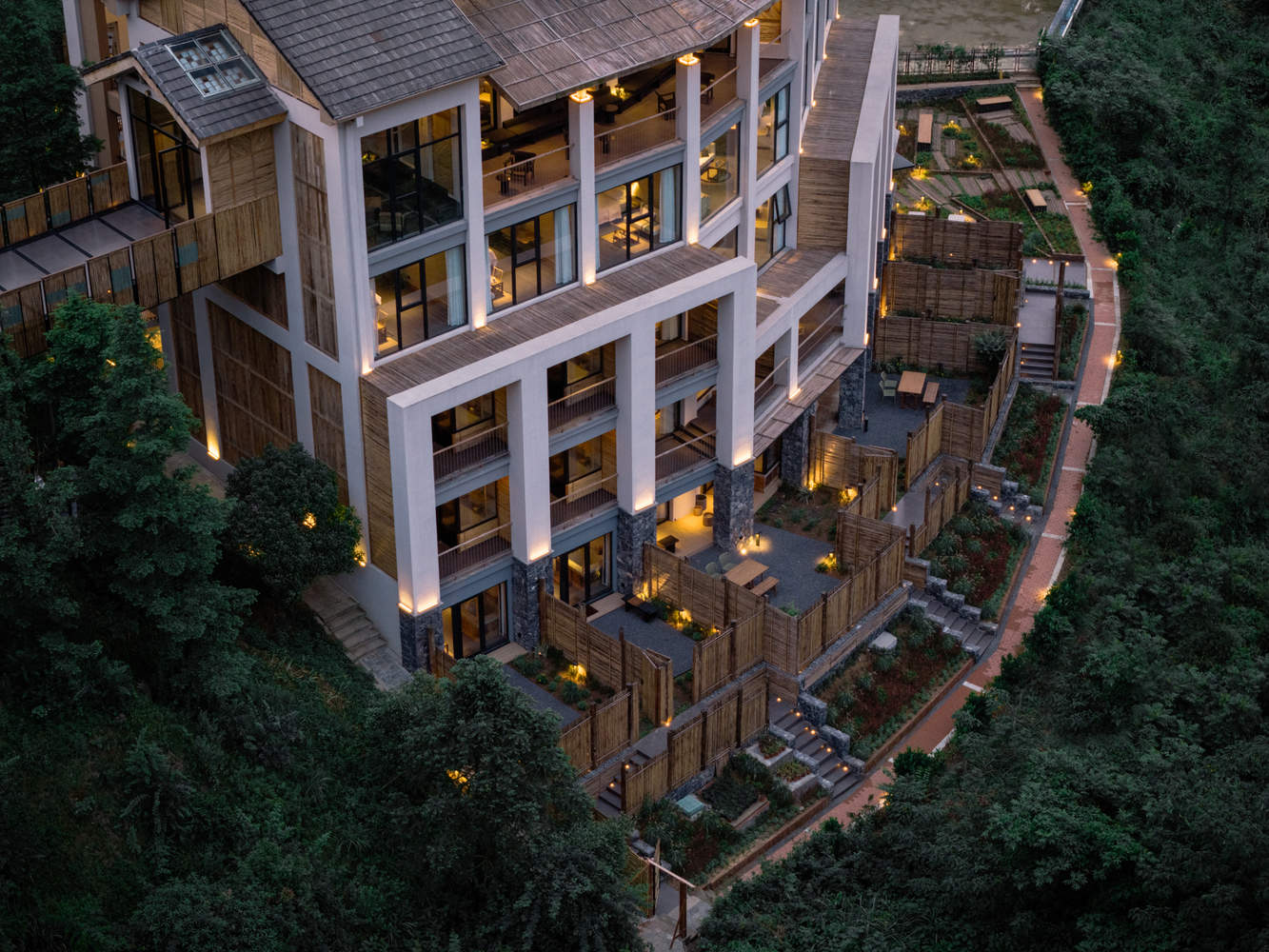
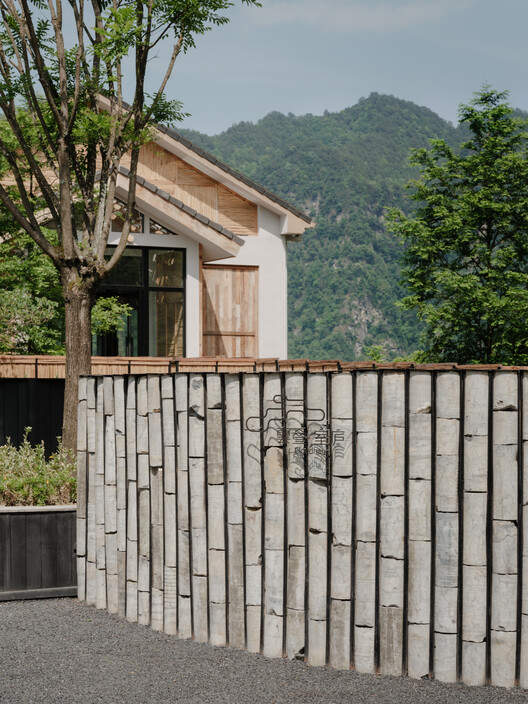
The entrance plaza reconfigures the interface using original site bricks, mountain stones, and dragon scale stones; recycled lumber, after carbonization, is combined with concrete core drilling to form landscape partitions. The entrance corridor bridge and the railing on the mountain side are constructed with green plastic woven belts and bamboo strips, echoing the local bamboo railing system. The ground-level courtyard is enclosed by recycled logs and bamboo materials, naturally undulating with the terrain, maintaining visual consistency with the exterior facade materials.
入口广场利用原场地砖、山石与龙鳞石重组界面;回收木料经碳化后与混凝土钻芯结合成为景观隔断。入口廊桥与靠山一侧栏杆以绿色塑料编织带与竹条构造,呼应当地竹栏杆体系。贴地庭院通过回收圆木与竹材围合,随地势自然起伏,与外立面材料保持视觉统一。
© Wen Studio
© Wen Studio
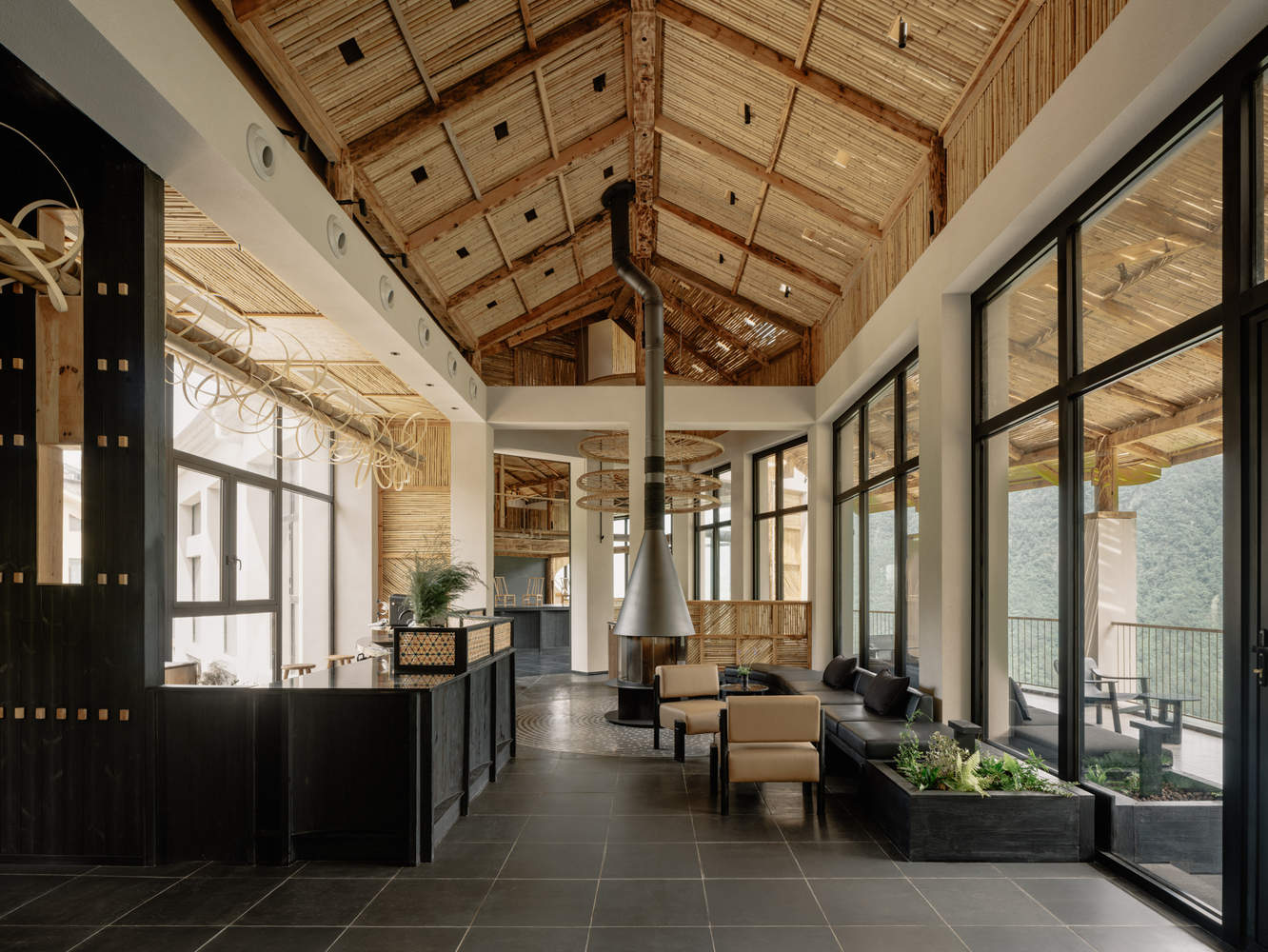
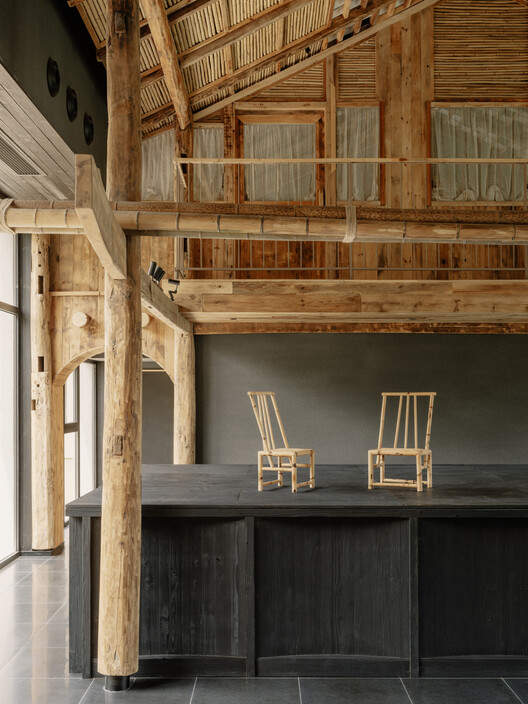
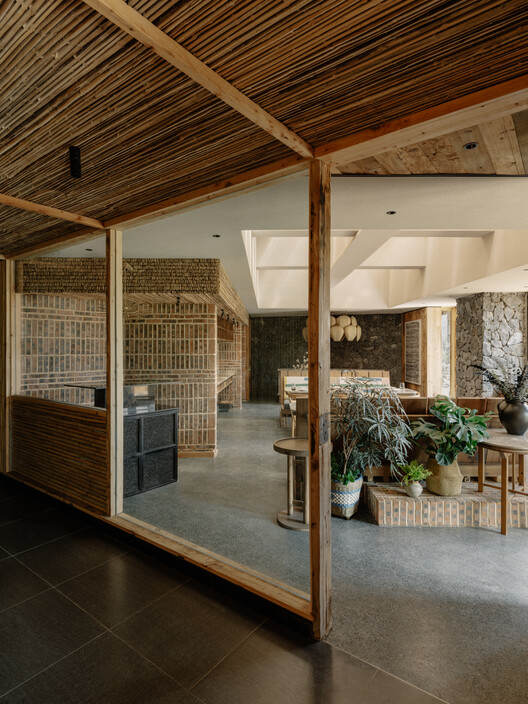
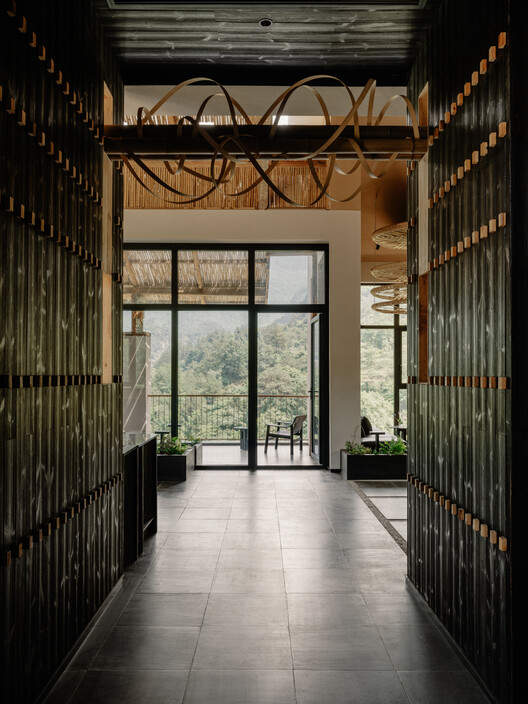
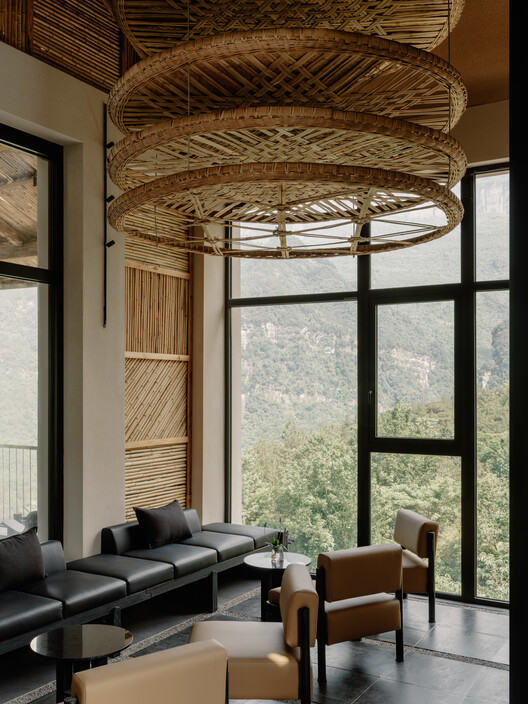
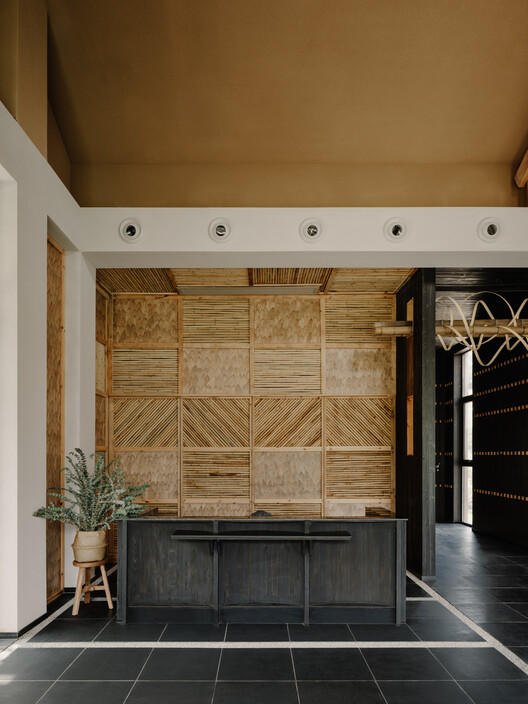
The lobby level is set on the top floor of the building, connecting the reception, waiting area, elevator hall, bar, multi-functional stage, and office mezzanine, unfolding panoramic mountain views in all directions. The interior fills the space with materials such as bamboo shoot shells, square bamboo, scrap wood, bamboo weaving, and black mountain stones, giving visitors an experience of being enveloped by the mountain upon entry. The bamboo structure and bamboo painting in the lobby bar were created spontaneously on-site, forming a unique spatial character.
大堂层设置于建筑顶层,串联入口接待、等候区、电梯厅、酒吧、多功能戏台与办公夹层,全向山景展开。室内以竹笋壳、方竹、废旧木、竹编及黑色山石等填充空间,使访客进入后即感受到山体包裹般的体验。大堂吧的竹构与竹画为现场即兴创作,形成独特的空间气质。
© Wen Studio
© Wen Studio
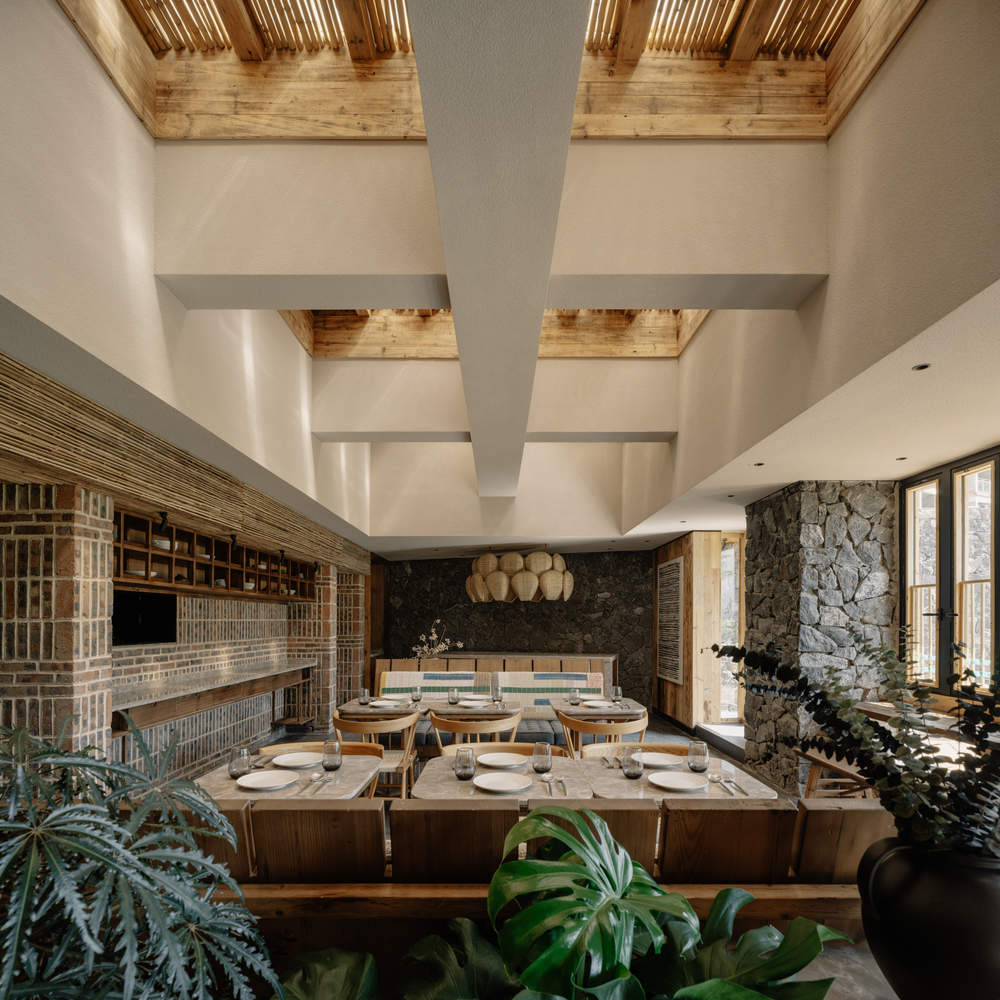
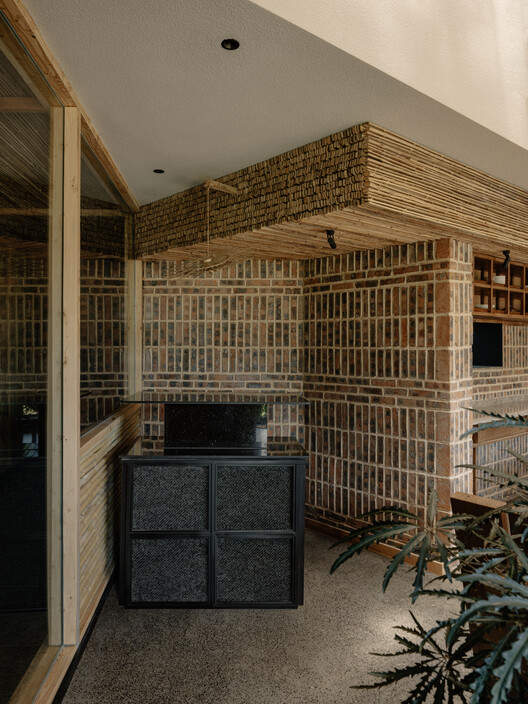
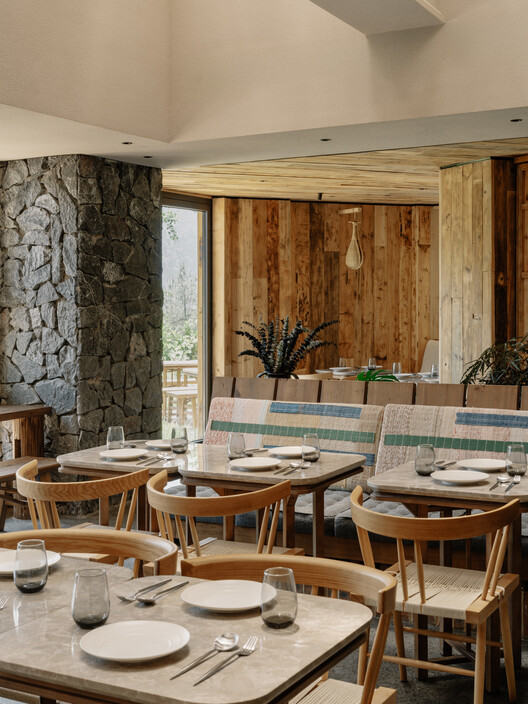
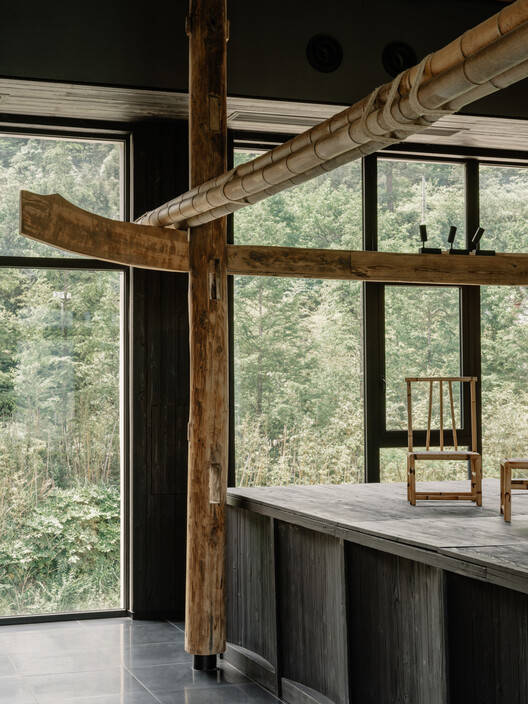
The restaurant is located in the podium on the first floor, gaining interior and outdoor seating layers by extending outward towards the mountain. The space extensively utilizes recycled construction materials, including demolished red bricks, bamboo treads, semi-finished bamboo weaving, and black mountain stones, used for walls, entrance ceilings, reception desks, and terrazzo floors, achieving a balance between locality, cost, and quality.
餐厅位于 1 层裙楼,通过向山体外扩获得室内与外摆层次。空间大量利用施工回收材料,包括拆除红砖、竹踏板、半成品竹编与黑色山石,用于墙面、入口顶面、接待台与水磨石地面,形成在地性、成本与品质间的平衡。
© Wen Studio
© Wen Studio
© Wen Studio
The 25 guest rooms fan out facing the forest, including courtyard rooms, suites, and standard room types. The interior continues the language of the public areas, using earthy tones as a base to connect wooden frames, bamboo materials, and handicraft details, making the living experience natural, quiet, and rich in regional character.
25 间客房呈扇形展开面向山林,包含庭院房、套房与标准房型。室内延续公区语言,以土色为基底串联木框架、竹材与手工艺细部,使居住体验自然、安静且富有地域性。