空间精神的结构化体现:该项目设计的精髓在于成功地将瑜伽练习的核心理念——轻盈、流畅和不间断的“流”——转化为清晰的建筑语言。通过利用跨度约78英尺的宽阔空间,建筑创造了一个无拘束的容器。尤其值得称赞的是,结构系统巧妙地模仿了哈达瑜伽中以最小力量达到姿态所产生的“轻盈感”,采用了间隔竹材的构造,这不仅在物理上减轻了结构的观感,更在精神层面契合了“Prana”(生命力)的呼吸韵律。
形式与哲学的结构耦合:建筑形式的生成逻辑深刻植根于瑜伽哲学中“对立统一”的概念。结构通过模拟材料的“拉伸(上升)”和“压缩(下降)”同步作用来定义形态,这直接映射了瑜伽呼吸法中“Purak”(吸气)与“Rechak”(呼气)的交替过程,并在“Kumbhaka”(屏息)中达到平衡。这种结构曲线的交替起伏,使得建筑不再是简单的遮蔽物,而是成为一个可供体验的、具有内在平衡和韵律的“物质化冥想空间”。
材料的社会与生态宣言:项目在材料选择上展现出超越美学层面的责任感和前瞻性。大力推崇竹材的使用,不仅是发挥其在结构上的表现潜力,更是一项明确的社会干预:一是通过增加对天然材料的依赖,为被R.C.C.和砖结构边缘化的传统工匠技能创造了就业机会,实现了技艺的传承与升级;二是倡导一种“有意识地生活在地球上”的可持续战略,鼓励在建筑实践中拥抱天然材料的多样性,赋予建筑深远的社会和生态价值。
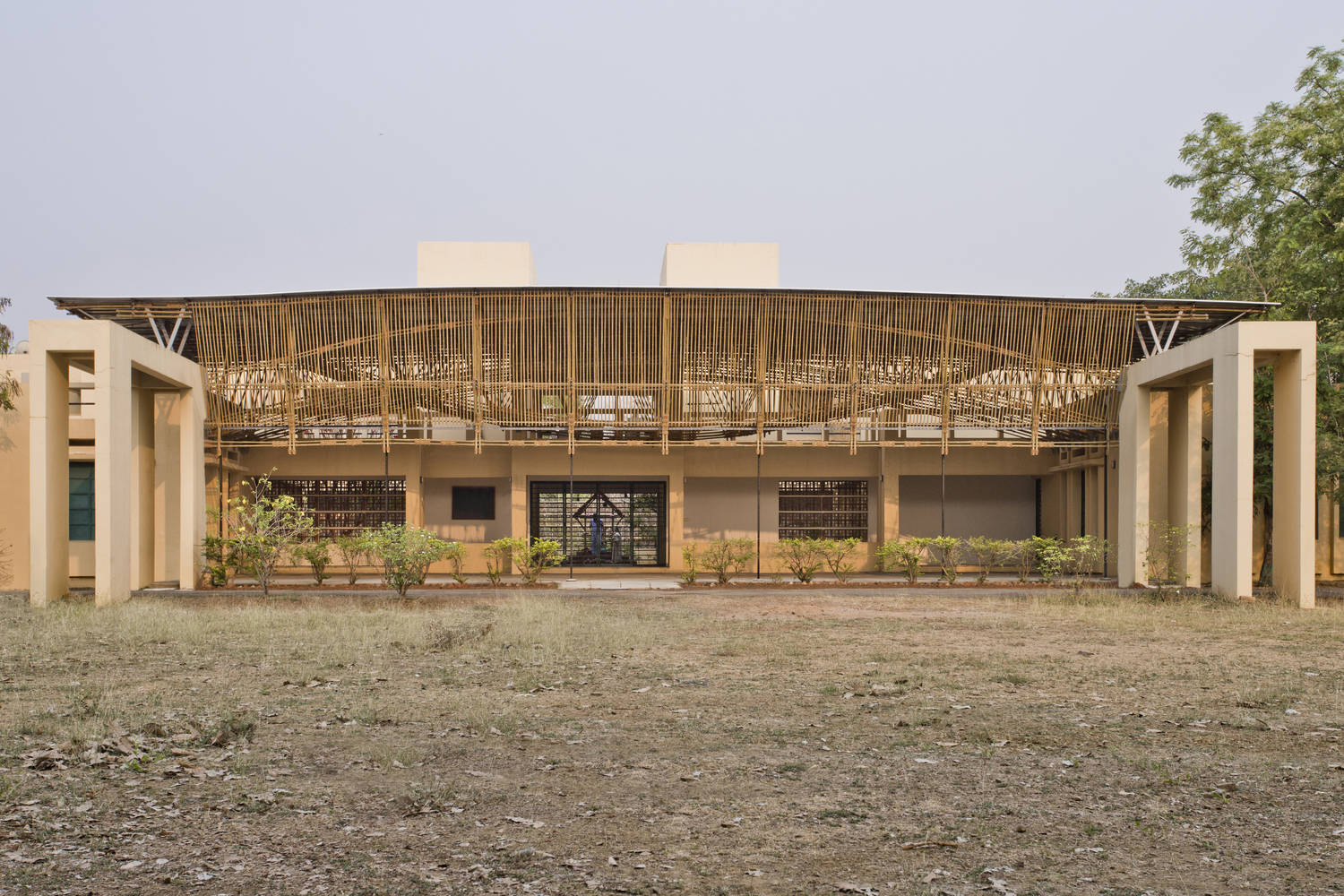
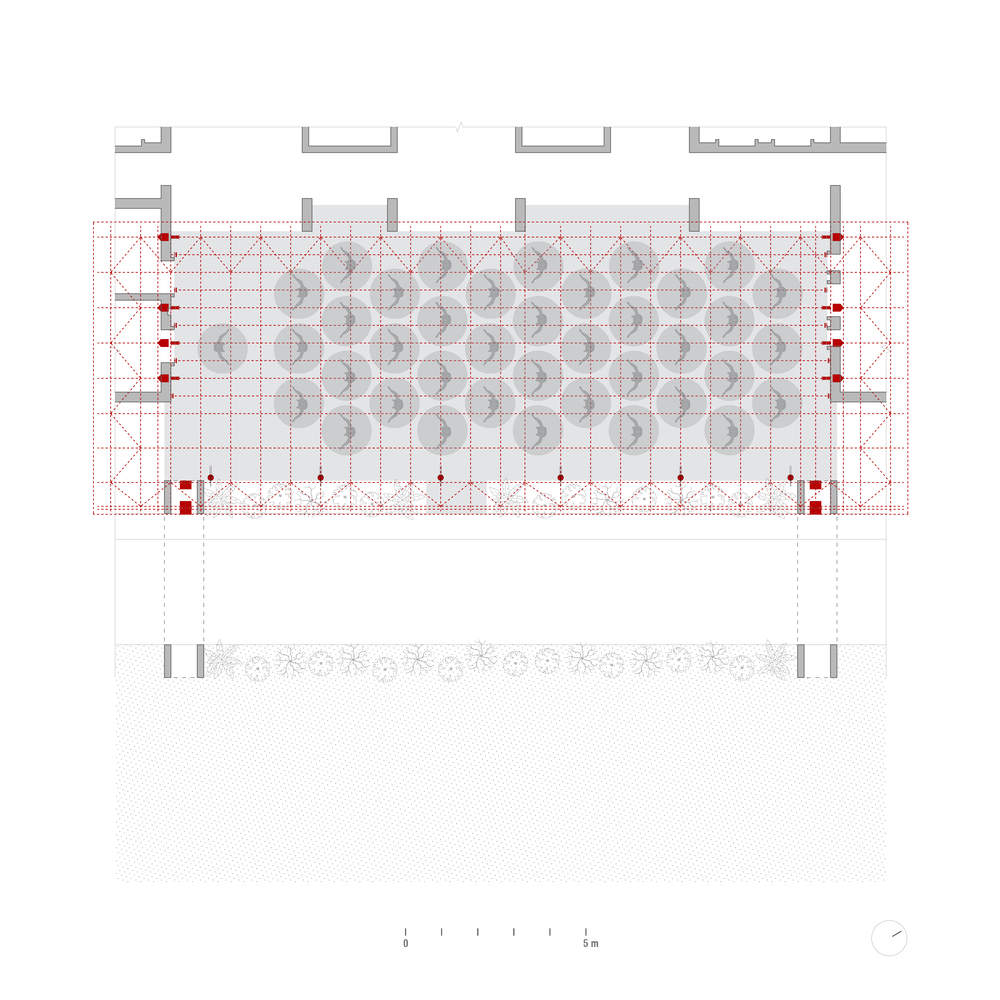
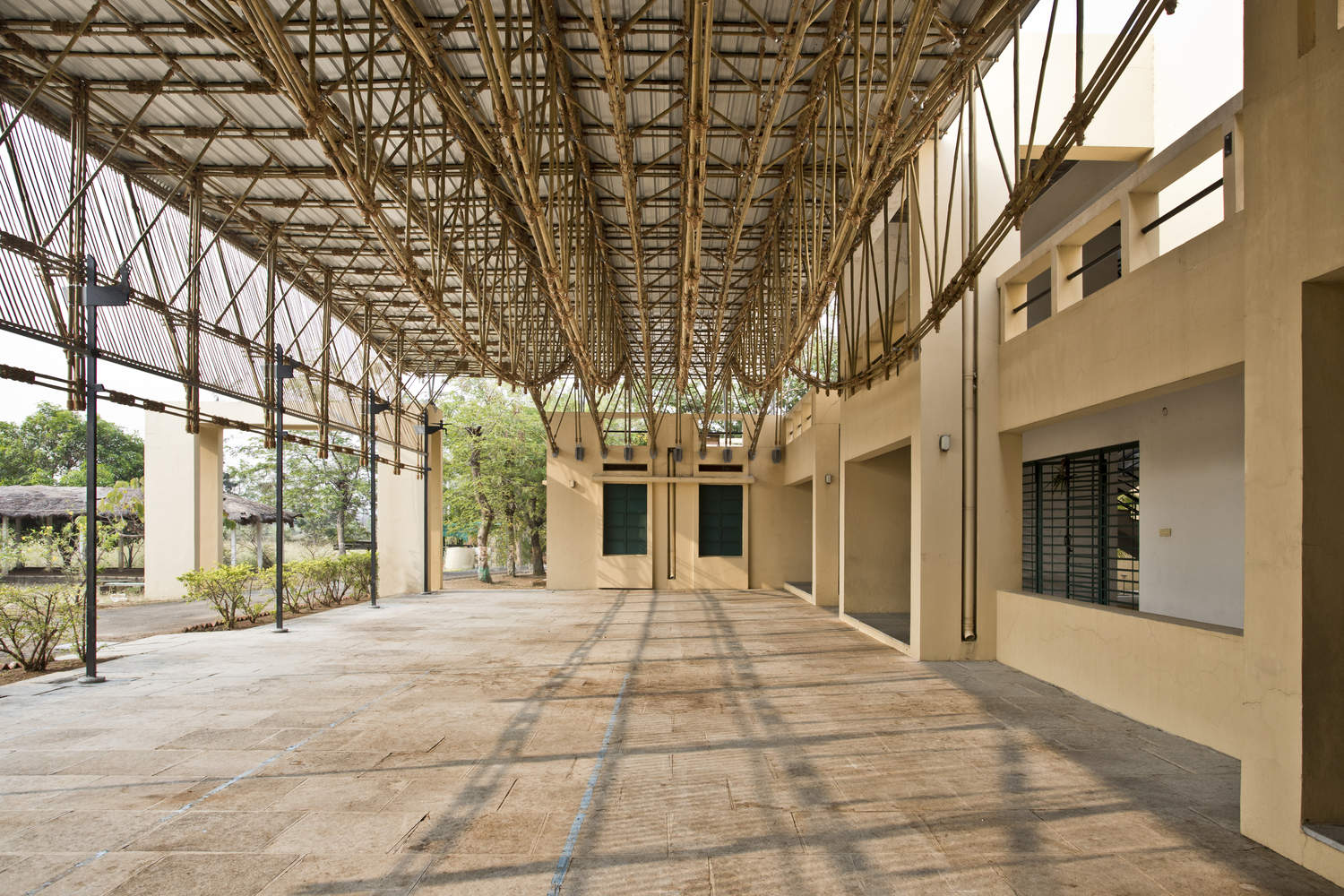
“Yogashala” aims to convene yoga practitioners by providing a clear, fluid, free, and uninterrupted spatial container (with a span of approximately 78 feet). As Hatha Yoga achieves a posture with minimal force, instilling a sense of lightness in the body, the architecture employs spaced bamboo in its system to embody this lightness while still achieving a significant span.
“Yogashala”旨在通过提供一个清晰、流畅、自由和不间断的空间容器(跨度约 78 英尺)来召集瑜伽练习者。由于哈达(Hatha)瑜伽在练习使用了最小的力量达到一个姿势,从而在身体中灌输了一种轻盈的感觉,建筑也在一个系统中使用了间隔的竹子,体现了它的轻盈性,同时仍然有很大的跨度。
© Nikhil Patel
© Nikhil Patel
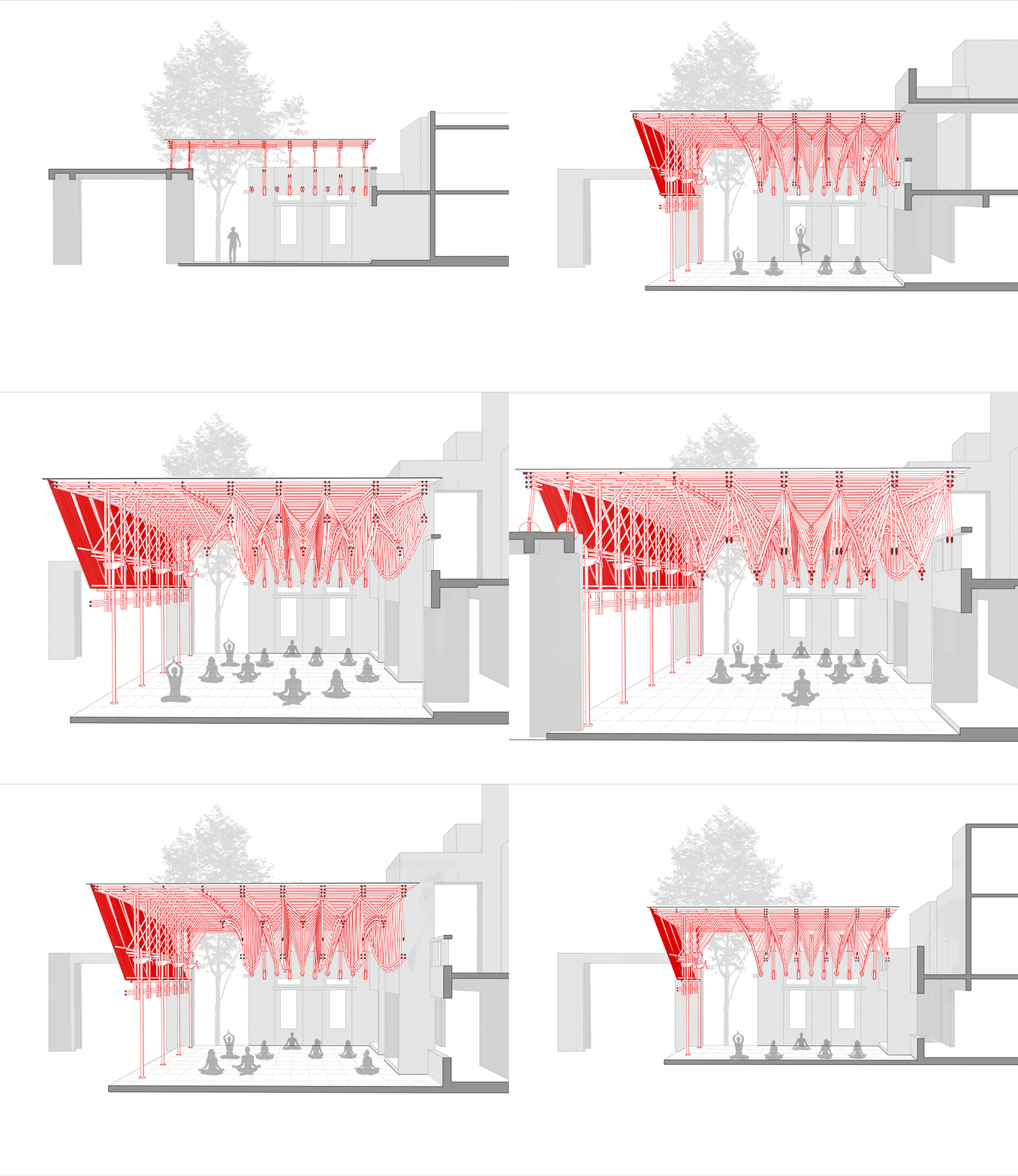
The form of Yogashala arises from the synchronization of the rising nature of the stretched members and the descending nature of the compressed members of the same material. The concept of Prana (life force in breath) in Yoga is physically manifested as this very alternation. Just as opposites—Purak (inhalation) and Rechak (exhalation)—are coordinated in Kumbhaka (retention), similarly, the alternating rising and falling curves of the spanning system are coordinated in structural equilibrium.
Yogashala 的形式来自于同一材料的拉伸部件的上升性质和压缩部件的下降性质的同步。瑜伽的 Prana(呼吸中的生命力)概念表现在物理空间解释正是这种交替。正如对立面--Purak(吸气)和 Rechak(呼气),在 Kumbhaka(保留)中得到协调,同样,跨度系统的交替上升和下降的曲线,在结构平衡中得到协调。
© Nikhil Patel
© Nikhil Patel
© Nikhil Patel
Ground Floor Plan
首层平面图
© Nikhil Patel
Bamboo Structure Plan
竹结构平面图
© Nikhil Patel
One of the hallmarks of this project is the choice of material like bamboo, which aims to showcase the profound expressiveness of this material. It also intends to promote the use of bamboo in the region as a material of the future. The use of bamboo also aims to achieve two more far-reaching objectives. Firstly, to create employment opportunities for existing and available skills that are continuously being marginalized due to the overuse of R.C.C. and brick in construction. Secondly, it intends to encourage the diversity in the use of this material and natural materials at large in construction as a strategy to live consciously on the earth.
选择像竹子这样的材料是这个项目的突出特点之一,它旨在展示这种材料的深刻的表现力。它还旨在促进竹子在该地区的使用,作为一种未来的材料。竹子的使用还旨在达到两个更远大的目的。首先,增加这种材料的使用,为现有的和可用的技能创造就业机会,由于建筑中过度使用 R.C.C.和砖,这些技能不断被边缘化。其次,它的目的是鼓励在建筑施工中使用这种材料和更广泛的天然材料的多样性,作为实现有意识地生活在地球上的战略。
© Nikhil Patel
The construction of the Yogashala. Thumbimpressions engaged artisans from remote parts of Bihar, Madhya Pradesh, and Gujarat and trained them in high-skilled works. This ensured their continued engagement and upskilling, while further broadening our social concern realized through technological upgradation and expanded opportunities. However, this empathetic approach is underpinned by a commitment to quality and professional output. The bamboo artisan team involved in this project came from the tribal areas of South Gujarat. The artisans involved were previously using bamboo sourced from the forests in their region. The relationship with this team started about 7 years ago and has continually strengthened and expanded. A total of about 15 artisans with different skill sets worked for three and a half months to build this structure.
瑜伽馆的建造。Thumbimpressions 聘请了来自比哈尔邦、中央邦和古吉拉特邦偏远地区的工匠,并对他们进行高技能工作培训。这确保了他们的持续参与和技能升级,同时也进一步扩大我们通过技术升级和扩大机会实现的社会关注。然而,这种感同身受的观点是建立在与对质量和专业产出的承诺之下的。这个项目的竹子工匠团队来自南古吉拉特邦的部落地区。所涉及的工匠以前一直在使用从该地区的森林中获得的竹子。与这个团队的关系大约始于 7 年前,并不断加强和扩大。总共有大约 15 名具有不同技能的工匠为建造这个结构工作了三个半月。
Text description provided by the architect
译者:夏雨琦
© Nikhil Patel