城市棕地复兴与高密度混合居住的典范:该项目成功地将根特市中心一处废弃工厂用地转化为一个充满活力的、高密度的混合居住社区。其精髓在于,通过政府与开发商的共同努力,摒弃了单纯的经济导向,转而投资于具有深厚社会活力和高质量总体规划的项目。项目在城市层面上实现了棕地的回收、绿化提升以及对公共交通便利性的最大化利用,为城市更新提供了兼顾密度与宜居性的成功范本。
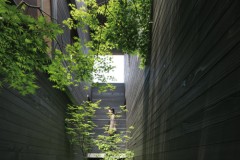
强调社交互动的“墙内世界”空间策略:建筑师巧妙地利用基地原有的三角形轮廓,构建了一个兼具边界感与渗透性的“墙内世界”。通过将建筑体量集中在更小的占地面积上,释放出大量的绿色公共空间。设计的核心在于构建一个以“抬高的街道”(廊道)为核心的户外网络,串联起三个共享住宅组团及其丰富的共享功能空间(如集体厨房、屋顶花园)。这种策略鼓励居民的自然相遇与互动,将建筑群内部打造成一个有机的、促进社交的微型城市生态系统。
全方位的物质与文化可持续性实践:Bijgaardehof 在可持续性方面展现了前瞻性。物质层面,项目完全杜绝使用天然气,以地热能和地暖为主导,结合被动式设计和屋顶光伏板,实现能源自给。更具意义的是文化和材料的可持续性:设计团队努力保护并融入了场地原有的、具有高水准的涂鸦艺术作品,并将拆除的工厂砖块和瓷砖进行循环利用,使新建筑在尊重场地历史文脉的同时,提升了社区的认同感和文化价值。
From the architects. BOGDAN & VAN BROECK transforms a former factory near the center of Ghent into a vibrant residential area, featuring three co-housing blocks with 59 residences, a community health center, connected indoor-outdoor public spaces, and a workshop overlooking Bijgaarde Park. With strong support from the urban development company sogent and the municipality, the Bijgaardehof project focuses on sustainability at both the urban and architectural levels. It stands as one of Flanders' largest co-housing projects, an ambitious mixed-use residential development centered around social interaction and community engagement.
来自建筑师。BOGDAN & VAN BROECK 将靠近根特市中心的一个废弃工厂改造成了充满活力的居住区,其中有提供 59 套住宅的三栋共享住宅楼、一个社区健康中心、连通的室内外公共空间,以及一个可以看到 Bijgaarde 公园的工作室。在城市开发公司 sogent 和市政府的大力支持下,Bijgaardehof 项目专注于城市和建筑两大层面的可持续发展,同时它也是法兰德斯最大的共享住宅项目之一,是一个雄心勃勃的围绕社交和互动而设计的混合居住项目。
© Laurian Ghinitoiu
© Laurian Ghinitoiu
Axonometric view
轴测图
Collective living in the city
The project originated from a competition organized by sogent in 2009. The redevelopment of the former factory offered BOGDAN & VAN BROECK an excellent opportunity to realize their ambitions and vision for urban co-living spaces. More specifically, Bijgaardehof responds to important and necessary issues in practice: high-density urban development near amenities and public transport; reclaiming and greening the vacant brownfield sites along the railway line; shared functions to provide a higher quality of life at an affordable cost; and combining urban greenery with agriculture to maintain quality of life during lockdowns, referred to as "lockdown-friendly" living. The commitment and vision put forward by Sogent and the Ghent city council were crucial for the redevelopment of this abandoned factory. They decided not to simply sell the land to the highest bidder but to invest in a project with social vitality and a high-quality master plan. Through Energent, they subsidized geothermal energy development and opened up the road connecting the shopping center to the north side of the site.
城市中的集体生活
该项目始于 2009 年 sogent 组织的竞赛,废弃工厂的重建给 BOGDAN & VAN BROECK 带来了绝佳机会,以实践他们在城市共享生活空间方面的雄心和愿景。更具体地说,Bijgaardehof 回应了一些实践中重要且必要的议题:便民设施和公共交通附近的城市高密度开发;回收、升级铁路沿线的空置棕地,并进行绿化提升;共享功能,以可负担的成本提供更高质量的生活;将城市绿化然和农业相结合,以尽力维持疫情期间的生活质量,人们称之为“封城友好”的生活。Sogent 以及根特市政府做出的承诺和提出的愿景对该废弃工厂的重建至关重要,他们决定不再简单地把土地卖给出价最高的人,而是投资一个具有社会活力和高质量总体规划的项目。通过 Energent,他们为地热开发提供补贴,并且打通了从购物中心到基地北侧的道路。
© Laurian Ghinitoiu
Axonometric view
轴测图
The 'Inside World' shaped by the building and outdoor space network
The design of Bijgaardehof started from the triangular footprint of the factory. Walls outline a simple yet powerful graphic that serves as a boundary between the 'inside world' and the outside world. This shape is strong enough to allow for the retention of certain elements and typical spatial characteristics of the former 'inside world'. Thanks to the factory's location, offering views towards both the building's rear and infrastructure, as well as the park, it generated surprising dynamism within the block. By building higher on a smaller footprint, more green space could be created between the buildings. The 'inside world' becomes distinctive: not introverted or closed off, but porous, open, and permeable to the outside. In response to the spatial character of the former industrial site, the designers chose not to build a single large multi-functional building, but rather to design the outdoor spaces and buildings under a common grid language. The outdoor space network forms a branching system, primarily green, partly paved, organizing and connecting all functional spaces and buildings against a backdrop of constantly changing new and old contours.
建筑和户外空间网络构成的“墙内世界”
Bijgaardehof 的设计出发点是工厂的三角形用地。围墙围出了一个简单而有力的图形,成为“墙内世界”和外部世界之间的边界。这个形状足够有力,因此原本“墙内世界”里的某些元素及其典型的空间特征可以得到保留。得益于工厂的位置,既可以看到建筑背面和基础设施,也可以看到公园,它在街区内产生了惊人的活力。通过在较小的占地面积上建造更高的建筑,建筑物之间可以有更多的绿色空间,“墙内世界”变得个性鲜明:不是内向或封闭的,而是多孔的,内外开放和具有渗透性的。为了响应工业用地过去的空间特点,设计师选择不去建造一栋大型多功能建筑,而选择在网格下用同一种语言设计室外空间和建筑。室外空间网络形成了分支系统,主要是绿化,部分是石质铺地,在新旧轮廓不断变化的背景下,组织和连接所有功能空间和建筑物。
Axonometric view
轴测图
Axonometric view
轴测图
A glorious history and excellent graffiti art
The name "Bijgaardehof" dates back to the Middle Ages. Inside the city walls of Ghent in the 16th century, in the shadow of the magnificent Saint Bavo's Abbey, lay a lush green area: the Bijgaard, named after the bees kept there. In the 19th century, the factory on the triangular site belonged to a larger industrial textile complex, which was taken over by the metal processing company Malmar following the decline of Ghent's textile industry in the 1860s. After the metal processing company moved out in 1997, these old buildings awaited a new use. Meanwhile, years of vacancy attracted squatters and graffiti artists who created works on the walls. About thirty of these pieces turned out to be of surprisingly high quality, created by Roa: an anonymous contemporary street artist who has since gained international renown and created works worldwide. He paints animals and cadavers, celebrating nature and its disappearance. Therefore, right from the initial competition design, the design team strove to protect these iconic artworks. This provided an additional argument for retaining as much of the factory's former outer and partition walls as possible. However, as the factory remained vacant for several years after the competition, only a portion could be preserved.
辉煌的历史和优秀的涂鸦艺术“Bijgaardehof”这个名字可以追溯到中世纪。16 世纪根特的城墙内,在宏伟的圣巴沃修道院的影子里,有一片郁郁葱葱的绿地:Bijgaard,它因饲养在那里的蜜蜂得名。在 19 世纪,三角形场地的工厂属于一个更大的工业纺织综合体,随着 19 世纪 60 年代根特纺织工业的衰落,工厂被金属加工公司 Malmar 接管。而自金属加工公司 1997 年搬离后,这些老建筑一直在等待新的使用者。与此同时,多年的空置吸引了擅自占地者,也吸引了在墙壁上创作的涂鸦艺术家。其中大约三十件作品的水准出乎意料地高,原来是 Roa 的作品:一位匿名的当代街头艺术艺术家,他此后获得了国际声誉并在世界各地创作作品。他绘制动物和尸体,以此来歌颂自然以及它的消失。因此,从最初的比赛设计开始,设计团队就努力保护这些标志性的艺术作品。这为尽可能保留工厂以前的外墙和隔墙提供了额外的论据。但因为在竞赛后工厂仍被空置了多年,只有一部分被保留了下来。
© Laurian Ghinitoiu
Co-housing
For BOGDAN & VAN BROECK, the design of a co-housing project is by definition a participatory process, a form of co-creation that goes a step further than the traditional design process. Thus, for Bijgaardehof, the design team wished to communicate with representatives from each residential cluster to find solutions for various issues such as mobility, sustainability, and shared use. Furthermore, BOGDAN & VAN BROECK proactively discussed their living visions with each future co-dweller. Constructing this form of communication and combining various living visions into a harmonious architectural whole was part of the design concept. This means that Bijgaardehof is not just about the design of the building itself, but also about the design of the process. The relationship between the architects and the owners thus became richer, benefiting everyone involved. Oana Bogdan, founder and managing partner of BOGDAN & VAN BROECK, states: “I am curious to see how the ‘shared’ future of living will develop and how residents and users will further adapt the place. It is now up to them to make Bijgaardehof truly thrive.”
共享居住
对于 BOGDAN & VAN BROECK 来说,共享住宅项目的设计从定义上讲是一个参与性的过程,是一种比传统设计过程更进一步的共同创造的形式。因此,在 Bijgaardehof 这一项目上,设计团队希望与来自每栋住宅群楼的代表沟通,以便为各种问题找到解决方案,例如移动性、可持续性、共享使用等。此外,BOGDAN & VAN BROECK 还主动与每一位未来的同居者探讨他们的生活愿景。构建这种沟通方式,并将各种居住愿景组合成和谐的建筑整体,是设计概念的一部分。这意味着 Bijgaardehof 不仅是建筑本体的设计,而且还是参与过程的设计。建筑师和业主之间的关系也因此变得丰富起来,并让每个人都受益匪浅。BOGDAN & VAN BROECK 的创始人和管理合伙人 Oana Bogdan 表示:“我很好奇居住的‘共享’未来会如何发展,居民和用户将如何进一步适应这个场所。现在是由他们来让 Bijgaardehof 真正实现蓬勃发展了。”
© Laurian Ghinitoiu
Ground floor plan
首层平面图
Design focused on social interaction
The vision for social dynamics at Bijgaardehof is translated into the organization of public circulation routes. To focus on interaction and encounters, BOGDAN & VAN BROECK designed gallery-like circulation paths on the exterior of the buildings. These corridors become elevated streets where residents meet, children play, and plants grow freely... The long galleries leading from the street to the front doors of the dwellings are designed as a series of high-quality, child-friendly spaces. Each of the three residential clusters (Wijgaard, De Spore, and Biotope) has a shared space, including collective kitchens, dining rooms, living rooms, laundries, and children's play areas, in addition to quiet zones, winter gardens, communal workshops, and even roof gardens for urban farming.
关注社交和互动的设计
Bijgaardehof 在社会动态方面的愿景,被转化为公共流线的组织。为了专注于互动和相遇,BOGDAN & VAN BROECK 设计了建筑外部的廊式流线。这些廊道变成了抬高的街道,居民在这里聚会、孩子们在这里玩耍,植物也自由生长……从街道到住户前门的长廊被设计成一系列优质的儿童友好空间。三个住宅组(Wijgaard、De Spore 和 Biotope)各有一个公共空间,包括集体厨房、餐厅、客厅、洗衣房和儿童游乐区,此外有静音区、冬季花园、公共工作室,甚至还有可以进行都市种植的屋顶花园。
© Laurian Ghinitoiu
© Laurian Ghinitoiu
Section AA
剖面图- AA
A model of sustainable construction
The redevelopment of this brownfield site (industrial wasteland) required not only the reactivation of the community but also ensuring soil safety by purifying it and providing clean planting soil. Preserving the factory walls covered in graffiti also created intergenerational cultural value for the community. In addition to urban cultural sustainability, the designers also focused on material sustainability: no natural gas is used in the Bijgaardehof project. The main source of thermal energy is geothermal energy, with homes heated via underfloor heating at relatively low temperatures. Furthermore, the buildings are cooled through passive design strategies in the summer. All roofs will be fitted with photovoltaic panels. Rainwater is collected and drained via a public pipe system before reaching permeable ground surfaces, making the irrigation of (roof) gardens very environmentally friendly. Building materials were also recycled: bricks from demolished factory walls were cleaned by the residents and reused. Old factory tiles found new life in a communal kitchen, and recycled tiles were also used in a play area.
可持续建筑的典范
这块棕地(工业废土)的重新开发不仅需要重新激活社区,还需要通过净化和提供干净的种植土壤来保证土壤安全。保存涂满涂鸦的工厂墙体也为社区创造了代际相传的文化价值。除了城市文化可持续性之外,设计师还关注物质可持续:Bijgaardehof 项目中没有使用任何天然气。热能的主要来源是地热能,家庭使用地暖以相对较低的温度供暖。此外,在夏季建筑通过被动式设计降温。所有屋顶都将安装光伏板。到达透水地面前,雨水由公共管道收集并排放,因此(屋顶)花园的灌溉非常环保。建筑材料也被循环利用:工厂墙体拆除的砖块由居住者清洁,并被重新使用。旧工厂的瓷砖在一个公共厨房中重获新生,还有一个游乐区也使用了回收的瓷砖。
© Laurian Ghinitoiu
© Laurian Ghinitoiu
Sustainable indoor and outdoor spatial flow
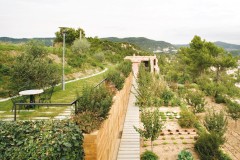
Landscape design also focused on sustainability. The collective open spaces between the buildings form a series of green, richly planted outdoor spaces with distinct characters. Besides the elevated gardens of Biotope and the ruin garden of De Spore, all outdoor spaces on the ground floor are shared by the residents. Similar planting and paving in the different outdoor areas create a sense of unity. The central courtyard is an almost square space of about 900 m², open to the sky, providing light and air to the entire residential complex. The secluded garden is a quiet space for occasional lingering, where peace and tranquility prevail, growing wild next to the eastern boundary wall. Parts of the existing steel structure of the northern and northwestern factory walls have been preserved. Due to their proximity to the adjacent park and adjacency to the most public part of the community health center, this area is an ideal location for various activities and interaction with the surrounding area.
可持续的室内外空间流线
景观设计也注重可持续性。建筑物之间的集体开放空间是一系列具有不同特色、充满绿植的户外空间。除了 Biotope 的高架花园和 De Spore 的废墟花园外,底层的所有户外空间都由居民共享。不同的室外空间都有相似的种植和铺装,成为了一个整体。中央庭院是一个大约 900 平方米的几近方形的空间,向天空打开,为整个住区提供光线和空气。隐匿花园是供人们偶尔闲坐的安静花园,和平与宁静是常态,挨着东面的围墙,自然在这里肆意生长。工厂北墙和西北区现存墙体的部分钢结构被保留了下来,由于其位置靠近附近的公园,并且与社区健康中心最公共的部分相邻,这里成为开放给各类活动并与周边地区互动的理想地点。
© Laurian Ghinitoiu
Sustainable living in practice
Given the proximity to the city center and surrounding urban amenities, future residents require fewer parking spaces than the standard set by the Ghent government: the entire complex has only 25 car parking spots. Consequently, bicycle parking received extra attention in the architectural design. Each building has its own secure, covered bicycle shed for easy access and reach. Cars are parked underground on two levels, which could be repurposed in the future. Sustainability in practice lies not in certifications or energy performance certificates, but in how residents will utilize these potentially sustainable facilities in the future. BOGDAN & VAN BROECK and all members of the design team are excited to let the residents take the helm.
实践中的可持续生活
鉴于靠近市中心和周边城市设施,未来居民所需停车位少于根特政府的标准:整个住区仅有 25 个停车位。因此,自行车停车位在建筑设计中受到了额外的关注。为了方便使用、便于达到,每个建筑物都有自己的安全、有顶的自行车棚。汽车分两层停在地面上,在未来这可以被重新利用。实践中的可持续性不在于通过认证或颁发能源性能证书,而在于居民在未来使用这些有潜力的可持续设施的方式。BOGDAN & VAN BROECK 和设计团队的所有成员很高兴能让居民来掌舵。
Text description provided by the architects
文字描述由建筑师提供
Translated by Liu Yiwei
译者:刘亦为
© Laurian Ghinitoiu