策略驱动的空间重构与热力学集成:该项目最精髓之处在于其超越传统空间界定的设计哲学,将“水”与“空气”视为核心设计材料。设计师巧妙地运用空气动力学原理指导空间布局和功能组织,通过建立明确的“热力学梯度”——将高湿度区域(泳池/水疗中心)置于两端,中间区域作为热力学缓冲带——实现了对地下空间环境的精确控制。这种将物理环境参数直接转化为建筑形制和程序分布的策略,展现了对被动设计和能源系统集成的高度专业化处理。
边界的容器化与多功能集成:本项目对“边界”的定义进行了革命性重塑,将其从简单的分隔界面提升为多功能的“容器系统”。墙体和外壳不仅是物理屏障,更集成了能源设施、管道空间、设备柜乃至桑拿浴室等次级功能。这种对结构与设备一体化处理的深入探索,极大地释放了核心空间的可塑性,并使整个地下层在形态上呈现出流动的、液体般的连续性,从而适应不同使用强度下的环境需求。
中性逃逸空间与感官隔离:项目成功地为委托方创造了一个高度私密且具有冥想特质的“逃逸空间”。通过大面积使用白色防水石材、极简的几何形态以及精心控制的自然光引入(通过天窗带),建筑表面处理趋于中性化,淡化了界限感。同时,通过精细化的“过滤策略”——从物理密封到薄膜化的隔断设计,有效实现了对外部干扰(声音、气味、凝结)的彻底隔离,为健康维护和身心放松提供了最高级别的环境保障。
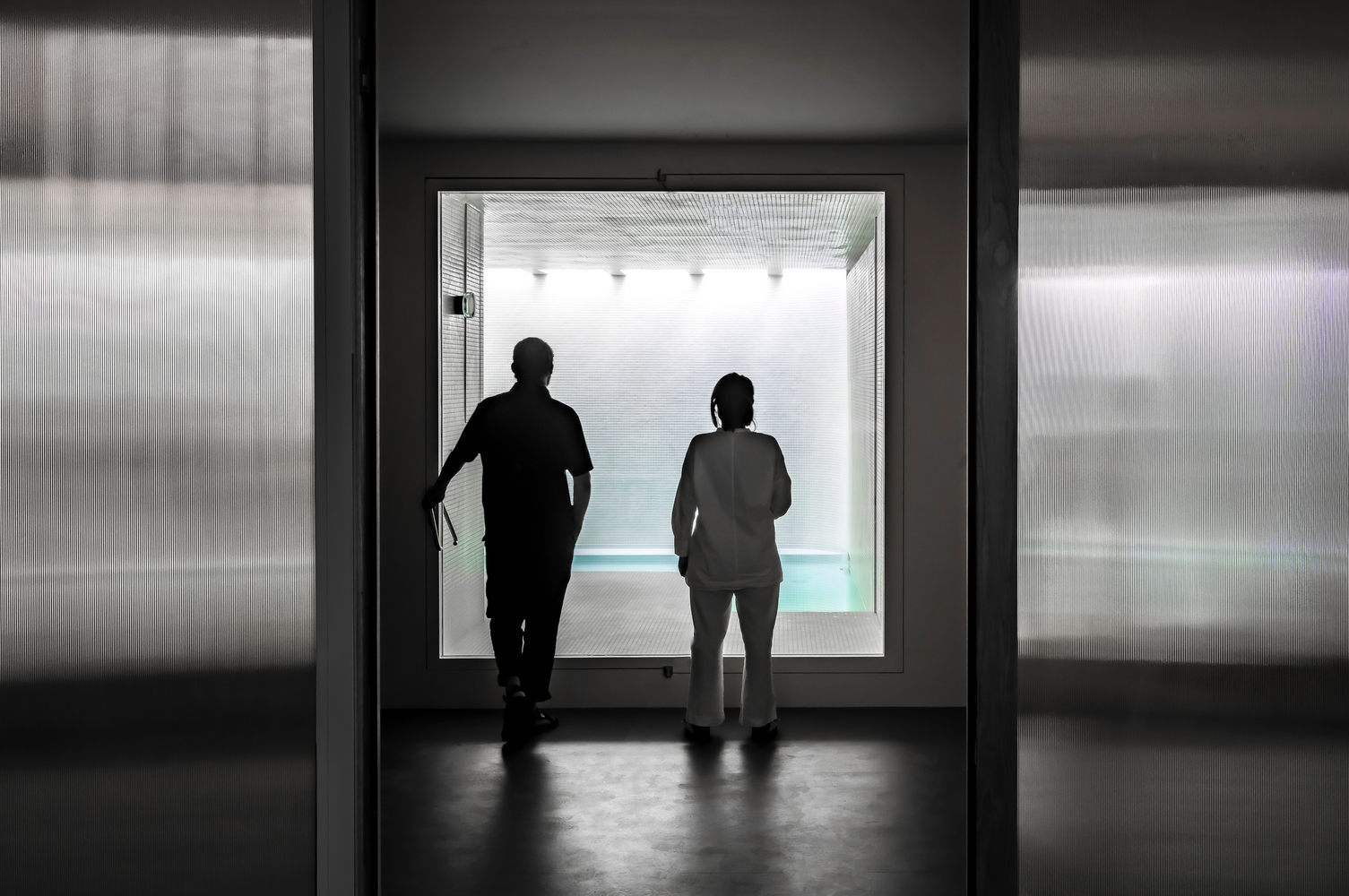
A SMALLER SPLASH is a space designed with water and air as its primary material: a design of space, time, matter, and energy. Following the COVID lockdown, we were commissioned by a family community in the center of Madrid to renovate their basement and upgrade their energy systems. They established two main objectives: the need for a space to maintain physical well-being through sports and meditation; and a significant upgrade of the building's facilities, aiming for complete isolation from other homes in terms of sound, odors, and condensation.
水滴的飞溅(A SMALLER SPLASH)是一个以水和空气作为主要设计材料的空间:空间,时间,物质和能量设计。在新冠封锁后,我们受马德里市中心一个家庭社区的委托,改造他们的地下层并升级他们的能源系统。他们制定了两个主要的目标:需要一个通过体育活动和冥想来保持身体健康的空间;以及建筑设施的大力升级;目标在完全隔离来自其他家庭的声音,气味,和凝结。
© Luis Asín
© Luis Asín
© Luis Asín
© Luis Asín
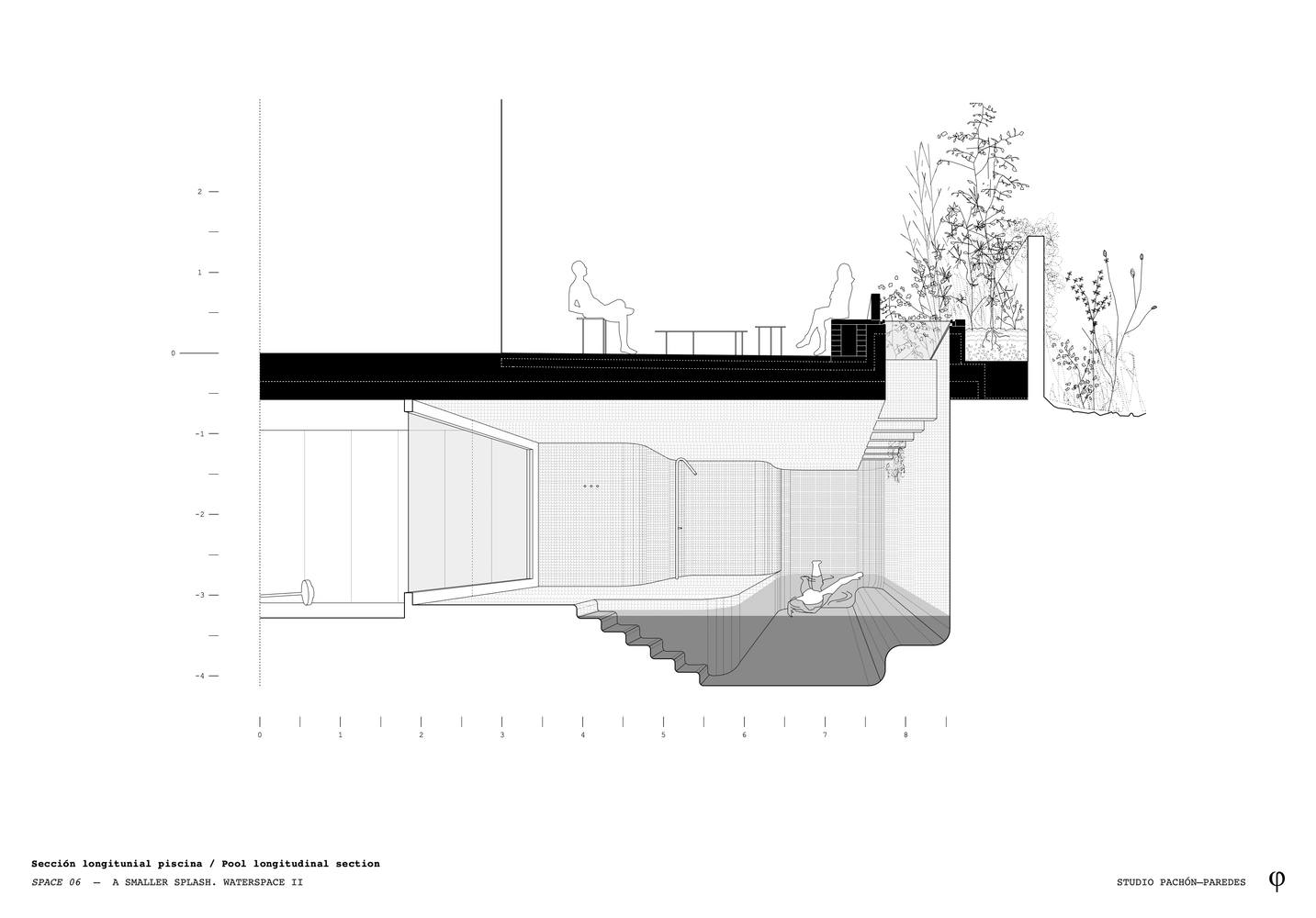
Longitudinal Section
纵向剖面图
The project is structured through three strategies focused on air and water: space, program, and energy. Given the architectural and technical context, and the urgent need for zoning, thermodynamics in the air became a fundamental design tool.
该项目通过三个关于空气和水的策略来构建:空间、功能和能源。考虑到建筑和技术背景以及对于分区的迫切需求,空气中的热力学成为了一个基本的设计工具。
© Luis Asín
© Luis Asín
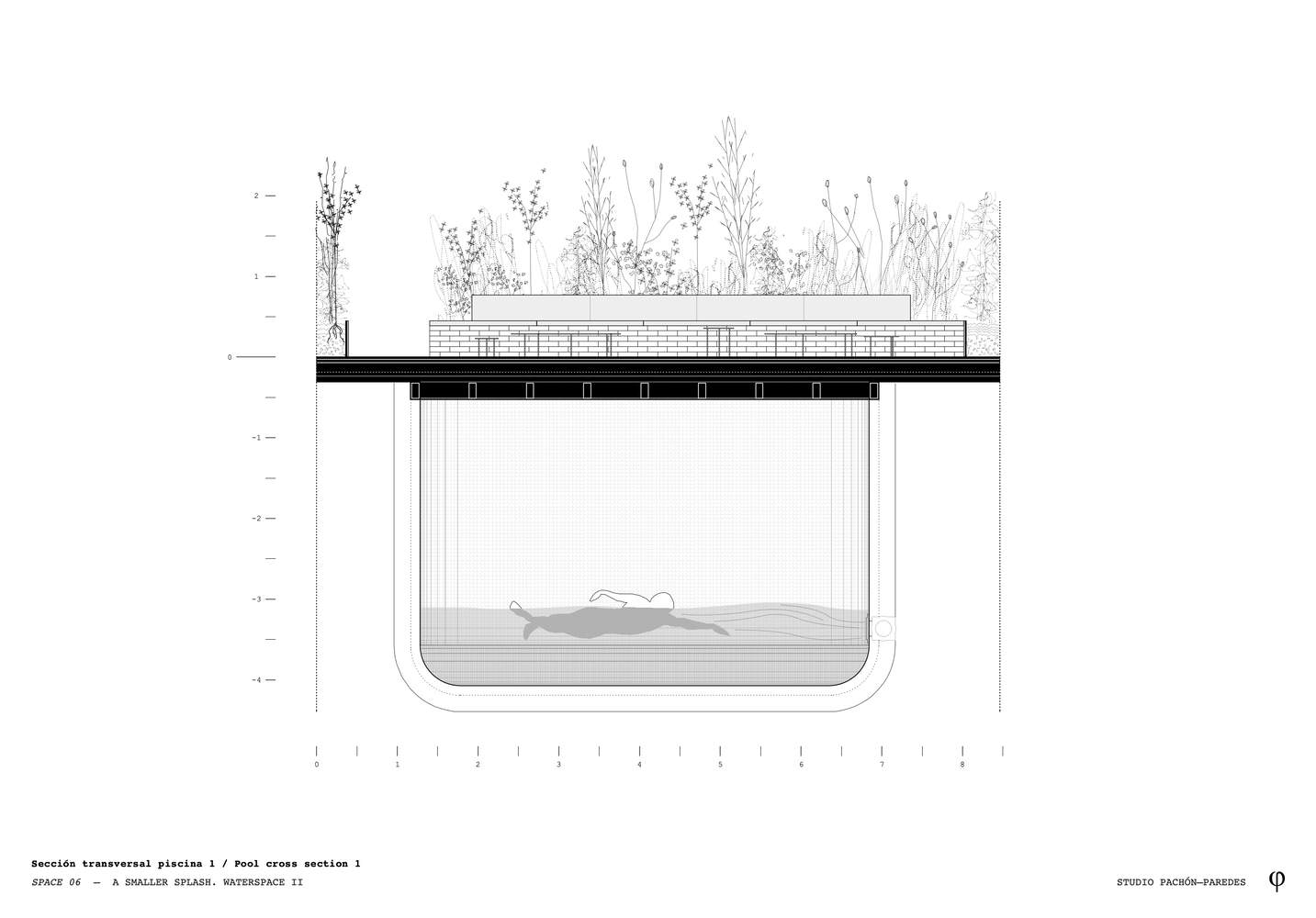
Transversal Section
横向剖面图
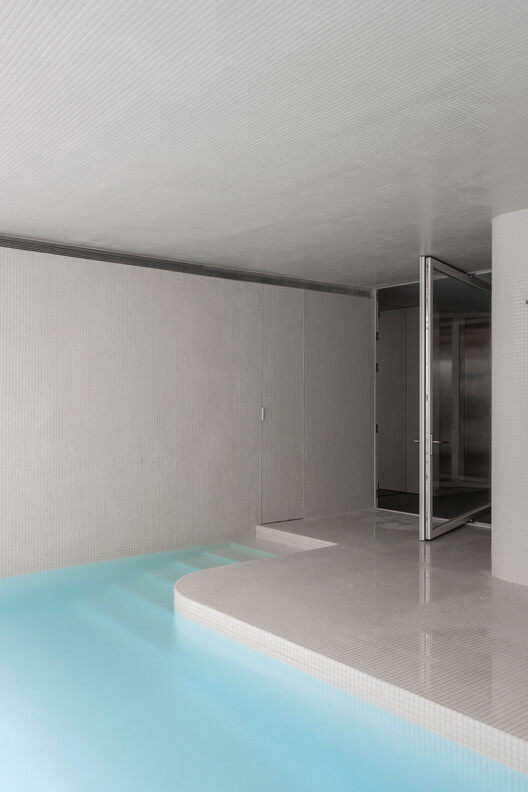
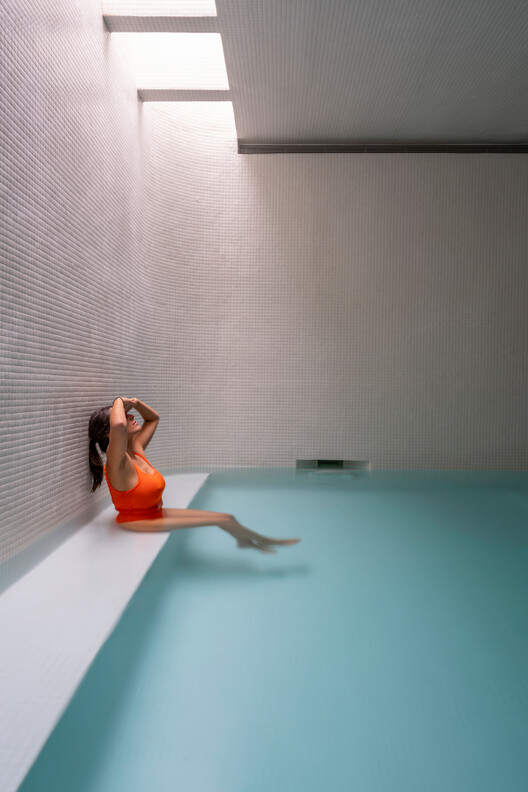
The space is completely freed on the plane through reorganization and simplification, achieving a liquid space in the longitudinal direction that allows for the programmatic organization of this series of rooms according to humidity, temperature, pressure, and intensity of use. Thus, activities related to high humidity are located at the extremes (pool and spa), while those with lower humidity and greater capacity for thermodynamic control are located between them, serving as a "thermodynamic buffer."
空间在重组和简化中在平面上完全释放了,实现了纵向上的液体空间,允许这一系列的房间根据湿度、温度、压力和使用强度水平进行程序化组织。这样,与高湿度相关的活动位于两端(游泳池和水疗中心),而湿度比较低和热力学控制能力较高的活动位于两者之间,作为“热力学缓冲”区。
© Luis Asín
© Luis Asín
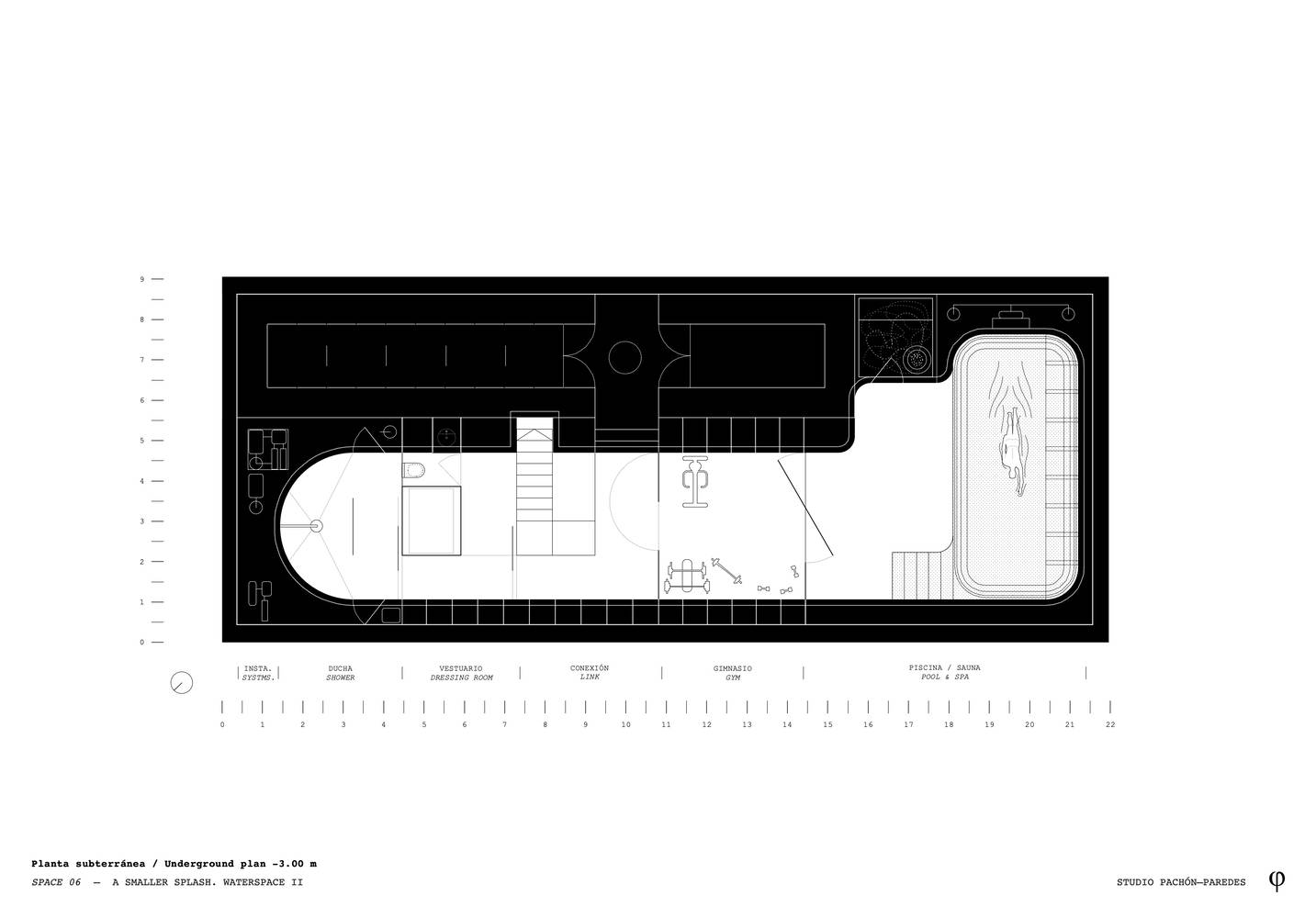
Basement Plan
地下平面图
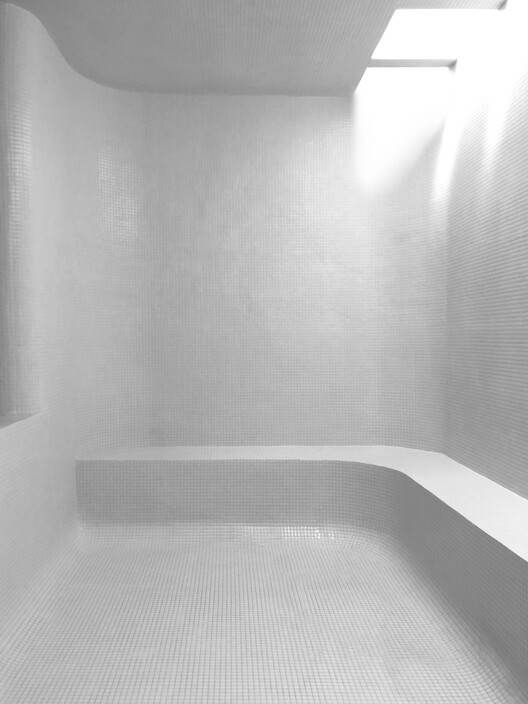
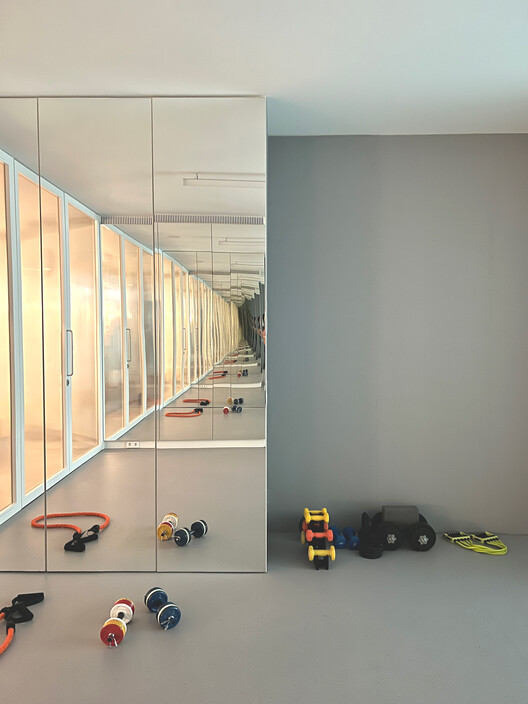
Perimeter, boundaries, and containers. The boundaries and the enclosure of the space are not only containers for air and water but also for the facilities and cabinetry of the energy systems. Thus, the boundary is materialized, depending on the needs and shape of each room, as insulation, linear machine rooms, duct spaces, mechanical cabinets for movement, or even secondary complementary functions (sauna, toilets, etc.).
周边,边界和容器。空间的边界和外壳不仅是空气和水的容器,也是能源设施和橱柜容器。因此,根据每个房间的需求和形态,边界被形式化为绝缘体、线性机房、管道空间、运动机械柜,甚至是次要的附属功能(桑拿、浴室等)。
© Luis Asín
© Luis Asín
© Luis Asín
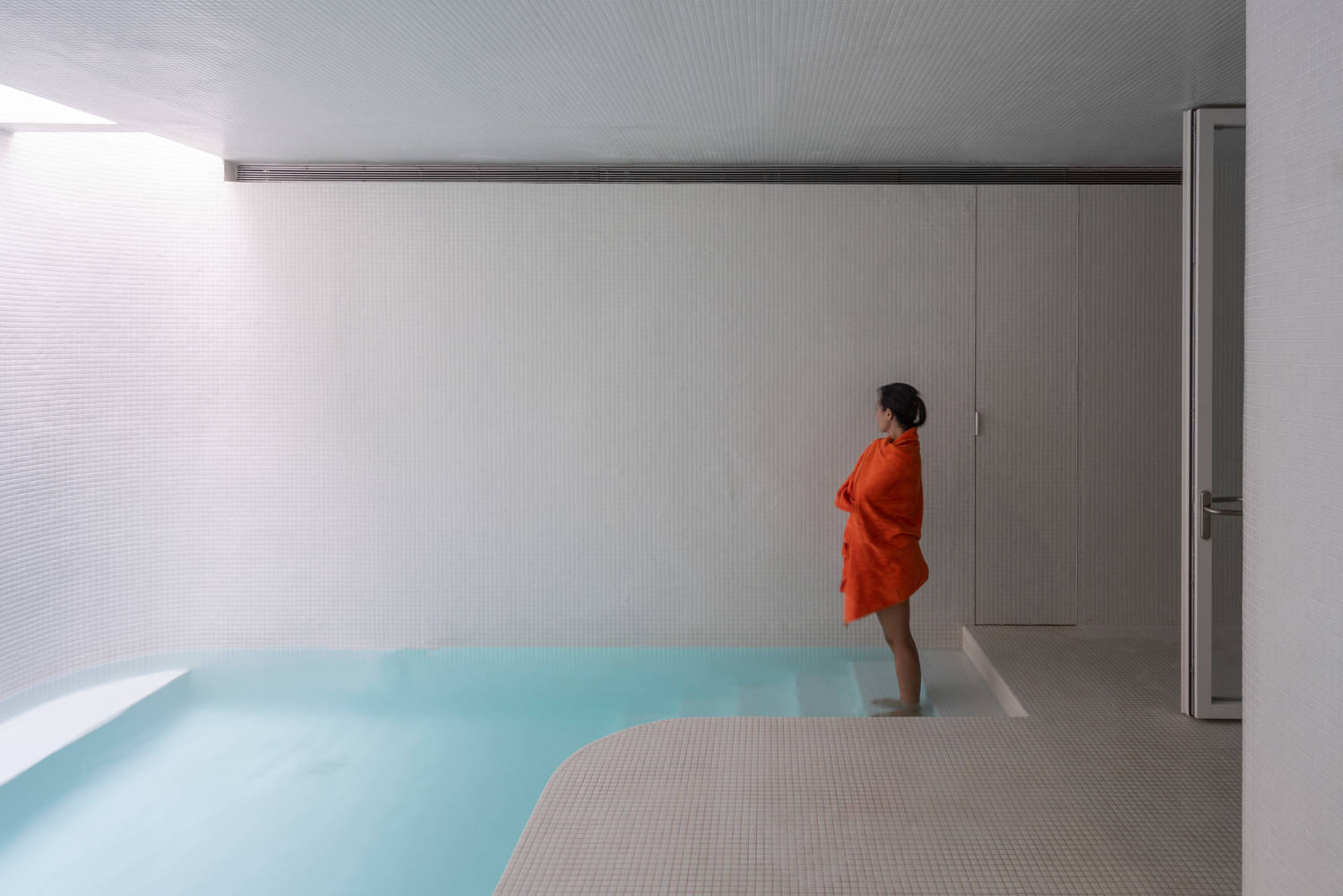
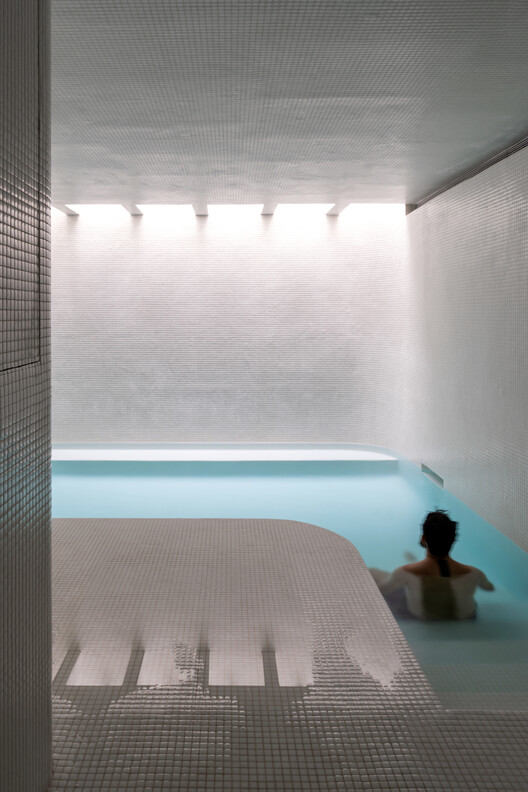
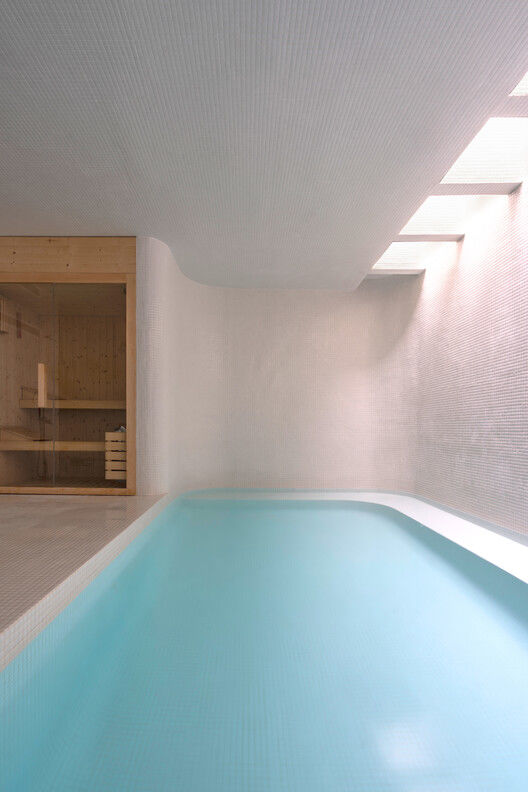
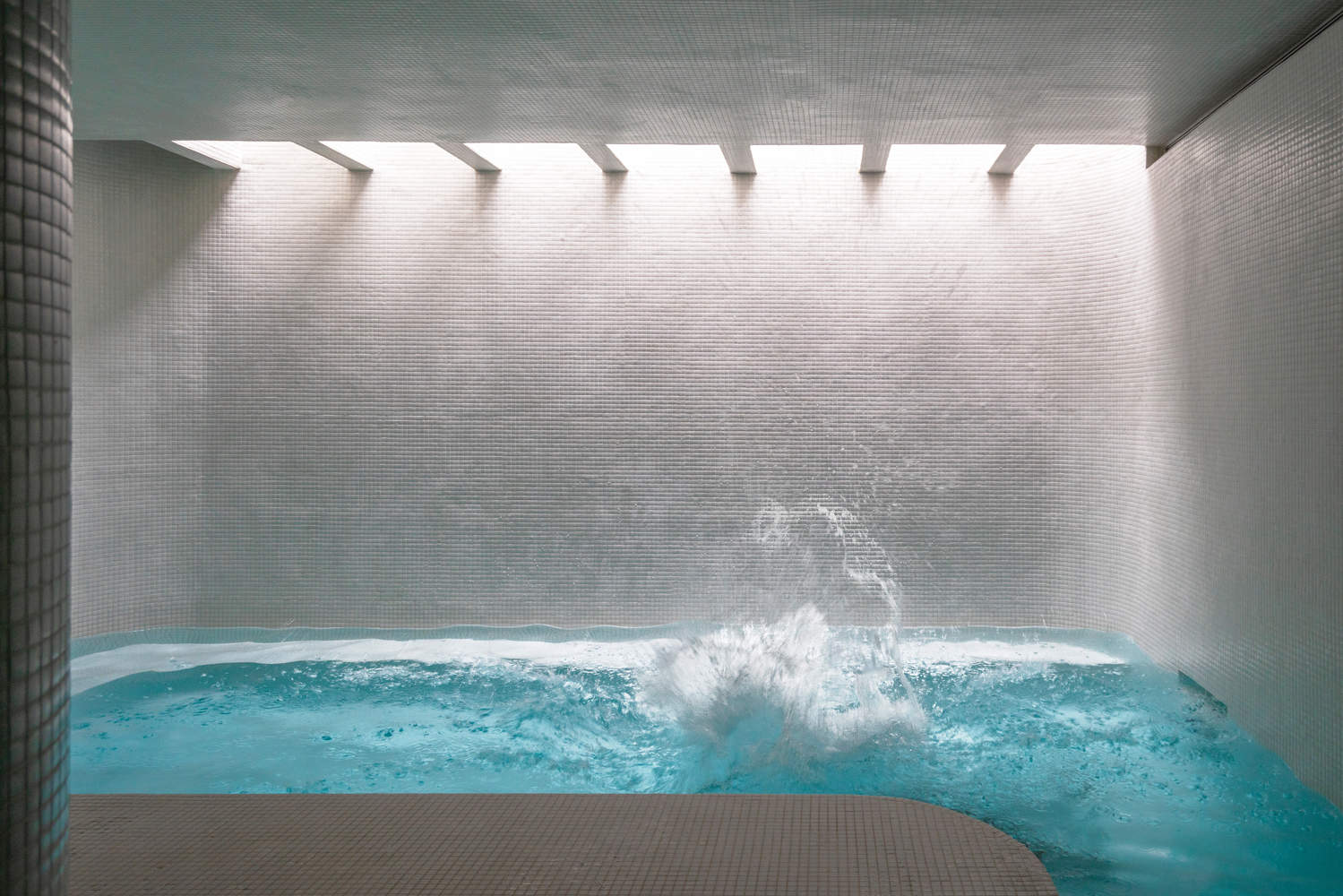
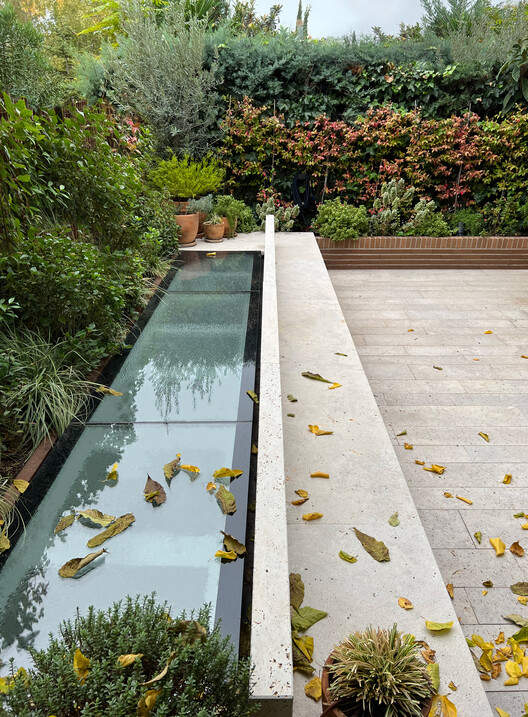
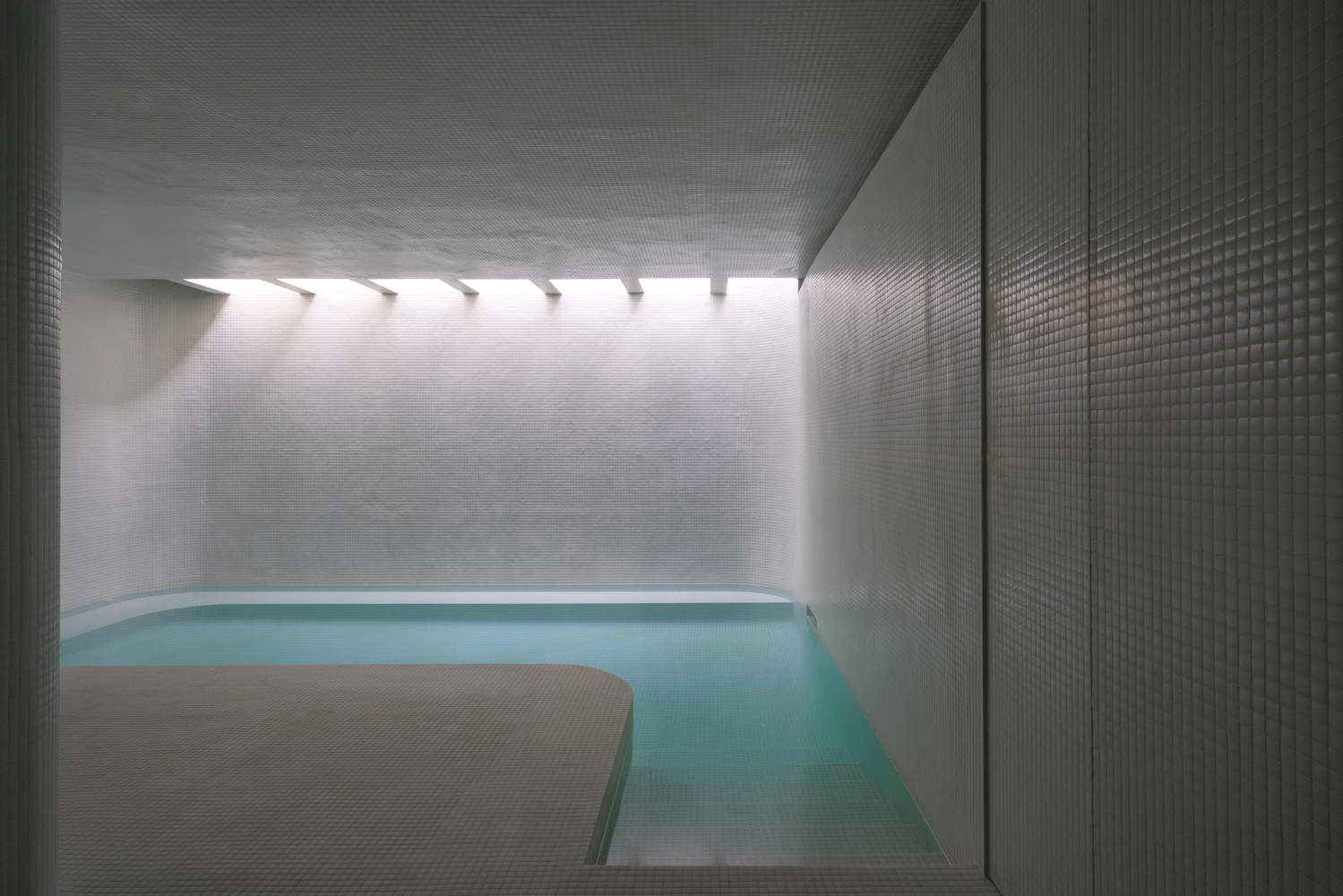
Both ends of the boundary are curved to promote the purposes associated with them while generating production areas that can house large machinery. The main surface material is a white waterproof stone that allows it to adapt to all curved and winding surfaces, smoothing the previous fit with air and water, and increasing the overhead light coming from the strip of skylights connected to the patio. Color, material, geometry, and light treatment transform the space into a neutral, freely usable escape space.
边界的两端都是弯曲的,以促进相关的目的,同时产生能包含大型机器的生产区域。主要的表面材料是一种白色防水石材,使其能够适应所有弯曲和迂回的表面,顺畅地与空气和水之前的配合,并增加来自与露台相连的天窗带的天顶光。颜色、材料、几何形状和光线处理将空间变成了一个中性的、自由使用的逃避空间。
© Luis Asín
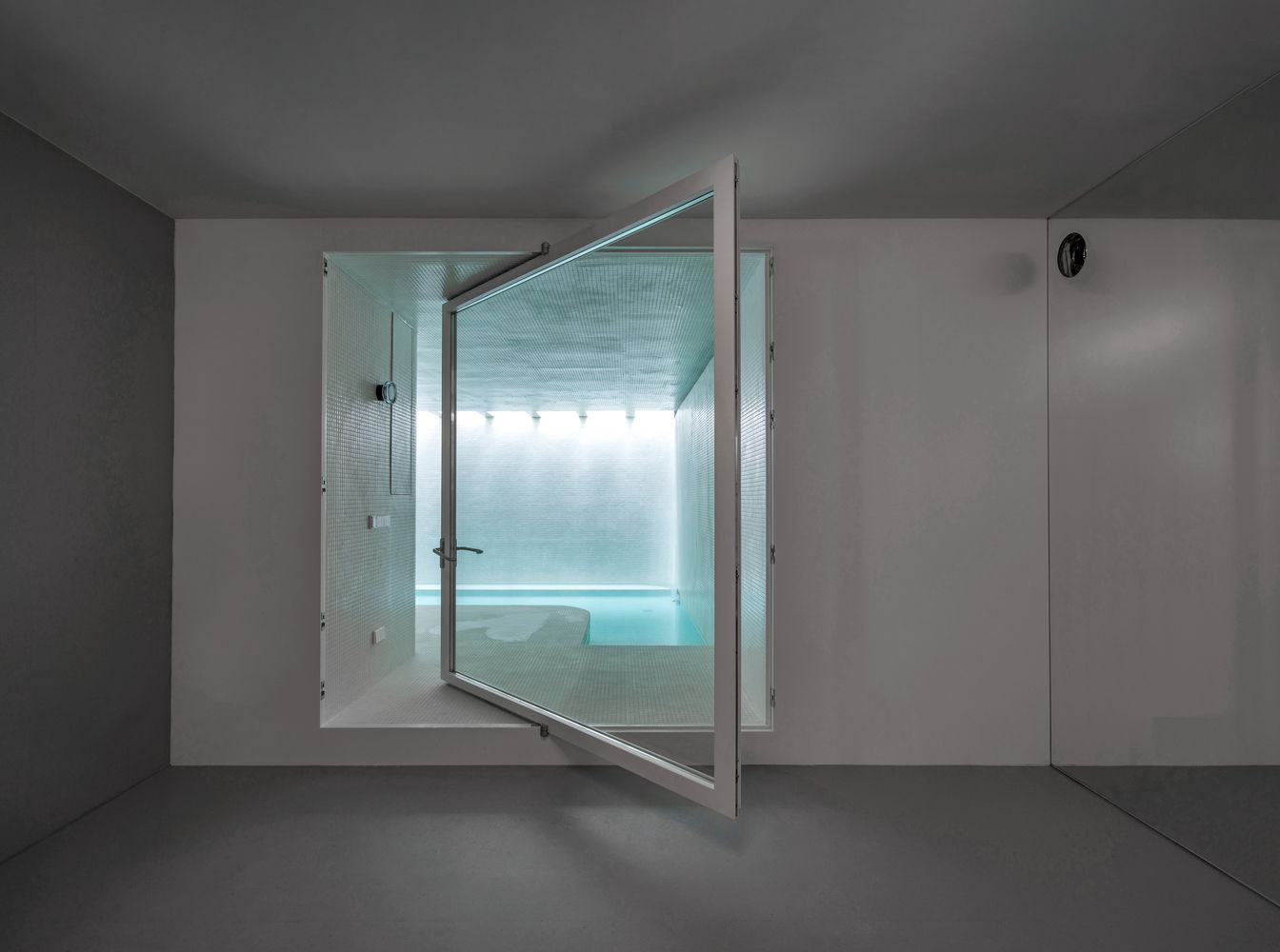
Filtration, space, program, and air membrane. The constructive design of the division between rooms responds to the sequential organization of light use and the filtering criteria between them.
过滤、空间、功能和空气膜。房间之间分割的建设性设计回应了光线使用的顺序组织和他们之间的过滤标准。
© Luis Asín
This 'filtering strategy' generates a closing/door from sealed to membrane, with different details, textures, and materials. In addition to layering the program, these spatial divisions allow for the optimization of various air exchange systems: the apparatus for dehumidification and air conditioning of the pool, or the mechanical ventilation system that extracts air from within the sectors and exhausts it outside, managed by a heat exchanger filter.
这种“过滤策略”产生了从密封到薄膜的封闭/门,具有不同的细节、纹理和材料。除了对程序进行分层外,这些空间分隔还允许优化了各种空气交换系统:对游泳池进行除湿和空气调节的装置,或从扇区内部抽出空气并从外部排出的机械通风系统,由一个热交换器过滤器。
Text description provided by the architects
Translator: Miao Zhang
© Luis Asín