城市文脉的尊重与激活:本项目最精髓之处在于其对现有工业遗产的深刻尊重与巧妙激活。建筑师成功地将20世纪初富有魅力的Maxwell Hall和Copernic Pavilion等历史工业建筑有机地融入到现代综合体规划中。这种做法不仅保留了场地的历史记忆和建筑魅力,更通过翻新和再利用,使其成为新场地的核心骨架和吸引力中心。通过围绕这些现有结构构建新的东西轴线,项目实现了历史与现代的无缝对话,确保了城市肌理的连续性和丰富性,而非简单的拆除重建。
可持续性与循环经济的深度实践:该项目在实现功能转化的同时,将可持续性置于核心地位。从建设阶段来看,通过采用木材混合建造方法,并大量现场再利用拆除材料(如混凝土用于基座箱)和材料的二次生命(如办公区地板),项目实现了约40%的二氧化碳排放削减。在运营阶段,无论是作为奥运村还是后期的政府办公空间,其低能耗设计都将带来显著的长期环境效益。这体现了当代建筑设计在应对气候变化挑战时,对循环经济和全生命周期性能的全面考量。
复合功能与宜居环境的平衡塑造:项目成功地平衡了多重复杂需求:为运动员提供高品质的临时住宿、为后续政府部门提供高效的办公空间,并嵌入了必要的服务、训练及储藏设施。新建筑群以简洁现代的风格,通过后退立面、分段设计创造了宽敞的露台和开放空间,并辅以连接体上的大型种植区。尤其值得称道的是,通过内部庭院、露台和屋顶连通,项目构建了多层次的“生物多样性走廊”,极大地提升了场地的宜居性和户外体验质量,兑现了打造“可持续、包容和智能空间”的城市愿景。
In this project, completed in partnership with real estate developer VINCI Immobilier, Chaix et Morel succeeded in achieving a balance between preserving existing buildings, creating suitable accommodation for the athletes, and ensuring their continued use as government department offices after the athletes depart.
在与房地产开发商VINCI Immobilier合作完成的这一项目中,Chaix et Morel.成功地在保留现有建筑、为运动员创造适宜的住宿条件以及在运动员离开后将其继续用作政府部门办公场所之间实现了平衡。
The architects created a modern and innovative complex spanning approximately 68,000 square meters, comprising apartments, service facilities, training facilities, and storage facilities. They successfully incorporated the architecturally charming early 20th-century industrial building (Maxwell Hall) and its engineering structure (Copernic Pavilion) into the new use.
建筑师们成功地将始建于20世纪初富有建筑魅力的工业建筑(Maxwell Hall)和其工程建筑(Copernic Pavilion)纳入了新的用途中,打造了一个现代创新的综合体,其中包括公寓、服务设施、训练设施和储藏设施,占地约68,000平方米。
© Vincent Fillon
© Anne Claude Barbier
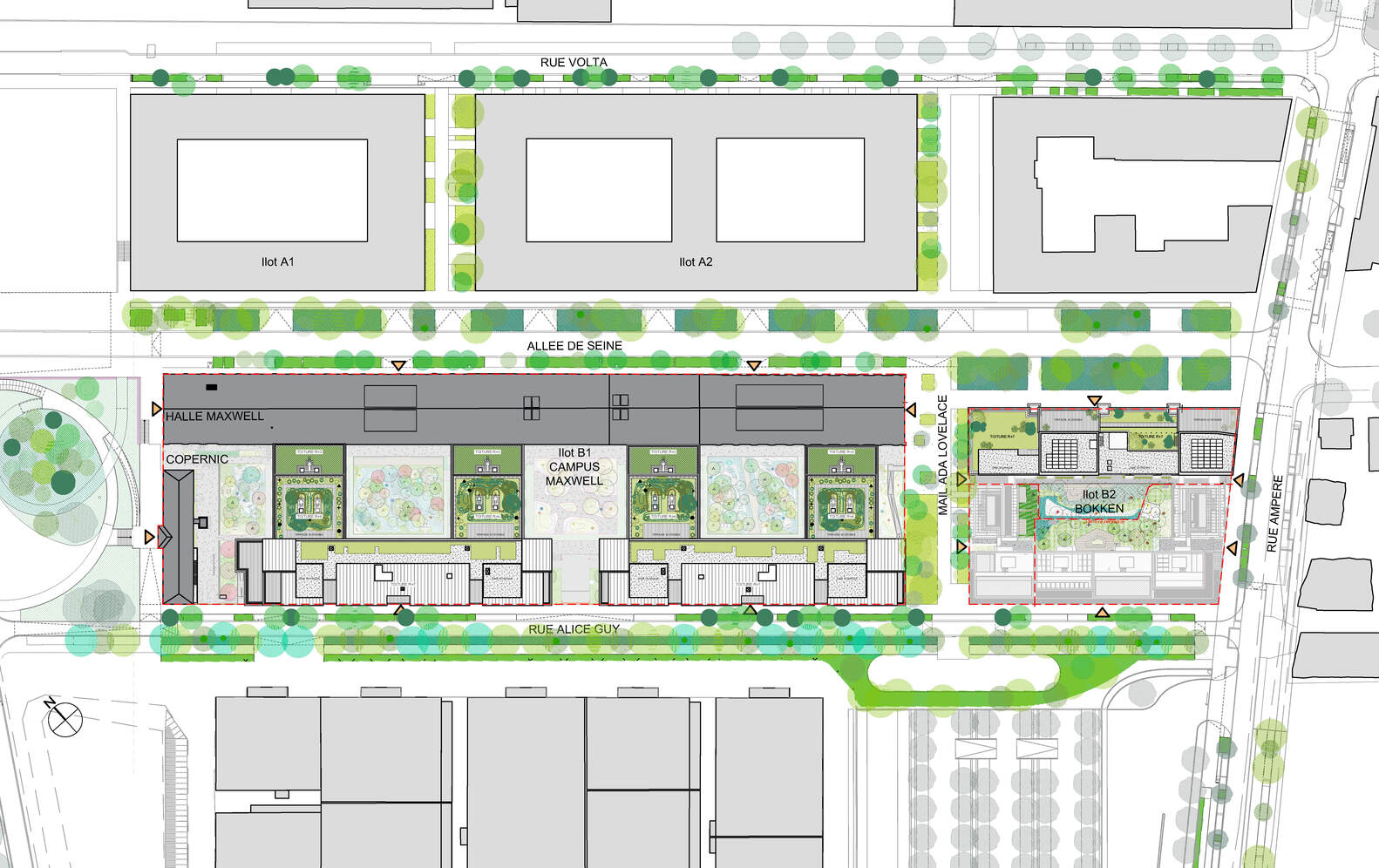
The site was structured around these building frameworks, organized along an East-West axis that formed the center of the new site. The new constructions employed a hybrid construction method using wood. Many existing materials were reused on-site (such as demolished concrete for cable ballast boxes in the new plinth areas), or materials recovered from other demolished buildings were given new life (such as the flooring in office areas). Compared to similar projects, this development reduced CO2 emissions during construction by approximately 40%, and it will significantly lower energy consumption during its future use (first as the Olympic Village, then as office space).
园区围绕这些建筑结构,沿着一条东西轴线构建,形成了新场地的中心。新建筑采用了木材混合建造方法。许多现有材料在现场进行了再利用(例如拆除的混凝土用于新基座区域的电线压载箱),或从其他被拆除的建筑中取得的材料,将其赋予新生命(例如办公区域的地板)。与类似项目相比,该项目在建设过程中,二氧化碳排放量减少了约40%,并且在未来使用过程中(首先作为奥运村,然后作为办公空间)将显著降低能耗。
© Vincent Fillon
Site Plan
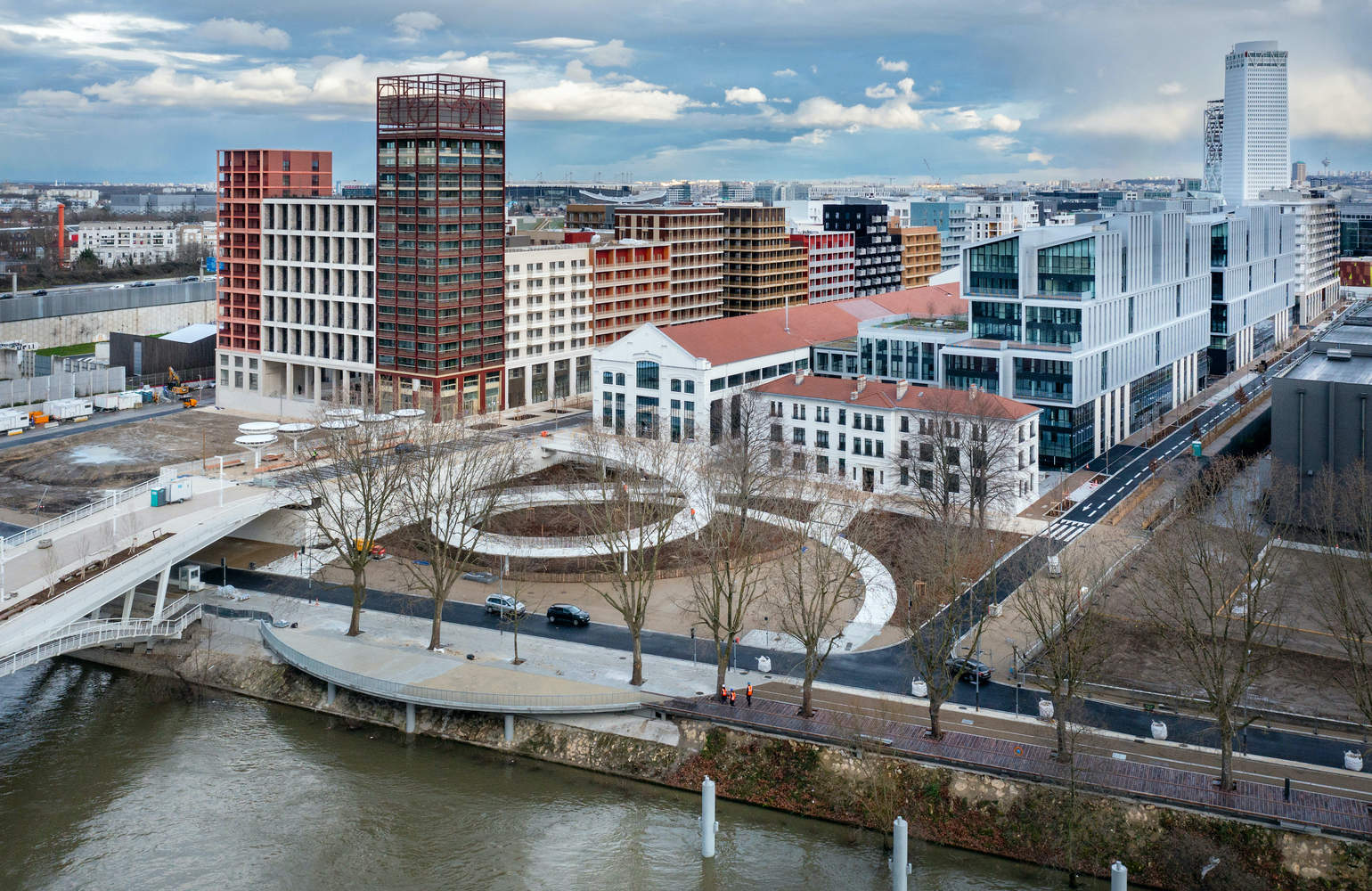
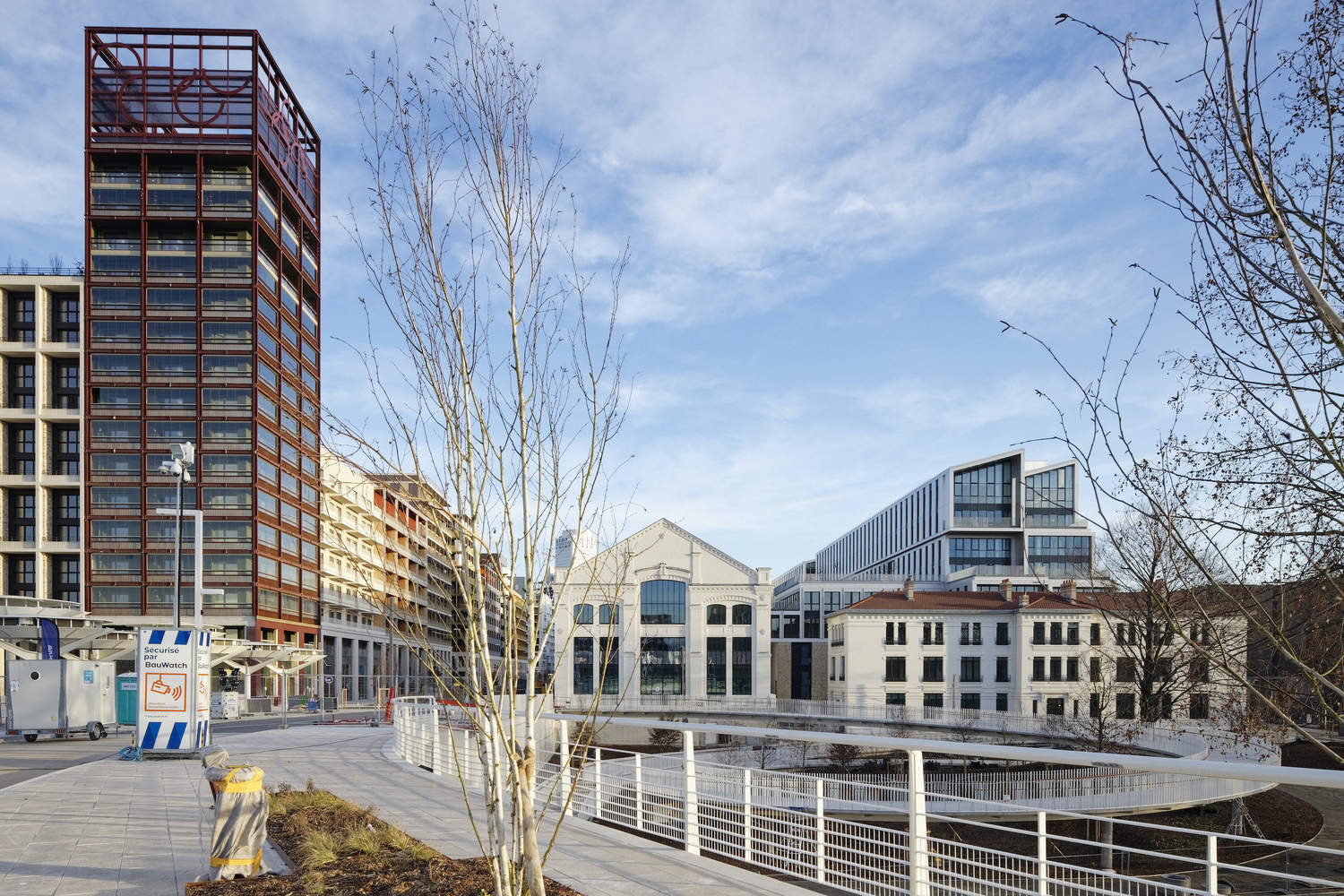
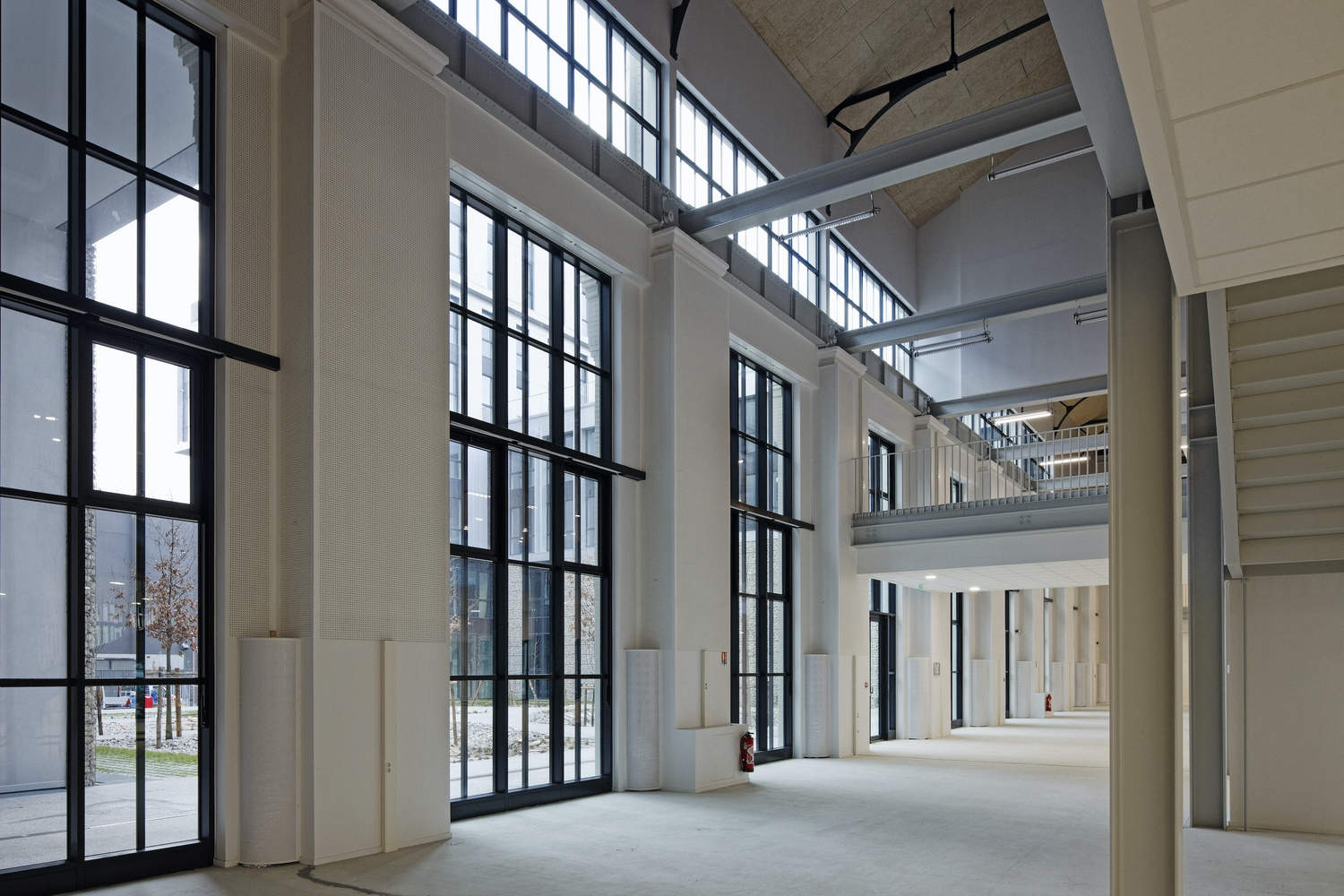
This eco-district is located on the northern side of Saint-Denis, on the banks of the Seine, in the heart of an urban fabric that includes several remarkable industrial buildings, including a former power station (Maxwell Hall), and early 20th-century industrial buildings and their engineering structures (Copernic Pavilion). Housing and large commercial buildings blend naturally into this structure, giving the district a harmonious mixed-use character. The project complements the dynamism of Saint-Denis, which is undergoing major transformation. The site is structured around Maxwell Hall, forming the backbone of the site along a strong East-West axis. The two existing buildings have been renovated in their original dimensions and colors, and entrances have been created for the new functions. The existing architectural heritage is preserved at the center of the new district and is an integral part of it.
该生态区位于圣德尼北区,塞纳河畔,在一个包括几个显著工业建筑的城市结构核心区域内,包括一座前发电站(Maxwell Hall)、20世纪初期的工业建筑及其工程建筑(Copernic Pavilion)。住宅和大型商业建筑自然地融入到这一结构中,使该区呈现出和谐的多种混合用途。该项目补充了正在经历重大转型的圣德尼的动态。园区围绕Maxwell Hall构建,沿着一条强大的东西轴线形成了场地的主干。两座现有建筑已经按其原始尺寸和颜色进行了翻新,并为新功能创建了入口。现有的建筑遗产被保留在新园区的中心,并成为其不可分割的一部分。
© Vincent Fillon
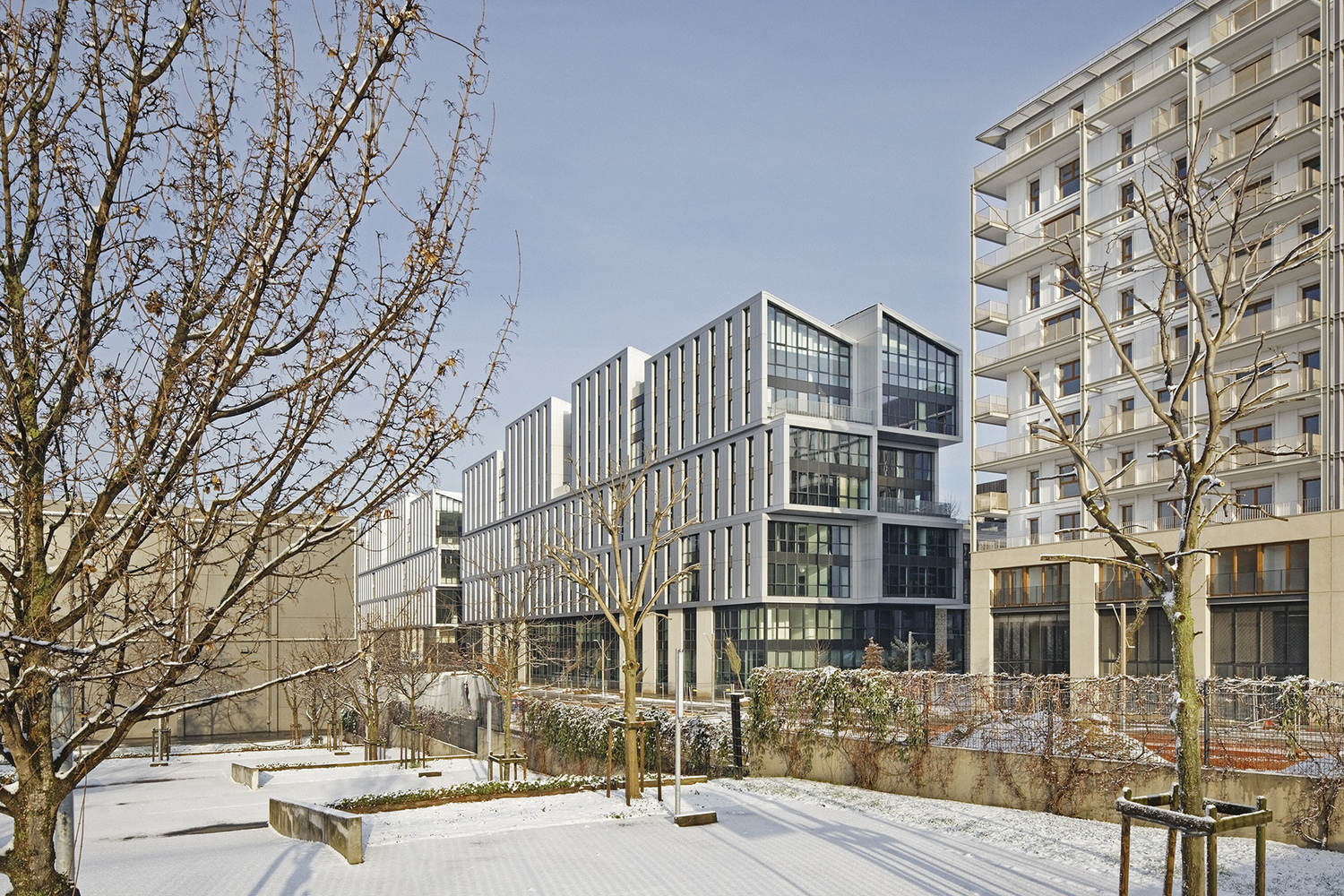
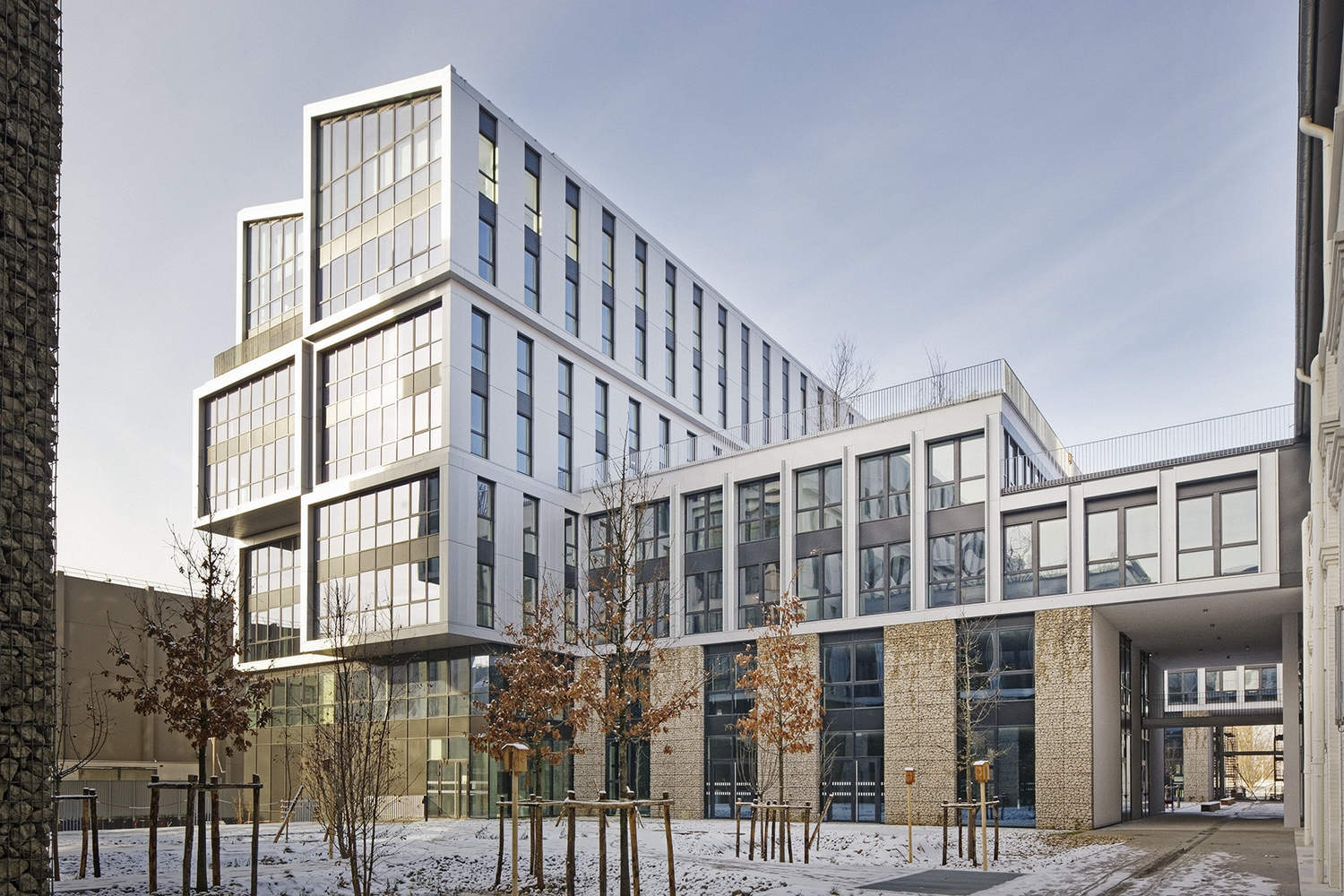
The new buildings are characterized by a sober and contemporary architectural style, emphasizing quality of use and innovation, and highlighting the dialogue between the preserved buildings and the modern additions. Two seven-story buildings were constructed along the Rue des Frères Lumière. On the west side, the gable wall facing the Copernic building is set back: this segmentation and setback create terraces and generous open spaces. Three-story volumes connect these buildings and act as linking elements, also providing large planted and accessible terraces. Between these connecting volumes, vast gardens offer comfortable, sheltered outdoor areas.
新建筑以简洁、现代的建筑风格为特征,强调使用质量和创新,并突出了保留建筑与现代建筑之间的对话。沿着Rue des Frères Lumière新建了两栋七层建筑。在西侧,面对Copernic建筑的山墙被后退:这种分段和后退设计形成了露台和宽敞的开放空间。连接这些建筑的三层体量作为连接体,也提供了大型种植并可访问的露台。在这些连接体之间,广阔的花园提供了舒适的、有遮蔽的户外区域。
© Vincent Fillon
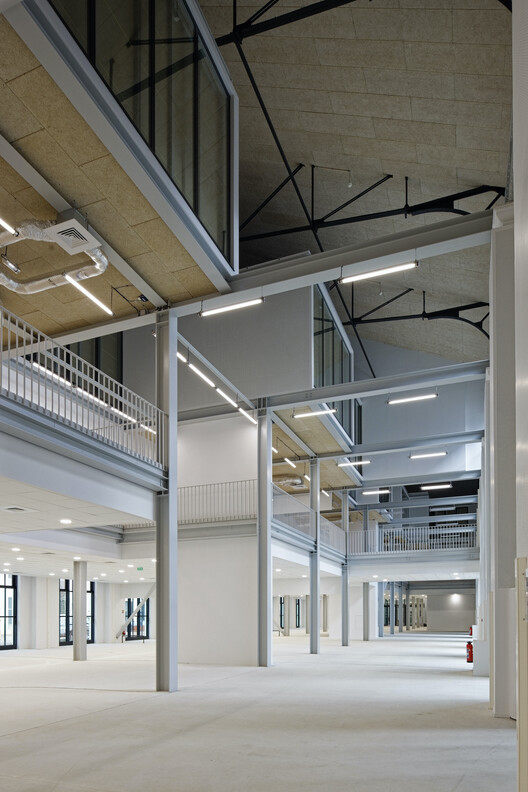
The project’s planning is also aligned with the city's ambition to foster social change, improve quality of life, and create “sustainable, inclusive, and smart spaces” through the Olympic Games. The B sector of the future Olympic Village, known as "Les Verrières," will house athlete residences and service functions (offices, storage, and services) in the new B1A and B1B buildings. Maxwell Hall and the Copernic Pavilion, connected to the Olympic Plaza, will host the service functions required for the Olympic Village: reception and relaxation areas (fitness), delegation offices, NOC/NPC areas, etc. The overall quality is emphasized through the creation of biodiversity corridors across three complementary levels: the open spaces of the internal courtyards, the planted terraces, the belvederes, and the connecting roofs.
该项目的规划也符合城市的雄心壮志,城市希望借助奥运会创造社会变革,提升生活质量,打造“可持续、包容和智能的空间”。未来奥运村B区,被称为“Les Verrières”,将在新的B1A和B1B建筑中容纳运动员住宅和服务功能(办公室、储藏和服务设施)。Maxwell Hall和Copernic Pavilion,与奥林匹克广场相连,将容纳奥运村所需的服务功能:接待和休闲区域(健身),代表团办公室,NOC/NPC区域等。通过在三个互补的层面上创建生物多样性走廊,强调了整体的质量,即内部庭院的开放空间、种植的露台、观景台和连接屋顶。
© Vincent Fillon