对地方特色与全球视野的精妙融合:该项目成功地回应了竞赛要求,即在表达大胆、标志性的建筑语言的同时,深度扎根于当地的果阿建筑风格,并赋予其全球性的视野。建筑师通过对场地功能流线的重构和空间连续性的强调,创造了介于正式与非正式功能之间的“子功能”区域,促进了不同群体间的非正式交流。设计语言的精髓在于成功捕捉并转化了水上运动的动态精神,使其成为建筑叙事的核心驱动力,而非仅仅是功能上的附庸,从而超越了传统政府建筑的务实局限。
海洋动力学的建筑转译与动态体验营造:项目最突出的亮点在于其对海洋动力学和水上运动刺激感的极致抽象与转译。建筑体量如同“特洛伊波浪”般爆发、上升和折叠,模仿了阿拉伯海的自然形态,实现了从外部观感到内部体验的整体统一性。建筑师通过多重视角和持续运动的形态,故意模糊了墙、地、顶的边界,使使用者在光影流转中感受到一种“紧张、打破常规”的叙事感。这种设计手法将建筑本身塑造成一个动态的剧场,旨在持续激发和激励进行水上运动的冒险者们。
复杂参数化屋顶的工程创新与成本控制:在技术层面,该项目展现了非凡的工程智慧,尤其体现在其4000平方米的参数化波浪屋顶结构上。设计巧妙地平衡了宏大愿景与政府项目的预算限制,通过采用彩涂屋面板和数字制造技术实现了复杂的曲面形态。这个由15000多根管道组成的轻型壳体结构,不仅在视觉上模仿了自由流动的海浪,更通过精密的模块化设计和定制的屋顶板材拼接,解决了复杂排水需求,标志着其成为印度最复杂的数字制造屋顶之一,体现了建筑技术在实现大胆美学方面的巨大潜力。
In India, government agencies often adopt a pragmatic and understated approach in expressing their architectural style. When the Government of Goa organized an international competition for the design of the National Institute of Water Sports, it sought for the institute to achieve two things: first, to express architecture in a bold, iconic manner that transcends functional utilitarianism; and second, to adopt a novel approach to create a quintessential Goan architectural style, making it more global yet rooted in the local context, resonating through the use of local materials.
在印度,政府机构在表达其建筑风格时通常采用务实、低调的方式。当果阿邦政府为设计果阿国家水上运动研究所举办了国际级竞赛时,它希望该研究所能做两件事:首先,以大胆、标志性的表达方式展现建筑,超越功能主义的实用主义;其次,采取新颖的方式,打造典型的果阿建筑风格,使之更具全球性但又扎根于当地,通过使用当地材料来产生共鸣。
© Vinay Panjwani
Site Plan
© Vinay Panjwani
© Vinay Panjwani
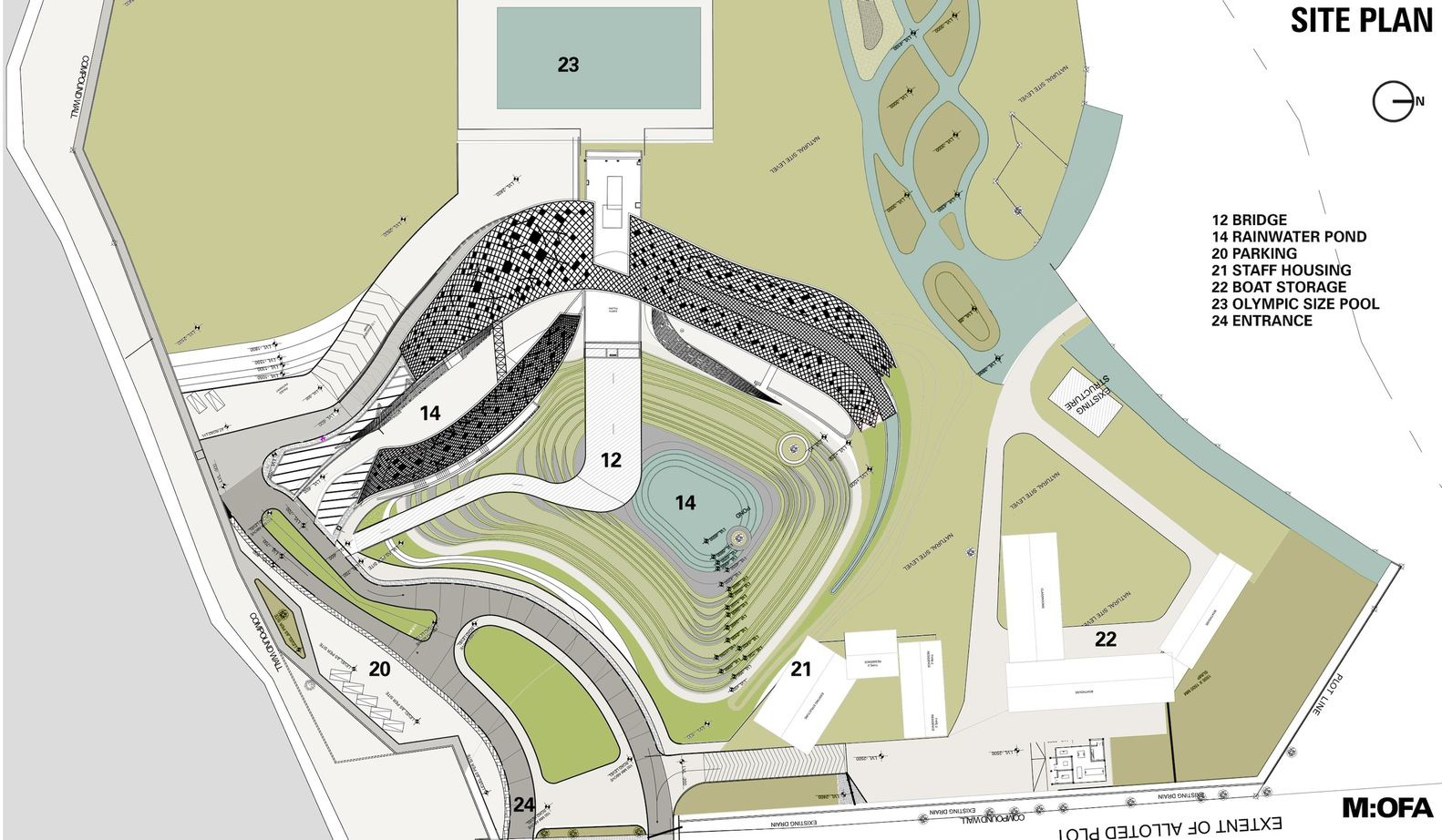
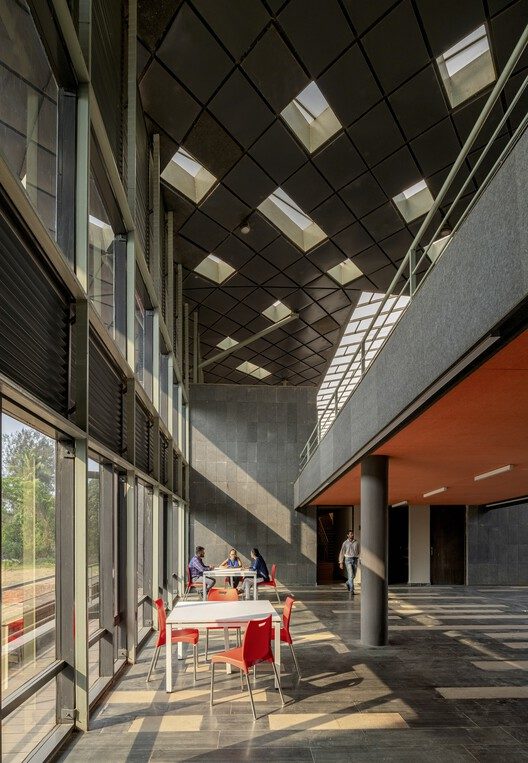
We began by breaking down the functional requirements into larger functional zones. While the institutional, administrative, residential, and recreational functions retained their respective areas, the spaces between them are intended to be more fluid and continuous, thereby creating sub-functions between these spaces. These sub-functions are crucial for informal interactions between different groups, interactions defined by their roles on campus. For the overall language, we looked for an expression that would connect the architecture to the broader maritime context and the adjacent Goan town.
我们首先将功能要求划分成更大的功能分区。虽然机构、行政、住宅和娱乐功能保留了各自的区域,但它们之间的空间将更为流动和连续,从而创造了介于这些空间之间的子功能。这些子功能对于不同群体之间的非正式互动至关重要,这些互动是由他们在校园中的角色定义的。对于整体语言,我们寻找了一种表达方式,将建筑与更广泛的海洋背景和毗邻的果阿城镇联系起来。
© Vinay Panjwani
© Vinay Panjwani
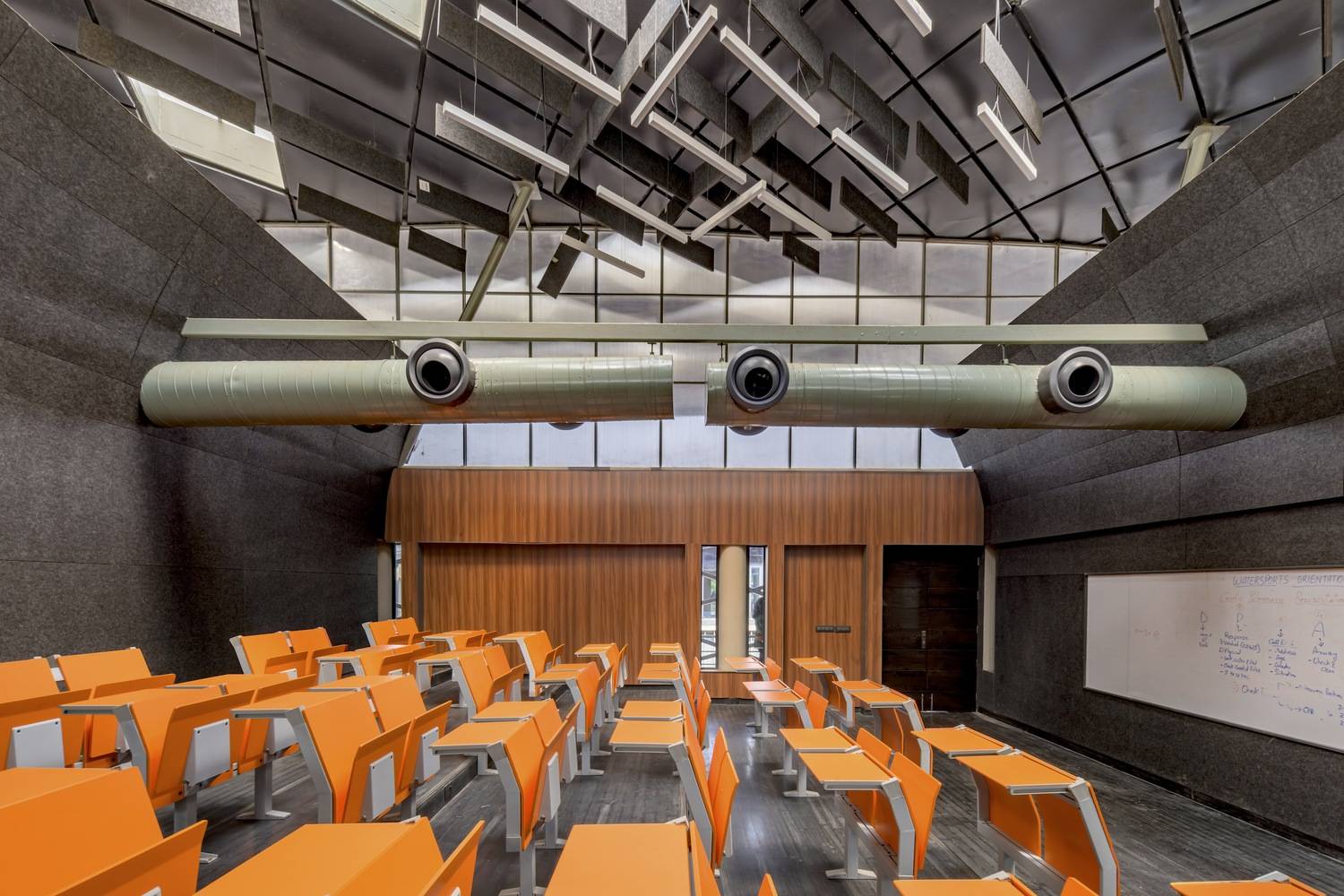
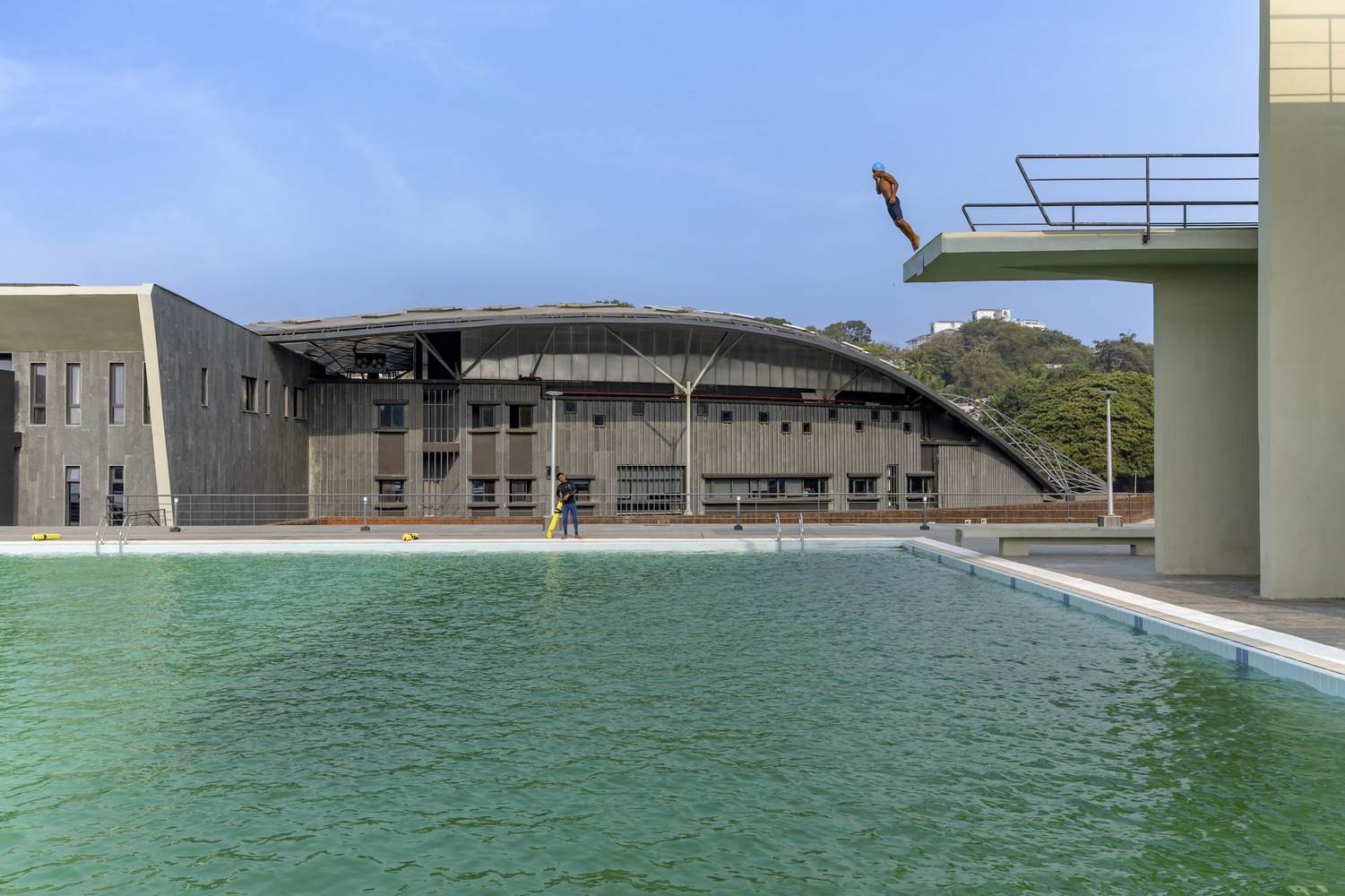
Adventure water sports are seen as leisure activities; institutions, on the other hand, usually lean towards demarcating formal functions from informal ones. Here, surfers seek thrills in the ocean, and in an attempt to keep their attention momentarily detached from this impulse in the classrooms, there is an attempt to translate the ever-present tension between that adrenaline, the force of the ocean, and the surfer enveloped by it into an expression. Creating this subtle balance between daily functionality and maintaining constant dynamism is important.
冒险水上运动被视为休闲活动;另一方面,机构通常倾向于将正式功能与非正式功能区分开来。在这里,冲浪者们在海洋中寻找刺激,为了保持他们的注意力在教室里暂时脱离这种冲动,试图将那种肾上腺素和海洋力量与被包围其中的冲浪者之间不断产生的紧张情绪转化为表达。在日常功能性和保持持续动态之间创造这种微妙的平衡非常重要。
© Vinay Panjwani
Longitudinal Sections
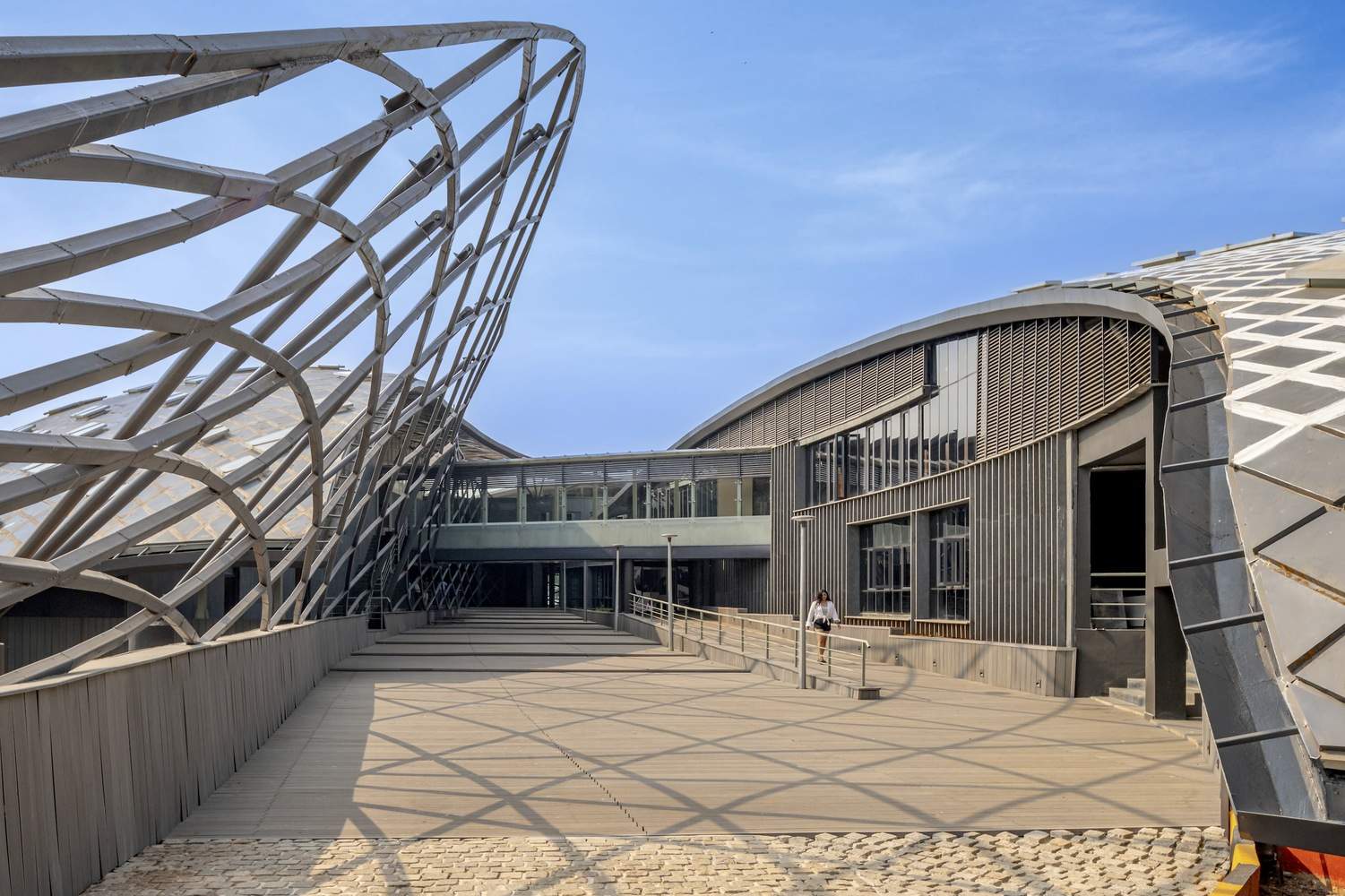
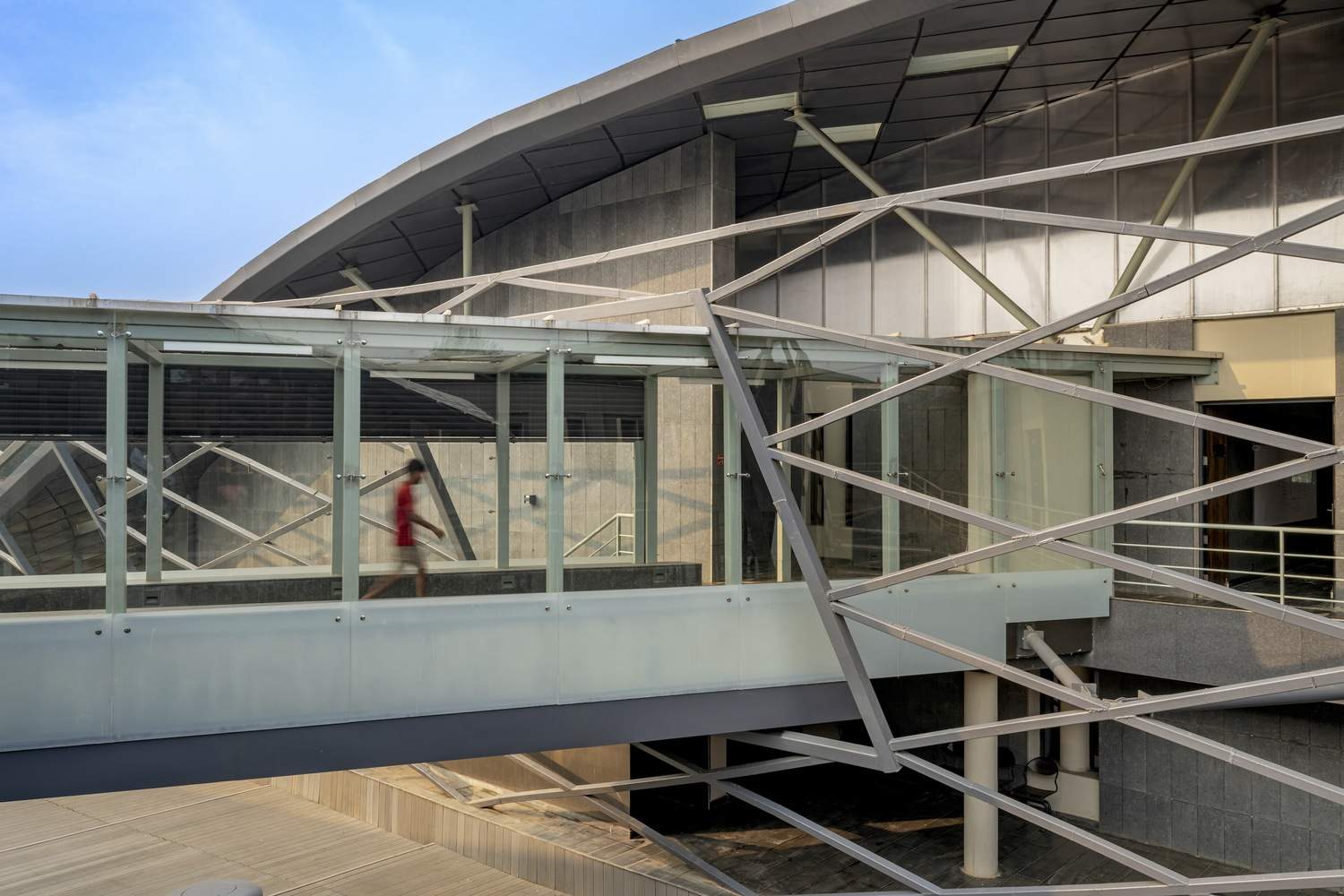
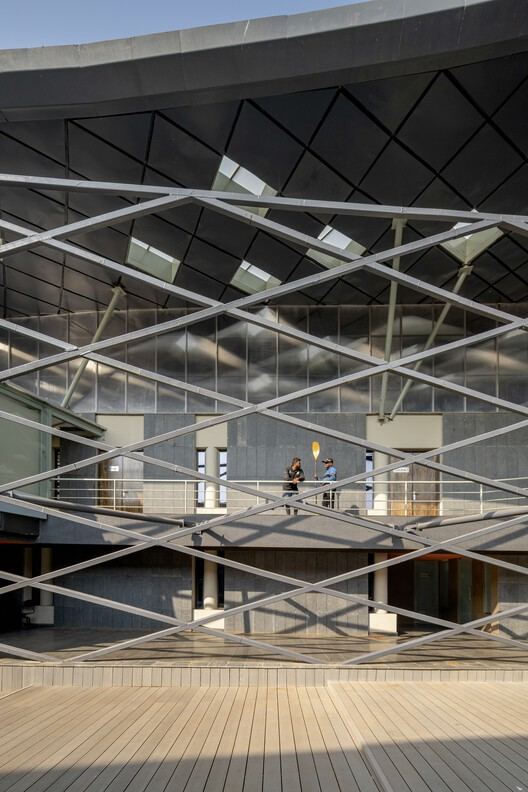
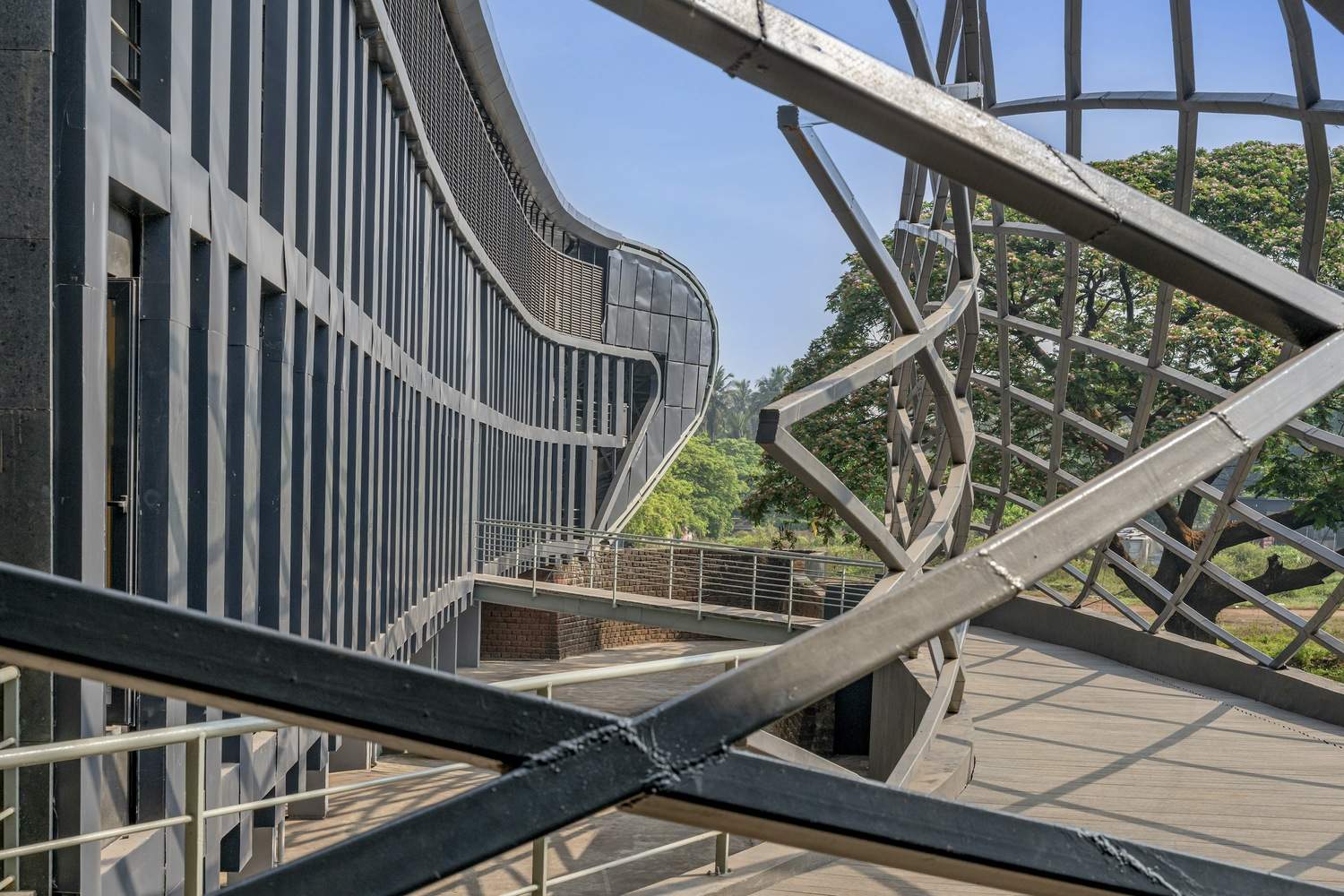
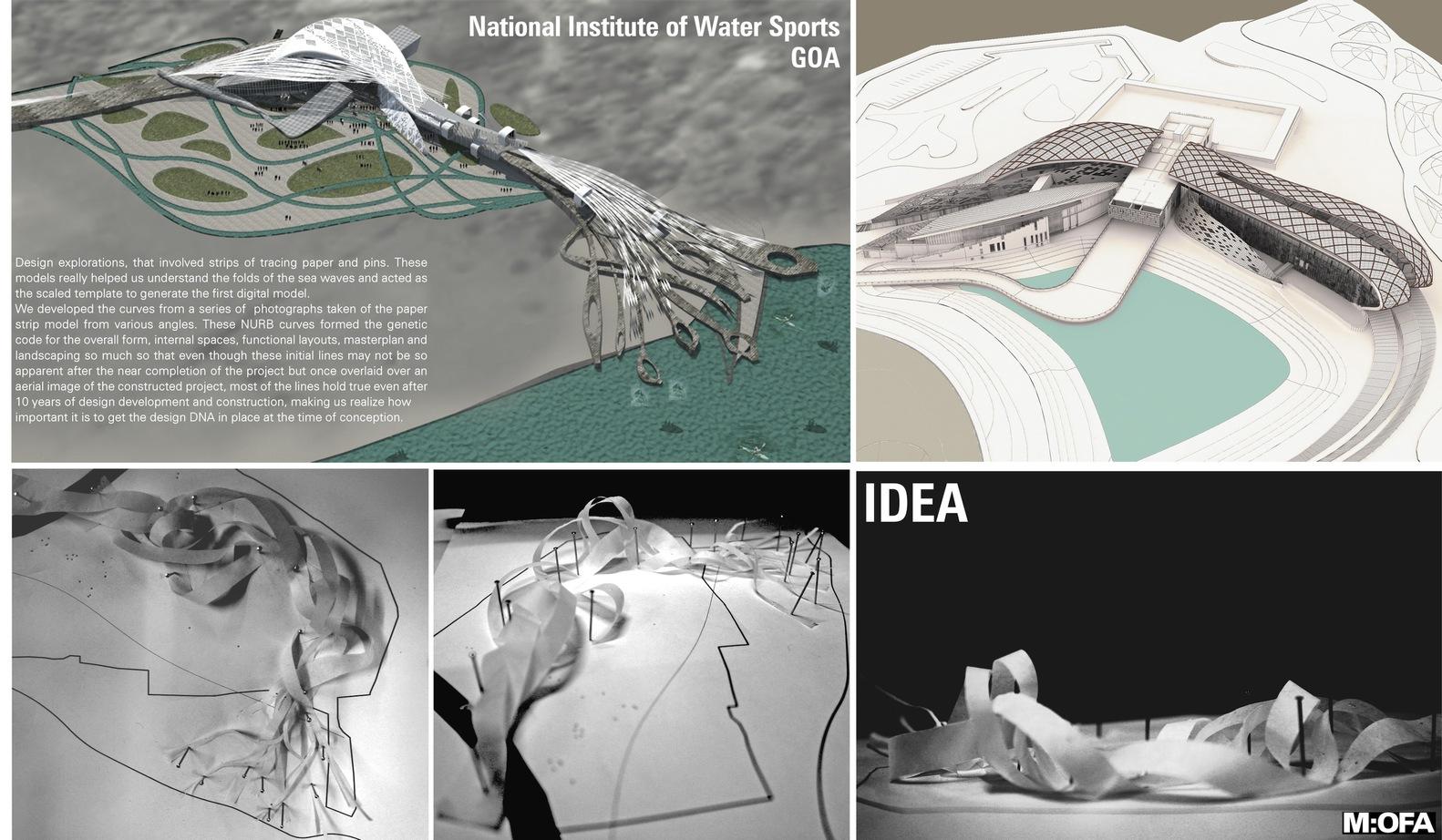
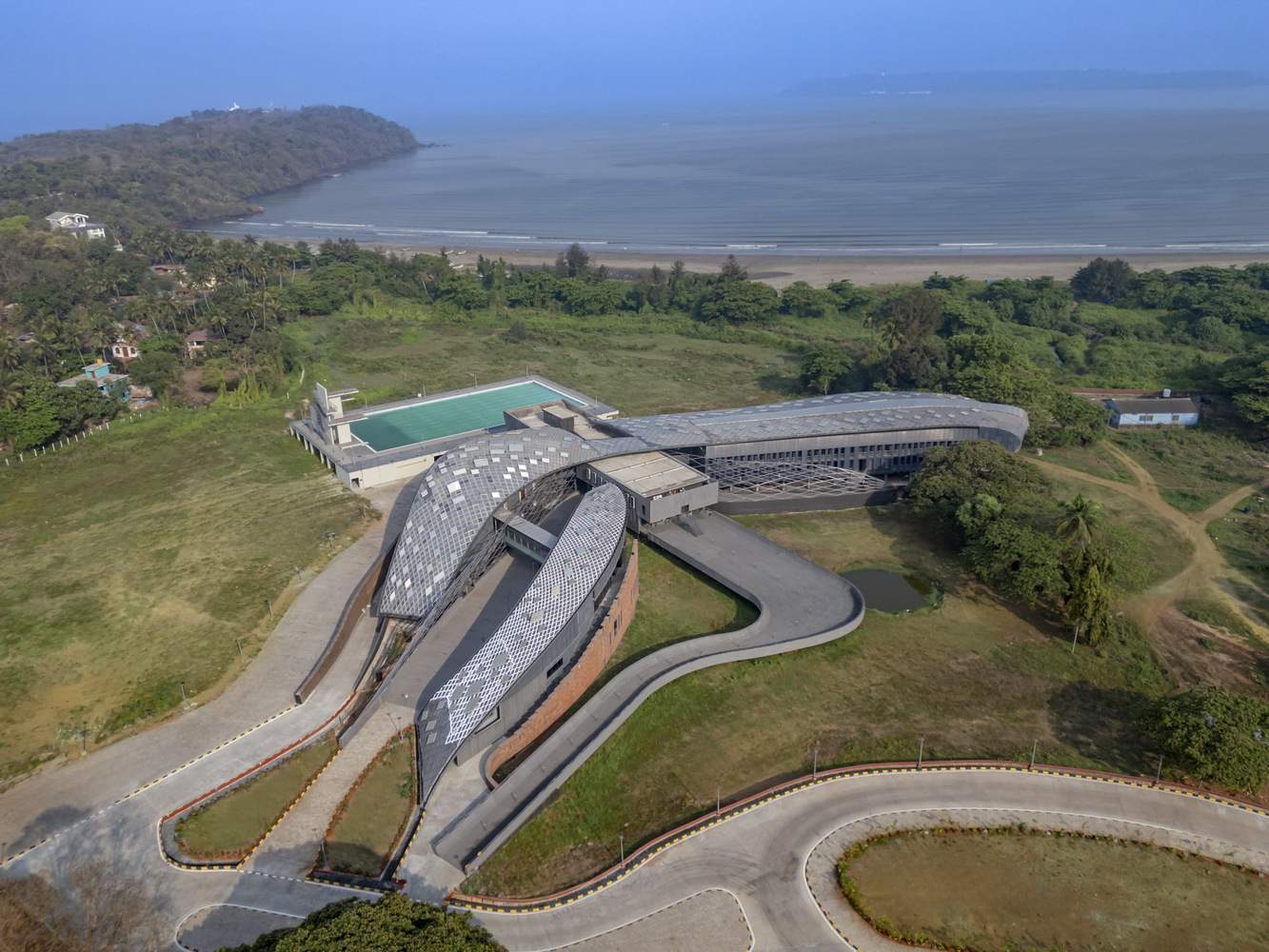
The architecture of the NIWS is inspired by the dynamic nature of the ocean. It erupts, rises, and folds into a series of Troy waves, poised to engulf everything. Seen from above, it looks like a mythical creature born from the adjacent Arabian Sea, mimicking its nature. And from the ground, within its spaces, it appears to be in constant motion, with perspectives constantly changing. The eye never settles on one point; through its multifaceted viewpoints and continuously moving spine, the building intends to blur the perceived concept of its elements. Walls, floors, and ceilings engage in this fluid dialogue everywhere, once articulated by the ever-changing play of light and shadow, creating for its users this tense, disruptive narrative sense, like a theatre in constant motion, where pauses are an exploration. Thus, the building becomes a channel, ensuring it is not a static structure but an inspiration that energizes the adventurers preparing for water sports.
NIWS的建筑灵感来自海洋的动态特性。它爆发、上升,并折叠成一系列的特洛伊波浪,随时准备吞没一切。从上面看,它看起来像是从隔壁的阿拉伯海诞生的神话生物,模仿着它的本性。而从地面上,在它的空间内,它似乎在不断地运动,视角在不断变化。眼睛不停留在一个点上;通过其多重视角和持续运动的脊柱,建筑意图模糊其元素的可感知概念。墙壁、地板和屋顶在各个地方都在进行这种流动的对话,一旦被不断变化的光影所呈现,就会为其使用者创造出这种紧张、打破常规的叙事感,就像一个不停运动的剧场,而停顿则是一种探索。因此,建筑成为了一个渠道,确保它不是一个静态的结构,而是一种为准备进行水上运动的冒险者们带来活力的灵感。
© Vinay Panjwani
Inspiration
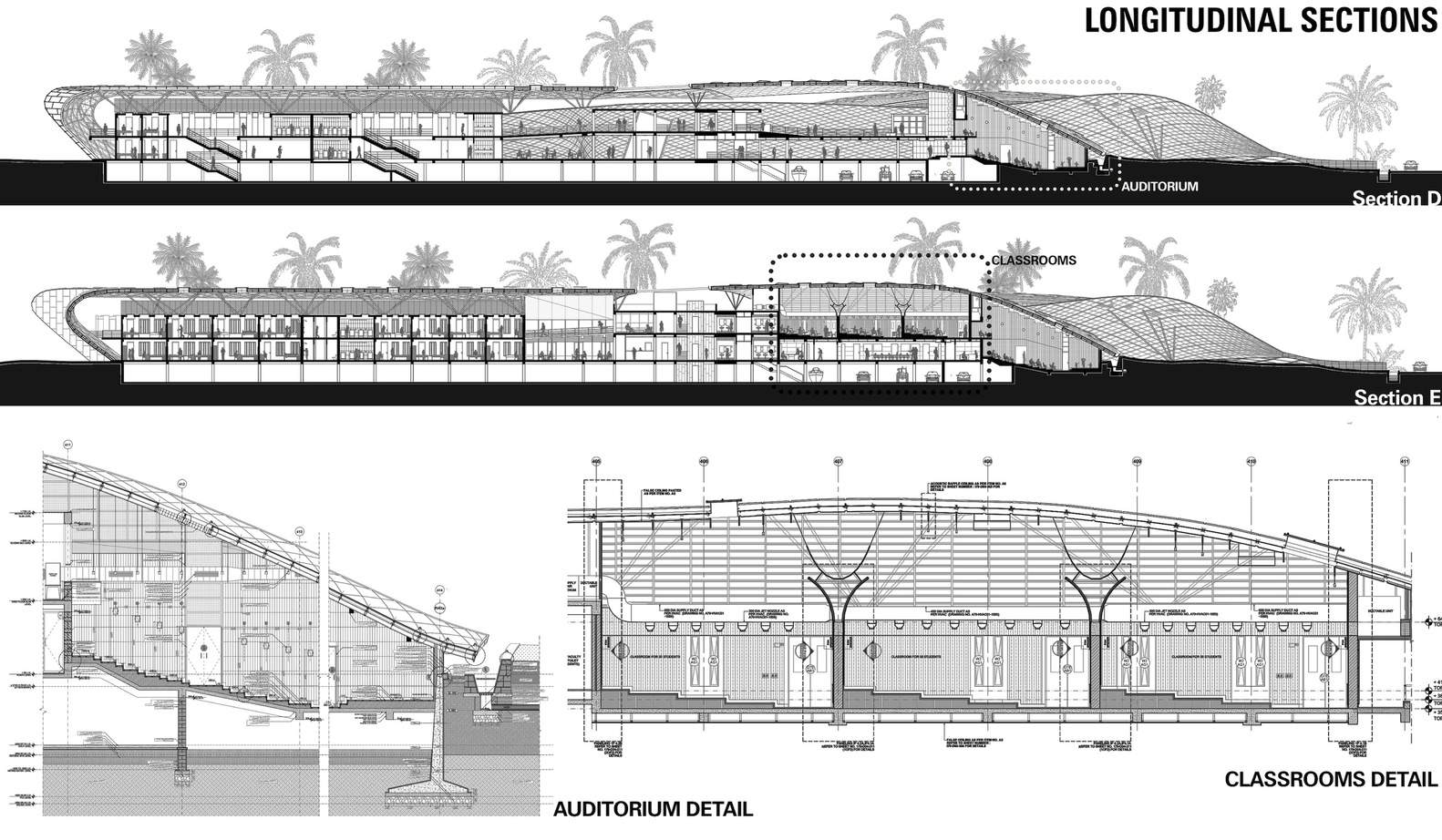
The continuous movement of the building is achieved through a digitally fabricated oversized roof structure, clad in color-coated roof panels to control costs, suitable for the limited budget of a government project. As a hyperbolic paraboloid grid shell structure, the 4000 sqm NIWS roof covers the entire complex like a freely flowing wave. It is designed as a light structure equipped with a pressure-balancing system, composed of over 15,000 pipes of varying lengths. The structure consists of smaller modular components large enough to be manually hoisted and placed in position. Over 5000 custom roof shingles, each of unique shape and size, are CNC cut and folded to interlock like a jigsaw puzzle onto the large parametric wave roof. This assembly creates continuous drainage channels, ensuring smooth water flow, making it one of the most complex digitally fabricated roofs in India.
建筑的持续运动通过数字制造的超大屋顶结构来实现,采用彩涂屋面板覆盖,以控制成本,适用于政府项目有限的预算。作为一个梯形面板网格壳结构,占地4000平方米的NIWS屋顶像一波自由流动的波浪覆盖整个复杂结构。它被设计为一个轻型结构,配备有压力平衡系统,由超过15000根长度不同的管道组成。该结构由较小的部件模块组成,足够大,可以手工吊装并安置到位。超过5000块定制的屋顶板材,每块都有独特的形状和尺寸,经过数控切割和折叠,如拼图一般拼接在大型参数波浪屋顶上。该组件创造了连续的排水槽,确保水流畅通,使其成为印度最复杂的数字制造屋顶之一。
© Vinay Panjwani