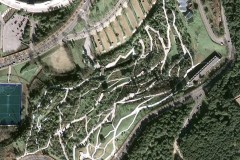
历史文脉的当代演绎与高密度功能融合:该项目成功地在现代城市肌理中,通过对古镇宜兴城市规划的复兴式借鉴,实现了对历史文脉的致敬与空间再生。设计精妙地在有限场地内整合了零售、体育和休闲等多元功能,并以两条核心轴线——一条连接城市主要节点,另一条定义公共活动空间——确立了清晰的场所骨架。这种在紧凑布局中实现复杂功能交织的能力,体现了当代城市公共空间设计的精细化管理和高效能导向。
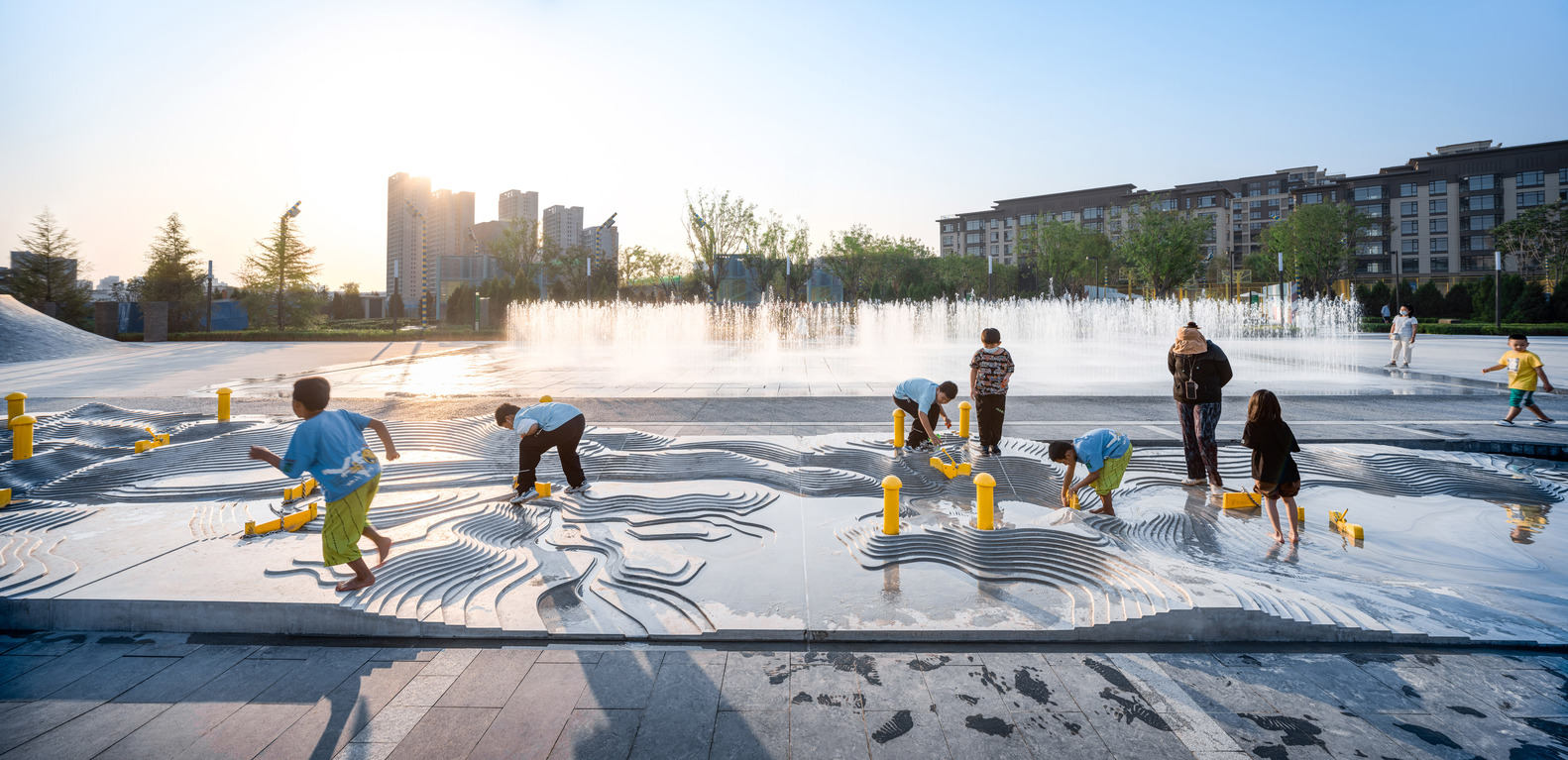
以“玩乐与学习”为核心的生态叙事景观:项目最大的亮点在于其高度整合的教育性与互动性景观。通过设置“戏水山丘”这一互动水文模型,将长江三角洲、三峡水库等宏大地理与工程议题,转化为儿童可直接操作、内化理解的嬉戏体验。这种将严肃的环境议题转化为可感知的游戏过程的设计手法,极大地提升了场地的生态教育价值,并突破了传统城市公园的界限。
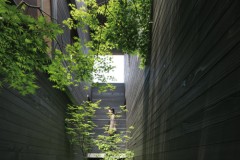
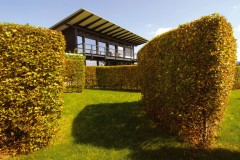
结构化场所隐喻与体验式迷宫设计:围绕中央轴线布局的四大功能区域各具特色,其中西侧的迷宫区尤其引人深思。通过绿篱、大地、木制和水迷宫的设置,不仅模仿了古镇街道的曲折形态,更巧妙地将“寻找自我道路”这一学习过程隐喻为空间体验。这种多层次的场所隐喻,结合地热烟囱等独特地标,丰富了公园的叙事深度,使其成为一个富有哲思的城市公共载体。
The award-winning Tianjin 4A Sports Park is a public park paying homage to the ancient town of Yixing, which was once located here, integrating retail, sports, and environmental elements within a high-density, labyrinthine plan. The design maximizes the ecological effect of this relatively small site through compelling "play-and-learn" landscape features, bringing unique ecological value by raising environmental awareness.
获奖的天津 4A 体育公园是一个公共公园,向曾位于此地的古镇宜兴致敬,并在高密度迷宫式规划中融合了零售、体育和环境元素。该设计通过引人注目的“玩乐与学习”景观特色,最大化了这个相对较小场地的生态效应,并通过提升环境意识为其带来了独特的生态价值。
The project site is located in a modern city, built upon the historical ruins of Yixing, which has deep ties to Yixing in Jiangsu. Following the opening of the Grand Canal, the residents of Yixing relocated their entire village and rebuilt a village similar to the original Yixing in northern Tianjin. Although this historic Yixing village has been destroyed, BAM took the original urban plan of Yixing as a reference for urban regeneration. The project is roughly divided into four functional areas that overlap with each other. A central axis runs through the entire site from northwest to southeast, connecting the surrounding residential and commercial areas with the subway. Another axis is the central grand plaza, an open space for daily leisure and large-scale events.
该项目场地位于一座现代城市上,建于历史悠久的宜兴遗址之上,宜兴与江苏宜兴有着深厚的渊源。随着大运河的开通,宜兴的居民将整个村落迁移并在天津北部重建了一个与原宜兴相似的村庄。虽然这个历史性的宜兴村落已经被摧毁,BAM 则将原宜兴的城市规划作为参考,进行了城市再生。项目大致可分为四个功能区域,这些区域相互交叠。中央轴线自西北至东南贯穿全场,连接了周围的住宅区、商业区与地铁。另一条轴线则是中央大广场,是一个用于日常休闲和大型活动的开放空间。
© 吴清山
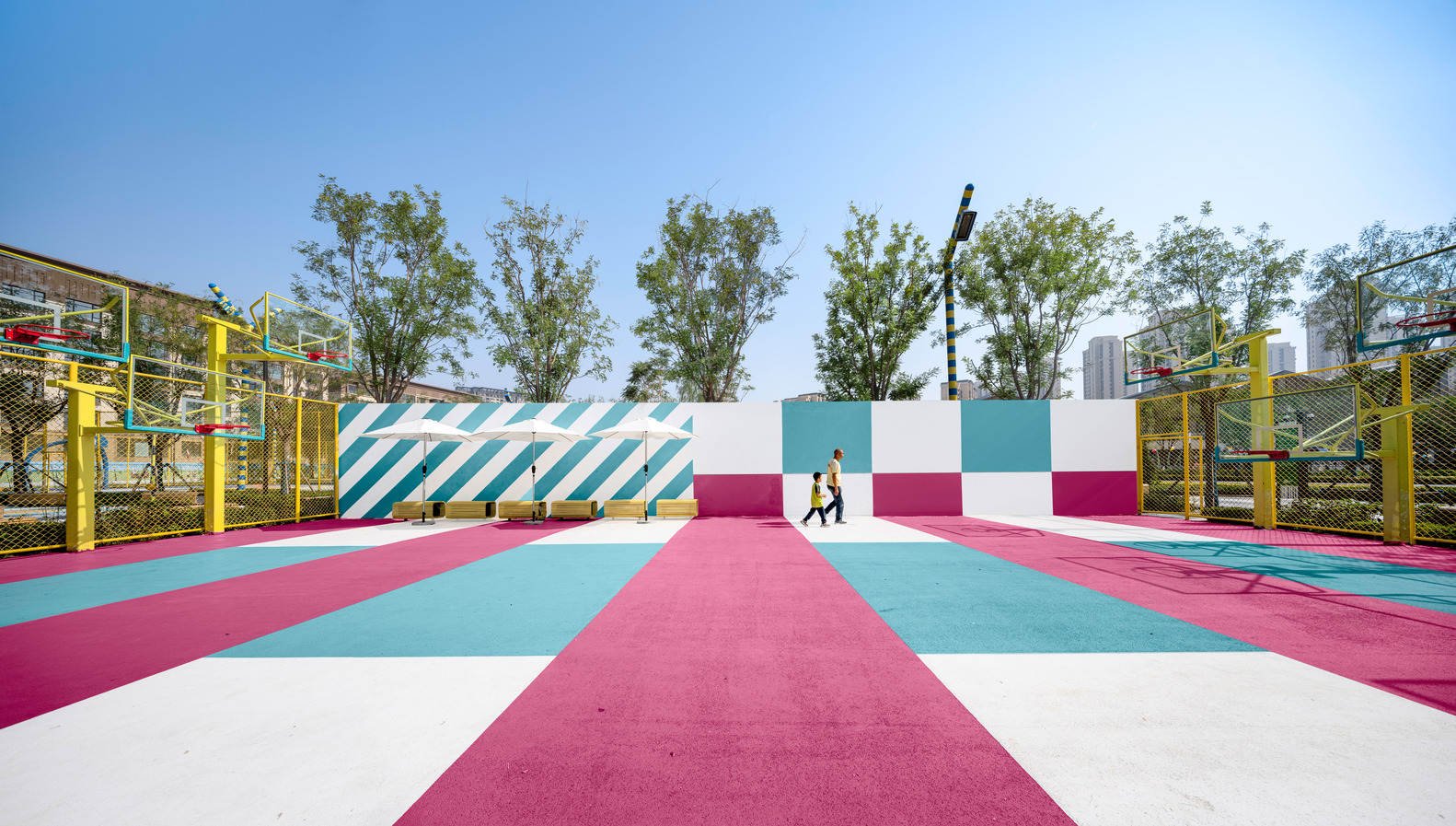
The eastern side features a dining area, including a beer garden and outdoor dining. Adjacent to the dining area is the play zone, which features a curved and layered playground, sandbox, and fountains, centered around a bright yellow canopy. The west side is the maze area, mimicking the winding streets of the ancient town, containing four distinct zones—a hedge maze, an earth maze, a wooden maze, and a water maze. The maze also serves as a metaphor for the learning process, in which everyone is constantly striving to find their own path. The ecological effect of the site is closely related to its size. Although this park occupies a relatively small area, its design embodies the concept of "high density," maximizing ecological effects and enhancing environmental awareness through interactive landscape elements. The central landmark of the park is a large sculptural element, which is actually a geothermal chimney that emits heated water vapor naturally produced in the area. One of the highlights of the project is the "Water Play Hills," an interactive hydrological model that showcases miniatures of the Yangtze River Delta landscape, the Three Gorges Dam reservoir, and the ancient Dujiangyan irrigation system.
东侧为餐饮区,包含啤酒花园和户外就餐区。餐饮区旁边是游乐区,这里布置了弯曲且富有层次感的游乐场、沙坑和喷泉,围绕一个明亮的黄色顶篷。西侧为迷宫区,模仿古镇蜿蜒的街道,包含四个不同的区域——绿篱迷宫、大地迷宫、木制迷宫和水迷宫。迷宫也作为学习过程的隐喻,在其中,每个人都在不断努力寻找自己的道路。场地的生态效应与场地大小密切相关。这个公园虽然占地相对较小,但其设计体现了“高密度”理念,最大限度地提升了生态效应,并通过互动景观元素提升了环境意识。公园的中央地标是一座大型雕塑元素,实际上是一个地热烟囱,排放该地区自然产生的加热水蒸气。该项目的亮点之一是“戏水山丘”,这是一个互动的水文模型,展示了长江三角洲景观、三峡水库和古代都江堰灌溉系统的缩影。
© 吴清山
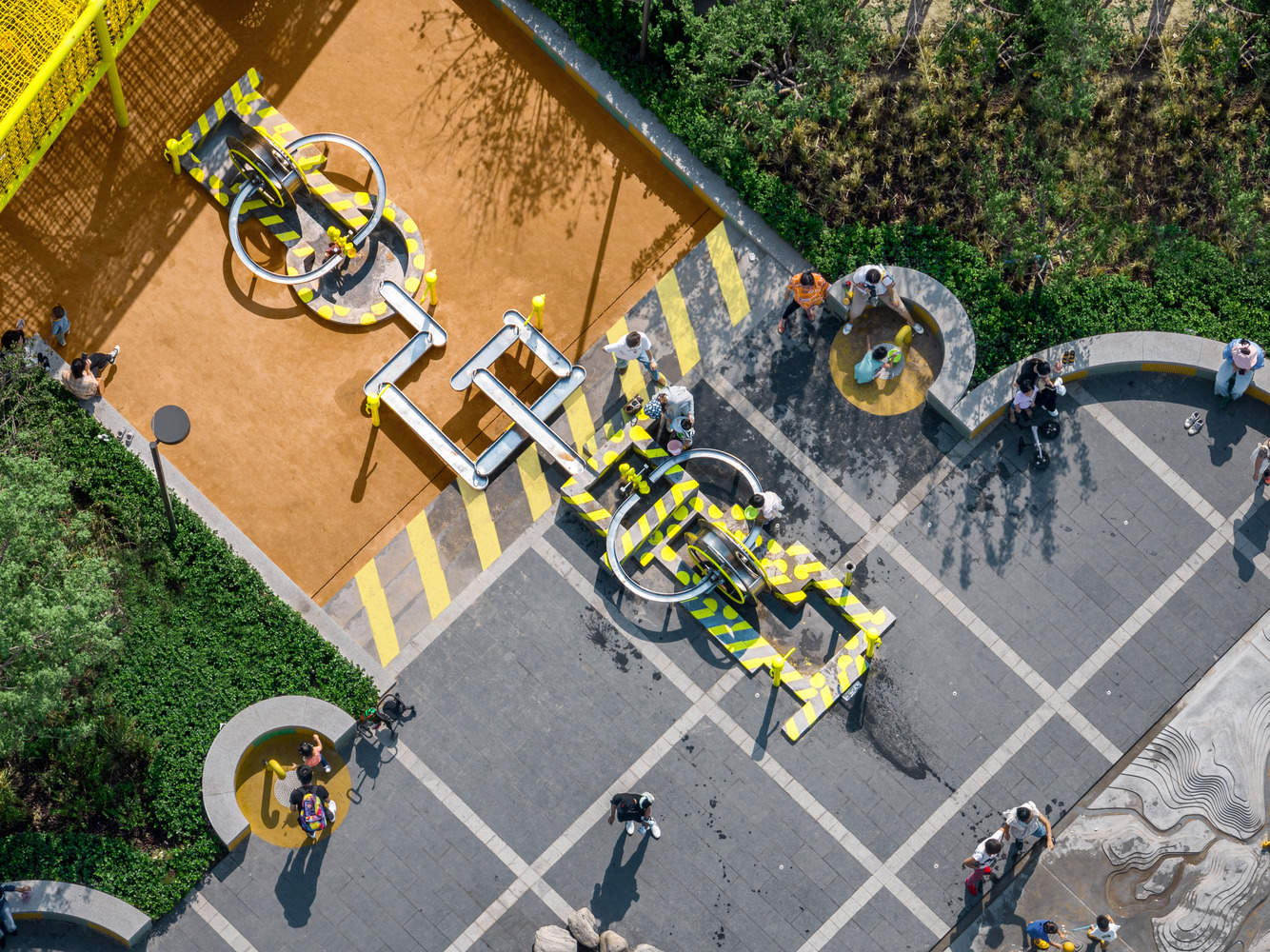
Water erupts from the hills, flows through the valleys, and eventually enters the delta reaching the ocean. Children can activate the water sources in the hills and use the dams installed along the water route to create reservoirs. However, if the water flow is mismanaged, it will overflow and enter other waterways, continuing its journey to the sea. This water feature superficially reflects China's natural landscapes as well as the development and heritage of agriculture and culture. On a deeper level, the design specifically emphasizes humanity's role in heavily modifying landscapes and waterways. This design transforms a concept that might otherwise be too abstract for children into a play environment where learning is internalized through games rather than didactic instruction. Through such play, BAM hopes to make more children aware of these major environmental issues and aims to cultivate a generation consciously equipped to solve them.
水从山丘中喷涌而出,穿过山谷,最终流入海洋的三角洲。孩子们可以激活山丘中的水源,并利用沿水路设置的坝体来创造水库。然而,如果水流管理不当,水将溢出并进入其他水道,继续流向海洋。这一水景从表面上反映了中国的自然景观以及农业和文化的发展与遗产。从更深层次来看,设计特别强调了人类在重度改造景观和水道方面的角色。这个设计将一个原本可能对孩子来说过于抽象的概念,转化为一个游戏环境,在其中,学习并非通过说教,而是内化于游戏之中。通过这样的游戏,BAM希望让更多的孩子意识到这些重大环境问题,并期望培养出一代有意识解决这些问题的人。
© 吴清山