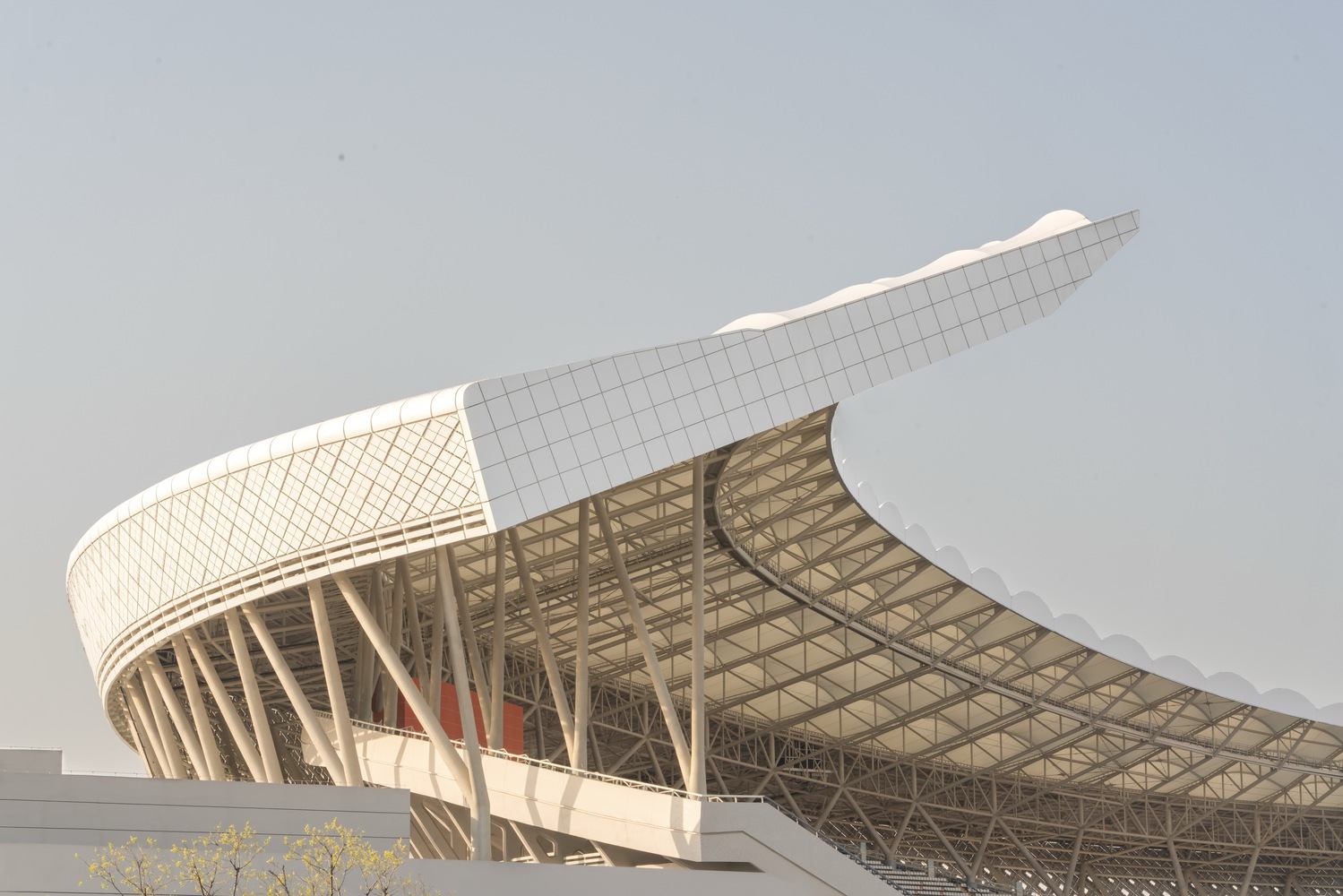
地域文脉与山水诗意的融合设计:本项目设计的核心精髓在于深度挖掘和融入襄阳地域的山水文脉。建筑师以“襄水云飘,带舞展风华”为设计理念,成功地将场地周边的汉江水系和起伏山峦的自然格局转化为建筑语言。通过适应地形、理性设计与浪漫诗意的结合,项目不仅实现了功能上的要求,更在视觉和空间体验上营造出一种诗意的氛围,使大型体育设施与自然环境实现了和谐共生,展现了对地方精神的尊重与现代化诠释。
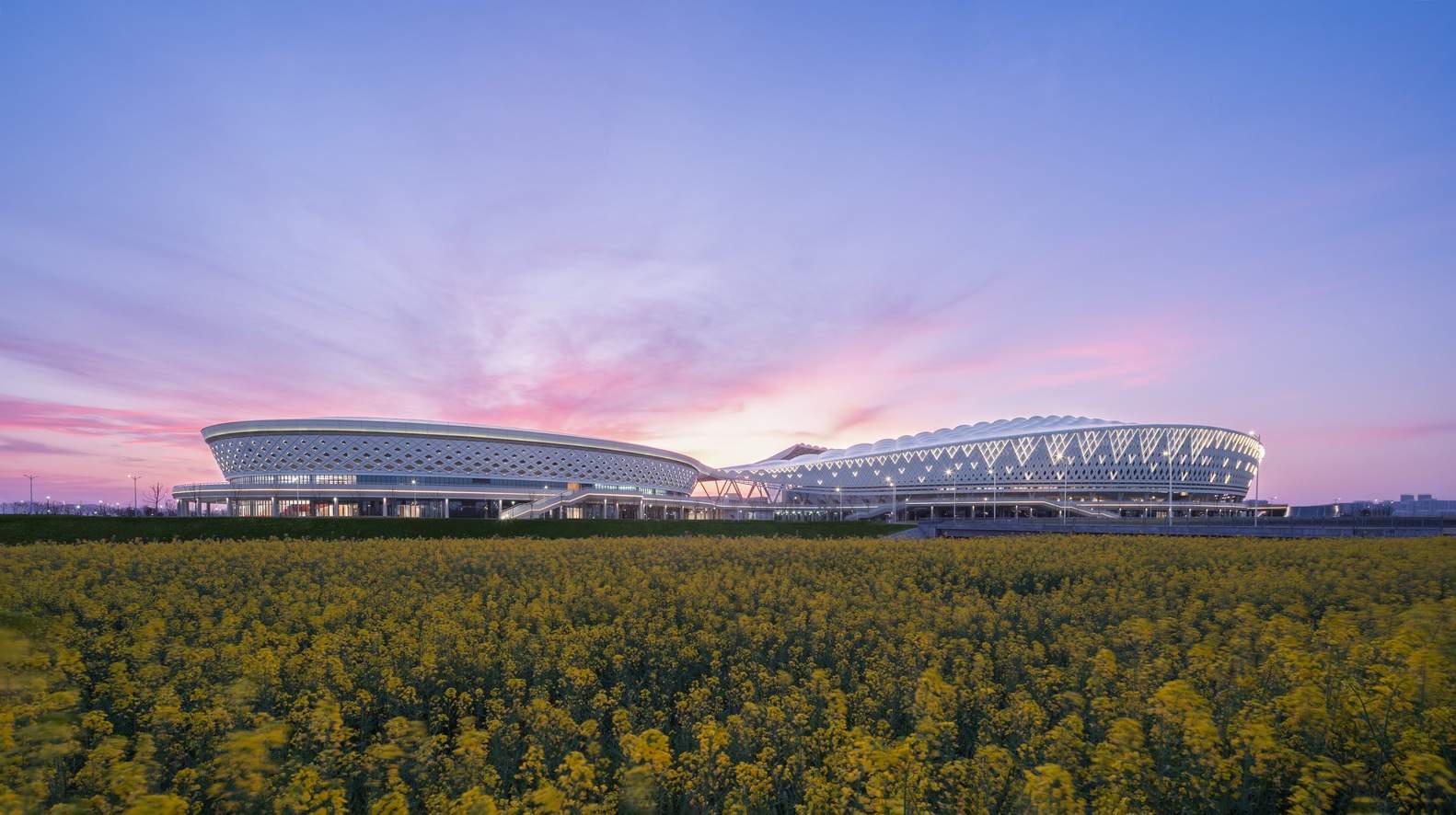
环境营造与场地消隐策略:在应对大型场馆带来的体量压迫感方面,设计采取了高明的环境营造和消隐策略。通过分析现有水系进行建筑布局,并巧妙运用架空和镂空手法模糊了建筑的实体界面,使得主体建筑如同“云朵悬浮在基座上”。这一处理极大地减轻了建筑的厚重感,促进了建筑与周边公园环境的融合,为使用者提供了在青山绿水间运动的沉浸式体验,成功地将体育设施转化为城市景观的一部分。
全生命周期驱动的绿色与运营策略:本项目在技术应用和长期效益方面表现卓越。在绿色低碳方面,坚持“被动优先、主动优化”原则,结合BIM优化、气流模拟(Xflow)、遮阳分析(Ladybug)和自然采光计算(Radiance),实现了超过78%的整体节能率,体现了前沿的技术集成能力。更重要的是,设计贯穿了“运营优先”理念,通过“弹性预留”和“复合应变”的空间布局(如使用轻质ALC板材灵活隔断),有效解决了大型场馆赛后利用率低的问题,确保了设施的可持续性和生命力。
© Yilong Zhao
© Yilong Zhao
Project Background |
The Xiangyang National Sports Center is located in the Dongjin New Area of Xiangyang City, Hubei Province, adjacent to Lumen Avenue, Guangda Avenue, Haoran River East Road, and Xiaopo River Road. The project includes a Class B stadium with a capacity of 30,000 seats, a fitness center covering 33,000㎡, and supporting sports facilities. As the largest public sports facility in Xiangyang and a reserve venue for the Hubei Provincial Games, it greatly alleviates the urgent demand for sports and fitness among surrounding residents, generating significant social impact.
襄阳全民体育运动中心位于湖北省襄阳市东津新区,毗邻鹿门大道、汉广大道、浩然河东路和肖坡河路。项目包括 30000 座的乙级体育场、33000㎡ 全民健身馆及体育配套等功能,作为襄阳最大的全民体育运动设施与湖北省省运会备用场馆,极大改善周边居民对体育健身的迫切需求,产生有较大影响的社会效应。
© Yilong Zhao
© Yilong Zhao
Poetic Design: A Sports Center with Regional Characteristics
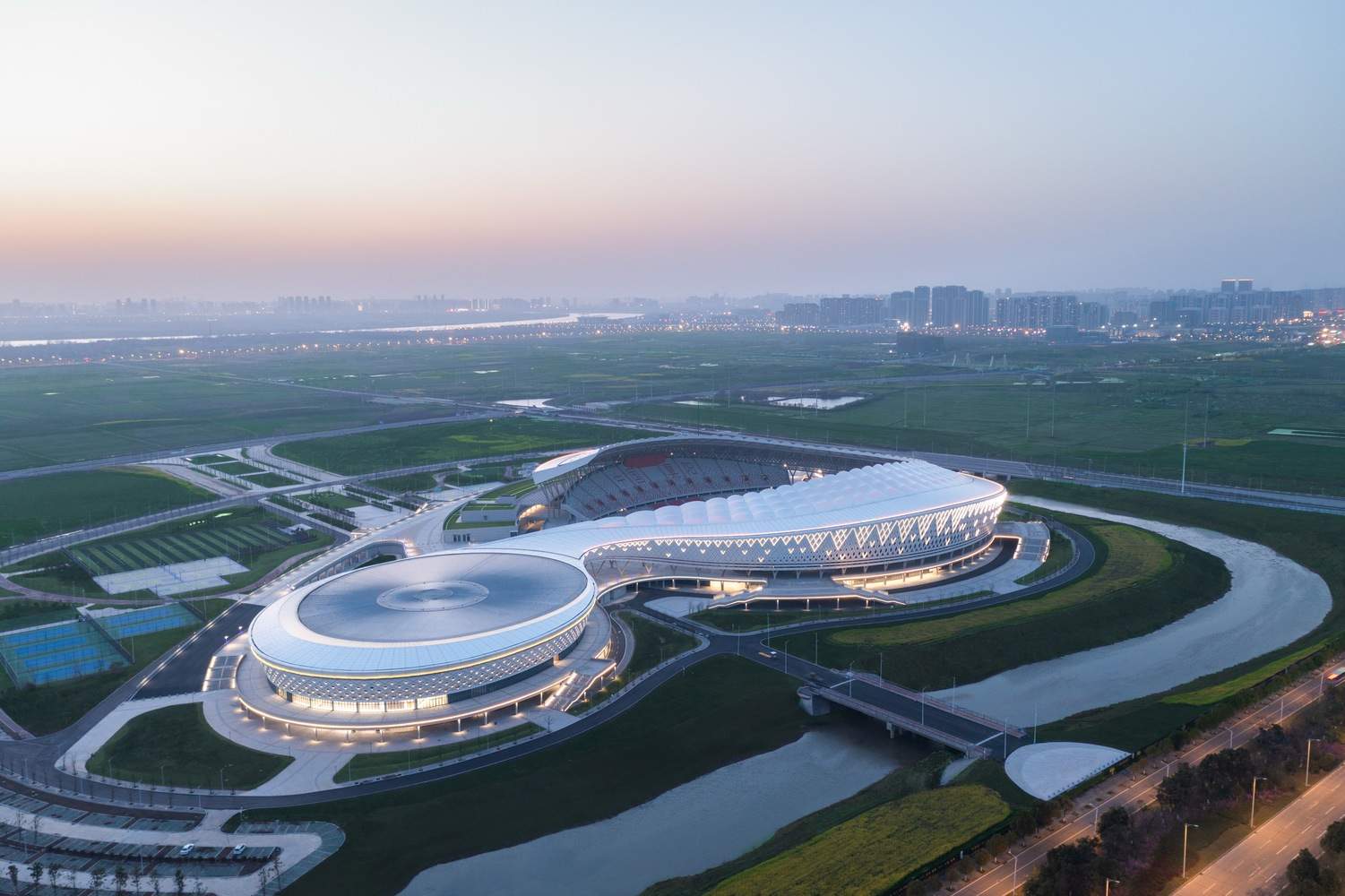
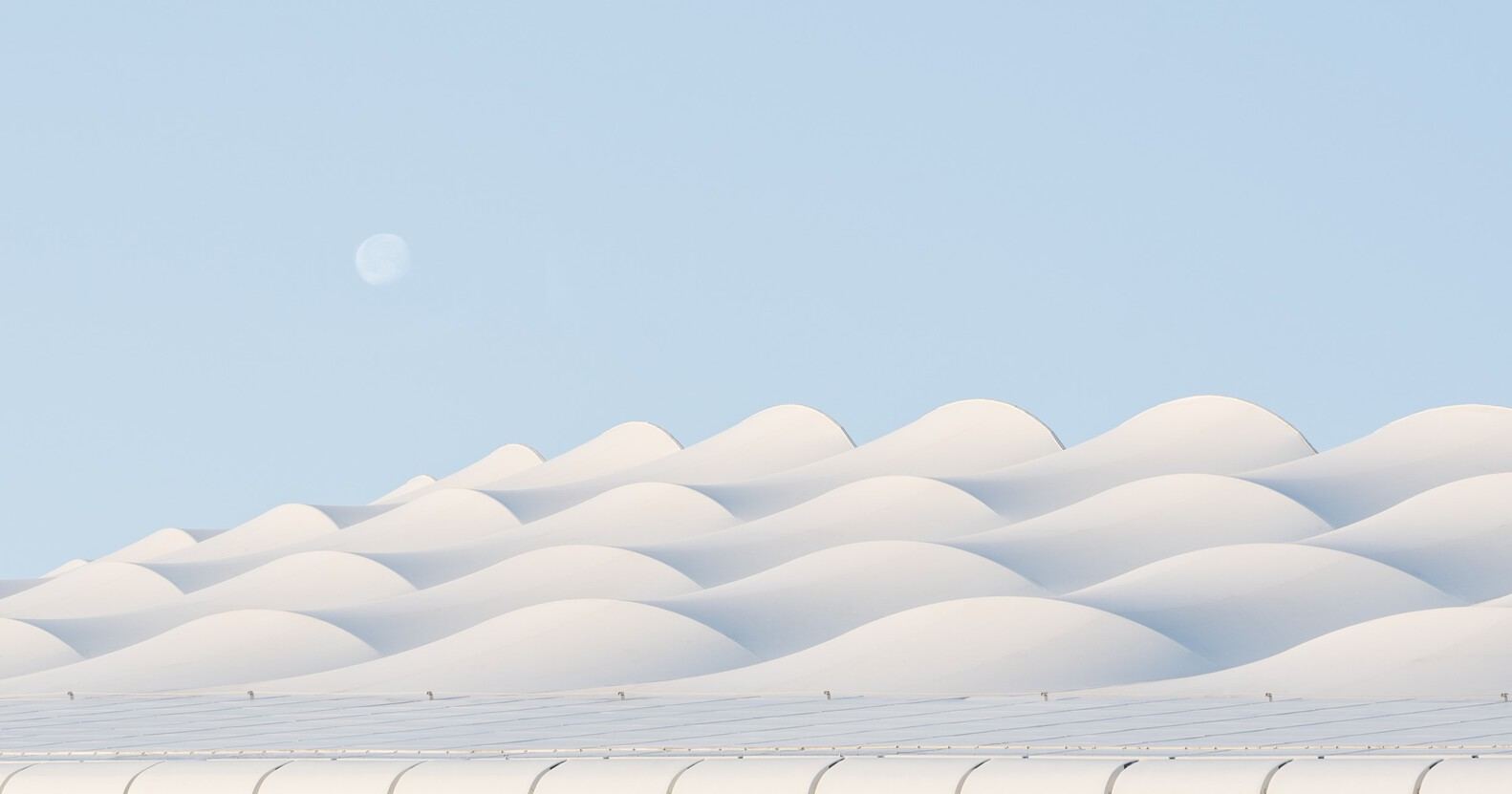
The project is situated at the intersection of Xiangyang's urban green landscape axis, surrounded by beautiful scenery. The Han River flows through the city from west to east, forming a geographical layout enveloped by mountains and water. Starting from the city's landscape pattern, the design adopts the concept of “Floating Clouds over Xiang River, Dancing to Show Splendor,” adapting to the terrain and showcasing romantic poetry within rational design.
项目位于襄阳城市绿化景观轴交汇处,周边景观优美,汉江自西向东穿城而过,与起伏的山峦共同构成山水环绕的地理格局。设计从城市山水格局出发,以“襄水云飘,带舞展风华”为设计理念,适应地形地貌,在理性设计中展现浪漫诗意。
© Yilong Zhao
© Yilong Zhao
Environmental Creation: Building a Sports Experience Amidst Water and Mountains
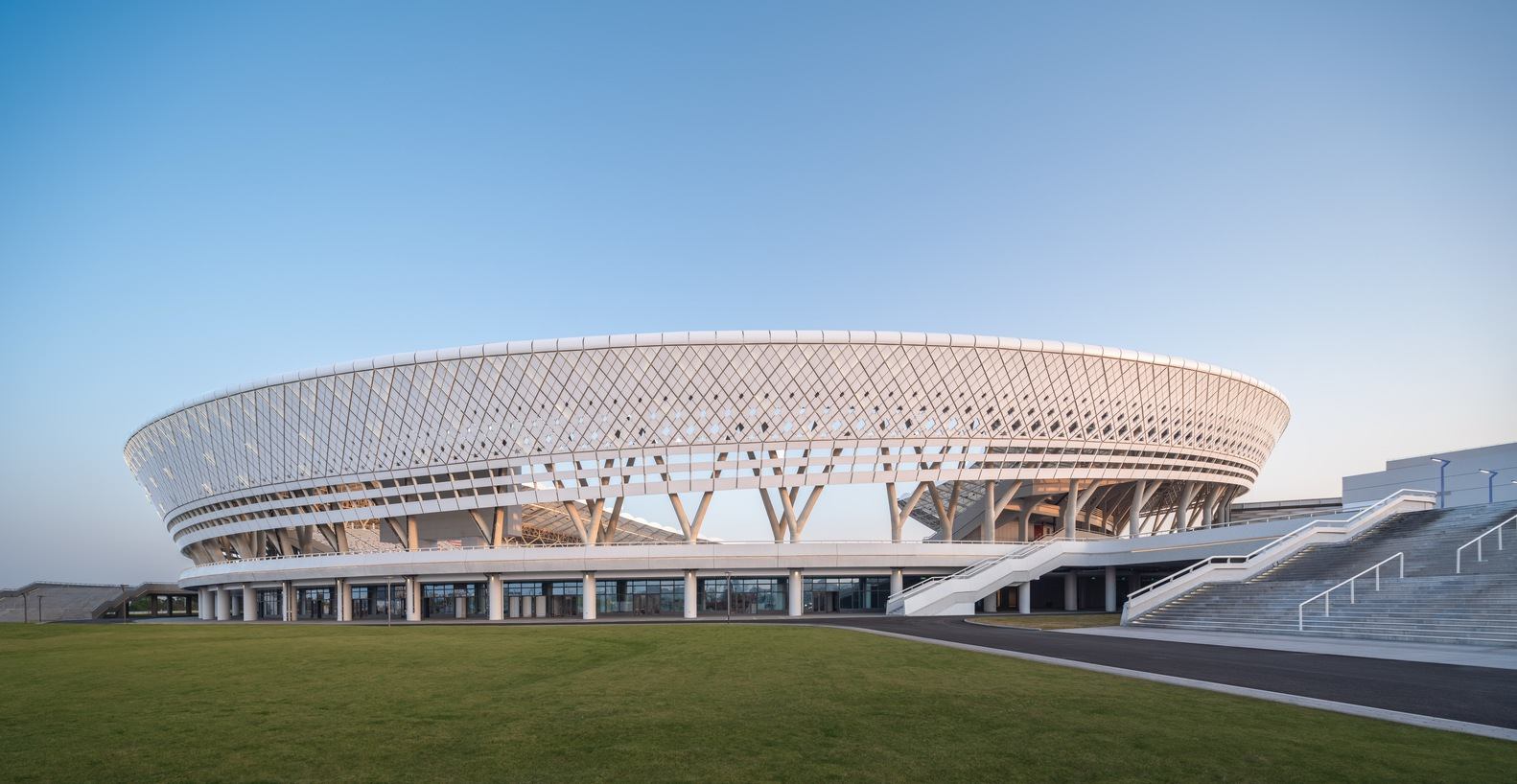
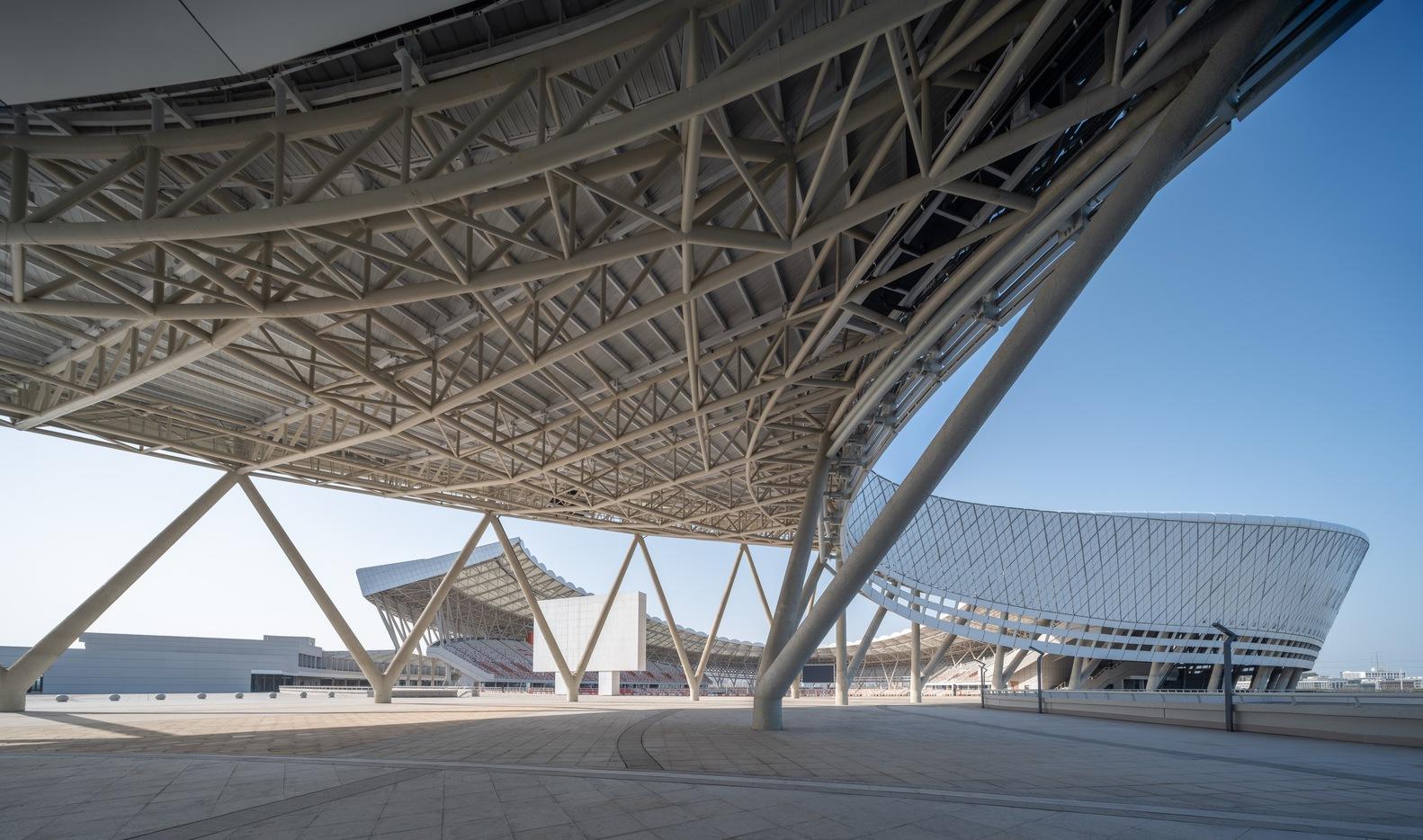
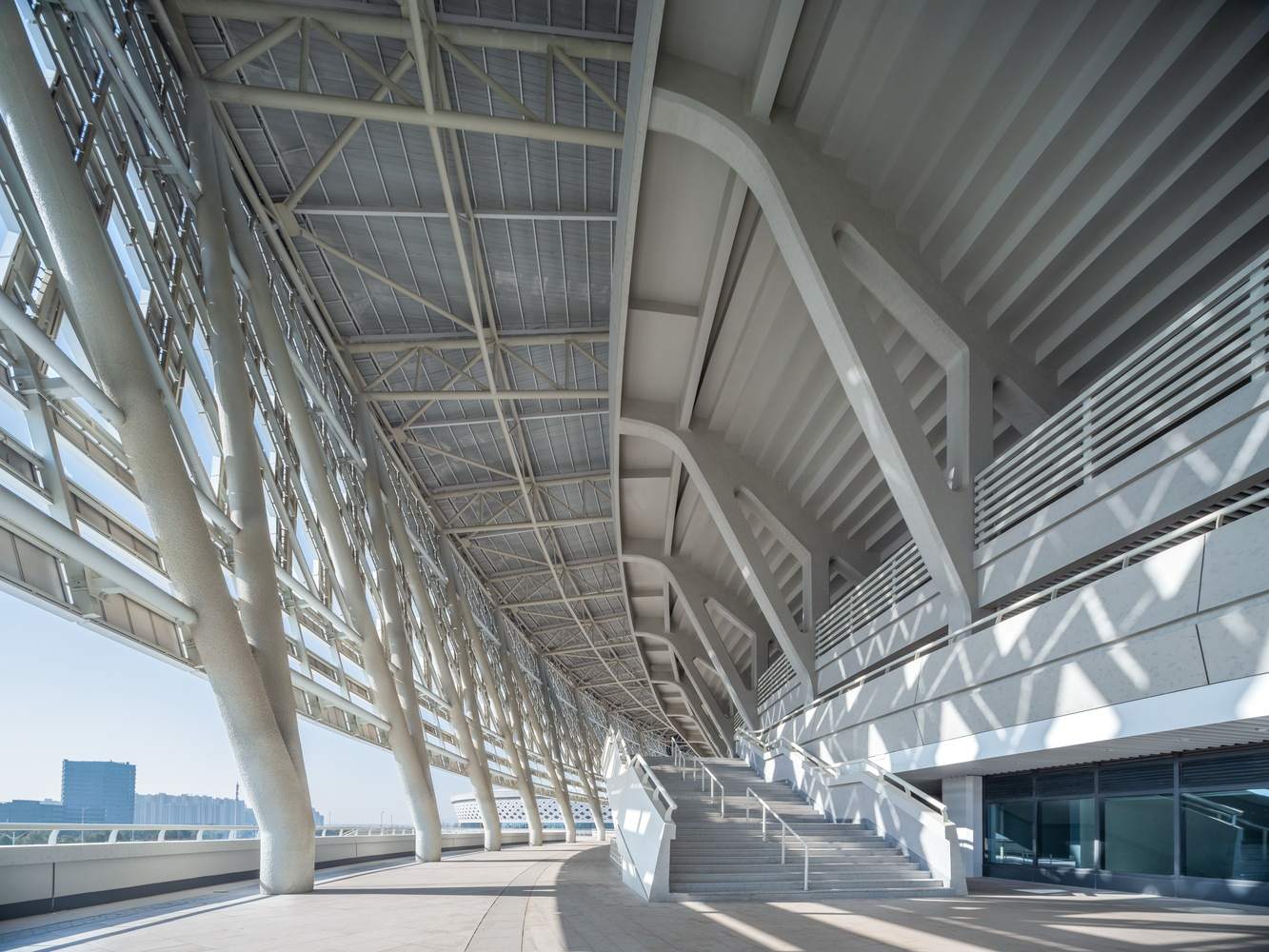
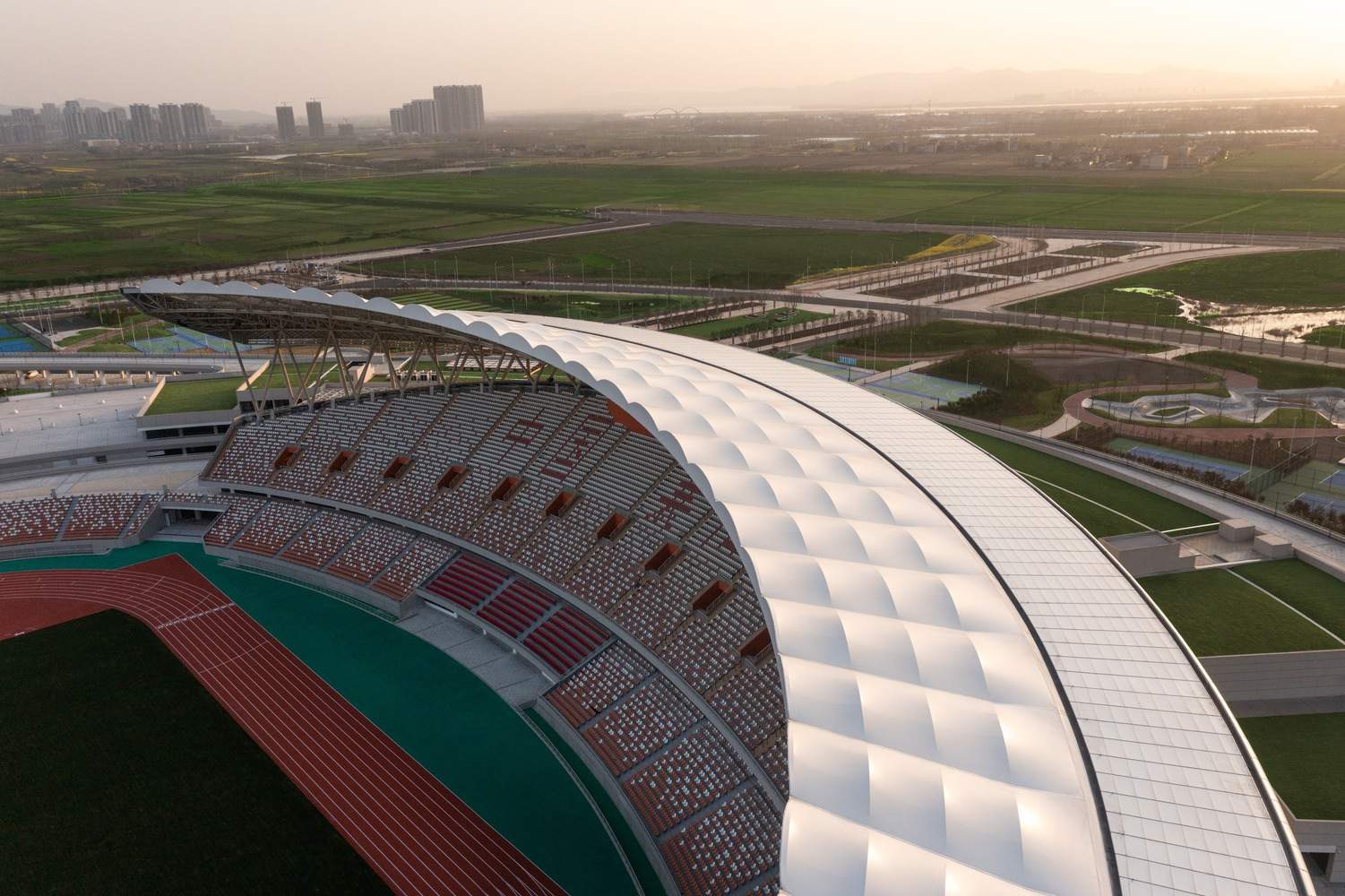
The design emphasizes the creation of the environment across the entire site, allowing the large-volume buildings to better integrate with the surrounding landscape. The building layout follows the existing water system, and the building interface is concealed through elevation and void techniques, making the structure appear as if it is floating like clouds on the podium. This merges the architecture with the park, creating a sports experience of walking between green mountains and clear waters.
设计注重整个场地的环境营造,使大体量建筑更好地与周围景观融合。建筑布局依照现有水系,并通过架空、镂空手法消隐建筑界面,使其宛如云朵悬浮在基座上,建筑与公园相融合,打造行走于青山绿水之间的运动体验。
© Yilong Zhao
© Yilong Zhao
Green Low-Carbon: "Passive First, Active Optimization"<"
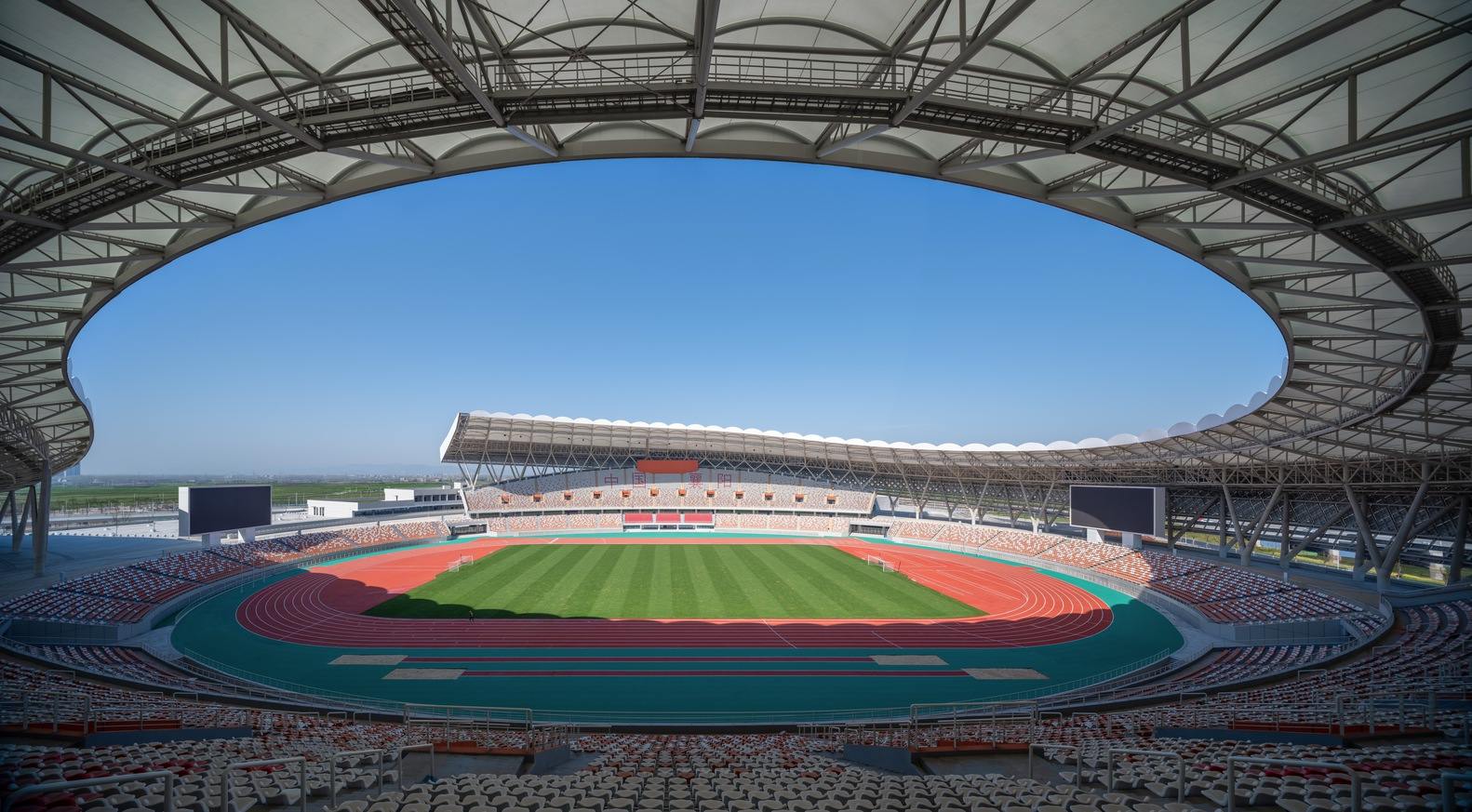
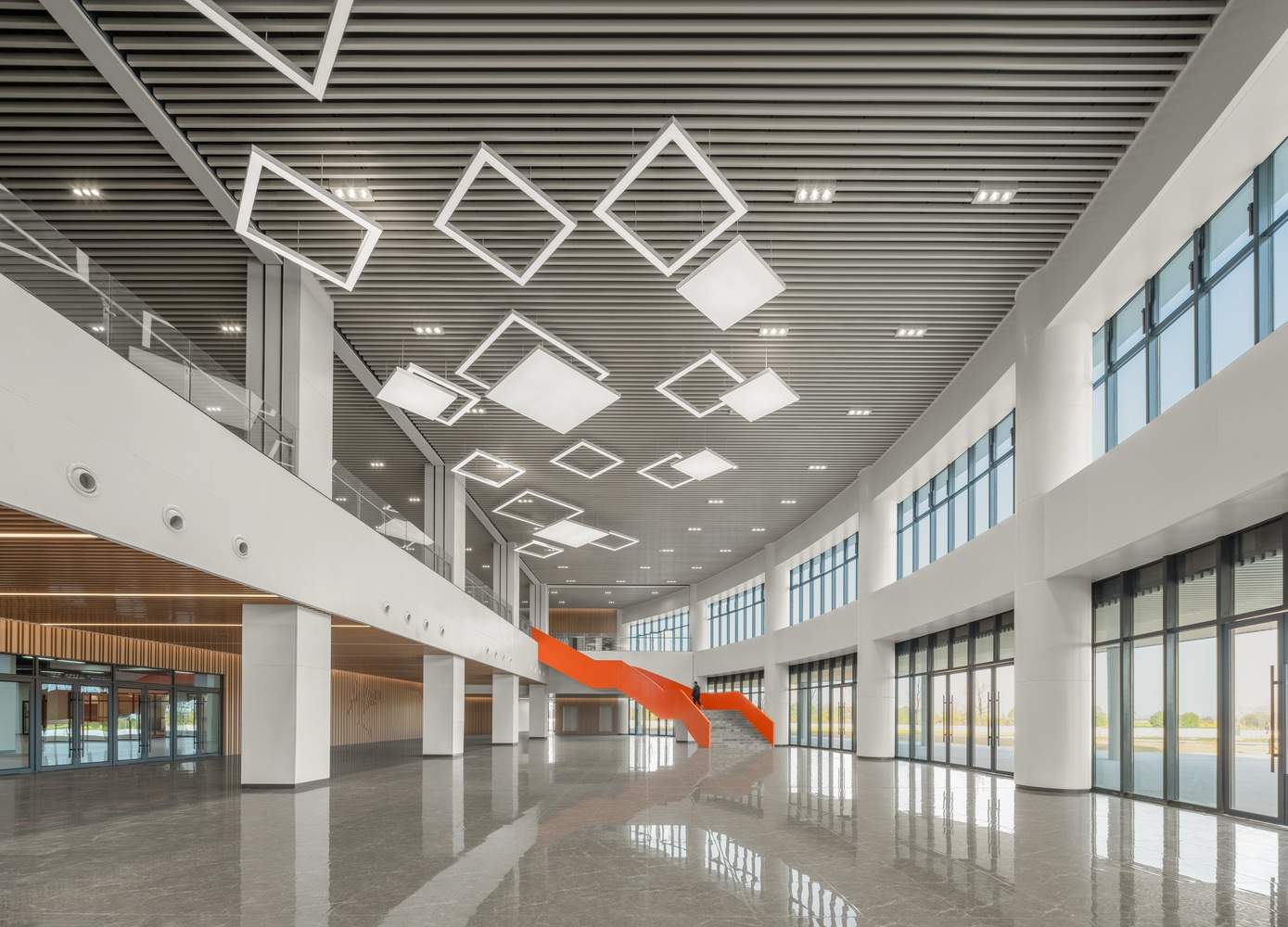
Addressing the high energy consumption of sports venues, the design adopts an energy-saving strategy of "passive first, active optimization" to achieve the construction goals of low carbon, low energy consumption, and low water consumption. A BIM model was developed for design optimization; Ladybug simulation was used for roof modeling to achieve 100% shading coverage for the spectator stands; Xflow wind tunnel technology was utilized to reduce airflow impact on the field; Radiance was used to calculate and adjust the number, size, and distribution of roof light tubes, increasing indoor natural lighting by 26%. Calculations show that the overall energy saving rate exceeds 78%.
针对体育场馆能耗高的问题,设计采用“被动优先、主动优化”的节能策略,实现低碳、低能耗、低水耗的建设目标。搭建 BIM 模型设计优化;运用 Ladybug 模拟屋顶造型使观众席遮阳覆盖达 100%;运用 Xflow 风洞技术减少气流对赛场的影响;使用Radiance计算调整屋面导光管的数量、尺寸与分布,室内天然采光率提高 26%。经计算整体节能率达 78% 以上。
© Yilong Zhao
© Yilong Zhao
Post-Event Operation: Operation-First Concept Runs Through the Entire Process
To address issues such as post-event vacancy and low utilization rates, the operation-first concept runs throughout the entire process. The spatial layout adopts "elastic reservation" and "composite adaptation" to cope with the differences between daily and event operations and dynamic operational needs. The atrium space between the stadium and the ecological platform forms an "elastic connection," avoiding mutual interference and resolving the differences between daily and event modes. Meanwhile, a large number of flexibly divisible spaces are reserved, partitioned by prefabricated lightweight ALC panels, allowing for transformation according to needs and improving utilization rates.
针对赛后空置、利用率不高等问题,将运营优先理念贯穿始终,空间布局上采取“弹性预留”与“复合应变”,应对平-赛运营差异和动态运营需求。体育场和生态平台间的中庭空间形成“弹性连接”,避免相互干扰,化解平-赛差异。同时预留大量灵活可分割空间,采用装配式轻质 ALC 板材隔断,针对需求实现转换,提高使用率。