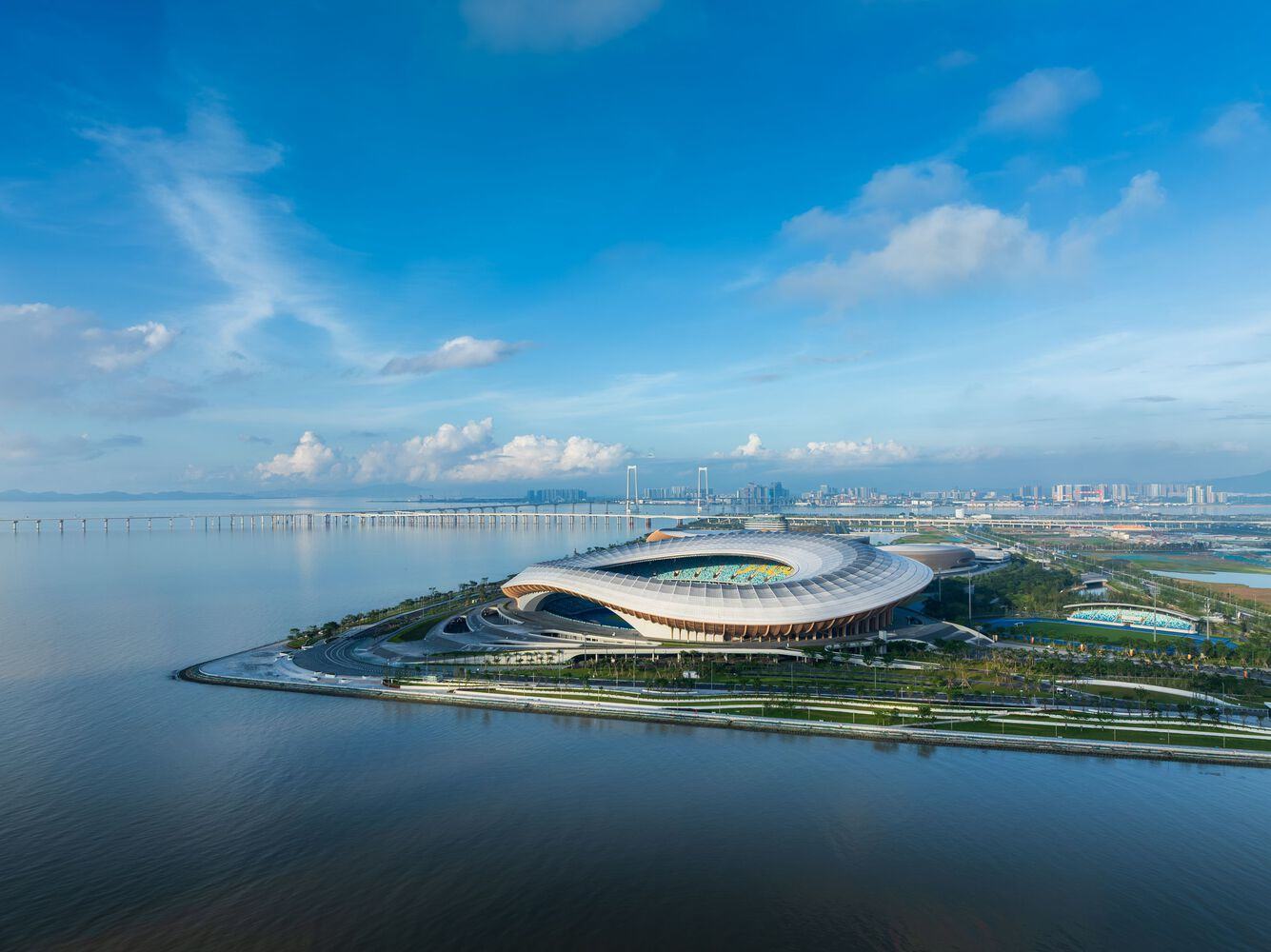
宏大尺度下的区域枢纽与文化地标:该项目精准定位为服务于全球最大城市群——大湾区的核心市政与商务节点。其规模宏大,包含6万座体育场、2万座综合馆及专业水上中心,不仅满足了最高标准的国际赛事需求,更通过便捷的交通网络(地铁18号线、深中通道)成为区域性的集聚点。设计上,它被赋予了“门户”的象征意义,其流动的形态和滨江布局,使其成为连接广州与大湾区其他核心城市的视觉焦点和文化锚点,体现了对区域发展战略的深刻理解和支撑。
地域文脉与前沿气候适应性设计:设计精髓在于对岭南地域文化的深度融合与现代技术的创新应用。建筑形态借鉴了宋代帆船船体的渐收几何,使建筑语汇与珠江历史上的航运门户地位相呼应。更值得称道的是其对亚热带季风气候的主动适应性策略,包括利用数据分析优化遮阳百叶、引入自然通风实现降温,以及体育场拱体设计引入凉爽海风。这超越了单纯的造型模仿,是实现可持续高性能建筑的典范。
多功能复合与社区生态整合:项目不仅是顶级的竞技场所,更是面向公众的复合型城市公园。70公顷的滨水公园为南沙居民提供了丰富的公共休闲空间。其功能复合性体现在场馆的可转换性上(如体育场可转为文化演出场地),以及对未来体育传承的贡献(为学校和俱乐部提供场地)。此外,其防洪韧性设计,纳入湿地以应对海平面波动,显示了设计师在满足功能需求的同时,对城市生态安全和社区健康水平提升的全面考量。
The Greater Bay Area Sports Center is set to commence operations on December 5, 2025, with four sold-out concerts marking its inaugural major events. This new sports center serves the cities of the Pearl River Delta, including Guangzhou, Shenzhen, Hong Kong, and Macao, which together form the Greater Bay Area—the world’s largest metropolitan cluster, projected to house a population of 100 million by 2030.
大湾区体育中心将于 2025 年 12 月 5 日起,以四场全部售罄的演唱会作为开幕,迎来其首批大型活动。这座新的体育中心服务于珠江三角洲的城市,包括广州、深圳、香港和澳门,这些城市共同构成了大湾区 —— 世界上最大的城市群,其人口预计将在 2030 年达到一亿。
© SeilaoJiong Photography
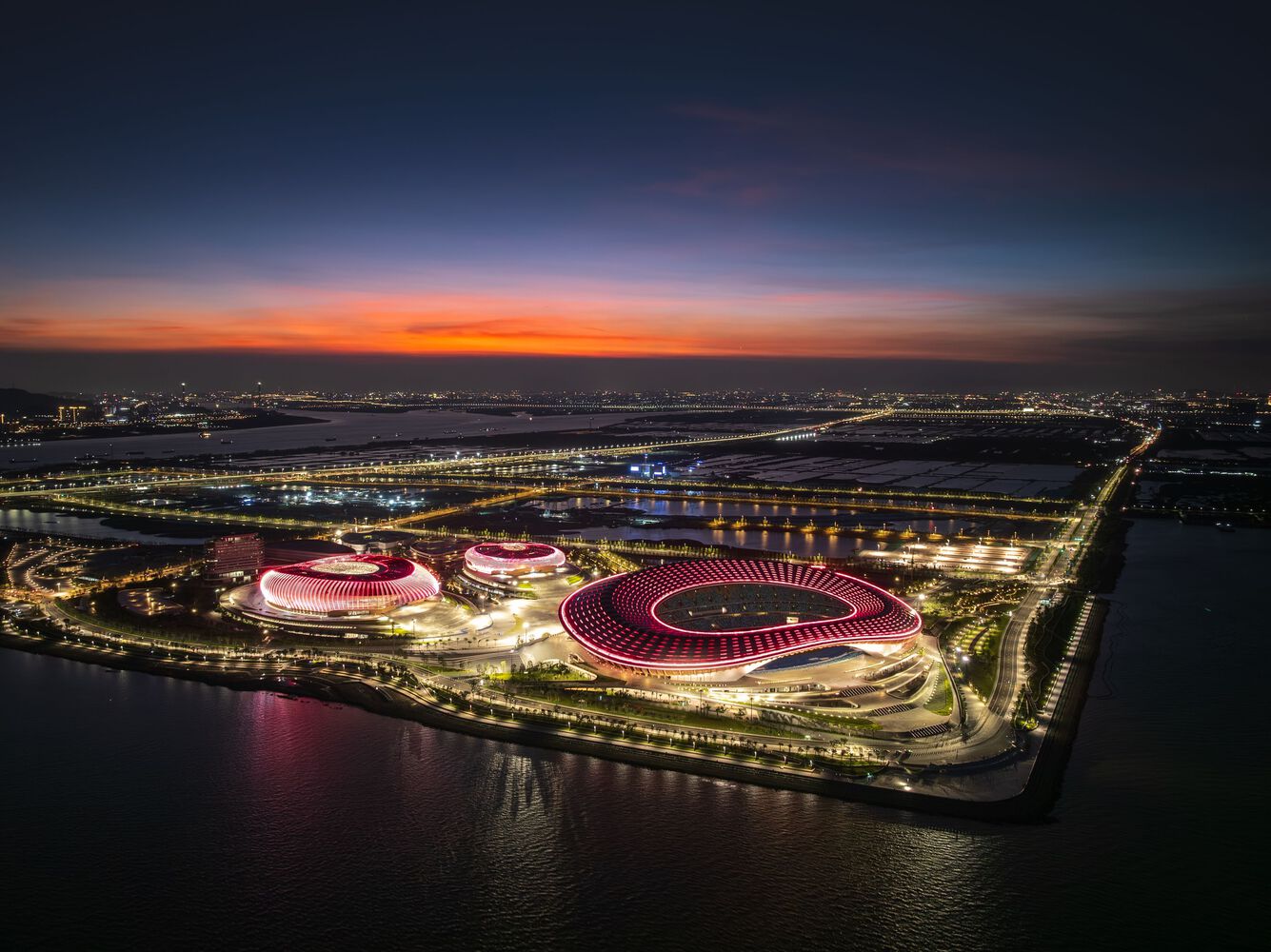
Located in the southern Nansha district, on the western bank of the delta, the Sports Center will anchor a new civic, commercial, and residential area in the heart of the Greater Bay Area. It provides the local community with top-tier sports facilities while being designed to host a variety of large domestic and international sporting events and cultural performances, conveniently accessible to Greater Bay Area residents via Guangzhou Metro Line 18 and the new Shenzhen-Zhongshan Link. In addition to offering premium venues for Nansha’s local schools and sports clubs, the center will continue China’s regional and national sports development programs. The center provides crucial infrastructure for competitive athletes (including all track and field disciplines), and its design capitalizes on Nansha’s mild winters to create ideal outdoor training facilities and environments to nurture future sporting legacies.
体育中心位于广州南沙区南部、三角洲西岸,将成为大湾区核心位置一个新的市政、商务与居住片区的锚点。中心为当地社区提供最高标准的体育设施,同时也被设计为可举办各类大型国内和国际体育赛事及文化演出,并可通过广州地铁 18 号线以及新的深中通道,让大湾区居民便捷抵达。除了为南沙的当地学校和体育俱乐部提供优质场地外,中心还将延续中国在区域及国家层面的体育发展项目。中心为竞技运动员(包括所有田径项目)提供关键基础设施,其设计利用南沙温暖的冬季,打造理想的户外训练设施与环境,以孕育未来的体育传承。
© CRLand
© CRLand
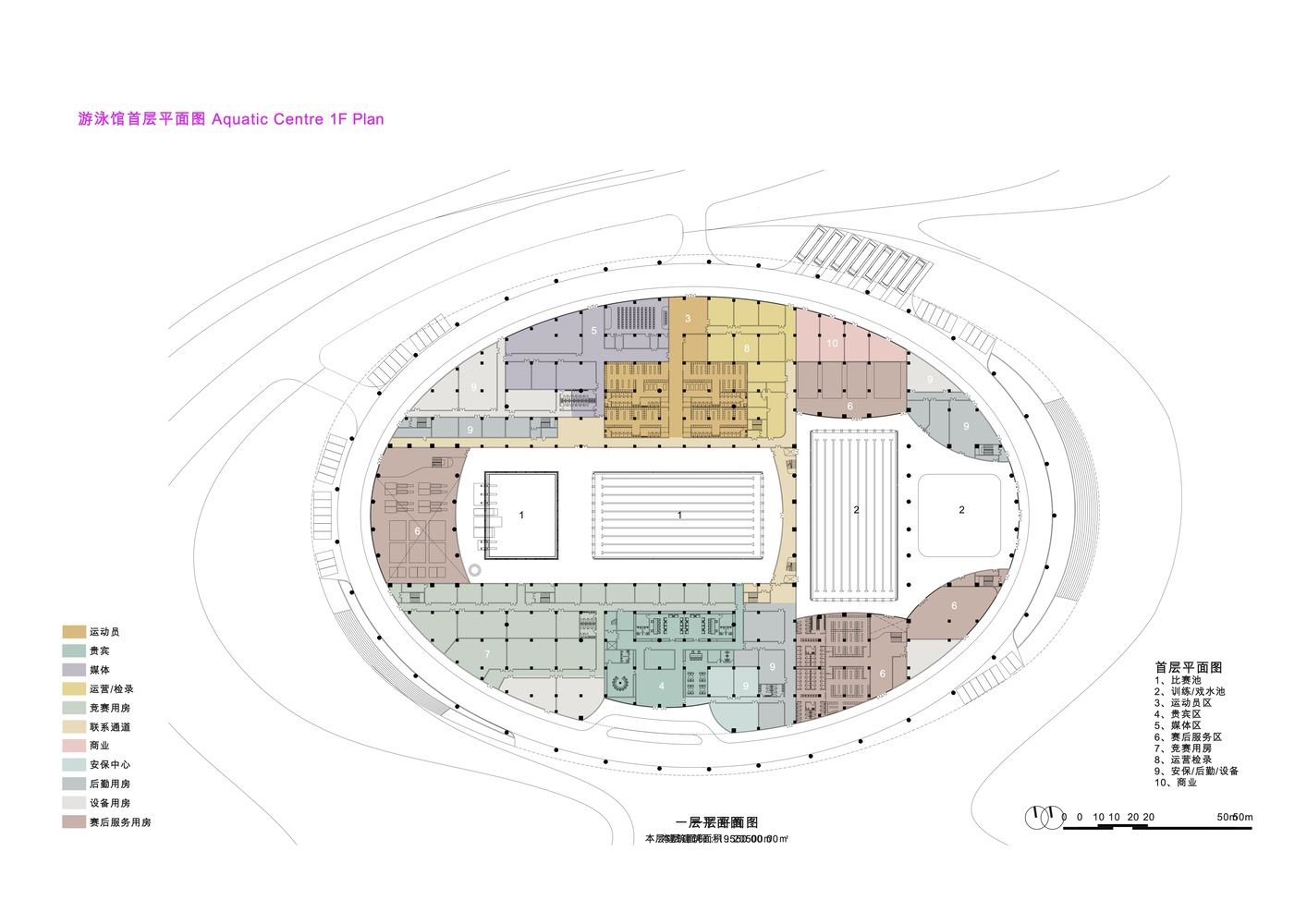
Aquatic Centre - First Floor Plan
水上运动中心 - 一层平面图
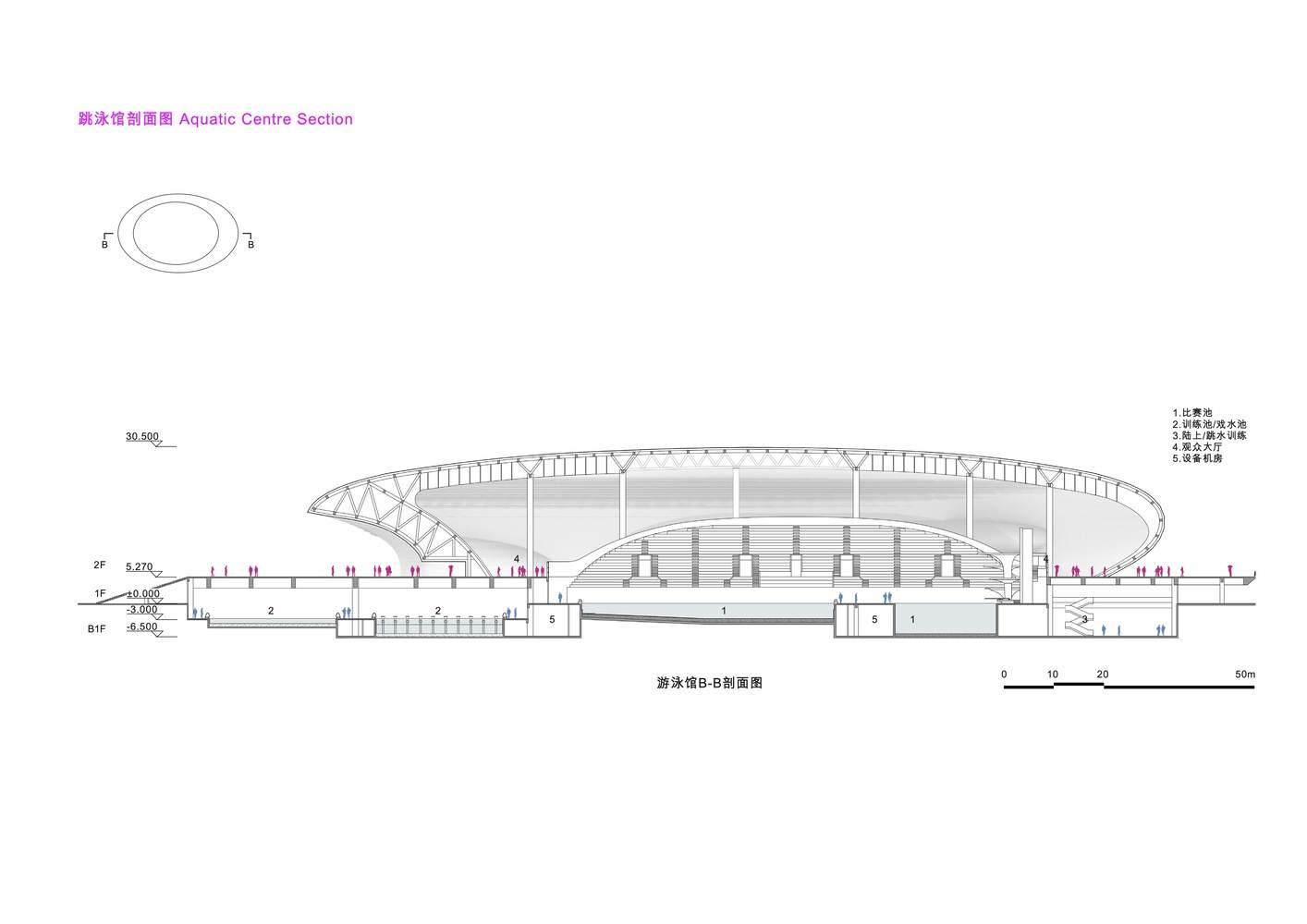
Aquatic Centre - Section 2
水上运动中心 - 剖面图 2
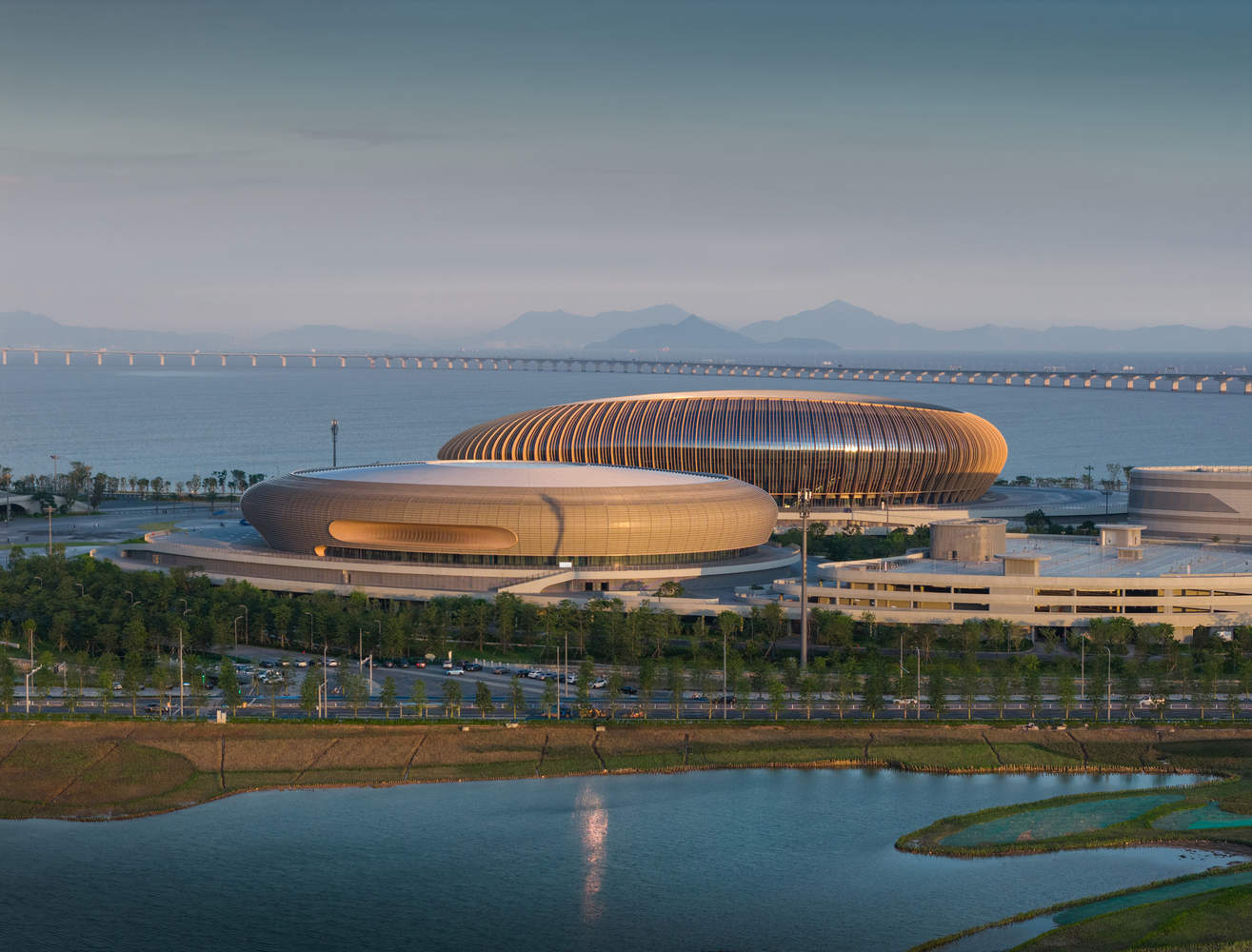
The Sports Center encompasses a 70-hectare park, offering Nansha residents various landscaped areas for sports and leisure along the riverfront. It includes a 60,000-seat stadium, a 20,000-seat multi-purpose arena for indoor activities like basketball, and a 4,000-seat aquatic center featuring 50-meter and diving pools for training and competition.
体育中心占地 70 公顷的公园,为南沙居民提供各种沿江的景观化运动与休闲空间,包含一座 6 万座体育场、一座 2 万座可举办篮球等室内活动的综合馆,以及一座配备 50 米泳池与跳水池、拥有 4,000 个座位的水上中心,用于训练与比赛。
© SeilaoJiong Photography
The Sports Center also offers extensive supporting facilities, including athlete accommodation and outdoor training grounds and tracks, to support the local government’s initiatives in school sports and to enhance the health of the region’s younger generation. Situated in Guangdong’s humid subtropical monsoon climate zone, this 70-hectare waterfront park is designed as part of the area's flood defense system and will incorporate wetlands to manage storm surges during extreme sea-level fluctuations.
体育中心还提供大量配套设施,包括运动员住宿区,以及户外训练场地与跑道,以支持当地政府在学校体育方面的推广计划,提升区域年轻一代的健康水平。位于广东的亚热带季风气候区,这座占地 70 公顷的滨水公园被设计为该区域防洪体系的组成部分,并将包含湿地,以应对极端海平面波动时的蓄洪调节。
© SeilaoJiong Photography
© SeilaoJiong Photography
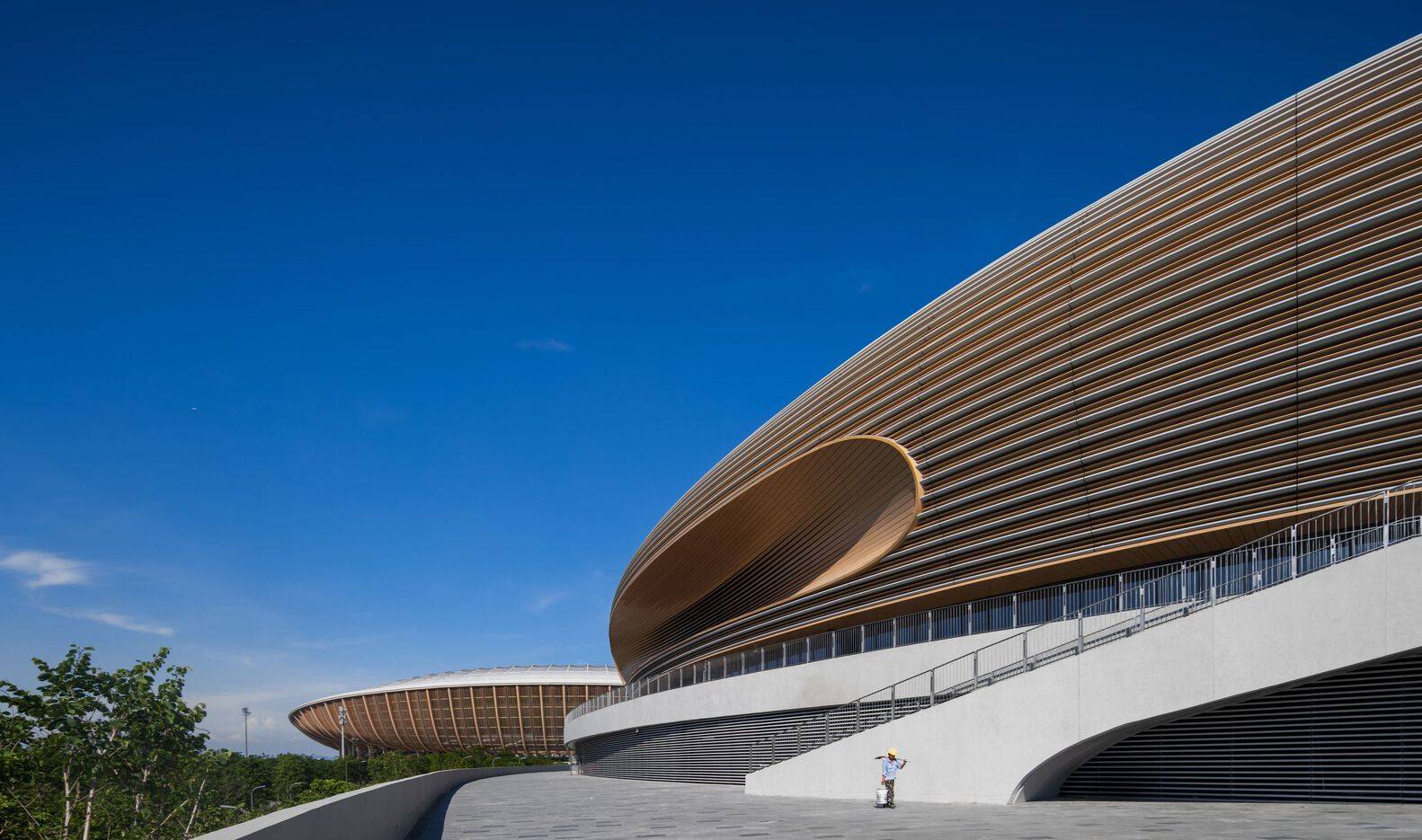
The fluid architectural form of the center echoes the tapering geometries found on the hulls of traditional sailing boats in the region, designs that date back approximately one thousand years to the Song Dynasty. These ancient vessels made the Pearl River a gateway from China to the world. The Sports Center also incorporates environmental strategies from Lingnan regional architecture, including large shaded areas and effective natural ventilation techniques to achieve cooling during the hot and humid subtropical summers.
中心流动的建筑形态呼应了本地区传统帆船船体上可见的渐收几何,这类帆船最早约在一千年前的宋代设计而成。这些古老船只使珠江成为中国通向世界的门户。体育中心也融合了岭南地域建筑的环境策略,包括大面积可遮蔽空间,以及在湿热的亚热带夏季通过有效自然通风技术实现降温的方式。
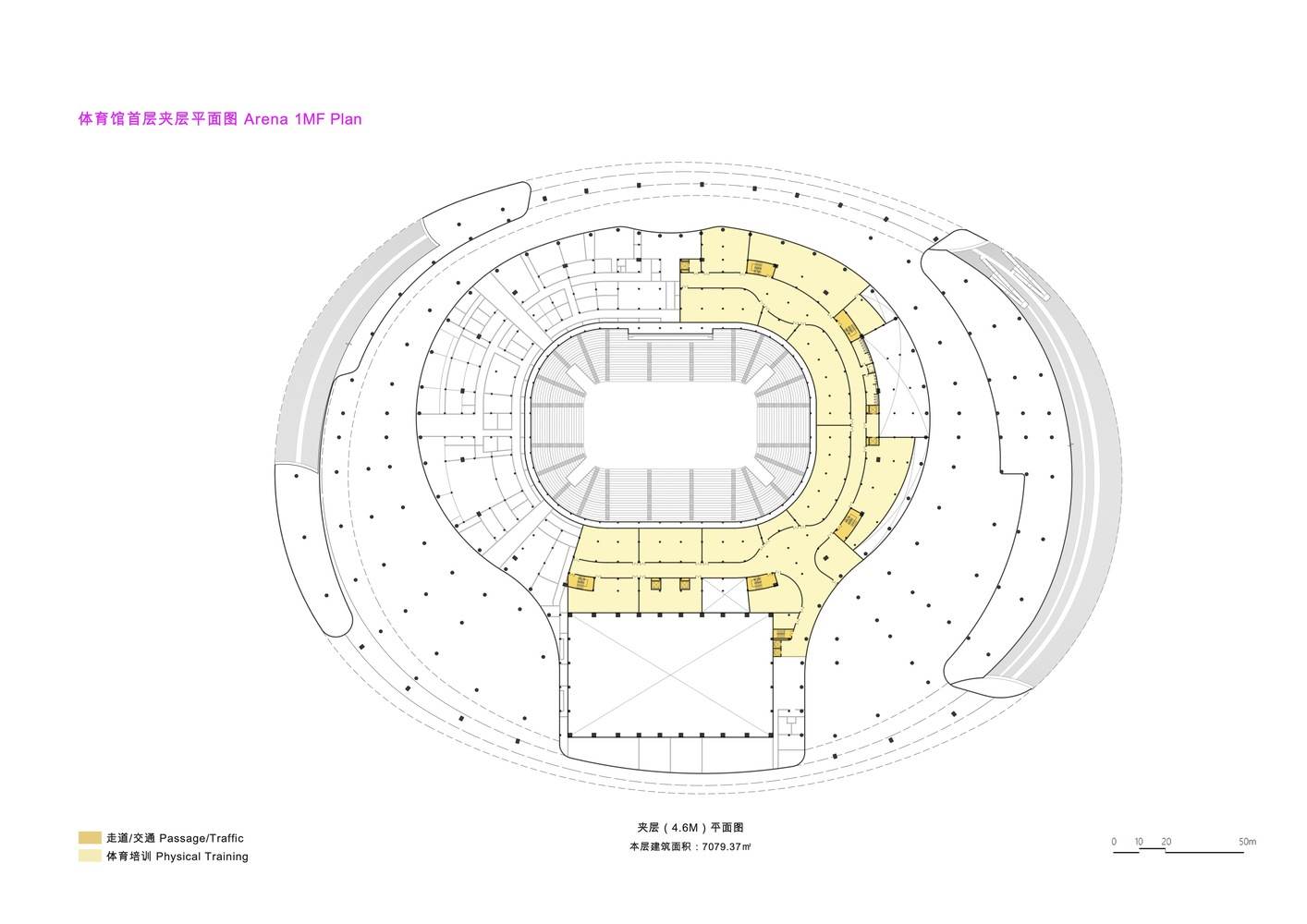
Arena - First Mezzanine Floor Plan
体育馆
- 一层夹层平面图
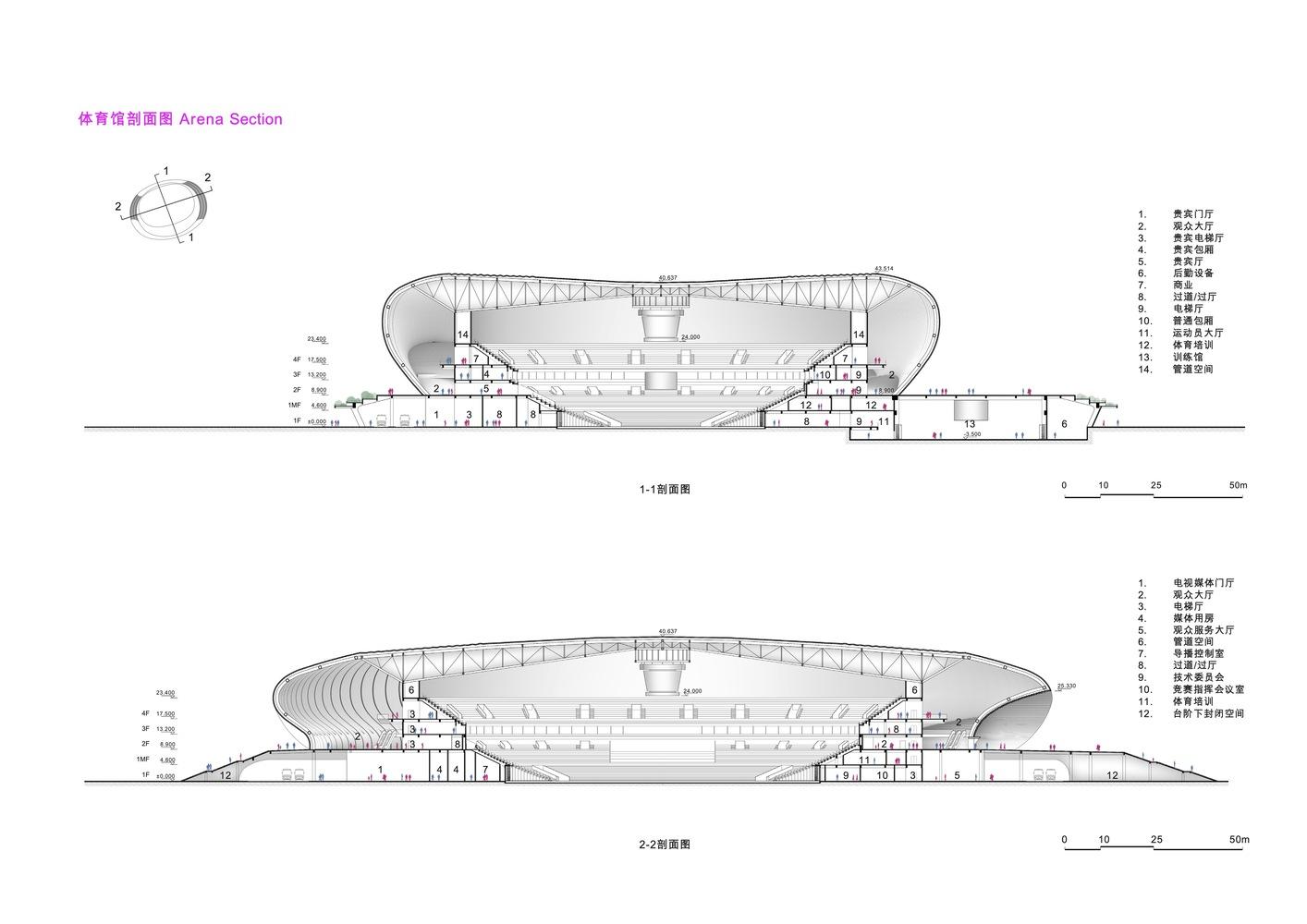
Arena - Section
体育馆 - 剖面图
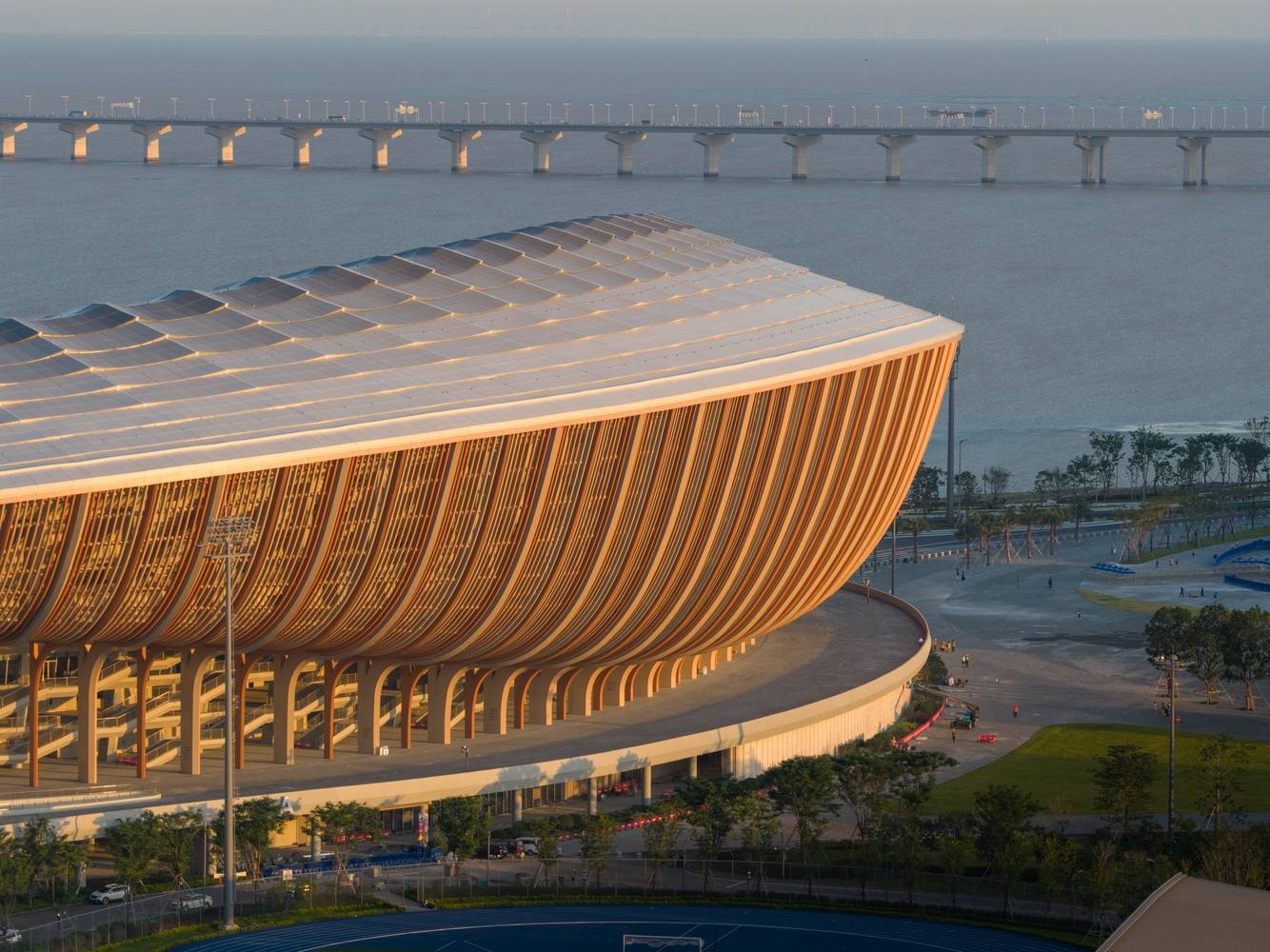
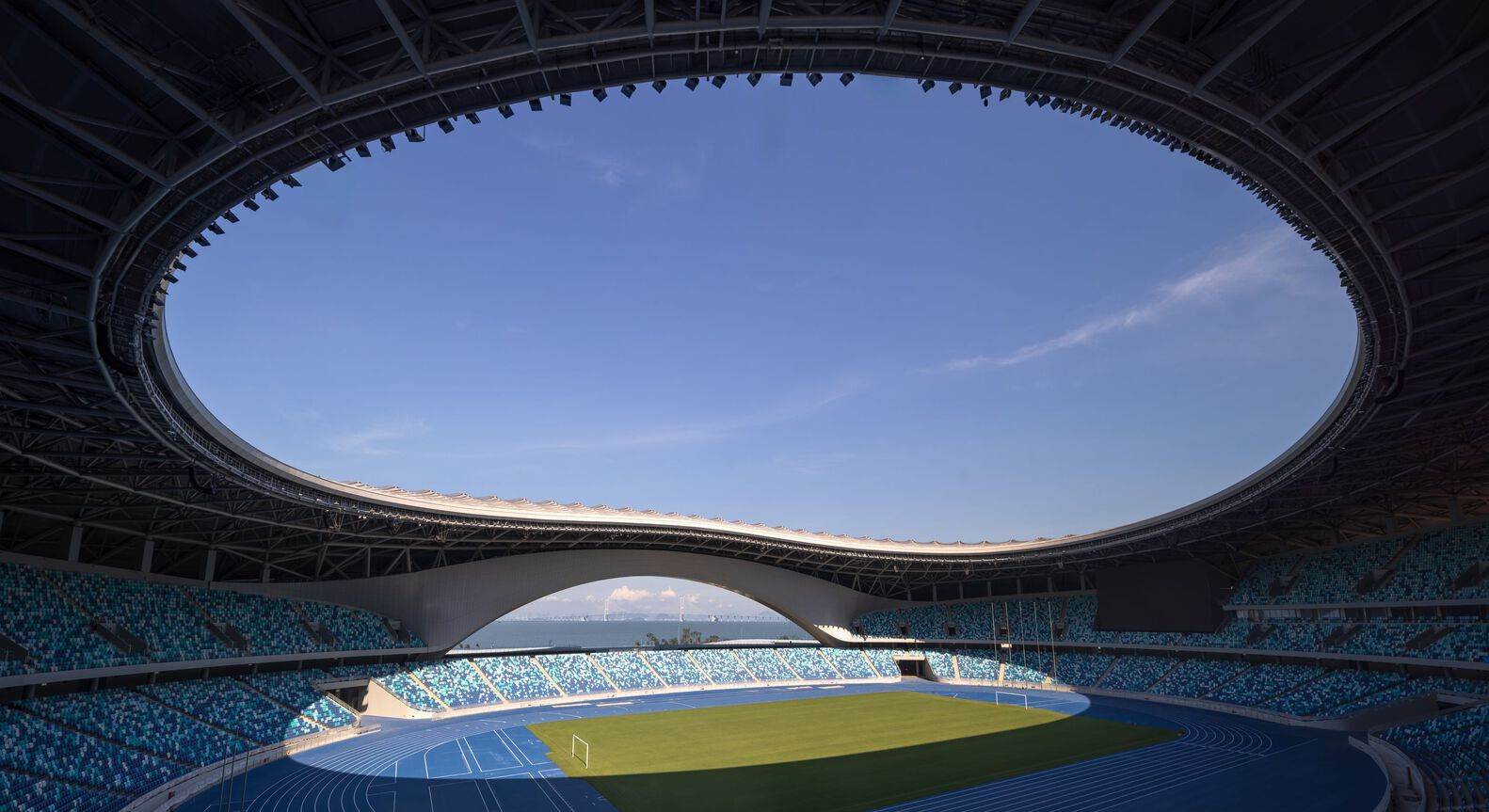
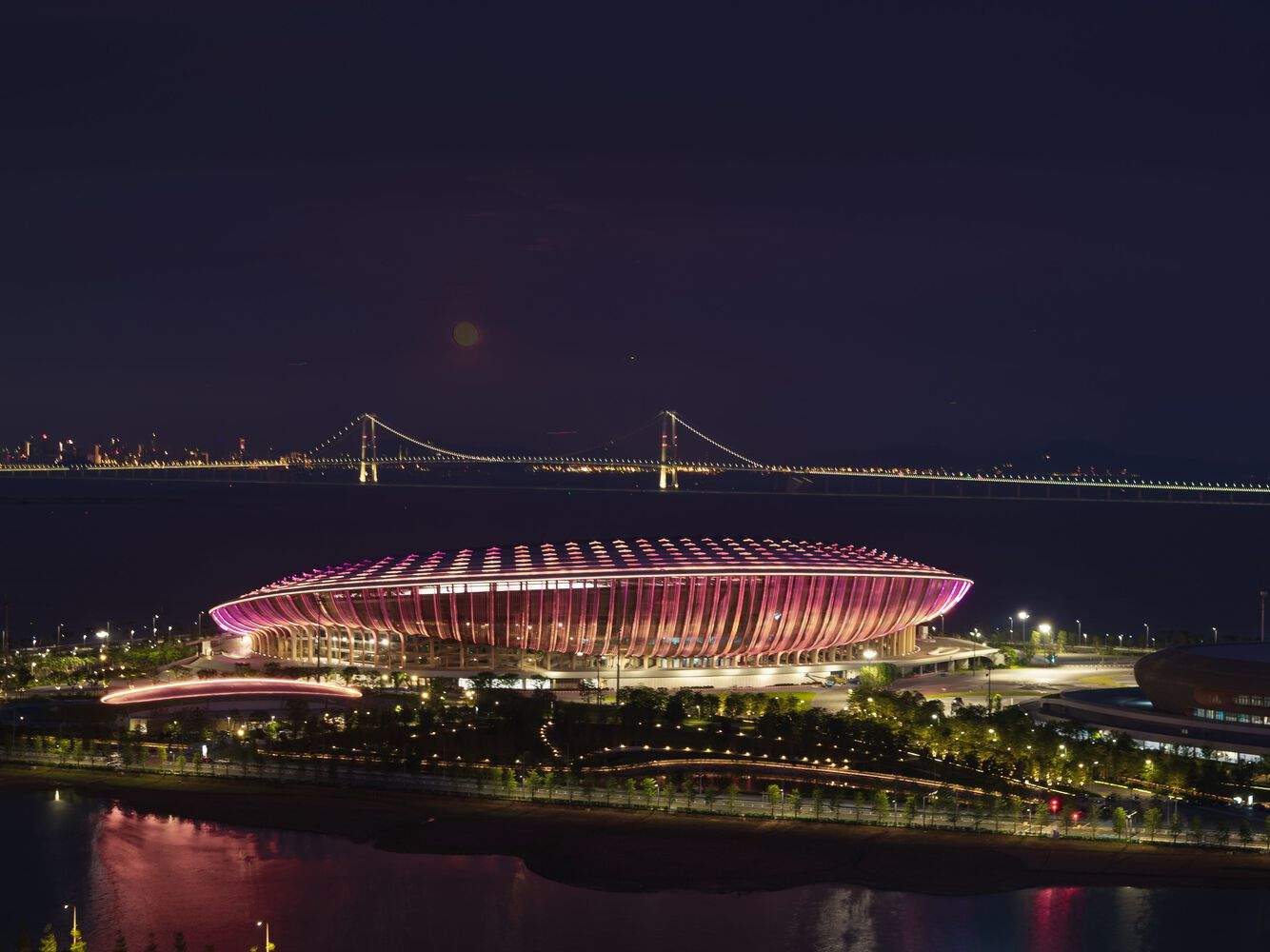
The stadium roof employs a multi-layered system to provide shelter from rain and sun for 60,000 spectators while allowing rising hot air to escape naturally out of the building. This distinctive tiered, circular roof mimics the pleated silk structure of a traditional Chinese folding fan. Positioned at the main entrance from the Shenzhen-Zhongshan Link to the north, which connects the major cities of the Greater Bay Area, the building's form along the Pearl River signifies a gateway to Guangzhou and the northern districts of the Greater Bay Area.
体育场屋顶采用多层系统设计,为 6 万名观众提供遮雨与遮阳,同时允许升腾的热空气自然排出建筑外。这一独特的环形分层屋顶仿若传统中国折扇的褶皱丝结构。体育中心位于从北侧通往深中通道的主要入口位置,该通道连接着大湾区的主要城市。体育中心沿珠江的建筑形态标志着通往广州及大湾区北部各区的门户。
Vertical louvers define the curves of the different buildings within the center. Detailed data analysis and advanced 3D digital modeling were used to optimize shading and natural ventilation in public spaces; the composition and orientation of each building are precisely calculated to harness the cooling effect of the prevailing summer winds blowing inland from the coast of the South China Sea. The stadium, seating 60,000 spectators for various sports events, features an adjustable grandstand structure to provide ideal viewing conditions for specific events, ensuring optimal sightlines and the most passionate atmosphere while maintaining maximum flexibility for diverse uses throughout the year.
一系列竖向百叶定义了中心内各建筑的曲线。结合详细数据分析与先进的三维数字建模,以优化公共空间的遮阳与自然通风,每一栋建筑的构成与朝向均被精确设计,以利用来自南海沿岸、吹向内陆的夏季主导风实现降温。体育场可容纳 6 万名观众观看不同类型的体育赛事,其看台结构可调整,以为各类特定赛事提供理想观赛条件;保证最佳视野与最具激情的现场氛围,并在全年内保持最高灵活度以适应不同用途。
© CRLand
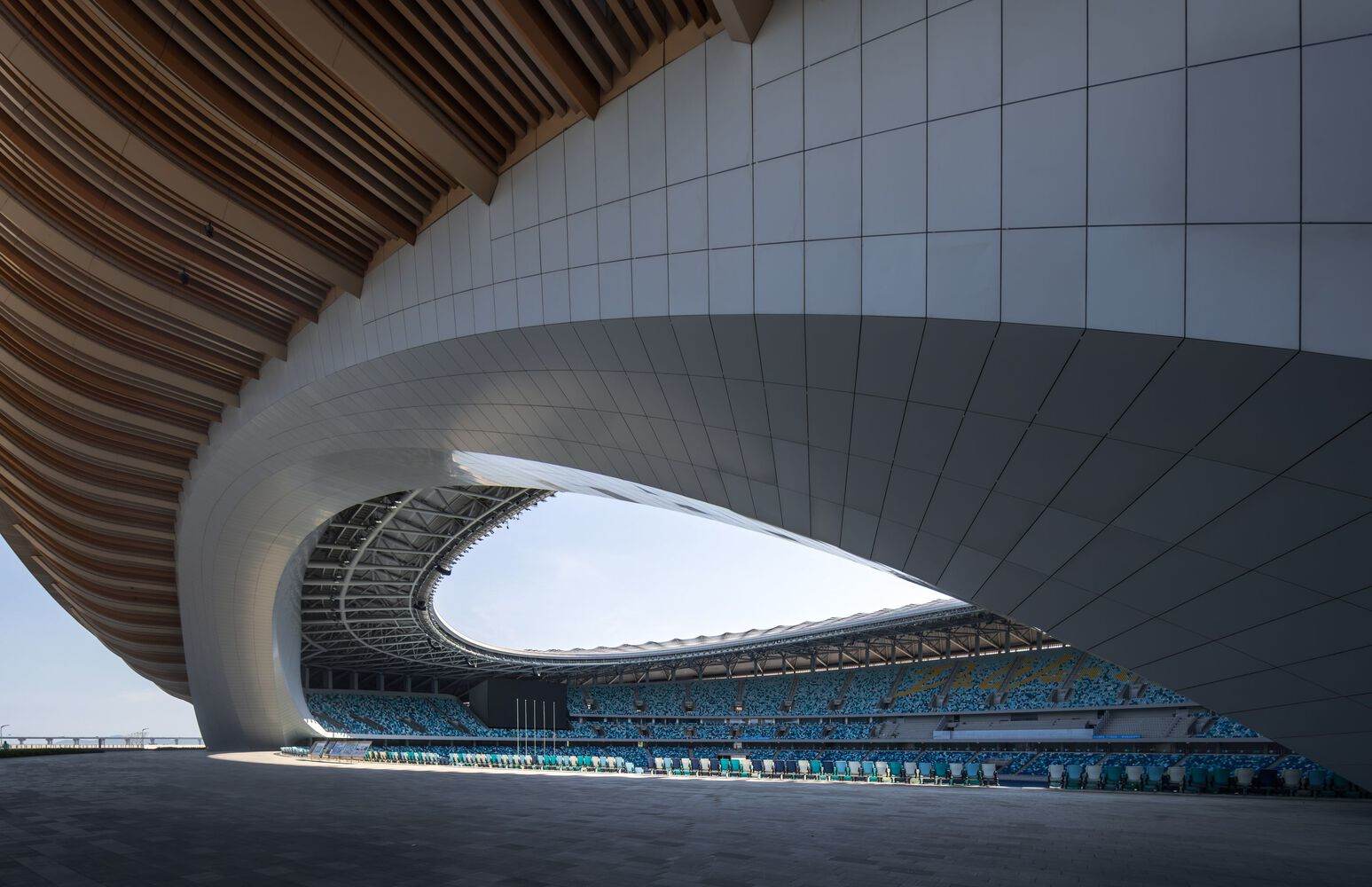
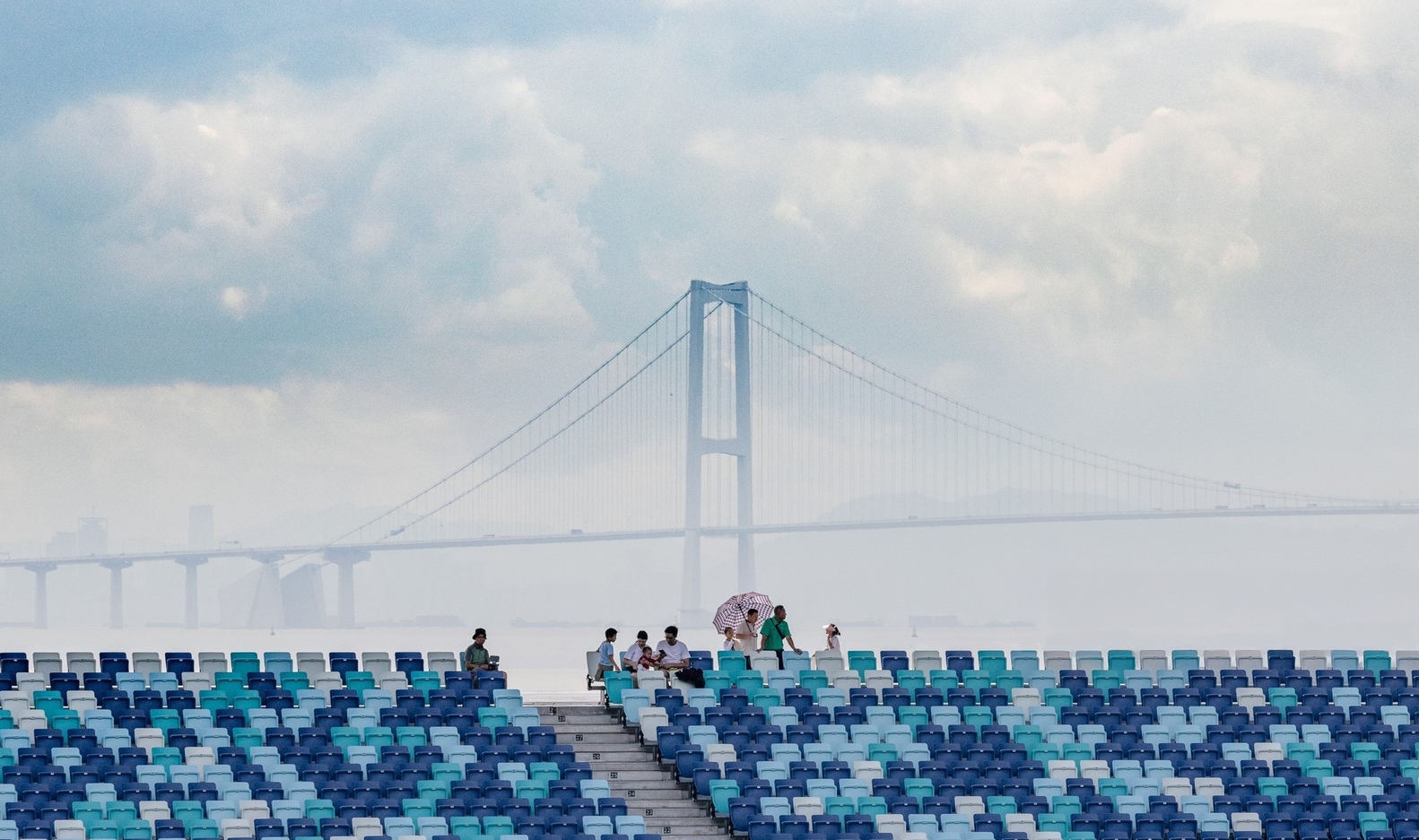
The stadium can also transform into a venue for cultural performances, with the audience facing a stage that features a unique backdrop structure. The grand arches in the design allow cooler sea breezes from the mouth of the Pearl River to enter the stadium—cooling athletes and spectators—while offering river views during sporting and cultural events, establishing a direct connection between the audience and the stadium’s waterfront setting. The project was commissioned by the Nansha District Bureau of Culture and Sports following an international design competition in 2023, with the winning scheme developed in collaboration between Zaha Hadid Architects and the Guangdong Provincial Architectural Design and Research Institute.
体育场还可转换为文化演出场地,观众面向舞台,舞台设有独特的背景结构。设计中的宏大拱体允许来自珠江口的较冷海风进入体育场 —— 为运动员与观众降温,同时在体育与文化活动期间提供江景,使观众与体育场的滨江场地建立直接联系。该项目由南沙区文化和体育局在 2023 年国际设计竞赛后委托,方案由扎哈·哈迪德建筑事务所与广东省建筑设计研究院合作完成。
© SeilaoJiong Photography
© SeilaoJiong Photography