“Sports Mall”原型:复合运营模式激活城市活力:本项目最核心的亮点在于其对传统体育场馆运营模式的颠覆性创新。针对县级城市体育场馆普遍利用率低、运营成本高的痛点,line+ 事务所提出了“Sports Mall”原型,采用“1+N”的复合运营模式。设计将体育场馆从传统的“赛事容器”转变为日常的“城事发生器”,通过融合商业、休闲、社交、文旅等多元业态,确保了场馆在非赛事期间的活力和经济可持续性,有效解决了运营困境,为县域城市发展提供了可复制的城市激活模型。
“场景日常化”与“功能复合化”的有机结合:设计策略的精髓在于“场景日常化”和“功能复合化”的有机结合。通过充分利用区位优势,将体育空间融入市民日常健身和活动中,使其成为常态化的城市活动场所。同时,引入餐饮、零售、酒店等复合业态,不仅为专业赛事提供配套服务,更重要的是补充了周边社区的配套空白,使其成为集体育、文娱、会展、生活服务于一体的新城市中心。这种设计思维使得场馆超越了单一体育功能,实现了对城市生活脉络的深度嵌入。
山水意象的在地化表达与结构效率:在建筑形态上,设计成功地从新昌“浙东唐诗之路”的奇峰秀色中汲取灵感,以水势和山形作为形态母题,创造出具有强烈地域文化符号和现代感滨水界面的标志性形象。结构上,采用大跨度桁架与框架核心筒体系,保证了内部空间的最大灵活性和功能适应性,同时兼顾了施工效率与经济性。这种在地化的美学表达与高效的工程技术相结合,使得建筑在视觉上富有吸引力,在功能上具备长久适应性。
Courtesy of line+
© 陈曦
As one of the key projects in Zhejiang Province's "4+1" major initiative, the "Xinchang Globular Center," designed by Dr. Zhu Peidong, co-founder and chief architect of line+ architectural studio, has been fully completed and put into use. The completion of this venue provides a critical pivot for Xinchang, a county in the mountainous area of eastern Zhejiang, to realize its ambition of "hosting competitions to revitalize the city" (以赛兴城), transforming the vision of "developing the city, industry, and benefiting the people through competitions" into reality. Immediately upon its opening, the project hosted national-level events such as the China Badminton Masters and the National Table Tennis Championships, and is set to host its first international snooker tournament in July 2025.
作为浙江省“4+1”重大项目之一,由 line+ 建筑事务所联合创始人、主持建筑师朱培栋博士率领团队设计的「新昌小球中心」现已全面建成启用。这座场馆的落成,为浙东山区县城新昌提出的“小城办大赛”宏愿提供了关键支点,使其探索“以赛兴城、以赛兴业、以赛惠民”的特色发展路径从愿景迈入现实。项目甫一落成,便接连承办中国羽毛球大师赛、全国乒乓球锦标赛等国家级赛事,并于 2025 年 7 月迎来首场国际级斯诺克比赛。
Courtesy of line+
© 陈曦
In China, sports venues commonly face issues of low utilization rates and operational pressures. Because sports events are relatively limited and daily demand is insufficient, while venue construction involves large investments and high operation and maintenance costs, profitability is restricted, making revenue heavily reliant on government subsidies. Multiple research reports indicate that 52% of venues receive fewer than 500 visitors per week, with some having an annual utilization rate below 40%. Sparse foot traffic and rigid operating models are common ailments.
我国体育场馆普遍面临利用率低、经营承压的问题。因为体育赛事活动相对有限,日常需求不足,而场馆建设投入大、运营和维护成本高,使得盈利能力受限,收入高度依赖政府补贴。多份研究报告显示,有 52% 场馆每周接待人数小于 500 人,部分场馆年均使用率不足 40%。人流稀少、运营模式僵化是普遍症结。
© 陈曦
© 陈曦
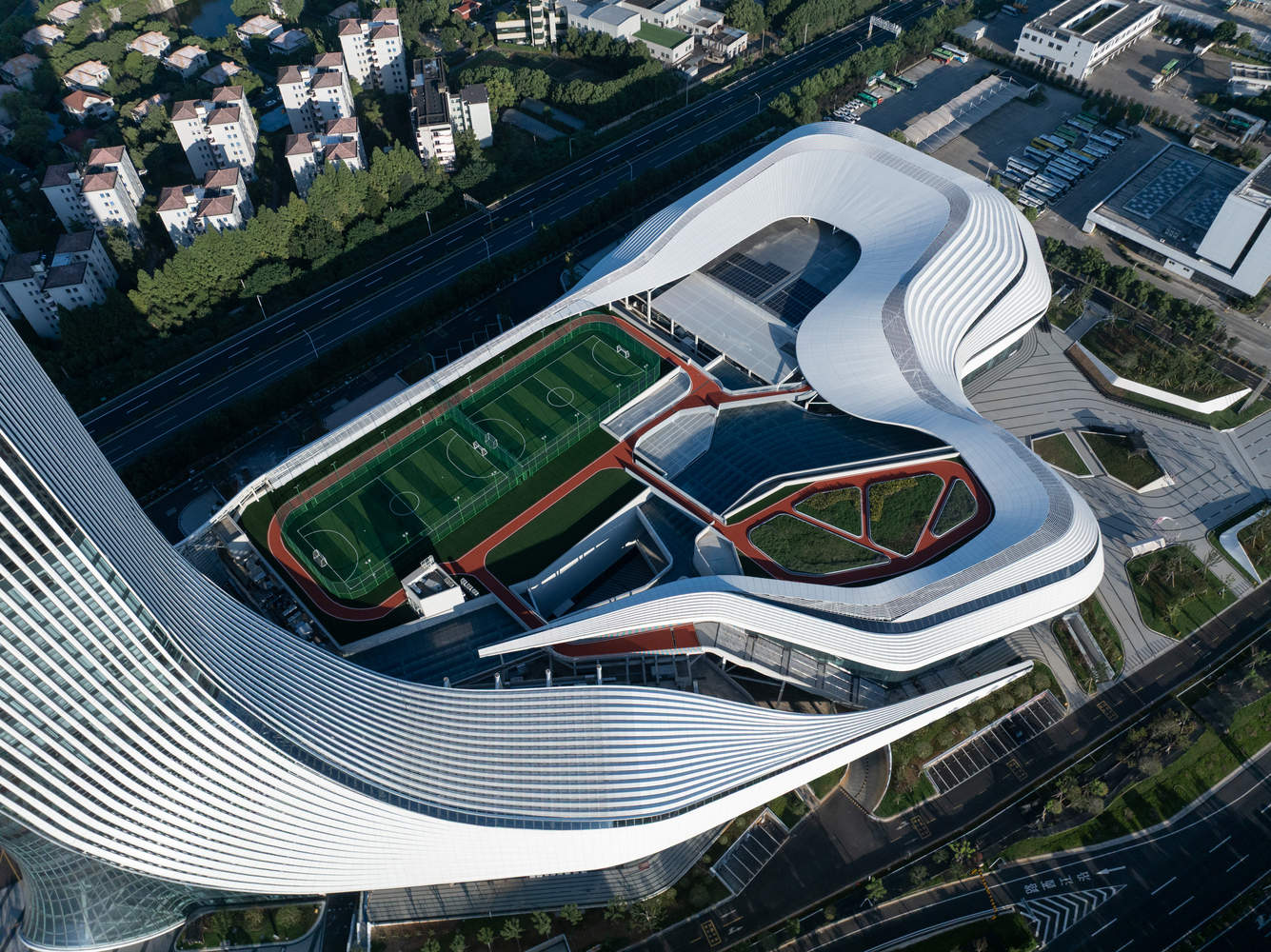
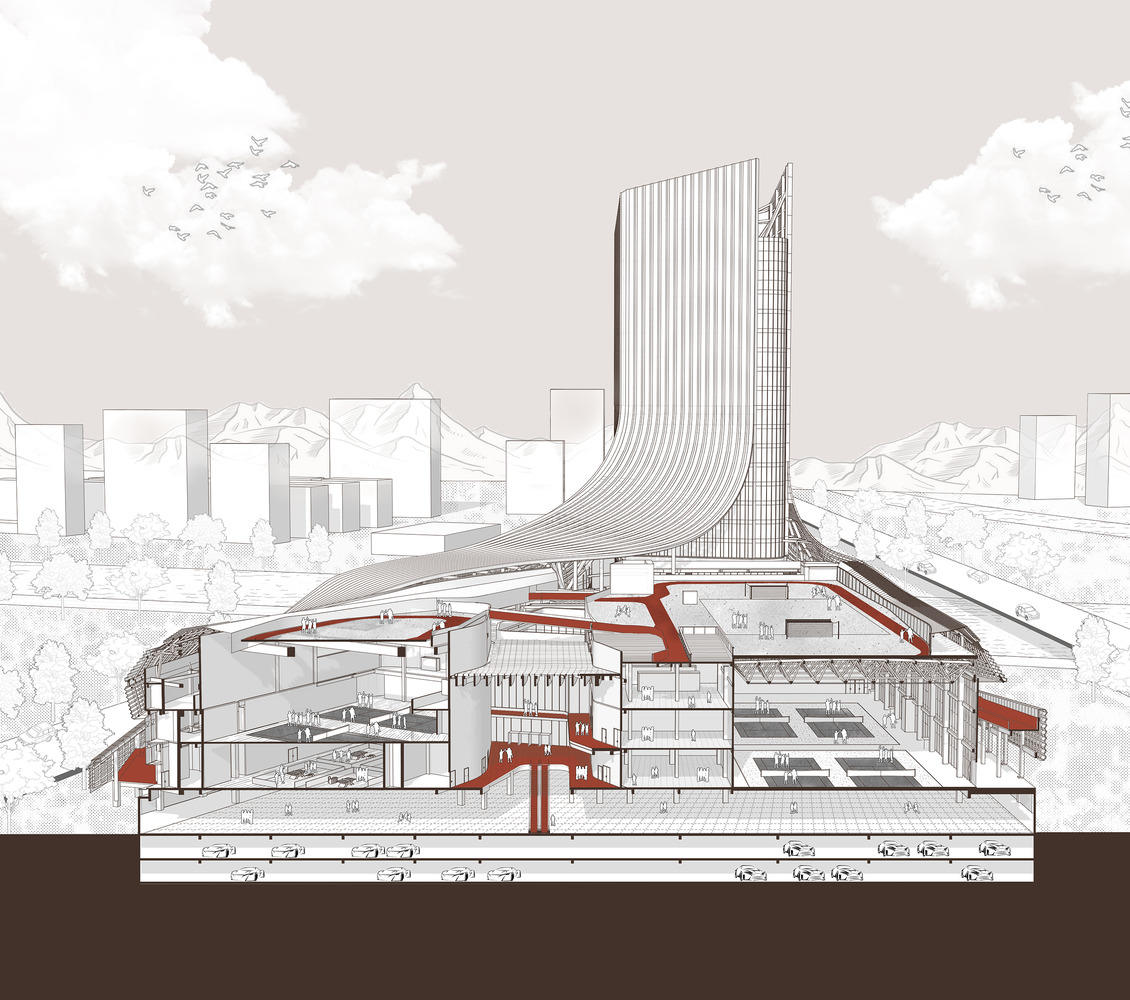
In county-level cities with even more limited resources, this dilemma is even more pronounced—relying solely on sports events and public fitness activities is rarely enough to support the sustainable operation of such large venues. To tackle this challenge, we proposed the **"Sports Mall" prototype: using sports as the engine, adopting a 1+N composite operation model that integrates urban scenarios like commerce, leisure, social interaction, and cultural tourism, transforming the sports venue from an occasional "event container" into a daily "city event generator."**
在资源更有限的县级城市,这一困境将更为明显 ——仅 依赖体育赛事和市民运动,很难支撑如此体量场馆的可持续运营。为破解这一难题,我们提出了 “Sports Mall” 原型:以体育为引擎,采用1+N 复合运营模式,融合商业、休闲、社交与文旅体验等城市场景,使体育场馆从非日常“赛事容器”转化为日常“城事发生器”。
© 陈曦
© 陈曦
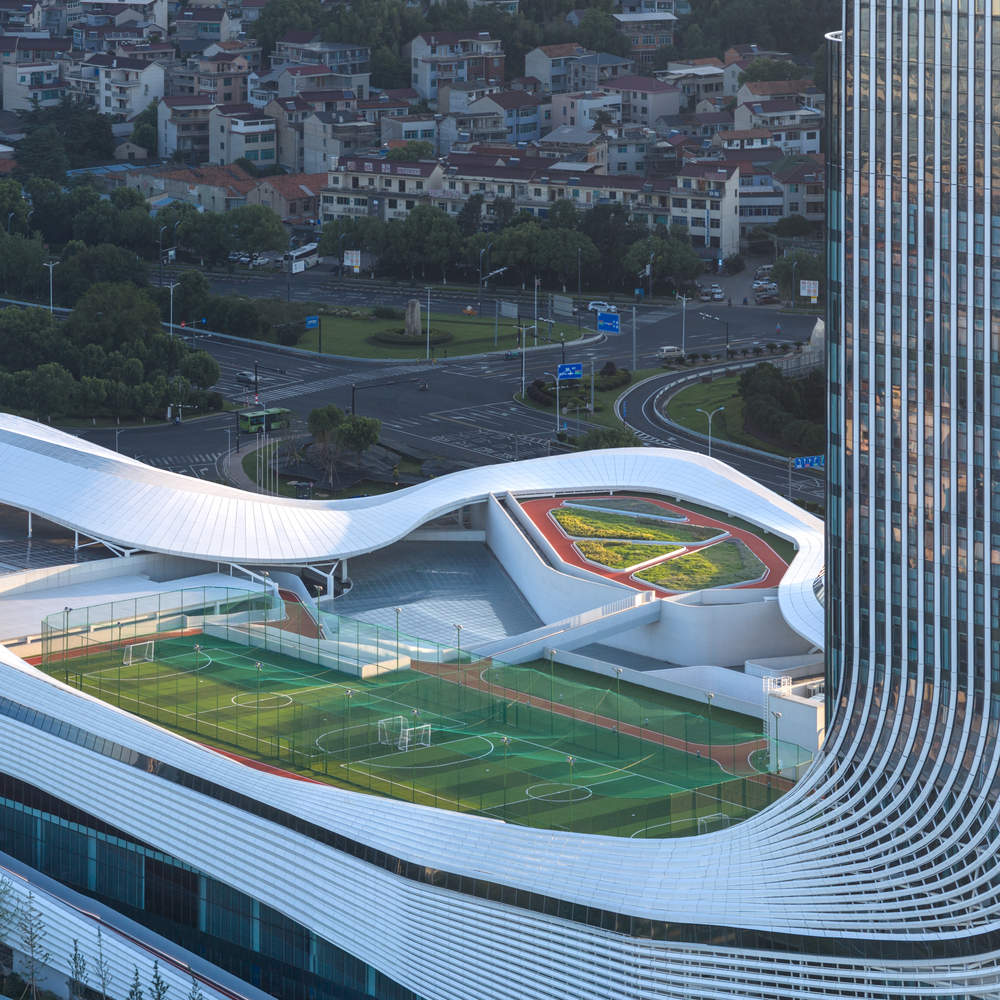
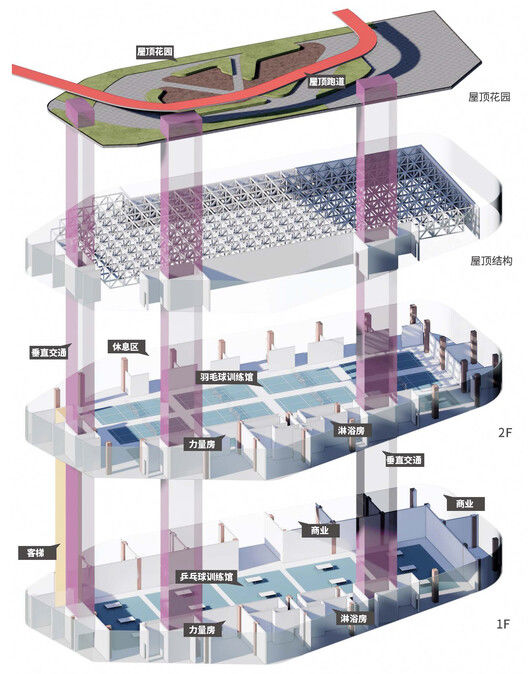
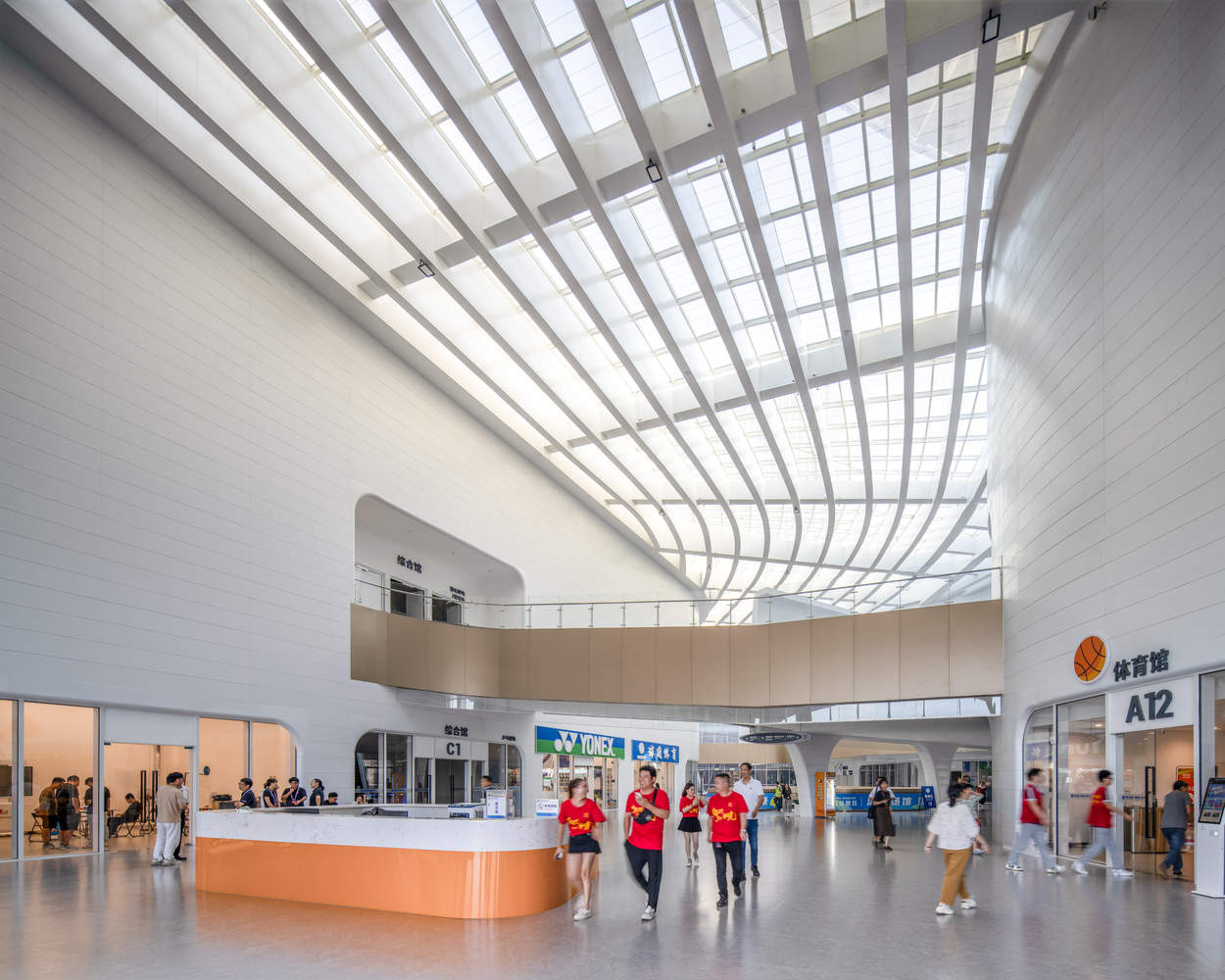
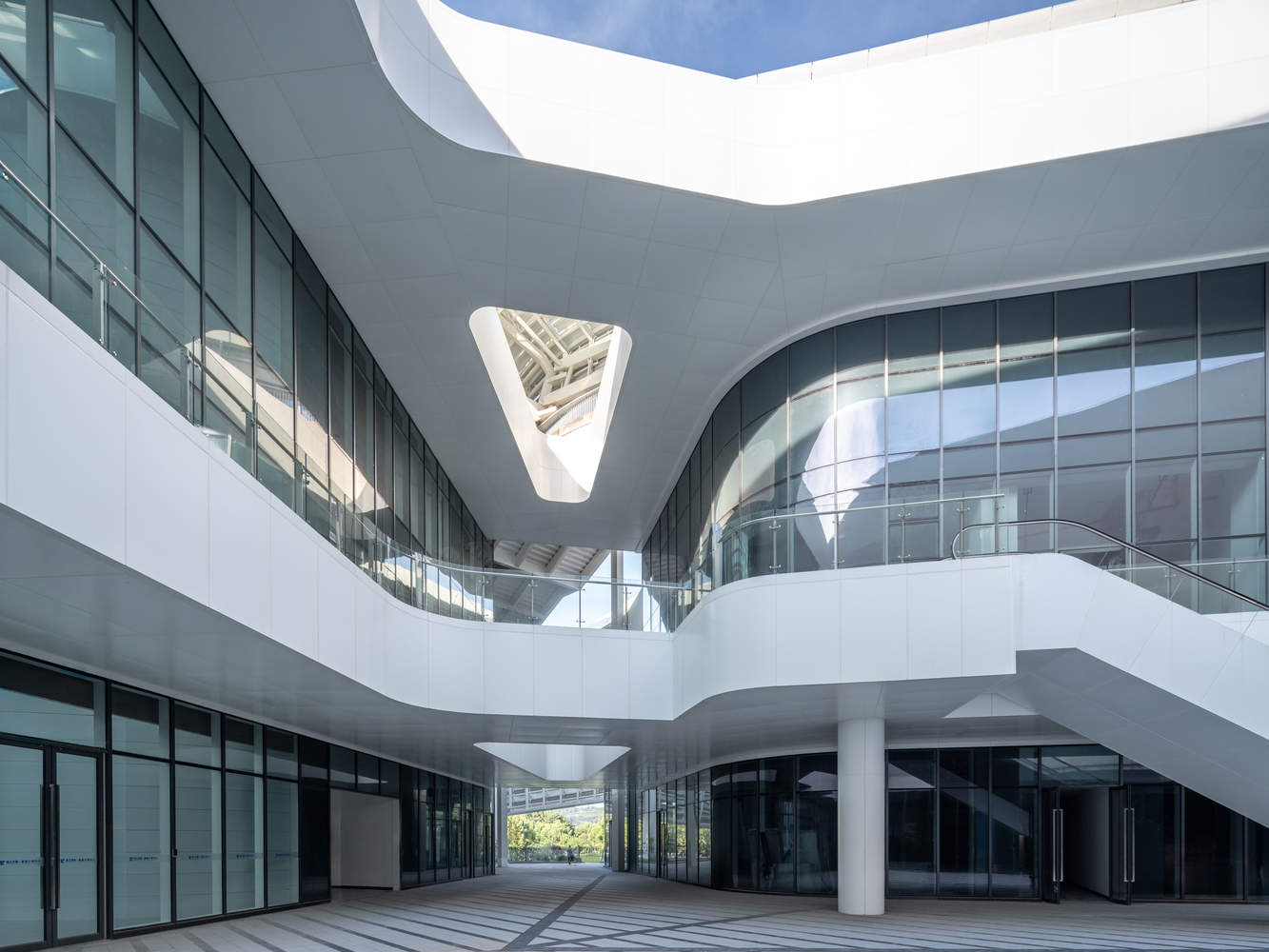
Our design approaches this from two aspects: **First, the daily use of spaces (场景日常化)**, making full use of the site's location advantage to integrate the space into citizens' daily lives and fitness activities, turning it into a regular urban event venue; **Second, the compounding of functions (功能复合化)**, not being limited to a single sports function, but introducing composite formats such as dining, retail, hotel, and entertainment. This not only provides comprehensive professional support for high-level events but also complements the surrounding commercial gaps. During normal times, it offers citizens services like leisure, sports, and exhibitions, becoming a new center for urban life. From a professional sports home ground to a platform for national fitness; from cultural entertainment and performances to city celebrations, the Globular Center not only fills the gap in professional sports venues in the city but also breaks the traditional cyclical usage logic of "idleness—activation" through continuous operation and diversified content carriage, evolving into a composite urban landmark connecting the daily and the extraordinary.
我们的设计从两方面着手:一是场景日常化,充分利用场地的区位优势,将空间融入市民的日常生活与运动健身,成为常态化的城市活动场所;二是功能复合化,不局限于单一的体育功能,引入餐饮、零售、酒店、娱乐等复合业态,既为高水平赛事提供全方位专业保障,也是对周边业态空白的补充,在平时为市民提供休闲、运动、会展等服务功能,成为城市生活的新中心。从专业赛事的主场,到全民健身平台;从文娱展演到城市庆典,小球中心不仅填补了城市在专业体育场馆层面的空白,更通过持续运营和多元内容的承载,打破传统的 “空置—激活” 周期性使用逻辑,成为连接日常与非日常的复合型城市地标。
© 陈曦
© 陈曦
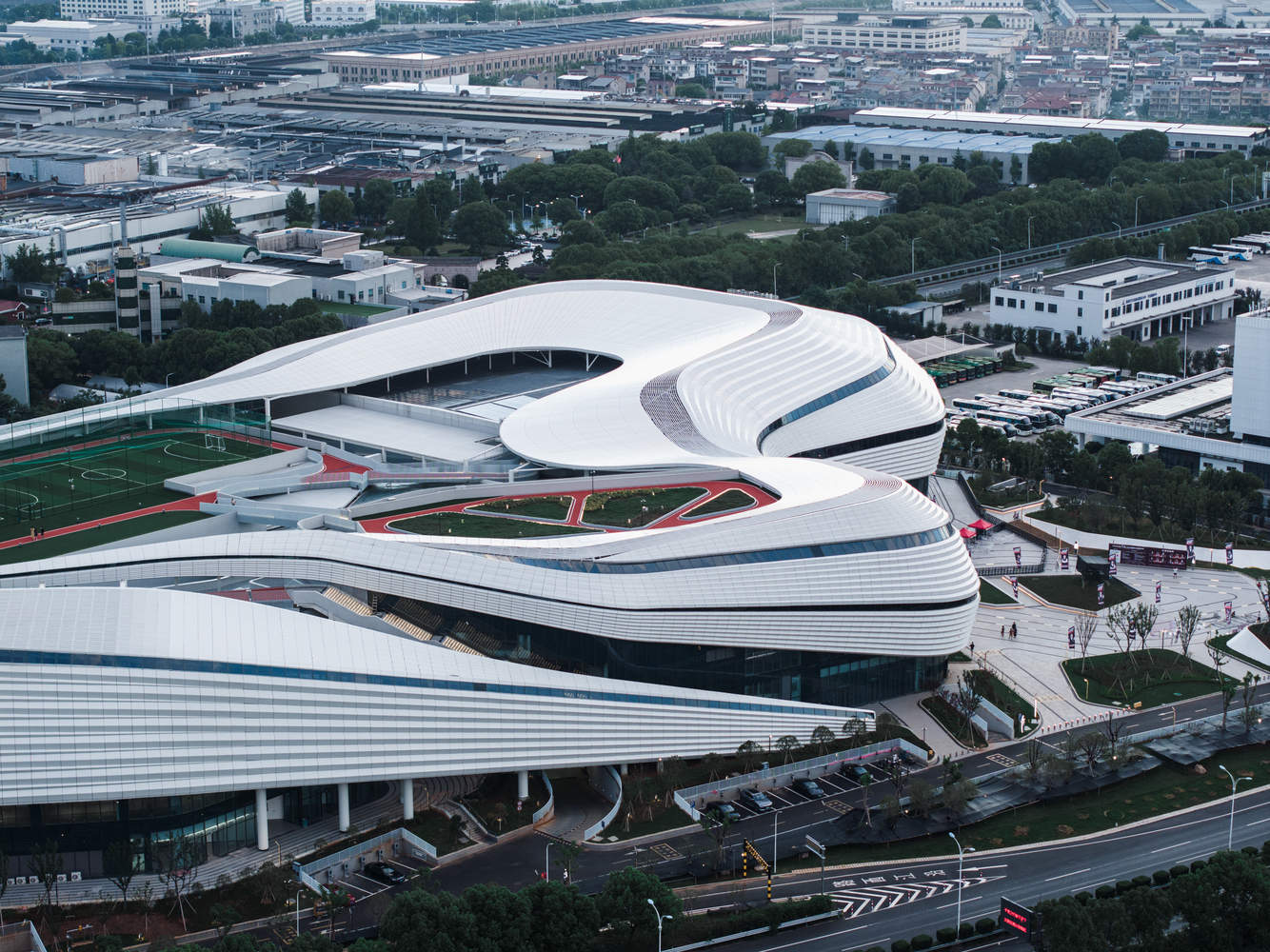
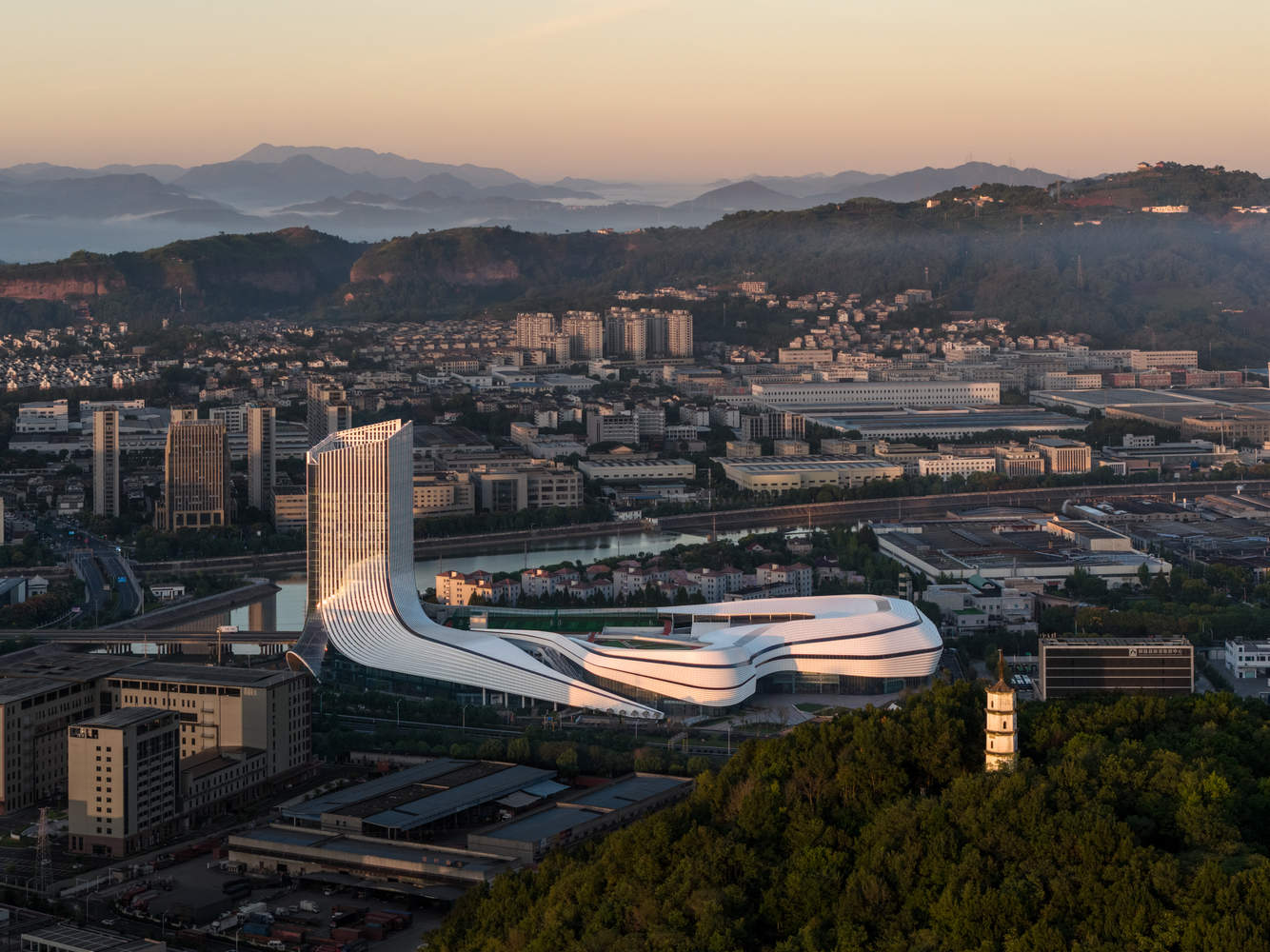
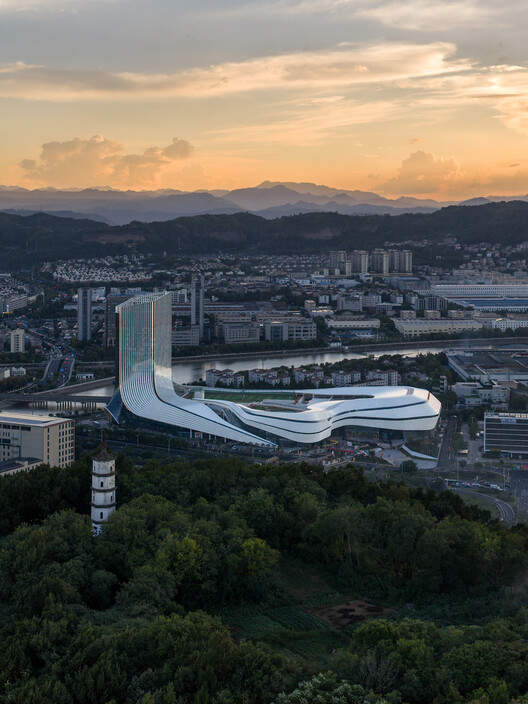
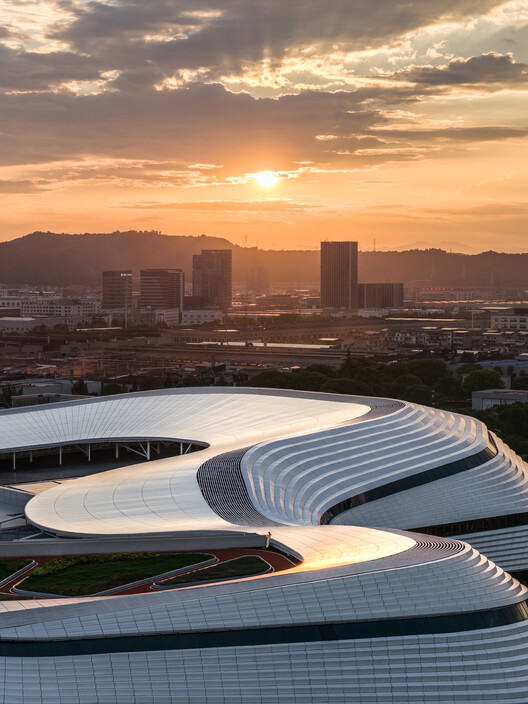
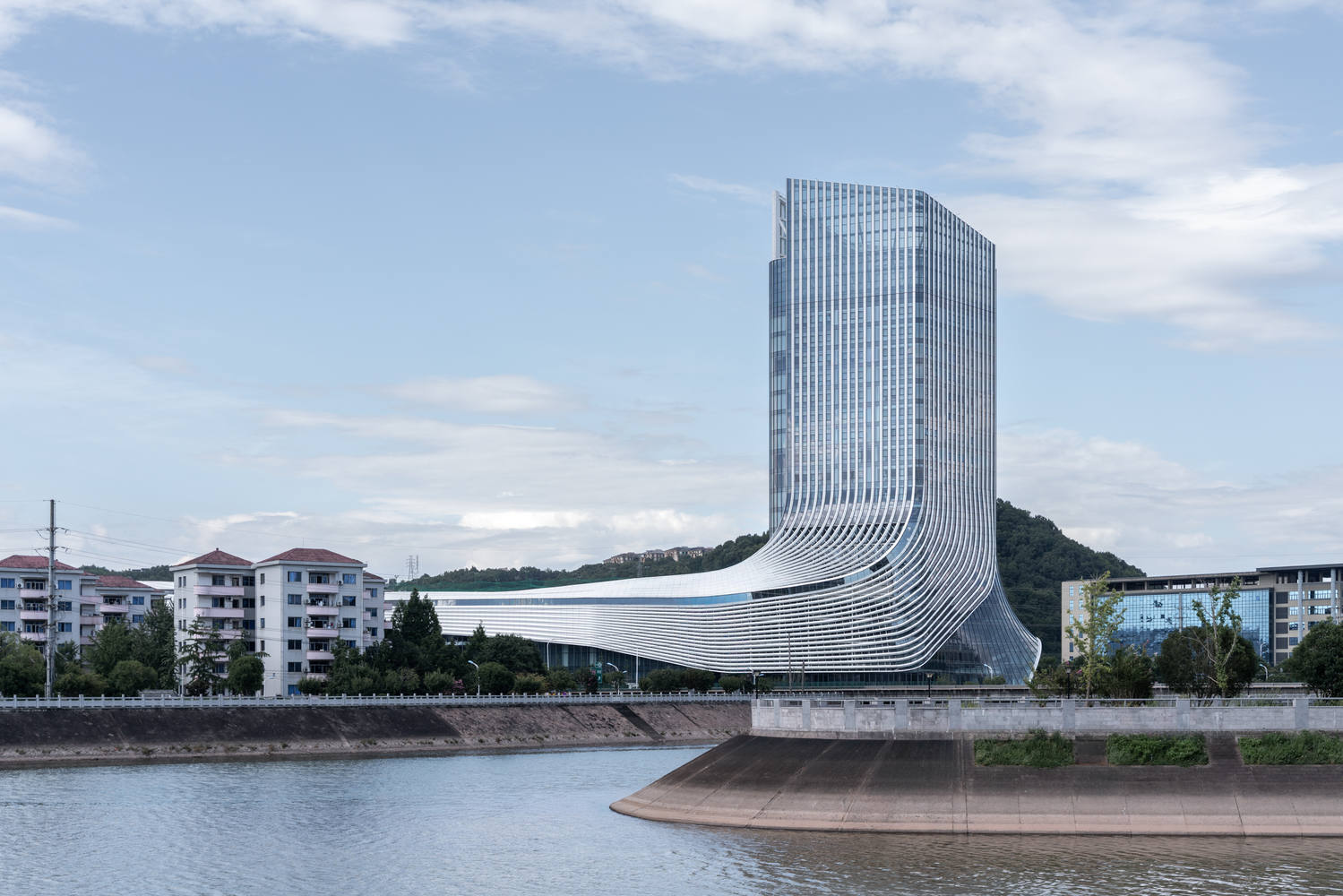
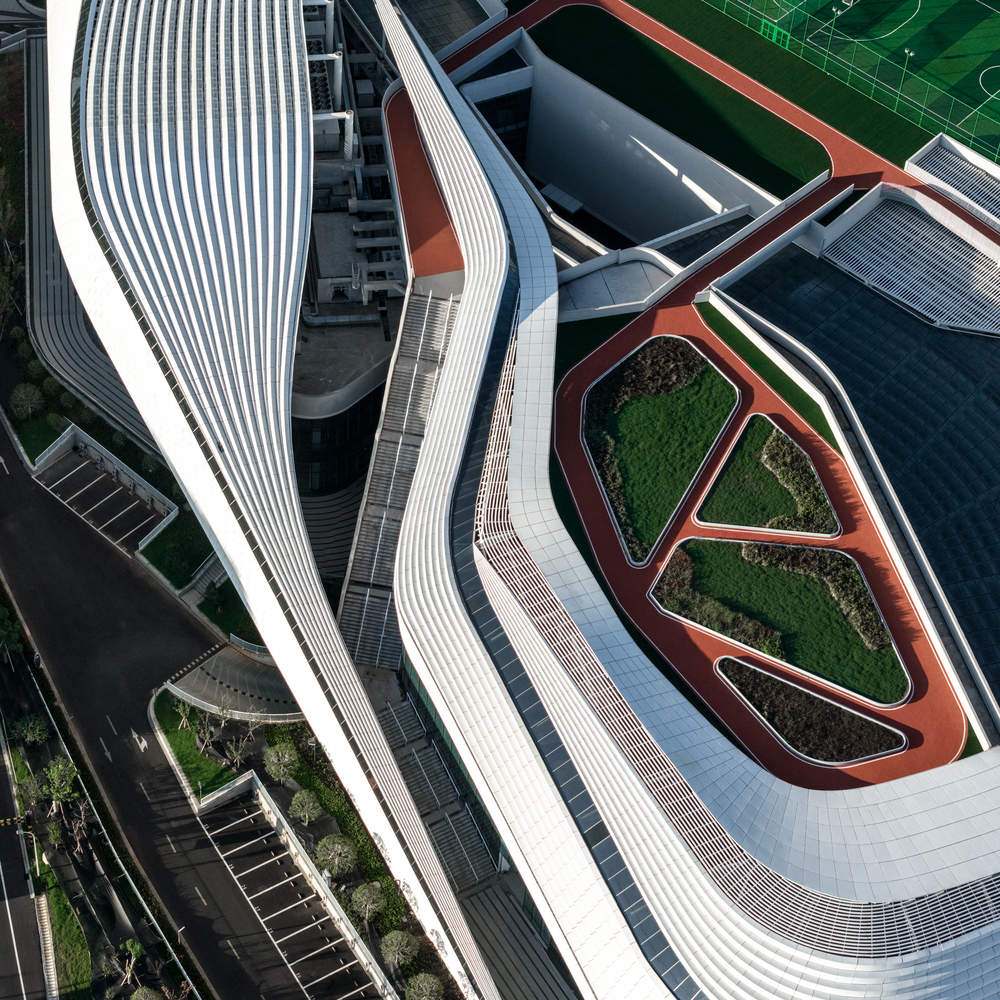
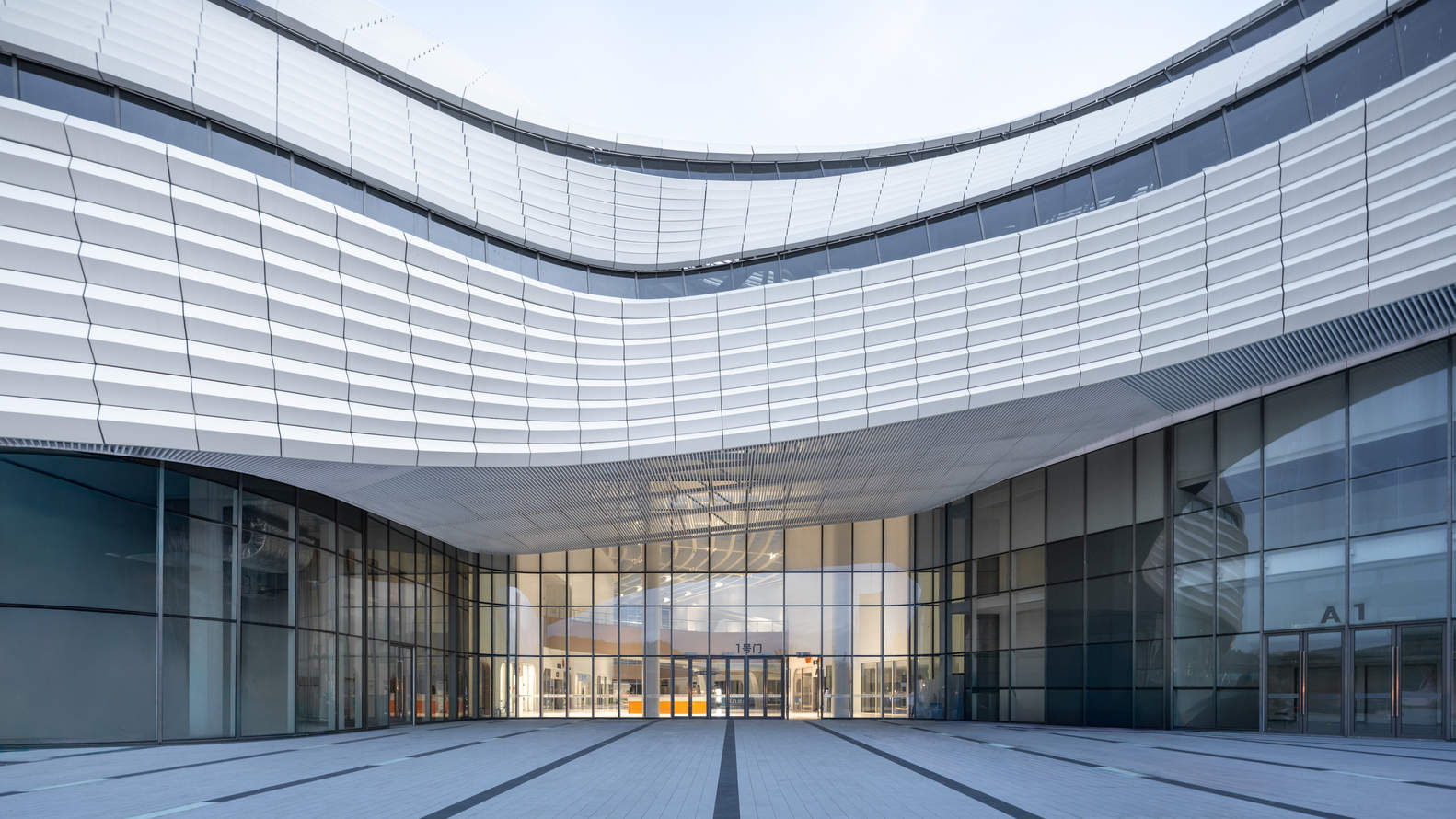
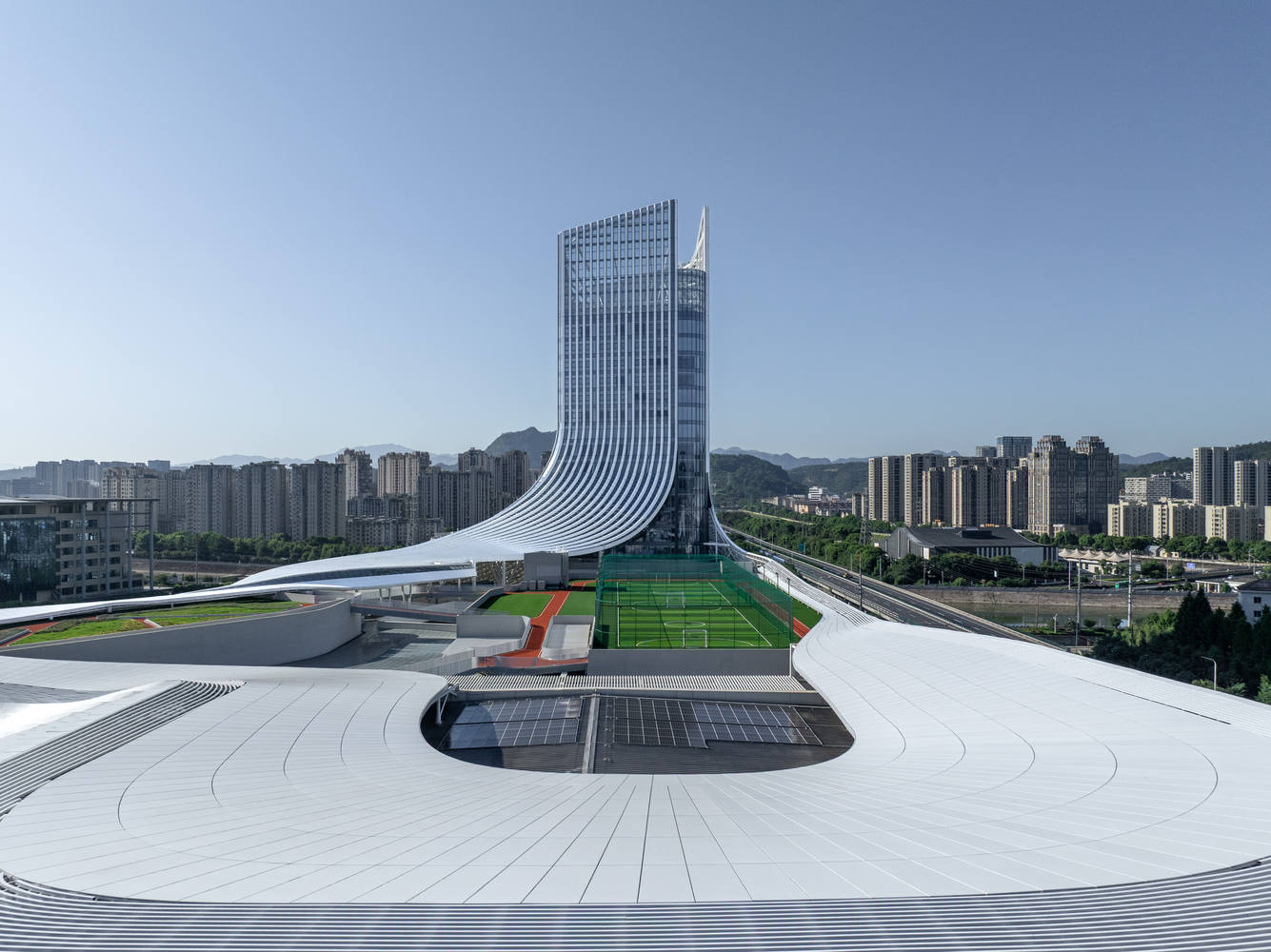
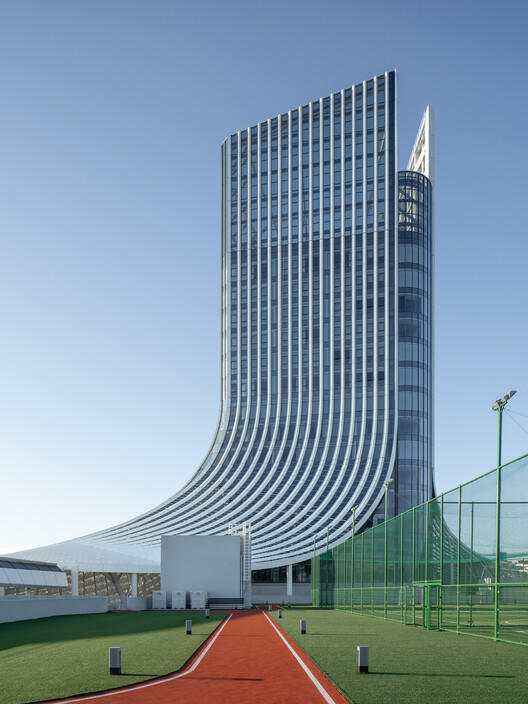
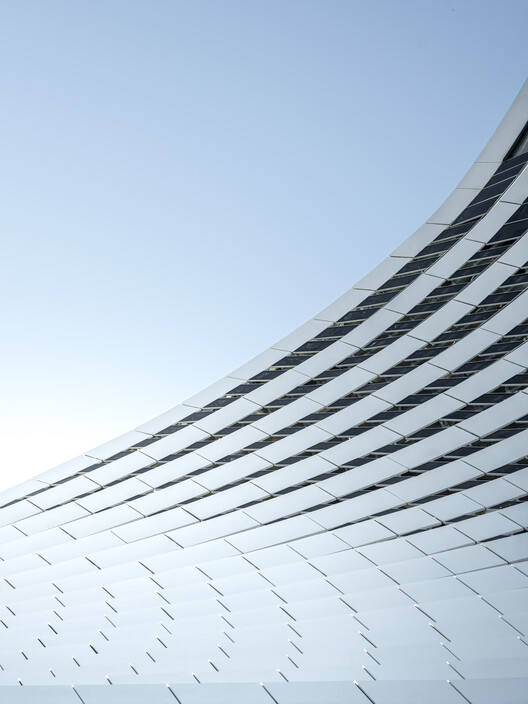
Giving the overall design a distinct iconic image was another major challenge. We drew inspiration from Xinchang's unique landscape culture. Xinchang has historically been a crucial stopover point for literati traveling the "Tang Poetry Road in Eastern Zhejiang," where many poets left verses praising its marvelous peaks, beautiful scenery, clear waterfalls, and fresh springs. In the design, we used the flow of water and undulating mountain shapes as morphological motifs, responding to the city's boundaries with continuous volumes and horizontal rhythm, shaping a waterfront interface that possesses both cultural imagery and contemporary expression.
赋予整体鲜明的标志性形象,是设计面临的另一大挑战。我们从新昌独特的山水文化中获得灵感。新昌,历史上是“浙东唐诗之路”上文人往来的必经之地,很多诗人在此留下诗篇来赞叹其奇峰秀色与飞瀑清泉。设计中,我们以流动的水势与起伏的山形作为形态母题,以连绵体量与水平节奏回应城市边界,塑造一个既有文化意象又具当代表达的滨水界面。
© 陈曦
© 陈曦
© 陈曦
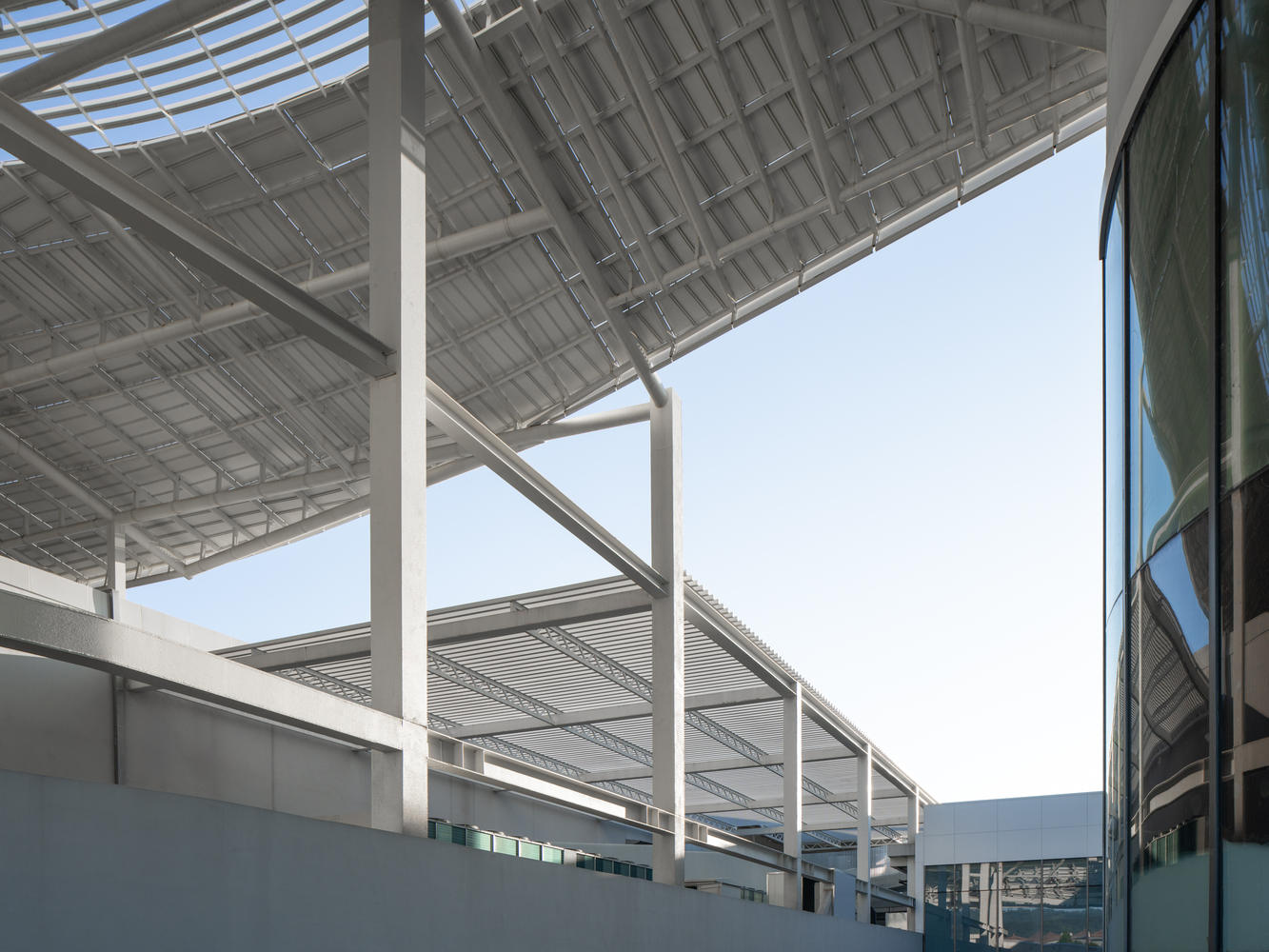
Structurally, the venue adopts a large-span truss and frame-core tube system, which ensures spatial flexibility while also considering construction feasibility and economy. The main gymnasium has a span of 75.9 meters, configured with effective lateral support based on the truss structure; the banquet hall has a span of 20.55 meters, utilizing a composite beam structure combined with clear height and construction conditions; the badminton practice hall roof has a span of 36.5 meters, and the table tennis hall roof has a span of 30 meters, both using plane trusses equipped with effective lateral support.
结构上,场馆整体采用大跨度桁架与框架核心筒体系,既保证了空间的灵活性,也兼顾施工与经济性。主体育馆跨度 75.9 米,在桁架结构基础上配置有效的侧向支撑;宴会厅跨度 20.55 米,结合净高与施工条件,采用组合梁结构;羽毛球练馆屋盖跨度 36.5 米,乒乓球馆屋盖跨度 30 米,均采用平面桁架并配备有效侧向支撑。
© 陈曦
© 陈曦
The Xinchang Globular Center is not just a container for competitions, but a model for urban activation—using sports to attract people, and using composite functions to retain them, allowing the ordinary and the extraordinary to transform into each other under the same roof. Driven by the "Competition Plus" model, this Sports Mall destination is becoming a vital node connecting sports, cultural tourism, and urban vitality, providing a sustainable urban paradigm for Xinchang's exploration of the path to "revitalizing the city, industry, and benefiting the people through competitions."
新昌小球中心不只是赛事的承载器,更是一种城市激活模型——以体育带来人流,以复合功能留住人流,让日常与非日常在同一屋檐下相互转化。在“赛事+”模式的推动下,这个 Sports Mall 运动商业目的地,正成为连接体育、文旅与城市活力的重要节点,并为新昌探索“以赛兴城、以赛兴业、以赛惠民”的路径提供了可持续的城市范例。