场地适应性与功能整合:项目巧妙地应对了场地东西向的显著高差,通过在城市道路一侧设置架空车库,将主要活动空间抬升,有效减少了对后侧自然山体的开挖影响,体现了对现有地形的尊重和负责任的场地策略。作为第十五届全运会马术主场馆,其功能布局清晰,包含了满足国际赛事需求的主赛场、室内外训练馆以及完善的配套用房,成功在有限的用地内实现了高强度的功能集成,保障了赛事运营的专业性。
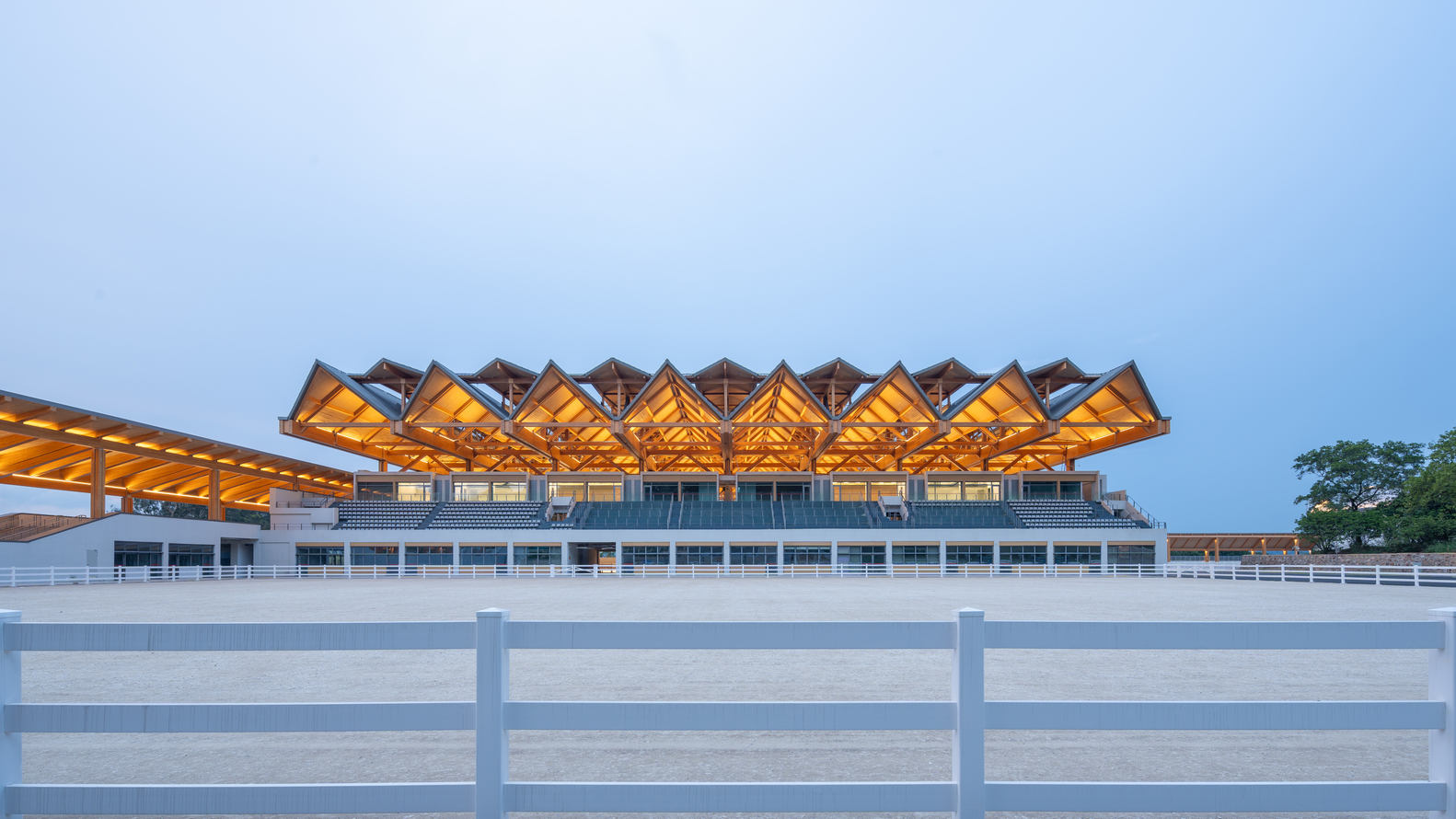
结构美学与地域文化重塑:建筑设计以“木构新境、众檐共景”为核心概念,大胆采用了胶合木结构,并从中国传统坡屋顶中汲取灵感,通过“发散式密檩”的形态创新,使传统语汇在现代语境下获得了新的生命力。这种将结构逻辑外显化的设计,不仅展现了木结构纯粹的构造美感,更在体量上实现了“凌空而出”的轻盈感,成功避免了大体量建筑可能带来的压迫感。
体验性空间叙事与环境共生:设计超越了传统单向的引导式观览,着力营造“体验性观览”空间,通过设置多尺度的“廊”连接不同高度的层次,让光、风、景得以渗透入建筑内部,创造出人与自然、马匹之间“偶遇”的文化意境。这种透明、流动的界面设计,强化了飞檐凌空的地域特征,实现了建筑与山体、风光之间的共生关系,成功唤起了观者对岭南乡土的记忆与文化共鸣。
In the past, the design of sports and cultural facilities in China often adopted iconic and exaggerated forms. However, the recent trend has shifted towards focusing on site experience and integration with the surrounding urban environment. The design proposal for Shekou Cultural and Sports Park aligns with this people-oriented contemporary trend, emphasizing public participation, convenient accessibility, and the fusion of indoor and outdoor spaces, while retaining a strong regional character.
过去,中国的体育与文化设施在设计上常采用标志性、夸张化的造型。然而,近期趋势已转向关注场地体验及其与周边城市环境的融合。蛇口文体公园(Shekou Cultural and Sports Park)设计方案顺应了这一以人为本的时代潮流,强调公众参与、便捷可达性以及室内外空间的融合,同时保留了浓郁的地域特色。
© Chao Zhang
© Chao Zhang
© Chao Zhang
Axonometric Section
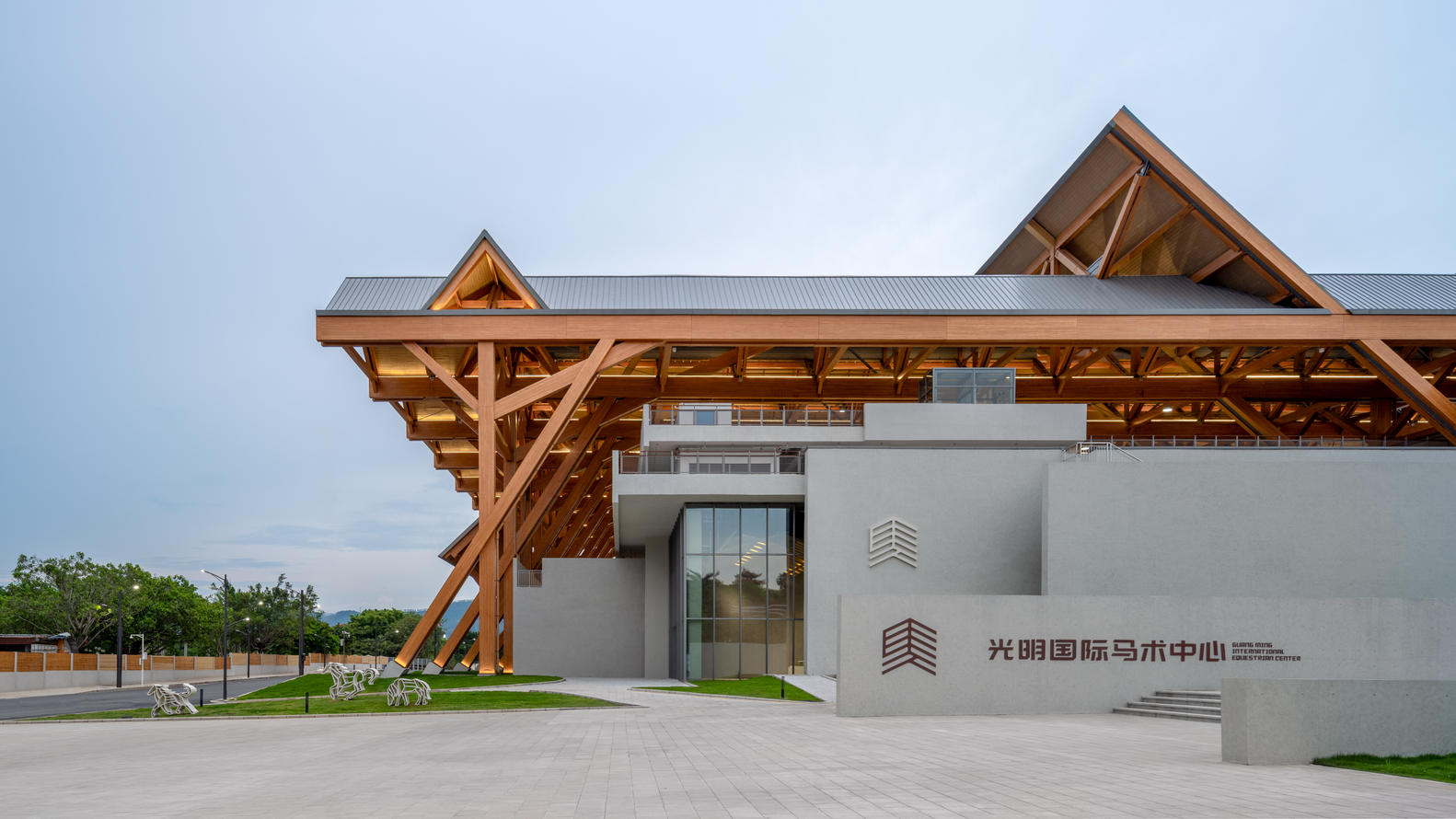
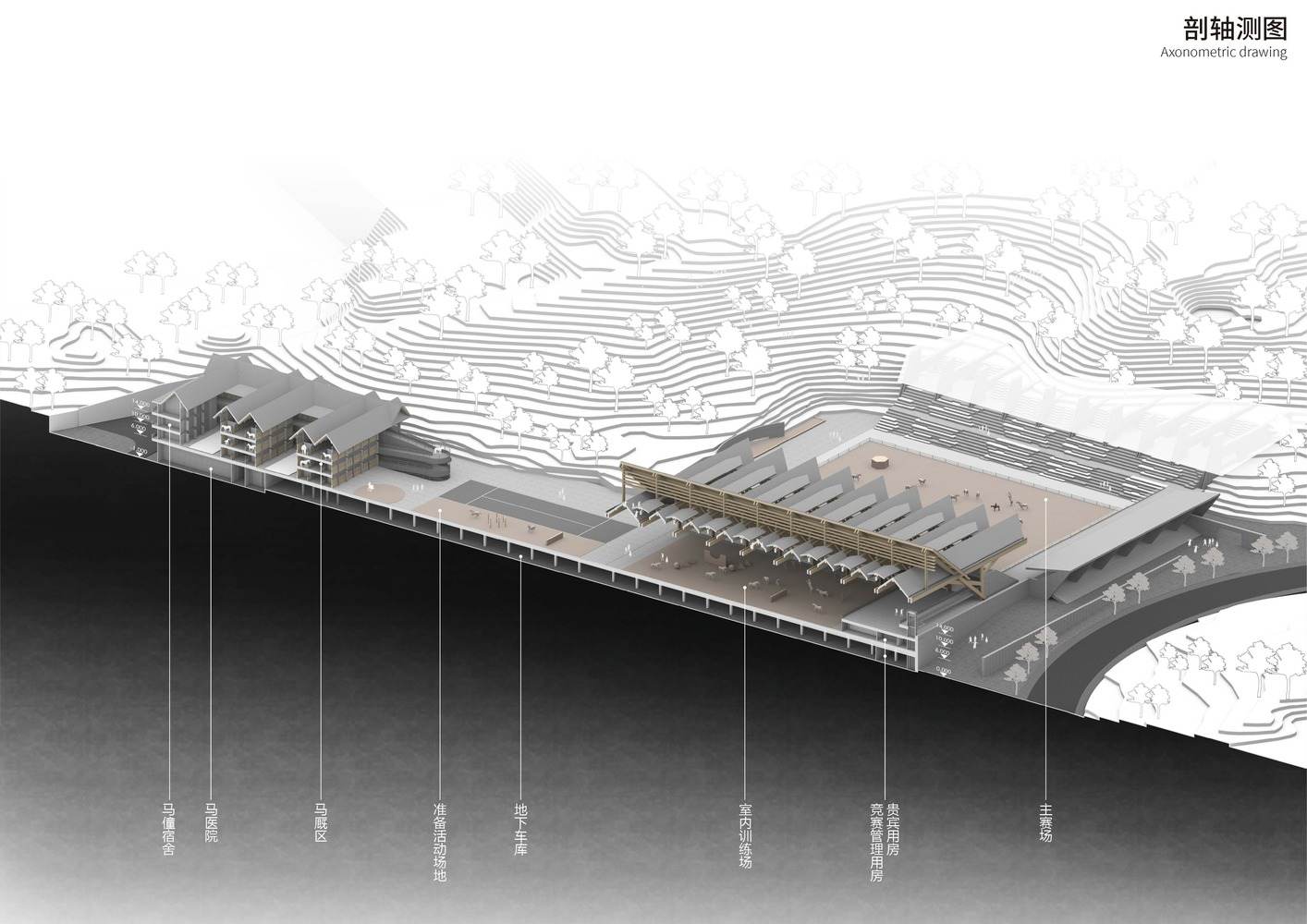
The Guangming International Equestrian Center is located in Guangming Street, Guangming District, Shenzhen, serving as the main venue for Dressage and Show Jumping events for the 15th National Games. The project site covers an area of 50,018㎡, with a total construction area of 44,600㎡. Its functions include the main arena, indoor training hall, outdoor training grounds, competition support facilities, and horse living quarters, capable of accommodating 120 horses.
光明国际马术中心位于深圳市光明区光明街道,为第十五届全国运动会马术项目盛装舞步与障碍赛主场馆。项目用地面积50018㎡,总建筑面积44600㎡,项目功能包括主赛场、室内训练馆、室外训练场、赛事用房及马匹生活用房等,可容纳120匹马匹。
© Chao Zhang
© Chao Zhang
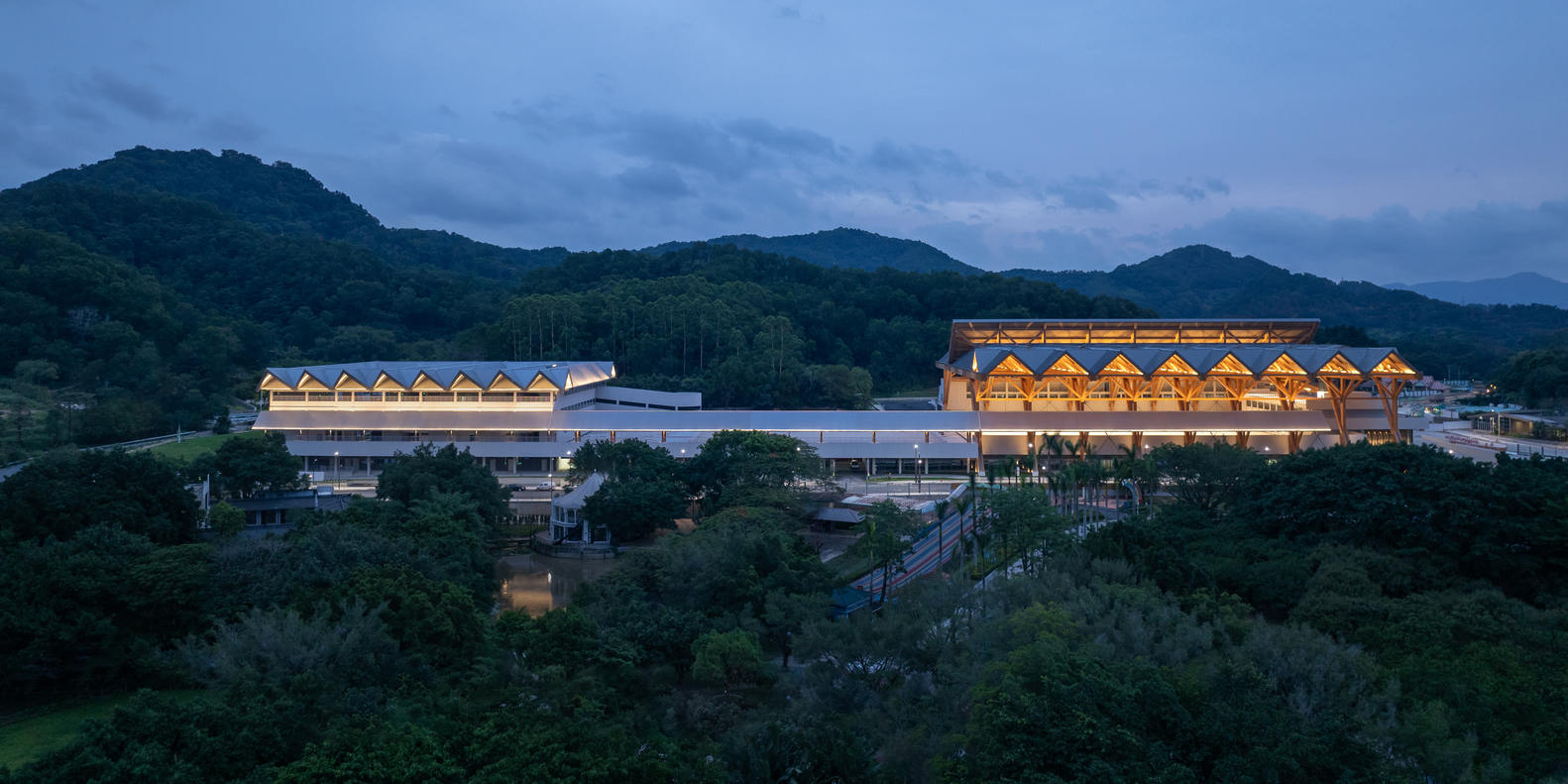
The eastern side of the site borders a natural hillside, while there is a distinct elevation difference with the urban road on the west side. The design fully utilizes the site conditions by placing an elevated garage along the city road side, raising the main activity areas, thereby minimizing excavation impact on the natural hillside.
项目场地东侧为自然山体,与西侧城市道路存在明显高差,设计中充分结合场地条件,沿城市道路一侧设置架空车库,将主要活动场地抬升,减少开挖对自然山体的影响。
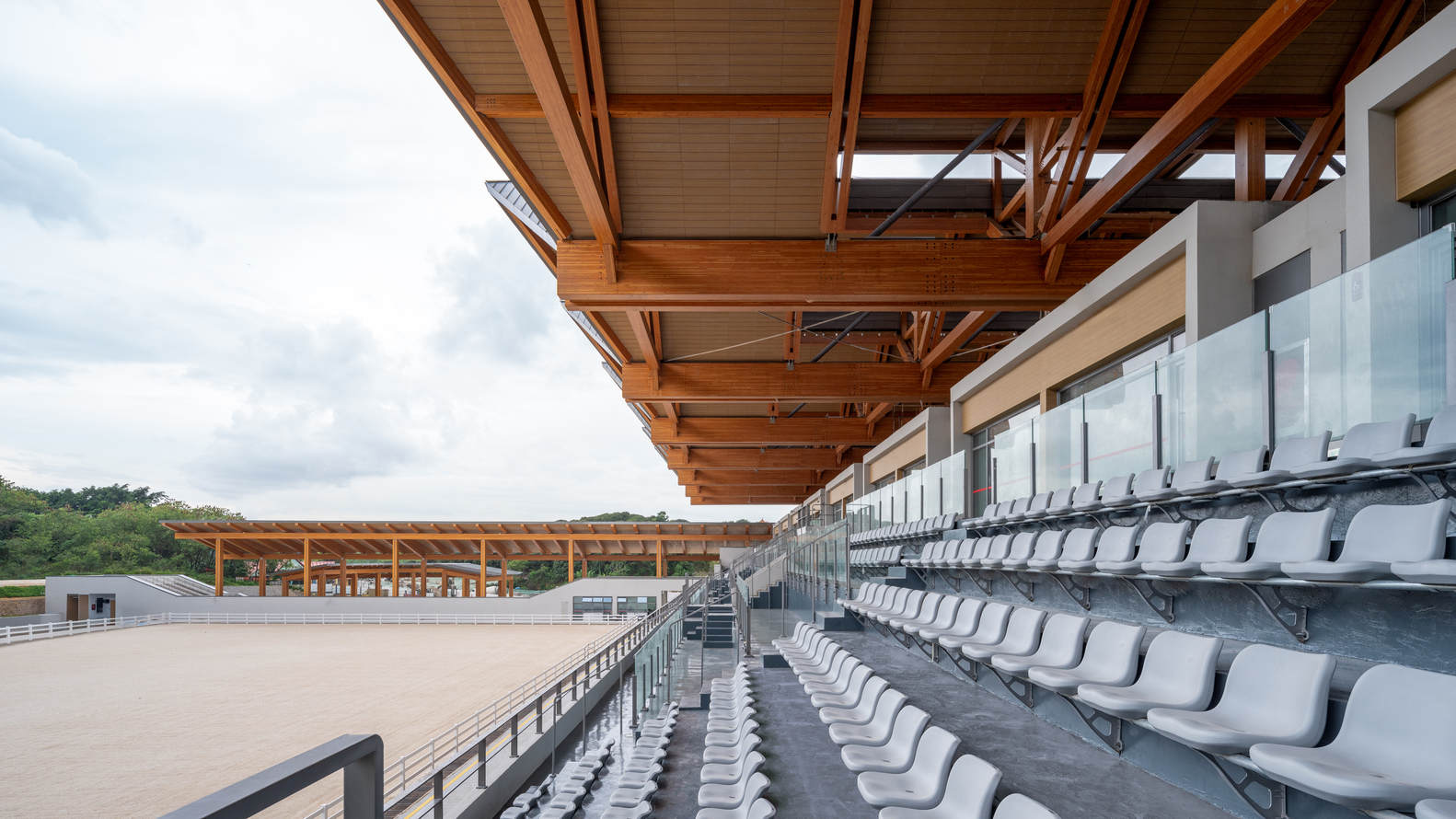
© Chao Zhang
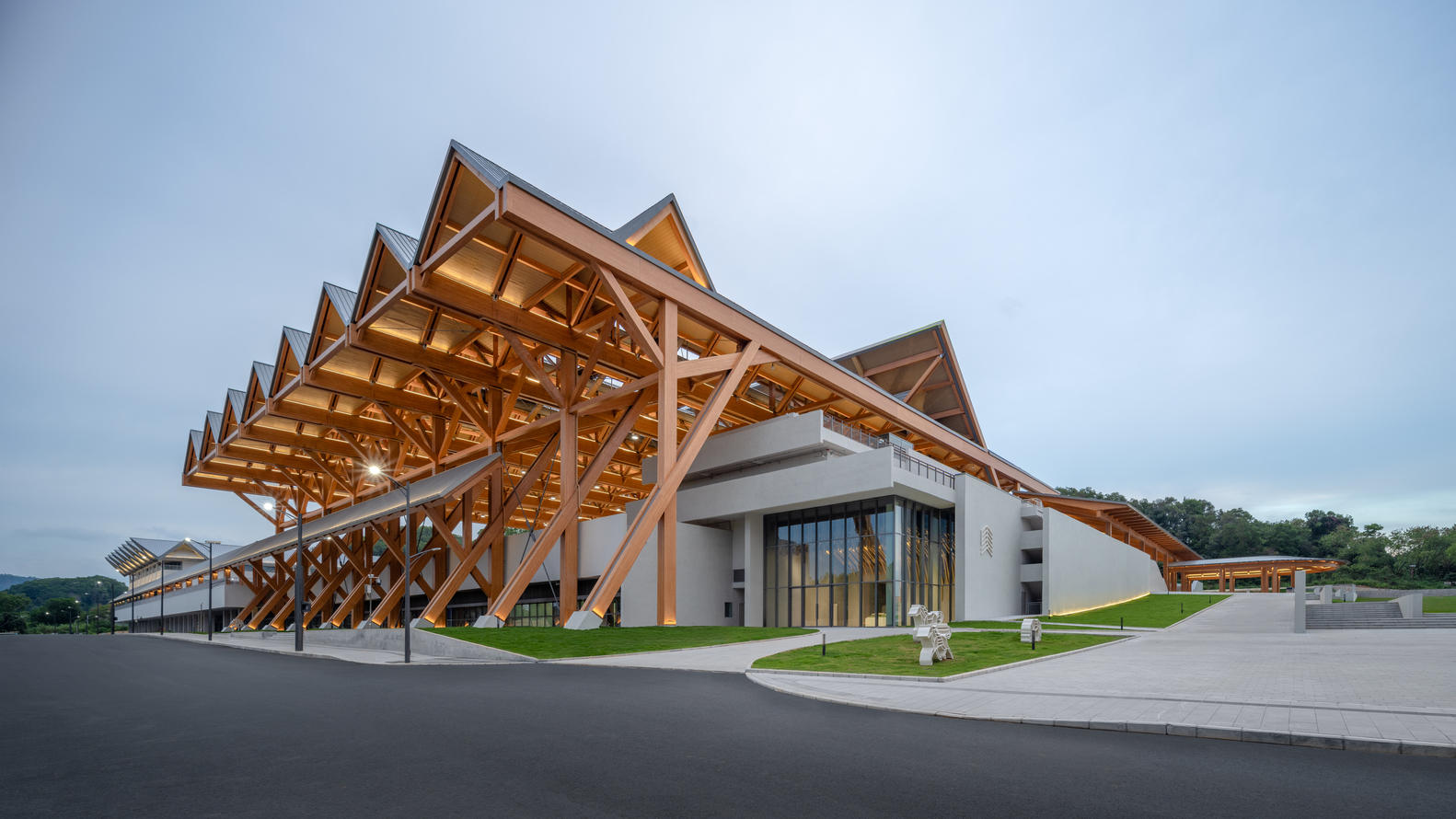
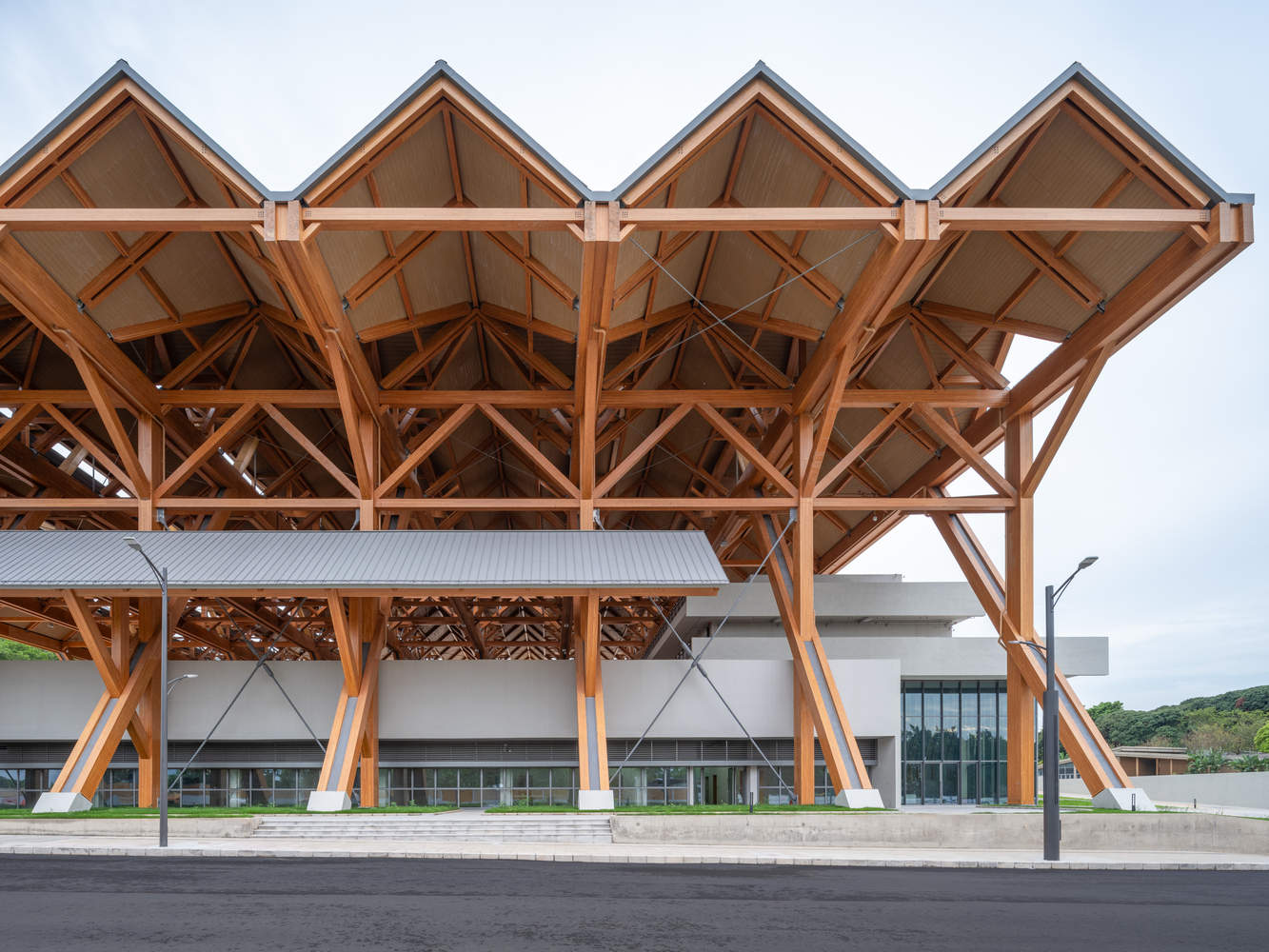
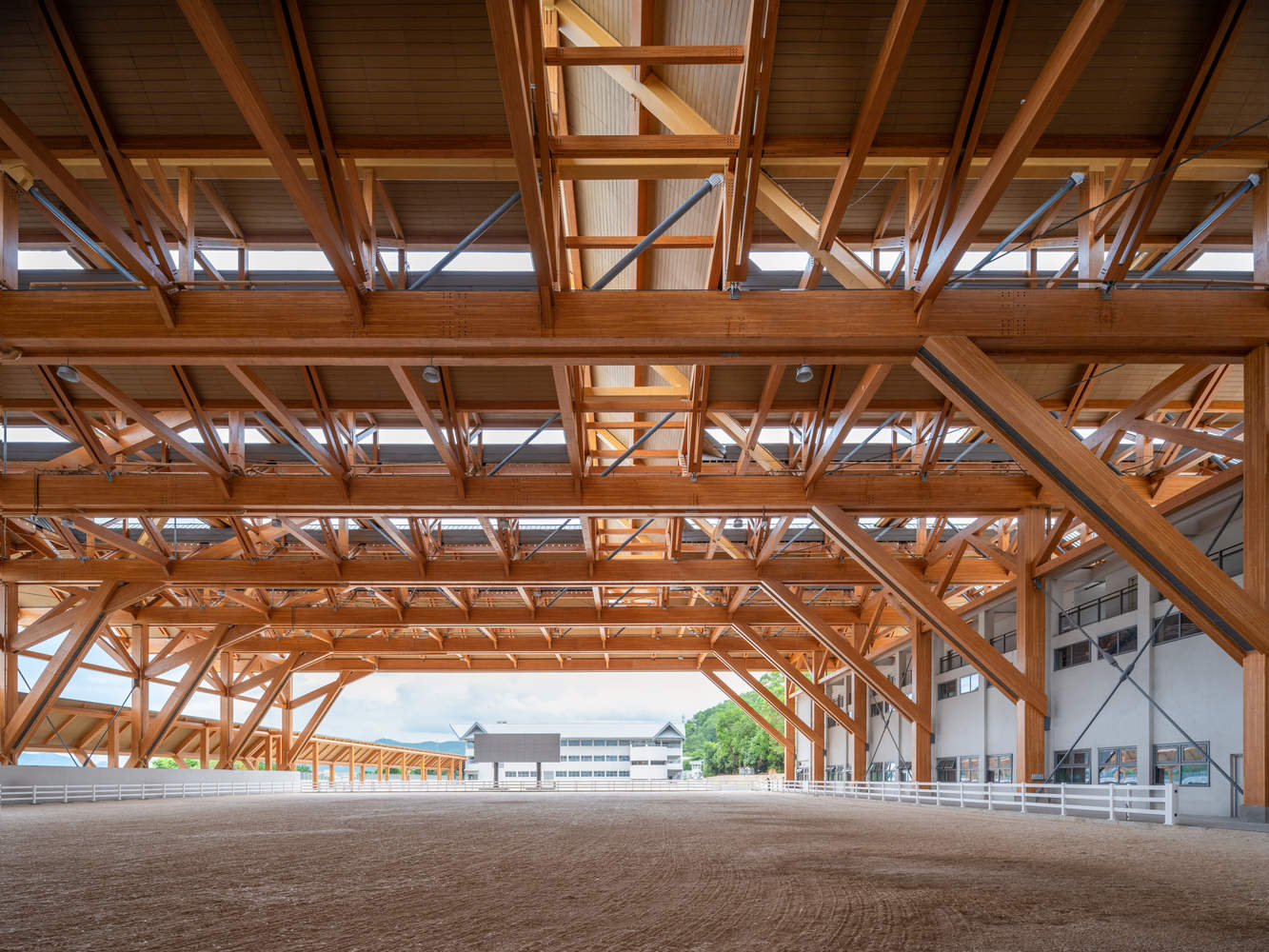
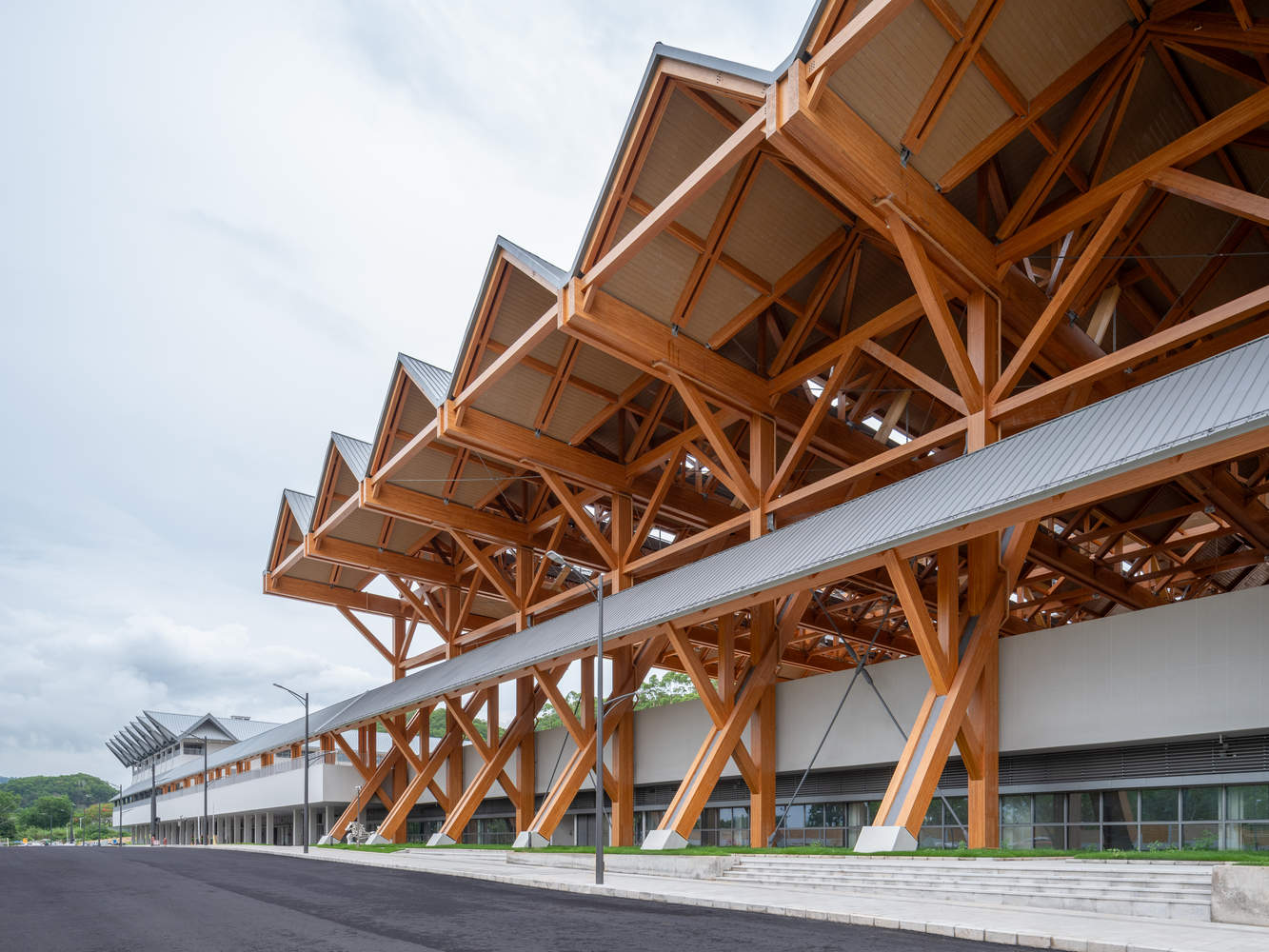
The main arena's design concept is "New Realm of Timber Structure, Shared Scenery of Eaves," employing a glued laminated timber structure throughout. The form is derived from the shape of traditional Chinese sloping roofs, retaining the characteristics of the original roof trusses while projecting outward with unconventional volumes, forming a dense, divergent pattern of "purlins" embedded with structural logic. This allows it to communicate with the modern context, showcasing the pure structural aesthetics and cultural meaning of timber construction.
主场馆设计以“木构新境、众檐共景”为设计概念,整体采用胶合木结构,形态塑造源于中国传统建筑坡屋顶形式,既保留了原型屋架的特征,又以非常规的体量凌空而出,形成蕴含结构逻辑的发散式密“檩”, 得以与现代语境融通,展现出木构建筑纯粹的结构美学与文化意味。
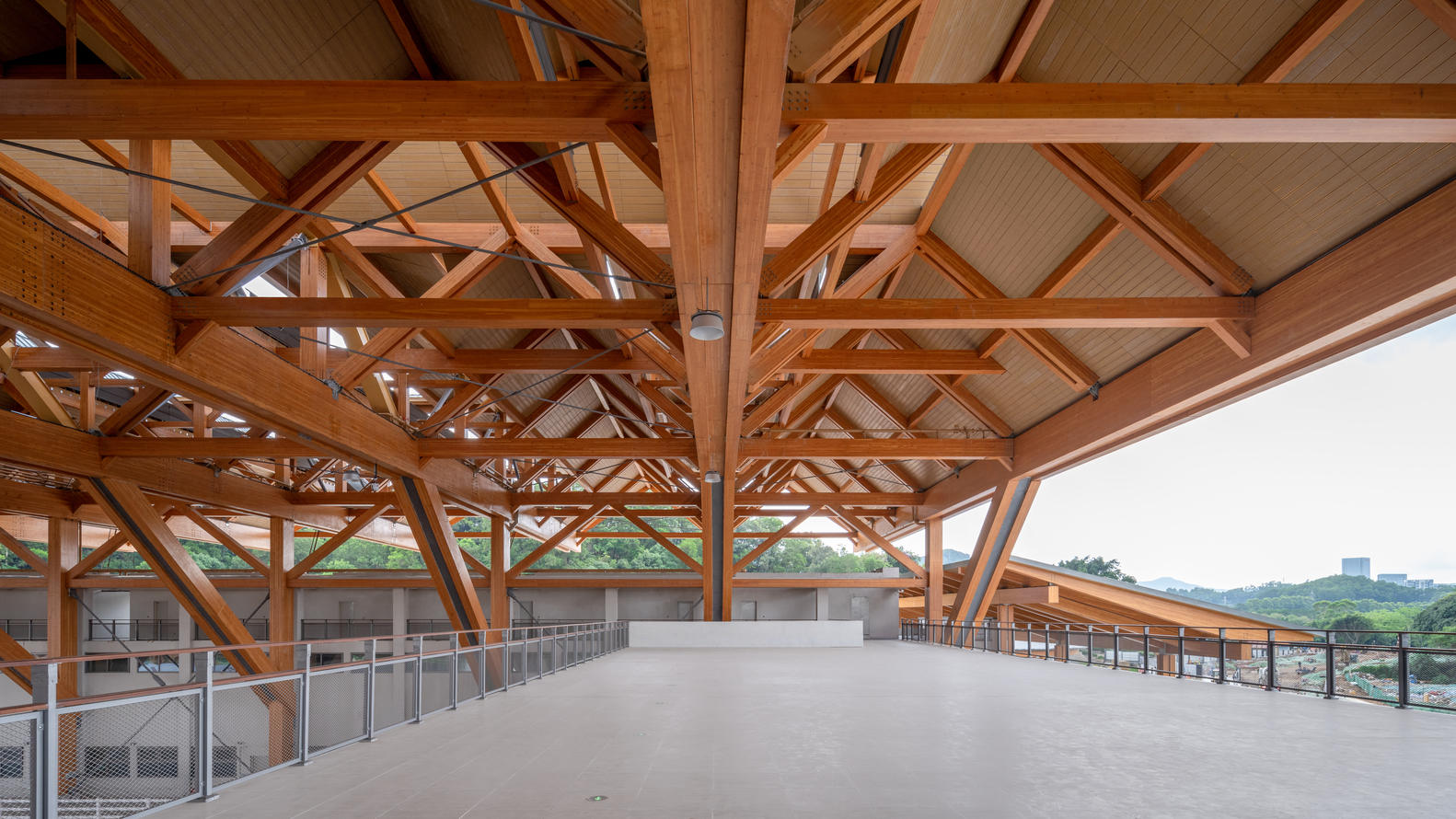
© Chao Zhang
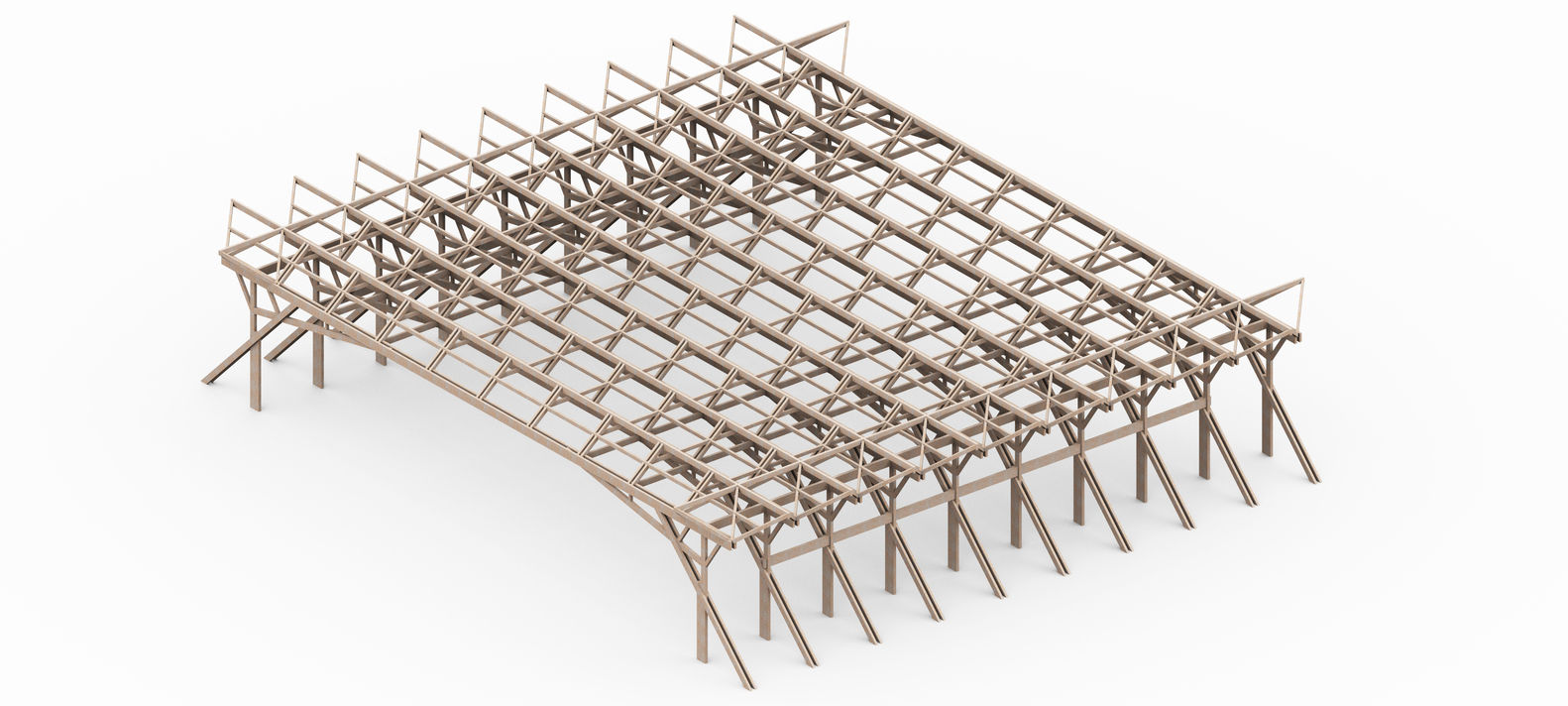
Timber Structure Axonometric
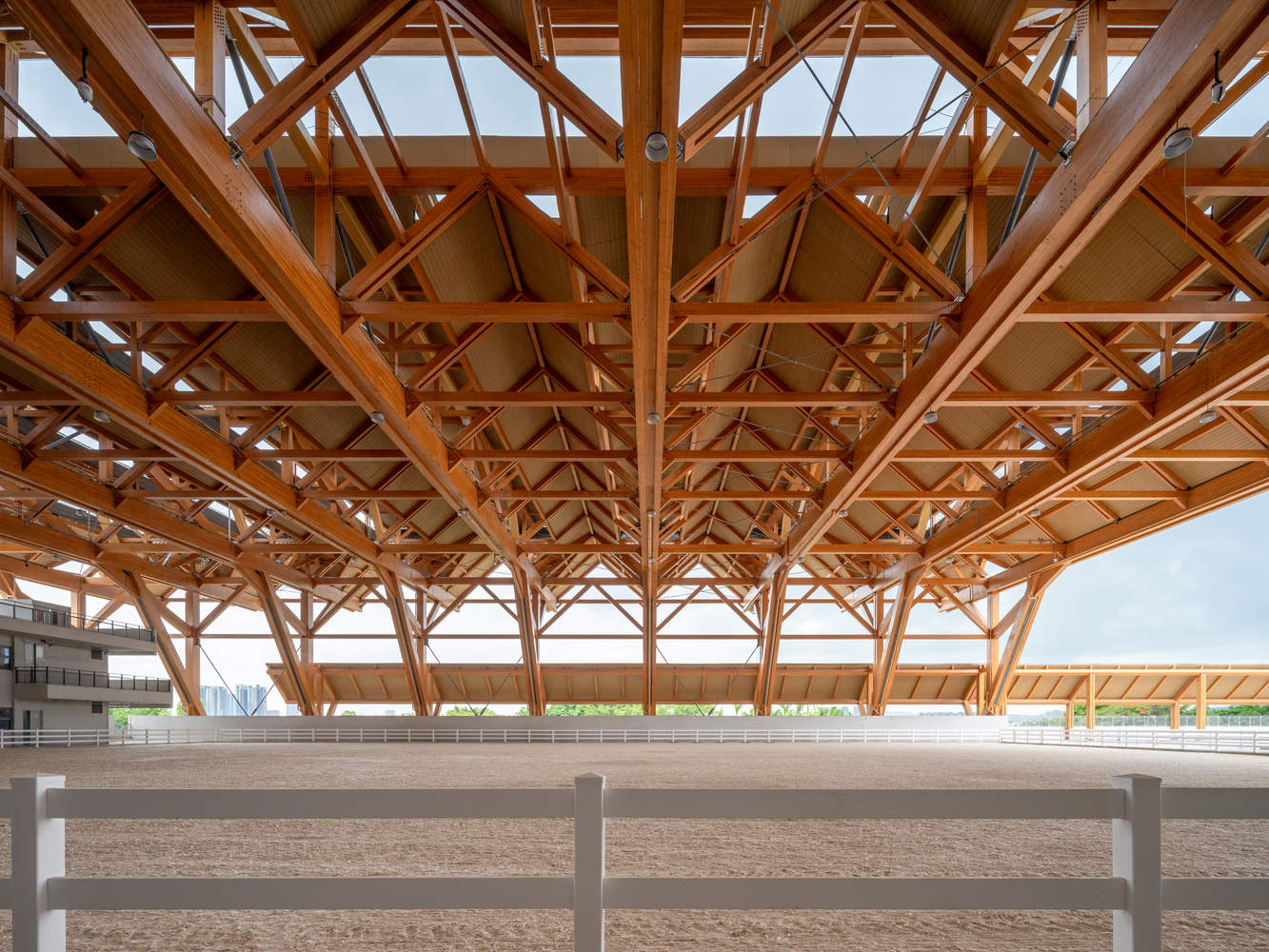
© Chao Zhang
The openness of the venue is fully released to the users, endowed with rich spaces for exploration and experiential interest. Guided viewing is transformed into experiential viewing to meet the proactive demands of people experiencing equestrian culture. This forms spaces that look onto each other around the courtyard, interconnected yet relatively independent, immersing visitors in the scene and evoking memories of the Lingnan vernacular.
将场馆的开放性充分释放给使用者,并赋予丰富的探索空间与体验趣味,将引导式观览丰富为体验性观览,以满足人们对马术文化体悟实践的主动性需求,形成了环院相望、融通而又相对独立的空间,沉浸于场景中,唤起岭南乡土的记忆。
© Chao Zhang
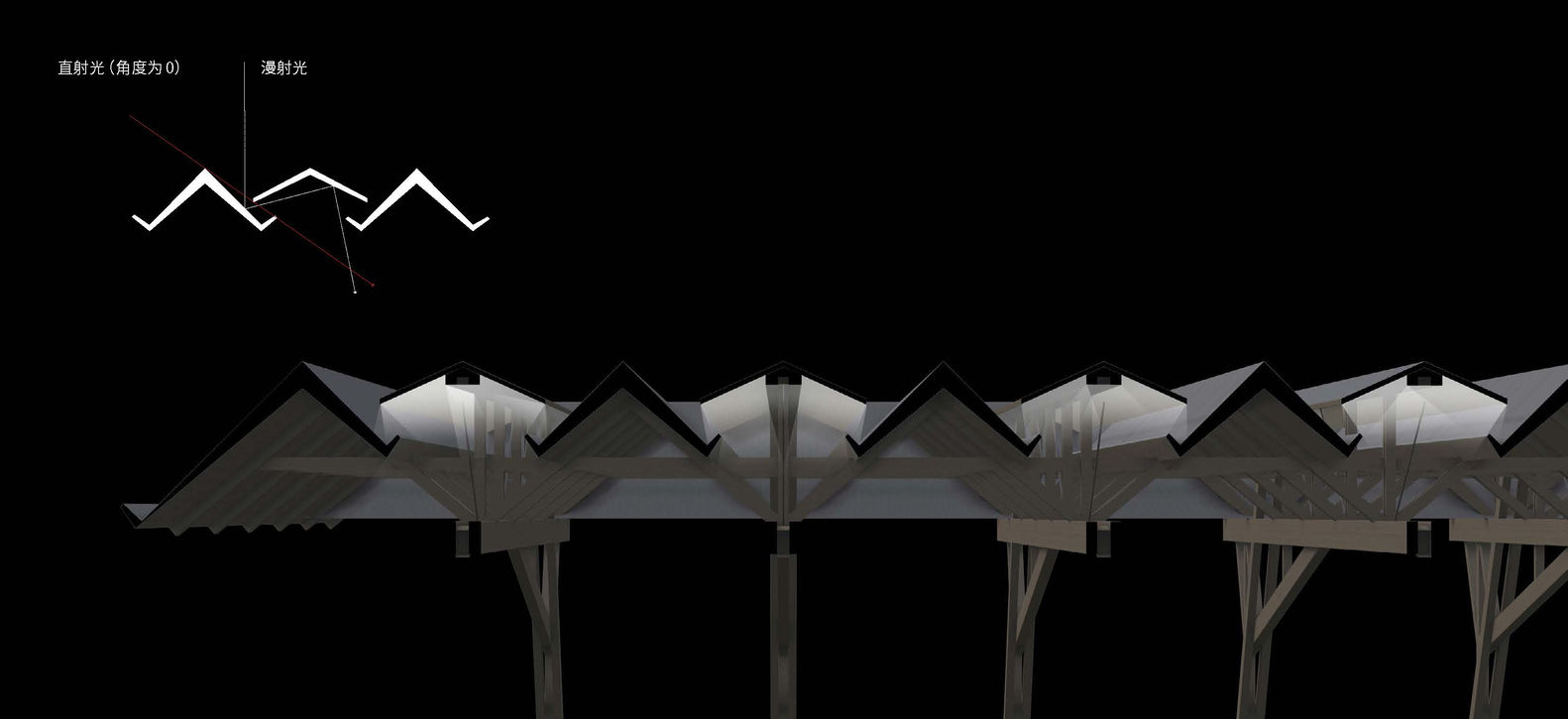
Lighting and Ventilation Analysis
© Chao Zhang
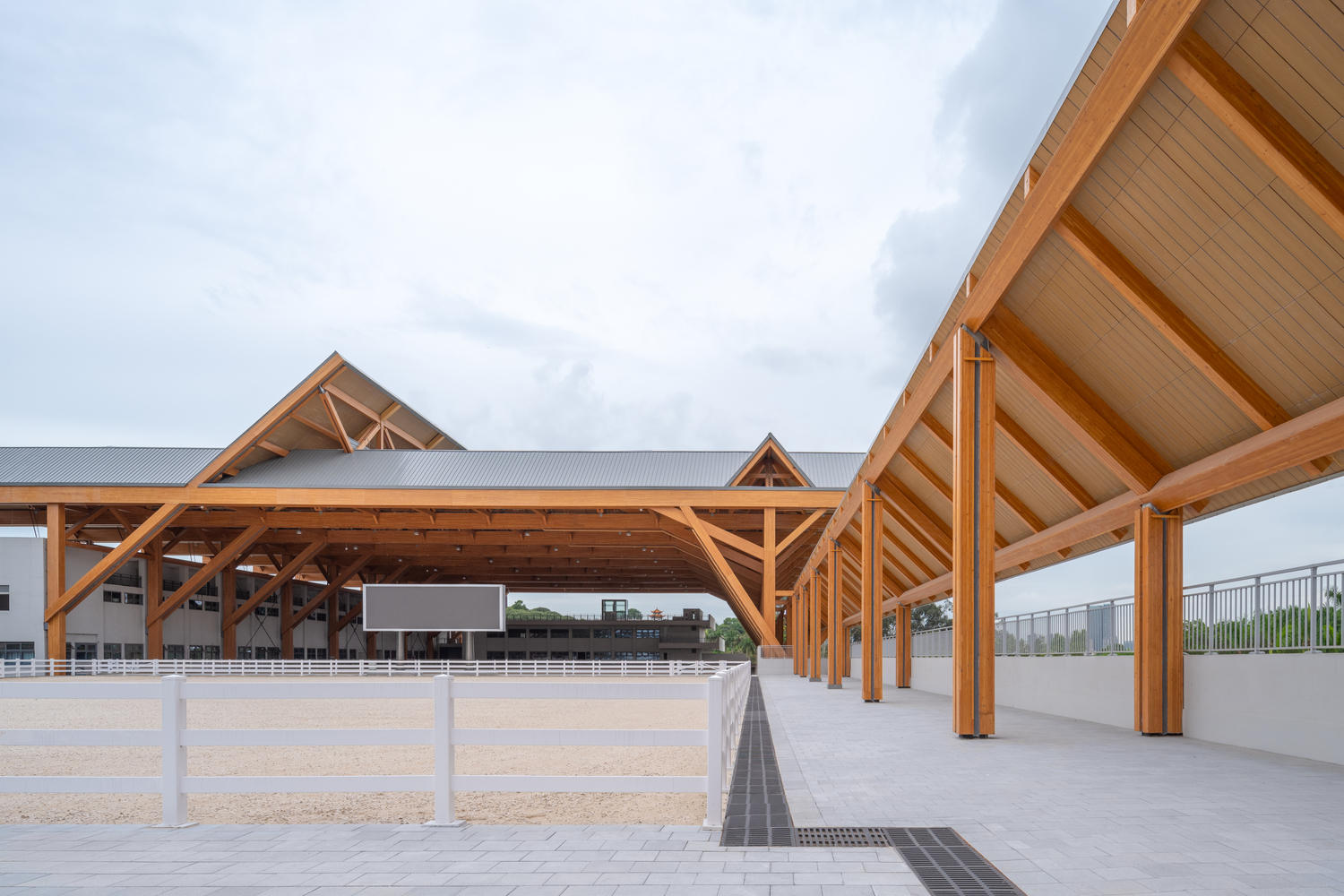
Connectivity is achieved on the first floor of the venue, where several "corridors" of different scales are scattered at various levels. Through them, light, wind, and scenery penetrate the building. In these "encounters" between the elements and people, a Chinese cultural conception is reinforced, forming a multi-dimensional comprehensive experience. The architectural expression of regional cultural characteristics emphasizes the building's ability to evoke emotion and transmit culture, responding to contemporary cultural needs through the interpretation of tradition.
场馆在首层实现连通,在不同水平高度上,散布着若干不同尺度的“廊”,通过它们,光、风、景透入馆中,在这些“风物”与人们的一次次“偶遇”中,中国式的文化意境得以强化。形成一种多维度的综合体验。对地域性文化特质的建筑化表达中强调了建筑对人的情感唤起和文化传递,以演绎传统的方式回应当下人的新文化需求。
© Chao Zhang
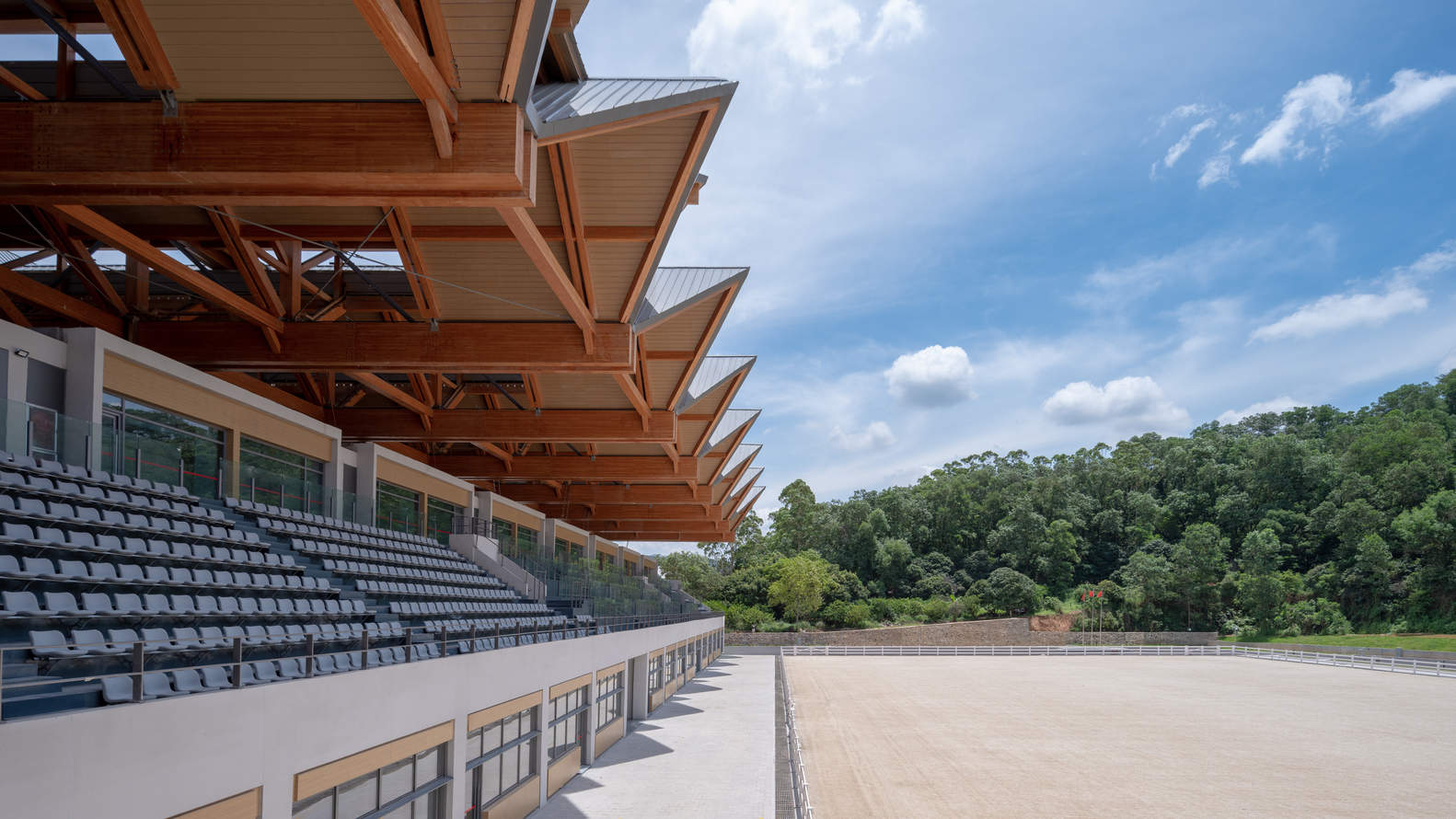
The architectural form is integrated with the structure, achieving transparency and interactivity between the interior and exterior. The continuous, light-weight facade reinforces the regional cultural feature of floating eaves, giving the building a sense of lightness despite its large scale. This transparent interactive relationship—under the multitude of eaves—allows mountains and wind, light and shadow, people and horses, to coexist and resonate, in harmony with nature.
建筑造型与结构一体化,实现了室内外之间的透明性和互动性。连续的轻盈界面强化了建筑飞檐凌空的地域性文化特征,使建筑在大体量的基础上,仍具有漂浮感。一种透明的互动关系,众檐之下,山与风,光与影,人与马,共生共感,自然与共。
© Chao Zhang