社区驱动与在地智慧的有机融合:该项目最精髓之处在于其深度参与式的设计流程。建筑师不仅解决了灾后重建的迫切需求,更通过引入当地高中生和大学生,将建筑设计从传统的精英决策提升为社区共创的实践。这种模式确保了空间功能的多元化和对当地社会经济脉搏的精准回应,使修复后的温泉设施真正成为激活衰退社区的“社会经济磁石”,而非孤立的建筑实体。
对地域资源的极致尊重与创新转化:设计语言紧密围绕爱媛县丰富的自然资源展开。从立面大量采用当地木材进行烧杉板(yakisugi)工艺处理,到内部空间巧妙地运用青石隔断(aoishi)和夯土墙(kumaishi enclosings),建筑语汇与场地肌理实现了有机的对话。这种对本土材料和传统工艺的尊重性转化,不仅降低了环境足迹,也赋予了建筑独特的地域文化属性,展现了建筑师对可持续性和文化传承的深刻理解。
结构韧性与能效集成的范式创新:在保留原有地基的基础上,建筑采用了轻型木结构网格(GLT构件与细柱),展现了对既有结构的智慧继承和结构优化。更具前瞻性的是其对能源自给的承诺:通过利用锯木厂废弃木材为新增柴火炉供能,结合太阳能板,实现了高达76%的清洁能源供给比例。这种对结构效率、材料循环和能源韧性的综合考量,为偏远地区公共设施的未来重建树立了可持续发展的典范。
After a lightning strike severely damaged the core of Kamegaike Hot Springs, a national competition led to the selection of local firm Yano Aoyama Architecure Design, which proposed a low-profile yet inventive reconstruction plan. Located in Ikata Town, Ehime Prefecture, the area, like many remote parts of Japan, faces significant economic and demographic decline. The renovated hot spring facility, built upon the remnants of the original foundation, is intended to serve as a catalyst for regional revitalization.
在雷击致使亀ヶ池温泉中心(Kamegaike Hot Springs)大部分区域遭受重创后,一场全国性竞赛应运而生,其获胜者 —— 当地建筑事务所矢野青山(Yano Aoyama)提出了一项低调且富有创意的修复方案。亀ヶ池温泉中心位于伊方町(爱媛县),和日本许多偏远地区一样,该地区面临着明显的经济和人口衰退问题。这座翻新后的温泉设施建在原有地基的残余部分之上,旨在成为推动该地区振兴的动力引擎。
© Nishikawa Masao
Courtesy of Yano Aoyama Architecure Design
Through a participatory design process involving local high school and university students, a multifunctional space was created where locals can purchase groceries, dine, relax, or interact with visitors who experience the renovated lodging facilities. These new activities are supported by numerous hidden spaces scattered throughout the main bath building, which was preserved from the fire, aiming to become a socioeconomic magnet for the region.
通过参与式设计流程(当地高中生和大学生也参与其中),打造出了一个多功能空间,当地人可以在此购买杂货、用餐、放松身心,或与游客交流互动,游客们也能体验到翻新后的住宿设施。这些新活动依托于众多隐秘空间,它们散布在因火灾而得以保留的主浴场建筑各处,旨在成为该地区的社会经济磁石。
© Nishikawa Masao
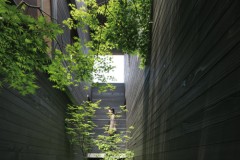
Wood was the material of choice for the renovated Kamegaike Hot Springs. With Ehime Prefecture rich in forest resources, most of the timber was procured from the surrounding areas. Local artisans carved and scorched cedar (using the yakisugi technique) to clad the building's exterior. Furthermore, decorative details such as local Aishi slate partitions or Kumaishi earth enclosures (rammed earth walls built with soil from the site) connect the building to its environment.
在翻新后的亀ヶ池温泉中心,木材是首选材料。爱媛县森林资源丰富,大部分木材均从周边地区采购。当地工匠雕刻并烧制雪松(烧杉板工艺,yakisugi),以此装饰建筑外立面。同时,建筑还通过青石隔断(当地绿片岩,aoishi partitions)或熊石围护结构(夯土墙,由建筑所在地的土壤筑成,kumaishi enclosings)等装饰细节,与周边环境相呼应。
© Nishikawa Masao
平面图
剖面图
Local sawmills and builders agreed to provide discarded wood to fuel a newly installed wood-burning stove, supplementing the existing oil boiler. Combined with electricity generated by purpose-installed solar panels, clean energy accounts for up to 76% of the facility's operational needs. As part of the reconstruction, lightning rods were also installed on site to prevent further damage from thunderstorms.
当地锯木厂和建筑商同意提供废弃木材,用于新建的柴火炉,以补充现有的燃油锅炉。再加上特意安装的太阳能电池板产生的电力,该设施运行所需的清洁能源占比高达 76%。作为重建工作的一部分,场地内还安装了避雷针,以防止雷暴天气造成进一步破坏。
© Nishikawa Masao
© Nishikawa Masao
© Nishikawa Masao
© Nishikawa Masao
The decision to retain the existing foundation dictated the structural scheme, characterized by a light timber grid supported by Glued Laminated Timber (GLT) horizontal members and slender 105 x 105 mm columns. The ascending roof beams (nobori-bari) continuously span over the central areas of the complex, while 2.20-meter-high earth walls conceal utility areas and guide pedestrian flow.
现有地基的保留决定了建筑的结构方案,其特点是采用轻型木结构网格,由胶合层积材(GLT)水平构件和 105 x 105 毫米的细柱支撑。上梁屋顶(nobori-bari)在建筑群中心区域上方连续延伸,2.20 米高的土墙隐藏了设施设备并引导人流分布。
© Nishikawa Masao
© Nishikawa Masao
Ehime-based Yano Aoyama Architecure Design utilized its proximity to the project to go beyond the initial scope of the competition guidelines, integrating ecological principles and involving local stakeholders in the design and management process. All these efforts aim to ensure that the hot spring facility is deeply rooted in the community for generations to come.
总部位于爱媛县的矢野青山建筑事务所利用其靠近项目的优势,超越了竞赛指南的初始范围,将生态环保理念和当地利益相关者引入设计和管理工作中。所有这些举措,都是为了让温泉设施能够长久扎根于此,福泽后代。
© Nishikawa Masao
© Nishikawa Masao
© Nishikawa Masao