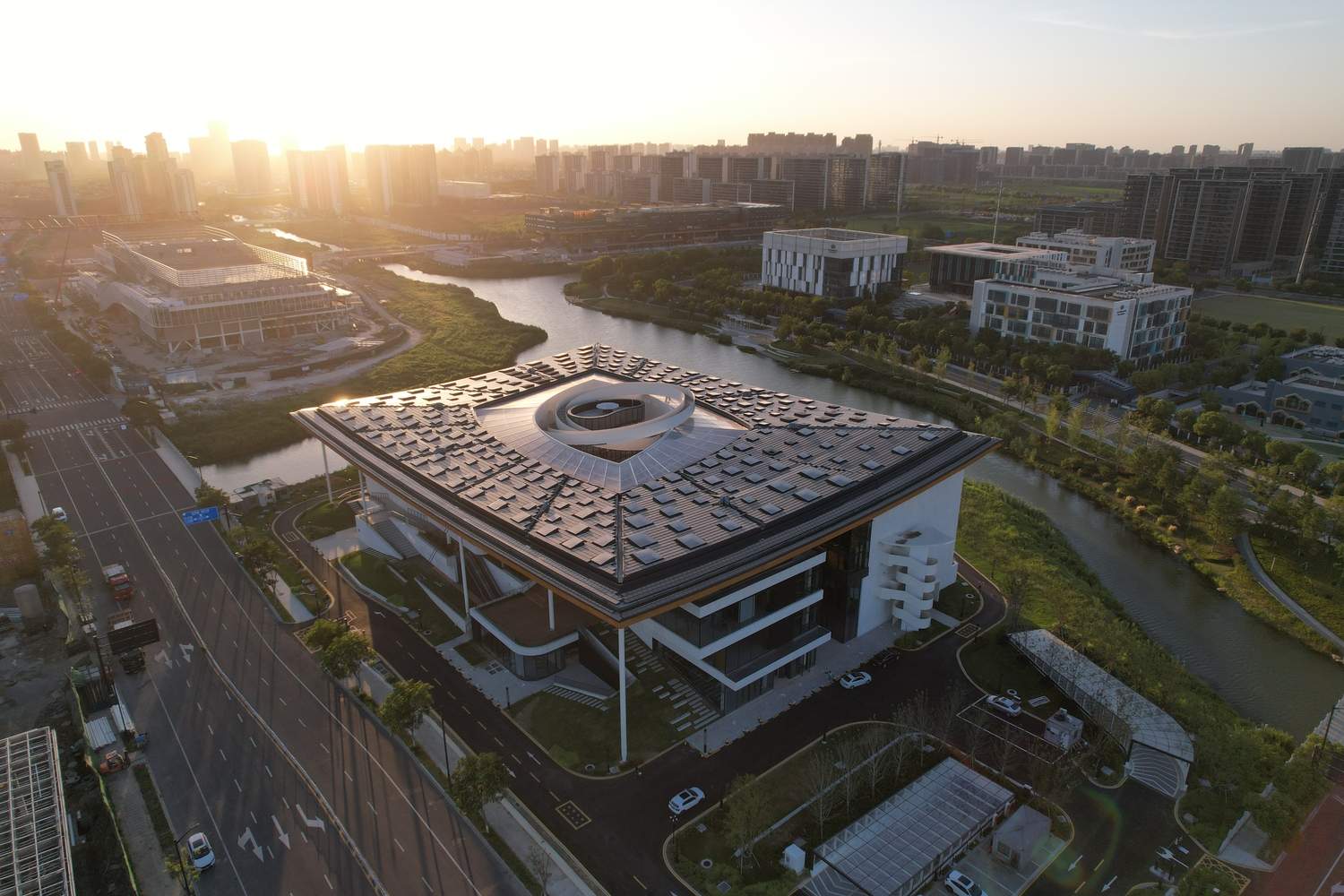
滨水激活与公共性重塑:该项目巧妙地将一座大型文化中心融入嘉兴水乡的半岛地貌,通过“山体台地”的立体化处理,成功消解了体量对滨水空间的阻隔效应。设计核心在于主动“让渡水岸”,将建筑体量转化为可攀登的公共平台,形成“三山夹两水”的立体街道网络。这种开放的立体游线设计,使得文化功能与市民日常休闲、滨水景观欣赏无缝衔接,实现了文化中心从传统“阳春白雪”到“烟火气城市客厅”的转变,极大地提升了建筑的公共参与度和城市界面活力。
全域融合的生态与技术策略:建筑在设计中深度融合了可持续策略,特别是其创新的大屋面系统。钢木复合、光伏一体化的屋顶不仅提供了连续的、可步行的檐下林荫空间,有效提升了户外体验的舒适度,更重要的是,它将近500kW的光伏系统整合为建筑的“光合作用”器官,为建筑运行提供清洁能源。同时,通过 ETFE 天窗和中庭,实现了自然采光和通风的优化,将可持续技术转化为可感知的空间体验,展现了对低碳理念的深刻理解和技术落地。
性能导向与弹性运营的室内空间:室内设计体现了高度的实用性和前瞻性。采用“公共区域先行,商业单元留白”的策略,确保了核心公共空间的高效使用,并为未来业态的迭代预留了弹性。设计紧密围绕声学、采光和设备整合等性能指标展开,例如通过格栅墙、树状顶棚和一体化吊顶处理,清晰地界定了空间秩序并优化了使用体验。多功能剧场和影音空间的设计,通过可变性与差异化声学处理,确保了建筑在不同文化活动中的适应性和高效运营能力。
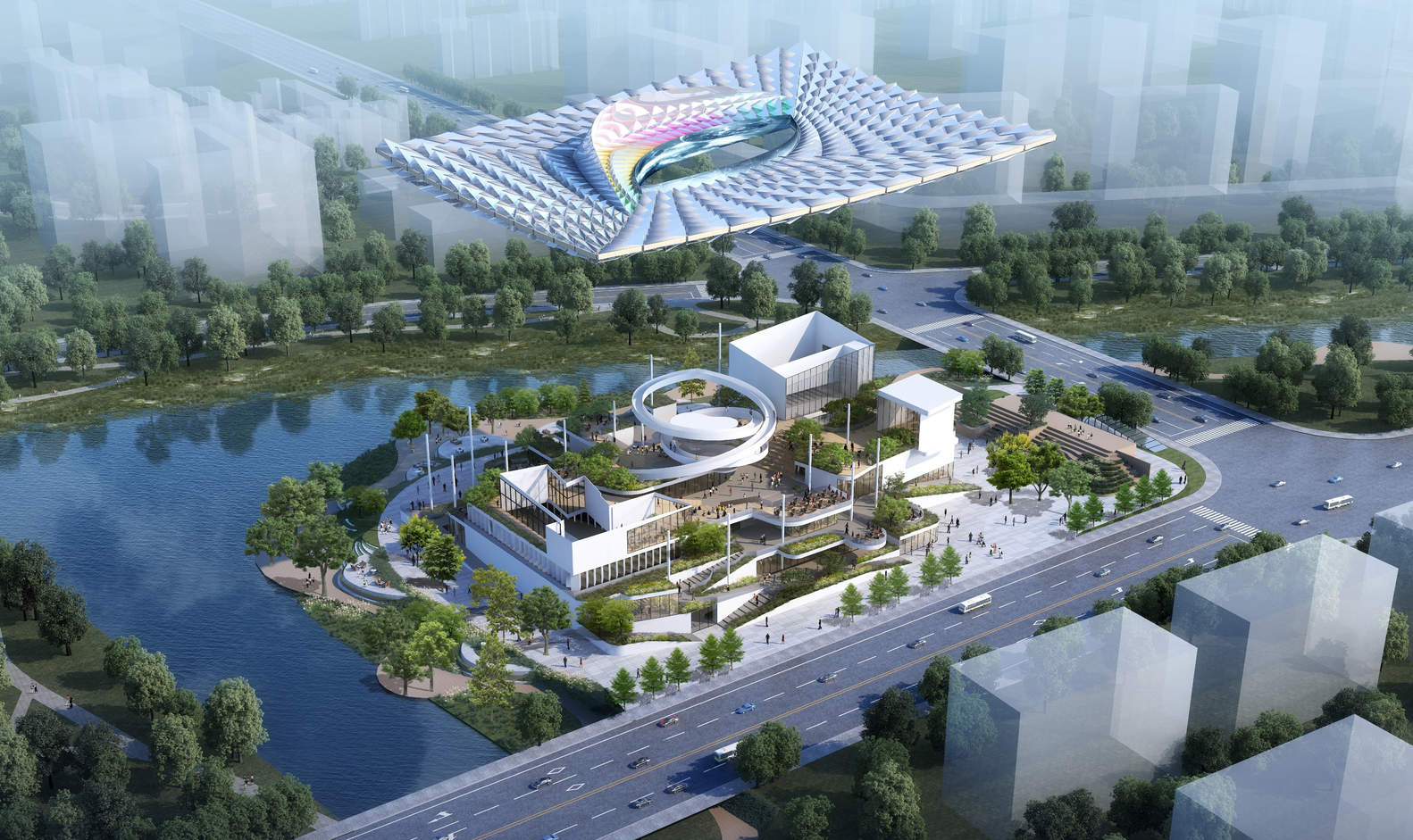
In the city of Jiaxing, crisscrossed by rivers and connected by nine waterways, this peninsula site, bordered by water on two sides, was dedicated to a public-facing cultural center within the High-Speed Rail New Town. During the first site visit in 2020, the site still retained open waterfront views and wild ecology, while the surrounding new town development was still brewing. How to avoid large public buildings obstructing the waterfront, and instead actively yield the waterfront, became the starting point for the design. The owner's expectations for the cultural center covered a variety of usage scenarios, resembling a miniature silhouette of the city: artistic performances, planning exhibitions, film salons, citizen forums; restaurants, cafes, bookstores, cultural and creative shops, interest classes, musical instrument stores; gatherings with friends, strolling with children, shopping and sketching, sightseeing check-ins, impromptu performances, street flash mobs, weekend markets… When these life scenes unfolded, like seeds scattered on this special site, the challenge was how to sprout into an interesting, functional, open, and inclusive building.
嘉兴,河网密布,九水连心。在这个自然、松弛的城市里,高铁新城将一块两面临水的半岛用地,留给了一座面向公众的文化中心。 2020 年第一次现场踏勘时,场地仍保有开阔的滨水视野与野趣生态,周边的新城建设还在酝酿中。如何避免大型公共建筑阻隔水岸,而是主动让渡水岸,成为设计的起点。 业主对文化中心期待的使用场景林林总总,仿佛这座城市的微缩剪影:文艺演出,规划展览,电影沙龙,市民论坛;餐厅,咖啡,书店,文创,兴趣班,乐器行;聚餐会友,散步遛娃,逛街采风,观景打卡,即兴演出,街头快闪,周末市集……当这些生活场景铺陈展开,如同一把种子撒在这片特殊的场地里,就看怎么破土长出一座有趣、适用、开放包容的建筑。
© 陈鑫星
© 陈鑫星
© 陈鑫星
© 高唯芷
The Mountain Terraces as a Three-Dimensional Living Room
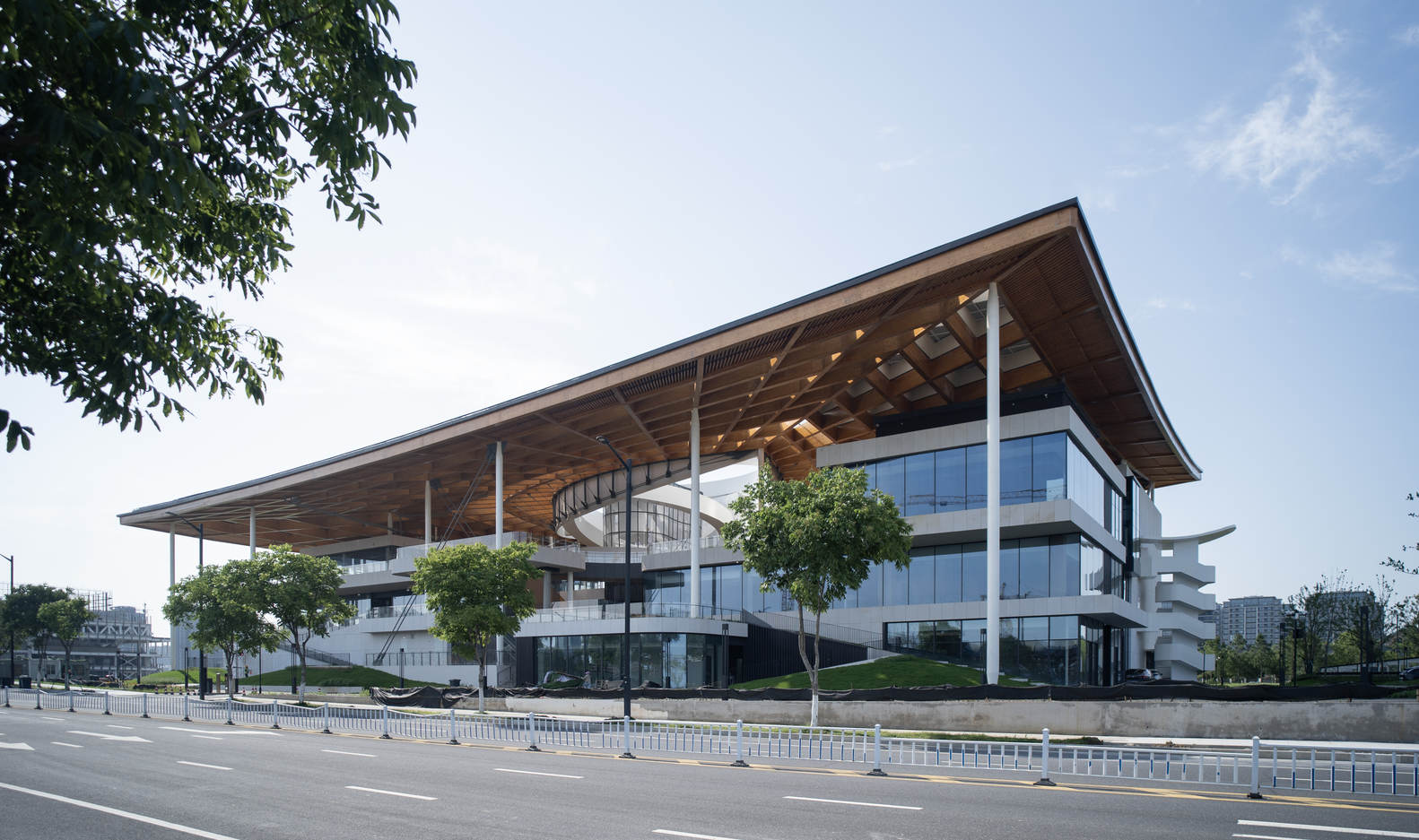
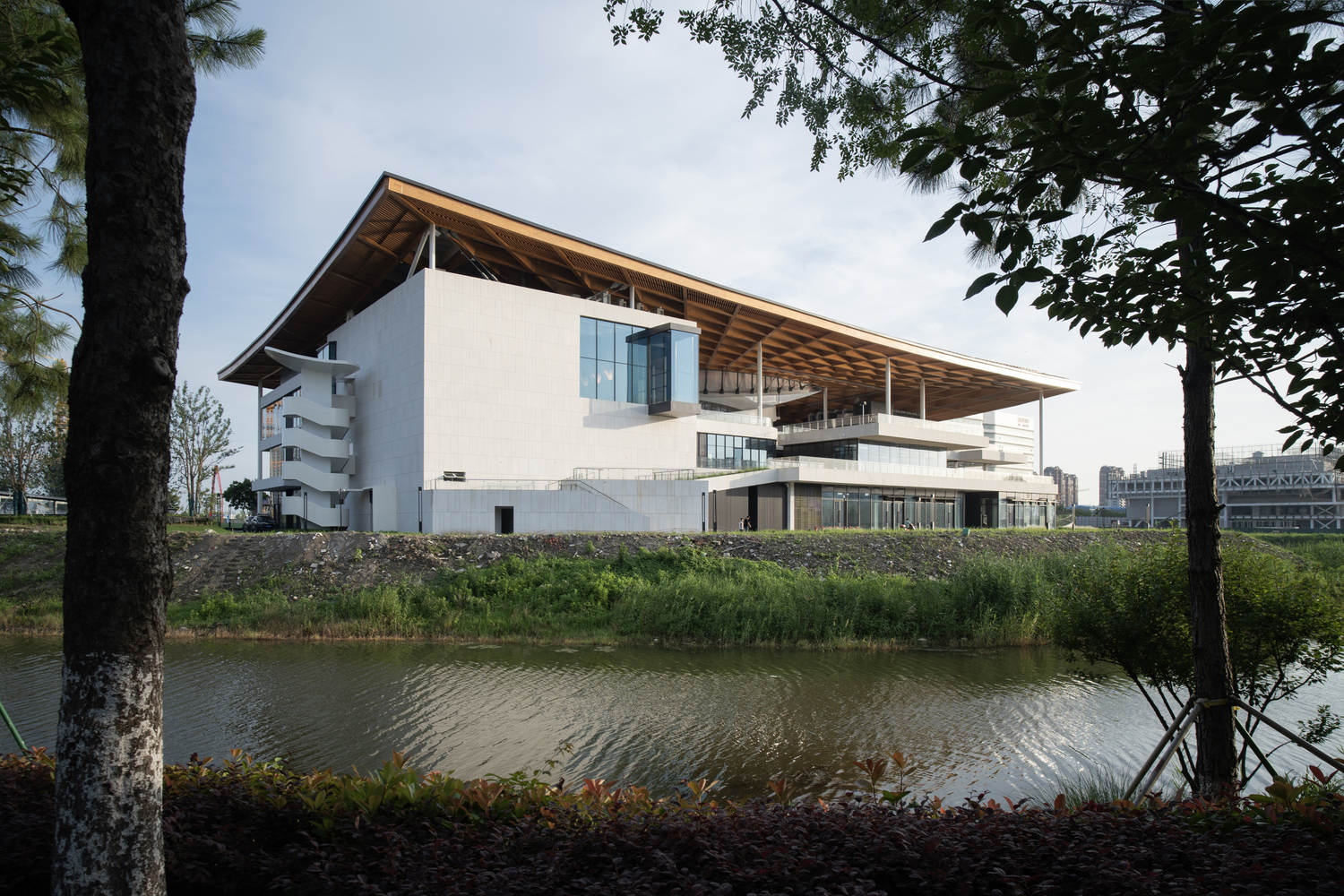
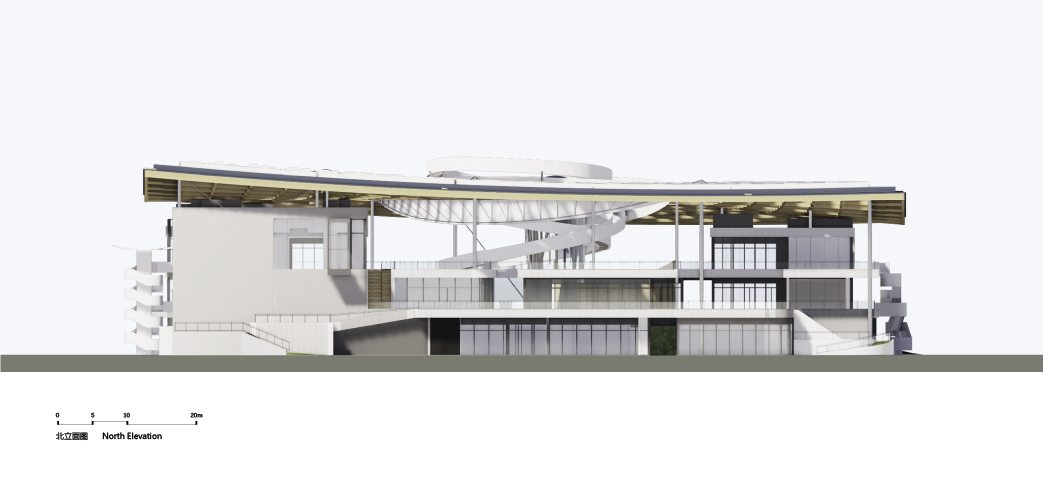
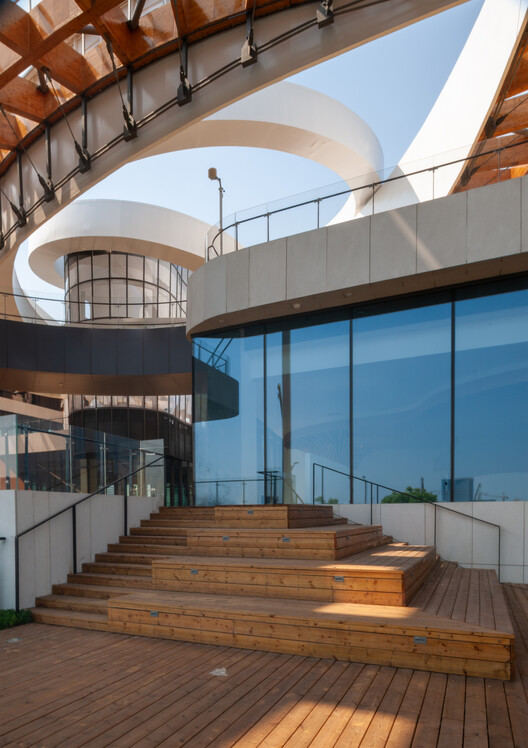
The design shapes the external space into climbable "mountain terraces," creating an all-weather, open, three-dimensional public platform to dissolve the sense of mass and prevent the building from becoming a barrier to the waterfront. Large functional spaces such as exhibition halls, reception foyers, and multi-functional theaters, as well as restaurants and bookstores serving the waterfront area, are located on the ground floor; various salons, forums, and independent shops are stacked above, forming a three-dimensional public street system described as "three mountains flanking two waters." Citizens can ascend the platforms along the three-dimensional streets without entering the exhibition halls, enjoying views of the natural waterfront and city landscape from every angle. The open, three-dimensional circulation paths and zoned operation model provide flexible space for cultural activities, citizen leisure, and the night economy, allowing the cultural center to integrate back into daily urban life and grow into a vibrant city living room. The cultural center, traditionally perceived as highbrow ("Yangchun Baixue"), returns to the city's daily rhythm, blossoming into a space filled with everyday vitality.
山体台地的立体客厅
设计将外部空间塑造为可攀登的“山体台地”,以全天候开放的立体公共平台,消解体量感,避免建筑成为通往滨水的屏障。展厅、接待门厅、多功能剧场等大体量的功能空间和为滨水空间服务的餐厅、书吧设置在首层;各类沙龙论坛和独立商店叠置其上,形成“三山夹两水”的立体公共街道。市民无需进入展馆,就能沿立体街道登临平台,逛遍各文化服务单元,全方位的欣赏自然水岸和城市景观。开放的立体游线与分区运营模式,为文化活动、市民休闲与夜间经济提供了弹性空间,使文化中心回归城市日常,生长为有烟火气的城市客厅。传统观念里“阳春白雪”的文化中心,落回城市日常之中,生长为充满烟火气的城市客厅。
© 陈鑫星
© 高唯芷
Accessible and Interconnected Public Spaces
The building's public nature is further reinforced through a decentralized, highly accessible spatial structure. While all functional units are connected by a cohesive foyer system, they maintain independent accessibility: the waterfront restaurant and bookstore directly face the riverside walkway; the multi-functional small theater has an independent vestibule supporting nighttime and non-working day operations; the exhibition halls, shops, and second and third-level service units can all be independently accessed via the outdoor streets and platforms. The semi-outdoor platforms not only connect functions but also provide flexible venues for new formats like pop-up events.
四通八达的公共空间
建筑的公共性,通过去中心化、四通八达的空间结构进一步强化。各个功能单元既由完整的门厅系统串联,又保持独立可达:滨水餐厅与书店直接面向沿岸步道;多功能小剧场拥有独立前厅,支持夜间与非工作日运营;展厅、商店与二、三层服务单元均可经由户外街道与平台独立进出。半户外平台不仅连接功能,也为快闪活动等新型业态提供灵活场所。
© 陈鑫星
Shady Strolls Beneath the Eaves
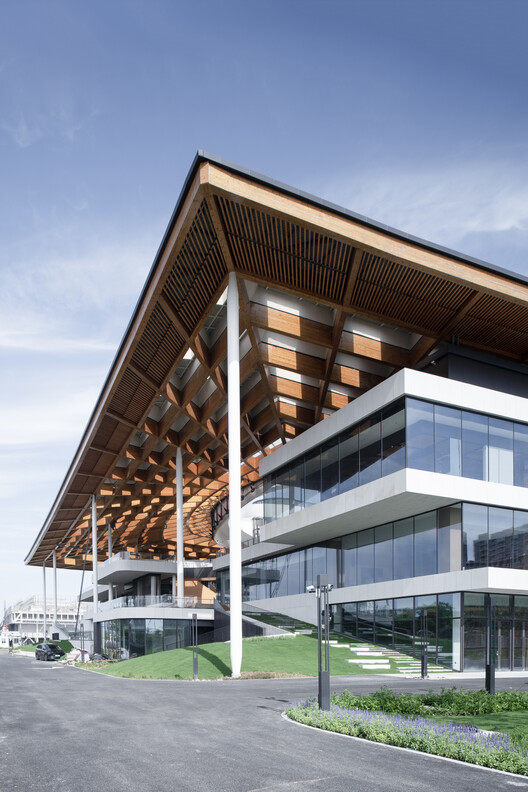
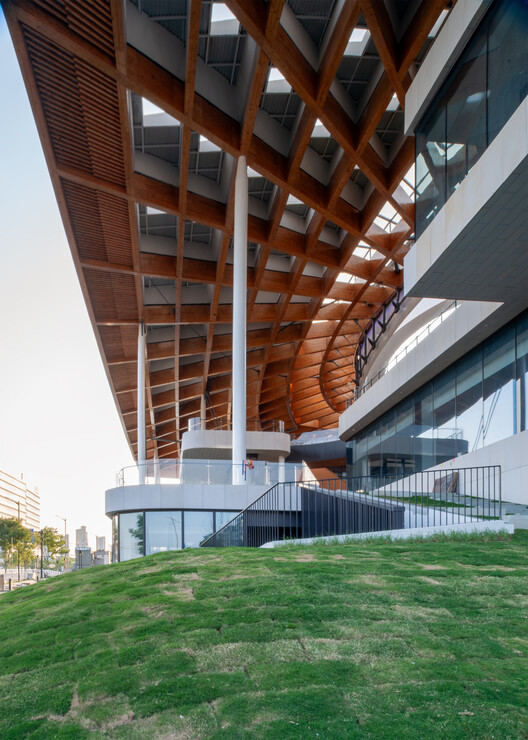
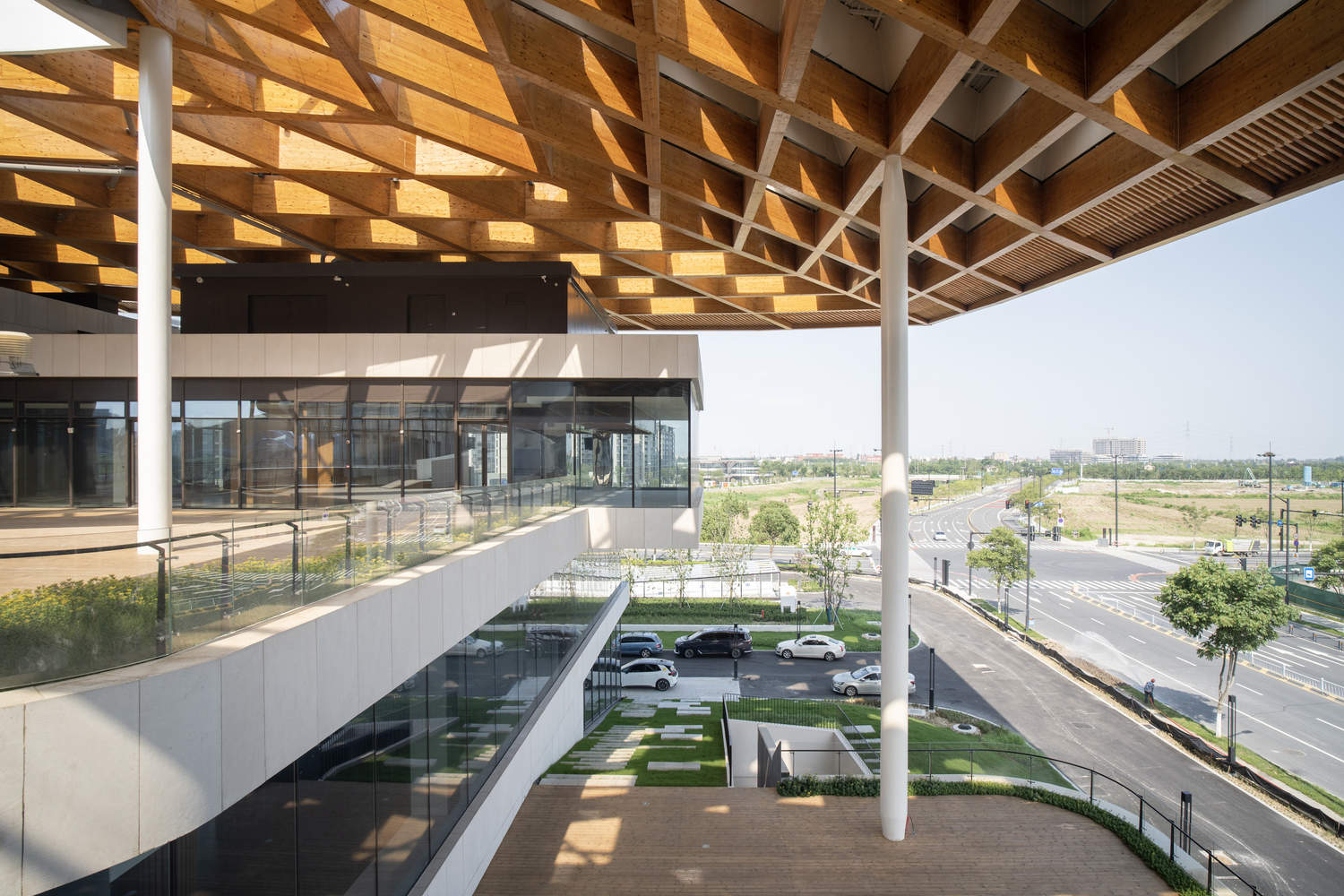
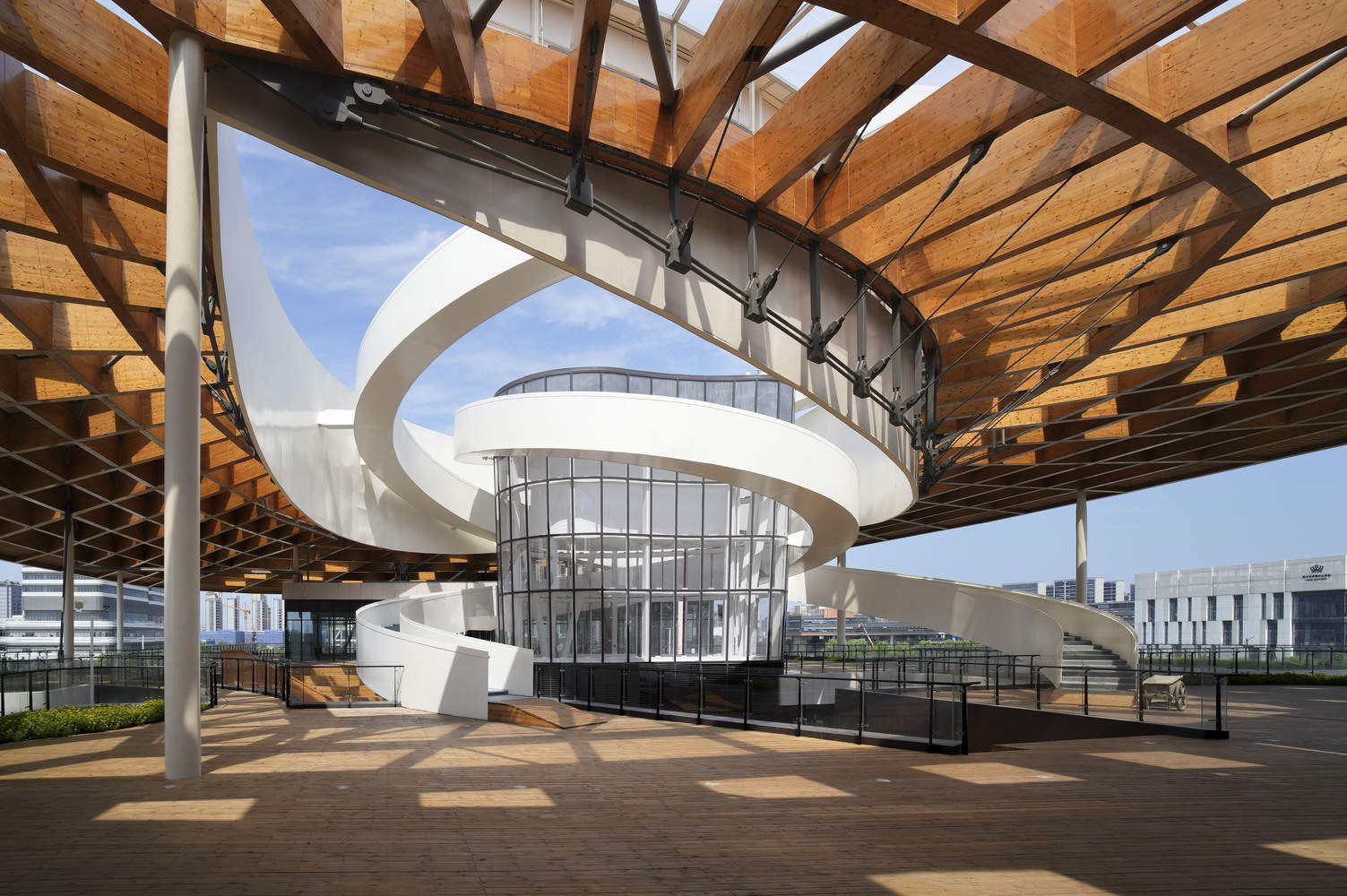
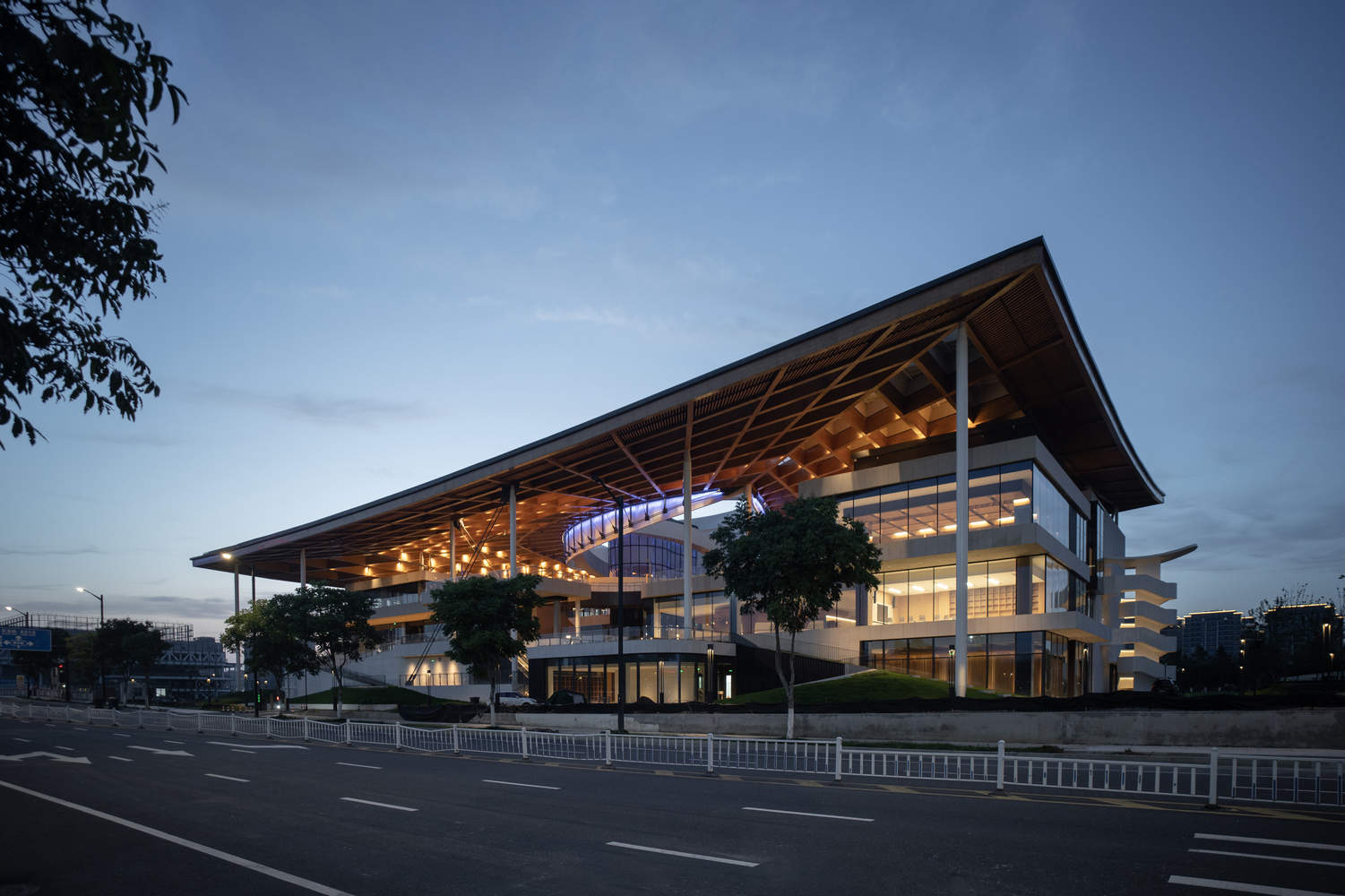
Above the "mountain terraces," a large roof structure, a composite of steel and wood integrated with photovoltaics (BIPV), shelters a continuous space beneath the eaves for the city. This feature provides shading and rain protection, enhancing outdoor comfort while blurring the boundaries between indoor and outdoor, allowing cultural life to extend outdoors and returning natural experiences to the interior. The roof truss slopes upward from west to east and from south to north, resembling a traditional upturned eaves facing the sun, and is optimized structurally through a modular space frame system.
屋檐之下的林荫漫步
在“山体台地”之上,一片钢木复合、光伏一体化的大屋面,为城市撑起连续的檐下空间。在遮阳避雨,提升户外舒适度的同时,模糊室内外的界限,让文化生活走向户外,也用自然体验回馈室内。屋架西高东低、南高北低,形似反宇向阳的传统屋檐,并通过单元化网架优化构造。
© 陈鑫星
© 高唯芷
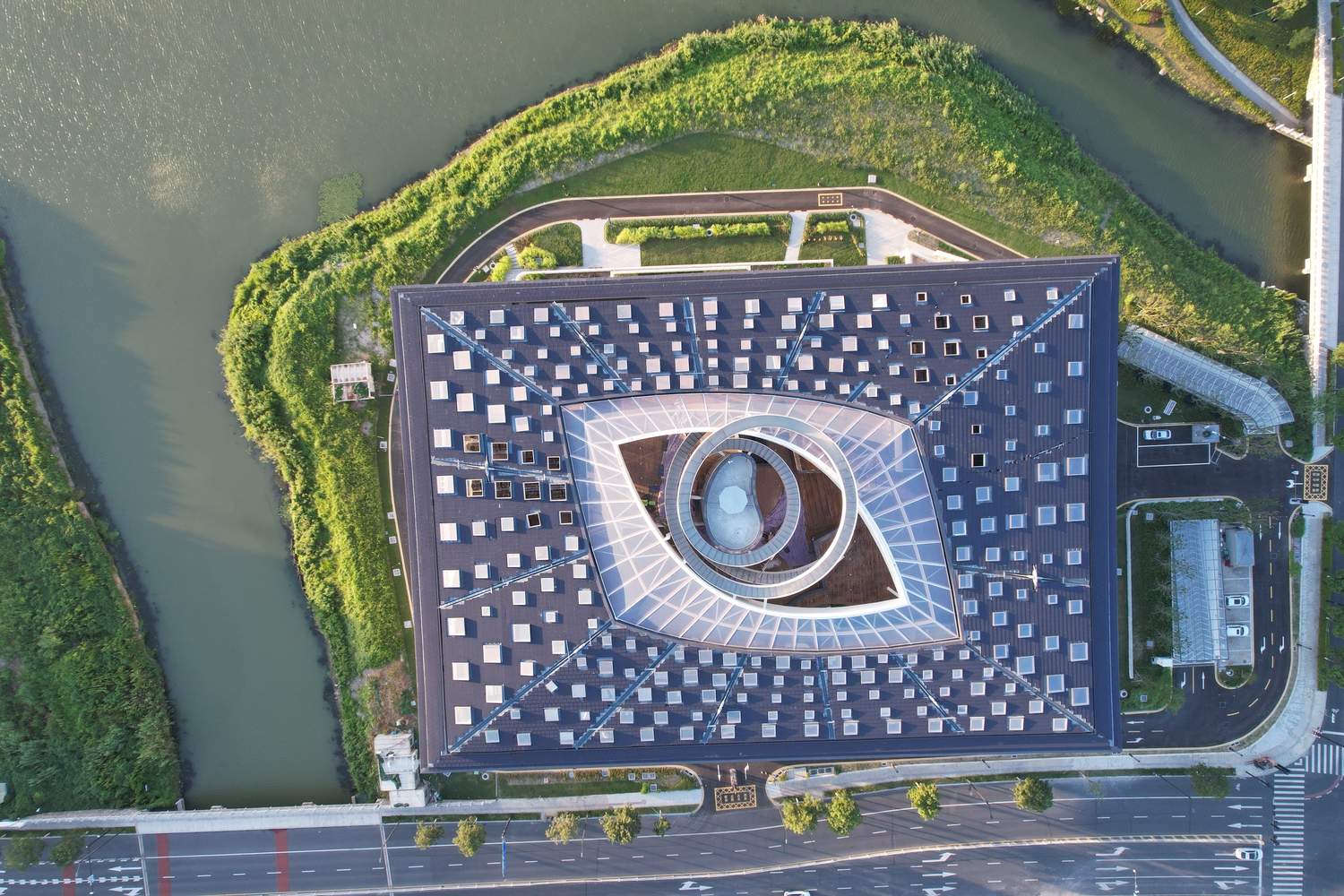
The solid roof surface works in tandem with ETFE skylights to introduce soft natural daylight under the eaves while absorbing equipment and activity noise. The "Jiaxing Eye" atrium in the center of the mountain terraces further introduces ventilation and daylighting, allowing occupants even deep under the eaves to perceive the sky and airflow, creating a comfortable public space akin to a shady grove. The solid roof surface and ETFE skylights work together to bring soft natural daylight under the eaves while absorbing equipment and activity noise. The "Jiaxing Eye" atrium in the center of the mountain terraces further introduces ventilation and daylighting, allowing deep-eave areas to still perceive the sky and airflow, forming a comfortable public place like a tree-lined walkway.
© 陈鑫星
© 高唯芷
Photosynthesis and Symbiosis Above the Eaves
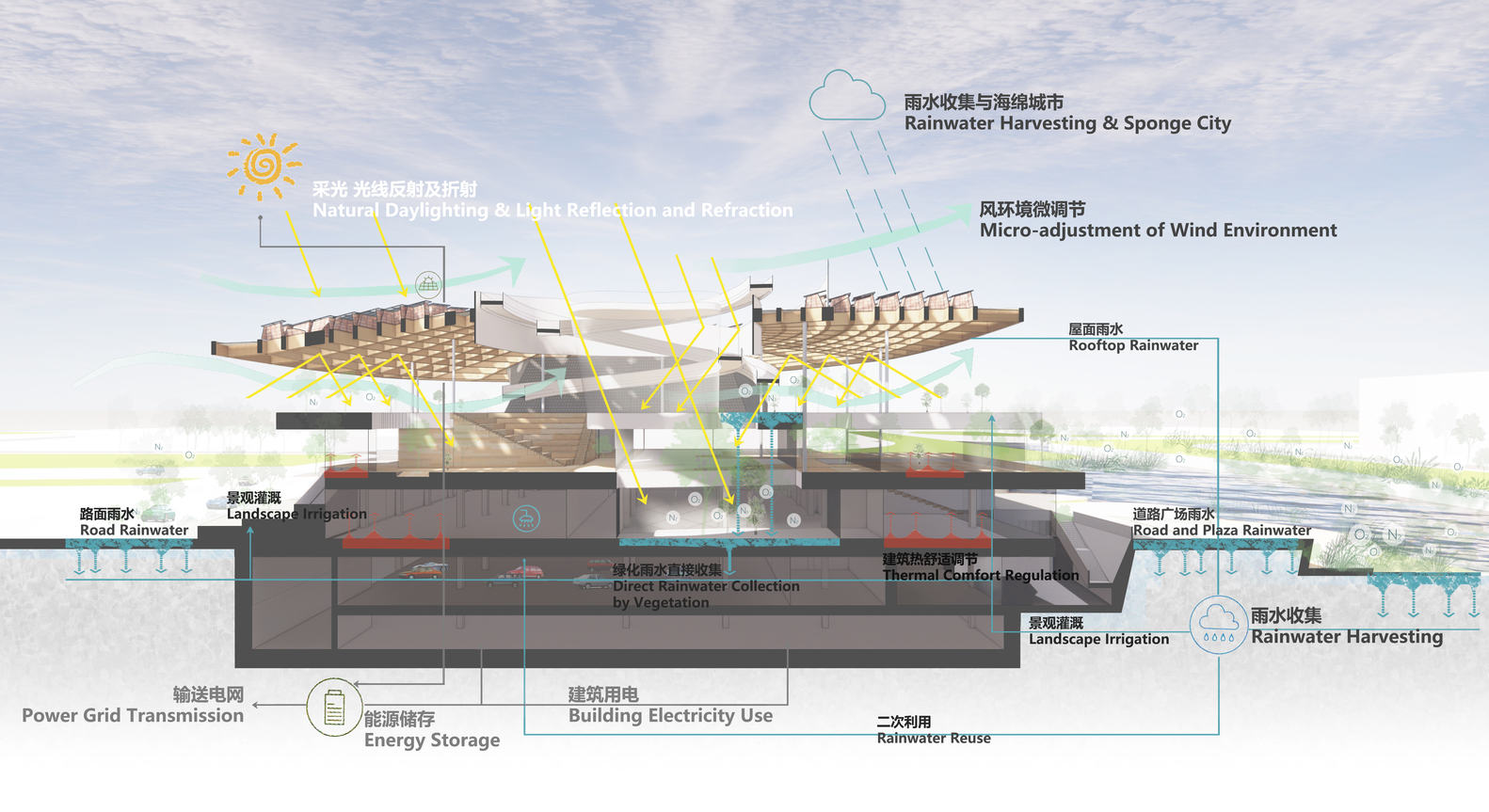
Above the eaves, the photovoltaic system coexists with the structural elements. With an installed capacity of about 500kW, the PV system performs photosynthesis like a tree canopy, providing clean energy for the building's air conditioning, lighting, and charging stations. It offers shading and guides wind in the summer, and manages rainwater drainage effectively, ensuring outdoor activities can proceed regardless of weather. The building's technical systems are no longer hidden but become part of the perceptible daily experience.
屋檐之上的光合共生
屋檐之上,光伏系统与结构单元共生。约 500kW 的光伏装机容量,如同树冠般光合作用,为建筑空调、照明、充电桩等运行提供清洁能源。盛夏遮阳导风、雨天有序排水,延续风雨无阻的户外日常。建筑的技术系统不再隐藏,而是成为可被感知的日常体验。
© 陈鑫星
© 陈鑫星
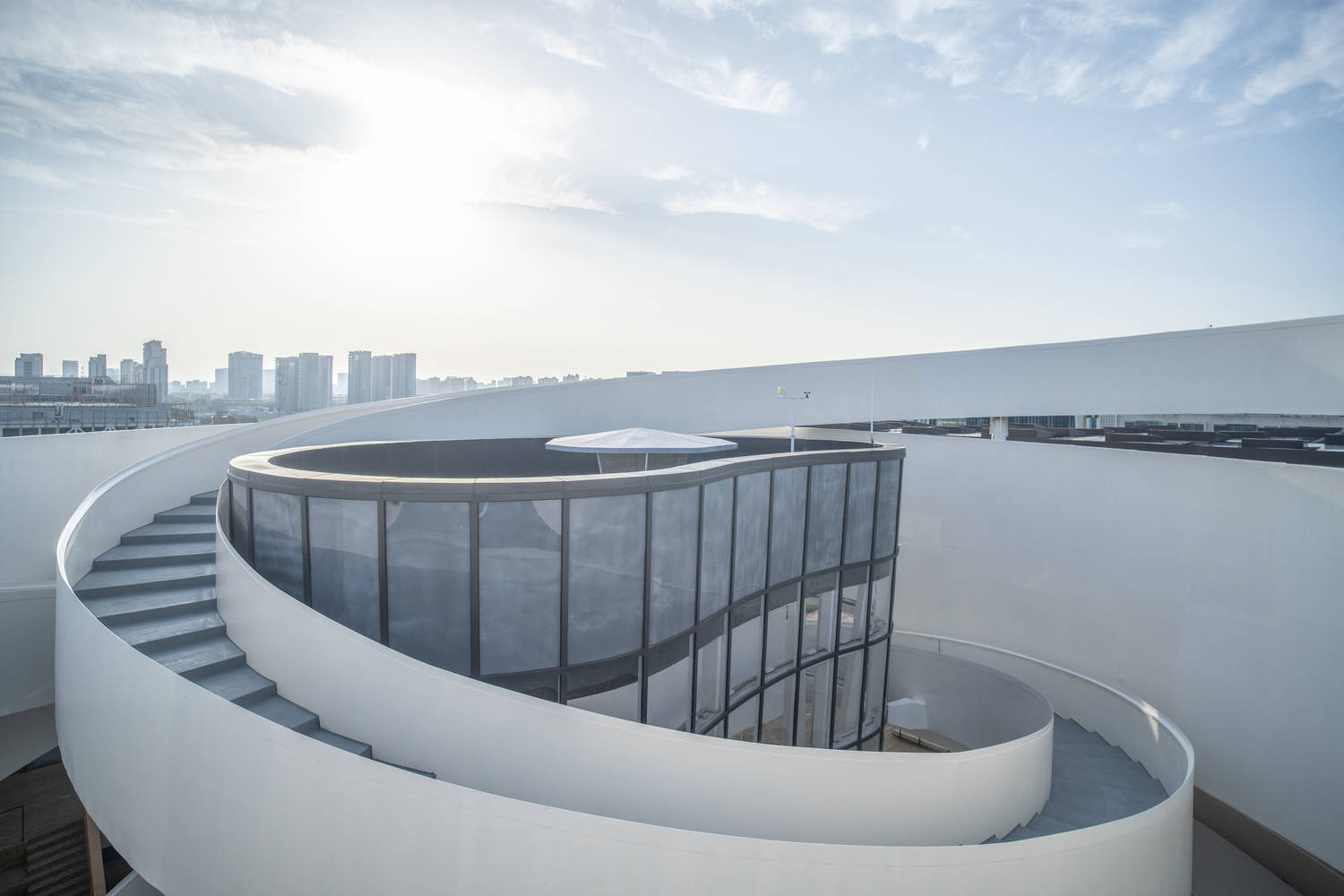
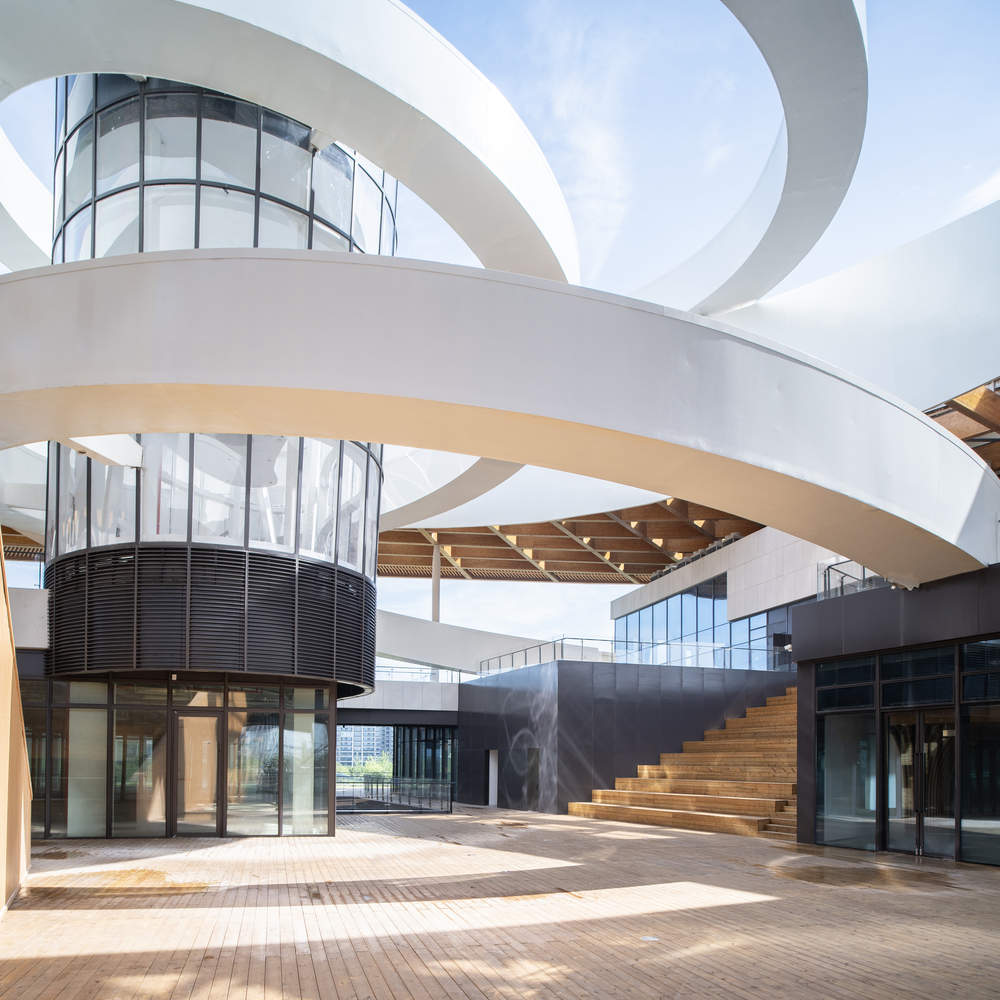
The double-helix ramps connect the three-dimensional tour routes, making the building's technical equipment a part of the daily experience. Citizens can observe the roof trusses, equipment, and PV structures up close while walking. The building functions like a transparent clock face, displaying equipment and structural details—like gears and screws—that are integral to its overall form and crucial for achieving its performance, translating the low-carbon concept into direct, readable spatial language.
双螺旋坡道串联立体游览路径,建筑技术设备成为日常体验的一部分。市民在行走中近距离观察屋架、设备、光伏构造,建筑如同一枚透明的表盘,展示出的设备和构造细节如同表盘中的齿轮和螺丝,是其整体形态中不可分割的一部分,也是实现其性能至关重要的一部分,将低碳理念转化为直观可读的空间语言。
© 高唯芷
Performance-Oriented Interior Space Design
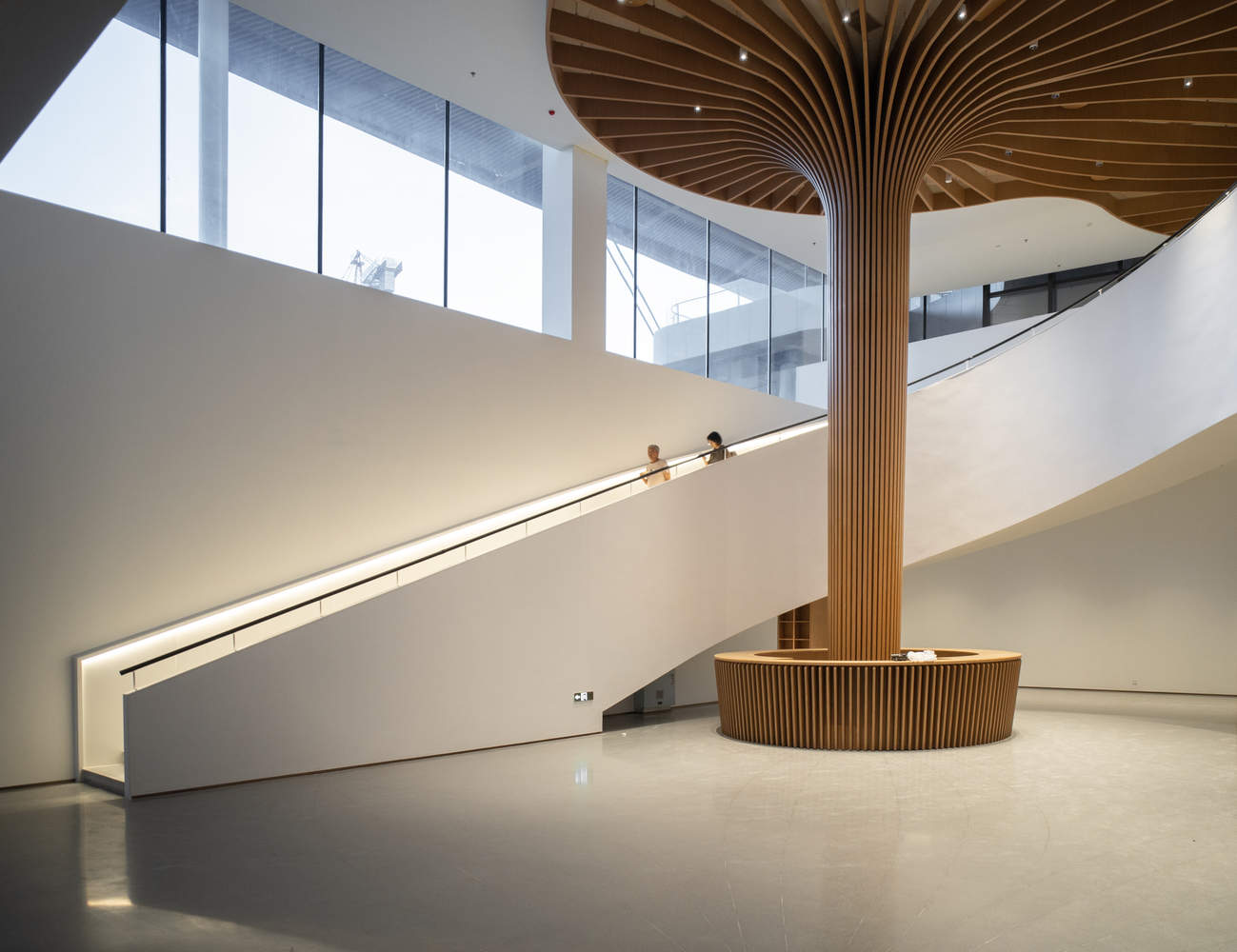
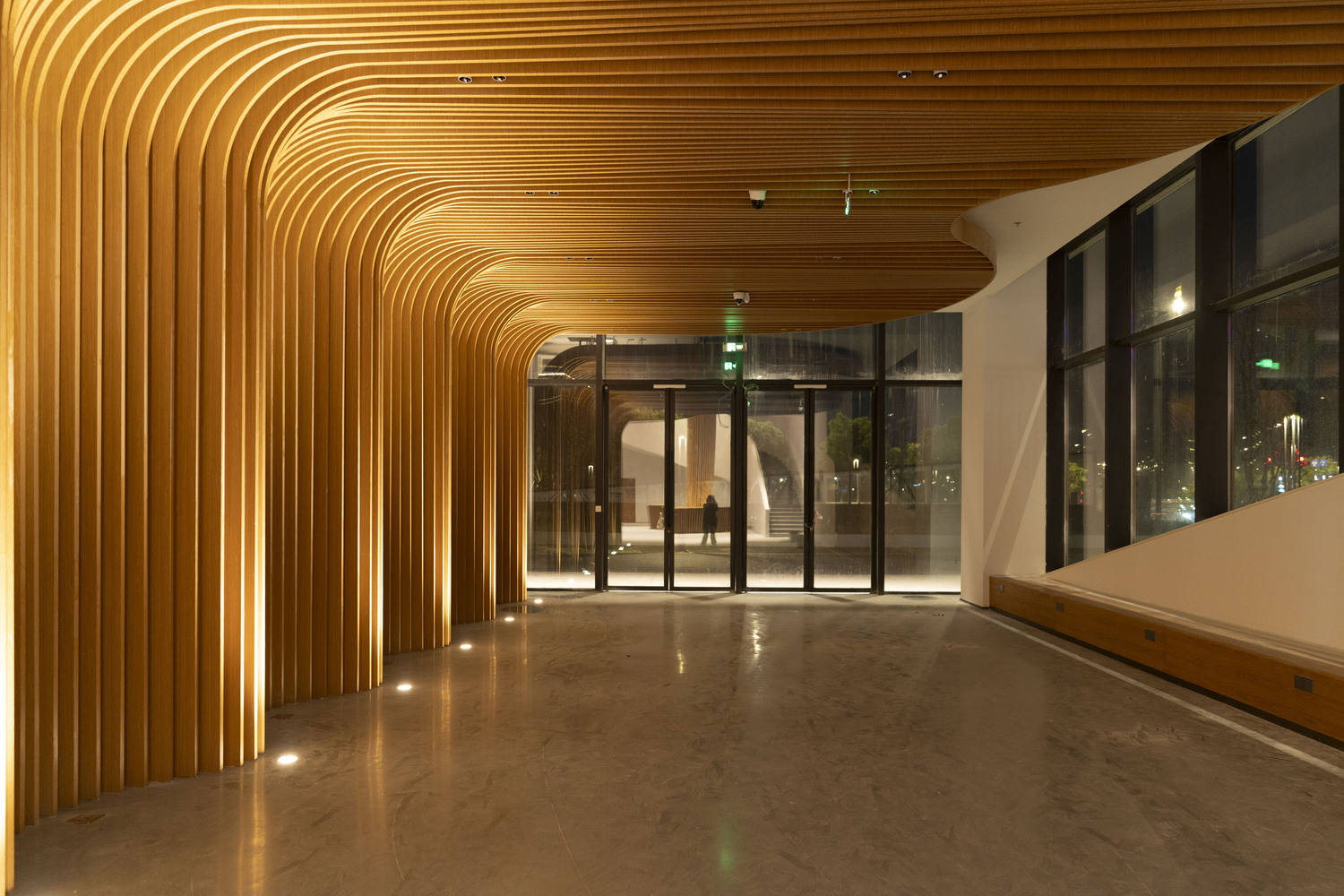
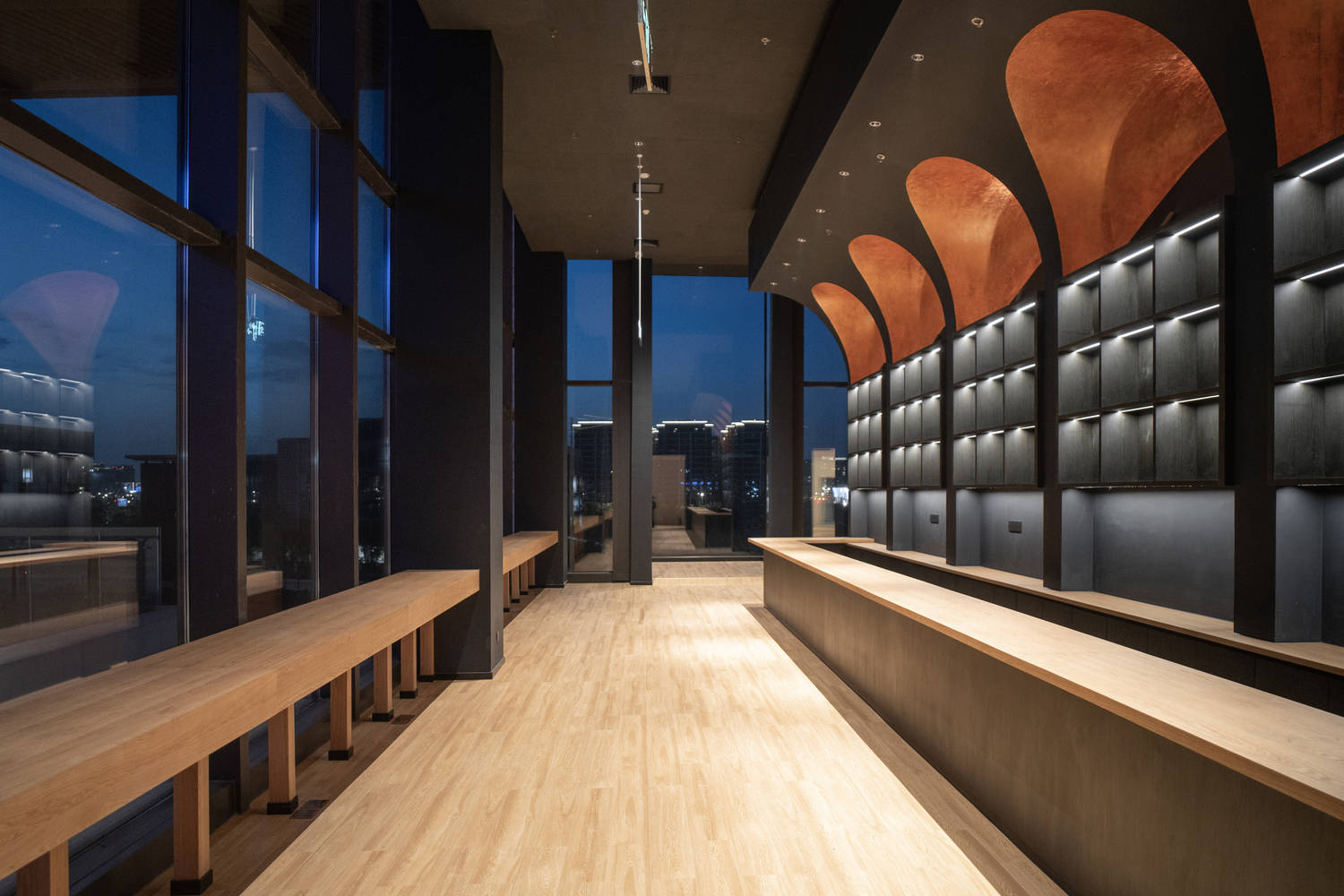
The interior design follows the differences in usage methods and operational cycles of the cultural center's functional units, adopting a strategy of "prioritizing public areas while leaving commercial units as a blank slate": Public spaces like foyers, atriums, and main halls, along with the multi-functional small theater and audiovisual spaces, are completed first. Independently operated units reserve design flexibility for future users, reducing resource waste and creating conditions for continuous spatial renewal. The overall interior design is performance-driven. Different spaces are designed based on actual usage needs, focusing on key elements such as acoustics, daylighting, and equipment integration, resulting in a clear and restrained spatial expression. The entrance foyer utilizes rhythmically changing grille display walls to balance activity exhibition and spatial order control, naturally integrating lighting and M&E systems. The main hall combines structural columns with reception information desks and audience seating needs, using continuous curved, tree-like canopies and floor textures formed by ceiling projections to define the space for the public's three-dimensional circulation. The hall's vertical circulation connects exhibition halls and multi-story meeting spaces; each meeting unit is holistically designed based on acoustic and lighting performance. Integrated treatment of structure and equipment is achieved through acoustic panel ceilings and linear light strips. The multi-functional small theater has an independent foyer, allowing for separation or combination during operation, and features variable seating and differentiated acoustic design to adapt to various scenarios like performances, forums, and press conferences. The salon bar outside the cinema connects to the outdoor platform via transparent interfaces, allowing film viewing, communication, and riverside public life to extend naturally.
性能导向的室内空间设计
室内设计遵循文化中心各功能单元在使用方式与运营周期上的差异,采用“公共区域先行,商业单元留白”的策略:优先完成门厅、中庭、大厅等公共空间,以及多功能小剧场与影音空间;独立运营单元则为未来使用者预留设计弹性,减少资源浪费,也为空间持续更新创造条件。整体室内设计以性能为导向展开。不同空间从实际使用需求出发,围绕声学、采光与设备整合等关键要素,形成清晰而克制的空间表达。入口门厅通过节奏变化的格栅展陈墙,兼顾活动展示与空间秩序控制,并将照明与机电系统自然融入其中。大厅将结构柱与接待信息台、观众休息的需求相结合,用连续曲线的树状顶棚,和顶棚投影形成的铺地纹理,形成公共活动立体动线的空间限定。大厅立体动线串联展厅与多层会议空间,各会议单元从声学与照明性能出发整体设计。用吸音板吊顶单元和照明灯带实现构造与设备一体化处理。多功能小剧场设置独立门厅,运营时可分可合,内部通过可变座席与差异化声学设计,适应演出、论坛与发布会等多种使用场景。影音欣赏厅外的沙龙水吧,通过通透界面与户外平台衔接,使观影、交流与滨水公共生活自然延展。
© 陈鑫星