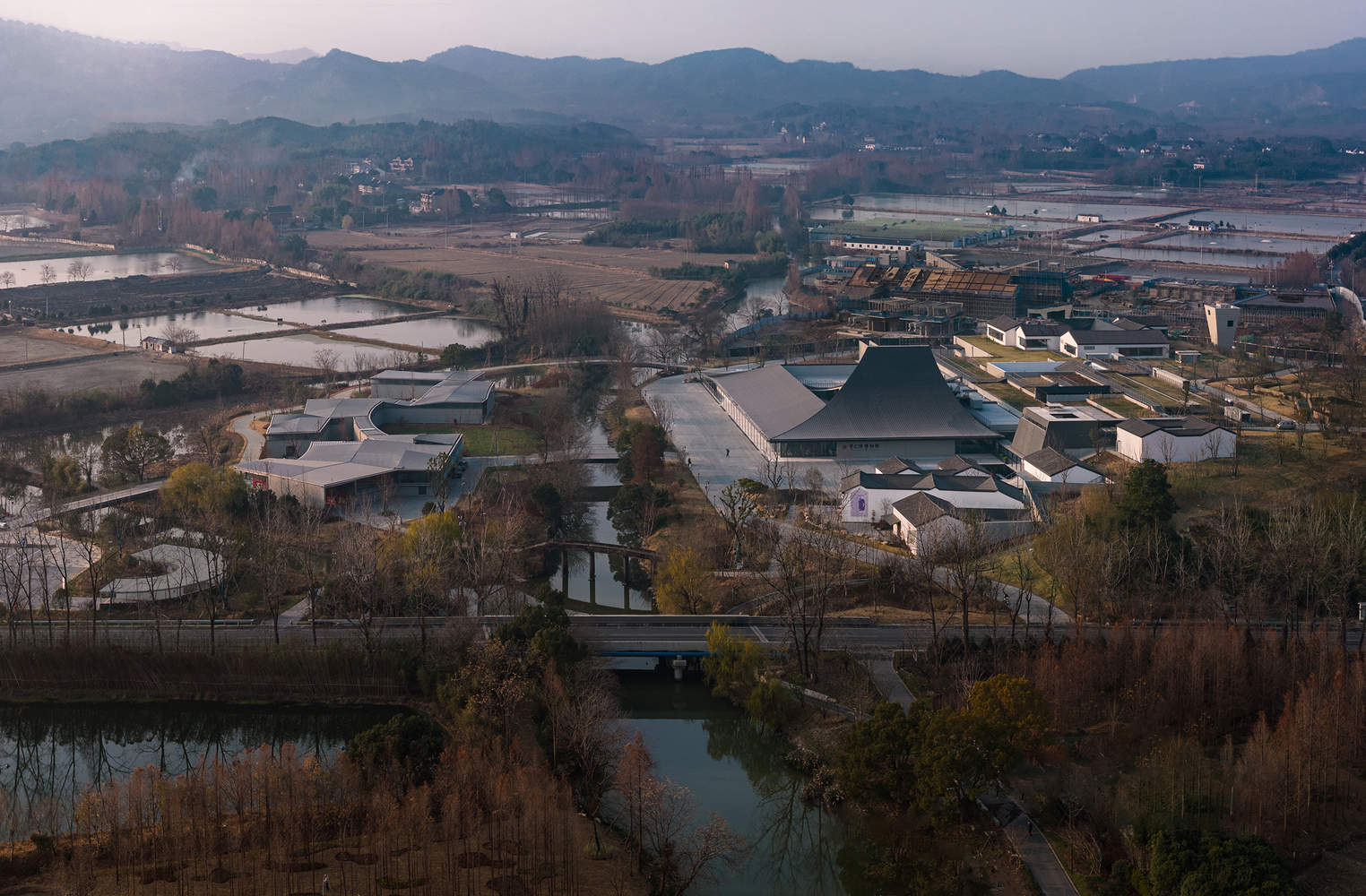
历史语境的精妙融合与场所精神的重塑:该项目最核心的亮点在于其对德清龙胜村旧址这一复杂历史场域的深刻理解和建筑化回应。设计巧妙地将新博物馆体量与遗存的原始瓷窑遗址、元代石舍桥以及原村落肌理进行共存与对话。通过对部分原有村居的保留、重建和改造,使历史的“碎片”成为博物馆的主题展廊或支持设施,实现了对场地历史文脉的持续性维护。建筑师在处理新旧关系时,避免了生硬的并置,而是通过尺度协调和空间渗透,使新建筑在尊重场所记忆的同时,成功地将历史元素转化为当代体验的有机组成部分,重塑了场所精神。
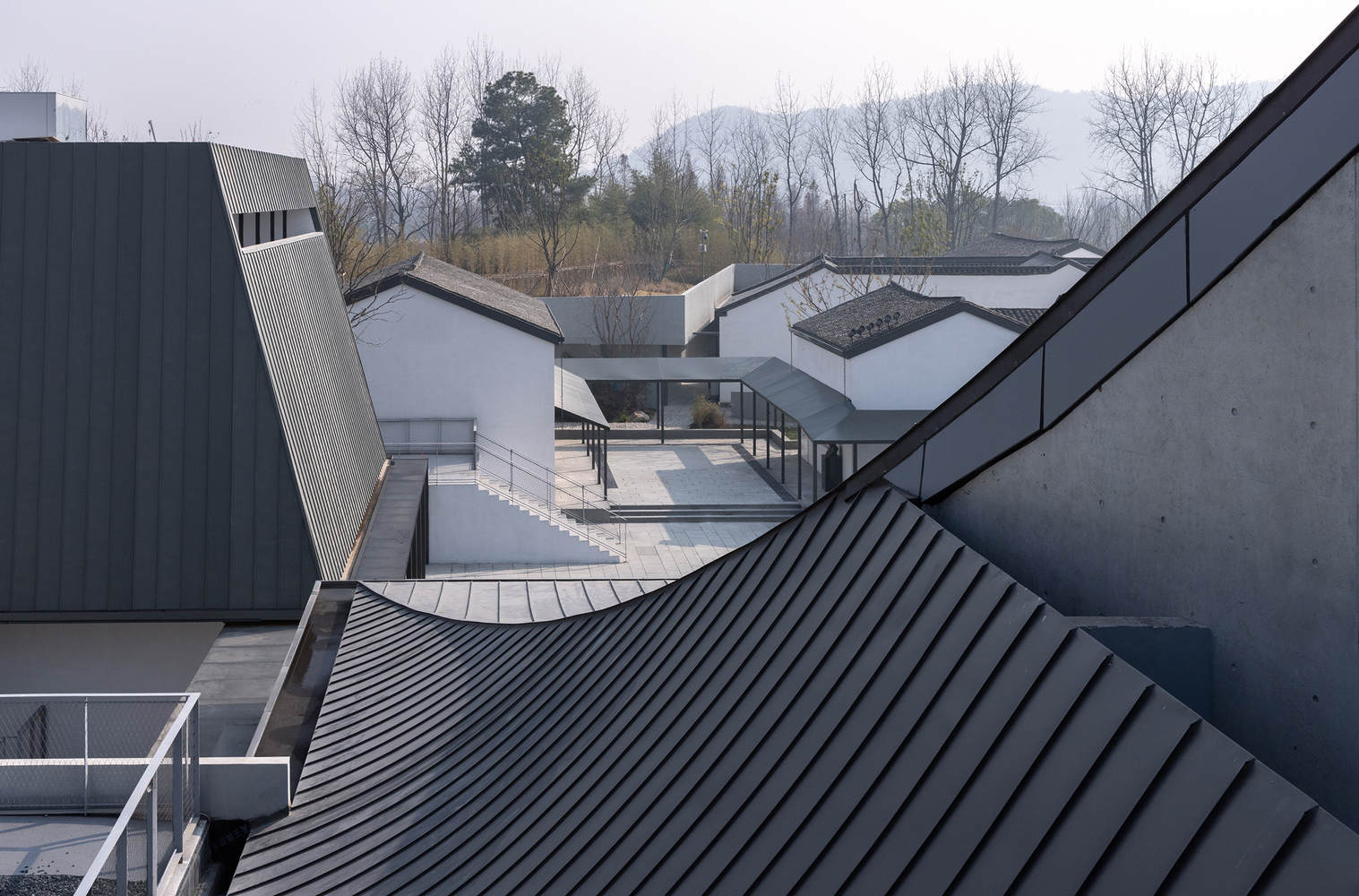
传统意象与当代语汇的张力平衡:建筑形式上,设计师在主要体量中展现了高超的“组合主义”(Compositional Hybridity)。通过轻盈的柱系、起伏的坡道式屋顶(借鉴了歇山或庑殿的屋顶形态),以及与地貌起伏相呼应的平面布局,建筑在视觉上具有强烈的传统建筑意象。然而,这种传统性并非简单的复刻,而是通过引入新的尺度关系、弧形结构系统和现代材料语言(如钢板),实现了传统肌理与当代表达的并置与张力。这种形式上的“犹豫不决”有效地打破了固化的建筑类别认知,创造出既熟悉又陌生的建筑体验,极具理论深度和实践价值。
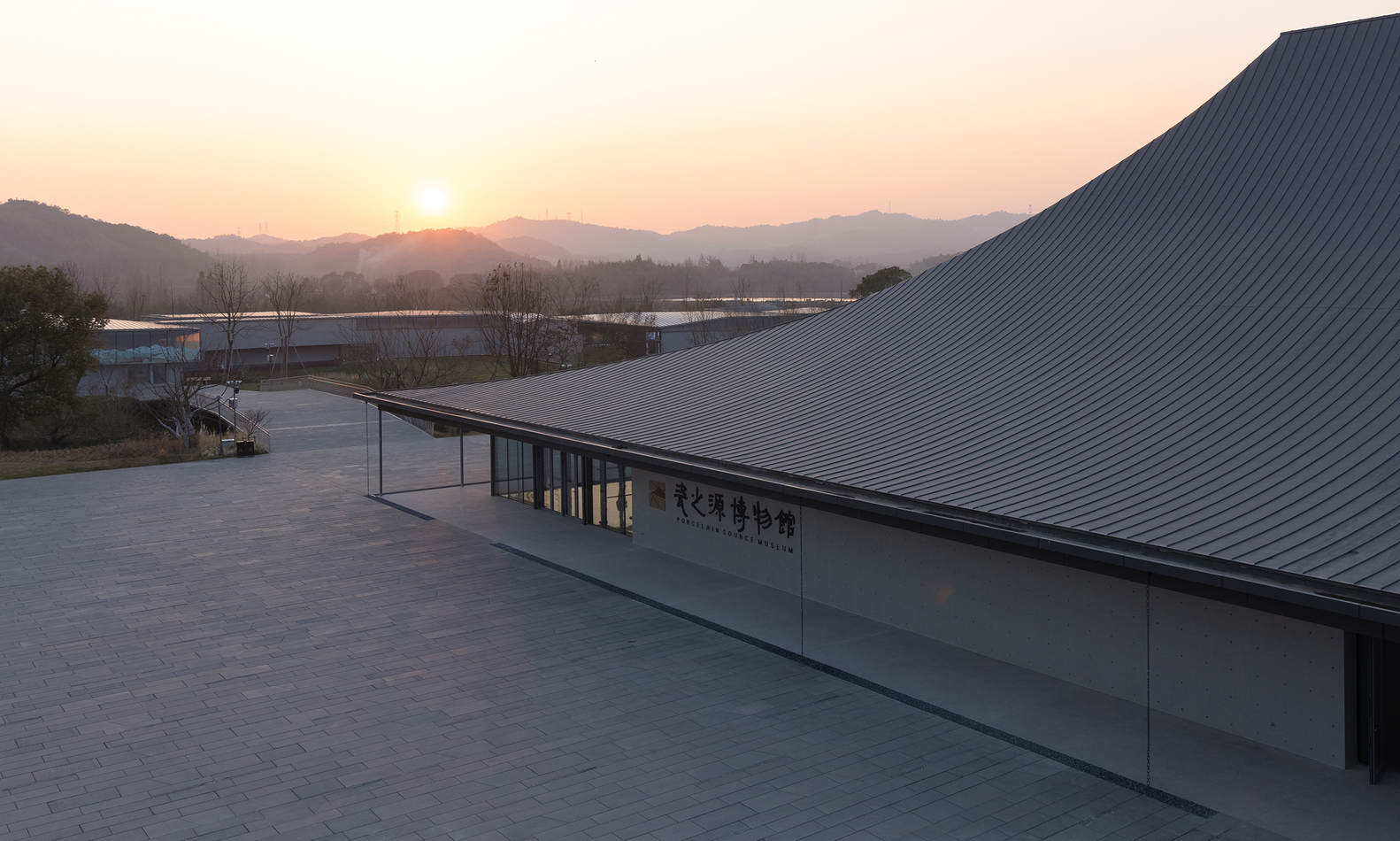
空间叙事中自然环境的深度嵌入:该设计的另一精髓在于其对自然环境和周边景观的积极纳入。建筑通过低矮的屋檐处理,确保了主馆与周边低矮的村落尺度保持协调。更重要的是,设计将元代石舍桥和河流引入室内感知场域,强化了建筑与其环境的连续性。此外,下沉式的景观建筑部分通过引入庭院组织自然采光和通风,并使屋顶形态延续周边农业梯田的地貌起伏,将建筑体量消隐于背景之中。建筑顶部的露天剧场更是直接将远山和近水纳入使用和感知,确立了自然景观在博物馆空间叙事中的核心地位。
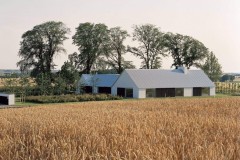
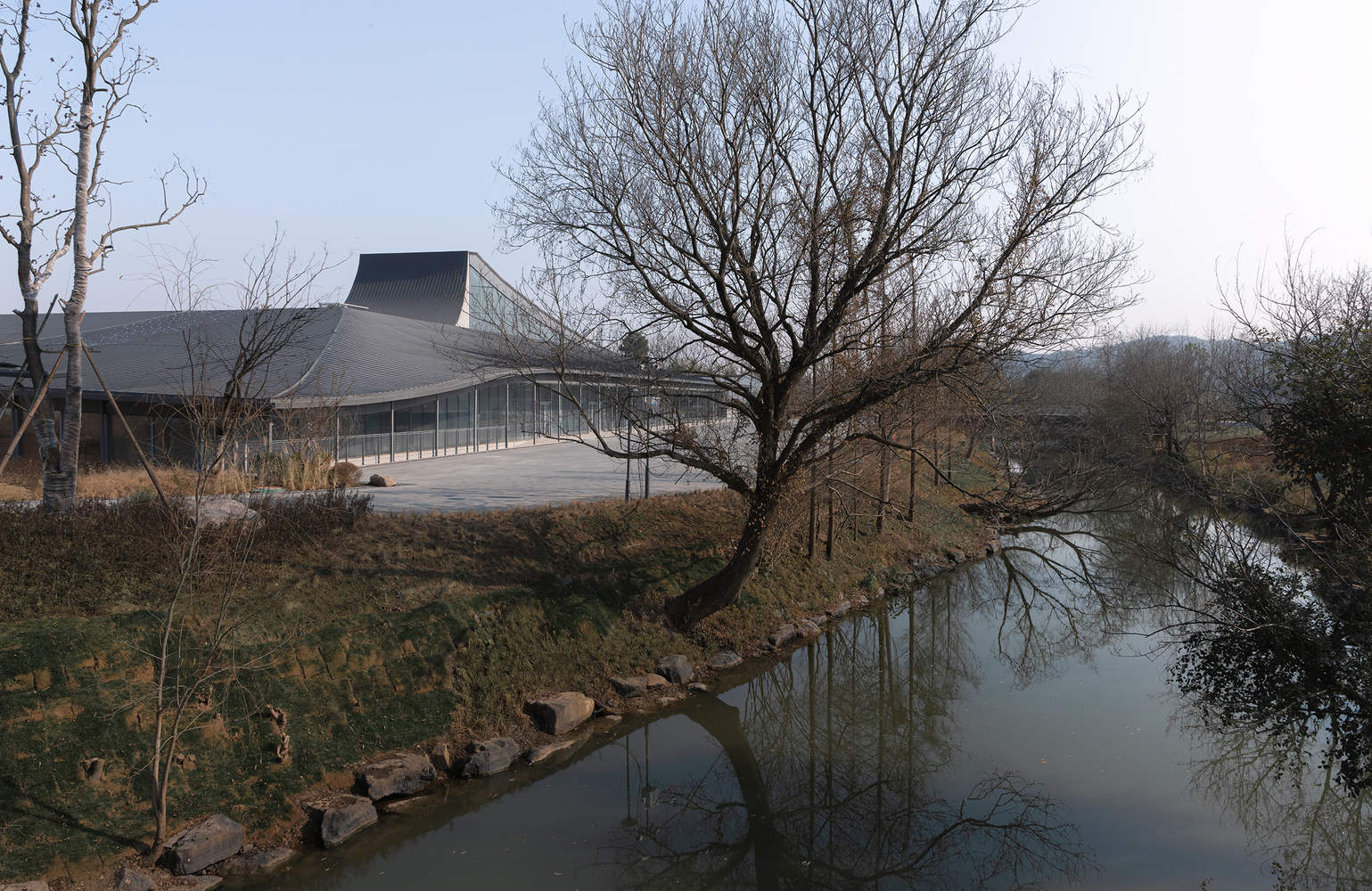
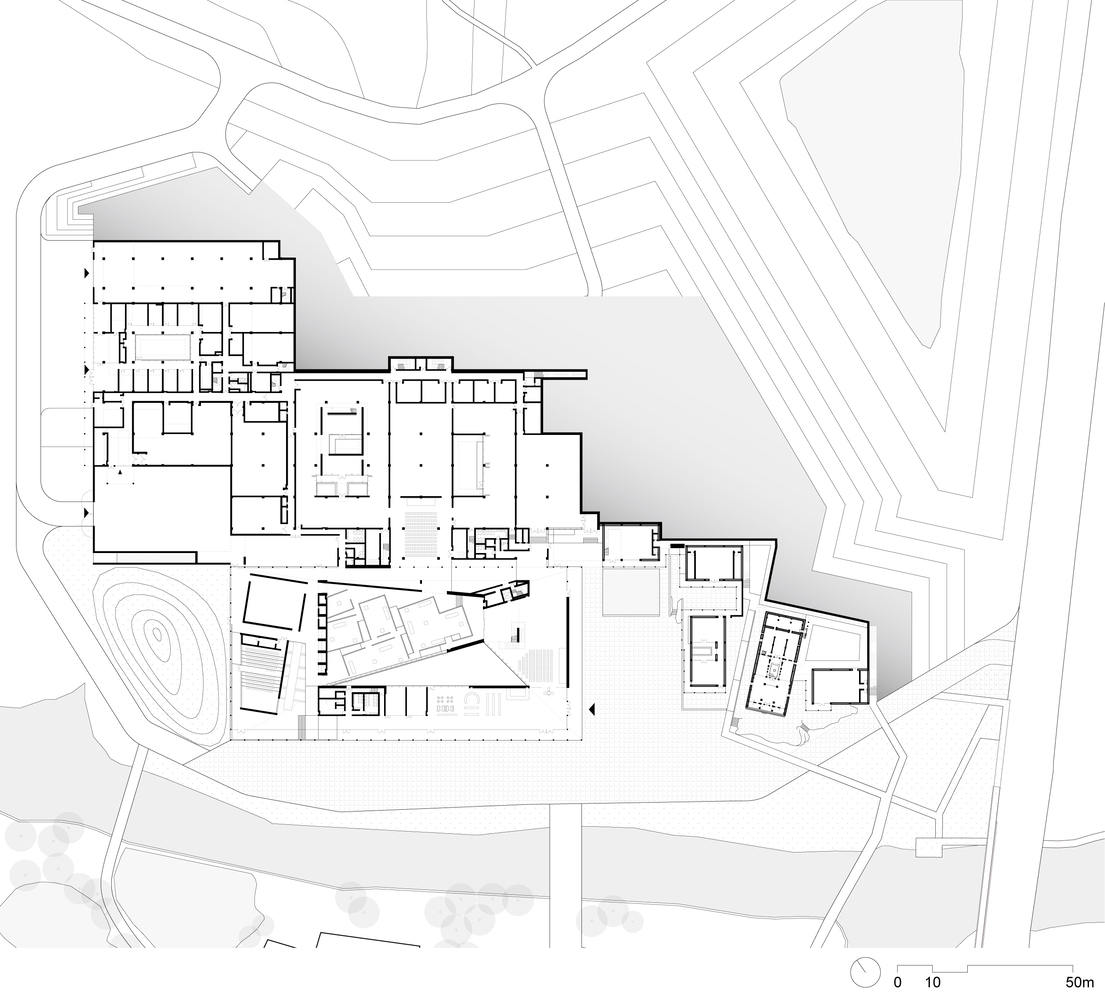
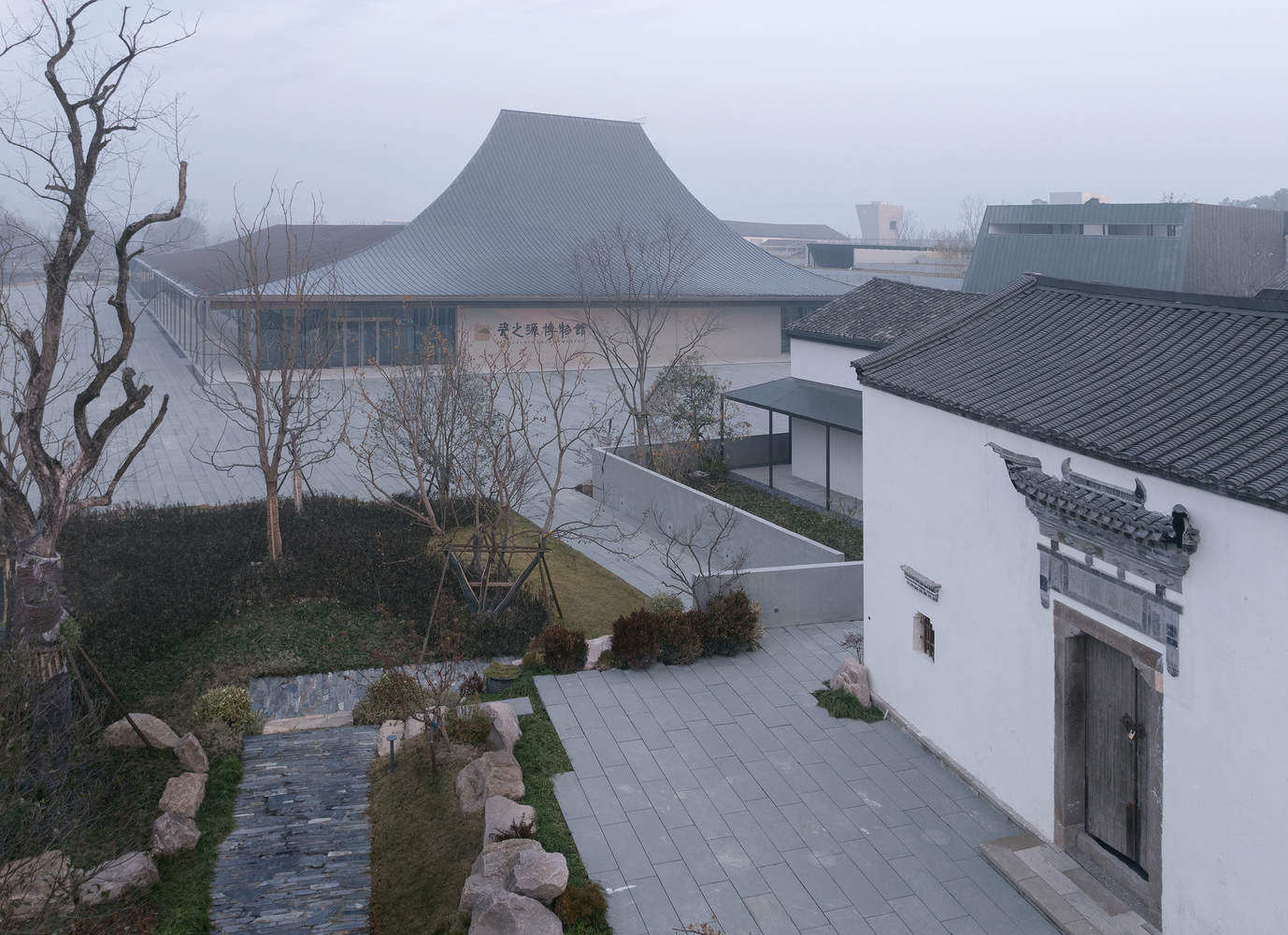
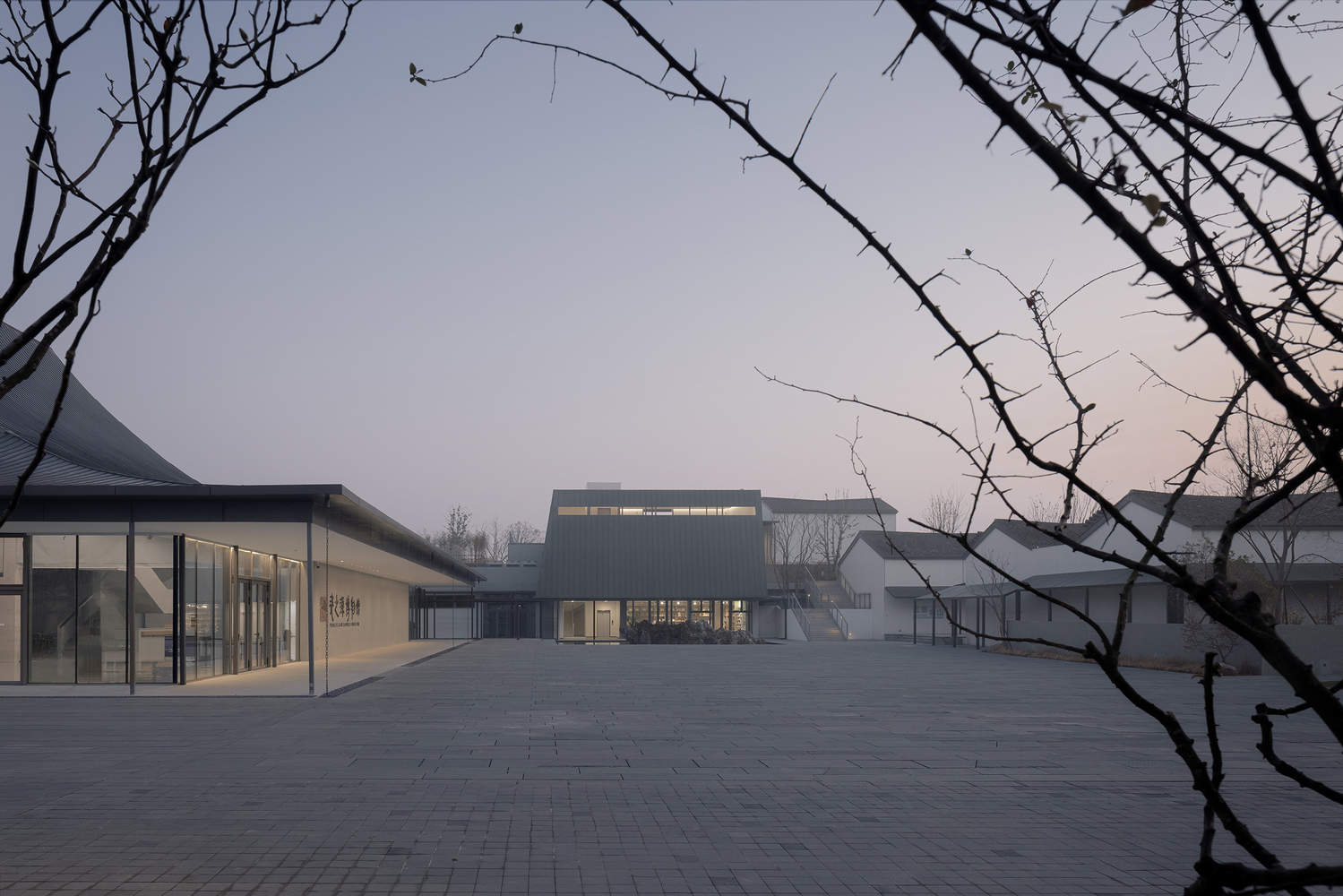
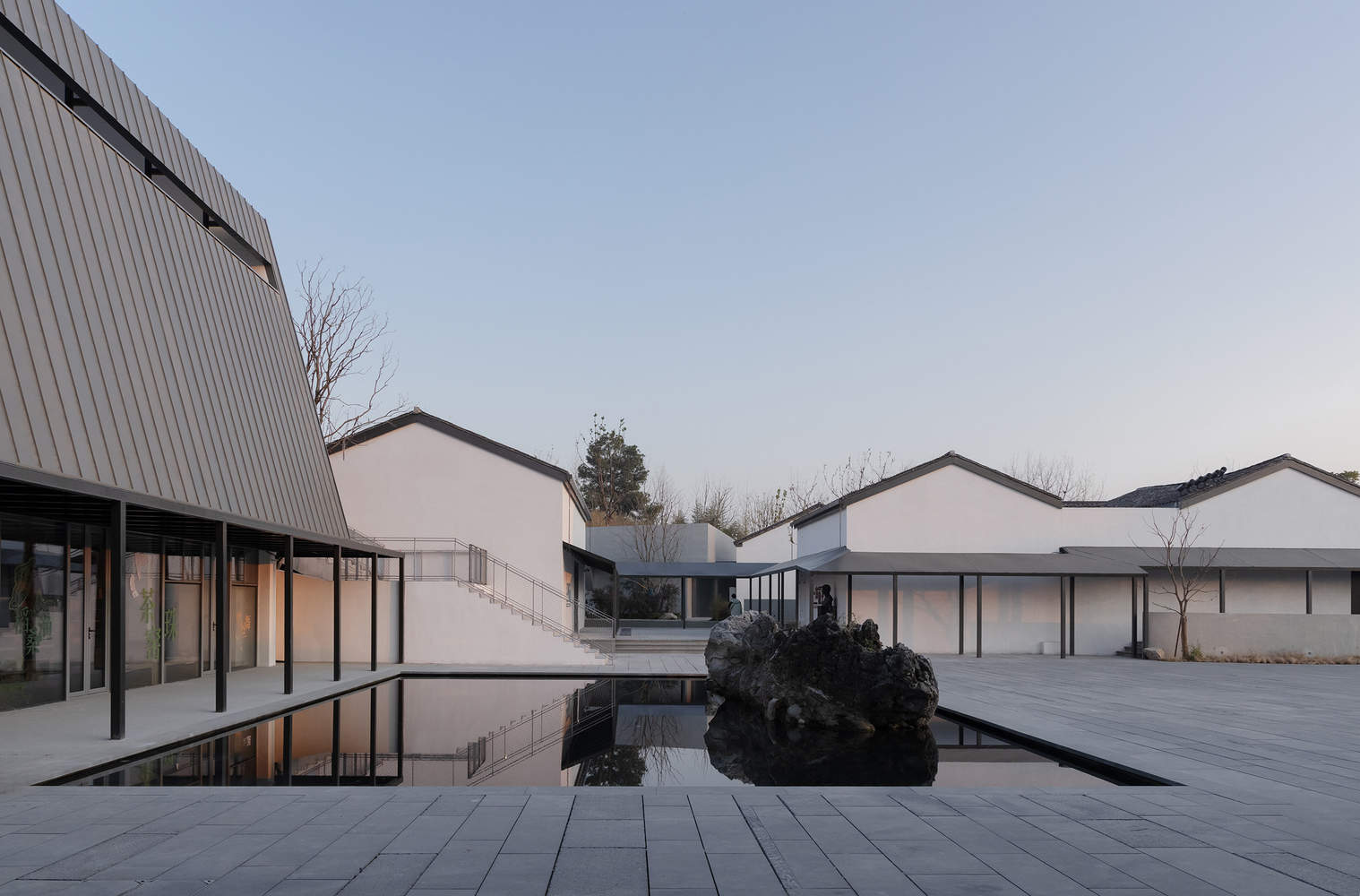
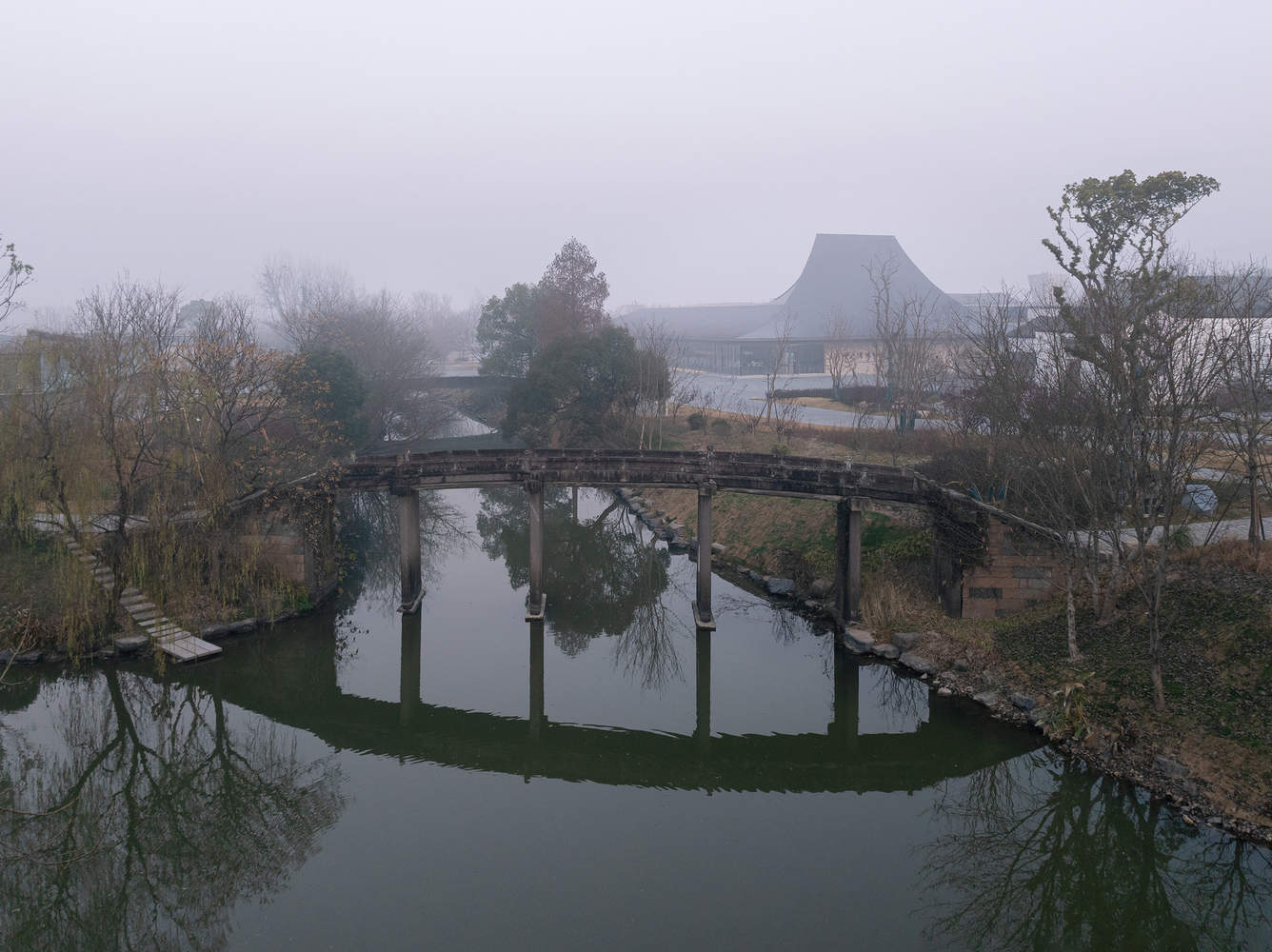
The Porcelain Source Museum is located on the former site of Longsheng Village in Deqing County, Zhejiang Province. To the north of the site are the remains of primitive porcelain kilns dating from the Shang through the Warring States periods, while a small river runs along the southern edge, spanned by the Wukang Shishe Bridge, originally constructed during the Yuan dynasty. Within the site, portions of the original village dwellings have been preserved, reconstructed, or adapted and incorporated into the museum's exhibition spaces, serving as thematic galleries or support facilities, thereby allowing elements of the site's historical fabric to be sustained. The main body of the museum is composed of two parts. One part extends longitudinally along the riverbank, adopting a rectilinear plan while presenting an overall architectural form of an organic character.
陶瓷之源博物馆位于浙江德清县龙胜村旧址上。场地北侧为商代至战国时期的原始瓷窑遗址,南侧有一条小河,河上横跨着建于元代的武康石舍桥。在场地内,部分原有村落的居住建筑被得以保存、重建或改造,并融入博物馆的展陈空间,作为主题展廊或辅助设施,从而使得场地的历史肌理得以延续。
© Schran Images
© Schran Images
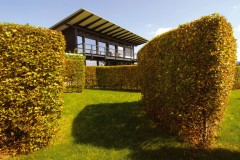
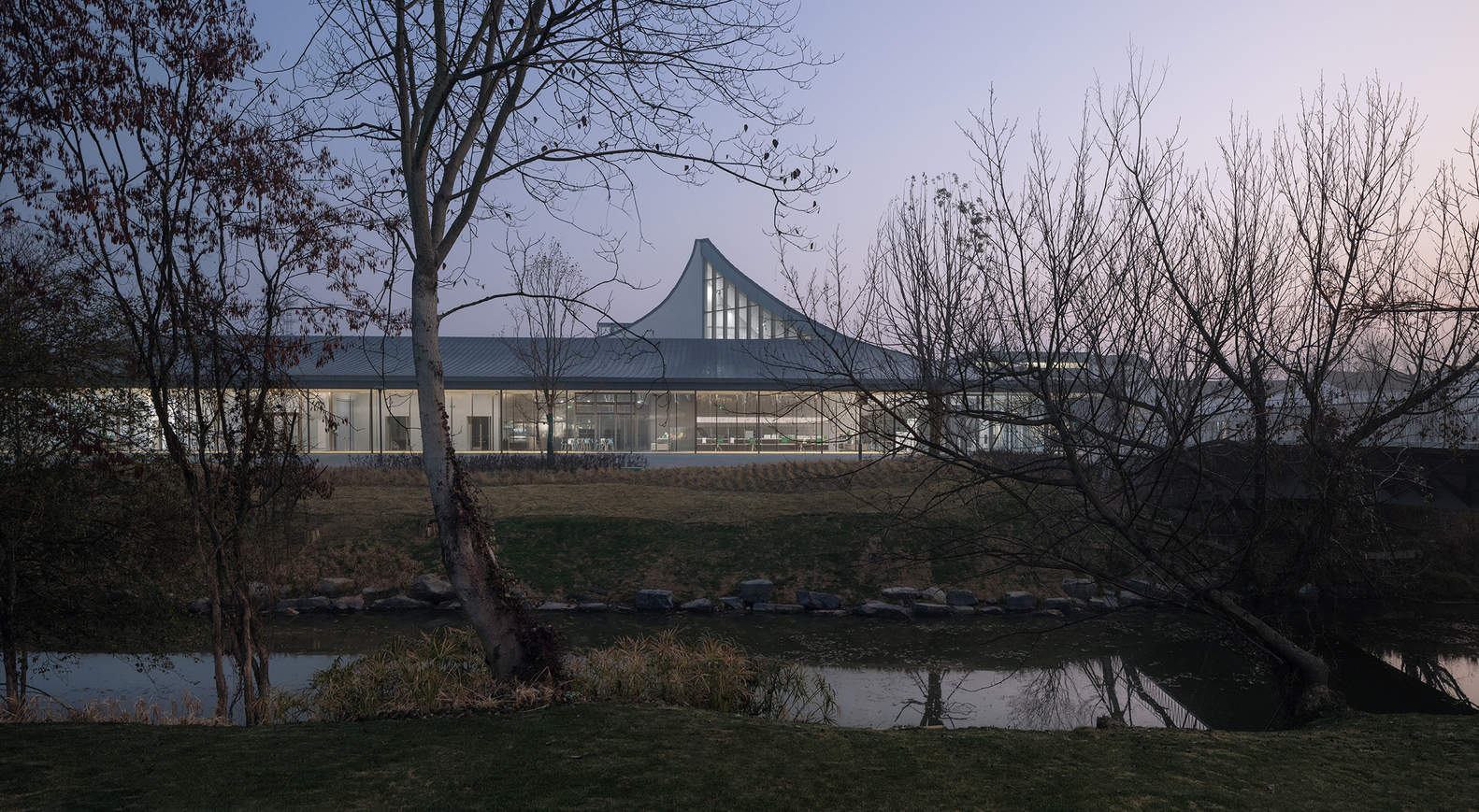
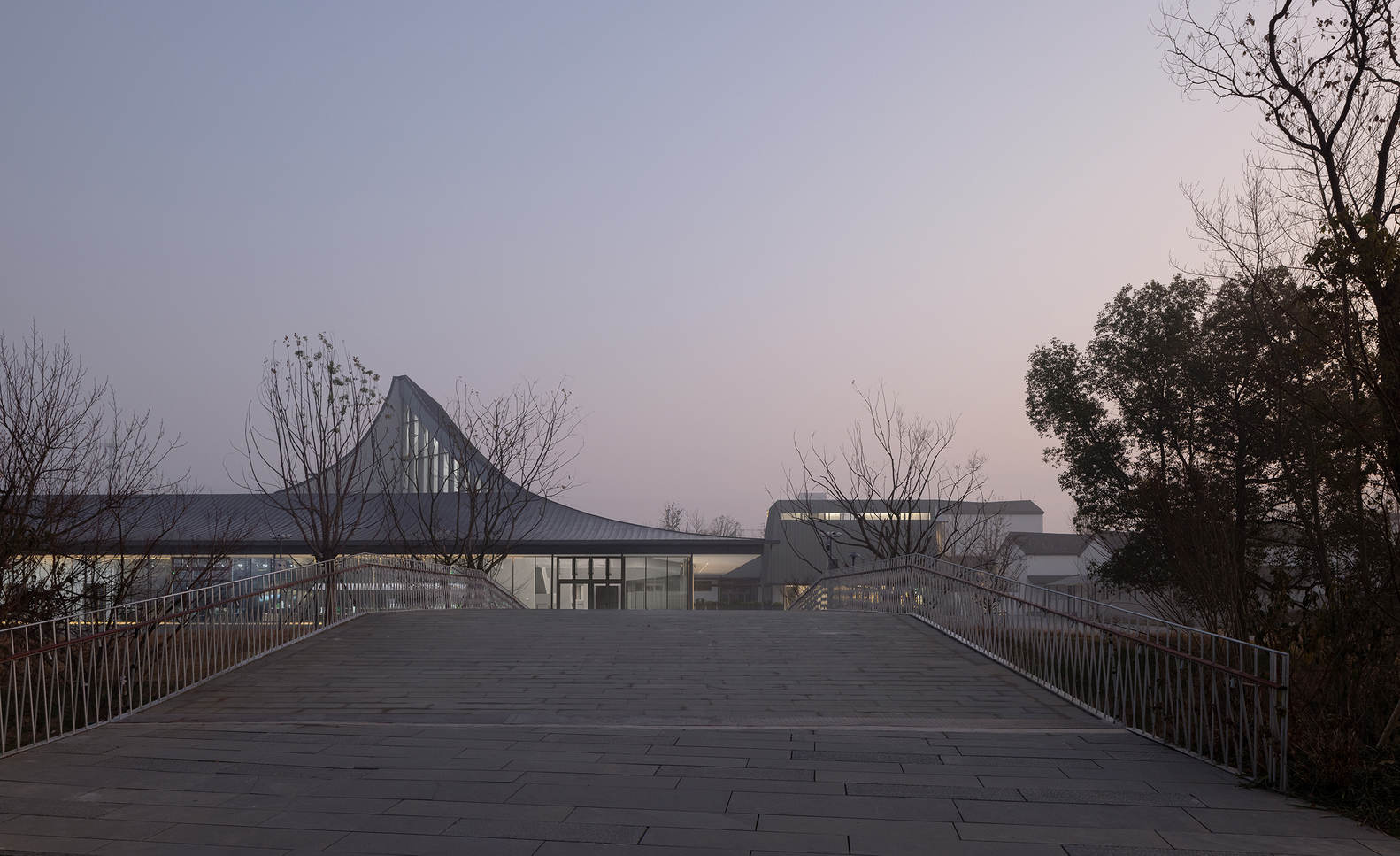
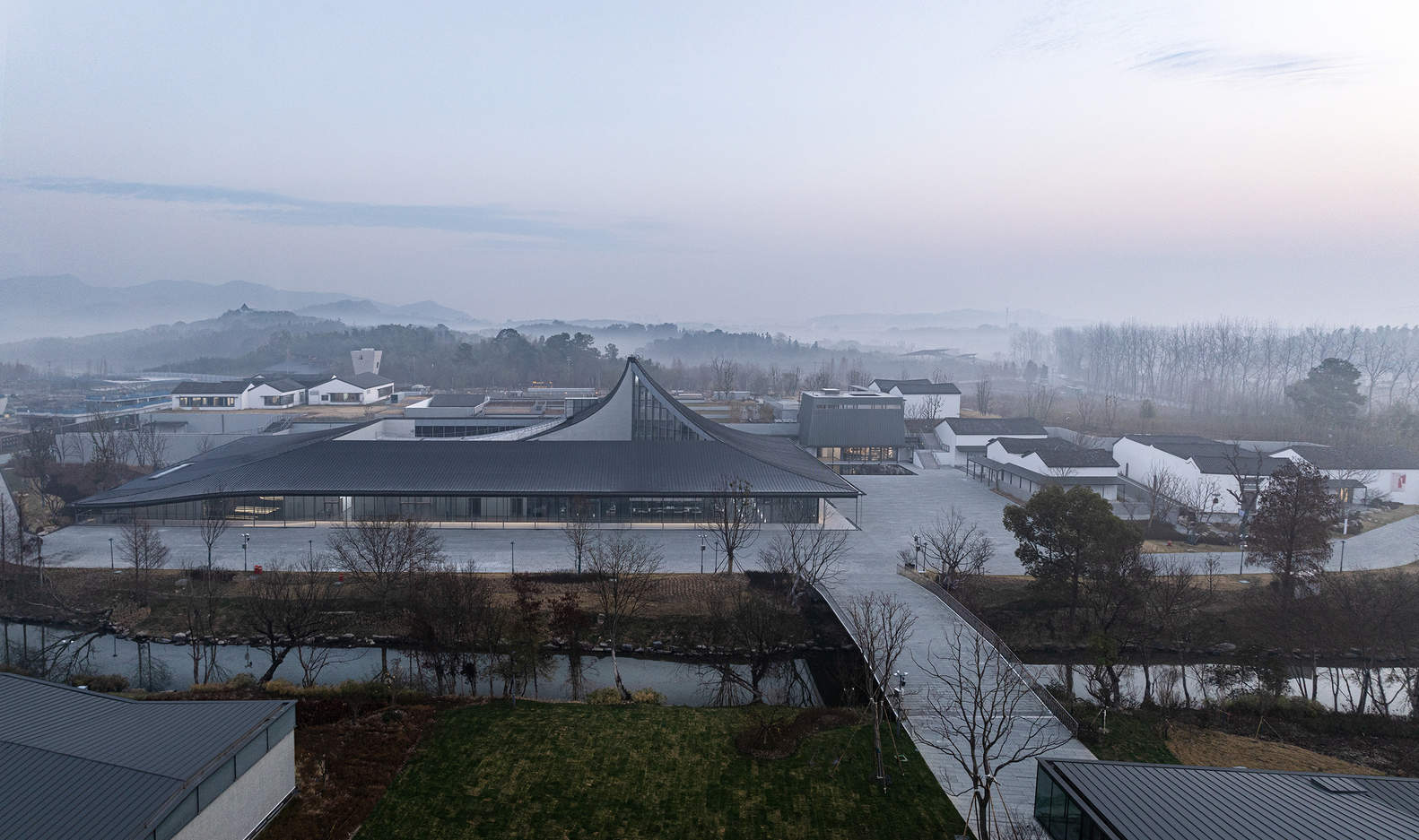
Verandas unfolding with the undulating terrain, a relatively slender system of columns, and a roof form carrying references to Xieshan or Wudian typologies together constitute an architectural image marked by compositional hybridity and semantic multiplicity. In formal terms, this image evokes associations with Chinese traditional architecture; at the same time, through the incorporation of new scale relationships, curvilinear structural systems, and contemporary material languages, the building is positioned in a state of juxtaposition between traditional imagery and contemporary expression, generating at the perceptual level a hesitation toward established architectural categories.
与起伏地形相伴展开的回廊、相对纤细的柱列系统,以及带有歇山或庑殿式形态指涉的屋顶共同构成了一个标记着构成混合性与语义多重性的建筑形象。在形式上,这一形象唤起了对中国传统建筑的联想;同时,通过引入新的尺度关系、弧形的结构体系和当代的材料语言,建筑处于传统意象与当代表达的并置状态,在感知层面产生对既有建筑类别的迟疑。
© Schran Images
Plan - First floor
© Schran Images
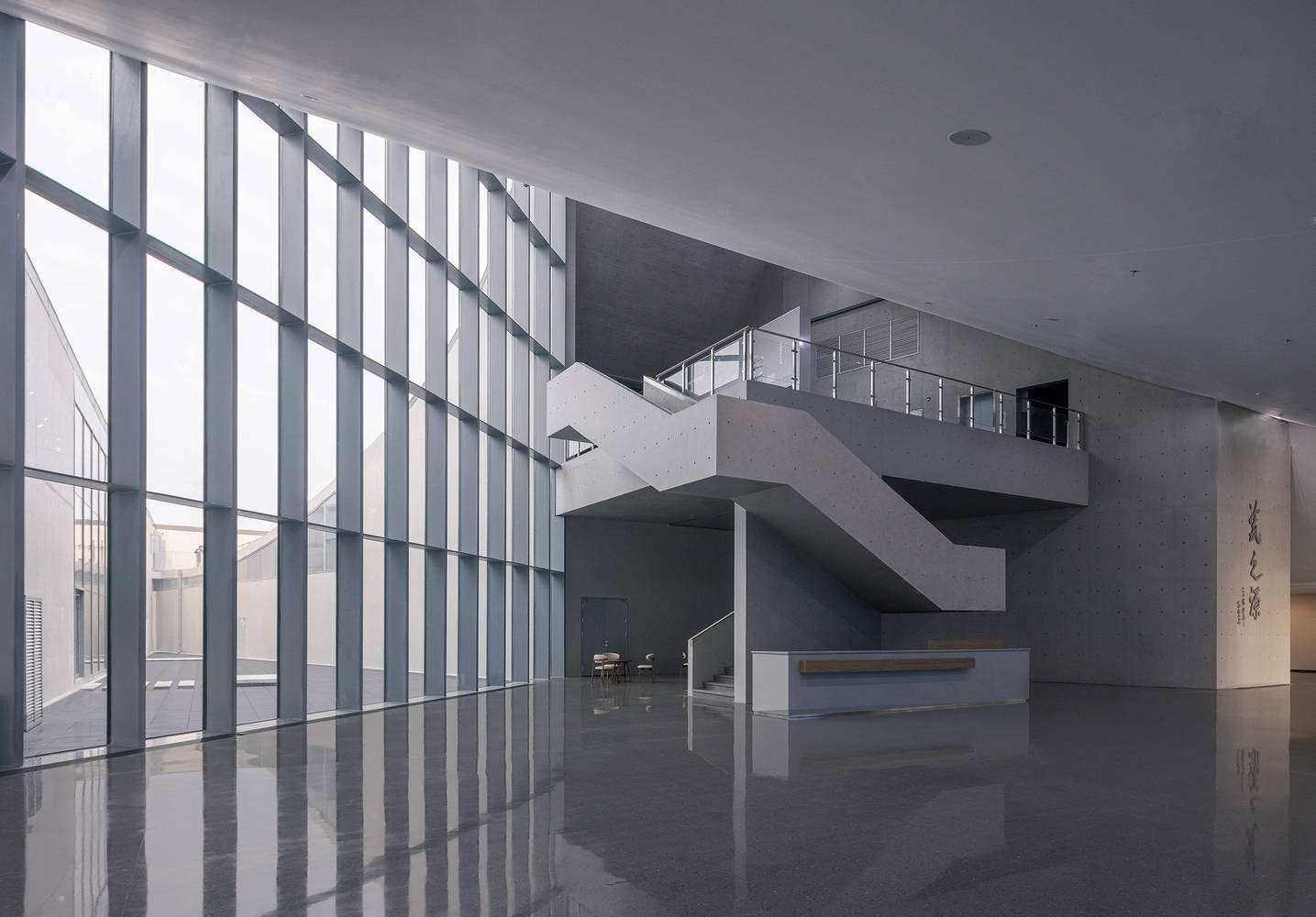
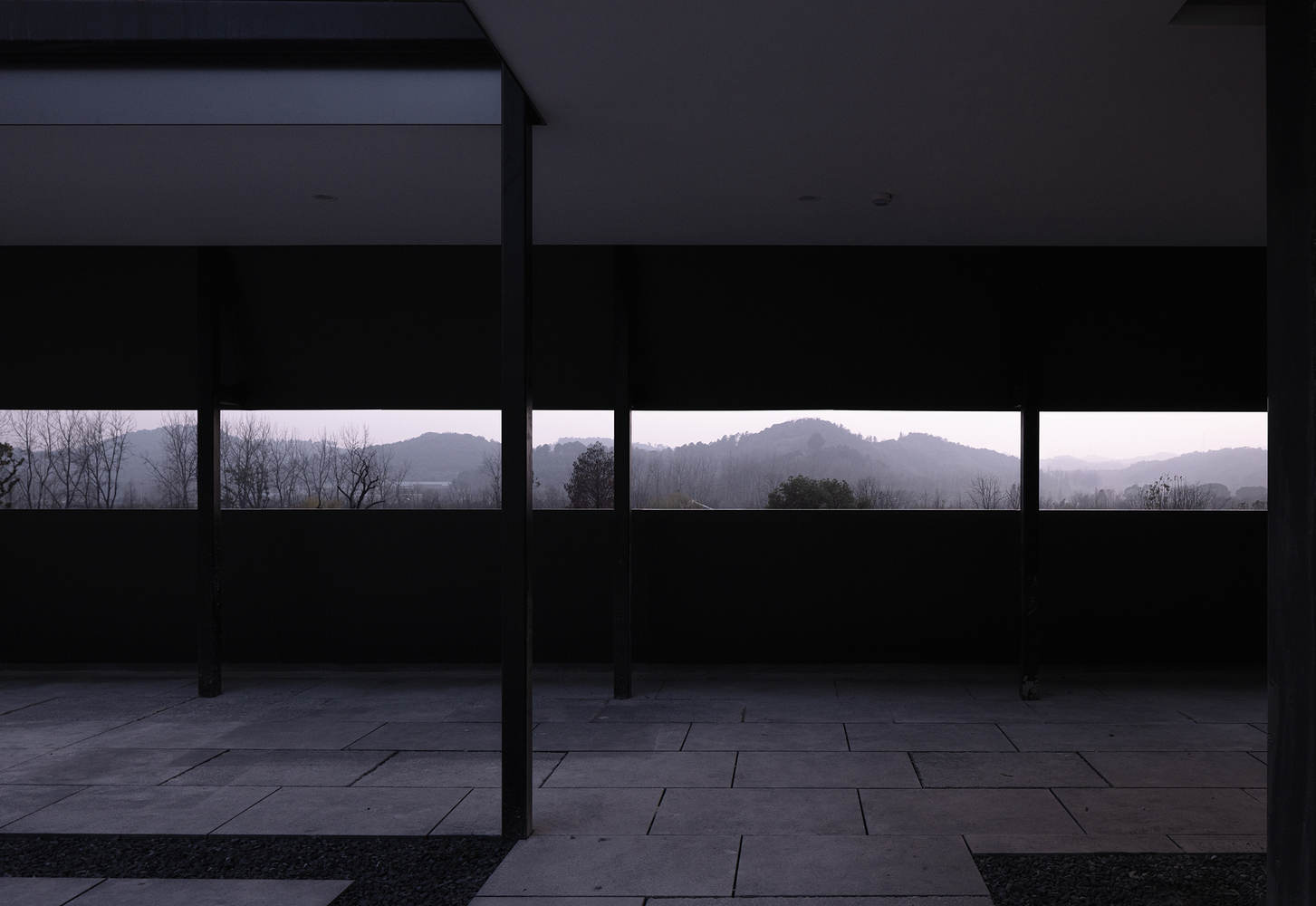
The eaves of the main building are articulated at a relatively low height, even lower than those of the adjacent preserved village dwellings. This scale relationship establishes a relative sense of coordination between the large-scale public building and the smaller-scale residential fabric. Within the museum, the main hall and verandas open outward, incorporating the Yuan-dynasty Shishe Bridge and the river into the overall spatial experience, where they become part of the interior perceptual field, thereby reinforcing the continuity between the building and its surrounding environment.
主展馆的屋檐处理在一个相对较低的高度上,甚至低于相邻的保留村落民居。这种尺度关系在大尺度的公共建筑与小尺度的居住肌理之间建立了一种相对的协调感。在博物馆内部,主厅和回廊向外开放,将元代的石舍桥和河流纳入整体的空间体验,使它们成为室内感知场域的一部分,从而强化了建筑与其周边环境的连续性。
© Schran Images
© Schran Images
© Schran Images
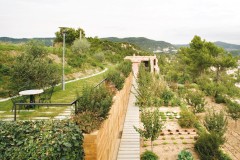
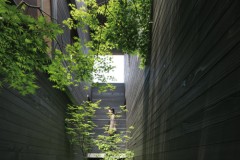
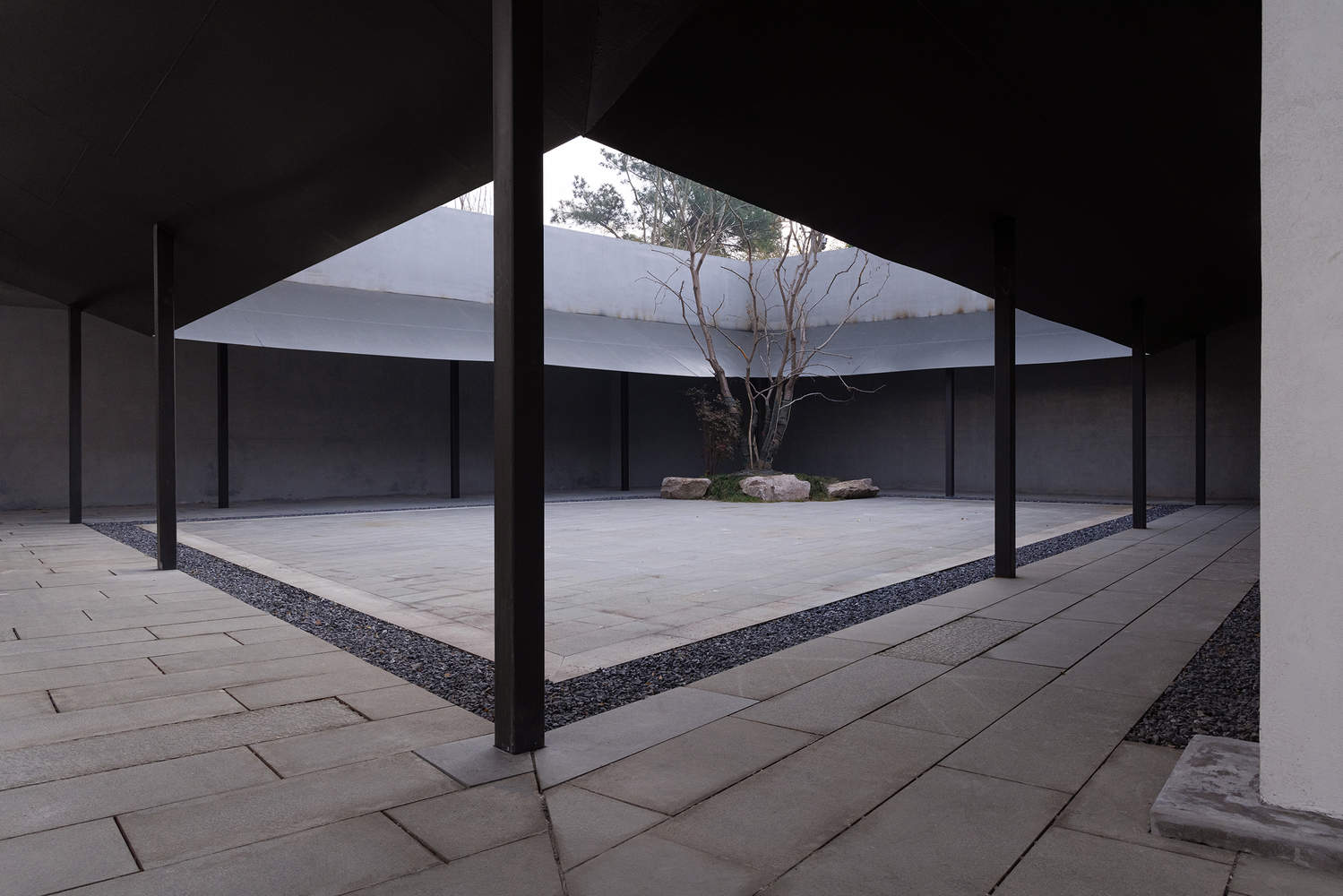
The other part of the museum is relatively subdued in its formal presence and adopts a landscape-based architectural approach, allowing the relationship between programmatic scale and the scale of the site to be moderated. By following the site's topographical variations, the building is partially embedded into the terrain, while two courtyards are introduced to organize natural daylight and ventilation and to enrich the spatial sequence.
博物馆的另一部分在形式上相对低调,采用了基于景观的建筑方法,使得功能尺度与场地尺度之间的关系得以缓和。建筑顺应场地的地形变化,部分嵌入地形之中,同时引入了两个庭院来组织自然采光和通风,并丰富了空间序列。
© Schran Images
© Schran Images
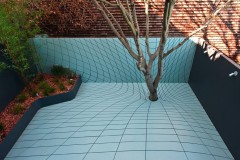
One courtyard reconstructs, on its original footprint, a traditional two-courtyard dwelling that serves as a thematic exhibition space for local culture, continuing the scale and order of the former village fabric. The other courtyard employs a contemporary expression in steel plate construction, establishing a spatial atmosphere that corresponds to that of the traditional veranda. The roof of this landscape-integrated portion takes the form of a linear geometric composition articulated through changes in elevation; in its morphology, it maintains continuity with the surrounding agricultural terraced landscape, functioning as a backdrop to the main building while situating the architecture within a broader regional context.
其中一个庭院在其原有占地上重建了一座传统的双院落民居,作为当地文化的主题展陈空间,延续了原村落肌理的尺度和秩序。另一个庭院则采用了钢板构造的当代表现形式,营造出与传统回廊相呼应的空间氛围。这个景观嵌入部分的屋顶形成了通过高程变化来表达的线性几何构成;其形态上,与周围农业梯田景观保持了连续性,既为主体建筑充当了背景,又将建筑置于更广阔的地域背景之中。
© Schran Images
© Schran Images
The curvilinear roof of the main museum may be understood, on the one hand, as an abstract transformation of traditional architectural forms, and on the other, as a continuation of the surrounding landscape. The open-air theater integrated into the roof incorporates distant mountains and nearby water into the building's use and perception, allowing the natural environment to assume a role within the museum's spatial narrative. As the main building occupies the former site of the village, an early design proposal envisioned integrating the original village foundations into the interior exhibition spaces as a possible means of exploring the relationship between the new architectural structure and the historical substrate. This proposal was not fully retained in the final implementation.
主博物馆的弧形屋顶,一方面可被视为传统建筑形式的抽象转化,另一方面则是对周边景观的延续。屋顶中整合的露天剧场将远山和近水纳入建筑的使用与感知之中,使自然环境在博物馆的空间叙事中占据一席之地。由于主展馆占据了村落的旧址,早期的设计方案曾设想将原始的村落基础整合到室内展陈空间中,作为探索新建筑结构与历史基底关系的一种可能性。这一设想在最终实施中并未完全保留。
© Schran Images
© Schran Images
© Schran Images