工业遗产的当代转译与结构创新:“浮舱”项目成功地将上海杨浦区复兴岛船台公园深厚的工业历史文脉,特别是船厂的机械美学和超尺度设施,转化为一种具有当代性的建筑语言。设计巧妙地延续了场地静止而潜在可启动的气质,通过“浮”与“舱”的概念,创造了一种悬浮化、可变的功能空间。结构上,它依托既有的水泵房和检修台进行构筑,实现了新旧元素的有机融合,展现了对场地物质性的尊重与结构上的轻盈解耦,是工业遗址再利用的典范手法。
精妙的机械美学与动态空间生成:项目最精髓之处在于其集成了机械动力系统的结构设计。利用钢双立柱、胶合木梁、机械滑轮系统和拉索,实现了金属“舱板”的定角度翻转功能,这不仅是对船厂机械结构的致敬,更赋予了空间生命力。通过舱板的开合,浮舱可以从日常休憩的“静默悬浮”状态,切换至具有展示或集市功能的“多层开放”状态。这种内在的“可动性”使其成为一个具有潜能的、能够主动回应不同使用需求的灵活架构。
场所精神的深化与公共叙事:设计通过色彩、材料和光影处理,深化了场所的精神内涵。普鲁士蓝的应用呼应了工业背景,而半透明聚碳酸酯屋面则提供了柔和的漫射天光。结构上,穿过水泵房窗洞的舱板和镜面不锈钢板的设置,引导视线捕捉到被定义为“空房间”的水泵房,并反射江景与灯光装置,形成了对历史的诗意对话。浮舱不仅提供了物理休憩空间,更通过其动态状态的变化,积极参与并丰富了滨江空间的公共叙事,为未来事件化运营提供了多重场景的可能性。
The Floating Cabin is a participating project for the 2025 Shanghai Urban Space Art Season (SUSAS), located on the elevated pier of the Fuxing Island Shipyard Park in Yangpu District, Shanghai. It serves as an auxiliary public space for citizens and tourists to rest by the river and for holding events.
浮舱是 2025 上海城市空间艺术季(SUSAS)的参展项目,位于上海杨浦区复兴岛船台公园的高桩码头上,作为一处日常供市民游客在江边休憩、以及举办活动时辅佐性公共空间。浮舱的概念源于场地,高桩码头、造船塔吊、水泵房及防汛墙都提示着中华船厂的工业历史场所记忆。
© 陈颢
© 陈颢
The superscale shipbuilding industrial machinery facilities across the site present a state that appears static but is potentially activatable. We hope to extend this site temperament into the design of the Floating Cabin, transforming it into a contemporary architectural space that penetrates established typologies. The term “Cabin” points to the mechanical aesthetics of the shipbuilding industry, as well as a functional space capable of accommodating variable content; whereas “Floating” signifies a suspended structural state.
整个场地上超尺度的造船工业机械设施,呈现出一种已然静止、但潜在可启动的状态。我们希望可以把这种场地气质可以延续到浮舱的设计中,并进而转化为某种穿透固有类型的当代性架构空间。“舱”指向了船舶工业的机械美学,也指向了某种容纳可变内容的功能性空间;而“浮”则是一种悬浮化的架构状态。
© 刘国威
© 陈颢
© 陈颢
分析图
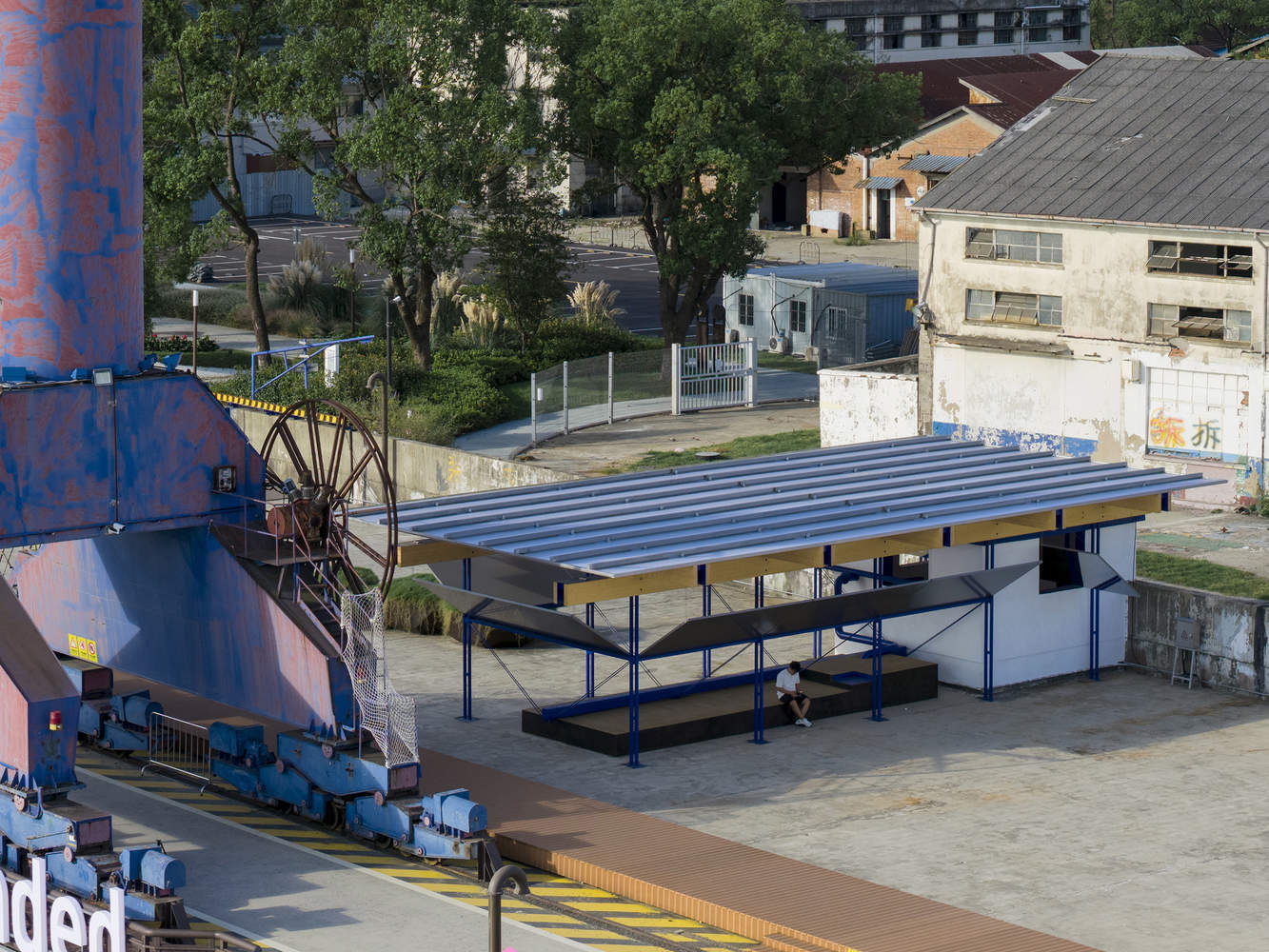
The pump house is attached to the flood control wall and has no floor slabs inside, making it an inaccessible industrial space connected to the river water beneath the pier; adjacent to the pump house is a concrete inspection platform raised from the pier ground, which houses the original pipes emerging from the pump room. The design completely preserves the pump house, pipes, and inspection platform, and bases the structure of the Floating Cabin upon them. The ground platform covered by the roof integrates elements of various force relationships such as support, suspension, and tensioning, constructing a special place that is both open and transparent, yet imbued with tension.
水泵房附着于防汛墙上,内部没有楼板,是一处不可进入、与码头下江水相连的工业空间;紧挨着水泵房是一处码头地坪高起的混凝土检修台,容纳了从泵房穿出的原始管道。设计完好保留了水泵房、管道与地坪检修台,并依托于它们完成浮舱的架构。屋顶覆盖下的地面平台,融合了支撑、悬吊与张拉等多种力感关系的要素,构筑出一处既开放通透、又蕴含张力的特殊场所。
© 陈颢
© 陈颢
© 陈颢
© 陈颢
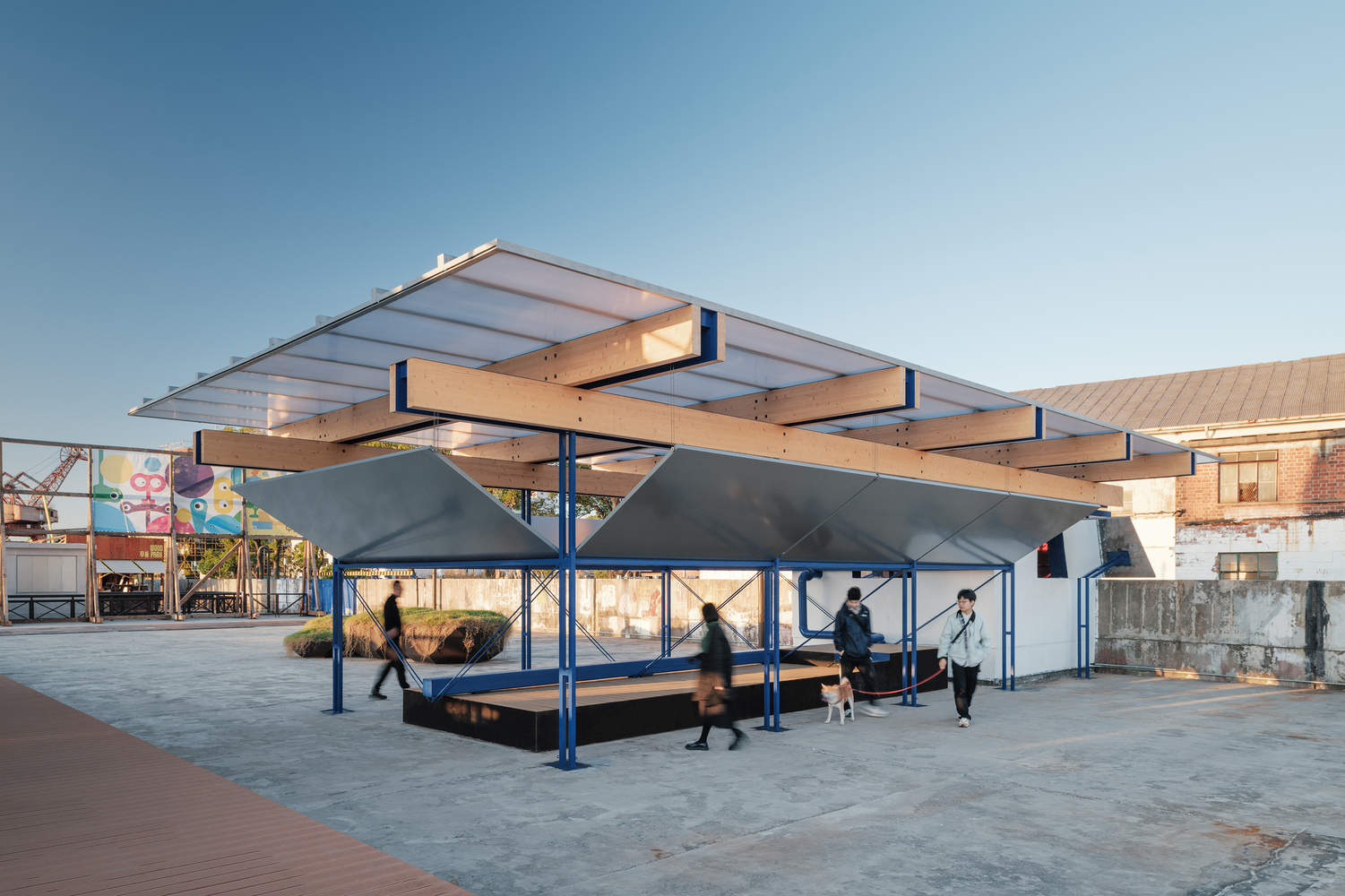
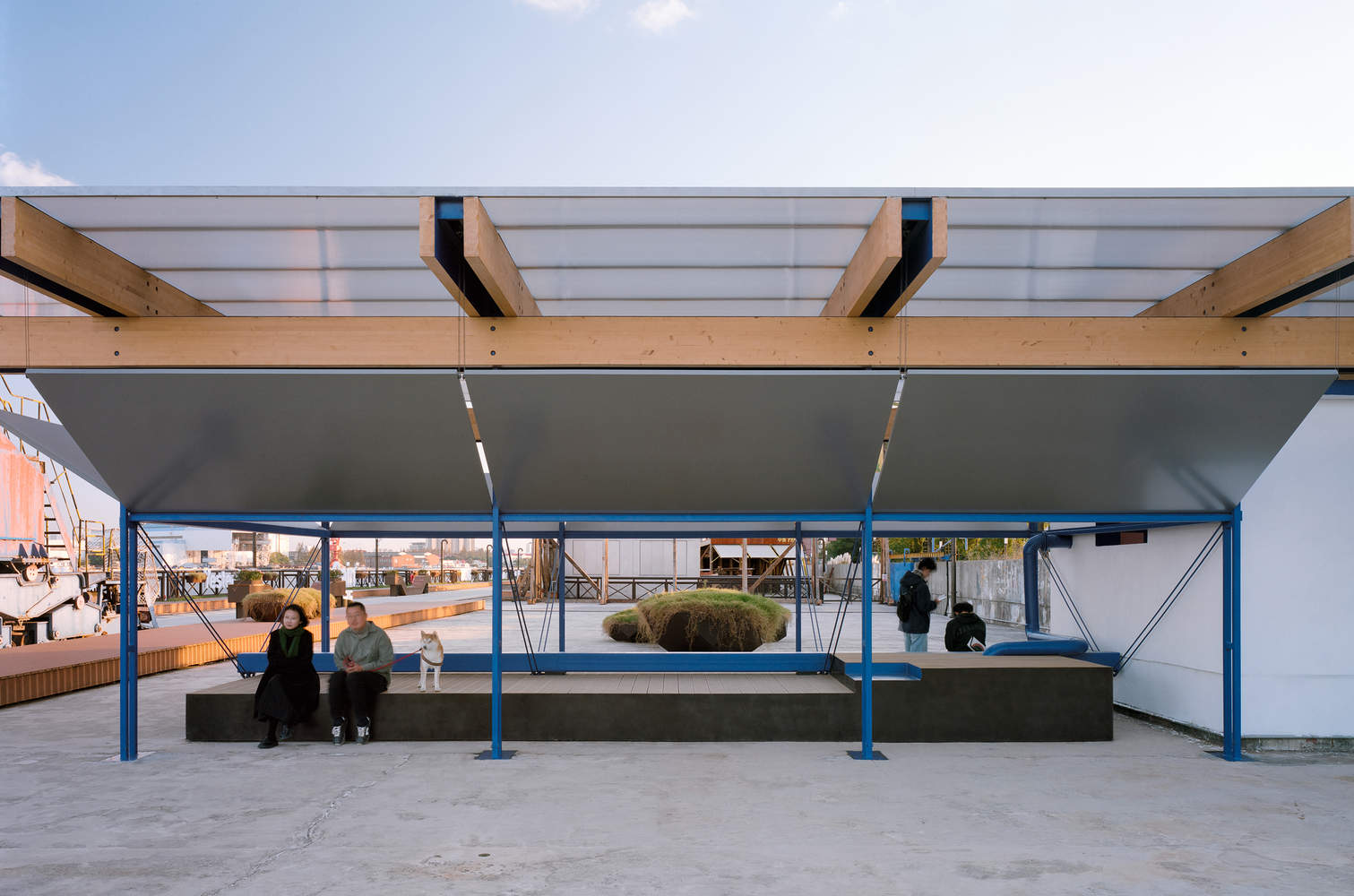
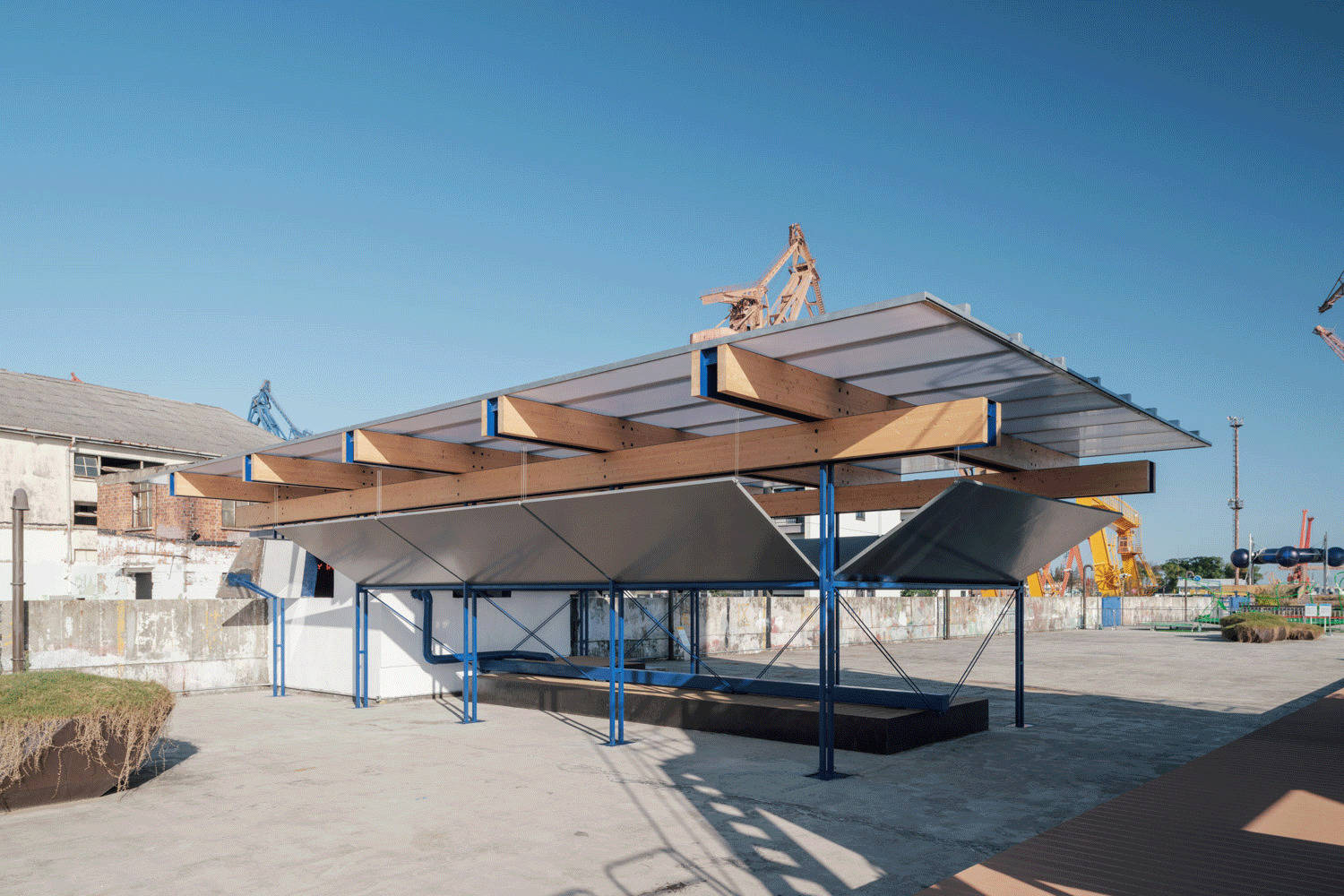
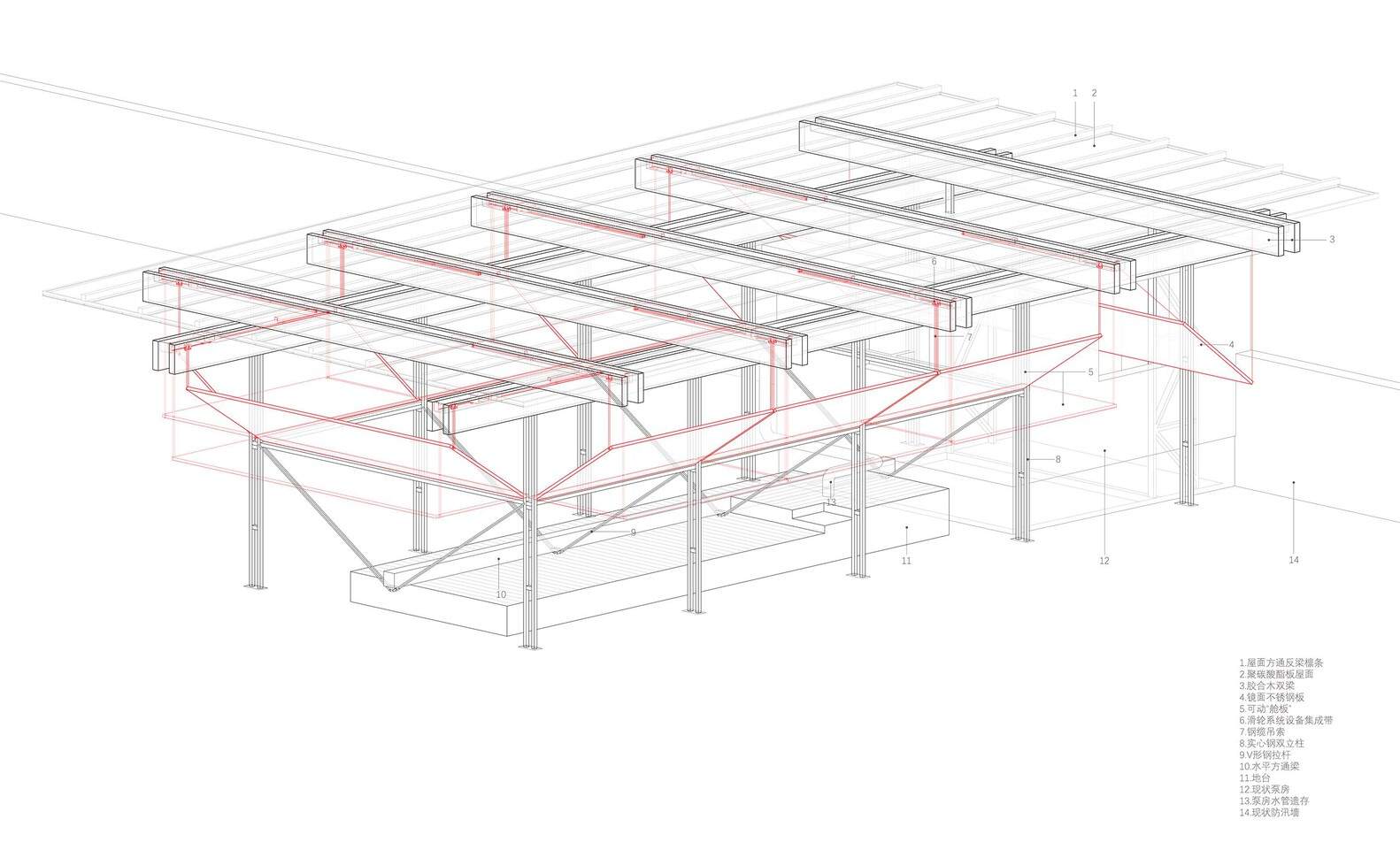
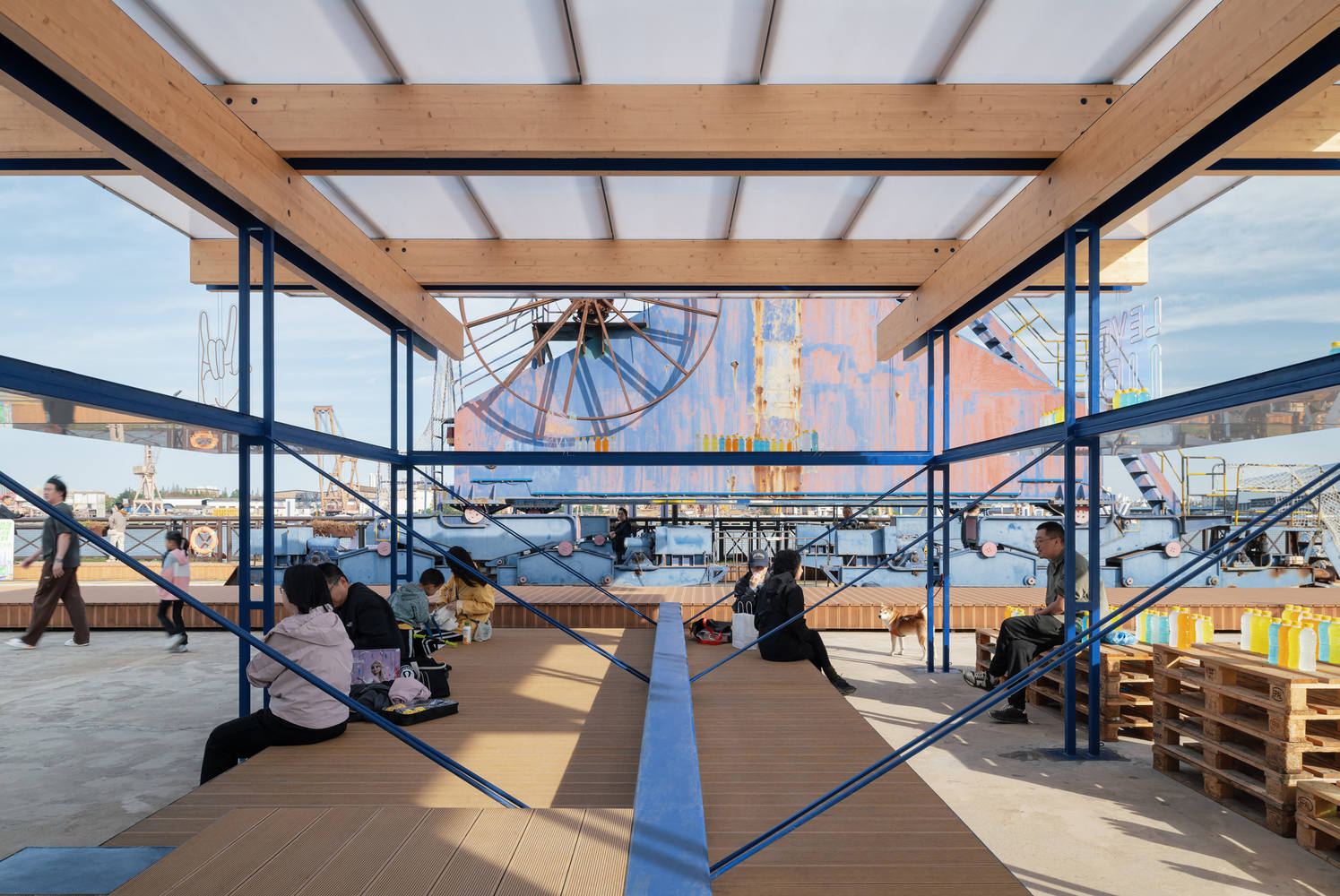
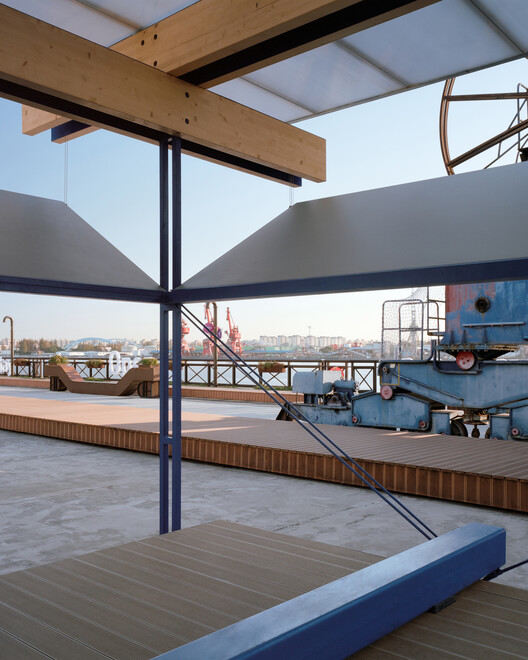
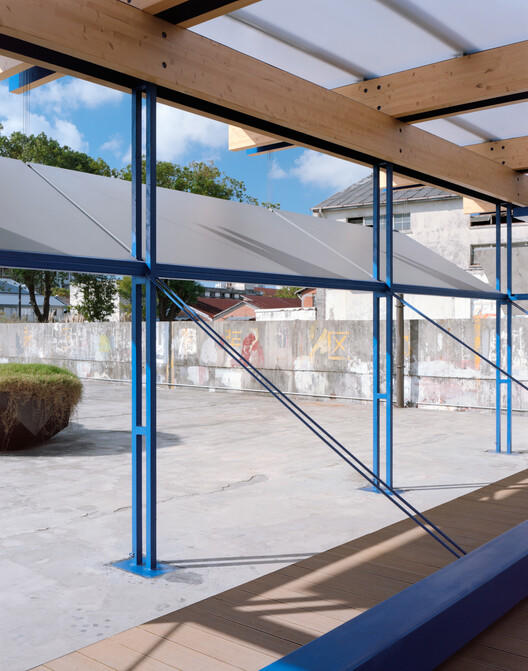
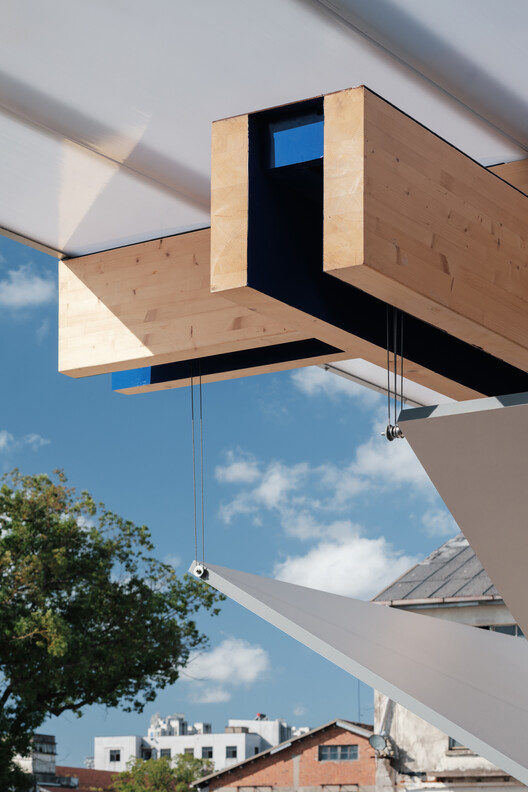
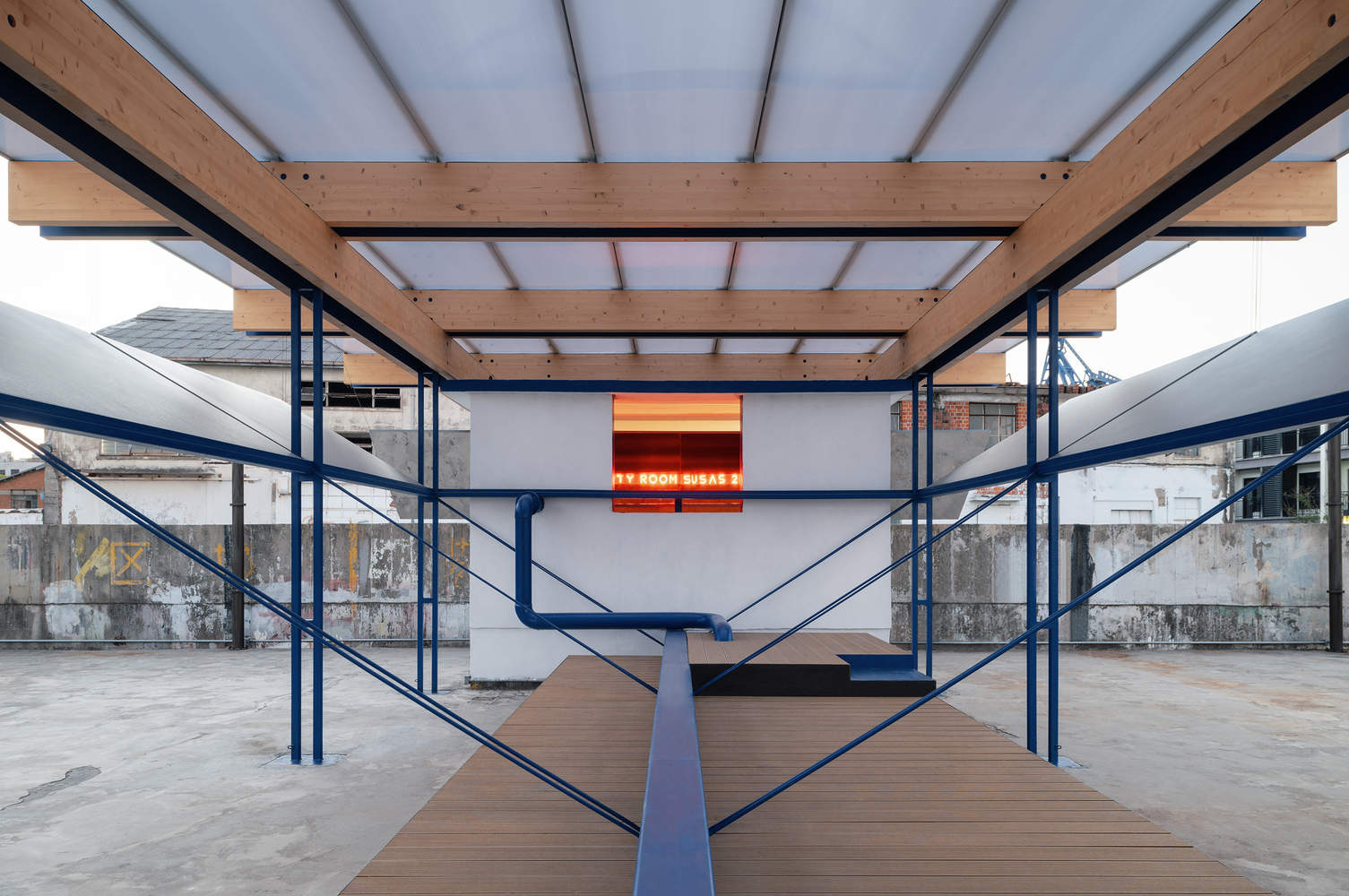
Section 50 steel double columns support the double-layered overlapping glued laminated timber double beams of the roof, with an integrated equipment band set between the wooden beams, accommodating the mechanical pulley system, which suspends the surrounding metal "cabin panels" via cables. The mechanical pulley system allows each suspended cabin panel to flip at a fixed angle. Diagonal steel tie rods at the lower end of the cabin panels form an inverted V-shaped cross-section structure, resembling a suspended "ship's cabin." Four sets of V-shaped tie rods collectively "support" the steel beams on the platform—serving to supplement the lateral stability of the overall structure.
截面 50 的钢双立柱支撑起屋面的双层搭接胶合木双梁,木双梁中间设置了设备集成带,容纳了机械滑轮系统,并通过拉索悬吊周圈的金属 “舱板”。机械滑轮系统可让每块悬吊的舱板进行定角度翻转。舱板下端高度的斜向钢拉杆,共同构成倒 V 形剖面的结构,如同悬浮的 “船舱”。四组 V 形拉杆共同 “承托” 了台面上的钢梁 —— 用于补充整体结构的侧向稳定性。
© 陈颢
© 陈颢
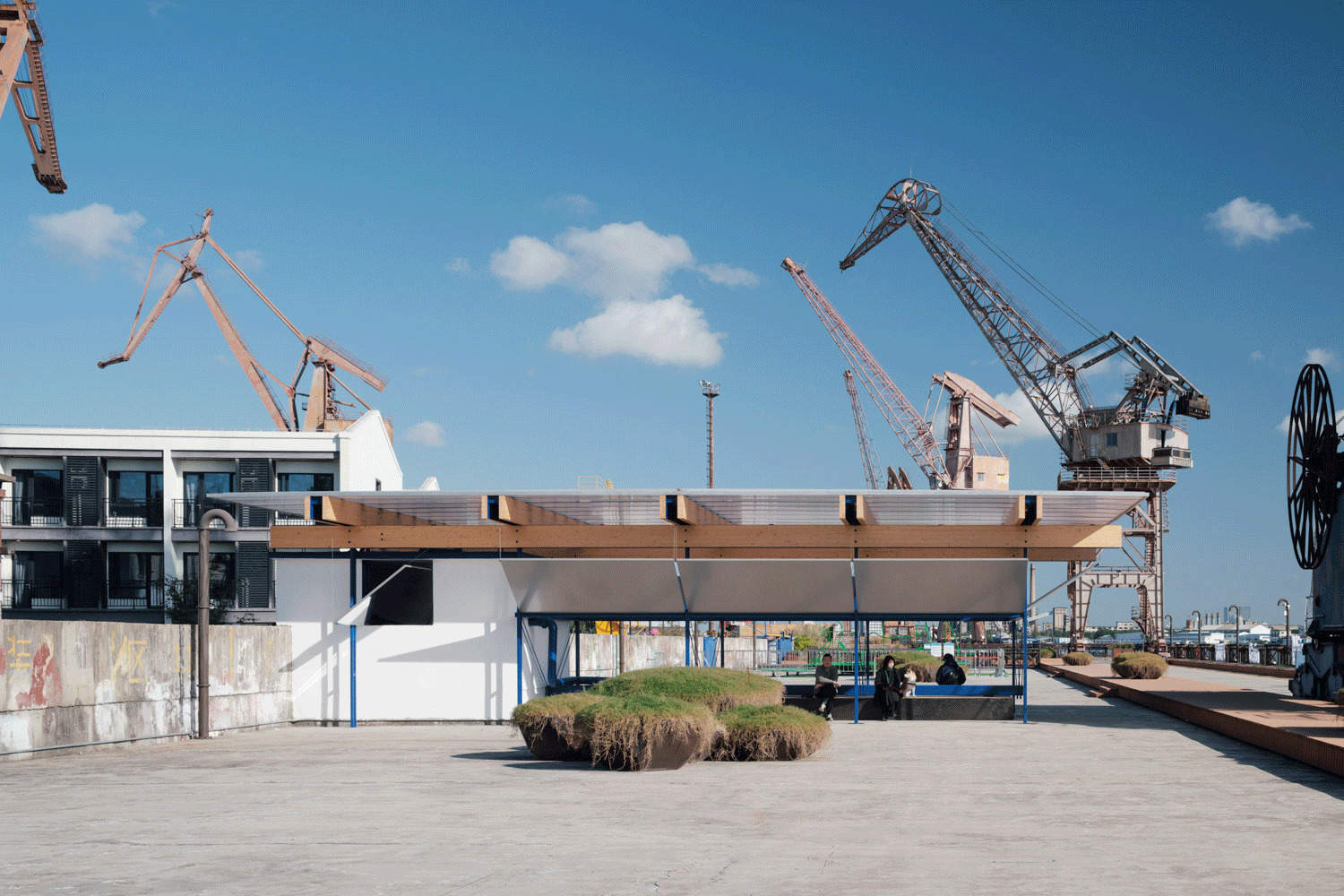
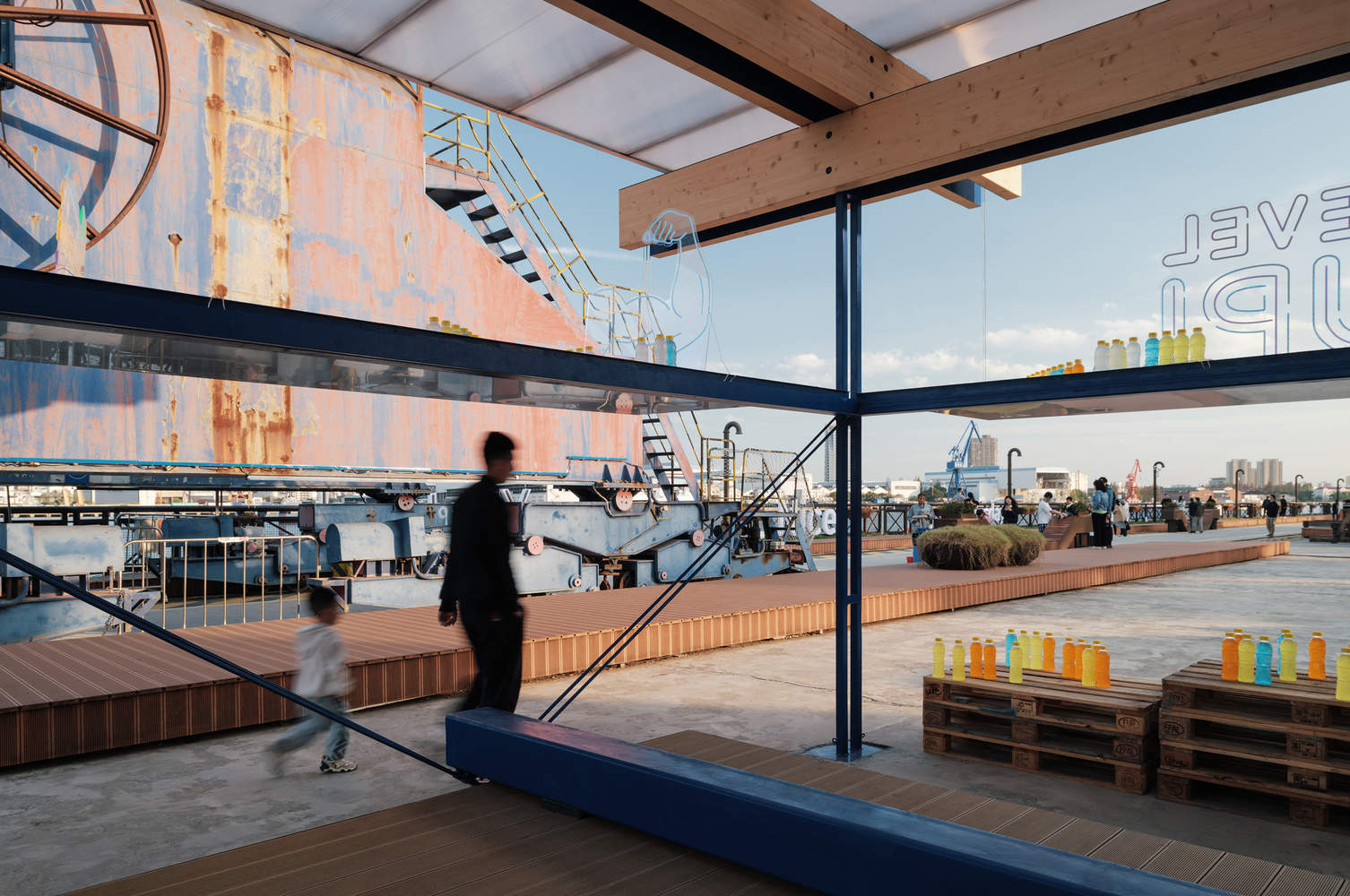
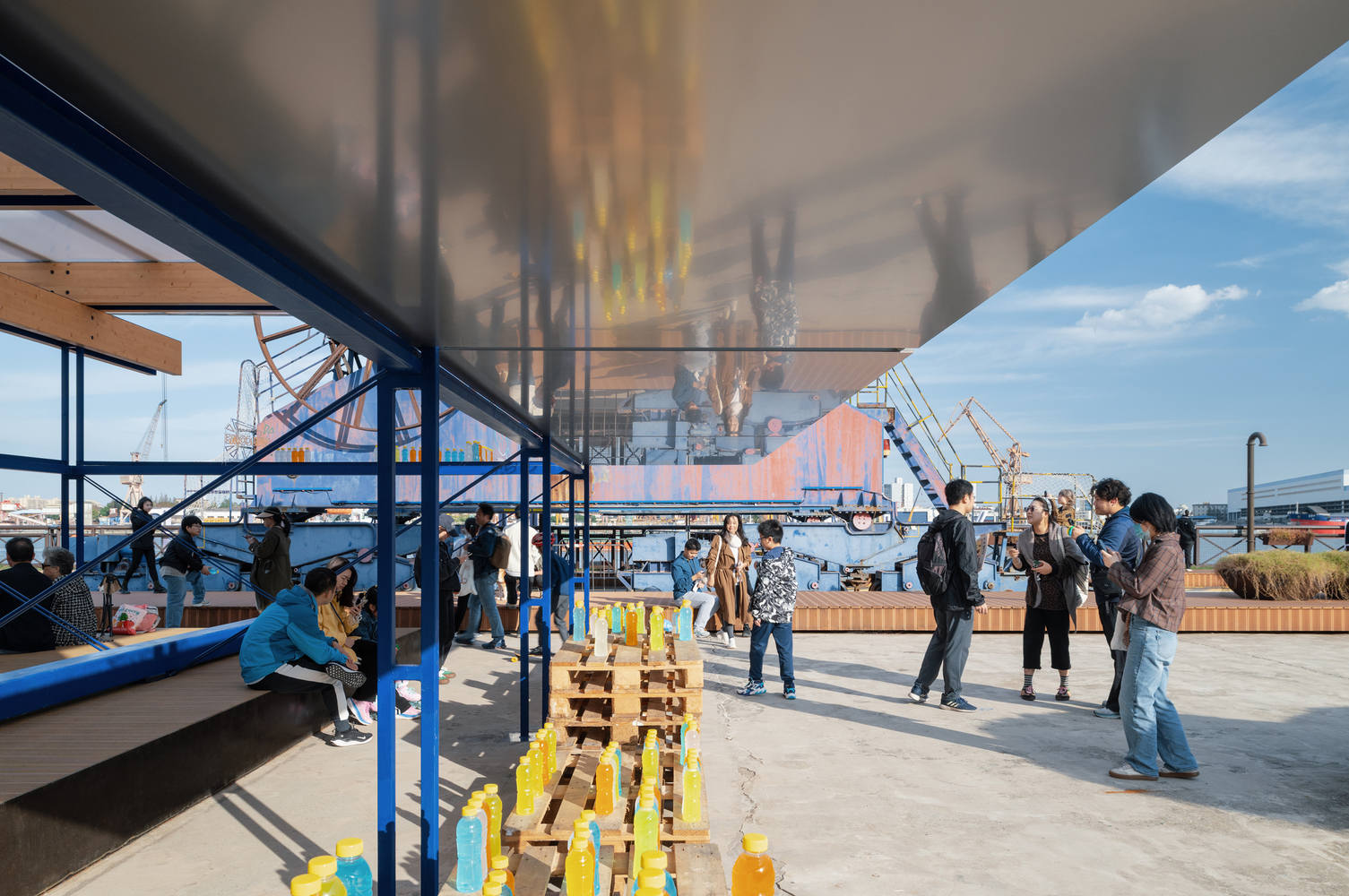
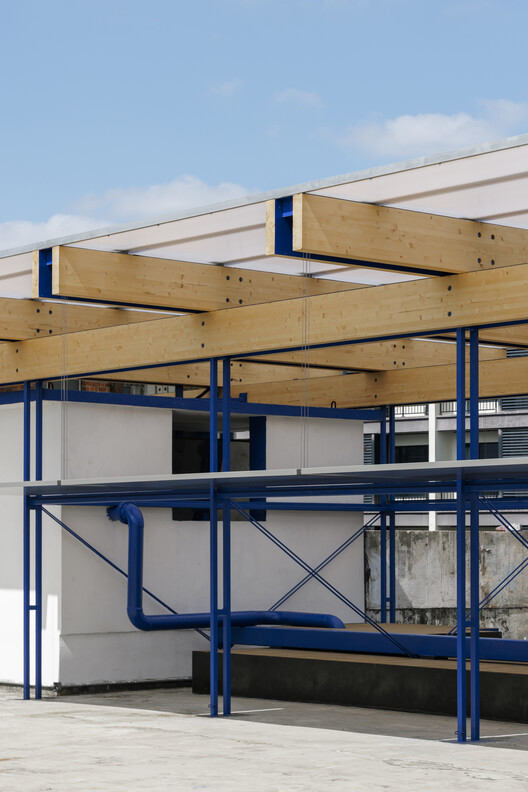
The overall steel components are painted in the blue color commonly seen on the original industrial components on site—this is "Prussian Blue," frequently used in the shipbuilding industry. The roof uses translucent polycarbonate sheets to filter direct sunlight, providing soft diffused skylight for the covered space. The raised original pier inspection platform is encased as a 40cm high wooden platform, forming an area where people can recline. The new structure of the "Floating Cabin" is spatially dependent on the pump house, yet structurally and mechanically detached from it in a light manner. The eighth "cabin panel," suspended by wooden beams and cables, passes through the window opening of the pump house, changing its orientation to be parallel with the "cabin panels" on the east side—allowing people standing on the platform inside the Floating Cabin to see the river water and light installation reflected in the mirrored stainless steel panels. The text in the light installation, “empty room 2025susas,” attempts to suggest that the pump house, as an inaccessible artistic “empty room,” presents the historical memory of the industrial pier.
整体钢构件涂刷了场地上随处可见的原始工业构件的蓝色 —— 这是船舶工业中常用的 “普鲁士蓝”。屋面采用半透明聚碳酸酯板而过滤直射光,为覆盖下的空间提供柔和的漫射天光。原码头地坪检修台的高起被包裹成 40cm 高的木质平台,构成一处可供人躺坐的区域。“浮舱”的新结构在空间关系上依附于水泵房,但在构造力学上又与水泵房轻盈地脱离。在西侧的第八块“舱板”,被木梁拉索悬挂而穿过水泵房的窗洞,并转变了方向而与东侧 “舱板” 互相平行 —— 由此人们可以站在浮舱内的平台上,看到被镜面不锈钢板反射出的江水及灯光装置。灯光装置文字的 “empty room 2025susas” 试图提示,水泵房作为一个不可进入的艺术性“空房间”,呈现工业码头的历史记忆。
© 陈颢
© 刘国威
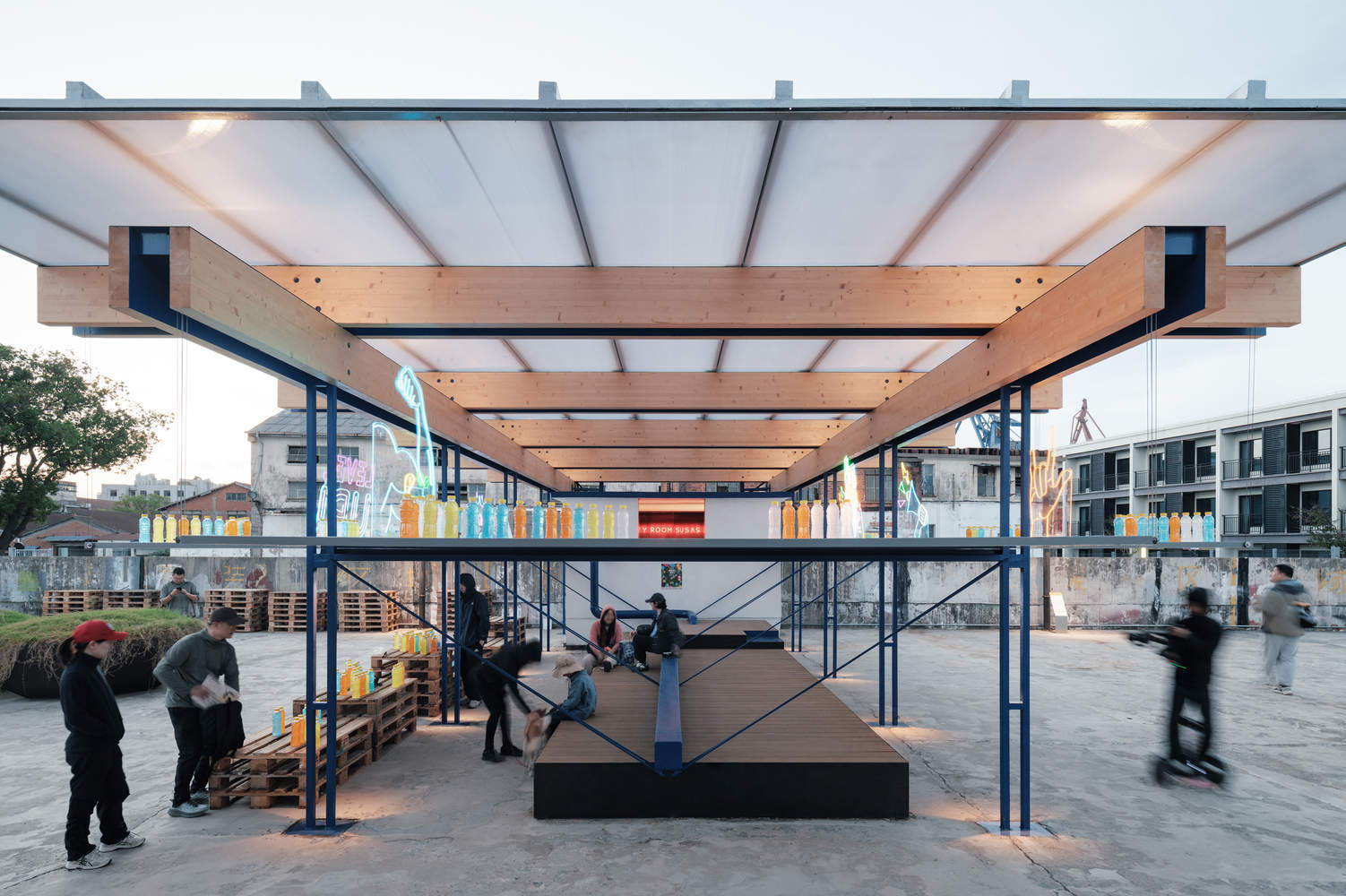
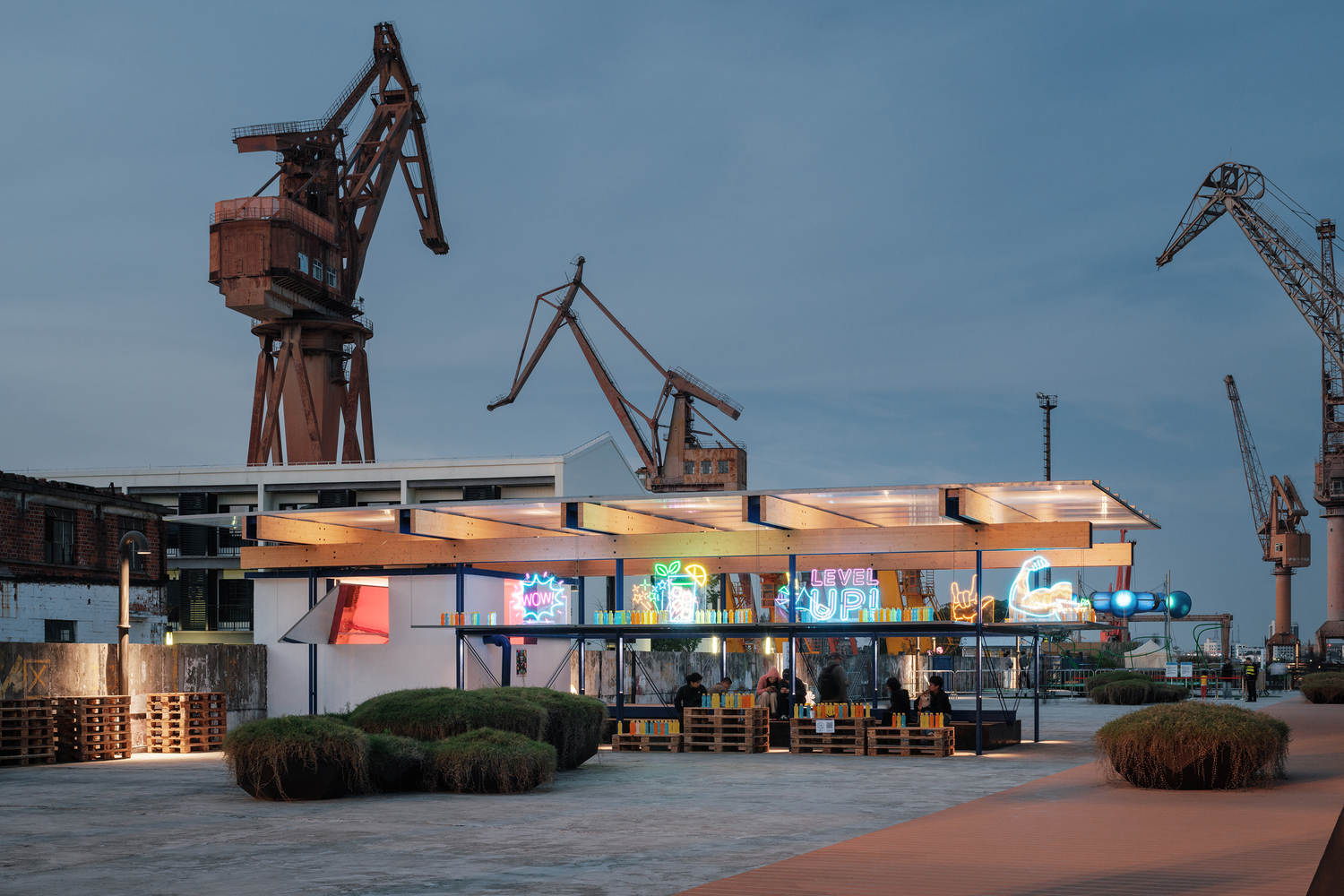
In its normal state, the cabin panels are tilted upwards, making the whole structure appear like a floating "ship's cabin" from the outside, defining a relatively stable space underneath for people to rest. The stainless steel panels subtly reflect the surrounding daily scenes on the pier. When the mechanical pulley system controls the cabin panels to rotate to a horizontal position, the Floating Cabin transforms into a more open structure. The horizontal panels function similarly to an overhead mezzanine in traditional market buildings, capable of accommodating exhibition objects or being planted with greenery to form an aerial garden.
日常状态下,舱板处于斜向上翻状态,整体从外部看如同漂浮的“船舱”,在下方限定出一个较为安定,供人停留休憩的空间,不锈钢面板隐约反射着码上的周遭的日常场景。当机械滑轮系统控制舱板翻转为水平状态时,浮舱变为一个更为开放的架构,水平板作为的功能类似于传统市集建筑的空中置物夹层,可以容纳展陈性物件,亦可容纳绿植而构成绿色空中花园。
© 陈颢
© 陈颢
Since its deployment, the Floating Cabin has served as a resting space for citizens and tourists strolling by the river on a daily basis; various possible public activities have also taken place, such as acoustic concerts, temporary markets, and pop-up exhibitions. When the Floating Cabin served as the finishing line for the "Run, Liangzai!" city running event, the cabin panels were rotated horizontally and decorated with neon lights and sports drinks, blending the industrial temperament with the riverside vitality, thus providing potential scenarios for future event-driven light commercial operations. The Floating Cabin is a machine-like structure without a clear type. This inherent mobility is both a capture and presentation of the site characteristics of the shipbuilding yard's industrial facilities, and a response to changing contemporary public needs. Beyond the sense of place brought by the static structure, the mobility of the Floating Cabin possesses the potential to actively respond to the ever-changing surroundings. As the Floating Cabin slowly transforms from the static suspended feeling of the inclined cabin panels to the multi-layered structure of the horizontal configuration, it attempts to present changing object states and spatial conditions under the influence of different event drivers, thereby embracing contemporary uncertainty.
浮舱投入使用后,日常作为市民游客在江边漫步时休憩的空间;亦发生了各种可能性的公共活动,例如弹唱音乐会以及临时市集、快闪展陈等。在浮舱作为“奔跑吧量仔”城市跑步活动的终点站时,舱板转为水平状态后布置了霓虹灯和运动饮料,融合了工业气质的滨江烟火气氛围,为未来事件化轻商业运营提供了可能性的场景。浮舱是一座无明确类型、机器般的架构。这种潜在的可动性,既是对造船厂工业设施的场地特质的捕捉与呈现,也是对变化的城市公共需求的回应。在静止架构所带来的场所知觉之外,浮舱的可动性具备去主动回应当下变化周遭的潜质。当浮舱从舱板斜向的静默悬浮感,慢慢转化为水平向的多层架构感时,它试图在不同事件驱动力的作用下,呈现出变化的物体状态与空间状态,从而迎接当代的不确定性。