多维空间序列与“无立面”的动态体验:该设计最精妙之处在于其对传统建筑界限的颠覆,通过动态升降的平台和可步行的屋顶景观,模糊了室内外的界限,创造出连续而非初始的空间体验。它提出了“功能性立面”的概念,即将社区活动、艺术展览和花园本身作为定义空间的元素。建筑师成功地利用了空间的序列变化——从低矮的入口过渡到高耸的公共花园——引导访客的视线和体验路径,使建筑成为一个可供“步入”的景观装置,而非静态的容器。
被动式低能耗设计的热带实践与商业可行性:在雅加达这样的热带高热环境中,该项目成功地论证了被动式、低能耗商业设计的可行性与盈利能力。通过优化负空间、利用框架结构作为“风洞效应催化剂”促进自然通风,并引入彩虹天窗实现自然采光,建筑极大地减少了对机械系统的依赖。这不仅是对可持续设计在发展中国家城市化背景下的积极回应,也为在极端气候条件下实现经济可持续的公共空间提供了宝贵的实验范本。
社会实验性的空间定义与用户行为探索:从建筑师的角度看,此项目更像是一个社会实验场。通过极简的几何体量、开放的通透性以及对核心家具的模糊界定,设计鼓励用户主动参与到“第三空间”的定义过程中。这种策略挑战了传统上由建筑师完全预设的使用模式,迫使访客在流动的、半户外的环境中不断重新协商和创造自己的舒适区。这种对用户行为模式的深度观察和激发,体现了设计对场所精神和社群互动的深刻关怀。
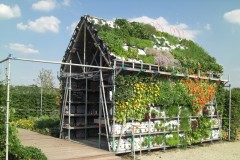
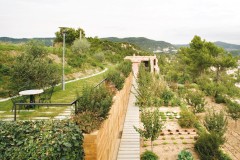
The Tanatap Frame Garden cafe is another iteration prototype of multi-layered green space, featuring dynamic platforms that can rise and fall, creating a walkable rooftop landscape that offers the public an extended space to appreciate the public park from a better, grander perspective.
名为塔纳塔普(Tanatap)的框架花园咖啡馆,是多层绿色空间的又一迭代原型,其设有动态平台,这些平台可升降起伏,营造出可步行的屋顶景观,为公众提供了一个从更佳、更宏大的视角欣赏公共公园的延伸空间。
The design pursues an elevation-less architectural style, stemming from the question: what if the flexibility of community activities, art exhibitions, and garden spaces could define the space and shape the building's character as an infinitely transforming functional facade? The design aims to present a selfless creative concept, hiding numerous sheltered indoor spaces within a simple multi-layered garden. The created space is continuous, rather than initial.
设计追求无立面建筑风格,始于这样一个问题:倘若社区活动、艺术展览和花园空间的灵活性,能作为一种无限变换的功能性立面,来定义空间并塑造建筑本身的特色,那会怎样?设计旨在展现一种无私的创作理念,即在简约的多层花园中隐藏众多有遮蔽的室内空间。所创造的空间是连续性的,而非初始空间。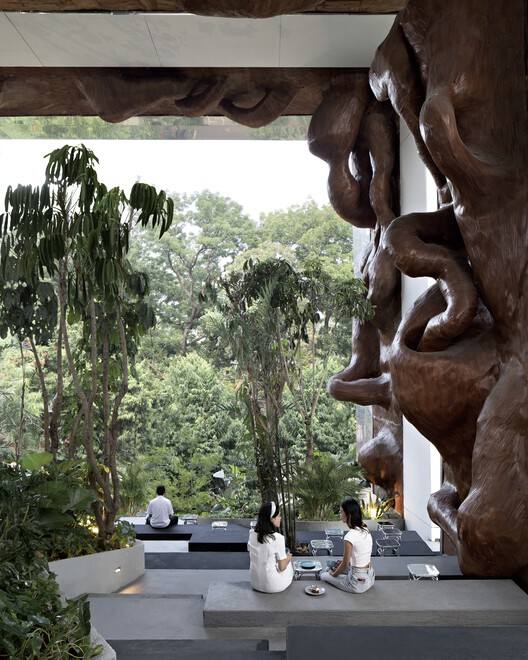
© Mario Wibowo
The ingenious juxtaposition of four types of frames (stainless steel, artwork, Glass Fiber Reinforced Concrete (GRC), and glass) enhances the perspective, allowing visitors to enjoy the park scenery while, conversely, the public park can view the visitors in the cafe garden as framed art objects. The architects hoped to create a fresh and vibrant new type of public space that achieves commercial sustainability in developing cities like Jakarta, where government-run public spaces often have low reliability.
四种(不锈钢、艺术品、玻璃纤维增强混凝土(GRC)、玻璃)框架的巧妙并置,增强了透视效果,使游客既能欣赏公园美景,同时,公众公园也能将咖啡馆花园中的游客视为被框起来的艺术对象。建筑师希望打造一个清新且充满活力的新型公共空间,在雅加达等发展中国家城市实现商业上的可持续性,因为这些城市由政府运营的公共空间通常可靠性较低。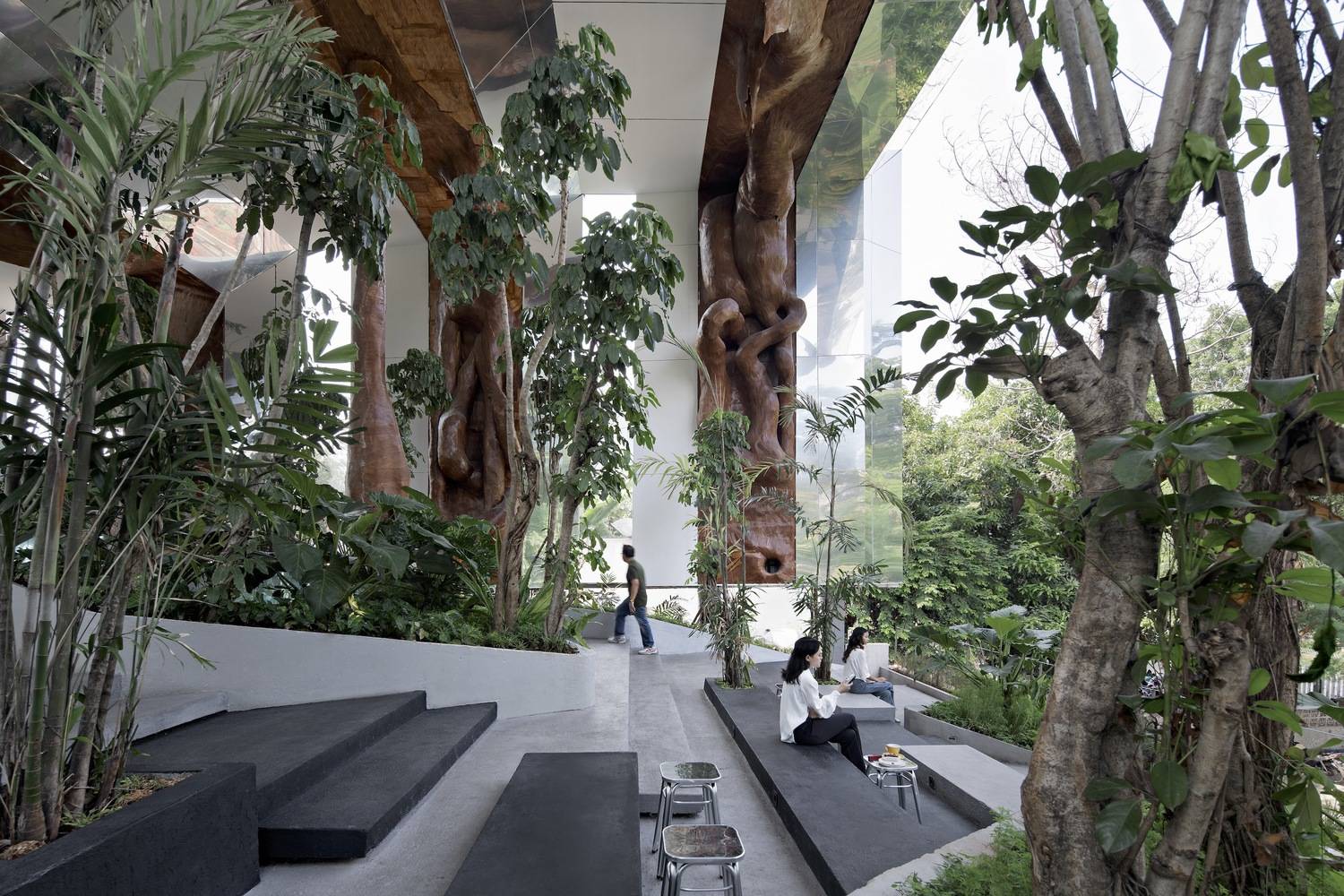
© Mario Wibowo
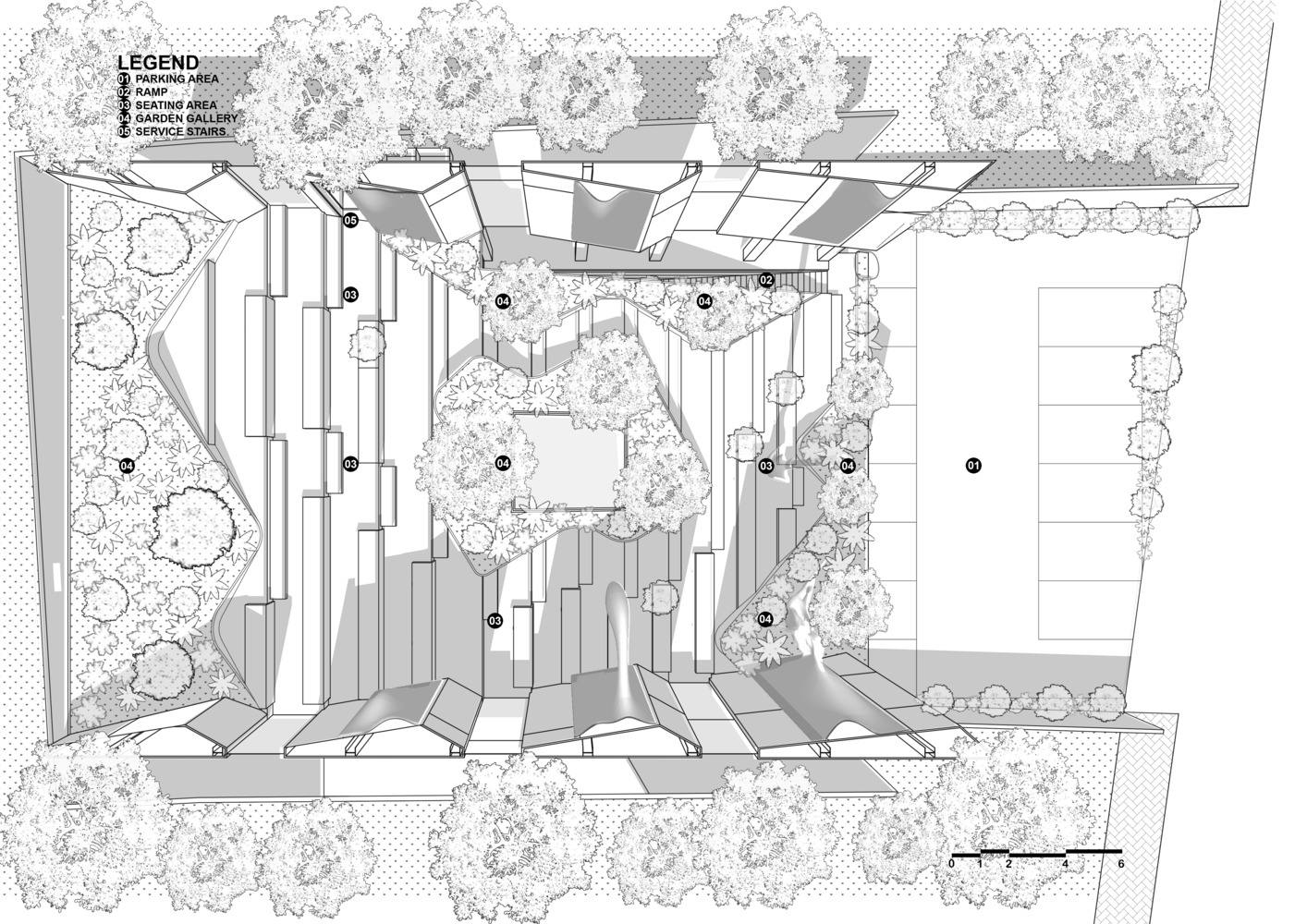
Second Floor Plan
二层平面图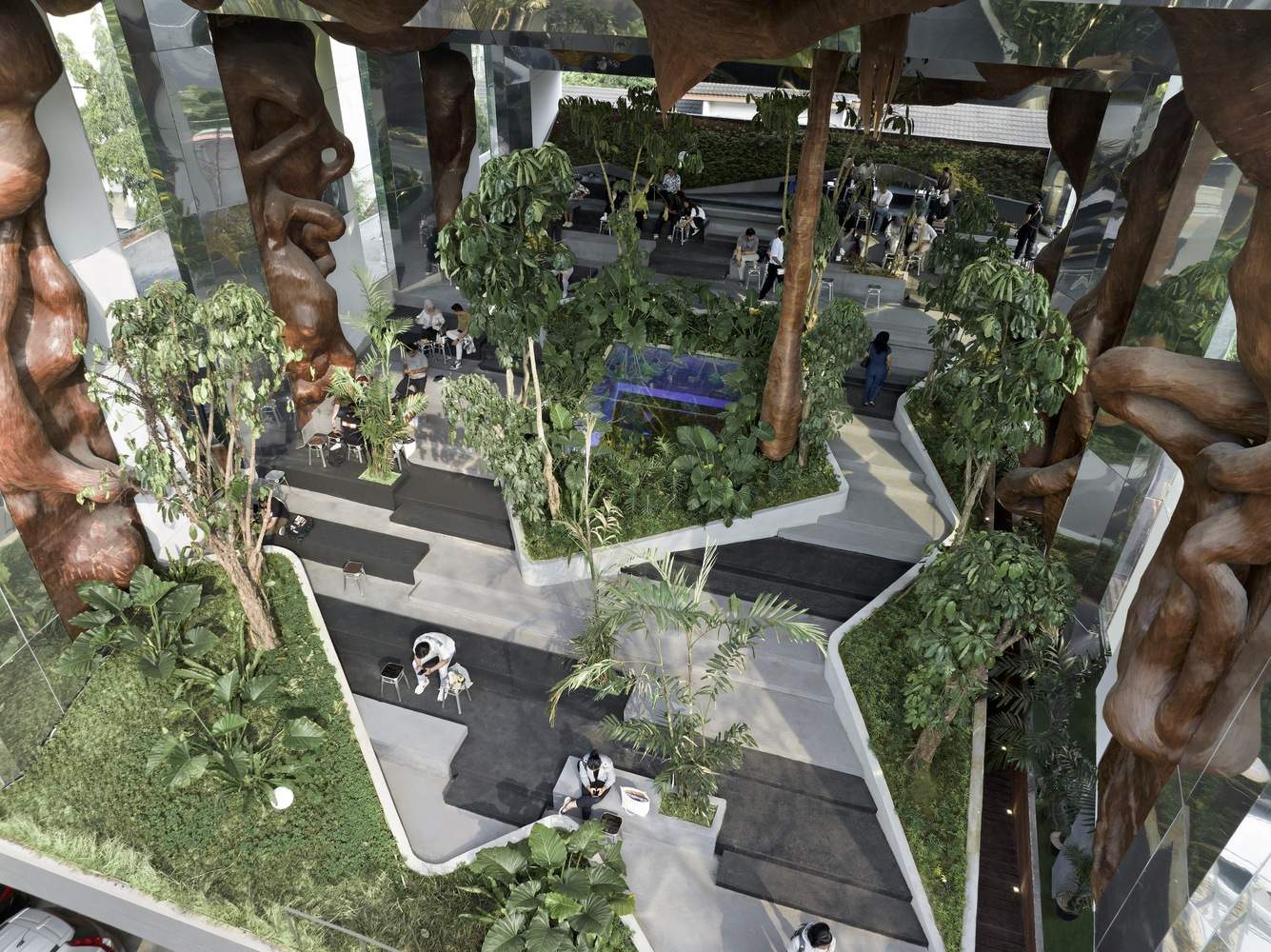
© Mario Wibowo
The Frame Garden contributes to the urban landscape with its maximum possible transparency. This building is nothing more than a framed garden with double shading and low-energy indoor areas. The oasis-like rainbow skylight in the center of the garden allows the setting sun's afterglow to shine directly into the indoor cafe. By optimizing negative space, many causal contrasting spaces are created. As a commercial garden in a dense residential area, the Frame Garden is located in an extremely hot environment, yet, like many other experimental Tanatap commercial garden designs, it uses this unique location to prove one point: regardless of macro-environmental challenges, passive low-energy commercial design remains feasible and profitable in tropical developing countries.
框架花园以其尽可能开放的通透性,为城市景观做出贡献。这座建筑不过是一个框架花园,拥有双重遮荫、低能耗的室内区域。花园中央如绿洲般的彩虹天窗,让夕阳余晖直射入室内咖啡馆。通过优化负空间,创造出许多因果对比空间。作为紧凑住宅区中的一个商业花园,框架花园所处的热环境极高,但与其他许多实验性的塔纳塔普商业花园设计一样,它利用这一特殊位置证明了一点:无论宏观环境挑战如何,在热带发展中国家,被动式低能耗商业设计仍可实现且有利可图。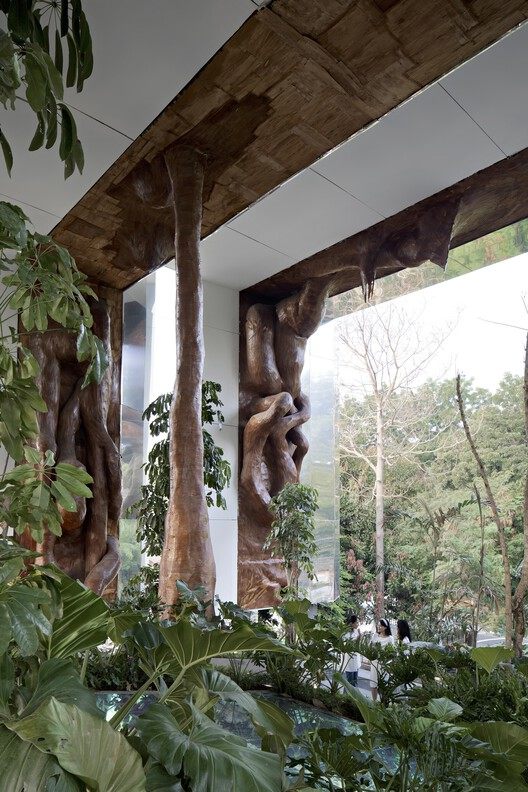
© Mario Wibowo
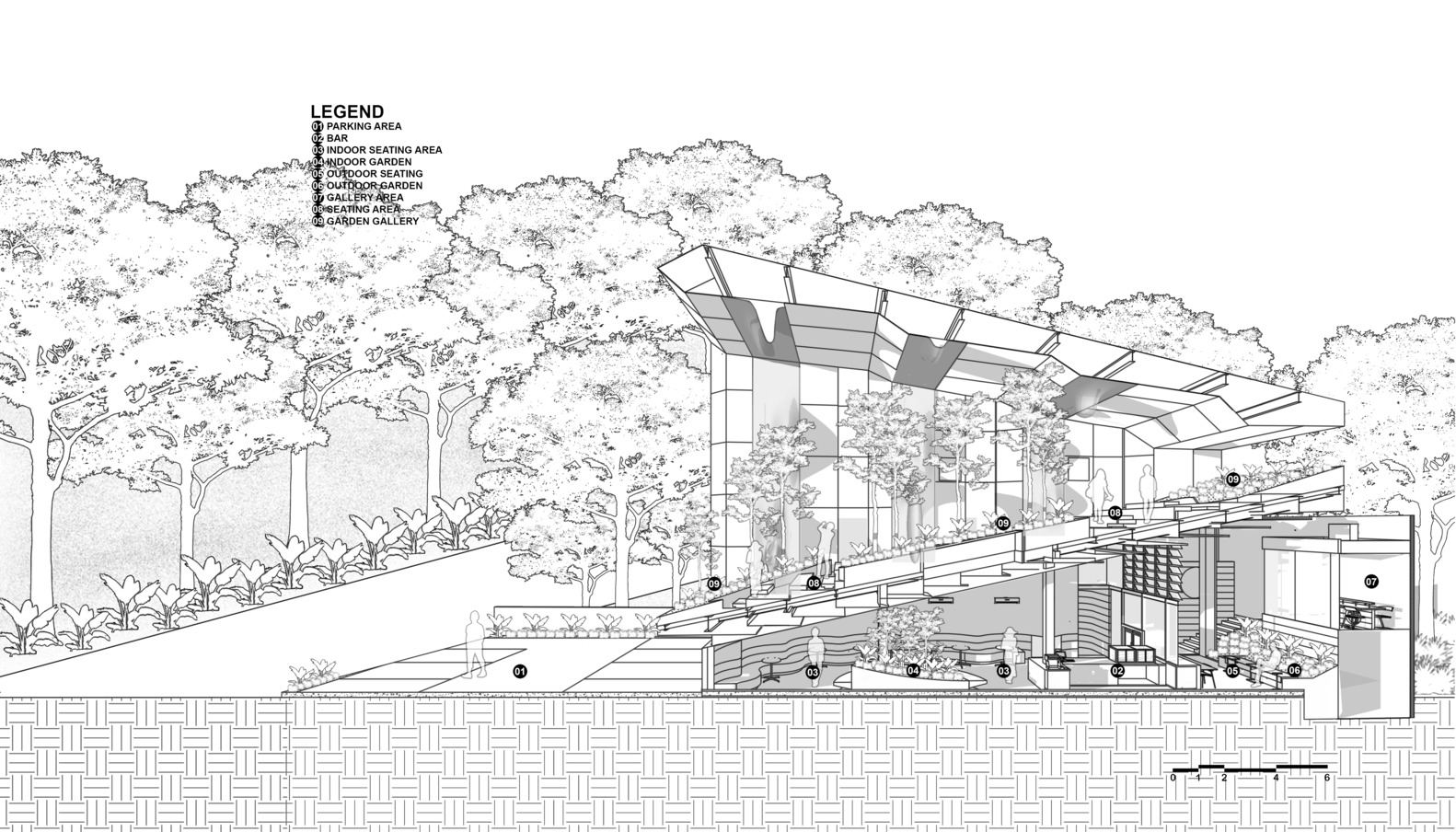
Section
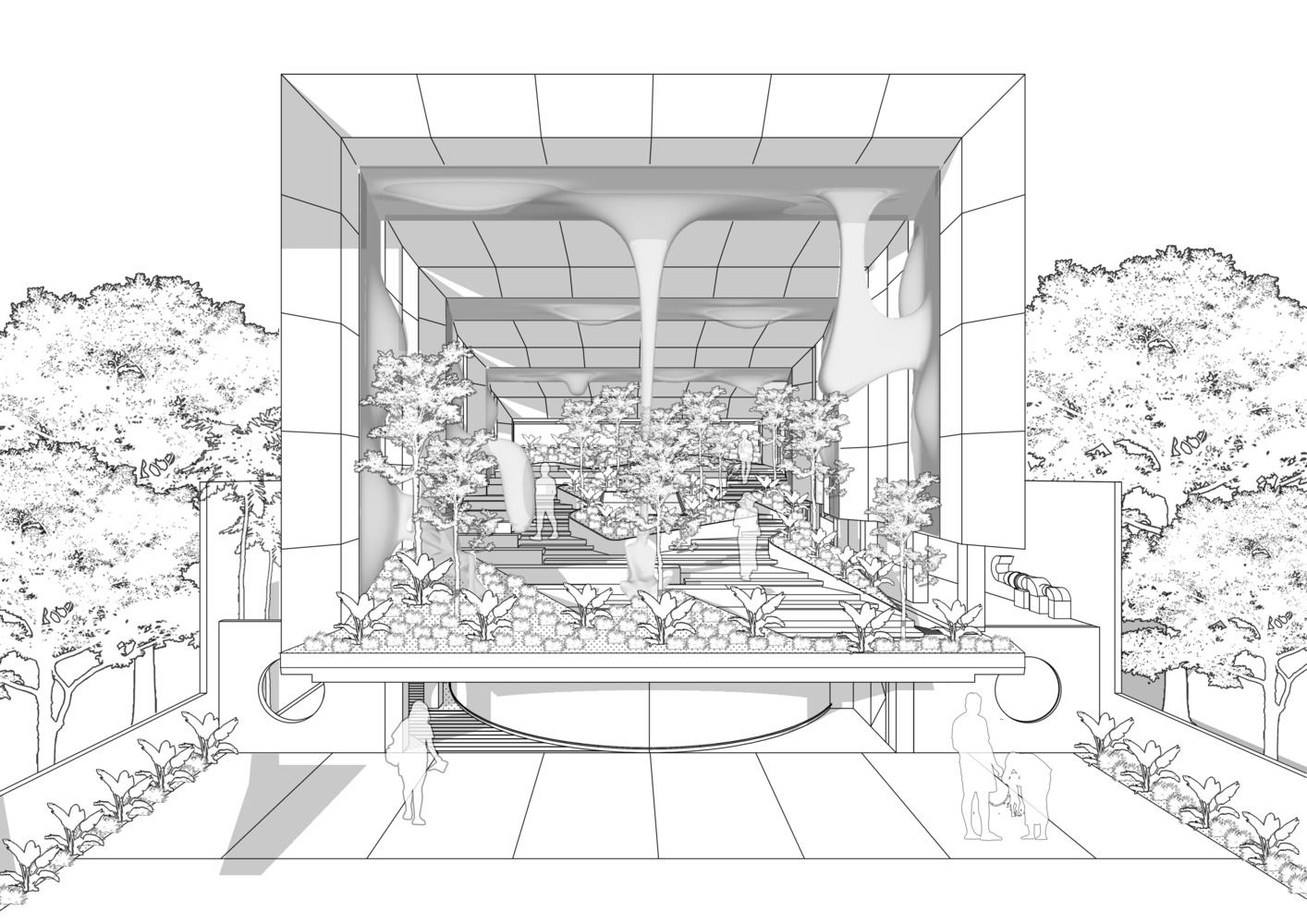
剖面图The design explores the minimalist beauty of basic geometric shapes. The design aims to introduce a strong cubic volume, sculpted through the contrast between a series of symmetrical, playful floor layouts on the ground level and an organic amphitheater on the second level. The building has no front or back, allowing free approach from all directions while fully utilizing the surrounding landscape. The frame acts as a catalyst for the wind-tunnel effect, allowing visitors to enjoy the public park view in the breeze.
设计探索了基本几何形状的简约之美。设计旨在引入强大的立方体体量,通过首层一系列对称的趣味平面布局和二层有机露天剧场的对比进行雕琢。建筑无前无后,可从各个方向自由接近,同时充分利用周边景观。框架起到了风洞效应催化剂的作用,让游客在微风中欣赏公共公园的景色。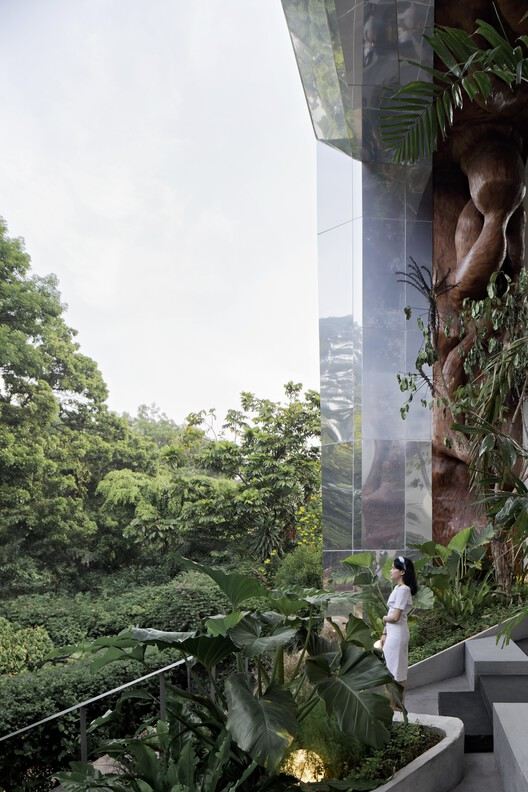
© Mario Wibowo
Upon entering the Frame Garden, visitors first feel a sense of enclosure and envelopment in terms of width and height. After entering the building, they walk under a very low ceiling of 2.2 meters, and as they move from the front garden on the ground floor to the back garden, the space gradually increases in height up to 7.5 meters. The passage connecting the two existing gardens blurs the boundary between indoor and outdoor spaces. Upon entering, they are drawn to the seemingly cut skylights and the activities of people above the garden. The winding and symmetrical interior space gradually unfolds, bringing a series of similar tunnel experiences, eventually connecting to a 9-meter-high sheltered public garden, where the perspective gradually changes as visitors move deeper into the garden and ascend. These spaces ultimately lead to spacious, multi-layered garden areas, indirectly guiding visitors to fully enjoy the charm of the tropical garden.
游客进入框架花园时,首先感受到的是空间在宽度和高度上的封闭包围感。进入建筑后,他们需在 2.2 米高的极低天花板下行走,随着从首层前花园走向后花园,空间高度逐渐增加至 7.5 米。连接两个现有花园的通道模糊了室内外空间的界限。进入空间后,他们会被看似切割的天窗和花园上方人们的活动所吸引。蜿蜒而对称的室内空间逐渐展开,带来一系列类似的隧道体验,最终连接至 9 米高的有遮蔽公共花园,随着游客深入花园向上行走,视角逐渐变化。这些空间最终通向宽敞的多层花园区域,间接引导游客尽情享受热带花园的魅力。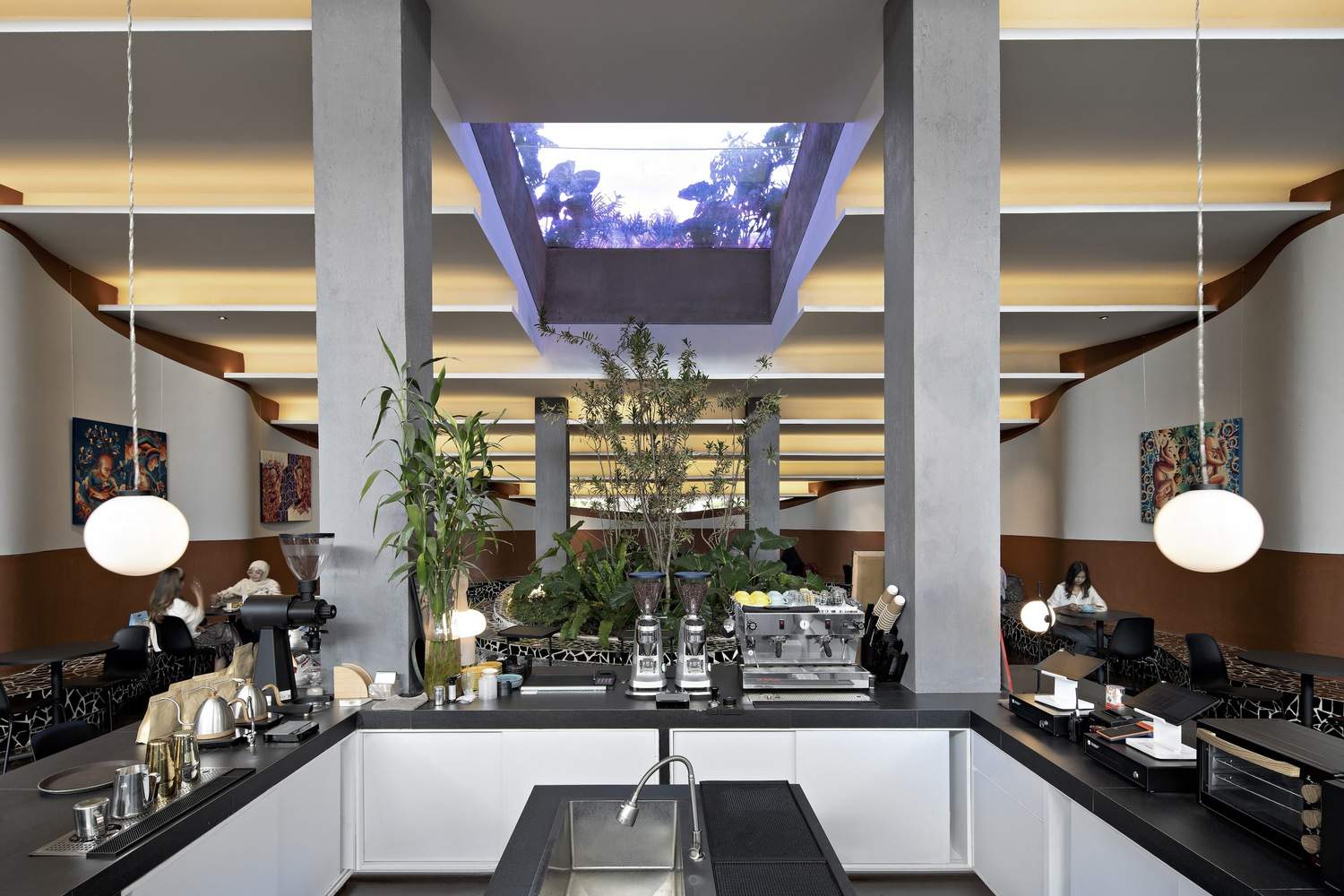
© Mario Wibowo
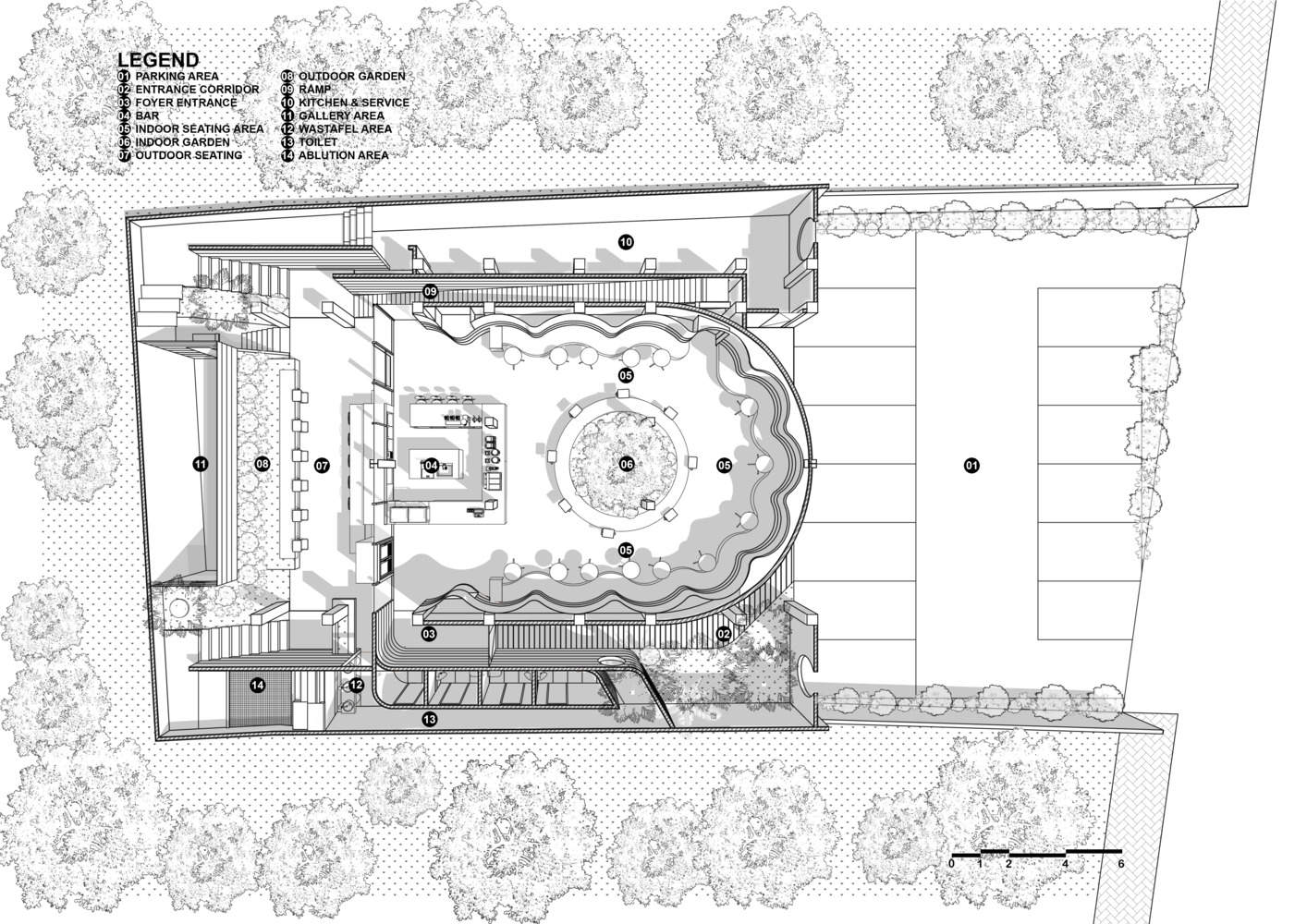
Ground Floor Plan
一层平面图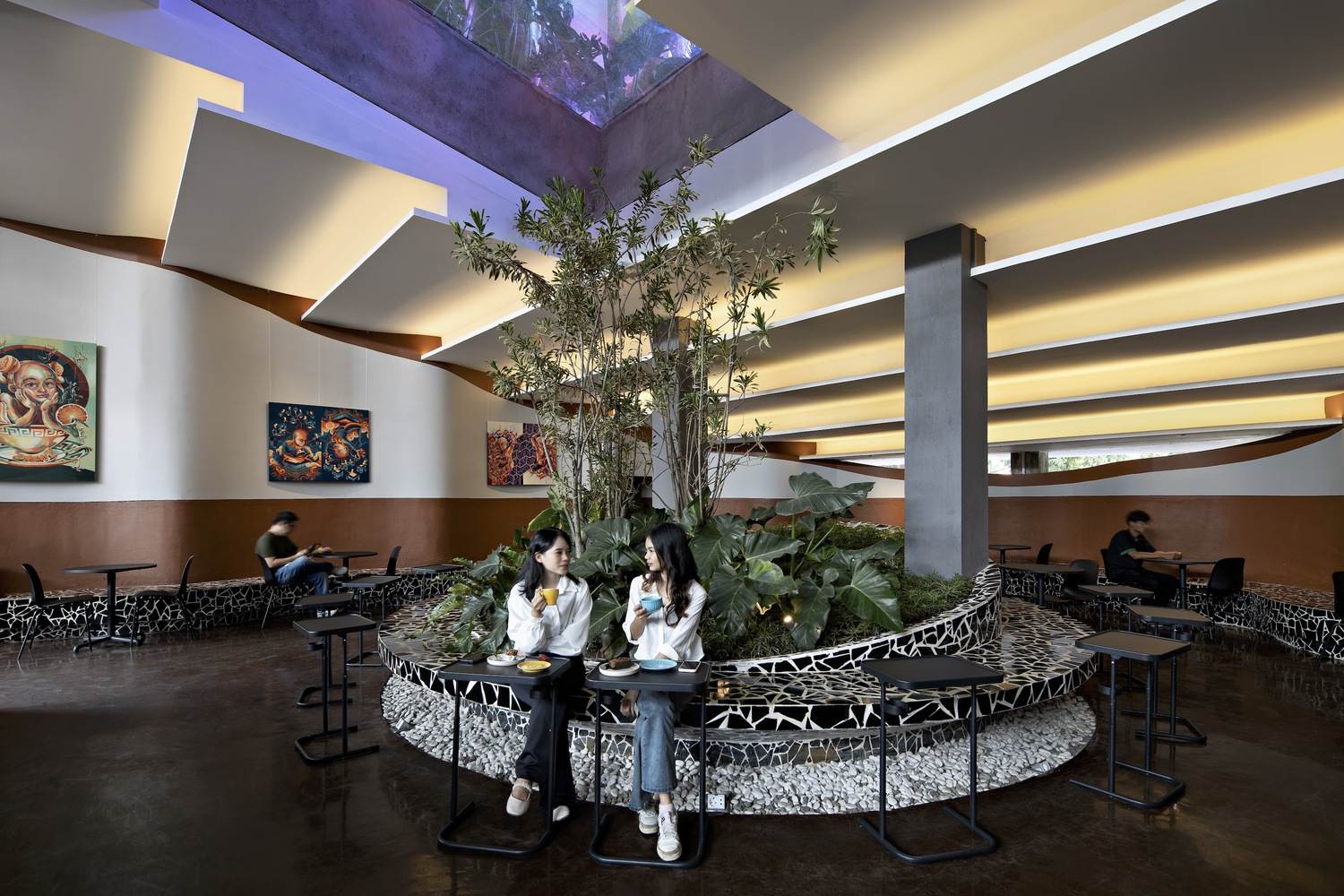
© Mario Wibowo
Similar to many previous experimental tropical cafe gardens, RAD+ar has custom-optimized the inside-outside concept, creating a different atmosphere every hour through the shade of a series of floating gardens, benefiting from the seamless borrowing of the view of the opposite public park; it offers visitors a unique experience to enjoy the integration of semi-outdoor and indoor art galleries with artificial jungles. The open layout creates efficient internal unit flow and interaction between the bar area, communal tables, and passages.
与许多之前的实验性热带咖啡花园一样,RAD+ar 对内外概念进行了定制化优化,通过一系列漂浮花园的阴影,每小时营造出不同的氛围,这得益于对对面公共公园景观的无缝借用;它为游客提供了一个独特的体验,让他们享受半户外与室内艺术画廊与人工丛林的融合。开放式布局创造了高效的内部单元流动和吧台区域、公共餐桌及通道的互动。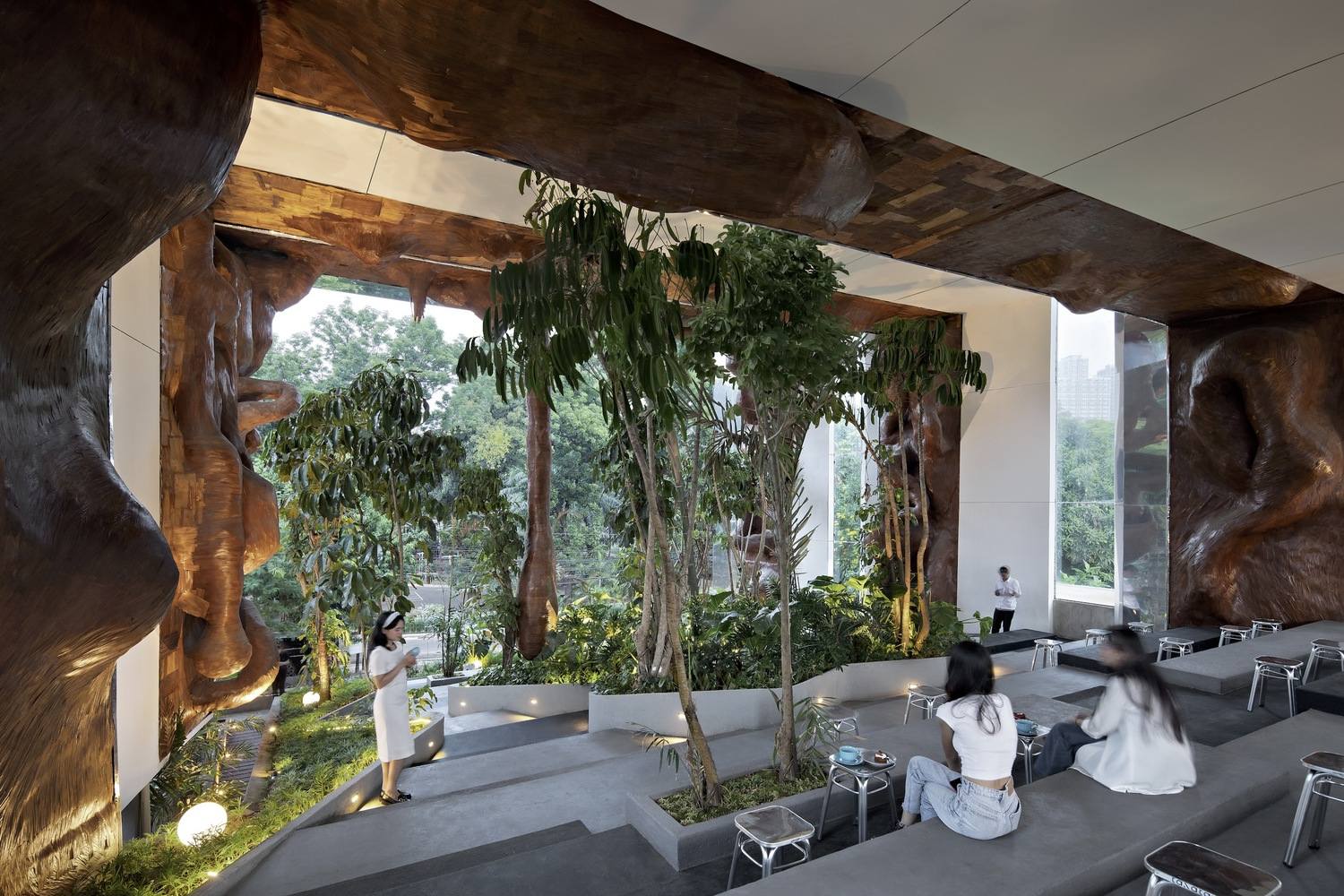
© Mario Wibowo
Elevation
立面图This design, as an experimental plan, aims to observe and understand the changes in user behavior after the architect reconstructs the spatial hierarchy. RAD+ar uses this project to further understand the behavior of visitors when defining spaces they do not fully comprehend; therefore, most of the furniture in this cafe is not explicitly defined, blending with the hardscape and landscape features, thus becoming an experiment for visitors/users to define their own comfort when using this furniture. This is viewed as a social experiment observing how people continuously redefine their sense of 'third space' in open spaces/gardens and constantly adjust as the crowd changes throughout the day.
该设计作为一种实验性规划,旨在观察并了解用户行为在建筑师重构空间层次结构后的变化。RAD+ar 利用这个项目进一步了解游客在定义他们不理解的空间时的行为;因此,这家咖啡馆中的大部分家具都未明确界定,与硬质景观和景观特色融为一体,从而成为游客/用户在使用这些家具时定义自己舒适感的实验。这被视为一项社会实验,观察人们在开放空间/花园中如何不断重新定义他们的第三空间感,并随着一天中不同时间的人群变化而不断调整。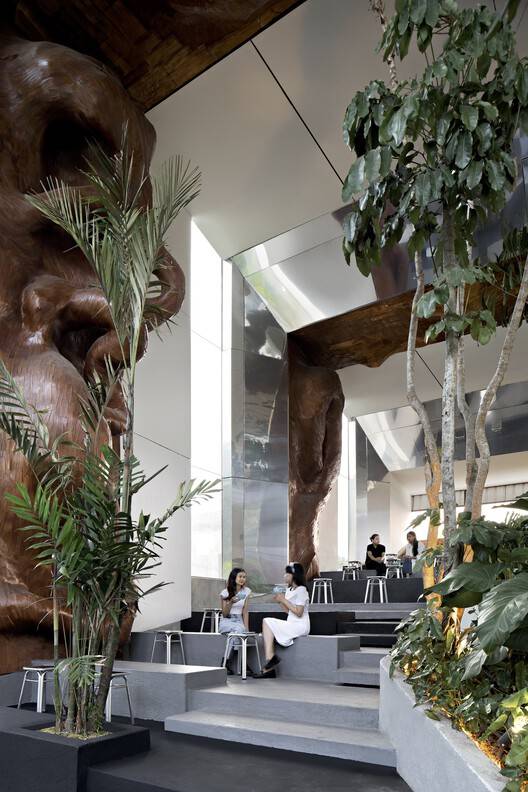
© Mario Wibowo
This new cafe garden will become a public living room for locals and a novel destination for all art lovers. It is a space dedicated to nurturing curiosity, knowledge, and creativity. Access to great art and music can be flexible and transformative. It enriches our lives with vibrant colors and takes us to worlds we never knew existed. Initiated by Antonius Richard, Tanatap is committed to its vision of decentralized sustainable architecture through sustainable business.
这座新的咖啡花园将成为当地人的公共客厅,以及所有热爱艺术人士的新颖目的地。这是一个致力于滋养好奇心、知识和创造力的空间。接触伟大的艺术和音乐可以灵活多变且具有变革性。它用鲜艳的色彩丰富我们的生活,带我们领略未曾知晓的天地。由 Antonius Richard 发起,塔纳塔普致力于通过可持续商业,坚持其分散可持续建筑的愿景。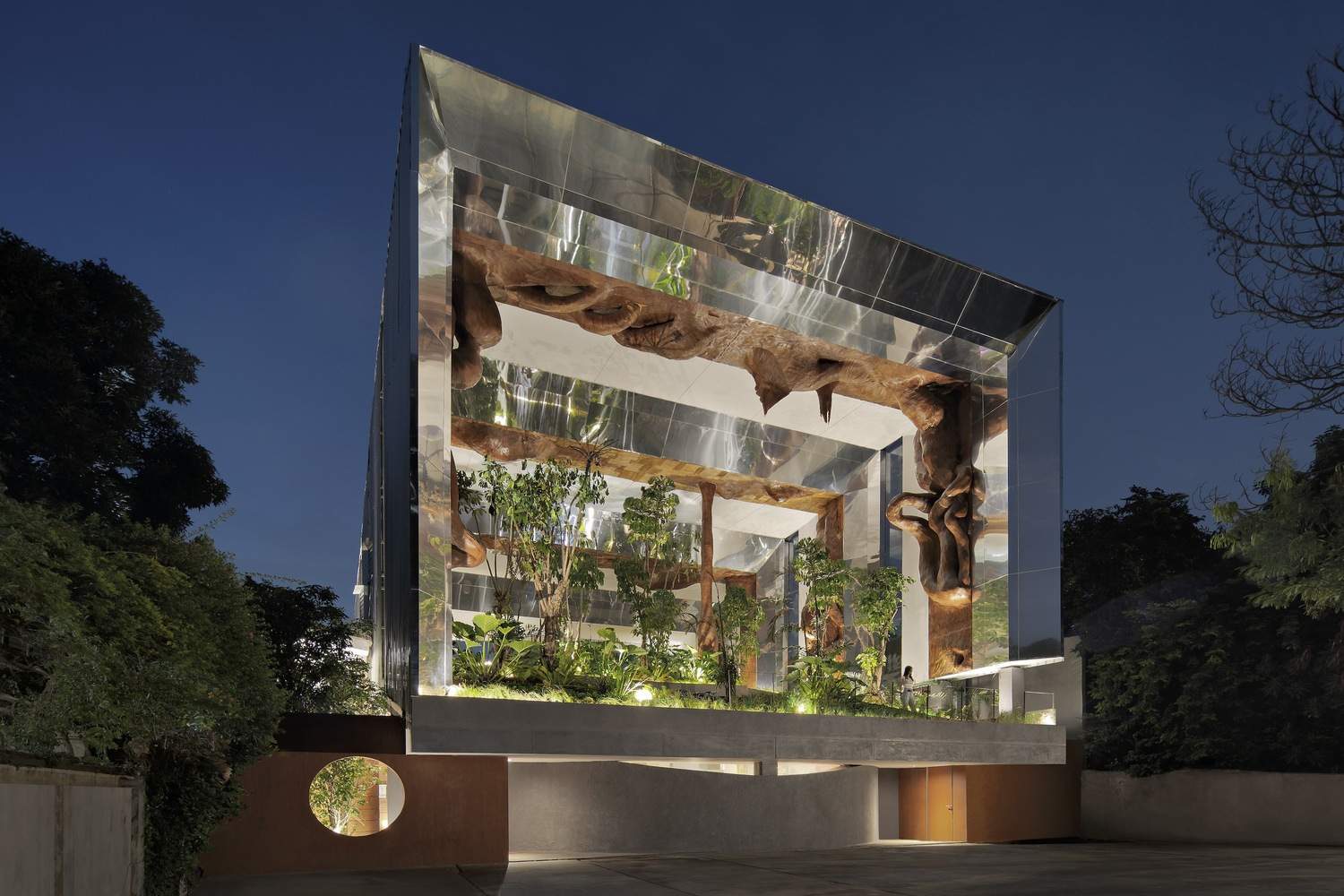
© Mario Wibowo