历史建筑的适应性再利用与空间秩序的重塑:该项目成功地将 19 世纪的拉米兵营从军事用途转变为一座现代公共图书馆,其核心策略在于“最小干预”与“空间连续性”。设计师通过精细地移除后期增建,恢复了原始的宏大体量和庭院布局,为当代功能植入了清晰的建筑骨架。这种对历史秩序的尊重和恢复,不仅保护了建筑的本质特征,也为新功能提供了合理且富有逻辑的场所精神,体现了高水平的文保设计理念。
创新的组织核心——“超长廊”的场所生成:项目最精妙之处在于引入了一条长达 1.4 公里、宽 5 米的内部走廊,作为主要的交通动脉和社交枢纽。这条走廊超越了单纯的交通功能,通过局部拓宽形成的阶梯式露天剧场,促进了非正式的学习与交流,极大地提升了空间的活力和公共性。这种“流线即场所”的设计手法,巧妙地将漫长的线性空间转化为丰富互动的城市客厅,是功能整合与空间体验的典范。
可逆性介入与新旧结构的对话:在满足当代图书馆的复杂功能需求时,设计团队采用了轻型钢结构夹层,并以可逆性的方式植入现有砖石结构中。这些新的学习和研究空间在材质上(钢材与木材)与原始的厚重结构形成鲜明对比,清晰地标识了新旧干预的边界,避免了对历史肌理的侵蚀。这种“克制”而清晰的介入方式,展现了对历史建筑敏感且负责任的设计态度,实现了功能更新与遗产保护的和谐共存。
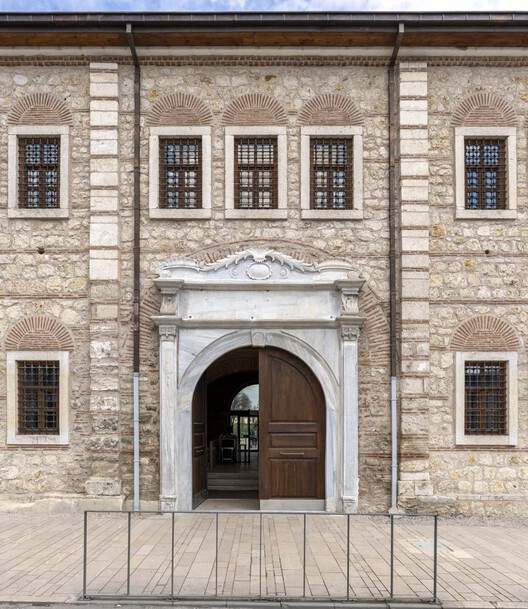
The Rami Library project focuses on the adaptive reuse of the historic Rami Barracks, transforming this 19th-century military structure into a contemporary public library through design strategies centered on clarity, spatial continuity, and minimal intervention. Built between 1826 and 1828 for the Asakir-i Mansure-i Muhammediye (the Ottoman New Army), the barracks are rumored to have been designed by Seyyid Abdülhalim Efendi. This large, single-story complex, organized around a monumental courtyard, provides a solid architectural foundation for its new function.
拉米图书馆项目聚焦于对历史悠久的拉米兵营进行适应性再利用,通过以清晰性、空间连续性和最小干预为核心的设计策略,将这座 19 世纪的军事建筑转变为当代公共图书馆。拉米兵营建于 1826 年至 1828 年间,为阿萨基尔-伊-曼苏雷-伊-穆罕默德耶(Asakir-i Mansure-i Muhammediye,奥斯曼帝国新军)而建,据传由赛义德·阿卜杜勒哈利姆·埃芬迪(Seyyid Abdülhalim Efendi)设计。这座大型单层建筑群围绕一个宏伟的庭院布局,为其新功能提供了坚实的建筑基础。
© Cemal Emden
© Cemal Emden
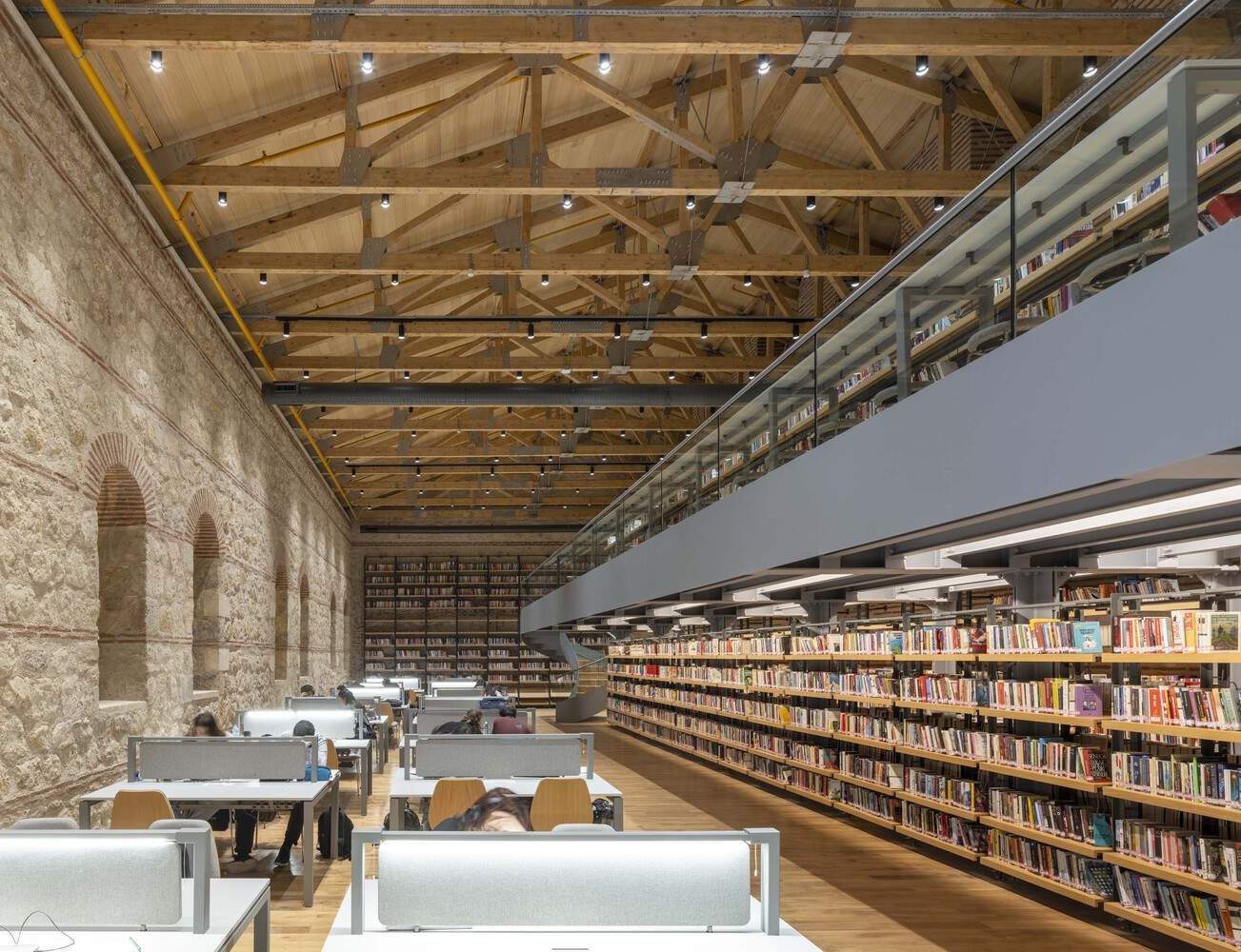
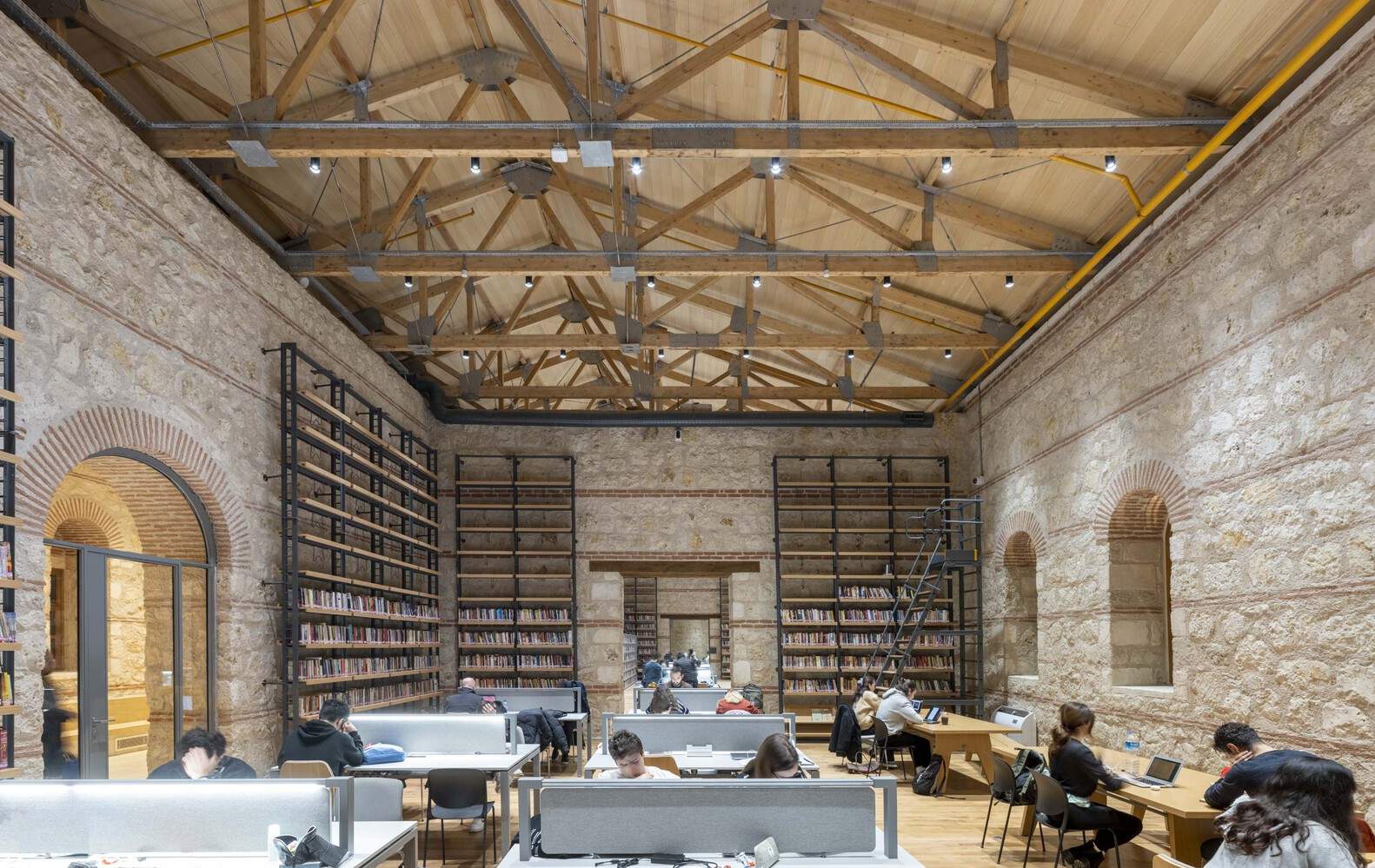
Our task was to retrofit and replan the existing building as a library, ensuring that the new functions could integrate without disrupting the essential qualities of the historic structure. The design approach began by restoring the original spatial order, removing later additions that had compromised the building's original flow and proportions. Once the inherent rhythm of the building was re-established, the new functional areas—manuscript section, reading rooms, children's and adult libraries, research spaces, etc.—were carefully arranged within the existing architectural framework using a deliberately restrained architectural language.
我们的任务是将现有建筑重新改造并重新规划为图书馆,确保新功能能够融入其中,同时不破坏历史建筑的基本特质。设计方法首先从恢复原始空间秩序入手,移除后期增建部分,这些增建部分破坏了建筑原有的流线和比例。一旦建筑固有的节奏得以重建,新的功能区域 —— 手稿区、阅览室、儿童和成人图书馆、研究空间等 —— 便被精心布置在现有建筑框架内,采用刻意克制的建筑语言。
© Cemal Emden
© Cemal Emden
© Cemal Emden
© Cemal Emden
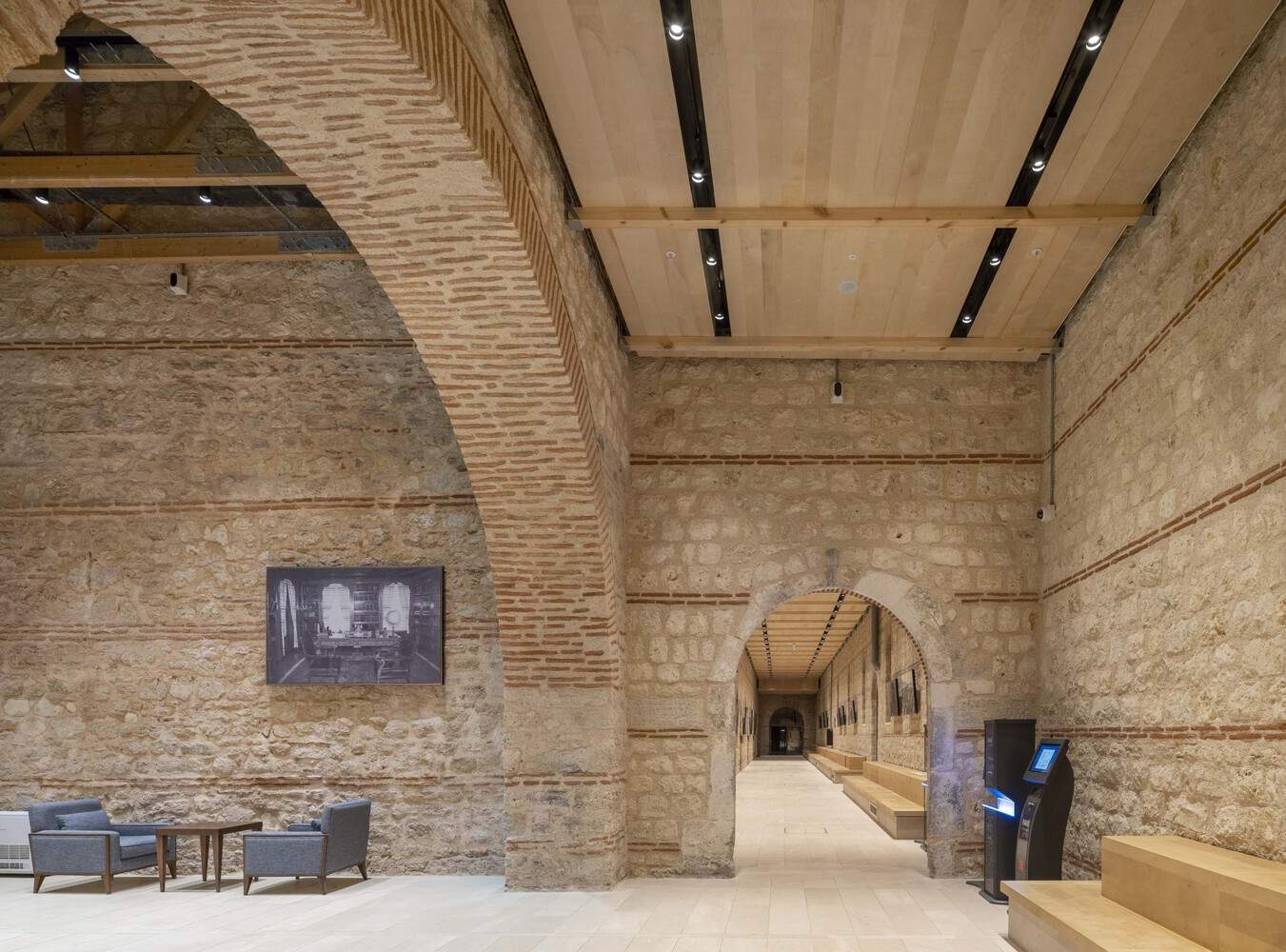
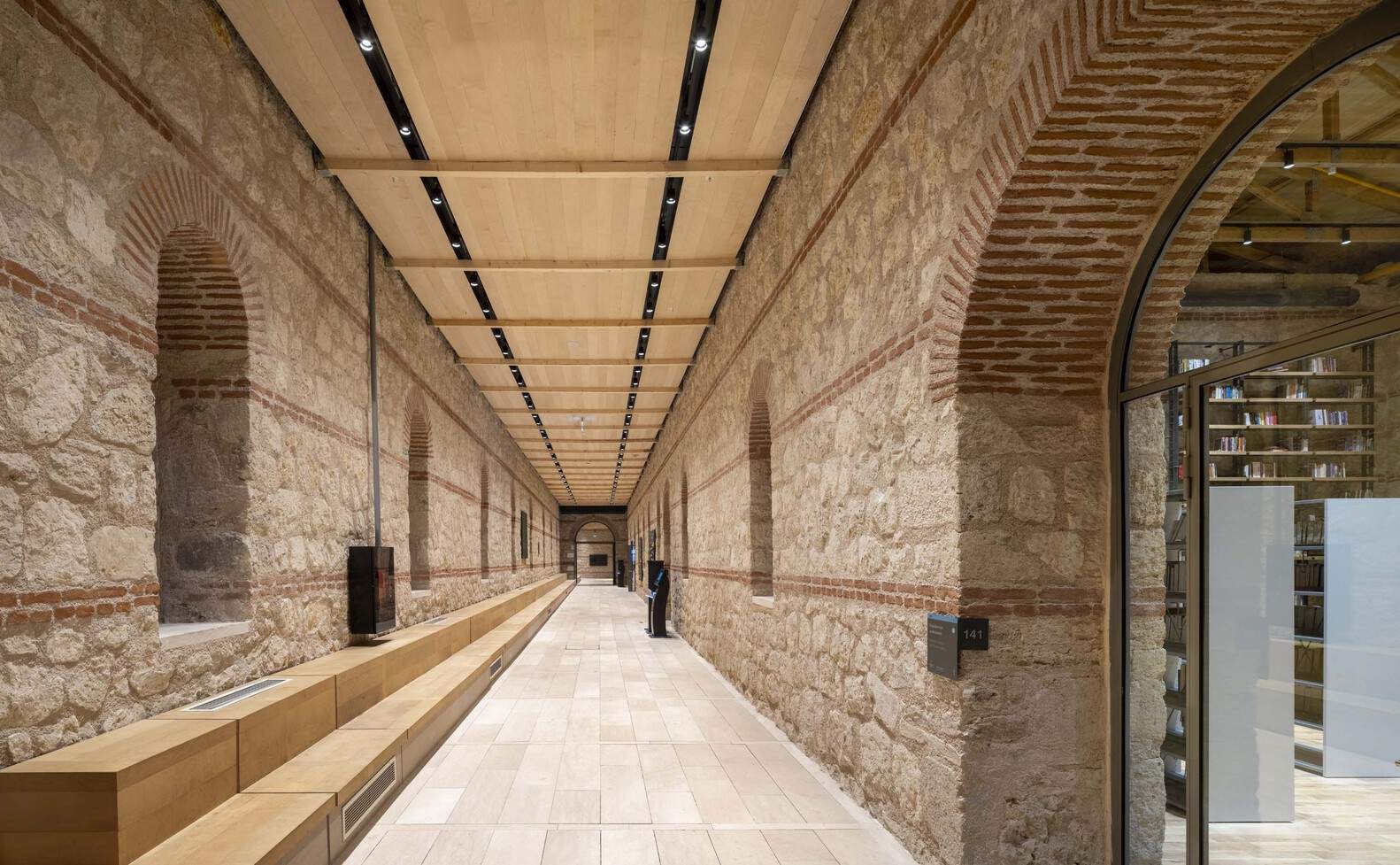
A core element of the design is an internal corridor, 5 meters wide and 1.4 kilometers long, which serves as the main organizational structure connecting the library's various functions while also acting as an informal social space. A section of the corridor widens to form amphitheater-like seating areas, encouraging spontaneous gatherings and providing flexible space for study and interaction.
设计的一个核心元素是一条宽 5 米、长 1.4 公里的内部走廊,它作为主要的组织架构,连接着图书馆的各项功能,同时也充当着非正式的社交空间。走廊的某一段拓宽形成类似露天剧场的座位区,鼓励自发聚会,为学习和互动提供灵活空间。
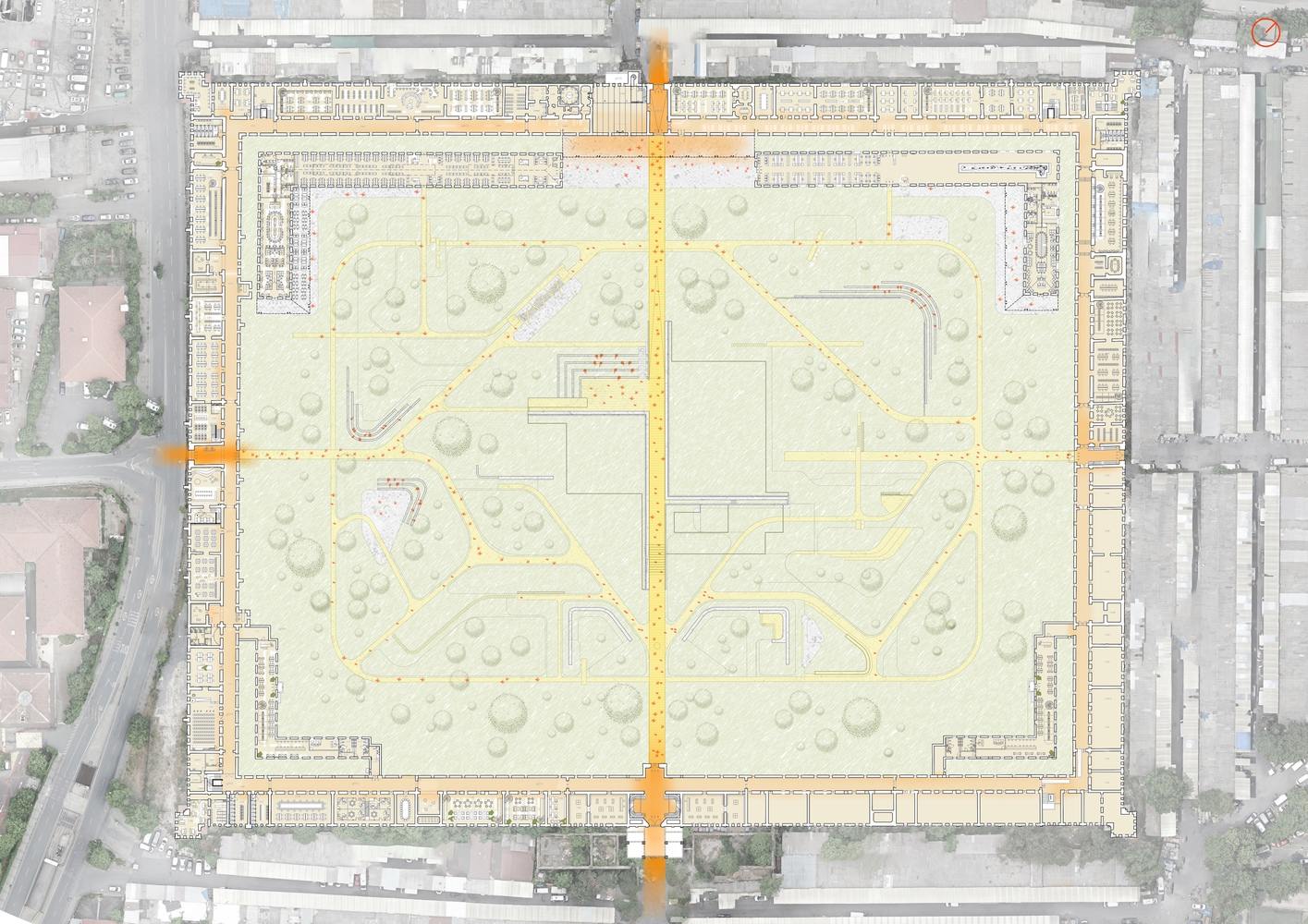
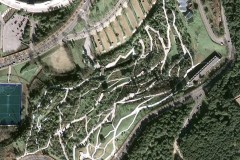
总平面图
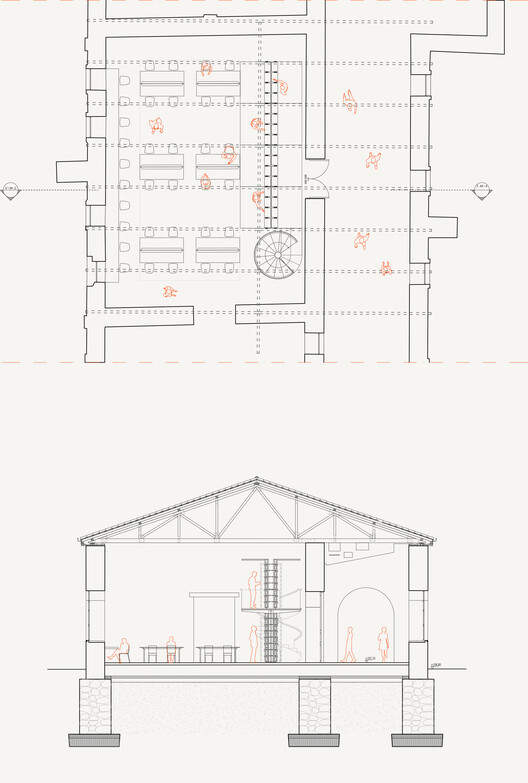
剖面图

剖面图
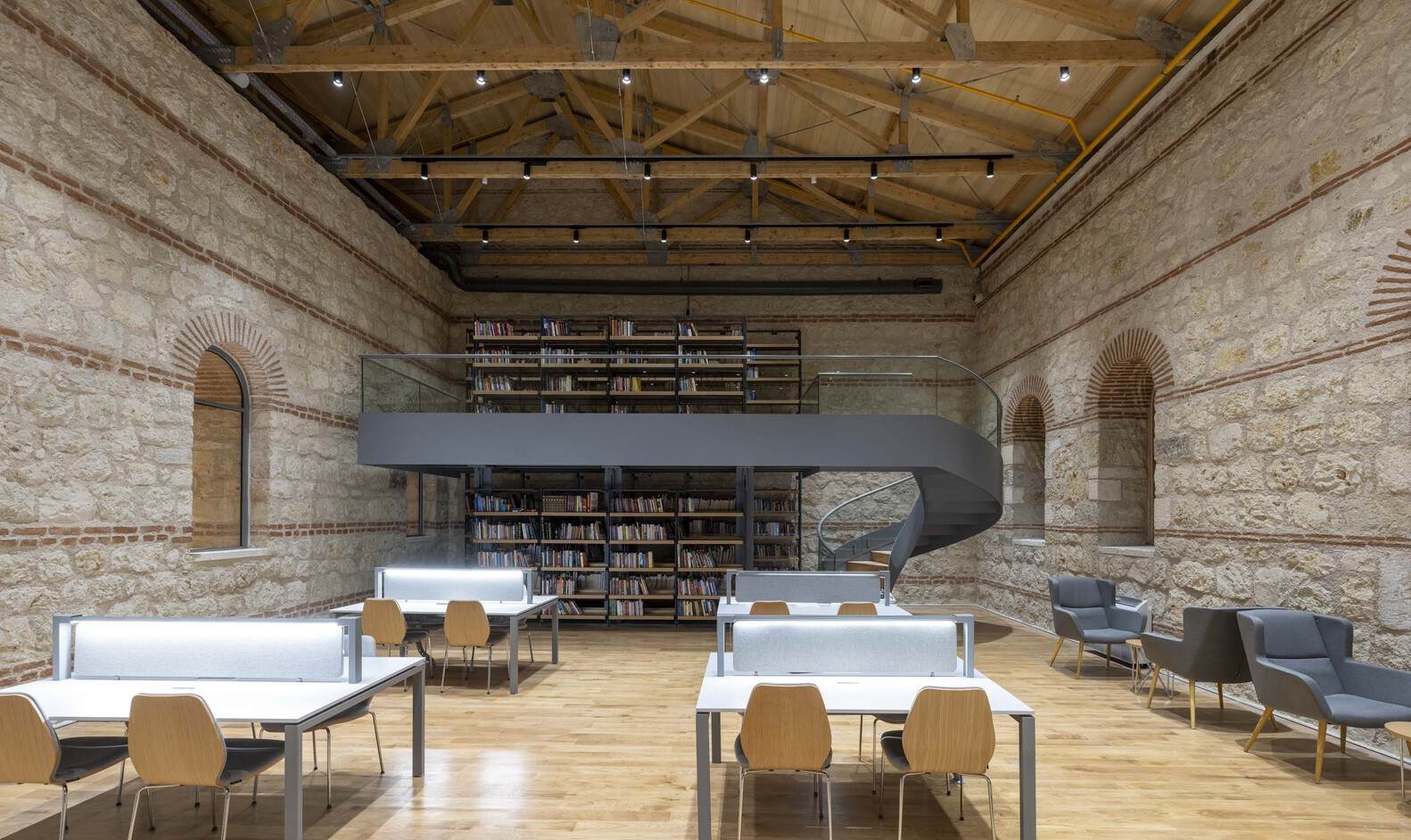
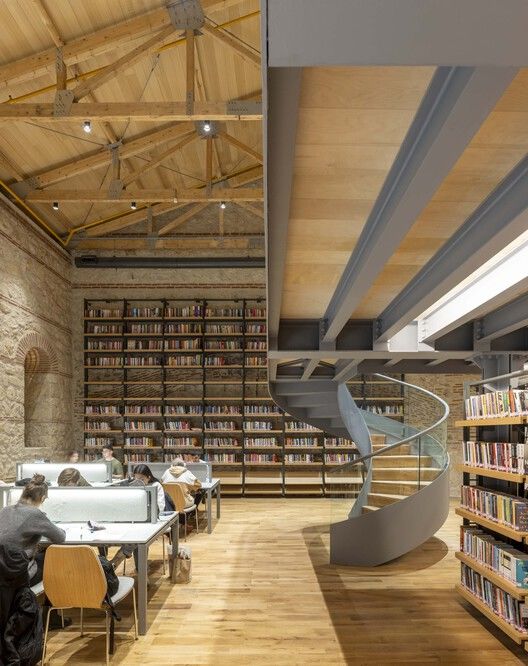
To accommodate contemporary spatial needs within the historic shell, lightweight steel mezzanine structures were introduced as reversible interventions. These mezzanines are supported by simple steel structures aligned with the bookshelves, creating new areas for study and research while preserving the legibility of the original masonry building. The material contrast—steel and wood—skillfully differentiates the new interventions from the historical structure.
为在历史建筑外壳内满足当代空间需求,我们引入了轻型钢结构夹层作为可逆结构。这些夹层由与书架对齐的简易钢结构支撑,在保留原有砖石建筑可读性的同时,创造了新的学习和研究区域。其材质 —— 钢材和木材,巧妙地将新干预部分与历史结构区分开来。
© Cemal Emden
Since its opening, the library has quickly become a significant cultural destination, receiving 6,203,524 visitors as of April 17, 2025, with projected visitor numbers reaching 7,240,019 by the end of the year—a testament to the success of the design concept in transforming a historic barracks into a vibrant public learning environment.
自开放以来,该图书馆迅速成为重要的文化目的地,截至 2025 年 4 月 17 日,已接待 6203524 名访客,预计到年底访客数量将达到 7240019 人 —— 这证明了将历史兵营转变为充满活力的公共学习环境的设计理念的有效性。
© Cemal Emden