场所精神的微妙重构:捞鱼亭成功地在繁忙的城市界面与宁静的水上森林之间,构建了一个介于“自然”与“人工”之间的临界空间。通过使用纤细的钢柱和细碎化的屋顶,建筑师仿照树林的密度创造了一个人工的“森林”,模糊了传统亭子的边界感,使体验更接近于置身于浓荫之下。这种对场所精神的细腻捕捉,不仅服务于其作为湿地公园入口和游客休憩的功能,更在哲学层面探讨了技术对自然意境的转译,实现了对场地文脉的尊重与现代介入的平衡。
技术与传统意象的解构与融合:该项目在结构上展现了高超的技术敏感性。虽然采用了现代钢结构,但其屋顶的处理方式巧妙地呼应了中国传统建筑中的四坡庑殿顶的形象,同时通过碎化处理赋予了其类似茅草顶的质感。这种“去物质化”的处理,成功地转移了钢材原本的工业属性,使其形态语言更贴近自然语境。此外,预制装配式的轻量化建造方式,极大地减少了对湿地生态的干扰,体现了对环境负责任的建造态度。
结构即叙事的空间体验:捞鱼亭的结构逻辑本身就是一种空间叙事。通过“六根立柱+板柱结构”的模块化单元的交叠拼合,形成了密度不一、随机分布的立柱群,引导了流线并暗示了空间意图。细密且悬臂受力的钢柱,不仅支撑着结构,更在视觉上模拟了树木的枝干,重新激活了“树”作为人类早期庇护所原型的隐喻。这种结构与体验的深度耦合,使得亭子成为一个可以呼吸、可穿行、可停留的场所,在技术与自然之间建立了富有张力的对话。
The Laoyuting Pavilion is one of the invited projects for the 2024 Dianchi Art Season "Home and Future," located on the south side of the Water Forest Art Zone in the Laoyu River Wetland Park in Kunming. After its completion, it first served as the entrance to the Dianchi Art Festival, and after the festival, the pavilion was permanently retained as an entry prompt space and a resting place for tourists in the wetland park. This wetland, covered with metasequoia trees by Dianchi Lake, is actually an infrastructure for urban water quality purification, serving as the last natural filtration step before entering Dianchi Lake. There are many small fish here, and city dwellers come here to fish in their spare time, hence the name Laoyu River (Fish-Catching River). This pavilion, a resting spot for people fishing, was thus named Laoyuting (Fish-Catching Pavilion).
捞鱼亭是昆明 2024 滇池风土艺术季“家园与未来”(2024 Dianchi Art Season: "Home and Future")的受邀参展项目之一,位于滇池捞鱼河湿地公园水上森林艺术区的南侧,建成后首先作为滇池艺术节的入口,艺术节之后,亭子被永久地保留了下来,作为湿地公园的一个进入的提示空间,也是游客的休憩场所。滇池边的这一片长满水杉树的湿地实际是城市水质净化的基础设施,作为净化水厂最后一道自然过滤的程序进入滇池,里面有很多小鱼,城市的人们闲时会来到这里捞鱼,故而称之为捞鱼河湿地,这个亭子作为人们捞鱼间休息的亭子,也就被称之为捞鱼亭。
© 王策
© 王策
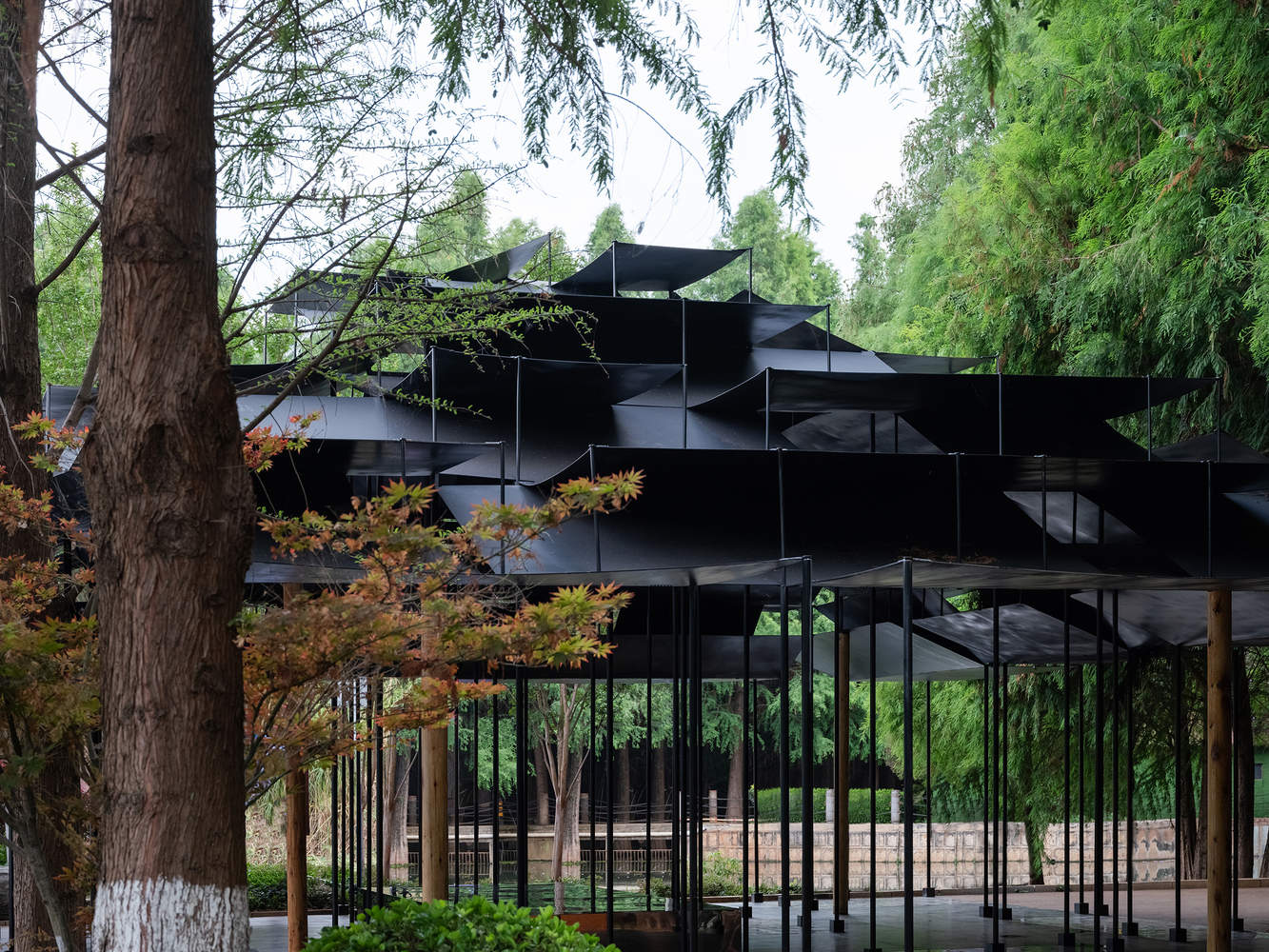
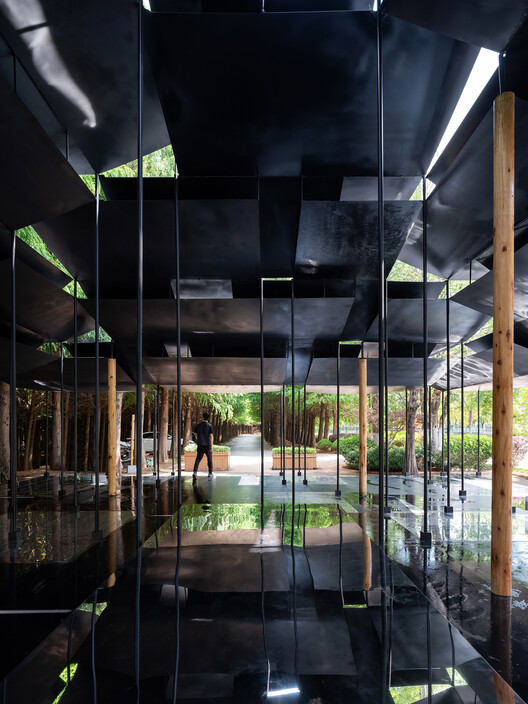
The Laoyuting Pavilion creates an artificial "forest" space between the busy roadway and the mass of water forest through slender steel columns and a fragmented roof. The modern steel structure is reinterpreted as a place with an experience positioned between being "in the woods" and "under a shed," acting as a threshold between the meanings of "nature" and "artificiality." The dense arrangement of 40mm diameter slender columns supports a seemingly disordered roof, yet it still forms an architecture that can be called a "pavilion." Within the pavilion, amidst the staggered slender columns, two paths leading deeper into Dianchi Lake are implied, serving as places where people gather or disperse. The roof allows fragmented light to penetrate, making people feel as if they are under a dense forest canopy, where glimpses of the sky and nearby treetops can be seen through the gaps. 捞鱼亭通过纤细的钢柱和细碎化的屋顶,在繁忙的车道与成片的水上森林之间创造了一个人工的“森林”空间,一个现代钢结构的亭子被还原为一种有着介于 “树林中”和“棚屋下”之间的体验的场所,是“自然”和“人工”两种场所意味的临界处,那些直径 40mm 的细密钢柱支撑起看似无序的屋顶,形成的仍然是可以称之为“亭”的建筑。在亭子内部那些错落的细的立柱中,隐含了两条通往滇池深处的路,人们在此汇聚或者分散。屋顶允许细碎光线的进入,使人仿佛置身于浓荫森林,透过缝隙可以看到天空与近处的树冠。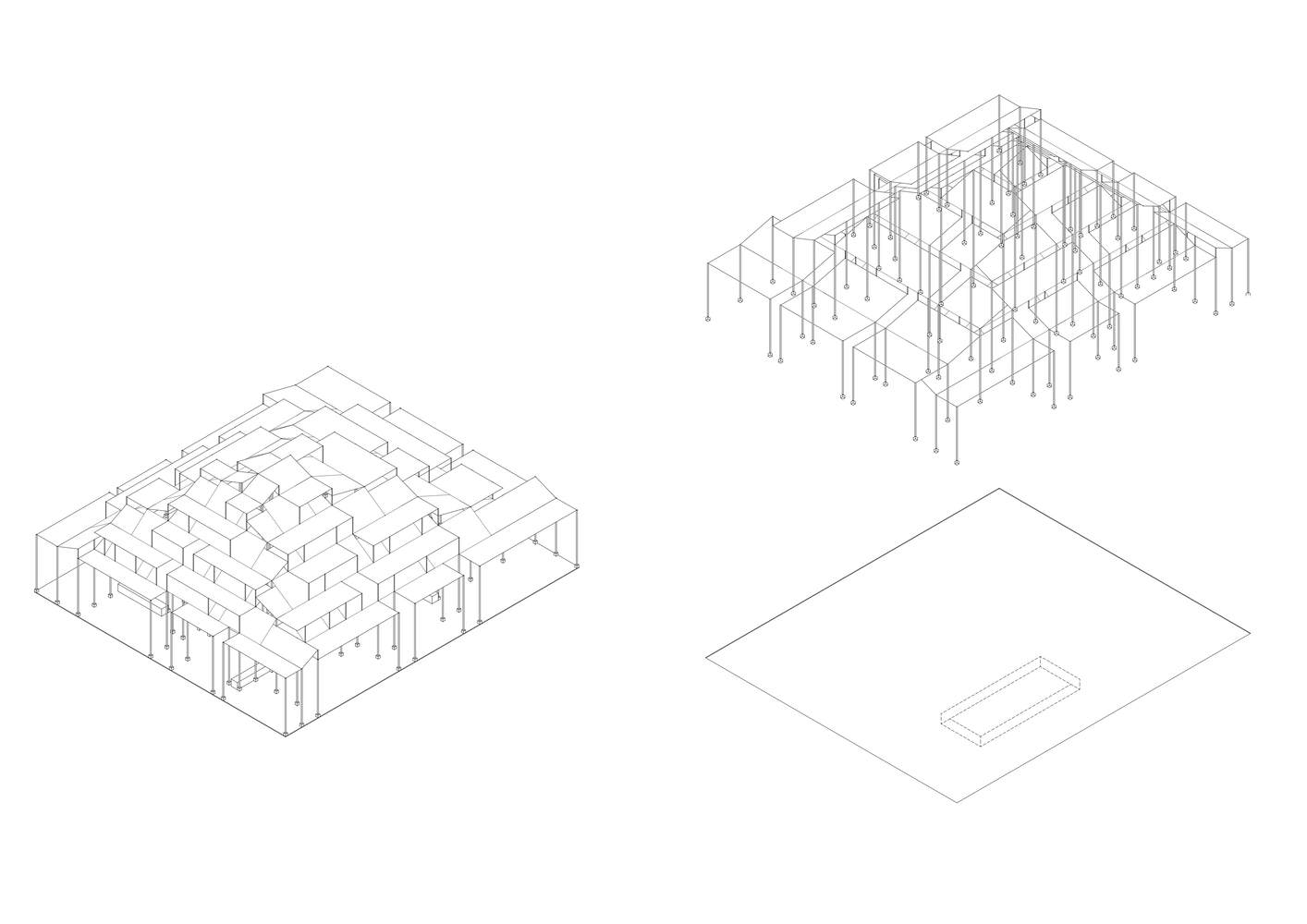
分析图
分析图
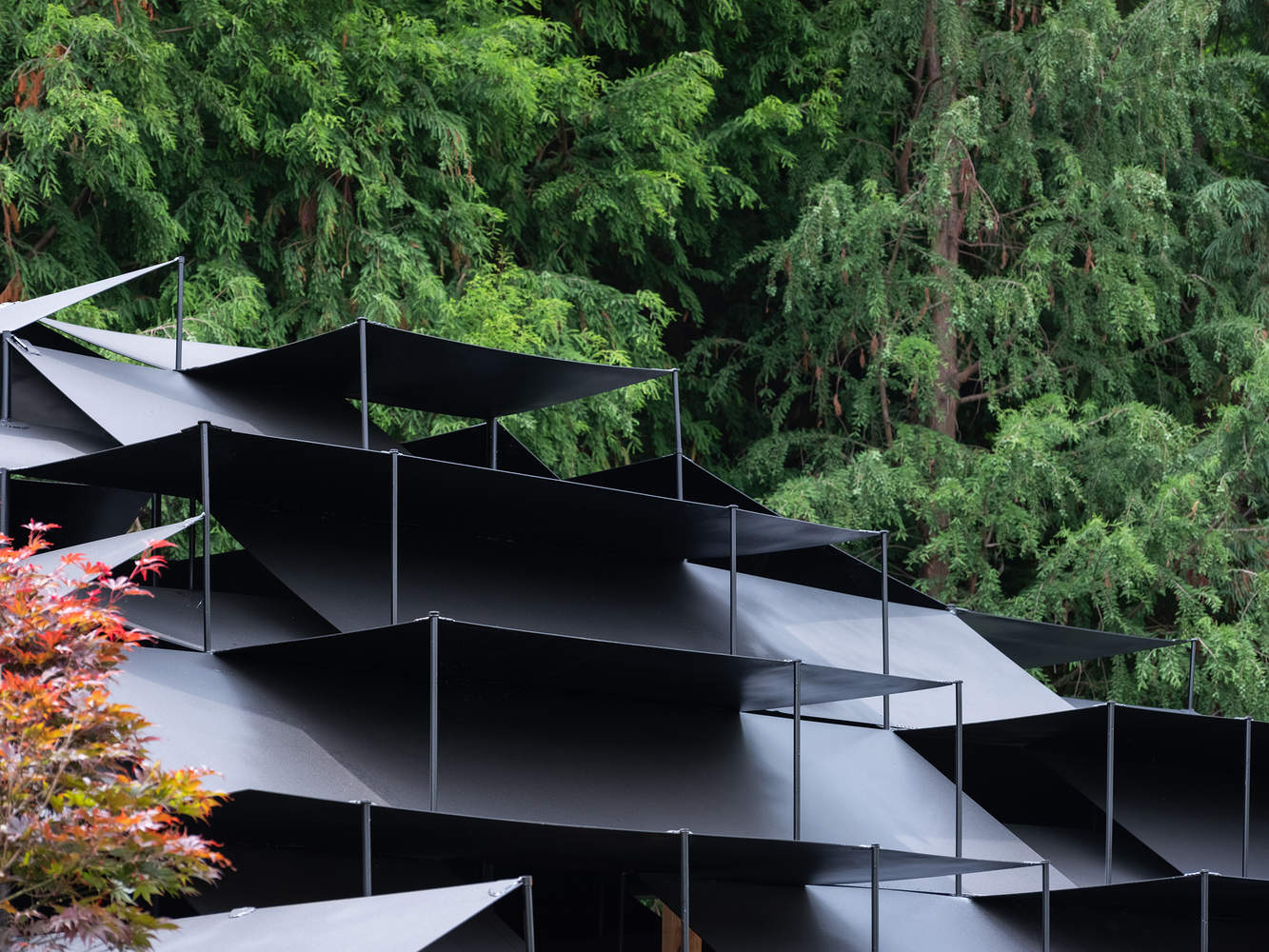
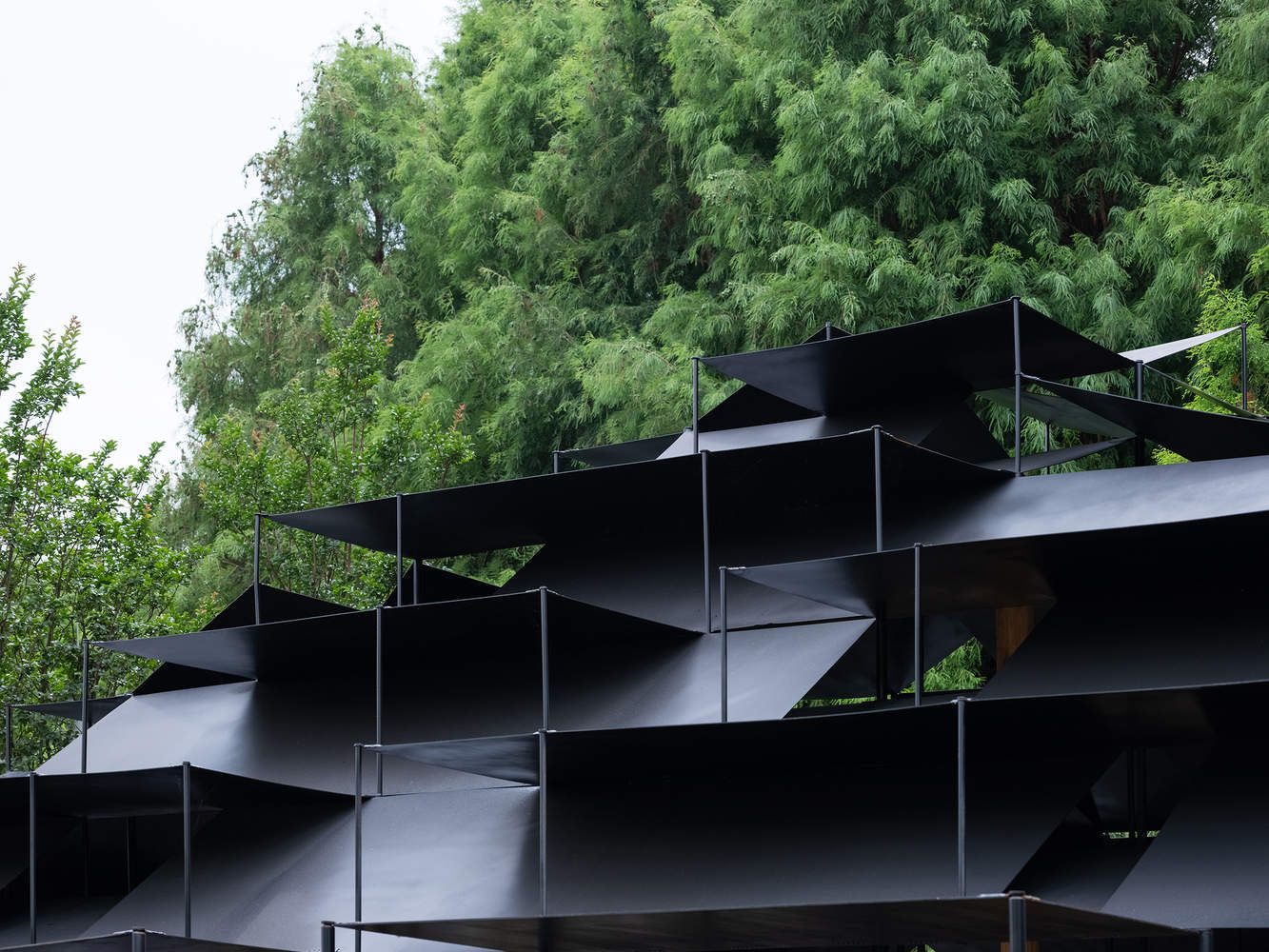
When viewed from a distance, the pavilion presents an image resembling the hipped and gabled roof (sipo wudian) in traditional Chinese architecture. However, due to the fragmentation of the roof, it also appears to have a thatched roof quality, which de-materializes the actual steel plate material, or rather, transfers its original industrial significance. This allows us to re-examine the relationship between technology and nature, and to rethink the relationship between the traditional Chinese "ting" (pavilion) and the natural scenery. 在远处观看这个亭子时,却又呈现出类似中国传统建筑中四坡庑殿顶的形象,但是由于屋顶被细碎化地处理了,屋顶看上去又似被附加了一种茅草顶的感觉,这使得实际采用的钢板的材料被去物质化了,或者说,其原本工业属性的意义被转移了。由此我们也得以重新看待技术与自然的关系,以及重新思考中国传统中“亭”与自然风景间的关系。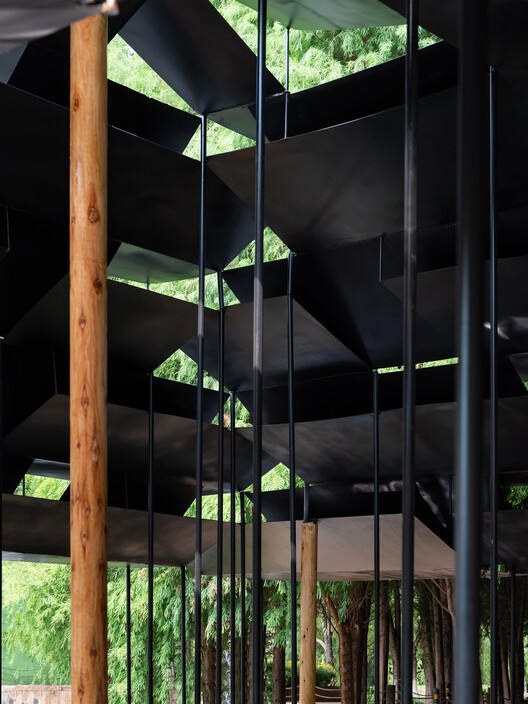
© 王策
© 王策
To comply with the environmental protection requirements of the Dianchi Wetland Park, the pavilion's foundation must not damage the existing ground surface, so the foundation must be above ground. Therefore, the design adopts a steel plate placed directly on the original ground as the foundation. Each column base is fixed onto a 10cm by 10cm solid steel block, which locally reinforces the support for the cantilevered load of the slender columns. This miniature "plinth" also implies the intention to protect the original ground. To further minimize construction impact on the site, the pavilion's structure is prefabricated and assembled. All components, including columns, roof panels, joints, and bolts, were manufactured in the factory and transported to the site for assembly. This lightweight assembly method made the entire construction process akin to erecting a large outdoor installation rather than traditional building construction. 根据滇池湿地公园的环境保护要求,亭子的基础不得破坏现有的场地地面,所以建筑的基础必须是在地面以上,为此,设计采用一片钢板直接搁置在原始地面上作为亭子的基础。每根柱脚通过一个十厘米见方的实心钢块上翻固定,这些微型“基石”在局部补强后,支撑着细柱的悬臂受力,同时上翻的基础也暗示了对原始地面的保护意图。为了进一步减少施工对场地的影响,亭子的结构采用了预制装配的做法,柱、屋面板、节点与螺栓等所有构件都在工厂提前制作,再运至现场以装配的方式完成。这种轻量化的组装方式,使整个建造过程的确就是在搭建一件大型的户外装置,而非传统意义上的建筑施工。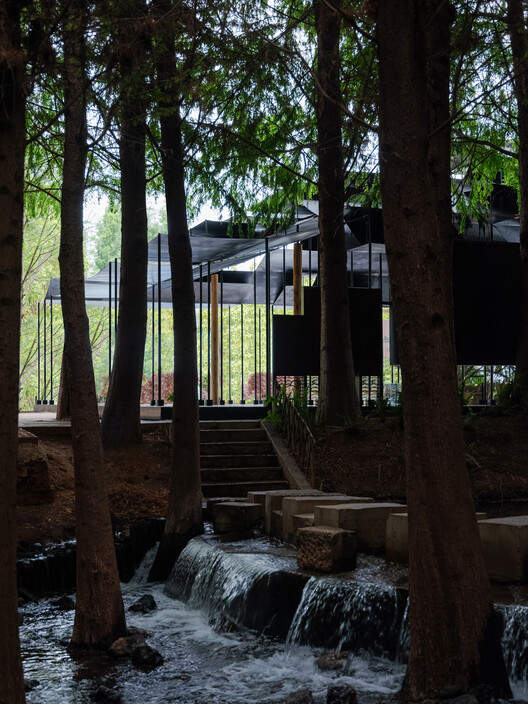
© 王策
The Laoyuting Pavilion uses a basic support module consisting of a set of "six vertical columns + flat/slanted steel plates," which are then overlapped and joined by multiple unit modules. After superposition and combination, some columns are omitted, and the load is transferred via thinner, shorter columns connected to higher plates, resulting in columns of varying densities distributed seemingly randomly within the pavilion space, yet subtly implying spatial intentions. The ground-level columns are 40mm solid circular steel columns, totaling 93, all subjected to cantilever forces. Flat plates and slanted plates are connected by hinges. Thinner circular steel short columns, totaling 125, are stacked between the superimposed flat and slanted plates, giving the roof a structural characteristic somewhere between flexibility and rigidity. 捞鱼亭以一组“六根立柱+平/斜钢板”的板柱结构作为基本的支撑模块,再由多个单元模块交叠拼合而成。叠加和拼合后,有些立柱被删减,由上部的更细的短柱和更高处的板相连来完成受力,亭的空间中就出现了不同密度的柱,呈现随机分布的状态,但又暗含着空间的意图。落地钢柱为 40 毫米实心圆柱,共 93 根,均以悬臂方式受力,平板与斜板之间通过合页连接。叠加在上部的平、斜板之间则由直径 20 毫米的圆钢短柱支撑,共 125 根,使屋面呈现一种介于柔性与刚性之间的结构特征。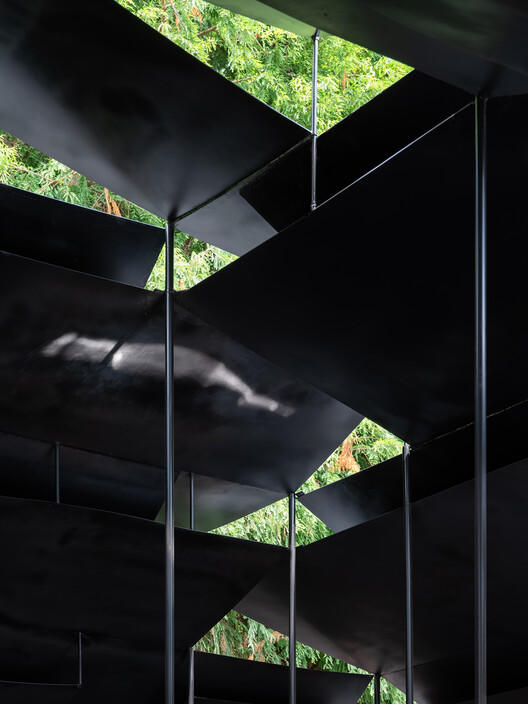
© 王策
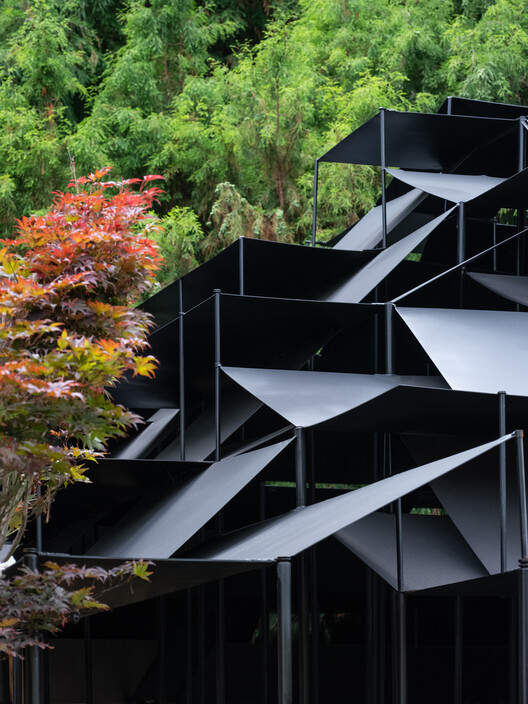
© 王策
The Laoyuting Pavilion embodies a unique structural attitude. Through the deconstruction and reassembly of the hipped roof form, it achieves a sense of lightness, which stems both from respect for the wetland ecology and from a reinterpretation of the relationship between "pavilion—tree—human." The construction of the pavilion re-responds to the meaning of the "tree" as a structural archetype—humans initially built shelters with branches—thereby returning to the metaphor of the "tree." 捞鱼亭体现了一种独特的结构态度。它通过对四坡顶形式的解体与重装,获得了一种轻盈的气质,这既来自对湿地生态的尊重,也源于对“亭—树—人”关系的重新理解。亭子的建构重新回应了“树”作为结构原型的意义 —— 人类最初以树枝搭建庇护之所 —— 从而回到关于“树”的隐喻之中。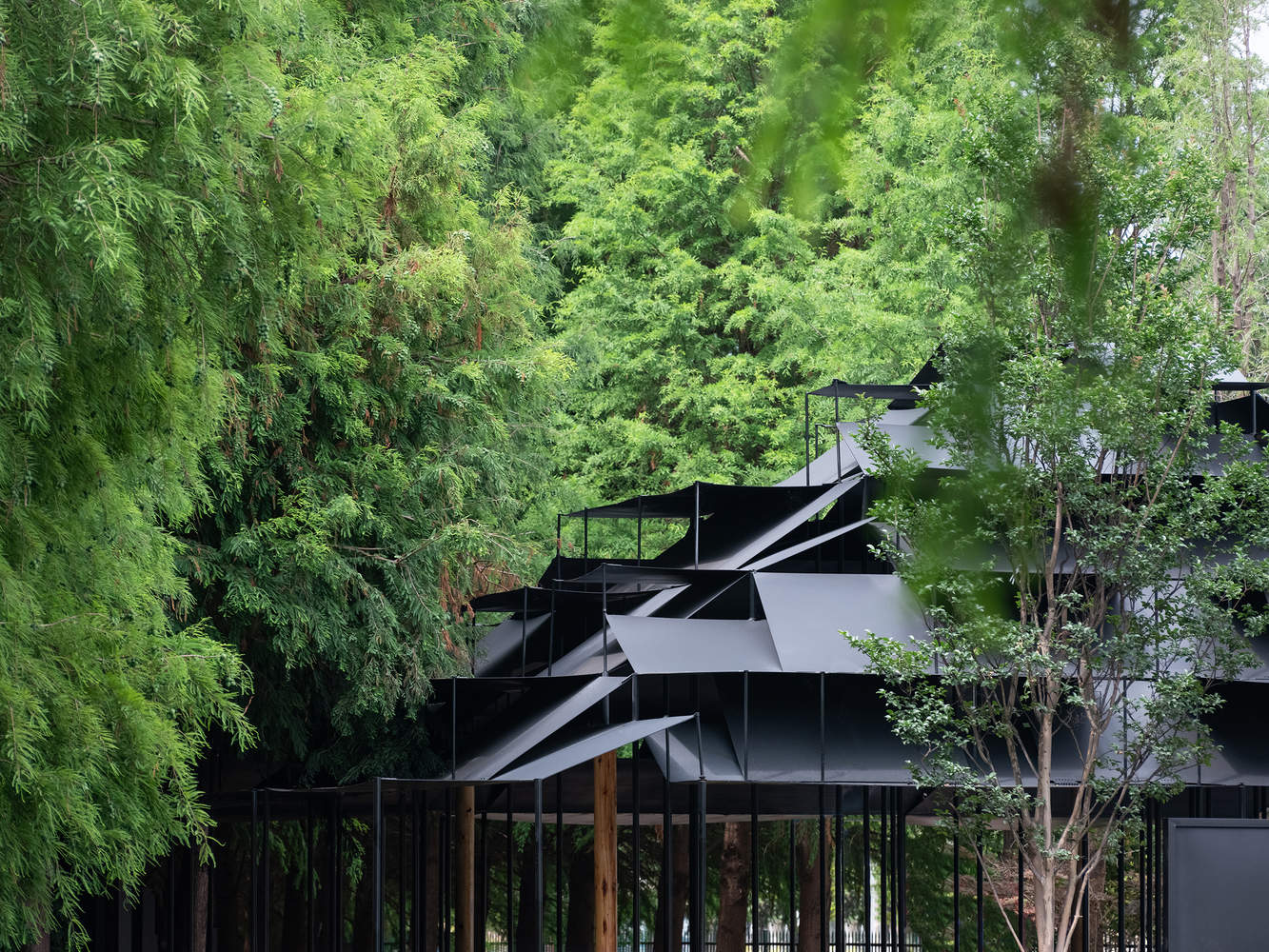
© 王策
In this way, the architecture forms a space that can breathe, pass through, and pause. It belongs both to nature and to the world of human technology, establishing a new dialogue between the two. 建筑以这样的方式形成了一个可以呼吸、可穿行、可停留的空间。它既属于自然,也属于人类的技术世界,并在两者之间建立起一种新的对话关系。© 王策