文脉的呼应与宏大的叙事:亨尼根·彭建筑事务所(Heneghan Peng Architects)在埃及大博物馆(GEM)的设计中,展现了对基地文脉的深刻理解与尊重。项目选址紧邻吉萨金字塔群,建筑师巧妙地利用了金字塔的方位,建立起清晰的视觉轴线,使古老的纪念碑群成为博物馆体验中不可分割的一部分。建筑的体量、辐射状的内部墙体和倾斜的屋顶都与金字塔的最高点形成对话,但绝不僭越,这种“加强与历史和地域的联系”的设计策略,成功地在宏大叙事中定位了现代建筑的谦逊与敬畏。10万件文物的承载能力,使其成为单一文明规模最大的博物馆,这本身就是对古埃及文明地位的建筑宣言。
流线组织与时间序列的沉浸:博物馆的核心精髓在于其动态的参观体验组织。宏伟的六层楼梯不仅是物理连接,更是时间轴的象征,引导游客按时间顺序(从史前到科普特时代)沉浸式地穿梭于历史长河。这种叙事性的流线设计,将最重要的图坦卡蒙展厅置于体验的终点高潮,与金字塔景观形成完美收官,极大地提升了博物馆学的展示深度。此外,在保护与展示的平衡中,建筑师大胆地利用了石制文物的特性,引入自然采光,这不仅优化了空间氛围,也体现了对可持续设计和被动式运行的考量,尤其是通过厚重的混凝土结构减少温差波动。
综合生态与社区的融入:GEM的设计超越了单纯的展陈功能,成为一个多维度的文化综合体。与景观设计公司西 8(West 8)合作打造的前庭和主题花园,通过枣椰树的点缀和开阔的绿化空间,有力地唤起了尼罗河泛滥平原的地域记忆,为游客提供了公共休憩的绿洲。这种对地域生态的重构,将古埃及文明的起源地貌融入现代场域。同时,项目中包含世界级的文物保护中心,其先进的设施与主展厅通过隧道连接,确保了无价藏品的长期安全与研究需求,体现了对文化遗产的终极责任感。
International renowned architectural firm Heneghan Peng Architects celebrates the official completion of the Grand Egyptian Museum, designed by them. Located just over a mile from the Giza Pyramids, the museum bears witness to the long history and immense scale of ancient Egyptian civilization, as well as its enduring influence. Designed to house 100,000 artifacts, it is the world's largest museum dedicated to a single civilization. With the opening of the Tutankhamun Hall, the museum is fully complete, which will display all 5,000 artifacts to the public for the first time. Heneghan Peng Architects aligned the museum's design with the orientation of the pyramids, cleverly bridging the gap between history and modernity.
国际知名建筑事务所亨尼根·彭建筑事务所(heneghan peng architects)庆祝其设计的埃及大博物馆(Grand Egyptian Museum)正式竣工。该博物馆距离吉萨金字塔群仅一英里多路程,见证了古埃及文明的悠久历史与宏大规模,以及其经久不衰的影响力。博物馆设计可容纳 10 万件文物,是世界上规模最大、专为单一文明打造的博物馆。随着图坦卡蒙展厅的开放,博物馆全面竣工,该展厅将首次向公众展出全部 5000 多件藏品。亨尼根·彭建筑事务所根据金字塔的方位设计博物馆,巧妙地弥合了历史与现代之间的鸿沟。
Courtesy of Grand Egyptian Museum
Courtesy of Grand Egyptian Museum
In 2003, the Egyptian Ministry of Culture launched the largest built architectural competition in the world to solicit designs for a world-class museum overlooking the pyramids. Heneghan Peng Architects ultimately won the project. Heneghan Peng's design stood out from 1,556 entries from 82 different countries, marking a major achievement for the Ireland-based firm. Heneghan Peng collaborated with a global team of architects and engineers to realize the project, forming a joint venture with Arup and Buro Happold for design development, and partnering with Cultural Innovations and Metaphor for museological services, and West 8 for landscape design. The full team list is below.
2003 年,埃及文化部发起了迄今为止世界上规模最大的已建成建筑项目建筑竞赛,征集设计方案,拟在俯瞰金字塔的著名地点建造一座世界级博物馆,亨尼根·彭建筑事务所最终赢得了该项目。亨尼根·彭的设计从来自 82 个不同国家的 1556 份参赛作品中脱颖而出,为这家总部位于爱尔兰的事务所赢得了重大成就。亨尼根·彭与全球建筑师和工程师团队合作,使项目落地实施,与奥雅纳(Arup)和柏诚集团(Buro Happold)成立合资企业进行设计开发,并联合文化创新(Cultural Innovations)和隐喻(Metaphor)公司负责博物馆学服务,联合西 8(West 8)负责景观设计。完整团队名单见下文。
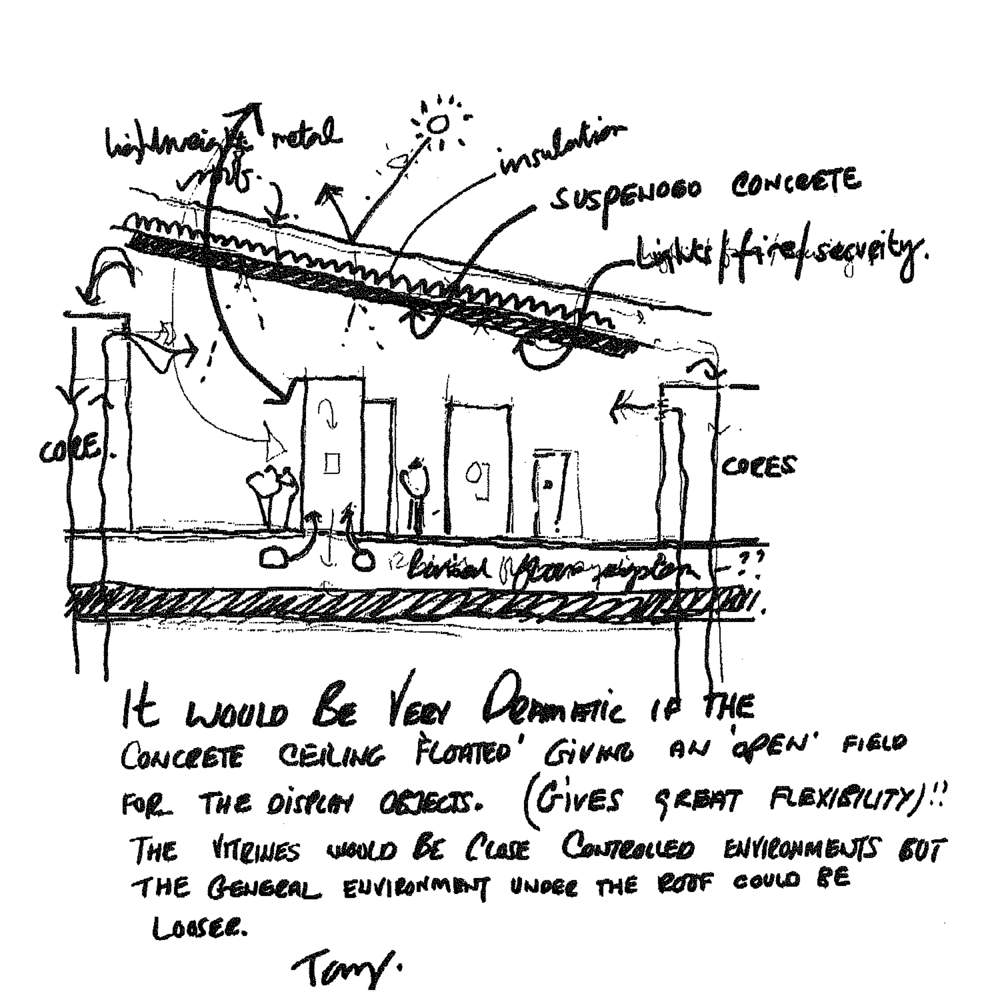
Sketch
Róisín Heneghan, Founding Partner of Heneghan Peng Architects, said: "Designing a museum so close to such a monumental and symbolic landmark as the Pyramids is a once-in-a-lifetime opportunity. Our design aims to enhance the connection to history and locality, providing a home for artifacts, many never before seen, excavated from this very land. The result is an experience that both inspires awe at the breadth and depth of the fascinating history of ancient Egypt, and feels both modern and timeless."
亨尼根·彭建筑事务所创始合伙人罗伊辛·亨尼根(Róisín Heneghan)表示:“在如此靠近金字塔这样具有纪念意义和象征意义的地标性建筑旁,设计这样一座博物馆,是千载难逢的机会。我们的设计旨在加强与历史和地域的联系,为一些从未展出过的文物提供一个安身之所,而这些文物正是从这片土地上发掘出来的。其成果是一种体验,既让人对古埃及引人入胜的历史的广度和深度感到敬畏,又让人感觉既现代又永恒。”
© Iwan Baan
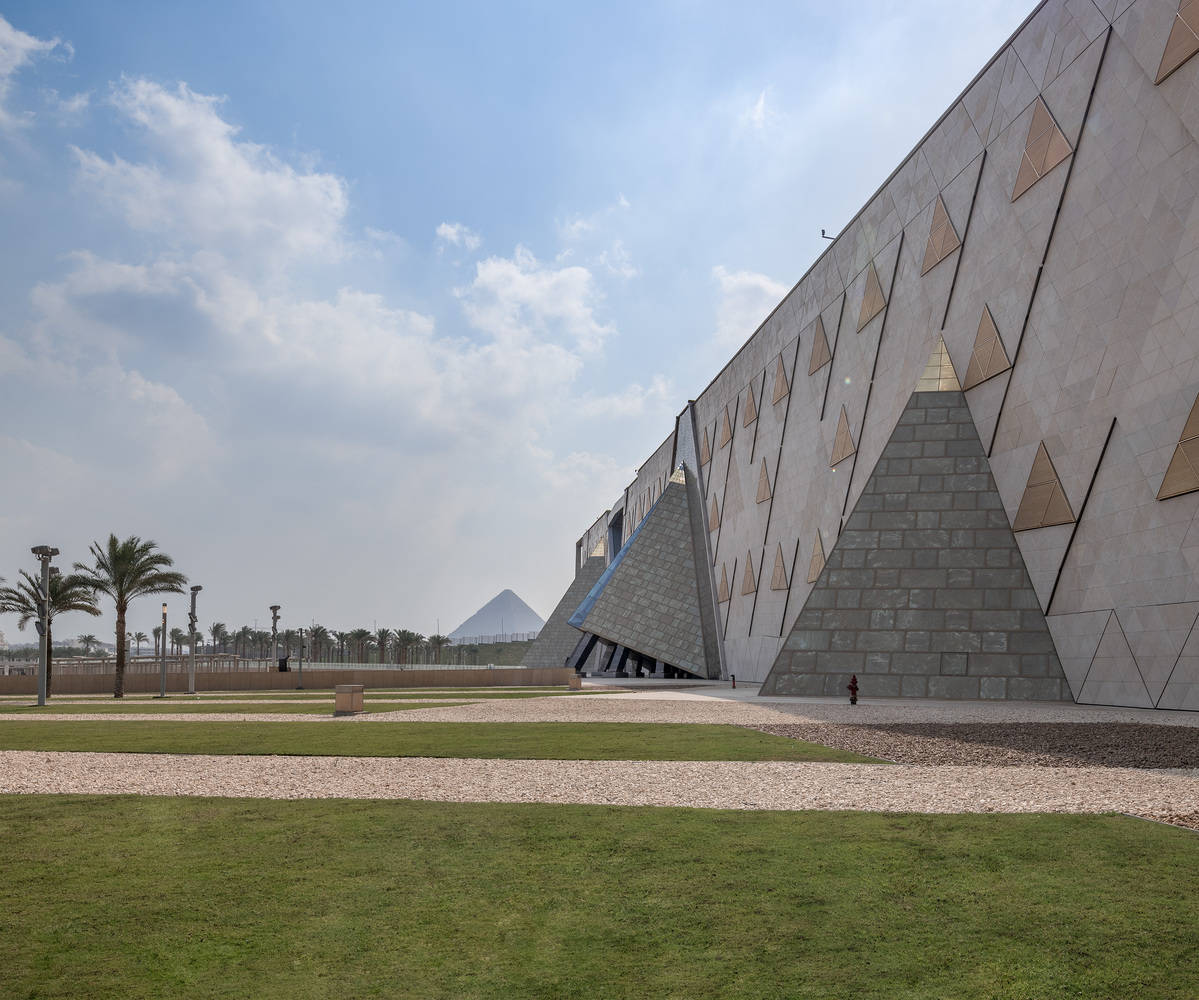
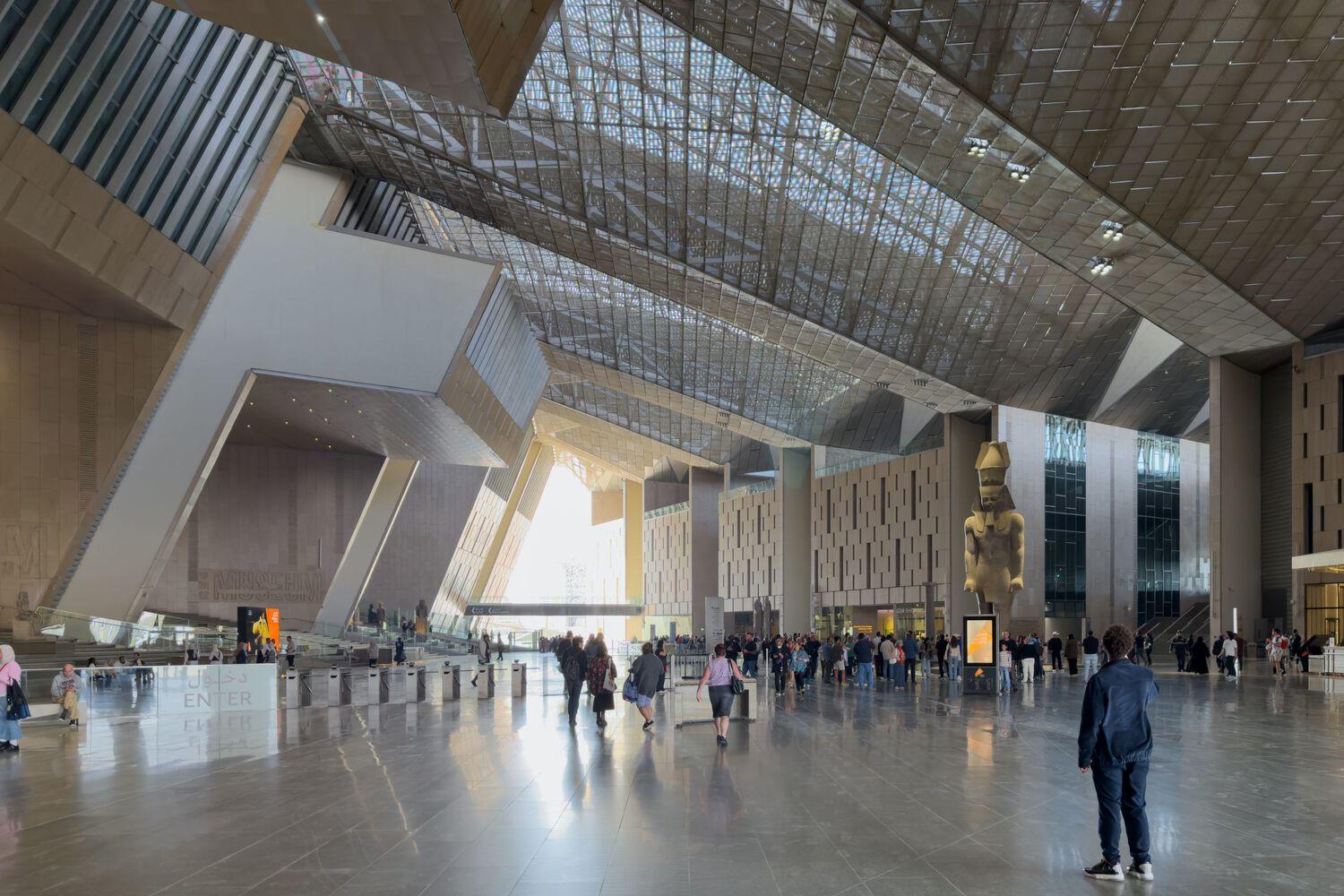
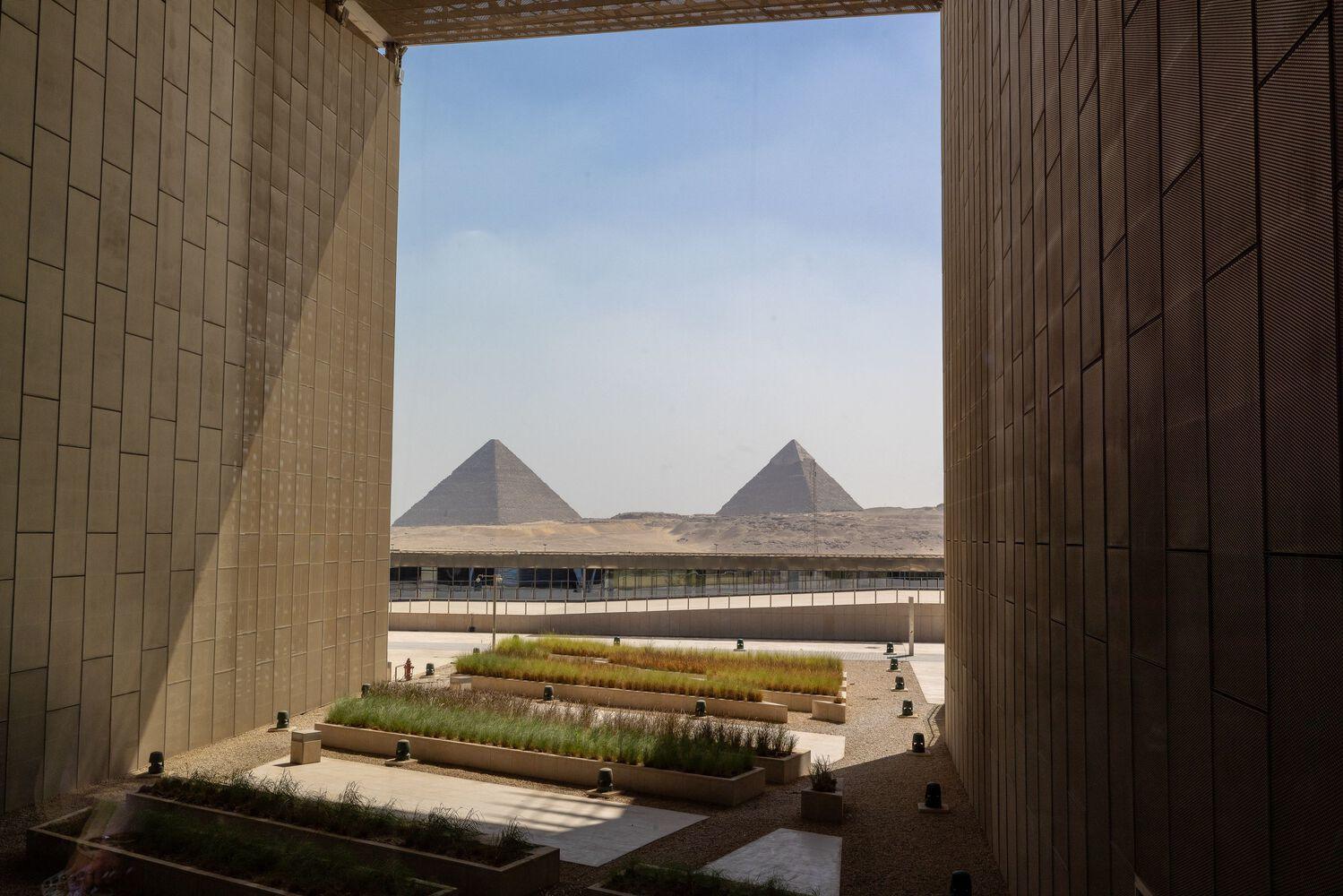
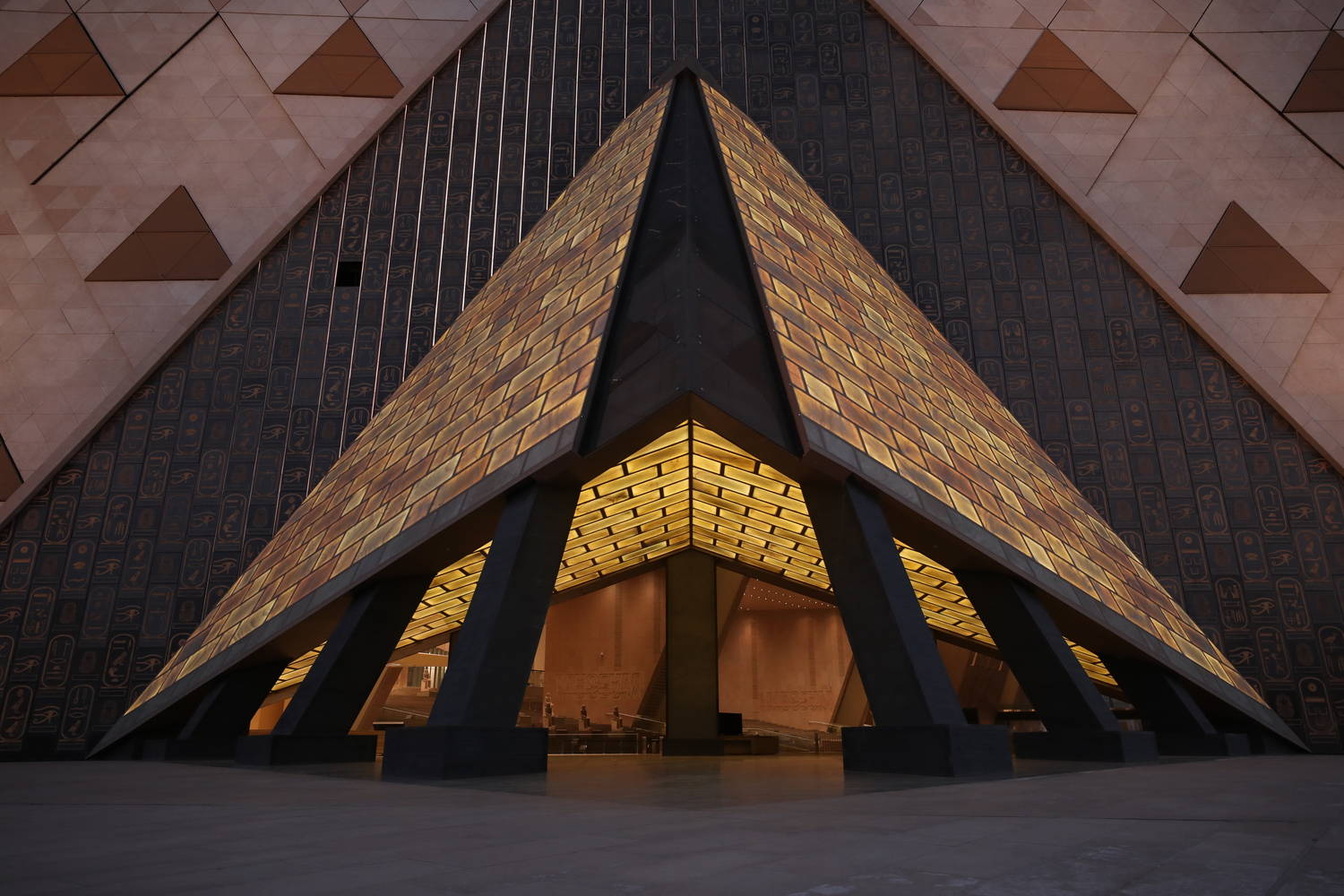
The museum is situated on a desert plateau formed by the Nile thousands of years ago, and its geological context is an integral part of the design. The museum building begins as a focal point outside the entrance, radiating outwards along a visual axis directly aligned with the position of the three pyramids. The interior walls extend along these radial lines, forming a fan shape, and the roof slopes upwards along similar visual lines, meeting the highest points of the pyramids but never exceeding them. This direct dialogue between the museum and the pyramids reinforces the connection to the locality and creates unparalleled views, making the pyramids seem like part of the museum.
博物馆位于数千年前尼罗河形成的沙漠高原上,其地质环境是设计不可或缺的一部分。博物馆建筑从入口外的一个焦点开始,沿着一条视觉轴线向外辐射,与三座金字塔的位置直接对齐。内部墙壁沿着这些辐射线延伸,形成扇形,屋顶则沿着类似的视觉线向上倾斜,与金字塔的最高点相接,但从不超越它们。博物馆与金字塔之间的这种直接对话加强了与地域的联系,创造了无与伦比的视野,让金字塔仿佛成为博物馆的一部分。
© Georges & Samuel Mohsen – The GS Studio
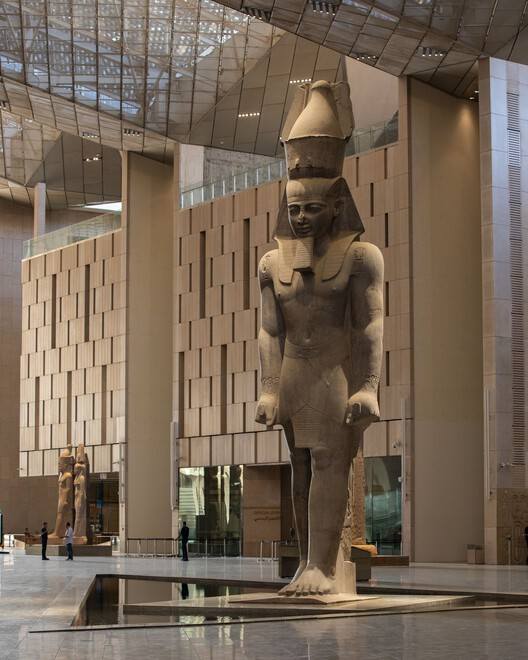
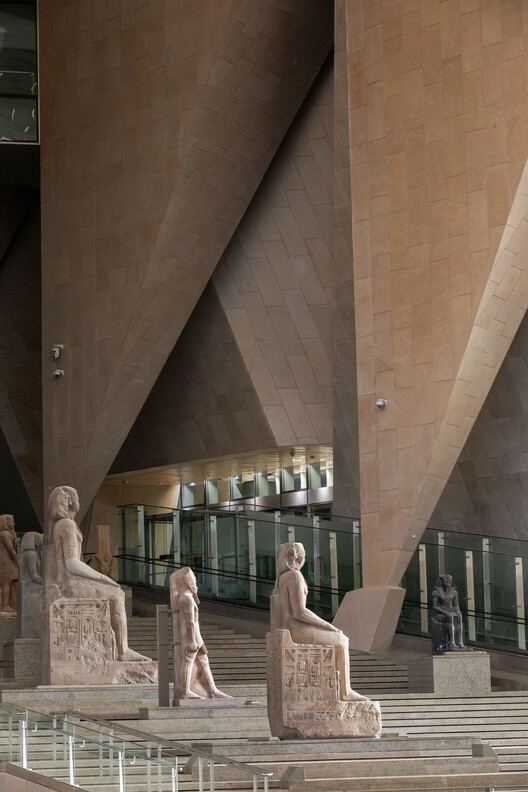
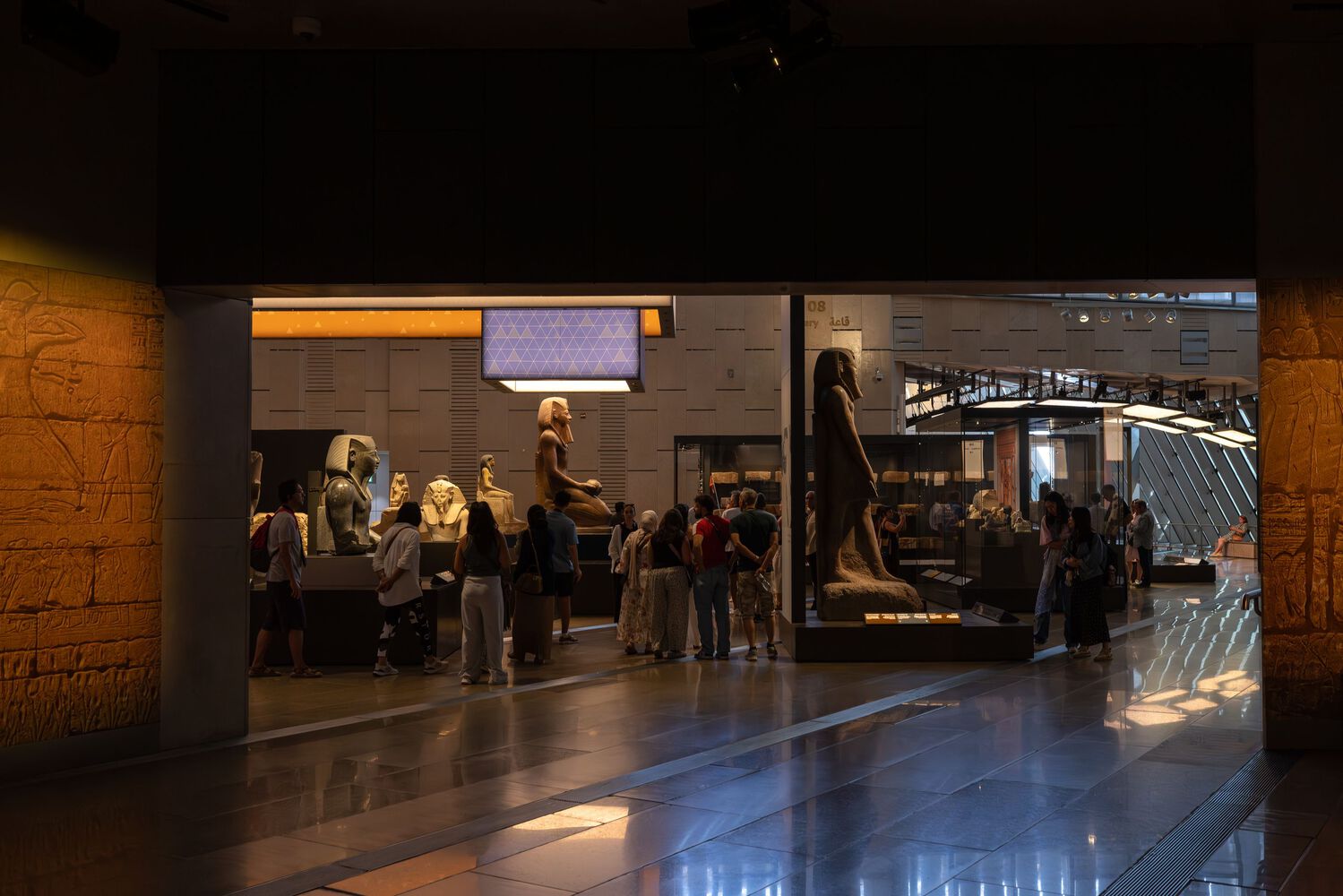
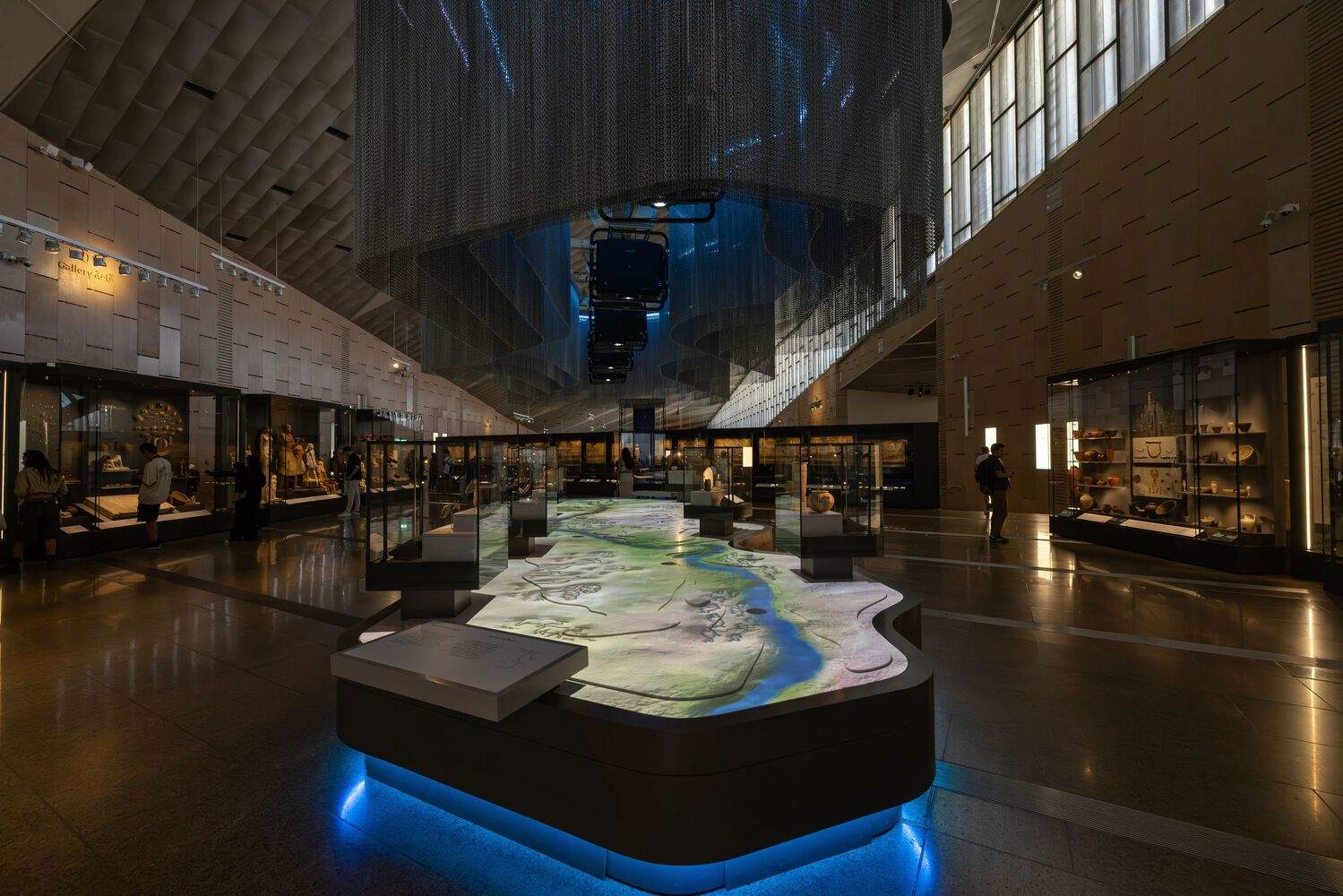
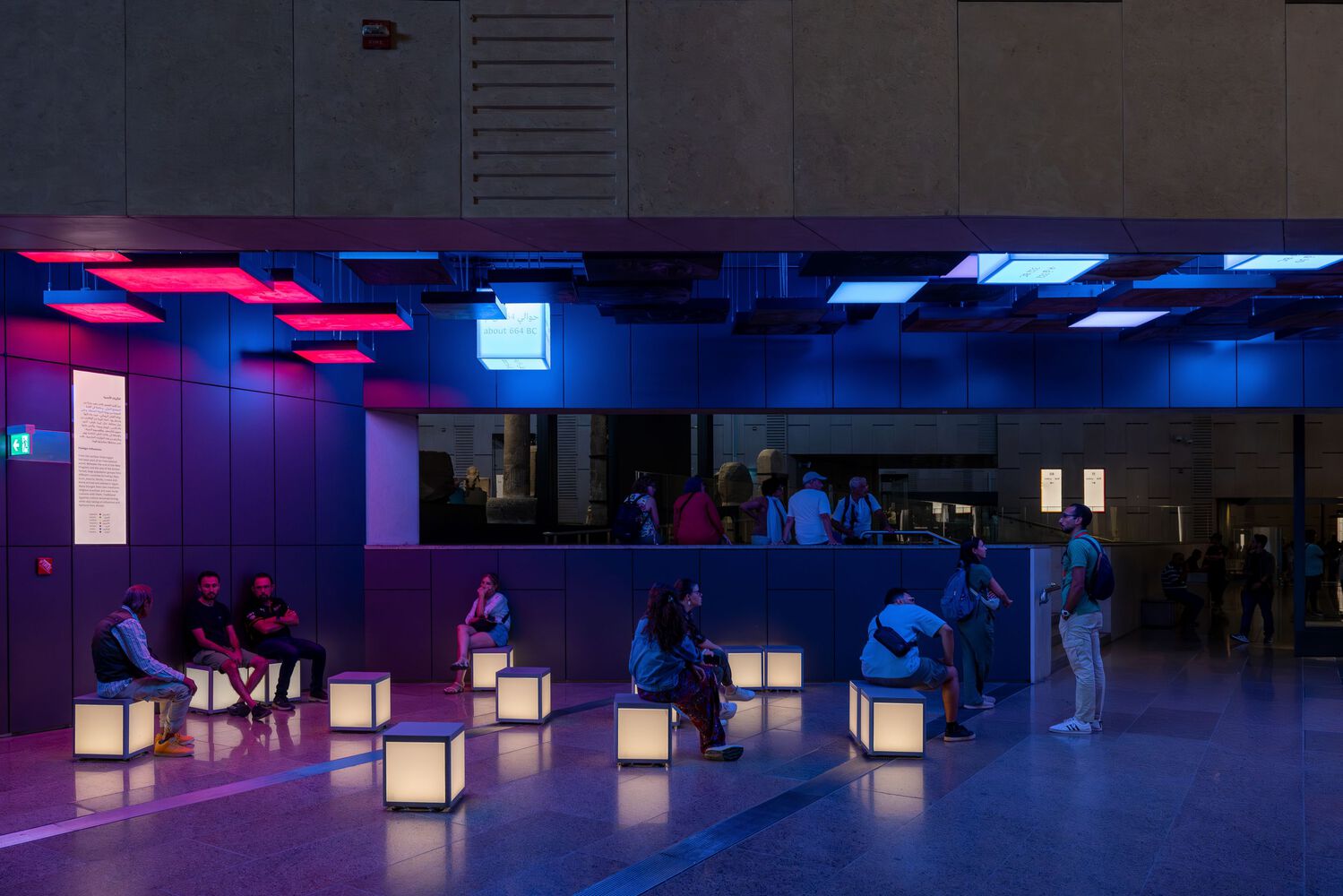
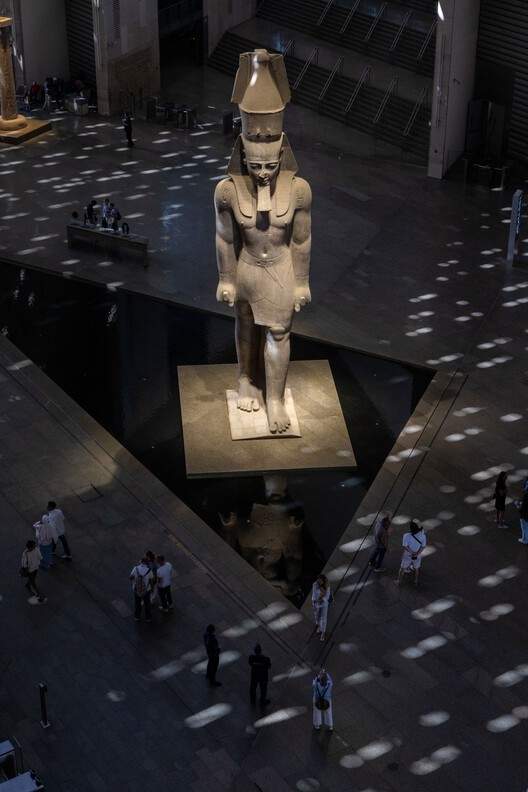
The monumental six-story staircase acts as a chronological route guiding visitors through different exhibition halls, from Pre-dynastic to Coptic eras. Supported by the overall planning and museological consulting services of Cultural Innovations and Metaphor, the permanent exhibitions, including the new Tutankhamun Hall, are placed at the top of the staircase, encouraging visitors to immerse themselves in the history of each period, concluding the visitor experience with the iconic view of the pyramids. Many of the largest and heaviest artifacts, including the ten statues of King Senusret I, are also placed at various levels along the staircase. Introducing natural light is a key element of Heneghan Peng Architects’ creation of the museum experience and connection to the region’s historical context. Although natural light is generally minimized in museums for artifact conservation reasons, many artifacts are made of stone, creating a unique opportunity to introduce natural light wherever possible, especially in the museum’s main spaces. To allow the building to operate as passively as possible, the structure is primarily constructed of concrete to reduce temperature variations and decrease the need for air conditioning across such a vast space.
宏伟的六层楼梯作为一条按时间顺序排列的路线,引导游客参观不同的展厅,从史前时期到科普特时代。在文化创新和隐喻公司的总体规划和博物馆学咨询服务支持下,包括新的图坦卡蒙展厅在内的常设展览被放置在楼梯顶部,鼓励游客沉浸在每个时期的历史中,最后以金字塔的标志性景观结束参观体验。许多最大、最重的文物,包括 10 尊森努塞特一世(King Senusret I)雕像,也被放置在楼梯的不同高度。引入自然采光是亨尼根·彭建筑事务所打造博物馆体验、连接该地区历史背景的关键要素。尽管出于文物保护原因,博物馆通常尽量减少自然采光,但许多文物都是石制的,这为尽可能引入自然采光创造了独特机会,尤其是在博物馆的主要空间。为了使建筑尽可能实现被动式运行,建筑结构主要采用混凝土建造,以减少温度变化,并减少在如此广阔的空间内对空调的需求。
© Georges & Samuel Mohsen – The GS Studio
© Georges & Samuel Mohsen – The GS Studio
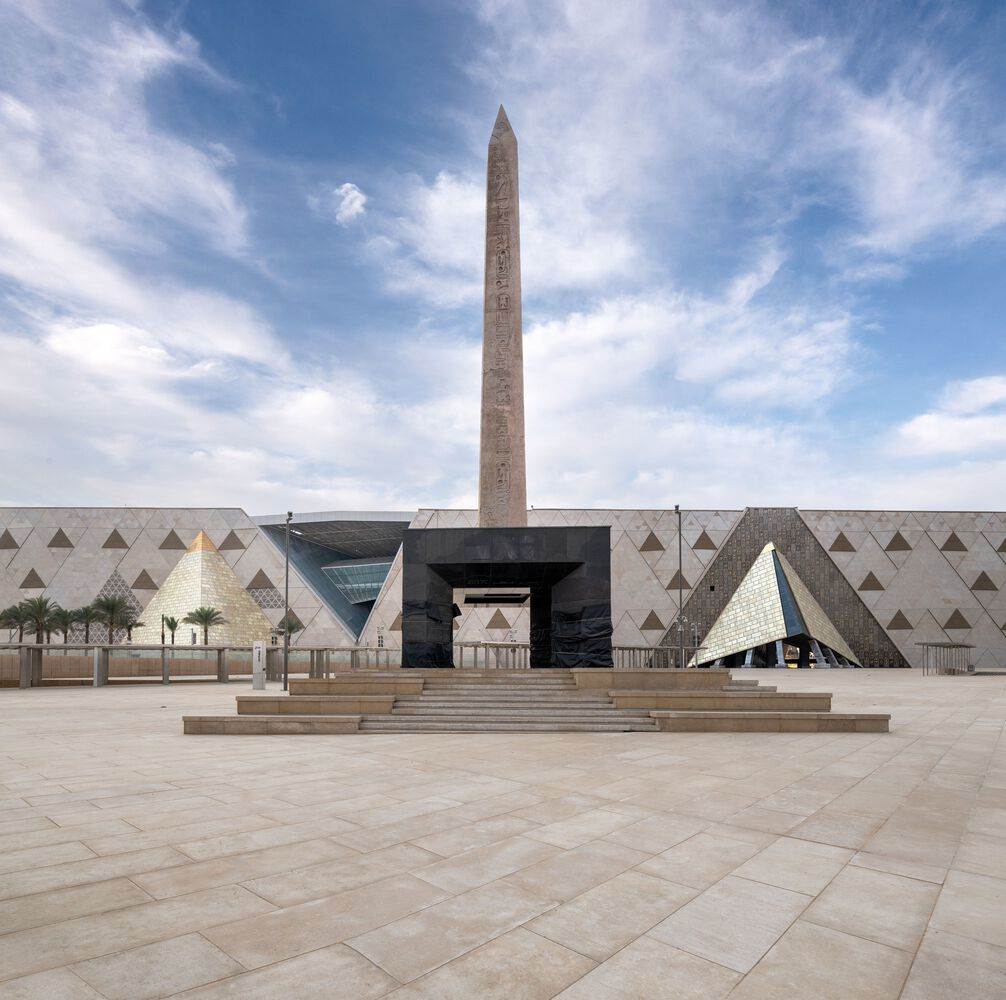
The museum is designed to provide resources to Cairo in multiple ways. The site also includes extensive gardens that offer public green space for the local community. The themed gardens, arrival plaza, and halls, co-developed with landscape architecture firm West 8, contrast sharply with the surrounding landscape, recalling the origins of ancient Egyptian civilization in the fertile valley of the Nile. The wide green forecourt, dotted with date palms, is intended to tell the story of the Nile's flood plain, where stones for the pyramids were once transported by boat. This open area showcases the 800-meter-long building and features 5 hectares of outdoor exhibition space for displaying artifacts. In addition to public exhibition halls, the museum must also have the capacity to conserve and prepare artifacts for display. The Conservation Center, laboratories, and storage facilities are connected to the main building via a tunnel and form one of the largest facilities of its kind in the world, featuring 17 different laboratories dedicated to the preservation of the museum's priceless artifacts. Given the diverse materials in the collection, the design needed to accommodate the unique preservation requirements of everything from papyrus and textiles to pottery, sculpture, and human remains.
博物馆的设计旨在从多个方面为开罗提供资源。该场地还包括广阔的花园,为当地社区提供公共绿地。主题花园、迎宾广场和大厅由景观建筑公司西 8(West 8)共同开发,与周边景观形成鲜明对比,让人回想起古埃及文明在尼罗河肥沃河谷的起源。宽阔的绿化前庭点缀着枣椰树,旨在讲述尼罗河泛滥平原的故事,这里曾经允许用船运输建造金字塔的石块。这个开放区域展示了博物馆全长 800 米的建筑,并拥有 5 公顷的户外展览空间,用于展示文物。除了面向公众的展厅外,博物馆还必须具备保护和准备文物展出的能力。文物保护中心、实验室和存储设施通过一条隧道与主建筑相连,是世界上规模最大的设施之一,拥有 17 个不同的实验室,致力于保护博物馆的无价文物。鉴于博物馆藏品材料多样,设计需要满足从纸莎草纸和纺织品到陶器、雕塑和人类遗骸等各种文物的独特保存需求。
© Georges & Samuel Mohsen – The GS Studio
Partner’s Commentary: Francis Archer, Associate Director at Arup, stated: “The Grand Egyptian Museum is a milestone in cultural infrastructure, featuring a meticulously designed building that both enhances the visitor experience and supports the work of museum professionals. Through close collaboration with Heneghan Peng Architects, our deeply involved engineers not only enabled excellent technical performance, environmental adaptability, and long-term viability, but also imbued the building with unparalleled aesthetic qualities. Arup is honored to have been involved in providing a new home for one of the world's most important and best-preserved collections of antiquities. The museum has a global impact and will serve as a vital center for learning about pharaonic history and museum design for many years to come.”
合作伙伴寄语:奥雅纳副总监弗朗西斯·阿彻(Francis Archer)表示:“埃及大博物馆是文化基础设施领域的里程碑,精心设计的建筑既提升了游客体验,也助力了博物馆专业人员的工作。通过与亨尼根·彭建筑事务所的紧密合作,深度参与的工程师们不仅助力实现了卓越的技术性能、环境适应性和长期实用性,还赋予了建筑无与伦比的美感。奥雅纳有幸参与这一项目,为世界上最重要、保存最完好的古物收藏之一提供了新家,深感荣幸。该博物馆具有全球影响力,将成为法老历史和博物馆设计领域未来多年的重要学习中心。”
© Georges & Samuel Mohsen – The GS Studio
© Georges & Samuel Mohsen – The GS Studio
Stephen Jolly, Cultural Sector Project Leader at Buro Happold, stated: “The Grand Egyptian Museum is a model of sustainable museum design, integrating low-carbon conservation strategies with a compelling architectural concept. Buro Happold is proud to have contributed integrated sustainability, building physics, MEP, fire, security, and IT engineering design to this extraordinary project. From the competition stage, we worked closely with the Egyptian Government, Heneghan Peng Architects, and our local partners, Shaker Group, to create a robust integrated concept that complements the location and the collection, making the museum one of the best in the world.”
柏诚集团文化领域项目负责人斯蒂芬·乔利(Stephen Jolly)表示:“埃及大博物馆是可持续博物馆设计的典范,将低碳保护策略融入引人注目的建筑理念中。柏诚集团很荣幸能为这一非凡项目贡献综合可持续性、建筑环境、机电、消防、安保和信息技术工程设计。自竞赛阶段起,我们就与埃及政府、亨尼根·彭建筑事务所及合作伙伴沙克尔集团(Shaker Group)紧密合作,共同打造了一个与地理位置和藏品相得益彰的强大综合概念,使该博物馆成为世界最佳博物馆之一。”
© Georges & Samuel Mohsen – The GS Studio
Martyn Best, Founder and Chairman of Cultural Innovations, said: “The Grand Egyptian Museum is both a treasure trove of world heritage and a national symbol for Egypt in the 21st century, realized through the widest possible international collaboration and teamwork. We are immensely proud to have been involved in the design, development, and delivery of this exceptional museum.”
文化创新创始人兼董事长马汀·贝斯特(Martyn Best)表示:“埃及大博物馆既是世界遗产瑰宝,也是 21 世纪埃及的国家象征,其建成得益于最广泛的国际合作与协作。能够参与这一非凡博物馆的设计、开发和交付工作,我们深感荣幸。”
© Georges & Samuel Mohsen – The GS Studio
Adriaan Geuze, Founder of West 8, said: “The quality achieved on this project is beyond what one could have imagined, the result of visionary collaboration. From a strong architectural concept, a subtly layered museum campus has emerged, now ready to receive millions of visitors. The grandeur and scale of the architecture elegantly integrate into the edge of the Giza plateau. This creates a museum that is truly rooted in its historical and geological context. The beauty of the green foreground spaces lies in their strong echo of the actual Nile floodplains, stretching to the edge of the desert.”
西 8 创始人阿德里安·吉兹(Adriaan Geuze)表示:“该项目带来了超乎想象的品质,成果彰显了富有远见的合作精神。从强大的建筑理念出发,诞生了一个巧妙而多层次的博物馆园区,如今能够接待数百万游客。建筑的遗产与规模之宏伟,优雅地融入了吉萨高原边缘。这打造了一座真正融入历史和地质背景的博物馆。绿色前景空间的美丽之处在于,它们强烈呼应了尼罗河真实的泛滥平原,一直延伸到沙漠边缘。”
Courtesy of Grand Egyptian Museum