历史文脉的精准链接与空间重塑:本项目最精髓之处在于,它在极其苛刻的基地和控建条件下,成功地将一座承载特定历史记忆(近春园、朱自清《荷塘月色》景致)的1980年代建筑,转变为一座符合世界一流公共卫生学院的高标准教研场所。设计师通过“保留外立面”的策略,巧妙地在保留历史感与满足现代功能之间找到了平衡点。尤其在结构上进行的“保留沿外墙结构、拆除内部结构”的“结构手术”,不仅实现了内部空间的彻底革新,更保证了外立面的完整性,这种对文脉的尊重与技术上的大胆创新相结合,是其设计的核心亮点。
“润物细无声”的立面焕新与当代质感注入:建筑外观的改造体现了高度的克制与精细。设计师并未大动干戈,而是通过对阳台的凸窗化处理、新型折边铝板的应用,使建筑在保留原有形态特征的基础上,实现了“换面”的当代审美升级。夜间的灯笼效果和材料的质感变化,使原先略显陈旧的建筑焕发出新的生命力,这种“润物细无声”的介入方式,既提升了建筑的体面感,又避免了对周边环境的突兀干扰,成功营造了高端学府应有的沉稳与当代松弛感。
以内向中庭驱动的礼序与人文空间序列:面对原客房低层高、进深大的结构限制,设计通过在中庭区域进行大胆的“掏空”和吹拔处理,成功植入了宏大的尺度感和充足的自然光线,平衡了层高不足的先天缺陷。这种中庭设计不仅确立了建筑的“礼序空间”核心,也通过连接垂直交通、设置研讨空间和水吧,极大地促进了教师间的交流与凝聚力,体现了对新成立学院人文精神构建的高度关注,将交通空间转化为极具价值的社交场所。
01 Urgent Mission
The global outbreak of COVID-19 exposed the shortcomings in China's public health field regarding basic education and research. In 2020, Mr. Wang Shi facilitated Vanke Enterprise Group Center's one-time donation of 200 million Vanke shares to establish a high-starting point, interdisciplinary, first-class School of Public Health and Health. Tsinghua University was the natural and only choice. After its establishment, the primary task for Tsinghua University Vanke School of Public Health and Health (hereinafter referred to as the School) was to complete its new building as soon as possible to meet the urgent needs of rapidly attracting talent, conducting research, and expanding exchanges.
全球新冠疫情爆发暴露了我国公共卫生领域在基础教育和科研上的短板。2020 年,王石先生推动了万科企业股中心将其持有的 2 亿股万科股票作为一次性捐赠,建立一个高起点、跨学科、创一流的全新公共卫生与健康学院,清华大学成了情理之中的不二之选。清华大学万科公共卫生与健康学院(以下简称“卫健学院”)成立后,面临的首要任务是尽快建成新院馆,以应对快速引进人才、开展科研和扩大交流的迫切需要。
© UK Studio
© UK Studio
02 Excellent Site Selection
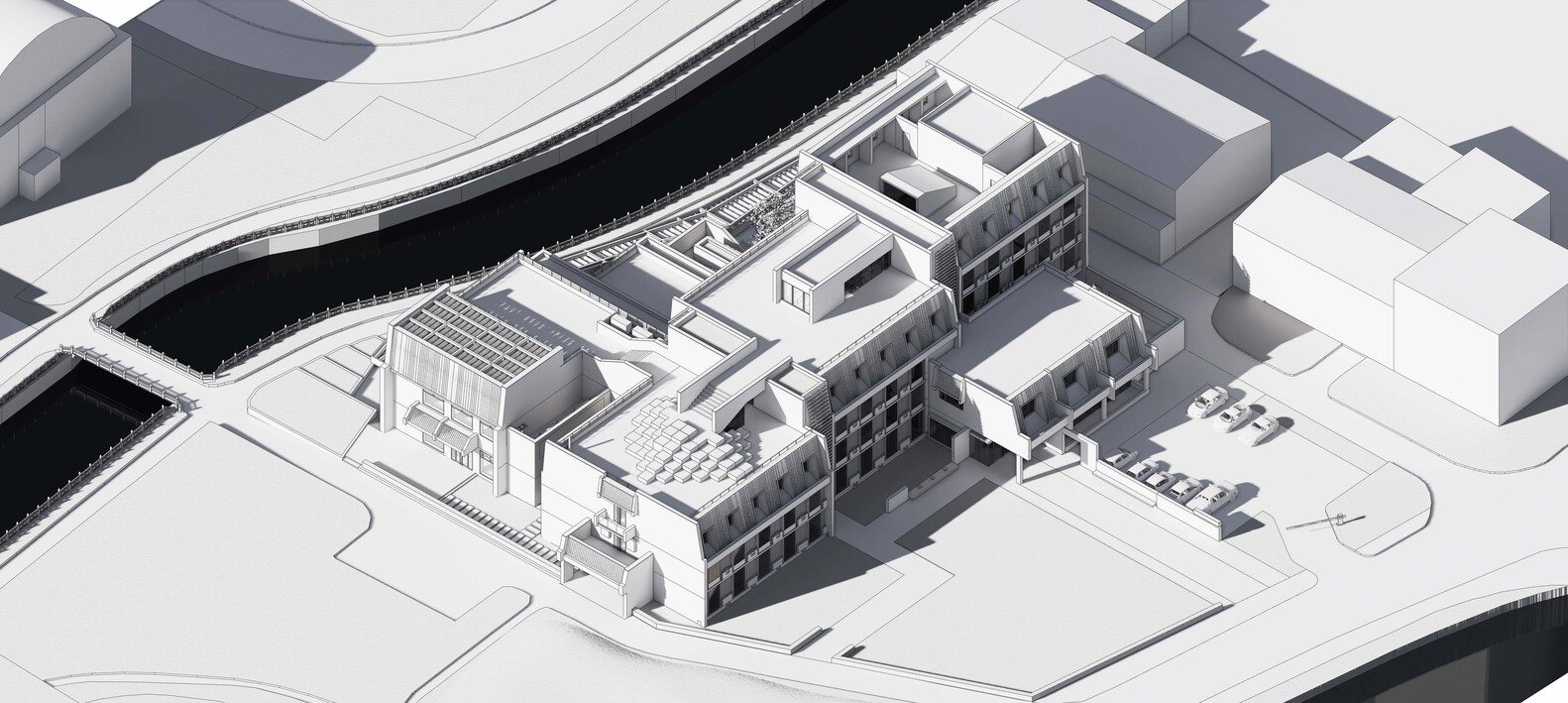
Under the condition of very limited additional infrastructure quotas, the school decided to convert the "Jinchun Garden Guesthouse" into the new building for the School of Public Health and Health to accelerate the construction. Tsinghua's name originates from the Qing Dynasty's Three Hills and Five Gardens. The site of the Jinchun Garden Guesthouse, located in the western part of the campus, belongs to the Jinchun Garden, which was an imperial retreat for Emperor Kangxi. Jinchun Garden was incorporated into the Yuanmingyuan system during the Qianlong era. Emperor Daoguang later divided Jinchun Garden into two parts, distributing them to his imperial sons; the eastern part became Qinghua Garden (around the Gongzi Hall area), and the western part became Jinchun Garden. When the Anglo-French allied forces burned the Old Summer Palace, all buildings in Jinchun Garden were destroyed, turning it into a "desolate island." From the 1960s to the 1980s, this "desolate island" became Tsinghua's most romantic garden scenery. The Jinchun Garden Guesthouse, completed in the late 1980s, faced the "desolate island," offering views reminiscent of Zhu Ziqing's "Moonlight over the Lotus Pond" upon opening the window. The building's form at that time was both modern and fashionable, yet retained Tsinghua's cultural context, with its top floor featuring a dark red sloping facade, implicitly referencing the Mansard roof signature of the Tsinghua Auditorium. It was a representative work of Tsinghua campus architecture of that era. The selection of this site for the School connects with the history of imperial gardens, literary masterpieces, and the 300-plus-year cultural lineage of Tsinghua; what an honor this is.
在新增基建指标非常有限的情形下,为快速推进学院建设,学校决定将“近春园宾馆”改造为卫健学院新馆。清华之名源于清代三山五园。位于校园西部的近春园宾馆所在地属于康熙皇帝行宫熙春园的近春园。熙春园在乾隆年间并入圆明园体系,而道光皇帝又将熙春园一分为二,分赐给皇子,东部为清华园(工字厅一带),西部为近春园。英法联军火烧圆明园时,近春园内建筑尽数被毁,从此沦为“荒岛”。1960~1980 年代,“荒岛”成为清华校内最浪漫的园林景区。1980 年代末建成的近春园宾馆面向“荒岛”,推窗即可见朱自清《荷塘月色》的景致。这个宾馆的造型在当时既现代时尚,又有清华文脉,其立面顶层处理成暗红色斜墙面,暗喻清华学堂标志性的曼萨顶,是当时清华校园建筑的代表作。卫健学院选址于此,链接了皇家园林、文学名作、清华文脉三百余年的在地历史,何其荣焉。
分析图
© UK Studio
03 Strict Conditions
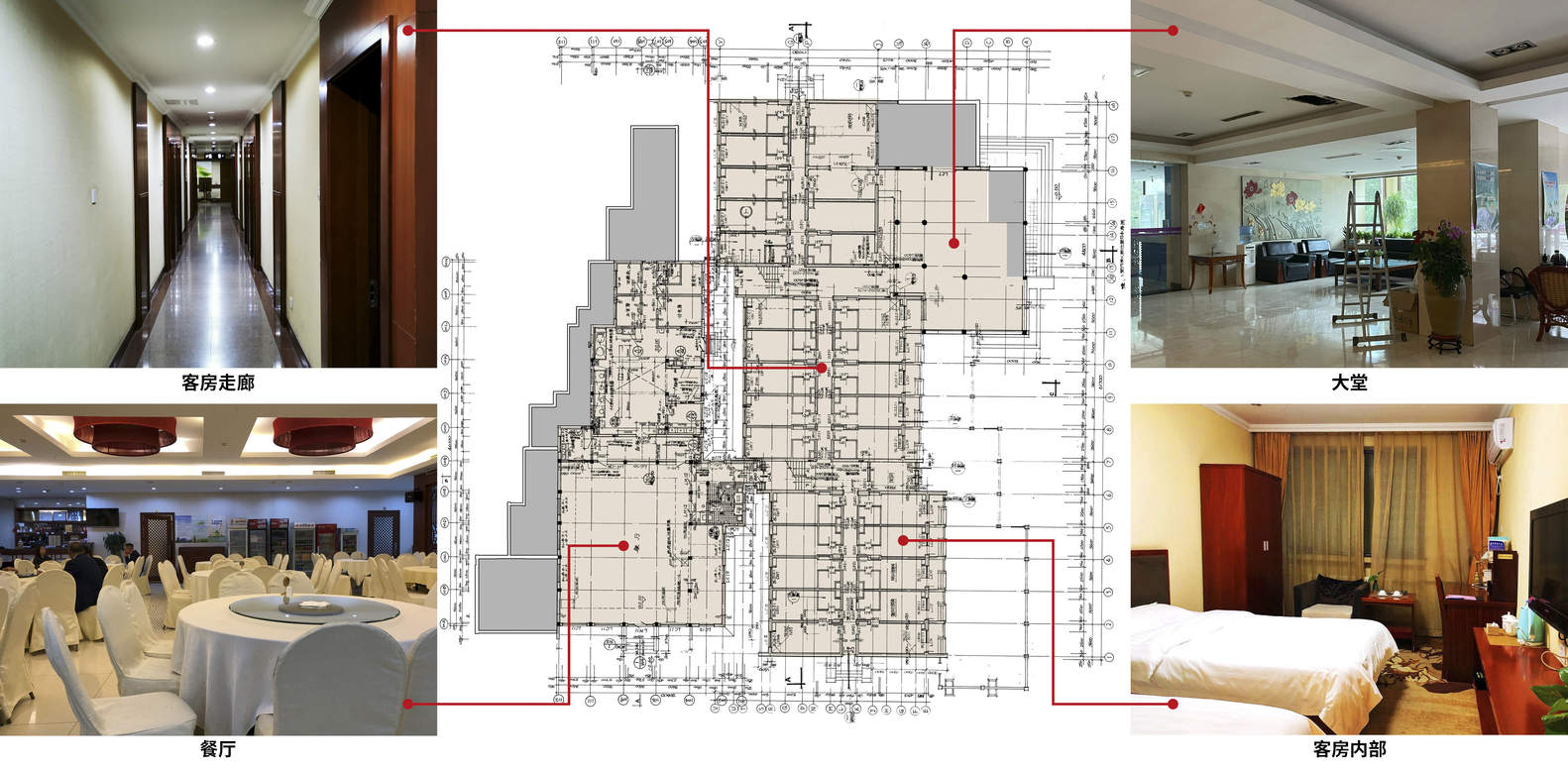
However, the building's base condition was not ideal. Apart from the entrance hall and the main dining room, its main structure consisted of a brick-concrete shear wall system based on guest room module dimensions, with a floor height of only 3.2 meters, insufficient to support the spatial requirements of a world-class teaching and research facility. Furthermore, the building is situated within the architectural control line of the "Three Hills and Five Gardens" in northwestern Beijing. The original building's outline already exceeded the setbacks from the Summer Palace and the Wanquan River flowing adjacent to Tsinghua on the west side. Although this section of the river is narrow, its conservation buffer zone is very wide; reconstruction would leave very little building area.
然而这个建筑的基底并不理想,除门厅和主餐厅外,其主体结构是以客房开间为模数的砖混剪力墙,层高只有 3.2 米,无以承载世界一流的教研空间需求。该建筑又处于北京西北部“三山五园”的建筑控制线内,原建筑的轮廓线已超出从颐和园、建筑西侧毗邻流经清华的万泉河。这条河在这个段落虽然狭窄,但河道保护范围很宽,一旦重建,建筑的基地将所剩无几。
© UK Studio
分析图
© UK Studio
04 Retain, Demolish, or Renovate
Although the Jinchun Garden Guesthouse was merely a campus-run guest house, given the limited ancillary resources on the Tsinghua campus, it was always the first choice for visiting scholars, returning alumni, graduating class gatherings, and candidate interviews, becoming a campus memory for many. As an alumnus of Tsinghua undertaking this renovation, the primary design intuition was to preserve the original appearance as much as possible. This was a major reason for winning the bid. In typical renovation projects, owners strive for additions. However, Tsinghua University is extremely strict in adhering to policy red lines, resolutely removing illegal structures not documented on the property deed, which slightly eased space for the new design. On the other hand, to avoid ambiguous area interpretations and negative feedback on the use of public funds, the university strictly required compliance and reasonable use of the building, thereby limiting design freedom. The original building was completed long before current urban management agencies fully documented properties, leading to numerous omissions in the area statistics from the original hand-drawn plans, and multiple subsequent modifications during operation further complicated the area calculations. Defining the final building area for the university and planning departments became a parallel task throughout the design process, whose dynamic changes acted like a time bomb, continuously affecting the design progress and forcing repeated plan adjustments. Therefore, the design principle was to maximize the effective utility of the functions while preserving the main facade, simultaneously creating a sense of dignity appropriate for a top-tier institution and a relaxed atmosphere of a contemporary school within limited space.
近春园宾馆虽然只是个校办招待所,但在配套资源有限的清华校内,它一直是来访学者、返校校友、毕业班聚会、面试考生等首选的住宿餐饮地,成为很多人的校园记忆点。作为清华校友来操刀这个改造,设计的第一直觉就是尽量保留原貌。这也是设计中标的一个主要原因。对于一般改造项目而言,业主会千方百计做增量。但清华大学把握政策红线的原则极其严苛,坚决剔除非房本上的私搭乱建,这也为新设计腾挪出一点空间。而另一方面,因为要避免模棱两可的面积解释,以及不使公益基金的投入产生负面评价,学校严格要求建筑的合规性和使用的合理性,因此,也限制了设计的发挥。原建筑的完工远早于当前城市管理机构对物业所进行的全面建档时间,原手工图纸的面积统计有不少疏漏,而后期运营中的多次增改,更带来面积的混乱。如何帮助学校及规划部门界定最终的建筑面积,成为平行于设计全过程的一项工作,其结论的动态变化如同一个定时炸弹,持续影响着设计进程,迫使方案反复调整。因此,设计的原则是在保留主体立面的前提下,尽量最大化功能使用的有效性,同时在有限的空间中营造高端学府的体面感和当代学校的松弛感。
© UK Studio
© UK Studio
05 Structural Surgery
The building would be worthless if the constraints of the original brick-concrete structure were not broken. Moreover, the exterior facade could not be dismantled during the entire construction process monitored by satellites, otherwise the construction would be illegal. After study, the renovation design adopted the strategy of "retaining the structure along the exterior walls and demolishing the internal structure." The original building used relatively popular precast slabs above the shear wall structure, with the perimeter, about two meters wide along the outer walls, using cast-in-place floor slabs. By retaining the surrounding shear walls, the exterior facade structure could stand independently, allowing the central section to be completely hollowed out. The new structure adopted a hybrid form of "new steel structure in the middle + reinforced masonry on the periphery" to adapt to flexible functional changes. To address the stiffness mismatch between the new steel structure and the reinforced masonry, a multi-layered hybrid lateral force resisting system was employed, including composite steel plate shear walls, steel bracing, and reinforced masonry walls, ensuring structural safety under extreme conditions. Ultimately, only four steel plate shear walls were added to each unit, which reduced the structural thickness, were suitable for use as display walls, and allowed for very flexible space division.
不打破原有的砖混结构的束缚,这个楼将毫无价值。而在有卫星监控的整个施工过程中,外立面又不能被拆除,否则施工将违法。经研究,改造设计采用“保留沿外墙的结构、拆除内部结构”的策略。原建筑在剪力墙结构之上,使用了当时比较流行的预制板,而沿外墙一圈约两米的范围则采用了现浇楼板。通过保留周边的剪力墙,可以使外立面结构独立站立,这样中间部分的可以彻底掏空。新的结构采用了“中间新建钢结构+外围加固砌体”的混合结构形式,以适应灵活的功能变化。为了解决钢结构和加固砌体结构两者间的刚度不匹配问题,采用了组合钢板剪力墙、钢支撑、加固砌体墙等多重混合抗侧力体系,确保结构在极端工况下的安全性。最终,在每个单元只新加了四片钢板剪力墙,既减小了结构厚度,又适于做展墙使用,并使空间分隔非常灵活。使空间分隔非常灵活。
06 Structural Construction
Retaining the four-story exterior walls, if construction proceeded normally from bottom to top, even if the retained outer ring structure was T-shaped, the exterior walls themselves would still require additional temporary support. The construction team, which had participated in the structural surgery of Beijing's "Pangu Plaza," employed an innovative construction scheme. During the demolition of the top floor, tie beams and columns for the top floor were erected first to form a giant horizontal structure connecting the east and west exterior walls, thus creating a safe overall structure, before the lower floor slabs were removed. After the slabs were completely demolished, the underground foundation work began, by which time the columns of the top floor were already suspended in the air. Such an inverted method would be unimaginable without precise surveying technology.
保留四层高的建筑外墙,如果按正常方式自下而上施工,即使保留的外圈结构是 T 型的,外墙自身仍需要有额外的支撑措施。施工队是参与过北京“盘古大观”项目结构大手术的队伍,采用了一个创新的施工方案。在拆除顶层时,先架上顶层的天地梁及柱做成水平方向巨型结构,联系东西两侧的外墙,这样形成一个安全的整体结构,再拆下层的楼板。等楼板完全拆除后,开始做地下的基础,而此时,顶层的柱子已然悬挂在天上了。如果没有精准的测绘技术,这种逆做法是难以想象的。
© UK Studio
© UK Studio
© UK Studio
07 Subtle Transformation
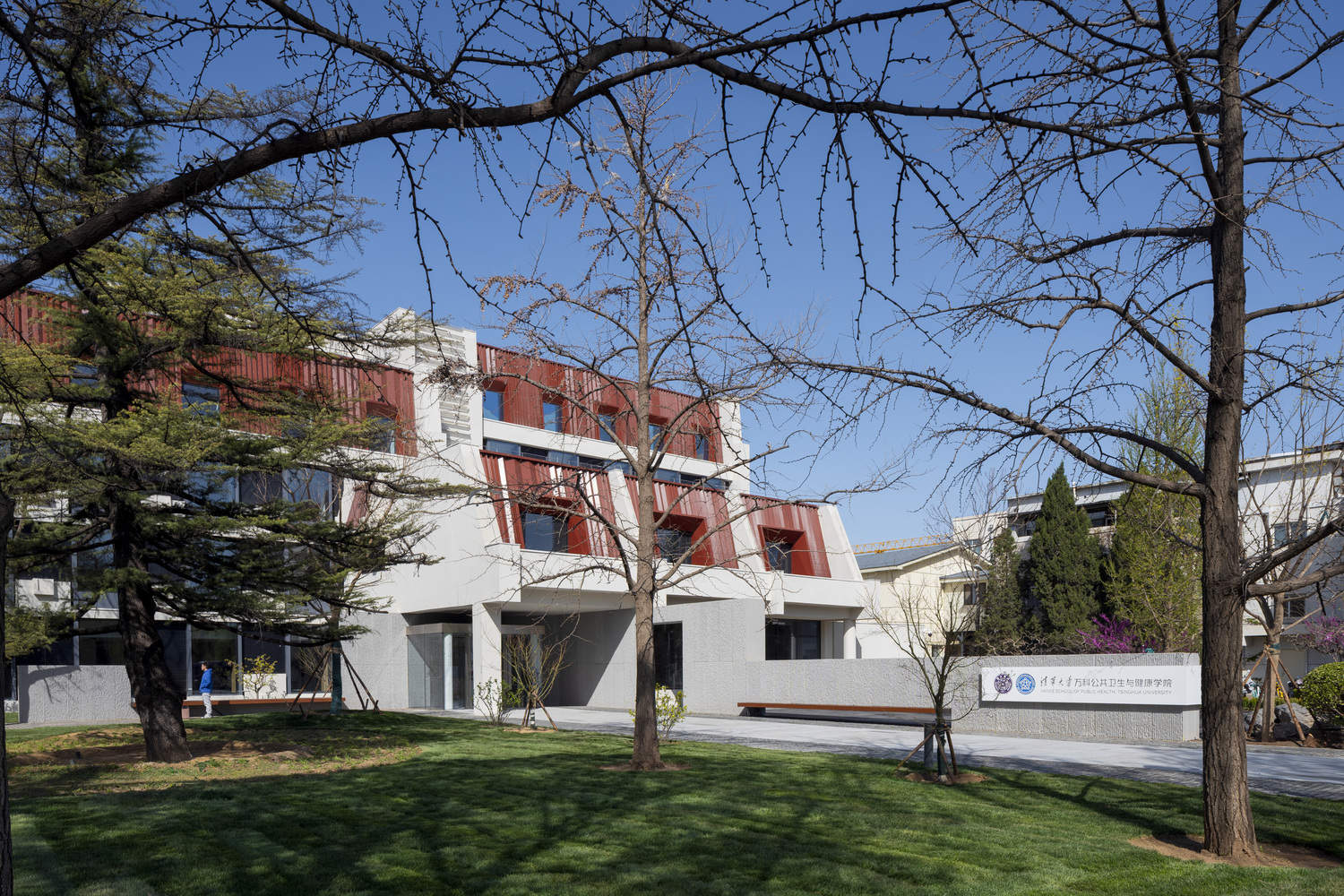
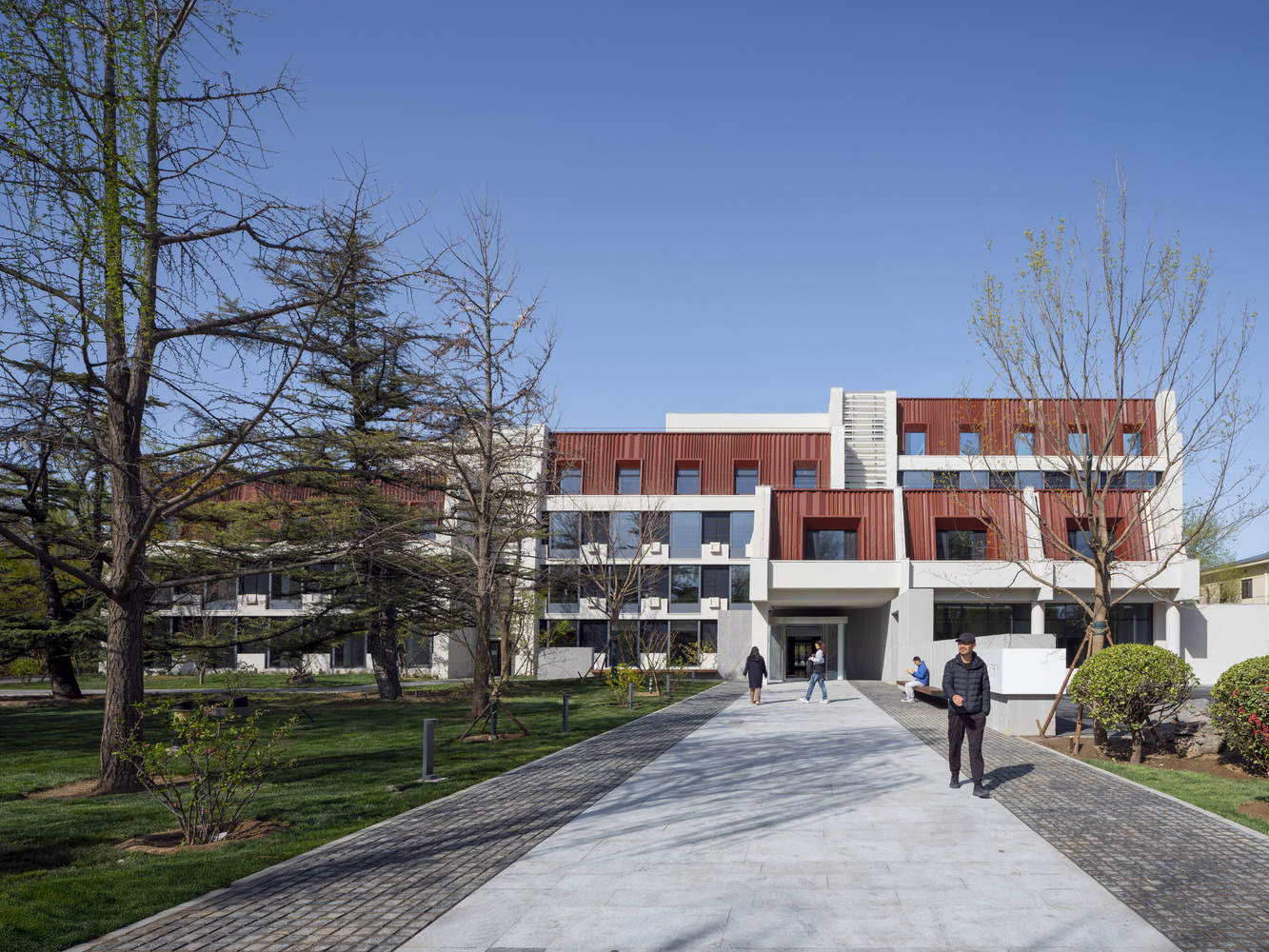
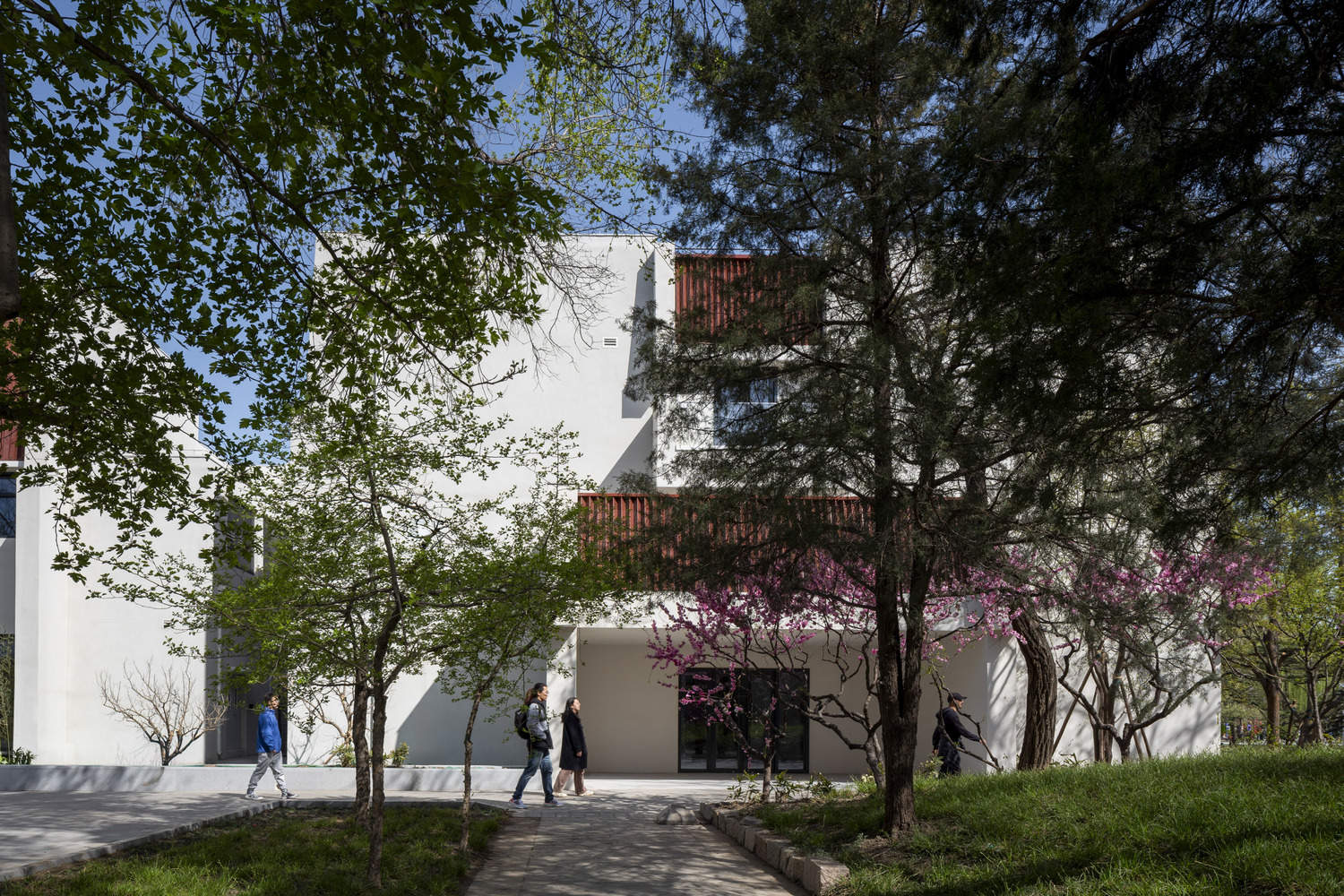
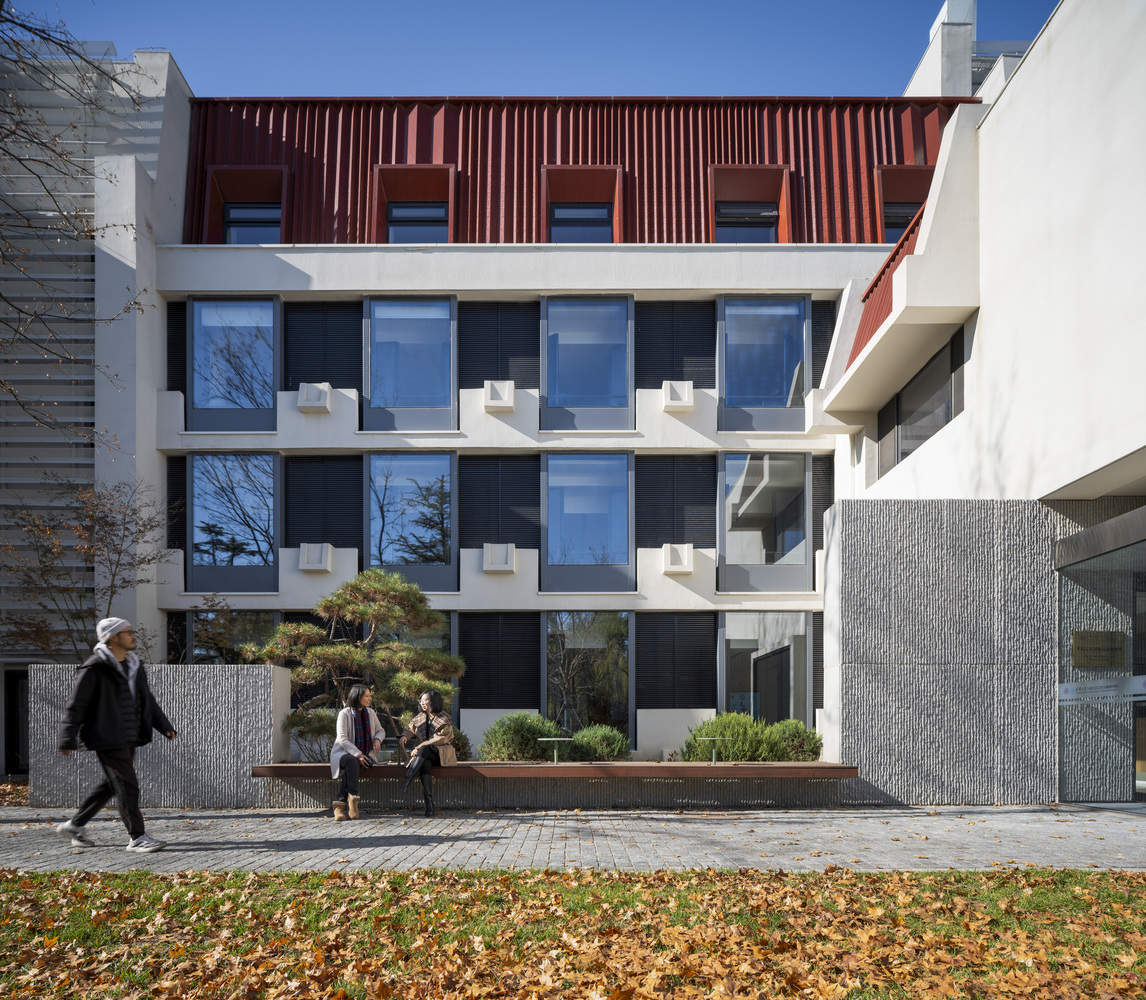
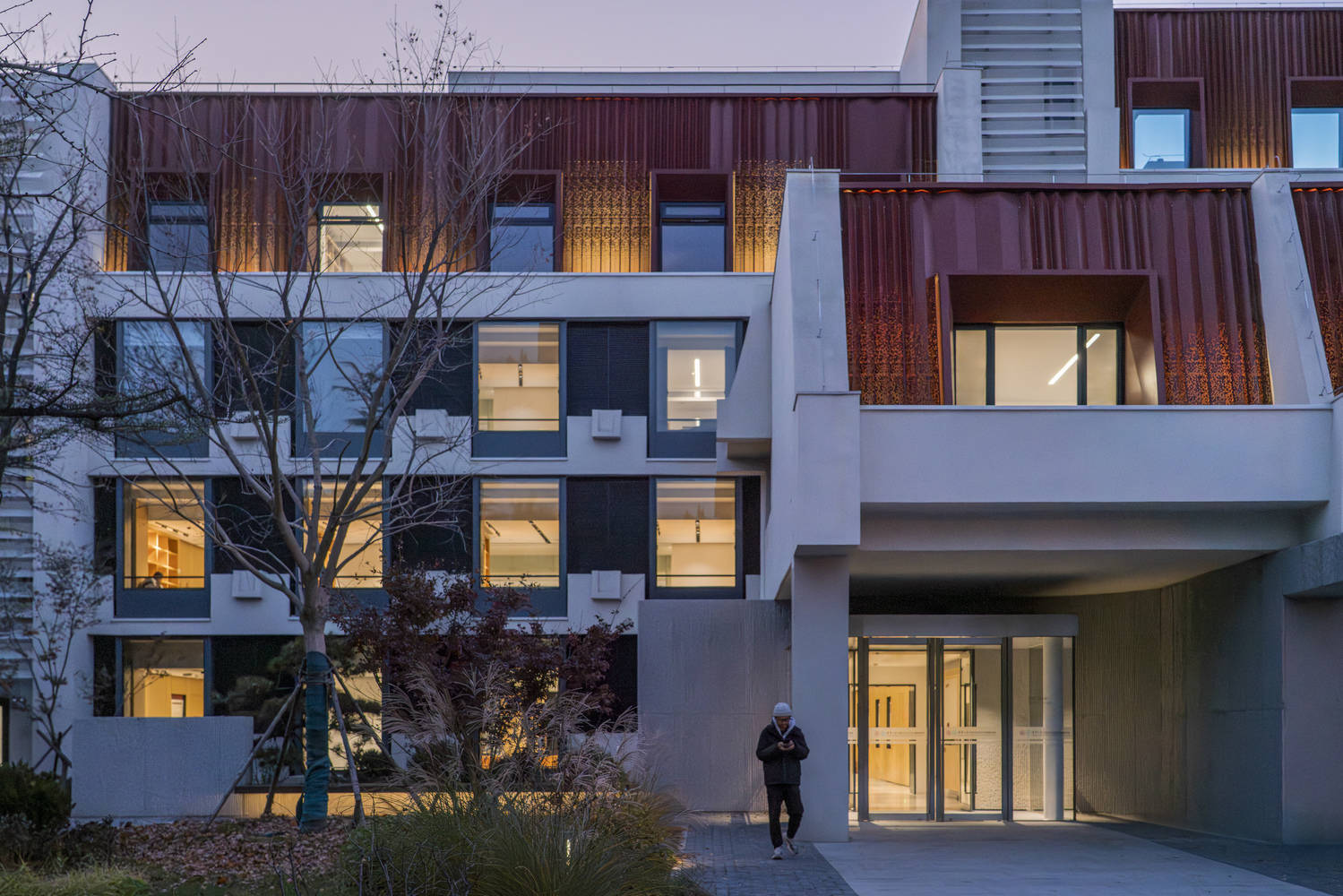
The adjacent campus hospital is a place with high foot traffic. After the construction, passersby would barely notice the earth-shattering changes here, because the exterior facade, concealed within the greenery, basically retained the formal characteristics of the original building. Retaining the facade does not mean inaction; it also requires reflecting contemporary aesthetics and technology. The original building's guest rooms had balconies. Without "changing the head," "changing the face" was an effective way to make this relatively "chic" building from that era "chic" again: enclosing the balconies with large sheets of glass to form bay windows, which appear grand and fresh both inside and out. The inward recesses between the bay windows are sealed with square tube grilles. This side of the composite window system features solid ventilation opening sashes, ensuring that no opening sashes are visible on the exterior facade. This space was originally intended for outdoor units of split air conditioners, which became unused after the system switched to central air conditioning, but it still serves as a useful facade treatment for air intake. The original building's sloping top facade imitated the "Mansard roof." Retaining the original concrete slab would increase weight and look coarse in form. Therefore, self-supporting folded aluminum panels were adopted, eliminating the need for a subframe. The different widths of the folds and varying perforation rates also introduced textural variations. At night, the sloping aluminum panels transform into internally illuminated lanterns. These subtle changes completed the building's magnificent transformation through quiet influence.
场地隔壁的校医院是高频次人流的场所,建成后,来往的人似乎都不太能感觉到这里有了天翻地覆的变化,原因在于掩映在绿化中的外立面基本上保留了原建筑的形式特征。保留外立面不等于无为而为,还需要体现时代的审美和技术。原建筑的客房间有阳台,在不“改头”的前提下,“换面”是让这个当年比较“洋气”的建筑重新“洋”起来的有效办法:用一整块大玻璃将阳台封闭成凸窗,从内外看都非常大气和清爽。凸窗间的内凹用方通格栅封上,组合型窗系统在这一侧有实板的通风开启扇,这样在外立面上就没有开启扇。这个空间本为分体机室外机机位,后来因系统改为集中空调没有用上,但作为取风口也不失为有用的立面处理。原建筑顶层斜墙面是对“曼萨顶”的模仿,再保留原来混凝土板不但会增加重量,形式上也显得粗糙。因此采用了自支撑的折边铝板,免去了龙骨。折边的宽度不一样,并有不同的打孔率,也带来了质感变化。晚上斜铝板又成为了内发光的灯笼。这些微妙的变化在润物细无声中完成了这个建筑的华丽转身。
© UK Studio
© UK Studio
08 Rites and Order in Space
Educational architecture inherently carries a function of "cultivation," thus a sequence of spaces embodying rites and order is essential. The entire ground floor plan connects the front and rear zones through a ritualistic sequence. The front zone is an open landscape space facing the "desolate island" of Jinchun Garden. A wall is used to separate the parking lot, not only carving out a direct path to the main gate within the green space but also ensuring that visitors arriving from the parking lot first encounter a courtyard gate before ceremoniously entering the front yard. This textured GRC hanging panel wall penetrates into the building's interior and turns 90 degrees to enclose the glass vestibule. In the vast open front area, this wall endows the School with a sense of domain, adjusting the relationship between the building and its territory without removing existing tall trees or altering the original exterior facade. The entrance reception, though a small connecting space, features floor-to-ceiling windows facing the small courtyard integrated with a built-in seating bench, lending a sense of homecoming intimacy to the area.
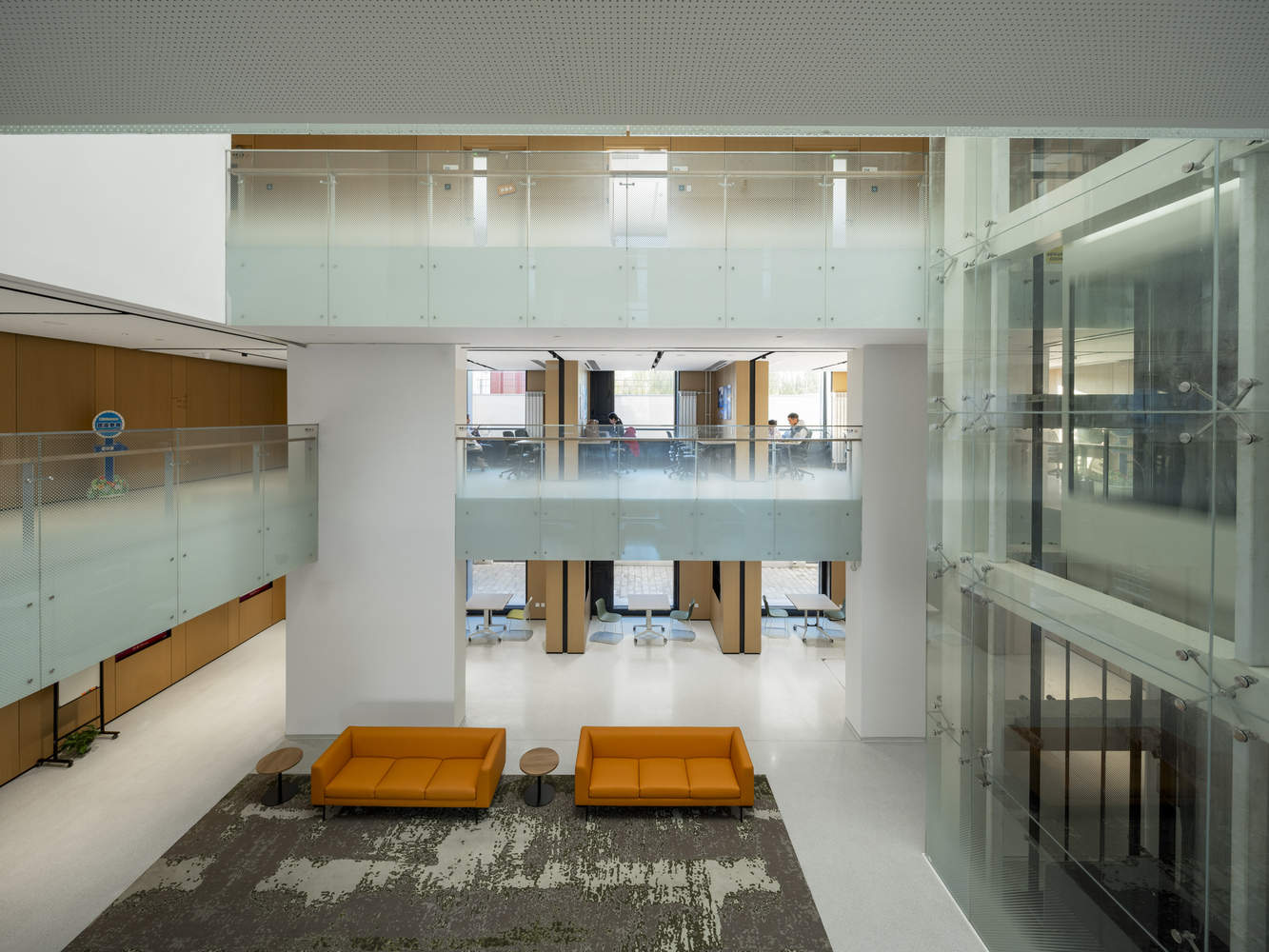
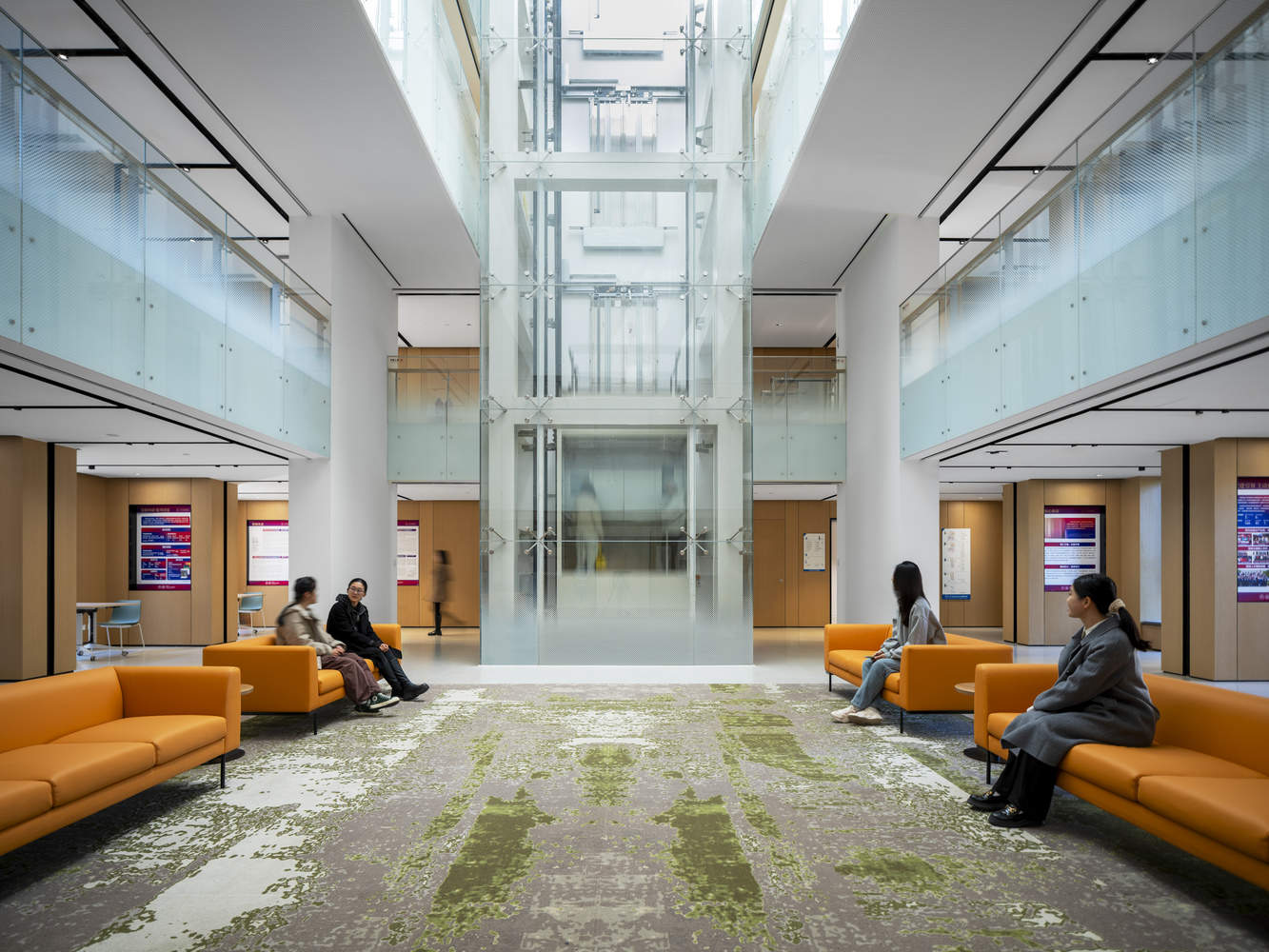
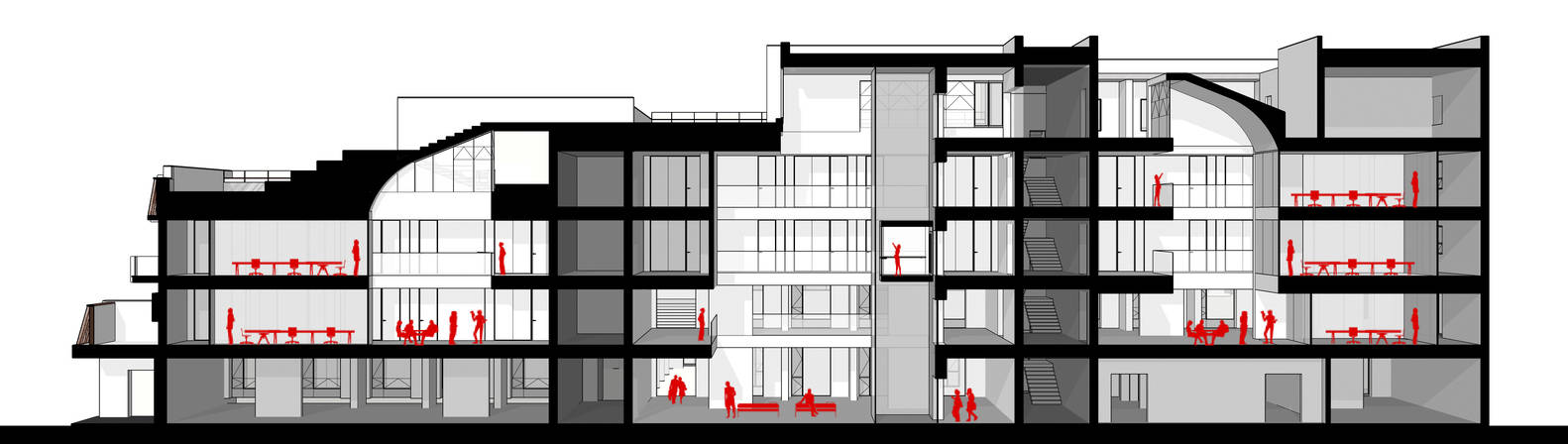
The atrium is the climax of this sequence. The standard floor of the original building featured a guest room layout with a deep cross-section. By extending the exterior walls to the balconies, the core space saved in the center could be excavated into an atrium void. This treatment was applied to all three units. The void space of the central unit, serving as the main hall, extends directly to the ground and is connected by a glass elevator. Inserting such a large-scale light well into the area of lower floor heights balances the near scale with the grand scale, making the inherently constrained building appear dignified and imposing.
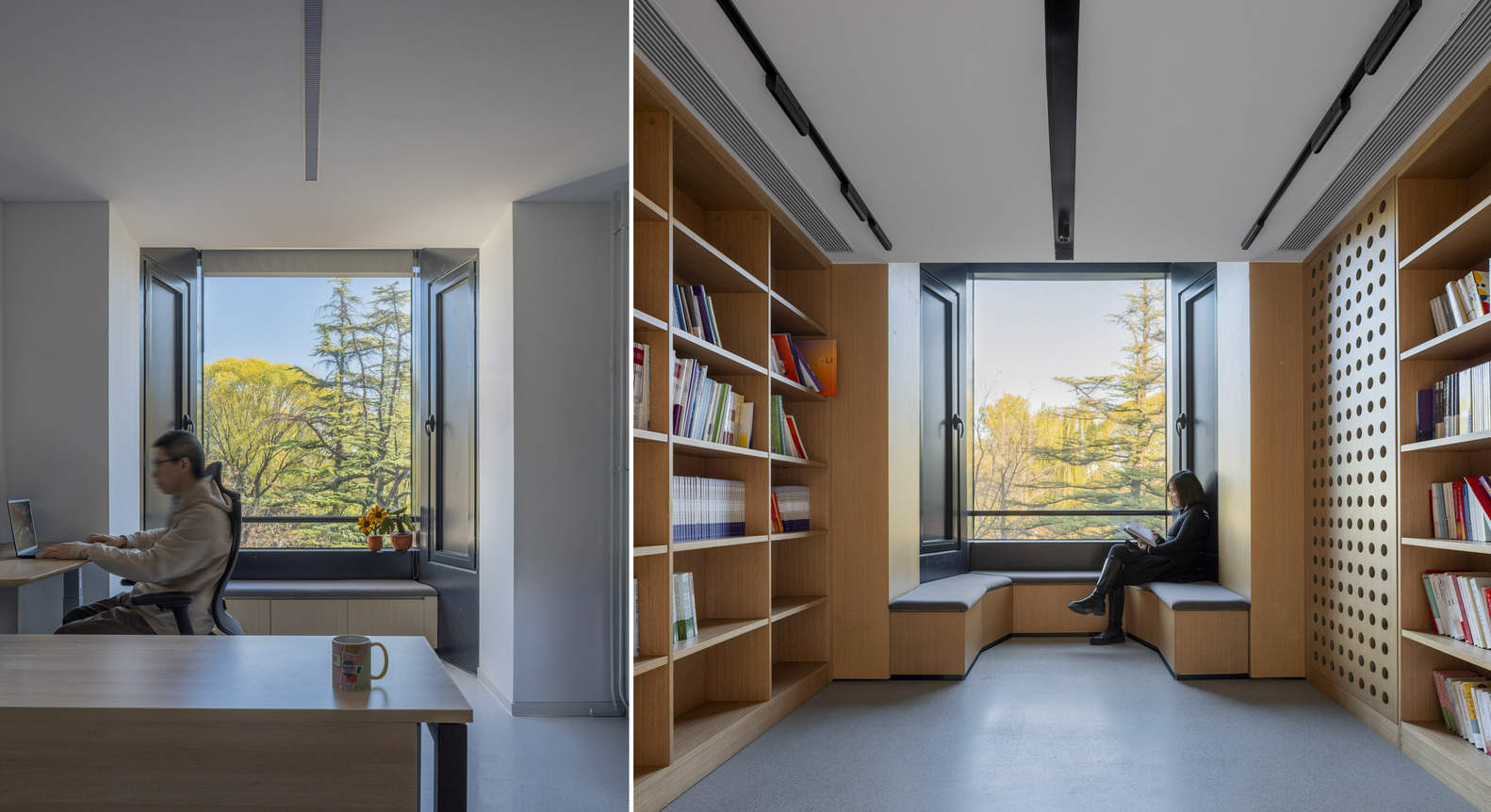
Surrounding the atrium are the short shear wall segments retained from the original building, forming a series of niche living rooms along the exterior windows. Their repetitive rhythm enhances the ceremonial nature of the space. The second floor houses the library/resource center and open-plan offices opening onto the running gallery, further reinforcing the ceremonial feel of the voided space with repeated bookshelves and partitions.
The excessive formality is broken by the central reception area carpet, themed after the wild green space outdoors. The brilliant orange sofas and light wood decoration infuse the area with the young vitality of the college.
The main circulation path continues towards the meeting area, where the atmosphere shifts from the formality of the entrance hall to the leisure of the communication spaces. Outside the 132-seat lecture hall, converted from the original dining room on the first floor, is a pre-set coffee area whose ceiling extends from the canopy of the veranda by the riverbank. Just as the south side of the large lecture hall has a small garden for relaxation, the north side of the three small/medium meeting rooms on the second floor features an outdoor platform with direct connection to the river view in the rear area.
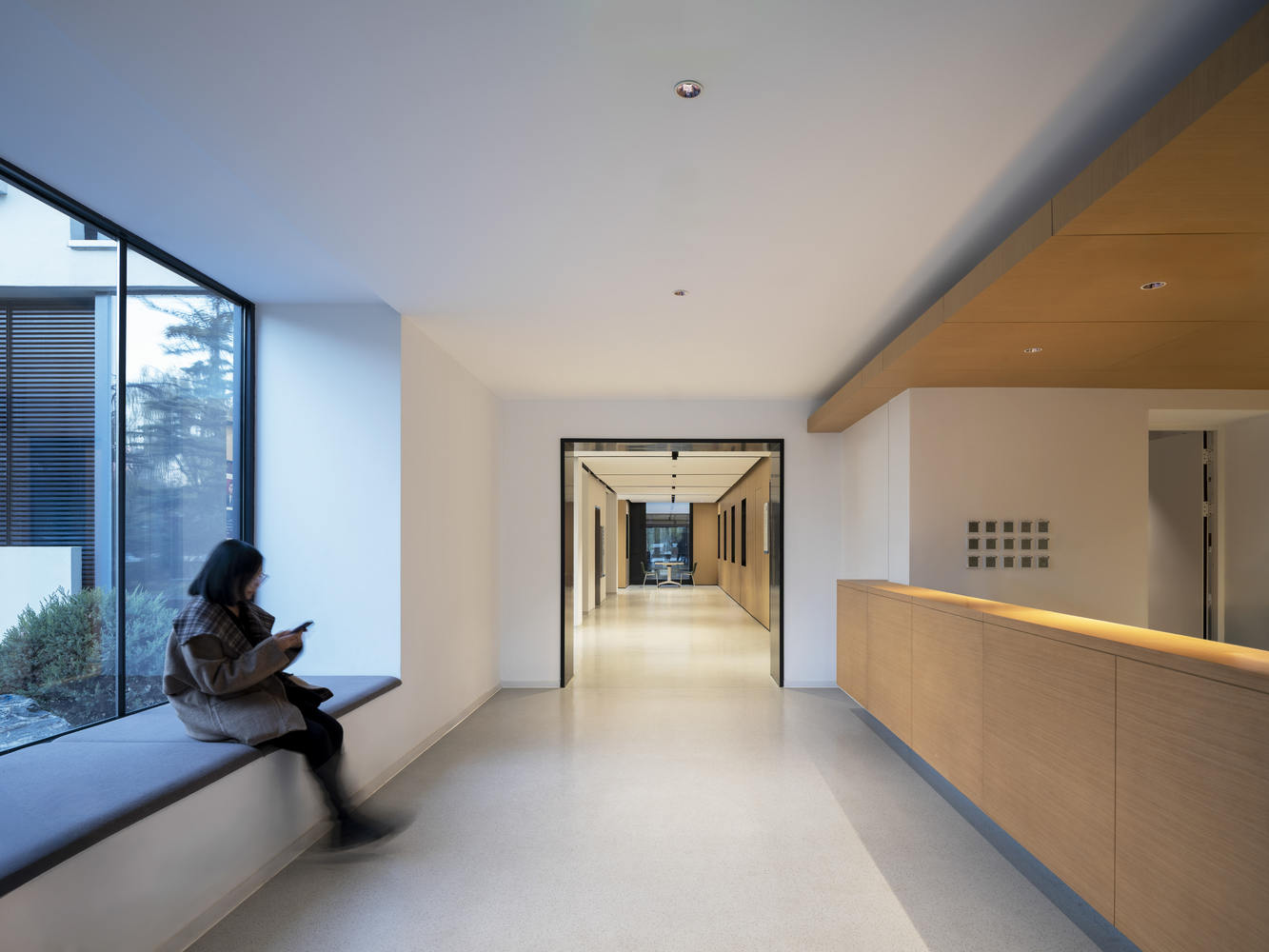
教育建筑本身就有“教化”的功能,礼序化的空间序列的设置不可缺乏。首层整体平面通过一个礼仪化的序列把前场和后场贯通起来。前场是面向近春园“荒岛”开放的景观空间,用一道墙隔离停车场,不仅仅在绿地中辟出一条直通大门的路径,也让从停车场到达的人先遇到一个院门后再有仪式感地进入前院。这道有质感的 GRC 挂板墙穿插到建筑内部,并转个 90 度,包围出玻璃门斗。在空旷开放的前场,这道墙赋予了卫健学院领域感,在未移除原有乔木、未改变原建筑外界面的前提下,对建筑与属地关系进行了音准调整。入口接待处虽然是个小尺度的空间脖颈,但面向外面小院的落地窗与一条坐垫结合为一体,使这个空间有归家的亲近感。
中庭是序列的高潮。原建筑标准层是客房布局,进深较大。将外墙扩展到阳台后,就能将省下的内核空间挖空为吹拔。在三个单元中都做了此种处理。作为门厅的中间单元的挑空空间直接落地,并用玻璃电梯贯通,在矮层高的空间中植入这样的大尺度光井,形成了近人尺度与宏大尺度的平衡,使本来先天不足的建筑显得体面且气派。
环绕中庭的是原建筑保留下来的短支剪力墙,形成一系列沿外窗的龛式小客厅。它们重复的韵律增强了空间的礼仪性。二层是向跑马廊敞开的图书资料馆和开放式办公区,进一步用重复的书架和隔墙加强吹拔空间的礼仪感。
过度的礼仪性又被以户外野生绿地为主题的中央会客区地毯打破。耀眼的橘色沙发和浅色木装修都渗透着学院年轻的生命力。
主流线继续向会议区展开,这里的气氛从门厅的礼序化转向交流空间的闲适化。一层由原餐厅改成的 132 座报告厅门外,是预设的咖啡厅,它的吊顶是门外河边廊子顶棚的延续。和大报告厅南侧门有个可以放松的小花园一样,二层的三间中小会议室北侧,则是个可以和后场河景直接联系的户外平台。
© UK Studio
© UK Studio
© UK Studio
09 Humanistic Corners
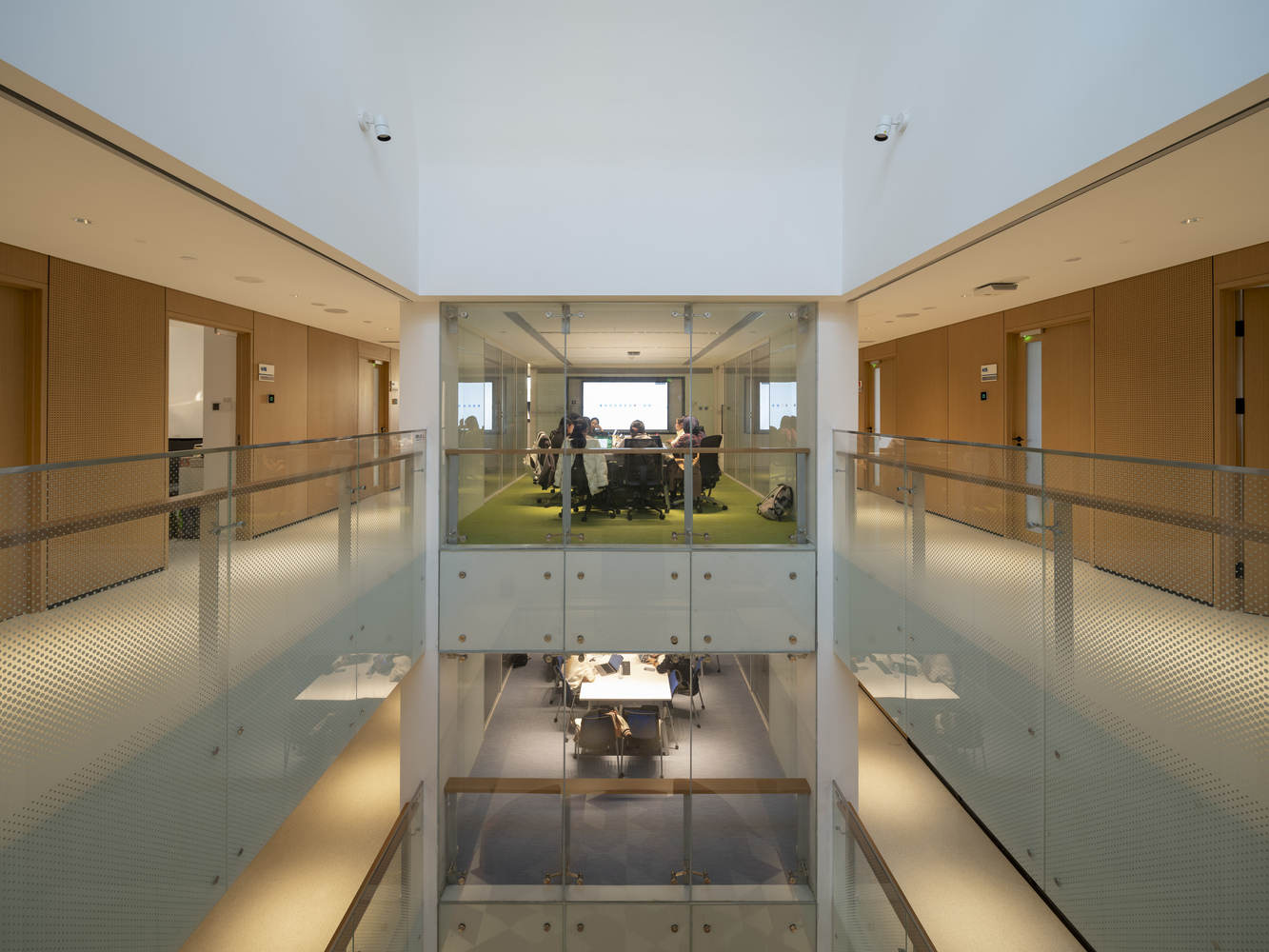
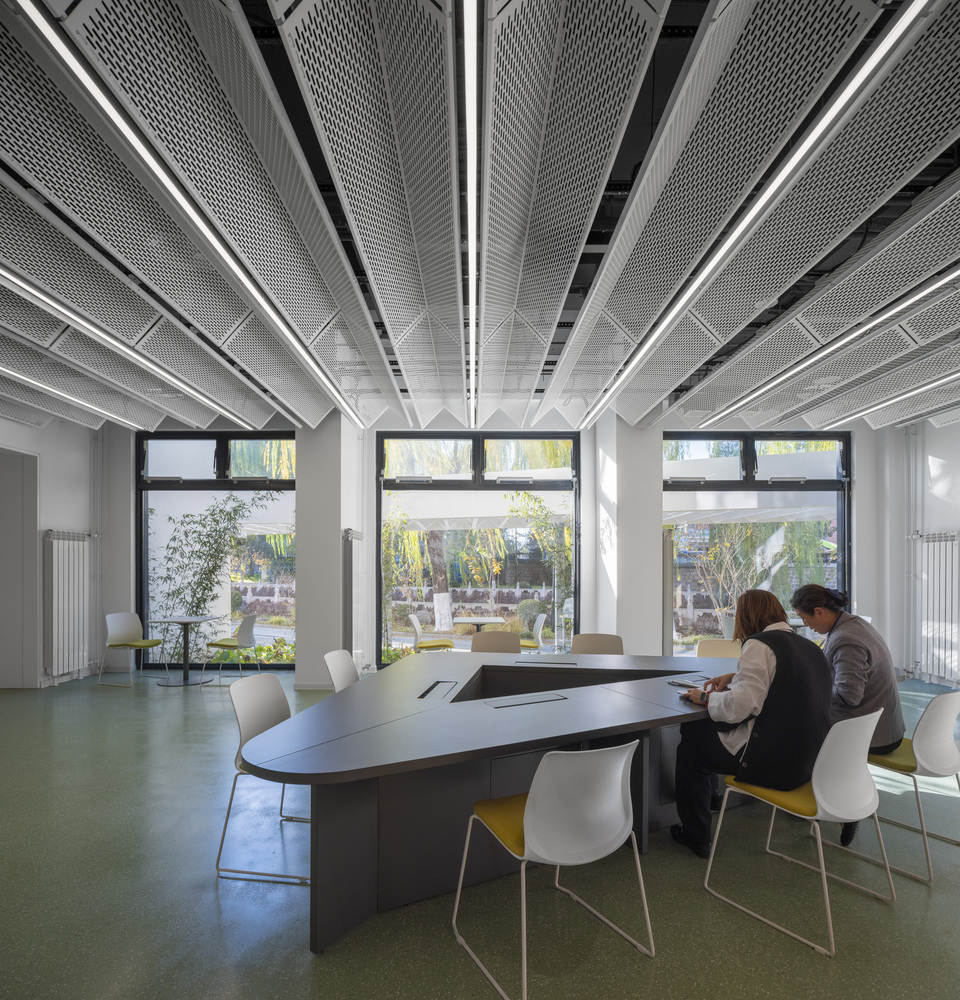
A common problem in faculty office areas is isolation, where each teacher closes their office door, leaving the corridors deserted. The original building consisted of three repetitive standard guest room units. After the renovation, since the required depth for faculty offices is smaller than that for guest rooms, a central space could be excavated in the middle, forming a full-height atrium (introducing natural light and ventilation indoors) and a series of seminar rooms vertically connected, accompanied by a pantry/bar. The cohesion generated by these humanistic spatial designs is precisely what this newly established school needs most. Installing ductwork and sprinkler pipes within the original building's 3.2-meter floor height was already extremely tight, and they could not be exposed, as this would appear messy in a low-ceiling space. Fortunately, each unit is not very large, and the atrium makes the space feel high and spacious, avoiding a sense of oppression.
教师办公区的常见问题是封闭性,每个老师把自己办公室关上以后,走廊冷冷清清。原建筑是由三个重复的标准客房单元组成的。改造后,由于教师办公室所需进深小于客房,就可以在中部挖出一个中心空间,形成一个通高的中庭(为室内引入自然采光与通风)和垂直方向上串联的一系列研讨室,并配以水吧。这些人文化的空间设计所产生的凝聚力也是这个新成立的学院最需要的。建筑原有的 3.2 米层高内装下风管和喷淋管已非常勉强,它们也没法暴露,因为这在低层高中会显得很混乱。好在每个单元都不大,中庭会使空间显得高大宽敞,不感到压抑。
剖面图
© UK Studio
10 Rooftop Terrace
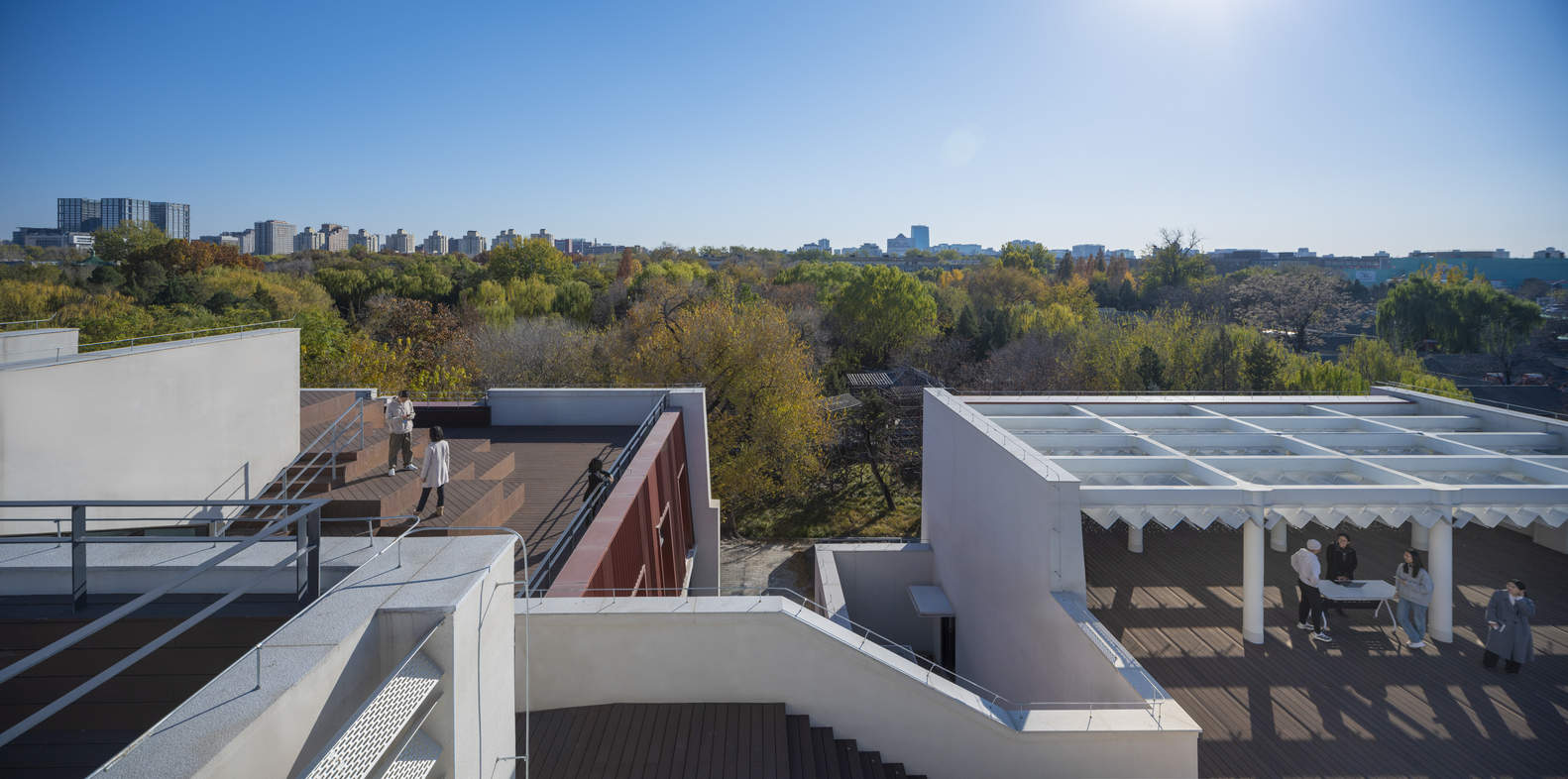
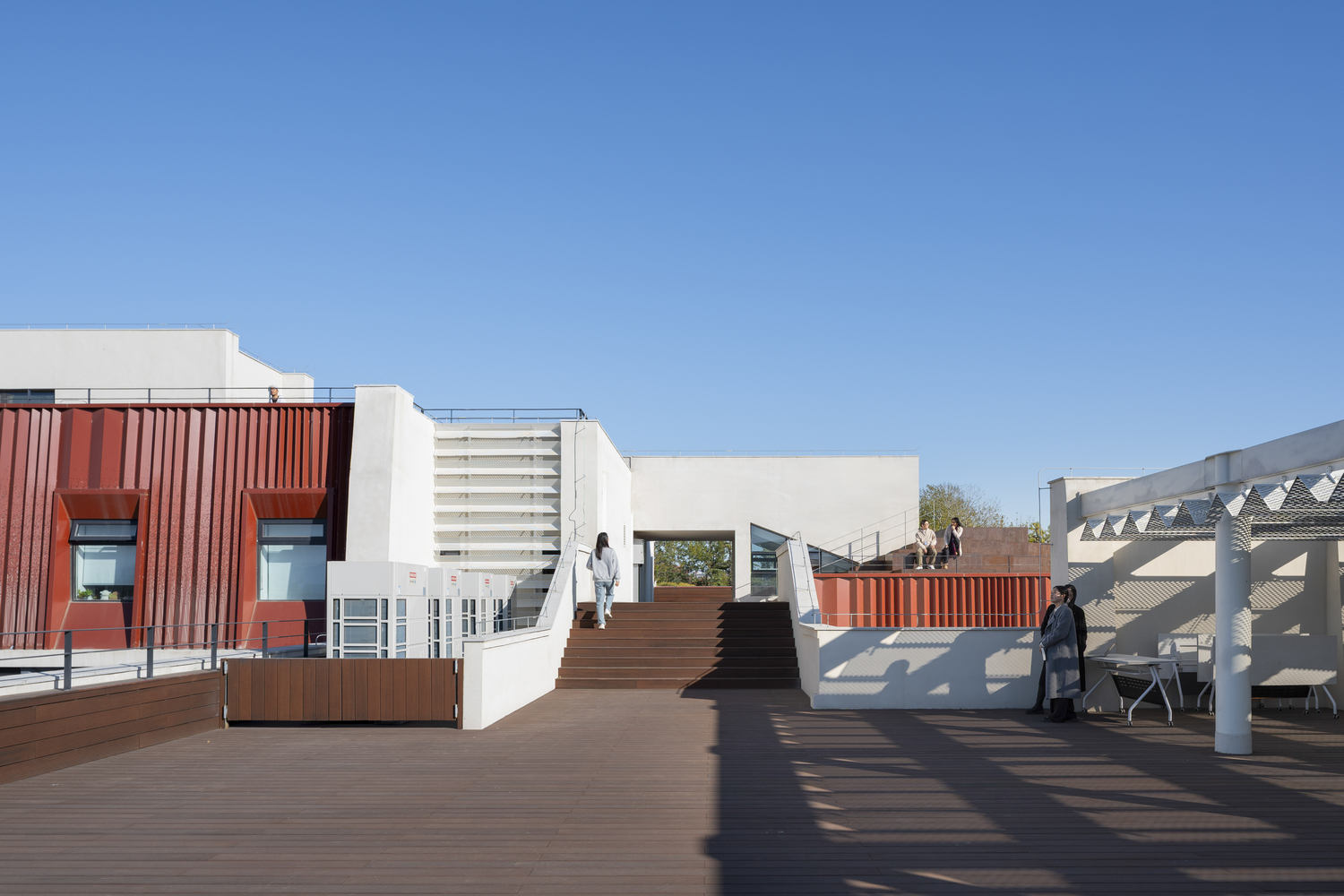
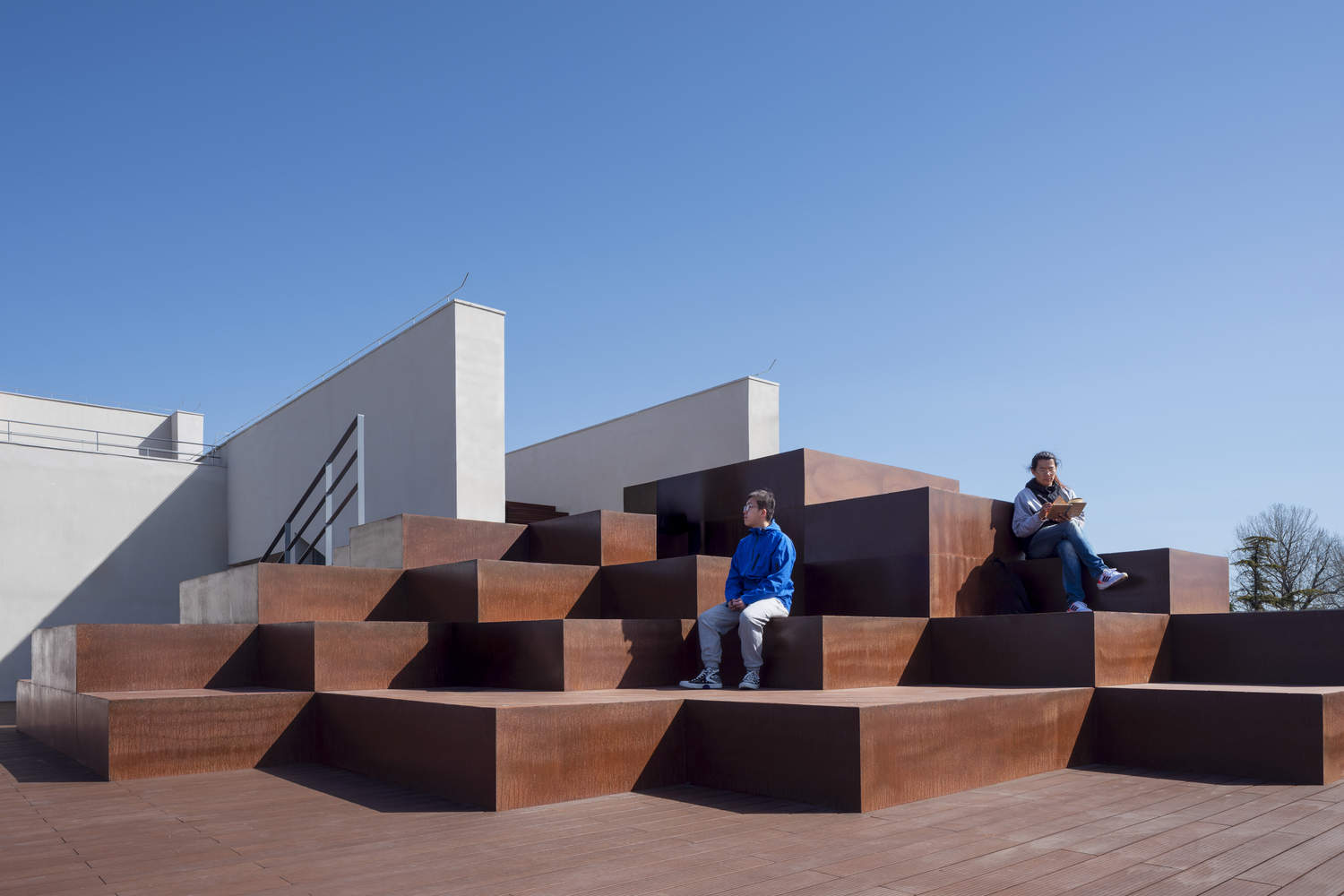
In a college building predominantly featuring enclosed faculty offices, the design not only endeavored to transform circulation spaces into social venues but also focused its attention on the building's largest redundant spatial resource—the rooftop terrace. Within the controlled building zone constrained by the "Three Hills and Five Gardens" planning regulations, the five-story School of Public Health and Health is a rare vantage point for viewing the Western Hills and the campus. The staggered roofline of the original building was not only suitable for viewing but also served as an extension of the college's limited interior space. Once outdoor furniture is arranged, this area will represent an effective expansion of the college’s usable area and an ideal social space.
在以教师封闭办公室为主体的学院楼中,设计不仅致力于将交通空间转化为可社交场所,更将目光投向建筑最大的冗余空间资源——屋顶平台。在被“三山五园”规划约束的建控区内,五层高的卫健学院是个难得的可登高看西山和校园的观景点。原建筑高低错落的屋顶不仅仅适用于观景,也是学院有限的内部空间的扩充。未来布置好户外家具后,这里是学院有效面积的拓展,以及一个理想的交往空间。
11 Romantic Waterfront
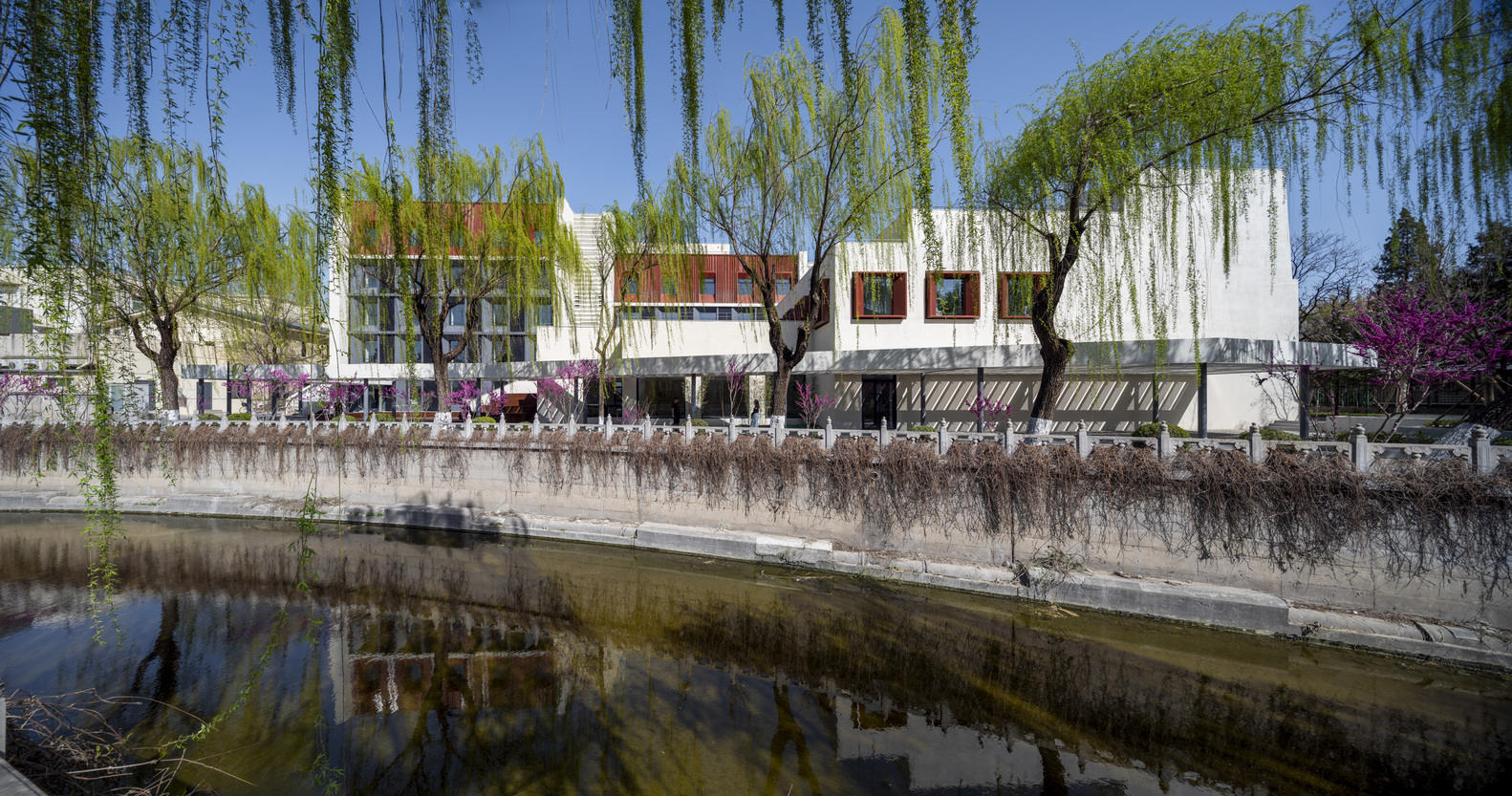
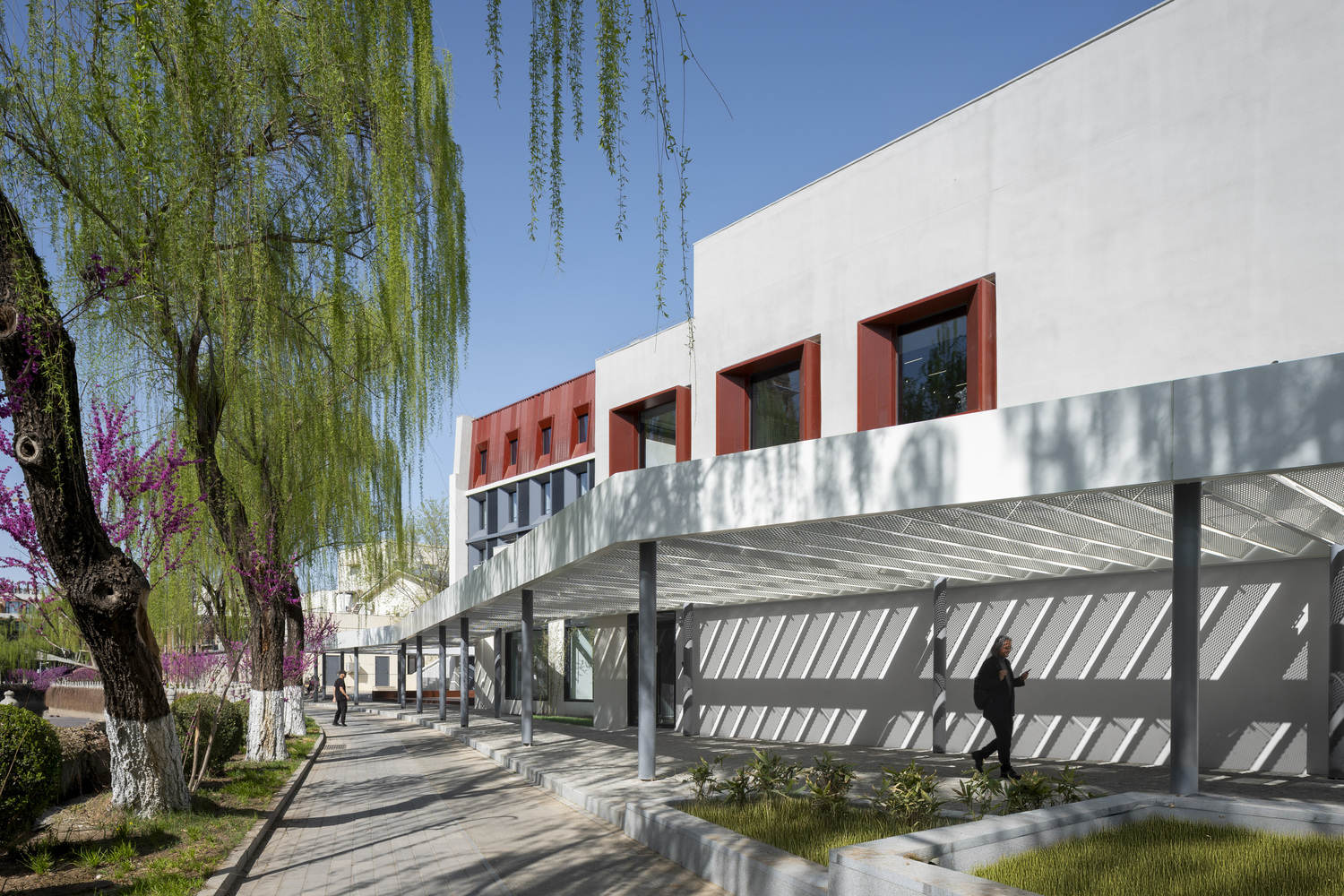
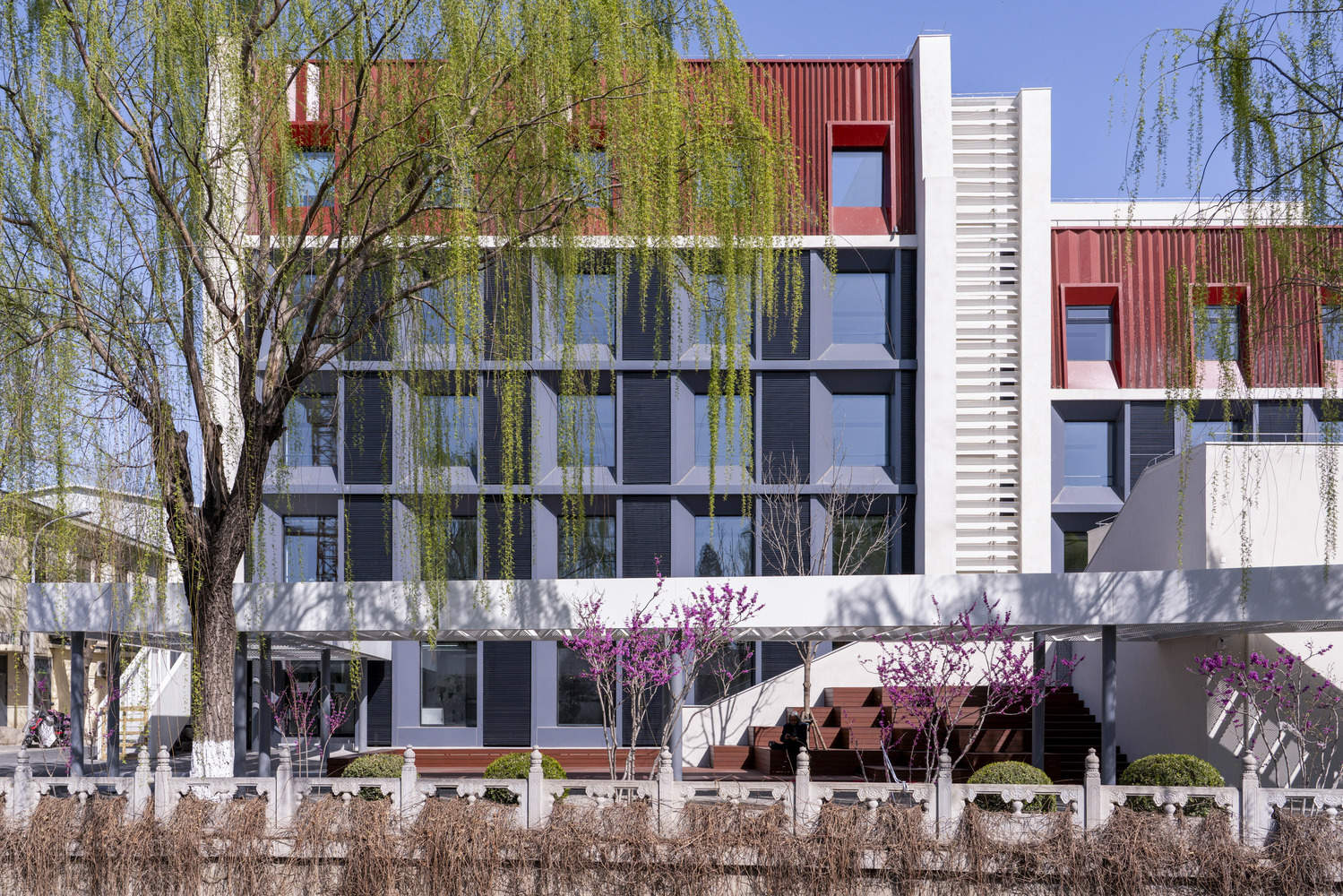
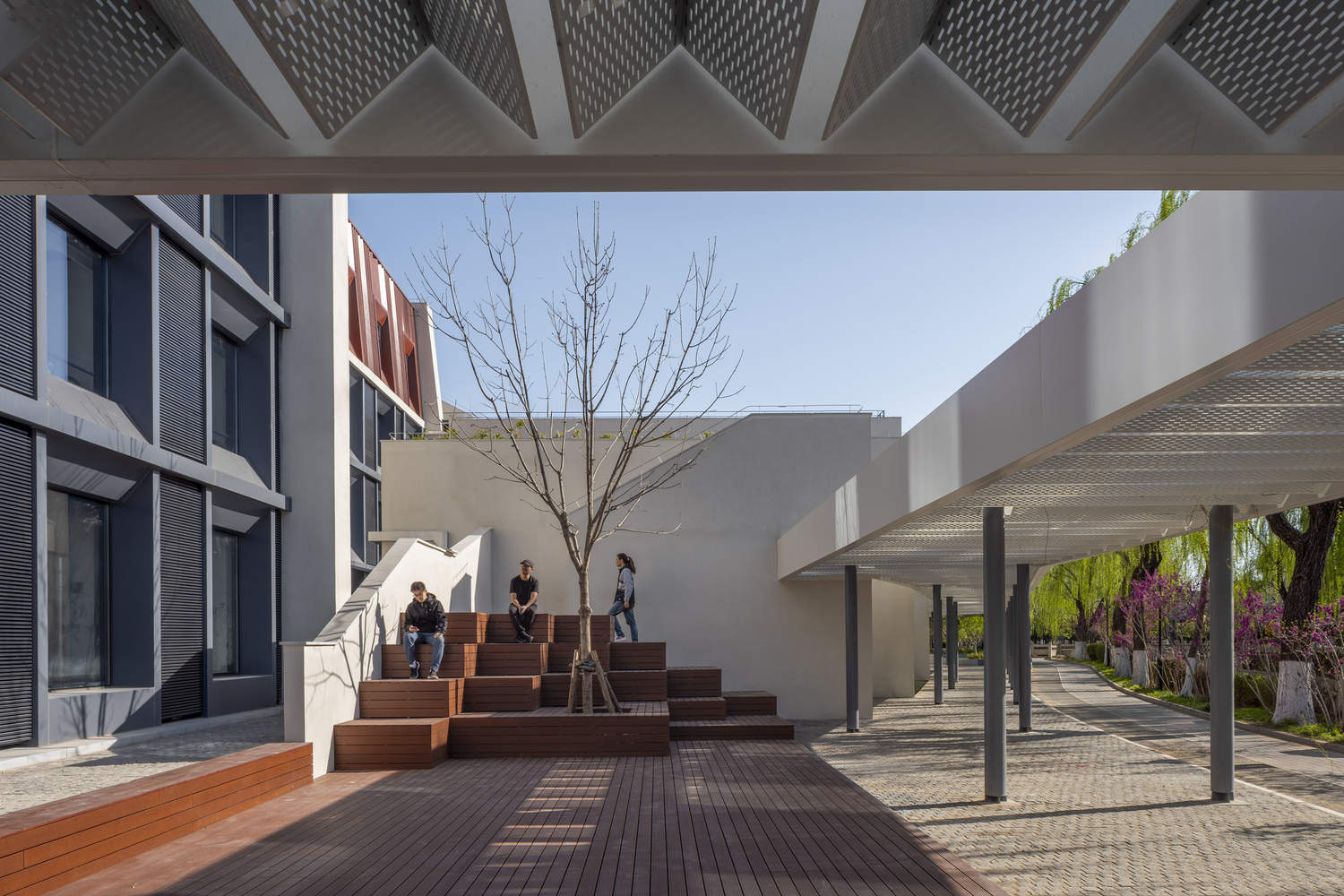
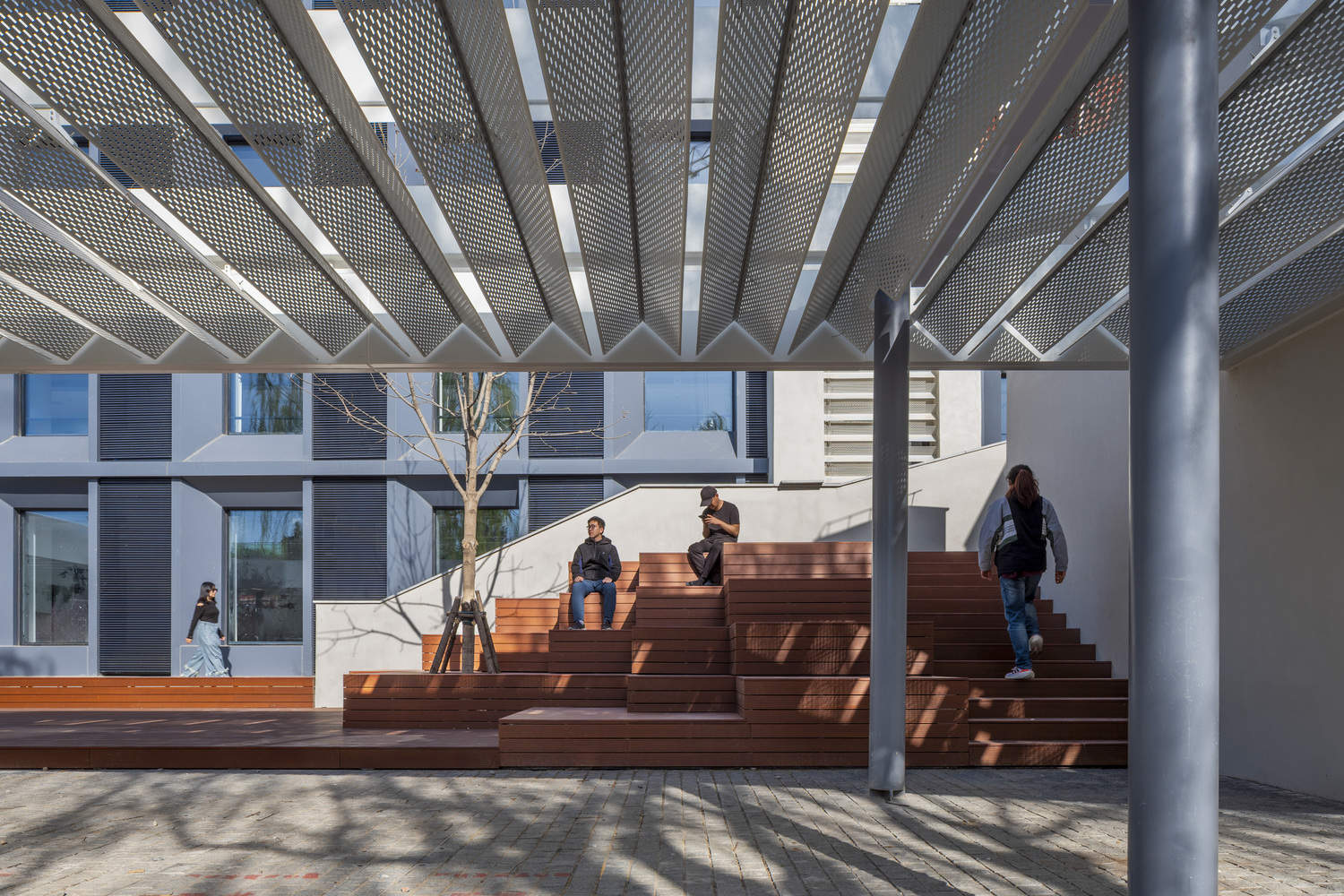
After more than thirty years of use, the logistical area facing the Wanquan River had been continuously extended into a maze, turning the river section flowing through this area into a neglected back-of-house zone. With the demolition of illegal constructions, an open space emerged, giving the School an opportunity to present a valuable spatial gift to the campus. Given that the use of the entire river section on campus had long been marginalized, the construction of the School serves as a catalyst to activate the Wanquan River. Therefore, the first design intuition was not to leave the space blank after demolition, but to fill the void left by the removal of the logistics perimeter wall with a substantial covered walkway, spanning the entire length of the school's site, running parallel to the line of green willows along the riverbank, thereby redefining an active waterside space. This multi-layered small landscape design will ignite the quality improvement and transformation of the entire linear park in the future, making it not only an outdoor academic corner but also a romantic rendezvous spot. Viewed from across the bank, the walkway acts like a picture frame, outlining the resting space behind it, turning it into a romantic campus landmark. To enrich this space, an external fire escape leads pedestrian flow up to the second-floor meeting room terrace, which is also utilized as an open public area. The walkway canopy is covered with a "herringbone" perforated sunshade panel, an element extended to the ceiling of the indoor coffee shop facing the pedestrian path, unifying the interior and exterior.
经过三十余年的使用,面向万泉河的建筑后勤部分被不断的加建变成了一个迷宫,也使流经这个区域的河段变成了冷漠的厨房后场。随着拆违,亮出了一片空地,使卫健学院有机会献给校园一份宝贵的空间礼物。鉴于校园内整条河的使用长期处于被边缘化状态,卫健学院的建设不失为一个激活万泉河的触媒。因此,设计的第一直觉不是拆后留白,而是用一条饱满的廊子去填补后勤围墙拆掉后的空间,占领学院用地的全长,与河畔的一行绿柳并行,重新定义积极的滨水空间。这个多层次的小景观设计,会引爆未来整条线型公园的提质改造,使之不仅仅成为户外的学术角,也是恋爱湾。隔岸观来,廊子犹如一个画框,把后面的休憩空间勾勒了出来,成为校园浪漫的打卡点。为了拓展这个空间的丰富性,室外消防梯把人流引向二层的会议室休息平台,并将之作为开放的公共场所。廊子的顶棚是用“人”字形的遮阳打孔板覆盖的,这个元素又延展为面向步道的室内咖啡厅的吊顶,使内外一体化。
© UK Studio
© UK Studio
12 Significance of the Case Study
Under the premise of reductive development, this design utilized a subtle approach to preserve a campus building with typical characteristics of the late 1980s architecture, bringing it up to the current international first-class standard for teaching and research institutions. It conveys the architectural concept that through the creation of space and environment, university faculty and students can feel that their personal work is noble and respectable, and that the collective unit possesses a strong family atmosphere. In terms of technological innovation, the experience of successfully preserving the brick-concrete structure's exterior walls will serve as a valuable reference for the numerous similar issues encountered in current urban renewal projects. This project is also the first application of the TVMD viscoelastic damper in China, providing a valuable case for promoting this advanced technology. Furthermore, for the Tsinghua campus, the overall renovation of this building acts as a catalyst, promoting the future renewal of the Wanquan River waterfront along the West Gate.
在减量发展的前提下,这个设计用润物细无声的方式,把一个有着 1980 年代末建筑设计典型特征的校园建筑予以保留,并使之达到当下国际一流教研机构的标准,传达出通过空间和环境的营造可以让高校师生感到个人工作高尚且体面、单位集体有大家庭氛围的人文建筑理念。在技术创新上,成功保留砖混结构外墙的经验,将对目前城市更新中大量存在的同类问题有示范性参考价值。本工程也是 TVMD 惯容阻尼器在国内的首次应用,为推广此先进技术提供了宝贵的案例。同时,对于清华校园而言,这个建筑的整体改造又是个触媒,对西校门万泉河滨水带的未来更新起到了推动作用。
© UK Studio